
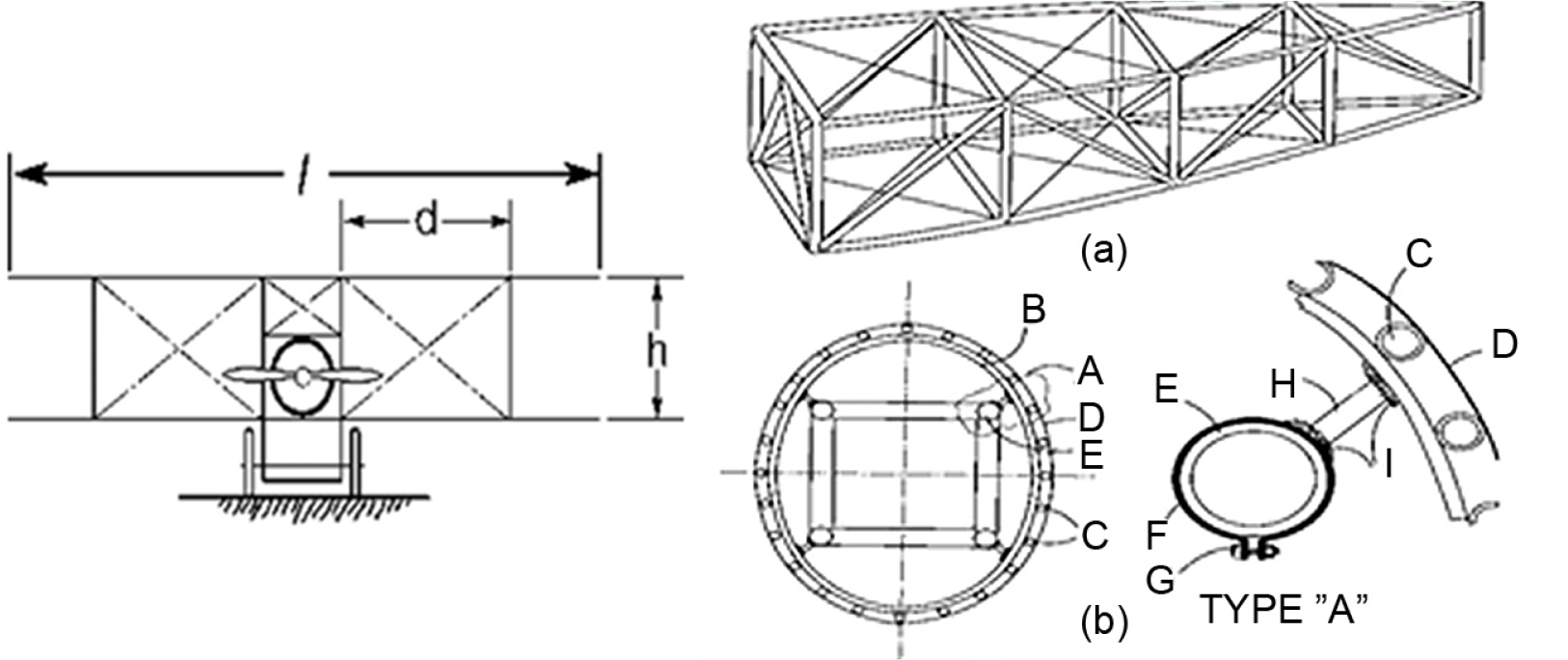
Fig. 1.
Typical biplane configuration and elements of a truss-type fuselage: (a) Structural framework; (b) cross-section of the rigid truss enclosed within the fairing. On the right: principal structural components – B, rigid truss; C, stringers; D, outer skin; E, tubular longerons; F, docking clamp; G, docking bolt; H, short tube; I, welded joints.
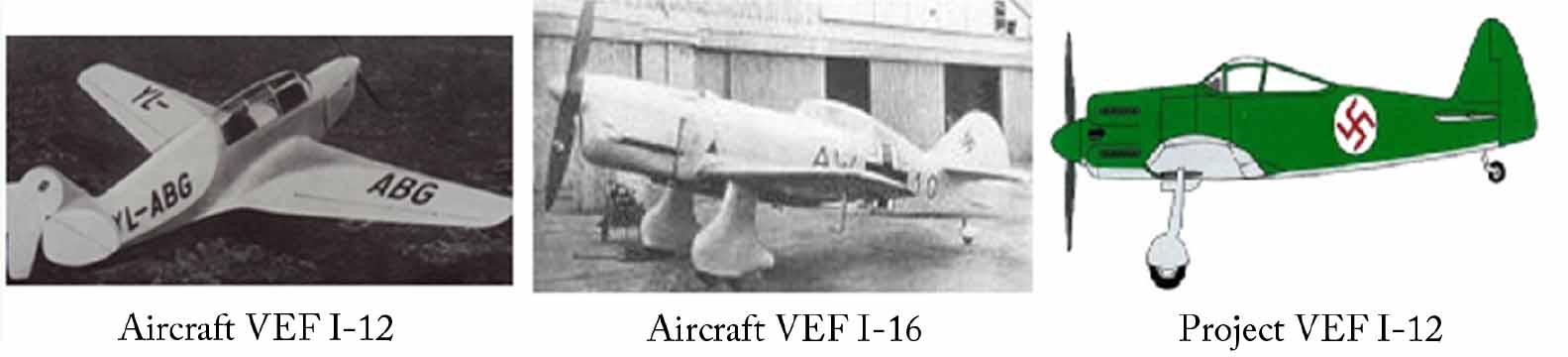
Fig. 2.
Some airplanes designed and built by K. Irbulitis.
Table 1.
Main research laboratories established at RKIIGA and their primary scientific themes (1947–1980).
| No. | Laboratory | Research Themes |
|---|---|---|
| LSR | Subsurface Radiosounding | Subsurface radiosounding research and applications. |
| 1 | Aviation in the National Economy | Studies on the use of aviation for national economic development. |
| 2 | Automatic Systems and Flight Safety | Creation and implementation of automatic and computer systems to ensure flight safety and manage key technological processes in civil aviation. |
| 3 | Flight Simulation and Modeling | Development of specialized simulators and modeling of aircraft flight dynamics. |
| 4 | Structural Reliability and Durability | Research on the strength, reliability, and durability of aviation equipment under operational and repair conditions. |
| 5 | Maintenance Methods and Equipment | Improvement of methods and tools for organizing the maintenance of aviation equipment. |
| 6 | Electronic Flight Support Systems | Increasing the efficiency and performance of electronic flight support systems. |
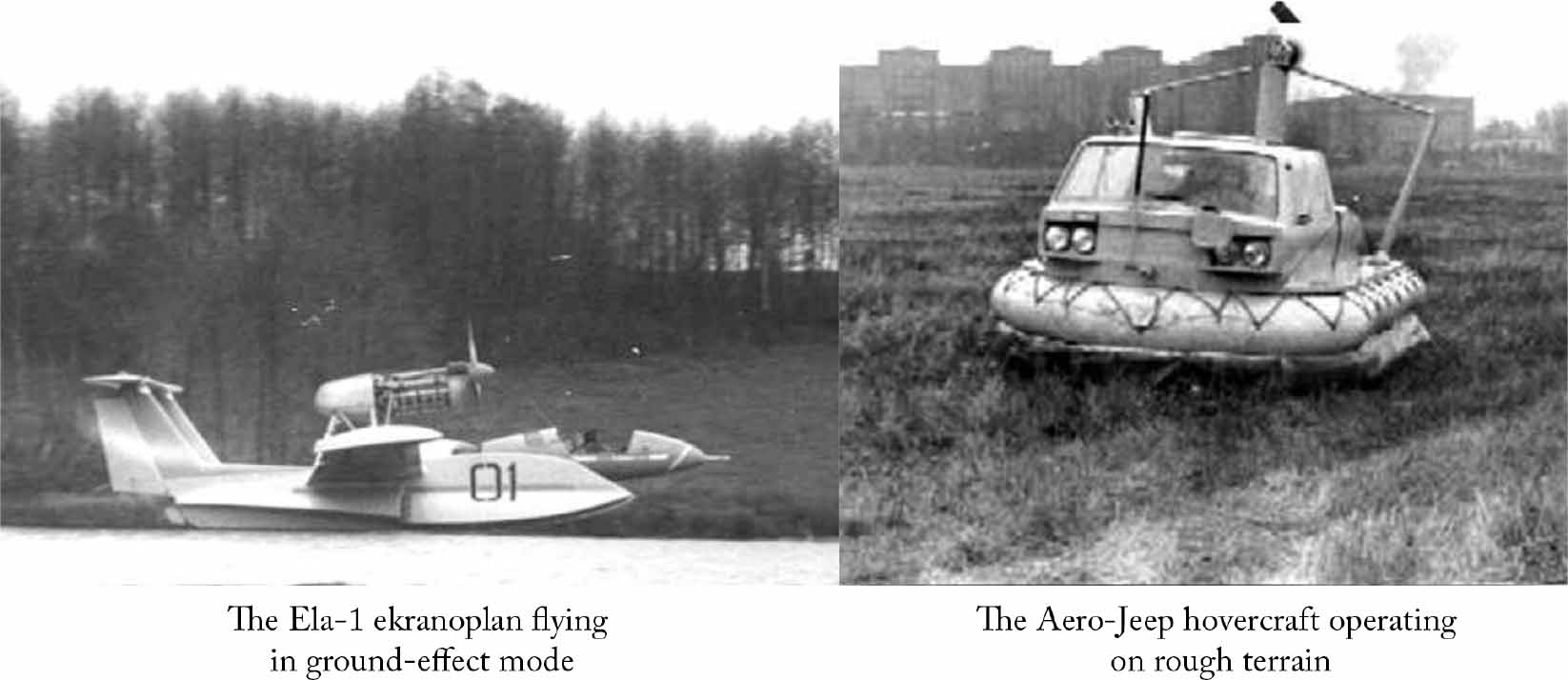
Fig. 3.
The Aero-Jet hovercraft and the Ela-1 ekranoplan, developed and manufactured at the Student Design Bureau.