Have a personal or library account? Click to login
Non-Contact Eddy Current Conductivity Measurements as an Effective Tool for Evaluating Aluminum Alloys in Aircraft Cover

Non-Contact Eddy Current Conductivity Measurements as an Effective Tool for Evaluating Aluminum Alloys in Aircraft

Open Access
|Sep 2024

Figures & Tables

Fig. 1.

Relationships between manufacturing or operating conditions, material features, structure-sensitive physical NDT parameters and mechanical characteristics of AAs.
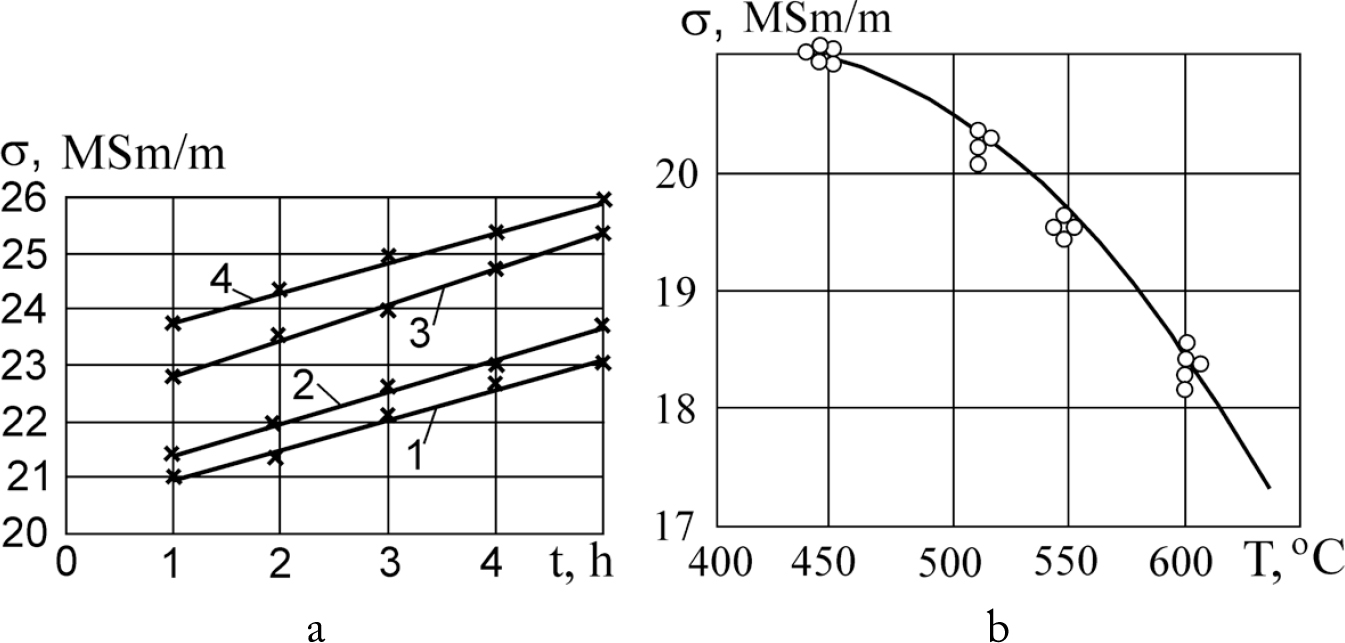

Fig. 2.

Dependence of SEC σ of V93 type AA on duration t of heating during artificial aging for different temperatures T: 165°C (1); 170°C (2); 175°C (3) and 180°C (4) (a) and on the tempering temperature T(b).
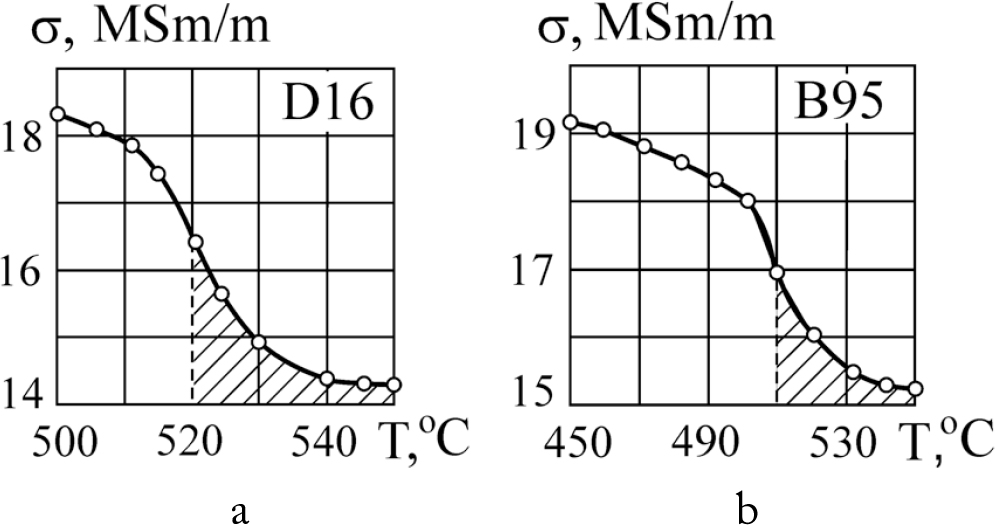

Fig. 3.

Dependences of SEC for rods made of AAs of D16 (a) and B95 (b) types on the heating temperature for hardening (the annealing zones are shaded).
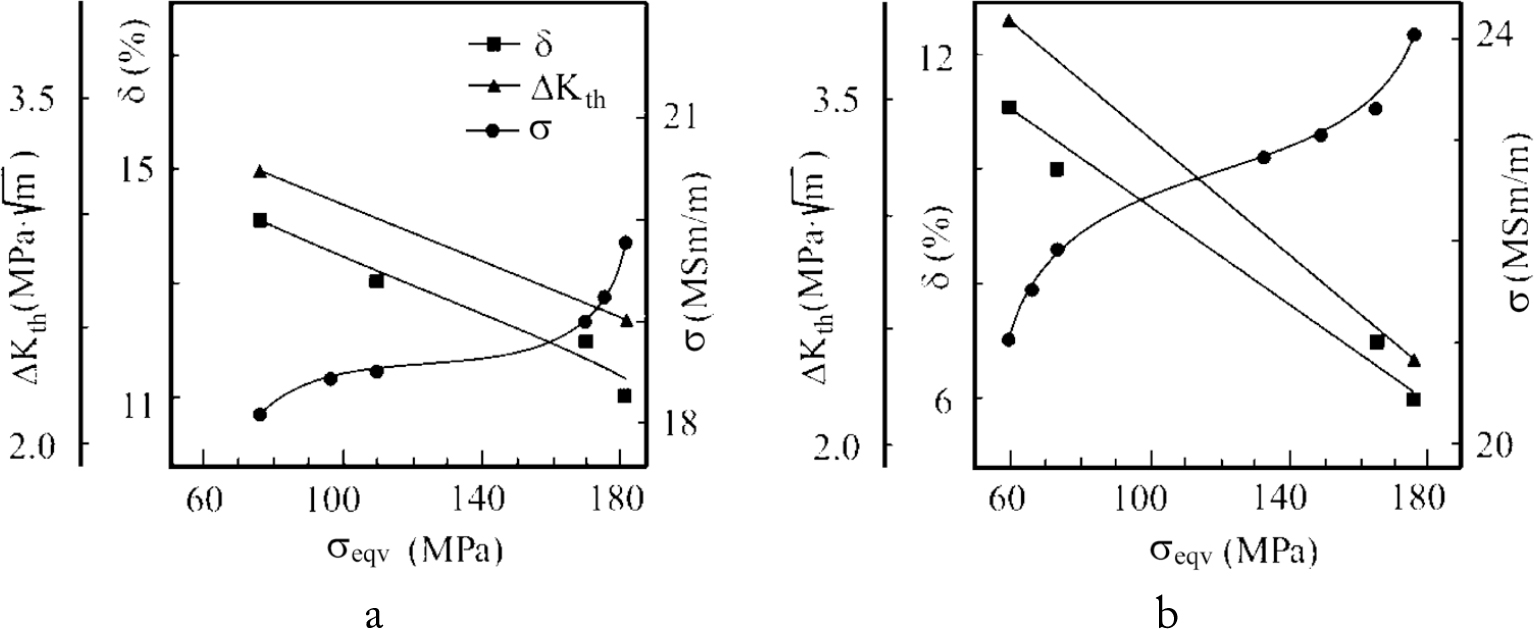

Fig. 4.

Dependencies between elongation δ (◼), fatigue threshold ΔKth (▲), level of operational equivalent stresses σeq (□) and SEC (σ) of degraded AAs of D16 (a) and B95 (b) type
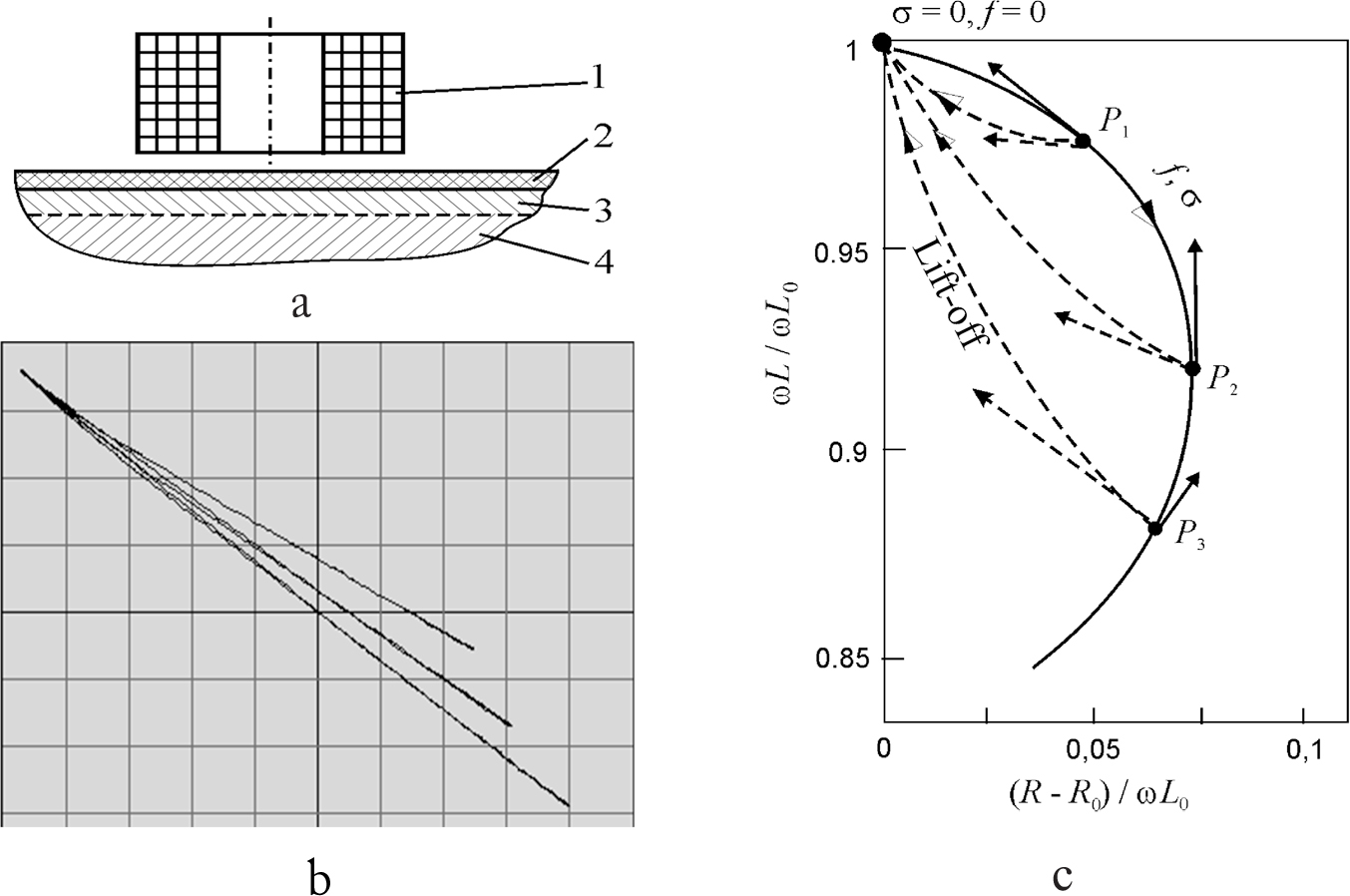

Fig. 5.

EC current probe situated above typical aircraft structure: 1 – EC coil, 2 – dielectric coating, 3 – pure aluminum plating, 4 – main aluminum alloy (a); experimental hodographs concerned with lift-off influence for AAs of different SEC σ (b), and the typical dependence of the EC probe impedance on the changes in the SEC σ, operational frequency f, and the lift-off (c).
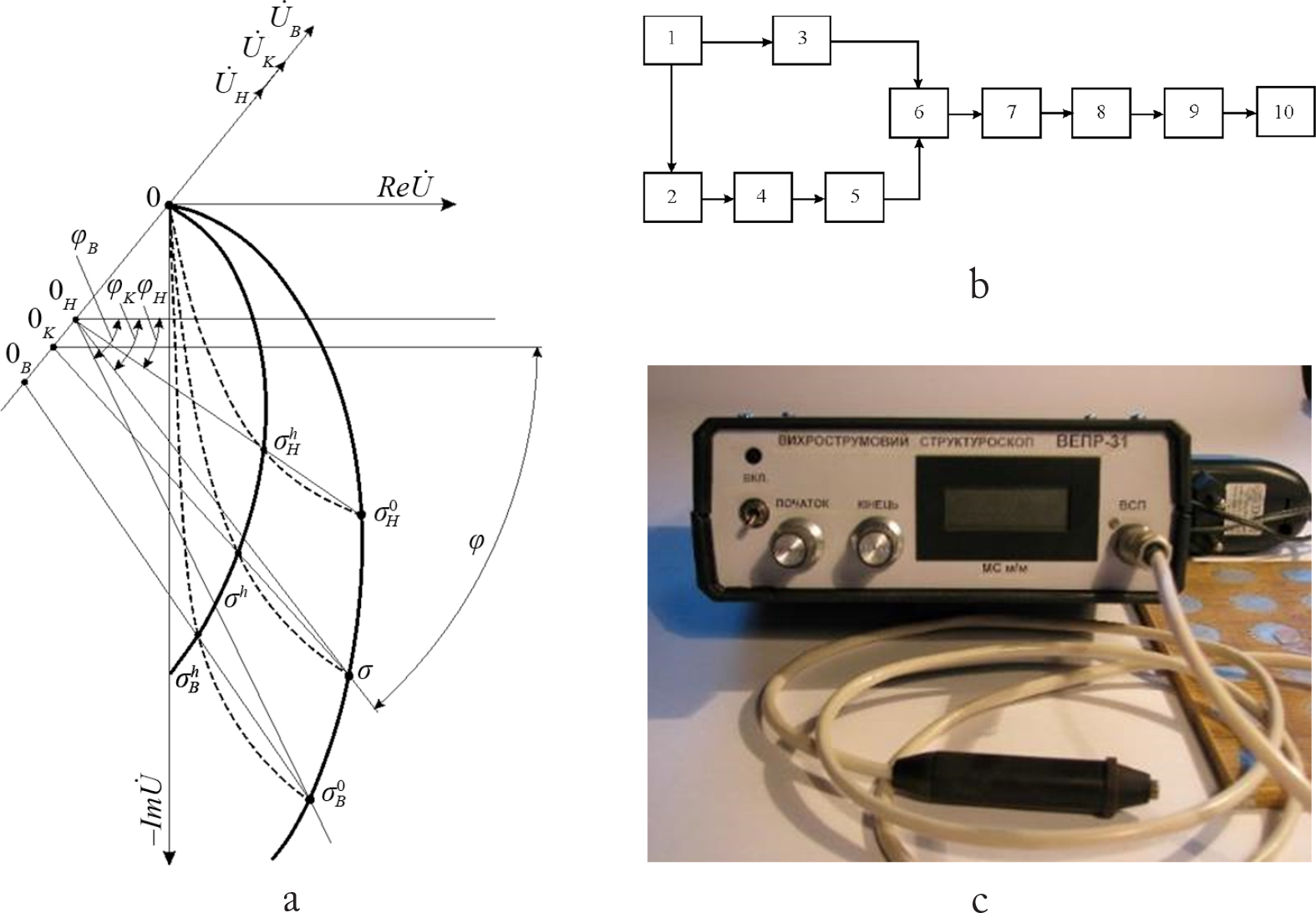

Fig. 6.

Eddy current phase algorithm for conductivity measurements with lift-off influence suppression (a); generalized scheme of the conductivity meter based on the phase measurements (b); and prototype of the developed EC conductivity meter of VEPR-31 type.
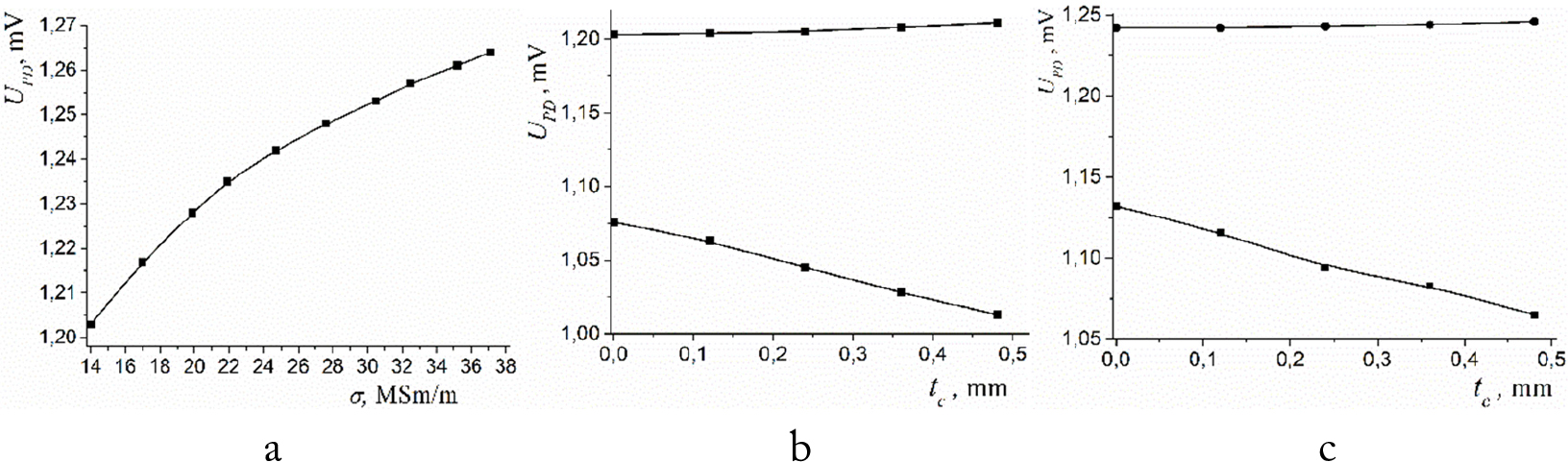

Fig. 7.

Dependence of the output signal UPD of the phase detector on the SEC (a); and on the lift-off or dielectric coating thickness tC (b,c) without lift-off suppression (◼) and with lift-off suppression (•) for a specimen characterized with SEC σ of 14.0 MSm/m (b) and 24.7 MSm/m (c).
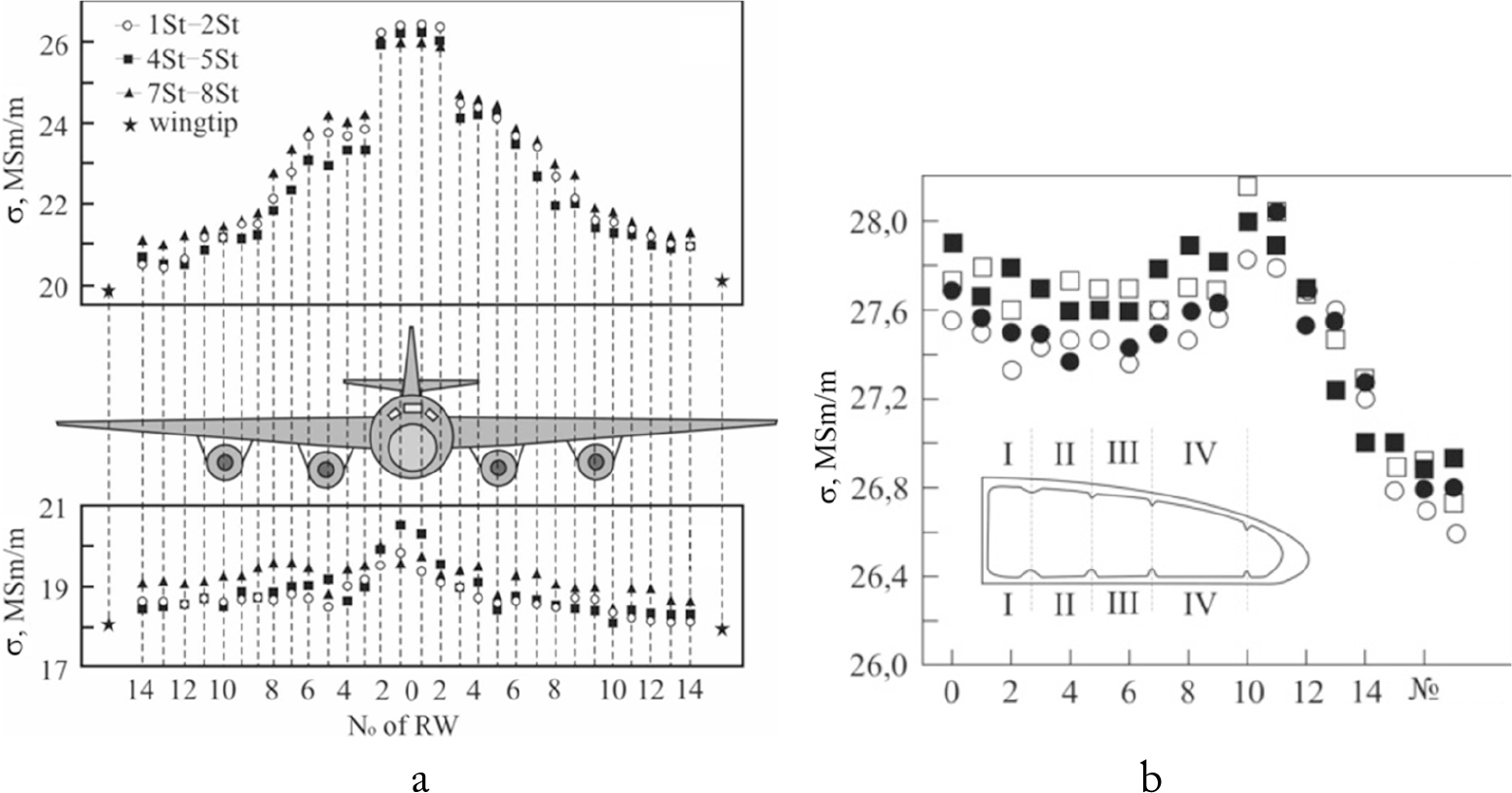

Fig. 8.

Distribution of SEC σ of the upper (◼) and lower (○) skin of the wing of AN-12 aircraft after long-term operation along the wing by rib number (▲ - the SEC value on the wing tip) (a); and SEC distribution on the upper (□ and ○) and lower (◼ and □) sides of the helicopter blade longeron in zones I (□ and ◼) and II (○ and □) (b).
Language: English
Page range: 43 - 57
Submitted on: Jan 19, 2024
Accepted on: Apr 22, 2024
Published on: Sep 11, 2024
Published by: ŁUKASIEWICZ RESEARCH NETWORK – INSTITUTE OF AVIATION
In partnership with: Paradigm Publishing Services
Publication frequency: 4 issues per year

© 2024 Valentyn Uchanin, published by ŁUKASIEWICZ RESEARCH NETWORK – INSTITUTE OF AVIATION
This work is licensed under the Creative Commons Attribution-NonCommercial-NoDerivatives 4.0 License.