
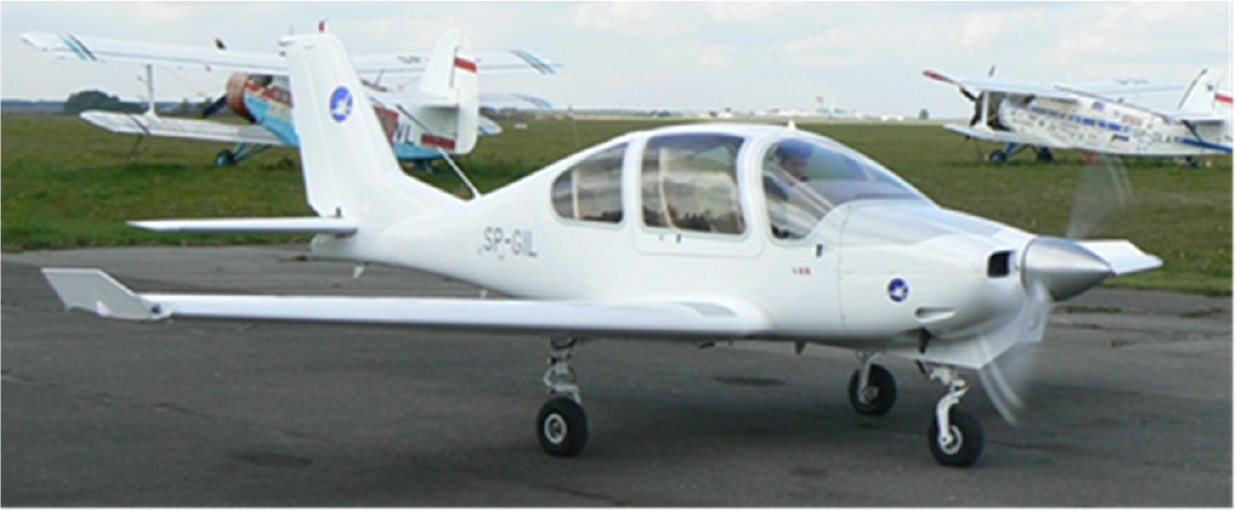
Fig. 1.
The I-23 Manager driven by a low-power piston engine and a 2-blade propeller.
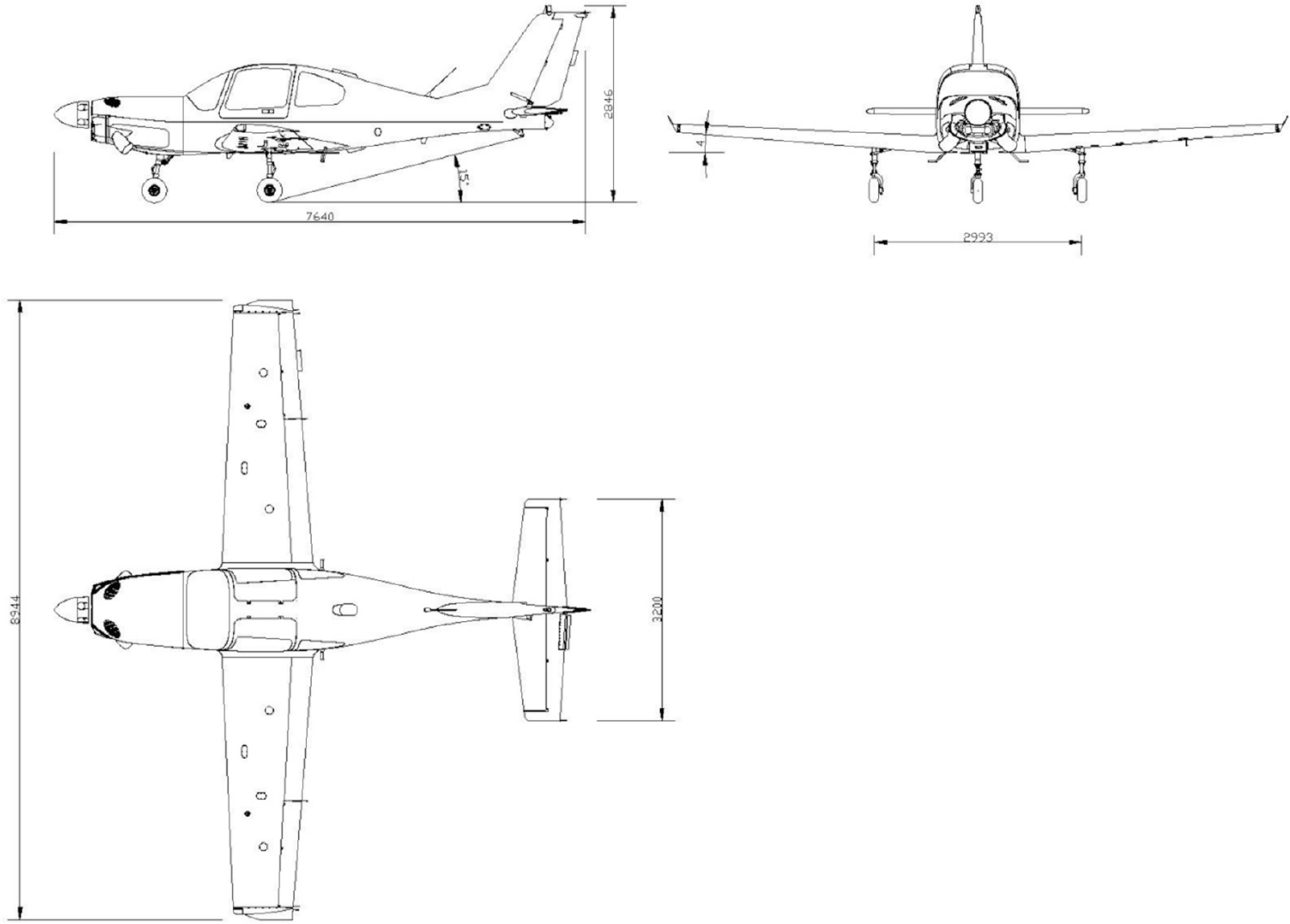
Fig. 2.
Side, front and top views of the aircraft after transition to the turboprop version, designated I-31T.
Table 1.
General specification for the aircraft built in two versions: with a piston engine (left column) and with a turbine engine (right column)
| the single engine piston (SEP) aircraft – I-23 Manager | the single engine turboprop (SET) aircraft – I-31T | ||
|---|---|---|---|
| general characteristics | Crew | One | |
| Capacity | Three passengers | ||
| Length | 7.103 [m] | 7.640 [m] | |
| Wingspan | 8.944 [m] | ||
| Height | 2.846 [m] | ||
| Wing Airfoil | NACA 63A416 | ||
| Maximum Wing Loading | 115 [kg/m2] | ||
| weight & balance | Maximum take-off/landing weight | 1150 [kg] | |
| Empty weight | 825 [kg] | 908 [kg] | |
| CG limits | 19.8 [%MAC] ÷ 35.0 [%MAC] | ||
| performance | Design Cruise Speed | 295 [km/h] | |
| Design Diving Speed | 370 [km/h] | ||
| Operating Maneuvering Speed | 246 [km/h] | ||
| Maximum Landing Gear Down Speed | 184 [km/h] | ||
| Stalling Speed, flaps up | 125 [km/h] | ||
| Stalling Speed, full flaps | 113 [km/h] | ||
Table 2.
Comparison of data for the aircraft built in two versions: with a piston engine (left column) and with a turbine engine (right column)
| the single engine piston (SEP) aircraft – I-23 Manager | the single turboprop engine (STE) aircraft – I-31T | ||
|---|---|---|---|
| engine | Model (Engine Manufacturer / Country) | 1 x Textron Lycoming O-360-A1A (Textron / U.S.A.) | 1 x PBS TP-100 (Prvni Brnenska Strojirna PBS / Czech Republic) |
| Engine type | Piston - a four-cylinder, horizontally opposed (boxer), air-cooled | Turboprop with a free-turbine | |
| Maximum power | 134.2 [kW] (180 [HP]) | 180 [kW] (241 [HP]) | |
| Nominal (maximum continuous) power | 134.2 [kW] (180 [HP]) | 160 [kW] (214.6 [HP]) | |
| Dry weight | 131.5 [kg] | 57 [kg] | |
| propeller | Propeller Manufacturer | Hartzell Propeller | MT-Propeller |
| Propeller Model | HC-C2YR-IBF/F7666A-4 | MTV-25-1-D-C-F/CFL-180-05 | |
| Number of blades | 2 | 5 | |
| Diameter | 1.83 [m] | 1.80 [m] | |
| Sense of rotation (from a pilot point of view) | Clockwise (CW) (in flight direction - to the right) | Counter-clockwise (CCW) (in flight direction - to the left) | |
| Propeller rotational speed | 2700 [RPM] | 2158 [RPM] | |
| Basic characteristics & Properties | 2-blade, metal, controllable pitch, constant-speed propeller | 5-blade; composite, controllable-pitch, constant-speed propeller | |
| Maximum efficiency | 84.5 [%] | 78.9 [%] | |
| fuel | Type of fuel | Aviation Gasoline AVGAS 100LL | Kerosene-type fuel JET A-1 |
| Maximum weight of fuel in fuel tanks | 130 [kg] | 140 [kg] | |
| Total weight of power system (weight of all elements loaded an engine mount) | 186 [kg] | 173 [kg] | |
| Incidence angle of propeller axis of rotation (thrust axis)∗1 | 0 [deg] | 2 [deg] |
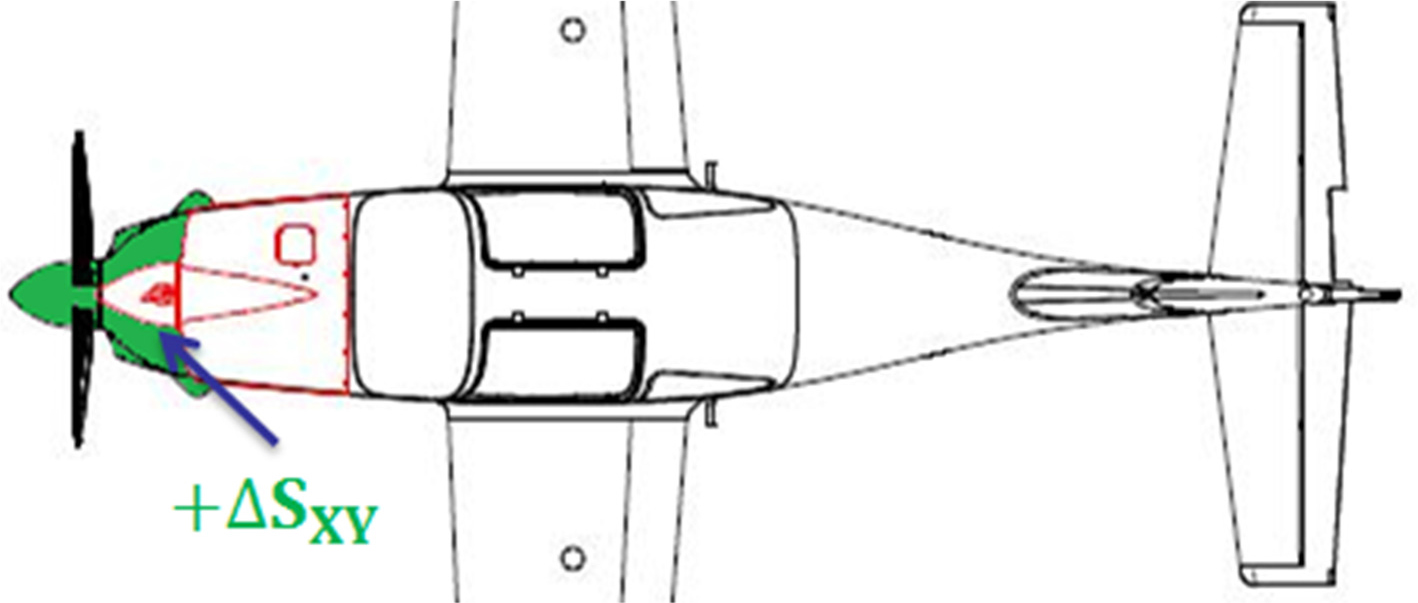
Fig. 3.
Comparison of the top views of the two engine-variants of the aircraft, with the difference in the XY-cross-section surface area shown in green.
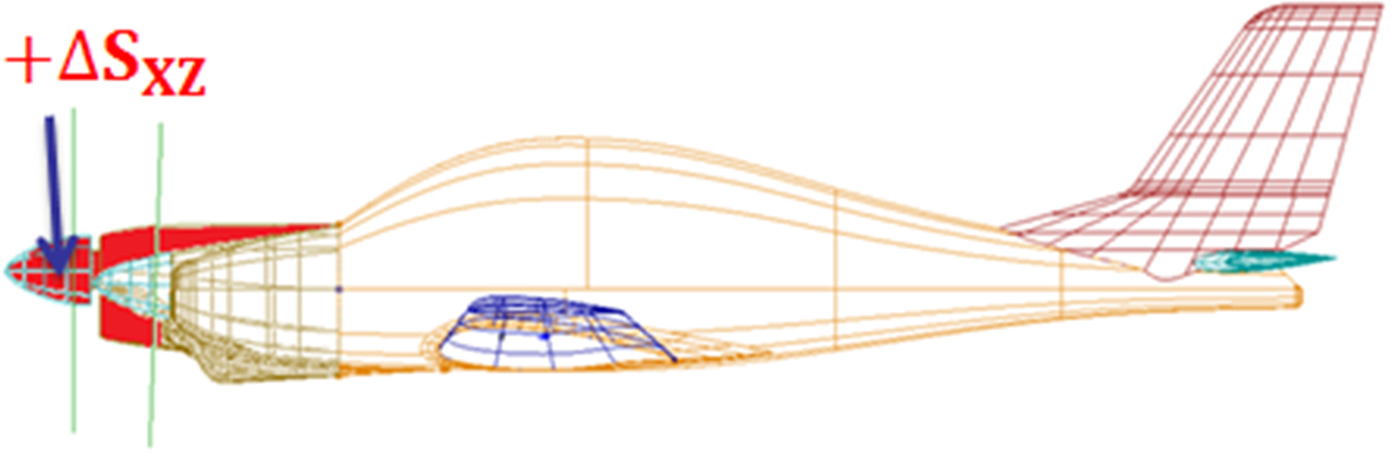
Fig. 4.
Comparison of the side views of the two engine-variants of the aircraft, with the difference in the XZ-cross-section surface area shown in red.
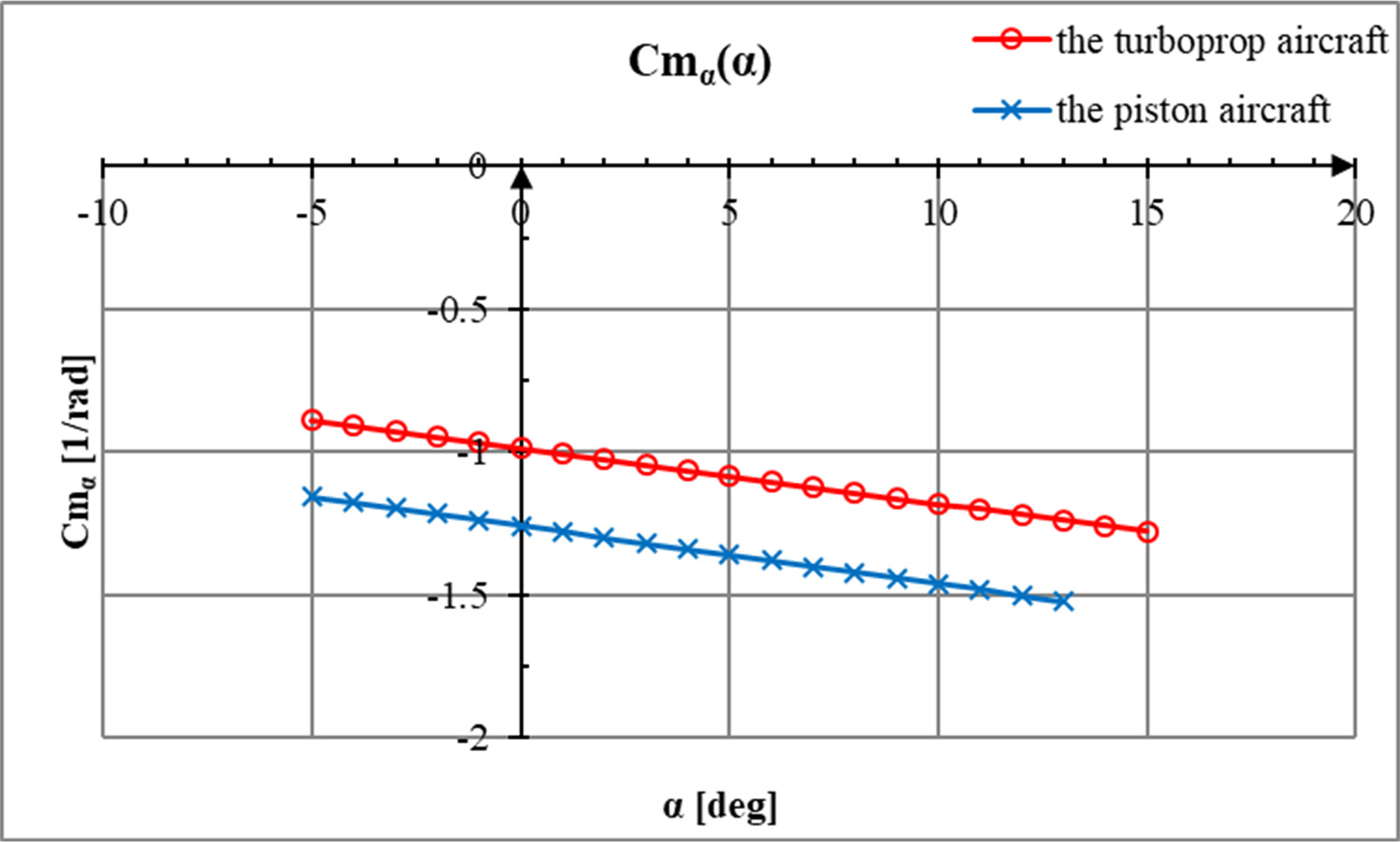
Fig. 5.
Plot of derivatives of static pitch stability coefficient as a function of angle of attack for the piston and turboprop aircraft.
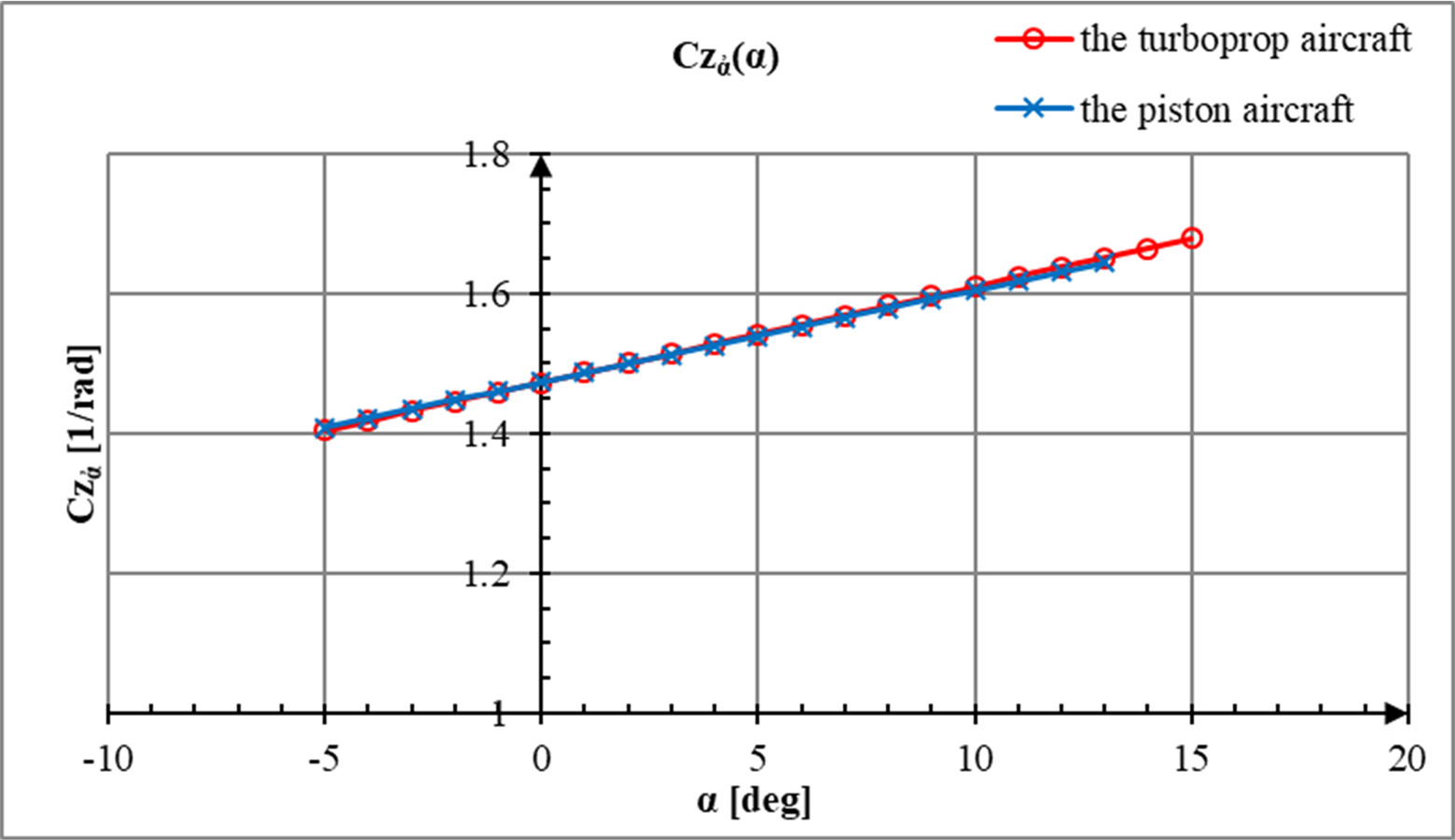
Fig. 6.
Comparison of derivatives of lift coefficient with respect to rate of change of angle of attack for the piston and turboprop aircraft.
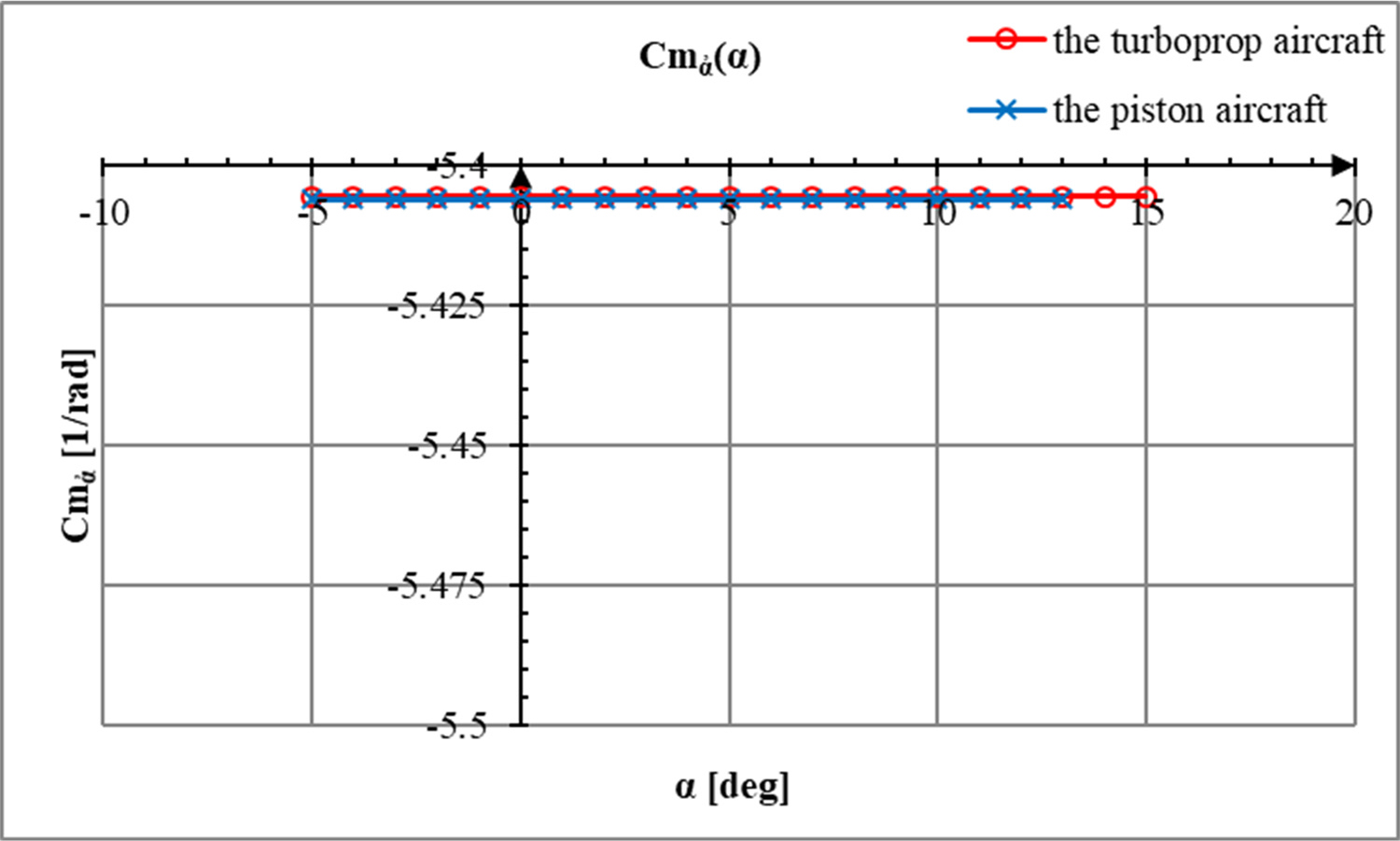
Fig. 7.
Changes in derivatives of pitching moment coefficient with respect to rate of change of angle of attack as a function of angle of attack for the piston and turboprop aircraft.
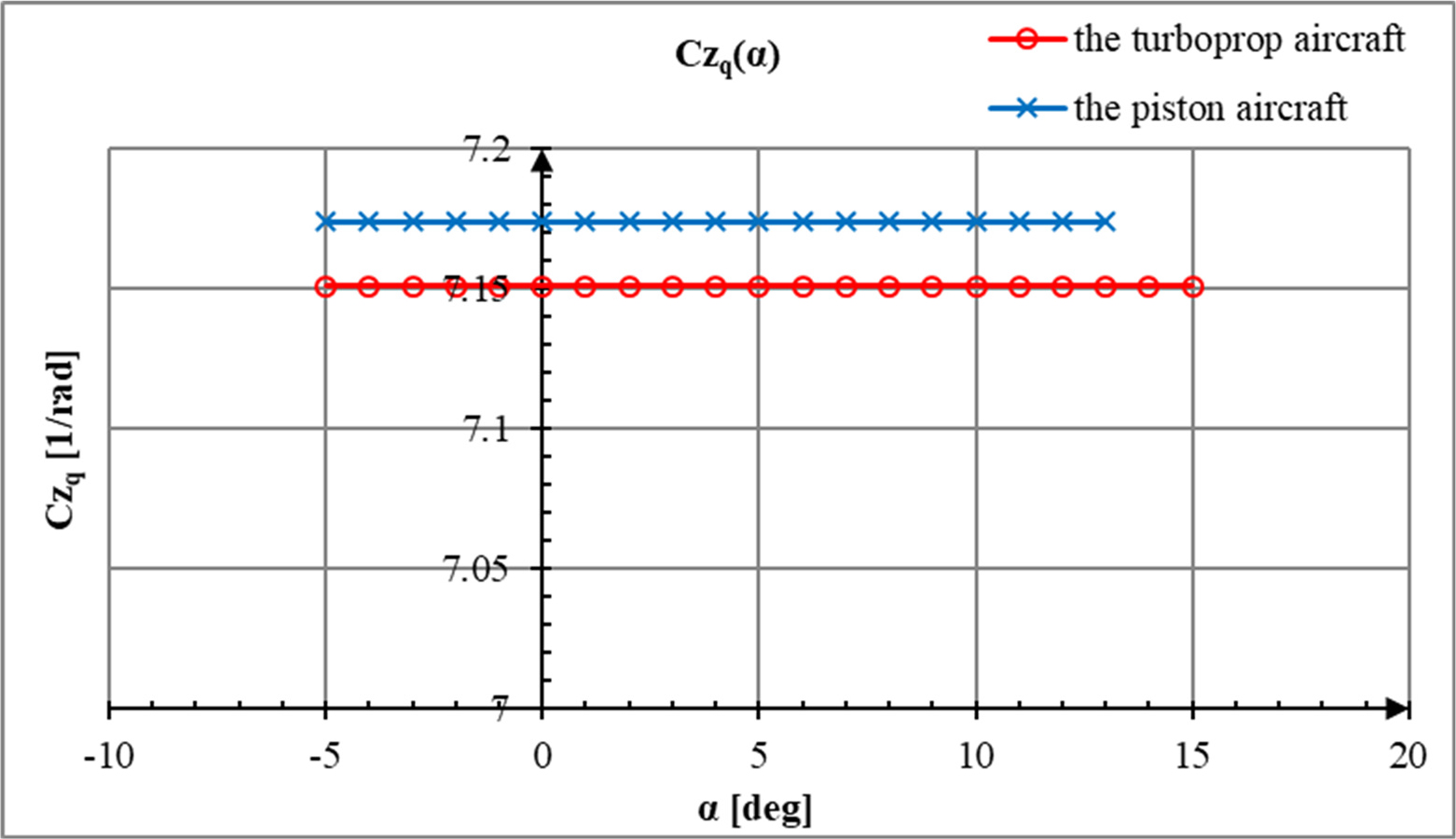
Fig. 8.
Variation in derivatives of the dimensionless lift coefficient (Cz) with respect to pitch rate (q) for the piston and turboprop aircraft.
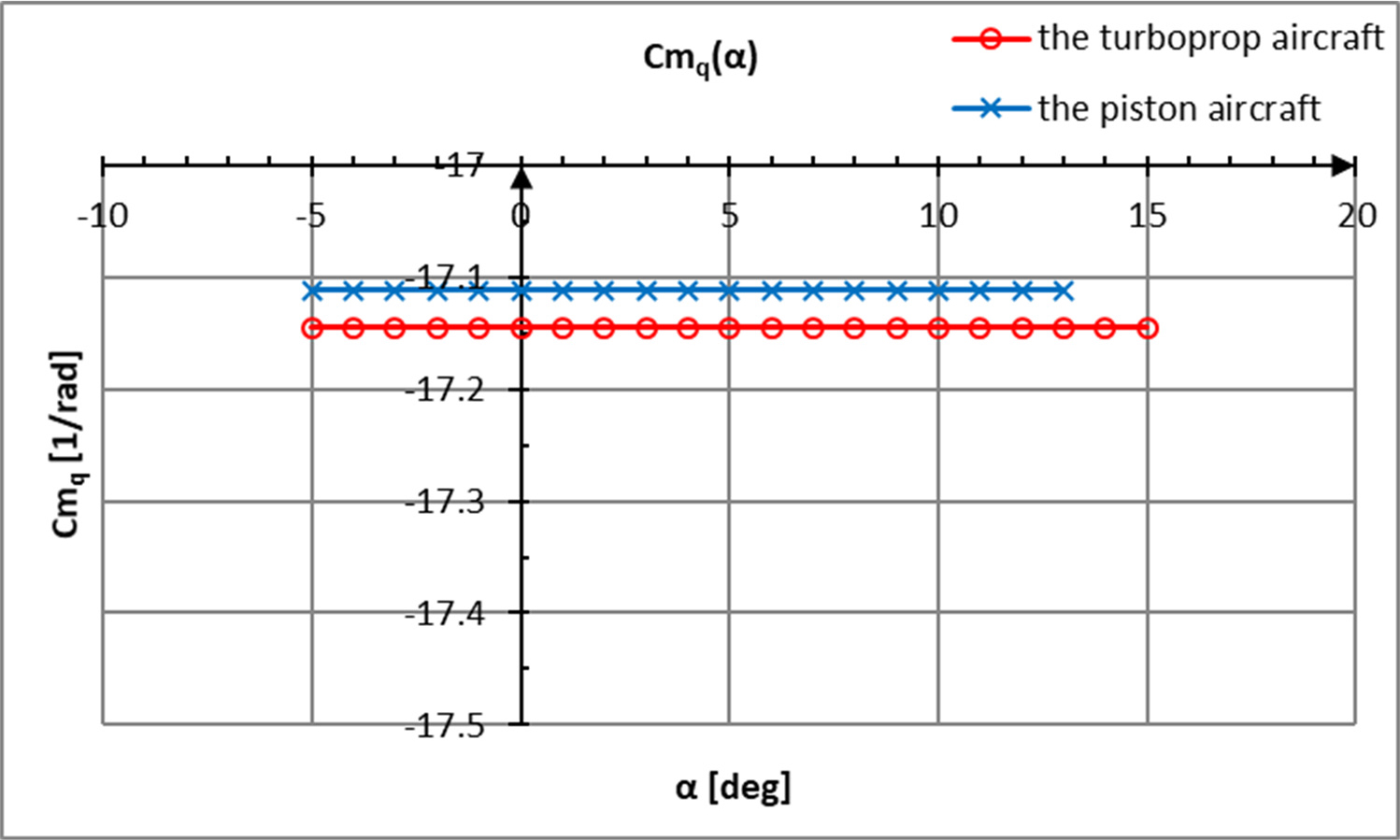
Fig. 9.
Changes in stability pitching moment coefficients with respect to the pitch rate for the aircraft driven by piston and turboprop engines.
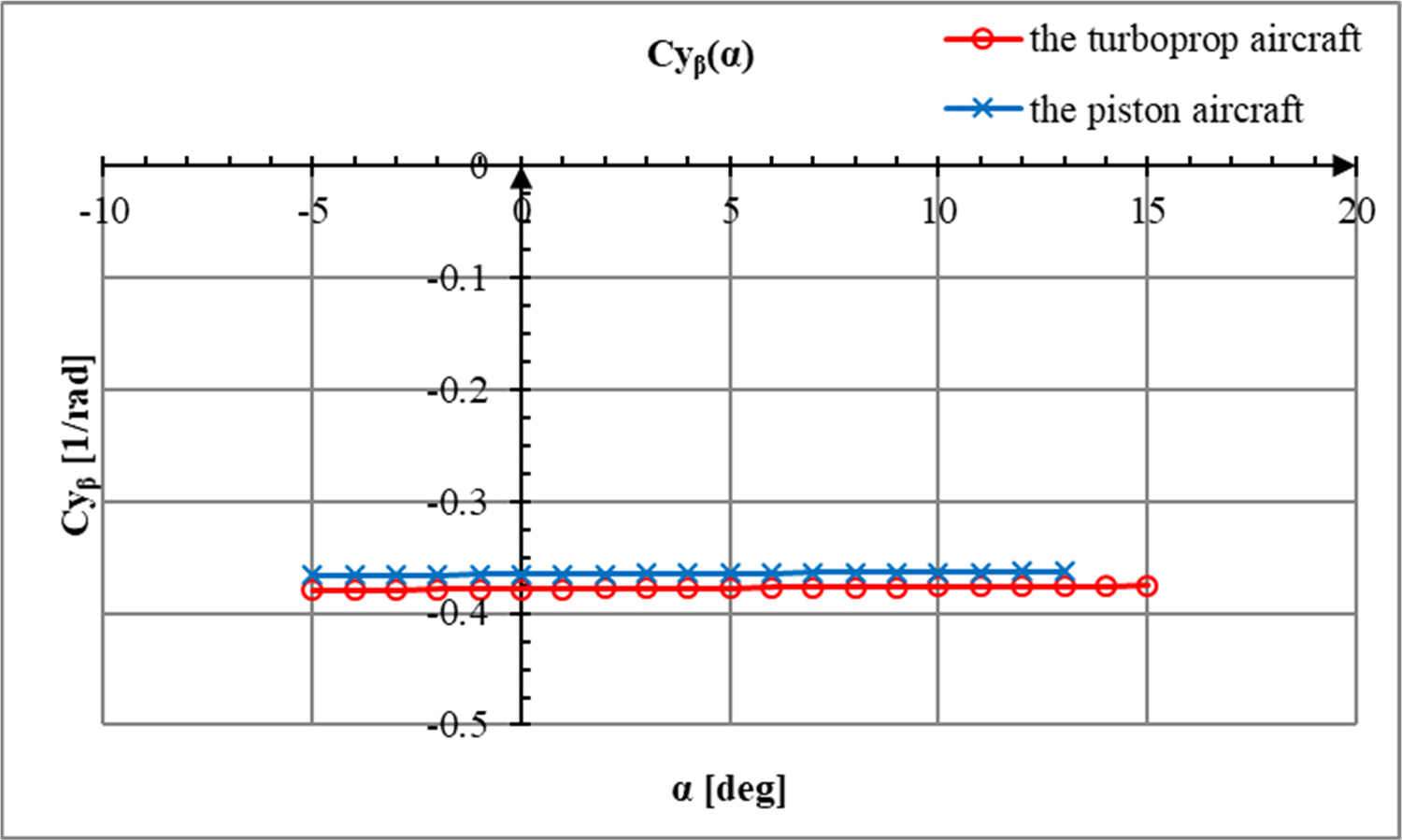
Fig. 10.
Comparison of side force coefficients variation with respect to sideslip angle for the piston and turboprop aircraft.
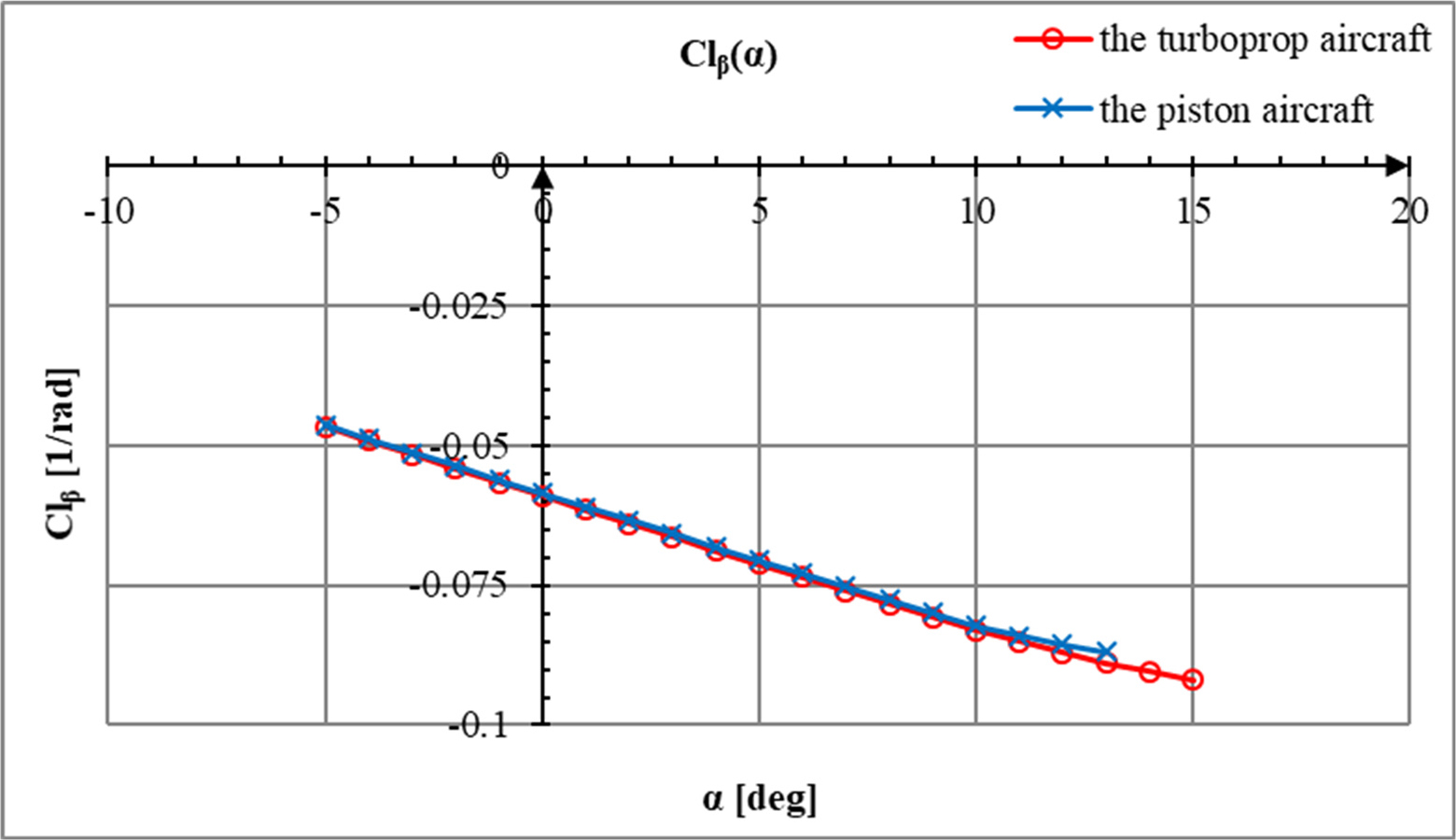
Fig. 11.
Differences in total values of rolling moment coefficients with respect to sideslip angle for the piston and turboprop aircraft.
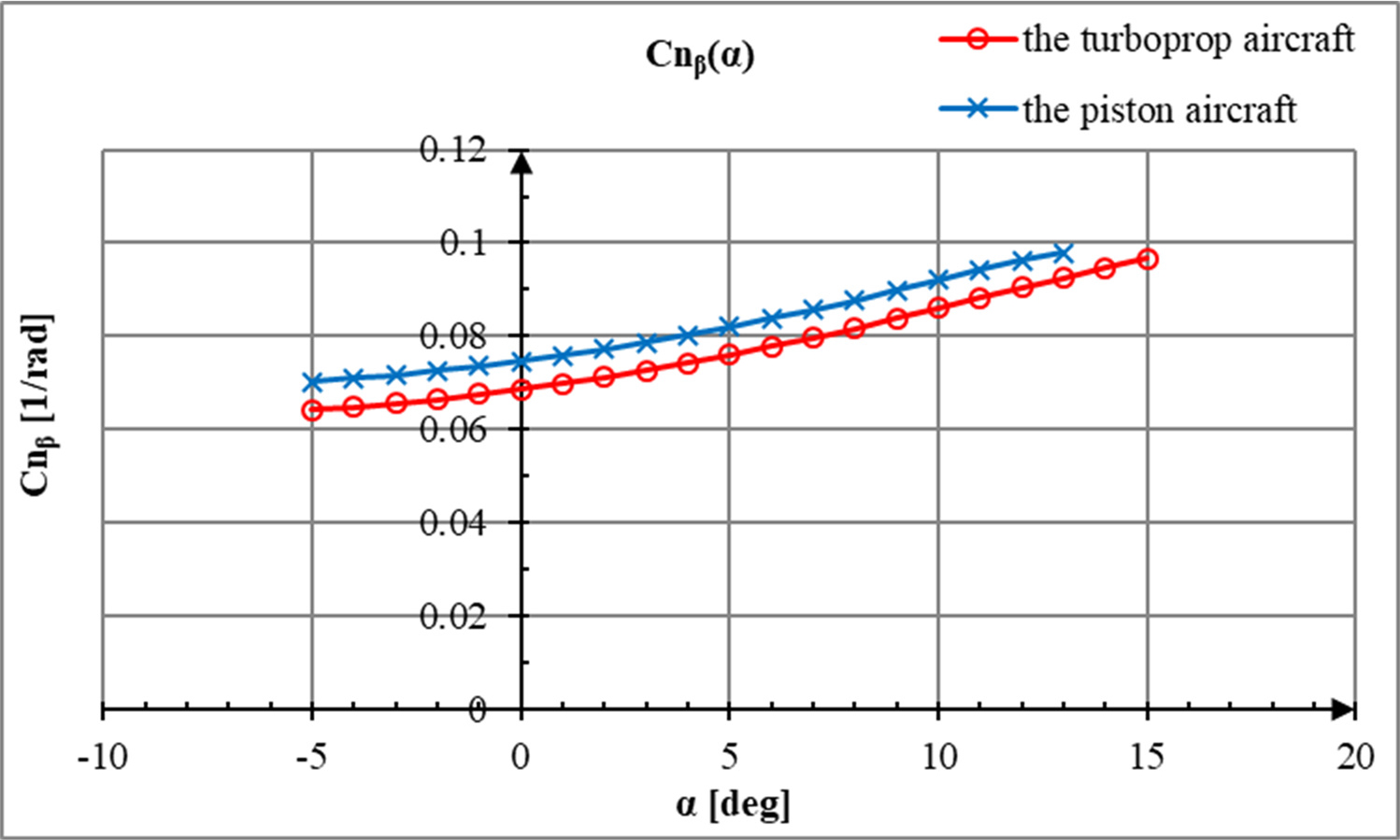
Fig. 12.
Graph showing the change of aerodynamic derivatives of yawing moment coefficients with sideslip angle for the piston and turboprop aircraft.
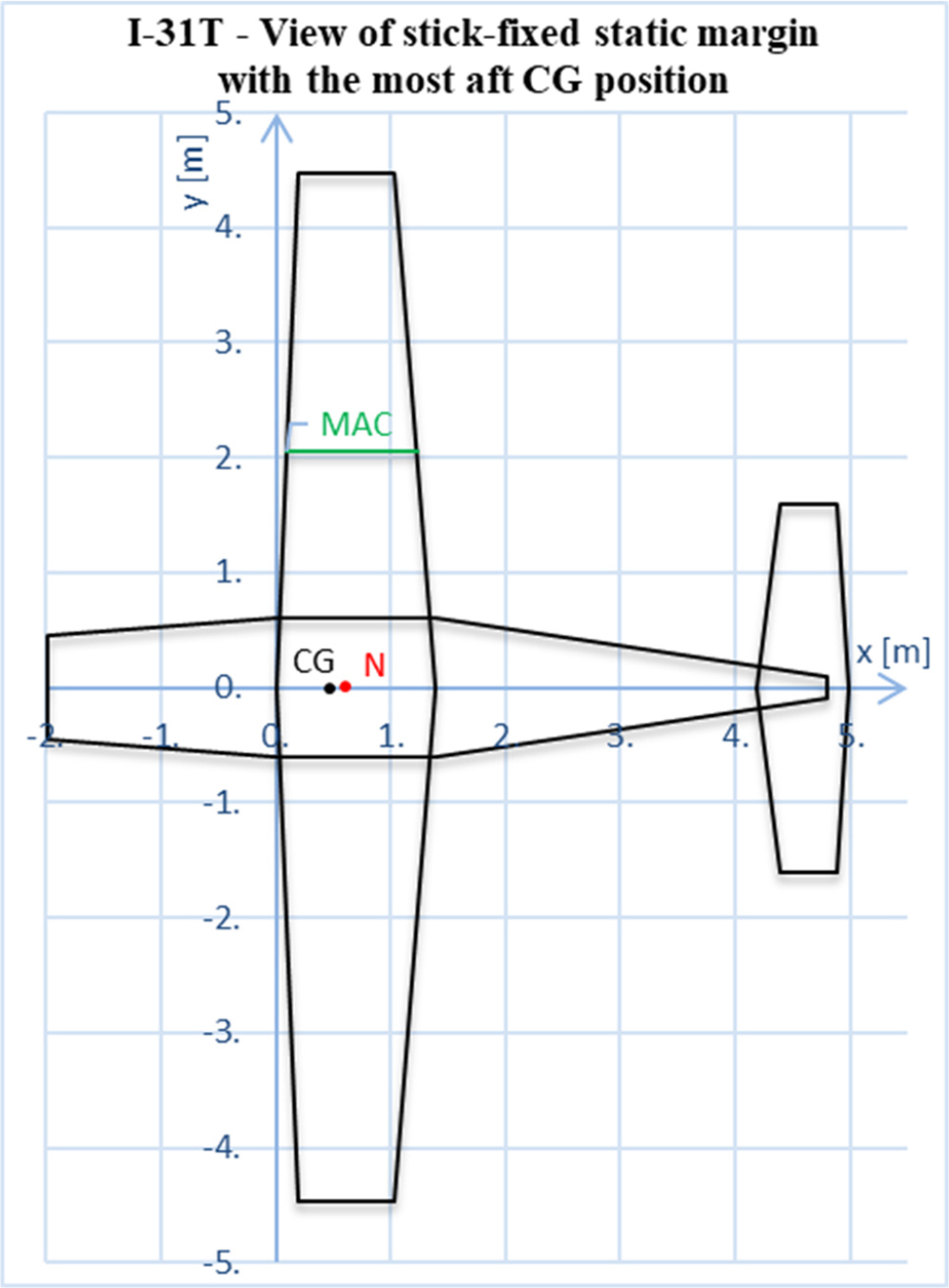
Fig. 13.
Top view of a simplified external geometry of the turboprop aircraft, with two characteristic points for the minimal static stability margin marked: the aft CG and N (for stick-fixed configuration) points.

Fig. 14.
Assessment of short period for the piston and turboprop aircraft.
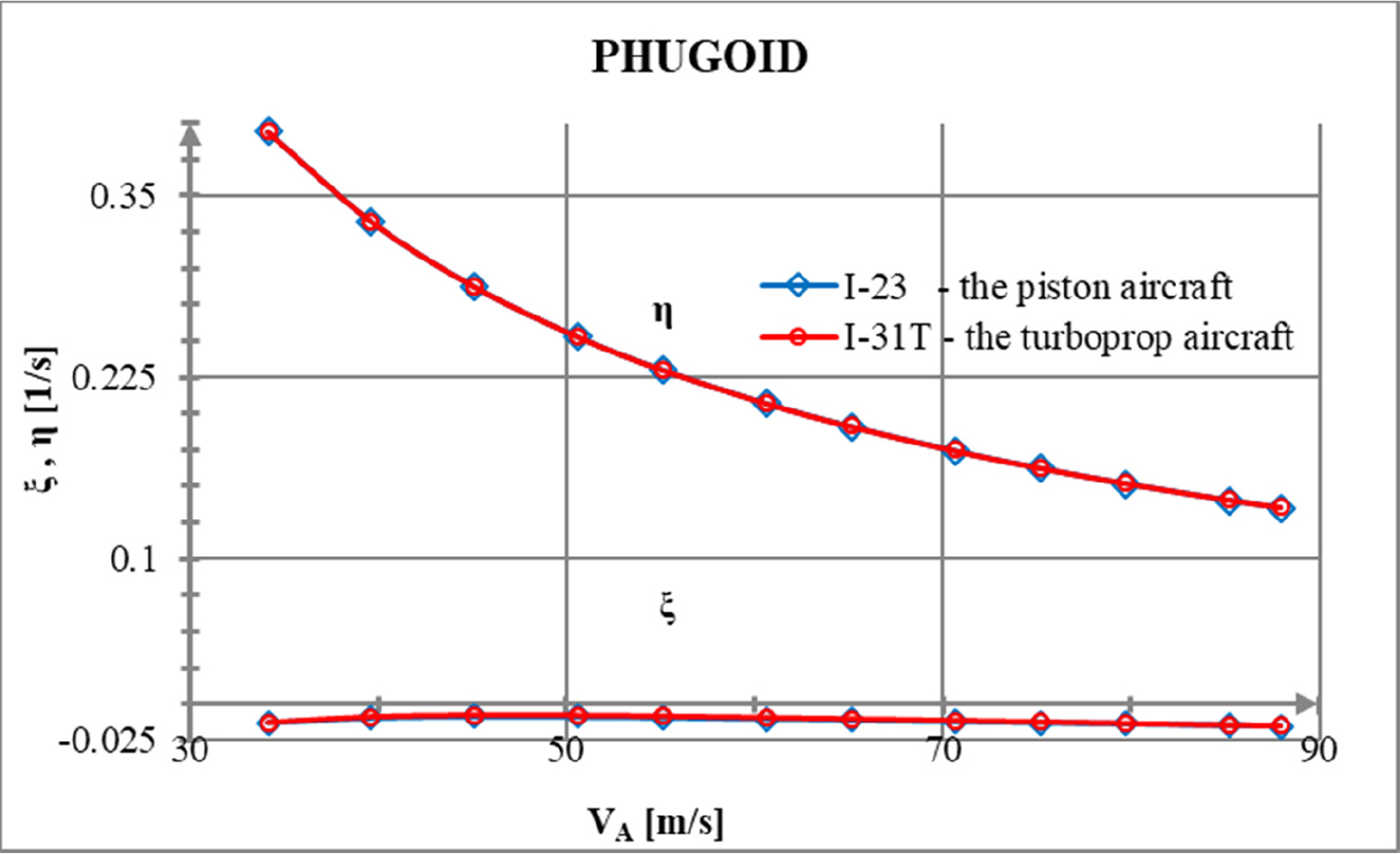
Fig. 15.
Comparison of eigenvalues corresponding the phugoid mode of the piston and turboprop aircraft.
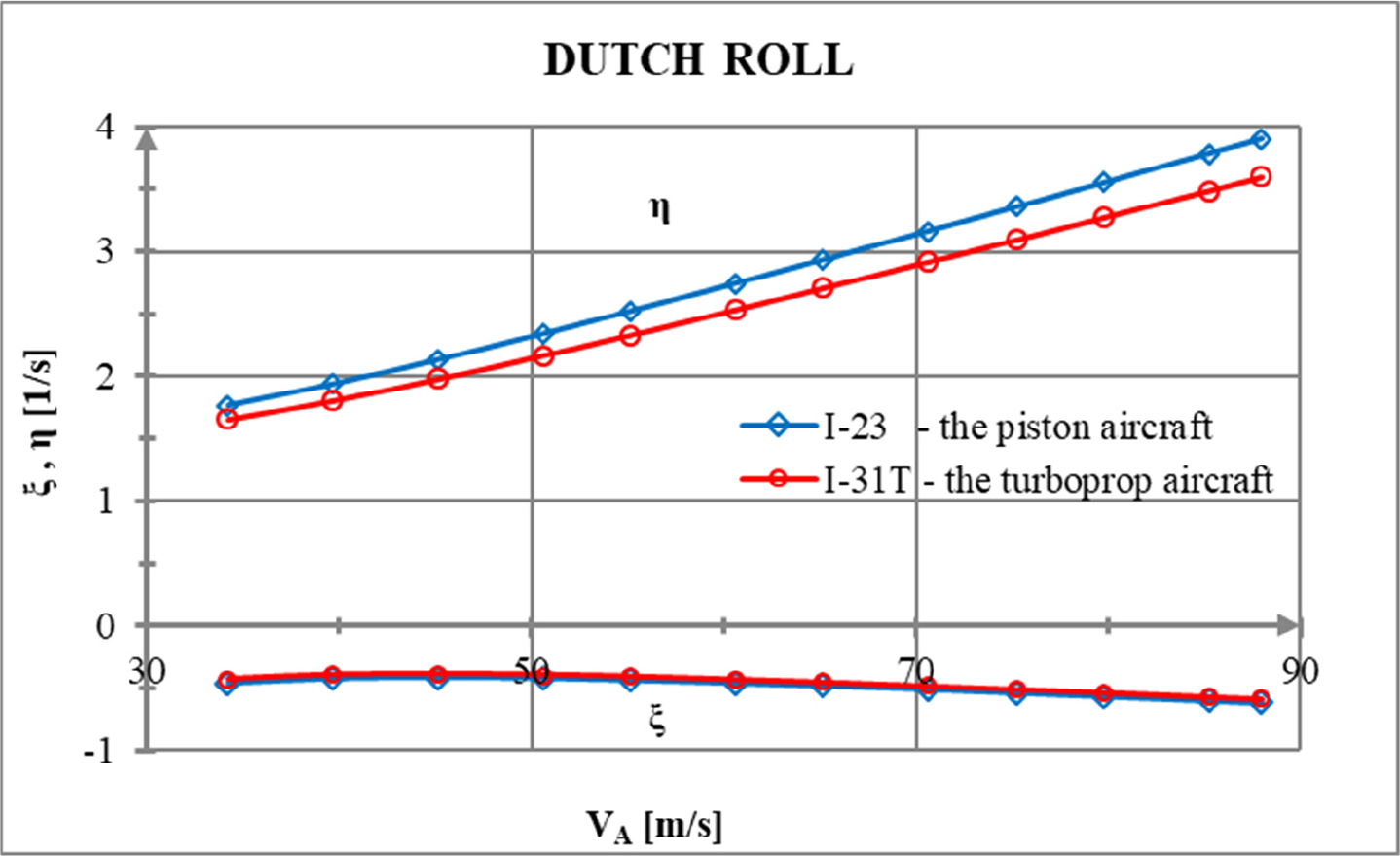
Fig. 16.
Dutch roll mode stability for the I-23 Manager and the I-31T.
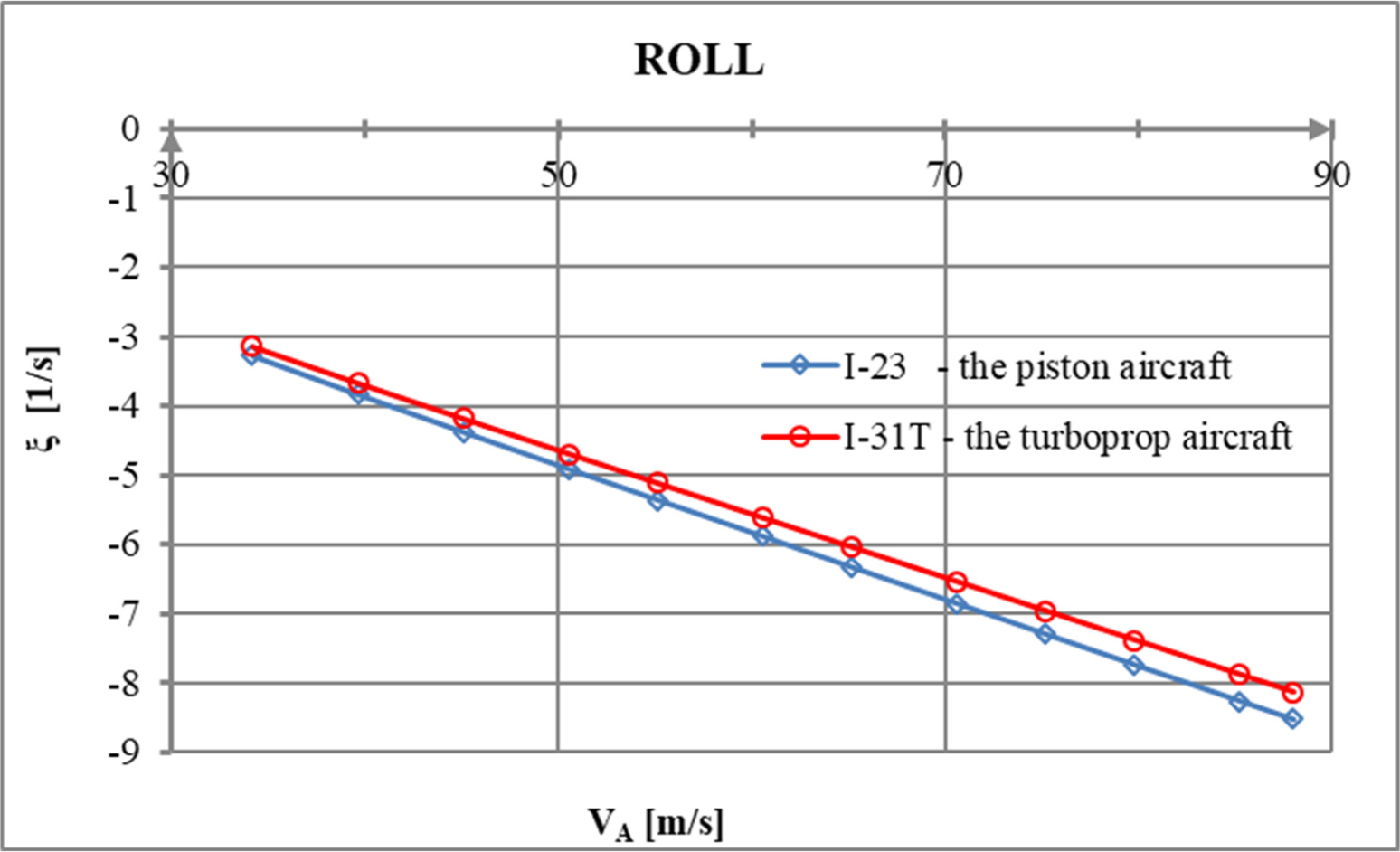
Fig. 17.
Assessment of rolling motion of the piston and turboprop aircraft.
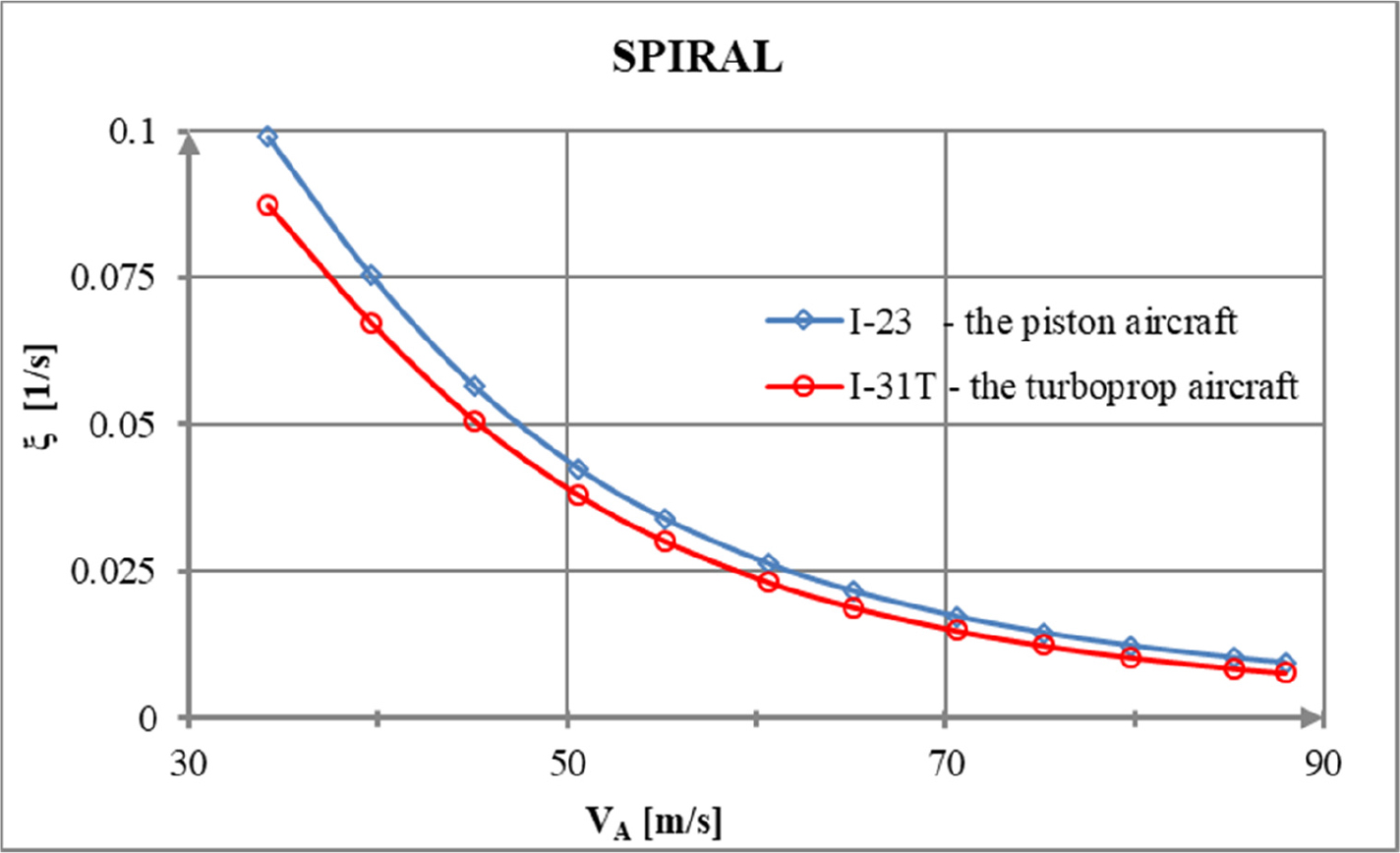
Fig. 18.
Analysis of spiral stability of the piston and turboprop aircraft.
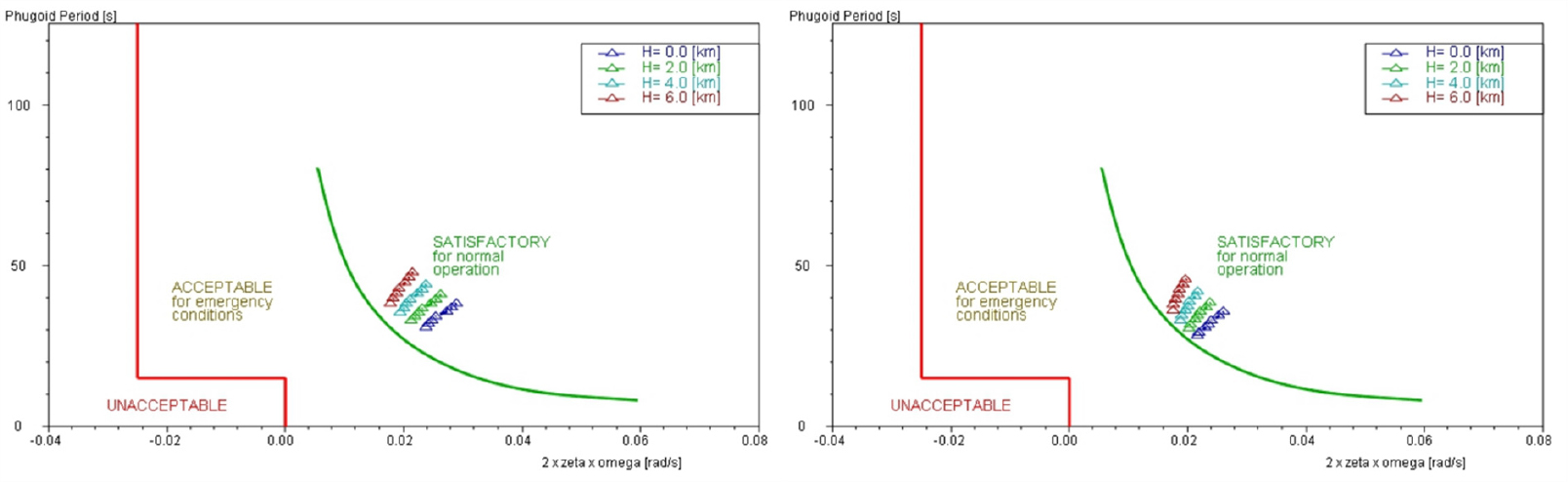
Fig. 19.
Evaluation of Phugoid mode characteristics according to ICAO Recommendation [13]. Comparison of results for the general aviation aircraft driven by a piston engine (on the left) and a turboprop engine (on the right).
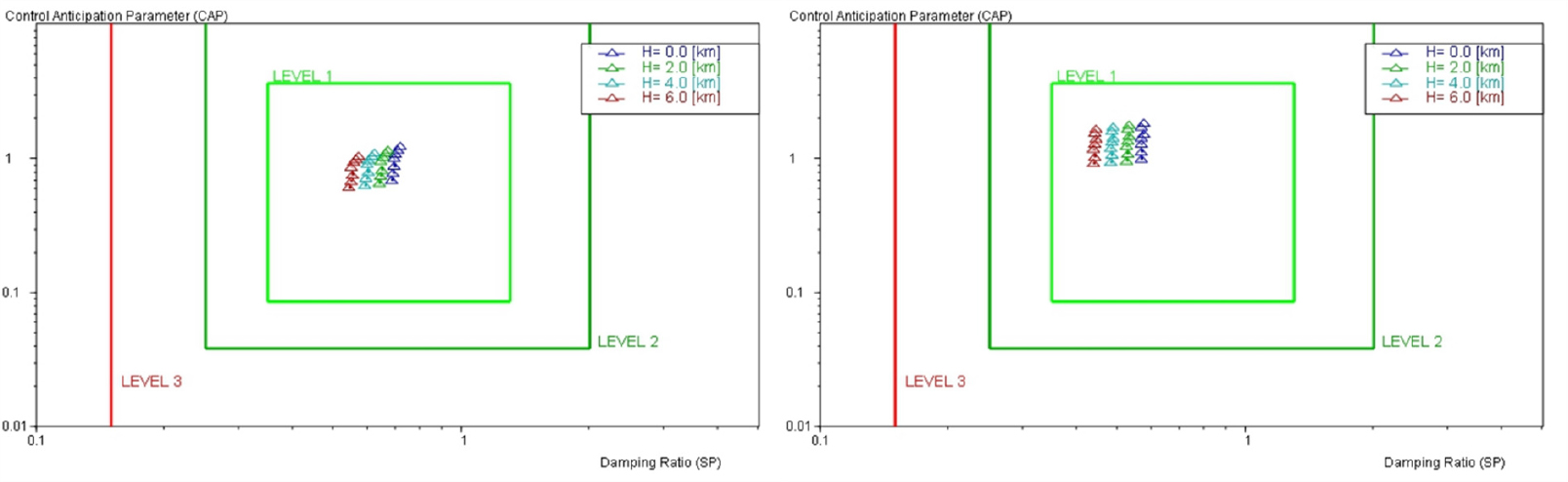
Fig. 20.
Evaluation of Short Period mode in regard to recommendation of Military Specification MIL-F-8785C [49], by assessment of Control Anticipation Parameter (CAP) [13]. Comparison of results for the chosen general aviation aircraft driven by a piston engine (on the left) and a turboprop engine (on the right).
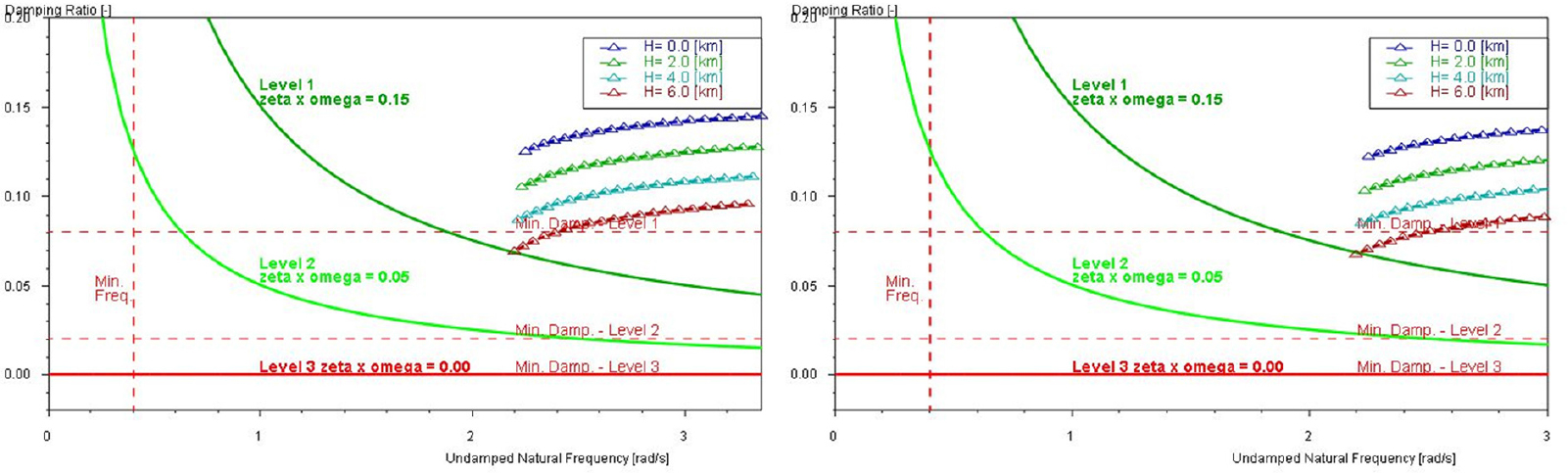
Fig. 21.
Evaluation of Dutch Roll mode with reference to U.S. Military Specification MIL-F-8785C [13,49]. Comparison of results for the chosen general aviation aircraft driven by a piston engine (on the left) and a turboprop engine (on the right).
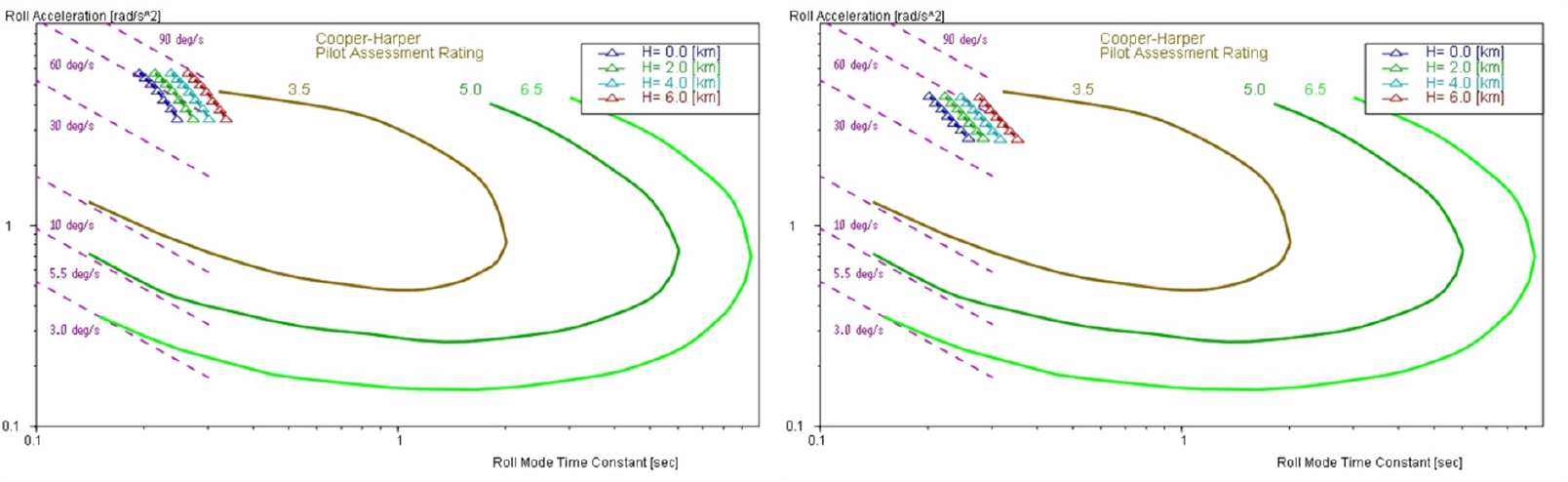
Fig. 22.
Assessment of aircraft handling qualities using the Cooper-Harper Rating Scale (CHRS): Pilot Opinion Boundaries for Roll Rate Evaluation, [13,50]. Comparison of results for the selected general aviation aircraft driven by a piston engine (on the left) and a turboprop engine (on the right).
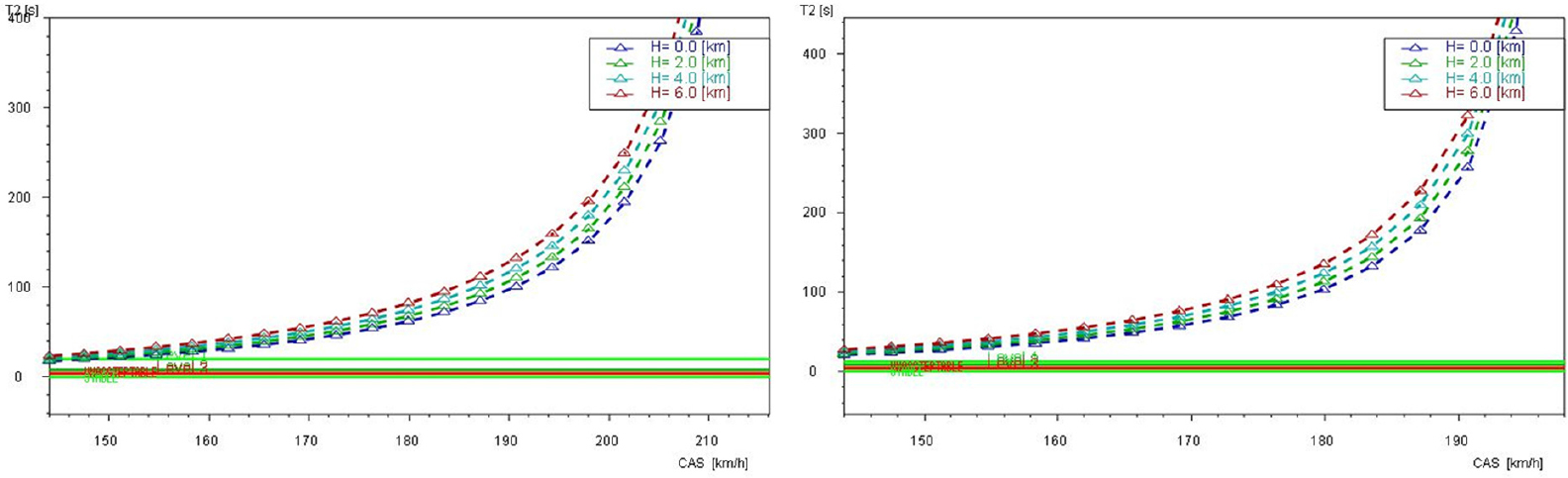
Fig. 23.
Time to double roll angle in spiral motion. Evaluation of spiral modes in relation to the recommendation given in MIL-F-8785C, [49]. Comparison of results in the high speed range for the selected general aviation aircraft driven by a piston engine (on the left) and a turboprop engine (on the right).

Fig. 24.
Evaluation of spiral mode in relation to recommendation given in MIL-F-8785C [49]. Comparison of results obtained in the high speed range for the selected general aviation aircraft driven by a piston engine (on the left) and a turboprop engine (on the right).