
INTRODUCTION
Colorectal cancer is the second leading cause of cancer-related death, with the mortality rates of patients rank from 13% to 89%, indicating the limitations of current treatments and urgent needs for more effective therapies (1–2).
Platinum-based drugs, cisplatin and it’s analogues, carboplatin, and oxaliplatin are the most effective chemotherapeutic agents in treatments of solid cancer. Beside their clinical success, there has been some limitatios observed: systemic toxicity (nephrotoxicity, liver toxicity, peripheral neuropathy, myelotoxicity and gastrointestinal toxicity) and the incidence of drug resistance (3,4,5). These limitations have initiated new investigations for other transition metal complexes that will show similar antitumor activity but being less toxic.
So far four ruthenium complexes, NAMI-A, KP1019, NKP1339 and TLD1443, have entered clinical trials. NAMI-A is selective anti-metastasis agent, whereas KP1019 acts only on primary colorectal tumors. These ruthenium complexes showed similar efficacy to platinum-based anticancer agents, but they are not completely free of toxicity. NAMI-A can damage the kidneys and have led to elevated levels of serum creatinine in animal, while the main target organs for toxic effects of KP1019 are the kidneys and bone marrow (6,7,8). Within this context, it is necessary to evaluate antitumor effects, toxicity and side effects in parallel when screening new metal-based drugs. For this reason, researchers choose organic ligands to increase selectivity for specific tissues and minimize side effects, because both metal and ligands play an important role in recognizing targets. Ruthenium(II/III) complexes with different ligands have attracted attention in recent years because of their antitumor activity, which they realize through interaction with proteins and DNA, induction of apoptosis, inhibition of metastasis, and at the same time exhibit low toxicity in healthy tissues in in vitro and in vivo assays (9).
Drug-induced oxidative stress is implicated as a mechanism of toxicity in numerous tissues and organ systems, including liver, kidney and cardiovascular system. Cisplatin and oxaliplatin are the most commonly used metallopharmaceuticals that exhibits multiorgan toxicity associated with induced redox imbalance as a possible mechanism (10, 11). Drug-induced oxidative stress also can interferes with many cellular functions, such as cell cycle progression and apoptotic pathways, that can reduce the ability of antineoplastic agents to kill cancer cells (12). Hence the importance in examining the pro-oxidative action of potentially cytostatics.
We have recently published a study demonstrating the antitumor activity of the ruthenium(II) terpyridine complexes (Ru-1 and Ru-2 complexes, Scheme 1), in in vitro and in vivo colon carcinoma models, with moderate toxicity (13). These findings encouraged us to examine the antitumor activity, oxidative status and toxicity of higher doses of Ru(II) complexes in syngeneic model of CT26 colon carcinoma in BALB/c mice. The potentially toxic effects of Ru-1 and Ru-2 complexes were evaluated concurrently and compared to oxaliplatin that is effective platinum drug for colorectal cancer.
MATERIALS AND METHODS
Chemicals
The compounds [Ru(Cl-tpy)(en)Cl][Cl] (Ru-1) and [Ru(Cl-tpy)(dach)Cl][Cl] (Ru-2) were synthesised as reported previously (14). All other chemicals were used as purchased without further purification.
Animals
Male BALB/c mice of 6–8 weeks of age, with weights of 20–25 g were used in all experiments. Mice were housed in a temperature controlled environment (22–24°C) with a 12-h light–dark cycle and were given standard laboratory food and water ad libitum. All animals received humane care, and all experiments were approved (01-8461/2) by and conducted in accord with, the Guidelines of the Animal Ethics Committee of the Faculty of medical sciences of the University of Kragujevac (Kragujevac, Serbia).
Animals were randomized into 8 groups with 6 mice that were ear-tagged and followed-up individually throughout the study. Each complex was administered intraperitonealy at dose of 5 mg/kg dissolved in 200 μl saline, twice weekly for four times in total. Treatment groups were as follows: healthy (tumor free) mice that recived: Ru-1, Ru-2, oxaliplatin and sterile saline (control); and tumor-bearing mice who received the same. The dosage of oxaliplatin was selected as 5 mg/kg according to the literature (15,16).
Cell line
Mouse colon carcinoma cell line (CT26), was obtained from the American Type Culture Collection (ATCC). The cells were maintained in DMEM medium supplemented with 10% fetal bovine serum, 200 mM l-glutamine 10,000 units/ml penicillin and 10 mg/ml streptomycin (all from Sigma, Germany). The cells were cultivated at 37 °C in absolute humidity in an atmosphere containing 5% CO2.
Tumor implantation and drug injection
Subcutaneous tumors are for many years the mainstay of murine tumor models, with direct measurement of tumor size utilized to study effects of drugs and targeted therapies (17). A BALB/c mice bearing syngeneic CT26 mouse colon carcinoma has been selected as the test system. For tumor induction, 1×10⁶ CT26 cells suspended in 100 μl of DMEM were injected subcutaneously into the left flank. The administration of complexes or saline began on 6th day after injection of CT26 cells. Each drug was administered intraperitoneally at doses of 5 mg/kg dissolved in 200 μl saline, twice weekly for four times in total (Scheme 1). Groups were as follows: Ru-1, Ru-2, oxaliplatin and control (sterile saline). Tumorbearing mice were examined every 3 days for tumor development and progression and monitoring body weight. Tumor size was measured with a caliper and tumor volume was calculated as follows: TV (mm3) = (L × W2)/2, where L is the longest and W the shortest radius of the tumor in millimeters. Results were expressed as means of tumor volumes ± SD.
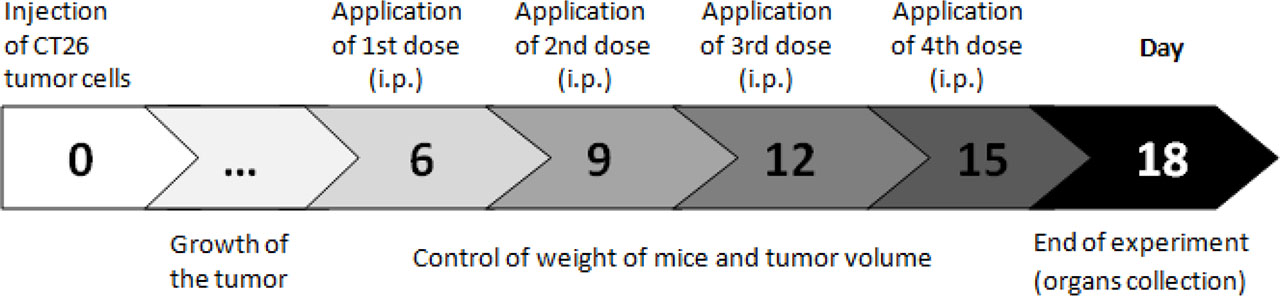
Scheme 1.
Schematic representation of the protocol of the in vivo experiments performed on CT26 tumor-bearing BALB/c mice treated with ruthenium(II) complexes and oxaliplatin.
Relative Organ Weight
On the 18th day from tumor induction, all the animals were sacrificed in an atmosphere saturated with diethyl ether. Different organs such as heart, liver, lungs and kidneys were carefully dissected out and weighed in miligrams (absolute organ weight). The relative organ weight of each animal was then calculated as follows:
Assessment of toxicity
In order to assess the tolerability of the application of Ru(II) complexes, the survival and weight of mice were monitored during the experiment. The 72 h after the last treatment, all mice were sacrificed in an atmosphere saturated with diethyl ether. Blood samples were collected in tubes without anticoagulant, processed and analyzed by chemistry analyzer Roche Cobas Mira Plus for blood urea nitrogen, creatinine, as well as liver enzymes aspartate aminotransferase (AST) and alanine aminotransferase (ALT). After sacrificed, organs (heart, liver, lungs and kidneys) as well as tumor were isolated for histopathological analysis. The tissues fixed in 4% paraformaldehyde were embedded in paraffin, cut into thin sections and mounted on glass slides. The tissue sections were stained with hematoxylin and eosin for microscopic examination.
Oxidative stress assays
At the end of experiment isolated tissue of tumor, heart, liver, lungs, and kidney from all experimental animals were frozen at −80 °C. The each tissue was homogenized in phosphate buffer pH 7.4 (1:10 ratio) using an electrical homogenizer, on ice. Then, tissue homogenates were centrifuged at 1200 g for 20 min at 4 °C. The resulting supernatants were isolated and stored at −80 °C until determination of biochemical parameters (18). Index of lipid peroxidation, measured as TBARS (thiobarbituric acid reactive substances) was determined as marker of oxidative stress. The antioxidative defense system was estimated by determination of levels of reduced glutathione (GSH) and activity of antioxidative enzymes in tissue homogenats: superoxide dismutase (SOD) and catalase (CAT). All parameters were determined spectrophotometrically (UV-1800 Shimadzu spectrophotometer).
Index of lipid peroxidation (measured as thiobarbituric acid reactive substances-TBARS)
The degree of lipid peroxidation in homogenate of tissue was estimated by measuring of thiobarbituric acid reactive substances (TBARS) using 1% thiobarbituric acid (TBA) in 0.05 sodium hydroxide (NaOH) incubated supernatant of homogenized tissue at 100 °C for 15 min and measured at 530 nm (18, 19).
Determination of reduced glutathione (GSH)
The level of reduced glutathione (GSH) was determined based on GSH oxidation with 5.5-dithio-bis-6.2-nitrobenzoic acid using the method reported by Beutler. Detection was performed at 420 nm. The amount of GSH was expressed as nmol/g tissue (20).
Determination of catalase (CAT)
CAT activity was determined according to Aebi. Diluted homogenate of tissue (1:7 v/v) was treated with chloroformethanol (0.6:1 v/v). CAT buffer, prepared sample, and 10 mM H2O2 was used for determination. Detection was performed at 360 nm. The amount of CAT was expressed as U/g tissue (21).
Determination of SOD
SOD activity was determined by the epinephrine method of Beutler. Homogenate of tissue was mixed with carbonate buffer, and then epinephrine was added. Detection was performed at 470 nm. The amount of SOD was expressed as U/g tissue (22).
Statistical analysis
Statistical analysis of experimental data included the following basic descriptive statistics: the mean value and standard deviation (SD). For testing the normality of the distribution parameters, the Shapiro–Wilk and Kolmogorov–Smirnov test were used. To test the statistical significance of the results and to confirm the hypothesis, the Student’s t test was used. A database analysis of the results was performed using software package SPSS 20 (SPSS Inc., Chicago, IL, USA). A p value < 0.05 was considered statistically significant.
RESULTS
The Ru-1 and Ru-2 inhibits tumor growth in CT26 tumor bearing mice
To detect the antitumor activity of Ru-1 and Ru-2 in vivo, we used a CT26 xenograft tumor model. CT26 cells (1×10⁶) were subcutaneously injected into the left flank of BALB/c mice. Six days later, the tumors were palpable in all animals. The complexes Ru-1, Ru-2 and oxaliplatin, were injected intraperitoneally in a dose of 5 mg/kg every three days, starting from the 6th day after the inoculation of CT26 cells, and a control group was received saline. After being treated for 12 days, the mice were sacrificed and the tumors were stripped off.
The difference in tumor volume was observed from the 9th day after the inoculation of CT26 cells, respectively after the first dose of the examined Ru-1 complex. The difference in tumor volume between the mice that was treated with 5 mg/kg Ru-1 and all other groups is retained until the end of the experiment, so that after the second administered dose, a statistically significant difference was established in relation to the control, but also in relation to the other ruthenium complex - Ru-2, as well as in relation to oxaliplatin. On day 15 of the experiment, the difference between the group treated with 5 mg/kg of Ru-1 and all other groups was maintained, the Ru-2 complex also statistically significantly inhibiting tumor growth compared to the control. On the last day of the experiment, all experimental groups had a statistically significantly smaller tumor volume compared to the control group treated with saline alone. The tumor growth is shown in Figure 1, which suggested the tumors grew the slowest in the group treated by Ru-1 and Ru-2.
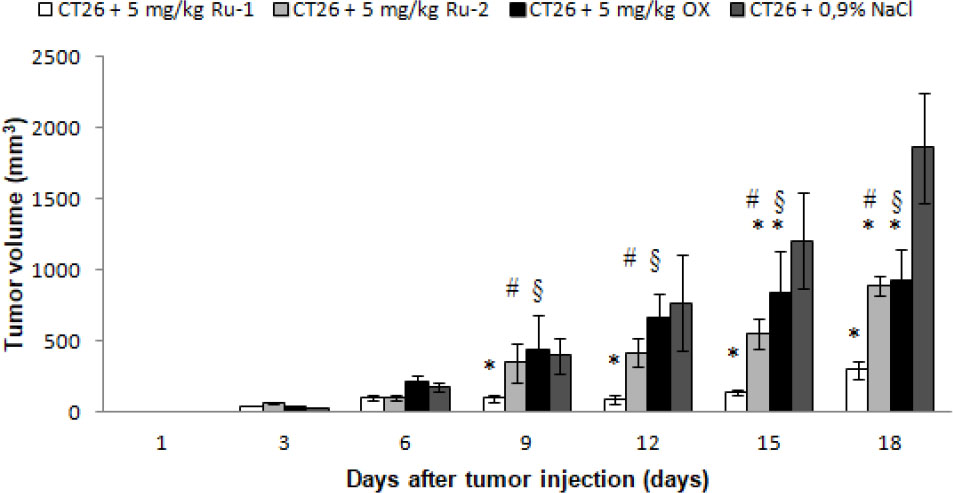
Figure 1.
The tumor volume per group through days of experiment.
The data are expressed as mean ± SD and were analysed by Student’s t тест, p<0.05, * saline treated cells vs. cells treated with Ru-1, Ru-2 or oxaliplatin; # Ru-1 vs. Ru-2; § Ru-1 vs. OX; ¶ Ru-2 vs. OX.
Evaluation of general toxicity
The survival rate, body weight and relative organ weights of heart, liver, lungs and kidneys were determined for each animal for investigating the general toxicity during the in vivo antitumor evaluation. The organ index was calculated as % body weight.
All tumor-free and tumor-bearing mice from control and oxaliplatin group survived until the end of study, while there was a mortality after the second dose of Ru-1 in group of healthy mice, and after third and fourth dose in groups of tumor-bearing mice who received Ru-1 or Ru-2 (Figure 2).
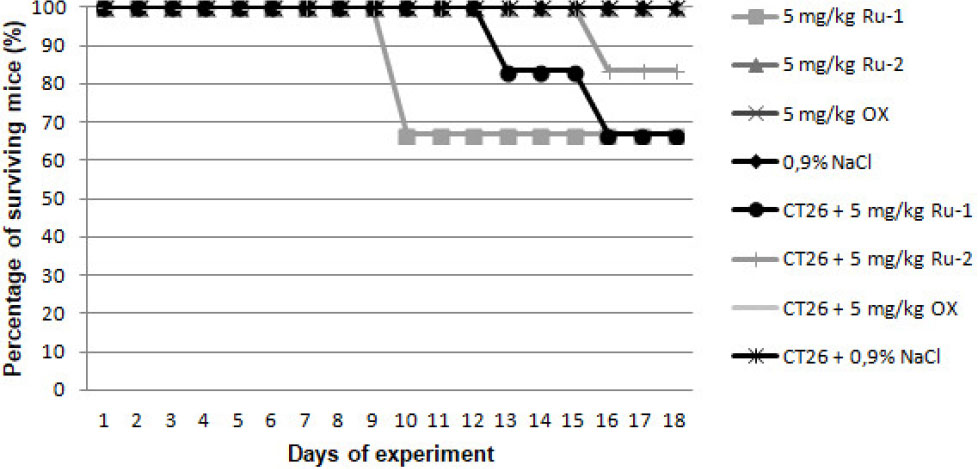
Figure 2.
Survival rate of healthy mice and tumor-bearing mice after the administration of Ru(II) complexes and oxaliplatin.
From first day to 18th day of experiment, there were changes in the body weight of mice in all the groups. The control group of mice as well as the treated group of mice, who received oxaliplatin and Ru-2 gained weight throughout the duration of treatment, whereas weight loss was observed in mice who received Ru-1, in healthy and in tumor-bearing mice. However, these changes in the body weights of treated mice were not significantly different at the beginning and at the end of the experiment (Figure 3).
There were no significant changes in the relative weights of isolated organs (heart, liver, lungs and kidney) between the groups. It is interesting that the relative weight of the liver in healthy mice who received Ru-1 was the highest, while in tumor-bearing mice who received the same complex was the lowest (Figure 4).
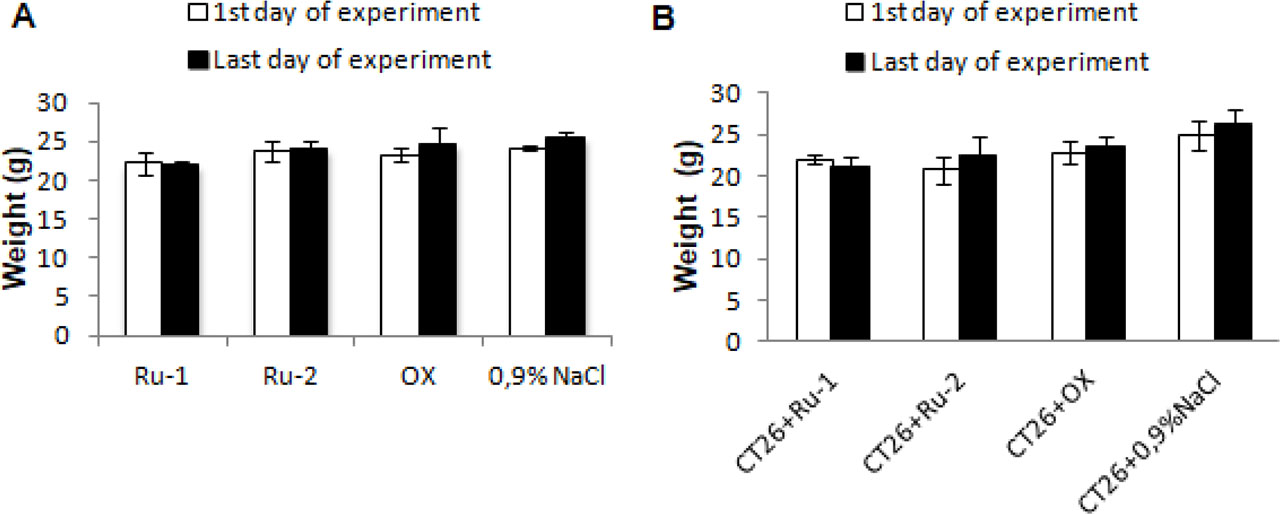
Figure 3.
Body mass of healthy (A) and tumor-bearing mice (B) before and after treatment with Ru(II) complexes and oxaliplatin. The data are expressed as mean ± SD and were analysed by Student’s t test, * p < 0.05.
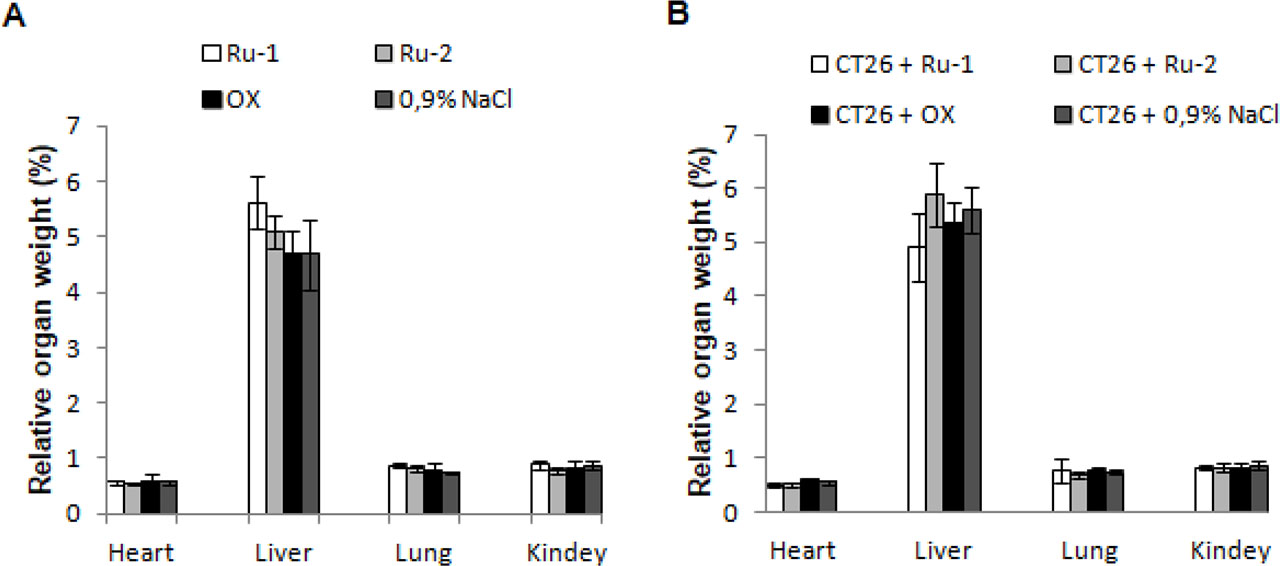
Figure 4.
The relative mass of isolated organs of healthy mice (A) and tumor-bearing mice (B) after treatment with Ru(II) complexes and oxaliplatin. The data are expressed as mean ± SD and were analysed by Student’s t test, * p < 0.05.
The serum concentrations of the biochemical markers ALT, AST, urea and creatinine were obtained to evaluate liver and renal functions. The obtained serum urea and creatinine values indicate that the use of Ru(II) complexes and oxaliplatin did not affect the uree or creatinine concentration in relation to the group of healthy mice who received saline. Even statistically significantly lower urea concentrations were observed in the group that received Ru-2 in relation to the group of healthy mice who received Ru-1 (p=0.038; Figure 5A). Also statistically significantly lower creatinine concentrations were observed in the group that received Ru-1 versus all other groups of healthy mice (p=0.046; Figure 5B).
The concentration of urea and creatinine in the serum of tumor-bearing mice after treatment with the tested complexes in a dose of 5 mg/kg were slightly different. A group of mice that received intraperitoneal Ru-2 had statistically significantly higher urea concentrations compared to all other groups (significant difference from: Ru-1 group (p=0.005); oxaliplatin group (p=0.019); control group (p=0.027); Figure 5C). Also, there were statistically significantly higher creatinine concentrations in Ru-2 group comparing to groups of mice receiving intraperitoneal oxaliplatin (p=0.021); or saline (p=0.001) (Figure 5D).
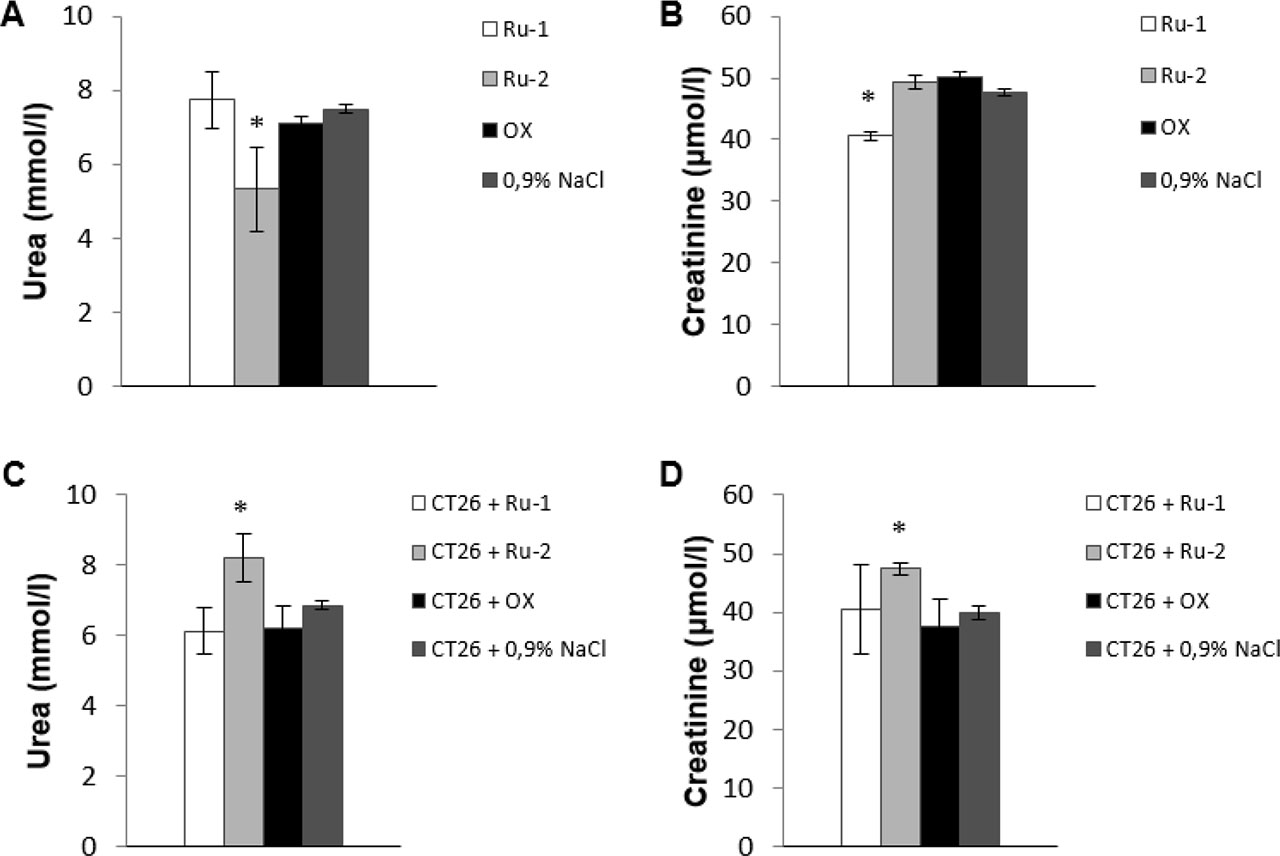
Figure 5.
Concentration of urea and creatinine in the serum of healthy (A, B) and tumor-bearing mice (C, D) after treatment with Ru(II) complexes and oxaliplatin. The data are expressed as mean ± SD and were analysed by Student’s t test, * p < 0.05.
For the evaluation of liver function, the activity of transaminases (ALT and AST) in serum of healthy mice as in tumor-bearing mice was determined after intraperitoneal administration of the Ru(II) complexes, oxaliplatin or saline. The obtained ALT and AST values clearly indicate that the intraperitoneal application of the Ru(II) complexes leads to a statistically significant elevation in the value of these two parameters. The group of healthy mice as in tumor-bearing mice who intraperitoneally received 5 mg/kg Ru-2 had statistically significantly higher ALT concentrations compared to all other groups (significant difference from: Ru-1 group (p=0.000); oxaliplatin group (p=0.000); control group (p=0.000); Figure 6 A, C), and statistically significantly higher AST concentrations than mice intraperitoneally receiving oxaliplatin (p=0.007) or saline (p=0.000), (Figure 6 C, D). The healthy mice as in tumor-bearing mice who received intraperitoneally 5 mg/kg Ru-1 had statistically significantly higher ALT and AST concentrations than mice intraperitoneally receivied oxaliplatin (p=0.000; p=0.000) or saline (p=0.000; p=0.000), (Figure 6 C, D). There was no difference in the values of ALT and AST between the group that received intraperitoneally oxaliplatin comparing to the control group (Figure 6 A, C).
The fields of necrosis were observed in sections of the primary tumor in all experimental groups (Figure 7A). A cross section of the lungs showed the presence of passive hyperemia, rupture of alveolar septum (emphysema), desquamation of the alveolar epithelium, necrosis and desquamation of the respiratory epithelium. Only in the group treated with Ru-1 complex all mentioned changes were present, while in others groups there were mostly present passive hyperemia and rupture of alveolar septum (Figure 7B). Dilated interstitium was observed in tissue sections of the heart in all treated groups. Passive hyperemia, degenerative changes of cardiomyocytes and hypertrophy of cardiomyocyte were present in the group treated with Ru-2 complex, while in group treated with Ru-1 complex there were present focal coagulation necrosis of the myocardium and degenerative changes of cardiomyocytes too (Figure 7C). Passive hyperemia of kidney tissue sections was found in control group and oxaliplatin treated group. While more severe changes in the kidney tissue were observed in the groups treated with ruthenium (II) complexes, such as glomerular hypercellularity, parenchymal degeneration of the tubular epithelium, intraluminal cylinders and bleeding in the interstitium (Figure 7D). Passive hyperemia of liver tissue sections was found in all groups. Anisocytosis and anisocoria of hepatocytes, hydrops and ballooning degeneration of hepatocytes, were present in liver tissue sections from oxaliplatin trated group, while in Ru-1 group in addition to the mentioned changes, there were additionally present focal and confluent necrosis, portal space infiltration, portal and periportal hepatitis (Figure 7E).
In order to assess the effects of Ru(II) complexes on markers of oxidative stress and antioxidant defense system, as possible mechanisms of action or toxicity, we determined the TBARS, GSH, SOD and CAT in the homogenate of tumor, heart, liver, lungs and kidney tissues.
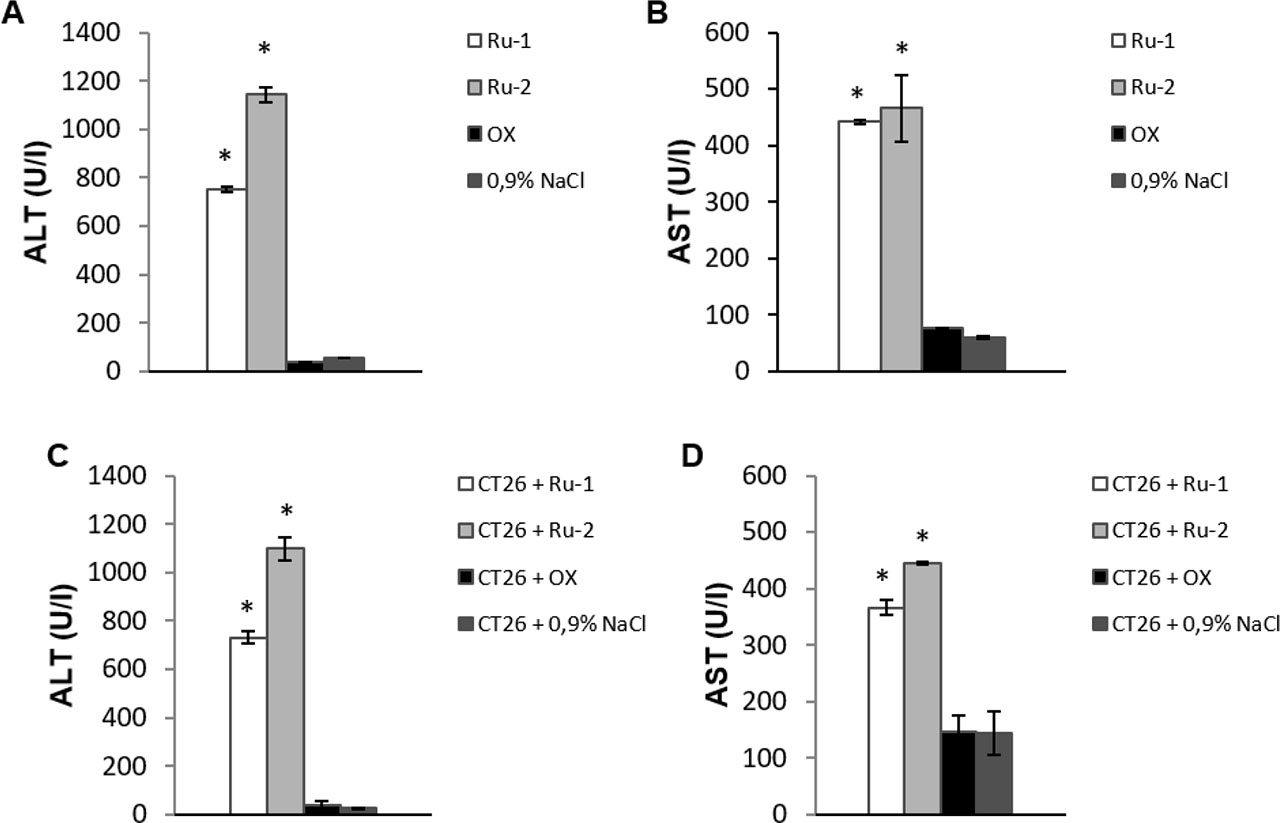
Figure 6.
Concentration of transaminases (ALT and AST) in the serum of healthy (A, B) and tumor-bearing mice (C, D) after treatment with Ru(II) complexes and oxaliplatin. The data are expressed as mean ± SD and were analysed by Student’s t test, * p < 0.05.
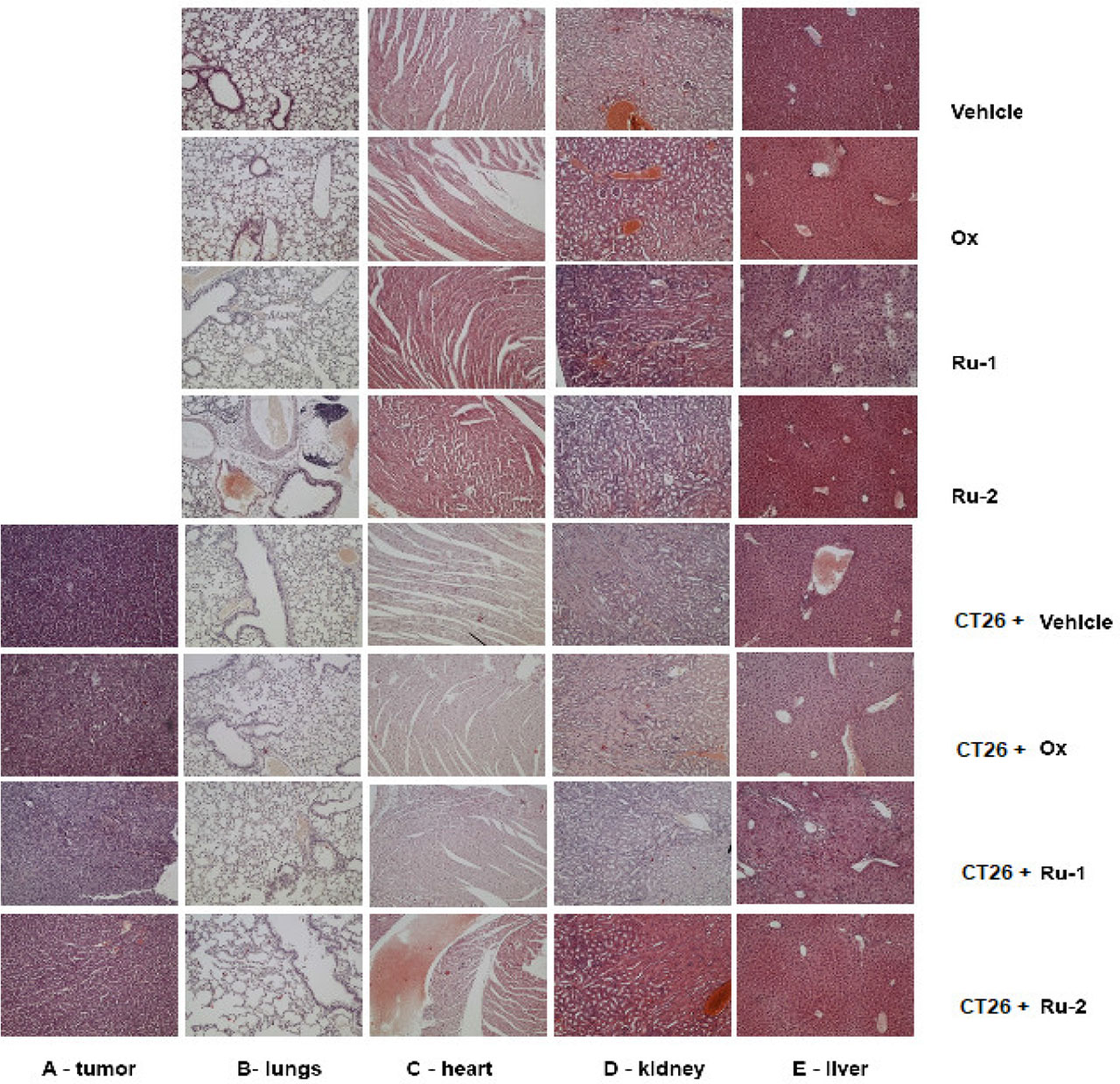
Figure 7.
Histological examination. Representative hematoxylin and eosin staining of (A) tumor sections, (B) lungs, (C) heart, (D) kidney and (E) liver tissue of healty and CT26-tumor bearing mice treated with 5 mg/kg of Ru-1, Ru-2, oxaliplatin or saline (magnification at ×100).
Index of lipid peroxidation values were statistically significantly increased in the heart of mice treated with Ru(II) complexes compared to those receiving oxaliplatin or saline. A significant reduction in TBARS in the liver of mice from all experimental groups was observed in comparison to control. The use of oxaliplatin resulted in a statistically significant increase in index of lipid peroxidation in the lungs compared to control and in comparison to the group of mice treated with Ru-1. In a kidney tissue of mice treated with Ru-2 was recorded a significant leap of TBARS, compared to all other groups. The application of the Ru(II) complexes led to a significant reduction in the value of TBARS in the tumor tissue compared to the group receiving oxaliplatin or saline (Figure 8A).
Levels of non enzymatic antioxidant – GSH was significantly increased in lung of mice who received Ru-1 and Ru-2 compared to group who received oxaliplatin and control group, but on the other hand Ru-2 significantly decreased activity of GSH in kidneys in comparison to control group. While, application of oxaliplatin has led to significantly decreased activity of GSH in liver in comparison to groups that were treated with Ru(II) complexes. There were no statistically significant differences in the values of GSH between groups in the heart and tumor (Figure 8B).
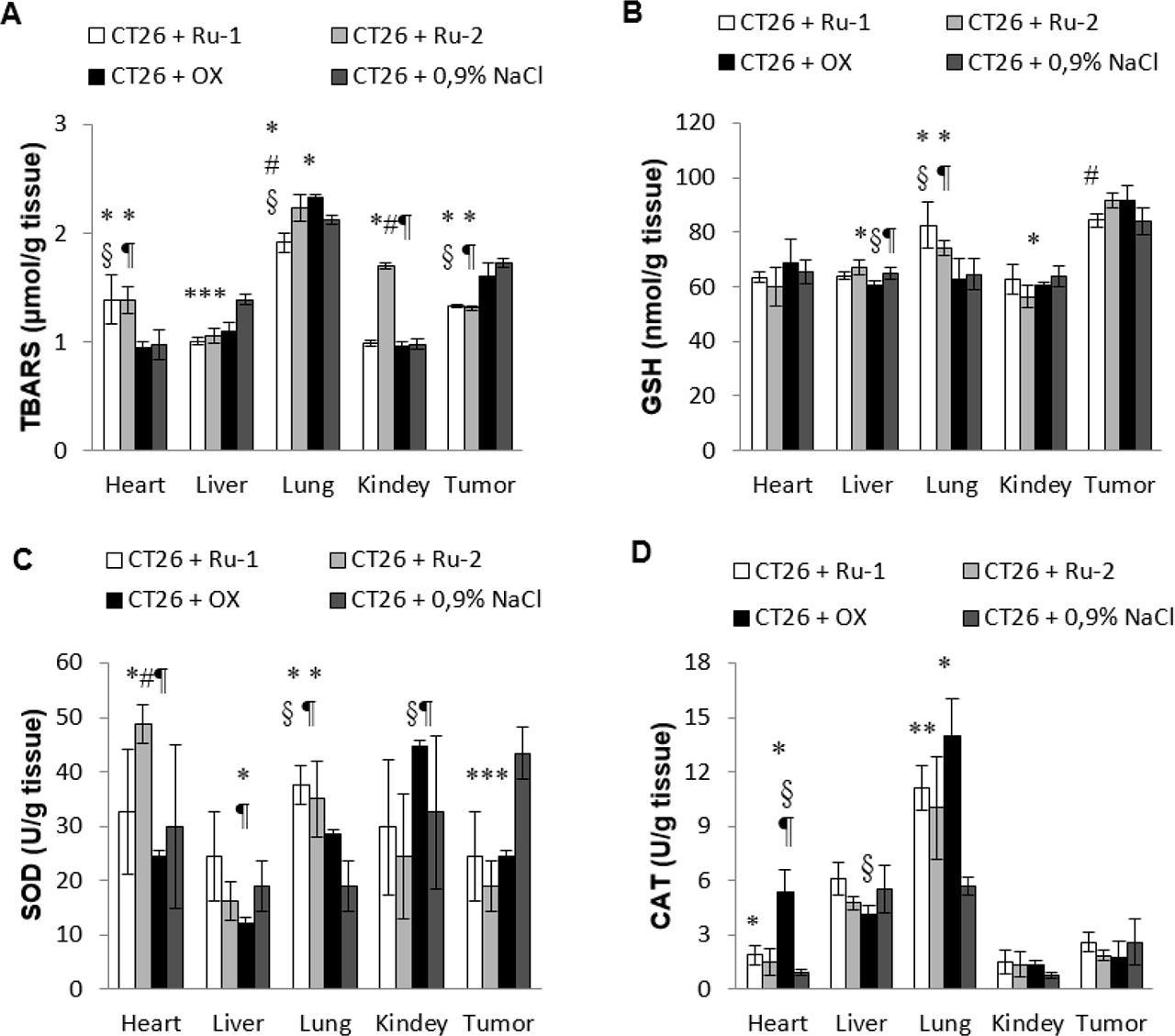
Figure 8.
Values of (A) TBARS, (B) GSH, (C) SOD and (D) CAT in the homogenate of tumor, heart, liver, lungs and kidney tissues. The data are expressed as mean ± SD and were analysed by Student’s t тест, p<0.05, * saline treated cells vs. cells treated with Ru-1, Ru-2 or oxaliplatin; # Ru-1 vs. Ru-2; § Ru-1 vs. OX; ¶ Ru-2 vs. OX.
Values of SOD was significantly increased in lungs of mice who received Ru-1 and Ru-2 compared to control group and in group of mice who received Ru-1 compared to oxaliplatin group. In heart of mice who received Ru-2, it was measured significantly increased activity of SOD in comparison to other groups. Activity of SOD was significantly decreased in liver tissue of mice who oxaliplatin compared to Ru-1 and control groups. The values of SOD were significantly decreased in tumor tissue of mice who received Ru(II) complexes and oxaliplatin compared to control group. While the highest SOD values in renal tissue were observed after oxaliplatin administration in comparison to groups treated with Ru(II) complexes (Figure 8C). Activity of antioxidant enzyme CAT was significantly increased in heart of mice who received oxaliplatin in comparison to all others groups, and in heart of mice who received Ru-1 compared to control group. Also activity of CAT was significantly increased in lungs in all three experimental groups compared to control group, but it was significantly decreased in liver of mice who received oxaliplatin in comparison to mice who received Ru-1. There were no statistically significant differences in the values of CAT between groups in the kidneys and tumor (Figure 8D).
DISCUSION
The efficacy of cisplatin and its analogues as anticancer agents has prompted the search for cytotoxic compounds that contain transition metals other than platinum and have lower systemic toxicity and higher efficacy. Ruthenium(II) complexes attracted significant attention as anticancer candidates, however, only few of them have been reported comprehensively (23,24,25). Since oxaliplatin and some ruthenium complexes have been reported to cause liver and kidney damage (3,4,5,6,7,8, 26, 27), in addition to the antitumor potential, the toxicity associated with their use was examined.
To study the toxicity of Ru(II) complexes we performed tests of liver and kidney function by evaluating serum levels of biochemical markers (Figure 5, 6) following the treatment of normal healthy mice and CT26 tumor-bearing mice. Hepatocytes produce liver enzymes such as AST and ALT in minute quantities to begin the transamination reactions in amino-acid metabolism. When liver inflammation occurs because of hepatocyte damage, injury or cancer, these enzymes are released in large quantities into the blood stream leading to increased levels in the plasma. AST and ALT levels correlate with the severity of liver damage and after hepatocyte healing or repair, these enzyme levels usually decrease again (28). We also performed histopathological evaluation, as it is considered the primary test for assessing of potentially toxicity of in vivo applied substances. And as a possible mechanism of toxicity, the oxidative status in the tissue was examined.
Both examined complexes, Ru-1 and Ru-2, in a dose of 5 mg/kg exerted significant antitumor effects against CT26 colorectal carcinoma in vivo. Ru-1 inhibited tumor growth better than oxaliplatin, while Ru-2 showed equally good effect as oxaliplatin (Figure 1), but both were more hepatotoxic and caused a higher incidence of mortality (Figures 2, 6, 7). In our previous study, we used these same Ru(II) complexes (Ru-1 and Ru-2) at lower dose (2mg/kg), wherein the Ru-1 complex exhibiting moderate antitumor activity and mild toxicity (13). Therefore, comparing the current and previous results, we can conclude that by increasing the dose of Ru(II) complexes, their antitumor potential increases significantly, but unfortunately also systemic toxicity.
Although it is known that elevated levels of ROS permit cancer cells to promote pro-tumorigenic signaling, excessive production of ROS is usually associated with anti-tumorigenic pathways that can cause oxidative stress-induced death of cancer cells (29). The modulation of oxidative stress in tumors may be related to the antitumor effect of Ru(II) complexes in mice. ROS play different roles in tumors than in healthy tissue because of variations in pH, hypoxia, and an increase in transferrin carriers in the tumor microenvironment (30). Tumors rapidly utilize oxygen and other nutrients, and the development of new blood vessels, often fails to keep the pace with tumor growth, therefore, there is usually lower O2 content in tumor cells (31, 32). Superoxide dismutase is the primary antioxidant enzyme, which provides protection of cells from oxidative damage by catalyzing dismutation of O2− to H2O2 and O2 and CAT scavenges intracellular H2O2 to further reduce oxidative cell damage (28, 30).
Ru-2 complex exhibited pro-oxidant properties, which was manifested by depletion of GSH in renal tissue and consequently increased values of TBARS (Figure 8A, C). Renal damage caused by the use of Ru-2 complex was also confirmed by biochemical and histopathological analysis (Figure 5, 7D). Both, Ru-1 and Ru-2 have led to a marked leap of serum levels of ALT and AST in healthy as well as tumorbearing mice (Figure 6). These results suggest the hepatotoxic potential of ruthenium(II) complexes, which is confirmed by histopathological analysis (Figure 7E) and is in accordance with existing results indicating the toxicogenic potential of ruthenium(II) complexes against hepatocytes (9). Although our results unequivocally indicate the toxicity of ruthenium complexes, there is many studies of similar design, which speak of their low toxicity (24, 33,34,35).
TBARS is considered an indicator of lipid peroxidation produced by peroxidation of fatty acids by reactive oxygen species and leads to irreversible demage of the cells (36). Increased TBARS levels in heart tissue of mice treated with Ru(II) complexes, indicate to cell damage, which is in agreement with ours results of histopathological analysis and with the previous research (37). Mihajlović et al., also examined the redox potential of ruthenium(II) terpyridine complexes, but in the blood and heart of rats, whereby they showed that this complexes have low potential to cause redox imbalance (38). Although at first glance it seems contradictory that the application of Ru(II) complexes led to significantly increase activity of antioxidant enzymes SOD and CAT and non enzymatic antioxidant – GSH in lungs, which would indicate their possible antioxidant properties, enhanced antioxidant protection can also be interpreted as defense mechanisms (28). This hypothesis is further supported by the fact that diethyl ether damages lung tissue, and it was used as an anesthetic in sacrificing mice (39). This is additionally indicated by the present changes in the lungs of mice that did not receive the examined complexes. Nevertheless it is not impossible that examined Ru(II) complexes possess certain antioxidant potential, given that they significantly decreased the levels of pro-oxidative marker – TBARS in liver, and so far such properties have already been described (28, 40).
Oxaliplatin did not show toxic effects if we observe the survival rate, body weight and biochemical parameters, but if we analyze the histopathological results and parameters of antioxidant protection, we see that oxaliplatin exhibited a hepatotoxic effect (Figure 2–7). These data are in acordance with existing data about confirmed hepatotoxicity of oxaliplatin. Results of several studies indicate that systemic chemotherapy with oxaliplatin can cause sinusoidal dilation at even 78% of patients. Basic mechanisms of oxaliplatin induced sinusoidal obstruction syndrome remains poorly understood. It is believed that increased generation of ROS and GSH depletion from sinusoidal endothelial cells causes the increased apoptosis in these cells allowing the damage to occur (11).
CONCLUSION
The present results suggest that examined Ru(II) complexes, in dose of 5 mg/kg exerts equal or better antitumor activity in comparison with oxaliplatin, but with pronounced toxic effects such as reduced survival rate, cardiotoxicity, nephrotoxicity and hepatotoxicity. Further research is needed to elucidate the mechanism of antitumor activity and toxicity of the Ru(II) complexes.
Notes
ACKNOWLEDGEMENT
This study is supported by Junior Project (JP 02/2018) of Faculty of Medical Sciences, University of Kragujevac, Kragujevac, Serbia.