
INTRODUCTION
Combat sports such as judo, taekwondo, karate, Brazilian jiu-jitsu, and boxing require activities of maximum and sub-maximum intensity, as well as short periods of recovery during the competition itself [1, 2]. In combat sports action comprises a combination of physical fitness and technical-tactical abilities for achieving better performances [3, 4]. However, these sports include various types of effort and rest periods during a competition [4]. Competitions are, in various combat sports, such as judo and taekwondo, divided into weight categories, where we often encounter the problem of deliberate decrease in body mass a few days prior to competition, so as to gain an advantage of over lighter opponents [5].
It is well-known that recovery between bouts is quite brief (lasting from 15 to 30 seconds in judo) [6]. During these brief intervals there is not enough time for the suitable activation of the ATP, which renders the exertion of exercising and recovery dependent on the amount of lactate in the muscles [7]. Sports science strives to apply the scientific principles of food, diet, and supplementation, since they are a necessary requirement in contemporary sport [8]. Combat sport is no exception in this respect, and it is necessary to find ways of maximizing the abilities of athletes [8]. Therefore, most athletes are focused on using supplements and energy drinks such as vitamins, proteins, carbohydrates, sodium bicarbonate, and caffeine to enhance performance [9]. Numerous athletes have indicated a tendency to use caffeine and sodium bicarbonate (better known as baking soda (NaHCO3), which are found on the list of substances banned by the International Olympic Committee [10, 11]. Numerous studies and meta-analyses [12] have shown that an increase in intracellular or extracellular buffering capacity by means of beta-alanine or sodium bicarbonate supplementation can improve the capacity and performance of exercise, especially in activities where acidosis limits performance [13,14,15]. Numerous studies [16,17,18,19,20,21,22,23,24,25] which have focused on the ergogenic activity of alkaline substances in combat sports of high intensity and short duration have confirmed a positive impact on the delay in onset of fatigue and an improvement in exercise [8, 26,27,28,29]; still, some studies deny or are unable to confirm the effect of sodium bicarbonate on the performance of combat sports athletes [26, 30]. Therefore, there is a need for further study which might in more detail explain and pinpoint the impact and association between sodium bicarbonate and the activity of combat sports athletes.
To our knowledge, no previous study has included research which focused on the effects of sodium bicarbonate supplementation in combat sports and processed it in the form of a systematic review. Therefore, the aim of this study was to find scientific research which focused on the effects of sodium bicarbonate supplementation in combat sports.
METHODS
Electronic databases such as PubMed, Google Scholar and Medline were used to search for relevant articles. The search was limited to studies published from 2006 to 2021. The key words used for the search included: “sodium bicarbonate”, “judo”, “martial arts”, “supplementation”, “wrestling” and “karate athletes”. In addition, the references of the included studies were analyzed to identify further studies in that field. The database search was limited to articles published in English. During the first phase of the search, the relevance of the titles and abstracts was analyzed. During the second phase of the search, entire articles were accessed and analyzed for inclusion. After all these steps were completed, 19 articles were selected for analysis, all of which were relevant for this study (Diagram 1). The titles and abstracts of all the analyzed articles were reviewed by two researchers, in the form of a double review. All of the studies that met the inclusion criterion were accessed in full-text form.
Articles were included in the study based on the following criteria: (1) articles from the field of combat sports; (2) sodium bicarbonate (NaHCO3) supplementation with the aim of evaluating the effects of supplementation on blood lactate concentration, whereby various tests were used (the Wingate test, Boxing specific high-intensity interval running, the Karate-specific aerobic test, Taekwondo Anaerobic Intermittent Kick Test, and the Special Judo Fitness Test).
These criteria were used to form a diagram which presents a schematic overview of the data search (Diagram 1).
Articles were excluded from the study based on the following criteria: (1) review studies; (2) studies in which the results were not adequately presented or parameters for further analysis were lacking; (3) articles in which the tested athletes did not take part in combat sports.
The participants included wrestlers, boxers, judokas, karatekas, taekwondists, and jiujitsukas, both male and female. The data extracted from the full texts are shown in Table 1 in the following order: the author’s last name and year of publication, the participants, the exercise tests, dose of sodium bicarbonate, duration of the treatment, and main findings. Extraction and verification of data were carried out independently by two authors (MM, AS).
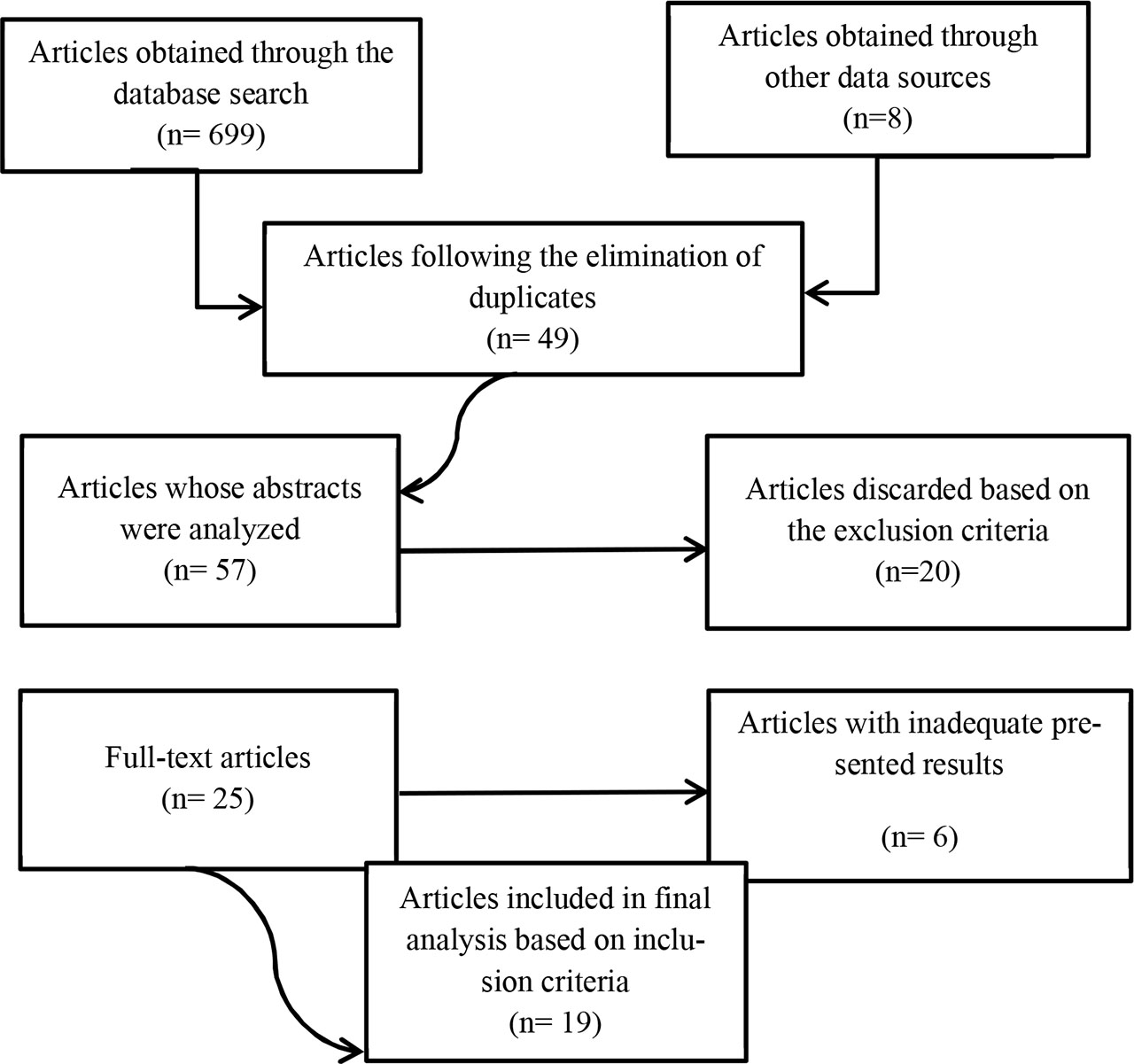
Diagram 1.
Flow diagram of the data search strategy
RESULTS
Table 1.
Summary of study characteristics and findings for studies exploring the effects of sodium bicarbonate supplementation in martial arts
| Study | Participants | Implemented physical treatment | Dose of NaHCO3 | Timing of intake | Main findings |
|---|---|---|---|---|---|
| Artioli et al., 2006 | EG= 3, CG= 3, 6 male judo athletes, age: 20 ± 1.9 | 3 × 5min judo bouts, 15 min. of rest | 0.3g/kg | 120 min prior to testing |
|
| Artioli et al., 2007 | 23 male judo athletes, SJFT= 9, age: 21.5 ± 3; WT= 14, age: 19.3 ± 2.4 | 3 × SJFT (5-min rest); 4 × the Wingate test for upper extremities, 3-min recovery period between attempts | 0.3g/kg | 120 min prior to testing |
|
| Siegler & Hirscher, 2010 | 10 male boxers, age: 22±3 | 2 two competitive boxing sparring matches one week apart; 4 × 3 min rounds, 1 min seated recovery | 0.3g/kg | 60 min prior to testing |
|
| Tobias, et al., 2013 | 37 male athletes, judo: n= 16, jiu-jitsu: n= 21 age: 26±4 | 4 × 30s – the Wingate test for upper extremities with a recovery period of 3 min between attempts | BA+ SB 0.5g/kg | 7 days during week four |
|
| Kazemi et al., 2013 | 16 male taekwondo athletes, age:17.93 ± 0.34 | 2 × 30 sec of repeated vertical jumps, 60 min rest before the second attempt | 0.065g/kg | day of testing |
|
| Felippe et al., 2016 | 10 male judo athletes, age: 23 ± 5 | 3 × SJFT (5-min recovery) | 0.3g/kg | 120 to 60 min prior to testing |
|
| Yousef et al., 2015 | 10 elite male taekwondo athletes, age: 26.2 ± 4.26 | Interval training, speed training, plyometrics, punching focus mitts for a period of 6 weeks | 0.3g/kg | 60 min prior to treatment |
|
| Šančić et al., 2017 | 10 judo athletes (6 males and 4 females), age: 19.2 ±1.4 | SJFT and JMS for a duration of 4 min | 0.3g/kg | 120 min prior to testing |
|
| Oliveira et al., 2017 | 2 judokas, 5 jiu-jitsu male athletes, age: 26 ± 5 | 4 × modified Wingate test for the upper extremities, 3 min of recovery | 0.5g/kg, 0.125g/kg per day | 5 days prior to treatment |
|
| Durkalec-Michalski et al. 2018 | 18 female and 31 male wrestlers age: 19± 4 | 2 × Wingate test alternating with throwing a testing dummy during recovery | 0.025 to 0.1 g/kg day 1-2=0.025, day 3–5=0.05, day 6–7=0.075, day 8–10=0.1g/kg | 10 days prior to treatment |
|
| Lopes-Silva et al., 2018 | 9 male taekwondo athletes age: 19.4± 2.2 | 3× 2 min of a simulated taekwondo match, one minute of recovery | 0.3 g/kg | 90 min prior to the match simulation |
|
| Gough et al. 2019 | 7 male elite professional boxers, age: 27.1 ± 5.1 | 3 × HIIR protocol, followed by 2×TLIM(1&2), (75 min rest) as well as a specific protocol of boxing punching combinations | 0.3 g/kg | 10 min after the treatment |
|
| Razaei et al. 2019 | 8 karatekas age: 20.5 ± 2.4 | A karate-specific aerobic test | SB+ caffeine SB: 0.3g/kg caffeine: 6g/kg | Three-day intake, 120 to 60 min prior to the treatment |
|
| Ragone et al., 2020 | 10 male jiujitsukas age: 22.2 ± 3.9 | Test of maximum voluntary contraction, intermittent isometric test of contraction | 0.3 g/kg | 60 min prior to the test |
|
| Durkalec-Michalski et al. 2020 | 18 female and 33 male wrestlers age: 19.2 ± 3.1; | 2 × Wingate test with throwing a testing dummy during the rest period of the SJFT | 0.025 to 0.150 mg/kg | 10 days prior to testing |
|
| Koozehchian et al., 2020 | 40 well-trained male taekwondo athletes, age: 21.4 ± 1 | 3 × Taekwondo anaerobic intermittent leg kick test, 60 sed rest between bouts | CR+SB, SB SB: 0.5g·kg CR: 20g | 5 days prior to testing |
|
| Sarshin et al. 2021 | 40 male taekwondo athletes age: 21 ± 1 | Taekwondo anaerobic intermittent leg kick test | 0.5 g/kg | during 5 days prior to testing |
|
[i] Legend: EG: experimental group; CG: control group; n: number of participants; HR: heart rate; BA: beta-alanine; SB: sodium bicarbonate; CAF: caffeine; CK: creatine kinase; CR: creatine monohydrate; HIIR: high intensity interval run; SJFT: Special Judo Fitness Test; JMS: Judo match simulation; TLIM: high-intensity treadmill running; RPE: rates of perceived exertion; PP: Pick Power; MP: Mean Power; Tat: total attack time; TTE: Time to exhaustion; TMW: Total mechanical work; WT: Wingate test; BLC: blood lactate concentration; LD: Lactate dehydrogenase; ↑:significant increase; ↓:significant decrease; ↔: no significant difference; †: significant difference.
By searching the electronic databases, a total of 669 significant studies were identified. In addition, based on other data sources, a further 8 studies were noted. After the removal of duplicates, 49 studies remained. The abstracts of 57 articles were analyzed. Based on the exclusion criteria, 20 articles were removed. According to the clearly defined inclusion criteria, 17 studies were included in the final analysis. The total number of participants included in the review is 423. Of them, 383 participants were male, and only 40 female. The articles were published from 2006 to 2021.
DISCUSSION
The aim of this systematic review was to analyze the effects of NaHCO3 supplementation among combat sports athletes. The analysis of the results provides compelling evidence in favor of acute or chronic NaHCO3 supplementation as an ergogenic substance which could have an impact on several aspects in the performance of athletes in judo [23, 31, 32], taekwondo [17, 20], karate [17, 33] [28, 29], wrestling [18, 19], jiu-jitsu [32] and boxing [16].
The effects of NaHCO3 on physical performance
Considering that combat sports are characterized by occasional bouts of high-intensity activity for which energy is obtained predominantly from anaerobic sources – the breakdown of phosphocreatine (PCr) and through the glycolytic metabolism [17, 19], NaHCO3 as an ergogenic substance can impact the enhancement of anaerobic capacity, and thus have an effect on adequate performance. Dukralec et al. [18] determined that supplementation of 100 mg ∙ kg− over a period of 10 days led to an increase in the maximum level of power on the Wingate test (WT) among a group of elite wrestlers who used supplementation. However, a reduction in the time needed to achieve maximum power was noted only during the second WT attempt. The possible reasons for the deviation in the obtained results could be explained by the fact that the implemented protocols cannot be applied, considering that the test required 30 seconds of high intensity work, while the recovery period lasted one minute. Similarly, Artioli et al. [31] studied the acute effects of NaHCO3 on a sample of 23 professional judokas, using different WT protocols for the upper extremities, and concluded that there were no improvements in their performance during the first two matches, while an improvement was noted for matches 3 and 4. These findings are in agreement with the work of Oliveire et al. [24] who indicated that an improvement among judo and jiu-jitsu athletes who consumed 0,125 g/kg over a period of 5 days, was noticeable during the third and fourth performance of the WT. These results should be considered more relevant since a specific and more adequate protocol was implemented. In each of these studies it was claimed that the NaHCO3 is an ergogenic substance which can improve anaerobic performance, but only after the first onset of fatigue. While previous studies [18, 24, 31] focused on the effects of NaHCO3 during dynamic tests, only one study [34] focused on how NaHCO3 affected the isometric hand grip strength among jiujitsu athletes, whereby no statistically significant changes in the experimental group were noted. According to the authors [34], a possible explanation is that no desired effects occurred since the flexor muscles of the fingers have a very small amount of muscle mass compared to larger muscle groups. Therefore, there is no increased distribution of lactates which would lead to fatigue and the potential effects of NaHCO3.
After that, the data available on the effects of NaHCO3 supplementation on the specific match performances were contradictory. While the first study of Artioli et al. [21] suggests that the number of attacks did not increase following the intake of 0,3 g/kg NaHCO3 during a simulated judo match, a later study [31] indicated that an improvement occurred in the number of throws when this test was used (SJFT) during the second and third attempt. Furthermore, the same dose led to an increase in the number of punches thrown during a boxing match [16]. In this field of research, some studies were not able to analyze the ergogenic effects of NaHCO3 on specific performances among combat sports athletes [18, 23, 25]. The use of 0,3 g/kg NaHCO3 did not lead to an increase in the number of throws among junior and senior cadet judokas [25]. Durkalec-Michalski et al. [18] determined that there were no statistically significant differences between the group that took the supplement and the placebo group, in terms of the number of throws during a specific sparring test in wrestling. Similarly, Durkalec-Michalski et al. [19] also determined that NaHCO3 supplementation over a period of 10 days increases the total number of throws, but only among male judokas, while female athletes were not susceptible to changes under the influence of NaHCO3 consumption. A possible reason for these results could be found in the heterogeneity of the sample of participants. Specifically, Sančić et al. [25] worked with a sample of young judokas, while Durkalec-Mihalski et al. [19] noticed that female athletes showed no sign of being affected by NaHCO3 consumption, since the pH value among female athletes is more susceptible to smaller changes compared to male athletes during high intensity activities. However, it should be mentioned that enhancements in these studies were achieved by consuming only NaHCO3. More recent studies [23, 32, 35, 36] focused on the effects of consuming NaHCO3 in combination with other stimulants which could impact specific performances. Felippe et al. [23] studied the isolated effects of caffeine and NaHCO3 and their combination in judo, and determined an improvement in the overall performance only when the caffeine and NaHCO3 were combined. In support of these findings, Tobias et al. [32] reported the effectiveness of a combined supplementation of NaHCO3 and beta-alanine (BA) on the overall performance of judo and jiu-jitsu athletes. Individual intake of NaHCO3 and BA increased power during the second and fourth performance, but the difference lies in the fact that the effect of improvement in the total performed work was greater when these two supplements were taken in combination, compared to when they were taken individually.
In addition to physical performances, numerous scientists [17, 20,21,22, 25, 32, 33] drew parallels between the use of NaHCO3 and increased levels of lactates following testing. More precisely, the sarcolemma is impenetrable for the bicarbonate [37] which leads to higher concentrations of H+ ions in the blood, but not in the intramuscular area [38]. This process leads to a decrease in acidosis within the muscle cells and indicates a high level of performances without the negative effects of fatigue [39].
Dosing, timing, and the unwanted effects of NaHCO3
The most frequent dose of NaHCO3 was 0,3 g/kg during acute intake [16, 20,21,22,23, 25, 31, 40], while during chronic intake it ranged from approximately 0,025 mg/kg [18] to 0,5 g/kg [17], which suggests that smaller doses [41] might not have an effective enough impact on performance in combat sports. Taking into consideration the consumption of NaHCO3 or a suitable placebo, it was determined that the intake took place 60 to 120 minutes prior to the experimental program, , since the claim was that NaHCO3 requires at least 60 minutes to be absorbed and to achieve maximum concentration in the plasma [42]. In addition, acute use of NaHCO3 can lead to various negative effects such as stomach pain or vomiting [43]. In order to avoid any discomfort, in some studies [17,18,19, 24, 32] the participants took lower doses over a period of 5 to 10 days. However, when analyzing the negative effects of supplementation, several factors should be taken into consideration. The training status [10] and the form in which NaHCO3 was ingested [43] were defined as mediators which can impact the effect of NaHCO3. This systematic review does have certain limitations regarding the variety of performance tests and the used variables. However, combat sports are complex activities in which physical work is one of several factors needed for success. In that sense, further studies are needed to determine the effects of NaHCO3 on sport-specific situations during simulated matches, especially in situations when decision making is involved. That is why these findings are incomplete and are still insufficient to help determine whether and how NaHCO3 improves overall performance in combat sports.
CONCLUSION AND PRACTICAL IMPLEMENTATION
Acute or chronic NaHCO3 supplementation is effective in improving several variables of physical performance in combat sports during tests and simulated matches. Enhanced performance resulted in an increased capacity of the glycolytic system. When it comes to the physiological mechanism of action of NaHCO3, it is based on an increase in buffer capacity and an increase in bicarbonate ions, i.e. raising the pH value in the fluid of the extracellular part. In this way, it is possible to maintain an alkaline environment, increasing the gradient of extracellular H+ ions, which in turn stimulate lactate/H+ cotransporter. This gradually leads to a higher flux of H+ ions from the intracellular to the extracellular fluid, which then bind to the circulating HCO3− ion and as a consequence have an increase in pH value, i.e. reduction of acidity leading to fatigue.
Reducing the accumulation of H+ in the active muscles would enable the process of muscle contraction to be maintained for a longer time and to continue the process of ATP synthesis through the glycolysis process, which delays the onset of muscle fatigue during high-intensity exercises. This mechanism is in line with the Cori cycle, as well as with the alanine cycle. The importance of the Cori cycle lies in the prevention of acidosis caused by the activity of anaerobic muscle capacities. Due to the accumulation of lactate, muscle spasms could occur, and the only way to chemically utilize lactate in the body is with the help of lactate dehydrogenase. It has long been believed that during cell recovery after exercise, 85% of lactate is eliminated by transport to the liver where it is then converted to glucose or glycogen [46,47]. Recent studies on rats as a model of the organism reveal that the common fate of lactate is oxidation. In addition, various authors suggest that the role of the Cori cycle is not so high, but that its share is only 10 to 20% [47]. Contrary to popular belief that lactates are the main cause of muscle fatigue, a decrease in pH value within muscle caused by an increase in H+ is the main cause of fatigue [48]. This is also applicable to the alanine cycle where amino acids are precursors of gluconeogenesis, i.e. alanine takes the place of glucose (reference). Studies examining the synergistic effect of NaHCO3 and caffeine supplementation have shown that in addition to the already described effects of NaHCO3, caffeine has a positive effect on delaying fatigue through mechanisms that include its contribution to lowering extracellular potassium and increasing plasma catecholamine [44]. In the case of synergistic effects of beta-alanine and sodium bicarbonate supplementation, there is an increase in muscle carnosine and plasma HCO3, thus strengthening the intra- and extracellular buffer system and trying to improve sports performance or delay or reduce muscle fatigue in high-intensity sports in whom intramuscular acidosis occurs [45]. Consuming sodium bicarbonate can also raise your blood sodium levels, which may increase blood pressure in some people. In addition, large amounts of sodium can make your body retain water. While increased hydration could be useful for those exercising in the heat, it may be disadvantageous for those competing in weight-category sports. All this leads to the conclusion that a diet low in sodium should be kept during sodium bicarbonate supplementation. High consumption of sodium bicarbonate can increase potassium excretion, which in some cases can cause potassium deficiency, so during the supplementation period, a diet rich in potassium is recommended (diet rich in vegetables especially green such as lettuce and cabbage). [49].
However, the positive effects of use are usually visible after the onset of fatigue. Also, the use of NaHCO3 is associated with an increased concentration of blood lactates. Contradictory results exist when it comes to sports-specific activities during simulated matches, RPE and the negative effects in the form of nausea, which clearly indicate that it is necessary to synchronize the timing, amount, form of intake, and the individual characteristics of athletes as well as the characteristics of the combat sport in order for the overall effect to be optimal. It is very important to mention that sodium bicarbonate is a very quick-acting antacid. It is used as an antacid to treat heartburn, indigestion, and upset stomach. However, it should be used only for temporary relief. When sodium bicarbonate mixes with stomach acid, it produces gas. This may cause abdominal pain, bloating, nausea, diarrhea, and vomiting. These side effects appear to be dose-dependent, meaning higher doses may lead to worsened stomach issues. Further, not everyone will experience these side effects. The severity of symptoms can vary based on the amount taken and personal sensitivity. To decrease side effects, try taking sodium bicarbonate with a carbohydrate-rich meal, spreading your doses throughout the day, taking the supplement 180 minutes before exercise, and/or taking enteric-coated capsules, which are easier on the stomach. In the cases with hypochlorhydria consumption of additional NaHCO3 could cause serios health issues and maldigestion.
This systematic review provides data relevant for sports professionals and athletes regarding the use of NaHCO3 as a stimulant prior to or during training and matches. In addition, it would be useful for future studies to continue analyzing the effects of NaHCO3 in situations similar to matches, and to take into consideration cognitive abilities, and not only the individual differences among athletes, but also the differences between the very combat sports themselves.