
INTRODUCTION
The survey from The World Health Organization indicated that about 70–80% of the world's population relies on nonconventional medicine, mainly of herbal sources, in their primary healthcare. This is especially the case in developing countries where the cost of consulting a western style doctor and the price of medication are beyond the means of most people (1, 2). There are numbers of significant drugs and biologically active compounds developed from the traditional medicinal plants.
Plants showed a wide range of pharmacological activities including antioxidant, antimicrobial, anti-inflammatory, anticancer, hypolipidemic, cardio-vascular, analgesic, antipyretic, central nervous stimulants, immunological, respiratory, and many other pharmacological effects (3).
The Cucurbitaceae family is one of the most genetically diverse groups of food plants (4). Some well-known members of this family are bitte rapple, gourd, cucumber, melon, and pumpkin (5). Due to consumer awareness on the health benefits of cucurbit plants and fruits, their production seems to have increased over the time. Over the last two decades, India has been the largest producer of cucurbit followed by Egypt, United States of America, Russia and Republic of Iran (4).
Citrullus colocynthis (L.) Schrad (family Cucurbitaceae) is widely available in India and the Southern Islands (6). The fruit of Citrullus colocynthis is commonly called Colocynth/Bitter Apple in English, Indrayan in Hindi, Hanjal in Urdu, Kattu Kattuvellari in Malayalam, Anedri in Sanskrit, Rakhal in Bengali, and Pcitummatti in Tamil (7, 8).
Phytochemicaly Citrullus colocynthis have many bioactive compounds like glycosides, alkaloids, flavonoids, fatty acids, carbohydrates and essential oils (9,10,11). The main components isolated from the Citrullus colocynthis plant are Cucurbitacins. Several chemical compounds isolated from the Citrullus colocynthis fruits, pulps and seeds are listed in table 1.
Table 1.
List of chemical constituents isolated from the Citrullus Colosynthis plant.
| Chemical Class | Isolated Compounds | Plant | Part Reference |
|---|---|---|---|
| Glycosides, flavonoids and phenolic acids | 2-O-β-D-glucopyranosyl-Cucurbitacin I | Fruit | 12 |
| 2-O-β-D-glucopyranosyl-CucurbitacinL | Fruit | 12 | |
| Isosaponarin | Fruit, seeds | 12, 13 | |
| Isoorientin 3-o-methylether | Fruit, seeds | 12, 13 | |
| Isovitexin | Fruit, seeds | 12, 13 | |
| Quercetin | Fruits | 14, 15 | |
| Catechin | Fruit pulp | 15 | |
| Myricetin | Fruit pulp | 15 | |
| Gallic acid | Fruit pulp | 15 | |
| Kaempferol | Fruit pulp | 15 | |
| p-Hydroxybenzoicacid | Fruit pulp | 15 | |
| Caffeic acid | Fruit pulp | 15 | |
| Chlorogenic acid | Fruit pulp | 15 | |
| Vanillic acid | Fruit pulp | 15 | |
| Ferulic acid | Fruit pulp | 15 | |
| Sinapic acid | Fruit pulp | 15 | |
| p-Coumeric acid | Fruit pulp | 15 | |
| Alkaloids | Choline | Whole fruit, pulp | 10, 16, 17 |
| Choline | Fruit pulp | 18 | |
| Cucurbitacins | Curcubitacin A | Fruit | 19, 20 |
| Curcubitacin B | Whole fruit | 17, 21 | |
| Curcubitacin C | Fruit | 19 | |
| Curcubitacin D | Fruit | 19 | |
| Curcubitacin E | Whole fruit | 17, 21, 22 | |
| Curcubitacin I | Whole fruit | 17, 20 | |
| Curcubitacin J | Fruit | 20 | |
| Curcubitacin K | Fruit | 20 | |
| Curcubitacin L | Fruit | 20 | |
| Colocynthosides A | Fruit | 20 | |
| Colocynthosides B | Fruit | 20 | |
| Fatty acids | Palmitic acid, stearic acid, linoleic acid, oleic acids | Seed oils | 23,24,25 |
| Myristic, palmitic, stearic, oleic, linoleic and linolenic acids | Seeds | 13 | |
| Tocopherols and Carotenes | α-tocopherol, γ-tocopherol, β-carotene | Seed oil | 26 |
This review presents an overview on traditional uses along with recent studies covering the pharmacological and toxicology of the Citrullus colocynthis plant.
TRADITIONAL USES
Colocynthis is a very old remedy in Indian medicine. The fruit has been described as cathartic and useful in biliousness, fever, constipation and intestinal parasites. The root is used in janndice, ascites, rheumatism and urinary diseases. The physicians use this drug extensively in their practice as a drastic purgative in ascites and jaundice and in various uterine conditions, especially in amenorrhea. (27).
Worldwide Citrullus colocynthis is widely used in different parts of the world for the treatment of a number of diseases including leprosy, jaundice, constipation, diabetes, asthma, cancer, bronchitis, joint pain and mastitis (6, 28,29,30).
In India and Pakistan, the fruits are used for the treatment of bacterial infections, intestinal disorders, diabetes and cancer in humans as well as animals (6, 30, 31, 32, 33).
Traditionally Citrullus colocynthis is the communally used plant for the treatment of diabetes, in tropical and subtropical countries, (34, 35, 36, 37).
Citrullus colocynthis is used for the treatment of hypertension and diabetes in Morocco (38, 39, 40).
In the United Arab Emirates Citrullus colocynthis is one of the most popular folk medicines because of its anti-inflammatory property (41). The fruit has therapeutical application in the stimulation of intestinal peristalsis and soften bowel contents by an irritant action on the enteric mucosa (42, 43, 44)
A decoction of the different parts of this plant is used to treat cancer, rheumatic pain and as a hepato protective agent (30, 44, 45).
Fruits and seeds, are often used to treat urinary infections (46), and different parts of the plant are also used to treat many other illness such as rheumatism, hypertension, dermatological problems, gynecological and pulmonary infections, in Tunisia, and other Mediterranean countries (47, 46).
In Saudi Arabia, fruits of Citrullus colocynthis are used as antirheumatic, purgative, anthelmintic, carminative and as a remedy for skin and sore throat infections (19). The fruit is also a blood purifier and remedy enlargement of spleen and tumors.
The seeds of Citrullus colocynthis are used for the treatment of diabetes, while the leaves are used for the treatment of jaundice and asthma (48, 49, 50). In Israel Citrullus colocynthis is also well-known as a source of seed oil and its fruit has been used as a laxative (51).
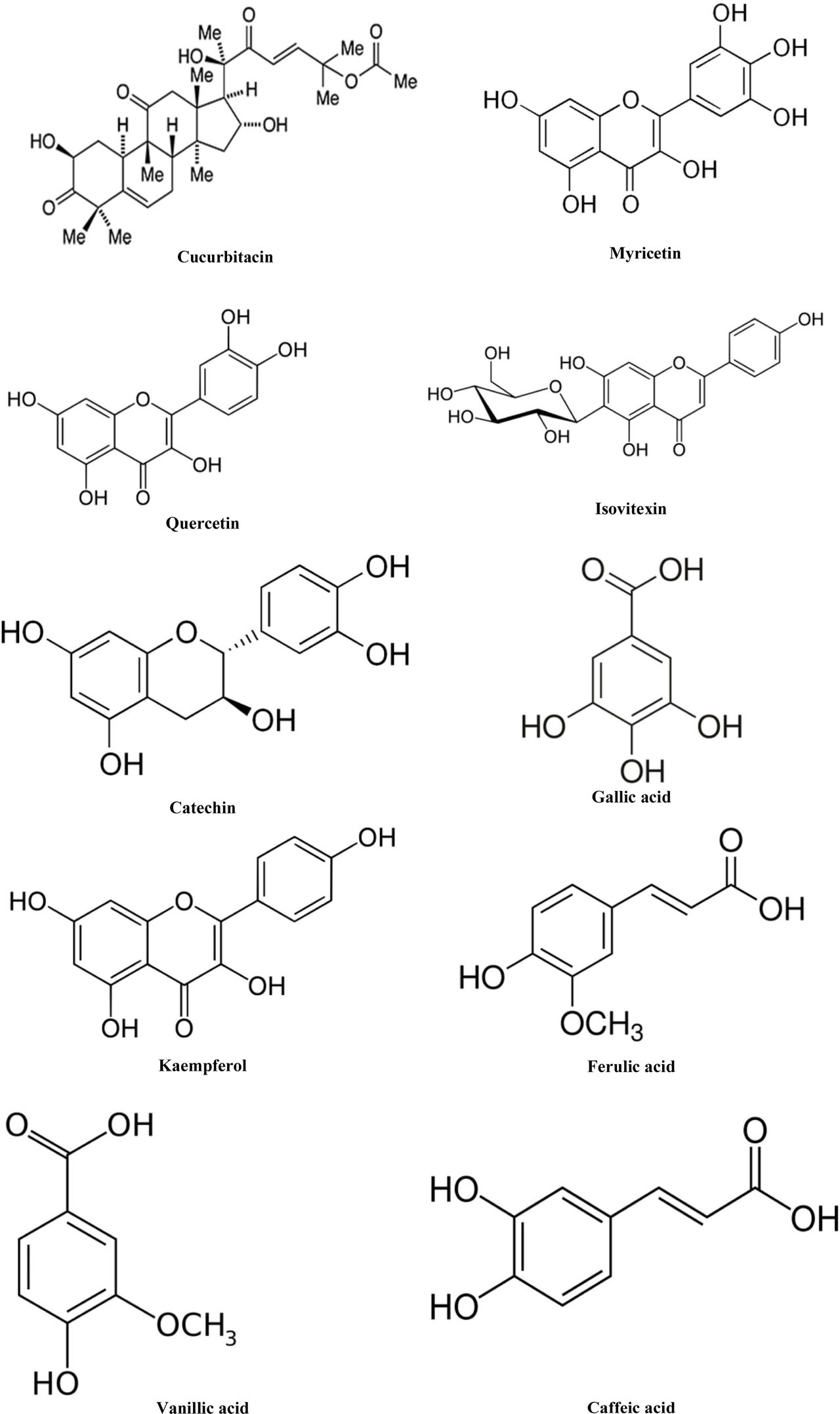
Table 3.
Pharmacological Activities of different parts of Citruluss Colocynthis plant
| Pharmacological activity | Part/Activity | Extract/ compound | Dose/conc. | Results | References |
|---|---|---|---|---|---|
| Antimicrobial activity | Fruit/ in vitro | Water extract | 5 mg/mL | inhibition against Staphylococcus aureus | 10 |
| Fruit/ in vitro | Ethanol extract | 500 mg/mL | Inhibition against Staphylococcus aureus, | 17 | |
| Fruit/ in vitro | Ethanol extract | 500 mg/mL | Inhibition against Bacillus cereus | 17 | |
| Fruit/ in vitro | Ethanol extract | 500 mg/ml | Inhibition against Klebsiella pneumonia | 17 | |
| Fruit/ in vitro | Cucurbitacin B | 500 mg/ml | Inhibition against Staphylococcus aureus | 17 | |
| Fruit/ in vitro | Cucurbitacin B | 500 mg/ml | Inhibition against Bacillus cereus | 17 | |
| Fruit/ in vitro | Cucurbitacin B | 500 mg/ml | Inhibition against Klebsiella pneumonia | 17 | |
| Fruit/ in vitro | Cucurbitacin E | 500 mg/ml | Inhibition against Staphylococcus aureus | 17 | |
| Fruit/ in vitro | Cucurbitacin E | 500 mg/ml | Inhibition against Bacillus cereus | 17 | |
| Fruit/ in vitro | Cucurbitacin E | 500 mg/ml | Inhibition against Klebsiella pneumonia | 17 | |
| Fruit/ in vitro | Cucurbitacin I | 500 mg/ml | Inhibition against Staphylococcus aureus | 17 | |
| Fruit/ in vitro | Cucurbitacin I | 500 mg/ml | Inhibition against Bacillus cereus | 17 | |
| Fruit/ in vitro | Cucurbitacin I | 500 mg/ml | Inhibition against Klebsiella pneumonia | 17 | |
| Anti-inflammatory Activity | Fruit/ in vivo | Water extract | 4 mg/kg | 97.29% reduction in edema after 6 hour in Carrageenan-induced paw edema model in rats | 46 |
| Fruit/ in vitro | Aqueous ethanol extract gel | 2 g of gel/3% | 45% reduction in edema in Carrageenan-induced paw edema model in rats | 52 | |
| Hypolipidemic Activity | Seed/in vivo | Powder | 300 mg/Day | Decrease in the level of triglyceride and cholesterol concentration in non-diabetic hyperlipidemic patients | 37 |
| Fruit/ in vivo | Aqueous ethanol extract | 1.2 g/kg/day | Reduction in Serum cholesterol levels in Hyperlipidaemic Rabbits | 45 | |
| Antidiabetic Activity | Fruit/ in vivo | Petroleum ether extract | 300 mg/kg | reduction in blood glucose levels in STZ induced diabetic rats | 9 |
| Fruit/ in vivo | Hydro-ethanol extract | 300 mg/kg | Reduction in total cholesterol, triglycerides, phospholipids and free fatty acids levels in diabetic rats | 53 | |
| Fruit/ in vivo | Aqueous extract | 300mg/kg | Decrease of blood glucose in normoglycaemic rabbits | 54 | |
| Seed/ in vivo | Aqueous extract | 300mg/kg | Reduction in the plasma level of AST and LDH in Streptozotocin induced diabetic rats | 55 | |
| Fruit/ in vivo | Alkaloid rich fraction | 50 mg/kg | Decrease of blood glucose from 132 to 120 mg/100 mL after 6 h of normoglycaemic rabbits | 54 | |
| Fruit/ in vivo | Glycoside rich fraction | 50 mg/kg | Decrease of blood glucose from 132 to 89 mg/100 mL after 6 h of normoglycaemic rabbits | 54 | |
| Fruit/ in vivo | Saponin rich fraction | 50 mg/kg | Decrease of blood glucose from 132 to 84mg/100 mL after 6 h of normoglycaemic rabbits | 54 | |
| Antioxidant Activity | Fruit/ in vivo | Hydro-ethanol extract | 300 g/kg | Increase in the enzymatic and non-enzymatic components of the oxidative system in the liver of Alloxan induced diabetic rats | 53 |
| Seed/in vitro | Aqueous extract | IC5=0.021mg/mL | DPPH radical scavenging activity in term of IC50 of aqueous extract of Citrullus colocynthis seeds was tested | 46 | |
| Fruit/ in vitro | Methanol extract | 2500 μg/mL | 88% DPPH radical scavenging activity was found against ascorbic acid | 56 | |
| Fruit/ in vitro | Methanol extract | 2500 μg/mL | 61.4% Nitric oxide scavenging activity was found against ascorbic acid | 56 | |
| Fruit/ in vitro | Cucurbitacin glycosides | IC 50 145 μM | ABTS radical scavenging properties | 57 | |
| Antiallergic Activity | Fruit/ in vivo | Methanol extract | 200 mg/kg | 72.5% inhibition in ear passive cutaneous anaphylaxis (PCA) reaction in mice | 20 |
| Fruit/ in vivo | Cucurbitacin E2-O-β-D-glucopyranoside | 200 mg/kg | 49.7% inhibition in ear passive cutaneous anaphylaxis (PCA) reaction in mice | 20 | |
| Anticancer Activity | Fruit/ in vitro | Cucurbitacin B, Cucurbitacin E (1:1) | 20 μM | inhibited the growth of ER+MCF-7 and ER-MDA-MB-231 breast cancer cell lines | 21 |
| Fruit/ in vitro | Alkaloid rich fraction | IC50 3.30 μg/mL | Alkaloid rich fraction demonstrated strong cytotoxicity towards Artemia salina naupli | 16 | |
| Fruit/ in vitro | Cucurbitacin B | 1–100 μM | Inhibited cellular proliferation of human laryngeal cancer cell line (Hep-2) | 58 | |
| Fruit/ in vitro | Cucurbitacin B | LD50 = 0.1 μM | Cucurbitacin B inhibited 50% growth at 0.1 μM of human GBM celllines in liquid culture | 59 | |
| Insecticidal activity | Fruit/ in vitro | Ethanol extract | LC50 11,003ppm | Against Aphis craccivora | 60 |
| Fruit/ in vitro | Chloroform extract | LC50 17,328ppm | Against Aphis craccivora | 60 | |
| Fruit/ in vitro | Methylenechloride extract | LC50 19,497ppm | Against Aphis craccivora | 60 | |
| Fruit/ in vitro | n-hexane extract | LC50 23,065ppm | Against Aphis craccivora | 60 |
PHARMACOLOGICAL ACTIVITY
The traditional medicinal applications of Citrullus colocynthis have inspired many pharmacological investigations. Several extracts and isolated compounds have been evaluated for their biological activities, especially anticancer and antidiabetic activities. There seems to be an interest in developing new anticancer/ antitumor drugs from Citrullus colocynthis due to its high contents of cucurbitacins.
1. Antimicrobial Activity
Results from different studies demonstrated antimicrobial and anticandidal activities of Citrullus colocynthis extracts and the antimicrobial effect varied from population to population.
Aqueous and methanolic extracts were tested for their antimicrobial activities. Antibiotic sensitivity test strain was carried out by using the standard Disc diffusion method including two antifungal drugs. The aqueous extract showed high antibacterial activity against Staphylococcus aureus and E. coli with considerable lower antibacterial against bacillus subtillus and Klebseilla pneumoniae and the methanolic extract showed high antibacterial activities against B. subtilis, S. pyogenes, S. typhi with very less activitiy against S. faecalis and inactive against P. mirabilis V. cholera and P. vulgaris (61)
Antibacterial Activity
Ethanolic extracts from stem, root, leaves and fruit of Citrullus colocynthis were tested for their broad spectrum of antibacterial effects against selected positive and negative bacterial strains. The extracts were found to be active against Gram positive bacteria (B. subtilis, B. pumilis and S. auerus) but the extract have poor response against Gram-negative bacteria (E. coli and P. aeruginosa). (62)
The Citrullus colocynthis extracts have a broad spectrum of antibacterial effects in both strains i.e. in Gram-positive as well as in Gram-negative bacterial strains (46,47).
Different solvents extracts of Citrullus colocynthis were studied for their antibacterial activity against some pathogenic bacteria i.e. B. cents, E. coli, S. typhimurium, S. aureus, S. epidermidis M. smegmatis P. aeruginosa, and P. vulgaris (33). Most of the extracts exhibited moderate MIC within the range of 20–100 μg/mL against all the bacterial pathogens.
3. Antifungal Activity
Methanolic and aqueous extracts were screened for their antifungal and antimycotoxigenic activity against Aspergillus ochraceus and Aspergillus flavus and the extracts showed a very good antifungal activity against A. ochraceus, but not against A. flavus. The extracts have good antiochratoxigenic power in liquid medium (63)
In another study methanolic extracts were screened for their antifungal activity against six different species of fungi, for which stock culture was maintained in GPYS (Glucose peptone yeast and sucrose) medium. The extracts exhibited high anti-fungal activity against A. flavus, A. fumigatus and Mucor sp. but Penicillium sp., C. albicans and Rhizopus sp. did not show any antifungal activity (13)
4. Anti-inflammatory activity
In modern therapeutical practice, non-steroidal anti-inflammatory drugs (NSAIDs) are known to cause gastrointestinal tract ulceration (50), but NSAIDs with selective cox-2 inhibitory action have been reported to cause fetal cardiac toxicity with less ulcerogenic effects, based on which some of medicine with these effects have been withdrawn from the market. Therefore, there is an increased need for safer anti-inflammatory drugs with very less or no side effects.
Traditionaly, Citrullus colocynthis is used in folk medicines because of its anti-inflammatory activities (41, 46)
Citrullus colocynthis extracts with different solvents were reported for their in vivo anti-inflammatory activity using the carrageenan-induced paw edema model in albino rats (52).
In another study the fruit aqueous extract was studied for its anti-inflammatory effect at 4mg/kg in carrageenan-induced paw edema assay in rats (46) thus above study validated the medicinal use of Citrullus collocynthis as an anti-inflammatory and analgesic agent as well as in rheumatoid arthritis.
In two different animal models, the methanolic extract from the leaf of Citrullus colosynthis shows decrease in the level of carrageenan, serotonin and prostaglandin E1-induced paw edema with about 48% inhibition in prostaglandin E1-induced paw edema model and 35% inhibition in carrageenan air-pouch model with decrease in the volume of exudate and migration of monocytes and neutrophils (64).
The anti-inflammatory activity found may be due to the presence of therapeutically active flavonoids such as quercetin, apigenin, lutteolin and naringein (65). Flavonoids have their therapeutic use as an anti-inflammatory agent as they are known to prevent the synthesis of prostaglandins (66)
In another study, fruit extract cream was studied for its topical anti-inflammatory effect in carrageenan-induced edema in rats. In this experiment, the commercial ELISA kit was used to estimate the tissue levels of TNF-α and IL-6. The results showed that the fruit extract cream (2–8%) dose-dependently reduced the carrageenan-induced paw edema and reversed the changes in the level of TNF-α and IL-6. (67).
5. Antidiabetic activity
Diabetes mellitus is fairly well known and well-conceived as an entity in the world. It is the fastest growing metabolic disorder with symptomatic treatment and required lifelong use of chemical agents, which produced many side effects with addition to high cost. Hence there is need of a much safer and more effective antidiabetic agent.
Traditionaly, Citrullus colocynthis is used as an antidiabetic agent in different countries. (55).
Citrullus colosynthes fruit extract stimulates the production and activity of insulin. (34, 68).
There is significant reduction in glycaemia and in the level of thiobarbituric acid reactive substances (TBARS) when petroleum ether fruit extract was screened for its antidiabetic effect in Streptozotocin induced diabetic albino rats (9)
Tertiary and quaternary alkaloids, glycosides and saponins, isolated from the Citrullus colocynthis fruits administration oral (50 mg/Kg) in normoglycaemic rabbits. No change in elevated glucose level shown by alkaloids. Whereas the glycosidic component significantly reduced the blood glucose level. The saponin component show hypoglycemic effect at much lower doses at 10–20 mg/kg in alloxaninduced diabetic rabbits indicating that the glycosides and saponin components are responsible for the hypoglycemic effect of the fruit of Citrullus colocynthis (68).
When the plant extract is administered orally at a dose of 300mg/kg daily for 2 weeks, it significantly decreases the plasma level of AST and LDH, while it failed to decrease the increased blood level of ALP and GGT in STZ induced diabetic rats (55).
Different extracts from the Citrullus colocynthis root were investigated for biochemical parameters in normal and alloxan-induced diabetic rats. Root significant reduce the blood glucose level about 58.70% when compared to ethanol extract about 36.60% and chloroform extract about 34.72%.
There is also significant improvement in parameters like body weight, serum protein, serum creatinine, and serum urea as well as lipid profile with aqueous extract and it also restored the serum level of total and conjugated bilirubin, SGOT, SGPT and alkaline phosphatase. (69).
All these studies support the use of Citrullus colocynthis as a safer and effective antidiabetic agent.
6. Antilipidemic activity
Citrullus colocynthis was studied for its lipid lowering effect, both in animal as well as in human subjects.
When ethanol extract of the plant was studied for its anti lipidemic effect, it was found that the level of serum cholesterol was reduced to normal level at a dose of 1.2g/kg/day in hyperlipidemic rabbits. (45).
In a clinical study, Citrullus colocynthis seeds powder at a dose of 300 mg significantly reduced the triglyceride and cholesterol level in hyperlipidemic non-diabetic patients. (37).
7. Gastrointestinal effect
Methanolic seed extract was investigated for anti-ulcerogenic activity and it was significant reduced in the gastric volume 1.68±0.18, free acid 39.86±3.86 and total acidity 61.23±1.87 at dose of 200 mg/kg, with maximum inhibition of ulcerogenicity of 71.57% in pyloric ligation induced ulcers model in Wistar albino rats (70)
8. Anticancer Activity
There are many research studies available in the literature for the anticancer activity of the Citrullus colocynthis extract and its isolated compounds (22, 57,58,59, 71).
The cucurbitacin glycoside extract from Citrullus colocynthis leaves was studied in human breast cnacer cell growth. The cucurbitacin glucosides combination (1:1) at a dose of 20 μM inhibited the growth of selected human breast cancer celllines (21).
Cucurbitacin B (1–100 μM) when studied on human laryngeal cancer cellline (Hep-2) inhibited cellular proliferation and the flow cytometry analysis showed that the treatment with cucurbitacin B resulted in accumulation of cells at the G2/M phase of the cell cycle and cell apoptosis in a dose and time dependent manner (58).
When cucurbitacin B was tested on human Glioblastoma Multiforme (GBM) celllines in liquid culture at 0.1 μ M (ED50), it significantly inhibited 50% growth of GBM celllins. In Soft-gel assays cucurbitacin B inhibited nearly all of the GBM clonogenic cells at 10−8 M, indicating that this drug might be a good candidate for clinical trial (59).
Cucurbitacin E has also cytotoxic and anti-cancer effects. Cucurbitacin L also show a cytotoxic effect when studied against KB and HeLa celllines, but was less potent than cucurbitacin I, which was isolated from Citrullus colocynthis (72, 73, 22).
9. Antioxidant activity
Citrullus colocynthis extracts are a rich source of poly phenol and plant sterol so they can be used as antioxidants (25).
The methanolic fruit extract was evaluated for its free-radical scavenging effect and the highest antioxidant and free radical scavenging ability was observed at a concentration of 2500 mg/ml(56).
Cucurbitacin glycoside isolated from Citrullus colocynthis exhibited ABTS radical scavenging properties with IC50 at 145 μM, probably through the involvement of a direct scavenging effect on several free-radicals (57).
The aqueous extract of Citrullus colocynthis seeds show very potent DPPH radical scavenging activity with IC50 of 0.021mg/mL. (46).
The various study strongly supported the use of Citrullus colocynthis as a source of natural antioxidant agents.
10. Effect on hair growth
Petroleum ether extract from Citrullus colocynthis was evaluated to study the effect on hair growth and the extract in oleaginous ointment base was applied topically on shaved denuded skin albino rats.
The hair growth initiation time as well as the cycle for hair growth completion was recorded. In standard animals minoxidil 2% solution was applied topically. The time required for hair growth initiation was reduced to half on treatment with the petroleum ether extracts compared with untreated control animals as well as the time required for complete hair growth was also decreased. The treatment was effective in bringing a more prominent number of hair follicles (>70%) to the anagenic stage than standard minoxidil (67%). The result of treatment with 2% and 5% petroleum ether extracts were comparable with the standard minoxidil (74).
TOXICITY
The fruit pulp extract of Citrullus colocynthis was studied for teratogenicity during the early stage of pregnancy in rats at a dose of 40.6 mg/kg body weight, equivalent to one fourth of the LD50 of the extract. The study displayed treatogenic effects, when gross anatomical observation is done on the 20th day of gestation it revealed a high percentage of resorbed fetuses, smaller size and weight fetuses as well as absence of coccygeal vertebrae, metacarpal and metatarsal bones, and carpal and tarsal bones. (75).
Pulp and seed extracts of Citrullus colocynthis at a dose of 100 or 200 mg/kg/day were tested on rabbits. After one month the surviving animals were sacrificed and specimens from the liver, small intestine and kidney were prepared for morphological evaluation. The survival rate for the animals treated with 200 mg/kg/day of pulp extract was zero and the animals treated with 100 mg/kg/day of pulp extract showed sever lesions in the liver, kidney and small intestine. On the other hand, animals treated with seed extract at a dose of 100 or 200 mg/kg/day displayed only minor intestinal insult (76).
The study showed that the drug is severely poisonous. Due to the presence of cucurbitacin glycoside content it has a strongly irritating and painful effect on mucous membranes. Overdose usually associated with vomiting, colic irritation, bloody diarrhea and kidney irritation, follows the intake of toxic dosages (0.6 to 1 g), and then increased diuresis which progressed to anuria. Lethal dosages, starting at 2 g lead to convulsions, paralysis and, if untreated, to death through circulatory collapse. The treatment for poisonings should proceed symptomatically following gastric lavage (77).
CONCLUSION
In this review, we have documented the existing traditional uses and summarized the recent research to the pharmacology of the Citrullus colocynthis plant.
Many traditional uses have been validated on the bases of phytochemical and modern pharmacological studies but still many need to be validated.
Different extracts and isolated components from the Citrullus colosynthis plant have been found to possess various biological and pharmacological activities, especially in the area of anti-inflammatory, antidiabetic, antioxidant, anticancer, insecticidal, antilipidemic and antimicrobial.
It is evident that the different parts of this plant possessed a huge potential for further studies and could be utilized in several medical applications.
ACKNOWLEDGEMENTS
The authors are appreciative and thankful to MM College of Pharmacy, for their continuous support and motivation.