
INTRODUCTION
Cervical cancer (CC) represents the third most common malignancy in women worldwide. In many countries, this type of cancer is the leading cause of death for women. High mortality rate from CC comes as a result of late diagnosis and limitations of therapy (1). The limitations in therapy approaches are defined with: drug resistance of tumor cells, the non-selectivity of anti-cancer drugs towards the healthy cells and the abundance of unwanted side effects (2). Due to the existence of the above mentioned drawbacks, it is necessary to discover and synthesize new anti-cancer agents that would have more efficient antitumor effect with less unwanted effects on healthy cells. In order to eliminate tumor cells and its expansion, antitumor drug effect directly provokes different types of cell death mechanisms and pathways in cancer cells (2). However, the failure for cancer eradication lays in the fact that cancer cells overcome goals of antitumor therapy acquiring apoptosis-resistance during treatment (3). As a final result, cancer cell survival is activated and propagation of the tumor continues. To date, scientific research indicates that there are two main apoptotic pathways: the extrinsic or death receptor pathway and the intrinsic or mitochondrial pathway (4). The intrinsic pathway involves distortion of the outer mitochondrial membrane potential while the extrinsic pathway involves binding of cells death receptors. Like apoptosis, autophagy represents highly regulated process that eliminates and recycles degenerative cells in order to enable cell survival. Protective role of autophagy in cancer development is achieved with the elimination of certain proteins or damaged organelles (5). Due to this fact, manipulation with autophagy in cancer cells may result in accelerated tumor cell death (6). During the past 80 years chloroquine has been widely used as a potent antimalarial drug, however due to its numerous biological effects, including inhibition of cell growth and induction of apoptosis in cancer cells, chloroquine as a potent inhibitor of autophagy is used as anti-cancer drug (7). Chalcone represent a class of flavonoids that occur naturally in fruits and vegetables, and metabolic precursors of some flavonoids and isoflavonoids (8). Various studies have shown that the chemical structure of chalcone is responsible for their anti-tumor, anti-inflammatory and anti-oxidant effects (8) (9). Chalcone have certain advantages compared to the current cancer drugs such as less toxicity towards healthy cells, lower prices, higher availability etc.
We herein report for the first time, antitumor effect of previously synthesized chalcones analogue on HeLa cell line.
METHODS
Chemistry
All starting chemicals were commercially available and used as received, except that the solvents were purified by distillation. Chromatographic separations were carried out using silica gel 60 (Merck, 230–400 mesh ASTM) whereas silica gel on Al plates, layer thickness 0.2 mm (Merck), was used for TLC. IR spectra were recorded on a Perkin-Elmer One FT-IR spectrometer with a KBr disc, ν in cm−1; NMR spectra were recorded on a Varian Gemini 200 MHz spectrometer (200 MHz for 1H and 50 MHz for 13C), using CDCl3 as solvent and TMS as the internal standard. 1H and 13C NMR chemical shifts were reported in parts per million (ppm) and were referenced to the solvent peak; CDCl3 (7.26 ppm for 1H and 76.90 ppm for13C).
Reagents and compounds
Chloroquine was obtained from Sigma Aldrich (C6628) and dissolved in ultrapure water at final concentration of 20 μM. Three newly synthesized chalcone analogues (E)-1-(4-hydroxy-3-methoxyphenyl)-5-methylhex-1-en-3-one, (CH1) (E)-1-(3-methoxy-4-propoxyphenyl)-5-methylhex-1-en-3-one, (CH2) (E)-1-(4-(benzyloxy)-3-methoxyphenyl)-5-methylhex-1-en-3-one) (CH3), (Figure 1) were tested for antitumor activity on HeLa cell line and results are presented in this article.
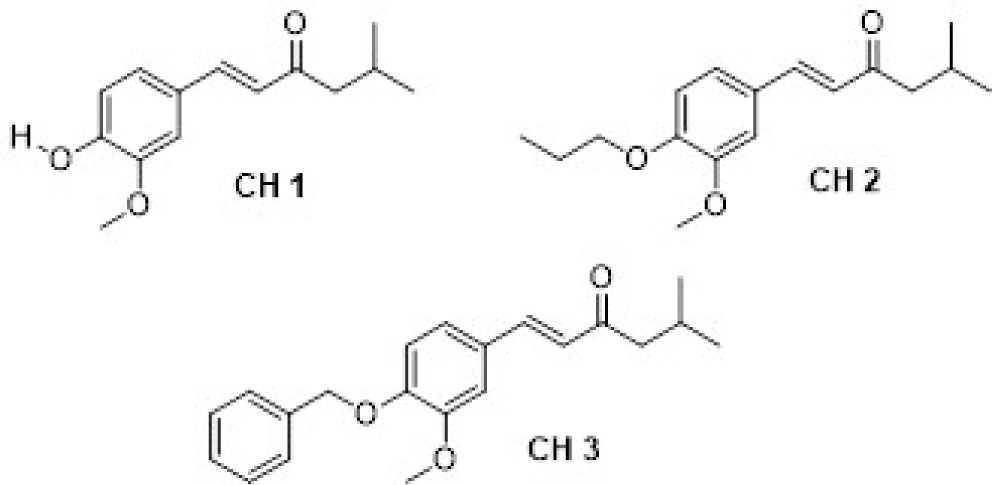
Figure 1.
Structures of tested chalcone analogues.
The referent substances (dehydrozingerone (DHZ) was a gift from our colleagues, Faculty of Chemistry; University of Kragujevac; cisplatin (cisplatin) CAS 15663-27-1 - Calbiochem) were dissolved in DMSO (at final concentration of DMSO less than 0.5%). Investigated concentrations of CH 1, CH 2, and CH 3 were 0.3, 1, 3, 10, 30, 100, and 300 μM and for referent substances (DHZ and cisplatin) were 3, 10, 30, and 100 μM. - Annexin V-FITC and 7-AAD (7-amino-actinomycin-D) - were purchased from Abnova (KA3806).
Cell lines and culturing method
Human epithelial cervical carcinomas cells (HeLa) and human fibroblast lung cell line (MRC-5) were purchased from the American Type Culture Collection (ATCC® CCL-2™ and CCL-171™). Cells (passage 5 and 6) were cultured in complete growth DMEM medium (Dulbecco's Modified Eagle's medium, Sigma Aldrich D5671). Cells were maintained in culture at 37°C in atmosphere containing 5% CO2 and 95% air. The cells were classified in three large groups – first group-control cells (HeLa and MRC-5 cells) cultured in complete medium only; second - experimental groups, cells treated with different chalcones and third group cells treated with different concentrations of referent substances during 24 and 48 h period.
MTT Cell Viability Assay
The viability of the three chalcones on HeLa cancer cells and noncancerous MRC-5 cells during 24 and 48 h period was determined using MTT assay (10). The absorbance was measured at 595 nm using a micro-plate reader (Zenyth 3100, Anthos Labtec Instruments).
Determination of IC50 values for investigated substances
The percentage of cytotoxic cells was calculated using the formula: Cytotoxicity (%) = (1 − (exp. group (ABS)) / (control group (ABS)) × 100). The IC50 values of investigated substances were calculated using Microsoft Office Excel free add-in (ed50v10.xls.) for linear regression.
Effect of CH analogues on apoptosis and autophagy – flow cytometry
In order to evaluate type of the cell death induced with investigated substances, staining procedure with Annexin VFITC/7-AAD (7-amino-actinomycin-D) was performed using flow cytometry analysis (11). For autophagy detection pre-treatment with CQ 20 μM was performed on experimental and control cell group. Cell samples were analyzed by flow cytometer Cytomics FC500 (Beckman Coulter, USA). Obtained data were analyzed using Flowing Software and presented by dot plots.
Morphological analysis
Both control and experimental HeLa cells were seeded in 24 well plates and allowed to attach for 24 h. After incubation period, cells were exposed to vehicle (VEH)-containing complete media and different concentrations (3, 10, 30 and 100 μM) of CH, DHZ and cisplatin during 48 h period. Cells were visualized with phase contrast microscopy under 100 X magnification on Olympus microscope (model BX51).
Flow cytometry analysis of apoptosis-related proteins
In order to explain the mechanism of apoptosis, we analyzed the presence of pro-apoptotic protein Bax and antiapoptotic protein Bcl-2. HeLa cells were incubated for 24 h with IC50 values of CH1, CH2 and CH3 or culture medium alone (control) harvested, washed with ice cold PBS, resuspended, fixed and permeabilized (using Fixation and Permeabilization Kit, eBioscience). Two types of staining were separately performed. For Bcl-2 staining permeabilized cells were incubated with FITC-conjugated 1:500 anti-Bcl-2 monoclonal antibody (mhbcl01, Life technologies) for 20 min at room temperature. For Bax staining cells were incubated with primary 1:500 anti-Bax antibody (N20, sc-493, Santa Cruz Biotech. Inc) for 30 min at room temperature. These cells had been washed, incubated with appropriate secondary antibody ((1:1000 Alexa 488-conjugated antibody (11001, Invitrogen, USA)) for 30 minutes, washed with PBS and analyzed by flow cytometry. The Bcl-2 and Bax expression levels were expressed as mean fluorescence index (MFI).
Statistical analysis
The data are presented as the mean ± standard deviation for at least three repeated individual experiments for each group. In order to study significant differences between two groups, the Student's t-test was used. All data are represented as means ± SEM.
RESULTS
According to the previously described processes, new series of compounds were synthesized in very good yields (12). Starting compound (CH1) was prepared by Claisen-Schmidt condensation of natural product vanillin and 4-methylpentan-2-one. Alkylation of free phenolic group in CH1, set of corresponding O-alkyl derivatives was obtained.
After 24 and 48 h of treatment with chalcones, the percentage of viable HeLa cells decreased significantly (Figure 2). The results obtained by MTT test showed that CH1 was most efficient and decreased viability of HeLa cells relative to both of CH2 and CH3 after 24 h treatment. In the case of the lowest applied dose (0.3 μM), CH1 decreased viability of HeLa cells for 56.21%, while CH2 and CH3 had 79.00% and 98.68% after 24 h treatment. The highest applied dose (300 μM) of chalcones decreased viability of HeLa cells for 10.36 (CH1), 8.48% (CH2) and 33.72% (CH3) after 24 h treatment. After 48 h treatment lowest dose of chalcone analogues decreased viability of HeLa cells for 78.34% (CH1), 83.53% (CH2) and 60.09% (CH3 while the highest applied dose resulted in 9.68%, 6.84% and 9.58%, respectively.
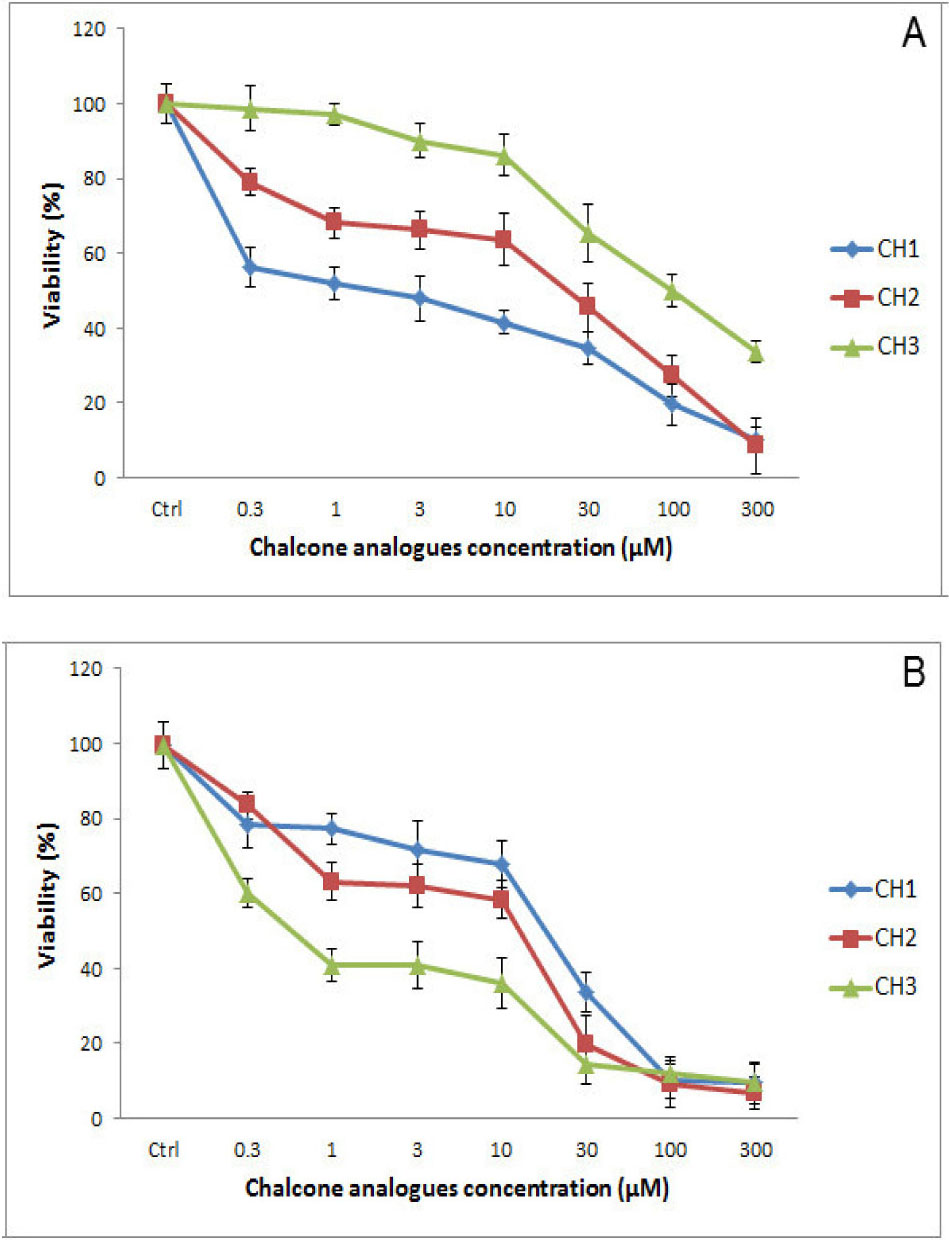
Figure 2.
The effects of the various concentrations of new chalcone analogues on viability of HeLa cancer cells after 24 h treatment (A) and 48 h (B). Viability was quantified by MTT assay. Results are mean ± SD of three experiments (p<0.05)
Based on the obtained values of the IC50 test, we compared the cytotoxic effect on HeLa and MRC-5 cells between chalcones and reference substances during 24 and 48 h. Interestingly, CH1 resulted in various cytotoxic effects after 24 h of treatment in comparison to the cytotoxic effects chalcones after 48 h of treatment. The chalcone CH1 exhibited significant cytotoxic effect on the HeLa cells after 24 h of treatment with the IC50 value of 3.97 μM compared to CH2 and CH3 (IC50 4.11 and 6.18 μM), respectively (Table 1). However, CH3 chalcone analogue exhibited more significant cytotoxic effect on HeLa cells after 48 h of treatment (IC50 1.69 μM) compared to both of CH 1 and CH2 (IC50 3.67 and 3.5 μM) (Table 1). After 48 h CH3 chalcone analogue exhibited the most efficient cytotoxic effect on HeLa cells compared to all tested agents (IC50 1.69 μM) (Table 1). After 24 and 48 h treatment with all investigated chalcone analogues, IC50 values for MRC-5 cells were > 200 μM and IC50 value for DHZ was > 300 μM. However, cisplatin exhibited a stronger cytotoxic effect on noncancerous MRC-5 cells (IC50 values for 24 and 48 h were > 150 and > 40 μM, respectively) compared to chalcones and DHZ (Table 1). Our results also showed that chalcone analogues increased cytotoxicity of the cancer cells in comparison to DHZ and cisplatin (Figure 3). All tested chalcone analogues had stronger cytotoxic effect on HeLa cells after 24 h (IC50 3.97, 4.11 and 6.18 μM) compared to cisplatin (IC50 of 9.70 μM), and less significant cytotoxic effect compared to DHZ (IC50 3.61 μM) after 24 h of treatment (Table 1). After 48 h, all chalcone analogues exhibited more efficient cytotoxic effect (IC50 3.67, 3.5 and 1.69 μM) compared to cisplatin (IC50 3.8 μM). However, only CH3 chalcone analogue had more efficient cytotoxic effect on HeLa cells after 48 h compared to DHZ (IC50 2.41 μM) (Table 1).
Table 1.
IC50 values (μM) of chalcone analogues (CH), cisplatin and dehydrozingerone (DHZ) after 24 and 48 h treatment of HeLa cancer cells and noncancerous MRC-5 cell.
| HeLa IC50 | CH1 | CH2 | CH3 | cisPt | DHZ |
| 24 h | 3.97 ± 1.45 | 4.11 ± 1.46 | 6.18 ± 1.72 | 9.70 ± 1.22 | 3.61 ± 2.16 |
| 48 h | 3.67 ± 1.17 | 3.5 ±1.1 | 1.69 ± 0.68 | 3.8 ± 0.4 | 2.41 ± 0.57 |
| MRC-5 IC50 | CH1 | CH2 | CH3 | cisPt | DHZ |
| 24 h | > 200 | > 200 | > 200 | < 150 | < 300 |
| 48 h | > 200 | > 200 | > 200 | < 40 | < 300 |
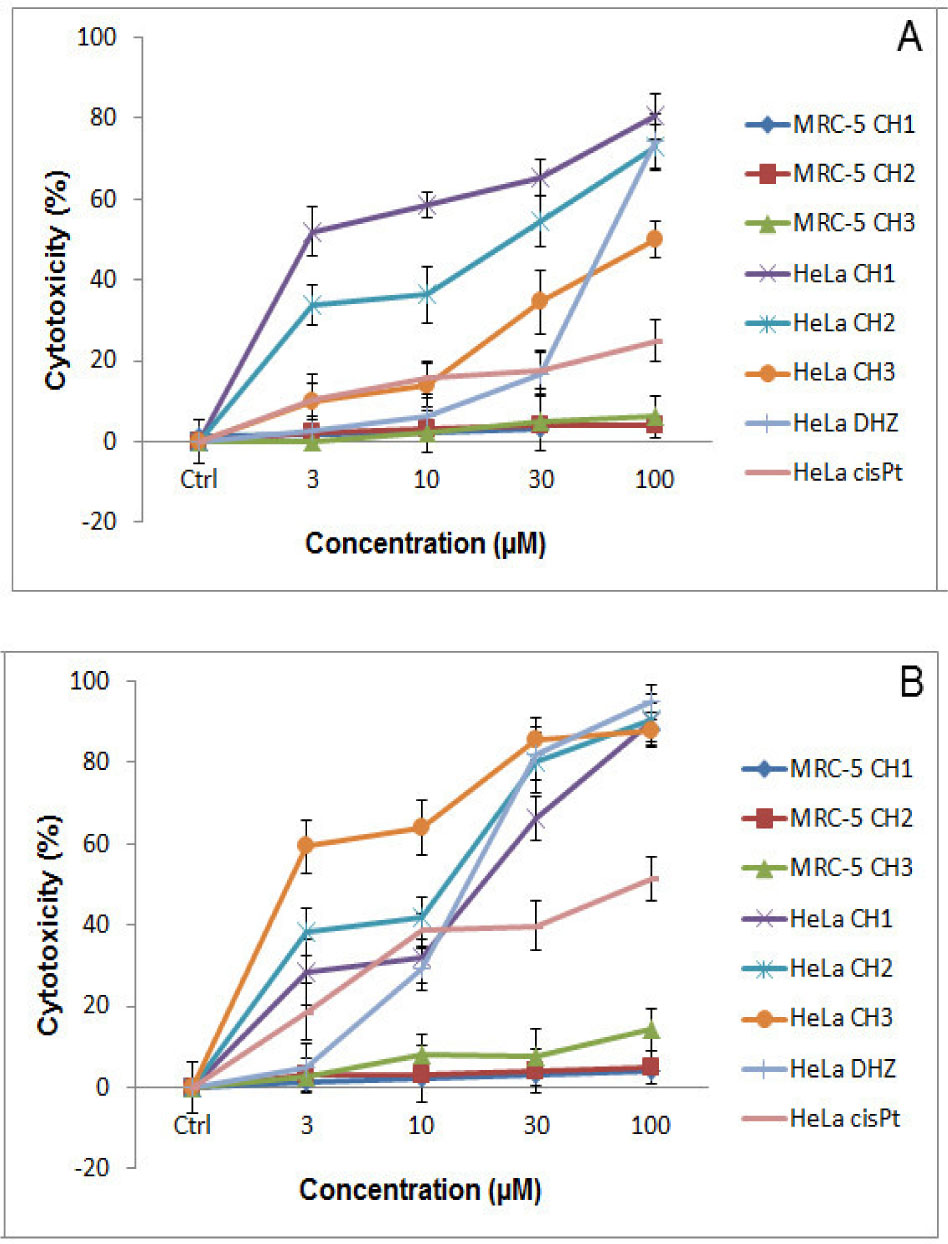
Figure 3.
The effects of new synthesized chalcone analogues on cytotoxicity of HeLa and MRC-5 cells after 24 h (A) and 48 h (B) in comparison to DHZ and cisplatin treatment. Results are mean ± SD of three experiments (p<0.05).
In our next experiment using phase contrast microscopy, we have determined changes in HeLa cells viability, cell and nuclear shape after 48 h exposure to chalcone analogues and referent substances. The morphological changes of treated HeLa cells were compared to the morphology of the control cells (Figure 4). Our results indicated a significant reduction in the number of treated HeLa cells compared to the number of control cells. Morphological changes of the treated cells were manifested as: cell rounding, loss of normal cell shape and cell attachment. Complete loss of the cell morphological characteristics were statistically significant in the case of all investigated CH analogues starting from 3 μM. Intensity of morphological changes of the treated cells was directly dose dependent.
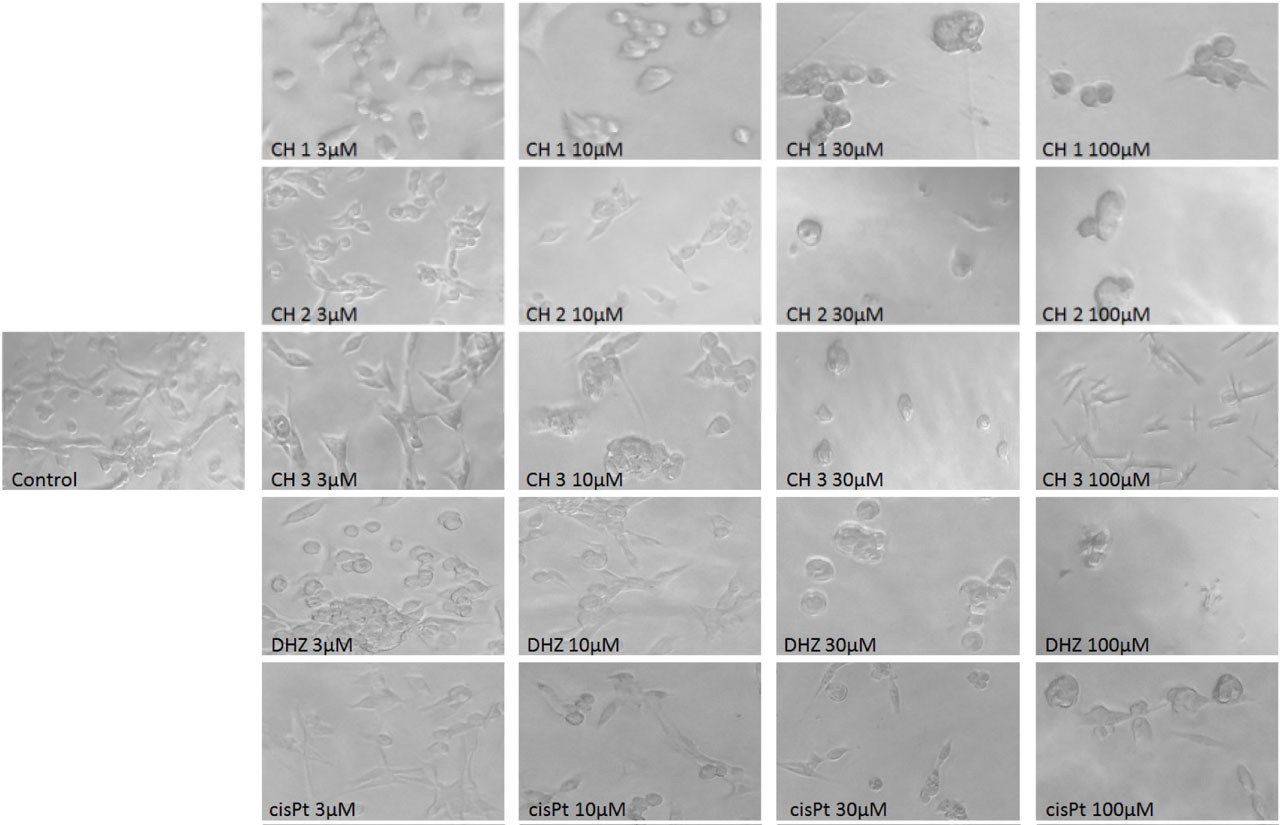
Figure 4.
Morphology of the HeLa cells after 48 h treatment with investigated substances. Equal number of HeLa cells were plated in 24 well plates and allowed to attach for 24 h. Cells were exposed to vehicle (VEH)-containing complete media and different concentrations of CH, DHZ and cisplatin during 48 h period and morphology of the cells was analysed on microscope.
Next we have investigated the mechanism of their killing abilities by studying their apoptotic induction by applying the Annexin V-FITC/7-AAD staining. Our results clearly showed that apoptosis plays an important role in the death of HeLa cells induced with all chalcone analogues (Figure 5). Specifically, after 48 h treatment of HeLa cells with chalcone analogues (3.67, 3.5 and 1.69 μM), our results showed that 37.30, 40.48 and 39.17%, of cells were in early apoptosis; 3.55, 2.81 and 2.93%, of cells were in late apoptosis; 0.74, 0.69 and 0.75% of cells were in necrosis. After 48 h treatment with cisplatin and DHZ (3.8 and 1.76 μM), our results showed that 37.98 and 41.69% of cells were in early apoptosis; 3.92 and 4.1% of cells were in late apoptosis; 0.62 and 0.66% of cells in were necrosis (Figure 5). In our next experiment we evaluated if CH co-treatment with chloroquine (CQ - 20 μM) promoted apoptosis in HeLa through the inhibition of autophagy. Our results indicated that CQ did not influence apoptosis in control HeLa cells. The percentage of the control cells undergoing early apoptosis was 6.12%, while after CQ treatment this percentage was 5.16%. Similar effect of CQ on the percentage of the control cells in late apoptosis (ctrl − 0.07%; CQ − 0.08%) and necrotic cells (ctrl − 1.53 %; CQ − 1.77%) was observed (Figure 5). Our results were similar to experimental cells. Results indicated that co-treatment with CQ had no statistically significant effect regarding the distribution (percentage) of the apoptotic and necrotic HeLa cells (Figure 5). Our results presented on Figure 5, showed that cotreatment with CQ did not affect CH analogues induced apoptosis, indicating that autophagy was not involved in mechanism of cytotoxic action of tested substances. The apoptotic type of cell death was further confirmed by flow cytometric analysis of apoptosis-related protein expression in HeLa cells. The expression of anti-apoptotic Bcl-2 decreased in treated cells, while expression of pro-apoptotic active Bax increased (Figure 6 A and B). The Bcl-2/Bax ratio consequently declined (Figure 6 C).
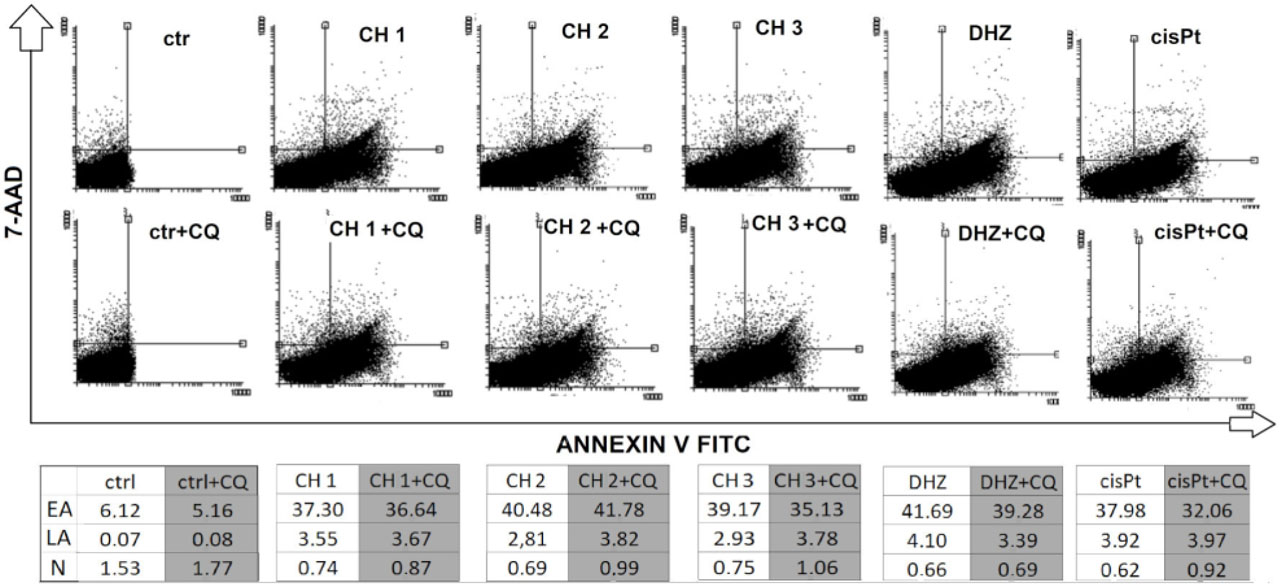
Figure 5.
Effects of CH analogues on apoptosis and autophagy in HeLa cells. Flow cytometry analysis of Annexin V-FITC/7-AAD stained HeLa cells after 48 h of the treatment with CH, DHZ, cisplatin and co treatment with CQ.
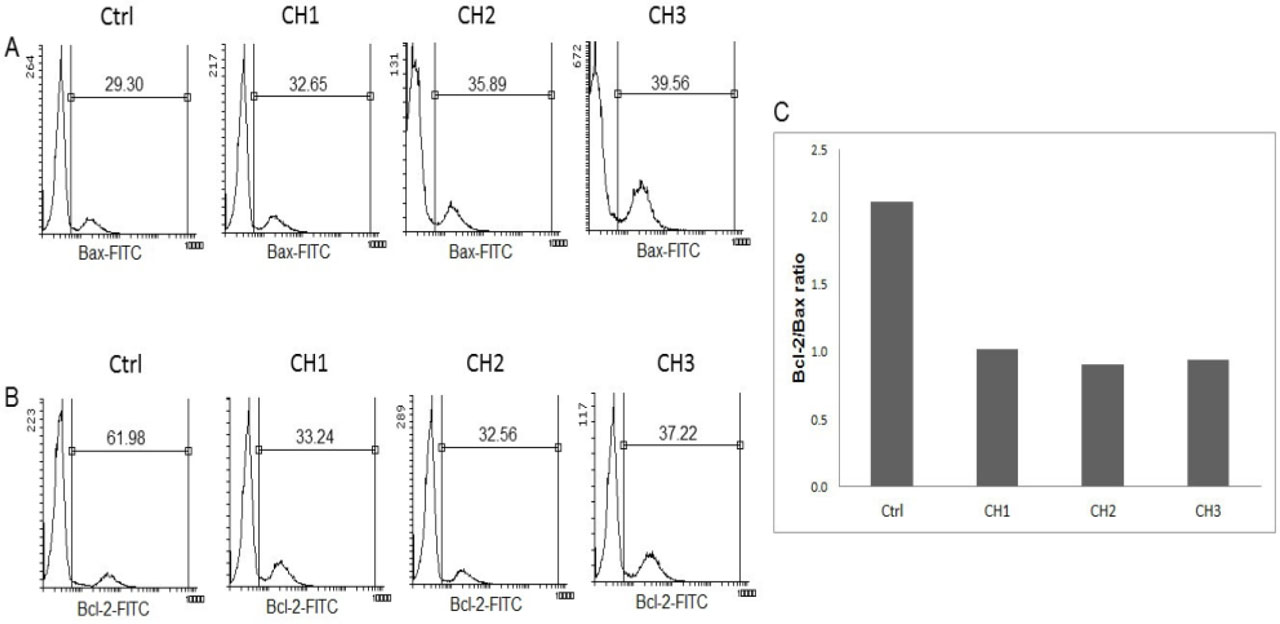
Figure 6.
Expression of apoptosis-related proteins in untreated (control) and treated HeLa cells presented by histograms (Fig. 6 A and B) and bar chart (Fig 6. C). The mean fluorescence intensity (MFI) of Bax (A) and Bcl-2 staining (B) are indicated on histograms. Bar chart (C) showing Bcl-2/Bax ratio in untreated and treated cells.
DISCUSSION
Numerous researches indicate that chalcones (benzylidene acetophenone's) and their analogues display cytotoxic, anticancer (8) (9) (13) antimalarial (7) activity etc. These abundance of biological activities develops as a result of modification of 1,3-diphenyl propenone template with different functional groups or atoms (14). Due to different biological effects, we have synthesized three new chalcone analogues, and for the first time we have investigated their cytotoxic and apoptotic effects on HeLa and MRC-5 cell line. The cytotoxic and apoptotic effects of different chalcone analogues on human carcinoma cell line HeLa, MCF-7, SKBR-3, A549, PC3 and human HT-29 are demonstrated in several studies (15) (16) (17) (18). Results of these studies showed that different types of chalcone analogues had high cytotoxic effect on human cancer cells and low cytotoxic effect on healthy cells (17). Our results correlated with the previous studies and indicate that low IC50 values of our CH analogues induced strong cytotoxic effect on HeLa cells with low cytotoxic effect towards healthy cells. Dehydrozingerone is structurally related to chalcones (19). In investigation conducted by Jin et al., (19) authors indicate that newly synthesized chalcones showed significant and similar cytotoxic activity against both KB and KB-VCR. Ignacia et al., (20) and Burmudzija et al., (21) reported that Mannich base DHZ derivatives exhibited higher antioxidant and cytotoxic activity compared to DHZ. Similar to findings of Jin et al., (19) we have evaluated and compared cytotoxic effects of our chalcone analogues with DHZ. Results of our study showed that CH analogues had similar cytotoxic effect compared to DHZ. ElMoanem et al., (22) showed that their chalcone derivatives exerted superior activity against HCT-116 and PC-3 cell lines in comparison with cisplatin. Manik and Kuntal (13) showed promising activity of anthraquinone based chalcone compounds on proliferation rate of HeLa cells with similar IC50 values to cisplatin. Morphological changes of cytotoxic cells include cell rounding, loss of normal cell shape and cell attachment. Different literature sources indicated presence of morphological changes of chalcone treated cells (18) (23) (24). Similar to findings of Solano et al., (24), we have determined changes in HeLa cells viability, cell shape and nuclear shape compared to control (Figure 4). Our results indicate that cell number of treated HeLa cells was significantly lower compared to the control HeLa cells. Intensity of morphological changes of the treated cells directly correlated to the concentrations of investigated substances. Literature data that investigated the effect of different chalcone analogues on type of the cell death pointed out that chalcones induced apoptosis (3) (13). Our results showed that all investigated CH analogues induced apoptosis in HeLa cell line. In some literature data, it has been reported that application of chloroquine with chalcone analogues enhances apoptotic responses of treated cells (25) (26). However, our results presented on Figure 5, pointed out that co-treatment with CQ did not affect CH analogues induced apoptosis, indicating that autophagy was not involved in the mechanism of cytotoxic action of tested substances. Various sources of literature identify chalcones as powerful inducers of apoptosis in different tumor cells. However their apoptotic mechanisms differ. For instance, two chalcone derivates acted on human hepatoma cells line (HepG2 and Huh-7) through caspase dependent intrinsic pathways, increased expression of Bax and decreased the levels of Bcl-2 triggering the mitochondrial apoptotic pathway in T24 and HT-1376 cells (27). Also, in a study by Ignacio et al., (28) synthetic chalcone increased expression of Bax and decreased the levels of Bcl-2 in human leukemia U-937 cells. Flavokawain C induces apoptosis in HCT-116 cells by activating both the intrinsic and extrinsic apoptotic pathway (29). In our study, we provided evidence that chalcone analogue induces apoptosis HeLa cells that was accompanied by the activation of Bax and decrease of Bcl-2 protein expression which further leads to the release of cytochrome c from mitochondria into cytosol and cleavage/activation of caspase-3. Also, our results showed that the resulting net effect led to a lower ratio of Bcl-2 / Bax which might be responsible for the chalcone analogues-induced apoptosis in HeLa cells.
In conclusion, for the first time we have determined mechanism of action for these chalcone analogues on treated HeLa cells. Our results provided evidence that chalcone analogues induced apoptosis in HeLa cervical carcinoma through the intrinsic apoptotic pathway. These findings provide insights into the molecular mechanism of chalcone analogues-induced cell death. These compounds shows good promise to be further evaluated as a potential therapeutic agents for the treatment of human carcinoma.
ACKNOWLEDGMENTS
This study was financially supported by Faculty of Medical Sciences, University of Kragujevac (JP14/17), called “Антитуморски ефекат новосинтетисаних аналога халкона на вијабилност туморских ћелија in vitro”. The authors wish to thank project called “Preklinička ispitivanja bioaktivnih supstanci (PIBAS)”, registry number 41010 for support.