
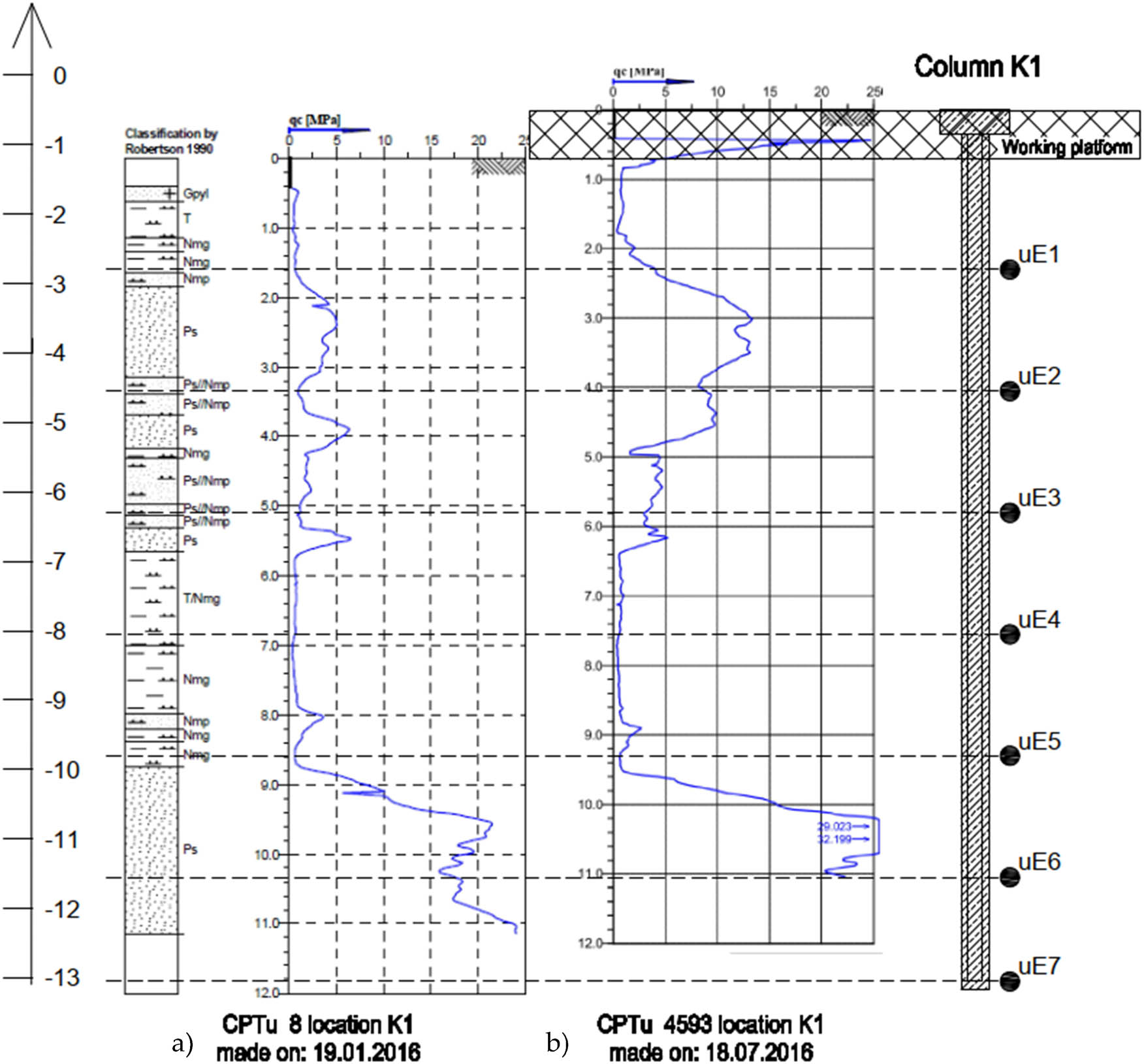
Figure 1
CPT test logs. (a) Before ground improvement and (b) after ground improvement.
Source: “Report on geotechnical studies performed for the investment project - Construction project of the S7 expressway on the Koszwały - Kazimierzowo section, task 2 Nowy Dwór Gdański - Kaziemierzowo, section MA-19 km 43+900 - 44+330.” “in Polish” (2016). Prepared by: GEOTEKO Projekty i Konsultacje Geotechniczne Sp. z o.o.
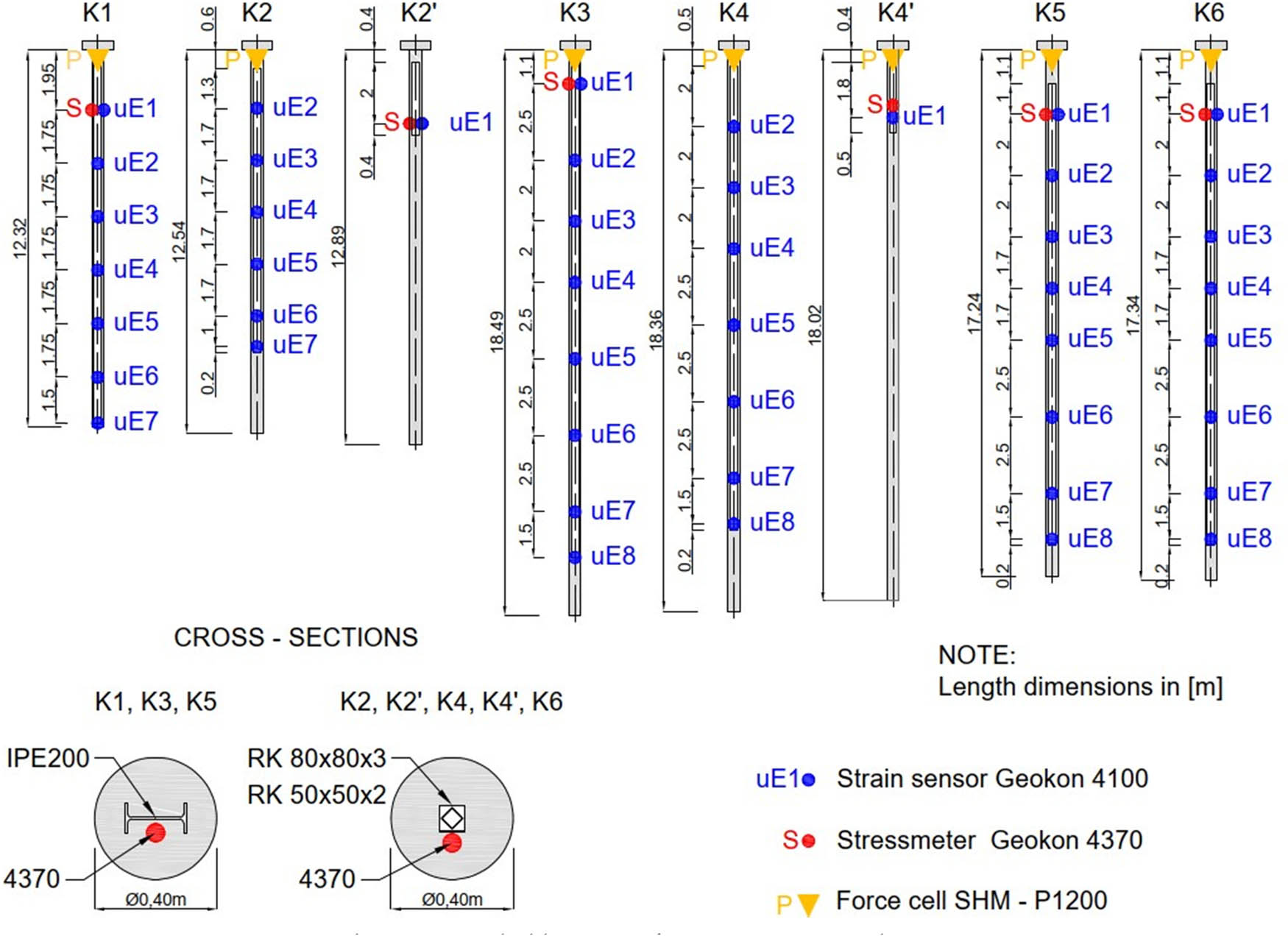
Figure 2
Detailed location of sensors in given columns.
Source: Author’s contribution.
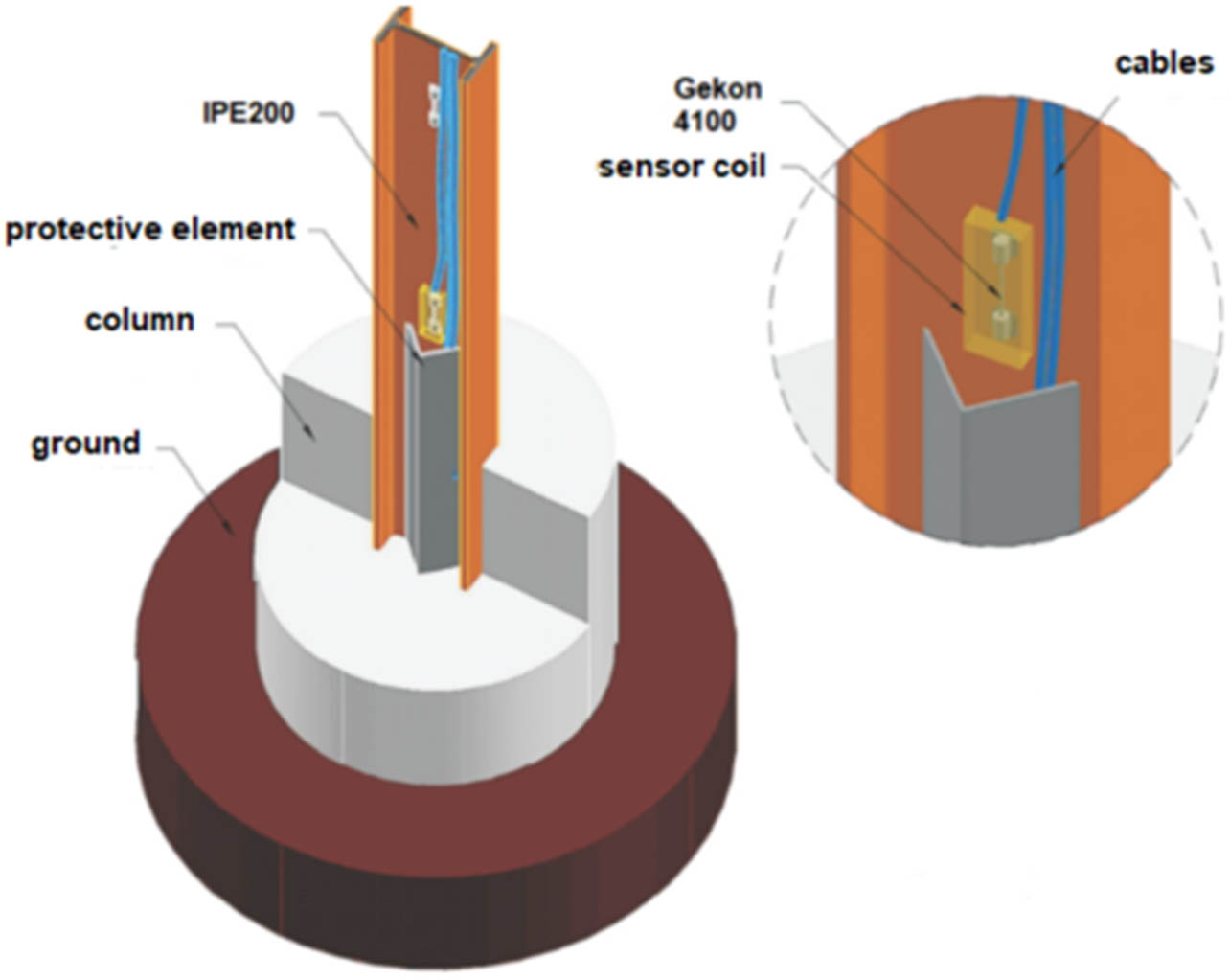
Figure 3
Details of the installation of strain sensors in columns reinforced with IPE 200 profiles.
Source: From ref. [13].
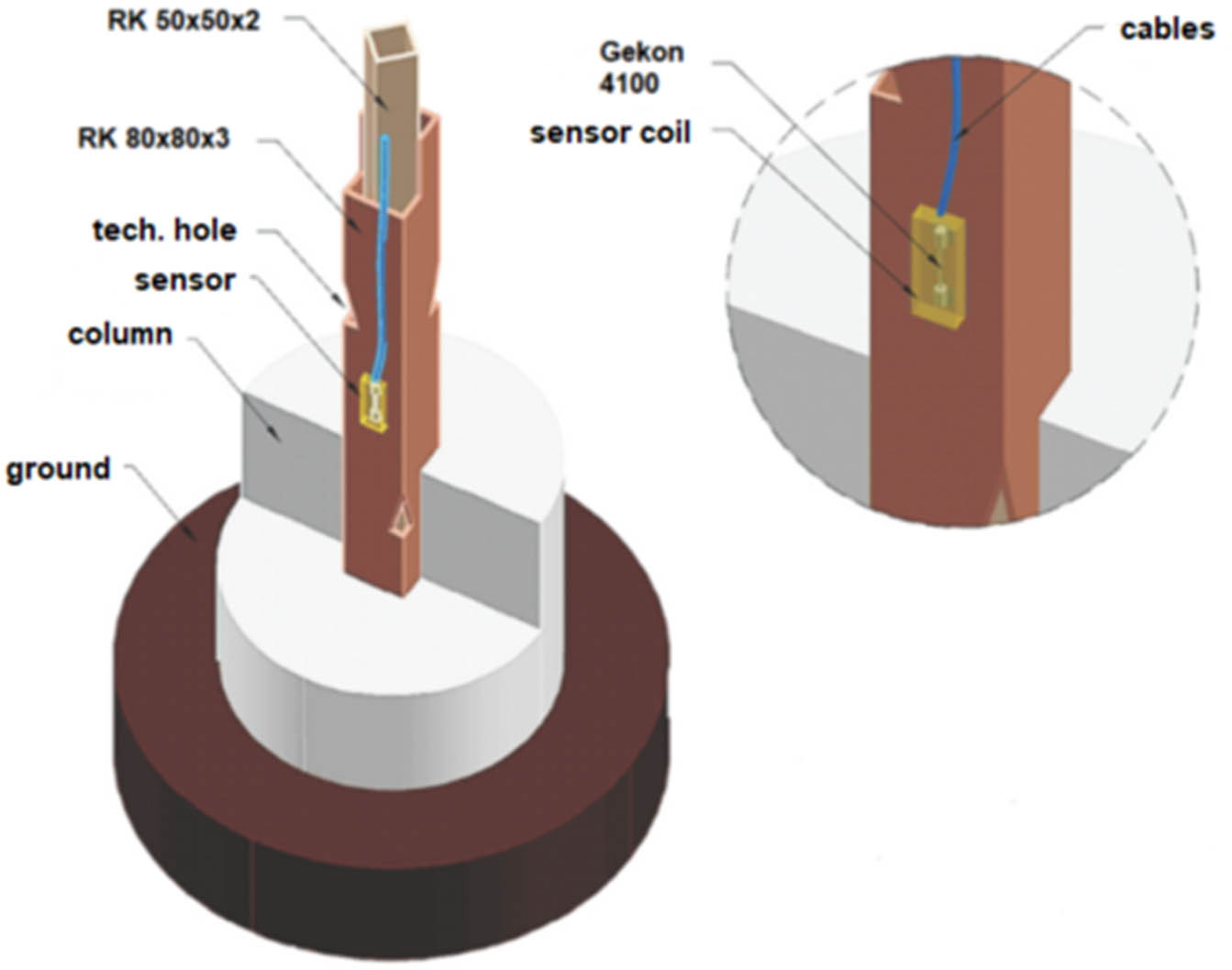
Figure 4
Details of the installation of strain sensors in columns without reinforcement.
Source: From ref. [13].

Figure 5
Specification of the SHM-P-1200 load cell.
Source: From ref. [13].
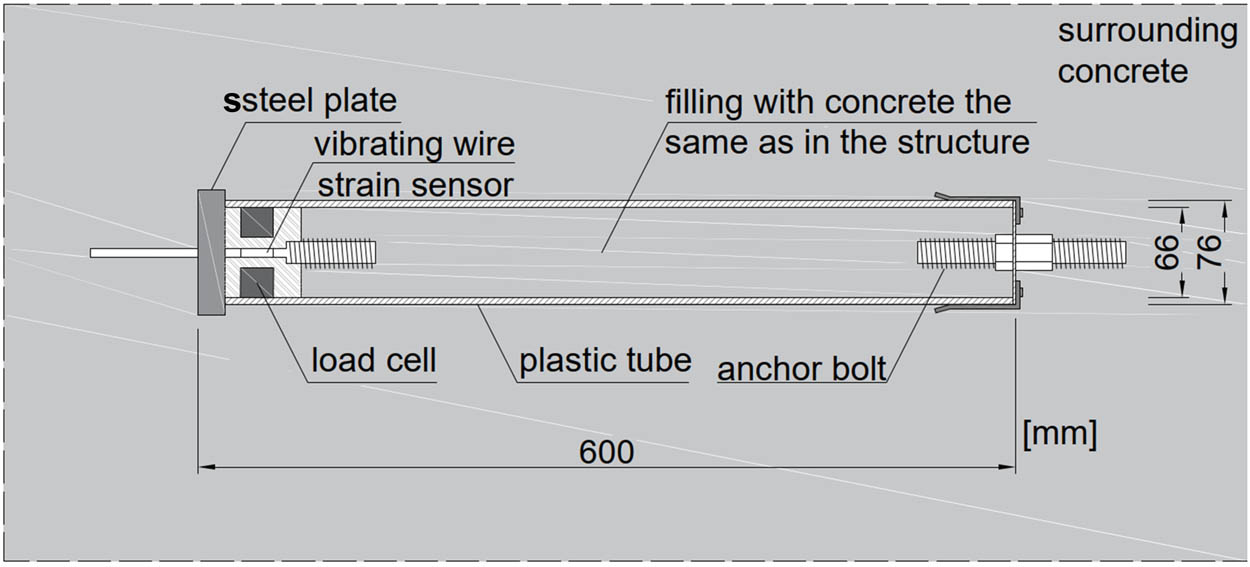
Figure 6
Concrete VW Stressmeter Geokon 4370 model.
Source: Author’s contribution.
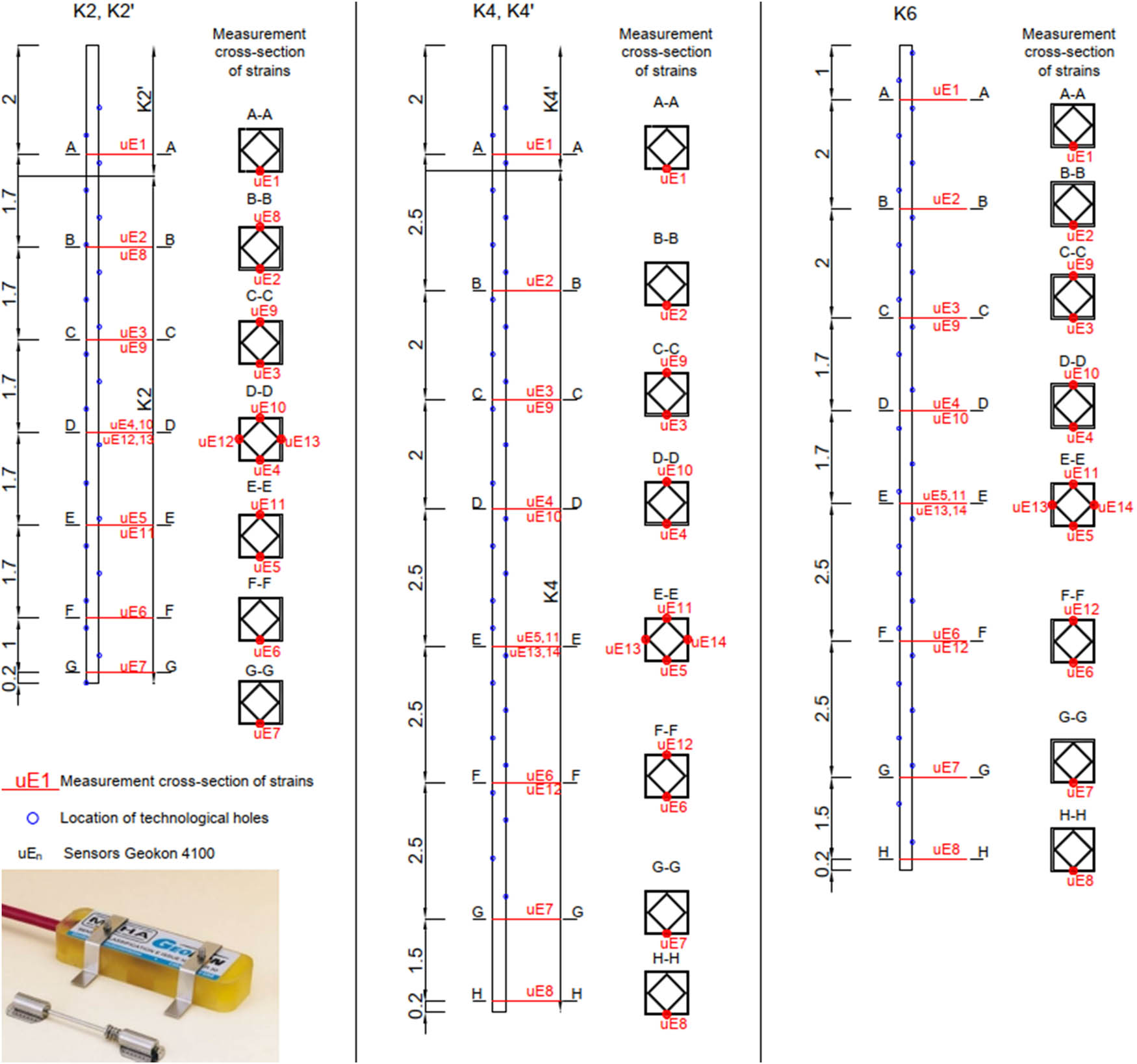
Figure 7
Installation details of strain sensors for an unreinforced column.
Source: Author’s contribution.
Table 1
Load test program for the K1 column.
| Design load capacity | 761 kN | ||||
|---|---|---|---|---|---|
| Cycle I | Cycle II | ||||
| Percentage of charges (%) | Load value | Stabilization | Percentage of charges (%) | Load value | Stabilization |
| 12.5 | 95 | Yes | 25.0 | 190 | No |
| 25.0 | 190 | Yes | 50.0 | 381 | No |
| 37.5 | 285 | Yes | 75.0 | 571 | No |
| 50.0 | 381 | Yes | 100.0 | 761 | No |
| 62.5 | 476 | Yes | 112.5 | 856 | Yes |
| 75.0 | 571 | Yes | 125.0 | 951 | Yes |
| 87.5 | 666 | Yes | 137.5 | 1,046 | Yes |
| 100.0 | 761 | Yes | 150.0 | 1,142 | Yes |
| 75.0 | 571 | No | 75.0 | 571 | No |
| 50.0 | 381 | No | 50.0 | 381 | No |
| 25.0 | 190 | No | 25.0 | 190 | No |
| 0.0 | 0 | Yes | 0.0 | 0 | Yes |
Source: Test load results of displacement piles T08b, piles no. 8064, 7341, 4632, 4593, 7250 (object 19, area no. 13.1 – 13.3, km 43+900 to 44+440) “in Polish” (2016) Prepared by: Consortium Menard Polska sp. z o.o. i Keller Polska sp. z o.o.
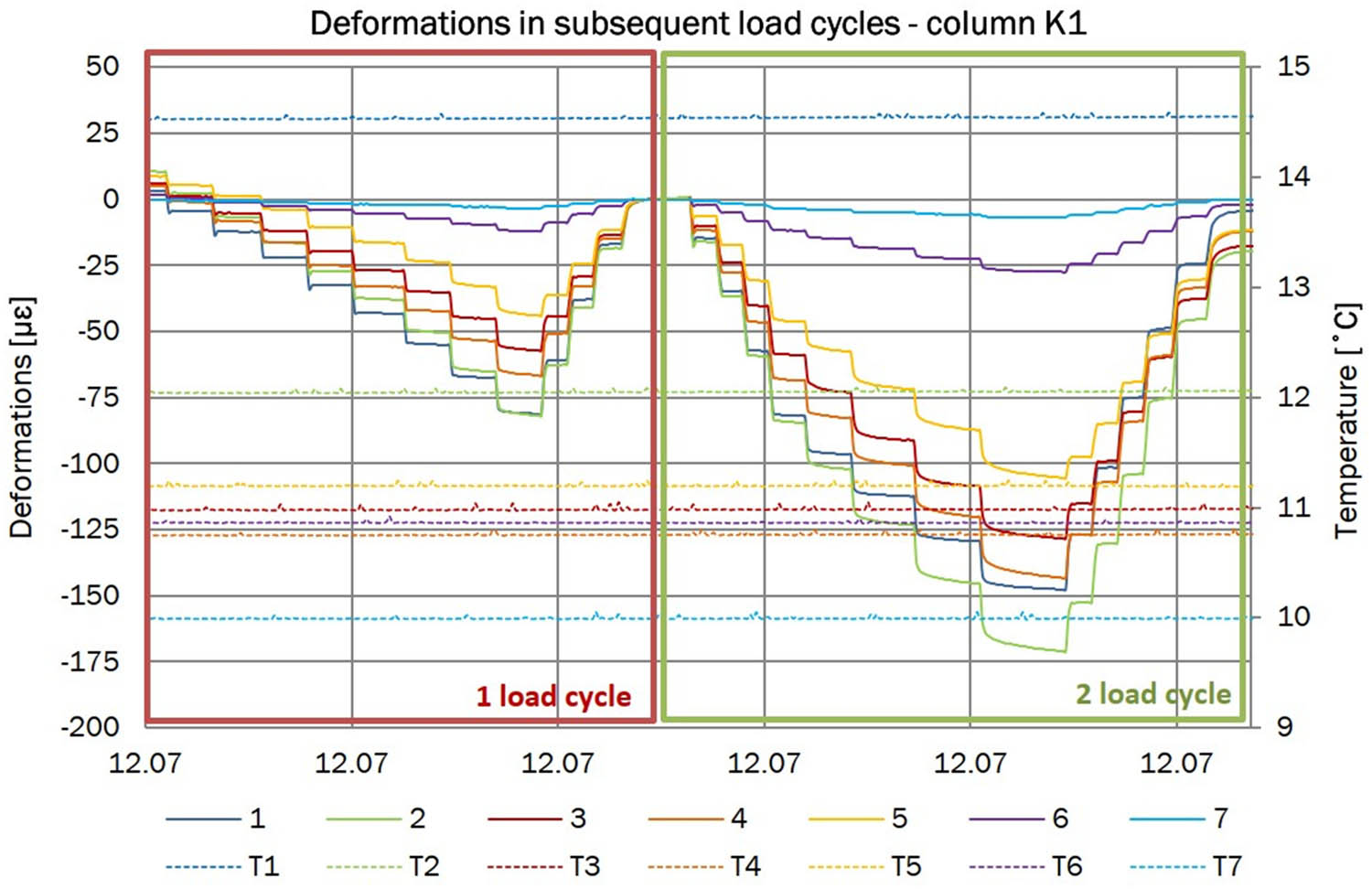
Figure 8
Results of strain measurements in the K1 column shaft during test loading.
Source: Author’s contribution.
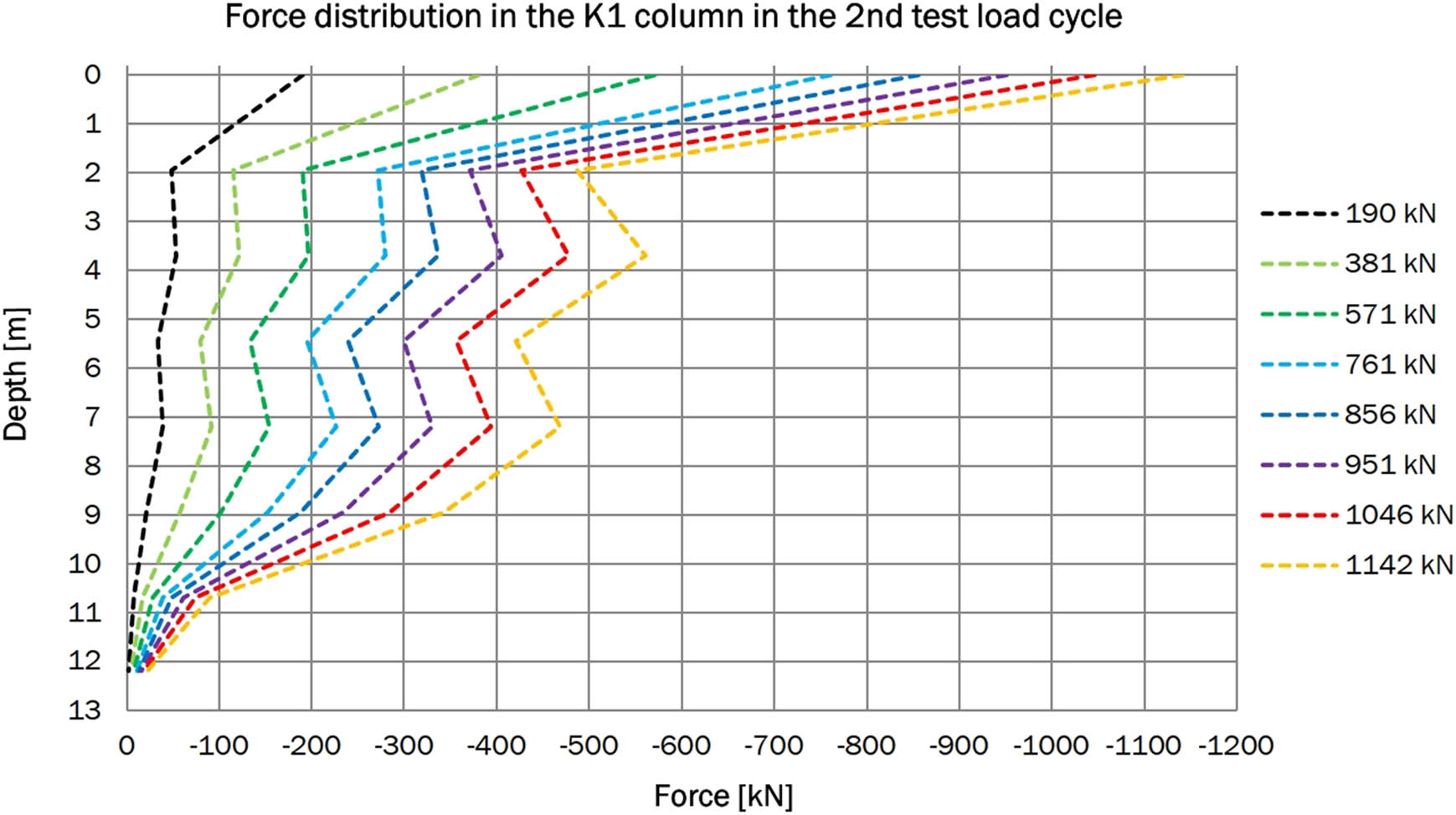
Figure 9
Distribution of force in the K1 column shaft during the second load test cycle.
Source: Author’s contribution.
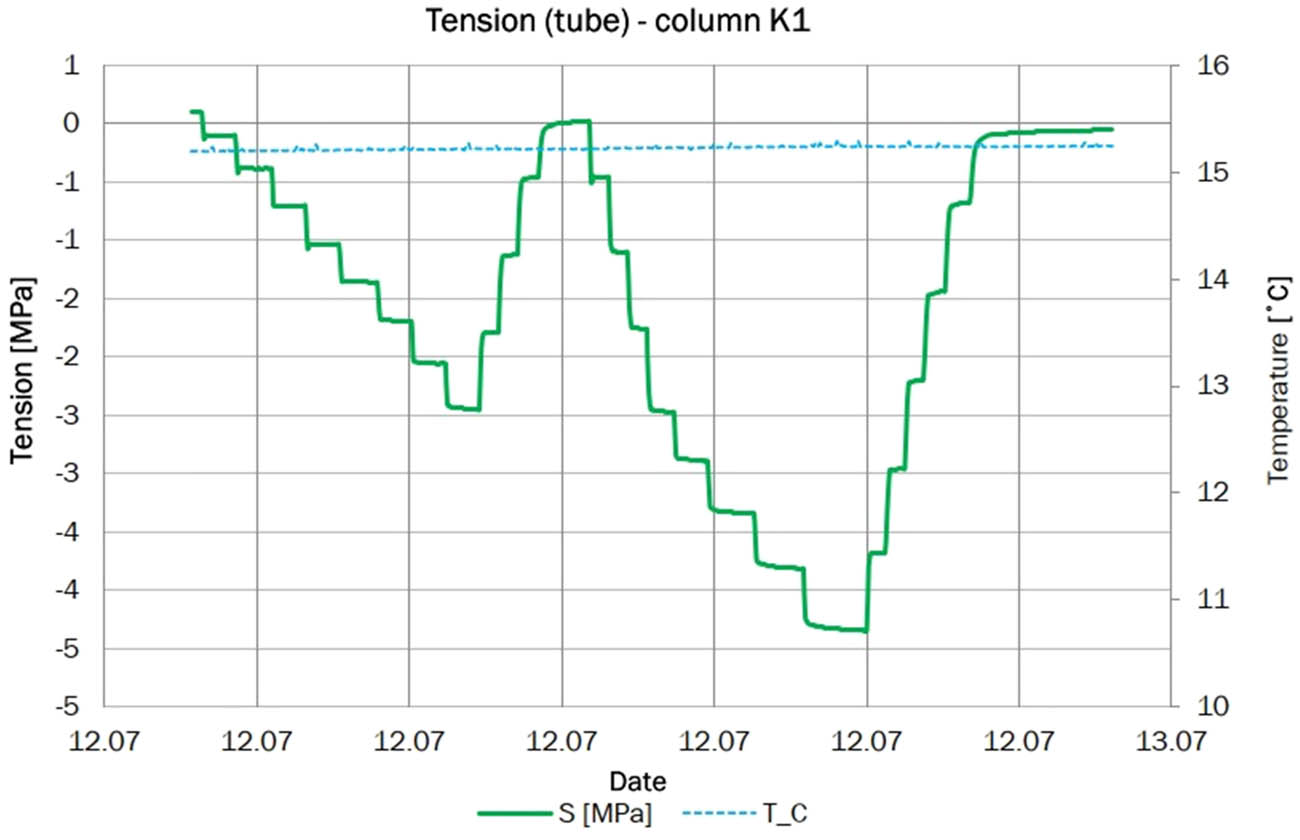
Figure 10
Stress changes for subsequent load levels of the K1 column load-bearing capacity test (negative values indicate compression).
Source: Author’s contribution.
Table 2
Change in strains and stresses in the first measurement cross-sections for the K1 column.

|
Source: Author’s contribution.
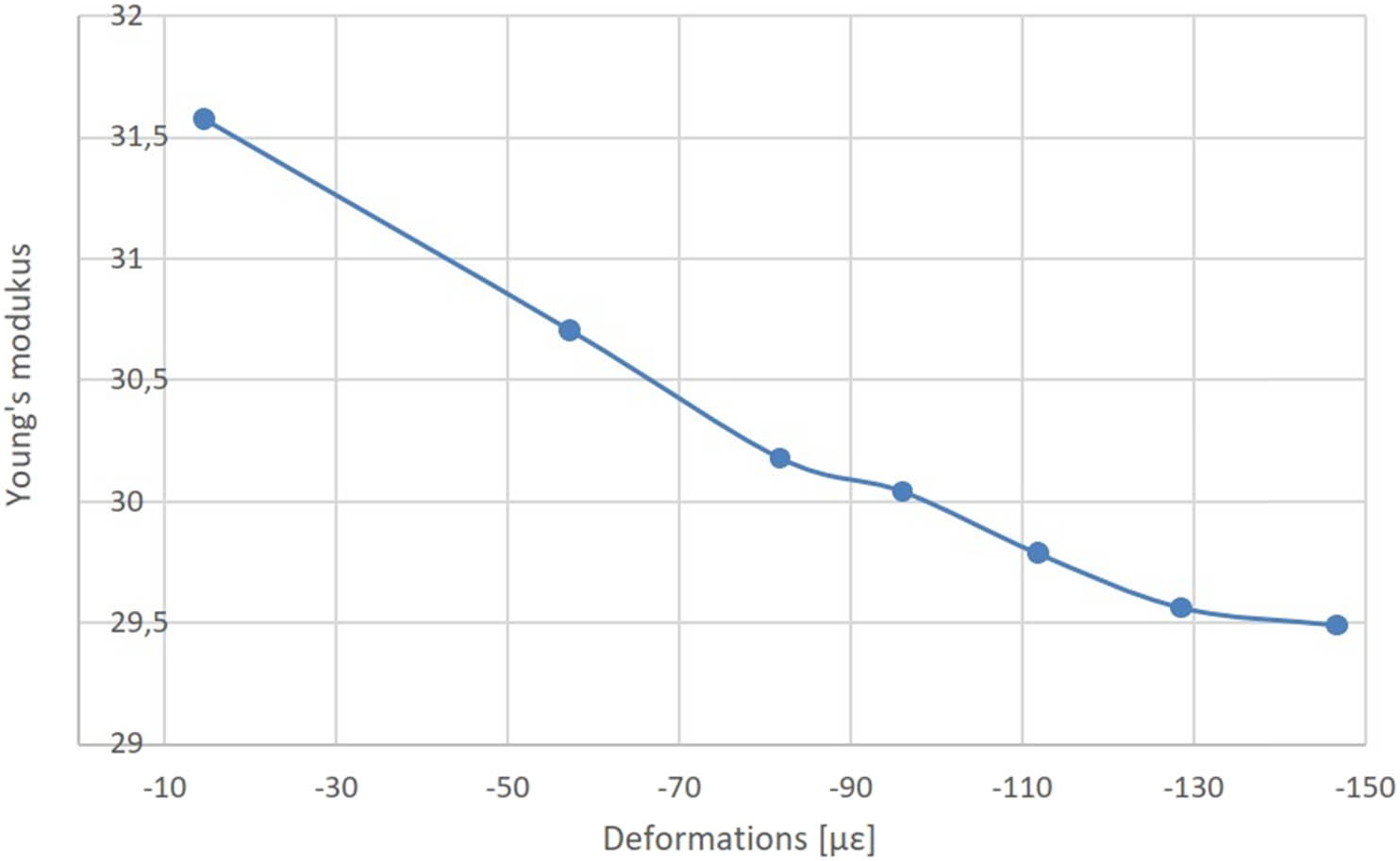
Figure 11
Change in the Young’s modulus of concrete in relation to the increase in strains in the load-bearing capacity test.
Source: Author’s contribution.