
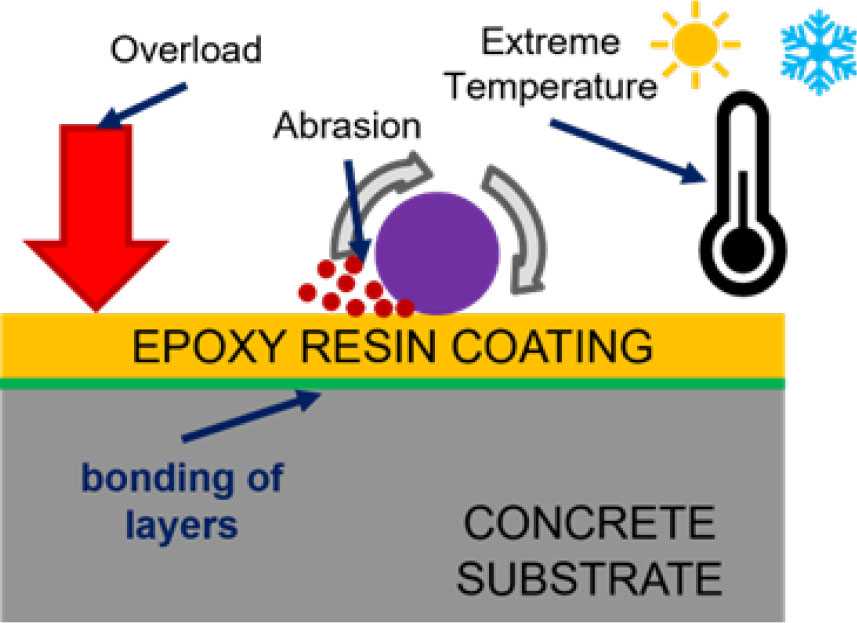
Figure 1:
Diagram of the basic factors that damage epoxy resin floors.
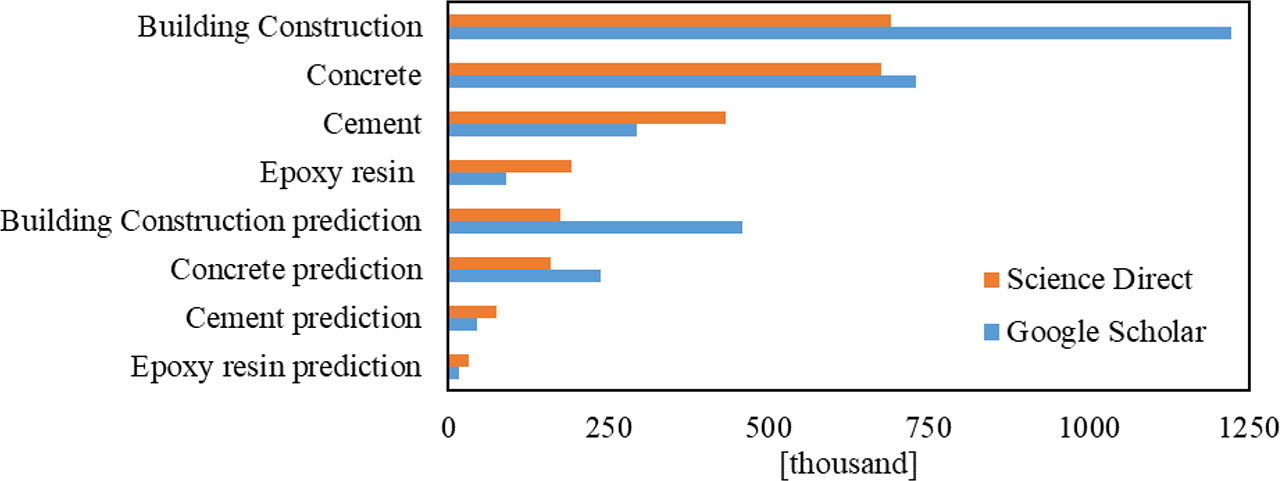
Figure 2:
Search volume chart for publications based on keywords in Google Scholar and Science Direct on 03/07/2024.
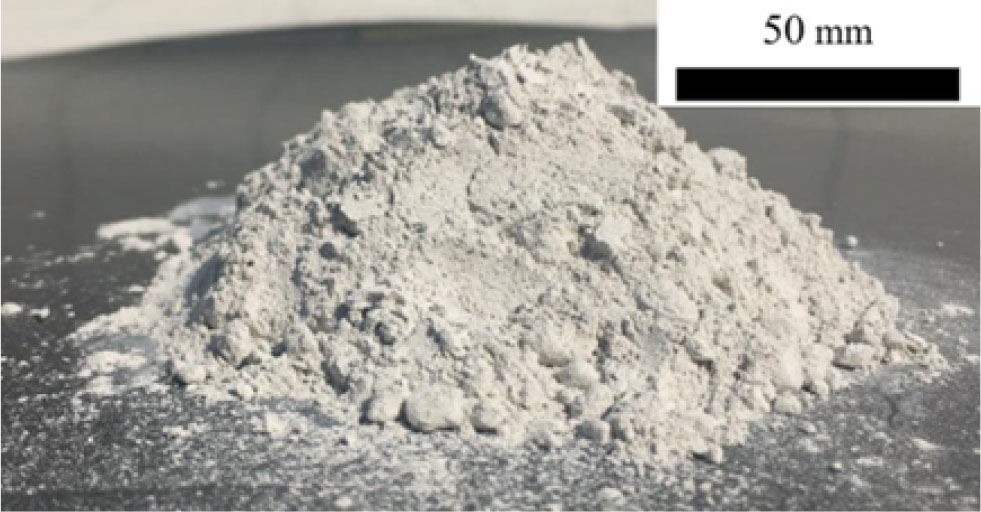
Figure 3:
Granite powder used.
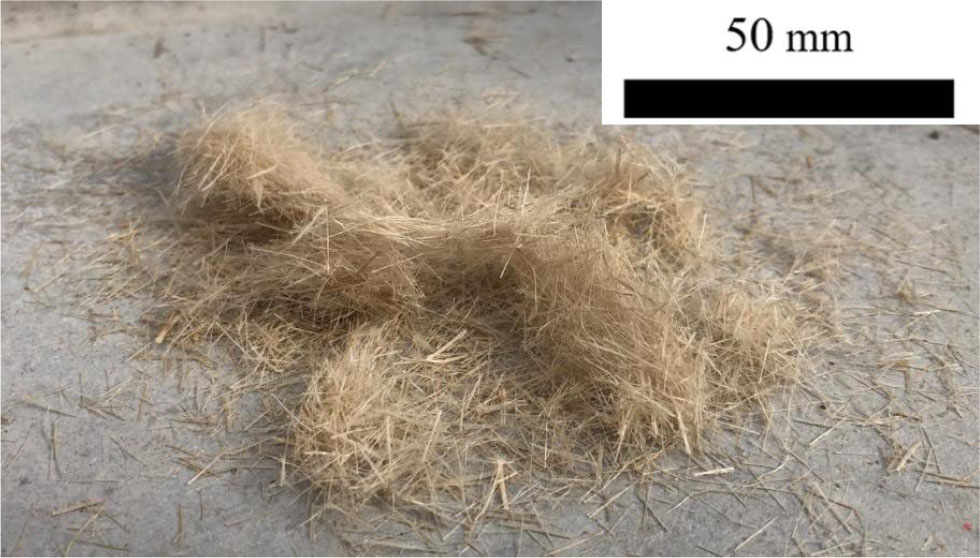
Figure 4:
Linen fibers used.
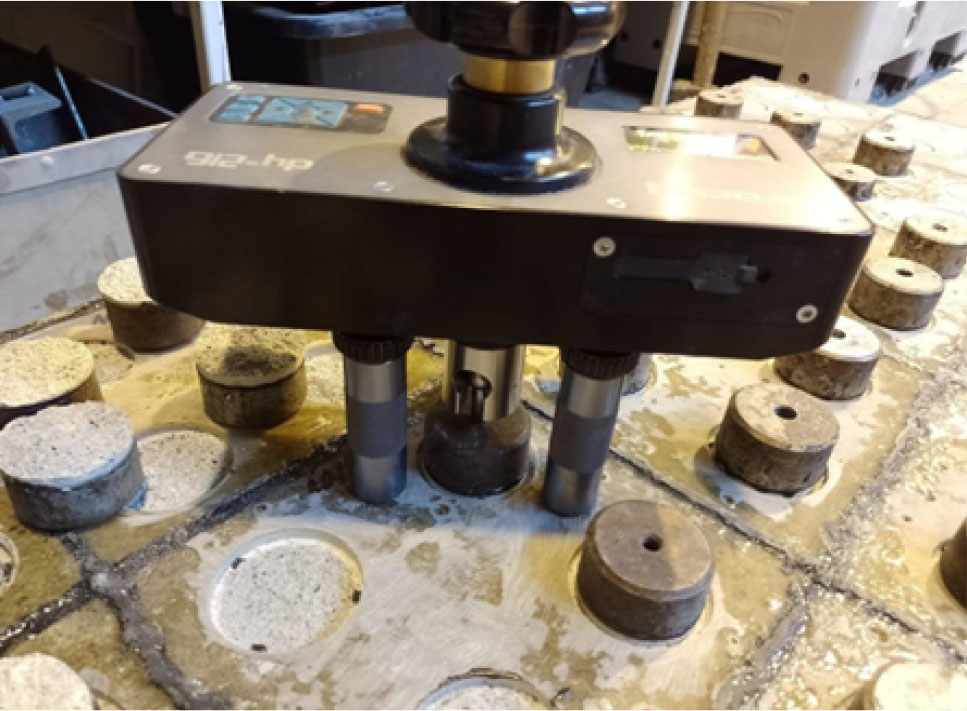
Figure 5:
Pull-off test.
Table 1:
Elements of the decision tree and random forest algorithm.
| Number of input categories | Depth of trees | Number of trees (only for RF) | Minimum subset to be divided | Minimum number of categories in the leaf |
|---|---|---|---|---|
| 5 | 1–20 | 20–200 | 5 | 2 |
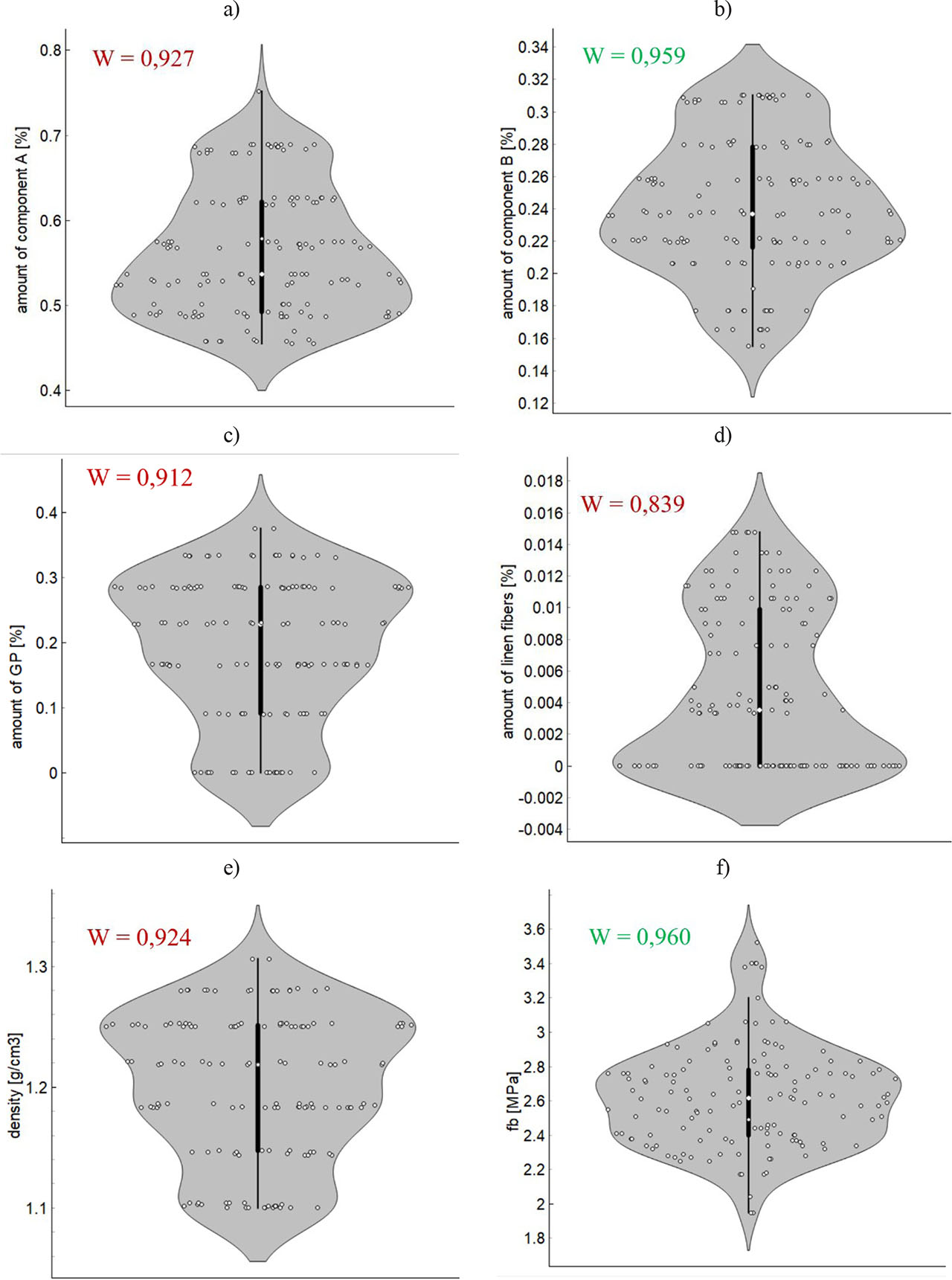
Figure 6:
Violin plot of the parameter: a) amount of Component A [%], b) amount of Component B [%], c) amount of granite powder [%], d) amount of linen fibers [%], e) density [g/cm3], and f) fb [MPa].
Table 2:
Descriptive statistics of the input and output parameters.
| Min. | Max. | St.dev. | Mean | Range | |
|---|---|---|---|---|---|
| Amount of Component A [%] | 0,455 | 0,752 | 0,077 | 0,560 | 0,297 |
| Amount of Component B [%] | 0,155 | 0,310 | 0,035 | 0,252 | 0,105 |
| Amount of granite powder [%] | 0,000 | 0,375 | 0,112 | 0,182 | 0,375 |
| Amount of linen fibers [%] | 0,000 | 0,015 | 0,005 | 0,006 | 0,015 |
| Density [g/cm3] | 1,100 | 1,306 | 0,060 | 1,196 | 0,206 |
| fb [MPa] | 1,950 | 3,520 | 0,223 | 2,546 | 1,570 |
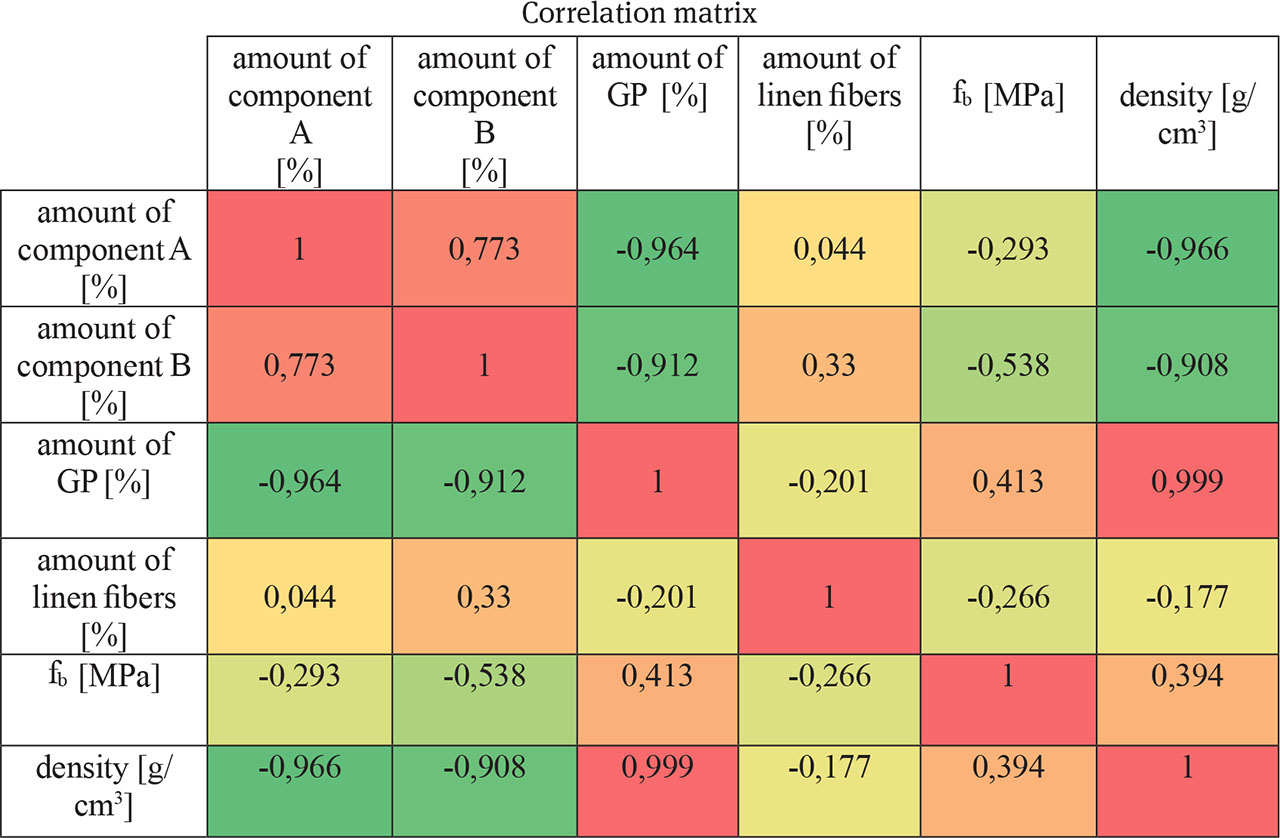
Figure 7:
Pearson correlation matrix.
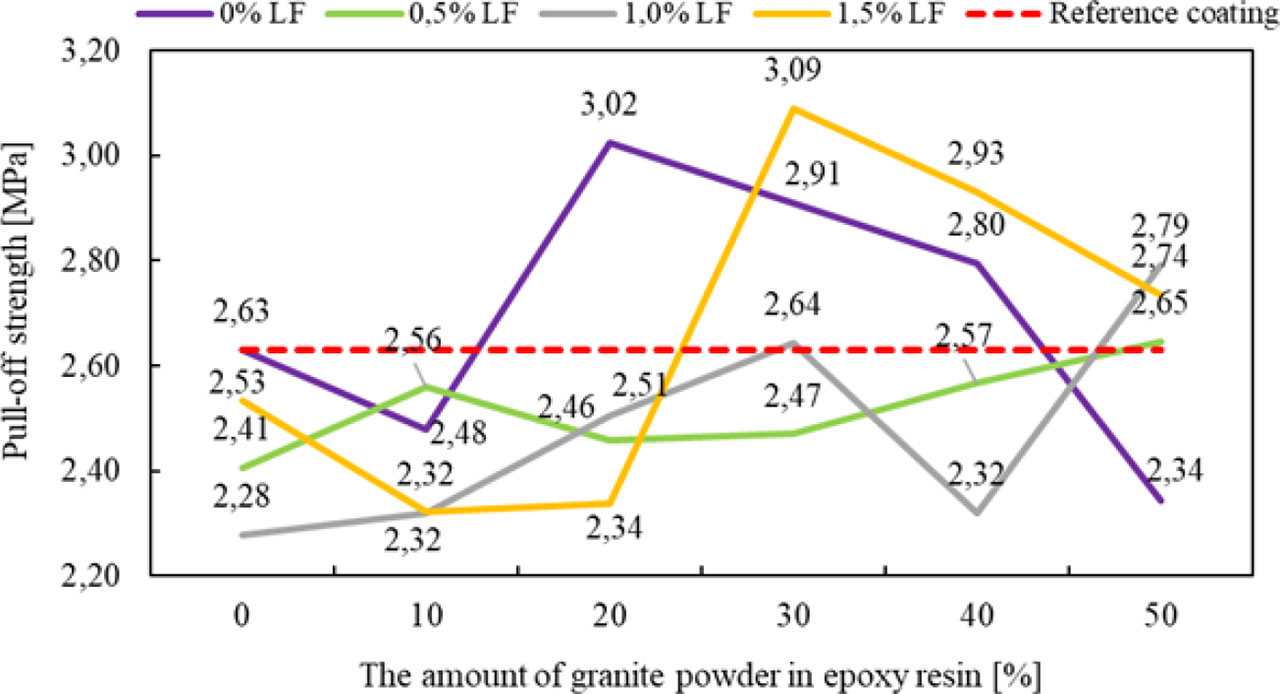
Figure 8:
Pull-off strength of the modified epoxy resin coating.
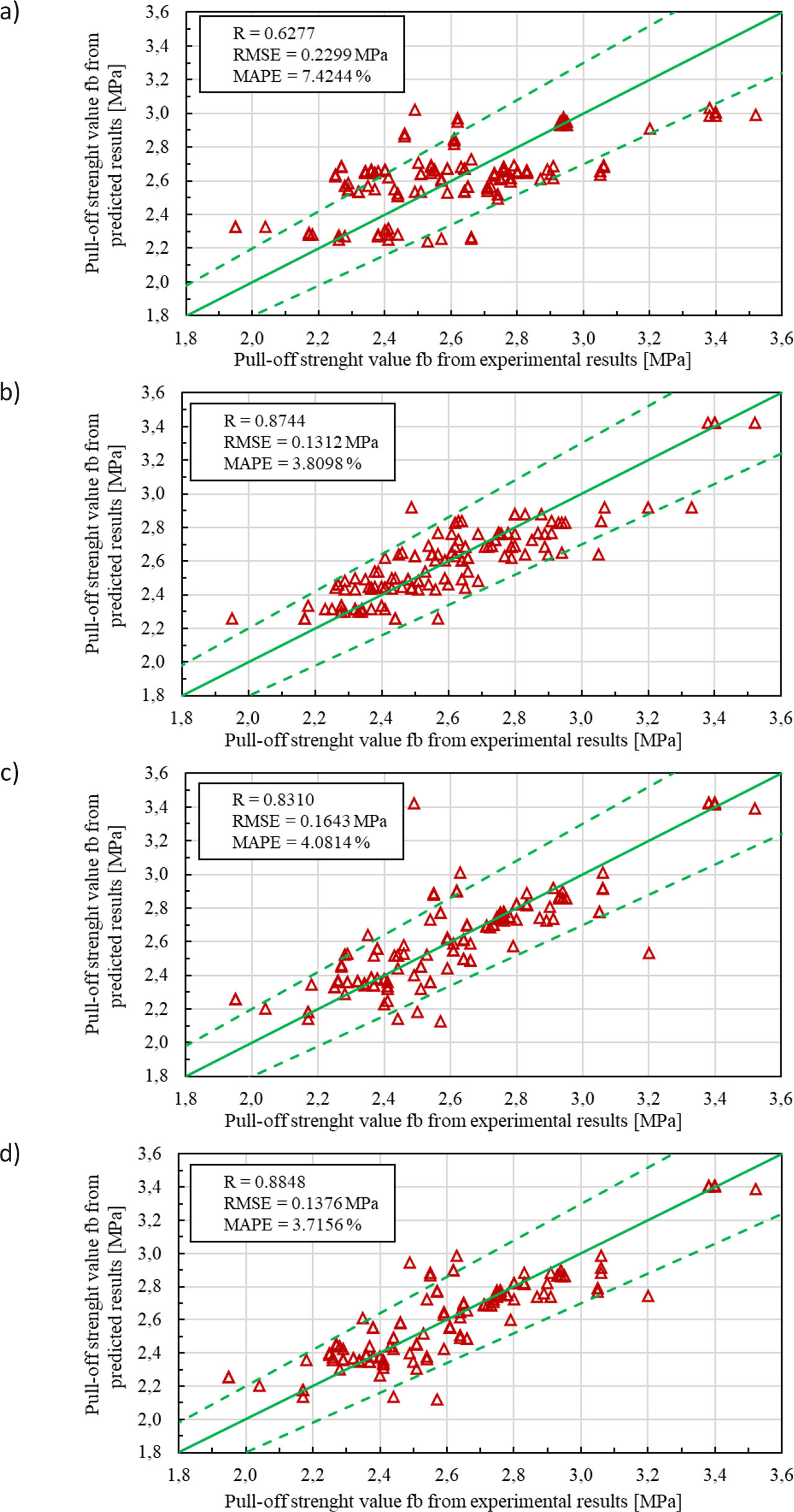
Figure 9:
Relationship between the predicted value and the experimental value of the pull-off strength fb for the: a) RL model, b) ANN model, c) DT model, and d) RF model.
Table 3:
Summary of correlation coefficients R, RMSE, and average percentage forecast errors MAPE for selected models.
| R [-] | RMSE [MPa] | MAPE [%] | |
|---|---|---|---|
| Linear regression | 0,6277 | 0,2299 | 7,4244 |
| Decision tree | 0,8310 | 0,1643 | 4,0814 |
| Random forest | 0,8848 | 0,1376 | 3,7156 |
| Artificial neural networks | 0,8744 | 0,1312 | 3,8098 |
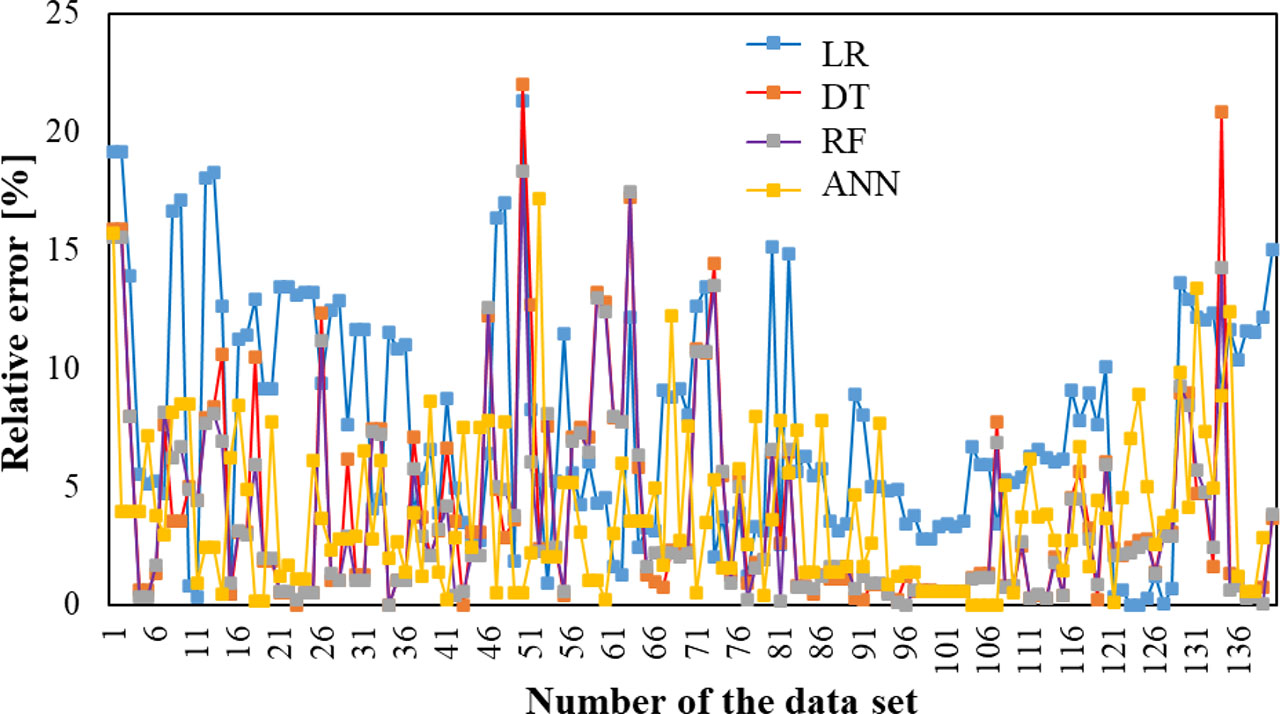
Figure 10:
Relative errors for data sets for selected artificial intelligence algorithms.
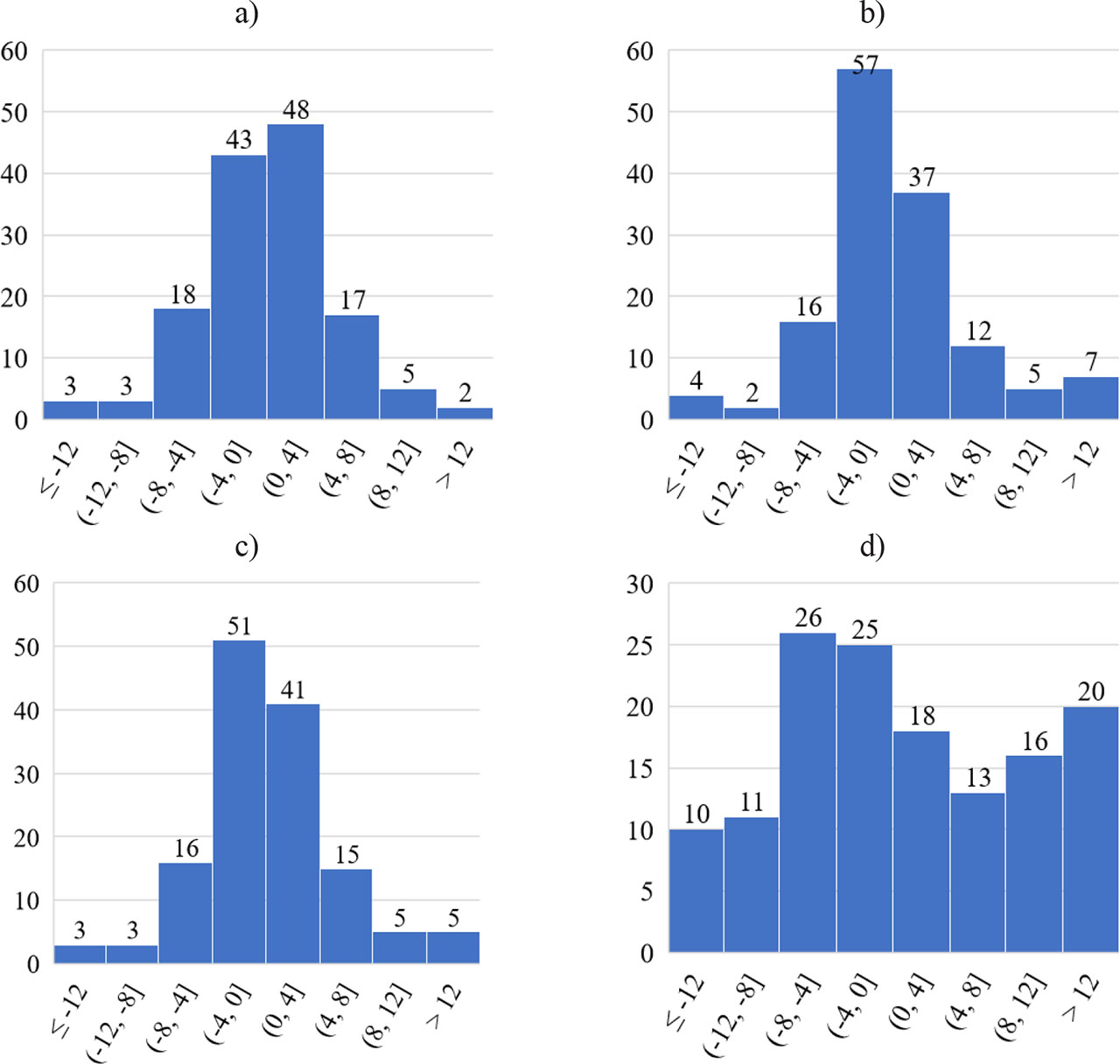
Figure 11:
Histograms of absolute error values for a) ANN, b) DT, c) RF, and d) LR.
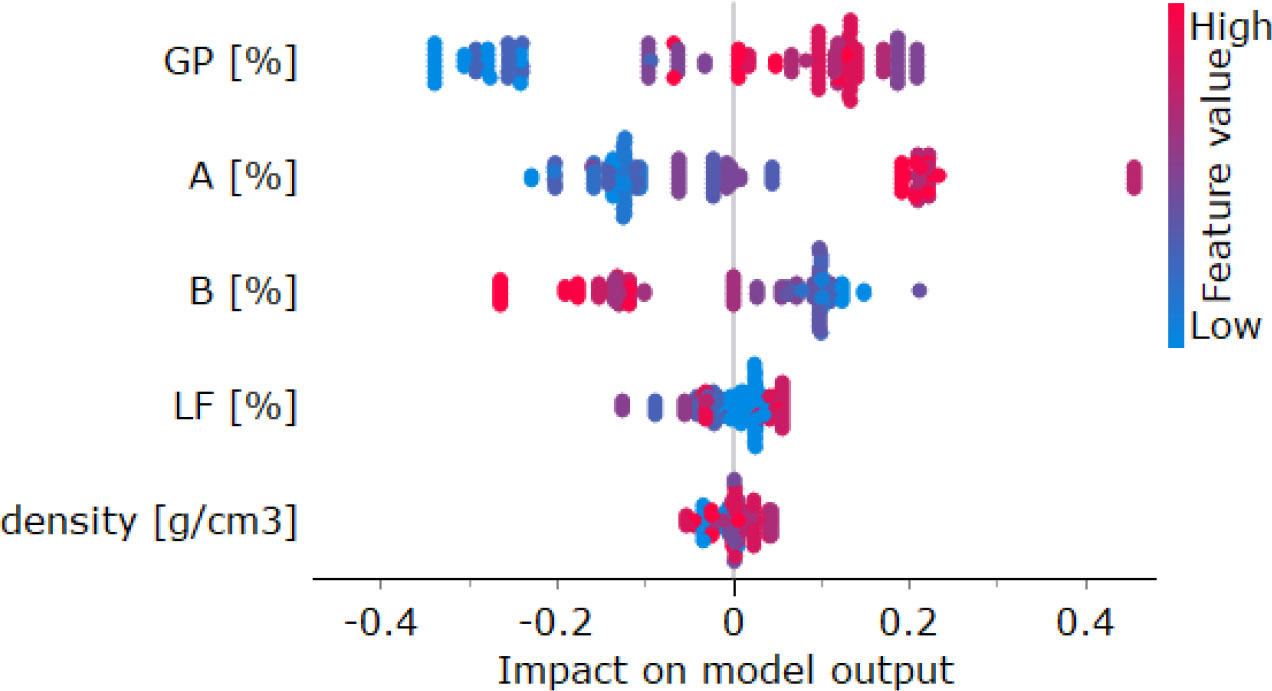
Figure 12:
Visualization of SHAP values for the RF ML model.