Have a personal or library account? Click to login
Compressive and Tensile Strength of Nano-clay Stabilised Soil Subjected to Repeated Freeze–Thaw Cycles Cover

Compressive and Tensile Strength of Nano-clay Stabilised Soil Subjected to Repeated Freeze–Thaw Cycles

Open Access
|Sep 2023

Figures & Tables

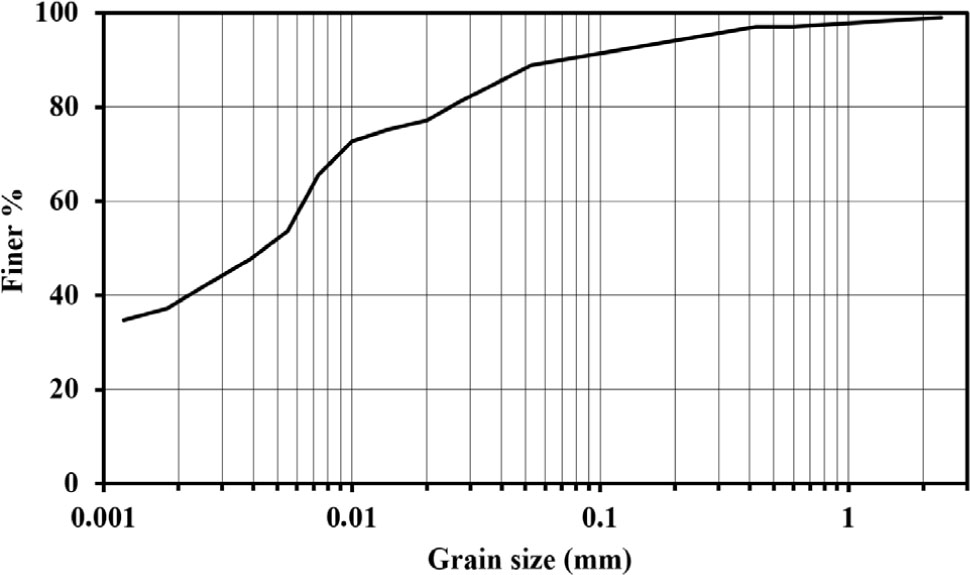
Figure 1:

Grain size distribution curves of soil.

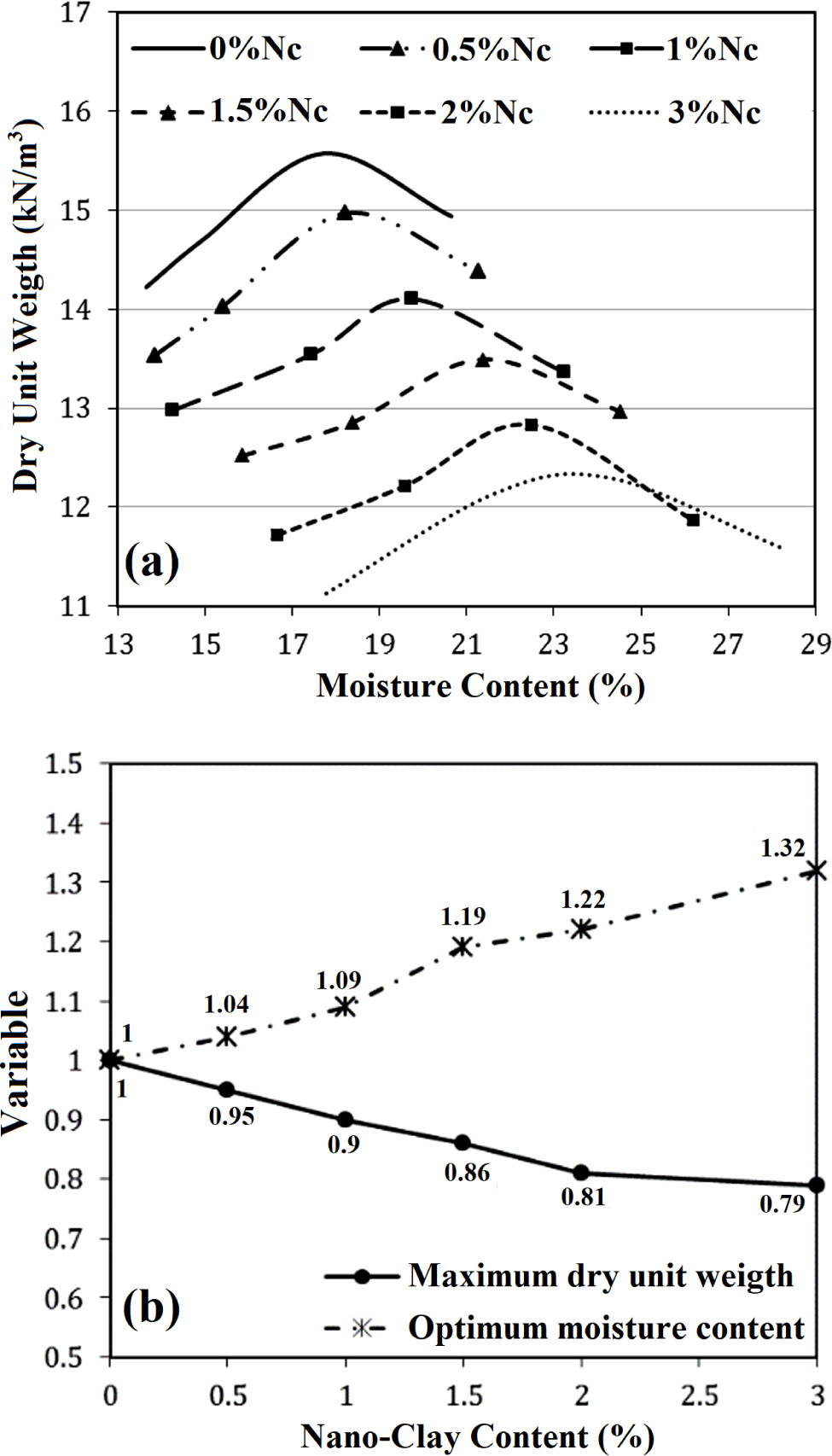
Figure 2:

Influence of nano-clay on the (a) compaction curve of clay and (b) normalised maximum dry unit weight and normalised optimum moisture content.

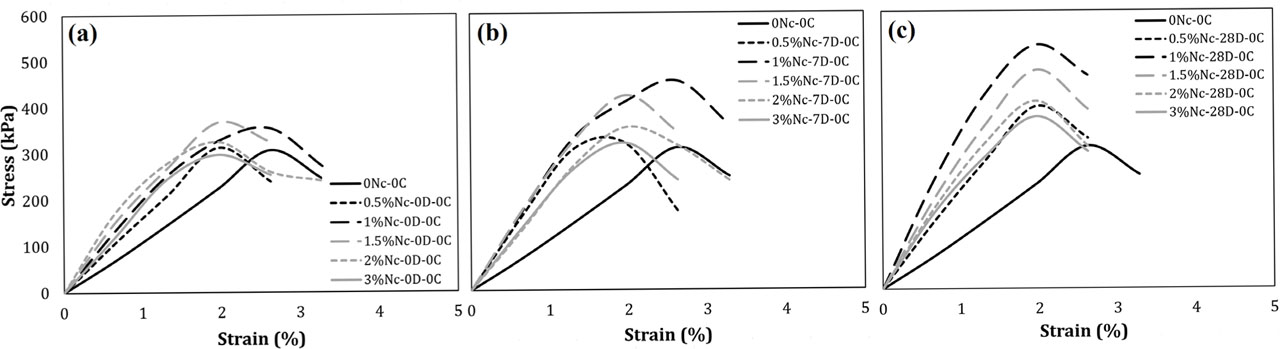
Figure 3:

UCS stress–strain curves of specimens without any freeze–thaw cycles (a), curing time = 0 days (b) curing time = 7 days and (c) curing time = 28 days.
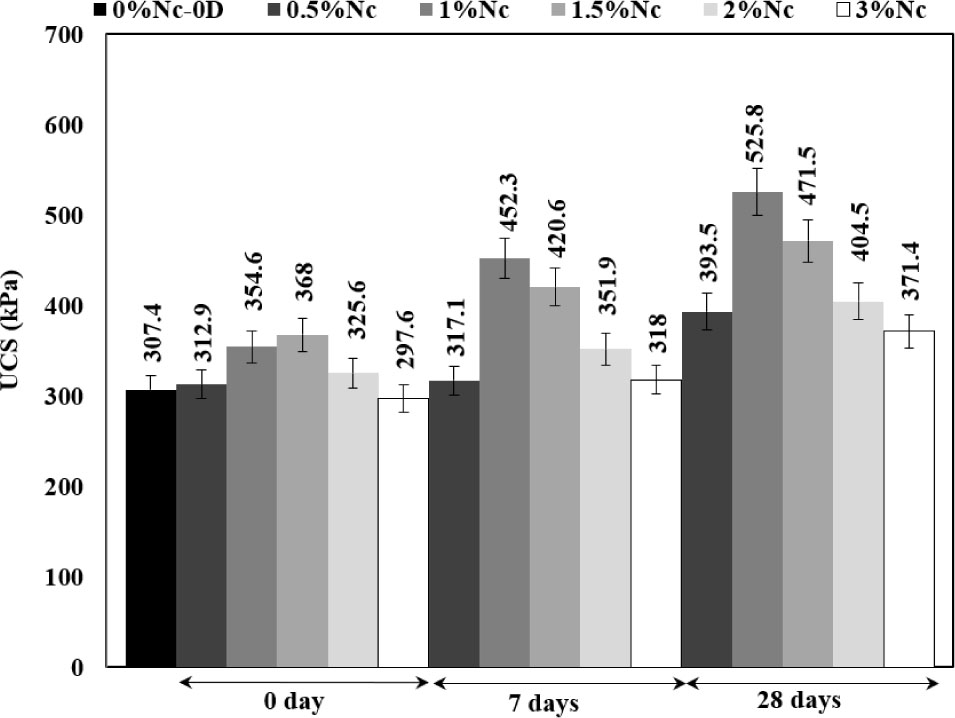

Figure 4:

Unconfined compressive strength of specimens without any freeze–thaw cycles.
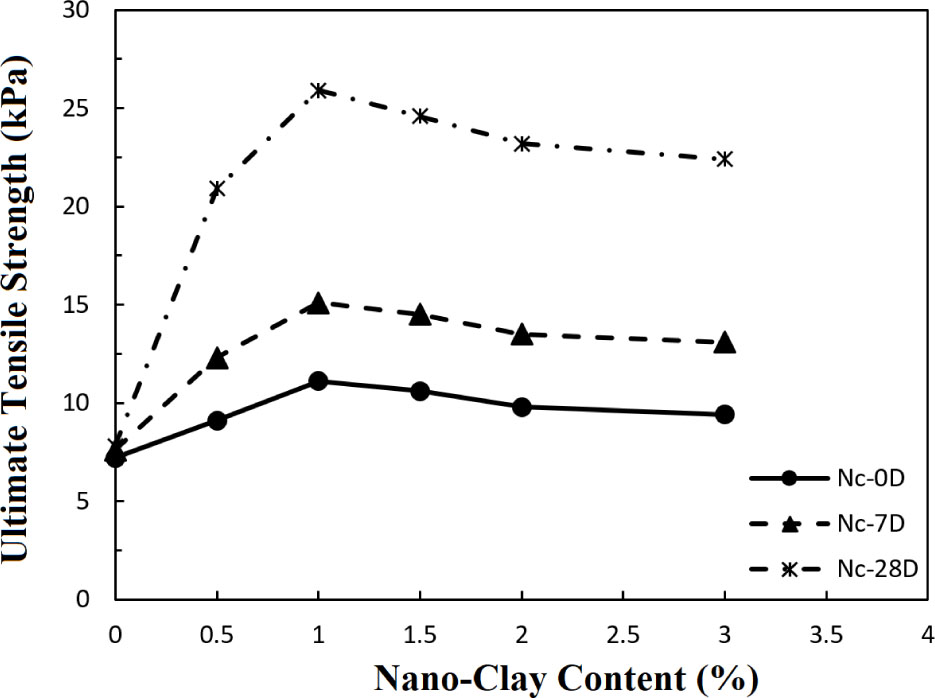

Figure 5:

Tensile strength of specimens without any freeze–thaw cycles.
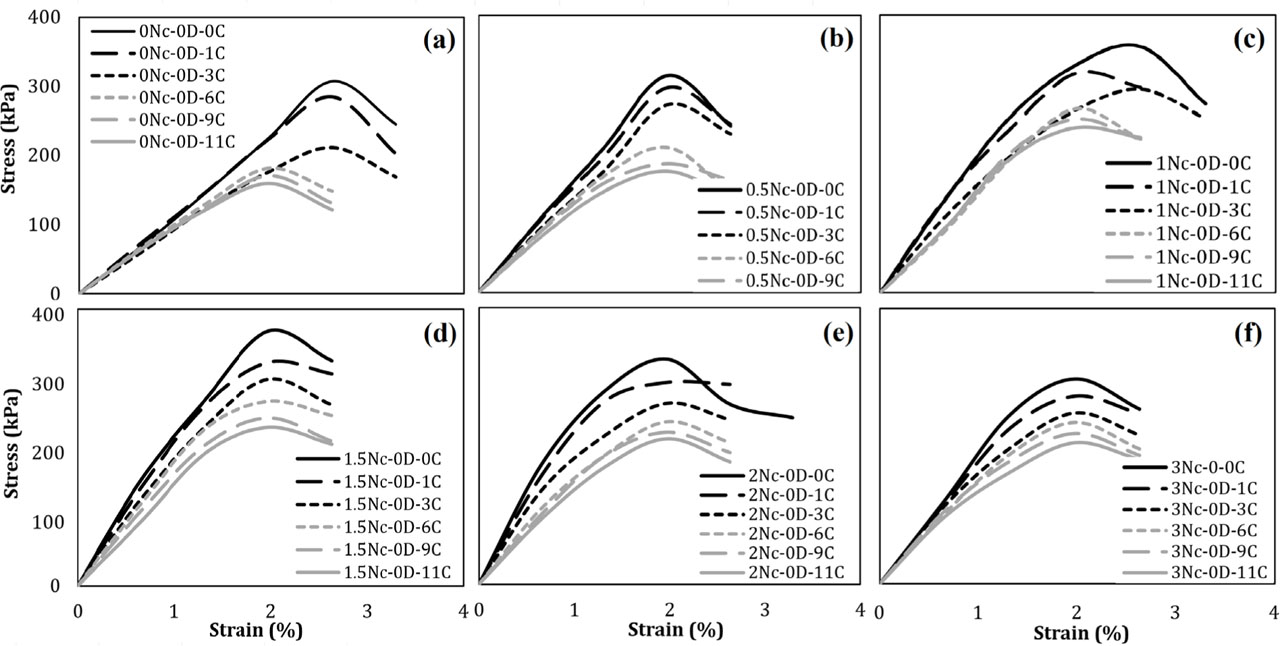

Figure 6:

UCS stress–strain curves of specimens subjected to freeze–thaw cycles: (a) nano-clay content = 0%, (b) nano-clay content = 0.5%, (c) nano-clay content = 1%, (d) nano-clay content = 1.5%, (e) nano-clay content = 2%, (f) nano-clay content = 3%.
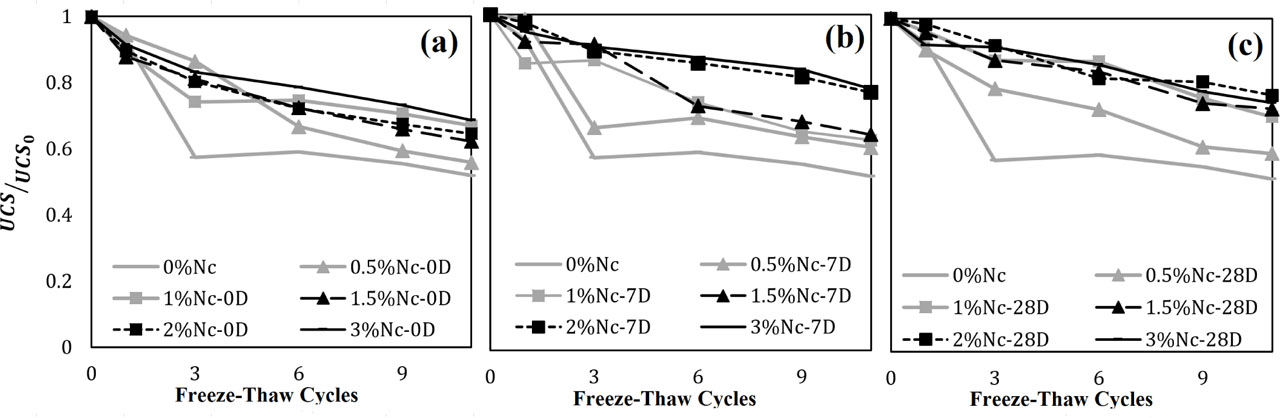

Figure 7:

Normalised unconfined compressive strength of the specimens versus number of freeze–thaw cycles: (a) curing time = 0 day, (b) curing time = 7 days, (c) curing time = 28 days.
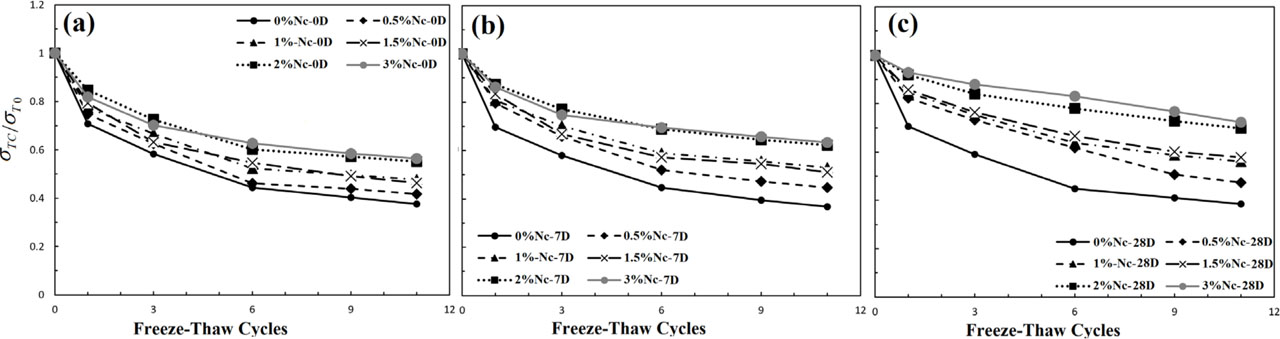

Figure 8:

Normalised ultimate tensile strength of specimens versus number of freeze–thaw cycles: (a) curing time = 0 day, (b) curing time = 7 days, (c) curing time = 28 days.

Properties of nano-clay particles_

ParameterTypical dry particle sizesγd (g/cm3)Gs

90% less than50% less than10% less than
Value10 μm6 μm2 μm1.981.6

Geotechnical properties of clayey soil_

ParameterLiquid limit (LL) (%)Plastic limit (PL) (%)Plastic index (PI) (%)Gs
Value3620162.757

Summary of the test's details_

Test groupNano-clay content (%)No. of freeze–thaw cyclesCuring time (days)No. of tests
Group 10.5, 1, 1.5, 2 and 300, 7 and 2815 UCS, 15 STS
Group 20.5, 1, 1.5, 2 and 30, 1, 3, 6, 9 and 110, 7 and 2890 UCS; 90 STS
DOI: https://doi.org/10.2478/sgem-2023-0009 | Journal eISSN: 2083-831X | Journal ISSN: 0137-6365
Language: English
Page range: 221 - 230
Submitted on: Oct 22, 2022
Accepted on: May 13, 2023
Published on: Sep 1, 2023
Published by: Wroclaw University of Science and Technology
In partnership with: Paradigm Publishing Services
Publication frequency: 4 issues per year

© 2023 Mahya Roustaei, Mahdi Sabetraftar, Ehsan Taherabadi, Meysam Bayat, published by Wroclaw University of Science and Technology
This work is licensed under the Creative Commons Attribution 4.0 License.