
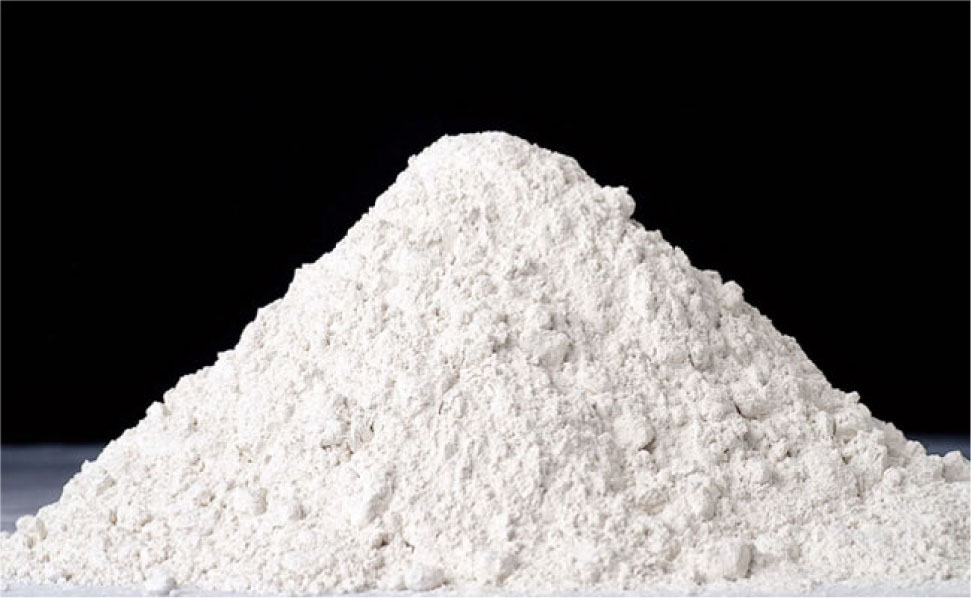
Figure 1
Quick lime.
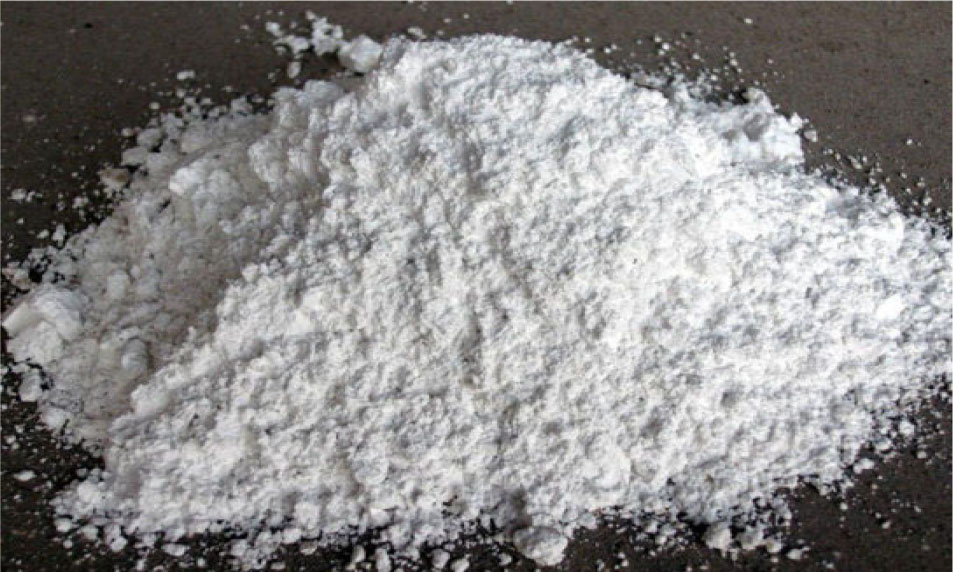
Figure 2
Hydrated lime.
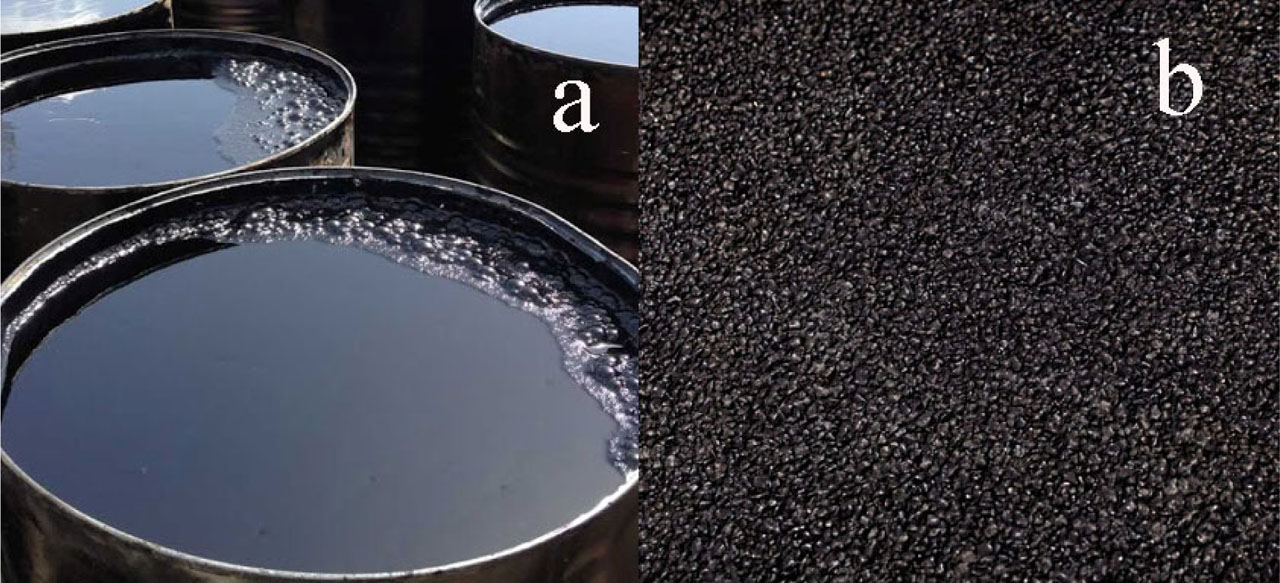
Figure 3
(a) Bitumen; (b) asphalt.
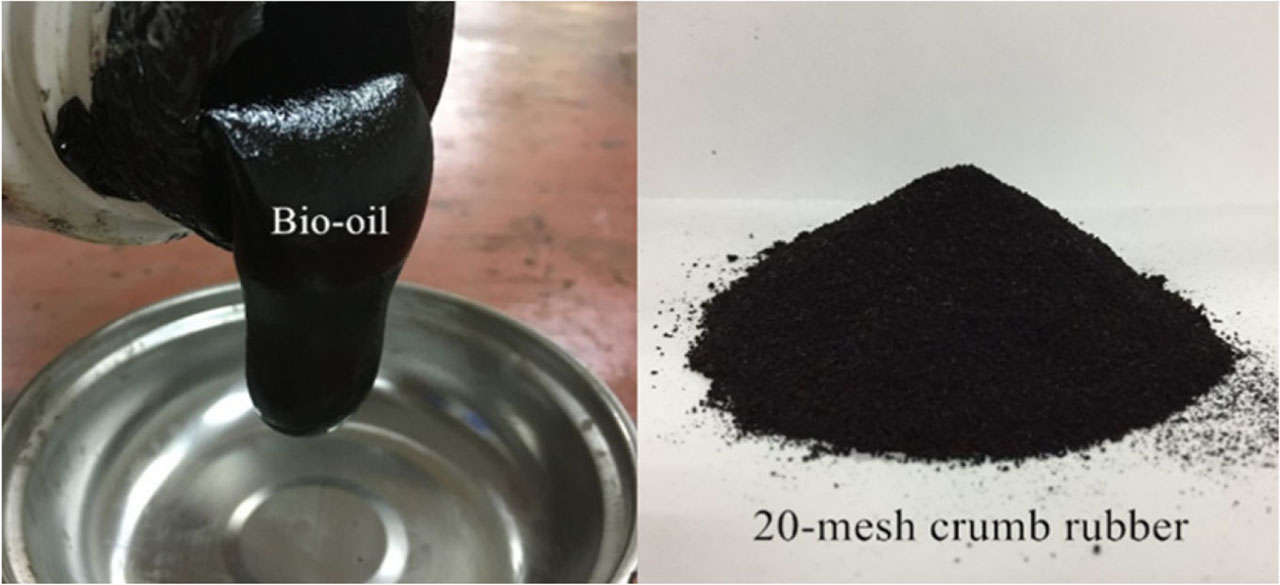
Figure 4
Used bio-oil and crumb rubber.
Table 1
Viscosity changes in different temperature of bitumen source [66].
| Oil content (%) | Viscosity (Pa.s) | ||
|---|---|---|---|
| 120°C | 150°C | 180°C | |
| 0 | 1.074 | 0.231 | 0.074 |
| 2 | 0.844 | 0.200 | 0.064 |
| 4 | 0.723 | 0.172 | 0.060 |
| 6 | 0.607 | 0.151 | 0.053 |
| 8 | 0.504 | 0.131 | 0.046 |
| 10 | 0.429 | 0.117 | 0.044 |
Table 2
Chemical properties of used cooking oil source [66].
| Type of free fatty acid | % of waste cooking oil |
|---|---|
| Oleic acid | 43.67 |
| Palmitic acid | 38.35 |
| Linoleic acid | 11.39 |
| Stearic acid | 4.33 |
| Myristic acid | 1.03 |
| γ-Linolenic acid | 0.37 |
| Lauric acid | 0.34 |
| Linolenic acid | 0.29 |
| Cis-11-eicosenoic acid | 0.16 |
| Heneicosanoic acid | 0.08 |
| Total | 100.00 |
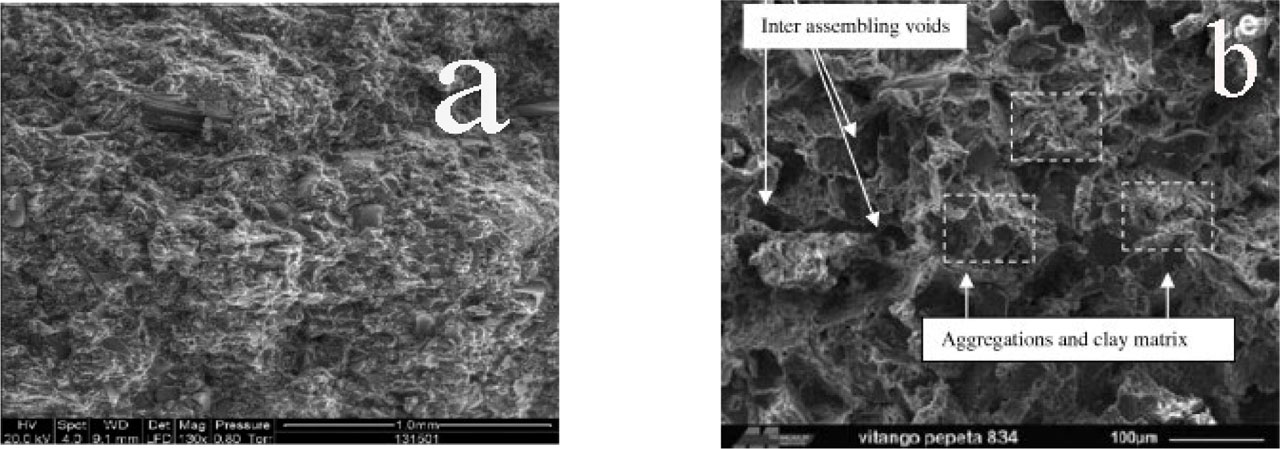
Figure 5
(a) SEM image of tested clay without stabilization and the microstructure. (b) SEM image of the fractured surface of a clay–polymer nanocomposite.
Table 3
Physical and chemical properties of Eko soil enzyme source [74].
| S.N. | Properties | Value |
|---|---|---|
| 1 | Specific gravity | 1.05 |
| 2 | Boiling point | 212°F |
| 3 | Evaporation rate and vapor pressure | Same as water |
| 4 | Appearance and Odor | Liquid, brown color, slight ferment |
| 5 | Solubility in water | Infinite |
| 6 | pH | 4–5.5 |
Table 4
Geotechnical property of red mud [74].
| S.N. | Laboratory test | Numeric value |
|---|---|---|
| 1 | Specific gravity | 3.02 |
| 2 | Gravel (%) | 0 |
| 3 | Sand (%) | 8 |
| 4 | Silt (%) | 75 |
| 5 | Clay (%) | 17 |
| 6 | Color | Red |
| 7 | Liquid limit (%) | 45.5 |
| 8 | Plastic limit (%) | 3204 |
| 9 | Plasticity index (%) | 13.01 |
| 10 | Shrinkage limit (%) | 2.78 |
| 11 | Indian standard soil classification | MI |
| 12 | Maximum dry density (%) | 1.59 |
| 13 | Optimum moisture content (%) | 33 |
| 14 | CBR, soaked (%) | 1.422 |
| 15 | CBR, unsoaked (%) | 6.219 |
| 16 | UCS (MPa) | 0.0143 |
| 17 | Permeability | 5.786e−7 |
| 18 | pH | 11.3 |
Table 5
Comparison between different methodologies applied for using different soil binders by previous researchers and their obtained results source: author.
| S.N. | Used binders | Methodology | Obtained result | References |
|---|---|---|---|---|
| 1 | Sweet potato, zebu manure, banana leaves, and trunk | Laterite soil mixed with the paste of binding agent by kneading, molding, and curing the compressed earth block (CEB) is obtained. | 85:15 of ratio of laterite and LE agents leaf and trunk, respectively, gives the best results among different ratio. Compressive strength of 3.9 MPa and 1.7 MPa is obtained in dry and humid condition, respectively. | [79] |
| 2 | FARmLG (fly ash, red mud, lime, and gypsum) | This new binder mix is synthesized with marine dredge soil with different percentages of gypsum and red mud; other components (fly ash and lime) were fixed. | This new mix imparts strength, stiffness, and hydraulic resistance capacity; this new binder is also classified as nonhazardous. | [80,81,82,83] |
| 3 | Glass fiber-reinforced sulfur mortar made with dicyclopentadiene-modified sulfur | Sulfur modified with dicyclopentadiene and glass fibers of 6 and 12 mm are added to the mix. | Splitting tensile and modules of rapture increased by 147.44 and 83%, respectively. However, compressive strength is unchanged. | [42, 84,85,86,87] |
| 4 | Volcanic ash-based geopolymer | Making a slurry of volcanic ash and NaOH solution and applying it to a soil specimen. | Shear strength is increased with increased binder percentage. Also, cohesion is increased. | [89,90,91] |
| 5 | SiO2 used as binding agent with rice husk GGBS fly ash and CaCl2 | Silica fume is added to black cotton soil by 20% of the soil's weight, and other binding agents are added in soil accordingly that is presented in the respective paper. | Decrease in the plasticity of black cotton soil also imparts strength and stabilizes the soil. | [92] |
| 6 | Combining bio char (BR) with magnesium potassium phosphate cement (MC) | Different percentages of BR:MC are introduced to the Pb-contaminated soil. | BR:MC of 50:50, respectively, shows the best result to help in the immobilization of Pb with 73%. Cost-effective option on heavy metal removal. | [93] |
| 7 | Biofuel coproducts (BCPs) containing lignin (complex organic polymer, key structural material to support tissue of plants) | Liquid type and powdered BCP are mixed with soil to determine the physical and mechanical behavior. | BCP increases the compressive strength and, in coarse soil, BCP imparts high strength, freeze-thaw durability, and moisture susceptibility. | [94] |
| 8 | Marine soil stabilization with MgO | MgO is added to the soil and dry mixed for 10 minutes with a mixer to ensure homogeneity. | Addition of MgO increases yielding stress; as MgO content increases but drops soon as the initial void ratio changes and the compression index Cc and recompression index Cr increase, MgO solidifies the soil, which continues to gain strength until 28 days after curing. | [61, 95,96,97] |
| 9 | Alkali-activated material (AAM) | GGBS, sand, and Na2O are mixed and prepared as a paste, and it is kept for 24 hours. Cubes of 25 × 25 × 150 are made, and alternate curing and resting are done for 2, 7, 28, and 90 days, respectively. | Na2O increases setting time and compressive strength. | [56, 57] |
| 10 | BCASF cement making | Raw mix contained 60.01% limestone, 28.34% clay, 6.58% gypsum, and 5.07% Fe2O3. At 1400°C, good clinker is made having lime % ≤0.2%. | Good cement substitute and environmentally friendly. | [54] |
| 11 | Bitumen and crumb rubber with bio-oil | Crumb rubber is stirred into heated asphalt for 30 min at 170°C, after 30-minute bio-oil is mixed in the same manner. | Increase viscosity and improve high-temperature performance of asphalt. | [63, 65] |
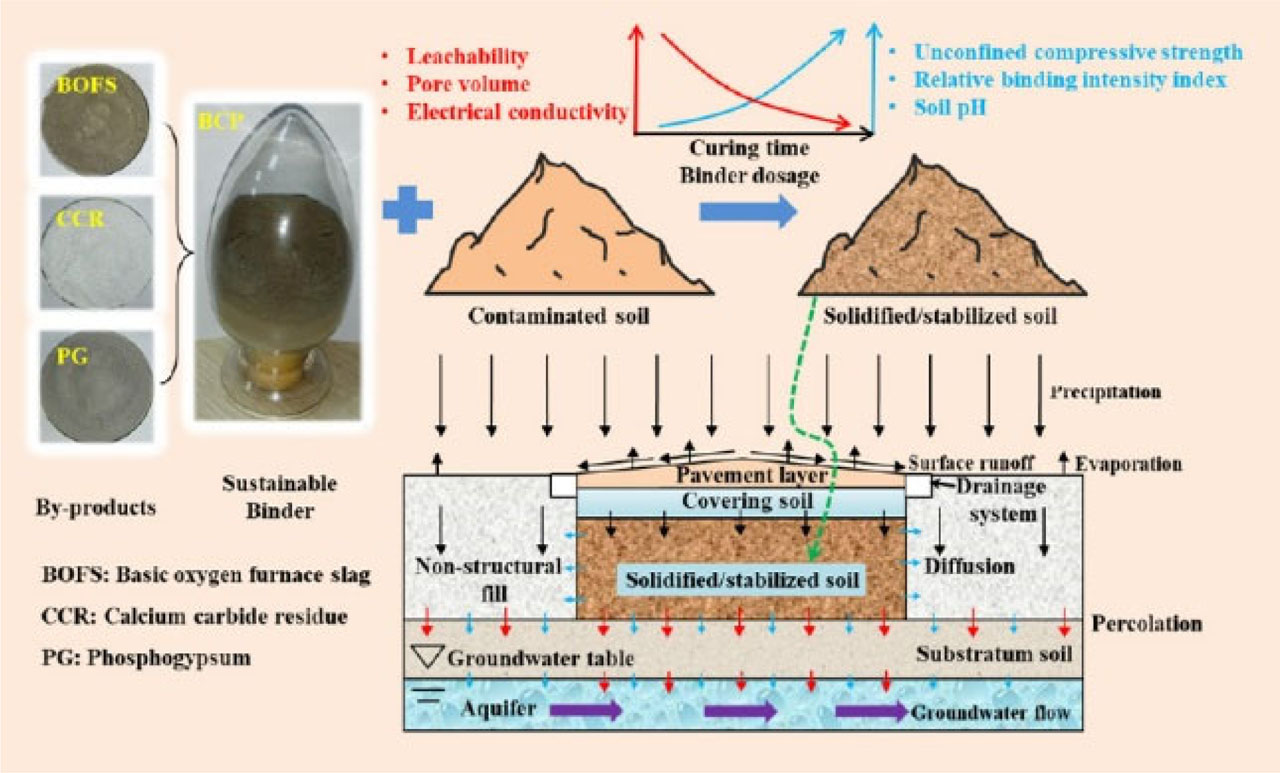
Figure 6
A graphical representation of the BCP binders.
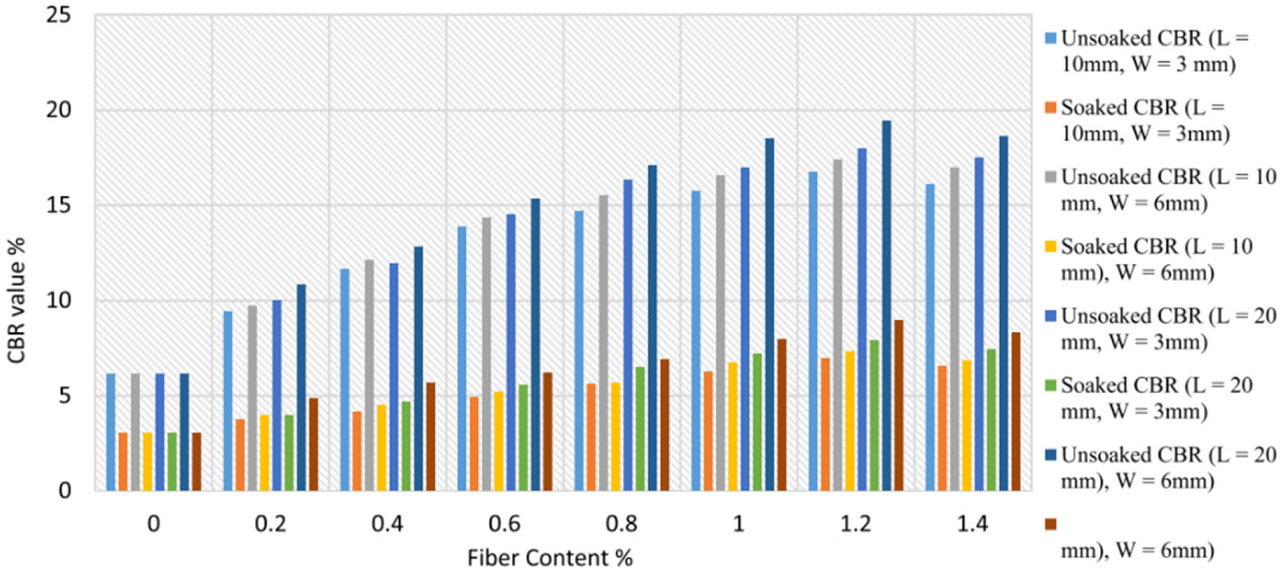
Figure 7
CBR value with different bamboo fiber percentage.
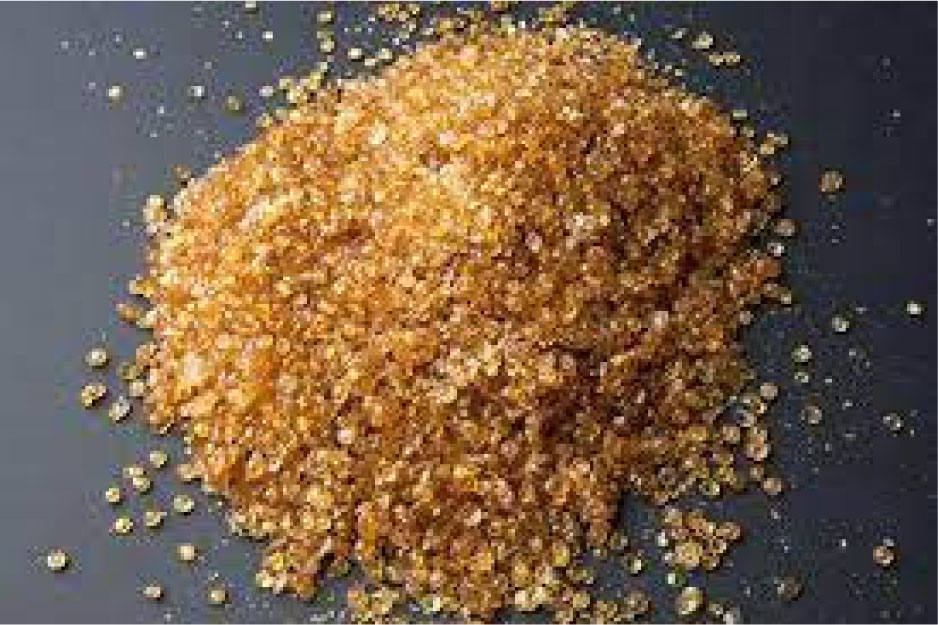
Figure 8
Bone glue.
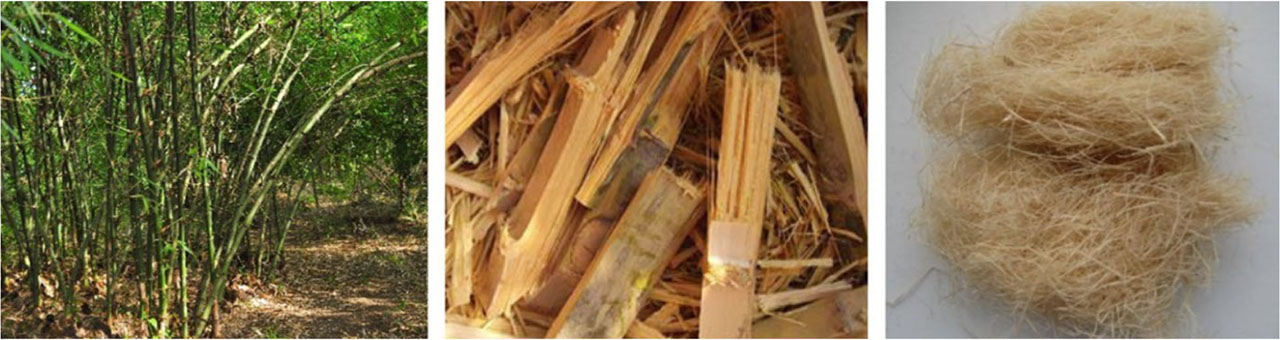
Figure 9
Natural bamboo fiber.