
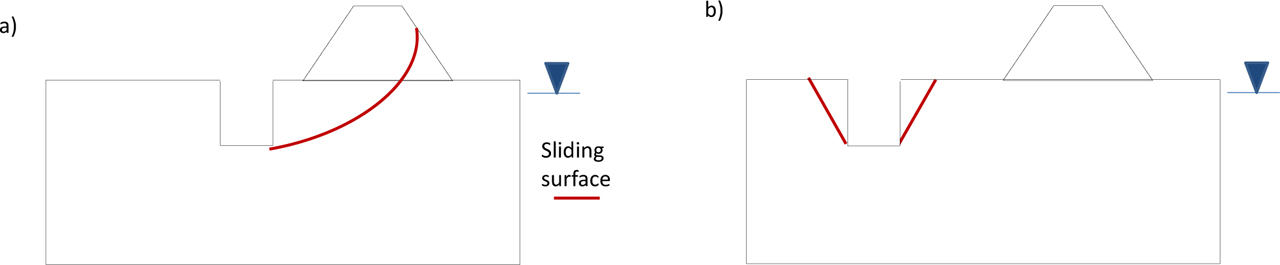
Figure 1
Interaction between embankment and excavation from the slope stability point of view: (a) excavation “close” to the embankment – interaction possible even not during the flood and (b) excavation “far” from the embankment – no interaction.
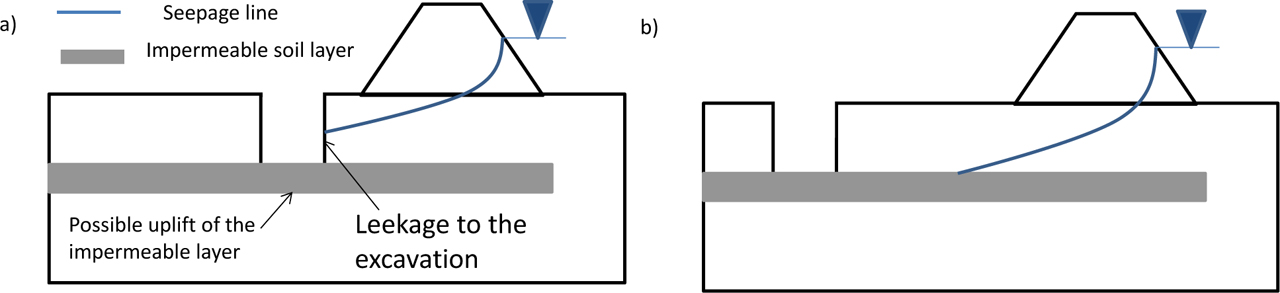
Figure 2
Interaction between embankment and excavation during the flood: (a) excavation “close” to the embankment – leakage to the excavation and uplift of the impermeable layer possible and (b) excavation “far” from the embankment – no interaction.
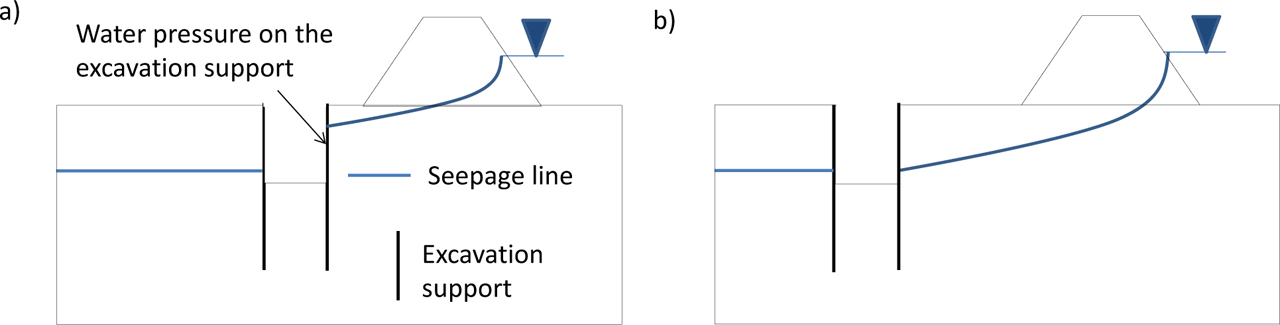
Figure 3
Interaction between embankment and excavation during the flood: (a) excavation “close” to the embankment – water pressure on excavation support, seepage line moves upward and (b) excavation “far” from the embankment – no interaction.
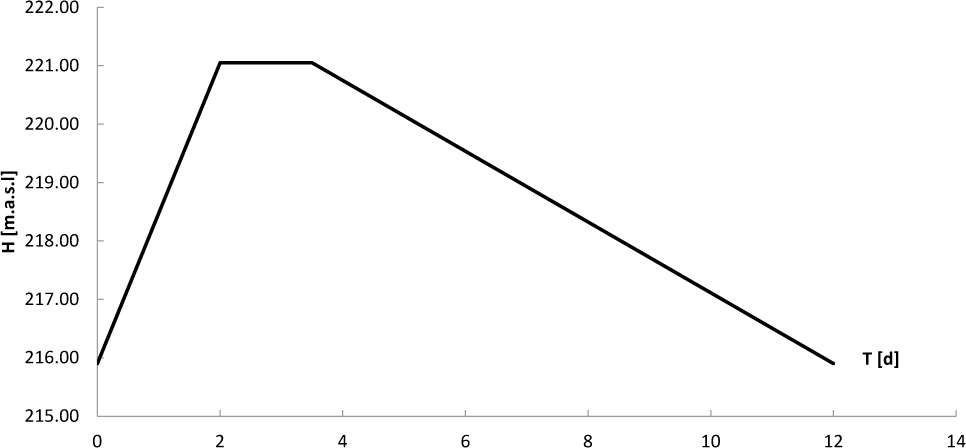
Figure 4
Flood wave used in real – case examples.
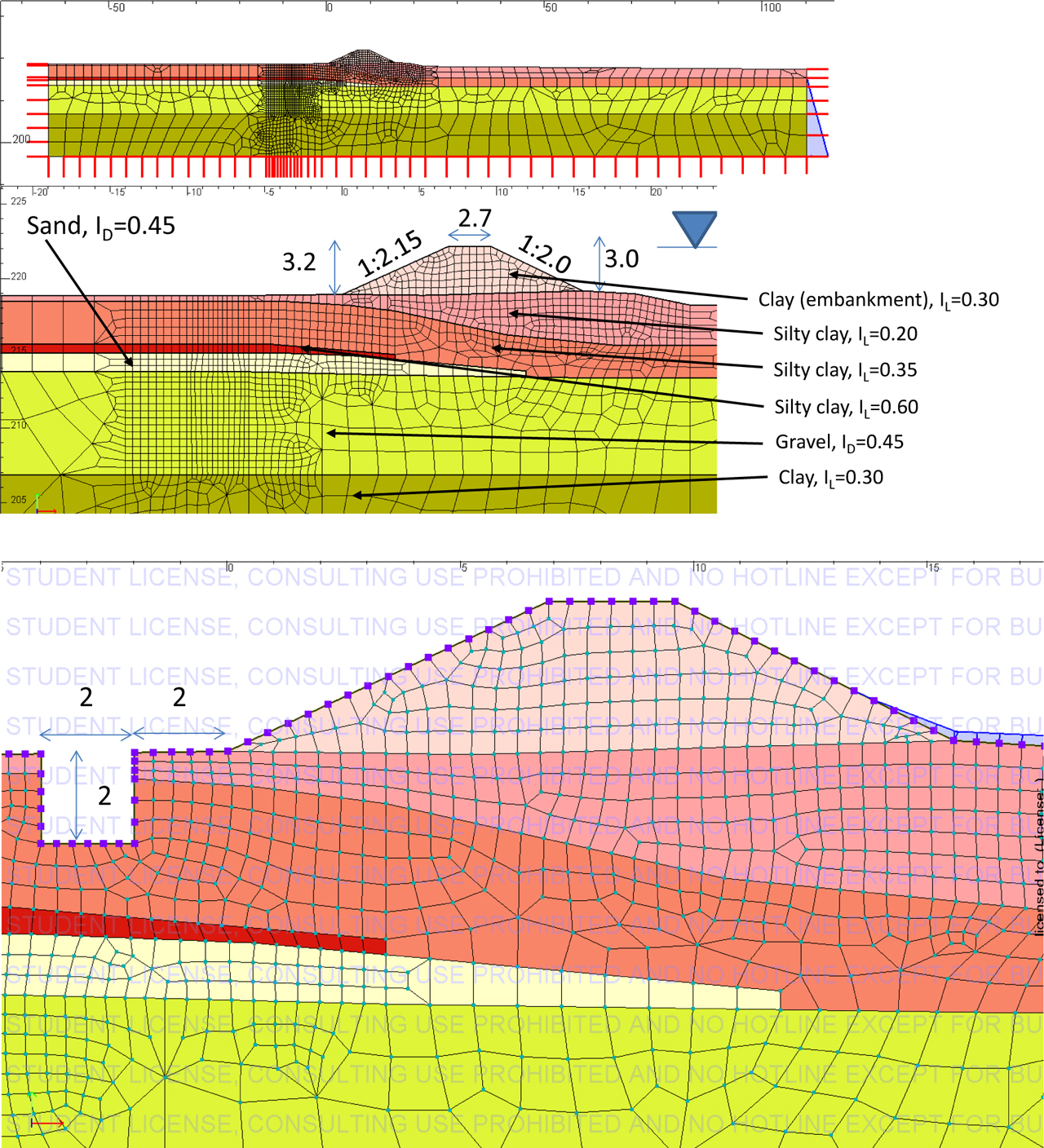
Figure 5
Numerical model of the embankment (a) with shallow excavation existing state and (b) with open excavation.
Table 1
Most important material parameters used in analysis of shallow excavation.
| γ [kN/m3] | c[kPa] | ϕ[0] | k [m/d] | |
|---|---|---|---|---|
| Clay (IL = 0.30, embankment) | 20.0 | 11.9 | 12.4 | 0.0086 |
| Silty clay (IL = 0.20) | 21.0 | 17.0 | 14.8 | 0.0086 |
| Silty clay (IL = 0.35) | 20.0 | 9.5 | 10.8 | 0.0086 |
| Silty clay (IL = 0.60) | 19.0 | 6.9 | 8.4 | 0.0086 |
| Sand (ID = 0.45) | 18.5 | 0 | 32.7 | 15 |
| Gravel (ID = 0.45) | 18.5 | 0 | 38.1 | 86.4 |
| Clay (II = 0.30) | 21.5 | 50 | 10.0 | 8.64 × 10⁻⁶ |
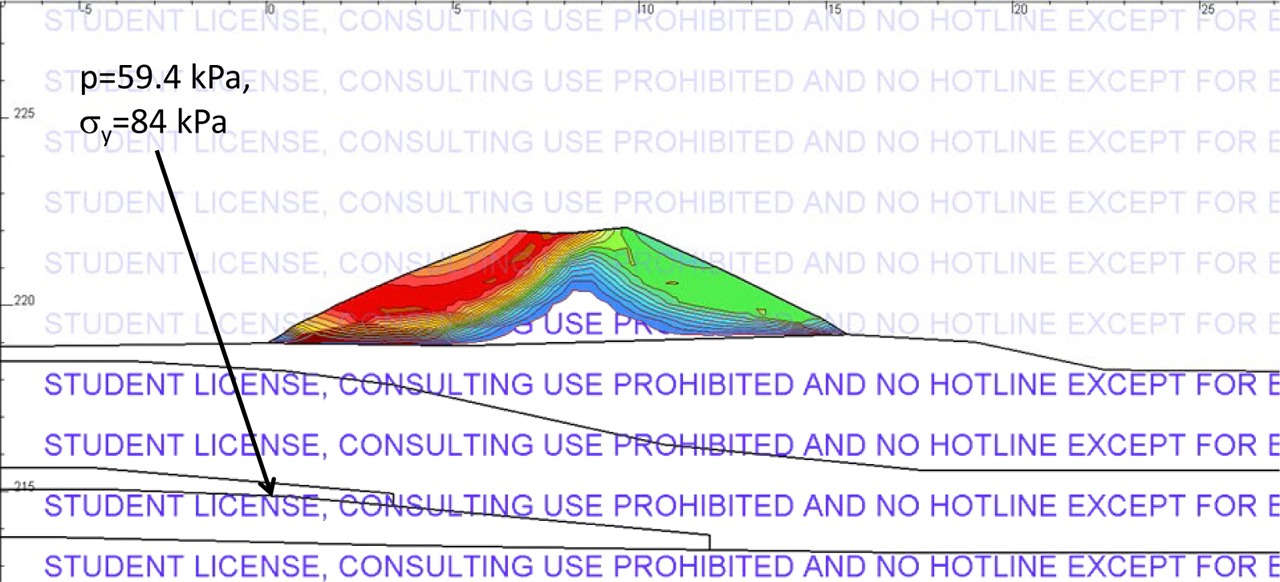
Figure 6
Failure mode in the existing state of the embankment.
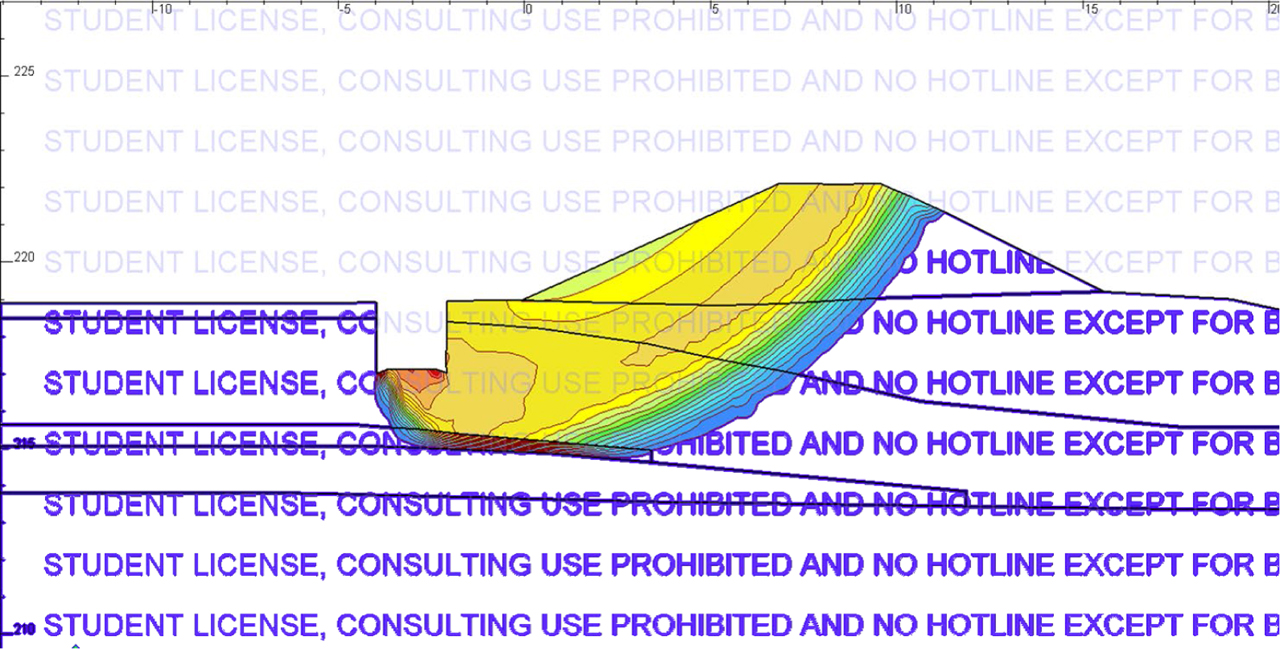
Figure 7
Failure mechanism of the embankment with shallow excavation, the same in all phases of the flood.

Figure 8
Failure by uplift of the excavation bottom, just after culmination of the flood (T = 5.1 d).
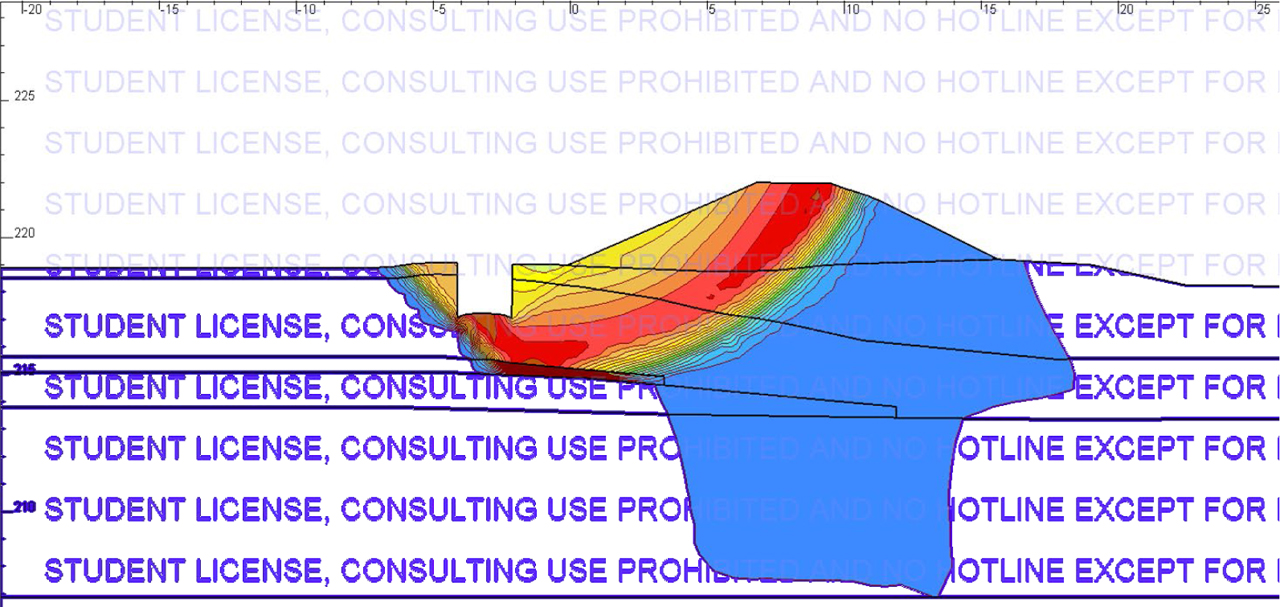
Figure 9
Failure mechanism of the embankment with shallow excavation with “system excavation support,” the same in all phases of the flood.
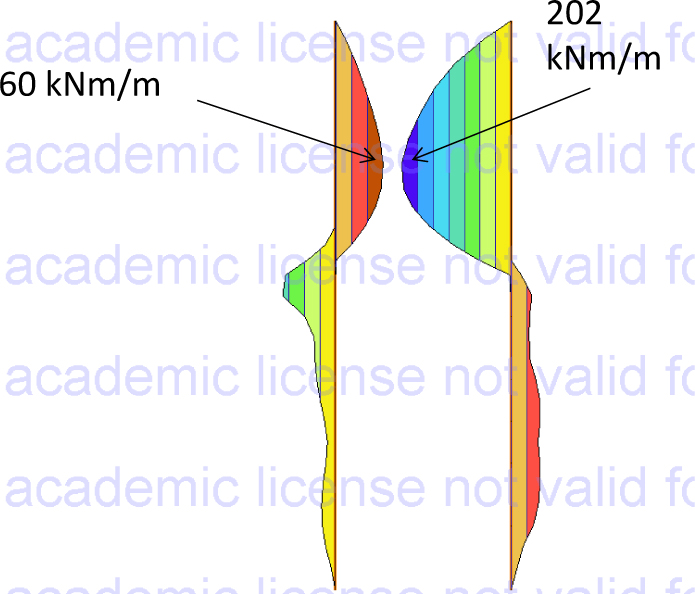
Figure 10
Bending moment envelopes, shallow excavation protected by sheet pile walls with strut at the top, SF = 1.25 (EC-7 approach).
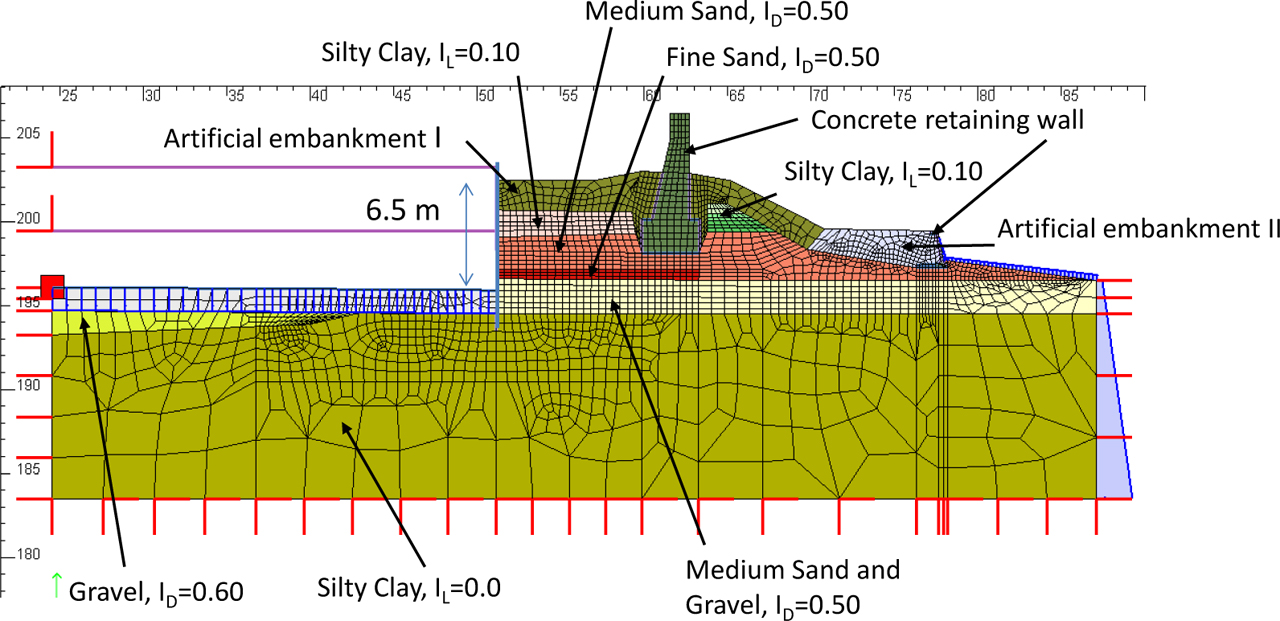
Figure 11
Numerical model of the deep excavation near the embankment – finished excavation.
Table 2
Most important material parameters used in analysis of deep excavation.
| g [kN/m3] | c[kPa] | f[0] | k [m/d] | |
|---|---|---|---|---|
| Artificial embankment I | 21.2 | 12.8 | 24.6 | 0.0285 |
| Artificial embankment II | 21.2 | 11.2 | 17.4 | 0.0527 |
| Concrete | 24.0 | – | – | Impermeable |
| Silty clay, IL = 0.10 | 19.8 | 14.0 | 9.5 | 0.00203 |
| Medium sand, ID = 0.50 | 18.5 | 0 | 33.0 | 9.5 |
| Fine sand, ID = 0.50 | 17.5 | 0 | 30.5 | 3.5 |
| Medium sand and gravel, ID = 0.50 | 20.2 | 0 | 33.0 | 12.0 |
| Gravel, ID = 0.60 | 20.7 | 0 | 39 | 15.0 |
| Clay, II = 0.0 | 20.4 | 60 | 13 | 0.000864 |
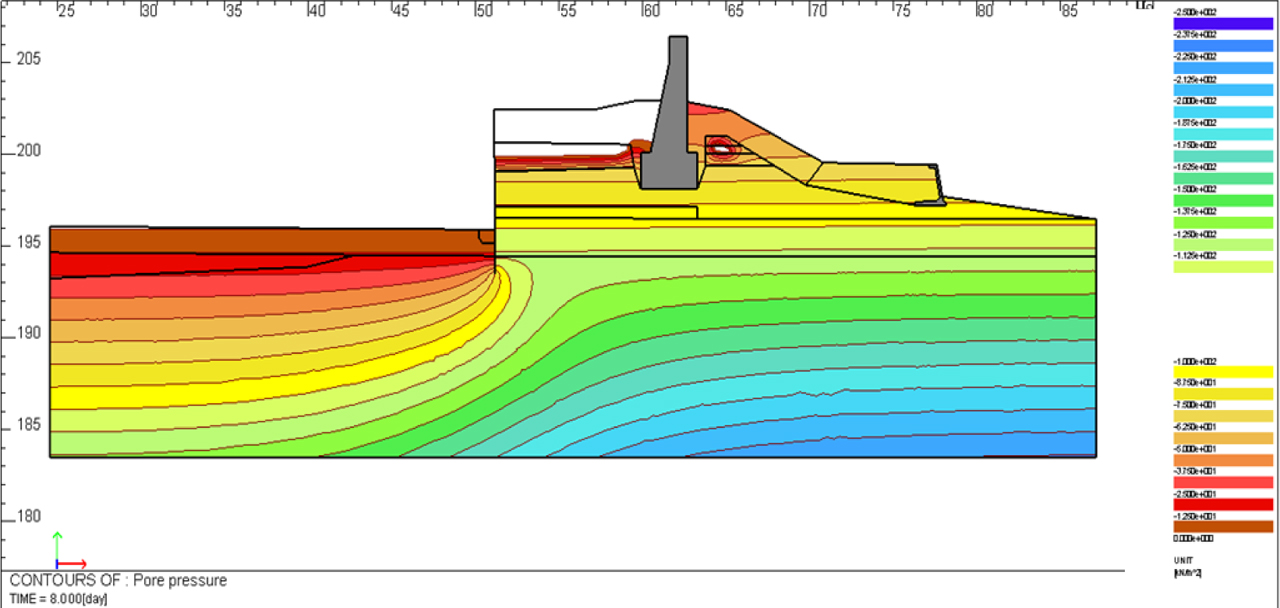
Figure 12
Pore pressure distribution, culmination of the flood, maximal depth of the excavation, no baseplate installed.
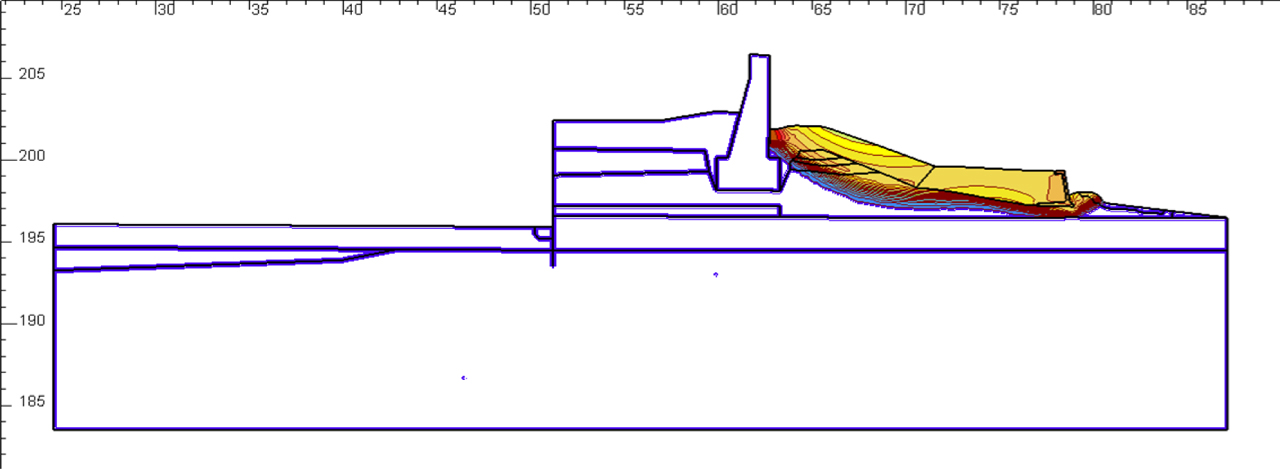
Figure 13
Failure mode, before the flood and in the descending phase of the flood.
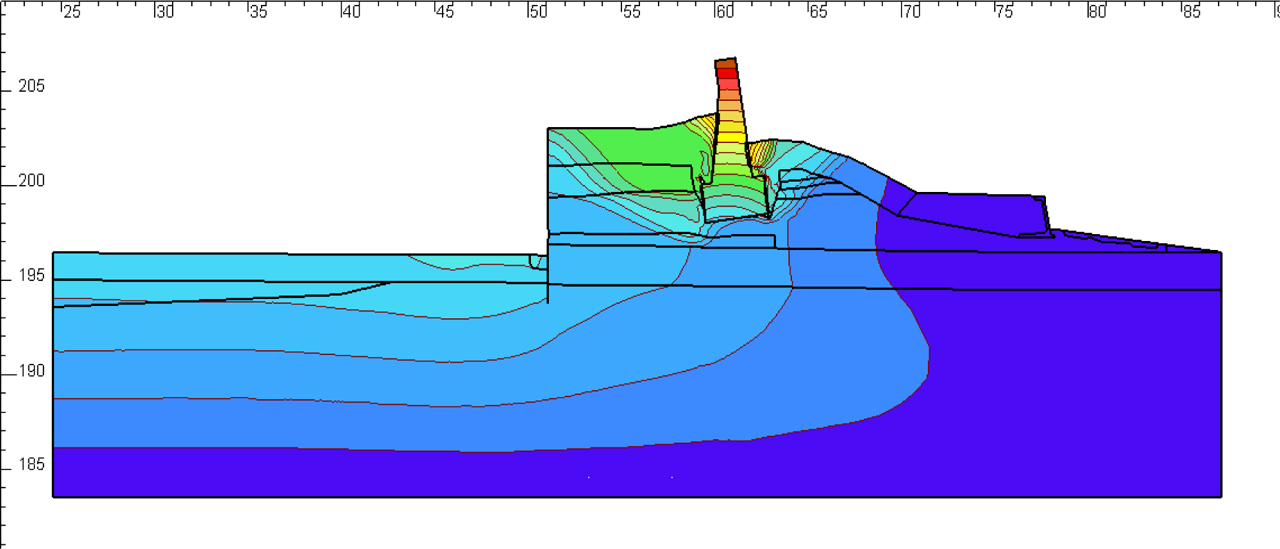
Figure 14
Failure mode during culmination of the flood.
Table 3
Obtained values of SF for deep excavation.
| Before the flood | Culmination phase | Descending phase | |
|---|---|---|---|
| Existing state | 2.63 | 2.12 | 2.09 |
| Open excavation (no baseplate) | 2.63 | 2.09 | 2.09 |
| Final state | 2.63 | 2.09 | 2.09 |
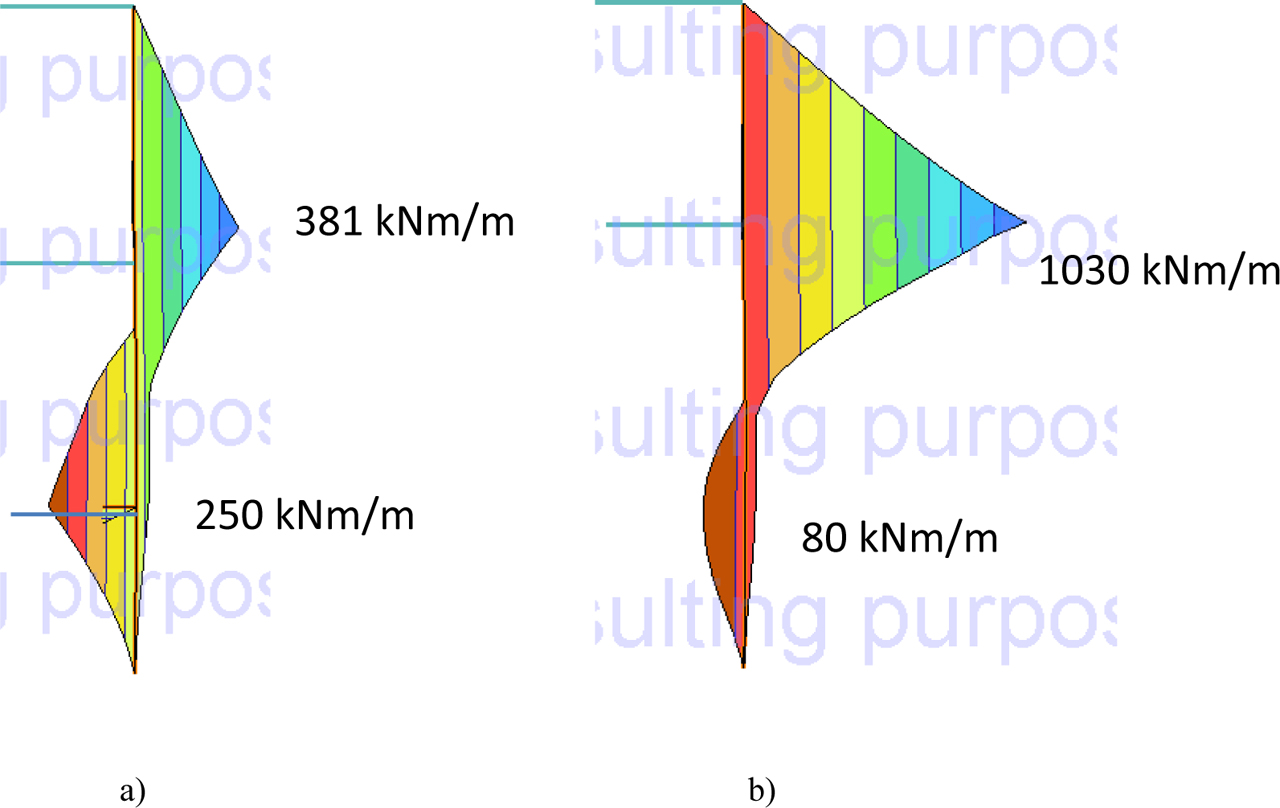
Figure 15
Envelopes of the bending moments in the diaphragm wall: (a) flood after baseplate installing and (b) flood before baseplate installing.