
Table 1
Advantages and disadvantages of concrete pipes.
| Concrete pipes | |
|---|---|
| Advantages | Disadvantages |
| Adaptable to a wide range of loads, design pipes of any load capacity | High pipe weight making installation difficult |
| The possibility of practically any shaping of the cross-section | Short pipe sections which extend the assembly time |
| Large range of pipe diameters up to 3600 mm | No resistance to corrosive environments with pH less than 4. 0 |
| Higher wall roughness than other materials | |
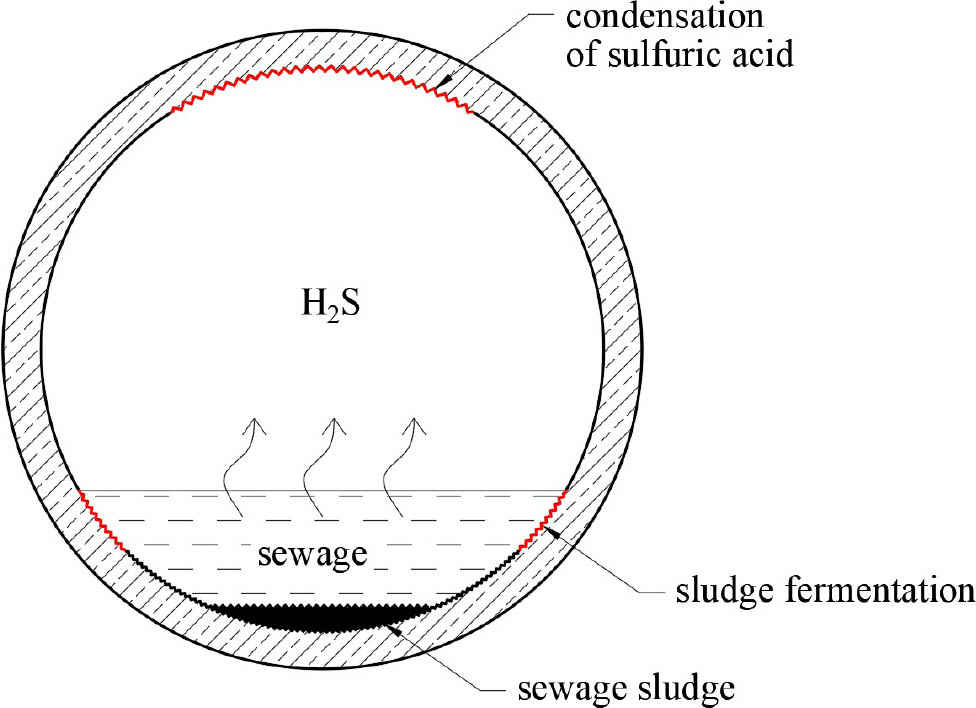
Figure 1
Concrete corrosion mechanism
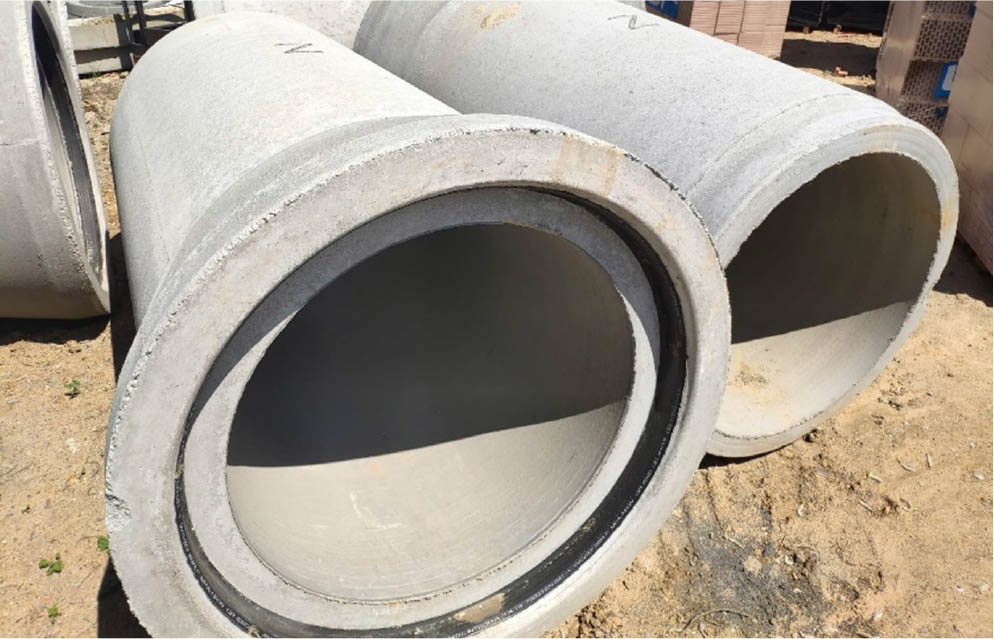
Figure 2
Concrete pipe on a construction site.
Table 2
Mechanical property of fibers (Sim et al. 2005, Kizilkanat et al. 2015, Karwowska et al. 2011, Deng et al. 2021a).
| Basalt | Polypropylene | Steel | |
|---|---|---|---|
| Tensile strength (MPa) | 992.4 – 4800 | 706 | 550 – 1100 |
| Elastic moduls (MPa) | 95 000 – 115 000 | 7400 | 190 000 – 210 000 |
| Corrosion resistance | + | + | − |
| Adhesion to concrete | Very good | Poor | Very good |
| Density (kg/m3) | 1700 – 2750 | 950 | 7800 |
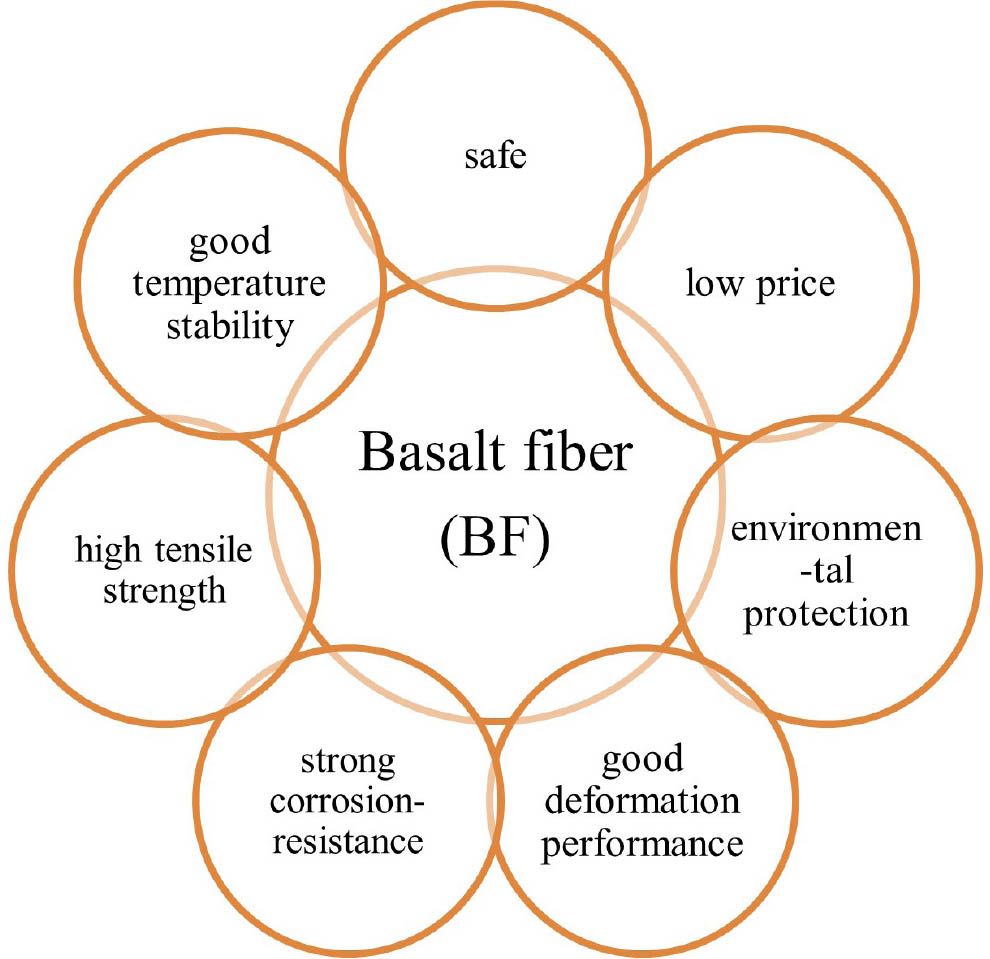
Figure 3
Features of basalt fibre.
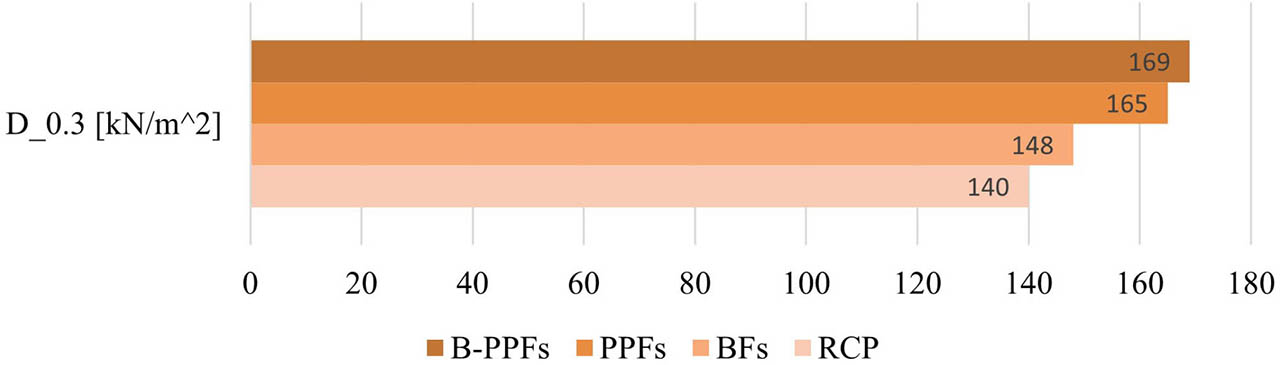
Figure 4
The service load of normalised pipe load-carrying capacity when the crack width is 0.3 mm for different reinforced concrete pipes (Deng et al. 2021a).
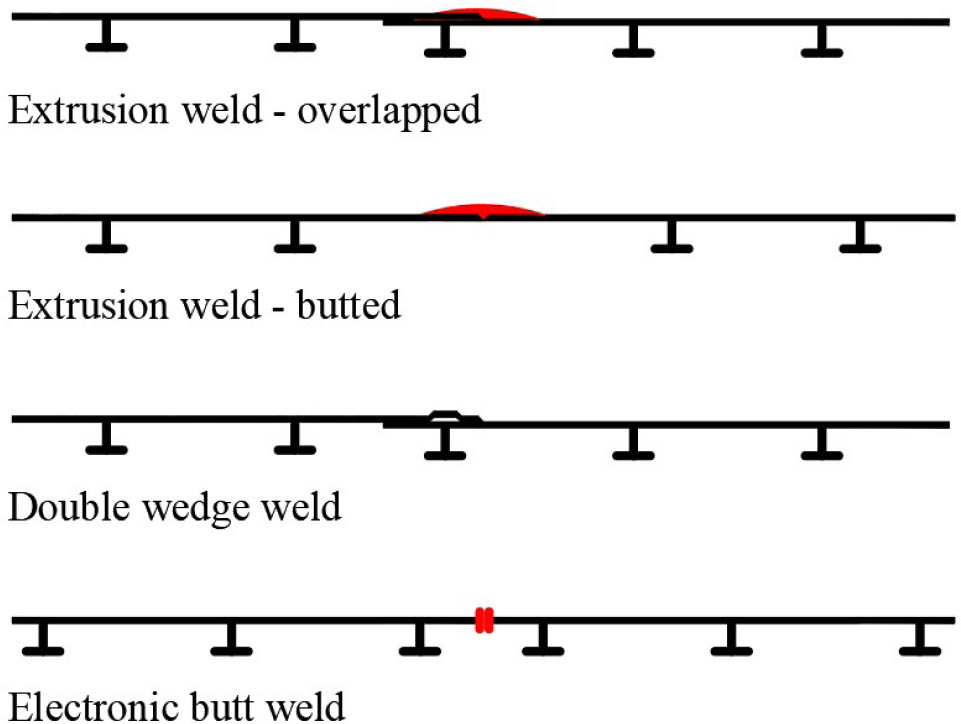
Figure 5
HDPE weld types.
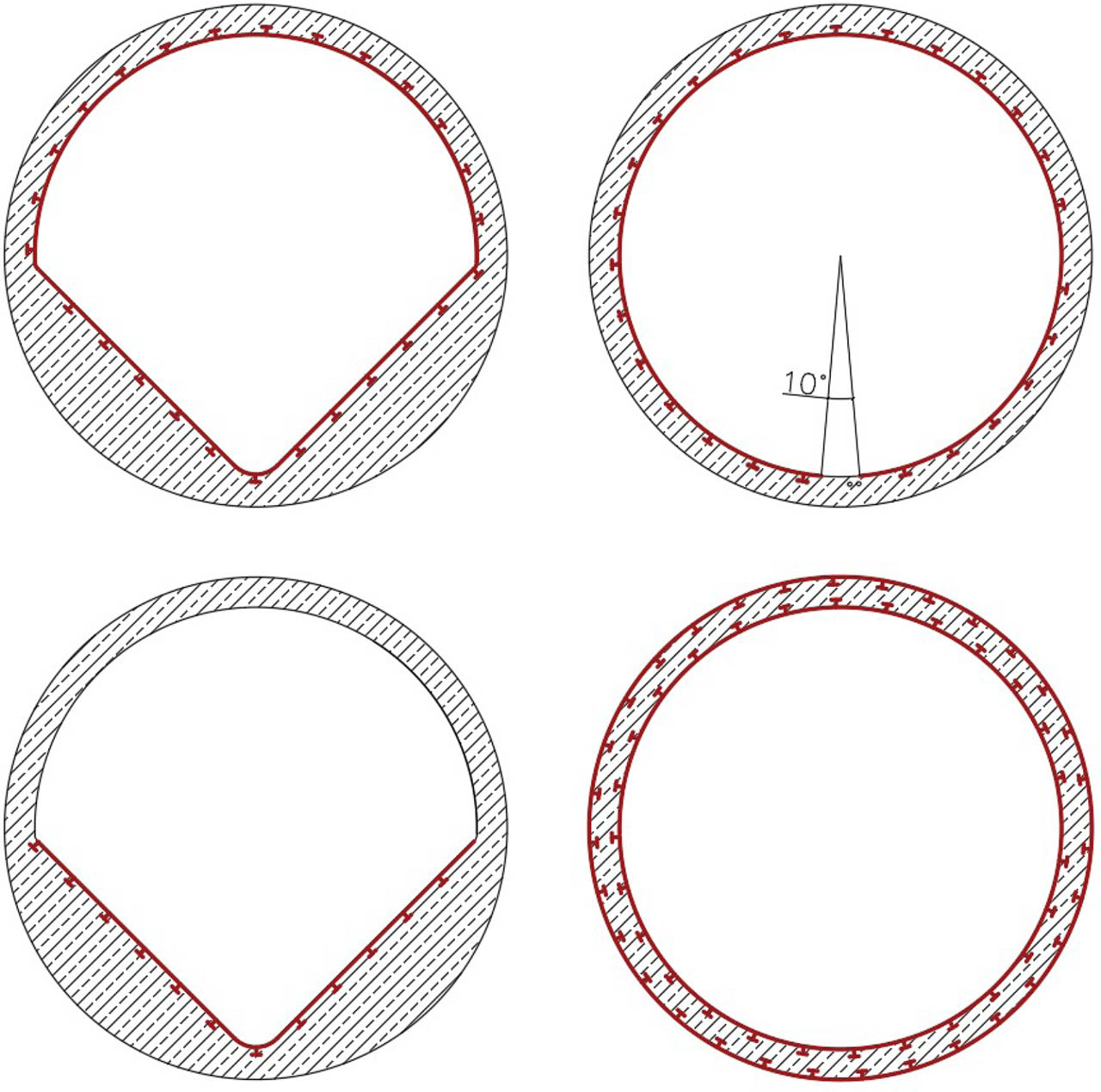
Figure 6
Different installation details of HDPE liners.
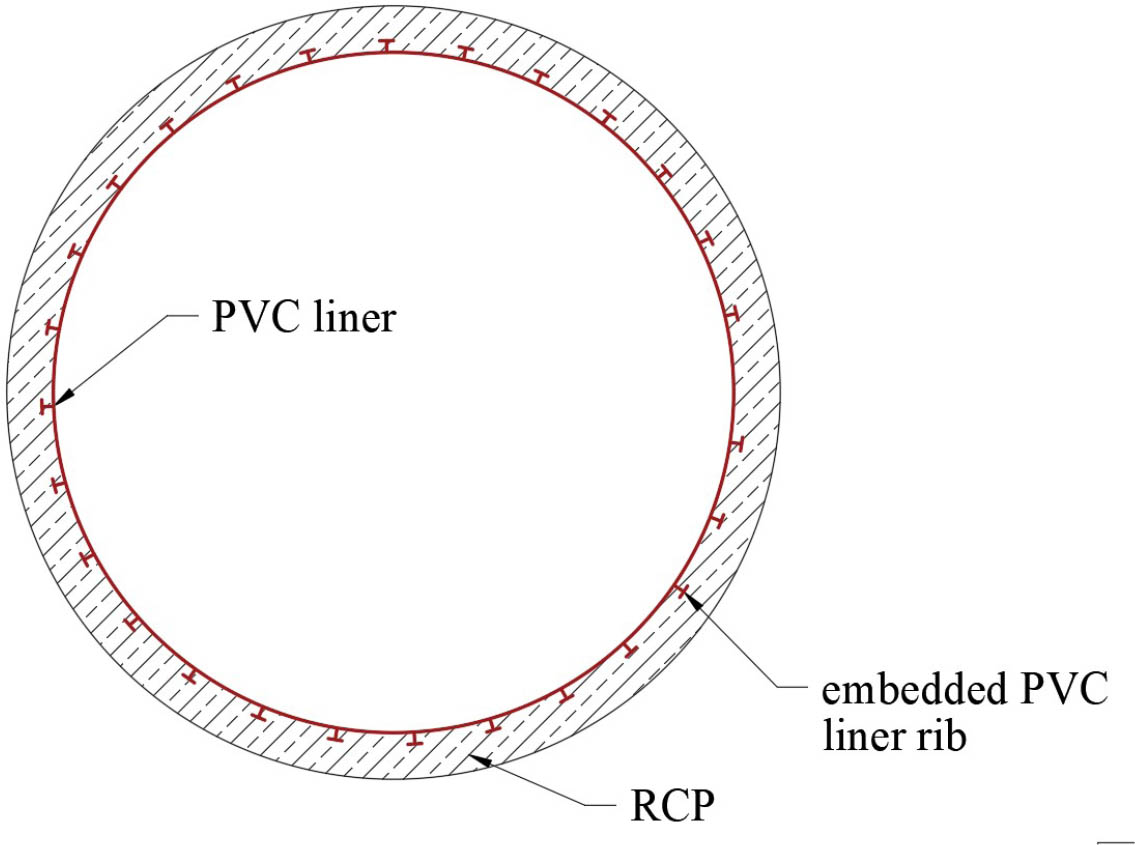
Figure 7
Reinforced concrete pipe with PVC liner
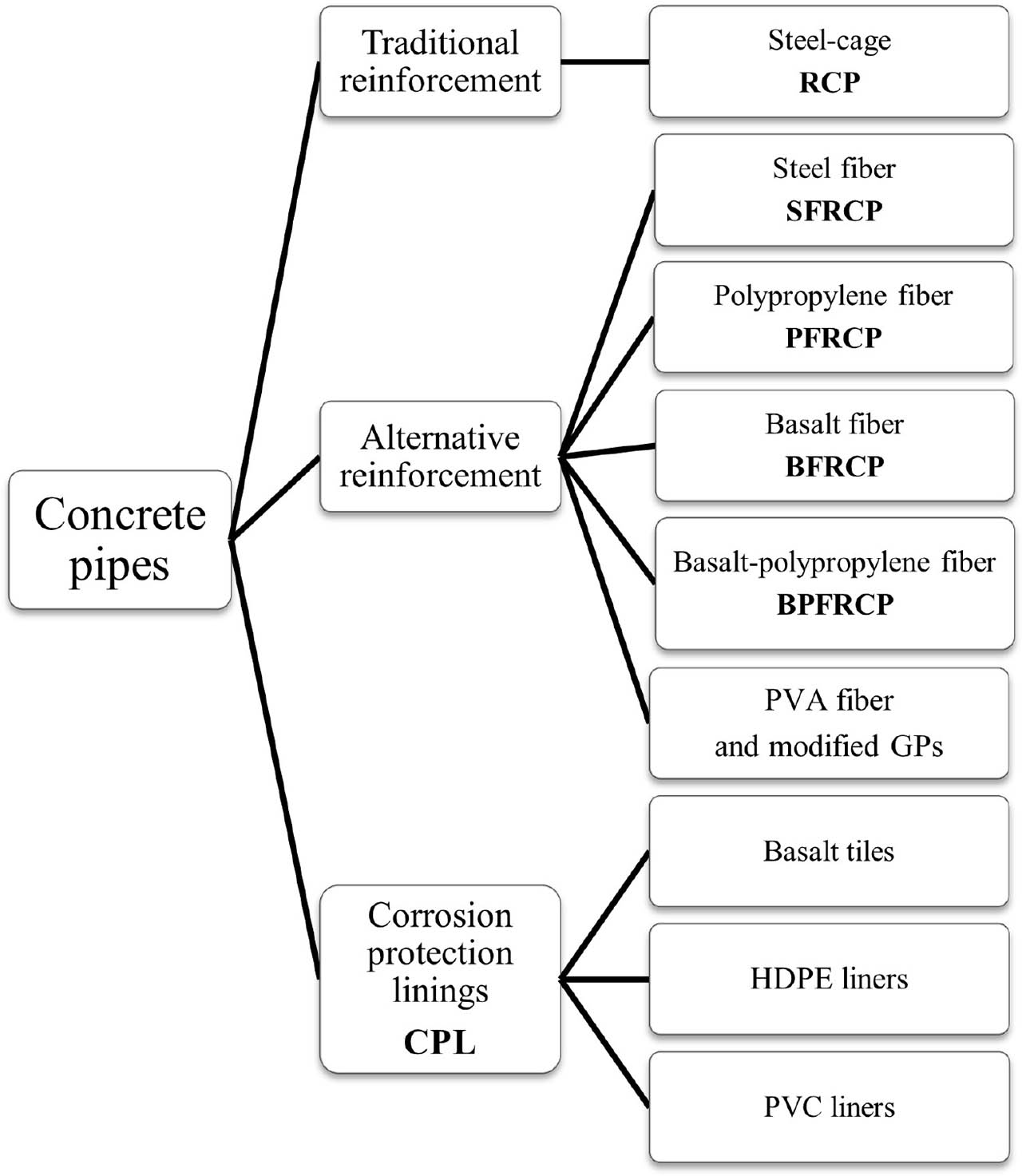
Figure 8
Types of modern concrete pipes.