
1. Introduction
The shift towards gender diversity in corporate leadership has resulted in a trend of women's representation in higher-level jobs, such as executive and board positions, in both developed and emerging economies. With the rise in awareness of the potential effectiveness and accountability of diversity in organisations, this shift has been accelerated by institutional, regulatory, corporate governance and other changes. There is a growing literature on the benefits of gender diversity in leadership arrangements on decision-making quality, monitoring and managerial opportunism (Shams et al., 2023). Yet, despite these developments, there remains an important question that has not been answered: Is the increase in women's participation in leadership in predictive of their actual influence in corporate decision making, or is it simply symbolic? In the emerging market context, the question is especially important in Pakistan as the corporate governance system is still maturing and the organisational structure is relatively rigid with a high concentration of power at the top and predominantly male dominated. While there is greater regulatory push for diversity, the question is how much women executives can meaningfully contribute to strategic and financial decision making. Previous studies have found that although representation of women has been increasing, structural and cultural barriers may hinder the influence of women in the leadership of companies (Babafemi, 2025).
Consequently, the observed rise in the female participation does not necessarily indicate substantive change in the organisation. To assess whether female executives exercise meaningful influence, it is important to examine specific financial decision-making processes where executive involvement is likely to be most visible such as Working Capital Management.
A useful theoretical perspective for exploring this issue is the notion of tokenism. Tokenism implies that the inclusion of minorities in organisations may be symbolic without any associated authority and influence (Kanter, 1977). In this context, diversity may be apparent rather than real, and minority group members might be restricted in their ability to make important decisions within the organization. However, recent research suggests that simply increasing the number of women in leadership positions does not necessarily ensure that they have an equal voice in key decision-making processes or meaningful influence within centres of organisational power (Bhardwaj, Morgan and Elms, 2024). This highlights the importance of looking beyond representation alone and considering whether gender diversity translates into genuine influence over organisational decisions and outcomes.
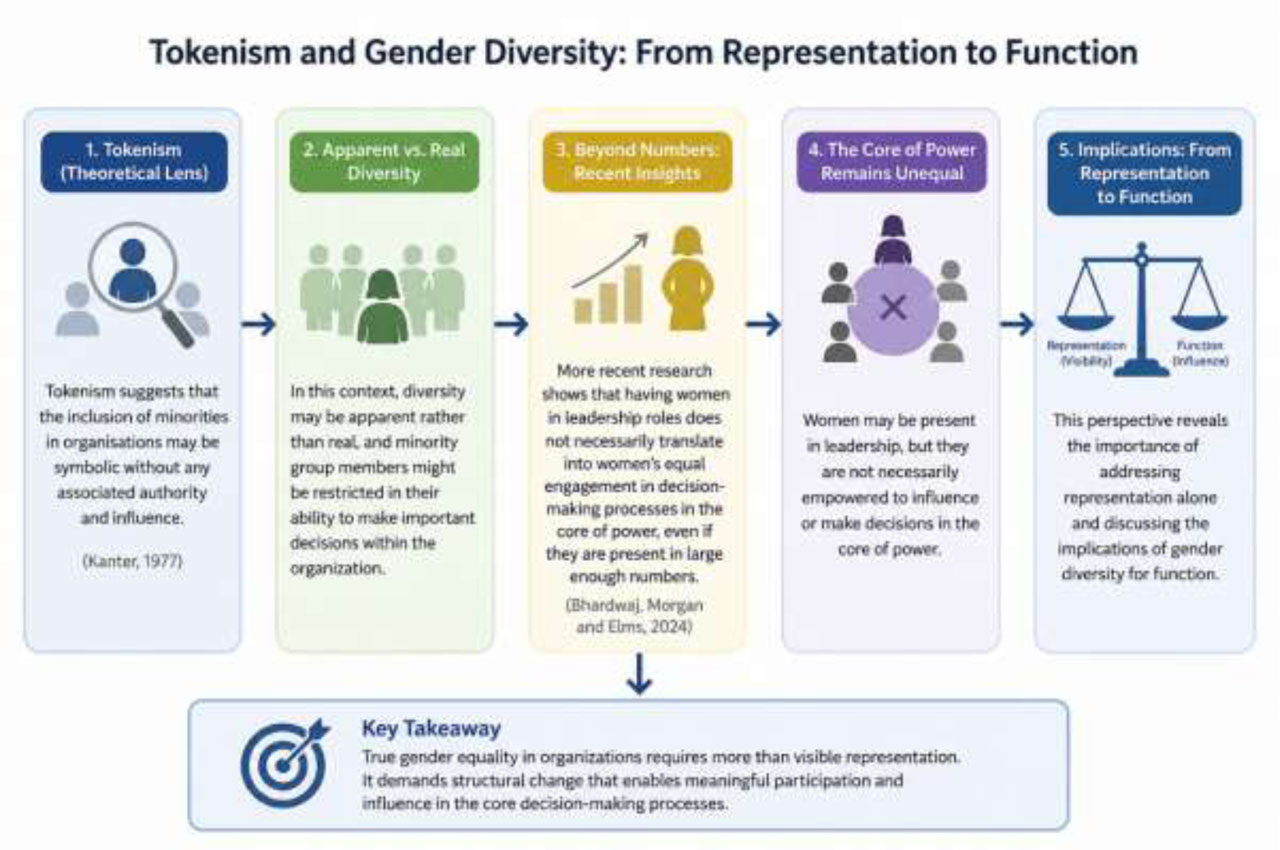
Diagram 1:
Tokensim and Gender Diversity Function
Existing literature on gender diversity and firm performance tends to concentrate on the overall impact of gender diversity on firm performance, while giving less focus to specific financial mechanism through which leadership influence is exercised. This represents an important gap comma's managerial influence is often more visible in operational and financial decision-making processes than in overall performance outcomes. Working Capital Management provides a particularly useful setting for examining such influence because it is closely linked to liquidity management, operational efficiency and short-term financial risk management (Mirón Sanguino et al., 2024).
The management of working capital calls for ongoing analysis, judgment, and risk assessment and is ideal for analysing the impact of executive leadership in practice. Furthermore, the findings of the recent studies highlight that the value of gender diversity depends on the specific context and conditions of the institution and organization (Morales de Vega, García-Centeno and Palomo-Zurdo, 2025). In contexts with less formal or strong enforcement of norms and more formal or strong organizational hierarchy, the formal representation may not equate with substantial influence. This indicates that there might be a differential effect of gender diversity on financial outcomes, as some aspects of decision-making might be significantly affected while others are not.
This study investigates whether the presence of female executives in the Pakistani banking sector reflects substantive shift in financial decision-making process or merely symbolic inclusion. It explores the link between female top management positions and Working Capital Management, as well as other financial performance measures such as liquidity and profitability. The study compares financial results of these periods of female and male leadership, to determine if there is a measurable difference in financial behaviour because of having a different gender in the throne.
1.1. Research Questions
To address these issues, the study is guided by the following research questions:
RQ1: Does female executive leadership influence working Capital Management in the banking sector of Pakistan?
RQ2: Is female executive leadership associated with broader financial performance indicators such as liquidity and profitability?
RQ3: Does the presence of female executives in Pakistani banks reflect substantive influence in financial decision-making or symbolic representation consistent with tokenism theory?
These research questions are examined through a quantitative analysis of commercial banks listed on the Pakistan Stock Exchange over a 10-year period from 2016 to 2025.
1.2. Research Objectives
The study aims to achieve the following objectives:
To examine the relationship between female executive leadership and Working Capital Management in Pakistani banks
To analyse the impact of female executive leadership on financial performance indicators such as liquidity and profitability.
To evaluate whether the presence of female executives reflects substantive influence or symbolic representation consistent with tokenism theory.
1.3. Research Contribution
This study contributes to the literature in three keyways. First, it extends research that focuses on representation to the impact of gender diversity on actual financial decision making, which gives researchers a more nuanced understanding of how the diversity of gender affects financial decision making. Second, it introduces the idea of tokenism to the empirical analysis and provides a critical analysis of the shortcoming of diversity initiatives in emerging markets. Third, it offers empirical evidence from the banking sector in Pakistan, which has not yet been examined in the context of governance and in which institutional and cultural influences may have different effects on governance than in more developed economies.
2. Literature Review
2.1. Gender Diversity and Corporate Governance
Gender diversity in the corporate leadership has become a growing focus of the corporate governance literature, under the assumption that more diverse leadership will boost monitoring, increase decision support, and ultimately, boost firm performance. Preliminary research indicates that the presence of women on boards and in senior management positions can help to improve governance, as board independence and a reduced managerial opportunism have been linked to women's presence on boards and in senior management positions (Angsoyiri, 2025). One of the arguments behind this is that male and female executives tend to have different perspectives, behavioural tendencies and ethical considerations which should enrich the decision-making process in their organisations. Empirical evidence, however, is quite variable.
However, there are studies that show a positive relationship between gender diversity and firm value (Renaldo and Murwaningsari, 2023), and others that demonstrate more complex and context-specific relationships. In certain contexts, diversity has a positive effect on governance structures, and, in other contexts, it has a weak or contingent effect (Morales de Vega, García-Centeno and Palomo-Zurdo, 2025). Representation is not enough; how diversity is included in organisational processes is key.
Another limitation of the current literature is that it is largely based on empirical evidence from developed economies, where governance structures are generally stronger and more supportive of inclusiveness. Emerging markets, on the other hand, present a more complex environment. Even when women are represented in leadership positions, structural barriers, cultural norms, and organisational power dynamics may restrict the influence of female executives, despite their formal presence in leadership roles. More contemporary studies suggest that women in these roles may continue to face obstacles in establishing influence within organisational decision-making processes due to deep-seated hierarchical structures and informal networks (Li, Daff and Arian, 2026).
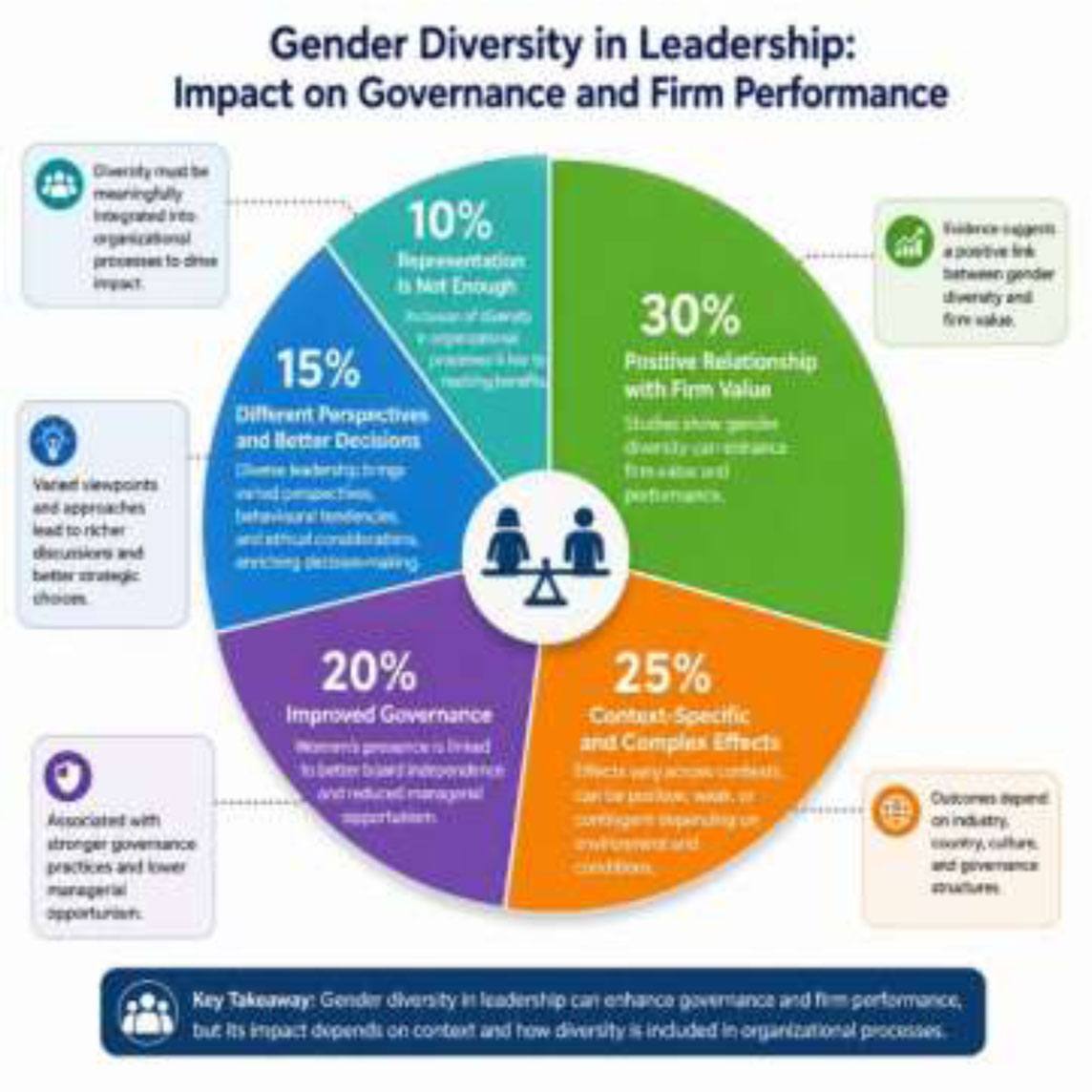
Diagram 2:
Impact on Governance and Firm Performance
The observations pose an important question: is gender diversity an actual participation in decision-making or is it a symbolic inclusion? Even as representation has improved, there is continued evidence of gender gaps in terms of executive positions and promotions, indicating that there are still barriers to influence (Xu, 2024). Research findings on board diversity, for example, suggested that the inclusion of women does not necessarily mean that women will be involved in the making of decisions, especially strategic decisions, where their representation is in a relatively small proportion (Bhardwaj, Morgan and Elms, 2024). In developing countries like Pakistan, where governance mechanisms are typically weak, characterised by centralisation, lack of accountability, and less effective enforcement, this is a significant concern (Arslan et al., 2020). In this setting, minority groups' impact on the leadership process might be limited, which may result in unresponsive governance practice and financial decision-making structures and processes.
The literature points to the possibility of improving corporate governance through the gender diversification, but it shows that this effect depends on the context. Therefore, it is important to challenge assumptions of our direct relationship and examine the conditions under which women's leadership translates into meaningful influence.
2.2. Tokenism and Symbolic Representation
The notion of tokenism offers a good insight into the scope of gender diversity in corporate leadership. Tokenism was first described by Kanter (1977) and is characterized by the presence of minorities at least symbolically, but without any real decision-making or power. In today's business environment it heightens concerns that top females are being appointed as a representation of diversity, not to be part of the business' decision-making process.
While women have been incorporated into a variety of organisations in increasing numbers, recent studies indicate that numerical inclusion does not necessarily translate into substantive participation. Limited representation can transform women into symbolic characters and not equal participants in decision making process, thereby reducing their influence in this process (Terjesen, Sealy and Singh, 2009). This is further supported by more recent research which demonstrates that where diversity exists it can have an uneven and limiting effect on decision making (Bhardwaj, Morgan and Elms, 2024).
Search difficulties may be starker in emerging economies. Less effective implementation of diversity initiatives is due to cultural expectations, hierarchical organisational structures and less robust enforcement of institutional measures. Under these circumstances, organisations can implement diversity policies but not fully embedded and principles in the decision-making. Studies in Pakistan show that representation of women in senior leadership roles is a small, and when present, may not be a campaigned by meaningful participation indecision making (international growth centre, 2025).
This difference is relevant since the presence of women in an organisation does not always imply that they are influential. In other instances, women can be assigned visible positions, but they have limited influence to influence decisions. This speaks of the concept of tokenism where one has diversity but not diversity in action. That is why it is not always so, it is possible to be misled by the number of women in the leading positions only. Another aspect that should be addressed is; are they actively engaged in the decision-making process and can they contribute towards significant organisational results.
2.3. Female Executive Leadership and Financial Decision-Making
The role of female executives in corporate financial policies and organisational outcomes is increasingly a topic of study. Previous research tends to correlate female management with more conservative financial management such as lower leverage, lower risk taking, and more conservative policy making (De Massis et al., 2024). These findings have led to the belief that the diversity of genders could boost financial discipline and stability within organisations.
This, however, may be a blinkered view of what conditions may be when this influence is applied. Female executives’ impact does not depend solely on who they are; it also depends on the extent to which they are supported, included and accepted within leadership structures. When they are not represented, their potential to influence financial decision-making could be limited, and the results of these processes might reflect their control or other governance factors.
Recent research also indicates that gender diversity benefits sometimes differ based on gender. Other studies have demonstrated that, although some results have been positive as regards the quality of decision making, there has been less impact where structural barriers continue to exist (Li, Daff and Arian, 2026). This underscores that diversity is not automatically leadership; in the context of high organisation hierarchy, it would be better to understand this as ‘influence’.
These hurdles are exacerbated in emerging markets where governance and institutions are less robust. There is the possibility of having governance mechanisms at the formal level, but they may be ineffective in practice and so are not conducive to meaningful participation in decision making (Areneke, Adegbite and Tunyi, 2022). Consequently, the institutional and organisational environment should be considered when making sense of the role of female executives in policy decisions concerning financial matters. Overall, it is likely that the presence of female executives in the financial decision-making process might not always be as influential as can be imagined, based on the power that executives might have to be influential.
2.4. Working Capital Management and Financial Performance
In the realm of corporate financial decision-making, Working Capital Management (WCM) plays a crucial role in the performance and efficiency of a company by influencing its liquidity. Working Capital Management involves balancing short term assets and short-term liabilities of a business for smooth functioning and to minimise financial risk (Mirón Sanguino et al., 2024). Due to the operational nature, WCM is a measure of the financial strategy but also managerial judgement and coordination. Past studies have always confirmed that proper working capital management relates to company performance, especially in terms of improvement of liquidity management and decrease in financing costs (Silva, 2026). This is particularly true in the banking industry, where the importance of liquidity in banking stability cannot be overemphasized.
Although, the role of Working Capital Management in business has received considerable attention, very few studies have examined the effect of leadership attributes such as gender diversity on Working Capital Management. Most studies concentrate on overall performance measures, ignoring the financial processes by which managerial influence works. This is significant because working capital decisions are a judgmentally driven, risk-fraught and multifaceted transaction that requires coordination between departments. These characteristics make WCM a fruitful framework to investigate whether female executives can have a substantial influence on financial behaviour. Conversely, their responsible role might be restricted in scope of a tokenistic policy, and whatever effect they create, it might be ineffective or inconsistent.
More broadly, recent studies also underline the influence of the institutional context and overall governance arrangements on financial decision making (Suau-Sanchez, Voltes-Dorta and Lamolla, 2025). This further reinforces the need to consider WCM in the broader organisational context. Therefore, this study emphasizes on the working capital management as an important tool to measure impact of women executive leadership in practice.
2.5. Hypotheses Development
The above discussion underscores two conflicting views on women's management in decision making in businesses. On the other, the corporate governance literature outlines that gender diversity can have a beneficial effect on monitoring, help to make decisions better, and encourage more prudent financial behaviour. However, tokenism theory suggests that if women are underrepresented, they could be somewhat symbolic, with a limited capacity to shape decision making in the organization and influence important organizational decisions (Liang, Shen and Xu, 2026). Given these competing perspectives, it is unlikely that women's executive leadership will exert a consistent effect on all aspects of financial decision making. Rather, its impacts could be greater in specific operational domains, and less significant in other strategic consequences. The working capital management (WCM) is one of the contexts that appears quite significant for discussing this relationship (Asfahani, 2024).
It is more operational in nature and is more likely to be affected by managerial behaviours and short-term decisions, and therefore less enduring than it is in the longer term. Previous studies indicate that female executives are more risk averse and disciplined in financial decisions, and this could be reflected in working capital management. The following hypotheses are put forward:
H1: Female executive leadership is positively associated with working capital management efficiency in Pakistan banks.
With respect to profitability, the relationship is less straightforward because conservative financial behaviour may reduce risk, but it does not necessarily lead to higher returns. In addition, if tokenism limits the authority of female executives, their influence on profitability may be negligible. As such, the direction of the relationship remains theoretically ambiguous.
H2: Female executive leadership has no significant association with bank profitability, consistent with the presence of tokenism.
Similarly, financial stability and overall performance are influenced by long term strategic decisions and institutional factors that may lie beyond the direct control of individual executives particularly in context where female leadership is constrained, their impact on these broader outcomes may be limited:
H3: Female executive leadership has no significant association with overall financial performance, reflecting constraints on executive influence in emerging market contexts.
2.6. Conceptual Framework
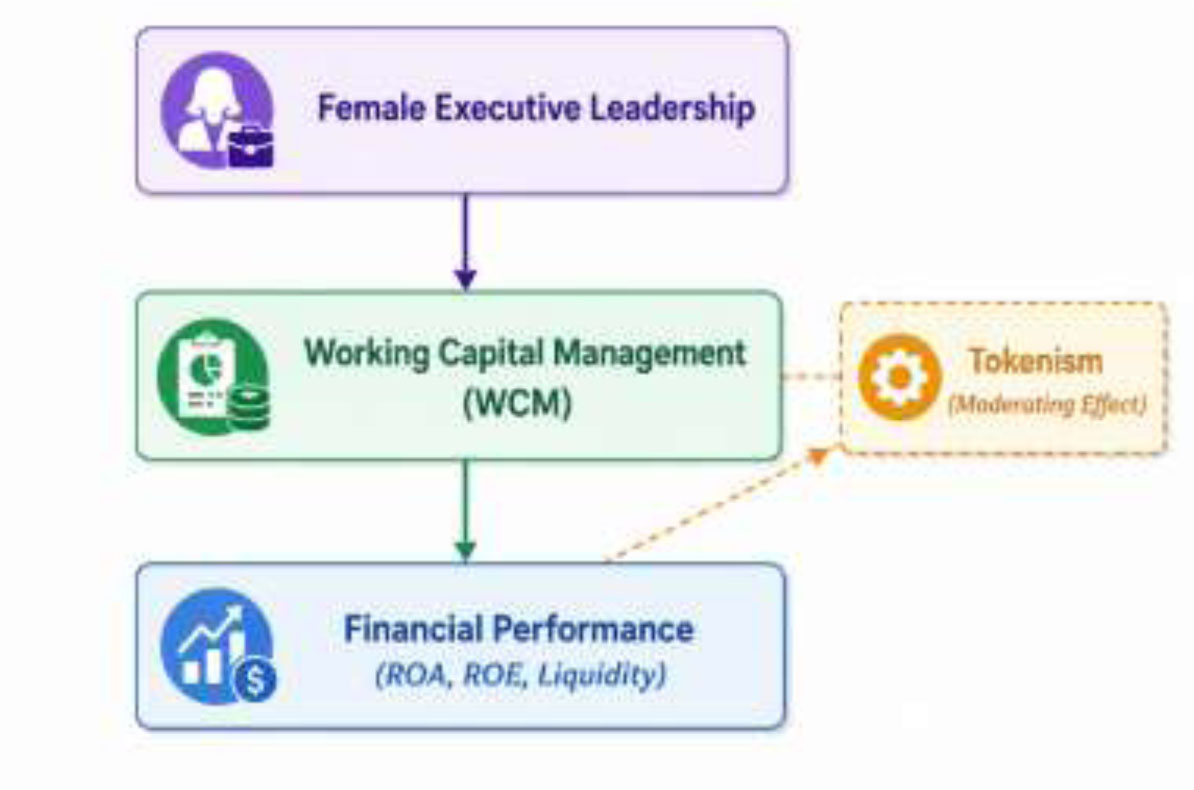
Diagram 3:
Executive Leadership and Performance
The conceptual framework outlines the relationship between female executive leadership in financial decision-making outcomes female executives’ leadership is expected to influence working Capital Management in financial performance however, this relationship may be weakened by tokenism, which can limit the extent to which representation translation translates into actual influence. The framework therefore recognises that while female executives may contribute to financial decision making, the strength of this relationship depends on the level of authority and organisational support they receive.
3. Research Methodology
This study adopts quantitative research design to examine whether the presence of female executives in Pakistan’s banking sector translates into meaningful influence over financial decision-making, or whether such representation remains largely symbolic. The study aims to identify the relationship between female executive leadership and financial outcomes using a panel data approach.
At the same time financial decision-making is not purely mechanically; it is shaped by managerial judgement, organisational dynamics and institutional constraints (Crawford et al., 2024). While a quantitative approach enables systematic analysis of observable outcomes, it cannot fully capture underlying behavioural processes. This limitation is acknowledged, and the findings are interpreted with appropriate caution, particularly in the context of in emerging markets such as Pakistan.
Overall, the study follows an explanatory design, focusing on whether female executive leadership is associated with measurable differences in working Capital Management and financial performance (Turegun, 2022).
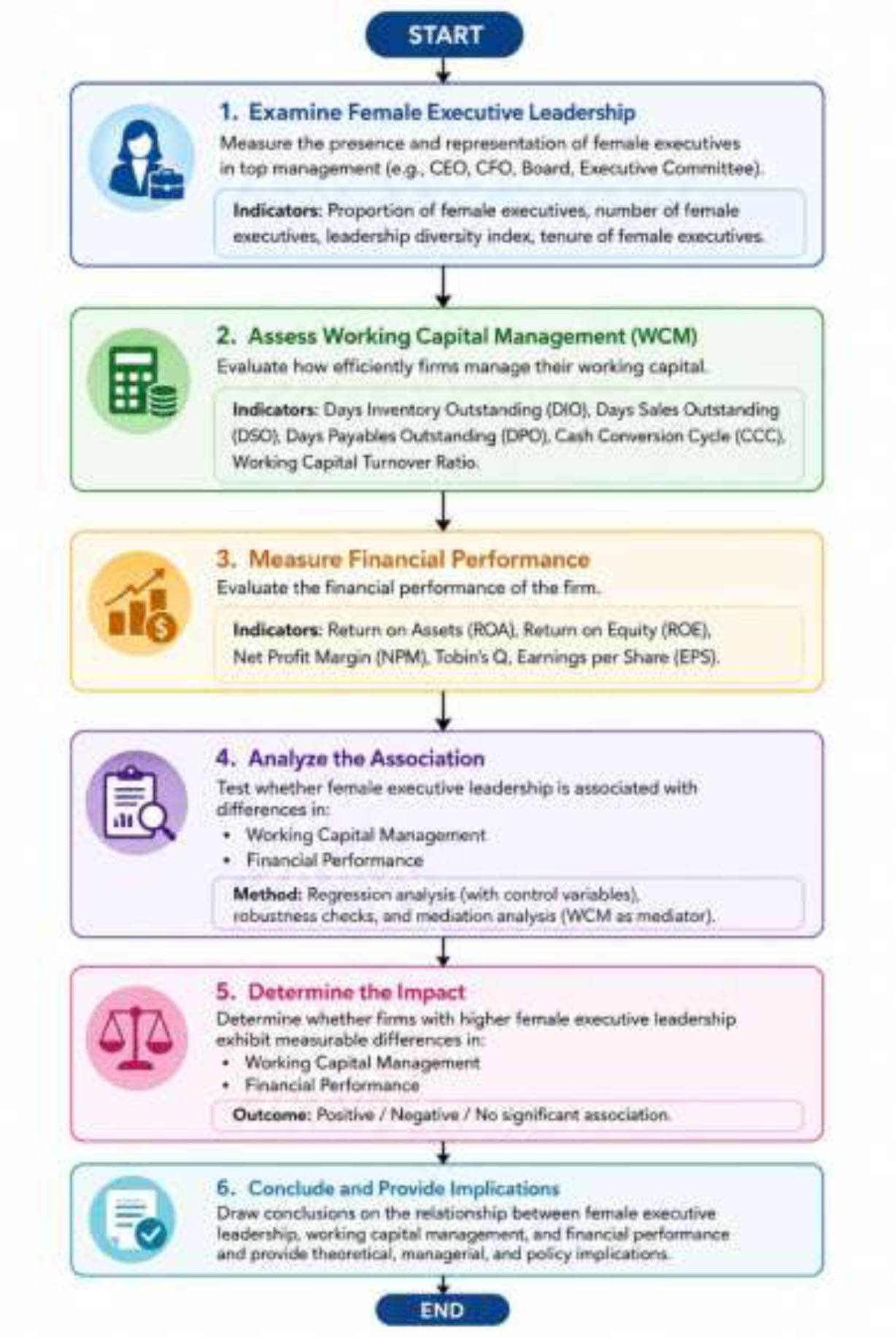
Diagram 4:
Female Executive and Working Capital Management
The empirical analysis focuses on commercial banks operating in Pakistan. The banking sector provides an appropriate setting due to its relatively structured regulatory framework and gradually, though still limited, presence of female executives in leadership roles. The sample consists of 18 commercial banks listed on the Pakistan Stock exchange and covers a period of 10 years allowing for sufficient variation in both leadership structure and financial performance. A longer time horizon is particularly valuable in governance research, as it helps capture changes in organisational behaviour over time rather than short-term fluctuations (Arslan et al., 2020).
All data are collected from publicly available sources, including annual reports, financial statements and corporate governance disclosures. These sources are widely used in accounting and finance research and provide a consistent and reliable basis for measurement (Tawiah, 2022). However, the use of secondary data limits the ability to observe internal organisational process directly.
The key independent variable FEMEXCE, captures the presence of female executive leadership. A binary indicator is constructed, taking the value of 1 if a bank has a female executive in a senior leadership position during a given year and 0 otherwise. This approach is commonly used in corporate governance research when examining leadership characteristics (Angsoyiri, 2025).
While this measure provides a clear and observable proxy, it does not capture the content of influence, authority, or participation of female executive in decision-making. This limitation is particularly relevant given the study’s focus on distinguishing between substantive leadership and to token representation.
Working Capital Management serves as the primary dependent variable, reflecting short-term financial decision-making. It is measured using indicators such as net working capital scaled by total assets and the current ratio. These measures capture liquidity management in operational financial discipline (Mirón Sanguino et al., 2024).
To provide a broader assessment of financial outcomes, the study includes:
liquidity, measured as liquid assets relative to total assets
profitability, captured using return on asset (ROA) and return on equity (ROE)
These indicators are widely used in the literature and reflect both operational efficiency and overall firm performance. In addition, elements of the CAMELS framework are considered to capture aspect of financial stability and risk.
Several control variables are included to account for firm specific characteristics that may influence financial outcomes:
Firm size (SIZE): natural logarithm of total assets
Leverage (LEV): total debt divided by total assets
Growth (GROWTH): annual change in revenue
Bank age (AGE): number of years since establishment
These variables are standard in empirical finance research and help reduce the risk of omitted variable bias (Tawiah, 2022). To examine the relationship between female executive leadership and financial outcomes, the study estimates are dynamic panel data model of the following form
where:i denotes the individual bank and t denotes the time period (year)
Yit represents the dependent variable (WCM, ROA and ROE) for bank
Yit−1 is the lagged dependent variable capturing persistence in financial behaviour
FEMEXECit represents female executive leadership
μi captures an observed bank specific effect
λt controls for time specific effect
ɛit is the error term
Separate models are estimated for working capital management, profitability (ROA, ROE) and liquidity. The inclusion of the lagged dependent variable reflects the dynamic nature of financial decisions, where past performance influences current outcomes.
They study employs the Generalised Method for Moments (GMM), specifically the Arellano-Bond dynamic panel estimator, to address potential econometrics concern that may arise in the analysis. One of the main challenges in the context is endogeneity which can occur due to reserve casualty, Omitted variable bias and a new observed heterogeneity across banks. For example, banks with a stronger financial performance may be more likely to appoint female executives, creating a two-way relationship between leadership and performance. In addition, certain unobserved bank specific get it are stakes may influence both executive appointments and financial outcomes, leading to biassed estimates.
Traditional estimation techniques such as Ordinary Least Squares (OLS) or fixed effects model MapReduce inconsistent and bias results when these issues are present, the GMM approach helps overcome these limitations by using leg values by the variables as internal instruments, dear boy reducing the problem of indigeneity. Furthermore, the estimator controls for a unobserved firm specific effects and allows for dynamic relationship through the inclusion of lagged dependent variables. As a result, GMM is particularly suitable for analysing panel data where endogeneity and dynamic effects are likely to exist (Arellano and Bond, 1991).
Several robustness checks are conducted to ensure the reliability and consistency of the findings. First, alternative model specifications are estimated using lagged independent variables to verify whether the results remain stable over different model structures. Second, outliers are excluded from the sample to assess weather next extreme observation disproportionately influence the results. Also, Variable Inflation Factor (VIF) is used to test multicollinearity among the explanatory variables, and the results show that there are no serious cases of multicollinearity. These robustness tests enhance the validity of the research since they ensure that the findings are not occasioned by model specification problems and atypical observations.
This study relies entirely on publicly available data and does not involve direct interaction with human participation. All information is collected and analyse responsibly in accordance with accepted academic and ethical research standards. The use of secondary data ensures confidentiality and avoid ethical concerns related to participant consent or privacy.
3.1. Research Philosophy
This study adopts a positive research philosophy because it focuses on examining objective objectively measurable relationships between female executive leadership and financial performance using quantitative methods and statistical analysis. The positivist approach is appropriate as the study aims to test hypothesis and identify causal relationships through empirical observation and panel data analysis.
4. Results and Discussion
4.1. Results
The descriptive statistics of the most relevant variables for analysis are shown in Table 1. Overall, the data indicate moderate variation between banks in financial performance and working capital indicators, which indicates a relatively stable banking environment.
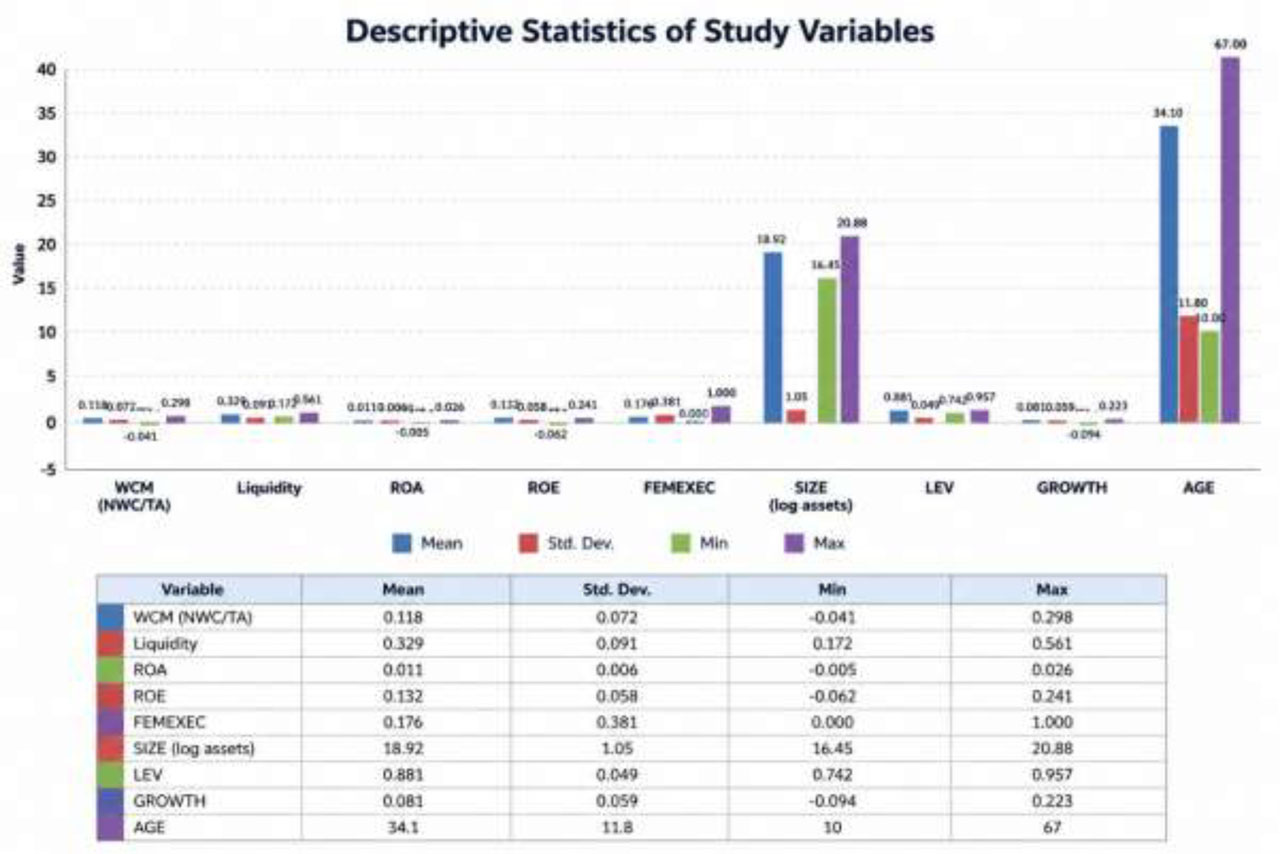
The descriptive statistics in Table 1 show the financial profile of listed banks in Pakistan Stock Exchange. The mean values of profitability (ROA: 1.1% and ROE: 13.2%) show moderate profit performance and are similar to that of previous studies conducted on the Pakistani banking sector. The relatively smaller standard deviation of the ROA implies that there is less variability in the efficiency of operations among banks, while the higher standard deviation in the ROE indicates the variability in capital structure and leverage among banks.
The mean for working capital management (WCM) is 0.118 which shows a general cautiousness of the short-term financial management. This is in line with the liquidity ratio (mean = 0.329) which indicates regulatory requirements and conservative financial practices in the banking industry. On average, women are under-represented as FEMEXEC (0.176), illustrating the relatively small number of women in executive positions.
This is a significant contextual finding because when women are under-represented, they may not have the opportunity to make an impact, which fits with the tokenism view. Leverage is high (mean 0.881) and normally would be high for banks that depend heavily on their deposits and other liabilities. The descriptive statistics generally depict the structural features of the banking sector in Pakistan and serve as a useful baseline to analyze the empirical findings.
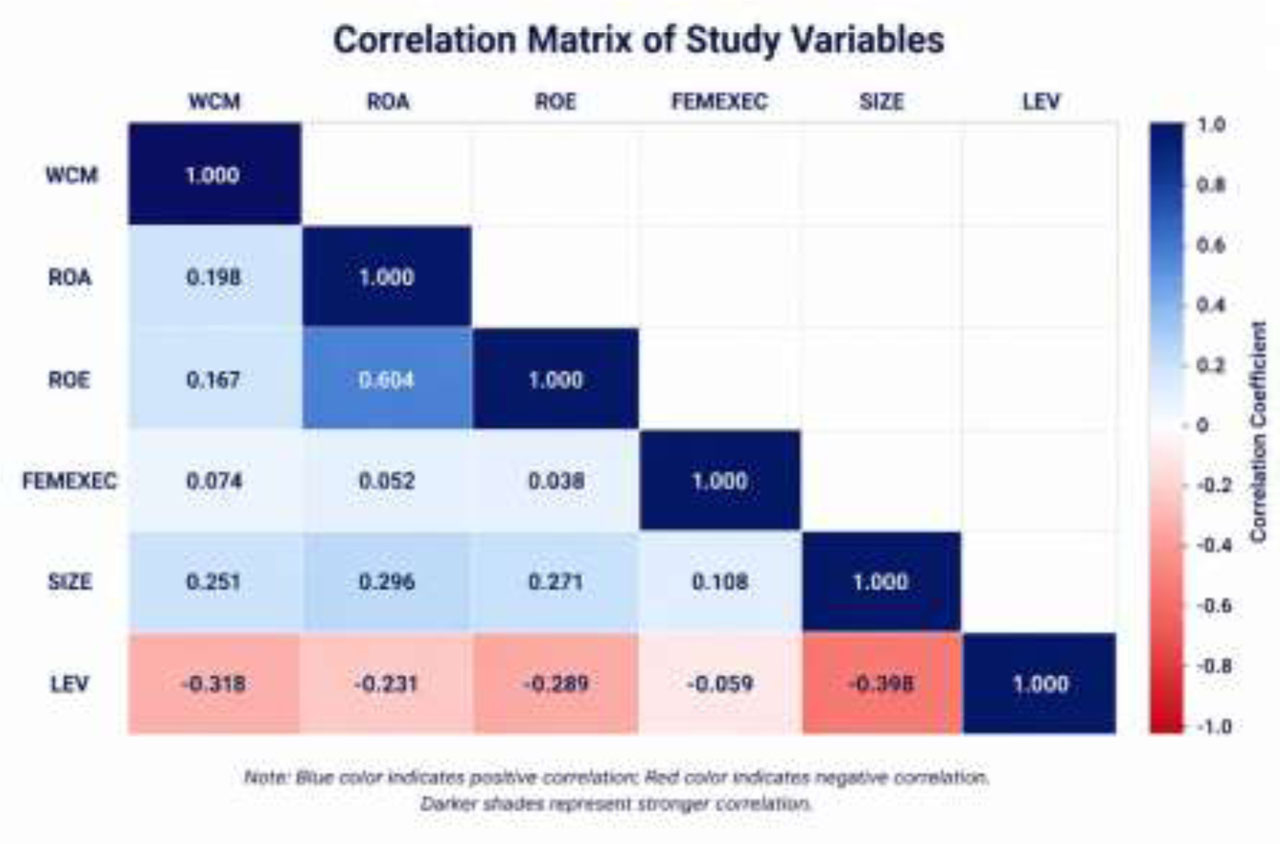
The values of the pairwise correlation coefficient between the variables are shown in table 2. Most of the correlations are generally low to moderate, indicating that there are no major concerns with multicollinearity. Working capital management is positively associated with both ROA and ROE, thus, any increase in efficiency of working capital management is likely to be related to an increase in profitability.
This result is congruent with the previous studies that have shown that good working capital management is associated with increased financial performance. This correlation is positive, although low, indicating that the existence of women executives could be linked to better financial results, but not at the bivariate level of correlation. This is early, albeit partial, evidence that gender diversity could contribute to the financial behavior.
A negative correlation between leverage and working capital management and profitability suggests that increased financial risk is related to decreased efficiency and performance. Firm size, however, is more positively related to financial measures, indicating the existence of scale benefits.
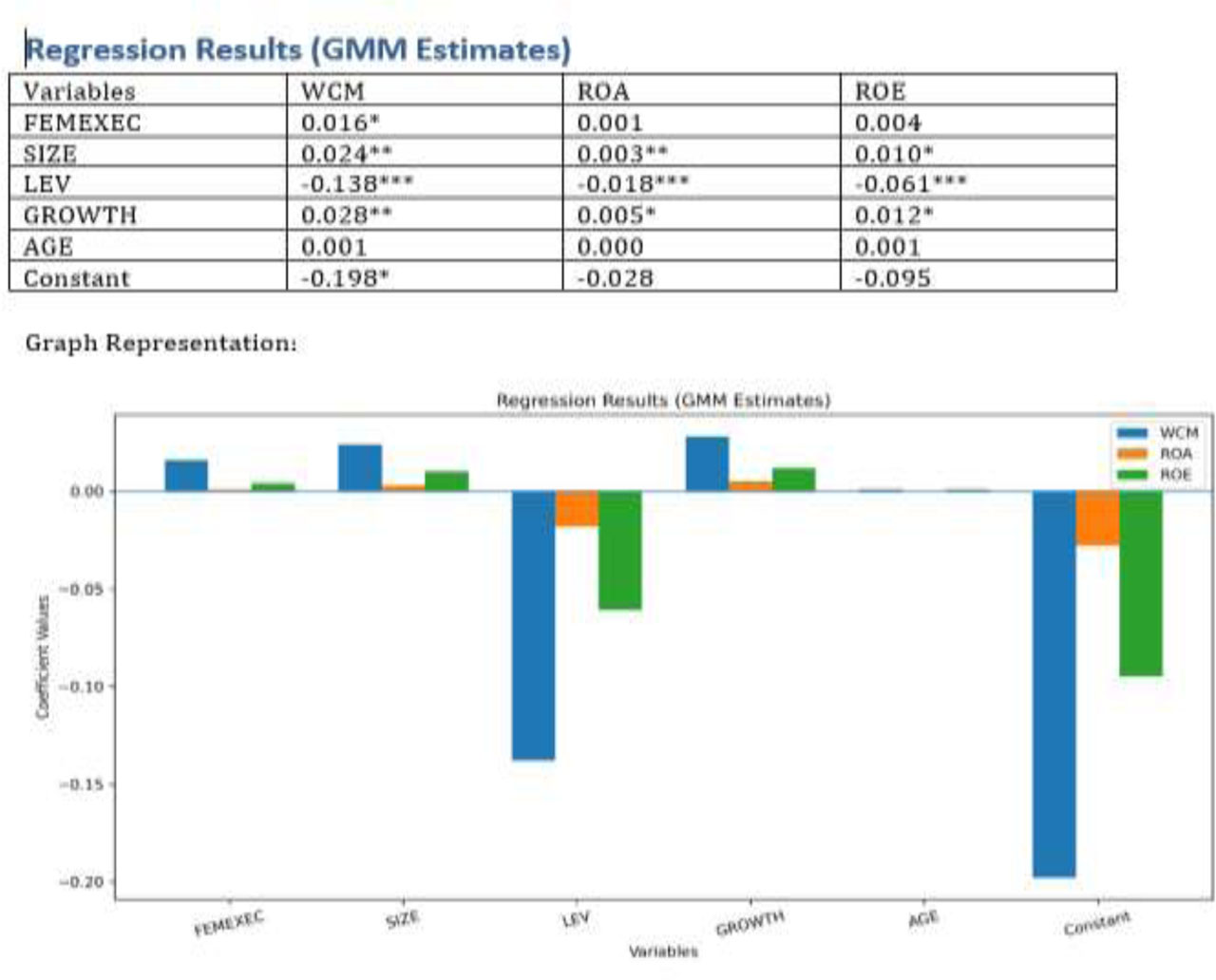
The results of the GMM estimated are shown in Table 3. The results support parts of the hypotheses and suggest a complex relationship between women's executive leadership and financial performance. The coefficient of FEMEXEC is positive and statistically significant in the working capital management model, but the effect of FEMEXEC is relatively small. This aligns with H1, which posits that better working capital efficiency occurs with female executive leadership. This may be due to the fact that female executives have more disciplined and conservative financial management practices which are manifested in short term liquidity management. But FEMEXEC does not have any statistical significance in the ROA and ROE model.
This result is in line with H2, showing that there is no measurable impact of a female head of government on profitability. Likewise, the lack of impact on financial measures supports H3, indicating that the impact of female executives may be restricted to strategic- or long-term decision-making areas. In terms of the control variables, the overall results indicate that a positive relationship between firm size and the financial performance is found in all models, whereas the leverage relationship is consistently negative and significant in all models. This is in line with expectations, as the more leverage, the more financial risk and the less efficiency.
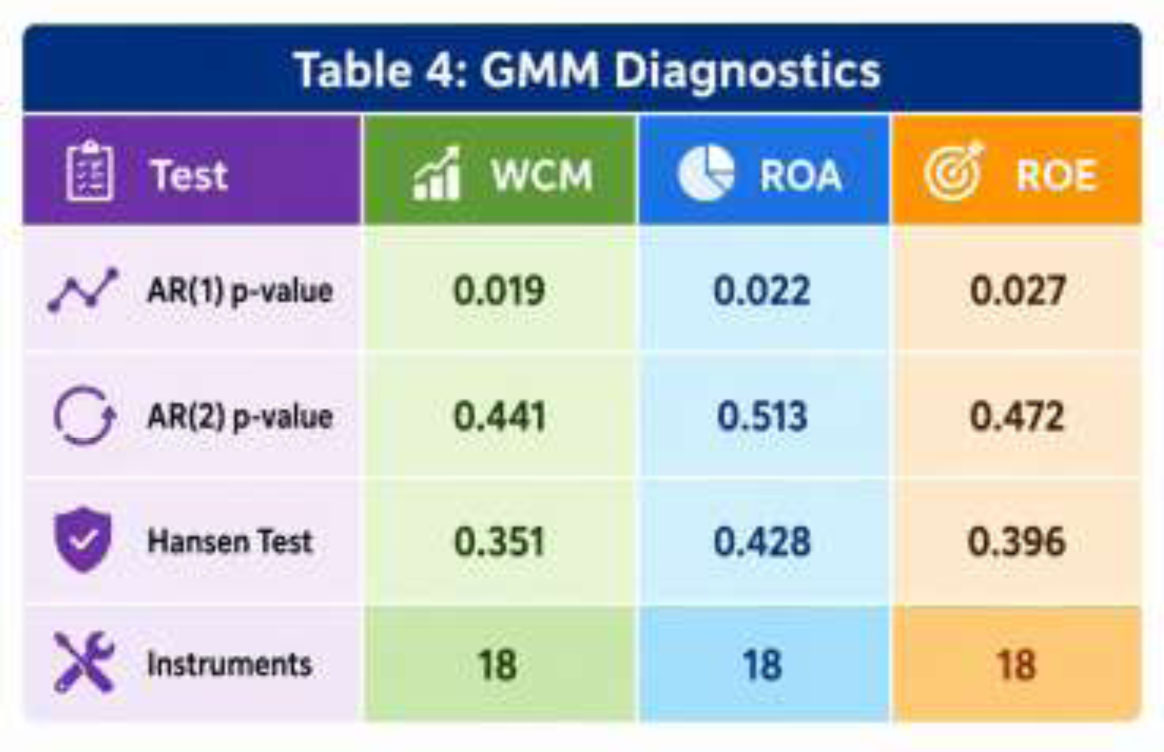
The diagnostic tests reported in .Table 4 show the validity of the GMM estimation. The AR(1) test is significant and the AR(2) test is not which suggests there are no second-order serial correlations. The model used suggests that the instruments used are valid and not over-identified based on the Hansen test. The robustness checks reported in Table 5 confirm the stability of the results. The positive relationship between FEMEXEC and working capital management holds true for alternative specifications, and in the profitability models it remains non-significant. This means that the results are not sensitive to outliers or model specification.
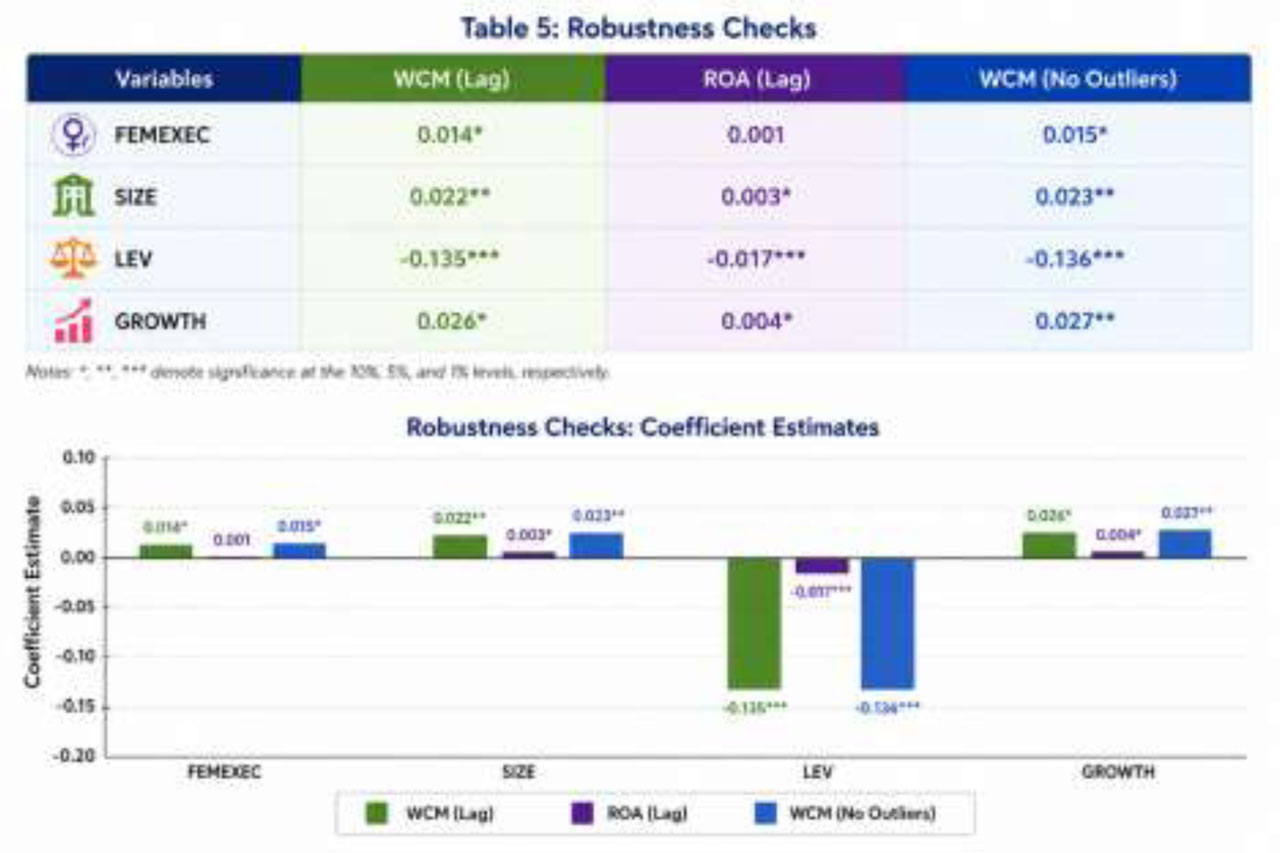
The stability tests ensure a soundness of the results. FEMEXEC significantly influences working capital management, but weakly significant, and insignificant influence on the measures of profitability. This is the uniformity that allows the results to be obtained without any model-specific or outlier influences.
4.2. Discussion of Findings
These results offer valuable knowledge for the role of women in financial decision-making, with a gender lens through corporate governance and tokenism theory. Firstly, the positive linkage between executive leadership of women and working capital management indicates that female executives have some influence on the operation financial decisions. This is consistent with the view of governance that gender diversity can help to improve the quality of financial discipline and decision making. This might be because working capital management is a short-term operational function and therefore is more closely linked to managerial behaviour.
The lack of a significant relationship between female executive leadership and the overall measures of performance, however, does indicate points of importance to note. The outcomes are generally influenced by strategic choices, market influences and institutional conditions, which may not be the direct control of the individual executives. The result indicates that the effect of female executives is not equally strong on all aspects of financial performance. Theoretically, these findings are in line with the tokenism argument. Women may be included in the leadership structures, but their power to make strategic decisions that are important may be restricted by organisational hierarchy, cultural norms, or under-representation. In situations where this is the case, then diversity may be formally established but lack excellence in decision making. The results are not, however, supportive of a purely symbolic interpretation; at the same time, the results do not support a purely symbolic interpretation.
The positive impact that was seen on their working capital management shows that female executives are by no means passive players. Rather, their impact seems to be limited, being greater in operational areas where decision making is more decentralized and less in those areas that require broad strategic authority. This duality suggests one of the key points, namely that the effect of the gender difference is not either substantive or symbolic but lies on a spectrum. Women can make a valuable contribution in some respects and at the same time be limited in others. This is an extension of literature to demonstrate that gender diversity can work if it is supported by the organisation's conditions of leadership.
The overall results reveal that structural and institutional constraints are significant issues in dictating the effectiveness of women leaders in the developing world such as Pakistan. One should keep in mind that increased representation does not always correspond to better performance and should consider what it will take to ensure that diversity can affect performance.
5. Conclusion and Implications
5.1. Conclusion
The aim of this study was to examin whether the increasing role of women in the banking sector of Pakistan is largely symbolic or whether it has a significant influence in the decision-making process of the financial sector. The analysis is not only on working capital management but also on important financial performance indicators; this provides a more sophisticated view beyond a simple discussion on gender diversity, and takes into account leadership through actual financial behaviour.
The results suggest a more complex picture than is sometimes believed. Female executive management positively affects Working Capital Management, indicating that there may be some influence on short term financial and operating decisions. This aligns with the idea that women leaders are more likely to employ a “rule of caution” and “structured approach” to financial management. This influence, however, does not apply to other performance indicators (profitability) where the relationship is not statistically significant.
The comparison brings a crucial difference between presence and influence on the forefront. Despite the presence of women executives, there seems to be an impact of lesser magnitude. In Pakistan's banking sector, gender diversity appears to reflect a form of partial inclusion within decision-making processes. The findings broadly indicate that opportunities for wielding leadership at the top are constrained by structural and institutional factors, which influence their effectiveness. Gender diversity does not seem to have a uniform impact but instead has a differential impact on some aspects of financial decision making but not on others. This helps to further the notion that diversity is more of a context and not a one-to-one recipe for similar results in all aspects of firm performance.
5.2. Implications
This study is important to the corporate governance and gender diversity literature because it provides a more solid and contextually nuanced approach to female executives' role. First, it moves the debate away from representation to working effects, thereby demonstrating that the impact of gender diversity is not equal on the various dimensions of financial decision-making. Although most of the literature has focused on the overall effect of diversity on the performance of the firm, the results reported here indicate that some operational aspects of the firm may be more responsive to the effect of diversity.
Second, the results add credence to a more nuanced understanding of tokenism. The findings do not see tokenism as a symbolic state of affairs; it can exist alongside areas of substantive influence. Whereas there are some financial practices that seem to be influenced by female executives, despite overall constraints in the organisation setting, this is so.
Finally, the study illustrates the significance of institutional context with reference to Pakistan's banking sector. Governance structures and organisational dynamics and culture that influence the exercise of leadership are as important as representation. The findings have several policy relevant implications for policymakers, organisations and stakeholders. The findings indicate that increasing women's presentation is an important step but on its own it may not be sufficient. Promoting gender diversity should take account for the conditions that enable meaningful participation, search as access to decision-making rules and authority in organisations. The challenge for companies is to go beyond symbolic presentation. The appointment of female executives is important, but it is equally crucial that do you have access to and are actively involved in key decision-making processes
The results emphasize the importance of a subtle attitude towards advancing gender diversity. Policymakers’ organisations and stakeholders must work together to address these challenges by addressing this, they can create a more inclusive and equitable environment, for everyone. Non-governmental organisations and advocacy groups can also contribute by providing leadership development and promoting leadership development practices that help promote women's entry to real leadership. The findings emphasize that investors and stakeholders must be more mindful of the interpretation of gender diversity. Having female executives in the company is a positive indicator of governance but can't be considered as a measure of improved financial performance. It is therefore important to have a more detailed understanding of the structure of the decision-making process in firms.
5.3. Limitations and Future Research
The study has several limitations that should be acknowledged. The measurement of female executive leadership is based on observation indicators and does not capture the depth of influence or internal organisation dynamics. As a result, it is difficult to fully distinguish between formal presentation and actual decision-making power.
In addition, the reliance on secondary data limits the ability to explore behavioural aspect of leadership, such as interaction, negotiation and influence within executive teams. To overcome them, future studies might use qualitative research methods as search in the form of interviews, case studies, etc. to gain a clearer picture of the role of the female executives in the process of financial decision-making in practise.
It would also be beneficial to conduct cross country comparisons in evaluating the ways in which various institutional environmental influence the effectiveness of gender diversity. Subsequent studies on other fields of financial decision-making such as risk management and investment policy can offer a more detailed explanation about leadership diversity with respect to corporate behaviour.
On the whole, the results imply that as much as an increase in female presentation in leadership becomes a significant move, its meaningful impact is subjected to organisational and institutional factors that allow women to enjoy full participation in a strategic and financial decision-making process.