
What is new? What is important?
This case series illustrates the broad clinical spectrum of hypereosinophilia, encompassing hypereosinophilic syndromes (HES) and reactive eosinophilia.
This underscores the diagnostic importance of differentiating primary (clonal), idiopathic, and secondary (HES) forms from reactive causes, such as infections, allergies, and autoimmune conditions.
The inclusion of a fungal infection – associated eosinophilia case highlights that not all marked eosinophilia represents HES; rather, reactive processes must be recognized to prevent misclassification.
This study emphasizes a structured diagnostic approach integrating clinical, laboratory, histopathological, and molecular assessments to distinguish syndromic from reactive entities.
Accurate classification ensures appropriate management and avoidance of overtreatment.
INTRODUCTION
Hypereosinophilic syndromes (HES) are a heterogeneous group of disorders characterized by persistent overproduction of eosinophils, which infiltrate multiple tissues and release toxic mediators that can result in organ dysfunction and, if untreated, irreversible damage to the organ. Hypereosinophilia (HE) is typically defined as an absolute eosinophil count (AEC) greater than 1.5 × 10⁹/L (or >1500 cells/μL) in the peripheral blood on at least two occasions or pathologic evidence of tissue eosinophilia [1]. The classification of HES has evolved. Initially described as idiopathic in patients with no secondary cause [2], it is now recognized that HE can be either primary/clonal, arising from myeloproliferative or lymphoproliferative disorders; secondary/reactive, due to allergic diseases, parasitic or fungal infections, autoimmune disorders, or vasculitis; or idiopathic, when no underlying cause is found [3,4]. Advances in molecular biology have identified mutations, such as FIP1L1–PDGFRA, which define subsets of myeloproliferative HES that are responsive to targeted therapies, such as imatinib [5]. Clinically, HES manifestations are highly variable and reflect the distribution of eosinophilic infiltration. The most commonly affected organs include the skin, lungs, gastrointestinal tract, heart, and nervous system [6]. Patients may present with nonspecific features such as fever, malaise, or weight loss, or with life-threatening complications such as endomyocardial fibrosis, thromboembolic events, neuropathies, and severe gastrointestinal inflammation [7,8]. Neurological involvement occurs in up to 25% of cases, often due to ischemic stroke or encephalopathy related to vascular damage [9]. Similarly, gastrointestinal diseases may mimic inflammatory bowel disease, whereas pulmonary diseases can resemble asthma or interstitial lung disease [10]. The heterogeneity of HES poses significant diagnostic and therapeutic challenges to clinicians. A thorough evaluation is required to exclude secondary causes, especially infections and autoimmune disorders in endemic areas. Corticosteroids remain the cornerstone of initial therapy, with additional cytoreductive or targeted agents reserved for refractory or clonal cases [11,12]. In this case series, we describe five patients with hyper eosinophilia who presented with markedly different systemic manifestations, ranging from cerebral infarcts and vasculitis to disseminated fungal infection, bronchial asthma, and gastrointestinal/hepatic involvement. Through these cases, we highlight the diverse spectrum of eosinophilic syndromes and underscore the need for heightened clinical suspicion, prompt diagnosis, and multidisciplinary management to improve patient outcomes.
AIM
To comprehensively describe and analyze the diverse clinical presentations of eosinophilic syndromes through a series of cases.
OBJECTIVE
To characterize the range of clinical manifestations observed in eosinophilic syndromes, including organ involvement and systemic symptoms.
To contribute to the existing literature on eosinophilic syndromes by presenting a comprehensive case series that highlights the variability in clinical presentation of this syndrome.
CASE 1
25-year female presented with 10 days history of fever, rash, and loose stools for 2 days, and altered mental status for 1 d. On physical examination, she was febrile, tachypneic, hypoxic, and tachycardic. She was drowsy (GCS 13) and on arousal and was not oriented to time, place, or person. Lab workup was notable for leukocytosis (27000/μL) with hypereosinophilia (6000/μL), raised liver enzymes (ALT=261, AST=318, ALKP=1160). The initial NCCT head was normal, and CSF analysis revealed mononuclear pleocytosis. Her sensorium worsened on the 3rd day of hospitalization. MRI brain showed multiple bilateral infarcts in supratentorial and bilateral cerebral hemispheres (watershed infarcts Figure 1,2,3). The patient was diagnosed with hypereosinophilic syndrome and cerebral infarcts. She was started on intravenous steroids and showed marked improvement in her sensorium within the next 72 hours. An extensive workup for the cause of hyper eosinophilia showed no evidence of allergic or parasitic etiology. ANA was positive with markedly elevated IgM anti-cardiolipin (ACL) (83 MPL; reference < 12 MPL). Anti-β2 glycoprotein 1 (IgG and IgM) and lupus anticoagulant were negative. According to the 2023 ACR/EULAR APS classification criteria, a single positive moderate-to-high titer IgM ACL without persistence or other positive tests does not meet the laboratory threshold for classification. Therefore, the patient did not fulfil the 2023 APS criteria. A full APLA panel will be repeated at 12 weeks to evaluate persistence and reassess classification. She is currently on oral steroids (tapering dose) and warfarin and is doing well, with some residual weakness on her right side.
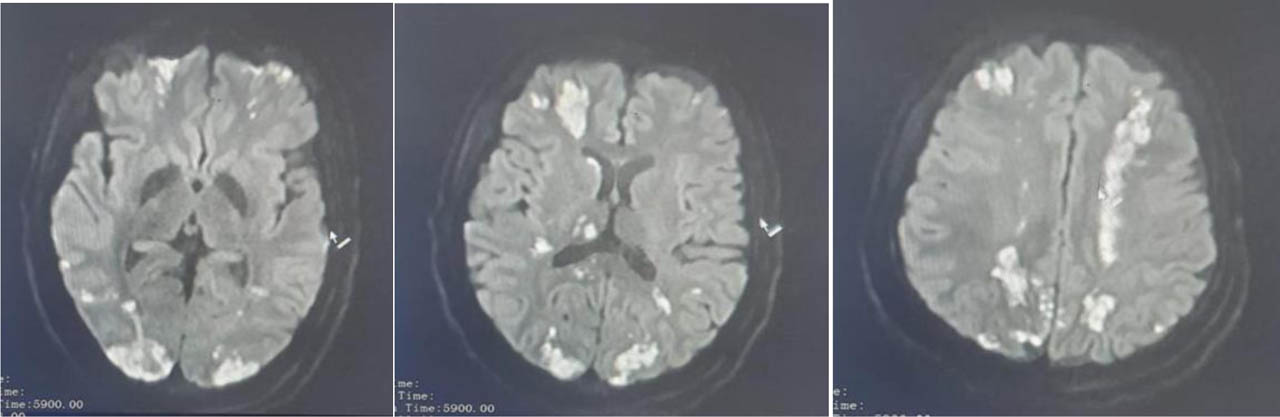
Figure 1,2, 3.
MRI brain showed multiple bilateral infarcts in supratentorial and bilateral cerebral hemispheres watershed infarcts.
CASE 2
A 19-year-old female, who was treated for pulmonary tuberculosis six years ago (at 13 years of age), presented with a one-week history of fever (101 F), non-productive cough, and non-bloody diarrhea (two to three episodes per day).
On examination, she was febrile to touch, with a pulse of 110 beats/min and blood pressure of 110/70 mmHg. Systemic examination revealed multiple cervical lymph nodes and hepatomegaly. Investigations revealed leukocytosis with eosinophilia (Table 1). Ultrasonography of the neck revealed multiple cervical nodes (levels Ib, II, III, IV, and VII) with a maintained fatty hilum, the largest node being in level II on the right side (measuring 2.6 cm). The serial blood counts are shown in Table 1. Bone marrow biopsy revealed marked eosinophilia (58%) (Figure 4). Contrast-enhanced computed tomography of the abdomen revealed hepatosplenomegaly, a few enlarged non-enhancing periportal and peri-pancreatic nodes, and an enlarged left para-aortic node and aorta caval nodes causing anterior upliftment of the inferior vena cava. Within the giant cells, small yeast forms of fungi are seen, highlighted on GMS and PAS stains, showing narrow-based budding, and the capsules of yeast are mucicarmine positive (Figure 5). The diagnosis of mucormycosis was confirmed by histopathological examination (GMS, PAS, and mucicarmine staining) and positive fungal culture. No molecular testing for fungal DNA was conducted. In the context of invasive fungal infection, eosinophilia was considered reactive (secondary) rather than primary HES, since there was no evidence of eosinophil-mediated organ damage and a clear secondary cause was identified.
Table 1
Serial blood counts of the patient
| Hb | TLC | ANC | ALC | PLT | EOS | AEC |
|---|---|---|---|---|---|---|
| 10.4 | 27.82 | 8.59 | 1.95 | 230 | 15.89 | 57.1% |
| 9.4 | 22.94 | 6.78 | 1.88 | 175 | 13.16 | 57.40% |
| 10.2 | 18.43 | 16.39 | 0.94 | 284 | 0.03 | 0.20% |
| 9.20 | 12.06 | 10.95 | 0.57 | 231 | 0.03 | 0.20% |
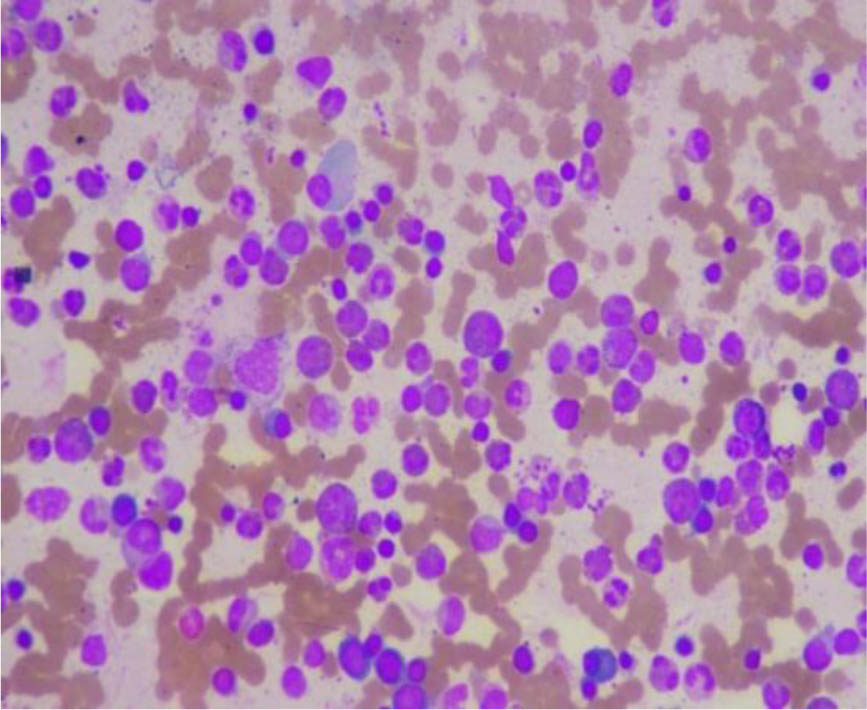
Figure 4.
Bone marrow showing hypereosinophila.
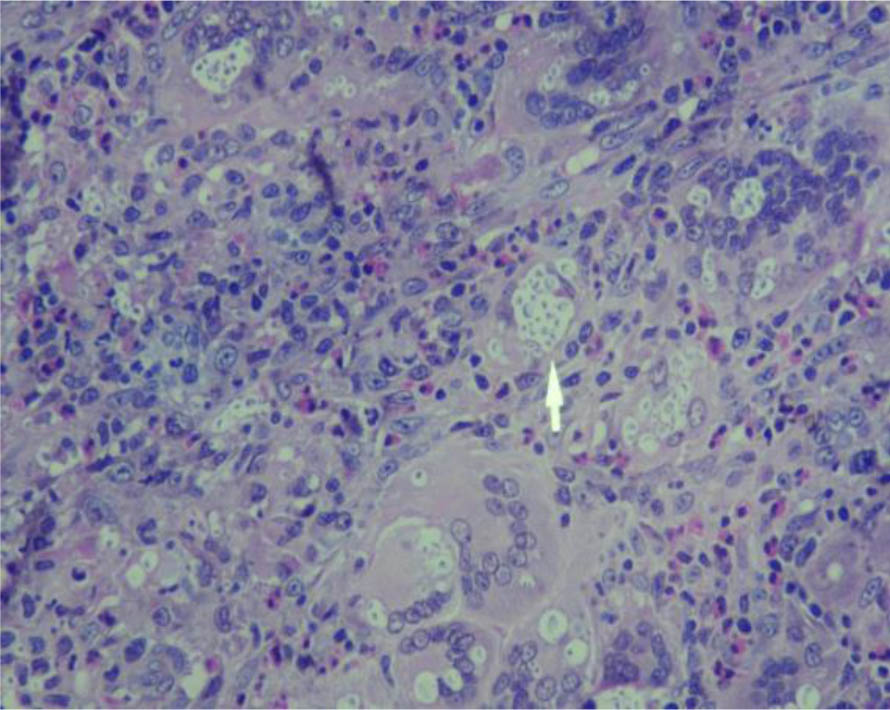
Figure 5.
showing fungal hyphae on lymph node biopsy.
CASE 3
52-year male presented with a three-month history of documented low-grade fever and anorexia and a one-month history of weakness involving the right lower limb, followed by the right and left upper limbs with wrist drop. Investigations revealed normocytic normochromic anemia with eosinophilia (Table 2) and high inflammatory markers (ESR 110 mm/h and CRP 48 ng/μL) with positive anti-myeloperoxidase antibodies (P-ANCA) at 107.82 units (normal range < 20). Nerve conduction studies revealed demyelinating and axonal sensorimotor polyneuropathy, and peroneal nerve biopsy revealed features of vasculitis (Figure 6,7). An extensive evaluation was performed to exclude other causes of vasculitis. Autoimmune testing, including ANA and anti-dsDNA, was negative, ruling out lupus and other connective tissue diseases. Serologies for hepatitis B and C, HIV, and other relevant infections were all negative. There was no history of drug exposure or clinical features suggestive of drug-induced vasculitis in the patient. The blood cultures were sterile. Based on the compatible clinical picture of sensorimotor polyneuropathy, strongly positive p-ANCA/MPO antibodies, supportive nerve biopsy findings, and exclusion of secondary causes or mimics, a diagnosis of microscopic polyangiitis (MPA) was established based on clinical manifestations and laboratory parameters, and the patient was administered high-dose steroids.
Table 2
Serial blood counts of patient with ANCA associated vasculitis
| Hb | TLC | ANC | ALC | MCV | MCH | PLT | AEC | Eo % |
|---|---|---|---|---|---|---|---|---|
| 6.9 | 13.01 | 7.29 | 1.25 | 88.6 | 27.2 | 267 | 3.59 | 27.6% |
| 7.6 | 12.43 | 8.16 | 1.43 | 87 | 28 | 278 | 2.14 | 17.2% |
| 7.4 | 11.90 | 8.21 | 1.32 | 89.6 | 29.6 | 260 | 1.76 | 14.8% |
| 7.6 | 12.07 | 8.04 | 1.58 | 88.0 | 28.5 | 304 | 1.78 | 14.7% |
| 6.7 | 7.48 | 6.09 | 0.93 | 97.8 | 29.5 | 343 | 0.00 | 0 % |
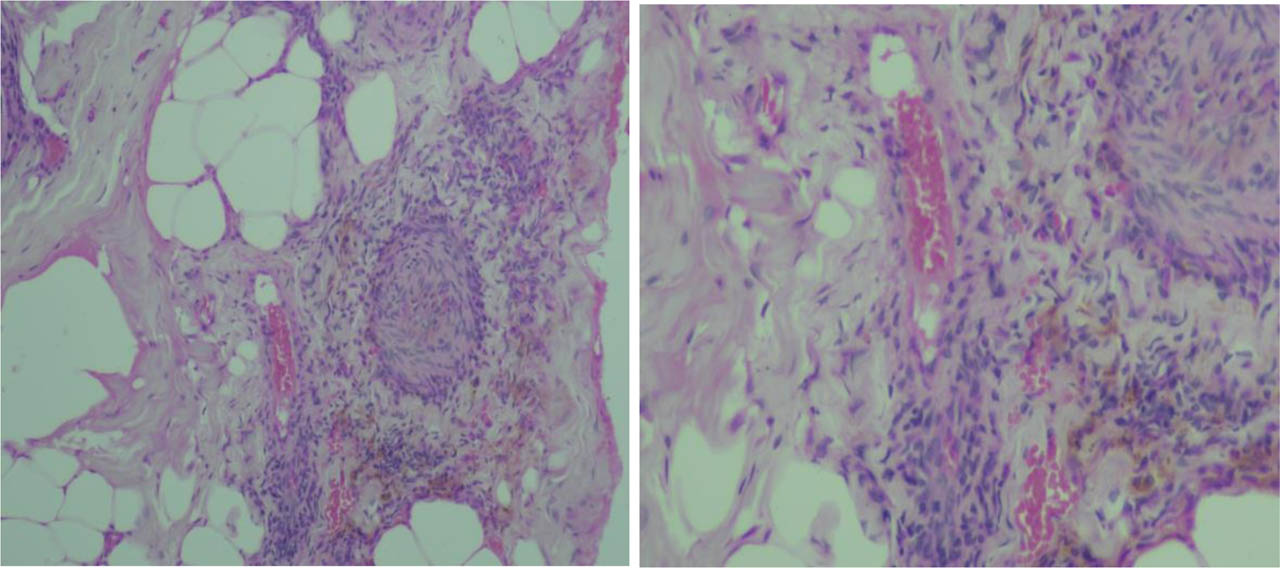
Figure 6, 7.
Nerve biopsy showing infiltration of lymphocytes and eosinophils of vessel wall.
CASE 4
48-year male presented with 10 days history of cough and breathlessness, with a past history of intermittent episodes of mild breathlessness and cough. On examination, the patient was tachypneic, tachycardic, hypoxemic with an oxygen saturation of 84%, irritable with normal blood pressure, and chest examination revealed bilateral diffuse wheeze. Investigations revealed hypereosinophilia on peripheral blood smear (ALC 54%) (Table 1), negative c-ANCA and p-ANCA, normal high-resolution computerized tomography of the chest, and eosinophilia (43%) in the bone marrow (Table 3) with normal rest of lineage. Spirometry could not be performed at presentation due to the patient's severe respiratory distress and hypoxemia (SpO2 84%), making pulmonary function testing unsafe at that time. The diagnosis of asthma was based on the clinical history of recurrent respiratory symptoms, marked peripheral eosinophilia, and prompt response to bronchodilator and corticosteroid therapy. EGPA (eosinophilic granulomatosis with polyangiitis) was considered in the differential diagnosis; however, there were no systemic features, ANCA testing was negative, and imaging showed no evidence of vasculitic involvement. The patient is on beta 2 agonists and corticosteroid inhalations and was doing well.
CASE 5
50-year male presented with a one-week history of acute bacillary dysentery with five to six episodes per day and low-grade, continuous fever associated with nausea and vomiting. On examination, the patient was febrile, tachycardic, and had mild abdominal tenderness. Investigations revealed a leukocyte count of 17000 with 70% eosinophils, with normal hemoglobin and platelet counts. Liver function tests showed mild transaminitis. The patient was initially managed with intravenous antibiotics (ciprofloxacin 500 mg and metronidazole 400 mg twice a day) and anthelmintics (albendazole 400 mg once a day); however, the patient continued to experience dysentery even after two weeks. Subsequent investigations revealed severe esophagitis and gastritis on upper gastrointestinal endoscopy, while eosinophilia (68%) persisted. Lower gastrointestinal endoscopy revealed diffuse erythematous punctate lesions throughout the colon. Bone Marrow examination showed severe eosinophilia (~ 70%), with no evidence of eosinophilic leukemia. Contrast-enhanced computed tomography of the abdomen and pelvis revealed infiltration into the liver, and the Liver biopsy confirmed dense eosinophilic infiltration, consistent with eosinophilic hepatitis. A comprehensive evaluation was performed to exclude the secondary causes of gastrointestinal eosinophilia. Stool examination and serology for parasitic infections were negative, celiac serology and duodenal biopsy excluded celiac disease, colonoscopy and histopathology ruled out inflammatory bowel disease, and there was no history of drug exposure associated with eosinophilia. No infectious or allergic triggers were identified, and the patient was diagnosed with eosinophilic esophagitis and eosinophilic hepatitis. The patient was managed with intravenous high-dose steroids (methylprednisolone 500 mg once daily for five days), followed by oral steroid tapering over six months. Patient symptoms resolved along with laboratory parameters over a period of 3 months and is now off steroids and other for 3 years.
DISCUSSION
Hyper eosinophilic syndrome (HES) encompasses a heterogeneous group of disorders characterized by sustained eosinophilia and associated organ damage. The prevalence has been estimated to be between 0.36 and 6.3 per 100,000, with peak incidence in the 20–50-year age group, although pediatric cases have been reported [1,2,3,4]. The pathogenesis is complex, spanning clonal myeloproliferative disorders, autoimmune diseases, infections, drug reactions, and idiopathic variants; the common pathway is eosinophil-derived mediator release, causing organ injury [3,4,11].
Our series highlights the protean manifestations of eosinophilic syndromes neurological, infectious, vasculitic, respiratory, and gastrointestinal underscoring diagnostic complexity.
Neurological involvement (case 1). HES-related neurologic complications, including ischemic stroke and encephalopathy, occur in a significant minority of patients and can result from thromboembolism, small-vessel vasculitis, or direct tissue infiltration. Prompt corticosteroid therapy frequently produces rapid improvement, as seen in our patient [9,7].
Infectious association (case 2). Although eosinophilia is classically linked to parasitic infections and atopy, marked eosinophilia has been reported in association with invasive fungal infections and other severe infections, reflecting an aberrant or dysregulated immune response; therefore, clinicians must consider infectious causes in the differential diagnosis of hypereosinophilia [15,16].
Vasculitic presentation (case 3). While EGPA is the archetypal eosinophilic vasculitis, overlaps between HES and ANCA-associated vasculitides (including MPA) have been described; careful serologic, histologic, and clinicopathologic correlations are required to classify these patients correctly [17,18].
Pulmonary disease (case 4). Asthma and eosinophilic airway disease are common secondary causes of hypereosinophilia, and distinguishing severe eosinophilic asthma from systemic eosinophilic syndromes affects prognosis and treatment choices [19].
Gastrointestinal or hepatic involvement (Case 5). Eosinophilic GI disease can mimic IBD or infectious colitis and may extend to hepatic infiltration. The response to corticosteroids is usually favorable; however, relapses can occur [10,20,21].
Across these cases, a few themes have emerged. First, a comprehensive diagnostic evaluation is essential, excluding secondary causes (infectious, allergic, drug-induced), assessing clonal markers (including FIP1L1–PDGFRA), and obtaining targeted tissue biopsies when indicated [12,5]. Second, corticosteroids remain the first-line treatment for most presentations; for clonal disease, tyrosine kinase inhibitors (e.g., imatinib) are transformative [5], and biologics (anti-IL-5 agents) are effective options for steroid-refractory or relapsing disease [22]. Outcomes depend on organ involvement and promptness of therapy; some patients recover fully, while others sustain residual deficits (as in case 1).
Limitations. The small case series, variable follow-up duration, and incomplete molecular testing in some patients limit the generalizability of the results. Nevertheless, the diversity of presentations reinforces the need for a high clinical suspicion and multidisciplinary management.
CONCLUSION
Hypereosinophilia represents a spectrum of disorders, of which only a subset qualifies as hypereosinophilic syndromes (HES). HES should be reserved for cases of primary (clonal), idiopathic, or unexplained secondary eosinophilia associated with organ damage. Reactive eosinophilia, such as that associated with infections or allergies, must be carefully distinguished to ensure appropriate classification and treatment.