
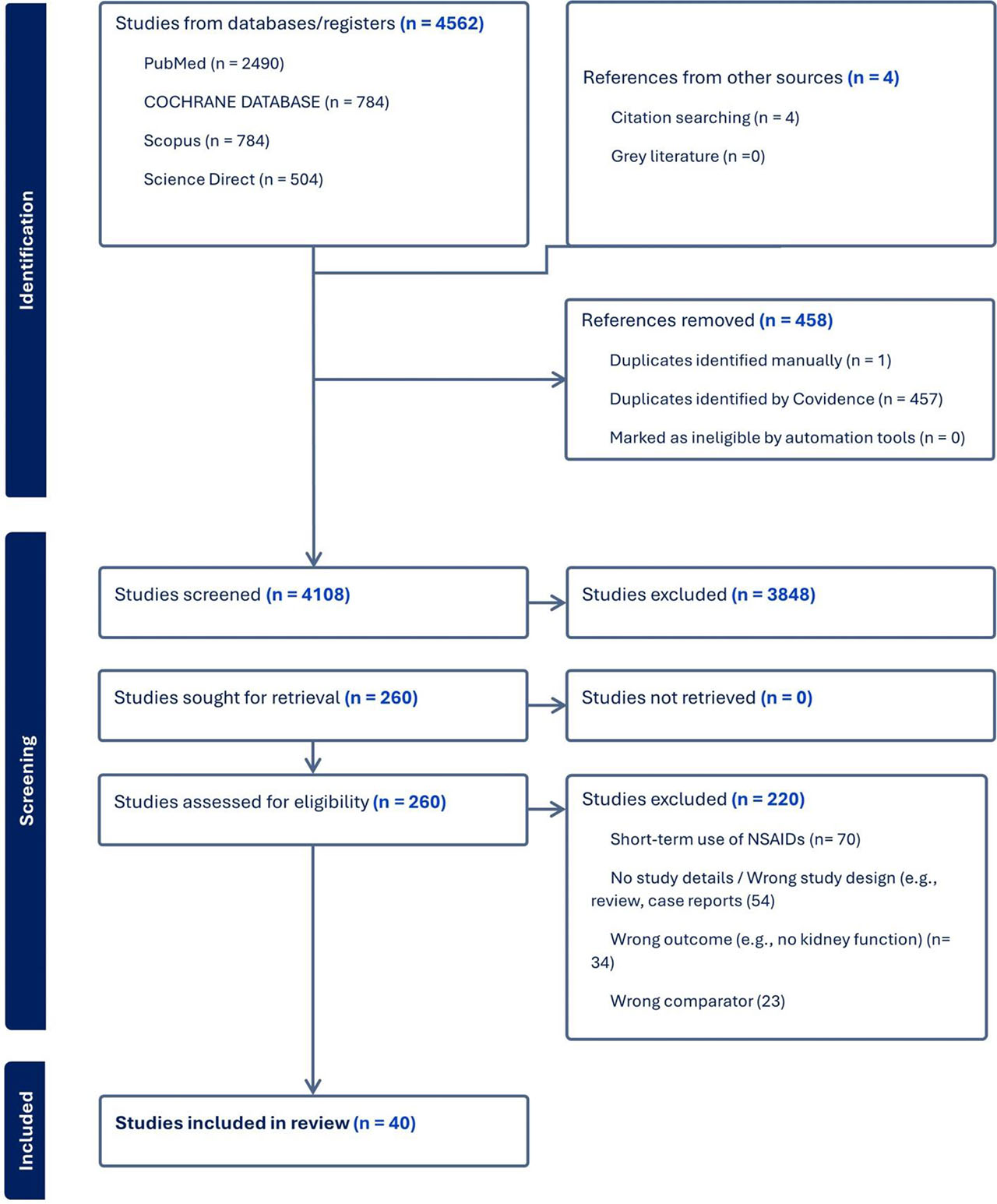
Figure 1.
PRISMA flowchart of study selection.
Table 1
Characteristics of included studies
| Study ID | Population numbers | Country | Year of publication | Aim of study: to determine | Setting | Study design | Start date-End date of the study | Population characteristics | How NSAIDs exposure was assessed | Outcome | Outcome assessment methods |
|---|---|---|---|---|---|---|---|---|---|---|---|
| Agodoa 45 2008 | 996 | United States | 2008 | Habitual analgesic use with decreased kidney function | community based | Cross sectional | 1999–2002 | civilian population 20 years or older | standardized interview | ACR≥ 30 mg/g and/or eGFR< 60 mL/min/1.73 m2 | Creatinine, eGFR (MDRD), ACR |
| Amatruda 14 2021 | 2999 | United States | 2021 | NSAID use with kidney damage in older adults | community based | Cross sectional | 1997–1998 | older adults 70–79 years with preserved physical function | structured interview | ACR≥ 30 mg/g and/or eGFR< 60 mL/min/1.73 m2 | cysC-based CKD-EPI equation; ACR |
| Battelli 44 2015 | 33227 | Republic of San Marino | 2015 | prevalence of NSAID use in patients with kidney damage in year 2013 compared to the general population | community based | Case-control | 2013–2013 | whole population under national health care | Medical records | Non severe renal damage Vs severe | Creatinine; e GFR (CKD-EPI) |
| Chiu 22 2015 | 17376 | Taiwan | 2015 | concomitant drugs of psoriasis and the risk of CKD | community based | Cohort | 2001–2005 | newly diagnosed with psoriasis and psoriatic arthritis | Health Insurance Database | new-onset CKD, ESRD | secondary claim data |
| Chiu 23 2015 | 50316 | Taiwan | 2015 | Risk of developing CKD in patients with RA | community based | Cohort | 2001–2005 | newly diagnosed with RA | Health Insurance Database | new-onset CKD, ESRD | secondary claim data |
| Curhan 19 2004 | 1697 | United States | 2004 | association between lifetime use of aspirin, and NSAIDs and renal function | community based | Cohort | 1989–2000 | Female aged 30–55 years with high life-time use of analgesic | a mailed questionnaire | change in eGFR in 11 years | Estimated creatinine clearance(Cockcroft-Gault formula); e GFR (MDRD) |
| Field 15 1999 | 4999 | United States | 1999 | NSAIDs use in older people and kidney function | community based | Cross sectional | 1981–1989 | older adults aged 70 y or more | by interview | Increased BUN and creatinine | Creatinine, BUN BUN:creatinine ratio |
| Flores 46 2017 | 121 | United States | 2017 | associations to CKD in an urban adult population | A population-based | Cross sectional | 2015–2015 | adult urban residents | questionnaire | Low eGFR | e GFR (MDRD), spot proteinuria (semiquanitative reagent strip) |
| Gooch 16 2007 | 13523 | Canada | 2007 | NSAID use and the progression of CKD in an elderly people | community based | Cross sectional | 2001–2003 | older adults aged 66 years with ≥ 2 serum creatinine measurements | healthcare database | decrease in eGFR of 15 mL/min/1.732 | Creatinine; e GFR (MDRD) |
| Guh 41 2007 | 1740 | Taiwan | 2007 | Herbal Vs NSAIDs therapy and CKD | community based | Cross sectional | 1993–1996 | adults in Nutrition and Health Survey in Taiwan | by interview | eGFR< 60 mL/min/1.73 m2 | e GFR(Cockcroft-Gault) |
| Hanaoka 24 2022 | 423 | Japan | 2022 | CKD in patients with RA and factors that influence CKD progression | community based | Cross sectional | 2000–2016 | patients diagnosed with RA who treated with one bDMARD for >5 years | medical records | eGFR< 60 mL/min/1.73 m2 or >25% decrease in eGFR from baseline | e GFR(MDRD) |
| Hemmelgarn 17 2007 | 10148 | Canada | 2007 | predict rapid progression of kidney dysfunction in elderly | community based | Cohort | 2001–2003 | elderly ≥66 years with ≥2 serum creatinine measurements | provincial administrative data | ≥25% decrease in eGFR from baseline | Creatinine, e GFR (MDRD) |
| Hsu 31 2015 | 94541 | Taiwan | 2015 | NSAID use on the development of CKD in hypertensive patients | community based | Cohort | 2007–2011 | Hypertensive patients aged 20 or more, had 1 admission or 2 outpatient visits and free of CKD | Health Insurance Database | newly diagnosed CKD | medical claims data |
| Hsu 37 2019 | 456 | Taiwan | 2019 | chronic pain and CKD progression in pre-dialysis CKD | community based | Cohort | 2006–2007 | 18–80 y with stable CKD | by interview | CKD stage progression | BUN, Creatinine; eGFR(CKD-EPI) and Proteinuria |
| IBA´ NEZ 32 2005 | 1302 | Spain | 2005 | risk of ESRD associated with the chronic use of NSAID | community based | Case-control | 1995–1997 | advanced CKD patients | by interview using a standardized questionnaire | Entering dialysis | Unclear |
| Ingrasciotta 42 2015 | 10034 | Italy | 2015 | NSAIDs and risk of CKD in a general population | community based | Case-control | 2006 to 2011 | general populations who were registered in the Arianna database | healthcare database | Incident CKD | By using ICD9-CM codes |
| Kaewput 13 2016 | 184 | Thailand | 2016 | COX-2 inhibitors and CKD progression | community based | Cohort | 2009–2014 | >18 years with a diagnosis of CKD | Medical records | Any decrease in eGFR | Creatinine, e GFR (CKD-EPI), spot proteinuria (semiquanitative reagent strip |
| Kang 18 2019 | 24219 | Korea | 2019 | polypharmacy and kidney dysfunction among older patients. | community based | Case-control | 2009–2013 | older adults 65–84 | medical records | decline rate of ≥ 10% compared to the baseline eGFR | e GFR (CKD-EPI) |
| Kuo 38 2010 | 19163 | Taiwan | 2010 | Analgesic use in CKD patients | hospital based | Cohort | 1997–2006 | newly diagnosed CKD | healthcare database | increased risk for ESRD | By using ICD9-CM codes |
| Kurth 21 2003 | 4494 | United States | 2003 | aspirin and chronic kidney disease | community based | Cohort | 1982–1996 | apparently healthy males | questionnaire | Increase creatinine ≥0.3 mg/dl or decrease in eGFR of 29 mL/min/1.732 | Creatinine, e GFR (MDRD) |
| Mackinnon 50 2003 | 7827 | UK | 2003 | the rate of decline in renal function and risk of death or dialysis | hospital based | Cohort | 1989–2003 | Patients diagnosed with AAN | by interview | rate of change of ECC per year | ESTIMATED Creatinine clearance (ECC) |
| Möller 25 2015 | 4101 | Switzerland | 2013 | prolonged NSAID exposure on renal function in (RA) patient | community based | Cohort | 1996–2007 | RA patients | annual visit & phone calls | change of eGFR | e GFR(Cockroft– Gault formula) |
| Mori 26 2017 | 1908 | Japan | 2017 | prevalence of renal dysfunction in rheumatoid arthritis patients | hospital based | Cross sectional | 2014–2015 | Patients with RA | medical records | change of eGFR | e GFR(Cockroft– Gault formula) |
| Morlans 20 1990 | 1305 | Spain | 1990 | risk of ESRD with the regular use of analgesics | Hospital based | Case-control | 1980–1983 | female patients on dialysis | by interview | ESRD | Unclear |
| Murray 40 1990 | 1908 | United States | 1990 | incidence of renal impairment among patients NSAIDs | community based | Cohort | 1975–1986 | general population | medical records | >10% increase of BUN,Creatinine | BUN,Creatinine |
| Nderitu 47 2014 | 3566 | UK | 2014 | the effect of different dose NSAIDs on eGFR decline | community based | Cohort | 2009–2010 | general population | healthcare database | >5mL/min/1.73 m2/year eGFR decrease | e GFR(MDRD) |
| Nelson 49 2019 | 764228 | United States | 2019 | NSAIDs and incident chronic kidney disease | community based | Cohort | 2011–2014 | active-duty US Army soldiers | medical records | Incident CKD | By using ICD9-CM codes |
| Pan 48 2014 | 50316 | China | 2014 | NSAIDs intake and presence of (CKD) | community based | Cross sectional | 2009–2010 | general population | by questionnaire | eGFR< 60 mL/min per 1.73 m2 | e GFR (Cockroft– Gault formula), ACR |
| Perneger 33 1994 | 1900 | United States | 1994 | cumulative intake (in pills) with ESRD | community based | Case-control | 1991–1991 | 20 to 64 y, with advanced CKD | by telephone interview | ESRD | unclear |
| Plantinga 43 2011 | 12065 | United States | 2011 | patterns of NSAID use in CKD patients | community based | Cross sectional | 1999–2004 | adult aged 20 years or older | by questionnaire | eGFR< 60 mL/min per 1.73 m2 | e GFR (MDRD) |
| Sandler 34 1989 | 1070 | United States | 1989 | analgesics and chronic renal disease | community based | Case-control | 1980–1982 | age 30–70 y with newly diagnosed CKD and matched controls | By telephone interview | Renal disease | ICD9-CM codes |
| Sandler 35 1991 | 1070 | United States | 1991 | risk for CKD with regular use of (NSAIDs). | hospital based | Case-control | 1980–1982 | newly diagnosed CKD and matched controls | by telephone interview | Renal disease | ICD9-CM codes |
| Shigidi 29 2021 | 736 | Sudan | 2021 | factors that promote the development and progression of DKD | hospital based | Case-control | 2019–2019 | aged 35 years or above, with T2DM for more than 10 years | Direct interview | eGFR< 60 mL/min per 1.73 m2 | e GFR |
| Sturmer 27 2001 | 802 | Germany | 2001 | effects of NSAID half-life and dosing intervals on renal function | hospital based | Cross sectional | 1995–1996 | patients undergoing total joint replacement because of osteoarthritis under the age of 76 years | Standardized interview | eGFR< 60 mL/min per 1.73 m2 | Creatinine, estimate creatinine clearance |
| Tokoroyama 28 2017 | 107746 | Japan | 2017 | prevalence of CKD | hospital based | Cohort | 2004–2014 | RA patients | medical records | eGFR< 60 mL/min per 1.73 m2 | Proteinuria ≥ +1, e GFR (Cockroft– Gault formula) |
| Tsai 30 2015 | 48715 | Taiwan | 2015 | relationship between NSAIDs and the development of CKD in people with Type 2 diabetes mellitus | hospital based | Cohort | 2007–2011 | adult population with Type 2 diabetes | Healthcare database | CKD development | ICD9-CM codes |
| vanderWoude 36 2007 | 3286 | Germany | 2007 | relation between phenacetin-free analgesics and nephropathy | community based | Case-control | 2001–2004 | advanced CKD under the age of 50 | by Standardized interview | ESRD | unclear |
| WanEYF 51 2021 | 419506 | Hong kong | 2021 | NSAIDs exposure and eGFR | hospital based | Cohort | not mentioned | All individuals with eGFR above or equal 60 ml/min | by interview | incident eGFR, 60 ml/min per 1.73 m2, eGFR decline $30% | e GFR (MDRD) |
| Yarger 12 2011 | 34,295 | United States | 2011 | NSAID use and CKD progression in elderly | community based | Cohort | 2006–2008 | CKD stage 2 or 3 who were elderly (67 years of age) received treatment at a military facility | Healthcare database | CKD progression of stage 2 or 3 | e GFR |
| Zhan 39 2020 | 3939 | United States | 2020 | opioid and NSAID use in patients with CKD | hospital based | Cohort | 2003–2006 | 21–74 years of age with eGFR 20–70 mL/min | by interview | 50% reduction of baseline eGFR or requiring kidney replacement therapy | e GFR(MDRD) |
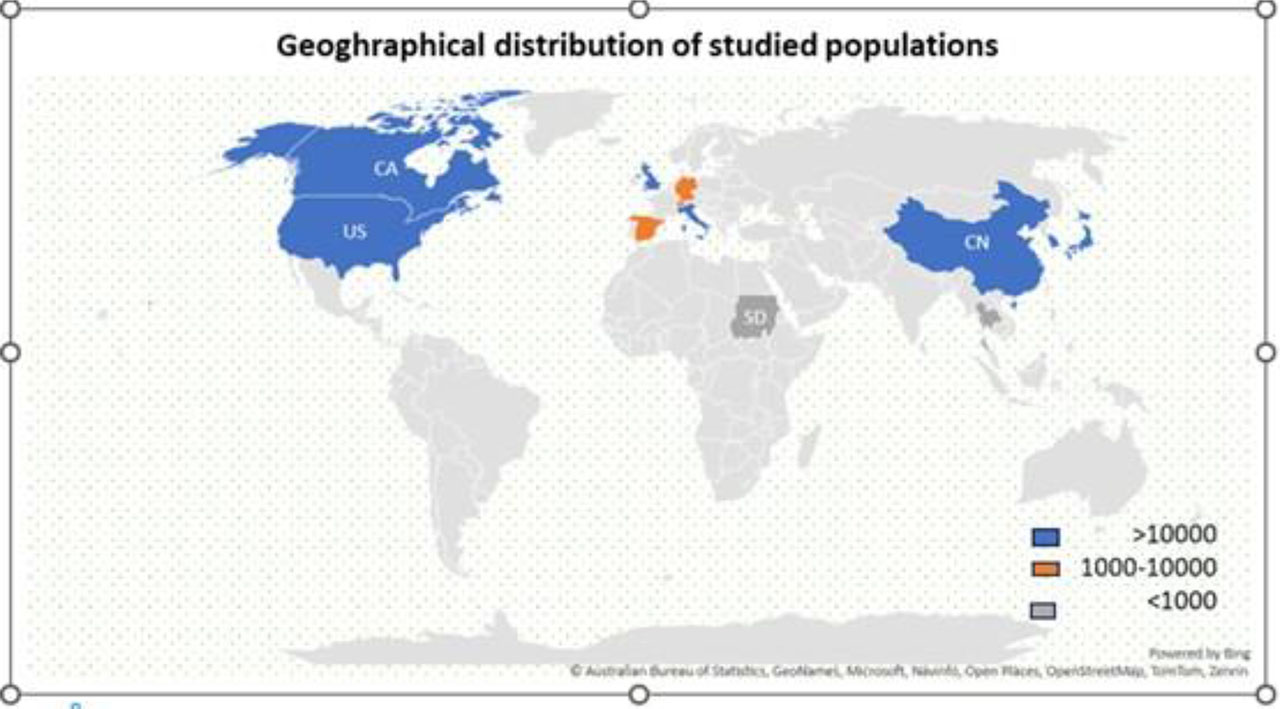
Figure 2.
Geographical distribution of studied populations.
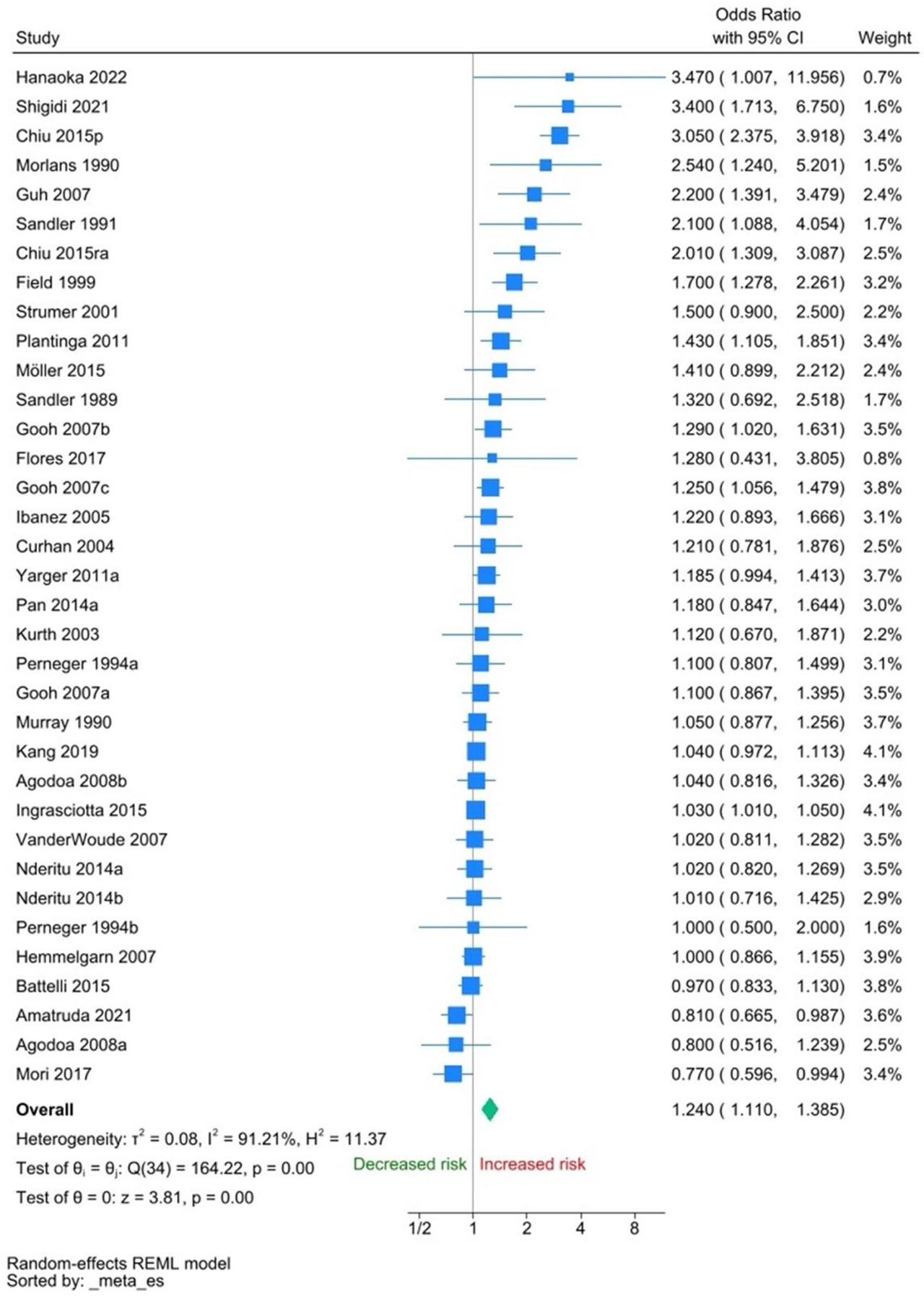
Figure 3.
Forest plot of pooled ORs.
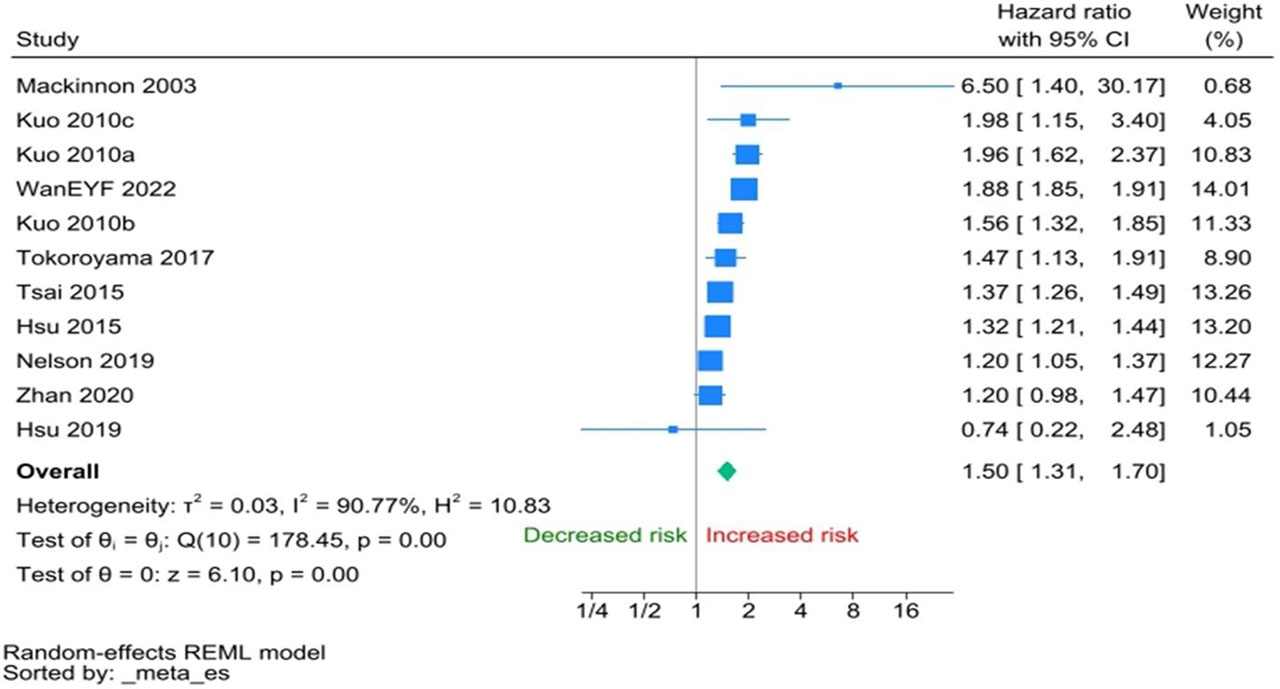
Figure 4.
Forest plot of pooled HRs.
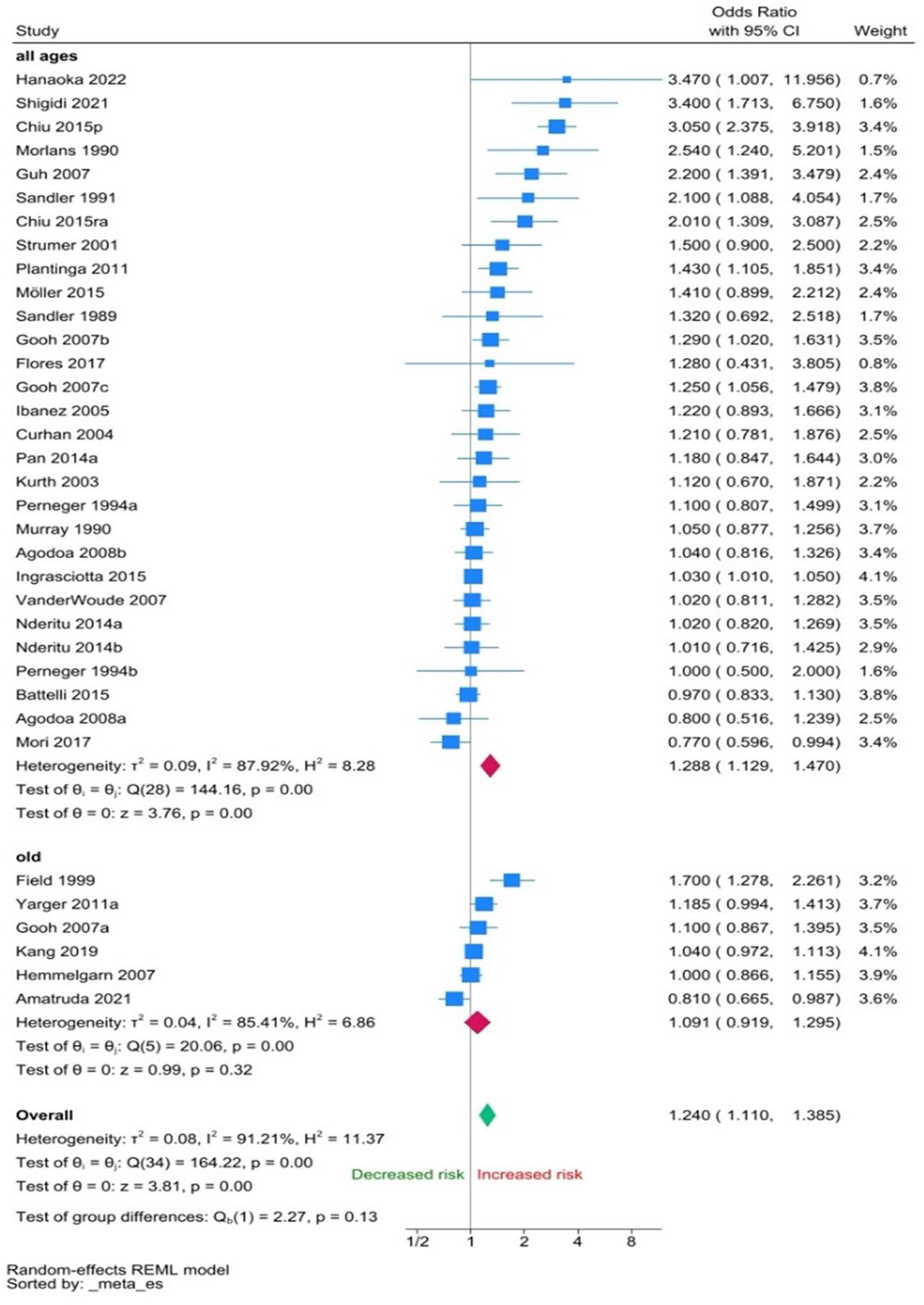
Figure 5.
Forest plot of pooled ORs with subgroup analysis by age.
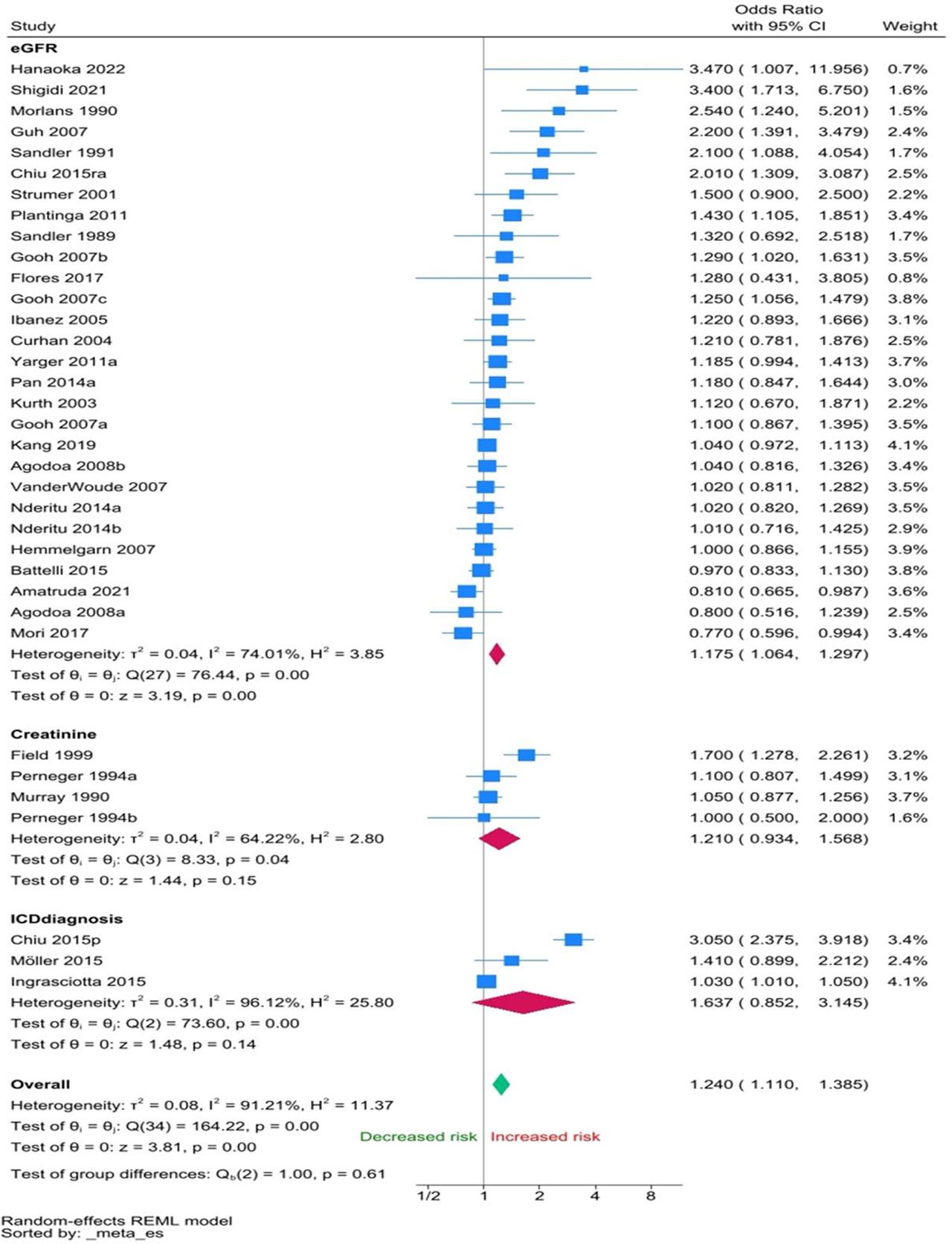
Figure 6.
Forest plot of pooled ORs with subgroup analysis by chronic kidney disease outcome measurement methods.
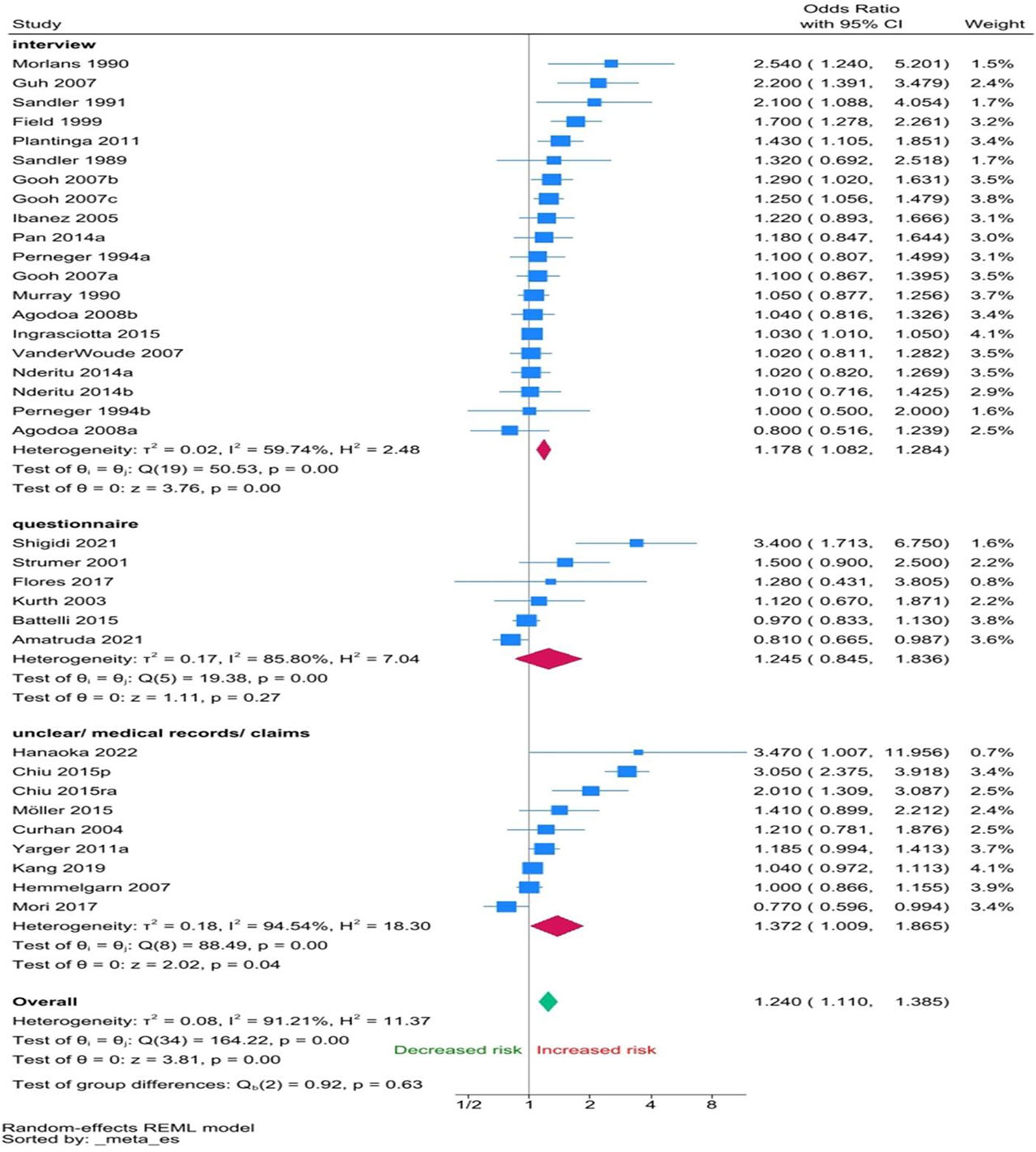
Figure 7.
Forest plot of pooled ORs with subgroup analysis by method of NSAID assessment.
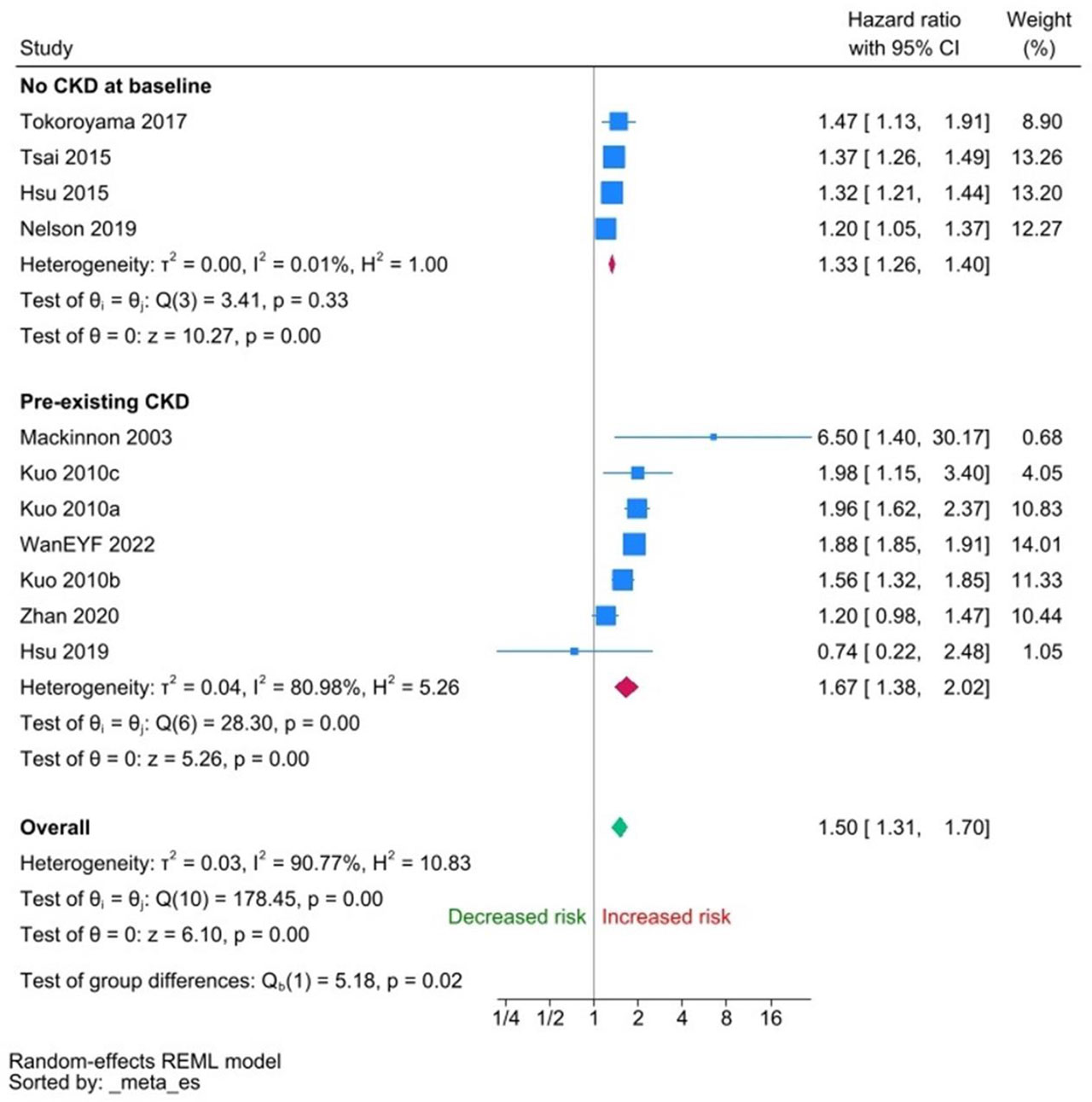
Figure 8.
Forest plot of pooled HRs with subgroup analysis by chronic kidney disease status.
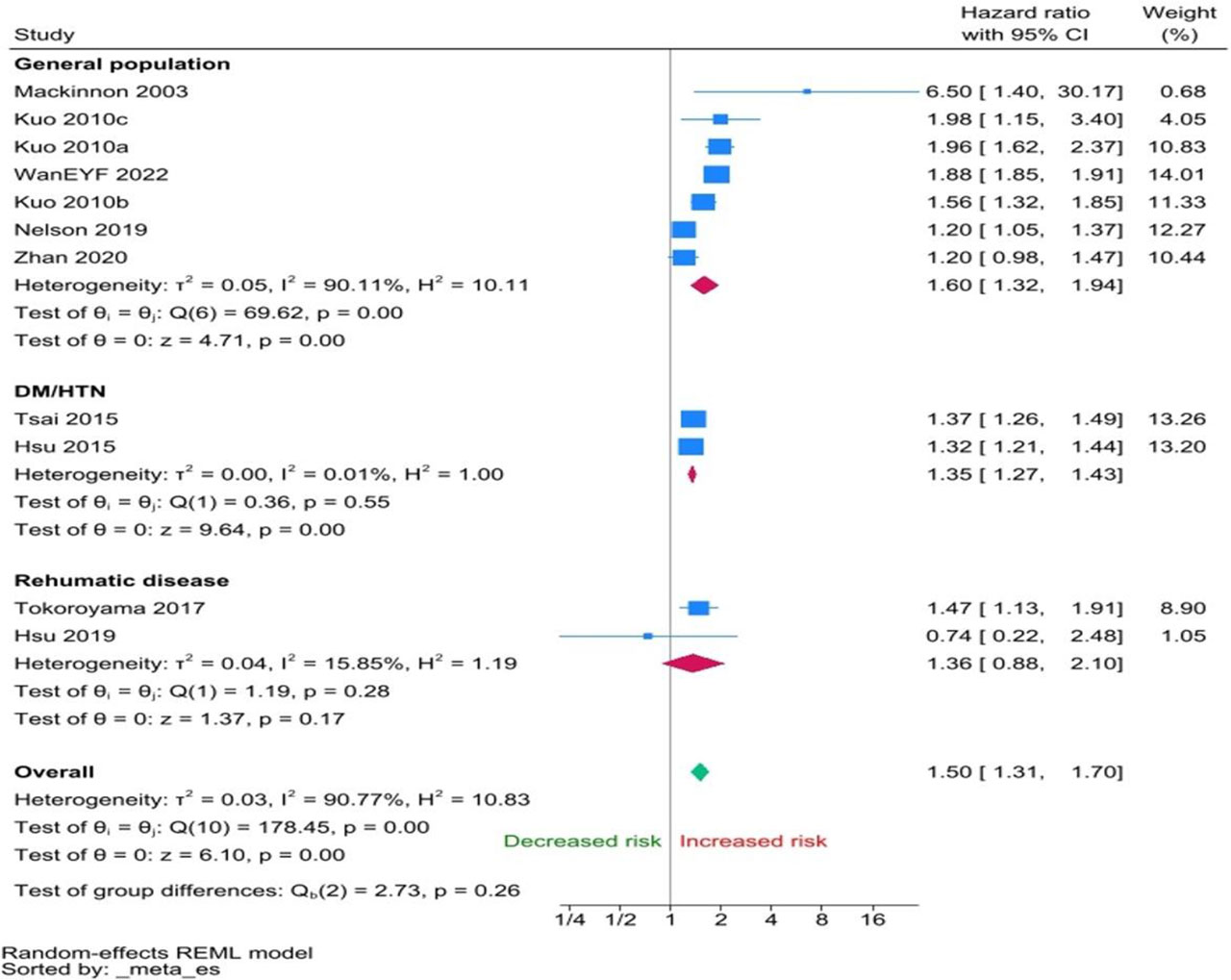
Figure 9.
Forest plot for studies with HR by subgrouping by chronic disease other than CKD.
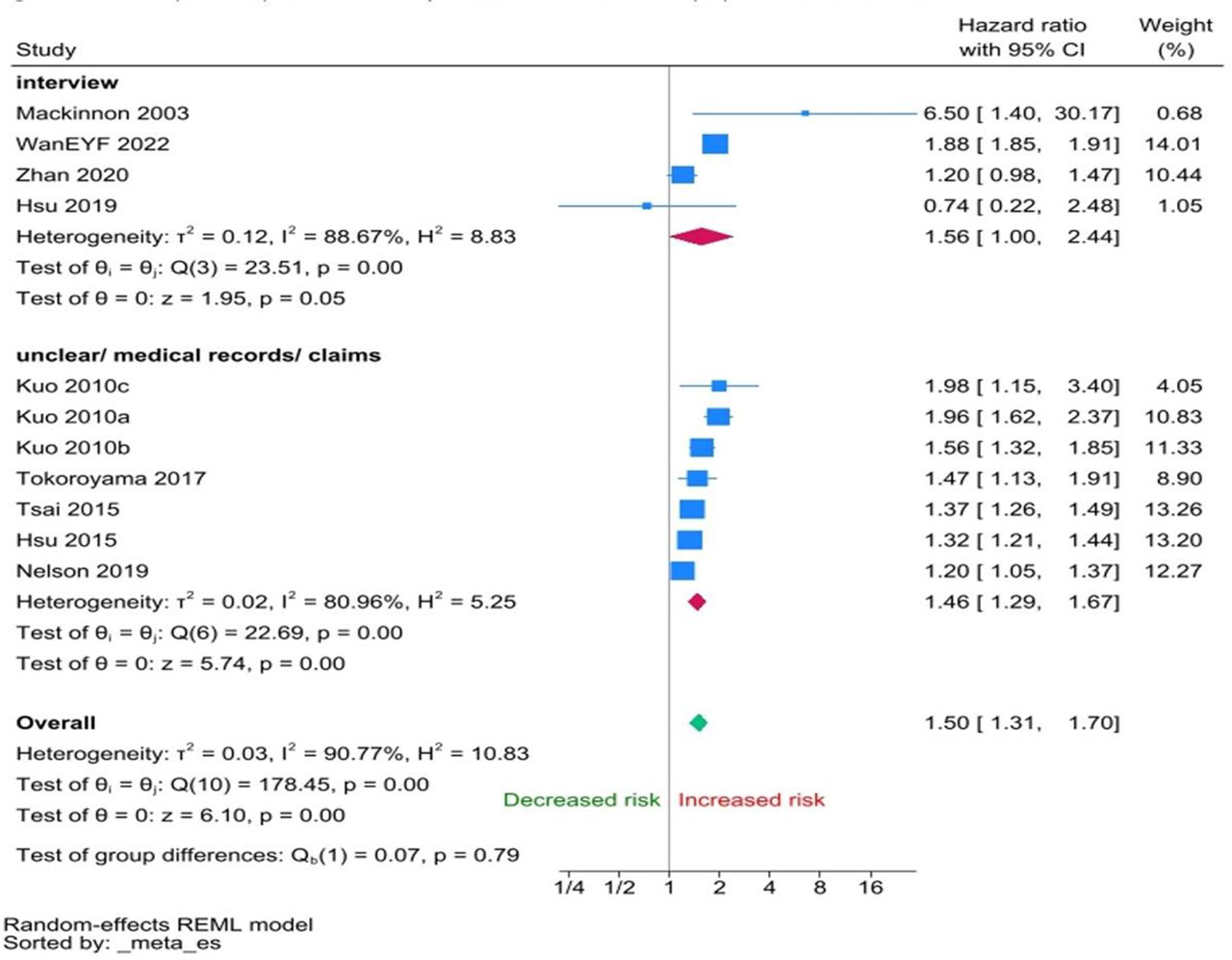
Figure 10.
Forest plot for studies with HR by subgrouping with Method of NSAID assessment.
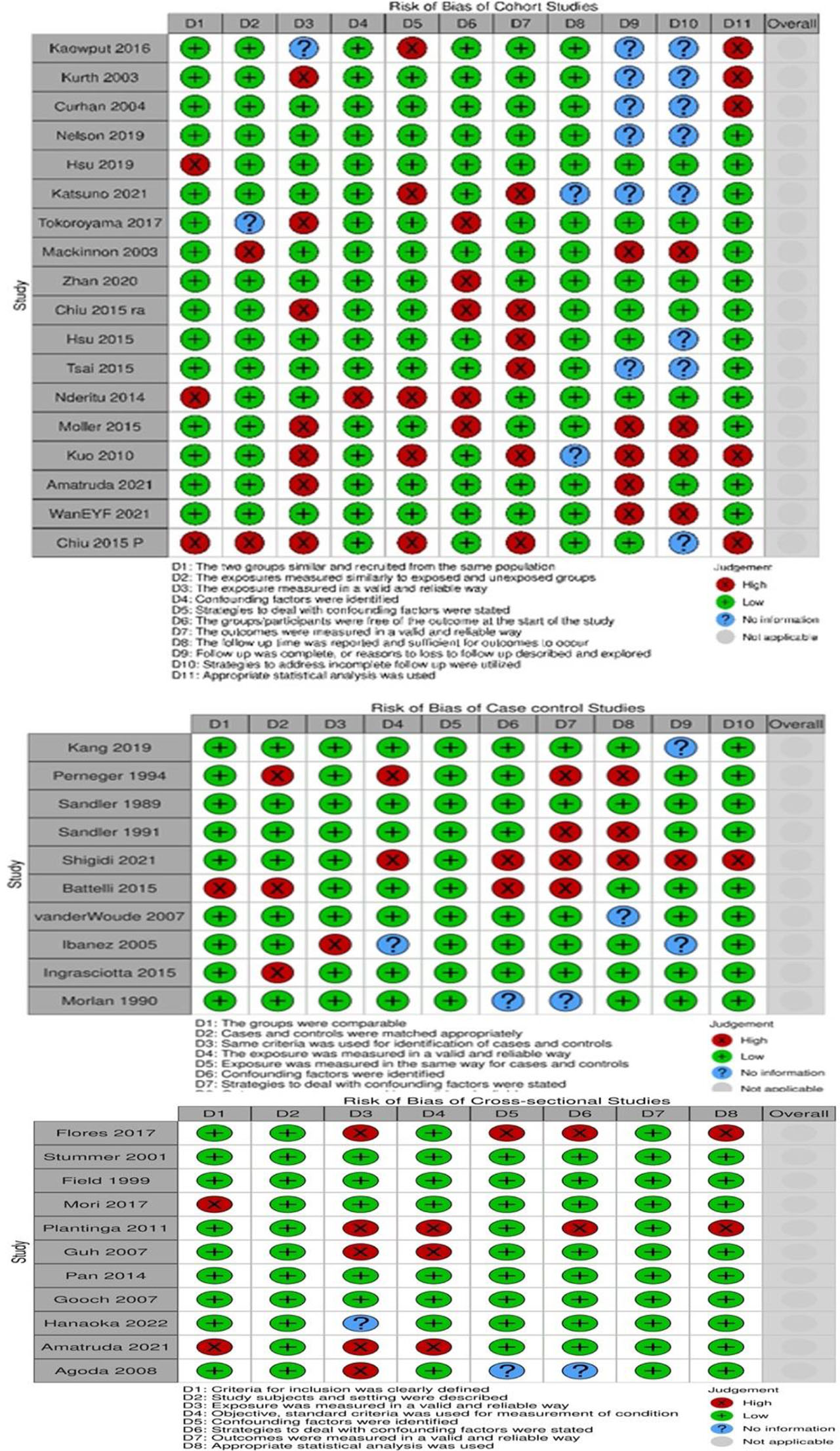
Figure 11.
Risk of bias (by study and by domain).
| Source/database | Search term 1: NSAIDs Use | Search Term 2: (AND) | Search TERM 3: (OR) | Number of entries found |
| Pubmed | (((NSAID*[Title/Abstract]) OR (non-steroidal[Title/Abstract] AND anti-inflammatory[Title/Abstract] AND drugs[Title/Abstract])) OR (nonsteroidal[Title/Abstract] AND antiinflammatory[Title/Abstract] AND drugs[Title/Abstract])) OR (((ANTI-INFLAMMATORY AGENT [Title/Abstract]) OR (ANTI-INFLAMMATORY AGENTS[Title/Abstract])) OR (ANALGESICS[Title/Abstract])) | ((((CKD[Title/Abstract]) OR (Chronic[Title/Abstract] AND Kidney[Title/Abstract] AND Disease[Title/Abstract])) OR (KIDNEY DISEASES[Title/Abstract])) OR (KIDNEY FAILURE[Title/Abstract])) OR (Nephropathy[Title/Abstract]) OR | 2490 | |
| Chocrane database | (nonsteroidal OR non-steroidal OR NSAID*):ti,ab,kw AND (((Long-term OR Chronic OR prolonged OR extended OR continuous) AND use) OR "Long-term effect" OR "long-term toxicity" OR "drug toxicity"OR "adverse effect"):ti,ab,kw | ("Renal function" OR "kidney function" OR "glomerular filtration rate" OR creatinine OR albuminuria OR proteinuria OR EGFR):ti,ab,kw) | 784 | |
| Scopus through Egyptian Knowledge bank | ((((((AB=(CKD)) OR AB=(chronic kidney disease)) OR AB=(chronic renal )) OR AB=(e-GFR)) OR AB=(eGFR)) OR AB=(glomerular AND filtration)) OR AB=(nephropathy) | (((AB=(nsaid*)) OR AB=( non-steroidal OR nonsteroidal)) OR AB=(anti-inflammatory )) OR AB=( anti-inflammatory ) | 784 | |
| Science direct | (nsaids OR non-steroidal OR nonsteroidal OR analgesics | ((((CKD) OR (Chronic AND Kidney AND Disease)) OR (KIDNEY DISEASES)) OR (KIDNEY FAILURE)) | 504 |