
Introduction
Coronary artery bypass grafting (CABG) remains a preferred revascularisation strategy for selected patients with complex coronary artery disease [1]. Conventional on-pump CABG provides a motionless and bloodless operative field but exposes patients to the physiological effects of cardiopulmonary bypass (CPB) and aortic manipulation.
Off-pump coronary artery bypass grafting (OPCAB) avoids CPB and, when combined with an anaortic technique, may minimise aortic manipulation and reduce certain perioperative complications [1,2]. However, its technical complexity has raised concerns about fewer distal anastomoses, incomplete revascularisation, graft patency and conversion to CPB, with outcomes influenced by surgical expertise [1,3,4].
Major randomised trials comparing OPCAB with on-pump CABG have produced heterogeneous findings [5,6,7]. Although OPCAB may reduce a few early complications, uncertainty persists about its long-term outcomes, despite extended follow-up from major trials and recent evidence synthesis [8,9,10]. Differences in patient risk, operative expertise, completeness of revascularisation and follow-up further complicate interpretation.
This systematic review and meta-analysis aimed to compare early and long-term outcomes after off-pump vs on-pump CABG, and was conducted and reported in accordance with the PRISMA 2020 statement [11].
Methods
1. Study design and reporting standards
This systematic review and meta-analysis was conducted and reported in accordance with the PRISMA 2020 guidelines [11]. It aimed to synthesise the available evidence comparing early and long-term clinical outcomes between off-pump (OPCAB) and on-pump (ONCAB) CABG. Because randomised controlled trials (RCTs) and observational cohort studies differ in their susceptibility to confounding and selection bias, design-specific subgroup estimates were prioritised.
2. Literature search strategy
A comprehensive literature search was performed in PubMed, Scopus and the Cochrane Library from database inception to December 2025, and updated till 31 July 2026. The search strategies combined controlled vocabulary (Medical Subject Headings [MeSH], where applicable) and free-text terms related to off-pump coronary artery bypass grafting (OPCAB), on-pump coronary artery bypass grafting (ONCAB), coronary artery bypass grafting and cardiopulmonary bypass. Boolean operators (AND/OR) were used to optimise the search strategy. Additionally, the reference lists of eligible studies were manually screened to identify further relevant publications. No restrictions were applied for geographic location or year of publication. The study-selection process is presented in the PRISMA flow diagram in Figure 1.
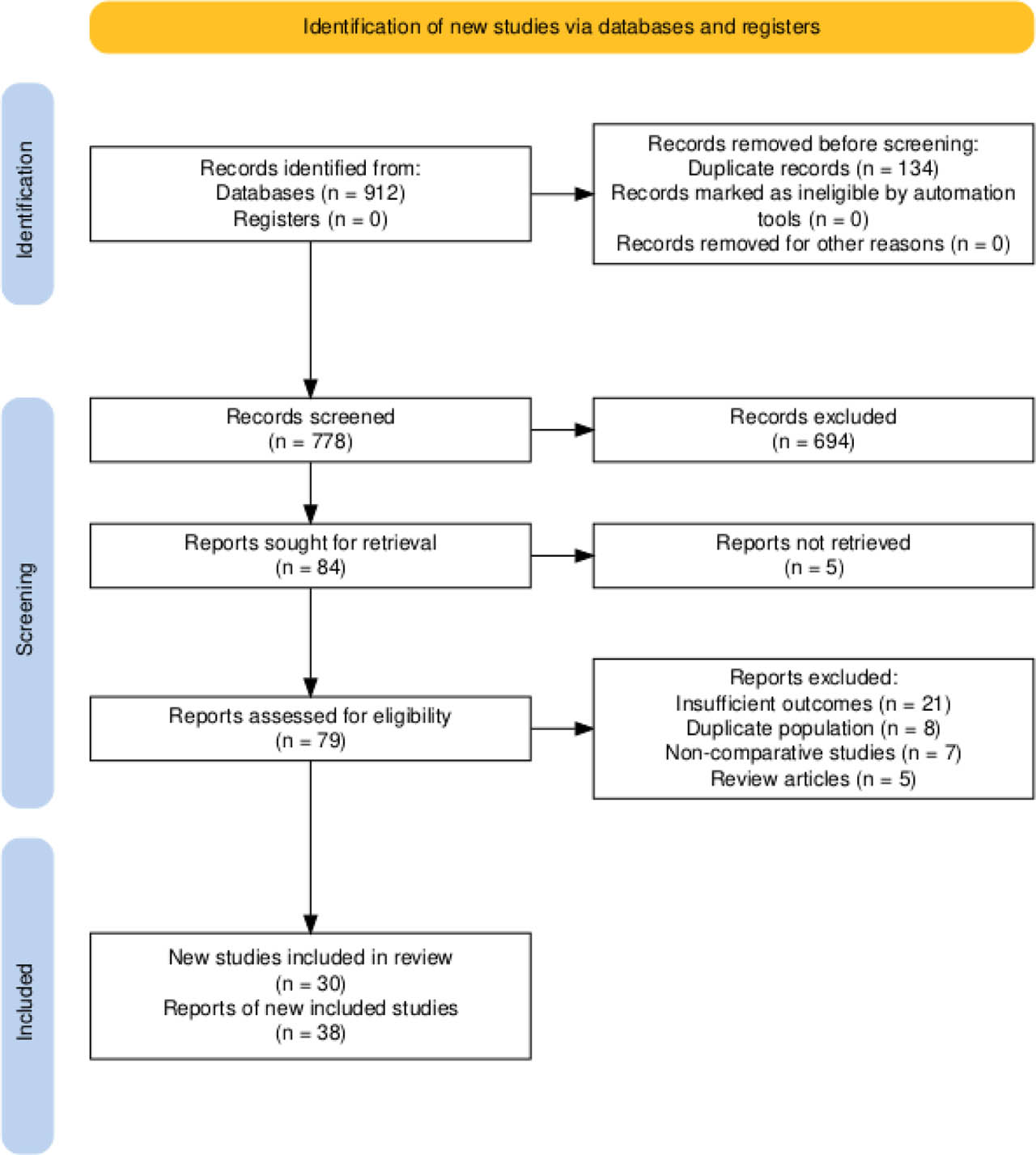
Figure 1 -
PRISMA flow diagram illustrating the study selection process for the systematic review and meta-analysis.
3. Eligibility criteria
Studies were eligible if they met the following criteria: (1) RCTs or observational cohort studies conducted on humans; (2) direct comparison of off-pump (OPCAB) and on-pump (ONCAB) CABG in patients undergoing isolated CABG; (3) reporting of early mortality, long-term mortality or at least one clinically relevant postoperative outcome evaluated in this review, including myocardial infarction (MI), stroke, acute kidney injury, renal failure requiring dialysis, blood transfusion, reoperation for bleeding or intensive care unit (ICU) length of stay; and (4) availability of sufficient numerical data to calculate an effect estimate. Only full-text articles published in English were eligible for inclusion.
Exclusion criteria were as follows: (1) reviews, editorials, letters, case reports, non-comparative series or conference abstracts without sufficient data; (2) studies without comparative OPCAB and ONCAB groups; (3) studies involving concomitant cardiac procedures without separately extractable data for isolated CABG; (4) reports without extractable outcome data; and (5) animal or experimental studies.
4. Overlapping populations and multiple publications
Multiple reports arising from the same trial or cohort were identified by comparing study centres, recruitment periods, sample sizes, participant characteristics and follow-up intervals, and were treated as reports of a single underlying study population. Index publications provided perioperative and procedural data, whereas follow-up publications provided longer-term or complementary outcomes. Participants were not double-counted within any outcome analysis.
5. Data extraction
Two reviewers (N.O. and A.K.) independently screened records, assessed full-text articles for eligibility, and extracted and cross-checked the data. Disagreements were resolved through discussion and consensus. Extracted study characteristics included year of publication, country, study design, recruitment period, total and treatment-group sample sizes, and follow-up duration. Baseline characteristics, including age, sex and relevant comorbidities, were collected when available. Clinical outcomes were extracted separately for the OPCAB and ONCAB groups.
Procedural data included the number of grafts or distal anastomoses, completeness and definition of revascularisation, arterial conduit use, conversion rate, surgeon or centre experience and procedural standardisation (Tables 2A and 2B). Data were extracted as reported, without inference or estimation; medians were not converted to means, and unavailable data were recorded as not reported (NR).
6. Risk of bias assessment
The risk of bias of the included studies was assessed using established design-specific tools. RCTs were evaluated using the Cochrane Risk of Bias 2 (RoB 2) tool across five domains: bias arising from the randomisation process, bias due to deviations from intended interventions, bias due to missing outcome data, bias in measurement of the outcome and bias in selection of the reported result. Observational cohort studies were assessed using the Newcastle–Ottawa Scale (NOS), considering participant selection, comparability of cohorts and outcome ascertainment. Assessments were performed independently by two reviewers, with disagreements resolved through discussion and consensus.
7. Outcomes
The primary outcomes were early mortality and postoperative stroke, as these represent clinically relevant perioperative endpoints following CABG. Early mortality comprised in-hospital, 30-day or operative mortality, according to each study's definition.
Secondary outcomes included MI, acute kidney injury, renal failure requiring dialysis, blood transfusion, reoperation for bleeding, ICU length of stay and long-term all-cause mortality. Long-term mortality was defined as all-cause mortality reported after a minimum follow-up of 1 year. When multiple publications reported outcomes from the same underlying population, the longest eligible follow-up was used without double-counting participants. Study-specific outcome definitions were retained because definitions were not uniform across studies.
8. Statistical analysis
Statistical analyses were performed using Review Manager (RevMan), version 5.4. Dichotomous outcomes were pooled as risk ratios (RRs) with 95% confidence intervals (CIs) using the Mantel–Haenszel random-effects method. Because comparable time-to-event estimates were not consistently available, long-term mortality was synthesised using cumulative event counts at the longest eligible follow-up.
ICU length of stay was pooled as a mean difference (MD) with 95% CIs using an inverse-variance random-effects model. A standardised MD was not required because all contributing studies reported ICU stay in days. Studies reporting ICU length of stay only as medians, without corresponding means and standard deviations, were excluded from the quantitative synthesis of this outcome.
RCTs and observational studies were analysed in separate subgroups because of their differing susceptibility to confounding and selection bias. Design-specific subgroup estimates were prioritised, and any overall estimate combining study designs was interpreted cautiously. Differences between study-design subgroups were examined using RevMan's test for subgroup differences.
Statistical heterogeneity was assessed using the chi-squared test and quantified using the I2 statistic. Studies reporting no events in either treatment group did not contribute to the relative-effect estimate, whereas studies with zero events in only one treatment group were retained and handled using RevMan's default procedures. All statistical tests were two-sided, with P < 0.05 considered as statistically significant.
9. Sensitivity analysis
Leave-one-out sensitivity analyses were conducted to evaluate the robustness of the pooled estimates. Each study was sequentially excluded, and the corresponding pooled effect estimate was recalculated.
Results
1. Study selection
The updated literature search identified 912 records through PubMed/MEDLINE, Scopus and the Cochrane Central Register of Controlled Trials (CENTRAL). Before screening, 134 duplicate records were removed. The remaining 778 records underwent title and abstract screening, of which 694 were excluded. Full-text retrieval was sought for 84 reports; 5 reports could not be retrieved, leaving 79 reports for full-text eligibility assessment. Following the exclusion of 41 reports (insufficient outcomes, n = 21; duplicate populations, n = 8; non-comparative designs, n = 7; review articles, n = 5), 38 reports representing 30 independent studies met the eligibility criteria and were included in the systematic review, with eligible outcome data incorporated into the corresponding quantitative syntheses (Figure 1).
2. Study characteristics
A total of 38 reports representing 30 independent studies were included, comprising 16 RCTs and 14 observational cohort studies. Collectively, the underlying studies included 196,663 unique participants, of whom 67,066 underwent OPCAB and 129,597 underwent ONCAB. The RCTs included 13,441 participants, whereas the observational studies included 183,222 participants.
The included reports were published between 2001 and 2026 and originated from Europe, Asia, North America and South America; one large international trial enrolled participants from 19 countries. Study sample sizes ranged from 104 to 63,047 participants, and follow-up ranged from the perioperative or in-hospital period to 20 years. Multiple reports arising from the BHACAS, SMART, Octopus, MASS III, CORONARY, JOCRI, ROOBY and GOPCABE trials provided complementary perioperative, procedural or extended follow-up data. These reports were linked to their respective underlying trial populations, and participants were not double-counted within any outcome analysis. Detailed characteristics of the included studies and linked reports are presented in Table 1.
Table 1 -
Characteristics of the included studies.
| Study | Country | Study design | Total sample (n) | OPCAB (n) | ONCAB (n) | Age (years) | Male (%) | Follow-up |
|---|---|---|---|---|---|---|---|---|
| A. Randomised controlled trials | ||||||||
| Angelini 2002 (BHACAS I & II)a | United Kingdom | Single-centre RCT (pooled) | 401 | 200 | 201 | 62.2 ± 9.0 | 82.2 | Mean 25.0 ± 9.1 months (BHACAS I); 13.7 ± 5.5 months (BHACAS II) |
| van Dijk 2001 (Octopus)b | The Netherlands | Multicentre RCT | 281 | 142 | 139 | 61.3 ± 9.0 | 68.5 | Mean 37 ± 8 days |
| Nathoe 2003 (Octopus, 1-year)b | The Netherlands | Multicentre RCT | 281 | 142 | 139 | 61.3 ± 9.0 | 68.5 | 1 year |
| Puskas 2004 (SMART) | USA | Single-centre RCT | 200 | 100 | 100 | 62.4 | 77.2 | 1 year |
| Gerola 2004 | Brazil | Multicentre RCT | 160 | 80 | 80 | 58.81 ± 9.31 | 65.6 | Perioperative (in-hospital)f |
| Khan 2004 | United Kingdom | Single-centre RCT | 104 | 54 | 50 | 63 | 87.4 | 3 months |
| Straka 2004 | Czech Republic | Single-centre RCT | 400 | 208 | 192 | 63 | 81.3 | 30 days |
| Kobayashi 2005 (JOCRI)e | Japan | Multicentre RCT | 167 | 81 | 86 | 59.5 ± 8.7 | 86.8 | >30 days |
| Shroyer 2009 (ROOBY)c | USA | Multicentre RCT | 2203 | 1104 | 1099 | 62.8 ± 8.5 | 99.4 | 1 year |
| Hueb 2010 (MASS III) | Brazil | Single-centre RCT | 308 | 155 | 153 | 60.9 | 79.0 | 5 years |
| Møller 2010 (BBS) | Denmark | Single-centre RCT | 341 | 177 | 164 | 75.9 ± 5.1 | 64.3 | 30 days |
| Lemma 2012 (ON-OFF) | Italy and Switzerland | Multicentre RCT | 411 | 208 | 203 | 73.5 | 69.3 | 30 days |
| Lamy 2012 (CORONARY) | International (19 countries) | Multicentre RCT | 4752 | 2375 | 2377 | 67.6 ± 6.8 | 80.9 | 30 days |
| Houlind 2012 (DOORS) | Denmark | Multicentre RCT | 900 | 450 | 450 | Median 75 | 77.0 | 6 months |
| Diegeler 2013 (GOPCABE)d | Germany | Multicentre RCT | 2539 | 1271 | 1268 | 78.5 ± 3.0 | 68.5 | 1 year |
| Diegeler 2019 (GOPCABE, 5-year)d | Germany | Multicentre RCT (long-term follow-up) | 2539 | 1271 | 1268 | 78.5 ± 3.0 | 68.5 | Median 5 years |
| Quin 2022 (ROOBY, 10-year)c | USA | Multicentre RCT (long-term follow-up) | 2203 | 1104 | 1099 | 62.8 ± 8.5 | 99.4 | 10 years |
| Forouzannia 2023 | Iran | Single-centre RCT | 274 | 137 | 137 | 61.4 ± 9.3 | 78.7 | Median 31.2 months (range 24.6–35.2) |
| Tadokoro 2023 (JOCRIED, long-term follow-up)e | Japan | Multicentre RCT (long-term follow-up) | 167 | 81 | 86 | 59.5 ± 8.7 | 86.8 | 13.8 ± 2.8 years |
| Koop 2024 (Octopus, 20-year)b | The Netherlands | Multicentre RCT (long-term follow-up) | 281 | 142 | 139 | 61.3 ± 9.0 | 68.5 | 20 years |
| B. Observational studies | ||||||||
| Williams 2005 | USA | Single-centre observational cohort | 5667 | 641 | 5026 | 63.5 ± 11.6 | 69.8 | Median 2.6 years (98% complete) |
| Palmer 2007 | USA | Multicentre prospective observational cohort | 1251 | 597 | 654 | 63.5 | 69.9 | 12 months |
| Hannan 2007 | USA | Multicentre registry-based cohort (statewide) | 49,830 | 13,889 | 35,941 | 66.5 | 72.1 | 3 years |
| Chu 2009 | USA | Nationwide retrospective observational cohort (database) | 63,047 | 14,389 | 48,658 | 66.0 ± 10.9 | 70.6 | In-hospital |
| Murzi 2011 | United Kingdom | Single-centre propensity score-matched cohort | 1096 | 548 | 548 | 66.0 | 80.5 | Mean 50.5 ± 31.2 months (OPCAB); 54.4 ± 34.1 months (ONCAB) |
| Kirmani 2019 | United Kingdom | Single-centre retrospective propensity score-matched cohort | 10,293 | 1974 | 8319 | 64.9 ± 9.6 | 80.4 | Median 7.44 years |
| Matkovic 2019 | Serbia | Single-centre retrospective propensity score-matched cohortg | 302 | 143 | 159 | 63.6 ± 8.4 | 72.8 | Median 44 months (range 1–72) |
| Deutsch 2021 | Germany | Single-centre retrospective propensity score-matched cohort | 8981 | 6649 | 2332 | 67.4 ± 9.6 | 80.3 | Median 6.76 years (95% complete) |
| De Abreu 2022 | Portugal | Single-centre propensity score-weighted cohorth | 4788 | 1616 | 3172 | 63.9 ± 9.9 | 80.1 | Median 12.80 years (IQR 9.62–16.20; 100% complete) |
| Numata 2022 | Japan | Multicentre registry-based propensity score-matched cohort | 7724 | 5574 | 2150 | NRi | 79.0 | 7 years |
| Wang 2022 | China | Single-centre retrospective propensity score-matched cohort | 1200 | 771 | 429 | 60.3 ± 9.0 | 75.8 | 30 days |
| Park 2022 (Korean national cohort) | South Korea | Nationwide registry-based propensity score-matched cohort | 23828 | 12639 | 11189 | NRi (matched 63.5) | NRi (matched 68.9) | Median 5.3 years (max 13.2; 100% complete) |
| Cubas 2024 | Peru | Single-centre retrospective propensity score-matched cohort | 2280 | 455 | 1825 | 65.6 | 59.4 | 36 months |
| Pikkujämsä 2026 | Finland | Single-centre retrospective propensity score-matched cohort | 2935 | 439 | 2496 | Median 70 (OPCAB); 68 (ONCAB) | 75.3 | Median 12.3 years (IQR 8.0–17.1; max 24.9) |
BBS, Best Bypass Surgery trial; BHACAS, Beating Heart Against Cardioplegic Arrest Studies; CORONARY, CABG Off or On Pump Revascularization Study; DOORS, Danish On-pump vs Off-pump Randomisation Study; GOPCABE, German Off-Pump Coronary Artery Bypass Grafting in Elderly Patients; IQR, interquartile range; JOCRI, Japanese Off-pump Coronary Revascularization Investigation; MASS, Medicine, Angioplasty, or Surgery Study; max, maximum; mo, month(s); NR, not reported; ONCAB, on-pump coronary artery bypass grafting; OPCAB, off-pump coronary artery bypass grafting; RCT, randomised controlled trial; ROOBY, Randomised On/Off Bypass; SD, standard deviation; SMART, Surgical Management of Arterial Revascularization Therapies; yr, year(s).
a Angelini 2002 is a pooled analysis of two single-centre RCTs (BHACAS I and BHACAS II); follow-up duration is reported separately for each trial.
b van Dijk 2001, Nathoe 2003 and Koop 2024 report the same Octopus trial population (n = 281); Nathoe 2003 (1-year) and Koop 2024 (20-year) are follow-up analyses and do not represent additional patients.
c Shroyer 2009 and Quin 2022 report the same ROOBY trial population (n = 2203); Quin 2022 is the 10-year follow-up and does not represent additional patients.
d Diegeler 2013 and Diegeler 2019 report the same GOPCABE trial population (n = 2539); Diegeler 2019 is the 5-year follow-up and does not represent additional patients.
e Kobayashi 2005 and Tadokoro 2023 report the same JOCRI/JOCRIED trial population (n = 167); Tadokoro 2023 is the long-term follow-up and does not represent additional patients.
f Gerola 2004: outcomes assessed perioperatively (in-hospital), with mortality ascertained through 30 days after discharge.
g Matkovic 2019: prospectively collected data analysed retrospectively with propensity matching.
h De Abreu 2022: propensity-score overlap weighting.
i Numata 2022: age reported only in categories in the source publication; a mean was NR.
j Park 2022: age and sex were NR for the full unmatched cohort; values in parentheses are for the propensity score-matched cohort.
Table 2A -
Procedural characteristics of the included studies. Grafting and completeness of revascularisation.
| Study | Design | Sample size (OPCAB/ONCAB) | Mean grafts per patient (OPCAB vs ONCAB) | Mean distal anastomoses (OPCAB vs ONCAB) | Completeness of revascularisation, OPCAB | Completeness of revascularisation, ONCAB | Definition of complete revascularisation |
|---|---|---|---|---|---|---|---|
| A. RCTs (n = 20; representing 16 independent trials) | |||||||
| Angelini 2002 (BHACAS I & II)a | Pooled single-centre RCTs (Bristol) | 200/201 | NR (categorical 1/2/3/4 only) | NR | NR | NR | NR |
| van Dijk 2001 (Octopus)b | Multicentre RCT (3 Dutch centres) | 142/139 | 2.4 (1.0)/2.6 (1.1), P = 0.05 | 2.4/2.6 | 83% (per plan) | 83% (per plan), P = 0.98 | Grafting per pre-randomisation treatment plan (planned vs actual distal anastomoses) |
| Nathoe 2003 (Octopus, 1-year)b | Same Octopus cohort (multicentre RCT) | 142/139 | 2.4/2.6 (as van Dijk) | As van Dijk | 83% (per plan) | 83% (per plan) | Per-plan; also total arterial revascularisation (84% off/76% on) |
| Puskas 2004 (SMART) | Single-surgeon single-centre RCT (Emory) | 100/100 (197 analysed) | 3.39 (1.04)/3.40 (1.08) | NR | 1.00 (0.18) | 1.01 (0.09) | Index of completeness = grafts performed ÷ intended |
| Gerola 2004 | Multicentre RCT (Brazil) | 80/80 | 1.77 (0.68)/1.81 (0.60), P = 0.833 | NR | NR | NR | NR |
| Khan 2004 | Single-centre RCT (2 surgeons; ≥3 grafts required) | 54/50 (103 analysed) | 3.1/3.4, P = 0.41 (planned 3.2/3.6, P = 0.003) | NR | 0.99 (SE 0.02) | 0.95 (SE 0.02), P = 0.16 | Index = grafts performed ÷ planned |
| Straka 2004 | Single-centre RCT (Prague; 400 non-selected) | 208/192 (204/184 peri-op) | NR | 2.3/2.7, P < 0.001 (totals 465/484) | NR | NR | NR |
| Kobayashi 2005 (JOCRI)e | Multicentre RCT (5 centres; multiple arterial) | 81/86 | 3.5 (1.0)/3.6 (0.9); arterial 3.3/3.4, P = 0.21 | NR | 98% | 98% (P > 0.99) | Completed ÷ planned grafts |
| Shroyer 2009 (ROOBY)c | Multicentre, single-blind RCT (18 US VA centres) | 1104/1099 | 2.9 (0.9)/3.0 (1.0), P = 0.002 (planned 3.0 both) | NR | 17.8% fewer grafts than planned | 11.1% fewer grafts than planned, P < 0.001 | Grafts performed vs surgeon-planned (incomplete = fewer than planned) |
| Hueb 2010 (MASS III) | Single-centre RCT (InCor, São Paulo) | 155/153 | 2.49/2.97, P < 0.001 | 2.60/3.18, P < 0.001 | NR | NR | No formal completeness index; LCx grafted 66% vs 82% (P = 0.002) |
| Møller 2010 (BBS) | Single-centre RCT (Rigshospitalet; high-risk, elderly) | 176/163 | 3.22 (0.72)/3.34 (0.76), P = 0.11 | NR | 65.3% | 67.5% (P = 0.73) | Complete revascularisation reported; definition not specified |
| Lemma 2012 (ON-OFF) | Multicentre RCT (7 Italian + 1 Swiss; high-risk) | 208/203 | NR (anastomoses reported) | Total 3.0 (1.1)/3.3 (1.0), P = 0.001; arterial 1.7 (0.9)/1.6 (0.8); venous 1.5 (1.0)/2.0 (1.0) | ‘did not differ’ (no%) | ‘did not differ’, P = 0.241 | Incomplete revascularisation = planned vs performed distal anastomoses (gap larger off-pump, P < 0.0001) |
| Lamy 2012 (CORONARY) | Multicentre RCT (79 centres, 19 countries) | 2375/2377 | 3.0/3.2, P < 0.001 | NR | 11.8% incomplete | 10.0% incomplete, P = 0.05 | Surgeon assessment at time of surgery |
| Houlind 2012 (DOORS) | Multicentre RCT (elderly > 70 y) | 450/450 | 2.9 (0.9)/3.1 (1.0), P = 0.007 (≥4 grafts 24%/33%) | NR | NR | NR | NR |
| Diegeler 2013 (GOPCABE)d | Multicentre RCT (12 German institutions; ≥75 y) | 1187/1207 (analysed) | Performed 2.7/2.8 (anticipated 2.9/3.0) | NR | 34.0% incomplete | 29.3% incomplete, P < 0.001 | Anticipated (mandatory pre-randomisation) vs performed grafts |
| Diegeler 2019 (GOPCABE 5-year)d | 5-year follow-up of multicentre RCT (12 German institutions; ≥75 years) | 1179/1191 | As Diegeler 2013 | As Diegeler 2013 | 34.0% incomplete | 29.3% incomplete | Anticipated (mandatory pre-randomisation) vs performed grafts |
| Forouzannia 2023 | Single-centre RCT (Tehran; 3-vessel; single surgeon) | 137/137 randomised (129/134 analysed) | 3.5 (0.6)/3.5 (0.6), P = 0.901 | NR | 100% (all proposed grafts completed) | Same as planned | Performed = pre-operatively proposed grafts |
| Quin 2022 (ROOBY 10-year)c | 10-year follow-up of multicentre, single-blind RCT (18 US VA centres) | 1104/1099 | As Shroyer 2009 | As Shroyer 2009 | 17.8% fewer grafts than planned | 11.1% fewer grafts than planned | Performed vs surgeon-planned grafts (same as parent trial) |
| Tadokoro 2023 (JOCRIED; 15-years FU)e | Long-term follow-up of JOCRI (Kobayashi 2005) | 61/62 (123/167 with 15-year follow-up) | As Kobayashi 2005 | As Kobayashi 2005 | 95%/96% (reported in JOCRIED) | 95%/96% (reported in JOCRIED) | Complete myocardial revascularisation achieved in all major diseased territories |
| Koop 2024 (Octopus 20-years FU)b | Registry-linked 20-year follow-up of the OctoPump RCT | 128/129 (registry-linked cohort) | As van Dijk 2001 | As van Dijk 2001 | 83% (per plan) | 83% (per plan) | As van Dijk (per treatment plan) |
| B. Observational studies (n = 14) | |||||||
| Williams 2005 | Single-centre retrospective, propensity score-adjusted (Duke) | 641/5026 | NR (grafts/diseased vessel 1.12/1.16, P < 0.001) | NR | NR | NR | No formal definition (grafts/diseased-vessel proxy) |
| Palmer 2007 (CARE Registry) | Multicentre prospective registry (8 community hospitals) | 597/654 | 2.9 (1.2)/3.4 (1.0), P < 0.001 | Arterial anastomoses 1.15 ± 0.70/1.15 ± 0.63, P = 0.92 | NR | NR | Anastomoses-to-diseased-vessel ratio (1.02 vs 1.06; P = 0.23) |
| Hannan 2007 | Statewide registry (NY CSRS); risk-adjusted, propensity score-and exact-matched | 13,889/35,941 (matched 23,530) | NR | NR | NR | NR | NR (not measured) |
| Chu 2009 | Retrospective Nationwide Inpatient Sample (US administrative database) | 14,389/48,658 | NR | NR | NR | NR | NR |
| Murzi 2011 | Single-centre retrospective cohort, propensity score-matched (left main stem disease) | 1297/1078 (matched 548/548) | 2.7 (0.7)/3.0 (0.7), P = 0.001 | Used to compute completeness index | 88.3% | 92% (P = 0.04) | No. distal anastomoses vs no. diseased coronary arteries |
| Kirmani 2019 | Single-centre retrospective cohort, propensity score-matched (1:1; 1:2 & 1:3 sensitivity analyses) | 1974/8319 (matched 1863/1863) | 2.39 (0.72)/2.75 (0.48), P < 0.001 | NR | NR | NR | No formal definition (fewer off-pump grafts = possible incomplete) |
| Matkovic 2019 | Single-centre retrospective, propensity score-matched | 143/159 (matched 143/143) | No. of grafts: 1/2/3 grafts = 14.0/15.4/70.6% vs 6.3/15.1/78.6% (P = 0.077) | NR | NR | NR | NR |
| Deutsch 2021 | Single-centre retrospective cohort, propensity score-matched (Bochum) | 6649/2332 (matched 1857/1857) | NR | 2.88 (0.80)/2.74 (0.83), P < 0.001 (more off-pump) | 19.2% incomplete (ratio < 1.0) | 28.3% incomplete (ratio < 1.0), P < 0.001 | Revascularisation ratio = distal anastomoses ÷ diseased coronaries; incomplete = ratio <1.0 |
| de Abreu 2022 | Retrospective regional cohort, propensity score overlap-weighting (N Portugal) | 1616/3172 | NR | 2.53 (0.70)/2.77 (0.72) | NR | NR | Not measured (background concern only) |
| Numata 2022 | Japanese nationwide multicentre registry (JCVSD, 41 high-volume institutions), propensity score-matched | 5574/2150 (matched 2007/2007) | NR (distal-anastomosis subgroups) | NR (subgroups ≥4, =3, ≤3) | See comments | See comments | No. distal anastomoses (subgroup analysis) |
| Wang 2022 | Single-centre retrospective, propensity score-matched (Wuhan) | 771/429 (matched 404/404) | 2.5 (1.0)/2.7 (0.9), P < 0.001 | 3.4 ± 1.0 vs 3.6 ± 0.9, P = 0.066 | 12.4% incomplete | 8.2% incomplete, P < 0.049 | Incomplete revascularisation reported; formal definition not provided. |
| Park 2022 (Korean Nationwide) | Nationwide claims registry (NHIS), propensity score-matched + multivariable | 23,828 total (matched 6483 pairs) | NR | NR | NR | NR | Not available; administrative claims registry lacked procedural detail. |
| Cubas 2024 | Single-centre retrospective, propensity score-matched (Lima, Peru) | 423/423 (matched) | NR | Reported (1–2 vs ≥3 distal anastomoses); no mean distal anastomosis count. | NR | NR | NR |
| Pikkujämsä 2026 | Single-centre retrospective, propensity score-matched 1:2 (Finland) | 439/2496 (matched 402/804) | NR (medians only) | Median distal anastomoses: OPCAB 3 (2–3) vs ONCAB 4 (3–5); mean NR | NR (OPCAB had fewer distal anastomoses) | Lower incomplete | Inferred from distal anastomosis number; no formal completeness definition |
BBS, Best Bypass Surgery trial; CSRS, Cardiac Surgery Reporting System; JOCRI, Japanese Off-pump Coronary Revascularization Investigation; MASS, Medicine, Angioplasty, or Surgery Study; NHIS, National Health Insurance Service; NR, not reported; ONCAB, on-pump coronary artery bypass grafting; OPCAB, off-pump coronary artery bypass grafting; RCT, randomised controlled trial; ROOBY, Randomized On/Off Bypass; SE, standard error; SMART, Surgical Management of Arterial Revascularization Therapies; VA, veterans affairs.
Table 2, is presented in two coordinated panels. Both panels include the same studies in the same order, with each study appearing once in each panel.
a Angelini 2002 reports the combined results of the BHACAS I and BHACAS II trials, which represent two independent randomised trials.
b van Dijk 2001, Nathoe 2003 and Koop 2024 report the same Octopus trial cohort. Nathoe 2003 presents the 1-year outcomes, whereas Koop 2024 reports the 20-year registry-linked follow-up; these publications do not represent additional independent trial populations.
c Shroyer 2009 and Quin 2022 report the same ROOBY trial cohort. Quin 2022 presents the 10-year follow-up and does not represent an additional independent trial population.
d Diegeler 2013 and Diegeler 2019 report the same GOPCABE trial cohort. Diegeler 2019 presents the 5-year follow-up and does not represent an additional independent trial population.
e Kobayashi 2005 (JOCRI) and Tadokoro 2023 (JOCRIED) report the same trial cohort. Tadokoro 2023 presents the long-term follow-up and does not represent an additional independent trial population.
Table 2B -
Technical conduct, expertise, conversions and procedural standardisation.
| Study | Sample size (OPCAB/ONCAB) | Arterial conduit use | Conversion rate | Surgeon/centre experience | Procedural standardisation | Comments |
|---|---|---|---|---|---|---|
| A. RCTs | ||||||
| Angelini 2002 (BHACAS I & II) | 200/201 | LIMA→LAD 93–99%; other arterial pooled | 2 OPCAB→ONCAB (BHACAS 1) | Predominantly single surgeon (stabiliser designer) | On-pump warm blood cardioplegia; off-pump shunt/reusable stabiliser | ITT. Grafts reported categorically only; no mean graft count or completeness reported. |
| van Dijk 2001 (Octopus) | 142/139 | Total arterial 84%/76%, P = 0.07; LAD 98/96% | OPCAB→CPB 7.7% | Surgeons experienced in both | Octopus suction stabiliser; on-pump St Thomas cold cardioplegia | ITT; per-plan completeness equal. |
| Nathoe 2003 (Octopus, 1-year) | 142/139 | Total arterial 84%/76% | 10 off→on, 1 off→PCI, 5 on→off (94% per randomisation) | Surgeons experienced in both | As van Dijk | Row retained for unique 1-year angiographic patency substudy (91% off-pump vs 93% on-pump graft patency). |
| Puskas 2004 (SMART) | 100/100 (197 analysed) | LIMA/RIMA/radial/SVG used,%-use NR (radial patency 26/34 vs 22/22) | 1 OPCAB→ONCAB; 3 ONCAB allocation→OPCAB | Single surgeon; >350 prior OPCAB cases; >90% isolated CABG performed off-pump | Medtronic Octopus II/III + deep pericardial sutures; printed protocols | Completeness index ≈1.0 in both arms. |
| Gerola 2004 | 80/80 | LIMA→LAD used 98.7%/97.5%; SVG other territories | NR | NR | Off-pump stabiliser all + intraluminal shunt for RCA; on-pump cold blood cardioplegia | Very low graft number (~1.8). |
| Khan 2004 | 54/50 (103 analysed) | Radial 74%/55%, P = 0.04; LIMA→LAD standard | 2 OPCAB→ONCAB (VT; intramyocardial LAD) | Low prior off-pump experience (13% of caseload) | Octopus stabiliser; off-pump shunts; half-dose heparin off-pump; hand-sutured; surgeon-stratified | Lower overall graft patency off-pump (88% vs 98% at 3 months). |
| Straka 2004 | 208/192 (204/184 peri-op) | LIMA + great saphenous standard; other NR | Pre-op crossover 5.4% both groups; intra-op conversion: OPCAB→ONCAB 9.8%, ONCAB→OPCAB 1.1% | 4 surgeons experienced both; could change technique post-randomisation | FloCoil intraluminal shunt; Trendelenburg; methoxamine | ITT; fewer distal anastomoses with OPCAB (2.3 vs 2.7), potential incomplete revascularisation. |
| Kobayashi 2005 (JOCRI) | 81/86 | Arterial grafts 94%/97%; LIMA 34/31%, RIMA 11/16%, radial 41/42%, GEA 8/3%; anaortic 84% OPCAB | 0 (none off→CPB) | Collectively >200 OPCABs pre-study; >90% CABG off-pump; high expertise | Anaortic no-touch off-pump | Parent trial of JOCRIED (Tadokoro 2023). |
| Shroyer 2009 (ROOBY) | 1104/1099 | LIMA→LAD patency 95.3%/96.2%; SVG patency 76.6%/83.8%; radial grafts analysed (n = 112) | OPCAB→ONCAB 12.4%; ONCAB→OPCAB 3.6% | ≥20 prior OPCAB required; mean 120 (median 50); residents primary surgeon 55.4% vs 64.0% | Single-blind; standardised planning | Landmark; off-pump fewer grafts, more incomplete, lower patency. |
| Hueb 2010 (MASS III) | 155/153 | Arterial grafts 91% vs 89%; LITA 98/94%, RITA 20/30%, radial 17/18%, GEA 6/4% | 3 OPCAB→ONCAB (1.9%) | Experienced in both techniques; single centre | Octopus stabiliser; cold crystalloid cardioplegia | Fewer grafts & anastomoses off-pump. |
| Møller 2010 (BBS) | 176/163 | LIMA→LAD 95/93%; other conduits NR | Crossover 4.5%/3.7% | 3 surgeons, each ≥50% CABG off-pump | Octopus & Starfish stabilisers; on-pump cold cardioplegic arrest | Similar overall graft number; fewer lateral-wall grafts off-pump (0.97 vs 1.14, P = 0.01). |
| Lemma 2012 (ON-OFF) | 208/203 | Arterial/venous split only; per-conduit NR | OPCAB→ECC 3.8%; ECC→OPCAB 7.9% | Consultants trained both; ‘plateau of learning curve’; dedicated surgeon per technique | Expertise-based trial; dedicated surgeon for each technique | Similar completeness; fewer venous and total distal anastomoses with OPCAB. |
| Lamy 2012 (CORONARY) | 2375/2377 | Per-conduit NR (supplementary appendix); median sternotomy all | OPCAB→ONCAB 7.9%; ONCAB→OPCAB 6.4% | >2 years’ experience and >100 procedures in the assigned technique; expertise-based trial | Pre-specified surgeon qualification | Largest expertise-based RCT; fewer grafts and slightly more incomplete revascularisation with OPCAB. |
| Houlind 2012 (DOORS) | 450/450 | LIMA→LAD 91%/93%; other arterial limited in both arms | OPCAB→CCABG 13.3%; CCABG→OPCAB 2.6% | Consultant surgeons; eligibility required ≥25 OPCAB procedures with circumflex marginal grafting | ITT | Elderly (>70 years); highest OPCAB conversion rate (13.3%) among major RCTs; fewer grafts with OPCAB. |
| Diegeler 2013 (GOPCABE) | 1187/1207 (analysed) | Per-conduit NR; commercial stabilisers off-pump | OPCAB→ONCAB 9.7%; ONCAB→OPCAB 5.1% | Dedicated study surgeons; median prior experience 322 OPCAB and 578 ONCAB CABG procedures | Mandatory anticipated-graft specification | Mandatory anticipated-graft planning before randomisation; fewer grafts and more incomplete revascularisation with OPCAB. |
| Diegeler 2019 (GOPCABE 5-year) | 1179/1191 | As Diegeler 2013 | As Diegeler 2013 | As Diegeler 2013 | As Diegeler 2013 | 5-year follow-up; incomplete revascularisation associated with lower long-term mortality irrespective of operative technique (HR 1.19, 95% CI = 1.01–1.39). |
| Forouzannia 2023 | 137/137 randomised (129/134 analysed) | LIMA→LAD all cases; SVG other; radial/RIMA NR | 0 | Single ultra-high-volume surgeon (>10,000 off-pump, >5000 on-pump/25 years) | Same surgeon both arms; fast-track anaesthesia | Identical graft number and complete planned revascularisation in both groups; no conversions. |
| Quin 2022 (ROOBY 10-year) | 1104/1099 | As Shroyer 2009 | As Shroyer 2009 | As Shroyer 2009 | As Shroyer 2009 | 10-year follow-up; no significant difference in all-cause mortality (34.2% vs 31.1%), but shorter freedom from death/revascularisation after OPCAB. |
| Tadokoro 2023 (JOCRIED; 15-year FU) | 61/62 (123/167 with 15-year follow-up) | Multiple arterial conduits; no-touch aorta 85% OPCAB, 84% ONCAB | 0 (as parent) | Single experienced surgeon/hospital (>200 OPCABs pre-JOCRI) | As Kobayashi 2005 | 15-year follow-up; survival 77.7% vs 75.3% (P = 0.85); MACCE-free survival 62.5% vs 55.6%. |
| Koop 2024 (Octopus 20-year FU) | 128/129 (registry-linked cohort) | As van Dijk (total arterial 84/76%) | As van Dijk (7.7%) | Experienced (as parent) | As parent | Procedural characteristics unchanged from parent trial; 20-year registry-linked follow-up showed no difference in mortality or repeat revascularisation. |
| B. Observational studies | ||||||
| Williams 2005 | 641/5026 | IMA graft 92.7%/92.0%, P = 0.591 | NR – not captured; converted counted as CABG-CPB | Single centre; 14 surgeons (10 performed OPCAB; 3 performed most OPCAB cases) | Propensity score-adjusted observational study | As-treated (not ITT); conversions not recorded. |
| Palmer 2007 (CARE Registry) | 597/654 | Arterial anastomoses equal; per-conduit NR | OPCAB→ONCAB 3.9% | All surgeons trained/experienced in both; technique at discretion | Registry; surgeon-discretion technique (heterogeneous) | Fewer vein grafts off-pump; similar completeness by anastomosis-to-diseased-vessel ratio. |
| Hannan 2007 | 13,889/35,941 (matched 23,530) | NR (OPCAB via median sternotomy) | ITT; 226 conversions (1.63%) | High-volume surgeon subgroup (upper quartile; ≥50% OPCAB use) | Registry study | Registry study; no procedural characteristics beyond mean anastomoses and conversion. |
| Chu 2009 | 14,389/48,658 | NR | NR | NR (hospital-level only) | Administrative (ICD-9) | Administrative database; no procedural characteristics available (ICD-9 coding). |
| Murzi 2011 | 1297/1078 (matched 548/548) | Per-conduit NR | NR | Single high-volume UK tertiary centre | Standardised anaesthetic and surgical protocol; propensity matching | Lower completeness index (1.0 vs 1.1; P = 0.001) despite similar 10-year survival. |
| Kirmani 2019 | 1974/8319 (matched 1863/1863) | NR | NR – limitation: conversions not captured | 3 dedicated OPCAB surgeons (≈2/3 practice off-pump); 7 surgeons total | Propensity matching; standardised institutional practice | Fewer grafts off-pump despite improved 10- and 15-year survival. |
| Matkovic 2019 | 143/159 (matched 143/143) | LIMA + RIMA (in situ/Y) + SVG; bilateral IMA; per-conduit NR | NR | 4 OPCAB surgeons (>250 prior OPCABs each); all surgeons > 700 CABG and > 1000 cardiac operations | ITT; surgeon discretion; standardised institutional protocol | Higher-risk OPCAB cohort; no difference in long-term survival, MACCE or repeat revascularisation. |
| Deutsch 2021 | 6649/2332 (matched 1857/1857) | Total arterial revascularisation 26.9%/7.7% (unmatched) | OPCAB→ONCAB 3.2%; ONCAB→OPCAB 0.4% (ITT) | High-volume centre; surgeon experience included in propensity score model | ITT; propensity score matching; explicit revascularisation ratio | Lower incomplete revascularisation and more distal anastomoses with OPCAB despite similar 10-year survival. |
| de Abreu 2022 | 1616/3172 | IMA: bilateral 52.7%/17.9%; single 46.7%/78.4%; none 0.7%/3.7% | NR | Dedicated and experienced surgical teams (institutional practice) | Propensity score overlap weighting; adjustment for IMA use and distal anastomoses | More bilateral IMA use but fewer distal anastomoses with OPCAB; identical 10-year survival after overlap weighting. |
| Numata 2022 | 5574/2150 (matched 2007/2007) | Bilateral IMA in propensity score model; per-conduit NR | OPCAB→ONCAB 2.3% (46 cases); ITT | 41 high-volume institutions (>50 CABG/year); experienced OPCAB centres | ITT; JCVSD standardised definitions; propensity score matching | Incomplete revascularisation adversely affected 7-year survival only in OPCAB; no overall survival difference between techniques. |
| Wang 2022 | 771/429 (matched 404/404) | LIMA + SVG ± radial artery; per-conduit use NR | ITT (conversions retained in OPCAB); rate NR | Experienced (>500 on-pump, >200 off-pump each) | Propensity score matching | Experienced surgeons; despite this, incomplete revascularisation remained more frequent with OPCAB. |
| Park 2022 (Korean Nationwide) | 23,828 total (matched 6483 pairs) | Conduit choice unavailable in claims registry. | ITT using reimbursement-based identification of conversions; conversion rate NR. | Nationwide; prespecified high-volume-centre sensitivity analysis. | Propensity score matching + multivariable Cox + IPTW sensitivity analysis. | No procedural variables available (grafts, conduits, completeness); higher long-term mortality, MI and repeat revascularisation after OPCAB. |
| Cubas 2024 | 423/423 (matched) | IMA described; conduit distribution NR. | NR | High-volume national referral cardiac surgery centre. | Propensity score matching + multivariable analyses + Kaplan–Meier survival analysis. | First Peruvian CABG registry; detailed perioperative outcomes with MACCE follow-up to 36 months; limited reporting of procedural characteristics (no mean grafts or completeness). |
| Pikkujämsä 2026 | 439/2496 (matched 402/804) | LIMA preferred for LAD; RIMA, radial artery and SVG used as clinically indicated; ITA use comparable | NR | Single-centre; low-volume cardiac surgery programme | 1:2 propensity score matching (14 covariates); Kaplan–Meier, Cox regression and competing-risk (Fine–Gray) analyses | Very-long-term follow-up (median 12.3 years; maximum 23.9 years). OPCAB had fewer distal anastomoses despite comparable long-term survival. Authors acknowledge inability to directly assess completeness of revascularisation. |
[i] BBS, Best Bypass Surgery trial; CABG, coronary artery bypass grafting; CCABG, conventional coronary artery bypass grafting; CI, confidence interval; CPB, cardiopulmonary bypass; CSRS, Cardiac Surgery Reporting System; ECC, extracorporeal circulation; GEA, gastroepiploic artery; HR, hazard ratio; ICD-9, International Classification of Diseases, Ninth Revision; IMA, internal mammary artery; IPTW, inverse probability of treatment weighting; ITA, internal thoracic artery; ITT, intention-to-treat; IQR, interquartile range; JCVSD, Japan Cardiovascular Surgery Database; JOCRI, Japanese Off-pump Coronary Revascularization Investigation; MASS, Medicine, Angioplasty, or Surgery Study; LAD, left anterior descending artery; LCx, left circumflex artery; LIMA, left internal mammary artery; LITA, left internal thoracic artery; MACCE, major adverse cardiac and cerebrovascular events; MI, myocardial infarction; NHIS, National Health Insurance Service; NR, not reported; ONCAB, on-pump coronary artery bypass grafting; OPCAB, off-pump coronary artery bypass grafting; PCI, percutaneous coronary intervention; RCA, right coronary artery; RCT, randomised controlled trial; RIMA, right internal mammary artery; RITA, right internal thoracic artery; ROOBY, Randomized On/Off Bypass; SD, standard deviation; SE, standard error; SMART, Surgical Management of Arterial Revascularization Therapies; SVG, saphenous vein graft; VA, veterans affairs; VT, ventricular tachycardia.
[ii] Note: Data were extracted as reported in the source publications, without numerical inference or estimation. NR indicates that the relevant information was NR. Medians were retained as reported and were not converted to means. For trials represented by multiple publications, procedural characteristics were preferentially extracted from the index publication; follow-up publications were used only to supplement or verify information not available in the index report.
3. Risk of bias assessment
Among the 20 RCT reports assessed using the Cochrane RoB 2 tool, 13 were judged to have a low overall risk of bias and seven raised some concerns; none was judged to have a high risk of bias. Concerns primarily arose from insufficient reporting of the randomisation process. One report additionally raised some concerns regarding deviations from the intended interventions, and another regarding missing outcome data. No concerns were identified regarding outcome measurement or selection of the reported result. The report-level and domain-specific assessments are presented in Figure 2.
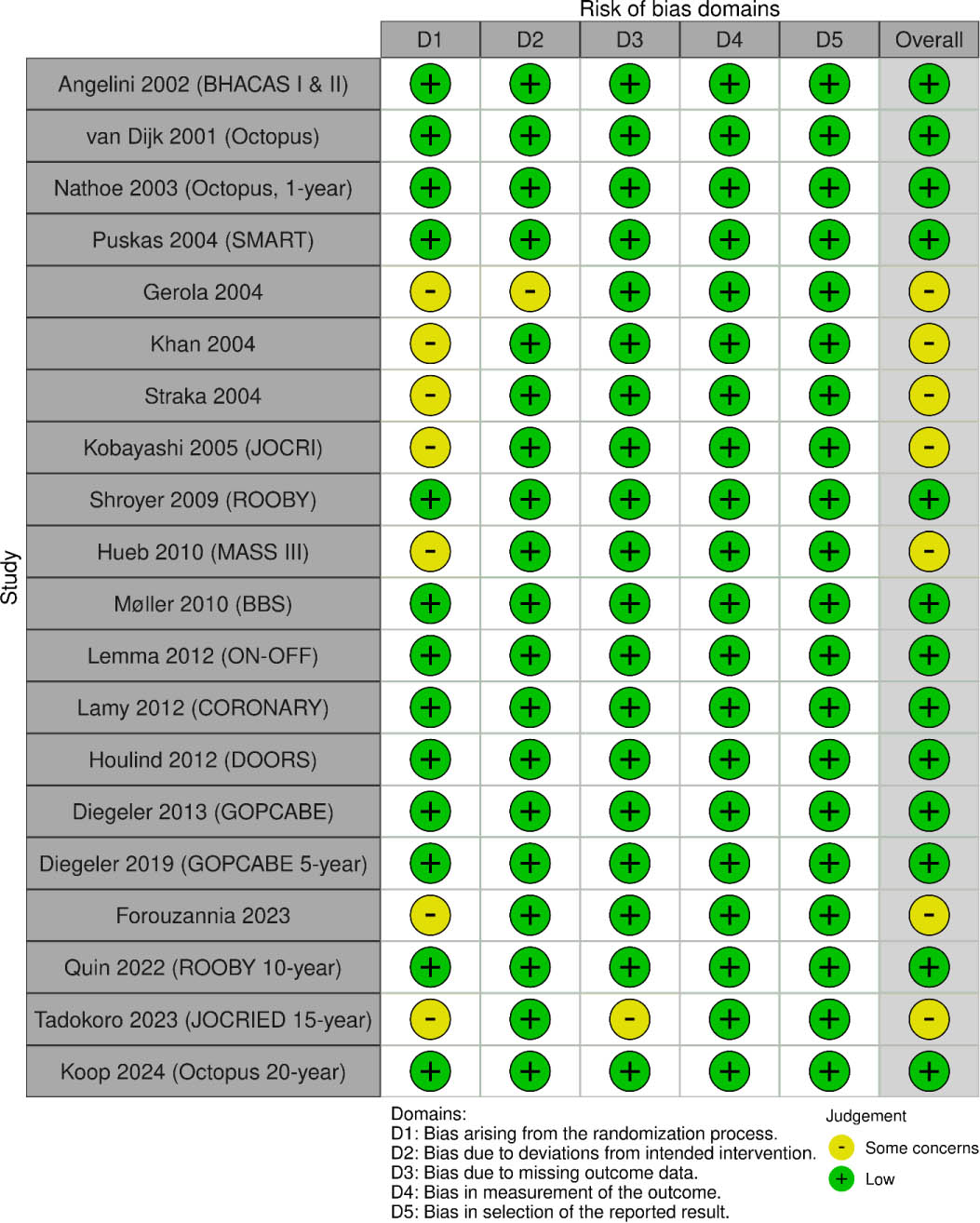
Figure 2 -
Risk-of-bias assessment of RCT publications using the Cochrane RoB 2 tool. RCT, randomised controlled trial.
The 14 observational cohort studies achieved Newcastle–Ottawa Scale scores ranging from 7 to 9, with a median score of 9. Ten studies received 9 points, three received 8 points and one received 7 points, indicating generally high methodological quality. The principal limitations concerned inadequate adjustment for confounding in one study, restricted representativeness of the exposed cohort in another and insufficient reporting of follow-up adequacy in two studies. Detailed assessments are presented in Table 3.
Table 3 -
Risk-of-bias assessment of observational studies using the NOS.
| Study | Selection | Comparability | Outcome | Total score (/9) | ||||||
|---|---|---|---|---|---|---|---|---|---|---|
| S1 | S2 | S3 | S4 | C1 | C2 | O1 | O2 | O3 | ||
| Williams 2005 | ★ | ★ | ★ | ★ | ★ | ★ | ★ | ★ | ★ | 9/9 |
| Palmer 2007 (CARE Registry) | ★ | ★ | ★ | ★ | – | – | ★ | ★ | ★ | 7/9 |
| Hannan 2007 | ★ | ★ | ★ | ★ | ★ | ★ | ★ | ★ | ★ | 9/9 |
| Chu 2009 | ★ | ★ | ★ | ★ | ★ | ★ | ★ | ★ | ★ | 9/9 |
| Murzi 2011 | ★ | ★ | ★ | ★ | ★ | ★ | ★ | ★ | ★ | 9/9 |
| Kirmani 2019 | ★ | ★ | ★ | ★ | ★ | ★ | ★ | ★ | ★ | 9/9 |
| Matkovic 2019 | ★ | ★ | ★ | ★ | ★ | ★ | ★ | ★ | – | 8/9 |
| Deutsch 2021 | ★ | ★ | ★ | ★ | ★ | ★ | ★ | ★ | ★ | 9/9 |
| de Abreu 2022 | ★ | ★ | ★ | ★ | ★ | ★ | ★ | ★ | ★ | 9/9 |
| Numata 2022 | – | ★ | ★ | ★ | ★ | ★ | ★ | ★ | ★ | 8/9 |
| Wang 2022 | ★ | ★ | ★ | ★ | ★ | ★ | ★ | ★ | ★ | 9/9 |
| Park 2022 (Korean Nationwide) | ★ | ★ | ★ | ★ | ★ | ★ | ★ | ★ | ★ | 9/9 |
| Cubas 2024 | ★ | ★ | ★ | ★ | ★ | ★ | ★ | ★ | ★ | 9/9 |
| Pikkujämsä 2026 | ★ | ★ | ★ | ★ | ★ | ★ | ★ | ★ | – | 8/9 |
[ii] Note: A star (★) indicates that the criterion was fulfilled; an en dash (–) indicates that it was not fulfilled or was insufficiently reported. The maximum score is 9 stars. ONCAB, on-pump coronary artery bypass grafting; OPCAB, off-pump coronary artery bypass grafting.
[iii] Selection: S1, representativeness of the exposed cohort; S2, selection of the non-exposed cohort; S3, ascertainment of exposure; S4, outcome not present at baseline. Comparability: C1, control for the principal confounders (case mix/operative risk); C2, control for additional clinically relevant confounders. Outcome: O1, assessment of outcome; O2, follow-up sufficiently long for outcomes to occur; O3, adequacy of follow-up.
[iv] Interpretive note. Palmer 2007 did not receive comparability stars because the reported OPCAB–ONCAB comparisons were not adjusted for baseline confounding. Numata 2022 did not receive the representativeness star because long-term follow-up was restricted to selected high-volume hospitals that agreed to participate. Matkovic 2019 and Pikkujämsä 2026 did not receive the adequacy-of-follow-up star because attrition/completeness was insufficiently reported or exclusions for missing follow-up data could introduce attrition bias.
4. Early mortality
Early mortality was reported in 25 studies comprising 101,047 participants. Among the RCTs, there was no evidence of a difference between OPCAB and ONCAB (14 studies; 10,884 participants; RR 0.97, 95% CI = 0.74–1.27; P = 0.83; I2 = 0%). Four RCTs had no deaths in either treatment group and therefore did not contribute to the relative-effect estimate.
In contrast, the observational studies showed a lower risk of early mortality with OPCAB (11 studies; 90,163 participants; RR 0.58, 95% CI = 0.39–0.85; P = 0.006), although heterogeneity was substantial (I2 = 75%). The test for subgroup differences was statistically significant (P = 0.03), indicating that the estimated association differed according to study design. The across-design pooled estimate favoured OPCAB (RR 0.70, 95% CI = 0.55–0.91; P = 0.007; I2 = 57%); however, this overall estimate should be interpreted cautiously given the significant subgroup difference and the absence of a corresponding benefit in the randomised evidence. The forest plot is presented in Figure 3.
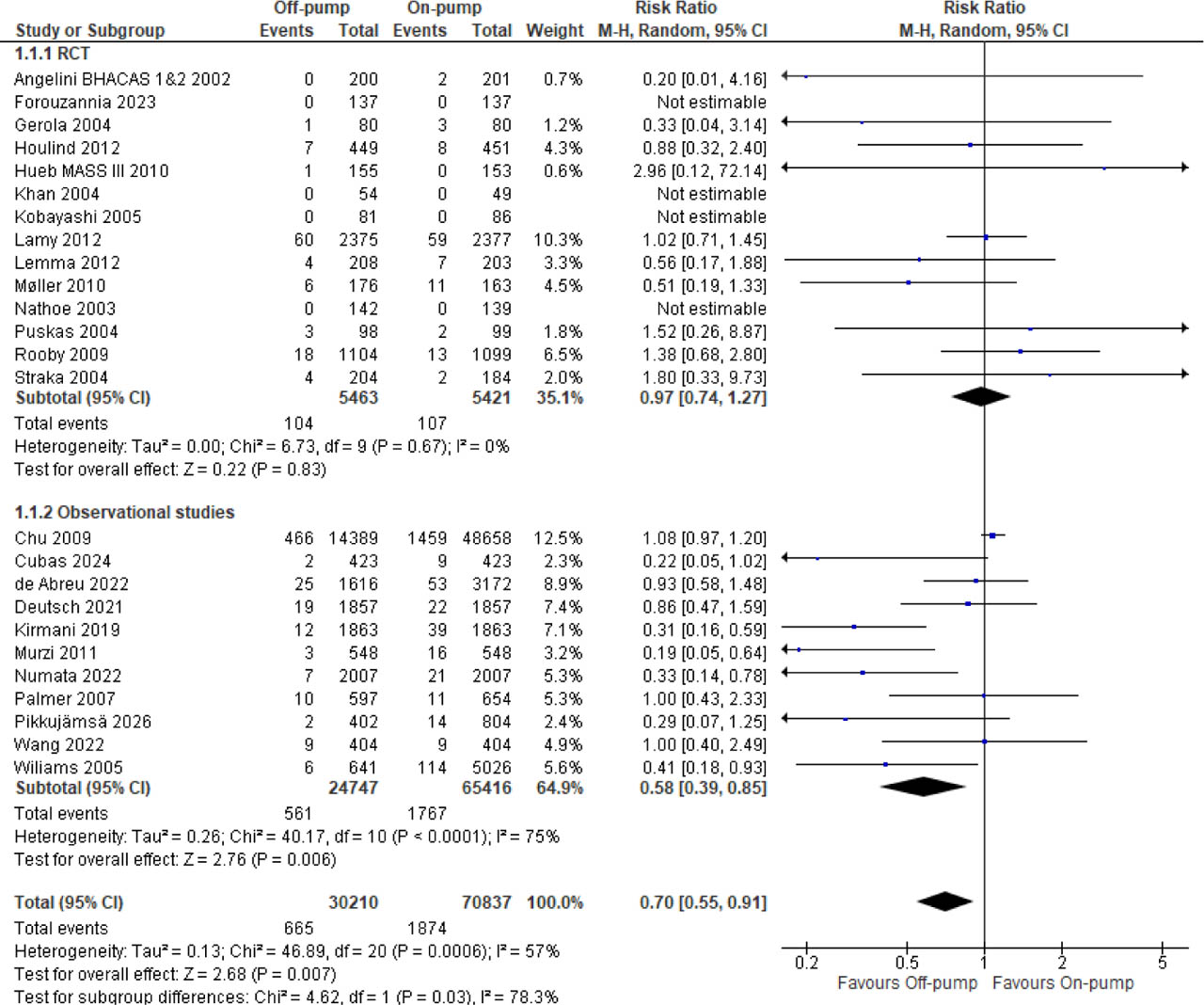
Figure 3 -
Early all-cause mortality following off-pump vs on-pump CABG, stratified by study design. CABG, coronary artery bypass grafting; CI, confidence interval; RCT, randomised controlled trial.
5. Postoperative stroke
Postoperative stroke was reported in 23 studies comprising 99,052 participants. The RCT subgroup showed no statistically significant difference between OPCAB and ONCAB (13 studies; 12,603 participants; RR 0.83, 95% CI = 0.63–1.11; P = 0.21; I2 = 0%). Two RCTs had no stroke events in either group and did not contribute to the relative-effect estimate.
Among observational studies, OPCAB was associated with a lower risk of postoperative stroke (10 studies; 86,449 participants; RR 0.54, 95% CI = 0.38–0.78; P = 0.0009), with substantial heterogeneity (I2 = 62%). The test for subgroup differences did not reach statistical significance (P = 0.07). The across-design pooled estimate also favoured OPCAB (RR 0.66, 95% CI = 0.53–0.83; P = 0.0003; I2 = 34%), but should be interpreted in the context of the non-significant RCT estimate and the potential for residual confounding in the observational evidence. The forest plot is presented in Figure 4.
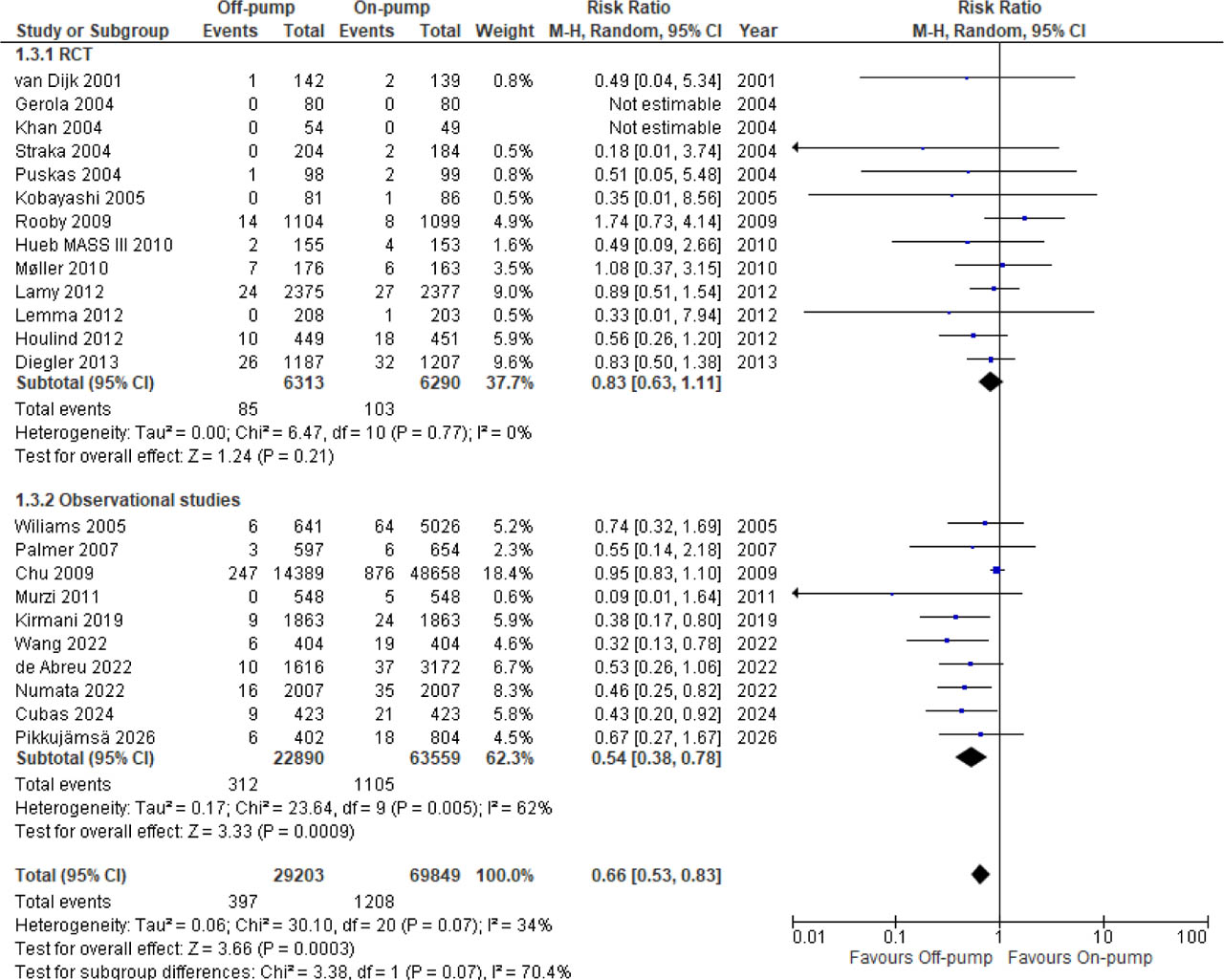
Figure 4 -
Postoperative stroke following off-pump vs on-pump CABG, stratified by study design. CABG, coronary artery bypass grafting; CI, confidence interval; RCT, randomised controlled trial
6. MI
MI was reported in 11 studies comprising 10,881 participants. Among the six RCTs, there was no statistically significant difference between OPCAB and ONCAB (RR 0.71, 95% CI = 0.39–1.28; P = 0.25), with moderate heterogeneity (I2 = 54%). Similarly, the five observational studies showed no statistically significant difference between the two techniques (RR 1.10, 95% CI = 0.74–1.64; P = 0.63), with no observed heterogeneity (I2 = 0%). The overall pooled estimate was also not statistically significant (RR 0.90, 95% CI = 0.65–1.24; P = 0.52; I2 = 24%), and there was no evidence of a difference between the study-design subgroups (P = 0.23). The corresponding forest plot is presented in Figure 5.
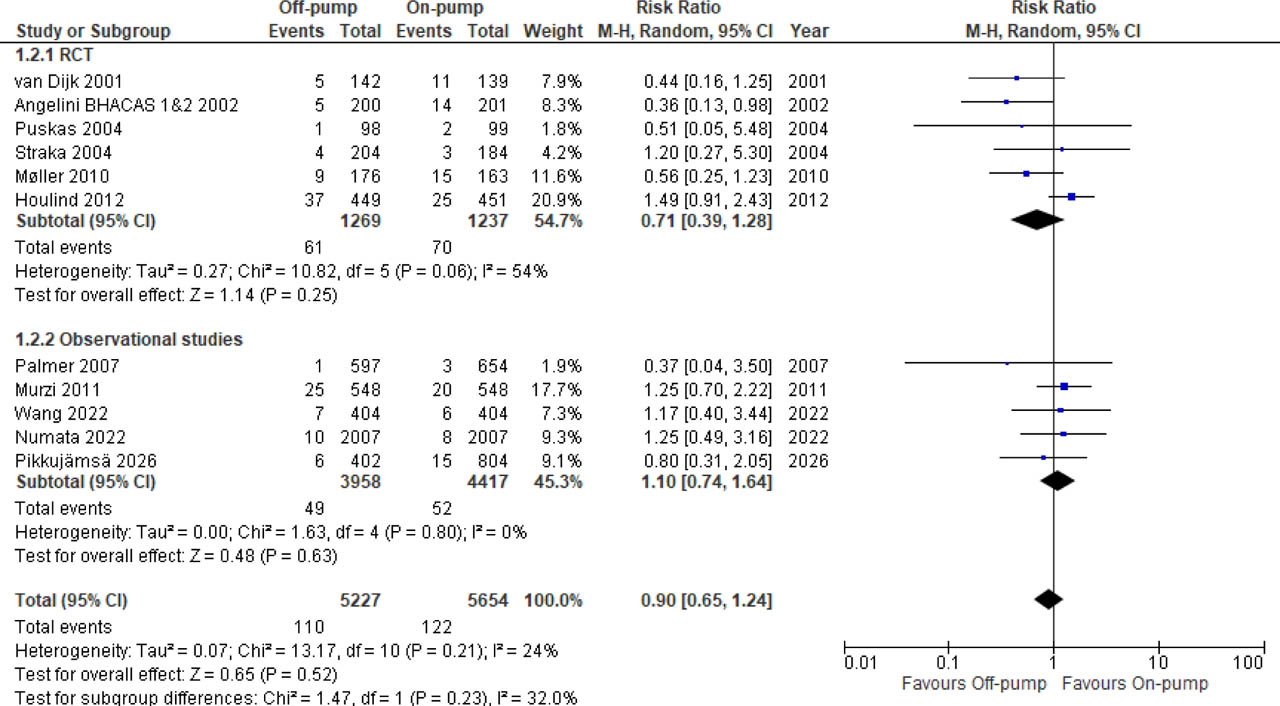
Figure 5 -
MI following off-pump vs on-pump CABG, stratified by study design. CABG, coronary artery bypass grafting; CI, confidence interval; MI, myocardial infarction; RCT, randomised controlled trial
7. Acute kidney injury
Acute kidney injury was reported in nine studies comprising 12,650 participants. In the RCT subgroup, OPCAB was associated with a lower risk of acute kidney injury compared with ONCAB (5 studies; 5731 participants; RR 0.87, 95% CI = 0.80–0.95; P = 0.002; I2 = 0%). A larger estimated reduction was observed among the observational studies (4 studies; 6919 participants; RR 0.47, 95% CI = 0.27–0.81; P = 0.007), although between-study heterogeneity was substantial (I2 = 83%).
The test for subgroup differences was statistically significant (P = 0.03), indicating that the magnitude of the estimated association differed according to study design. The across-design pooled estimate favoured OPCAB (RR 0.59, 95% CI = 0.42–0.83; P = 0.003), with substantial overall heterogeneity (I2 = 79%). Accordingly, the overall estimate should be interpreted cautiously, with greater emphasis placed on the more conservative RCT estimate. The corresponding forest plot is presented in Figure 6.
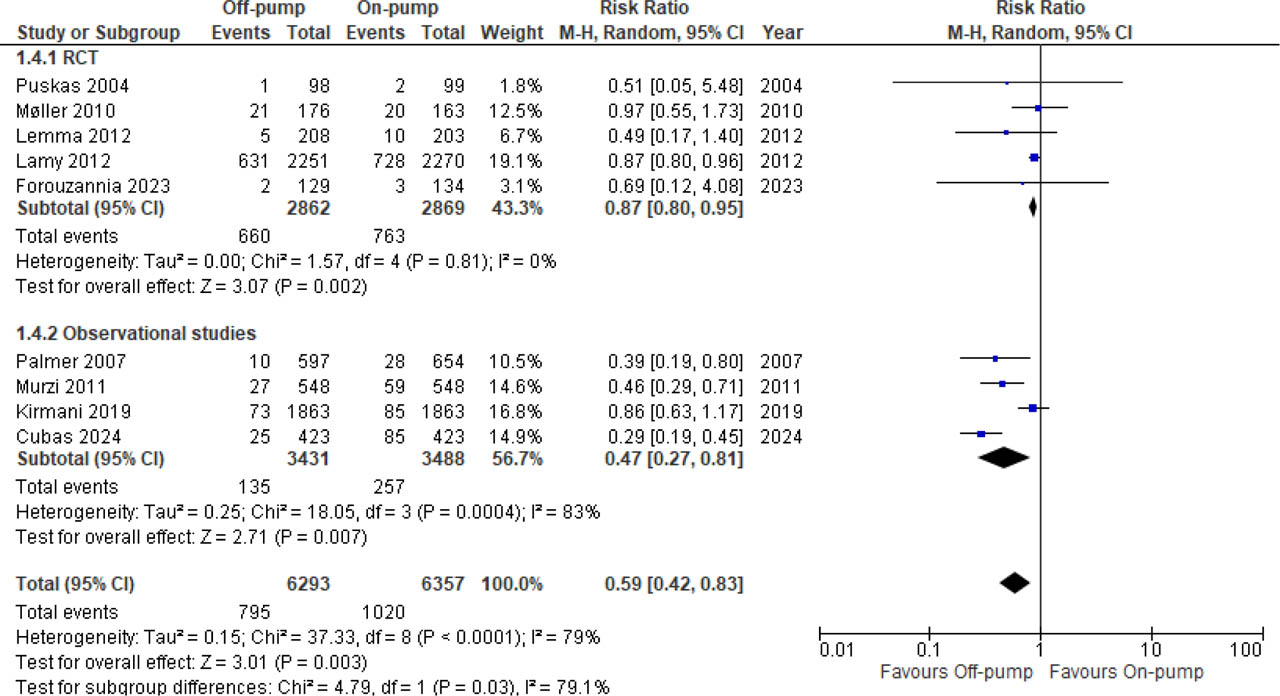
Figure 6 -
Acute kidney injury following off-pump vs on-pump CABG, stratified by study design. CABG, coronary artery bypass grafting; CI, confidence interval; RCT, randomised controlled trial.
8. Renal failure requiring dialysis
Renal failure requiring dialysis was reported in 14 studies comprising 19,086 participants. Among the nine RCTs, there was no statistically significant difference between OPCAB and ONCAB (RR 0.89, 95% CI = 0.67–1.20; P = 0.46), with no observed heterogeneity (I2 = 0%). The five observational studies showed a lower point estimate with OPCAB, but the result was not statistically significant (RR 0.53, 95% CI = 0.28–1.00; P = 0.05), with moderate heterogeneity (I2 = 33%). The overall pooled estimate showed no statistically significant difference between the techniques (RR 0.81, 95% CI = 0.63–1.03; P = 0.09; I2 = 0%). There was no evidence of a difference between the study-design subgroups (P = 0.14). The corresponding forest plot is presented in Figure 7.
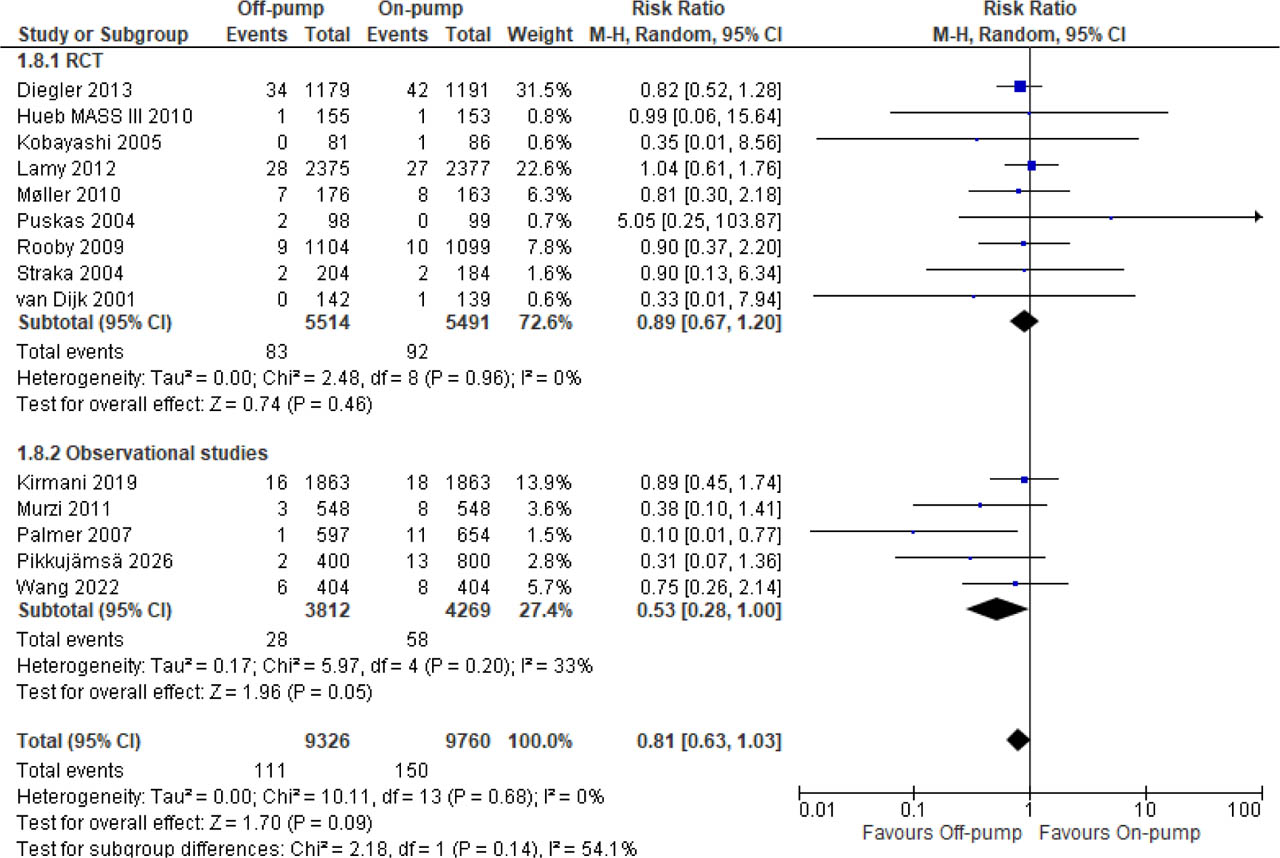
Figure 7 -
Renal failure requiring dialysis following off-pump vs on-pump CABG, stratified by study design. CABG, coronary artery bypass grafting; CI, confidence interval; RCT, randomised controlled trial.
9. Blood transfusion
Blood transfusion was reported in 14 studies. Cubas 2024 was excluded from the quantitative synthesis of this outcome; it is displayed in Figure 8 but did not contribute to the pooled estimates. The remaining 13 studies, comprising 16,339 participants, were included in the analysis. Among the RCTs, OPCAB was associated with a lower risk of blood transfusion compared with ONCAB (10 studies; 11,096 participants; RR 0.72, 95% CI = 0.63–0.81; P < 0.00001), although heterogeneity was substantial (I2 = 86%). A lower transfusion risk was also observed in the observational studies (3 studies; 5243 participants; RR 0.73, 95% CI = 0.63–0.85; P < 0.0001), with moderate heterogeneity (I2 = 56%).
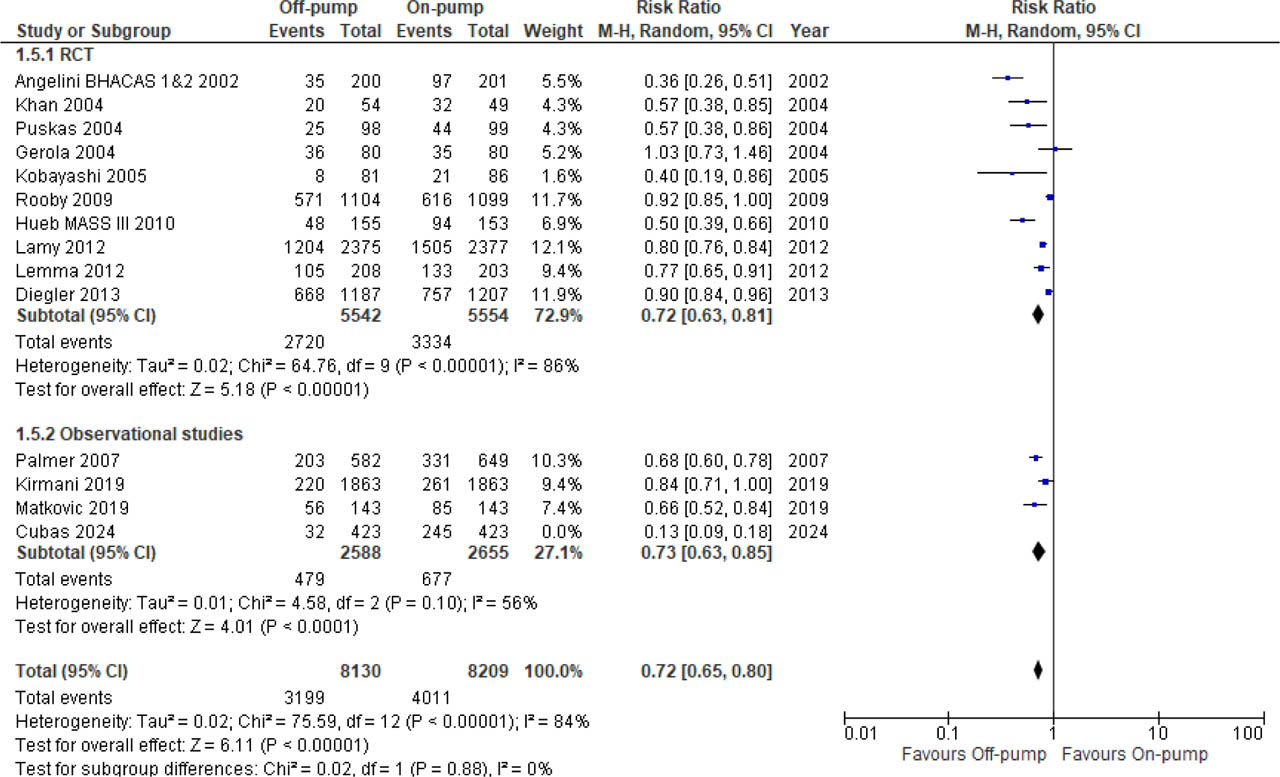
Figure 8 -
Blood transfusion following off-pump vs on-pump CABG, stratified by study design. CABG, coronary artery bypass grafting; CI, confidence interval; RCT, randomised controlled trial.
The test for subgroup differences was not statistically significant (P = 0.88). The across-design pooled estimate favoured OPCAB (RR 0.72, 95% CI = 0.65–0.80; P < 0.00001), although overall heterogeneity was considerable (I2 = 84%). Therefore, the pooled estimates were similar in direction and magnitude across study designs, although the size of the estimated reduction varied among individual studies. The corresponding forest plot is presented in Figure 8.
10. Reoperation for bleeding
Reoperation for bleeding was reported in 12 studies comprising 12,925 participants. The RCT subgroup showed no statistically significant difference between OPCAB and ONCAB (8 studies; 8566 participants; RR 0.81, 95% CI = 0.51–1.27; P = 0.35; I2 = 38%). One RCT reported no events in either treatment group and did not contribute to the relative-effect estimate.
Among the observational studies, OPCAB was associated with a lower risk of reoperation for bleeding (4 studies; 4359 participants; RR 0.51, 95% CI = 0.30–0.88; P = 0.02; I2 = 28%). The test for subgroup differences was not statistically significant (P = 0.21). The across-design pooled estimate favoured OPCAB (RR 0.68, 95% CI = 0.48–0.96; P = 0.03; I2 = 37%); however, this overall finding should be interpreted cautiously because the RCT estimate was not statistically significant. The corresponding forest plot is presented in Figure 9.
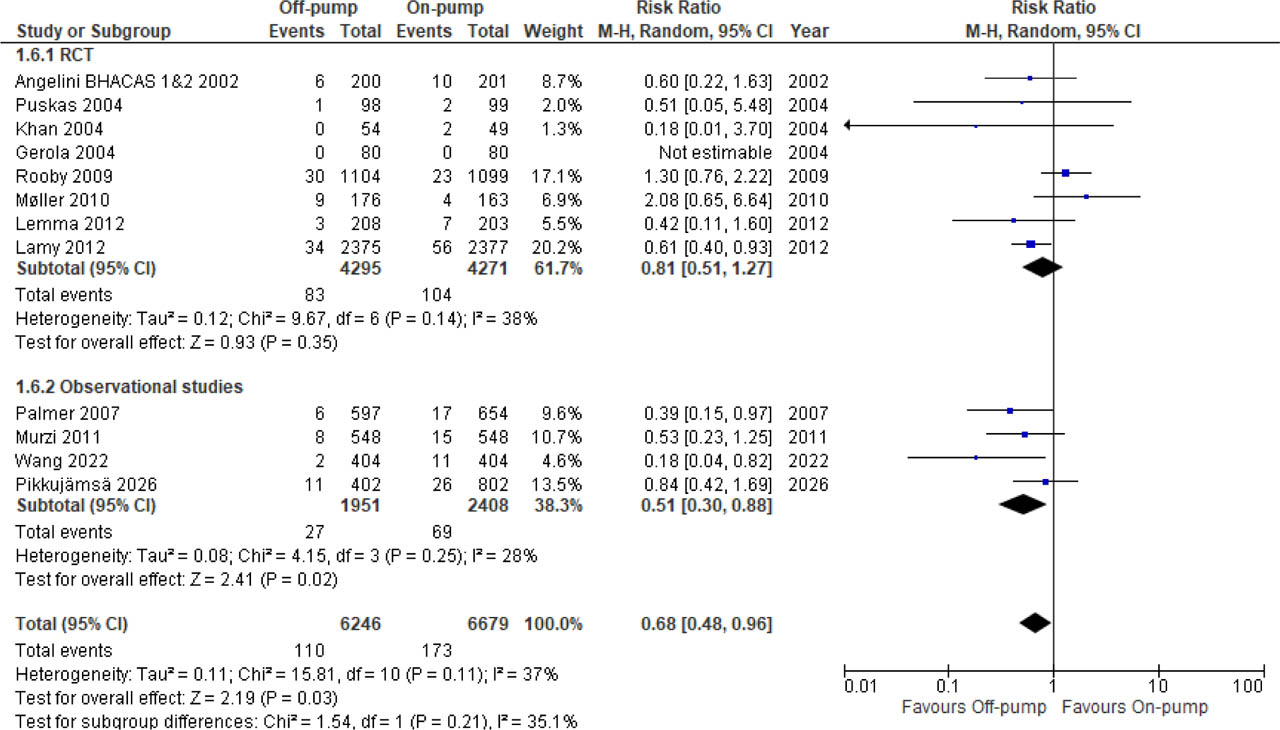
Figure 9 -
Reoperation for bleeding following off-pump vs on-pump CABG, stratified by study design. CABG, coronary artery bypass grafting; CI, confidence interval; RCT, randomised controlled trial.
11. ICU length of stay
ICU length of stay was reported in six studies comprising 2813 participants. Among the RCTs, there was no statistically significant difference between OPCAB and ONCAB (4 studies; 909 participants; MD − 0.30 days, 95% CI = −0.93 to 0.33; P = 0.36), with considerable heterogeneity (I2 = 95%). Similarly, the observational studies showed no statistically significant difference between the two techniques (2 studies; 1904 participants; MD − 0.59 days, 95% CI = −1.53 to 0.35; P = 0.22; I2 = 93%).
There was no evidence of a subgroup difference according to study design (P = 0.61). The across-design pooled estimate also showed no statistically significant difference in ICU length of stay between OPCAB and ONCAB (MD − 0.39 days, 95% CI = −0.82 to 0.04; P = 0.07), with considerable overall heterogeneity (I2 = 94%). The corresponding forest plot is presented in Figure 10.
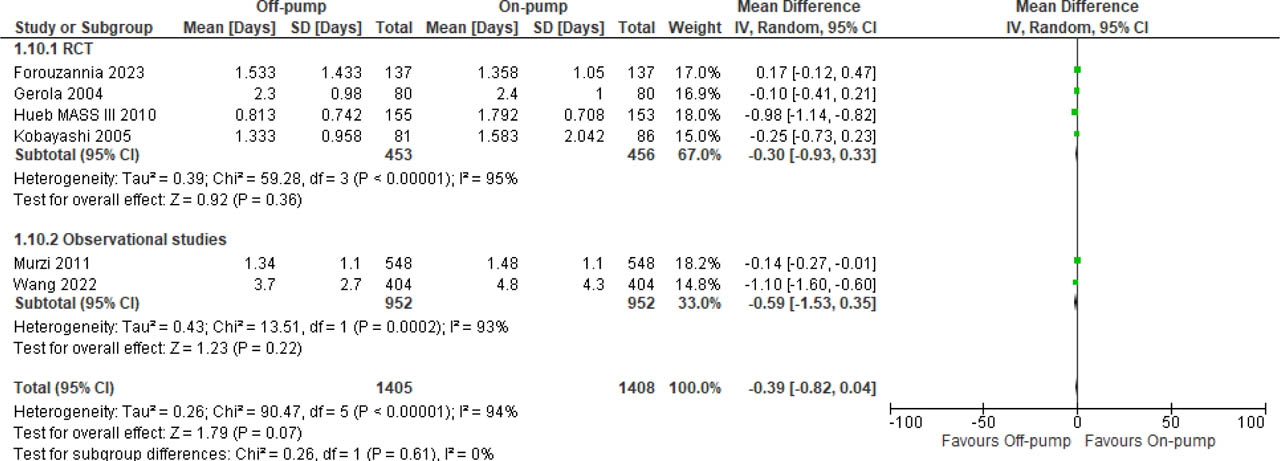
Figure 10 -
ICU stay following off-pump vs on-pump CABG, stratified by study design. CABG, coronary artery bypass grafting; CI, confidence interval; ICU, intensive care unit; RCT, randomised controlled trial; SD, standard deviation.
12. Long-term all-cause mortality
Long-term all-cause mortality was evaluated separately in RCTs and observational studies because of differences in study design and effect measures.
Among the RCTs, eight studies comprising 10,611 participants reported mortality at follow-up durations ranging from approximately 5 years to 20 years. There was no statistically significant difference between OPCAB and ONCAB in long-term mortality (RR 1.05, 95% CI = 0.98–1.12; P = 0.17; I2 = 0%). Results were consistent across follow-up categories: approximately 5 years (2 studies; 7122 participants; RR 1.05, 95% CI = 0.96–1.15), 5 to <10 years (4 studies; 3109 participants; RR 1.07, 95% CI = 0.96–1.19) and >10 years (2 studies; 380 participants; RR 0.93, 95% CI = 0.74–1.18). There was no evidence of a difference among follow-up-duration subgroups (P = 0.58). The corresponding forest plot is presented in Figure 11.
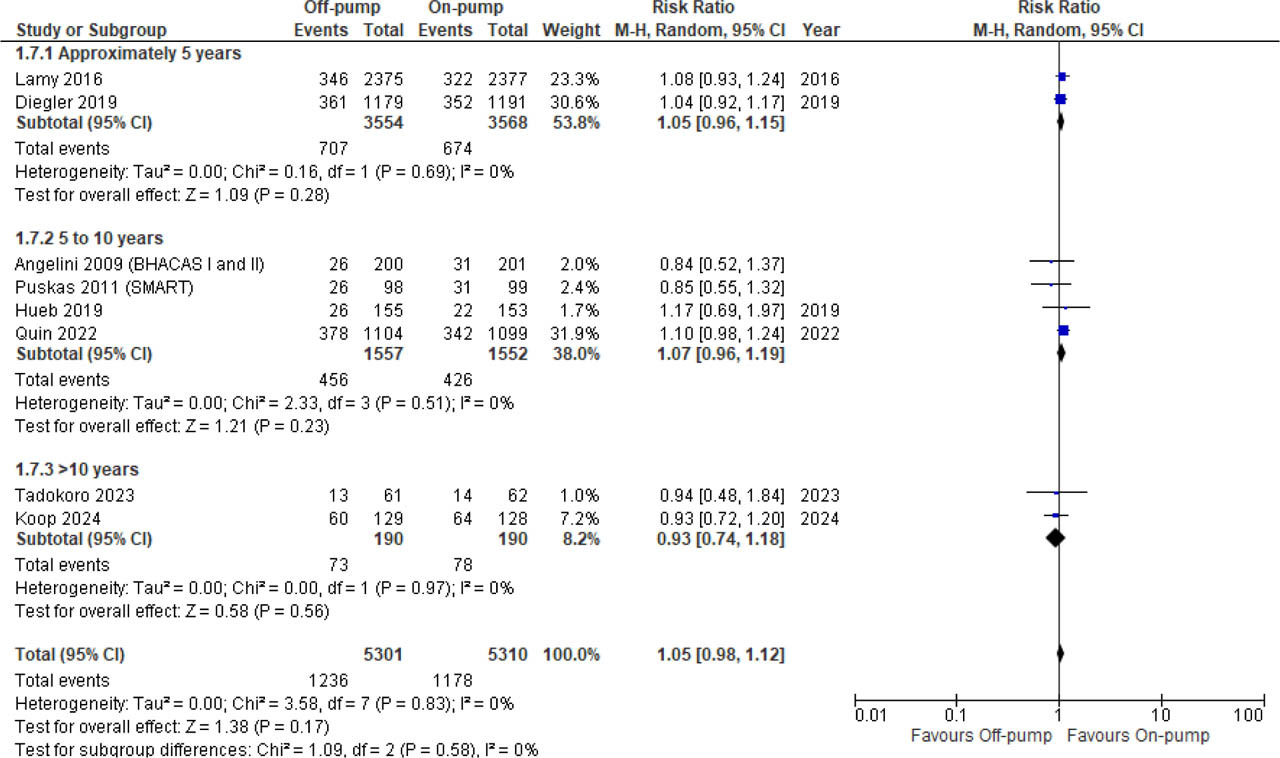
Figure 11 -
Long-term all-cause mortality following off-pump vs on-pump CABG in randomised controlled trials, stratified by duration of follow-up. BHACAS, Beating Heart Against Cardioplegic Arrest Studies; CABG, coronary artery bypass grafting; CI, confidence interval; SMART, Surgical Management of Arterial Revascularization Therapies.
Six observational studies reported adjusted time-to-event estimates for long-term mortality. Their pooled analysis showed no statistically significant difference between OPCAB and ONCAB (hazard ratio [HR] 1.02, 95% CI = 0.95–1.09; P = 0.66), with moderate heterogeneity (I2 = 48%). The corresponding forest plot is presented in Figure 12.
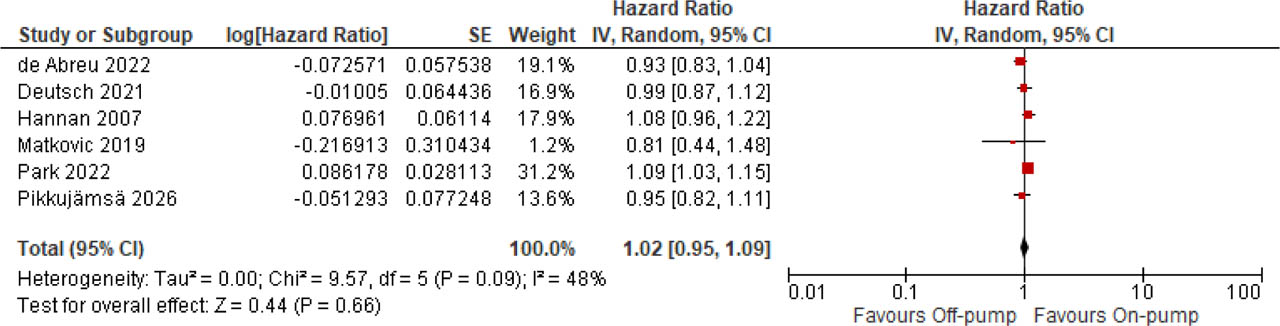
Figure 12 -
Long-term all-cause mortality following off-pump vs on-pump CABG in observational studies. CABG, coronary artery bypass grafting; CI, confidence interval; SE, standard error.
13. Sensitivity analyses
Leave-one-out sensitivity analyses were performed by sequentially excluding each contributing study and recalculating the corresponding pooled estimate. The influence of individual studies was evaluated according to changes in effect magnitude, CIs, statistical significance and heterogeneity.
Discussion
1. Principal findings
In this updated systematic review and meta-analysis of 38 publications representing 30 independent studies and 196,663 unique participants, off-pump (OPCAB) and on-pump (ONCAB) CABG were compared across perioperative and long-term outcomes. When the evidence was examined according to study design, randomised trials showed no significant differences in early mortality, stroke, MI, dialysis-requiring renal failure, reoperation for bleeding, ICU length of stay or long-term all-cause mortality. Within the randomised evidence, statistically significant benefits of OPCAB were observed only for acute kidney injury (RR 0.87) and blood transfusion (RR 0.72), whereas several broader perioperative advantages arose predominantly from observational cohorts.
2. Interpretation of perioperative outcomes
The divergence between randomised and observational evidence is particularly relevant to early mortality. The test for subgroup differences was statistically significant (P = 0.03): observational studies favoured OPCAB (RR 0.58), whereas randomised trials showed no statistically significant effect (RR 0.97). This difference may reflect residual confounding and treatment-selection effects, because the choice of operative technique is influenced by aortic disease, coronary anatomy, clinical urgency, surgeon expertise and institutional practice – factors that observational adjustment cannot fully capture [1,4]. Accordingly, the observational association should not be interpreted as definitive evidence of a causal mortality benefit. The reductions in blood transfusion and acute kidney injury observed in randomised trials are nevertheless biologically plausible. Avoidance of CPB may reduce haemodilution, platelet dysfunction, systemic inflammatory activation and non-pulsatile renal hypoperfusion [1]. Conversely, any neurological advantage may depend more strongly on the extent of aortic manipulation than on avoidance of CPB alone. OPCAB may still involve partial side-clamping of the ascending aorta for proximal anastomoses; therefore, conventional off-pump surgery and an anaortic (‘no-touch’) strategy should not be regarded as equivalent interventions [2]. The randomised evidence did not demonstrate statistically significant reductions in MI or renal failure requiring dialysis. Although the observational estimate for dialysis-requiring renal failure approached statistical significance, its CI included the null value. These findings suggest that the observed reduction in less severe acute kidney injury should not automatically be extrapolated to a confirmed reduction in severe renal dysfunction requiring renal replacement therapy.
3. Completeness of revascularisation and long-term outcomes
Completeness and technical quality of revascularisation are central to the interpretation of long-term outcomes. In an observational cohort of 9408 patients, Synnergren et al. [12] found that incomplete revascularisation – particularly when two vascular territories remained unrevascularised – was associated with poorer long-term survival. Incomplete revascularisation was more frequent after OPCAB, and patients with three-vessel disease undergoing OPCAB had lower adjusted survival. Caputo et al. [13] similarly reported an association between incomplete revascularisation during OPCAB and reduced mid-term event-free survival.
Accordingly, the absence of a statistically significant difference in all-cause mortality in the present analysis should not be interpreted as proof of equivalent graft durability or overall surgical effectiveness. Mortality alone does not capture graft failure, recurrent angina, MI or the need for repeat revascularisation [3,12,13].
Individual long-term trials provide important clinical nuance. CORONARY and GOPCABE found no statistically significant mortality difference between the techniques [14,15], while the 20-year OCTOPUS follow-up likewise showed comparable survival, with all-cause mortality of 50.0% after ONCAB and 46.5% after OPCAB [9]. ROOBY-FS found no significant differences in 10-year mortality or repeat revascularisation when these outcomes were considered separately; however, time to the composite outcome of death or repeat revascularisation was shorter after OPCAB, and event-free survival was lower among non-converted OPCAB patients [8]. As Lazar argued, OPCAB should be continued where surgeons can demonstrate short- and long-term outcomes comparable to those achieved with ONCAB [16]. This represents a reasoned caution rather than a universally established consensus.
The procedural characteristics summarised in Tables 2A and 2B demonstrate substantial variation among studies in graft numbers, distal anastomoses, definitions of complete revascularisation, arterial conduit use, conversion rates, operator experience and procedural standardisation. These factors may partly explain differences among trials and limit the generalisability of results obtained in highly experienced centres to surgeons and institutions with less established off-pump programmes [1,4].
4. OPCAB in minimally invasive and robotic revascularisation
OPCAB also provides the technical foundation for minimally invasive direct coronary artery bypass, minimally invasive multivessel CABG, totally endoscopic and robot-assisted procedures, and hybrid coronary revascularisation [17]. These strategies may reduce surgical-access trauma and facilitate recovery in certain selected patients. However, their reported outcomes generally arise from specialised programmes with rigorous patient selection and substantial technical expertise and should not be extrapolated directly to routine OPCAB performed through median sternotomy [17]. Irrespective of surgical access, success should continue to be assessed through anastomotic quality, graft durability and completeness of revascularisation.
5. Comparison with contemporary evidence and contribution of this study
The present findings are concordant with the meta-analysis by Comanici et al. [10], which included 22 studies and 69,449 patients and found no statistically significant difference in the 10-year mortality between OPCAB and ONCAB (HR 1.00). The present review extends this evidence by incorporating reports identified through an updated search till 31 July 2026, including randomised follow-up extending to 20 years, and by evaluating a broader range of clinically relevant perioperative outcomes.
Several methodological features distinguish the present analysis. Randomised and observational evidence was analysed separately to account for differences in susceptibility to confounding and selection bias. For long-term mortality, RCTs were synthesised using cumulative event counts, whereas observational studies reporting adjusted time-to-event estimates were synthesised separately using HRs, thereby avoiding the inappropriate combination of different effect measures. Acute kidney injury and renal failure requiring dialysis were also treated as clinically distinct outcomes. In addition, Tables 2A and 2B provide detailed procedural characterisation of the included studies, enabling clinical outcomes to be interpreted in the context of graft numbers, distal anastomoses, completeness of revascularisation, conduit selection, conversion, operator experience and procedural standardisation.
6. Strengths and limitations
The principal strengths of this review include its updated and systematic search, large overall population, design-specific synthesis and interpretation of the evidence, inclusion of extended randomised follow-up to 20 years, and explicit linkage of multiple reports arising from the same underlying populations to minimise double-counting. The use of established design-specific risk-of-bias tools and the detailed assessment of procedural characteristics further strengthened interpretation of the available evidence.
Several limitations should, nevertheless, be acknowledged. In the randomised analysis, long-term mortality was synthesised from cumulative event counts because comparable time-to-event estimates were not consistently available; this approach does not fully account for censoring or differences in follow-up duration. Observational studies were analysed separately using adjusted HRs but remained susceptible to residual confounding, treatment-selection effects and variation in the covariates included in adjusted models.
Outcome definitions – particularly for MI, acute kidney injury and early mortality – were not uniform across studies. Patient selection, follow-up duration, surgical technique, conversion practices, surgeon experience and institutional protocols also varied substantially. Substantial heterogeneity was present in some analyses, particularly the observational evidence for acute kidney injury and the randomised evidence for blood transfusion, although targeted leave-one-out analyses were used to examine the influence of individual studies. In addition, several outcomes were informed by relatively few studies, limiting the precision of pooled estimates and the reliable assessment of small-study or publication bias. Finally, inconsistent reporting of graft patency, completeness of revascularisation, recurrent angina, MI during long-term follow-up and repeat revascularisation precluded quantitative synthesis of these important measures of long-term surgical effectiveness.
Conclusion
OPCAB offers selective perioperative benefits, principally lower risks of acute kidney injury and blood transfusion, without evidence of improved long-term survival. Randomised evidence did not demonstrate statistically significant benefits for early mortality, stroke, MI, renal failure requiring dialysis, reoperation for bleeding or ICU length of stay. The absence of a mortality difference should not, however, be interpreted as proof of equivalent graft durability, completeness of revascularisation or freedom from subsequent cardiovascular events.
The clinical value of OPCAB depends on achieving complete and technically durable revascularisation and is most likely to be realised in appropriately selected patients treated by experienced surgeons within established off-pump programmes. ONCAB remains an essential and reproducible strategy, particularly when anatomical complexity, haemodynamic considerations or limited off-pump expertise may compromise the completeness or technical quality of revascularisation.
Abbreviations
- CABG
coronary artery bypass grafting
- CI
confidence interval
- NOS
Newcastle–Ottawa Scale
- ONCAB
on-pump coronary artery bypass grafting
- OPCAB
off-pump coronary artery bypass grafting
- RCT
randomised controlled trial
- RevMan
review manager
- RoB2
risk of bias 2
- RR
risk ratio
Acknowledgements
None.