
Introduction
Kommerell diverticulum (KD) is a rare congenital abnormality of the aortic arch that arises because of persistence of the fourth dorsal aortic arch segment associated with aberrant subclavian artery development during embryological development, presenting as an aneurysmal enlargement at the orifice of the aberrant subclavian artery [1]. Dilatation of the KD can compress adjacent structures, resulting in clinical manifestations, such as chest pain, dysphagia, wheezing, dyspnoea, recurrent pneumonia, or obstructive emphysema [2]. The first case was reported by Burckhard Kommerell in 1936 when a patient presented with an aortic diverticulum in the left aortic arch originating from the aberrant right subclavian artery (ARSA), causing dysphagia via compression of the oesophagus [3]. The right aortic arch (RAA) and aberrant left subclavian artery (ALSA) have an incidence of 0.05%–0.1% in the general population [4] and can be diagnosed at birth or in paediatric cases. Diagnosis during adulthood is often incidental, since symptomatic presentation may occur later due to dilation. Most patients with KD are diagnosed incidentally through computed tomography (CT) or magnetic resonance imaging (MRI) for other clinical conditions, as only 5% of adult patients with aberrant subclavian arteries develop symptoms [5]. Given the scarcity of literature on natural history, there is a lack of agreement regarding the management of asymptomatic KD. The recommendation for surgical intervention is the presence of symptoms attributed to KD with an aberrant subclavian artery, but indications for surgery in asymptomatic patients have been controversial.
Salomonowitz et al. [6] divided aortic diverticulum into three types according to pathogenesis: KD in ARSA with left aortic arch, KD in ALSA with RAA-ALSA, and aortic diverticulum at the aorto-ductal junction (also classified as the pulmonary ductus diverticulum). KD is classically described in LAA-ARSA (most common) and in RAA-ALSA (less common overall). The emergence of RAA-ALSA is attributed to the severance of the dorsal segment of the left aortic arch between the left common carotid artery and the LSA, along with the regression of the right ductus arteriosus during the development of the double aortic arch.
In RAA-ALSA, KD is larger in size compared to other types of aortic diverticulum, such as KD in LAA-ARSA [7]. KD rupture risk is not as well quantified as typical thoracic aneurysms. Increasing age, male sex, and underlying cardiovascular risk factors, especially atherosclerotic disease, have been associated with a higher likelihood of aortic aneurysm rupture. For KD rupture, contributive factors can be progressive dilation, aneurysmal degeneration, atherosclerotic wall changes, and hypertension. KD in RAA-ALSA is considered an extremely rare form of aneurysm, with a higher incidence in males, and its diameter tends to increase with age [1].
Case report
We present the case of a 67-year-old woman with multiple cardiovascular risk factors, who was admitted to our department for intermittent dysphagia to solid foods associated with epigastralgia. She also reported episodes of constrictive anterior chest discomfort accompanied by predominantly expiratory dyspnoea for which appropriate treatment was initiated at that time. Past medical history reveals pulmonary tuberculosis treated in 1985, Biermer anaemia, treated parenterally with cyanocobalamin 100 mcg monthly since 2010, type 2 diabetes mellitus treated with metformin 500 mg daily, dyslipidemia treated with a fixed dose combination of atorvastatin and ezetimibe, arterial hypertension controlled with an association of an angiotensin-converting enzyme inhibitor and amlodipine, and bronchial asthma diagnosed in 2024. One month prior to admission, the patient underwent a pneumology reassessment, during which continuation of asthma treatment with leukotriene receptor antagonists was recommended. A chest radiograph performed at that time revealed a right-sided aortic knob, widening of the left paratracheal mediastinum, and thoracic aortic ectasia, without evidence of alveolar consolidation. Based on these findings, a contrast-enhanced chest CT scan was recommended.
On admission, cardiovascular physical examination revealed a grade 2/6 systolic murmur best auscultated at the aortic area, a regular heart rate of 64 bpm, and well-controlled blood pressure values (100/65 mmHg). Peripheral oxygen saturation was within normal limits. Laboratory evaluation showed a slightly elevated NT-proBNP level of 141 pg/mL, normal high-sensitivity cardiac troponin levels, and preserved renal function, with a serum creatinine value of 1.22 mg/dL. Electrocardiography demonstrated sinus bradycardia with a heart rate of 55 bpm.
Transthoracic echocardiography revealed a non-dilated, mildly hypertrophied left ventricle with preserved systolic function and an estimated left ventricular ejection fraction of 51%. A turbulent systolic flow was noted across the aortic valve, with a maximum transvalvular gradient of 14 mmHg and a peak velocity of 1.73 m/s, consistent with aortic valve sclerosis. An interatrial septal aneurysm was also identified, without evidence of interatrial shunting.
The contrast-enhanced chest CT scan, performed with arterial and venous phases, demonstrated a right-sided aortic arch with an ALSA arising from a KD measuring 28 mm 24 mm (transverse × anteroposterior diameter) with a base of 24 mm, localized posterior to the trachea and oesophagus, and just anterior to the vertebra T7 (Figures 1 and 2). The anatomical configuration was considered responsible for possible oesophageal and tracheal compression.
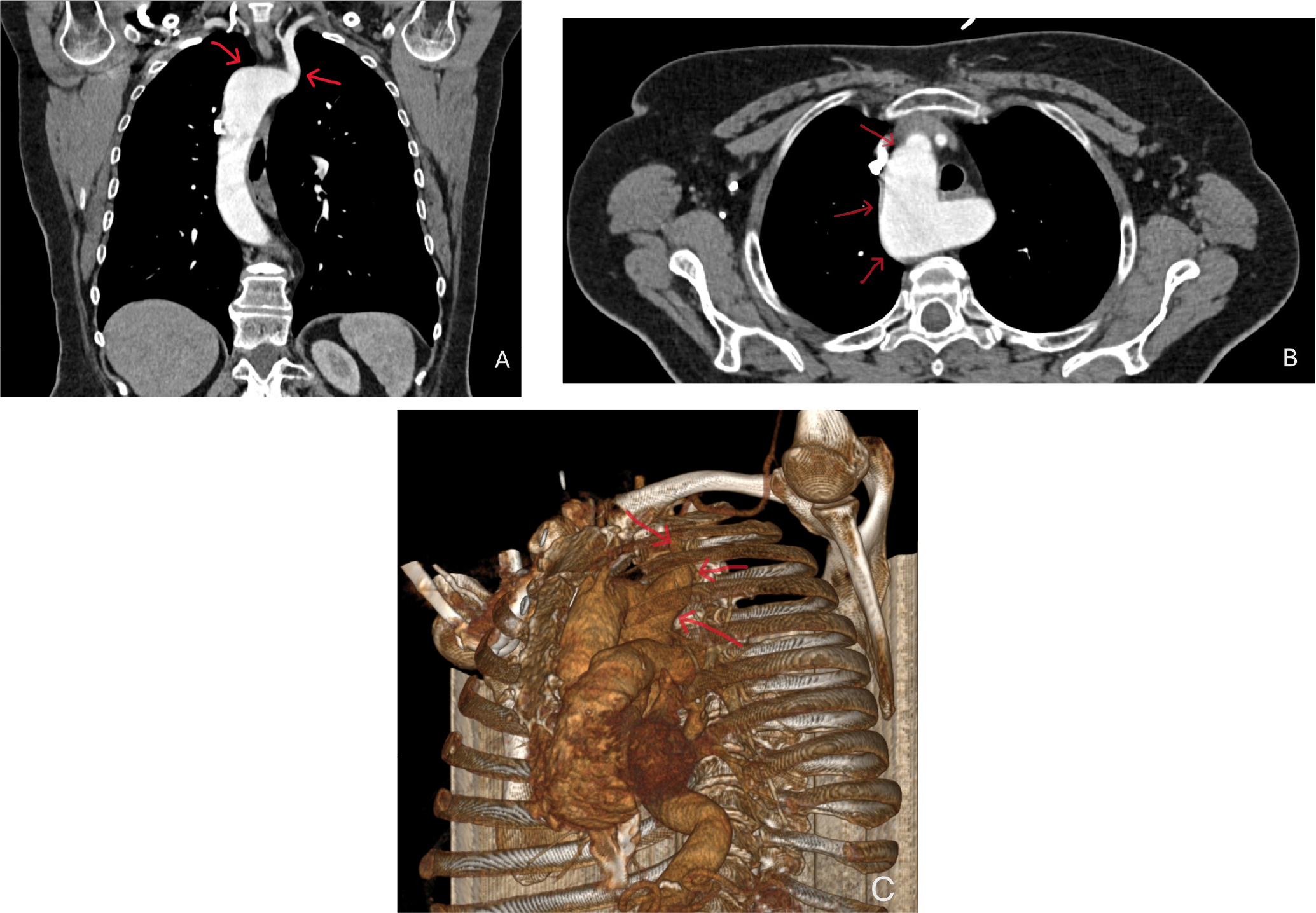
Figure 1
Angio-CT. Coronal section: The left subclavian artery originates from the aortic arch (arrows) (a); Axial section: Right-sided aortic arch with a left-sided KD (arrows), the left common carotid artery is located anterior to the aortic arch (b); 3D volume-rendered angiographic reconstruction demonstrates a left-sided KD arising from the aortic arch (arrows), continuing into the left subclavian artery (c). CT, computed tomography; KD, Kommerell diverticulum.
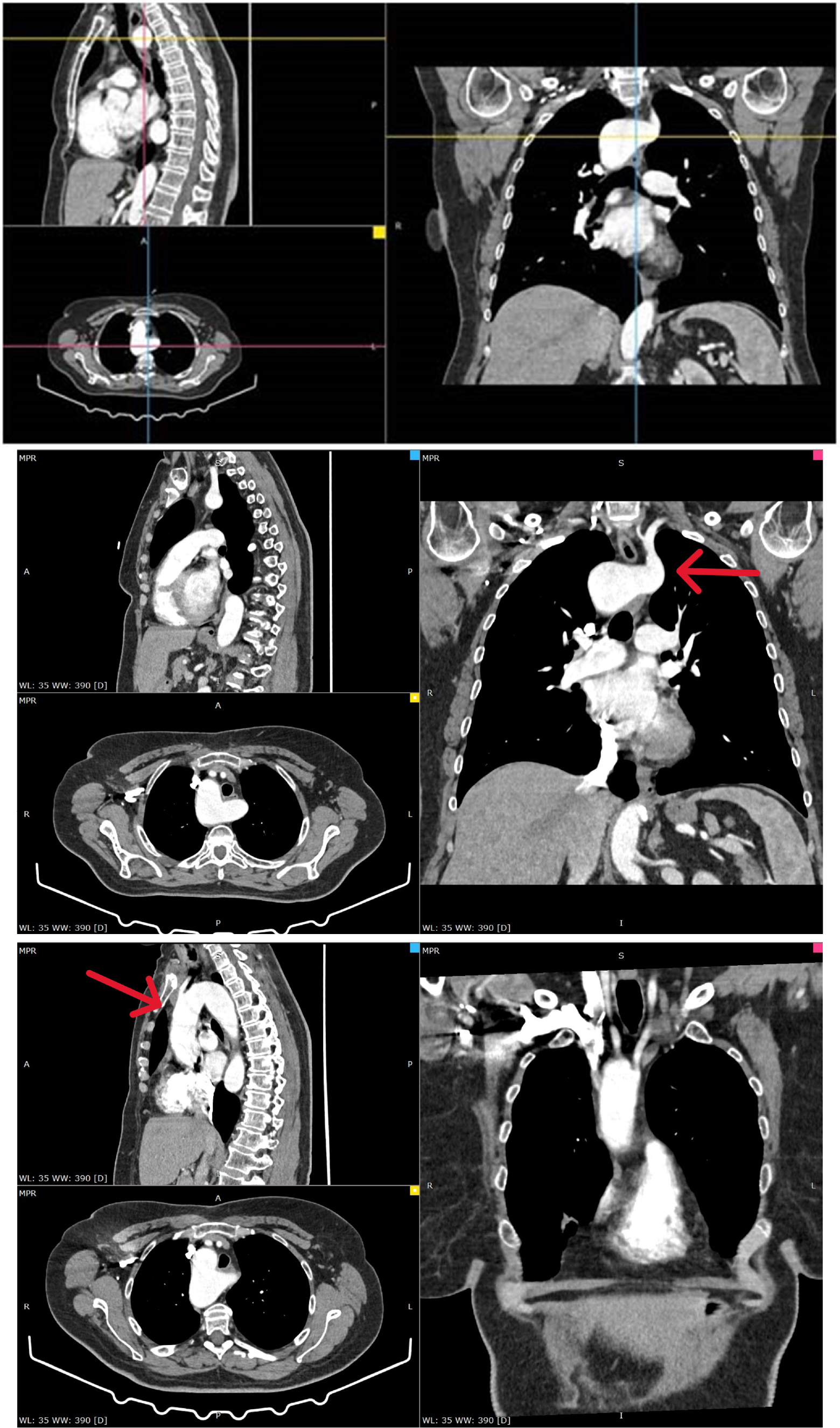
Figure 2
Angio-CT, arterial phase; (a) MPR reconstruction shows a KD measuring 28 mm 24 mm (transverse × anteroposterior diameter), with a base (neck) of 24 mm, localized posterior to the trachea and oesophagus, and just anterior to the T7 vertebra; (b) a right-sided aortic arch is visible (arrow); (c) Best exposure of the KD (arrow). CT, computed tomography; KD, Kommerell diverticulum; multi-planar reconstruction (MPR).
Given the presence of dysphagia lusoria and epigastralgia, esophagogastroduodenoscopy (EGD) was subsequently performed. This revealed a wide oesophageal lumen without permanent or cicatricial stenosis, but with marked hyperpulsatility of the anterior oesophageal wall above the aortic level (Figure 3). The stomach showed parallel folds with the presence of bile fluid between the folds, without other significant pathological findings. Notably, this patient had no other upper gastrointestinal (GI) endoscopy examination, apart from the one performed at the time of Biermer anaemia diagnosis, >15 years ago, although atrophic gastritis is a pre-malignant condition that should be regularly checked. Had this procedure been done during follow-up, KD would have been discovered earlier, before dysphagia occurred.
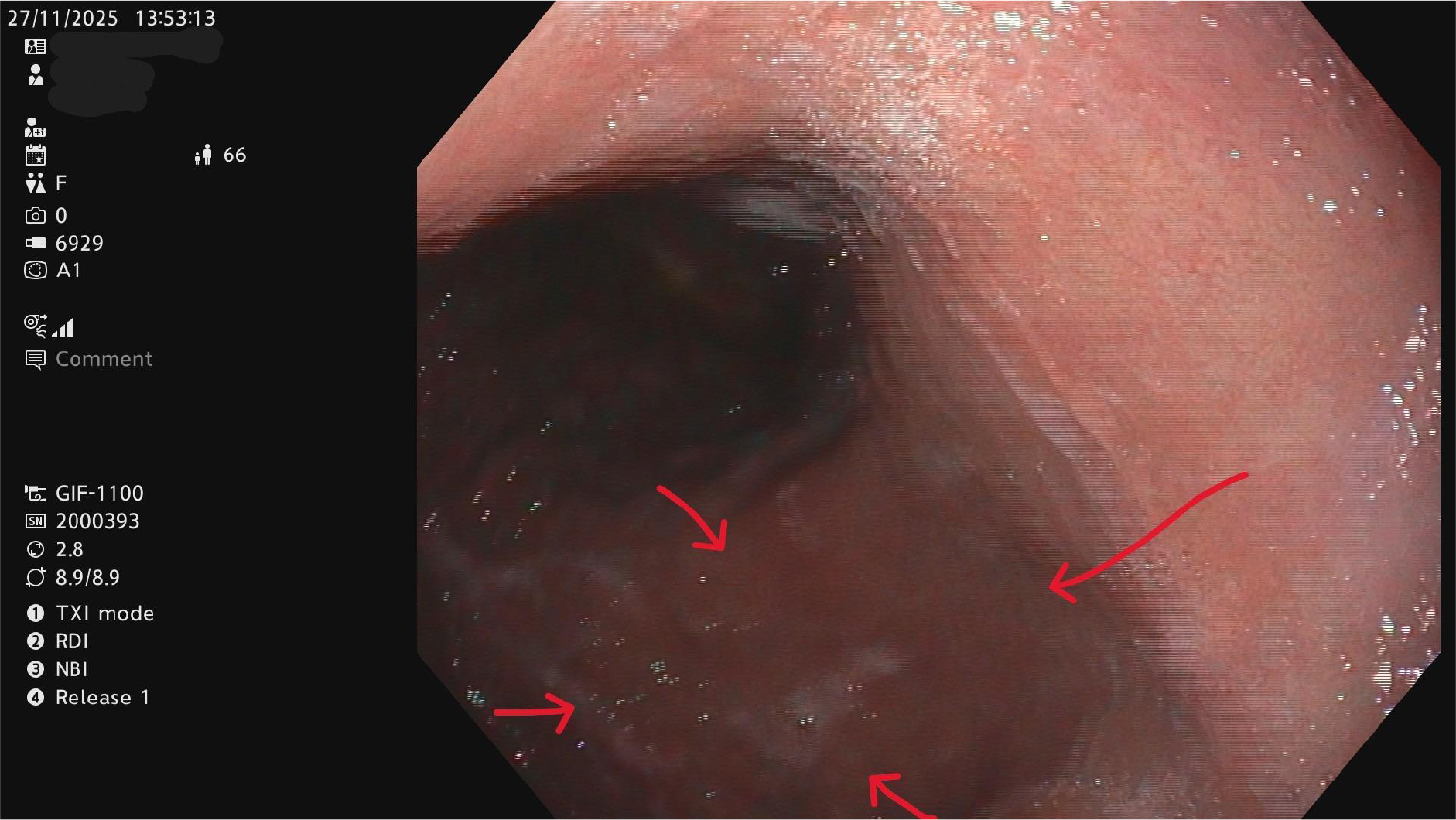
Figure 3
The area between the arrows shows the hyperpulsatility of the anterior oesophageal wall.
At the time of evaluation, cardiovascular parameters were within optimal ranges; therefore, the previous treatment regimen was maintained, including perindopril 10 mg/day, amlodipine 2.5 mg/day, and a fixed-dose combination of atorvastatin/ezetimibe 40/10 mg daily, with LDL-cholesterol levels within the therapeutic target. In view of the gastrointestinal symptoms attributed to KD, symptomatic therapy with metoclopramide 10 mg/day and gastroprotective treatment with pantoprazole 20 mg/day were initiated.
Considering the patient’s age and the risk of complications associated with KD, including dissection of the diverticulum or the thoracic aorta, particularly in the context of associated atherosclerotic changes and calcifications, the patient was referred for cardiovascular surgical evaluation to assess the indication for corrective intervention. However, to our knowledge, the patient failed to comply to this recommendation.
Discussion
This case reveals the importance of a rigorous evaluation of the patient without specific cardiovascular symptomatology. KD mainly occurs in children, but the risk of fatal complications is considerable when it comes to adults. Due to its incidental nature and presumed underreporting in the literature, the natural history and exact clinical consequences of Kommerell’s diverticulum are unknown. Moreover, there are currently no guidelines that specifically address how patients with KD should be managed. Treatment should be individualised to patient anatomy and symptoms.
In assessing cardiovascular morphology, MRI has the advantage of avoiding ionising radiation, using a small volume of non-iodinated contrast, and evaluating flow patterns, such as flow changes and pressure gradients. On the other hand, angio-CT is fast and provides 3D reconstructed images to illustrate the complex anatomical relationships among the aortic arch structures, trachea, and oesophagus, which help in surgical planning [21]. Backer et al. [22] suggested that any diverticulum >1.5 times the diameter of the subclavian artery should be considered for surgical intervention due to the increased likelihood of rupture or oesophageal compression.
For an easier pathway to the diagnosis, other imaging modalities can be used. TEE is a frequently performed procedure with many purposes, including embolic source evaluation and cardiac structure and haemodynamic evaluation [23]. When an unusual space-occupying structure other than the atheroma is observed, the possibility of other aortic diseases, such as aortic dissection, aortic aneurysm, or even tumours should be considered. In addition, the possibility of incidentally observed KD should be included in the differential diagnosis. When the structure appears as an echo-free space pouching out from the descending thoracic aorta with a bulbous shape and a blood flow connection that exists on echocardiography, then Kommerell’s diverticulum should be considered [24].
Table 1
Adult cases of KD and the algorithm of management.
| Author (Year) | Patient | Clinical presentation | Diagnosis | Treatment | Outcome |
|---|---|---|---|---|---|
| Summa et al.2026 [8] | 80 F; RAA + ALSA + KD (5 cm) | Asymptomaic | Chest X-Ray;CTA | A staged hybrid approach: carotid-subclavian bypass followed by TEVAR with embolization | Successful on intermediate follow-up |
| Sun et al. 2025[9] | 73 F; RAA + KD | Dyspnea (2 months) | CTA | TEVAR | Uneventful |
| Gunga et al. 2025 [10] | 44 F; ARSA + KD | Dysphagia | CTA | Open repair | Resolved |
| Yokawa et al. 2025 [11] | 69 F; RAA + ALSA + KD | Dysphagia | CTA | Arch replacement | Uneventful |
| Sultan et al. 2025 [12] | 66 M; giant KD (7.3 cm) | Incidental → growth | CT | Endovascular staged | Full recovery |
| Nocera et al. 2024 [13] | 56 F; RAA + KD | Chronic cough | CT/MRI | Conservative | Follow-up |
| Overbeek et al.2024 [14] | 67 M; ARSA + KD | Post-op complications | CT/MRI | Surgery + stent | Partial recovery |
| Georgakarakos et al. 2024 [15] | 51 F; double arch + KD | Asymptomatic | CTA | Conservative | Stable |
| Nishio et al. 2024 [16] | 80 F; RAA + KD | Asymptomatic | CTA | Endovascular | Good |
| Kavaliunaite et al. 2024[17] | 50 M; ARSA + KD | Dysphagia | CT | Hybrid repair | Good |
| Akilu et al. 2023[18] | 50 M; RAA + ALSA + KD | Dyspnea, chest pain | CTA | Hybrid repair | Successful |
| Yabu et al. 2023[19] | 62 M; RAA + KD | Post-dissection | CTA | Arch replacement | Successful |
| Iwanaga et al, 2023 [20] | 74 F, 79 F,80 M, 48 M, 52 F; RAA + KD (three cases) ARSA + KD (two cases) | Dysphagia, dyspnea, chest tightness, esophageal stenosis | CT | TEVAR (case 3), no surgery for the remaining cases | Symptomatic improvement |
Patients presenting with dysphagia are usually assessed using EGD. If there is extra-oesophageal wall compression in EGD, the effects of abnormal aortic travel or KD should be considered, regardless of the presence of symptoms [20]. Given that KD and the right anomalous subclavian artery are arterial structures, the presence of pulsation may indicate vascular compression, which was the situation observed in our patient. Moreover, in a case series reported in 2023 [20], a patient with KD and RAA needed four EGDs in the follow-up of a symptomatic gastro-oesophageal reflux disease before compression from outside the oesophageal wall was noted, and the diagnosis of KD was made using contrast-enhanced CT.
In our opinion, the patient would benefit from a surgical treatment, given the risk of subsequent complications.
When it comes to surgical management, several types of interventions were evidenced, and the indications recently began to be more specific. Analysis of the recent literature indicates that surgical treatment should always be employed for symptomatic patients. Asymptomatic patients should be treated clinically, and management should be founded on controlling hypertension and using platelet antiaggregants and cholesterol reducers as secondary prevention, in addition to continuous follow-up [25]. Serial followup is warranted in cases with small dimensions without symptoms. However, surgical intervention should be considered when patients become symptomatic, if the diameter exceeds a threshold range between 30 mm and 50 mm, depending on anatomical configuration and institutional experience, in the absence of symptoms or when there is rapid growth [26]. Open surgical treatment consists in interposition grafts or endoaneurysmorrhaphy through thoracotomy with a left subclavian-to-carotid transposition, graft replacement with in situ reconstruction of the aberrant subclavian artery through thoracotomy, and total arch replacement through a median sternotomy and thoracotomy [27]. Several studies suggested that classical surgical techniques should be used because there were no complications mentioned [28,29]. Endovascular treatment for the KD is a less invasive approach than open surgery. Recommendations for endovascular treatment should be considered in total accordance with clinical situations and anatomical factors. Some cases were treated through a hybrid technique (classic and endovascular), and no hospital mortality was reported [30]. Total endovascular repair with a branched device has been reported to further reduce the invasiveness of treatment. Reconstruction of the left subclavian artery would be of most importance to prevent arm claudication in younger patients and subclavian steal syndrome in the elderly [27]. Further research is needed to achieve a balance between the clinical implications and the most efficient surgical technique.
Conclusion
KD associated with a right-sided aortic arch is a rare but potentially high-risk aortic anomaly in adults. This case illustrates how non-specific cardiovascular and digestive symptoms may mask an underlying structural vascular condition that is not evident on routine cardiological evaluation. Contrast-enhanced CT angiography remains essential for definitive diagnosis and anatomical assessment, while management must be individualised in the absence of specific guidelines. Early recognition and appropriate surgical referral are crucial to prevent complications, such as progressive dilation, dissection, or rupture.
Notes
[2] Conflicts of Interest
The authors have each completed the International Committee of Medical Journal Editors Form for uniform Disclosure of Potential Conflicts of Interest. No authors have any potential conflict of interest to disclose.
[3] Informed Consent Statement
Written informed consent to publish this paper was obtained from the patient.