
TABLE 1.
Demographic and clinical characteristics of the patients at baseline
| Characteristic | N = 17 (100%) |
|---|---|
| Median age (range) - year | 59 (32-73) |
| Gender | |
| Male | 14 (82) |
| Female | 3 (18) |
| ECOG performance status | |
| 0 | 15 (88) |
| 1 | 2 (12) |
| Disease stage at initial diagnosis | |
| II | 4 (24) |
| III | 13 (76) |
| Disease stage at initial diagnosis | |
| Oesophagus | 9 (53) |
| Gastroesophageal junction | 8 (47) |
| Histological type | |
| Adenocarcinoma | 12 (71) |
| Squamous-cell carcinoma | 5 (29) |
| Pathological lymph-node status | |
| ypN0 | 6 (35) |
| ≥ ypN1 | 11 (65) |
| Pathological tumour status | |
| ypT0 | 1 (6) |
| ypT1 or ypT2 | 5 (29) |
| ypT3 or ypT4 | 11 (65) |
| Tumour-cell PD-L1 expression | |
| < 1 | 5 (29) |
| ≥ 1 | 12 (71) |
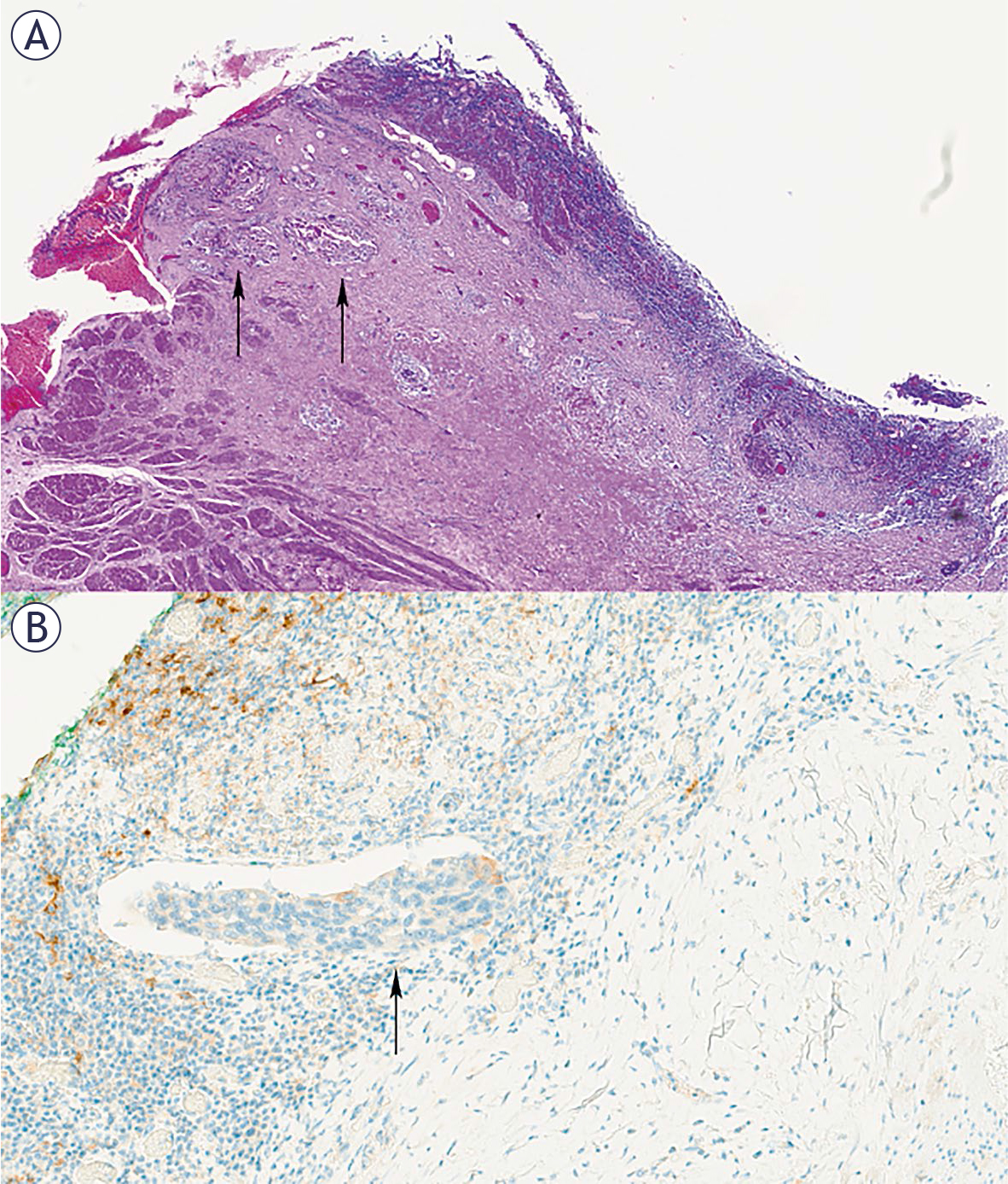
FIGURE 1.
Histopathological assessment of squamous cell carcinoma in a 75-year-old patient following neoadjuvant therapy. (A) Haematoxylin & eosin staining (magnification ×10) reveals partially regressive changes in squamous cell carcinoma, characterized by residual tumour architecture and treatment-induced stromal alterations. (B) PD-L1 expression was evaluated via 22C3 immunohistochemistry (magnification ×40): tumor cells are predominantly PD-L1 negative (arrow), whereas scattered mononuclear inflammatory cells exhibit positive membranous staining (magnification ×20).
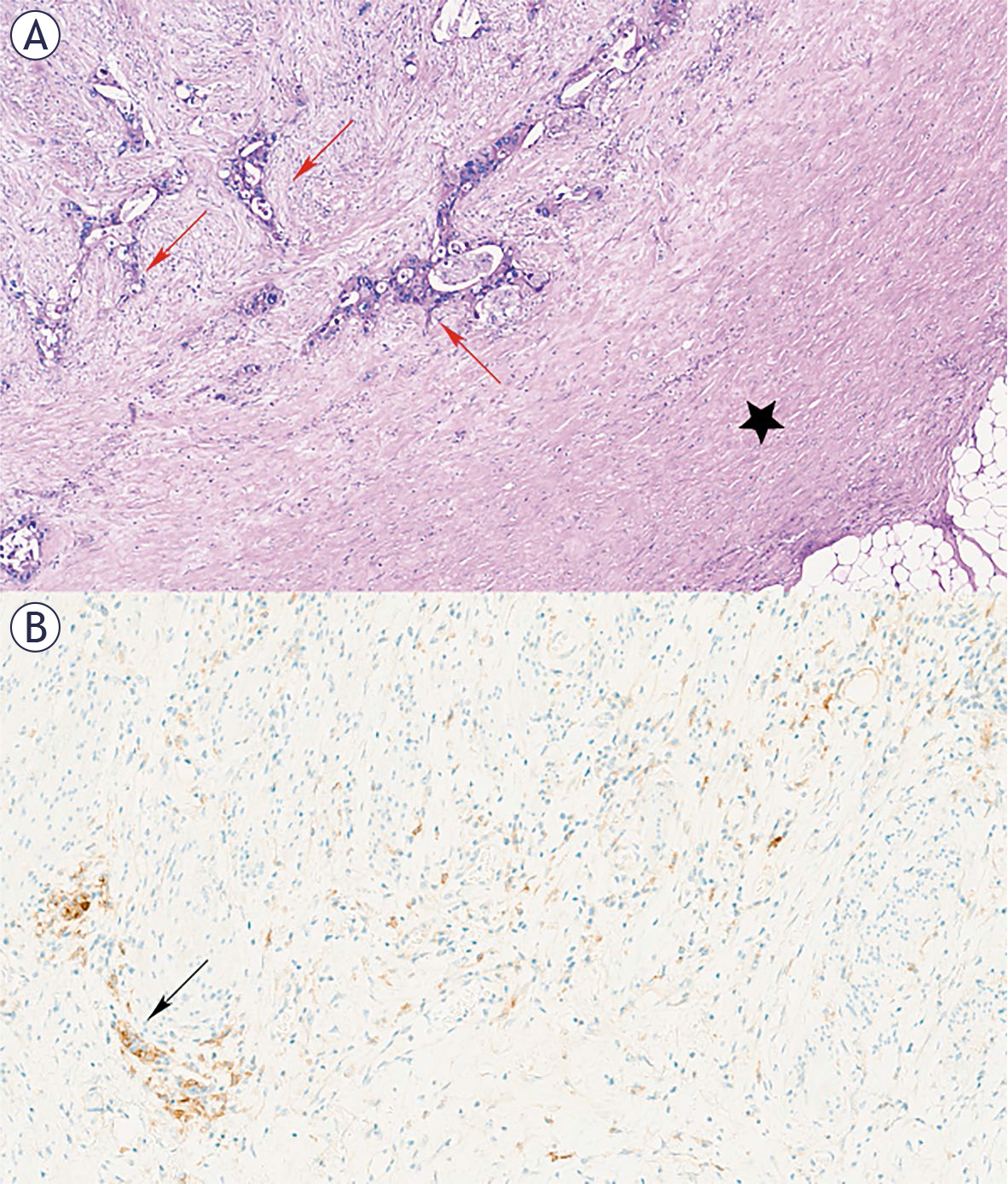
FIGURE 2.
Histopathological evaluation of gastroesophageal junction adenocarcinoma in a 54-year-old patient after neoadjuvant therapy. (A) Lymph node metastasis showing partial regression following neoadjuvant chemoradiotherapy. Residual viable adenocarcinoma cells are indicated by arrows, whereas fibrotic areas are marked with an asterisk (hematoxylin & eosin stain, magnification ×20). (B) PD-L1 expression was assessed via 22C3 immunohistochemistry. Arrows highlight degeneratively altered tumor cells with weak membranous PD-L1 positivity. Scattered mononuclear inflammatory cells also exhibit PD-L1 expression (magnification ×20).