
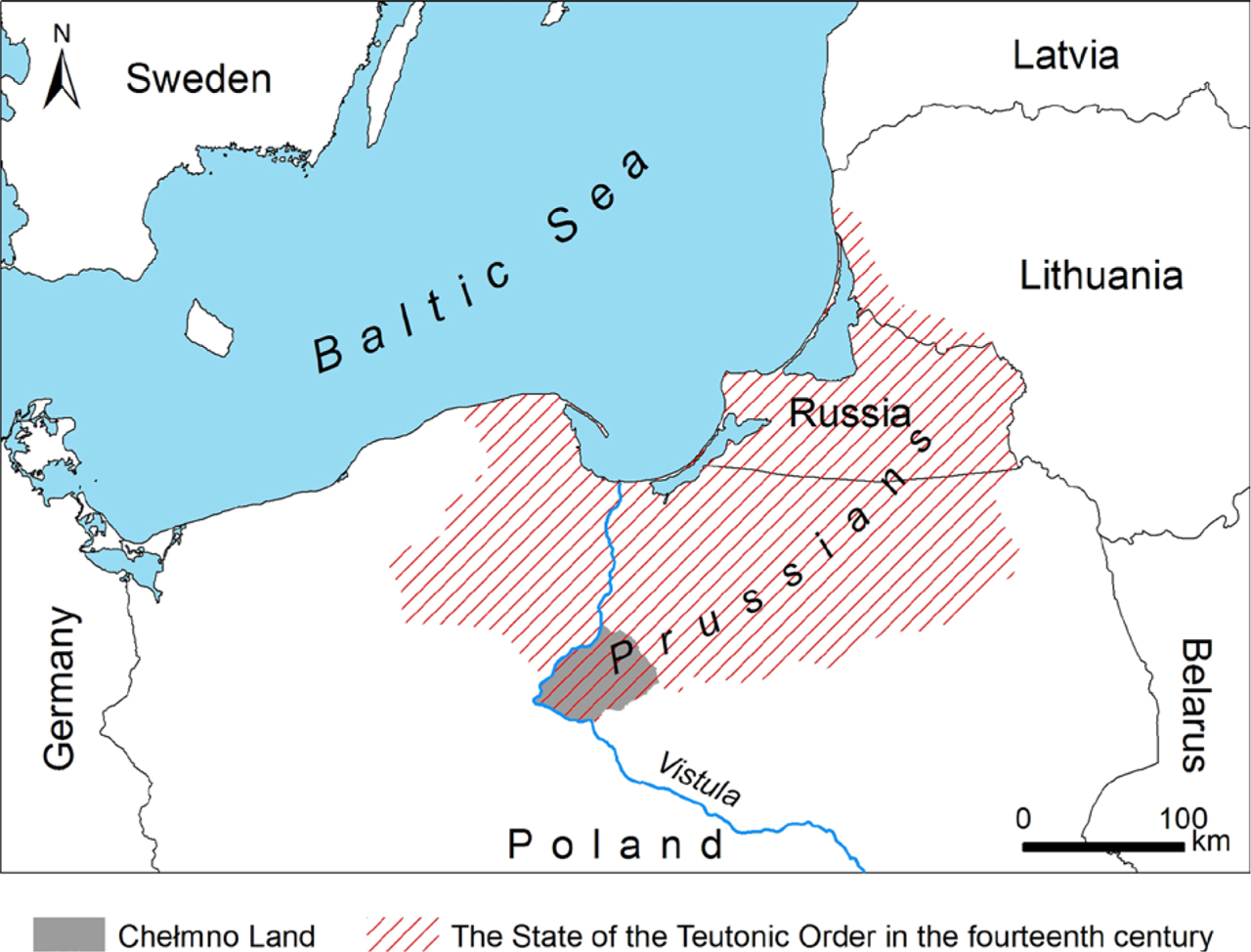
Fig. 1
Location of the research area in the background territory of the State of the Teutonic Order in the 14th century based on Czaja (2000).
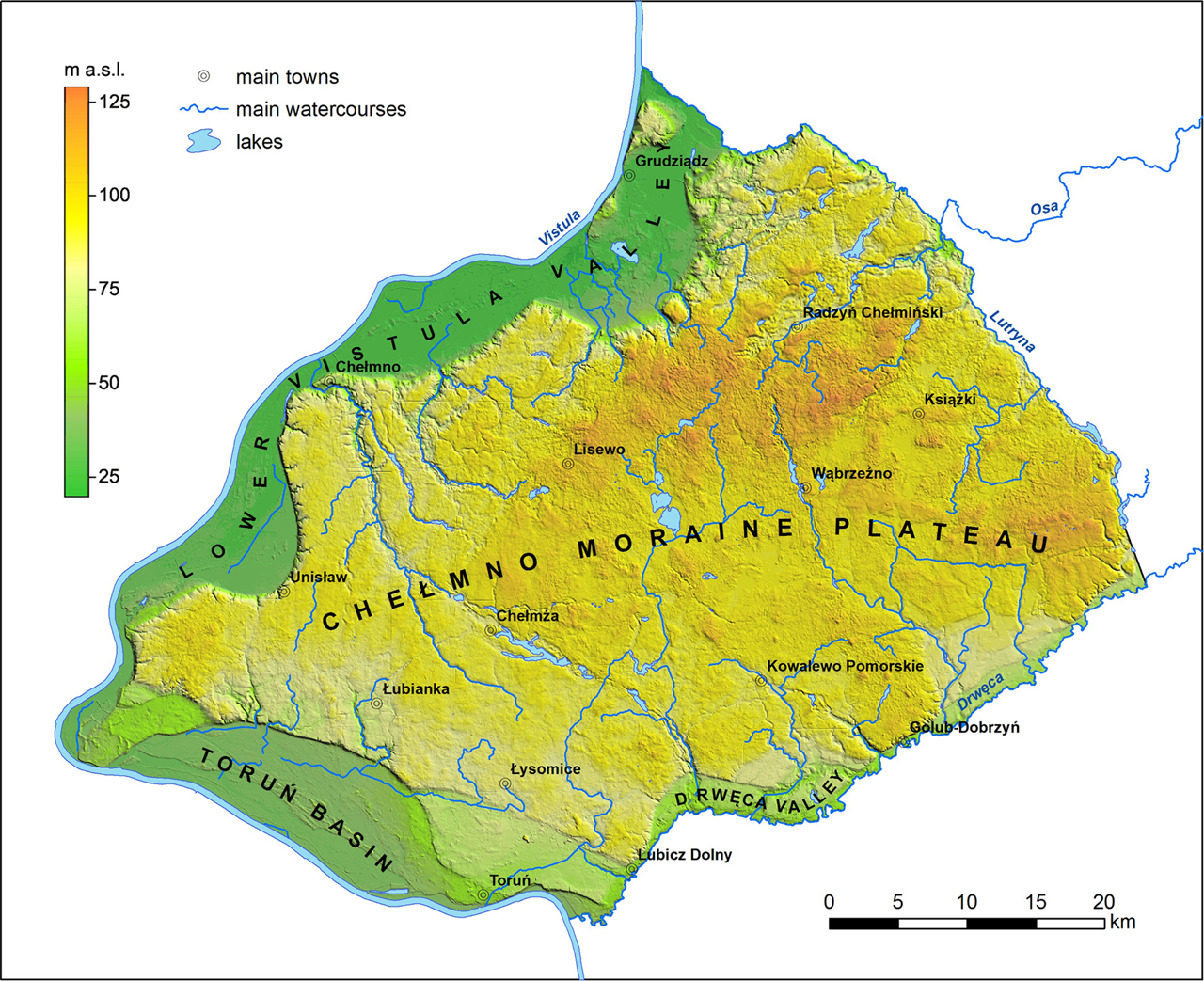
Fig. 2
Physical map of Chełmno Land.
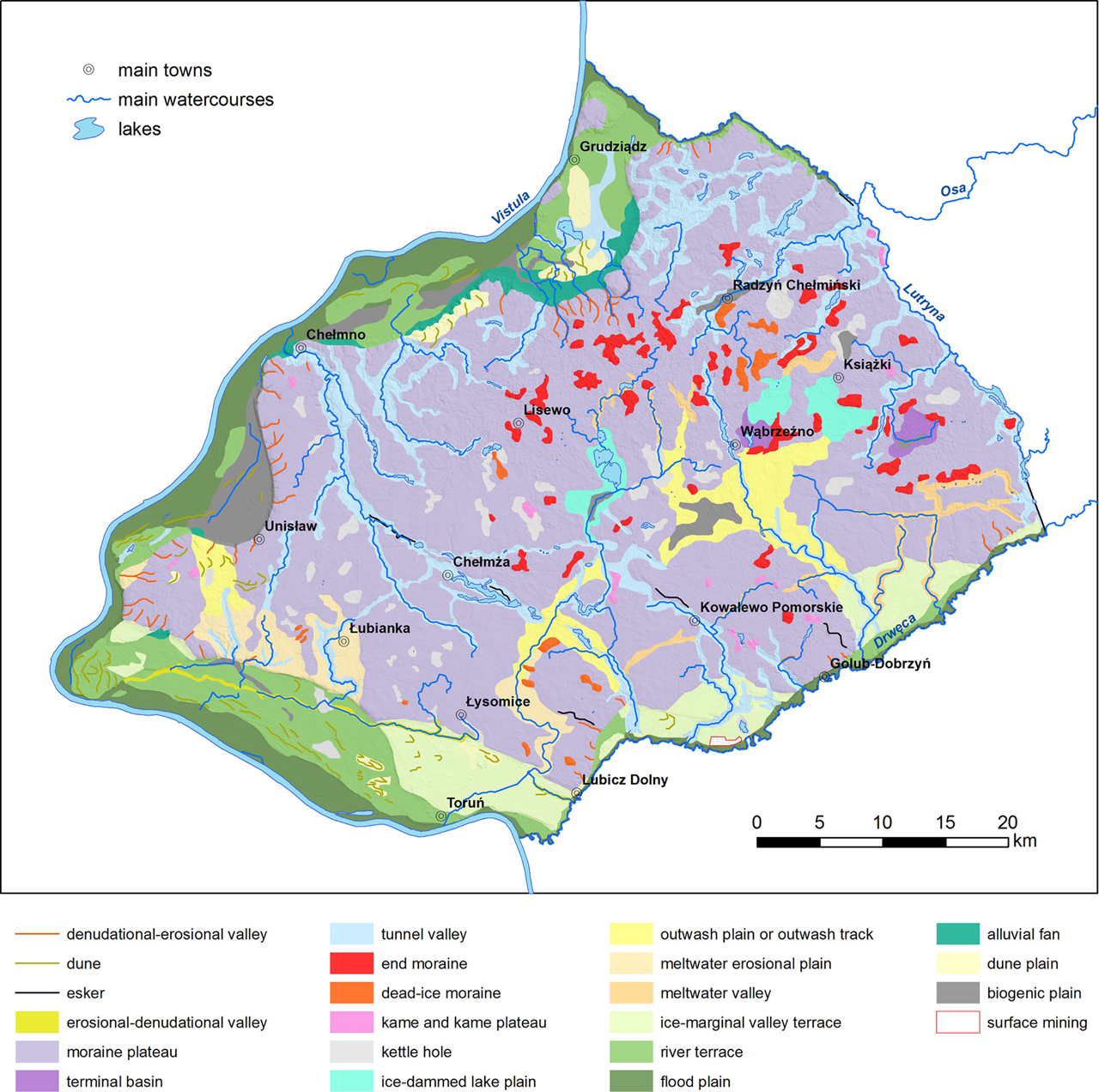
Fig. 3
Geomorphological map based on Molewski and Weckwerth (2017).
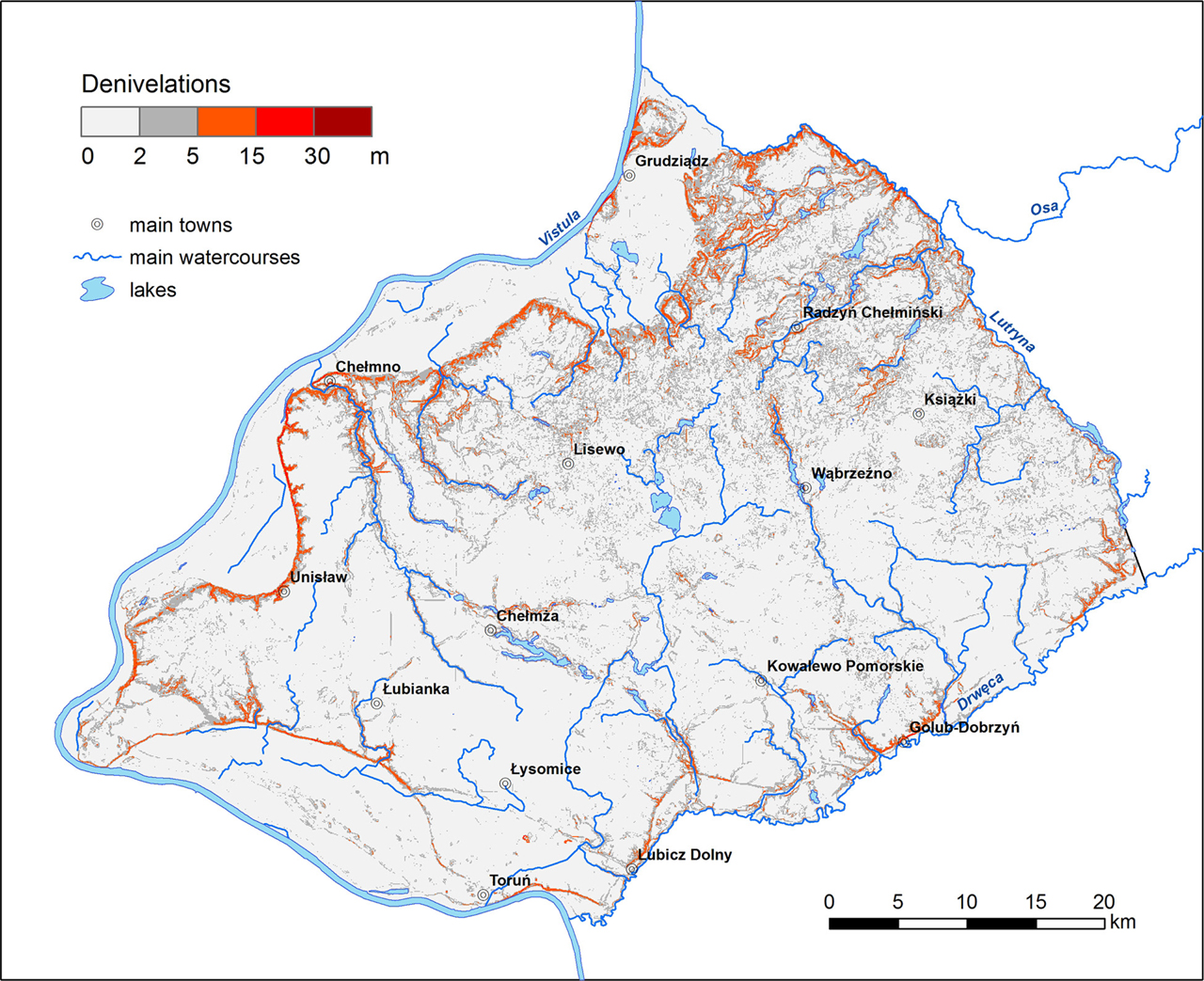
Fig. 4
Relative altitude map.
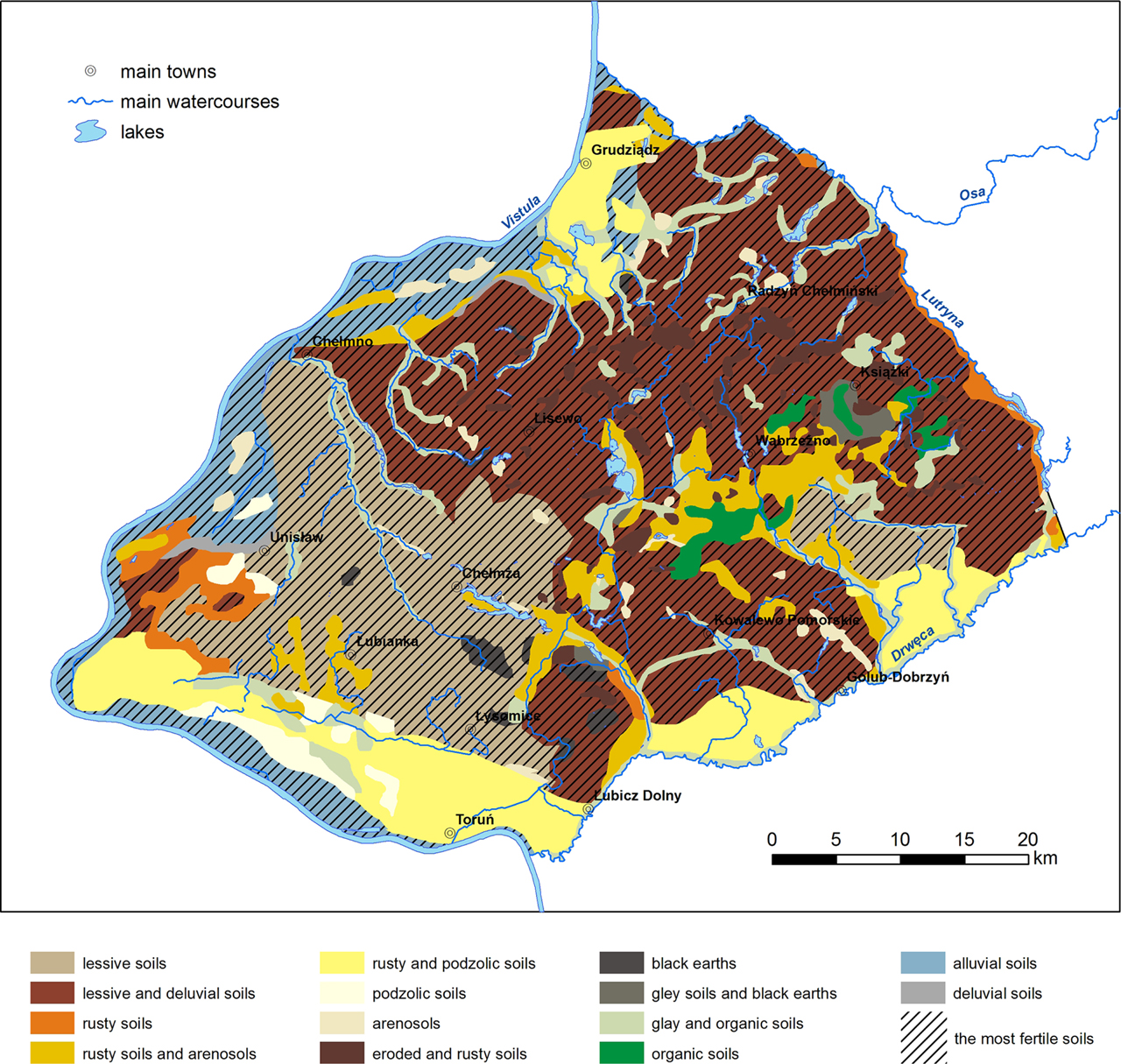
Fig. 5
Soil map based on Bednarek et al. (2015).
Table 1
Criteria of potential forest area of the research area.
| Criterion | Attribute values A | Ranking of criteria | Weighting w |
|---|---|---|---|
| Extent of forests on the Schrötter map | 1 | 1 | 0.33 |
| Extent of wetlands based on the Schrötter map and maps of Polish wetlands | 1 | 2 | 0.27 |
| Extent of modern forests | 1 | 3 | 0.20 |
| Wetness index (SAGA WI) | 1 | 4 | 0.13 |
| Relative altitudes | 1 | 5 | 0.07 |
| Sum: | 1.00 | ||
| Hypothetical extent of agricultural land | −1 | 1 | 0.50 |
| Soils favourable to agriculture | −1 | 2 | 0.33 |
| Density of archaeological sites | −1 | 3 | 0.17 |
| Sum: | 1.00 | ||
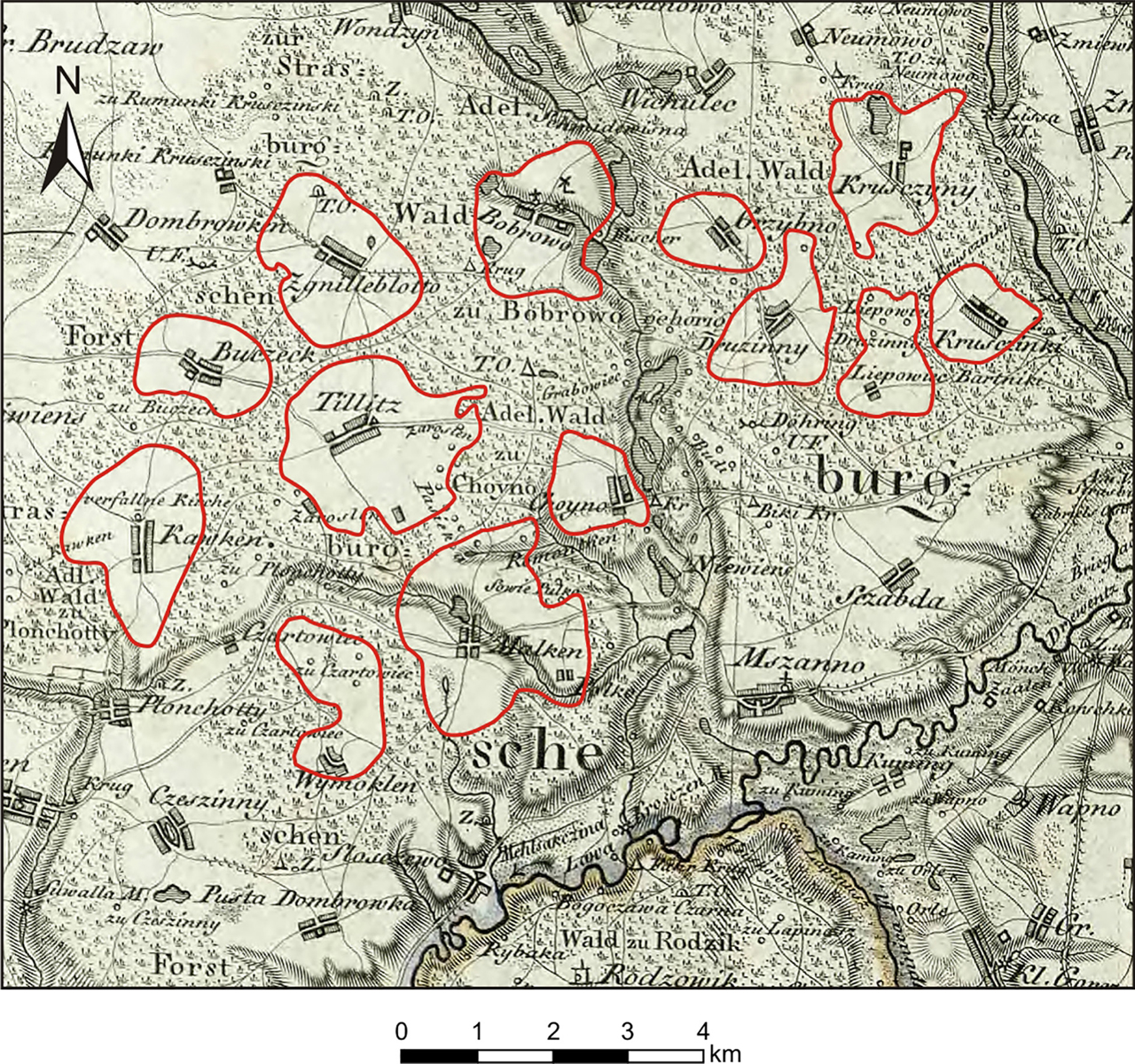
Fig. 6
Deforested areas around settlements in the eastern part of Chełmno Land on the Schrötter map from 1802.
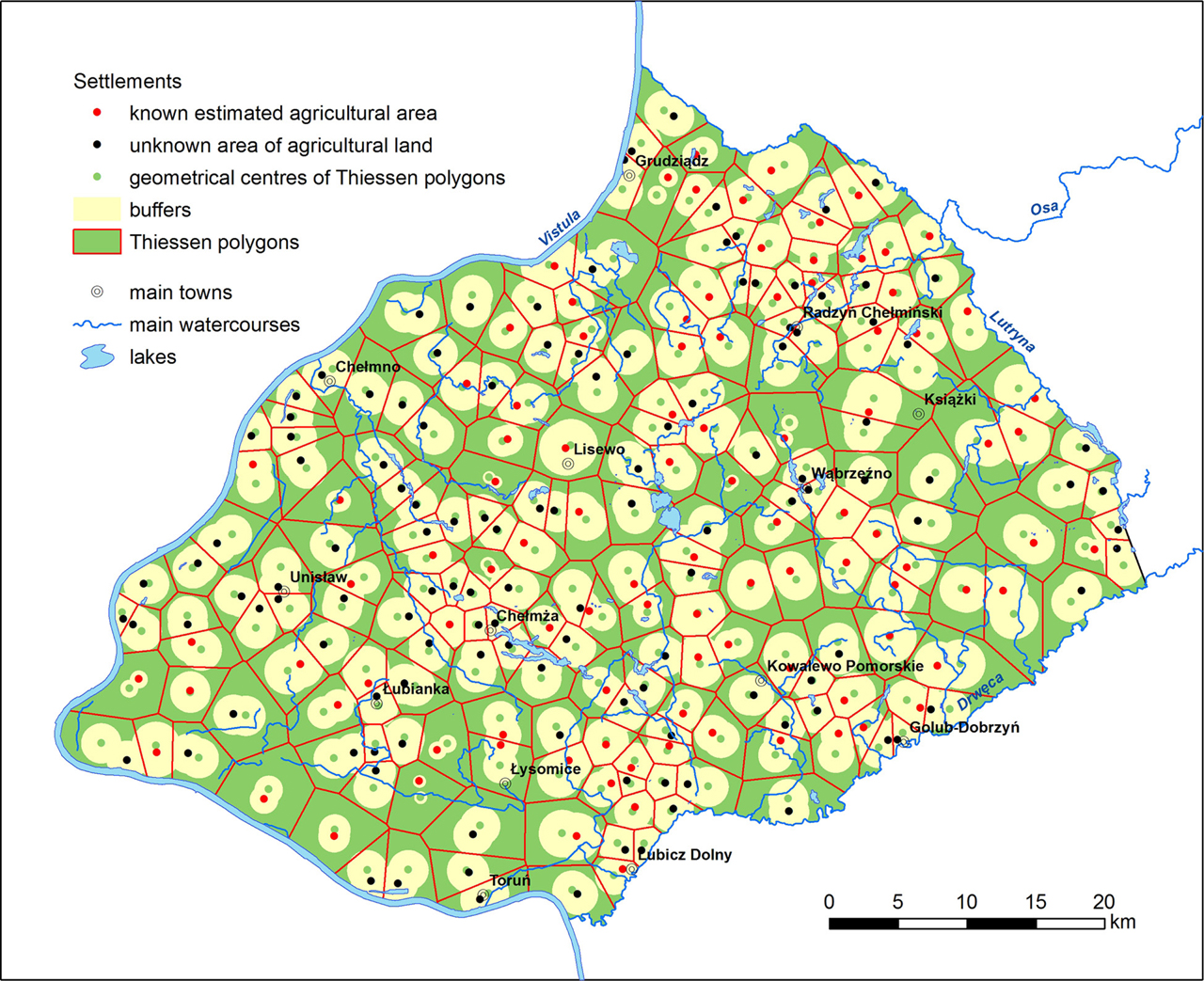
Fig. 7
Hypothetical extent of lands used for farming.
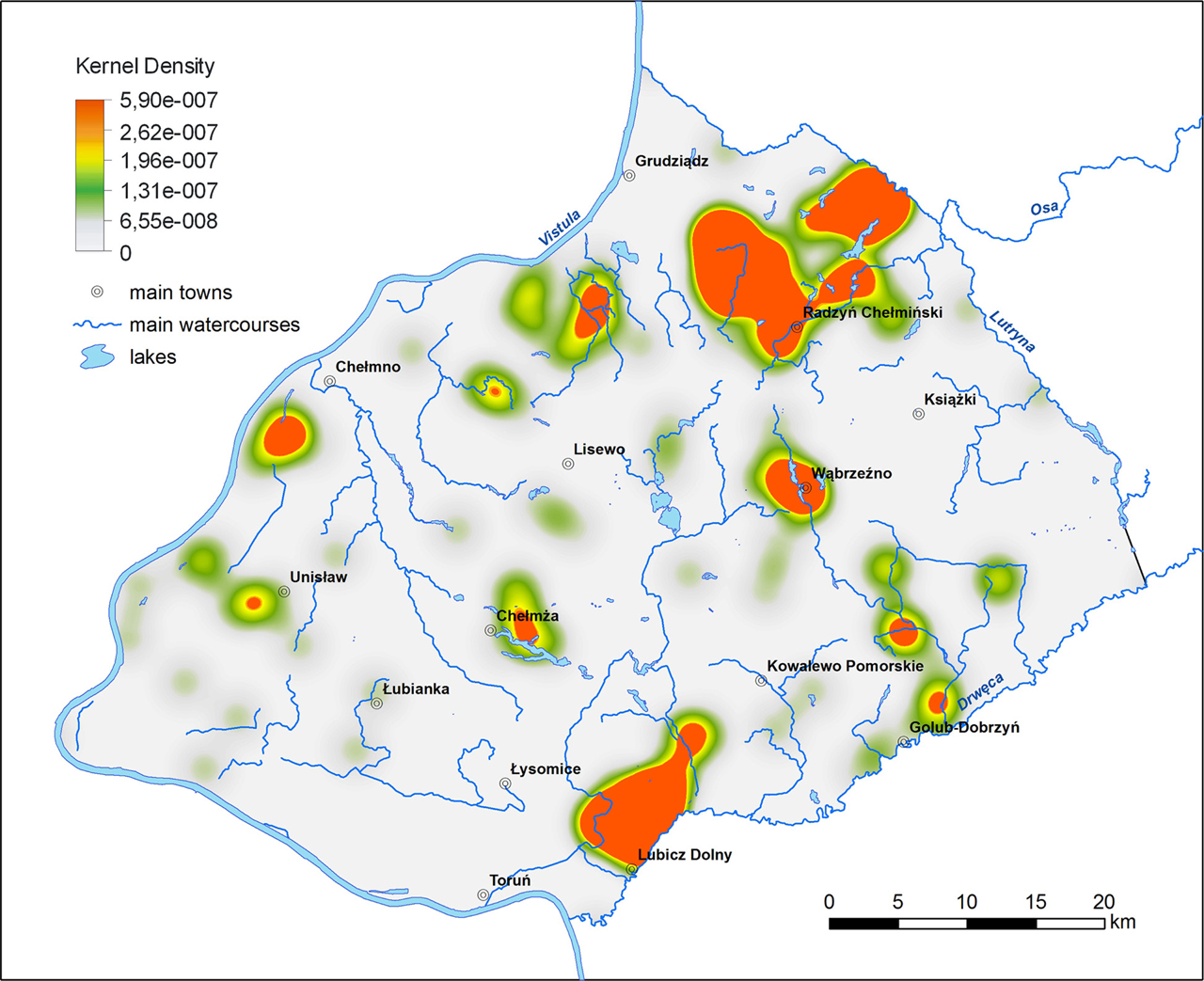
Fig. 8
Density of archaeological sites.
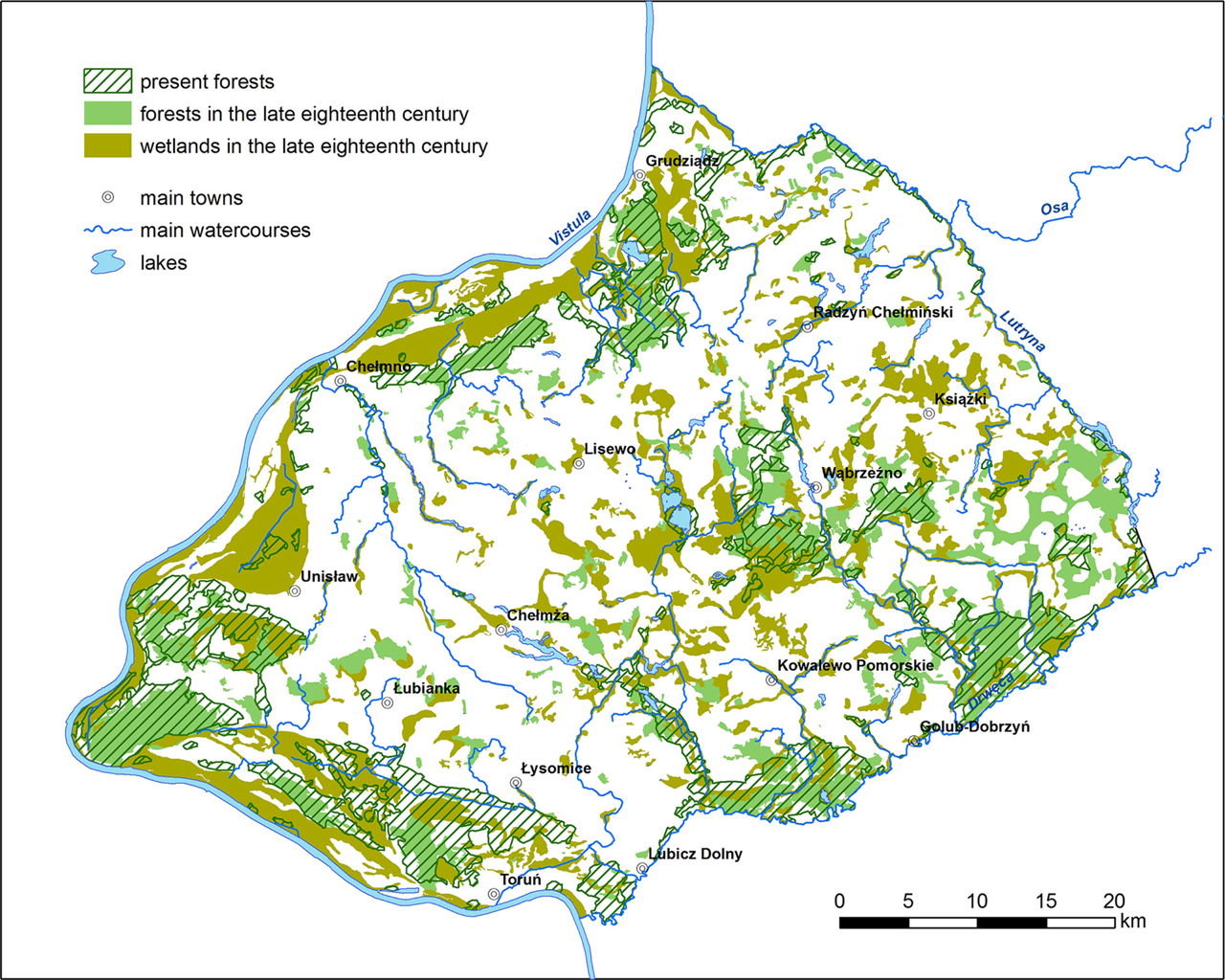
Fig. 9
Extent of forests: modern day (based on the Data of Head Office of Geodesy and Cartography, Poland), the late 18th century (based on the Schrötter map from 1802) and wetlands (based on the Schrötter map from 1802 and the Map of Polish Wetlands (IMUZ 2020)).
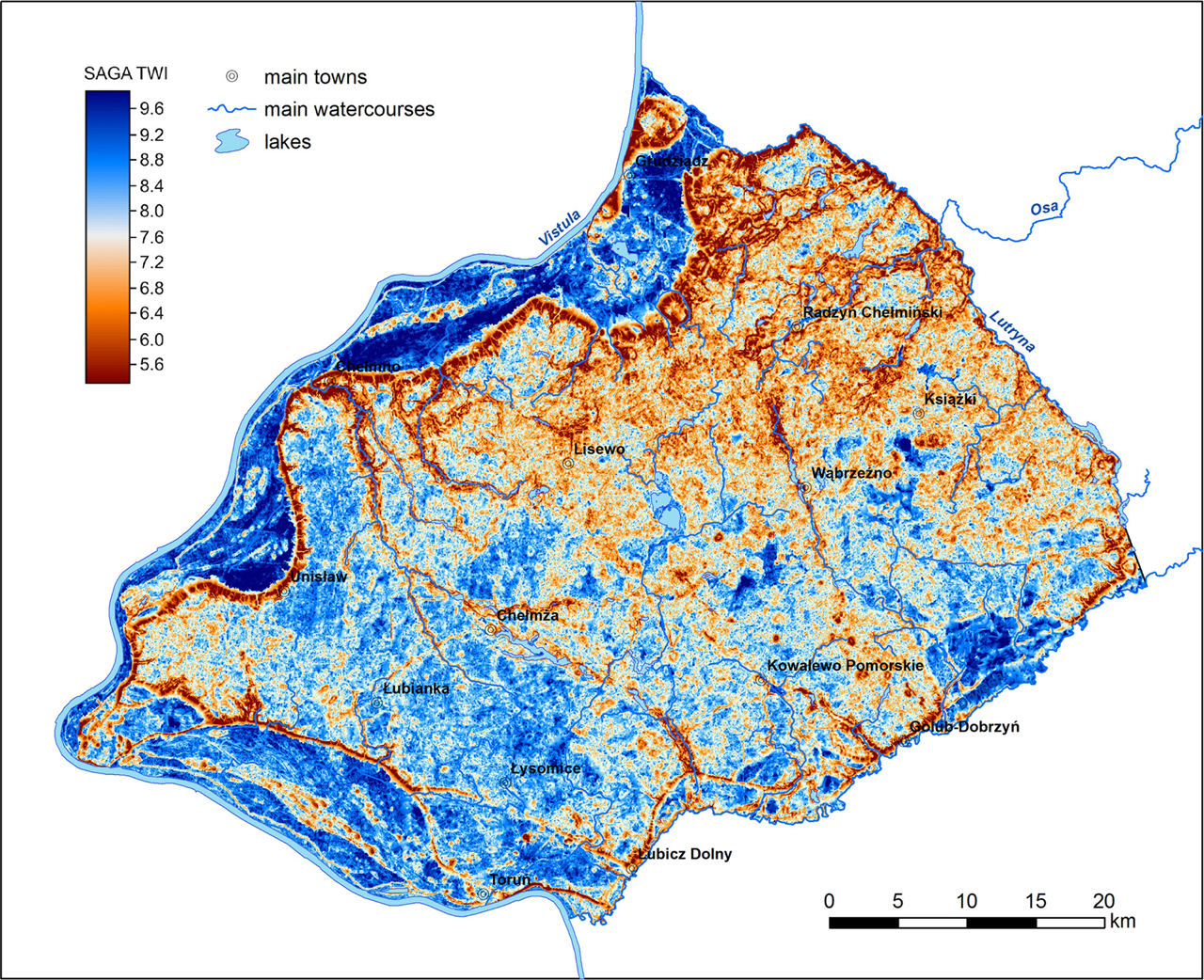
Fig. 10
SAGA Wetness Index.
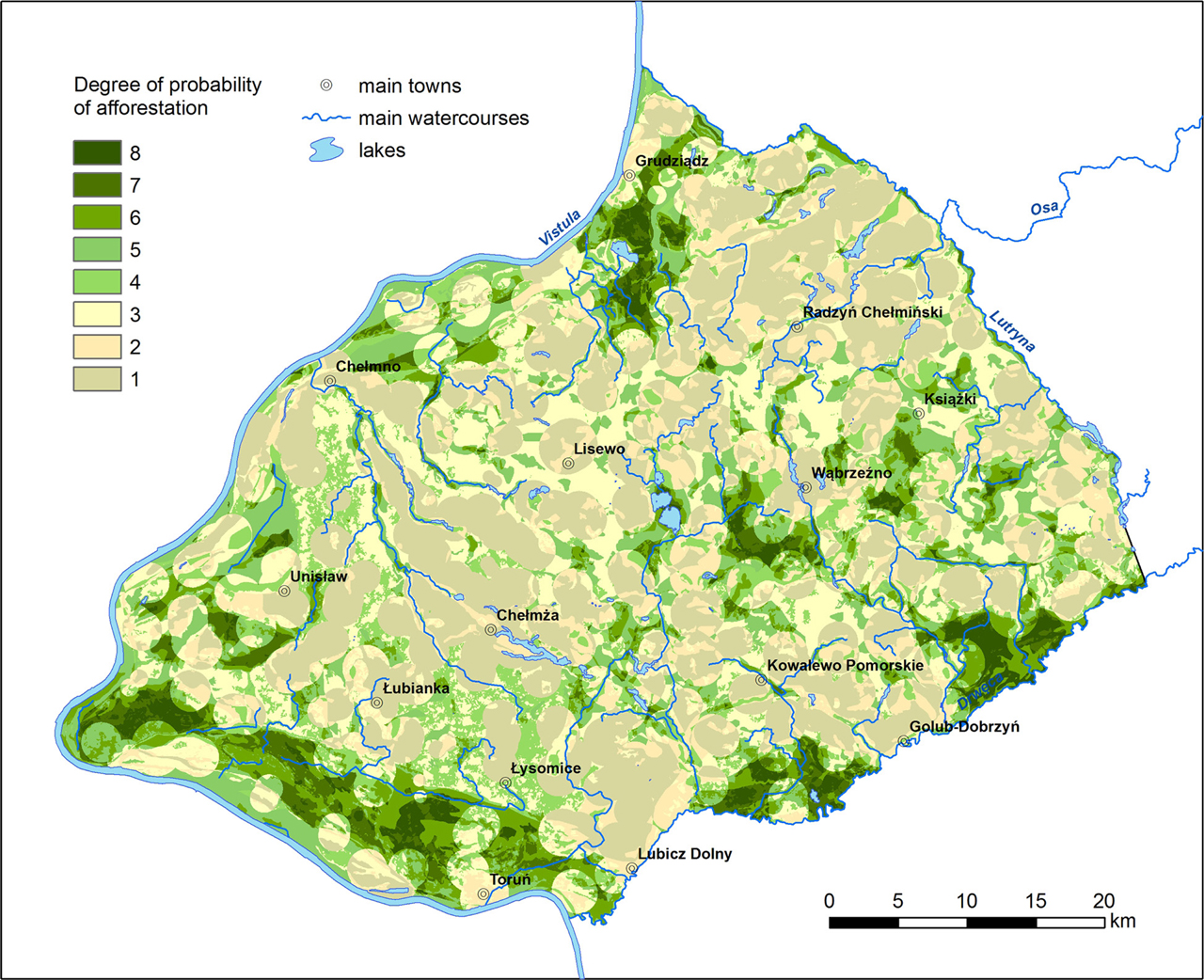
Fig. 11
Spatial model of forest area occurrence in Chełmno Land in the 13th century.
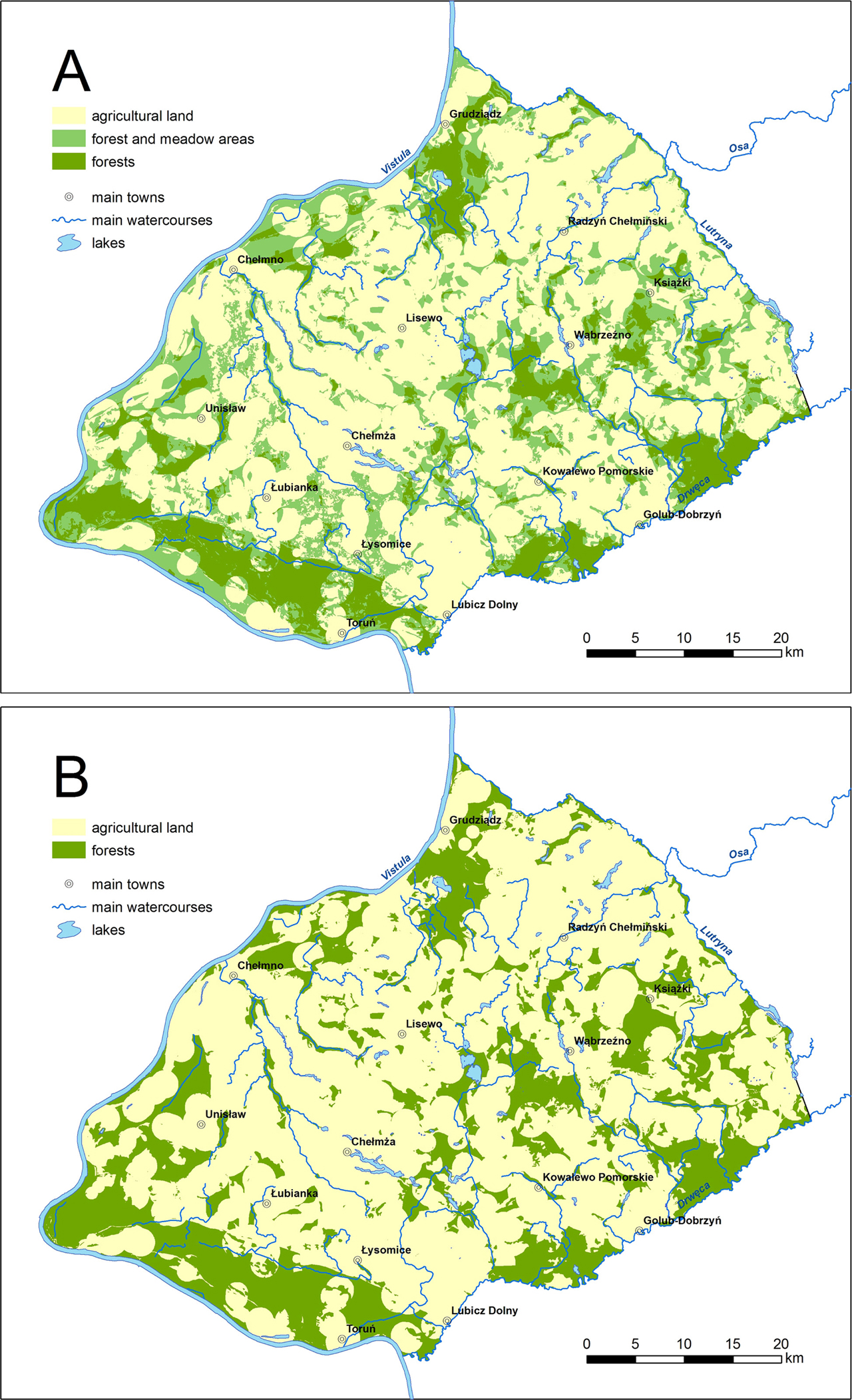
Fig. 12
Variants of the hypothetical forest area of Chełmno Land in the 13th century.