
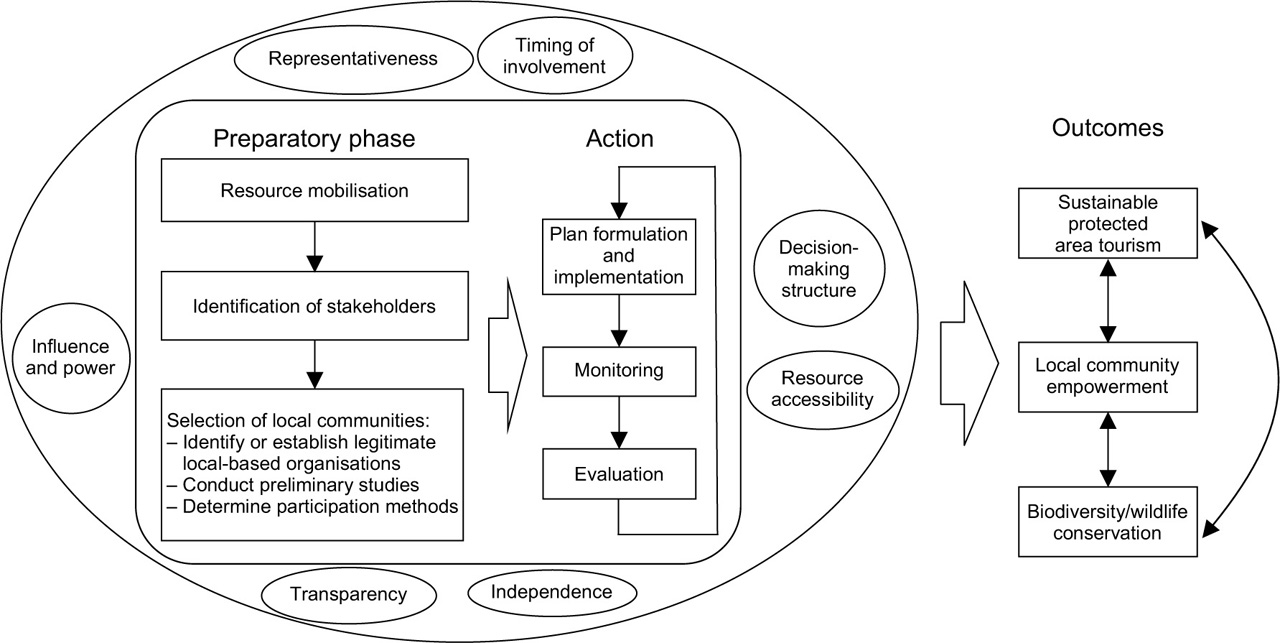
Fig. 1
Community participation framework for protected area-based tourism planning.
Source: Bello et al. (2016).
Table 1
Protected areas in Malawi (wildlife reserves and national parks).
| Name of protected area | Size (km2) |
|---|---|
| Majete Wildlife Reserve | 704 |
| Mwabvi Wildlife Reserve | 135 |
| Nkhotakota Wildlife Reserve | 1,800 |
| Vwaza Marsh Wildlife Reserve | 1,000 |
| Kasungu National Park | 2,100 |
| Lengwe National Park | 900 |
| Nyika National Park | 3,200 |
| Liwonde National Park | 548 |
| Lake Malawi National Park | 94 |
[i] Source: Department of National Parks and Wildlife.
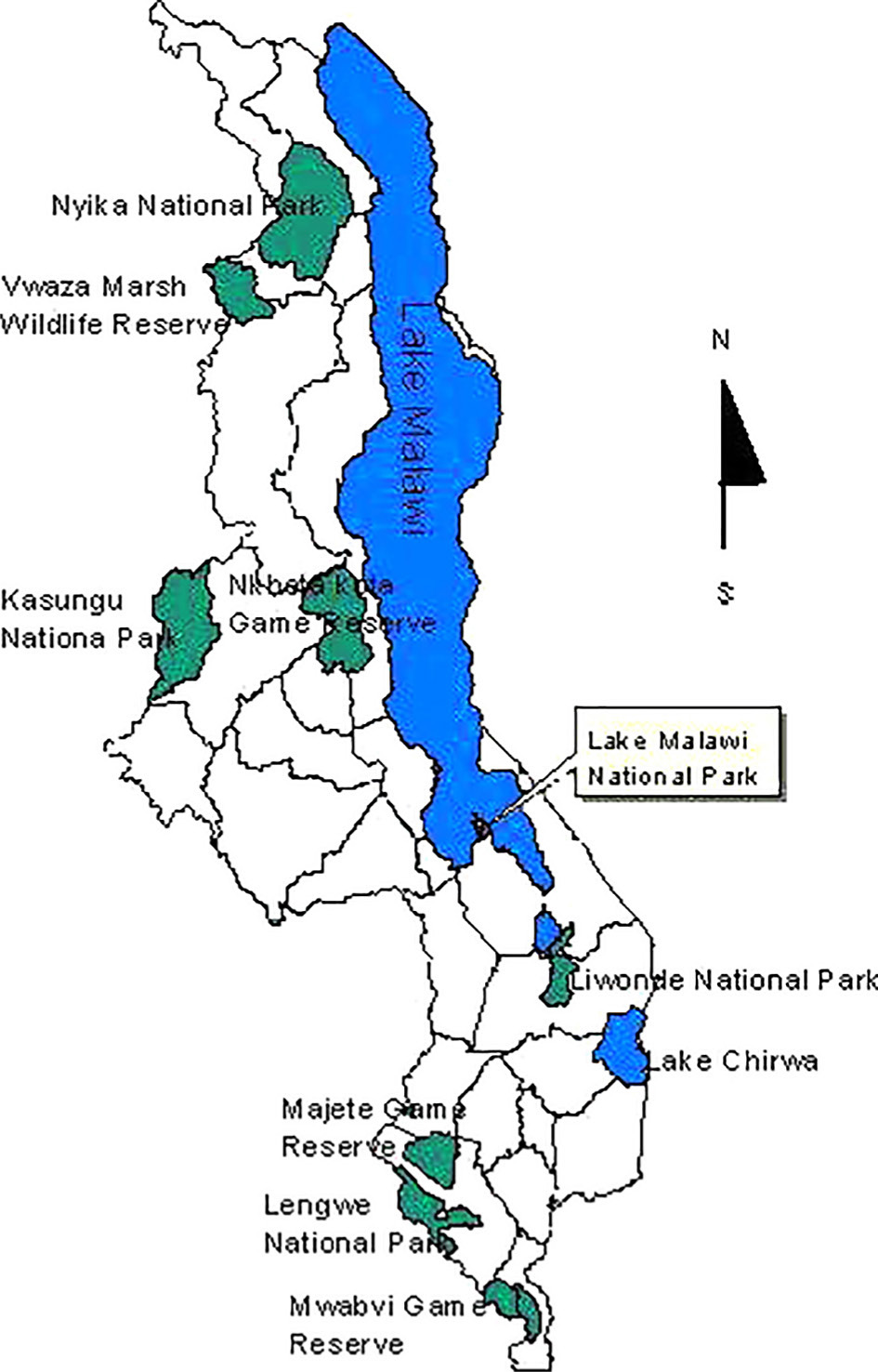
Fig. 2
Malawi's Protected Areas, according to the National Parks and Wildlife Act.
Source: Department of National Parks and Wildlife.
Table 2
Profile of study participants.
| Stakeholder group | Male | Female | Number of participants |
|---|---|---|---|
| Local communities | 11 | 5 | 16 |
| African Parks | 2 | 1 | 3 |
| DNPW | 3 | 0 | 3 |
| Department of Tourism | 4 | 0 | 4 |
| Tourism operators | 5 | 1 | 6 |
| NGOs | 4 | 0 | 4 |
| Total | 29 | 7 | 36 |
[i] DNPW – Department of National Parks and Wildlife; NGO – non-governmental organisation.
[ii] Source: author's field data.