
Table 1
Indicators for capitalising on rural tourism and ecotourism potential in 2020.
| Indicator | UM | Romania | Ţara Haţegului – Retezat | Percentage out of total |
|---|---|---|---|---|
| Tourist reception structures with tourist accommodation functions | Number | 8,610 | 313 | 3.64 |
| Existing tourist accommodation capacity | Places | 358,119 | 8,531 | 2.38 |
| Tourist accommodation capacity in operation | Places – days | 88,789,656 | 1,723,402 | 1.94 |
| Tourist arrivals | Number | 13,374,943 | 194,245 | 1.45 |
| Overnights | Number | 30,086,091 | 383,496 | 1.27 |
[i] Source: own calculations based on data provided by the National Institute of Statistics.
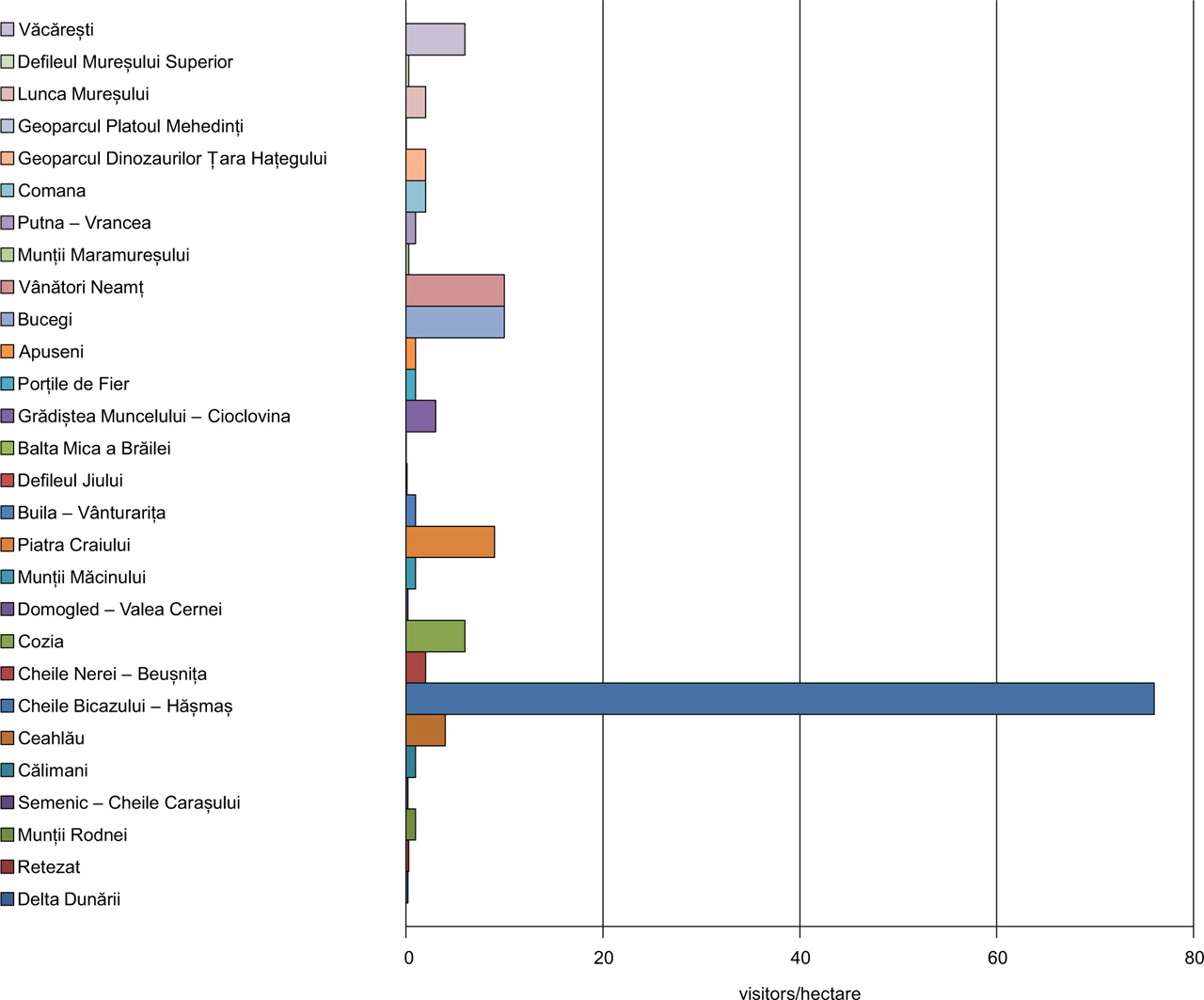
Fig. 1
Density of visitors in protected areas.
Source: own calculations based on estimates from the National Strategy for Ecotourism Development in Romania 2019.
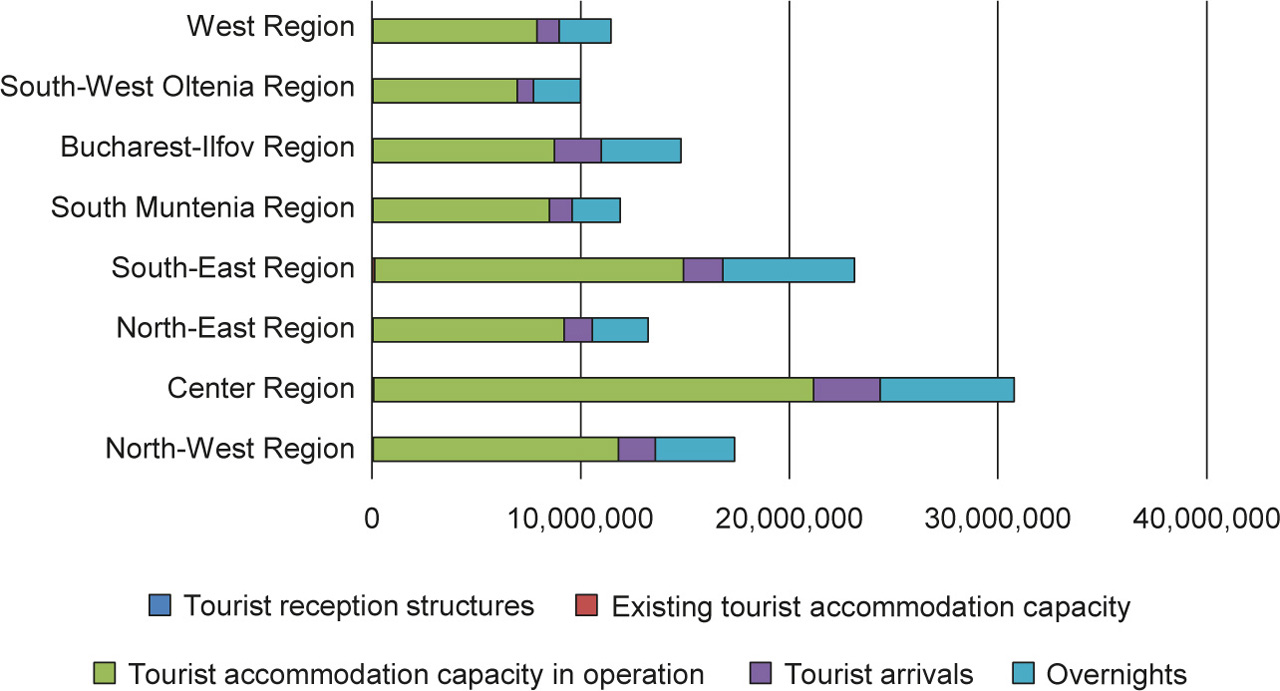
Fig. 2
The multicriteria hierarchy of regions.
Source: own calculations based on data provided by the National Institute of Statistics.
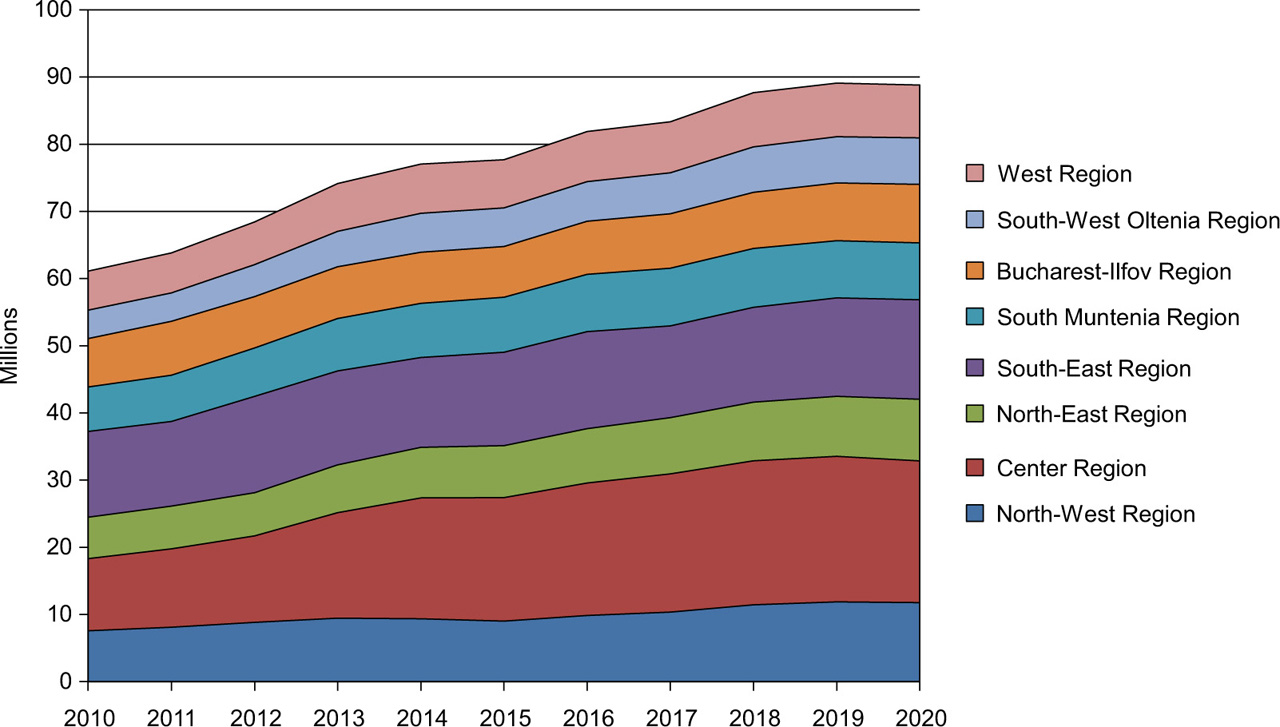
Fig. 3
Dynamics of accommodation capacity in regional profile.
Source: own calculations based on data provided by the National Institute of Statistics.
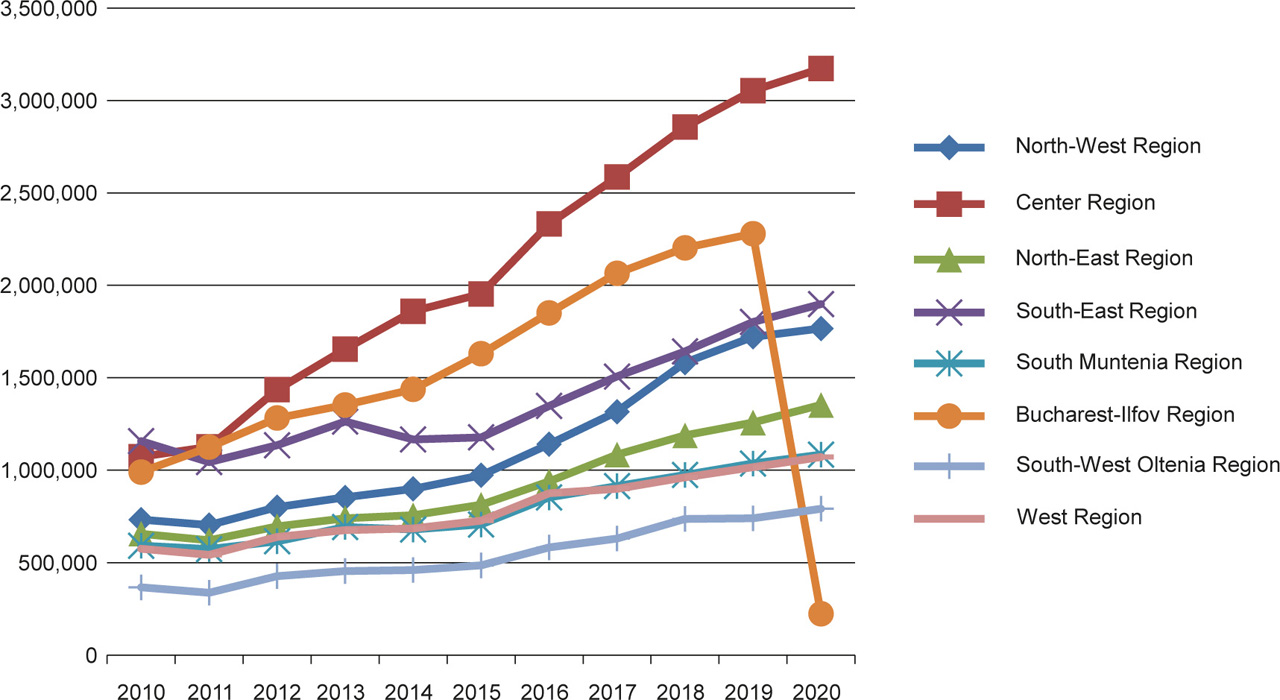
Fig. 4
The evolution of tourist arrivals in regional profile.
Source: own calculations based on data provided by the National Institute of Statistics.
Table 2
SWOT analysis of ecotourism at the destination of Ţara Haţegului – Retezat and at the destination of the Central Balkans National Park (Bulgaria) presented in antithesis.
| Ţara Haţegului – Retezat | Central Balkan National Park | |
|---|---|---|
| Strengths |
|
|
| Weaknesses |
|
|
| Opportunities |
|
|
| Threats |
|
|
[i] Source: edited by the authors based on data provided by the official websites of both destinations.
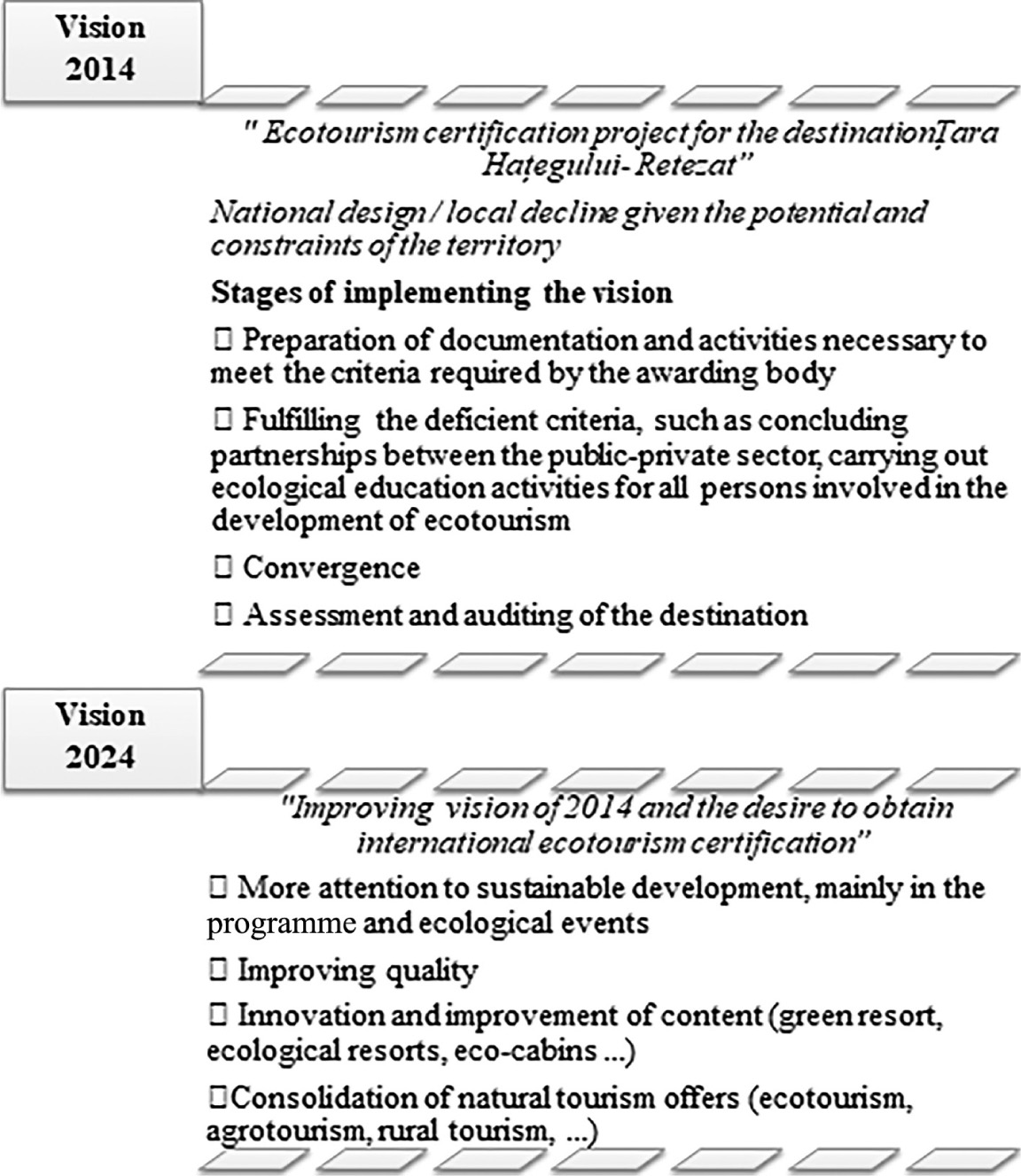
Fig. 5
Strengthening visions.
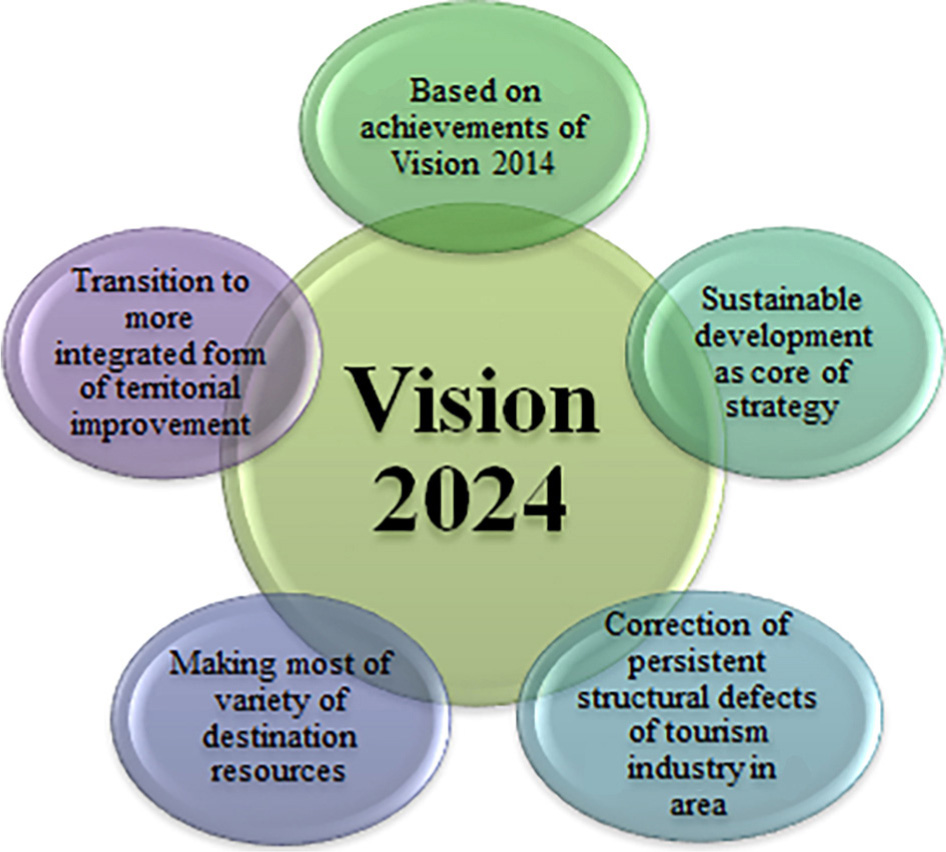
Fig. 6
Principles of Vision 2024.
Table 3
Typology of forms of involvement of local communities
| Tosun typology 1999 | Pretty typology 1995 | Arnstein typology 1971 |
|---|---|---|
|
| Coercive participation top-down, passive, formal, mostly indirect, participation in implementation and sometimes in benefits, paternalism, manipulation, non-participation |
| Induced participation top-down, passive, formal, mostly indirect, manipulation, pseudo-participation, participation in implementation and benefits, choice between proposed alternatives | ||
| Spontaneous participation top-down, active participation, direct, involvement in decisions, genuine self-planning participation |