
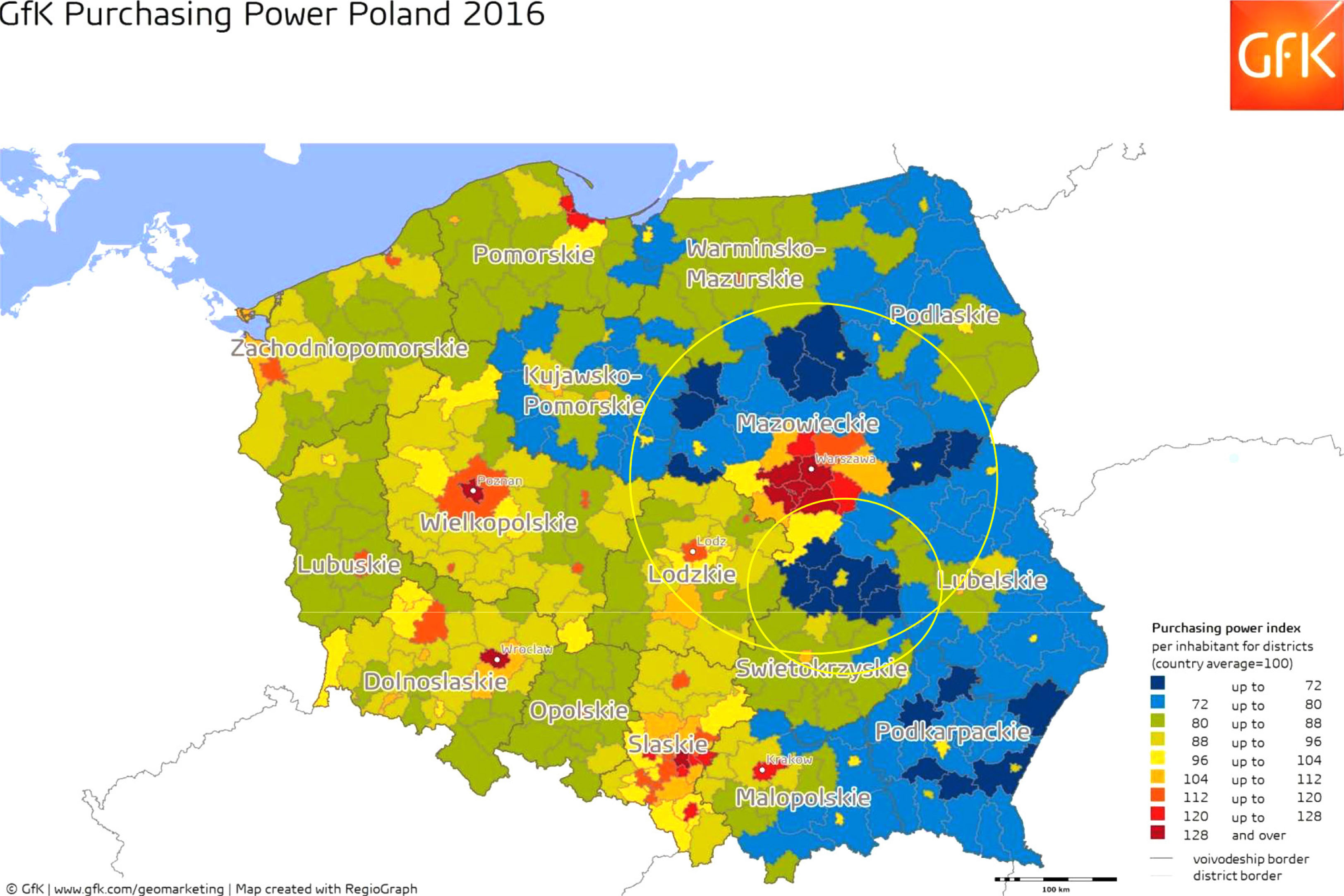
Fig. 1
Purchasing power of Polish subregions, 2016. Radom subregion and Mazovia Province are marked in yellow circles.
Source: GfK (2019), own elaboration.
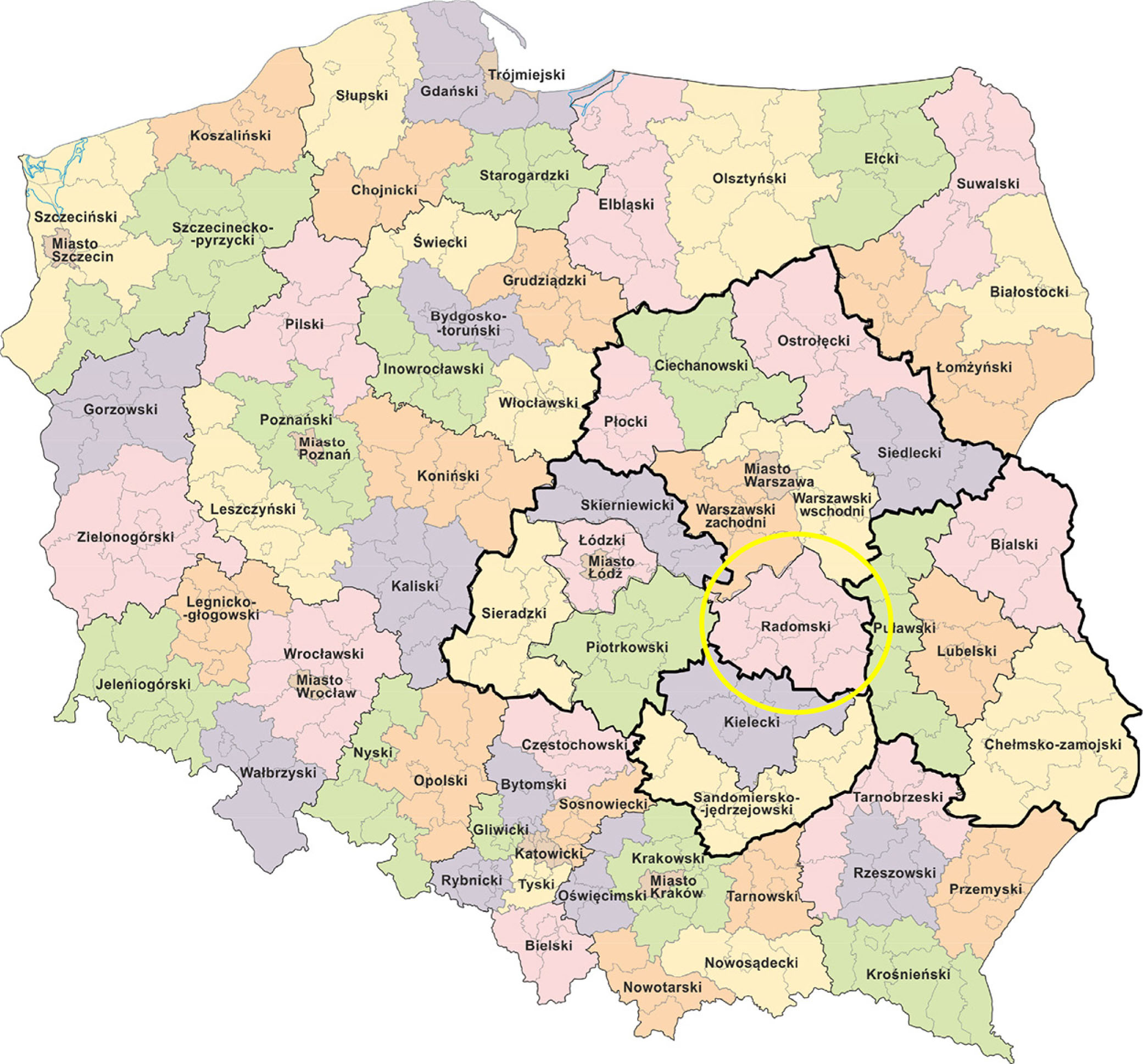
Fig. 2
Research area. Radom subregion is marked in yellow circle.
Source: own elaboration.
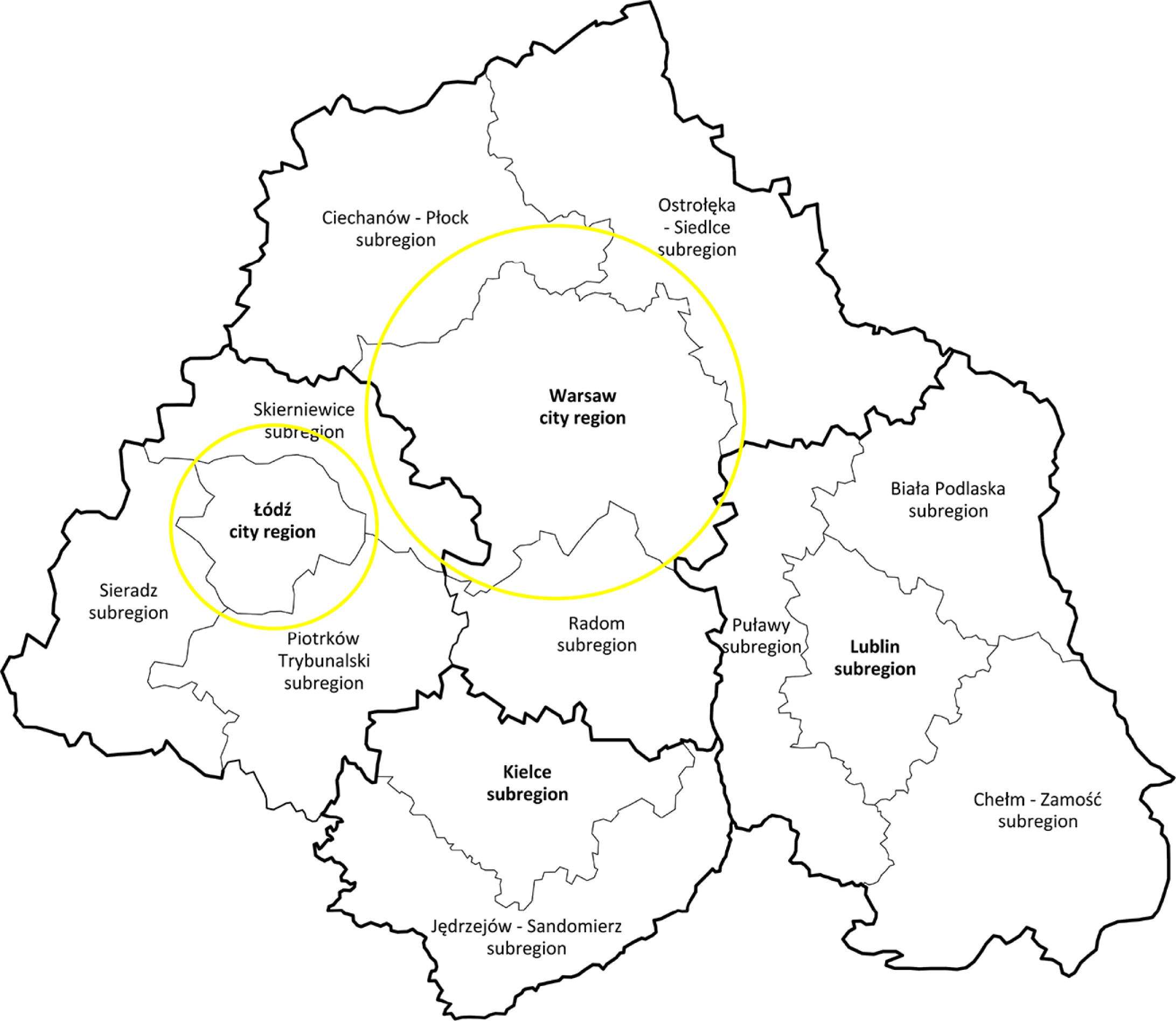
Fig. 3
Analysed subregions. The two city regions defined for this research are marked in yellow circles.
Source: own elaboration.
Table 1
Mean values of the Pearson correlation coefficients.
| MrIndVar1DepVar1 ... MrIndVar5DepVar3 | ||||
|---|---|---|---|---|
| Development levels for years 2005 and 2015* | Absolute difference in development levels in 2005 and 2015* | Relative difference in development levels in 2005 and 2015* | ||
| DepVar 1 | DepVar 2 | DepVar 3 | ||
| Provincial capital status of largest city | IndVar 1 | 0.35 | 0.13 | −0.09 |
| Level of centrality within province | IndVar 2 | 0.24 | 0.11 | −0.02 |
| Size of largest city | IndVar 3 | 0.46 | 0.09 | −0.13 |
| Administrative status of largest city | IndVar 4 | 0.37 | 0.09 | −0.02 |
| Level of centrality in country | IndVar 5 | 0.34 | 0.01 | −0.08 |
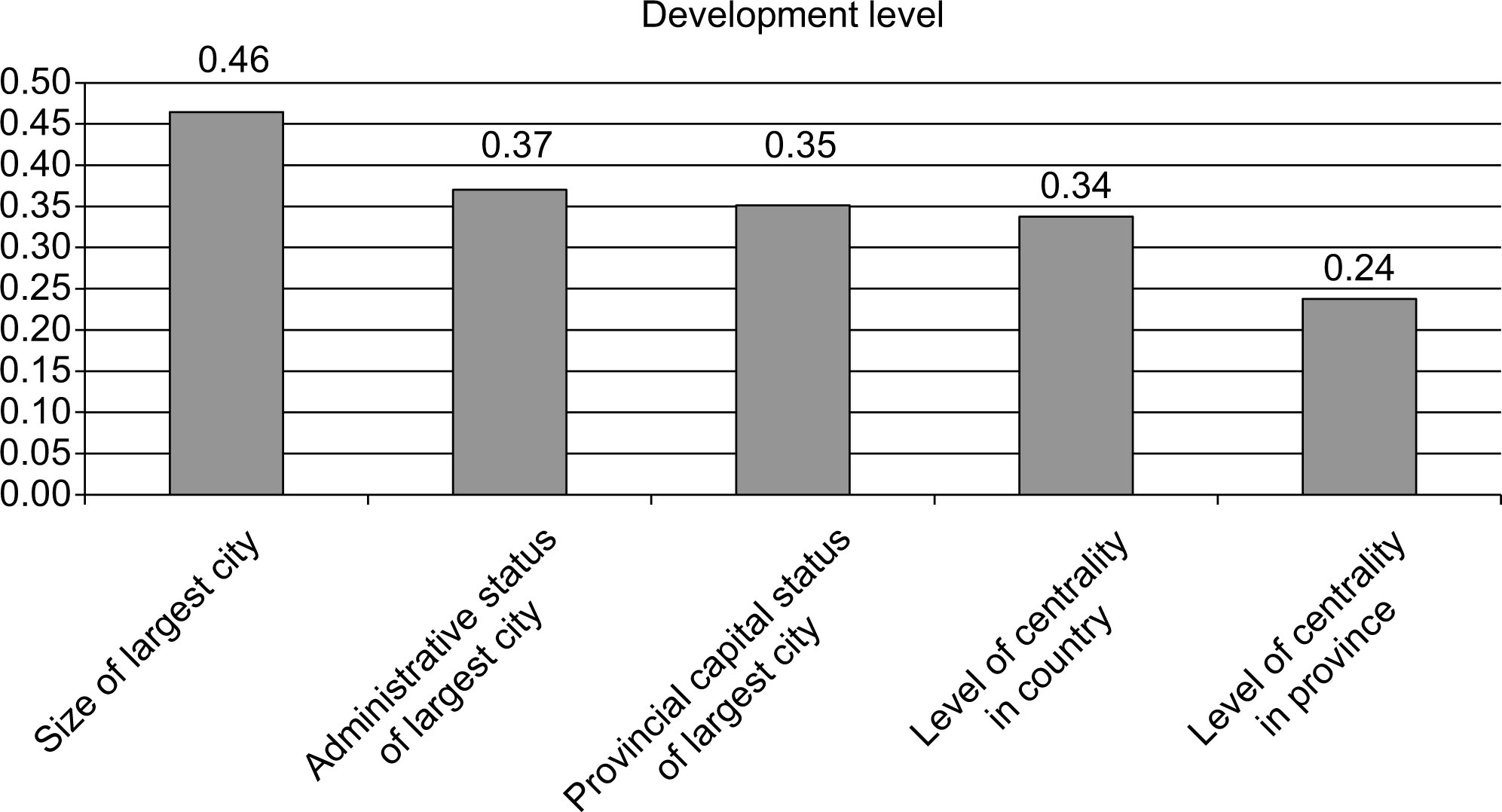
Fig. 4
Mean values of the Pearson correlation coefficients between independent variables and development levels for the years 2005 and 2015* (DepVar 1).
*2008 and 2016, respectively, in specified cases.
Source: own elaboration.
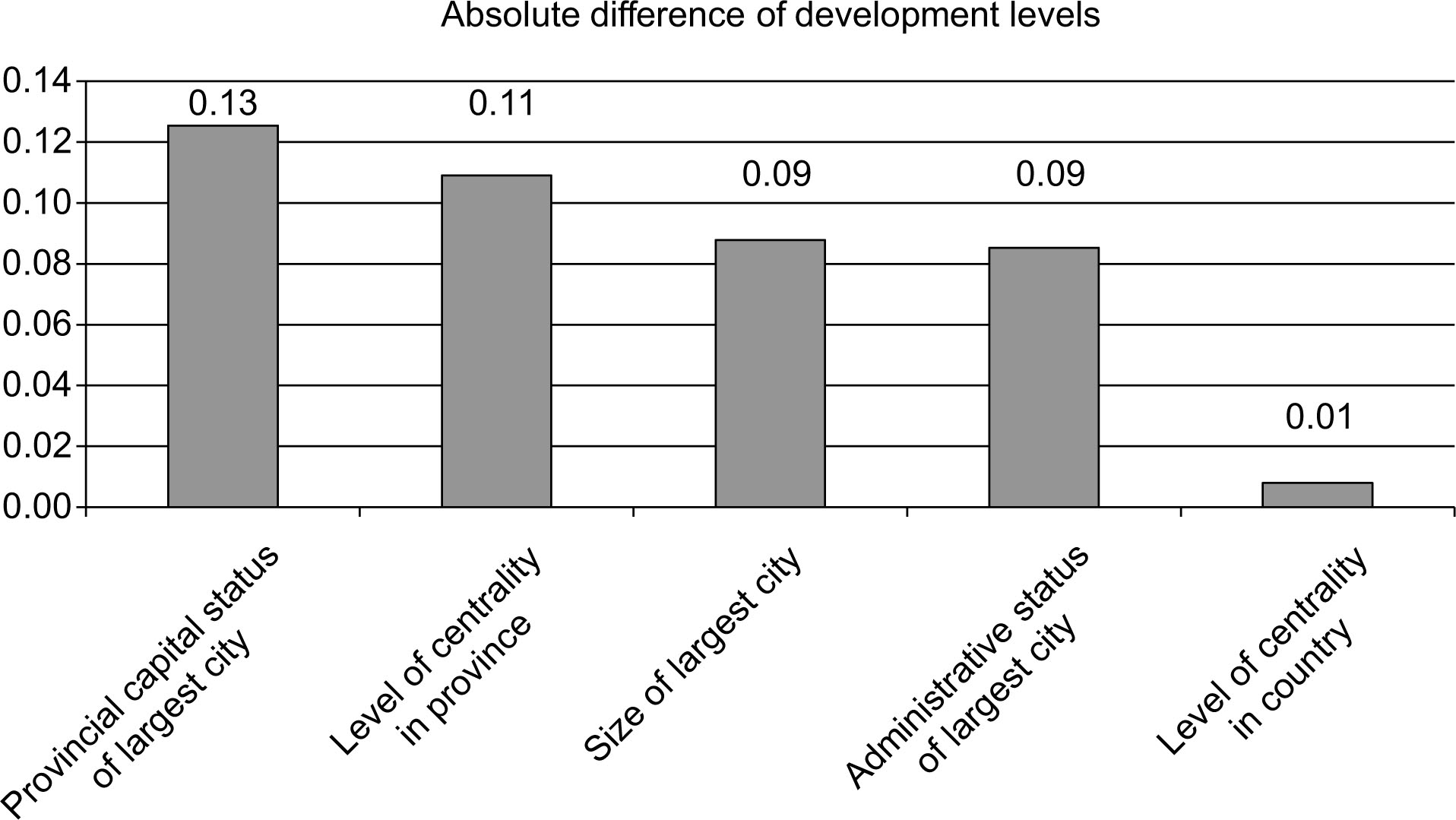
Fig. 5
Mean values of the Pearson correlation coefficients between independent variables and the absolute difference in development levels in the years 2005 and 2015* (DepVar 2).
*2008 and 2016, respectively, in specified cases.
Source: own elaboration.
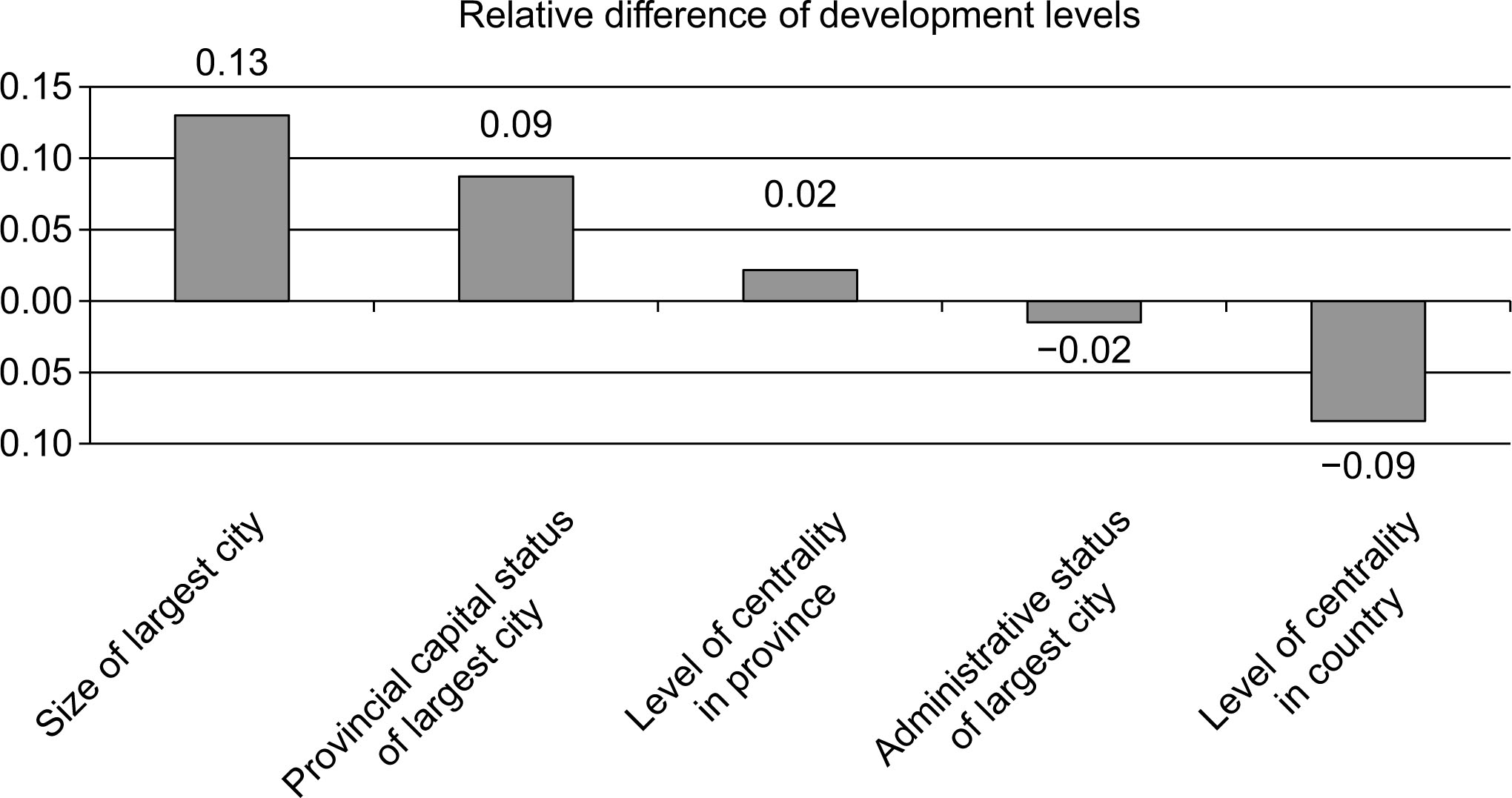
Fig. 6
Mean values of the Pearson correlation coefficients between independent variables and the relative difference in development levels in the years 2005 and 2015* (DepVar 3).
*2008 and 2016, respectively, in specified cases.