Have a personal or library account? Click to login
Variational Quantum Framework for Nonlinear PDE Constrained Optimization Using Carleman Linearization Cover

Variational Quantum Framework for Nonlinear PDE Constrained Optimization Using Carleman Linearization

Open Access
|Jul 2025

Figures & Tables

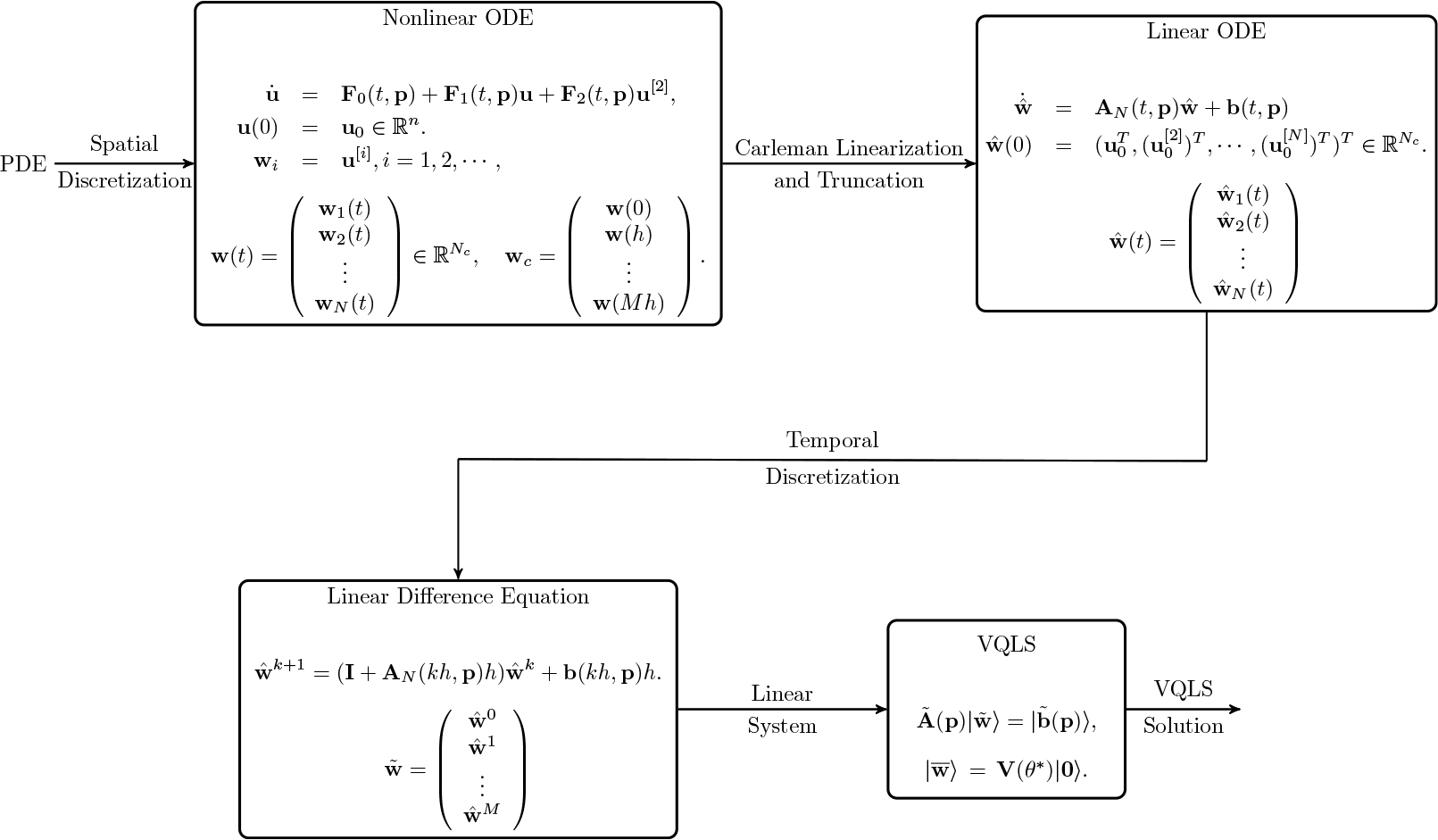
Figure 1.

Illustration of steps involved in transforming a quadratic polynomial ODE (19) into a system of linear algebraic equations (30) amenable to VQLS. This involves CL and truncation resulting in a system of linear ODEs, time discretization of linear ODEs to generate a system of linear difference equations, and expressing difference equation into a single system of linear algebraic equations with normalized solution and right-hand side. While an explicit time discretization is shown in the figure, one can use implicit Euler discretization or other schemes as well.
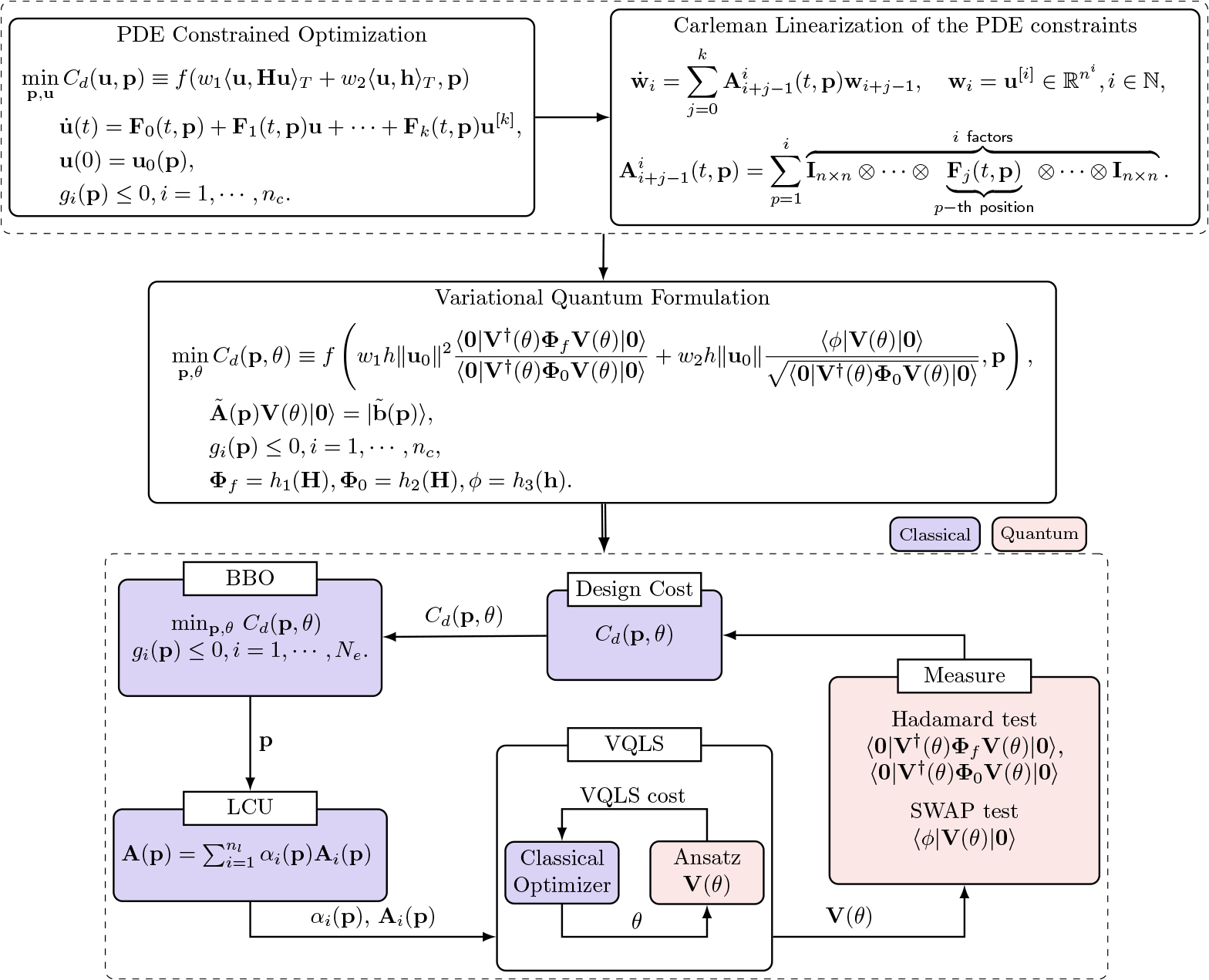

Figure 2.

Top: Schematic showing transformation of a nonlinear PDE constrained optimization problem into a variational quantum form. Bottom: Flow diagram of the nBVQPCO framework. VQLS uses an inner level optimization to solve the linear system constraints, arising from the discretization of the underlying PDEs, for given design parameters, and evaluate the quantities related to design cost/objective function. A black box optimizer is used for the outer level optimization to select next set of parameters values based on the evaluated design cost.
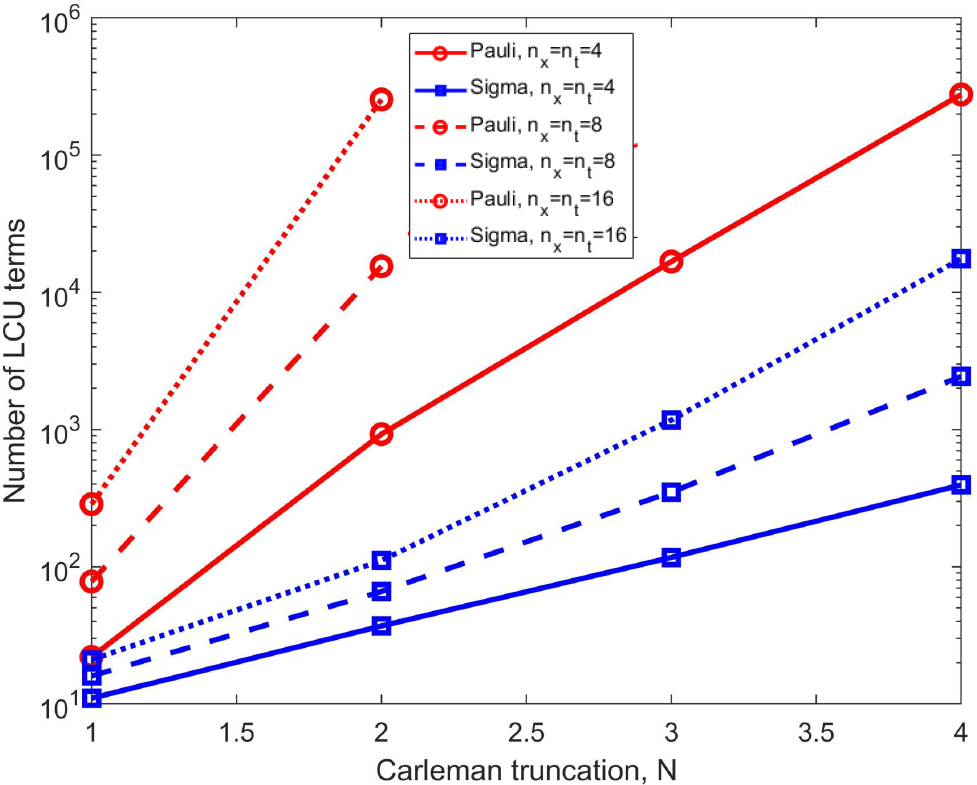

Figure 3.

Comparison of the number of LCU terms using sigma basis (blue curve) and Pauli basis (red curves) for different values ofCL truncation levels and number of spatial/temporal discretization points nx and nt.
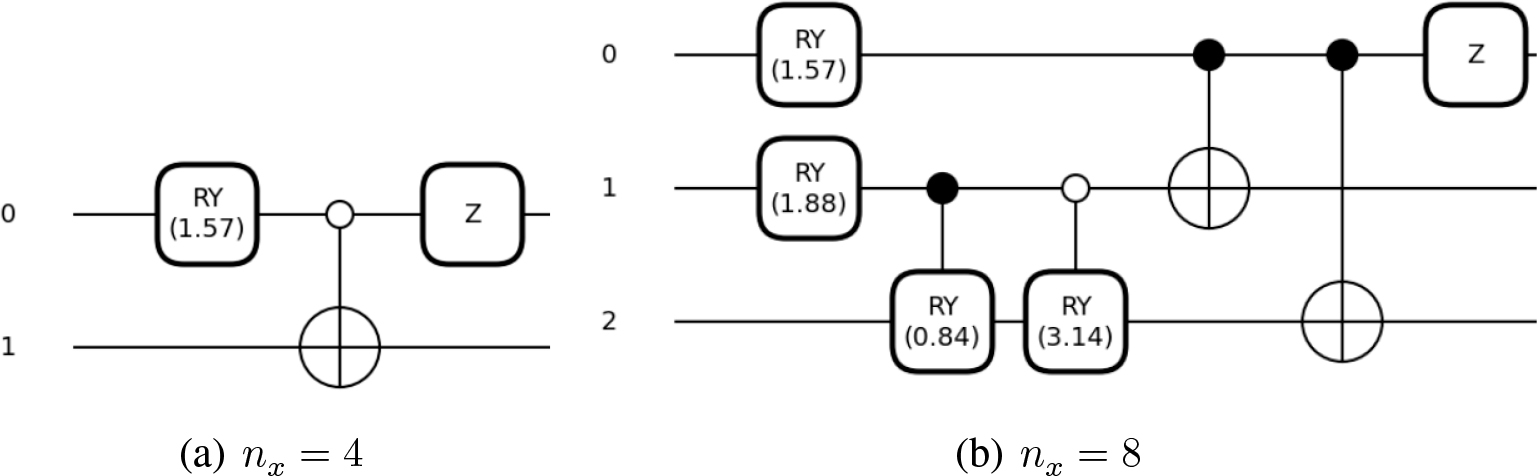

Figure 4.

Quantum circuit to prepare the initial condition u0 Eq. (95) for nx = 4 and nx = 8 grid points.
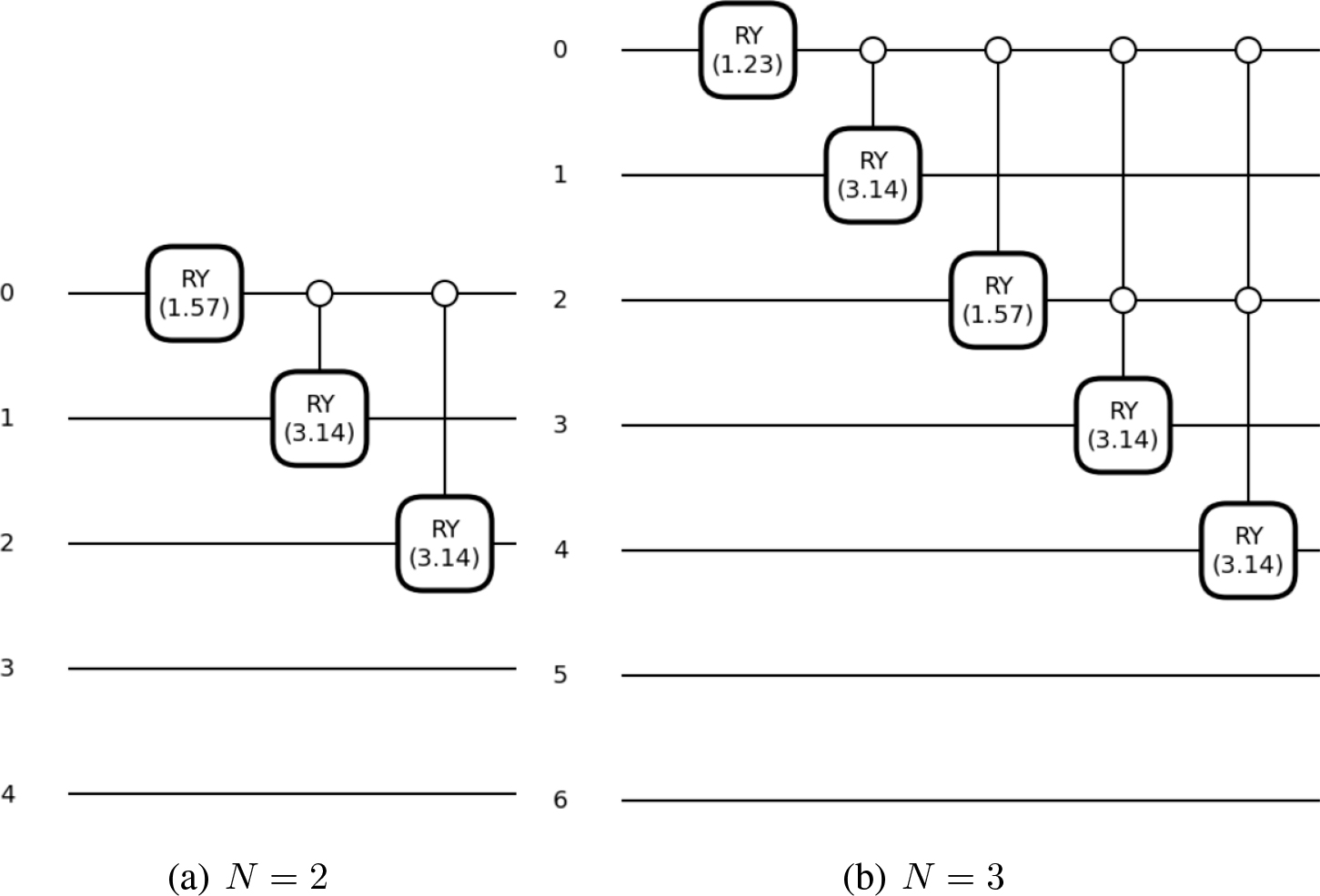

Figure 5.

Quantum circuit to prepare the state 1N(0T,e1T,(e1[2])T,…,(e1[N])T)T
   
    for nx = 4 with (a) N 2 and (b) N 3.
Quantum circuit to prepare the state 1N(0T,e1T,(e1[2])T,…,(e1[N])T)T for nx = 4 with (a) N 2 and (b) N 3.

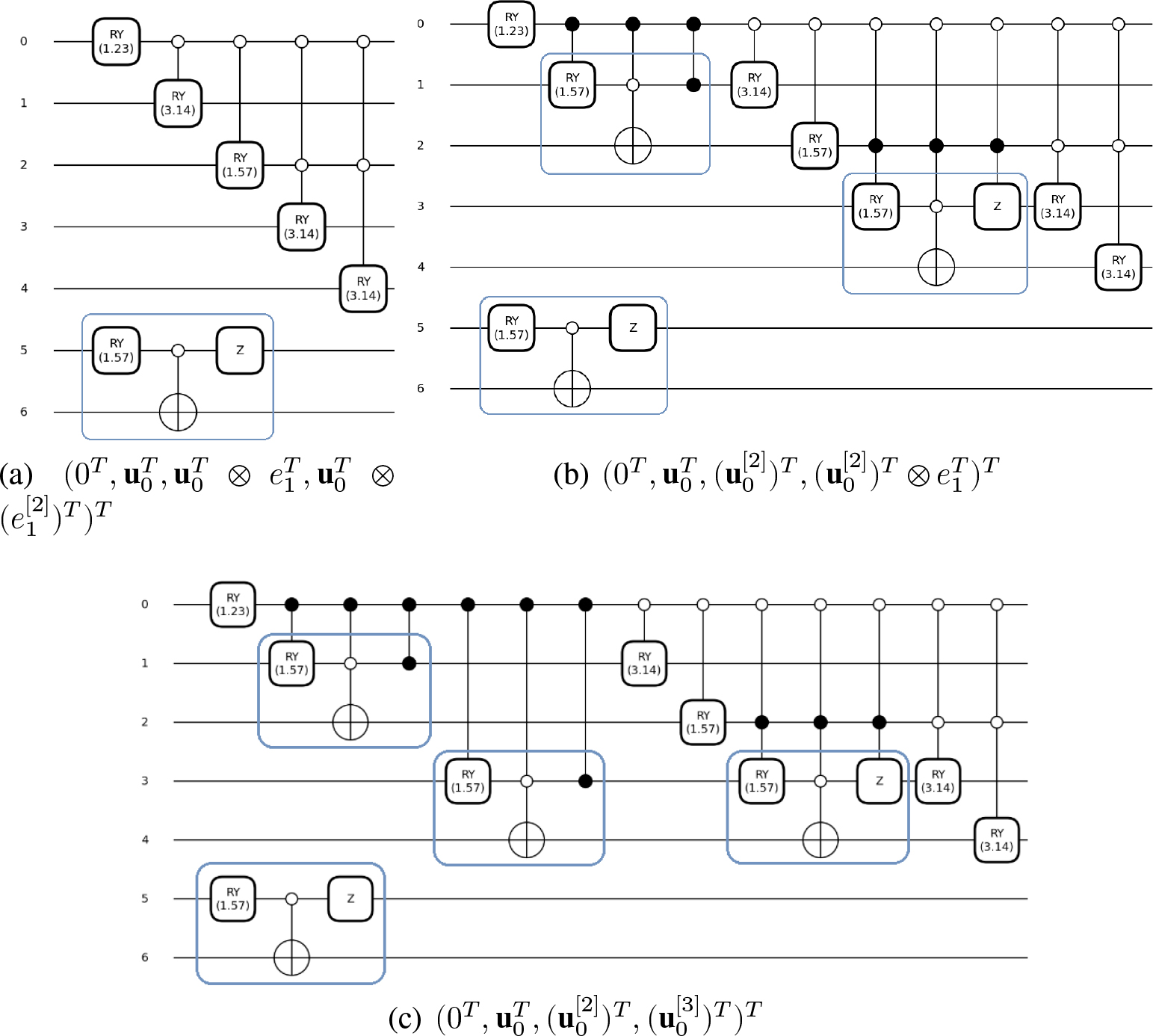
Figure 6.

Sequential construction of the quantum circuit to prepare the desired state (0,u0T,(u0[2])T,(u0[3])T)T
   
    with N = 3, nx = 4 and u0as defined in Eq. (95).
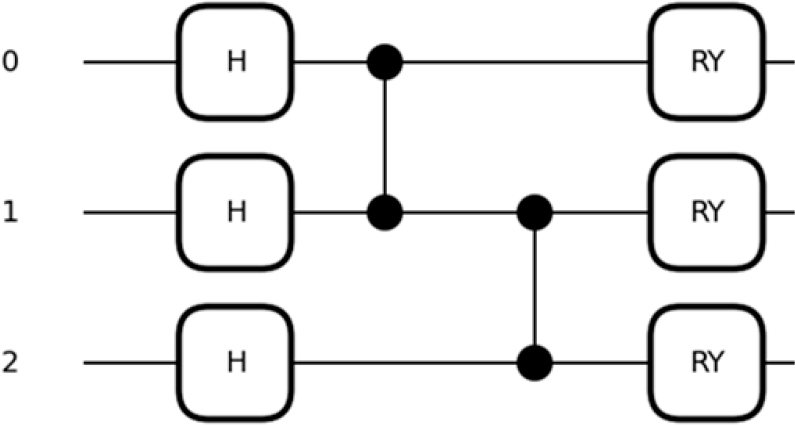
Sequential construction of the quantum circuit to prepare the desired state (0,u0T,(u0[2])T,(u0[3])T)T with N = 3, nx = 4 and u0as defined in Eq. (95).

Figure 7.

Modified real version of circuit 9 from [20] that is used as the VQLS ansatz.
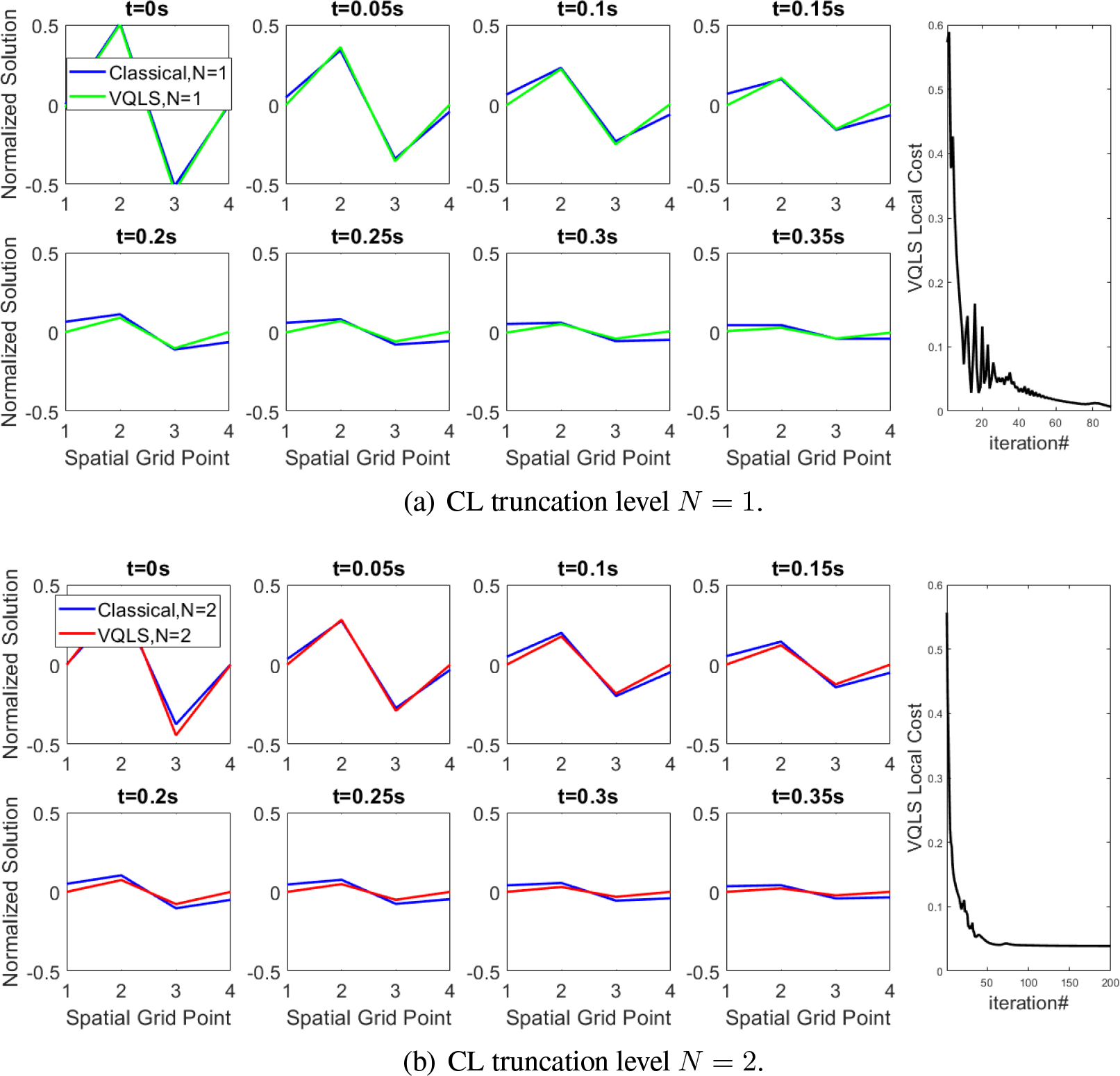

Figure 8.

Comparison of normalized solution, obtained classically and via VQLS, of the implicit linear system (29) for the inverse Burgers problem with ν = 0.07 and for two CL truncation levels.
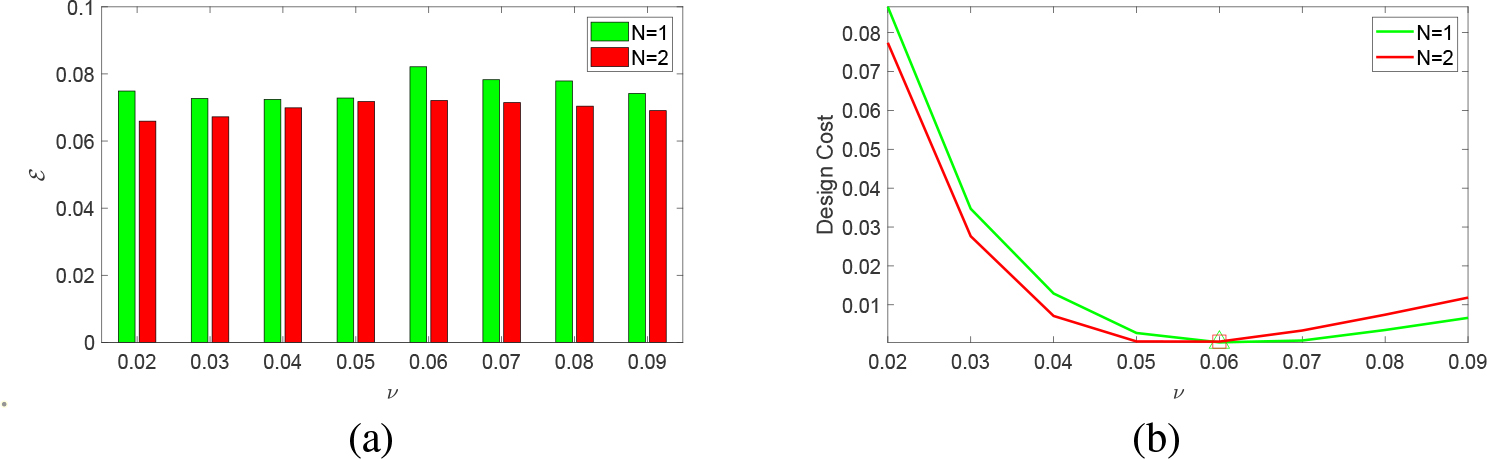

Figure 9.

(a) CL+VQLS solution error ε (97) for the inverse Burgers problem for different values of ν and two CL truncation levels N = 1 and N = 2. (b) Design cost (Eq. (92)) as a function of ν obtained via our nBVQPCO framework for CL truncation levels N = 1 and N = 2. Also, marked are ν values where the cost takes the smallest value, which is ν = 0.06 for both the truncation levels. The true optima is known to be ν = 0.07.
DOI: https://doi.org/10.2478/qic-2025-0014 | Journal eISSN: 3106-0544 | Journal ISSN: 1533-7146
Language: English
Page range: 260 - 289
Submitted on: Mar 7, 2025
Accepted on: May 6, 2025
Published on: Jul 1, 2025
Published by: Cerebration Science Publishing Co., Limited
In partnership with: Paradigm Publishing Services
Publication frequency: 1 issue per year
Related subjects:

© 2025 Abeynaya Gnanasekaran, Amit Surana, Hongyu Zhu, published by Cerebration Science Publishing Co., Limited
This work is licensed under the Creative Commons Attribution-NonCommercial-NoDerivatives 4.0 License.