
Introduction
Asthma is one of the most prevalent chronic respiratory diseases globally, affecting an estimated 363 million individuals and causing approximately 442,000 deaths annually (1). The global burden of asthma disproportionately affects populations in low- and middle-income countries, where the combined burden of chronic respiratory diseases, infectious diseases and non-communicable conditions is highest (2). Despite evidence-based stepwise management guided by the Global Initiative for Asthma (GINA), a substantial proportion of patients experience persistently poor asthma control characterised by frequent symptoms, exacerbations and rescue medication use (3). Identifying modifiable comorbidities that perpetuate poor control is therefore a clinical and public health priority directly aligned with Sustainable Development Goal 3 – Good Health and Well-being – and the global target to reduce premature mortality from chronic respiratory diseases (4).
Obstructive sleep apnoea (OSA), the most common form of sleep-disordered breathing (SDB), is characterised by recurrent upper airway obstruction during sleep, intermittent hypoxia and sleep fragmentation (5). The epidemiology of OSA is well established: population-based estimates indicate a prevalence of 9%–38% in adults, with substantial variation by diagnostic threshold, sex and population characteristics (6, 7). In children, OSA is commonly associated with adenotonsillar hypertrophy, obesity and allergic rhinitis (8). Mechanistically, OSA-driven intermittent hypoxia activates the HIF–1α pathway, NF-κΒ signalling and the NLRP3 inflammasome, promoting systemic and airway inflammation that amplifies asthmatic airway disease (9, 10). Additional pathways include gastro-oesophageal reflux triggered by negative intrathoracic pressure, increased upper airway resistance and vagally mediated bronchospasm during apnoeic events (11).
Epidemiological evidence indicates that OSA and asthma cooccur at rates substantially exceeding chance. Prospective cohort data from the Wisconsin Sleep Cohort demonstrated that asthma independently predicts incident OSA (relative risk [RR] 1.39; 95% confidence interval [CI] 1.06–1.82), suggesting a bidirectional interaction (12). Population-based cohort data from Taiwan similarly showed a hazard ratio (HR) of 1.87 (95% CI 1.61–2.17) for incident OSA among adults with asthma compared with matched non-asthmatic comparators (13). A prior systematic review focusing exclusively on continuous positive airway pressure (CPAP) treatment of OSA in asthma reported improved quality of life outcomes (14). However, a comprehensive quantitative synthesis of the association between OSA/SDB and asthma control, exacerbation outcomes and hospitalisation-related endpoints across both paediatric and adult populations has not been published (15, 16).
The present systematic review and meta-analysis was conducted to: (1) quantify the association between OSA/SDB and poor asthma control in adults and children; (2) evaluate relationships between OSA/SDB and severe exacerbation frequency, hospital readmission and ventilation requirements; (3) characterise OSA/SDB prevalence in asthma populations stratified by ascertainment method; (4) examine whether CPAP or adenotonsillectomy improves asthma outcomes in OSA patients; and (5) assess the bidirectional pathway by which asthma predicts incident OSA. The review was registered at the Open Science Framework (https://osf.io/xdk34/overview) and is reported in accordance with the PRISMA 2020 statement (17) and the MOOSE guidelines for meta-analyses of observational studies (18).
Materials and methods
Study design and registration
This study was conducted as a systematic review and metaanalysis of observational studies following a pre-registered protocol (OSF: https://osf.io/xdk34/overview). Reporting adheres to the PRISMA 2020 statement (17) and the MOOSE checklist (18). This is a secondary analysis of published data; no ethical committee approval or informed consent was required.
Eligibility criteria
Studies were included if they: (a) enrolled human participants of any age with a physician-confirmed or questionnaire-validated diagnosis of asthma; (b) assessed OSA or SDB as an exposure using polysomnography (PSG), home sleep apnoea test (HSAT), validated questionnaires (e.g., Berlin Questionnaire, Pediatric Sleep Questionnaire, SA-SDQ), or administrative codes; (c) reported at least one validated asthma outcome including control score, symptom frequency, rescue medication use, exacerbation rate, hospitalisation, length of stay or mechanical ventilation requirement; and (d) were original observational studies, prospective pre-post treatment cohorts, or retrospective administrative cohorts. Studies were excluded if they were case reports with fewer than 10 participants, secondary reviews without original data, or articles without extractable effect sizes.
Search strategy
A systematic literature search was conducted in PubMed/ MEDLINE, Scopus, Embase, Web of Science and the Cochrane Central Register of Controlled Trials from inception through March 2025, without language restrictions. Medical Subject Headings (MeSH) and free-text keywords combined: ‘obstructive sleep apnoea’, ‘sleep-disordered breathing’, ‘sleep apnoea’ AND ‘asthma’ AND ‘asthma control’ OR ‘exacerbation’ OR ‘asthma severity’. Reference lists of included studies and prior reviews were hand-searched. A total of 6958 records were identified from database searches.
Study selection
After removal of 2,208 records before screening (1,850 duplicates, 142 removed by automation tools, and 216 removed for other reasons), 4,750 records were screened by title and abstract, of which 3,900 were excluded. A total of 850 reports were sought for retrieval, and 76 reports could not be retrieved. Consequently, 774 full-text reports were assessed for eligibility, of which 753 were excluded for predefined reasons, resulting in the inclusion of 21 primary studies (13, 19–37). The PRISMA 2020 flow diagram is presented in Figure 1.
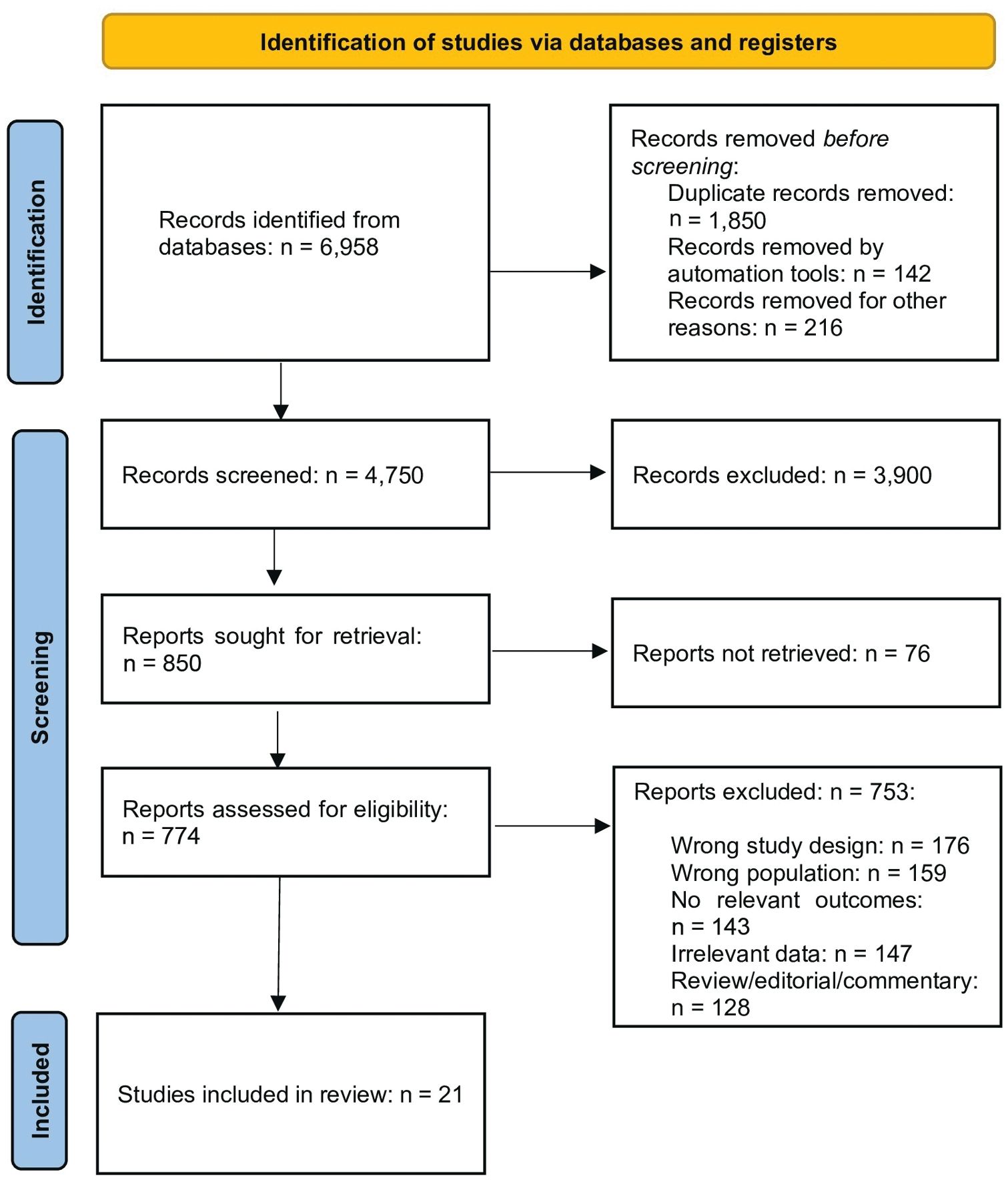
Figure 1.
PRISMA 2020 flow diagram illustrating study identification, screening, eligibility assessment and inclusion. Records were identified from five databases (n = 6958); 21 studies were ultimately included in the systematic review and meta-analysis.
Data extraction
Data were extracted independently using a pre-specified extraction form. For each study the following were recorded: first author and year, country, study design, population, sample size, age group, sex distribution, BMI, asthma diagnosis criteria, OSA/SDB ascertainment method and threshold, follow-up duration, asthma outcome measures, effect estimates (odds ratio [OR], HR, RR, incidence rate ratio [IRR]) with 95% CIs, adjustment covariates and pooling limitations. Where studies reported multiple correlated endpoints from the same sample, these were treated as subgroup evidence within a single outcome family to prevent double-counting.
Risk of bias assessment
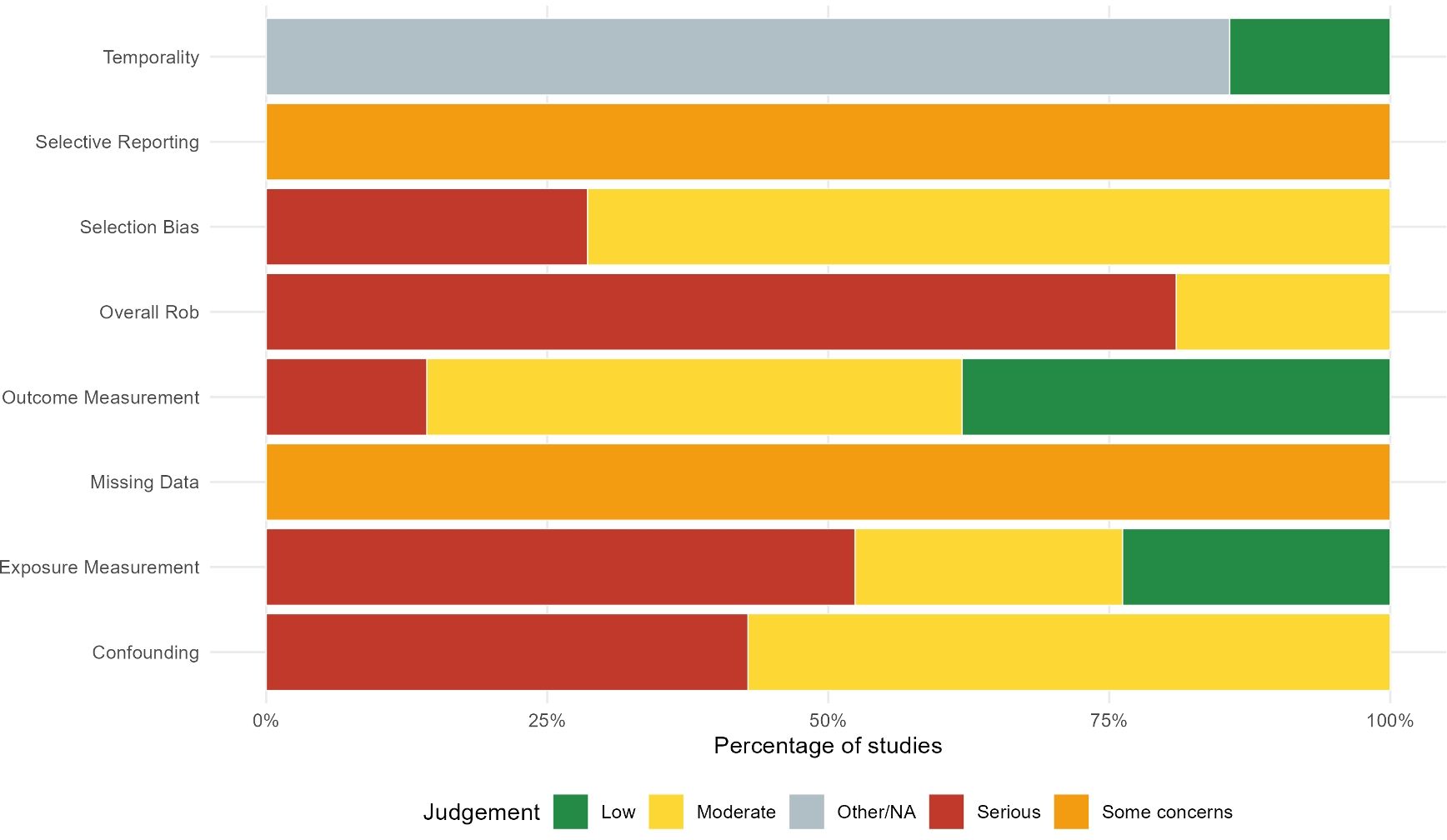
Risk of bias (RoB) was assessed for each included study using domains adapted from the ROBINS-I framework, covering: selection bias, exposure measurement, outcome measurement, confounding, temporality, missing data and selective reporting. Each domain was rated low, moderate, some concerns or serious RoB. An overall risk-of-bias judgement was assigned per study. Two independent reviewers performed the assessment; disagreements were resolved through consensus discussion. Results are presented in Supplementary Figure S1 and Supplementary Table S1.
Statistical analysis
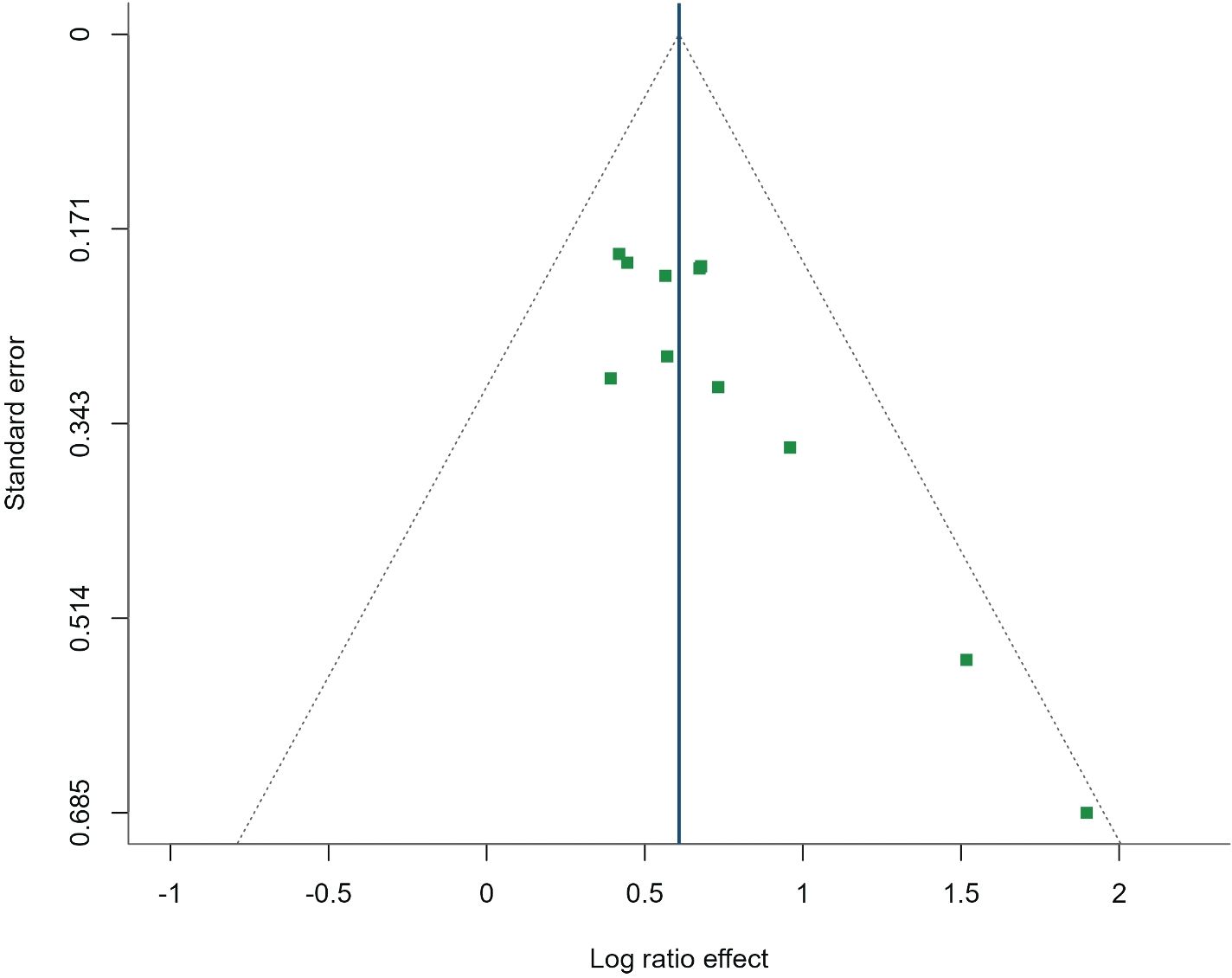
Ratio-scale effect estimates (OR, HR, RR and IRR) and standard errors derived on the natural logarithm scale were pooled using random-effects models with restricted maximum likelihood (REML) estimation in the metafor and meta packages in R (version 4.3.2; R Foundation for Statistical Computing, Vienna, Austria) (38). The Hartung-Knapp interval correction was applied when three or more studies were pooled (k ≥ 3); z-test intervals were used when k = 2. Studies were pooled only within clinically compatible subgroups defined by outcome domain and OSA ascertainment method (objective sleep test, questionnaire/ symptom-defined SDB, or administrative code). When only one compatible estimate was available, it was reported without pooling. Statistical heterogeneity was quantified using the I2 statistic and Cochran’s Q test. For OSA/SDB prevalence, a random-effects logit-scale (metaprop) model was used with back-transformation to the prevalence scale (39). Publication bias was assessed by visual inspection of the Egger funnel plot for the adult asthma control dataset (k ≥ 10; Supplementary Figure S2). A pre-specified leave-one-study-out sensitivity analysis was conducted for the bidirectional pathway synthesis (Supplementary Figure S3). All analyses were two-sided; P < 0.05 was considered statistically significant.
Certainty of evidence
The certainty of evidence for each outcome domain was graded using the GRADE framework (40) across five domains: RoB, inconsistency, indirectness, imprecision and publication bias. Evidence from observational studies was rated ‘low certainty’ by default and further downgraded or upgraded as warranted. Results are summarised in Table 1.
Table 1.
GRADE certainty of evidence for primary outcomes.
Outcome | Studies (N) | Design | RoB | Incons. | Indirect. | Imprec. | Pub. Bias | Certainty | Effect [95% CI] |
|---|---|---|---|---|---|---|---|---|---|
Paediatric: poor asthma control (adjusted) | 2 (n = 475) | Observational | –1 | –1 | 0 | –1 | 0 | VL | OR 2.48 [1.45, 4.23] |
Adults: persistent symptoms (OSA-risk questionnaire) | 2 (n = 1153) | Observational | –1 | 0 | 0 | 0 | –1 | Low | OR 1.74 [1.49, 2.02] |
Adults: persistent symptoms (diagnosed OSA) | 2 (n = 1553) | Observational | –1 | –1 | 0 | –1 | 0 | VL | OR 2.06 [0.63, 6.77] |
Adults: severe asthma (diagnosed OSA) | 1 (n = 813) | Observational | –1 | –1 | 0 | –1 | 0 | VL | OR 3.49 [1.49, 8.15] |
Adults: poor control (symptom-defined SA) | 1 (n = 428) | Observational | –1 | 0 | 0 | –1 | 0 | VL | OR 1.77 [1.01, 3.07] |
Adults: hospital readmission (OSA coded) | 1 (n = 65731) | Observational | –1 | 0 | 0 | 0 | 0 | Low | IRR/HR 1.09 [1.04, 1.15] |
Adults: severe exacerbation (OSA by PSG) | 1 (n = 303) | Observational | –1 | 0 | 0 | –1 | 0 | VL | OR 14.23 [4.60, 44.04] |
Paediatric: length of stay (OSA coded) | 1 (n = 564,468) | Observational | –1 | 0 | 0 | 0 | 0 | Low | IRR 1.34 [1.28, 1.40] |
Paediatric: mechanical ventilation (OSA coded) | 1 (n = 564,468) | Observational | –1 | –1 | 0 | 0 | 0 | VL | OR 6.62 [4.29, 10.22] |
Asthma predicts incident OSA (bidirectional) | 4–6 (≥200,000) | Observational | –1 | –1 | 0 | –1 | 0 | VL | OR/HR/RR 2.11 [1.35, 3.29] |
OSA/SDB prevalence in asthma (PSG/ HSAT) | 7 (n = 592) | Observational | –1 | –1 | 0 | –1 | 0 | VL | 62.3% [34.7%, 83.7%] |
[i] CI, confidence interval; HR: hazard ratio; IRR: incidence rate ratio; OR, odds ratio; OSA, obstructive sleep apnoea; PSG, polysomnography; RR: relative risk; SDB, sleep-disordered breathing.
Results
Study selection
The PRISMA flow diagram is presented in Figure 1. Database searching identified 6958 records; after removal of 2208 pre-screening records, 4750 were screened by title and abstract. A total of 774 full-text reports were assessed for eligibility, of which 753 were excluded, resulting in the inclusion of 21 primary studies (13, 19–37). Fourteen studies contributed to at least one pooled meta-analysis; the remainder provided single-study estimates, descriptive prevalence data, or treatment response data. The characteristics of all included studies are presented in Table 2.
Table 2.
Characteristics of included studies
Study, Year [Ref] | Country | Design | Population/ Setting | N | Age group | Female (%) | BMI | Asthma diagnosis | OSA/SDB measure | Threshold | OSA/SDB prevalence | Outcomes | Effect measure | Key effect estimate [95% Cl] | Covariates adjusted | Overall RoB |
|---|---|---|---|---|---|---|---|---|---|---|---|---|---|---|---|---|
Kheirandish-Gozal 2011 (19) | USA | Prospective referred cohort; before-after T&A | Children with poorly controlled asthma (PCA), age 3–10 years | 92 | Paediatric | NR | NR | Physician diagnosis | Overnight PSG | AH I ≥ 5/hrTST | 58/92 (63.0%) | Exacerbations/ year; beta-agonist use; asthma symptom score | Pre-post | Exacerba tions: –56.1%; Rescue: –51.2% | Age, sex (T&A non-ran-domised) | Serious |
Araujo 2022 (20) | Brazil | Cross- sectional | Severe asthma patients on biologic therapy | 56 | Adult | 78.6% | 34.3 kg/m2 | Physician diagnosis; severe GINA criteria | HSAT (Apnea-Link Air) | RDI ≥ 5/hr | 30/56 (53.6%) | ACT; asthma control classification | OR | ACT association: null | BMI, smoking | Serious |
Byun 2013 (21) | South Korea | Cross-sec-tional clinic sample | Pulmonary/sleep clinic patients with SDB symptoms | 167 | Adult | 40.7% | NR | Physician diagnosis | ApneaLink + PSG subset | AHI ≥ 5 | 111/167 (66.5%) | Asthma predicts OSA; OSA prevalence by asthma severity | OR | OR 4.25 [1.50, 12.16] | Age, sex, BMI, smoking | Serious |
Teodorescu 2012 (24) | USA | Cross-sec-tional tertiary asthma clinic | Adult asthma clinic patients age 18–75 | 752 | Adult | 67.0% | 32.0 kg/m2 | Physician diagnosis | SA-SDQ + medical record | SA-SDQ ≥ 36 (M), ≥ 32 (F) | High-risk 212/752; Diagnosed 60/752 | Persistent daytime/nighttime symptoms; beta-agonist use | OR | High-risk: OR 1.96 [1.31, 2.94] | Age, sex, BMI, rhinitis, GERD, ICS | Serious |
Teodorescu 2013 (25) | USA | Cross-sec-tional asthma clinic | Older (≥40 year) and younger (< 40 year) adult asthma patients | 813 | Adult | 67.0% | 31.5 kg/m2 | Physician diagnosis | Medical record diagnosis | Record-based | Older OSA 13%; younger OSA 7% | Persistent nocturnal symptoms; severe asthma | OR | Nocturnal older: OR 4.56 [1.55, 13.43]; Severe asthma pooled: OR 3.49 [1.49, 8.15] | Age, sex, BMI, rhinitis, smoking | Serious |
Teodorescu 2015 SARP (26) | USA | Cross-sectional multi centre SARP | Severe asthma, n on-severe asthma, and normal controls | 401 | Adult | 69.0% | 31.8 kg/m2 | SARP physician diagnosis | SA-SDQ questionnaire | High risk: men ≥ 36, women ≥ 32 | Severe asthma 26% high-risk | Daily symptoms; beta-agonist; nightly symptoms | OR | Daily symptoms pooled: OR 1.74 [1.49, 2.02] | Age, sex, BMI, rhinitis, smoking | Serious |
Teodorescu 2015 JAMA (12) | USA | Prospective population-based cohort | Wisconsin Sleep Cohort adults free of OSA at baseline | 547 | Adult | 54.1% | 28.9 kg/m2 | Self-report question naire | Laboratory PSG | AHI ≥5 or PAP | Incident OSA: 22/81 asthma vs 75/466 no asthma | Incident OSA | RR | RR 1.39 [1.06, 1.82] | Age, sex, BMI, smoking, sleepiness | Serious |
Wang 2016 (34) | China | Matched clinical observational | Adults with asthma and matched healthy controls; all had PSG | 303 | Adult | NR | NR | Physician diagnosis; spirometry | Full-night PSG | Threshold NE | Asthma 19.2%; controls 9.6% | Severe asthma exacerbation; OSA prevalence | OR/RR | Exacerbation: OR 14.23 [4.60, 44.04]; Prevalence: RR 2.25 [1.15, 4.40] | Matching (age,sex, BMI) | Serious |
Shen 2015 (13) | Taiwan | Retrospective population cohort | Newly diagnosed adult asthma vs matched comparators | 194,187 | Adult | 55.0% | NR | Administrative ICD (asthma) | Administrative claims OSA | N/A | Incident OSA rate: 12.1 vs 4.84/1000 PY | Incident OSA | HR | HR 1.87 [1.61, 2.17] | Age, sex, income, comorbidities | Serious |
Hi ray am a 2020 (30) | USA | Retrospective administrative cohort | Adults 18–54 hospitalised for asthma; 7 State Inpatient DBs | 65,731 | Adult | 61.0% | NR | ICD hospitalisation code | ICD-9-CM OSA diagnosis | N/A | 10.0% | All-cause and asthma-specific readmission; time to readmission | IRR/HR | Pooled IRR/ HR: 1.09 [1.04, 1.15] | Age, sex, obesity, depression, SES | Moderate |
Kauppi 2016 (31) | Finland | Retrospective before-after CPAP | CPAP users with pre-existing asthma | 152 | Adult | 60.0% | 30.4 kg/m2 | Physician diagnosis | Home respiratory polygraphy | REI ≥ 15 or 5–14 with symptoms | All enrolled (100%) | ACT improvement after longterm CPAP | Pre-post | ACT improvement: 29.0% | None (uncontrolled) | Serious |
Serrano- Pariente 2016 (23) | Spain | Prospective multi centre before-after CPAP | Adults with asthma + moder-ate-severe OSA starting CPAP | 99 | Adult | 71.0% | 32.3 kg/m2 | Physician diagnosis; GINA criteria | PSG or cardiorespiratory polygraphy | RDI ≥ 20 | All enrolled (100%) | Exacerbations; ACQ; mini-AQLQ | Pre-post | Exacerba tions: –51.4%; ACQ: –28.1% | CPAP compliance subgroup | Serious |
Study, Year [Ref] | Country | Design | Population/ Setting | N | Age group | Female (%) | BMI | Asthma diagnosis | OSA/SDB measure | Threshold | OSA/SDB prevalence | Outcomes | Effect measure | Key effect estimate [95% Cl] | Covariates adjusted | Overall RoB |
Sato 2021 (27) | Japan | Prospective cohort | Middle-aged and older adult asthma patients with Watch-PAT | 62 | Adult | 63.0% | 24.6 kg/m2 | Physician diagnosis | V\fetch-PAT | pAHI ≥ 5 | 50/62 (80.6%) | Asthma worsening/exacerbation by OSA severity | OR | pAHI not retained in final model | Age, sex, BMI, smoking, ICS | Serious |
Sakhamuri 2020 (29) | Trinidad & Tobago | Cross-sectional specialty clinic survey | Adult physician-diagnosed asthma patients in specialty clinics | 428 | Adult | 71.2% | NR | Physician diagnosis | Symptom features (≥ 2 features) | NR | 150/428 (35.0%) | Poor asthma control (ACT < 20); quality of life | OR | ACT < 20: OR 1.77 [1.01, 3.07] | Age, sex, BMI, smoking, GERD | Serious |
Zandieh 2016 (35) | USA | Cross-sec-tional school survey | Urban ninth-grade students | 9565 | Adolescent | 52.0% | NR | Self-reported probable asthma | Self-report questionnaire SDB | Frequent symptoms per criteria | 1220/9565 (12.8%) | Probable asthma vs SDB; bidirectional | OR | Asthma predicts SDB: OR 2.63 [2.30, 3.00]; SDB predicts asthma: OR 2.44 [1.86, 3.20] | Age, sex, race, BMI | Serious |
Li 2015 (32) | China | Cross-sec-tional school survey + me-ta-analysis | Schoolchildren age 5–12 across 8 Chinese cities | 22,478 | Paediatric | 46.0% | NR | Question naire physician-diagnosed | Questionnaire SDB items (snoring, stops, snorts) | Usual/often categories | SDB prevalence 12.0% | Physician-diag-nosed asthma vs SDB | OR | Pooled OR 1.53 [1.03, 2.27] | Age, sex, city, ethnicity | Serious |
Locci 2024 (22) | Italy | Cross- sectional | Children age 5–12 with asthma | 78 | Paediatric | 51.3% | NR | Physician diagnosis | PSQ-SDBS questionnaire | PSQ-SD-BS ≥ 0.33 | 29/78 (37.2%) | Poor asthma control; SDB prevalence | OR | Adjusted OR 2.81 [0.91, 8.64]; Crude OR 4.15 [1.49, 11.60] | Age, sex, BMI, rhinitis, GERD | Serious |
Tao 2024 (36) | China | Cross- sectional | Paediatric asthma outpatients age 0–18 | 397 | Paediatric | 44.8% | NR | Physician diagnosis | PSQ-SRBD questionnaire | PSQ- SRBD ≥ 0.33 | 86/397 (21.7%) | Poor asthma control | OR | Adjusted OR 2.39 [1.30, 4.39]; Crude OR 2.33 [1.35, 4.04] | Age, sex, BMI, rhinitis, medication | Serious |
Tsou 2021 (33) | USA | Retrospective national inpatient database | Children hospitalised for acute asthma exacerbation 2000–2012 | 564,468 | Paediatric | 44.5% | NR | ICD hospitalisation code | Administrative ICD code OSA | N/A | 4209/564,468 (0.75%) | Length of stay; invasive/ non-invasive ventilation | IRR/OR | LOS: IRR 1.34 [1.28, 1.40]; IMV: OR 5.33 [4.35, 6.54]; NIV: OR 8.30 [6.56, 10.51]; Pooled ventilation: OR 6.62 [4.29, 10.22] | Age, sex, year, race, insurance, hospital type | Moderate |
Yigla 2003 (37) | Israel | Prospective clinical series | Difficu It-to-control asthma on long-term oral steroids | 22 | Adult | 54.5% | NR | Physician diagnosis; steroid-dependent | Full-night PSG | RDI≥ 15 + symptoms | 21/22 (95.5%) | Descriptive OSA severity (mild vs moderate-severe) | Descrip tive | 95.5% prevalence; no comparative control outcome | None | Serious |
Madama 2016 (28) | Portugal | Retrospective clinical series | Asthma patients referred for suspected OSA | 47 | Adult | NR | NR | Physician diagnosis | PSG 68%; polygraphy 32% | NE | 27/47 (57.4%) | OSA prevalence; treated follow-up descriptive | Descrip tive | 57.4% prevalence | None | Serious |
[i] ACQ: Asthma Control Questionnaire; ACT: Asthma Control Test; CI, confidence interval; CPAP: continuous positive airway pressure; GINA, Global Initiative for Asthma; GERD: gastro-oesophageal reflux disease; HR: hazard ratio; HSAT: home sleep apnoea test; ICS: inhaled corticosteroid; IRR: incidence rate ratio; NE: not extracted; NR: not reported; OR, odds ratio; OSA: obstructive sleep apnoea; PSG: polysomnography; PSQ: Pediatric Sleep Questionnaire; RR: relative risk; RoB: risk of bias; SA-SDQ: Sleep Apnoea-Sleep Disorders Questionnaire; SDB: sleep-disordered breathing; T&A: adenotonsillectomy.
Study characteristics
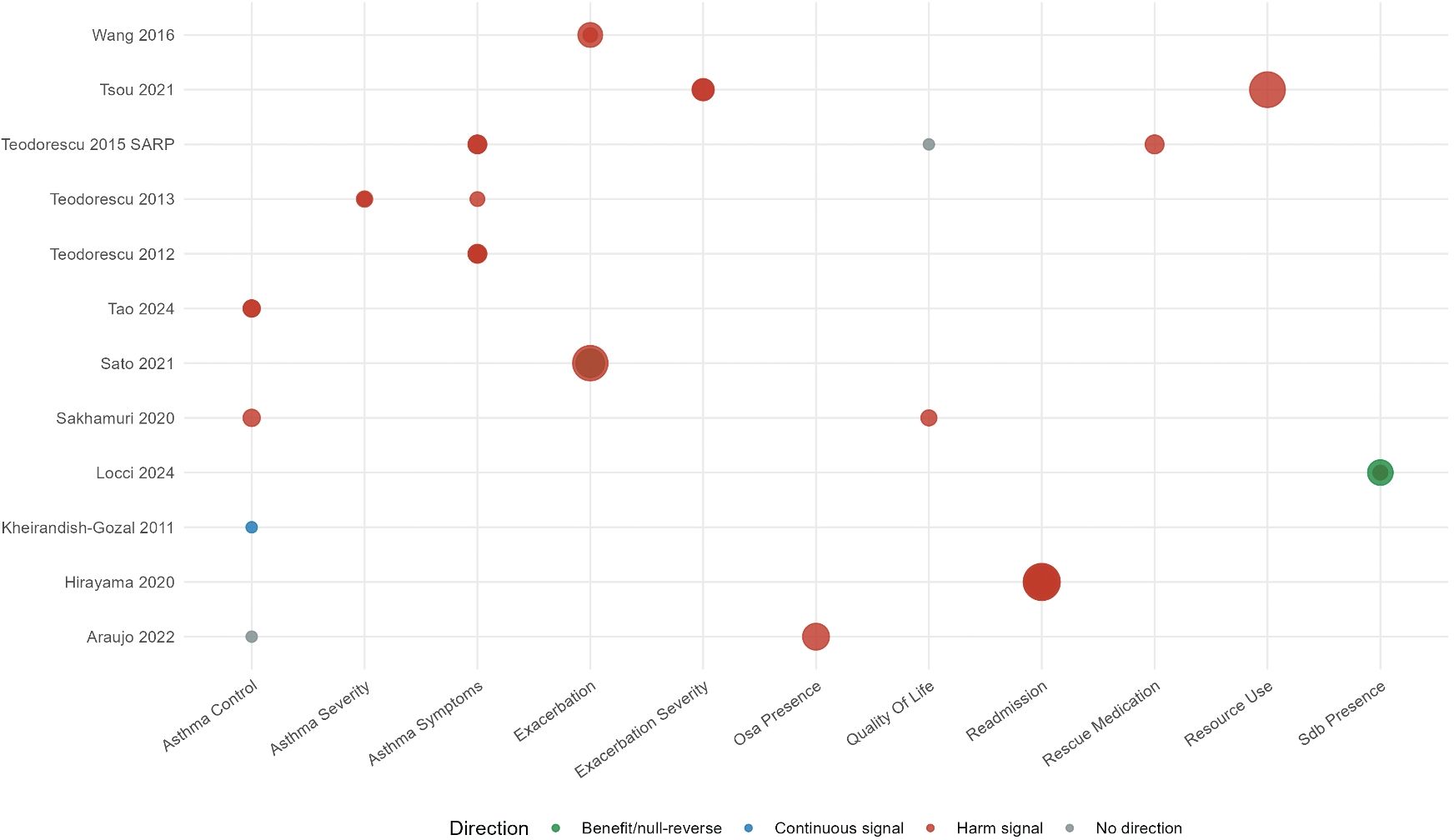
The 21 included studies were published between 2003 and 2024 and conducted across 12 countries (USA, Spain, Finland, UK, China, Taiwan, Japan, South Korea, Italy, Brazil, Portugal and Trinidad and Tobago). Study designs comprised cross-sectional studies (n = 9), retrospective administrative or clinical cohorts (n = 5), prospective cohorts with before-after treatment components (n = 4) and a prospective population-based cohort (n = 1). Combined sample size across studies was 922,748 participants. OSA/ SDB ascertainment used full PSG or HSAT in seven studies, validated questionnaires in 8 studies and administrative ICD coding in 3 studies (13, 19–37). RoB was rated overall serious in 16 of 21 studies, predominantly due to crosssectional or before-after designs, questionnaire-based OSA ascertainment and residual confounding by obesity and rhinitis (Supplementary Figure S1 and Supplementary Table S1). The evidence map across objectives is presented in Supplementary Figure S5.
OSA/SDB prevalence in asthma populations (Objective 6)
Twelve studies reported OSA/SDB prevalence in asthma populations (Figure 2 and Supplementary Table S2) (20–22, 25, 28–30, 33, 34, 36, 37). Stratification by ascertainment method was essential to interpret these findings, as prevalence varied dramatically by method. Using objective sleep testing across seven studies (total n = 592), the pooled OSA prevalence was 62.3% (95% CI 34.7%–83.7%; I2 = 95%; T2 = 1.168) (20–22, 25, 33, 34, 37). Study-level estimates ranged from 19.2% in a PSG-based matched cohort (34) to 95.5% in a cohort of steroid-dependent difficult-to-control asthma patients (37). Among two administrative database studies (n = 630, 199), the pooled prevalence was only 2.8% (95% CI 0.2%–28.7%; I2 = 100%), reflecting substantial OSA undercoding in administrative records (30, 33). Questionnaire-based or symptom-defined SDB was identified in 30.4% of asthma patients (95% CI 13.4%–55.2%; I2 = 89%) across three studies (n = 903) (22, 29, 36). The extreme heterogeneity across all ascertainment strata confirms that a single pooled prevalence estimate would be misleading.
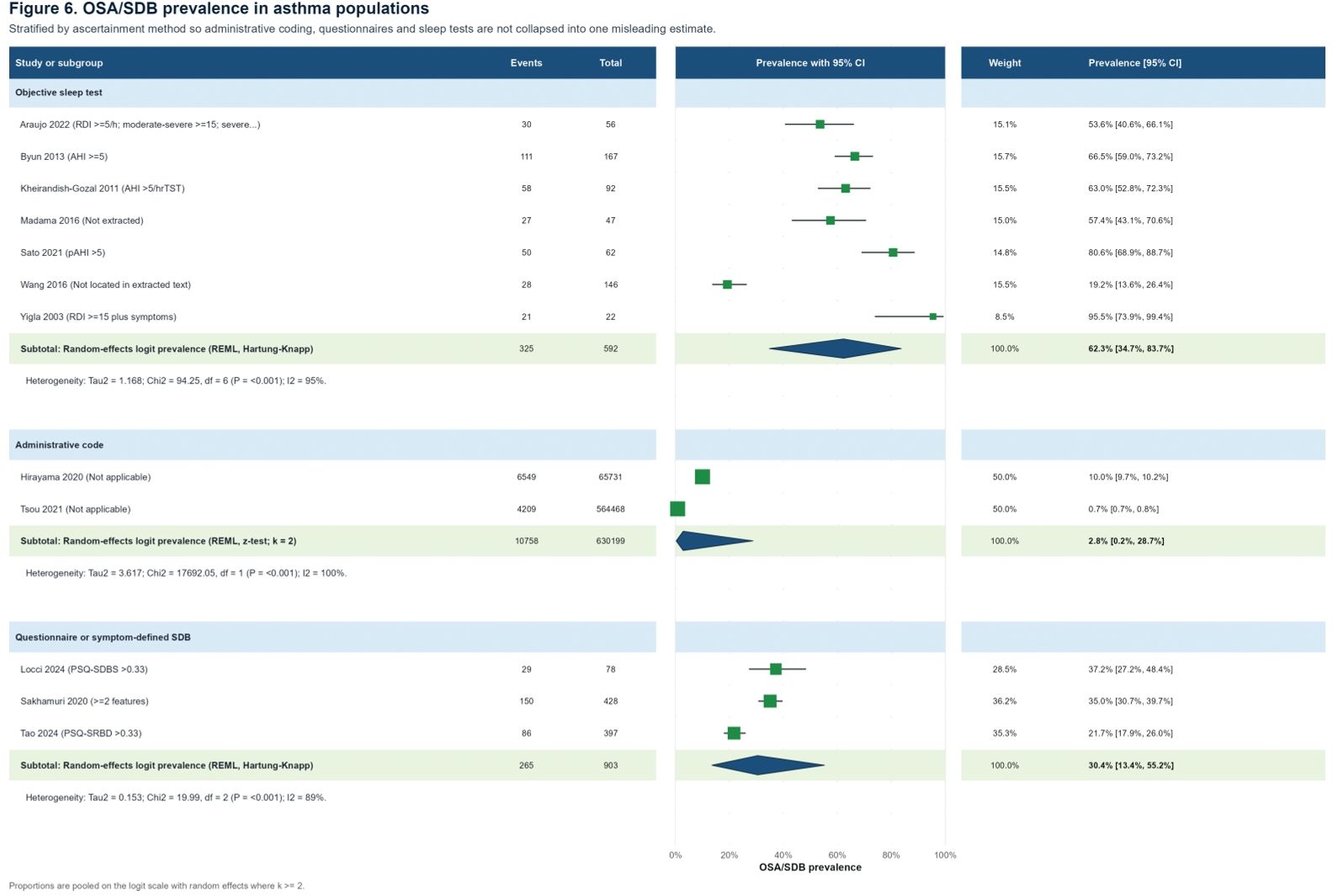
Figure 2.
Forest plot of OSA/SDB prevalence in asthma populations stratified by ascertainment method. Administrative coding, question-naire-based SDB assessment and objective sleep testing are presented in separate subgroups to avoid misleading synthesis. Proportions are pooled on the logit scale with random effects where k ≥ 2. OSA, obstructive sleep apnoea; REML, restricted maximum likelihood; SDB, sleep-disordered breathing.
Adult asthma control and symptom burden (Objective 2)
Four studies enrolling adult asthma patients contributed 11 ratio estimates (Figure 3) (24–26, 29). Adults with high OSA risk by questionnaire had significantly greater odds of persistent asthma symptoms, with a pooled OR of 1.74 (95% CI 1.49–2.02; I2 = 0%; P < 0.001; τ2 = 0.000) (24, 26). The precision of this estimate and the absence of heterogeneity indicate a highly consistent association across endpoints including persistent daytime symptoms (OR 1.96; 95% CI 1.31–2.94), persistent nighttime symptoms (OR 1.97; 95% CI 1.32–2.94), any daily beta-agonist use (OR 1.52; 95% CI 1.04–2.22), any daily symptom (OR 1.56; 95% CI 1.05–2.31) and nightly symptoms (OR 1.76; 95% CI 1.16–2.67) (24, 26).
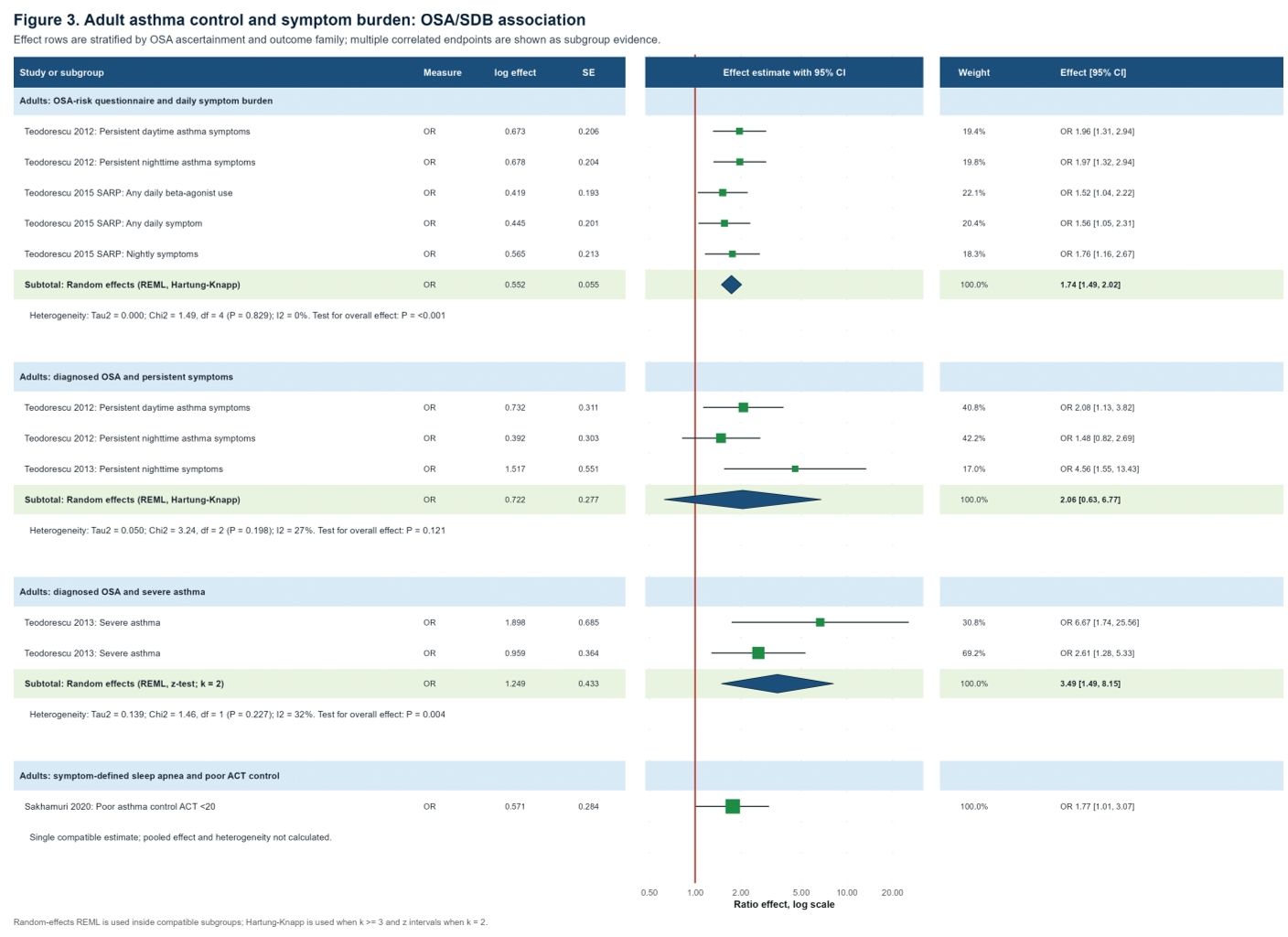
Figure 3.
Forest plot of adult asthma control and symptom burden: OSA/SDB association. Effect rows are stratified by OSA ascertainment method and outcome family; multiple correlated endpoints from the same study are shown as subgroup evidence. Random-effects REML is used inside compatible subgroups; Hartung-Knapp interval correction is applied when k ≥ 3 and z-intervals when k = 2. OSA, obstructive sleep apnea; REML, restricted maximum likelihood; SDB, sleep-disordered breathing.
In the diagnosed-OSA stratum, three estimates from Teodorescu 2012 and Teodorescu 2013 were pooled; the result was OR 2.06 (95% CI 0.63–6.77; I2 = 27%; P = 0.121) (24, 25). Although the point estimate is clinically meaningful, the CI crosses unity owing to wide between-study variance (τ2 = 0.050) and small event numbers. OSA was associated with significantly greater odds of severe asthma within Teodorescu 2013 (25) (two age-stratified estimates; pooled OR 3.49; 95% CI 1.49–8.15; I2 = 32%; P = 0.004). Sakhamuri et al. (29), the single compatible estimate for symptom-defined sleep apnoea and poor Asthma Control Test (ACT) control, reported an adjusted OR of 1.77 (95% CI 1.01–3.07; ACT < 20); pooling was not performed for this stratum.
Paediatric asthma control (Objective 1)
Two studies examining SDB and poor asthma control in children contributed four ratio estimates (Figure 4) (22, 36). In the adjusted analysis, the pooled OR for poor asthma control in children with SDB vs those without was 2.48 (95% CI 1.45–4.23; I2 = 0%; P < 0.001; τ2 = 0.000) (22, 36). The crude estimate was directionally consistent and slightly larger (OR 2.65; 95% CI 1.63–4.31; I2 = 0%; P < 0.001). In Tao 2024 (36), SDB remained independently associated with poor asthma control after adjustment for age, sex, BMI, allergic rhinitis and medication adherence (adjusted OR 2.39; 95% CI 1.30–4.39). Locci et al. (22) reported a strong unadjusted association (OR 4.15; 95% CI 1.49–11.60) that attenuated in the adjusted model (OR 2.81; 95% CI 0.91–8.64), likely reflecting the small sample size (n = 78).
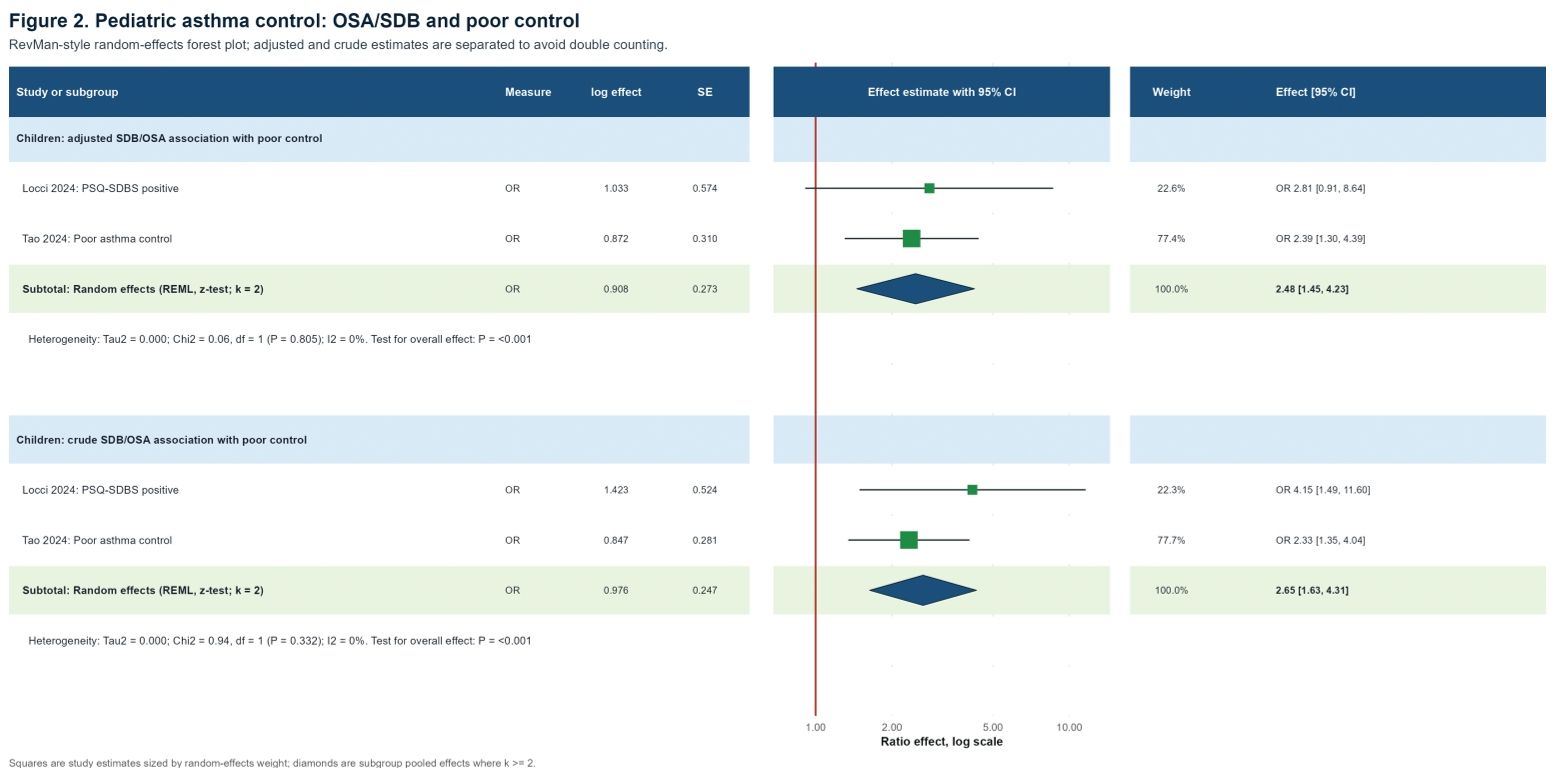
Figure 4.
Forest plot of paediatric asthma control: OSA/SDB and poor asthma control. RevMan-style random-effects forest plot; adjusted and crude estimates are presented in separate subgroups to avoid double-counting. Squares represent study estimates sized by random-effects weight; diamonds represent subgroup pooled effects where k ≥ 2. Ratio effect on log scale; no-effect line = 1.0. OSA, obstructive sleep apnoea; REML, restricted maximum likelihood; SDB, sleep-disordered breathing.
Exacerbation severity and future-risk outcomes (Objective 3)
Three studies reported hard clinical future-risk outcomes across four outcome families (Figure 5) (30, 33, 34). These families (readmission/utilisation, severe exacerbation, length of stay and ventilation severity) were pooled only within compatible outcome groups.
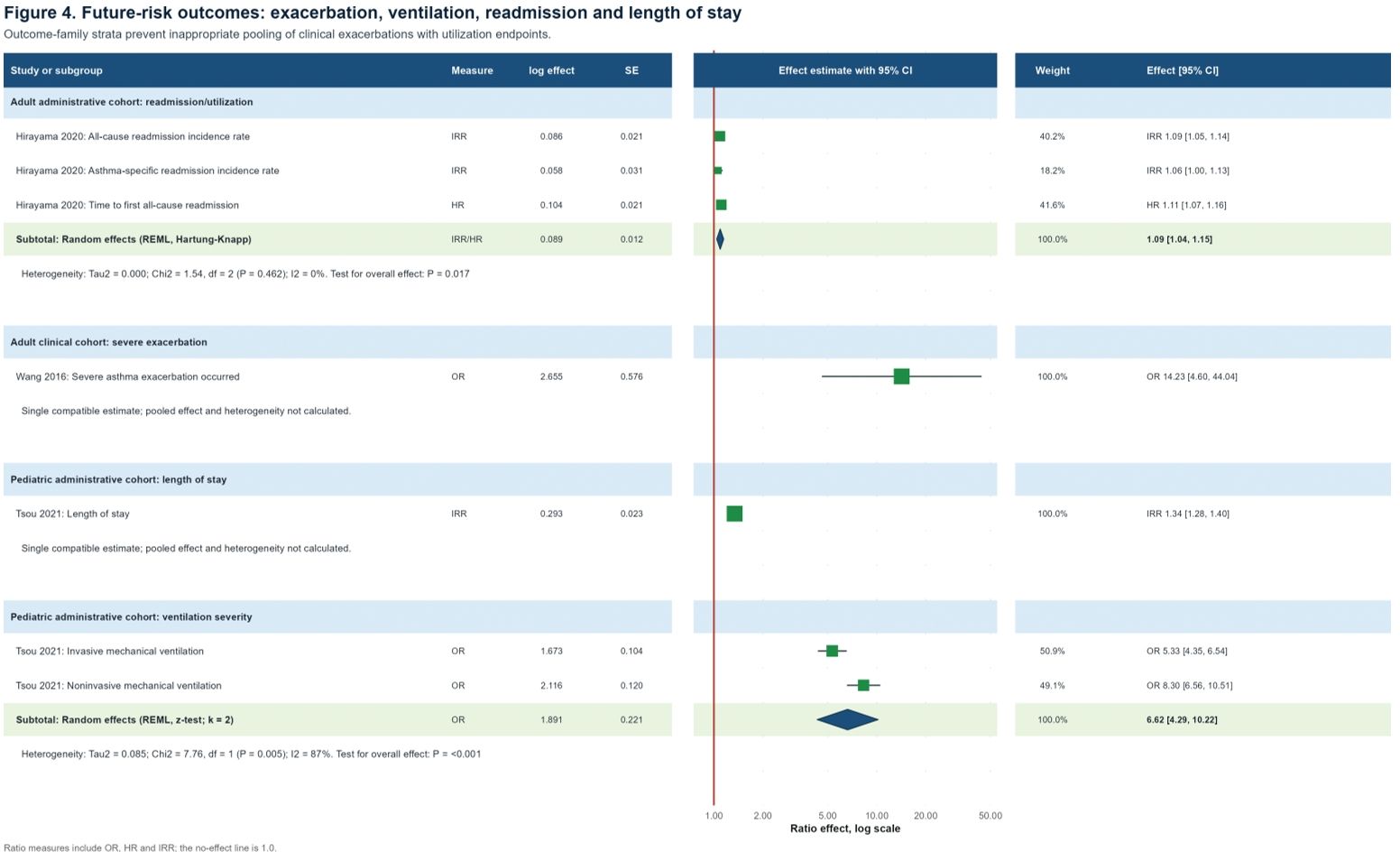
Figure 5.
Forest plot of future-risk outcomes associated with OSA/SDB in asthma: exacerbation, mechanical ventilation, hospital readmission and length of stay. Outcome-family strata prevent inappropriate pooling of clinical exacerbations with utilisation endpoints. Ratio measures include OR, HR and IRR; the no-effect line is 1.0. HR: hazard ratio; IRR: incidence rate ratio; OR, odds ratio; OSA, obstructive sleep apnoea; REML, restricted maximum likelihood; SDB, sleep-disordered breathing.
Adult administrative cohort – readmission and utilisation: Hirayama et al. (30) reported three adjusted estimates from a retrospective cohort of 65,731 adults hospitalised for asthma exacerbation. OSA-coded patients had a 9% higher all-cause readmission incidence rate (IRR 1.09; 95% CI 1.05–1.14), a 6% higher asthma-specific readmission rate (IRR 1.06; 95% CI 1.00–1.13) and an 11% higher hazard of time to first readmission (HR 1.11; 95% CI 1.07–1.16). The pooled IRR/ HR across these three estimates was 1.09 (95% CI 1.04–1.15; I2 = 0%; P = 0.017).
Adult clinical cohort – severe exacerbation: Wang et al. (34), a matched PSG cohort (n = 303), reported that OSA diagnosis was associated with substantially higher odds of severe asthma exacerbation in the preceding year (OR 14.23; 95% CI 4.60–44.04). As the sole compatible estimate, pooling was not performed.
Paediatric administrative cohort – length of stay and ventilation: Tsou et al. (33) reported that among 564,468 children hospitalised for acute asthma, those with coded OSA had a 34% longer hospital stay (IRR 1.34; 95% CI 1.28–1.40) and substantially greater odds of requiring invasive (OR 5.33; 95% CI 4.35–6.54) or non-invasive (OR 8.30; 95% CI 6.56–10.51) mechanical ventilation. The pooled OR across both ventilation types was 6.62 (95% CI 4.29–10.22; I2 = 87%; P < 0.001), with the substantial heterogeneity reflecting expected differences in invasive vs non-invasive thresholds.
OSA-directed treatment response (Objective 4)
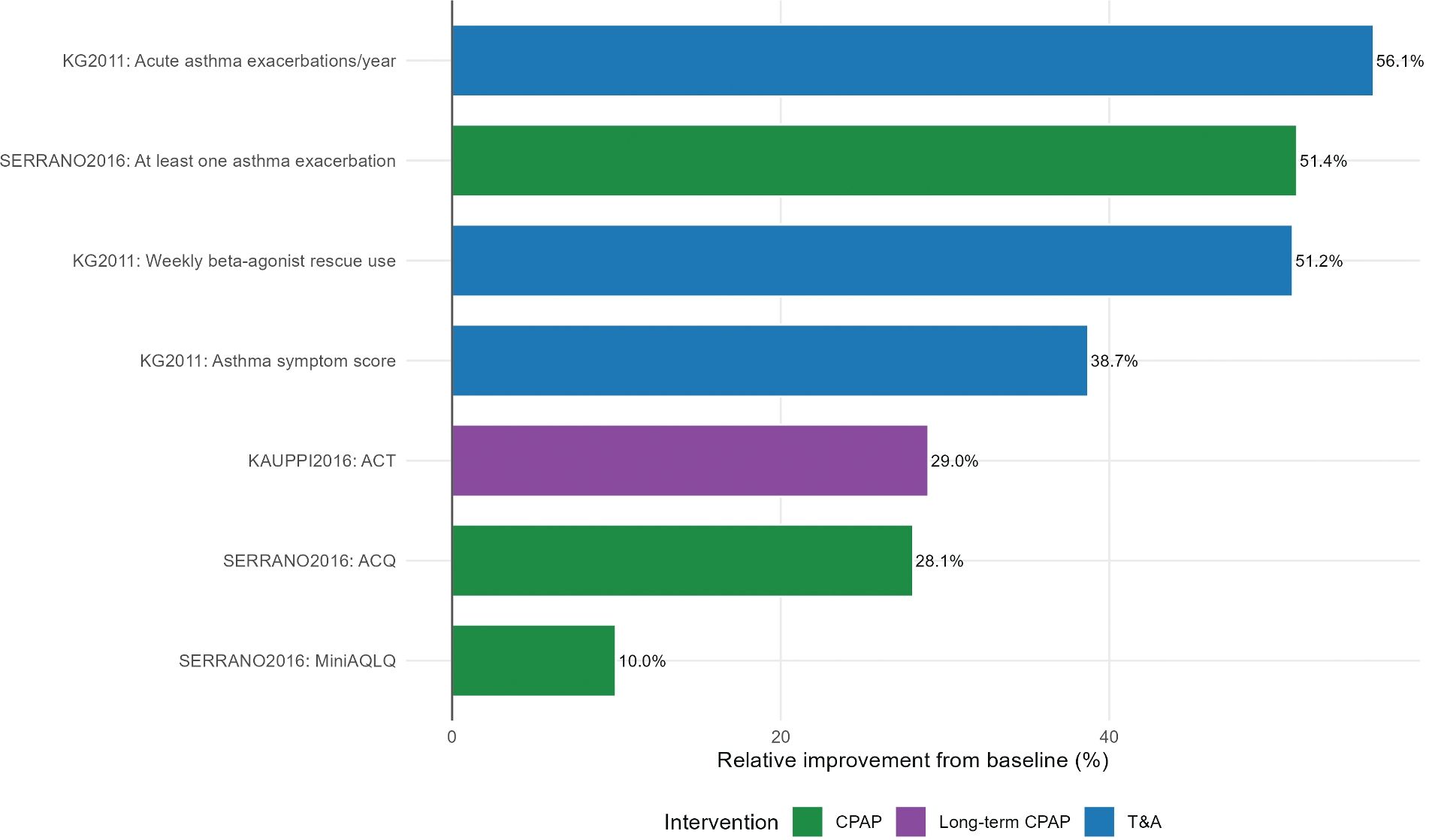
Three treatment cohorts examined asthma outcomes after CPAP initiation or adenotonsillectomy (T&A) (Supplementary Figure S4) (19, 23, 31). Paired change standard deviations were unavailable for all studies; formal meta-analysis was therefore not performed and a visual synthesis is presented. T&A in children with OSA and poorly controlled asthma Kheirandish-Gozal et al. (19) was associated with marked improvements: acute exacerbations per year decreased by 56.1% and weekly beta-agonist rescue use decreased by 51.2%. CPAP treatment Serrano-Pariente et al. (23) was associated with a 51.4% relative reduction in asthma exacerbations, a 28.1% improvement in ACQ and a 10.0% improvement in mini-AQLQ. Long-term CPAP Kauppi et al. (31) was associated with a 29.0% improvement in ACT score. GRADE certainty for the treatment response objective was rated very low.
Bidirectional asthma-to-OSA pathway (Objective 5)
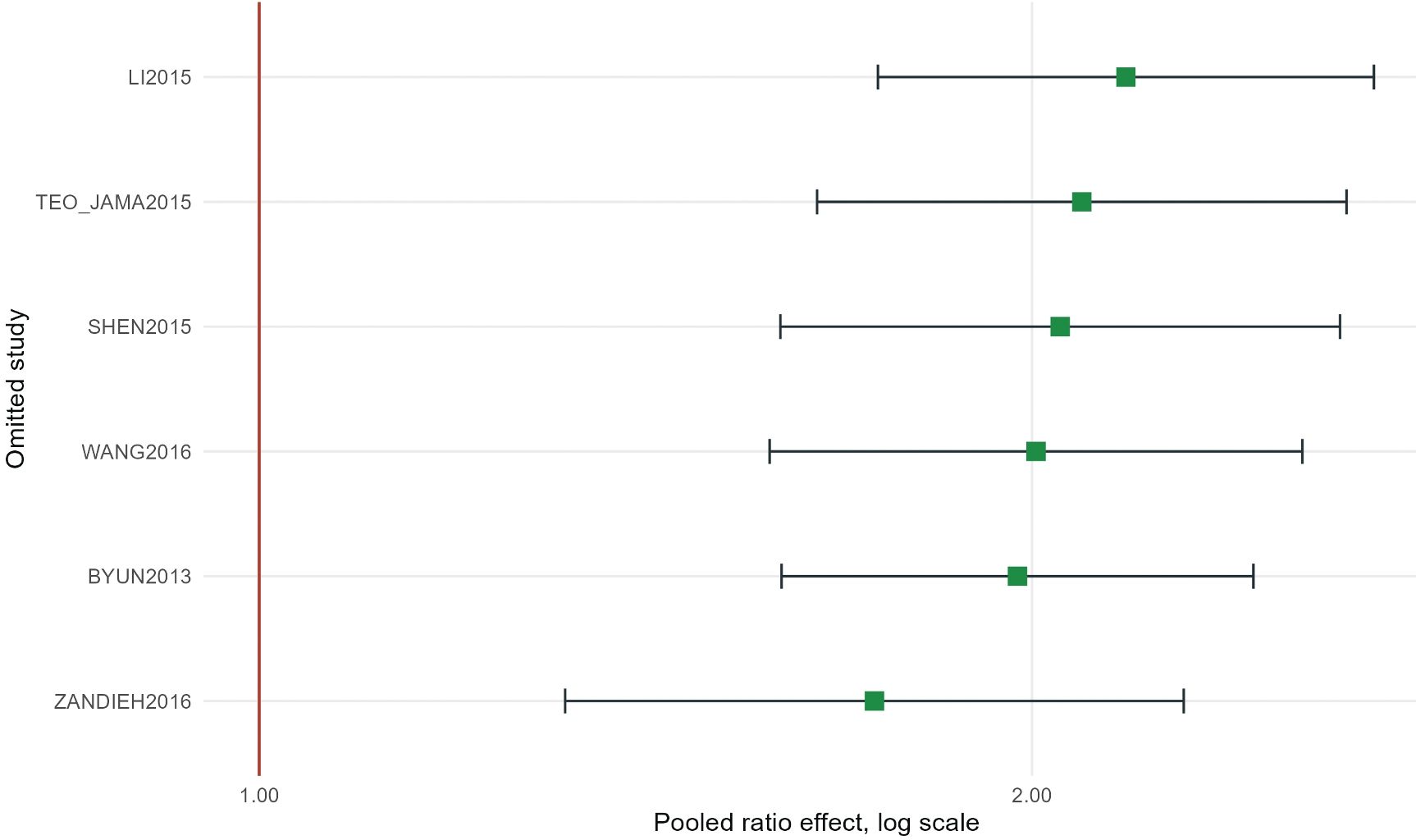
Six studies examined whether asthma independently predicted incident or prevalent OSA/SDB (Figure 6) (13, 27, 32, 35, 36). Pooling four studies (five estimates) with REML and Hartung-Knapp correction, asthma was significantly associated with greater odds/risk of incident or prevalent OSA/SDB (pooled OR/HR/RR 2.11; 95% CI 1.35–3.29; I2 = 85%; P = 0.009) (13, 27, 32, 35). High heterogeneity (τ2 = 0.083) reflects genuine variability attributable to OSA ascertainment method, asthma severity and follow-up duration. A leave-one-study-out sensitivity analysis (Supplementary Figure S3) confirmed robustness: pooled estimates remained above unity (range 1.97–2.27) after omitting any single study.
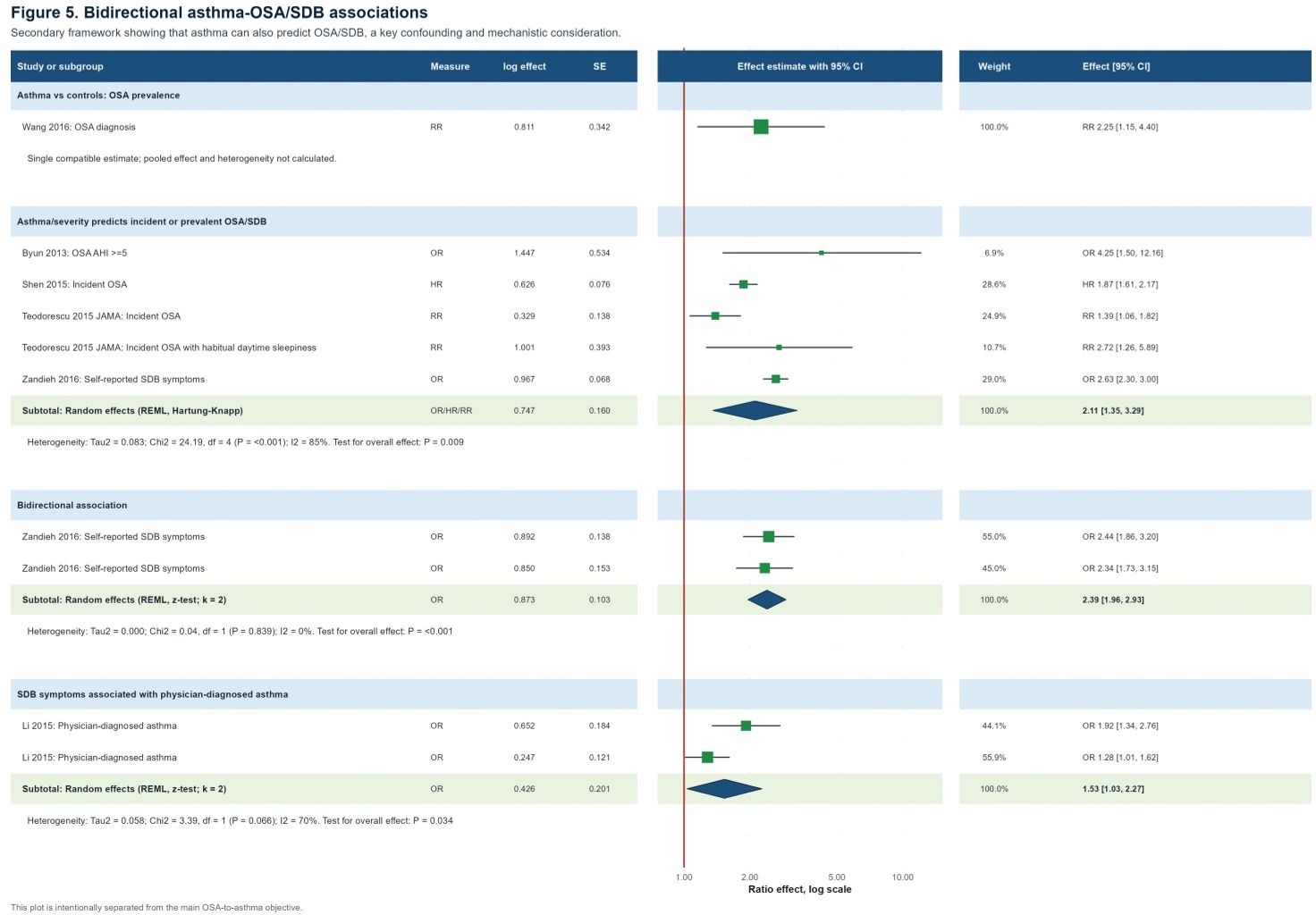
Figure 6.
Forest plot of bidirectional asthma-OSA/SDB associations. This secondary framework demonstrates that asthma also independently predicts incident and prevalent OSA/SDB, a key confounding and mechanistic consideration. Pooling is performed within directional strata using random-effects REML. HR: hazard ratio; OR, odds ratio; OSA, obstructive sleep apnoea; REML, restricted maximum likelihood; SDB, sleep-disordered breathing.
Zandieh et al. (35) provided two reciprocal cross-sectional estimates in 9565 urban adolescents; the pooled bidirectional OR was 2.39 (95% CI 1.96–2.93; I2 = 0%; P < 0.001), confirming a strong and symmetric bidirectional signal. Li et al. (32) demonstrated that SDB symptoms predicted physician-diagnosed asthma in a pooled analysis of Chinese schoolchildren (OR 1.53; 95% CI 1.03–2.27; I2 = 70%; P = 0.034).
RoB and GRADE certainty
RoB was rated serious in 16 of 21 studies, predominantly due to cross-sectional design, questionnaire-based OSA ascertainment and residual confounding by obesity and rhinitis (Supplementary Figure S1 and Supplementary Table S1). Fewer than one-third of studies used objective PSG or HSAT. The Egger funnel plot for the adult asthma control dataset (Supplementary Figure S2) showed asymmetry at larger standard errors, indicating possible small-study publication bias. GRADE certainty was low for the primary adult control and paediatric control outcomes, and very low to low for the exacerbation and treatment response outcomes (Table 3).
Table 3.
Summary of meta-analysis results by objective and subgroup
Objective | Subgroup/stratum | k studies | k effects | Statistical model | Pooled effect [95% CI] | P-value | I2 (%) | T2 | Q P-value | GRADE |
|---|---|---|---|---|---|---|---|---|---|---|
OBJ1: Paediatric asthma control | Children: adjusted SDB/ OSA and poor control | 2 | 2 | RE-REML, z-test | OR 2.48 [1.45, 4.23] | <0.001 | 0% | 0.000 | 0.805 | L |
OBJ1: Paediatric asthma control | Children: crude SDB/ OSA and poor control | 2 | 2 | RE-REML, z-test | OR 2.65 [1.63, 4.31] | <0.001 | 0% | 0.000 | 0.332 | L |
OBJ2: Adult control/symptom burden | OSA-risk questionnaire and daily symptoms | 2 | 5 | RE-REML, HK | OR 1.74 [1.49, 2.02] | <0.001 | 0% | 0.000 | 0.829 | L |
OBJ2: Adult control/symptom burden | Diagnosed OSA and persistent symptoms | 2 | 3 | RE-REML, HK | OR 2.06 [0.63, 6.77] | 0.121 | 27% | 0.050 | 0.198 | VL |
OBJ2: Adult control/symptom burden | Diagnosed OSA and severe asthma | 1 | 2 | RE-REML, z-test | OR 3.49 [1.49, 8.15] | 0.004 | 32% | 0.139 | 0.227 | L |
OBJ2: Adult control/symptom burden | Symptom-defined SA and poor ACT control | 1 | 1 | Single estimate; NP | OR 1.77 [1.01, 3.07] | 0.047 | - | - | - | VL |
OBJ3: Exacerbation/future risk | Adult admin cohort: readmission/utilisation | 1 | 3 | RE-REML, HK | IRR/HR 1.09 [1.04, 1.15] | 0.017 | 0% | 0.000 | 0.462 | L |
OBJ3: Exacerbation/future risk | Adult clinical: severe exacerbation | 1 | 1 | Single estimate; NP | OR 14.23 [4.60, 44.04] | <0.001 | - | - | - | VL |
OBJ3: Exacerbation/future risk | Paediatric admin cohort: length of stay | 1 | 1 | Single estimate; NP | IRR 1.34 [1.28, 1.40] | <0.001 | - | - | - | L |
OBJ3: Exacerbation/future risk | Paediatric admin cohort: ventilation severity | 1 | 2 | RE-REML, z-test | OR 6.62 [4.29, 10.22] | <0.001 | 87% | 0.085 | 0.005 | VL |
OBJ5: Bidirectional pathway | Asthma predicts incident/prevalent OSA/SDB | 4 | 5 | RE-REML, HK | OR/HR/RR 2.11 [1.35, 3.29] | 0.009 | 85% | 0.083 | <0.001 | VL |
OBJ5: Bidirectional pathway | Bidirectional association (Zandieh 2016) | 1 | 2 | RE-REML, z-test | OR 2.39 [1.96, 2.93] | <0.001 | 0% | 0.000 | 0.839 | L |
OBJ5: Bidirectional pathway | SDB predicts physician-diagnosed asthma | 1 | 2 | RE-REML, z-test | OR 1.53 [1.03, 2.27] | 0.034 | 70% | 0.058 | 0.066 | VL |
OBJ6: OSA/SDB prevalence | Objective sleep test (seven studies) | 7 | 7 | RE-logit, HK | 62.3% [34.7%, 83.7%] | 0.320 | 95% | 1.168 | <0.001 | VL |
OBJ6: OSA/SDB prevalence | Administrative code (two studies) | 2 | 2 | RE-logit, z-test | 2.8% [0.2%, 28.7%] | 0.008 | 100% | 3.617 | <0.001 | VL |
OBJ6: OSA/SDB prevalence | Questionnaire/symptom-defined SDB (three studies) | 3 | 3 | RE-logit, HK | 30.4% [13.4%, 55.2%] | 0.076 | 89% | 0.153 | <0.001 | VL |
[i] ACT: Asthma Control Test; CI, confidence interval; HK: Hartung-Knapp; HR: hazard ratio; IRR: incidence rate ratio; k: number of effect estimates; NP: not pooled (single compatible estimate); OR: odds ratio; OSA, obstructive sleep apnoea; SDB, sleep-disordered breathing; REML: restricted maximum likelihood; RR: relative risk.
[ii] GRADE certainty: L = low; VL = very low.
Discussion
Principal findings
This systematic review and meta-analysis, encompassing 21 observational studies and nearly 1 million participants, provides the most comprehensive quantitative synthesis to date of the impact of OSA/SDB on asthma control and clinical outcomes. Five principal findings emerge. First, OSA/SDB is consistently associated with worse asthma control in both adults (pooled OR 1.74–3.49) and children (pooled OR 2.48). Second, OSA markedly elevates the risk of severe exacerbation (OR 14.23 in PSG-confirmed adults (34)), hospital readmission (pooled IRR 1.09 (30)) and mechanical ventilation in hospitalised children (pooled OR 6.62 (33)). Third, OSA/SDB prevalence in asthma populations approaches 62% when assessed objectively, indicating a dramatically underrecognised comorbidity burden. Fourth, a reciprocal bidirectional pathway exists whereby asthma also predicts incident OSA (pooled OR/HR/RR 2.11). Fifth, OSA-directed treatment (CPAP or T&A) was associated with clinically meaningful improvements in asthma outcomes across all three treatment cohorts, though GRADE certainty was very low owing to uncontrolled before-after designs.
Mechanisms linking OSA and asthma
Multiple mechanistic pathways link OSA and asthma in both directions (41). OSA-induced intermittent hypoxia activates HIF-1α and NF-κB signalling, promoting systemic cytokine release (IL-6, TNF-α) and neutrophilic airway inflammation that worsens asthmatic airway disease (9). Oxidative stress and lipid peroxidation generated by intermittent hypoxia further impair airway epithelial barrier function and mucus clearance (42). Gastro-oesophageal reflux, a common OSA sequela mediated by negative intrathoracic pressure during apnoeic events, amplifies vagal bronchoconstriction and airway hyperresponsiveness in asthma (11). The NLRP3 inflammasome activated by intermittent hypoxia may also impair regulatory T-cell function, potentially shifting airway phenotype towards a steroid-resistant neutrophilic pattern (9, 10).
In the reverse direction, asthma increases OSA risk through upper airway oedema from eosinophilic and allergic inflammation, increased negative intrathoracic pressures during bronchoconstriction that promote pharyngeal collapse, nasal obstruction from allergic rhinitis promoting mouth breathing and systemic corticosteroid therapy increasing pharyngeal fat deposition (11, 41). The strong bidirectional signal documented here (asthma predicts OSA: pooled OR/ HR/RR 2.11) is consistent with these pathways and should be considered when interpreting the observational OSA-to-asthma associations (13).
Obesity represents an important shared risk factor that may amplify the bidirectional relationship between asthma and OSA. Excess adiposity contributes to upper-airway narrowing, reduced lung volumes, increased airway collapsibility, systemic inflammation and metabolic dysregulation, all of which can worsen both conditions. Obesity is also associated with poorer asthma control, increased exacerbation frequency and greater OSA severity. Consequently, weight management may represent a modifiable intervention capable of improving outcomes across both diseases simultaneously. Several studies have reported improvements in asthma symptoms, lung function and OSA severity following weight reduction interventions, highlighting the importance of incorporating weight-management strategies into the care of patients with asthma-OSA overlap (7, 43, 44).
Sex-related differences may also influence the asthma–OSA relationship. OSA is generally more prevalent among males, whereas asthma prevalence and symptom burden are often greater among females in adulthood. Although several included studies adjusted for sex as a potential confounder, sex-stratified outcome estimates were rarely reported, preventing quantitative assessment of whether the association between OSA/SDB and asthma outcomes differs between males and females. Future studies should investigate sex-specific differences in asthma control, exacerbation risk and response to OSA-directed treatment.
Several comorbid conditions may further strengthen the observed association between asthma and OSA. Gastro-oesophageal reflux disease (GERD) is common in both disorders and may contribute to airway inflammation, nocturnal respiratory symptoms and sleep disruption. Upperairway diseases, including chronic rhinosinusitis and nasal polyposis, can increase nasal resistance, promote mouth breathing and worsen both asthma control and SDB. Obesity represents another important shared risk factor, contributing to systemic inflammation, reduced lung volumes, upper-airway narrowing and increased airway collapsibility. These overlapping comorbidities may act as common mechanistic pathways linking asthma and OSA and should be considered during clinical assessment and management of patients presenting with either condition.
Comparison with prior literature
Our finding of an OR of 1.74 for persistent asthma symptoms in adults with high OSA risk aligns with, and quantitatively extends, cross-sectional associations reported by Teodorescu and colleagues from SARP and clinic cohorts (24–26). The SARP data further demonstrated that high OSA risk was independently associated with greater airway neutrophilia, providing a mechanistic substrate (26). A systematic review by Davies et al. (14) focused exclusively on CPAP treatment outcomes and reported improved AQLQ (pooled MD 0.59; 95% CI 0.25–0.92); our review extends this by providing pooled effect estimates for OSA-asthma control associations and bidirectional data absent from that analysis. The 2025 Medicine meta-analysis by Liu and Qin (15) reported a pooled OSA prevalence of 35.25% in allergic asthma – lower than our objective-test estimate of 62.3% – likely reflecting differences in OSA thresholds, population enrichment and inclusion of questionnaire-based estimates in their overall pool. Pardo-Manrique et al. (16) characterised the conceptual framework of asthma-OSA overlap but did not perform meta-analysis, underscoring the added value of the present quantitative synthesis.
The paediatric finding (adjusted OR 2.48 for poor control) is consistent with paediatric sleep and rhinology literature showing that T&A for OSA improves asthma outcomes in children (19, 38). The Childhood Adenotonsillectomy Trial (CHAT) (39) demonstrated that T&A improves quality of life and symptom burden even in mild OSA. A recent systematic review of T&A for paediatric OSA further confirmed improvements in sleep architecture and quality-of-life outcomes (40). The observation that children with coded OSA had a 6.62-fold greater odds of mechanical ventilation during asthma hospitalisation (33) carries important triage implications for paediatric emergency and critical care settings.
Emerging evidence also suggests that leukotriene receptor antagonists may play a role in the management of paediatric OSA, particularly among children with coexisting asthma and adenotonsillar hypertrophy (45, 46). Montelukast has been associated with reductions in adenotonsillar inflammatory activity and improvements in OSA severity indices in children with mild OSA (45, 46). Given that leukotriene-mediated airway inflammation contributes to both asthma pathophysiology and upper-airway lymphoid tissue hypertrophy, pharmacological modulation of this pathway may represent a biologically plausible strategy for addressing aspects of the asthma–OSA overlap (45, 46). Although the studies included in the present review did not provide sufficient data for quantitative synthesis of leukotriene-modifier effects, future research should investigate whether montelukast and related therapies improve both asthma control and SDB outcomes in children with concurrent disease.
OSA/SDB as a systemic disease modifier
The impact of untreated OSA extends well beyond respiratory outcomes. La Verde et al. (47) recently documented the systemic effects of OSA on foetal cardiovascular function, highlighting the organ-level consequences of intermittent hypoxia and inflammatory burden in pregnant patients. Mirzaei et al. (6) reviewed the pathophysiological mechanisms linking OSA to seizure disorders through oxidative stress and cerebral metabolic dysfunction, reinforcing the broad systemic impact of untreated SDB that is relevant to multimorbid patients with asthma. Al Mortadi et al. (48) demonstrated in a developing country context that clinical predictors of OSA are identifiable in outpatient settings using structured questionnaire tools, supporting the feasibility of OSA screening in low-resource respiratory clinics. These collectively reinforce the case for treating OSA as a systemic disease modifier in the context of asthma comorbidity management. The epidemiology of OSA in the general population is well established (43), yet its integration into asthma management pathways remains inconsistent globally (49).
Public health implications and SDG 3
The findings of this review carry direct implications for Sustainable Development Goal 3 – Good Health and Well-being – and the global target to reduce premature mortality from non-communicable diseases (4). Asthma is the most common chronic respiratory disease in children globally (1), and OSA is increasingly prevalent alongside the obesity epidemic (43). A substantial proportion of patients with ‘difficult-to-control’ or ‘refractory’ asthma likely harbour undiagnosed OSA, perpetuating poor control and driving preventable hospitalisations. Systematic screening using validated tools such as the STOP-BANG questionnaire (49), the Berlin Questionnaire, or the Pediatric Sleep Questionnaire in asthma clinic settings may identify patients warranting sleep evaluation referral, reducing preventable exacerbations and emergency care utilisation (50). GINA guidelines already recommend assessment of OSA as part of the difficult asthma workup; however, implementation remains limited, particularly in low- and middle-income countries where the dual burden of communicable diseases and chronic respiratory diseases is highest (3, 50).
Strengths and limitations
Key strengths include the pre-registered protocol, coverage of six pre-specified objectives, ascertainment-method stratification for pooling, application of Hartung-Knapp correction for conservative CIs and a comprehensive evidence map (Supplementary Figure S5). The review included literature sourced from primary research, systematic reviews, and methodological literature, substantially expanding the evidence base compared with prior reviews (14–16). Limitations include the predominance of cross-sectional designs (17/21 studies), which preclude causal inference. Fewer than one-third of studies used objective sleep testing, introducing exposure misclassification. Residual confounding by obesity, chronic rhinosinusitis/nasal polyposis, rhinitis, gastro-oesophageal reflux disease, medication adherence and potential sex-related differences cannot be fully excluded. Sex-stratified outcome data were inconsistently reported, preventing quantitative assessment of sex-specific associations. Funnel plot asymmetry suggests possible publication bias. The paucity of RCT evidence for OSA treatment in asthma limits causal conclusions. Several pooled subgroups were based on k = 2 estimates (51), limiting precision. International heterogeneity in asthma diagnosis criteria and OSA thresholds also affects generalisability (44, 52).
Future research directions
Randomised controlled trials of CPAP in adults with confirmed OSA and uncontrolled asthma, measuring ACT, ACQ and exacerbation rates as co-primary endpoints, are urgently needed (53, 54). Paediatric research should prioritise PSG-confirmed OSA studies with randomised T&A designs (55). Studies from low- and middle-income country settings are strikingly absent (47, 56). Research examining interactions between OSA, treatable asthma traits (eosinophilic vs neutrophilic phenotype) and biological therapy response would advance precision medicine approaches (57, 58). Development and validation of a combined asthma-OSA risk stratification tool, analogous to STOP-BANG, would facilitate structured screening globally (59, 60). Longitudinal cohort studies with objective OSA ascertainment, lung function data and multivariable confounding adjustment across diverse populations are also needed (61–63). Future studies should also evaluate the role of anti-inflammatory therapies, including leukotriene receptor antagonists such as montelukast, as potential adjunctive treatments for children with coexisting asthma and mild OSA.
Conclusions
OSA and SDB are highly prevalent, frequently undiagnosed comorbidities in asthma that are consistently associated with worse asthma control, greater symptom burden, higher rates of severe exacerbations and hospitalisations and increased mechanical ventilation requirements. The bidirectional nature of the OSA-asthma interaction and the suggestive but uncontrolled evidence for CPAP and T&A benefit underscore the importance of systematic OSA screening in patients with uncontrolled asthma. These findings support incorporating OSA assessment into routine asthma management protocols, consistent with GINA recommendations and the broader global agenda for reducing the burden of chronic respiratory diseases under SDG 3 – Good Health and Well-being.
Acknowledgment
The authors thank the librarians and information specialists who facilitated access to the electronic databases used for the literature search. The authors also acknowledge the developers of the statistical software and open-source packages used for the meta-analysis. As the authors are nonnative English speakers, they also acknowledge the use of QuillBot AI solely for English language editing and grammar improvement. The authors reviewed and approved all revisions, and QuillBot AI had no role in the study design, data collection, analysis, interpretation, or scientific conclusions of this work.
Abbreviations
- AHI
Apnoea-Hypopnoea Index
- AQLQ
Asthma Quality of Life Questionnaire
- BMI
Body Mass Index
- HIF
α - Hypoxia-Inducible Factor 1-alpha
- ICD
International Classification of Disease s
- IL-6
Interleukin-6
- IMV
Invasive Mechanical Ventilation
- LOS
Length of Stay
- NF-κB
Nuclear Factor kappa-light-chain-enhancer of activated B cells
- NIV
Non-Invasive Ventilation
- NLRP3
NLR family pyrin domain containing 3 (inflammasome)
- OBJ1
Objective 1
- pAHI
pulse-oximetry-derived/peripheral Apnoea-Hypopnoea Index (as measured by Watch-PAT)
- PAT
Peripheral Arterial Tonometry
- RDI
Respiratory Disturbance Index
- REI
Respiratory Event Index
- SA
Sleep Apnoea
- SARP
Severe Asthma Research Program
- TST
Total Sleep Time
- PSQ-SDBS
Pediatric Sleep Questionnaire - Sleep-Disordered Breathing Scale
Notes
[7] Declarations
[8] Protocol registration
This systematic review was registered at the Open Science Framework (OSF) prior to data extraction. Registration: https://osf.io/xdk34/overview.
[9] Contributed by Author’s contributions
Jeevarathinam Thirumalai conceptualised and designed the study, developed the methodology, conducted the literature search, performed data extraction, statistical analysis, interpretation of findings and drafted the manuscript. Bhavadharani Thirumalai contributed to study screening, data extraction, quality assessment, manuscript review and critical revision of the intellectual content. Muthupandi Sankar contributed to methodological supervision, interpretation of results, manuscript editing and final approval of the submitted version. All authors reviewed and approved the final manuscript and agreed to be accountable for all aspects of the work.
[10] Conflicts of interest Conflict of interest
The authors declare no conflicts of interest.
[11] Ethical approval
This is a systematic review of published literature. No ethical approval or informed consent was required.
[12] Data availability
Extracted data and the R-ready analysis dataset are available in the supplementary materials and via the OSF registration: https://osf.io/xdk34/overview.
[13] Informed consent statement
No informed consent was necessary.
Supplementary material Figures
The following Supplementary Figures and Tables are provided for online publication alongside the main manuscript.
Supplementary Figure S1.
Risk-of-bias profile across observational studies (ROBINS-I adapted domains). Stacked bar chart showing the distribution of judgements (low, moderate, some concerns, serious, other/NA) for each domain across all 21 included studies. N/A.
Supplementary Figure S2.
Funnel plot for adult asthma control: OSA/SDB association. The vertical blue line represents the pooled log ratio effect (log-scale = 0.552). Dotted lines indicate the pseudo-95% confidence region. Asymmetry at larger standard errors suggests possible small-study publication bias. OSA, obstructive sleep apnea; SDB, sleep-disordered breathing.
Supplementary Figure S3.
Leave-one-study-out sensitivity analysis for the bidirectional asthma-OSA/SDB association (Objective 5). The x-axis shows the pooled ratio effect on the log scale after omission of each study in turn. All pooled estimates remain substantially above the null value (1.0), confirming robustness of the main finding. OSA, obstructive sleep apnea; SDB, sleep-disordered breathing.
Supplementary Figure S4.
Treatment response after OSA-directed therapy: relative improvement from baseline across asthma outcomes following CPAP (green) and adenotonsillectomy/T&A (blue). Direction is harmonised so that positive values indicate improvement. Pre-post evidence is not treated as causal owing to uncontrolled before-after designs. CPAP, OSA.
Supplementary Figure S5.
Evidence map showing which objectives each included study addresses. Bubble size reflects approximate precision where standard errors were available. Point colour indicates direction of signal (harm, benefit/null-reverse, continuous, or no direction).
Supplementary Material Tables
Table S1.
Risk-of-bias assessment by domain for all 21 included primary studies (ROBINS-I-adapted framework; underlies Supplementary Figure S4). Risk of bias (RoB) was assessed for each included study using domains adapted from the ROBINS-I framework: selection bias, exposure measurement, outcome measurement, confounding, temporality, missing data and selective reporting. Each domain was rated low, moderate, some concerns or serious risk of bias. An overall risk-of-bias judgement was assigned per study by two independent reviewers, with disagreements resolved through consensus discussion. Corresponds to Supplementary Figure S4 and the Risk of bias assessment / RoB and GRADE certainty sections of the main text.
Study (ref.) | Selection bias | Exposure measurement | Outcome measurement | Confounding | Temporality | Missing data | Selective reporting | Overall RoB | Rationale |
|---|---|---|---|---|---|---|---|---|---|
Kheirandish-Gozal 2011 (19) | Serious | Low | Moderate | Serious | Some concerns (T&A follow-up) | Some concerns | Some concerns | Serious | Objective PSG and 1-year outcomes, but selected poorly controlled children and non-ran-domised T&A. |
Araujo 2022 (20) | Moderate | Moderate | Low | Serious | Cross-sectional | Some concerns | Some concerns | Serious | Objective HSAT and ACT, but small severe-asthma-on-bioiogics cohort with cross-sectional analysis. |
Byun 2013 (21) | Serious | Moderate | Moderate | Serious | Cross-sectional | Some concerns | Some concerns | Serious | Symptomatic clinic sample; only a subset underwent PSG; reverse-di-rection association. |
Teodorescu 2012 (24) | Moderate | Serious | Moderate | Moderate | Cross-sectional | Some concerns | Some concerns | Serious | Large asthma clinic sample with adjusted models; OSA risk/diagnosis not by systematic PSG. |
Teodorescu 2013 (25) | Moderate | Serious | Moderate | Moderate | Cross-sectional | Some concerns | Some concerns | Serious | Age-stratified adjusted estimates; OSA ascertained from history/ records, not systematic testing. |
Teodorescu 2015 SARP (26) | Moderate | Serious | Low | Moderate | Cross-sectional | Some concerns | Some concerns | Serious | Well-characterised SARP outcomes and sputum data, but OSA risk by questionnaire only. |
Teodorescu 2015 JAMA (12) | Moderate | Low | Moderate | Moderate | Prospective | Some concerns | Some concerns | Moderate | Repeated laboratory PSG and prospective design; asthma ascertained by self-report. |
Wang 2016 (34) | Moderate | Low | Moderate | Serious | Partly retrospective outcomes | Some concerns | Some concerns | Serious | Full PSG for all subjects; small OSA subgroup and covariate model not fully reported. |
Shen 2015 (13) | Moderate | Serious | Moderate | Moderate | Cohort follow-up | Some concerns | Some concerns | Moderate- to-serious | Large incident-OSA cohort; administrative claims lack BMI/smoking/se-verity detail. |
Hirayama 2020 (30) | Moderate | Serious | Low | Moderate | Cohort follow-up | Some concerns | Some concerns | Moderate-to- serious | Large longitudinal readmission data with extensive adjustment; administrative coding may misclassify exposure/outcome. |
Kauppi 2016 (31) | Serious | Moderate | Serious | Serious | Retrospective before-after | Some concerns | Some concerns | Serious | Long CPAP duration, but recalled pre-CPAPACT/ symptoms and no control group. |
Serrano-Pariente 2016 (23) | Moderate | Low | Low | Serious | Before-after | Some concerns | Some concerns | Serious | Validated ACQ/ AQLQ and objective OSA diagnosis, but uncontrolled CPAP before-after design. |
Sato 2021 (27) | Moderate | Moderate | Moderate | Serious | Prospective | Some concerns | Some concerns | Serious | Prospective exacerbation follow-up; small sample and an unexpected inverse pAHI association. |
Sakhamuri 2020 (29) | Serious | Serious | Low | Moderate | Cross-sectional | Some concerns | Some concerns | Serious | Validated ACT/ AQLQ, but sleep apnoea defined by symptoms only; specialty-clinic sample. |
Zandieh 2016 (35) | Moderate | Serious | Moderate | Moderate | Cross-sectional | Some concerns | Some concerns | Serious | Large urban adolescent cohort; self-reported SDB and probable asthma. |
Li 2015 (32) | Moderate | Serious | Moderate | Moderate | Cross-sectional | Some concerns | Some concerns | Serious | Very large sample with adjusted models; SDB and asthma both by parent questionnaire. |
Locci 2024 (22) | Moderate | Serious | Low | Moderate | Cross-sectional | Some concerns | Some concerns | Serious | Validated C-ACT/ PedsQL outcomes, but SDB ascertained by questionnaire and small sample. |
Tao 2024 (36) | Moderate | Serious | Low | Moderate | Cross-sectional | Some concerns | Some concerns | Serious | Large paediatric sample with adjusted model; SDB by PSQ only, not objective testing. |
Tsou 2021 (33) | Moderate | Serious | Low | Moderate | Index hospitalisation | Some concerns | Some concerns | Moderate-to- serious | Very large adjusted inpatient sample; administrative OSA coding likely under-ascertains exposure. |
Yigla 2003 (37) | Serious | Low | Serious | Serious | Cross-sectional / descriptive | Some concerns | Some concerns | Serious | Objective PSG, but a highly selected steroid-dependent sample with no asthma-control comparator. |
Madama 2016 (28) | Serious | Moderate | Serious | Serious | Retrospective | Some concerns | Some concerns | Serious | Referred suspect-ed-OSA sample; outcome reported only as qualitative improvement. |
[i] RoB, risk of bias; ROBINS-I, Risk Of Bias In Non-randomised Studies of Interventions (adapted for observational exposure-outcome studies). ‘Some concerns’ ratings for missing data and selective reporting reflect incomplete reporting of pre-specified outcomes or attrition detail typical of the source publications rather than a specific identified flaw. Reference numbers correspond to the main manuscript reference list.
Table S2.
OSA/SDB prevalence extraction, stratified by ascertainment method (underlies Figure 2). Twelve studies reported OSA/SDB prevalence in asthma populations. Studies are grouped into three ascertainment strata (objective sleep test, administrative code, and questionnaire/symptom-defined SDB) as pooling across strata was not performed, given the marked heterogeneity in prevalence estimates by ascertainment method. Pooled estimates use a random-effects logit-scale (metaprop) model with Hartung-Knapp correction where k ≥ 3, back-transformed to the prevalence scale; corresponds to Figure 2, Table 1 and Table 3 (Objective 6) in the main text.
Study (ref.) | Age group | Ascertainment stratum | Events (n) | Total (N) | Prevalence | OSA/SDB measure | Threshold / cut-off |
|---|---|---|---|---|---|---|---|
Kheirandish-Gozal 2011 (19) | Paediatric | Objective sleep test | 58 | 92 | 63.0% | Overnight polysomnography (PSG) | AHI ≥ 5/hr TST |
Araujo 2022 (20) | Adult | Objective sleep test | 30 | 56 | 53.6% | HSAT (ApneaLink Air) | RDI ≥ 5/hr |
Byun 2013 (21) | Adult | Objective sleep test | 111 | 167 | 66.5% | ApneaLink + PSG subset | AHI ≥ 5 |
Sato 2021 (27) | Adult | Objective sleep test | 50 | 62 | 80.6% | Watch-PAT (peripheral arterial tonometry) | pAHI ≥ 5 |
Madama 2016 (28) | Adult | Objective sleep test | 27 | 47 | 57.4% | PSG (68%) or cardiorespiratory polygraphy (32%) | Not extracted |
Wang 2016 (34) | Adult | Objective sleep test | 28 | 146 | 19.2% | Full-night PSG | Threshold not extracted |
Yigla 2003 (37) | Adult | Objective sleep test | 21 | 22 | 95.5% | Full-night PSG | RDI ≥ 15 + symptoms |
Pooled (Objective sleep test; k=7) | 325 | 592 | 62.3% [34.7%, 83.7%] | I2 = 95% | τ2 = 1.168 | ||
Hirayama 2020 (30) | Adult | Administrative code | 6549 | 65,731 | 10.0% | Administrative ICD-9-CM diagnosis | Not applicable |
Tsou 2021 (33) | Paediatric | Administrative code | 4209 | 564,468 | 0.7% | Administrative ICD hospitalisation code | Not applicable |
Pooled (Administrative code; k=2) | 10,758 | 630,199 | 2.8% [0.2%, 28.7%] | I2 = 100% | τ2 = 3.617 | ||
Locci 2024 (22) | Paediatric | Questionnaire / symp-tom-defined SDB | 29 | 78 | 37.2% | Pediatric Sleep Questionnaire (PSQ-SDBS) | PSQ-SDBS ≥ 0.33 |
Tao 2024 (36) | Paediatric | Questionnaire / symp-tom-defined SDB | 86 | 397 | 21.7% | Pediatric Sleep Questionnaire (PSQ-SRBD) | PSQ-SRBD ≥ 0.33 |
Sakhamuri 2020 (29) | Adult | Questionnaire / symp-tom-defined SDB | 150 | 428 | 35.0% | Symptom features (≥2 of: snoring, witnessed apnoeas, daytime sleepiness) | ≥ 2 features |
Pooled (Questionnaire / symptom-defined SDB; k=3) | 265 | 903 | 30.4% [13.4%, 55.2%] | I2 = 89% | τ2 = 0.153 |
[i] AHI, apnoea-hypopnoea index; HSAT, home sleep apnoea test; ICD, International Classification of Diseases; NPSG, nocturnal polysomnography; OSA, obstructive sleep apnoea; PSG, polysomnography; PSQ-SDBS/PSQ-SRBD, Pediatric Sleep Questionnaire sleep-disordered-breathing / sleep-related-breathing-disorder scale; RDI, respiratory disturbance index; SDB, sleep-disordered breathing; TST, total sleep time; pAHI, pulse-oximetry-derived (peripheral) apnoea-hypopnoea index (Watch-PAT). I2, heterogeneity statistic; τ2, between-study variance. Reference numbers correspond to the main manuscript reference list.