
Table1.
Endotype-specific biologic and molecular therapies in COPD
| Endotype | Key biomarkers | Primary targeted therapies |
|---|---|---|
| Type-2 | ↑ Eosinophils, ↑ FeNO | Dupilumab, mepolizumab, benralizumab, tezepelumab |
| Neutrophilic | ↑ NETs, ↑ IL-8/CXCR2 | CXCR2 antagonists, anti-NET therapies, macrolide immunomodulation |
| Epithelial injury | CT emphysema score, telomere shortening, senescence markers | Stem-cell/exosome therapy, gene editing, antioxidant therapy |
| Autoimmune | Lymphoid follicles, anti-tissue antibodies | B-cell pathway inhibition (investigational) |
| Corticosteroid-resistant | Low HDAC2, oxidative stress | PI3K inhibitors, Nrf2 activators |
1 CXCR2, C–X–C motif chemokine receptor 2; COPD, chronic obstructive pulmonary disease; FeNO, fraction of exhaled nitric oxide; HDAC2, histone deacetylase 2; IL-8, interleukin 8; NET, neutrophil extracellular trap; Nrf2, nuclear factor erythroid 2-related factor 2; PI3K, phosphoinositide 3-kinase (8).
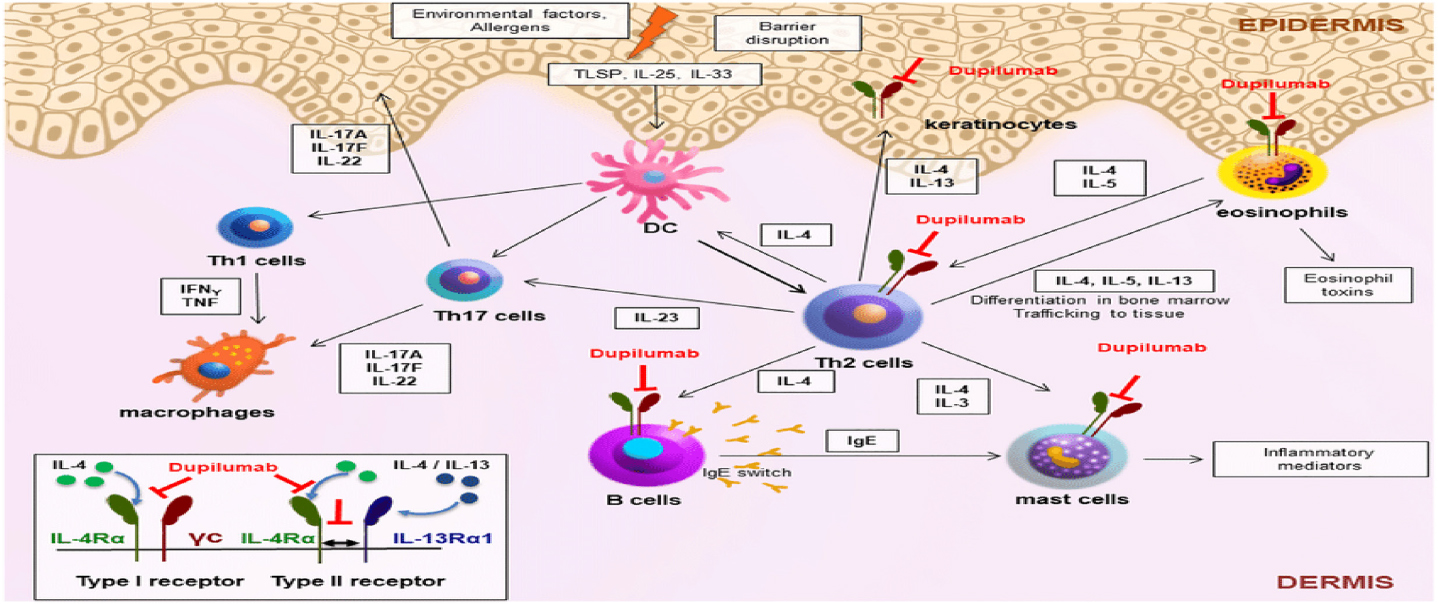
Figure 1.
Mechanism of action of dupilumab (adapted from Kychygina et al. 2022) (20). IL-4, interleukin-4; IL-5, interleukin-5; IL-33, interleukin-33.
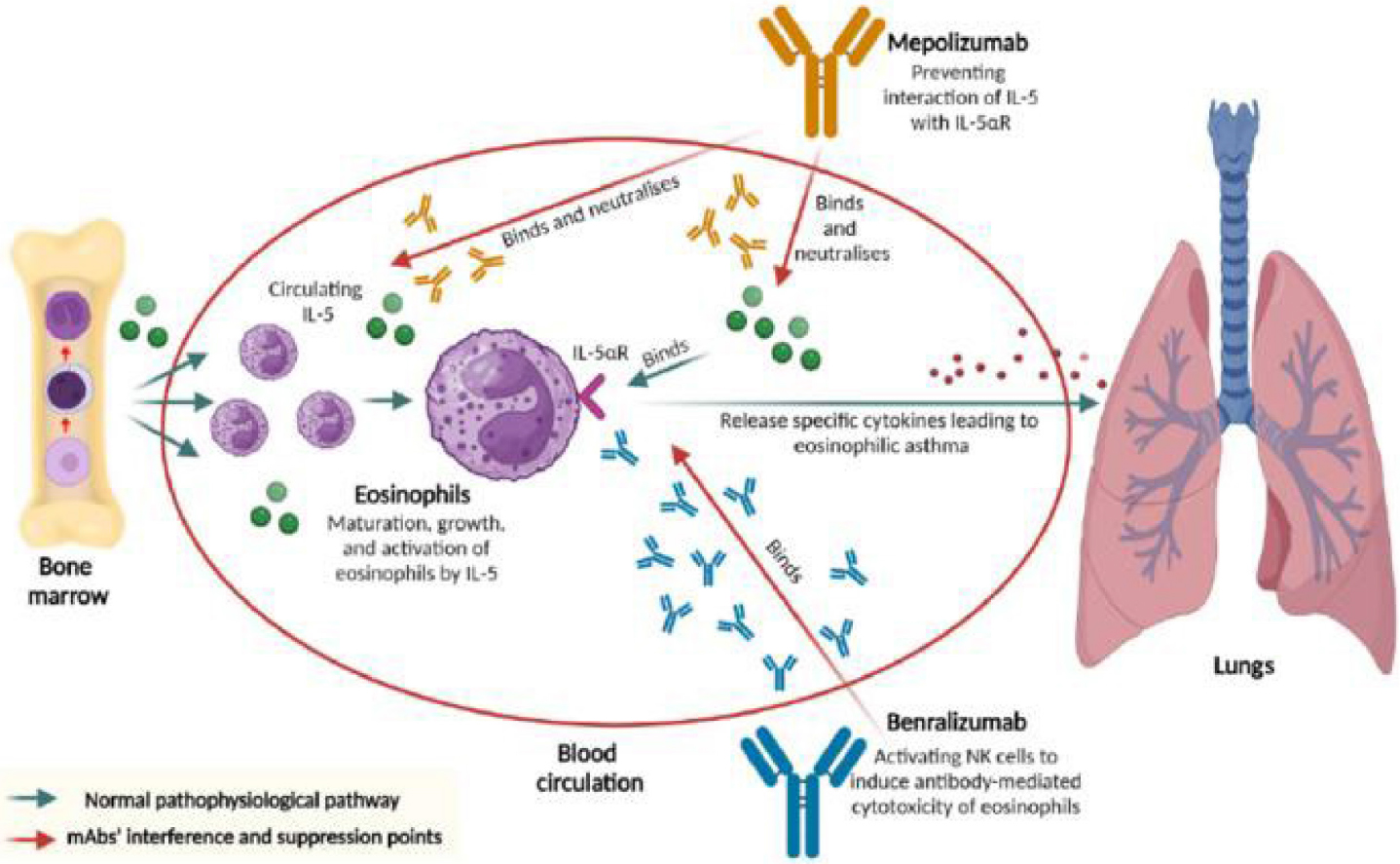
Figure 2.
Mechanism of action of mepolizumab, benralizumab (adapted from Desaintjean et al. 2024) (24). IL-5, interleukin-5.
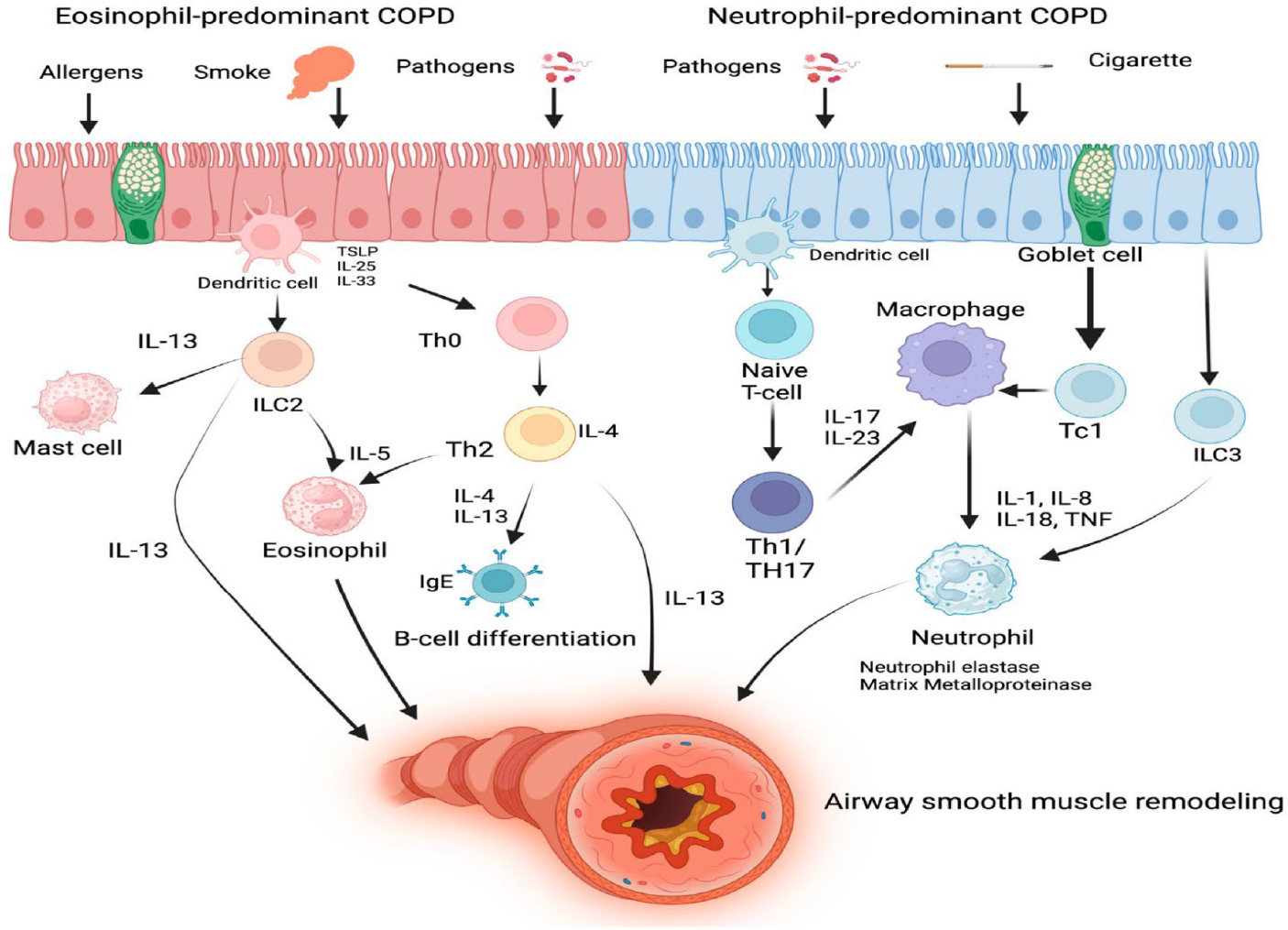
Figure 3.
Overview of major biologic and molecular targets in COPD (adapted from Pavord et al., 2021) (26). COPD, chronic obstructive pulmonary disease; IL-4, interleukin-4; IL-5, interleukin-5; IL-33, interleukin-33; TSLP, thymic stromal lymphopoietin.
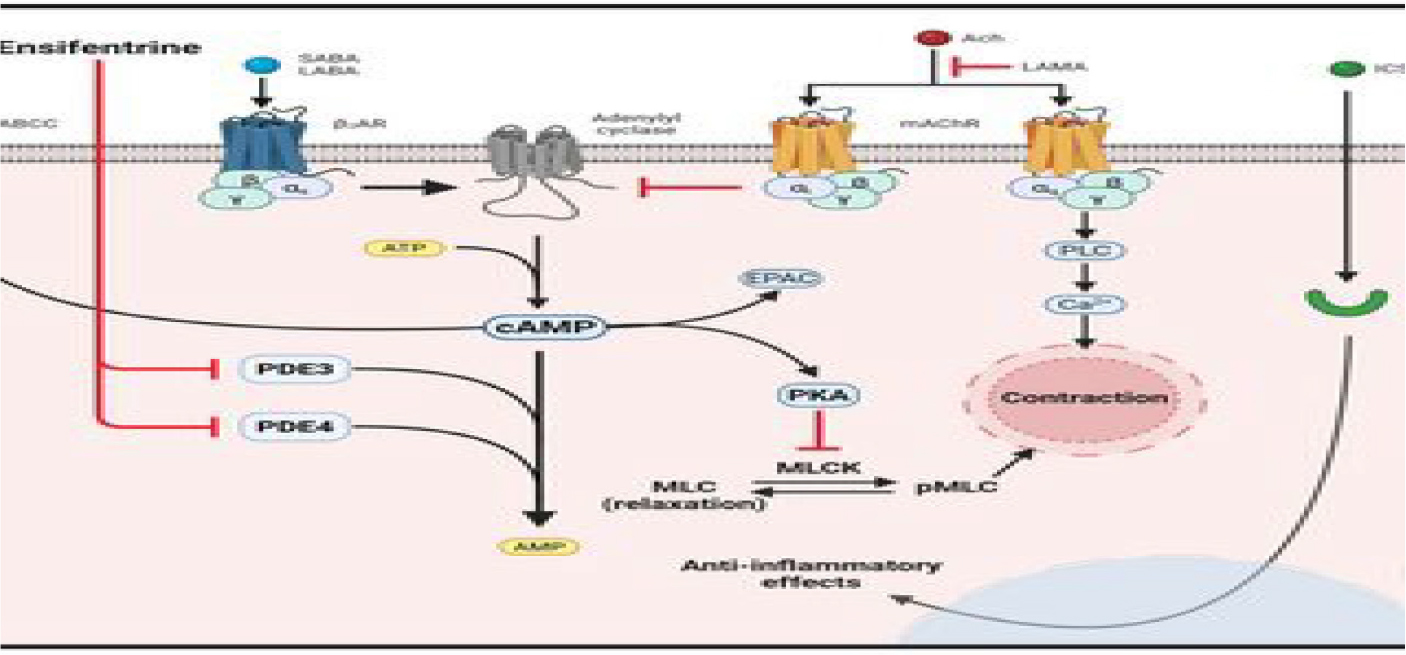
Figure 4.
Mechanism of action of Ensifentrine (adapted from Donohue et al. 2023) (29). LABA, long-acting β2-agonist; LAMA, long-acting muscarinic antagonist; PDE3/4, phosphodiesterase-3, 4.
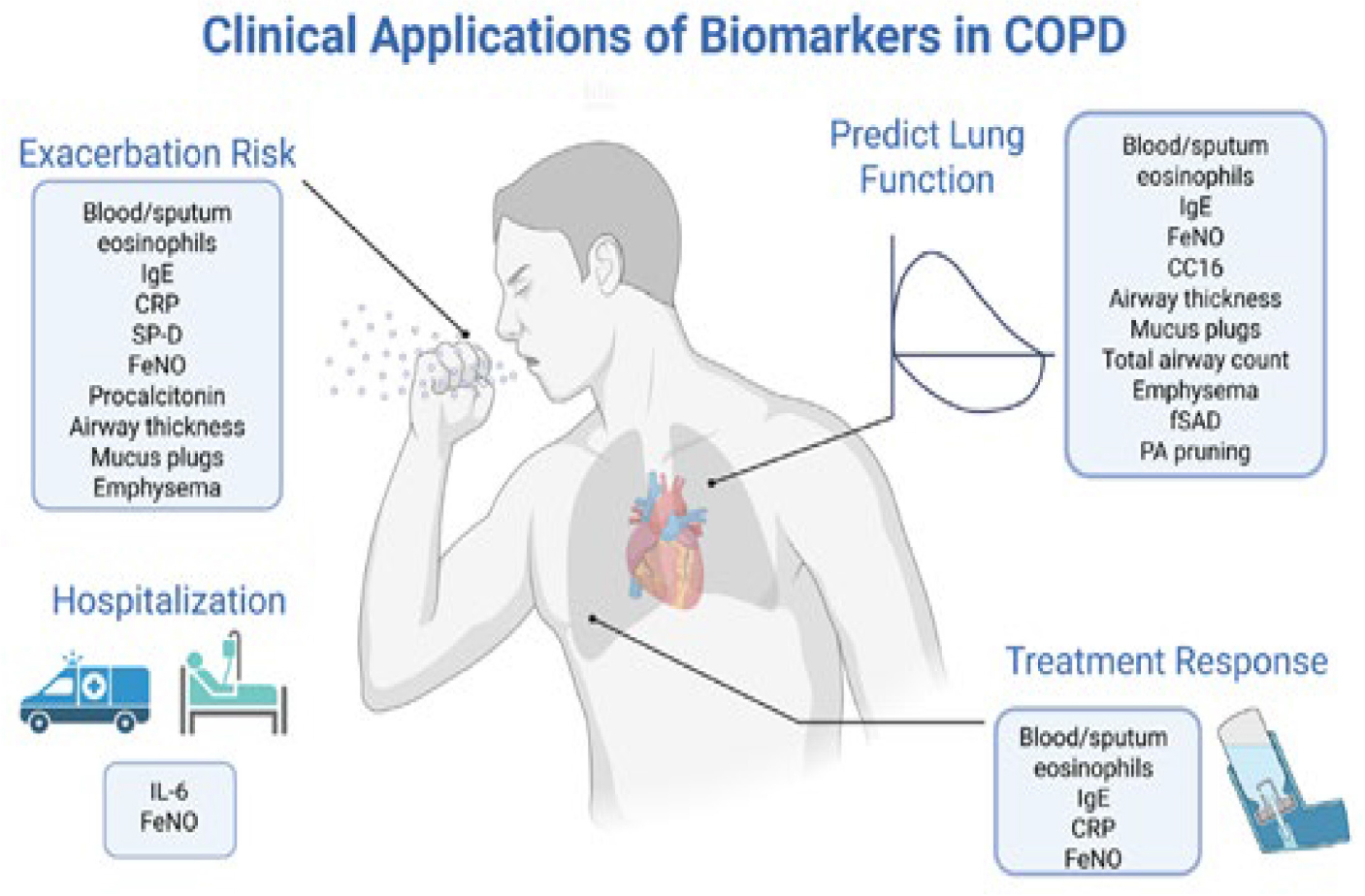
Figure 5.
Clinical applications of biomarkers in COPD (Adapted from Phillips et al. 2025) (37). CC16, club secretory protein 16; COPD, chronic obstructive pulmonary disease; CRP, C-reactive protein, FeNO, fraction of exhaled nitric oxide; fSAD, functional small airway disease, SP-D, surfactant protein D.