
Background
Despite receiving maximal inhaled treatment, many COPD patients continue to experience exacerbations. This highlights the need for novel therapeutic approaches. The current treatments primarily ameliorate symptoms and reduce exacerbations but fail to arrest disease progression or address its complex underlying pathobiology (1).
Elevated blood eosinophil levels may be a sign of type 2 inflammation, which may raise the risk of exacerbation in certain COPD patients. The common receptor component for interleukin-4 (IL-4) and interleukin-13 (IL-13), two important causes of type 2 inflammation, is blocked by the completely human monoclonal antibody dupilumab. Compared to placebo recipients, dupilumab recipients experienced fewer exacerbations, improved lung function and quality of life, and less respiratory symptoms (2). Similarly, current research on agents such as tezepelumab (anti-TSLP) and itepekimab (anti-IL-33) also substantiate the hypothesis that biologic and molecular-targeted treatments can transform the management of COPD by modifying the course of disease rather than merely treating symptoms (2, 3). Smoking status had a substantial impact on the effectiveness of biologic therapies or cytokine inhibitors in COPD studies (4).
Precision medicine concept in COPD
Growing recognition of COPD heterogeneity has driven a shift from homogeneous, symptom-based treatment to a precision medicine approach. This approach integrates clinical phenotyping, molecular biomarkers, and endotype characterisation to guide personalised therapeutic strategies (1) For instance, blood eosinophil counts characterise T2-high patients who are responsive to corticosteroids or biologics, whereas neutrophilic-dominant, T2-low individuals may respond to C–X–C motif chemokine receptor 2 (CXCR2) or PDE4 inhibitors (5, 6) (Table 1). Multi-omics technologies combining genomics, transcriptomics, proteomics, and metabolomics are also precise in the discovery of new molecular signatures predicting disease progression and therapeutic response (7).
Table1.
Endotype-specific biologic and molecular therapies in COPD
| Endotype | Key biomarkers | Primary targeted therapies |
|---|---|---|
| Type-2 | ↑ Eosinophils, ↑ FeNO | Dupilumab, mepolizumab, benralizumab, tezepelumab |
| Neutrophilic | ↑ NETs, ↑ IL-8/CXCR2 | CXCR2 antagonists, anti-NET therapies, macrolide immunomodulation |
| Epithelial injury | CT emphysema score, telomere shortening, senescence markers | Stem-cell/exosome therapy, gene editing, antioxidant therapy |
| Autoimmune | Lymphoid follicles, anti-tissue antibodies | B-cell pathway inhibition (investigational) |
| Corticosteroid-resistant | Low HDAC2, oxidative stress | PI3K inhibitors, Nrf2 activators |
1 CXCR2, C–X–C motif chemokine receptor 2; COPD, chronic obstructive pulmonary disease; FeNO, fraction of exhaled nitric oxide; HDAC2, histone deacetylase 2; IL-8, interleukin 8; NET, neutrophil extracellular trap; Nrf2, nuclear factor erythroid 2-related factor 2; PI3K, phosphoinositide 3-kinase (8).
Role of eosinophilic inflammation (IL-4, IL-5, IL-13 pathways)
Type 2 helper T cells (Th2) and group 2 innate lymphoid cells produce the cytokines IL-4, interleukin-5 (IL-5), and IL-13, which activate type 2 (T2) immunological pathways. When bronchial epithelium is exposed to a noxious environment, such as smoking, alarmin cytokines like interleukin-33 (IL-33), IL-25, and thymic stromal lymphopoietin (TSLP) are produced. This triggers an adaptive immune response by differentiating naive T cells into Th2 cells, which then produce IL-5, IL-13, and IL-4. Granulocyte-macrophage colony-stimulating factors, IL-5, and IL-3 are all important for eosinophil maturation from their progenitors, with IL-5 being the most important (9).
Over the course of a year, the blood eosinophil of AECOPD patients was comparatively steady. The elevated risk of eosinophilic exacerbations was linked to a higher eosinophilic level. Additionally, increasing steroid use was linked to higher blood eosinophilic counts and eosinophils/WBCS ratios (10). While no single universal therapy exists, a growing collection of targeted alternatives is emerging. Long-term precision therapies for emphysema include cell-based and regenerative methods; biologics that target upstream alarmins (like IL-33/TSLP) and downstream cytokines (like IL-1β, IL-6) aim to reduce inflammatory redundancy. Pharmacogenomic markers for bronchodilator response are also being investigated, and precision principles are also permeating rehabilitation, identifying non-responders who might benefit from customised exercise regimes or supplementary anabolic techniques (11, 12). While eosinophilic inflammation represents a T2-high phenotype, neutrophilic mechanisms dominate non-T2 COPD and require distinct molecular strategies.
Neutrophil inflammation (CXCR2, neutrophil elastase, proteases)
Although airway neutrophilia is a characteristic of both stable and worsened COPD, it is unknown how neutrophil extracellular traps (NETS) contribute to the pathophysiology of the illness. Here, rhinovirus infection causes airway NET formation, which is enhanced in COPD and correlates with the degree of inflammation and clinical exacerbation severity, according to human investigations of both naturally occurring and experimentally produced exacerbations (12).
Recruitment of neutrophils into the airway is primarily achieved through the chemotaxis to interleukin-8 (CXCL8)–C–X–CR2 pathway, increasing neutrophilic chemotaxis and chronic inflammation. Preclinical and human models of neutrophilic airway inflammation have demonstrated that oral CXCR2 antagonists decrease neutrophil migration and activation in the lung. A prior trial using the reversible CXCR2 antagonist DANIRIXIN showed a trend towards better respiratory symptoms and overall health in COPD patients (13, 14). Therapeutically, antagonists of CXCR2 and inhibitors of elastase are in development as a disease-modifying treatment of this non-type-2 endotype of COPD (15).
Biologics in COPD
Dupilumab (IL-4Ra antagonist)
The primary type-2 (T2) cytokines that cause eosinophilic airway inflammation, IL-4 and IL-13, are inhibited by dupilumab, a completely human monoclonal antibody that targets the interleukin-4 receptor alpha component. By inhibiting these pathways, dupilumab blocks eosinophil infiltration, the pathogenic characteristics of the eosinophilic COPD endotype include mucus hypersecretion, goblet cell metaplasia, and airway remodeling. Overall, IL-4 and IL-13 are important causes of type 2 inflammation and shed light on how dupilumab, a dual IL-4/IL-13 blocker, works to treat many type-2 disorders (5).
Based on compelling phase 3 evidence, the U.S. Food and Drug Administration (FDA) in 2024 accepts dupilumab as the first biologic therapy for adults with moderate-to-severe COPD associated with type 2 inflammation, as indicated by elevated blood eosinophil counts (≥300 cells/μL) (16). The approval was driven by the BOREAS and NOTUS trials, two sizeable phase 3 trials that are randomised, double-blind, and placebo controlled. Over 1800 individuals with eosinophilic COPD who continued to experience symptoms despite triple inhalation treatment (ICS/long-acting β2-agonist [LABA]/long-acting muscarinic antagonist [LAMA]). In the BOREAS trial, dupilumab 300 mg every 2 weeks met a 30% reduction in annualised moderate-to-severe exacerbation rates and a mean FEV1 of ~160 mL improvement compared to placebo at 52 weeks (17). The NOTUS study also replicated these findings, with sustained benefits on systemic inflammatory biomarkers, lung function, and health-related quality of life (SGRQ scores) (18).
From a safety perspective, dupilumab had a favorable tolerability profile consistent with prior experience in asthma and atopic dermatitis, the most common adverse events being injection-site reactions, transient eosinophilia, and nasopharyngitis. Serious adverse events related to treatment were rare, and pneumonia or cardiovascular complications were not seen at different rates than placebo (19) (Figure 1).
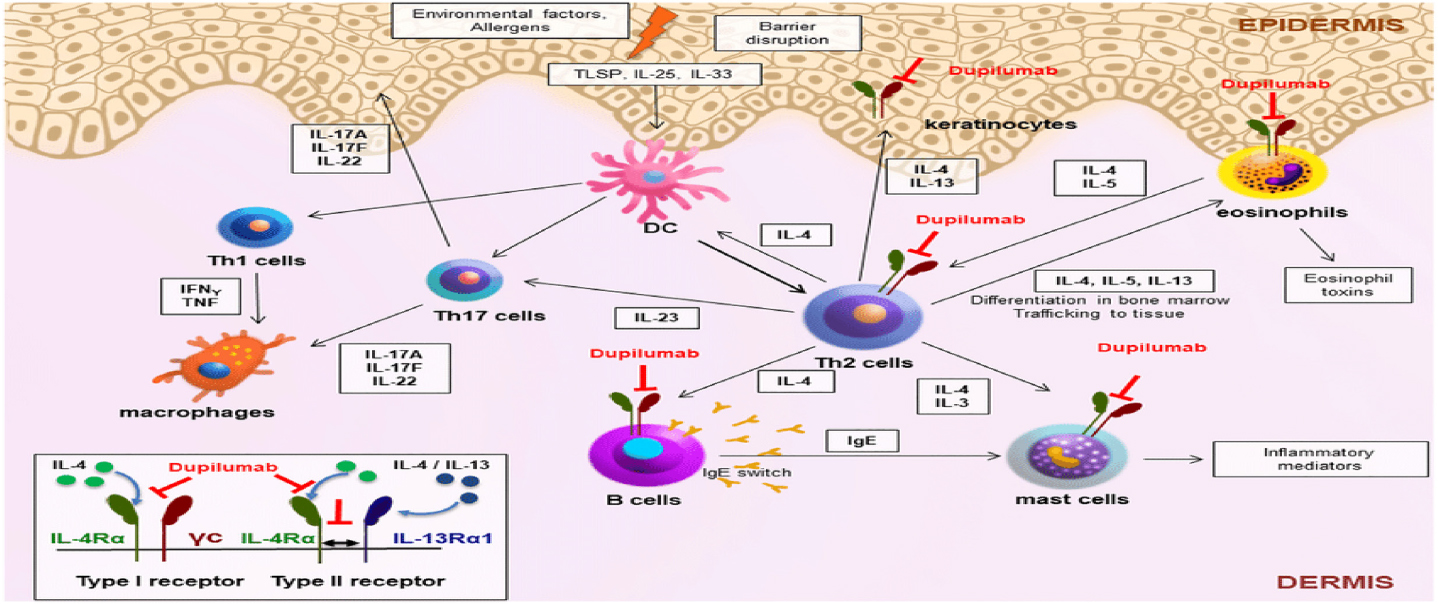
Figure 1.
Mechanism of action of dupilumab (adapted from Kychygina et al. 2022) (20). IL-4, interleukin-4; IL-5, interleukin-5; IL-33, interleukin-33.
Anti-IL-5 and Anti-IL-5R agents (mepolizumab, benrali-zumab)
IL-5 axis-blocking monoclonal antibodies, mepolizumab (anti-IL-5) and benralizumab (anti-IL-5Ra with antibody-dependent cellular cytotoxicity-mediated eosinophil depletion), were rationale therapies for eosinophilic COPD since IL-5 is a key player in eosinophil survival and maturation. In randomised trials, mepolizumab resulted in a modest but significant reduction in the frequency of moderate or severe exacerbation per annum vs placebo in preselected patients with an eosinophilic phenotype (METREX/METREO programs), with more robust effects in patients with higher baseline blood eosinophil counts (21).
As compared with that, though, benralizumab failed to reach its primary endpoints in the larger phase-3 GALATHEA and TERRANOVA trials, with no significant reduction in total exacerbation rates in the primary populations, although post hoc and subgroup analyses did find hints of benefit in very-high-eosinophil or frequent-exacerbator phenotypes (22).
Meta-analytic analyses of mepolizumab trials indicate a modest relative reduction in exacerbation risk (rate ratio ≈ 0.82) in biomarker-enriched populations, supporting the hypothesis that treatment effects depend on patient selection by biomarkers (23). Both drugs’ safety profiles in COPD trials were comparable to their established asthma profiles (injection-site reactions, reversible eosinophilia changes) and did not reveal new prevailing safety messages but long-term efficacy, mortality impact, and cost-effectiveness in everyday COPD care remain unsettled and limit widespread use (2) (Figure 2).
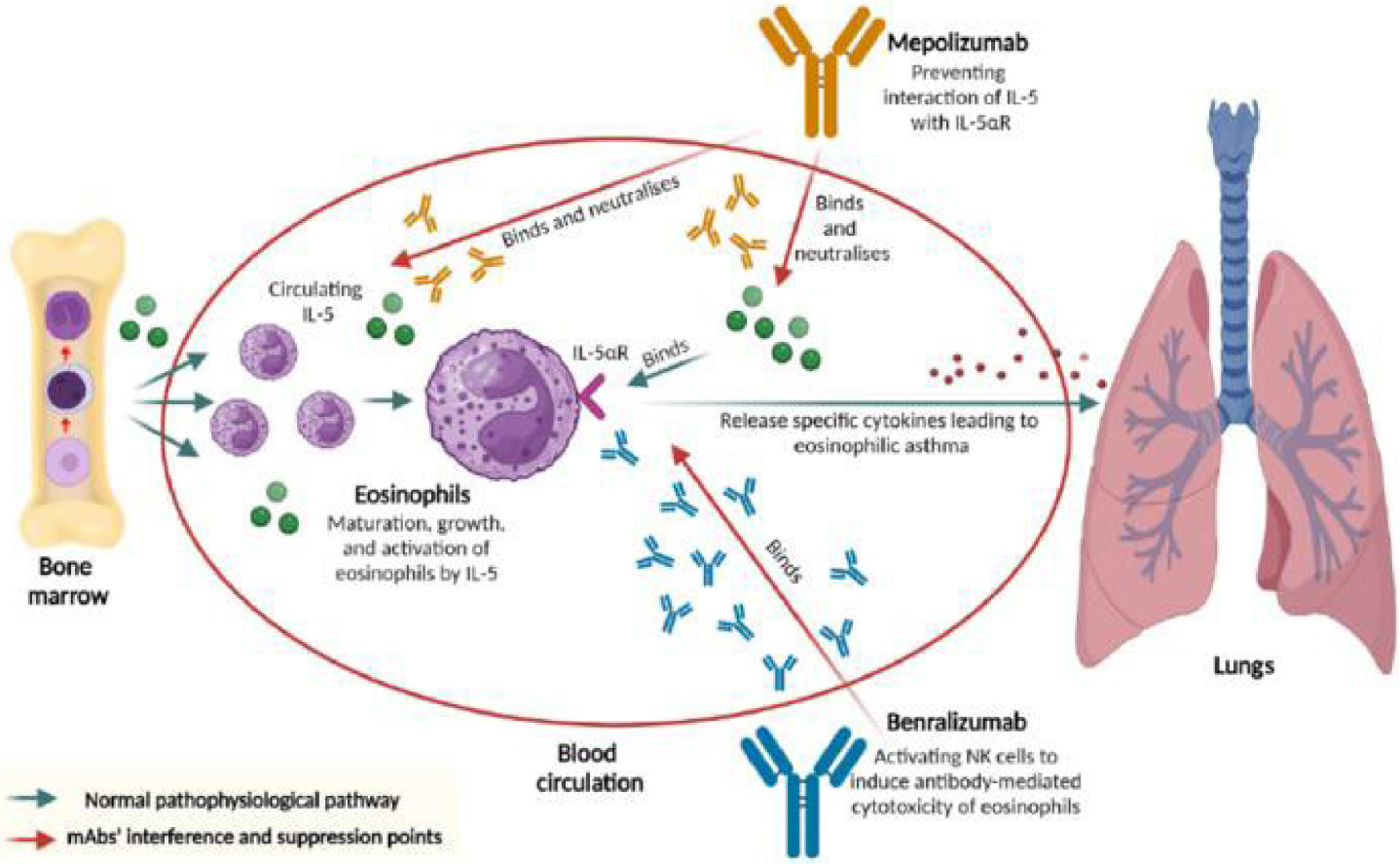
Figure 2.
Mechanism of action of mepolizumab, benralizumab (adapted from Desaintjean et al. 2024) (24). IL-5, interleukin-5.
Other biologics under investigation: Anti-TSLP (Tezepelumab) and Anti-IL-33 (ITEPEKIMAB)
Two alarmin-targeting biologics, Tezepelumab (anti-TSLP) and ITEPEKIMAB (anti-IL-33), have a strong mechanistic rationale in COPD because they target higher than classical type-2 effectors and hence likely will modulate T2 and non-T2 inflammation, airway remodeling, and exacerbation biology. Tezepelumab blocks TSLP, an epithelial cytokine that promotes innate and adaptive airway inflammation; in COURSE (phase 2a) proof-of-concept trial, Tezepelumab provided a numerical (~17%) reduction in annualised rate of moderate-to-severe exacerbation vs placebo in subjects with moderate-to-very-severe COPD on triple therapy, though this was not statistically significant in the initial analysis, and safety was consistent with previous respiratory programs (25). ITEPEKIMAB, a monoclonal anti-IL-33 antibody, has produced mixed but informative results.
The two large phase-3 AERIFY trials explored its efficacy in moderate-to-severe COPD: AERIFY-1 demonstrated a statistically significant reduction in moderate-to-severe exacerbations, particularly among ex-smokers, with parallel improvements in FEV1 and health-related quality of life. AERIFY-2, however, failed to replicate these findings in a cohort that included a higher proportion of current smokers. These divergent outcomes underscore an important biological insight: ongoing smoking may blunt the therapeutic efficacy of IL-33 inhibition by sustaining epithelial damage, oxidative stress, and non-T2 inflammatory pathways that are less dependent on IL-33 signalling. Thus, smoking status emerges as a critical modifier of biologic response, a factor often overlooked in earlier COPD trials. Collectively, results with Tezepelumab and ITEPEKIMAB reinforce that heterogeneous airway biology, smoking behaviour, and endotype overlap profoundly affect trial outcomes. Rather than true ‘failures’ these mixed results highlight the need for refined biomarker-guided patient selection, stratified trial designs, and composite endpoints integrating exacerbations, inflammation, and functional metrics (25).
Both approaches are biologically plausible and attractive because they target proximal causes of airway inflammation and may affect more endotypes within a larger spectrum than downstream single-cytokine blockade, but current evidence is heterogenous (signal in some trials, no signal in others), thus large, phenotype-stratified studies, harmonised biomarker strategies (including smoking status, eosinophils, and other alarmin signatures) and long-term effectiveness/safety are needed before widespread clinical application (26) (Figure 3).
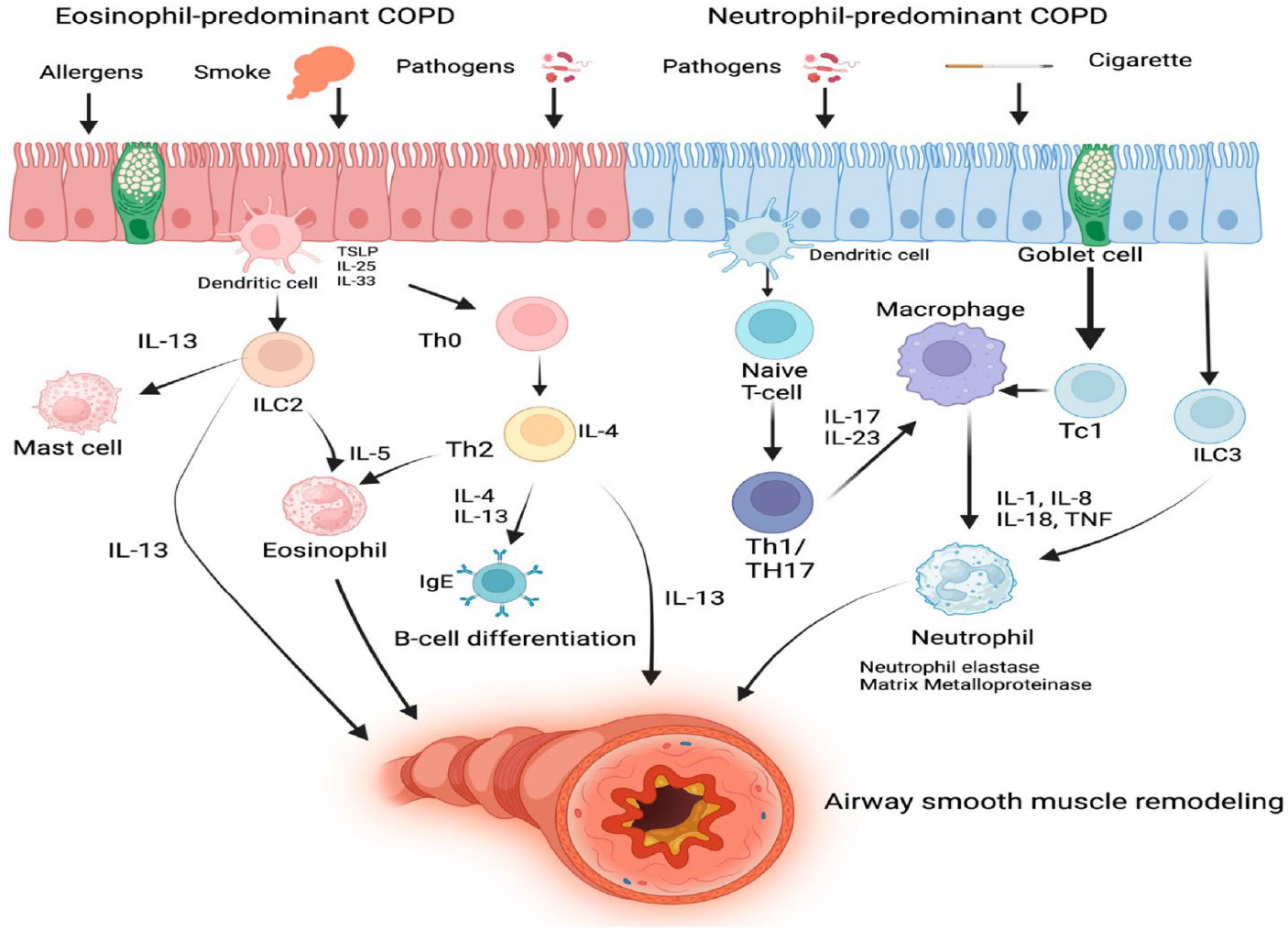
Figure 3.
Overview of major biologic and molecular targets in COPD (adapted from Pavord et al., 2021) (26). COPD, chronic obstructive pulmonary disease; IL-4, interleukin-4; IL-5, interleukin-5; IL-33, interleukin-33; TSLP, thymic stromal lymphopoietin.
Small molecules and novel inhaled therapy
Ensifentrine (Ohtuvayre®; Verona Pharma, London, UK) is the first new maintenance treatment for COPD in over 10 years. It is a unique, first-in-class dual phosphodiesterase 3 and 4 (PDE3/4) inhibitor with bronchodilator and anti-inflammatory qualities in a single inhaled molecule. PDE3 inhibition results in airway smooth muscle relaxation by increased intracellular cyclic adenosine monophosphate, and PDE4 inhibition prevents the release of inflammatory mediators from neutrophils, macrophages, and T lymphocytes. The dual mechanism exerts its effect directly on both the airway obstruction and the chronic inflammation, typical in the COPD pathophysiology (26).
The 2-phase 3 trials, published in The Lancet in 2023, examined nebulised ensifentrine (3 mg twice a day) among >1500 moderate-to-severe COPD patients treated with standard-of-care bronchodilators. Both trials showed clinically significant lung function improvement with least-squares mean trough FEV1 increments of approximately 87–94 mL compared with placebo at week 12 (P < 0.001) and with persistence of benefits in peak FEV1 at 12–24 weeks. Furthermore, pooled analysis showed a 36% reduction in rates of moderate-to-severe exacerbations over placebo (27). The treatment was well tolerated with comparable adverse events to placebo and no excess cardiovascular, gastrointestinal, or psychiatric events typically associated with systemic PDE4 inhibitors (e.g., roflumilast).
Ensifentrine was approved by the US FDA in 2024 as Ohtuvayre® for maintenance of COPD, the first clinically available inhaled PDE3/4 inhibitor (28). Its twin pharmacological activity, synergistic benefit when used in addition to LABAs or LAMAs, and unblemished safety record position it as a highly promising adjunct treatment, especially in those patients who remain symptomatic despite maximally inhaled bronchodilation. Ongoing investigations are looking into its role in triple therapy regimen, benefit frequency in frequent exacerbators, and effectiveness on lung inflammation (19, 25) (Figure 4).
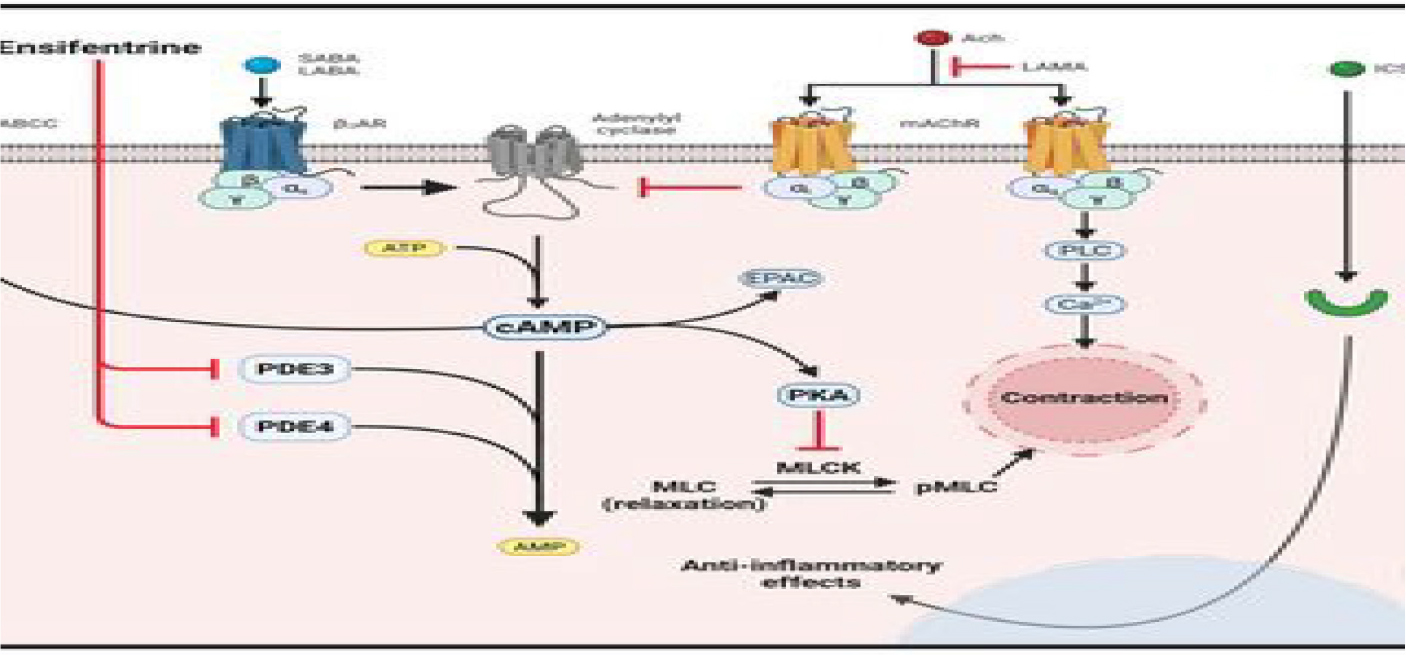
Figure 4.
Mechanism of action of Ensifentrine (adapted from Donohue et al. 2023) (29). LABA, long-acting β2-agonist; LAMA, long-acting muscarinic antagonist; PDE3/4, phosphodiesterase-3, 4.
CXCR2 antagonists (neutrophilic inflammation)
Immune cell migration and recruitment, particularly of neutrophils, are significantly stimulated by CXCR2. In inflammatory illnesses, reducing excessive neutrophil infiltration and accumulation may help avoid long-term tissue damage. One appealing treatment approach for COPD has been the inhibition of neutrophilic inflammation because neutrophil recruitment, activation, and degranulation are central to airway injury and tissue destruction in non-type-2 inflammatory phenotypes. The CXCR2 is a principal mediator of neutrophil CXCL8 and other ELR+ CXC chemokines and thus is an attractive molecular target for pharmacologic blockades. Navarixin (MK-7123), a selective oral CXCR2 antagonist, was among the most extensively studied molecules in this class (13).
In an early phase II randomised controlled trial, Katsoulis et al. evaluated Navarixin in patients with moderate-to-severe COPD and reported dose-related reductions in neutrophil counts in sputum and a small increase in prebronchodilator FEV1 (~50 mL vs placebo at 6 months). Clinical effects on symptoms and frequency of exacerbations with biomarker evidence of anti-neutrophilic activity were highly variable. Furthermore, long-term CXCR2 blockade also caused neutropenia and increased frequency of mild bacterial infections in a dose-dependent manner, which raised concerns regarding safety in an already infection-prone patient population (13).
After experiments with other CXCR2 antagonists, such as danirixin (GSK1325756) and AZD5069, yielded similarly disappointing outcomes with effective reduction of airway neutrophil biomarkers but without any meaningful improvement in lung function, symptoms, or frequency of exacerbation. These studies together highlight the significant caveat: although CXCR2 antagonists are effective at inhibiting neutrophil traffic, they may also impair host defense function, leading to vulnerability to infection and diminishing therapeutic effectiveness. On the other hand, AZD5069 was well tolerated overall in those patients who completed study treatment, with no increase in infection rates in either dosage group compared with placebo (30).
Migration, recruitment, and neutrophil homeostasis need to be carefully controlled. One possible target for altering neutrophil dynamics in inflammatory conditions is the CXCR2 signalling pathway (31).
Other molecular pathway targets in COPD
In addition to modulation of cytokine and chemokine, various intracellular signalling and stress-response pathways have been studied as COPD therapeutic targets, such as p38 Phosphoinositide 3-kinase (PI3K), nuclear factor erythroid 2-related factor 2 (Nrf2), and mitogen-activated protein kinase (MAPK) pathways. All these pathways are involved in airway inflammation, oxidative stress, and corticosteroid resistance, but despite strong preclinical rationale, most clinical programs have not led to effective and safe agents for clinical use (30, 32).
The p38 MAPK pathway is also an important regulator of proinflammatory cytokine release (e.g., TNF-α, IL-1β, IL-8) and macrophage activation. Early p38 inhibitors such as losmapimod, dilmapimod, and nepicastat had strong antiinflammatory activity in vitro and in animal models. Clinical trials in COPD, however, showed only partial improvement in lung function or a decrease in exacerbation, with hepatotoxicity and systemic side effects limiting further development (30, 32).
Nrf2 activators bardoxolone methyl and dimethyl fumarate were designed to increase endogenous antioxidant protection and restore redox balance through induction of phase II detoxification enzymes (e.g., HO-1, NQO1). Although these agents manifested increased Nrf2 transcriptional activity and reduced oxidative stress markers, translation to clinical efficacy was disappointing. Bardoxolone methyl, for instance, manifested acute FEV1 improvement in early studies but was followed by cardiovascular toxicity and fluid overload (32, 33).
PI3K inhibitors, namely PI3Kδ and PI3Kγ isoform–selective drugs such as nemiralisib and idelalisib, were investigated to reverse corticosteroid resistance by modulating macrophage and epithelial cell signalling. Inhaled PI3Kδ inhibition reduced sputum inflammatory markers, with no significant clinical effects on exacerbation frequency or FEV1 seen in phase II trials, and systemic toxicities (particularly gastrointestinal and hepatic) limited chronic administration (34).
Biomarkers and patient stratification in COPD
COPD heterogeneity demands a shift from population to biomarker-driven precision medicine, enabling targeted intervention of underlying pathobiology rather than homogeneous symptom management. Blood eosinophil count is one of the best-validated biomarkers and has emerged as a viable surrogate marker for airway type-2 inflammation and a robust predictor of ICS responsiveness. Broad post hoc analyses of big clinical trials (e.g., FLAME, IMPACT, ETHOS) have repeatedly demonstrated that patients with blood eosinophils ≥300 cells/μL achieve the greatest exacerbation rate reduction with ICS-containing regimens, whereas those with low eosinophil counts have minimal benefit but greater risk of pneumonia (34, 35).
Fractional exhaled nitric oxide (FeNO), a non-invasive indicator of type-2 airway inflammation, is less firmly established in COPD than in asthma, but may be able to detect COPD–asthma overlap phenotypes that will respond to ICS or biologic therapy. There is evolving evidence that FeNO has a modest correlation with eosinophilic airway inflammation and IL-13 gene expression in certain COPD subgroups (36) (Figure 5).
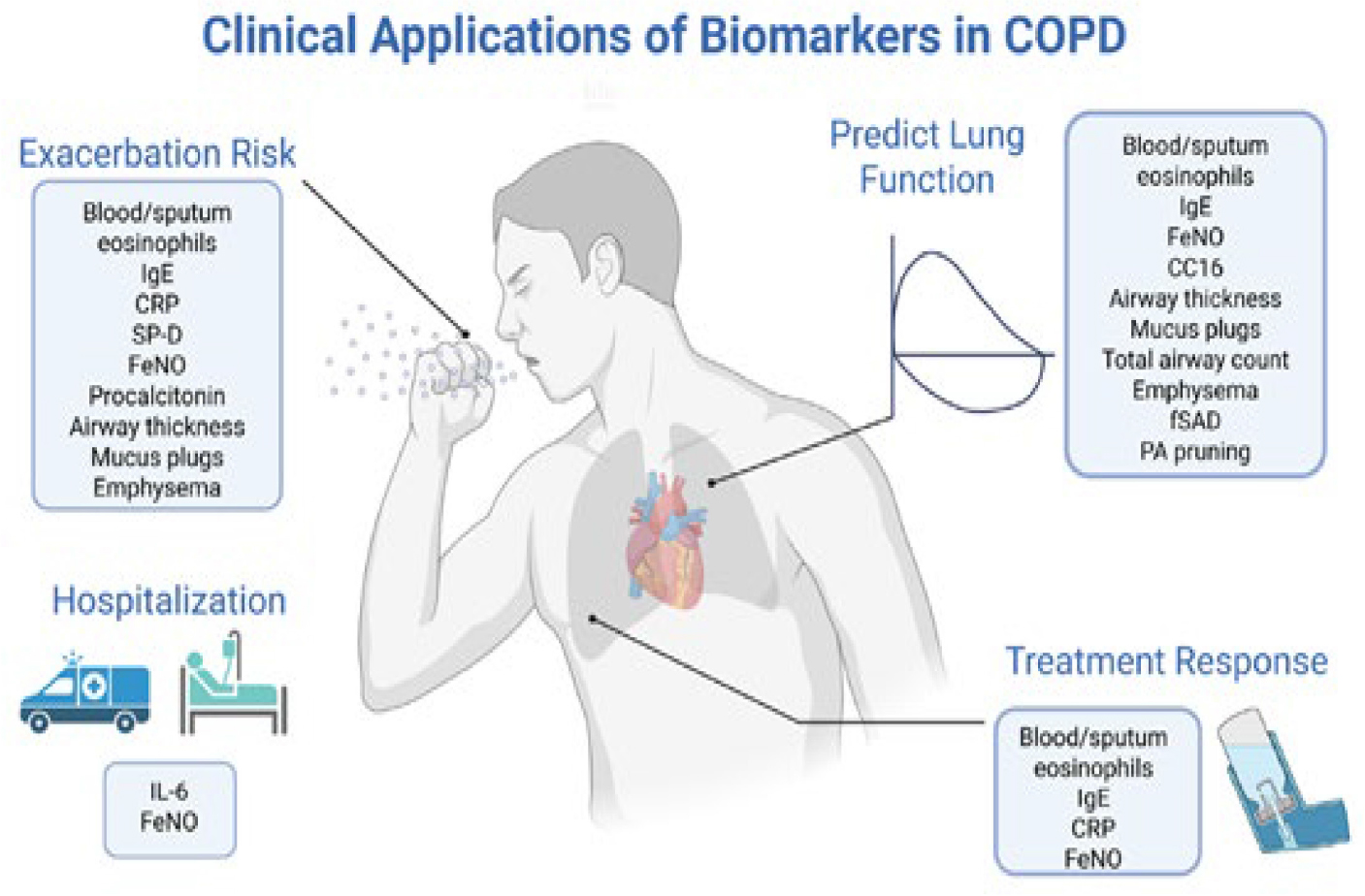
Figure 5.
Clinical applications of biomarkers in COPD (Adapted from Phillips et al. 2025) (37). CC16, club secretory protein 16; COPD, chronic obstructive pulmonary disease; CRP, C-reactive protein, FeNO, fraction of exhaled nitric oxide; fSAD, functional small airway disease, SP-D, surfactant protein D.
Future directions in biologic and molecular therapy for COPD
Improving symptoms and reducing future risks such exacerbations, declining lung function, and mortality are the main objectives of COPD treatment.
There is also potential for using monoclonal antibodies as a targeted treatment during an exacerbation. Treatments with monoclonal antibodies could transform the way COPD is managed (3).
The future decade of COPD research is likely to transcend single-cytokine inhibition and embark on multi-dimensional, system-based approaches incorporating biologics, artificial intelligence, and molecular medicine. One such promising direction is the creation of combination biologics or multipathway-targeted drugs that modulate concomitantly overlapping inflammatory cascades, e.g., dual blockade of IL-4/IL-13 (dupilumab) with IL-33 or TSLP inhibition to target COPD’s mixed eosinophilic–neutrophilic endotypes more effectively. Preclinical models prefer additive or synergistic inhibition of airway inflammation when proximal epithelial alarmins and downstream Th2 mediators are coinhibited (38).
Conclusion
The emergence of biologic and molecular therapies is a landmark in the management of COPD, a condition whose past has otherwise been characterised by symptomatic and supportive care at the cost of disease modification. The previous decade had seen improved understanding of COPD’s immunopathogenesis, particularly with the discovery of distinct inflammatory endotypes such as eosinophilic, neutrophilic, and mixed patterns. This has opened new avenues for therapy. Biologic agents targeting the IL-4, IL-5, and IL-13 axes, along with novel inhibitors of alarmins such as TSLP and IL-33, offer the prospects of precision-guided therapy based on patient-specific inflammatory signatures. These advances mark the transition away from traditional ‘one-size-fits-all’ pharmacologic approaches to a precision medicine model designed to change disease courses, reduce exacerbations, and improve long-term outcomes.
Notes
[2] Contributed by Authors’ contribution
Samir Mohamed Mahmoud Fahyim: Shared in the collection of the data and writing (equal) - review and editing (lead).
Hesham Atef AbdelHalim: Study conception, literature search, collection and analysis of the data, writing, review, and editing (lead).
[3] Conflicts of interest Declaration of conflict of interest
There is no conflict of interest.
[4] Ethics committee approval
Ethics Committee approval was not required.
[5] Informed consent statement
No informed consent was necessary.