
Introduction
Chronic obstructive pulmonary disease (COPD) is a progressive disease with consequences that extend far beyond the respiratory system (1). The currently estimated prevalence of COPD is approximately 10% globally (2), and projections for Europe predict a rise at almost 40% by 2050 (3). In Romania, the prevalence of COPD has been estimated at 9.3% among individuals over 40 years old in a national survey performed by the Romanian Society of Pneumology (4).
Almost all patients with COPD have at least one additional significant chronic condition (1, 5). Due to the intricate reciprocal interactions between COPD and its comorbidities, the disease should not be viewed as a single entity, but rather as a multimorbid state, with significant implications for diagnosis, treatment and patient care (6). Consequently, the syndemic approach has been recently introduced for better characterisation of COPD, emphasising the interconnectivity of biological determinants and shared risk factors, while promoting a move towards an integrated management strategy (1, 7).
Among the many comorbid conditions associated with COPD, cardiovascular diseases (CVDs) are one of the most significant, affecting 20%–70% of patients (8), and are recognised as a major risk factor for patients by the Global Initiative for Chronic Obstructive Lung Disease (GOLD) guidelines (9, 10). Taken together, they have a greater impact on the health status and a more severe prognosis than each condition alone (7, 8, 11). The presence of cardiovascular (CV) comorbidities increases the risk and severity of COPD exacerbations, which, in turn, increases the risk of acute CV events, hospitalisation and death (9, 10, 12–14). The vicious downward spiral linking these two conditions is representative of the cardiopulmonary (CP) risk, defined as ‘the risk of serious respiratory and/or CV events in patients with COPD’, including, but not limited to, COPD exacerbation, myocardial infarction, stroke, congestive heart failure, arrhythmias and death from any of these conditions (8).
A significant step in changing perspectives for the management of COPD patients has been taken with the inclusion of mortality reduction as a treatment goal in the 2023 update of the GOLD recommendations, based on results from the efficacy and safety of triple therapy in obstructive lung disease (ETHOS) and informing the pathway of COPD treatment (IMPACT) trials (15, 16). Moreover, the ETHOS trial showed that reducing mortality risk with triple therapy (long-acting β2-agonist [LABA] + long-acting muscarinic antagonist [LAMA] + inhaled corticosteroid) compared to dual bronchodilation (LAMA + LABA) has been driven by a decrease in CV death (16). According to the GOLD 2025, recently updated GOLD 2026 guidelines and considering the symptoms and/or exacerbations, the current guidelines-directed medical treatment (GDMT) for maintenance in COPD includes dual bronchodilation or triple therapy, preferably administered in a single inhaler (9, 10).
Considering all the above, prevention of CP risk and implementation of GDMT are now top priorities in COPD management (14, 17, 18). Because COPD patients require a multidisciplinary approach throughout their disease journey, all healthcare specialists commonly involved in their care should take appropriate actions to address CP risk as part of routine practice (1, 7, 17, 18).
Objectives
The algorithms and recommendations for COPD management included in this paper were developed specifically for healthcare professionals (HCPs) to provide clear, practical guidance on decision-making strategies that help reduce CP risk in these patients.
The objective was to outline key recommendations to improve continuity of care, facilitating timely identification and management of risk factors for acute COPD exacerbations and CV events. The target audience includes pulmonologists, cardiologists, internists and family physicians, as well as other clinicians involved in COPD–CVD care.
Materials and methods
During June–September 2025, a multidisciplinary task force including 11 HCPs with expertise in the diagnosis and treatment of patients with COPD and CVDs in both inpatient and outpatient settings gathered to discuss how to better address CP risk reduction in patients with COPD in Romania, based on the updated 2025 GOLD.
At the initial meeting, this multidisciplinary group of pulmonologists, cardiologists and specialists in internal and family medicine engaged in working groups to review evidence from the scientific literature related to the prevention of acute cardio-pulmonary events and mortality in COPD. No systematic literature search was conducted.
The algorithms, further developed and presented here, are based on international guidelines and clinical experience and include landmarks for referral of patients with COPD to other specialists for additional investigations and adequate treatment. The recommendations included in this document reflect the group discussions and have been approved by all members of the task force.
Results
A consensus was reached on the critical need to raise awareness of CP risk and improve the current standard of care in COPD in Romania. The following recommendations for CP risk reduction strategies in COPD through an interdisciplinary approach were developed and validated.
Modifiable risk factors
Recommendation I
We strongly recommend the early identification of COPD in at-risk populations (e.g. current/former smokers, individuals with persistent respiratory symptoms), recognising that timely diagnosis contributes significantly to the prevention of CP complications and overall reduction in morbidity and mortality.
Rationale
COPD and CVDs share common risk factors and pathogenic mechanisms, a concept now recognised as a syndemic occurrence. Although anatomical and pathophysiological links between COPD and CVDs are not fully understood, they appear to be multifactorial, interactive and mutually aggravating: lung hyperinflation, hypoxaemia, pulmonary hypertension, systemic inflammation and oxidative stress, exacerbations, shared risk factors and shared genetics, as well as COPD phenotype (11, 18–20).
Diagnosis of COPD and assessment of CP risk
Recommendation II
Irrespective of the medical speciality, every medical visit should be an opportunity to estimate CP risk and take appropriate actions in patients with COPD: identify CV risk factors from the COPD diagnosis (10), refer to an appropriate specialist if necessary and optimise treatment (7–12, 18). Figure 1 includes potential touchpoints and assessments.
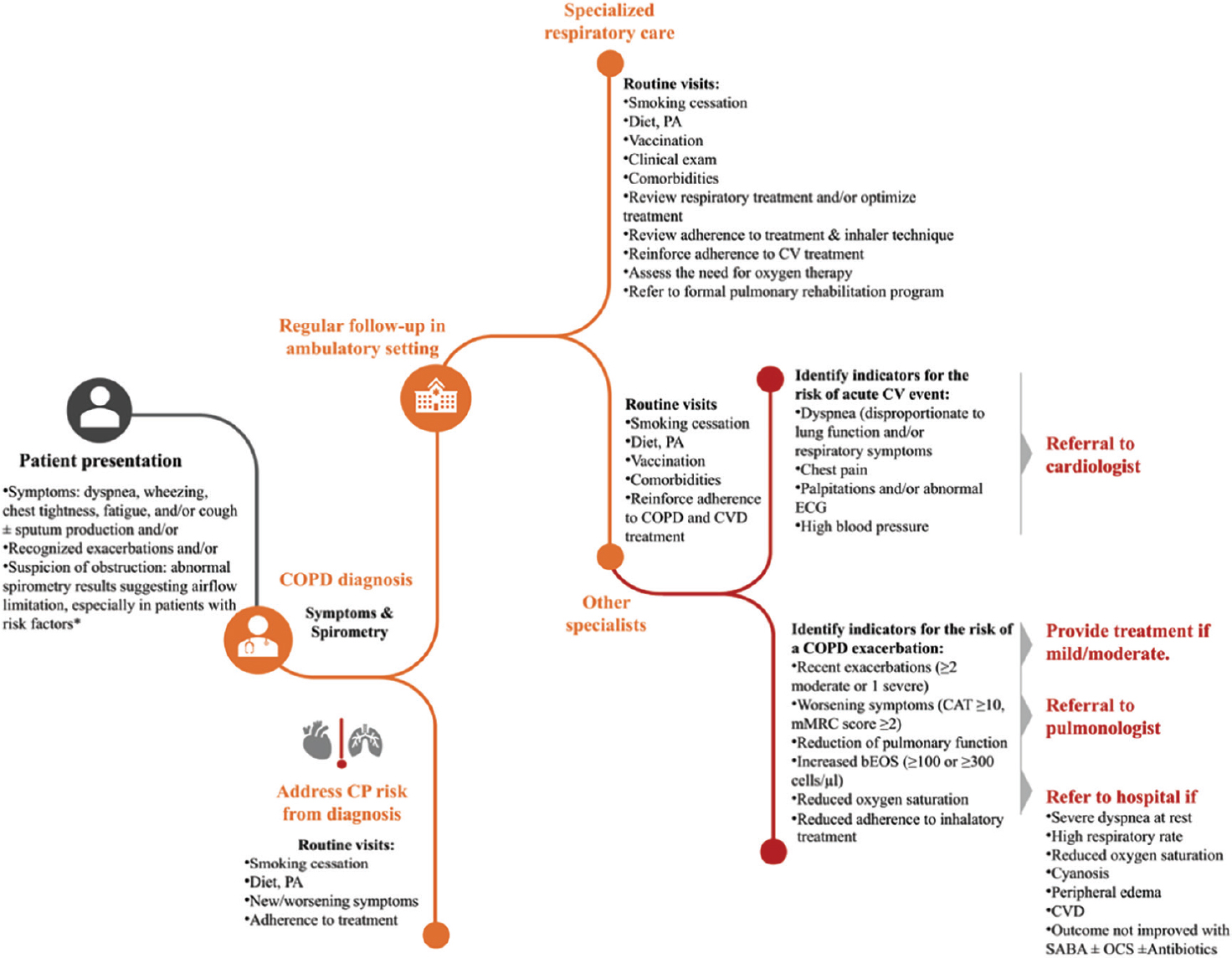
Figure 1.
Routine assessment of cardiopulmonaryCP risk in COPD and triggers for referral (9, 11, 18). *Smoking history, environmental exposure, family history of respiratory diseases, and so forth. bEOS, blood eosinophils; CAT, COPD assessment test; COPD, chronic obstructive pulmonary disease; CP, cardiopulmonary; CV, cardiovascular; CVD, cardiovascular disease; ECG, electrocardiogram; mMRC, (modified) Medical Research Council DyspneaDyspnoea; OCS, oral corticosteroid; PA, physical activity; SABA, short-acting bronchodilator.
Rationale
Diagnosis of COPD is based on medical history (smoking, recurrent respiratory infections), clinical manifestations (dyspnoea, wheezing, cough and sputum not explained by other conditions) and spirometry (forced expiratory volume in 1 s [FEV1]/forced vital capacity [FVC] <0.7) (9). In Romania, the diagnosis of COPD is mainly made by pulmonologists, due to current limitations in the competencies assigned to family physicians. Improved access to spirometry (micro spirometers or portable spirometers) could help diagnose COPD at early stages (21).
Recommendation III
If already implemented in routine practice, we recommend the use of QRISK3 (22) or SCORE2 (23) in COPD populations in addition to lung function parameters of the spirometry, where available.
Rationale
Related to CV risk assessment in clinical practice, the current risk calculators neither include COPD, nor were they validated in populations with COPD (7). Therefore, they may underestimate CVD in patients with COPD (24, 25). Incorporating spirometry results, such as FEV1% predicted value and FEV1/FVC ratio, into CV assessments may improve predictive accuracy of standard CV risk scores in COPD populations, as reduced lung function has been shown to independently predict incident CV events beyond traditional risk factors (25, 26).
COPD exacerbations
Recommendation IV
Irrespective of the medical speciality, the mild and moderate exacerbations of COPD (ECOPDs) should be adequately assessed, investigated and managed. When it is not possible to evaluate the severity, patients should be referred to emergency care and/or hospitalised.
Rationale
Mild and moderate ECOPDs are frequently underreported by patients (27), as they may perceive symptom fluctuations as ‘normal’. Therefore, clinicians interacting with patients with COPD should be aware of trigger words that may reflect the experience of an exacerbation. This is essential because the CV risk, including CV death, increases significantly during and after acute episodes, likely in relation to worsening of the factors that contribute to CVDs during periods of clinical stability (2, 9–11). Moreover, the risk remains high for several weeks after discharge for ECOPD and may persist for up to 1 year later (9, 28–30). Routine assessment of CVD markers in case of suspicion of exacerbation is preferred for an accurate differential diagnosis and management strategy (18).
Recommendation V
All patients with severe ECOPD should be referred to emergency care and/or hospitalisation (9).
Rationale
Hospital treatment is indicated if at least one of the following is present (9):
Severe symptoms such as sudden worsening of resting dyspnoea, high respiratory rate, decreased oxygen saturation, confusion and drowsiness;
Acute respiratory failure;
Onset of new physical signs (e.g. cyanosis, peripheral oedema);
Failure of an exacerbation to respond to initial medical management;
Presence of severe comorbidities (e.g. heart failure, newly occurring arrhythmias)
Moderate to severe exacerbation, with insufficient home support.
Hospitalisation should include comprehensive education for the patient and caregivers, providing information on the disease, impact of exacerbations, action plans and reasons for adherence to treatment (31, 32).
Recommendation VI
Provide a standardised discharge protocol for all hospitalised patients with COPD. The main aspects to be included in the hospital discharge protocol are presented in Figure 2 (9, 25, 31).
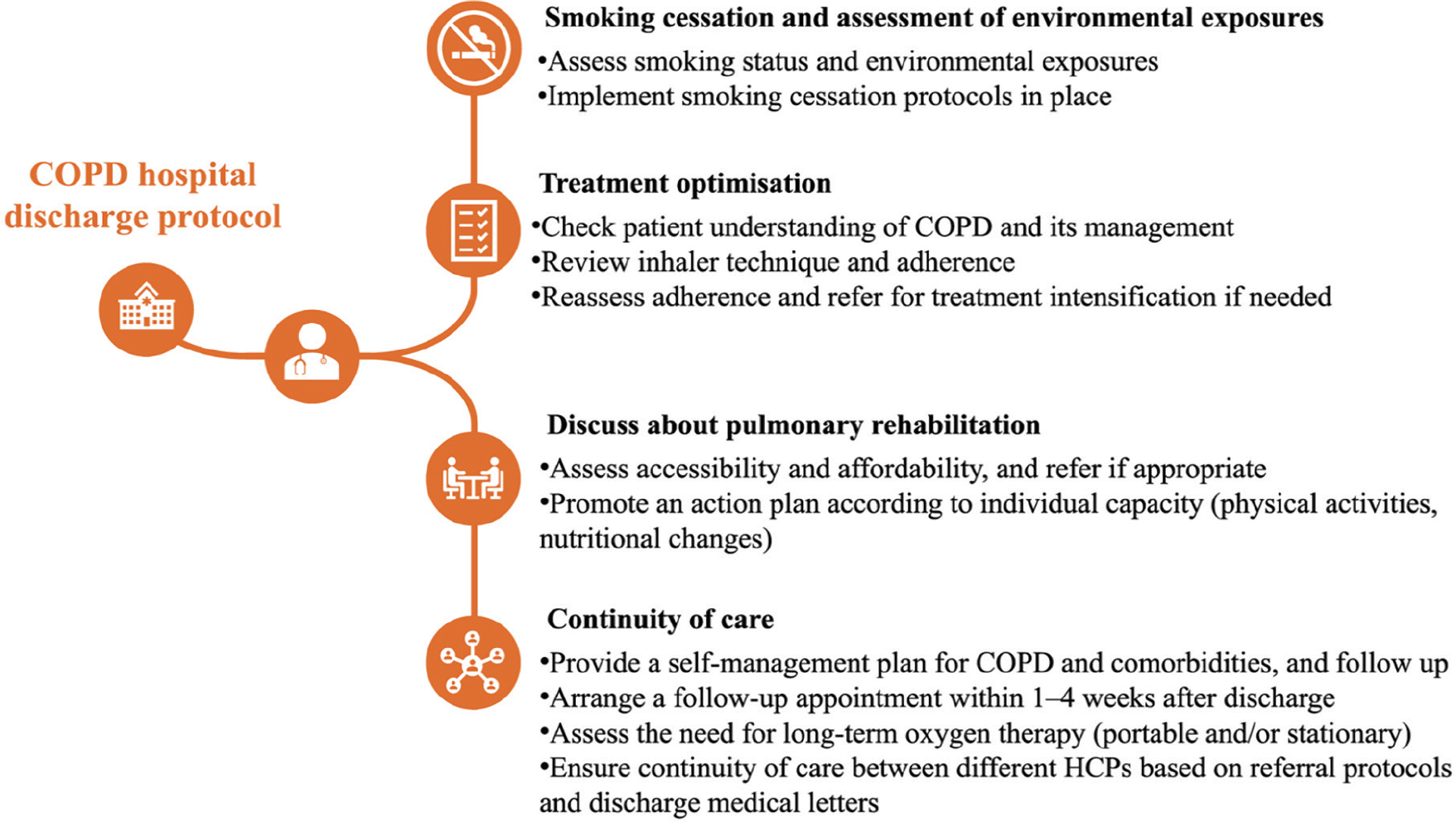
Figure 2.
Main aspects to be included and addressed in the COPD hospital discharge protocol (9, 25, 31). COPD, chronic obstructive pulmonary disease; HCPs, healthcare professionals.
Recommendation VII
Ensure timely initiation of dual long-acting bronchodilation with LABA + LAMA and escalation to triple therapy with LABA + LAMA + inhaled corticosteroid when indicated, in line with GOLD 2025 recommendations (9), with structured follow-up to monitor adherence, inhaler technique, symptoms/exacerbations and lung function and to adjust therapy accordingly.
Rationale
The discharge letters, usually provided to patients, include a summary of investigations, procedures and treatments performed during hospitalisation, as well as recommendations for pharmacological and non-pharmacological treatment and follow-up time intervals. Improved discharge protocols can better support communication between HCPs managing COPD patients, further promoting CP risk reduction (9, 31).
Discussions
A unique feature of this expert opinion paper is that it was specifically created for CP risk reduction in COPD, in accordance with GOLD recommendations and recent literature addressing this topic (1, 9–11, 18). This may serve as a formal starting point for the development of specific protocols to be implemented in the Romanian clinical practice. CVDs significantly impact the health status of patients with COPD, being a major cause of mortality, both in acute exacerbations and in clinically stable patients with mild–moderate airflow limitations. The frequent coexistence of COPD and CVD reflects bidirectional pathophysiology. COPD-related abnormalities, such as persistent systemic inflammation, abnormal pulmonary gas exchange, lung hyperinflation and exertional dyspnoea, promote CV injury and events. In turn, CVD worsens the COPD status by causing abnormal myocardial contractility, increased left-ventricular filling pressures and subsequent lung stasis, and reduced skeletal muscle oxygen delivery, thereby amplifying dyspnoea and exercise intolerance (2, 7, 8) (Figure 3). This reciprocal loop explains their high co-occurrence and supports the integration of CP risk assessment and management.
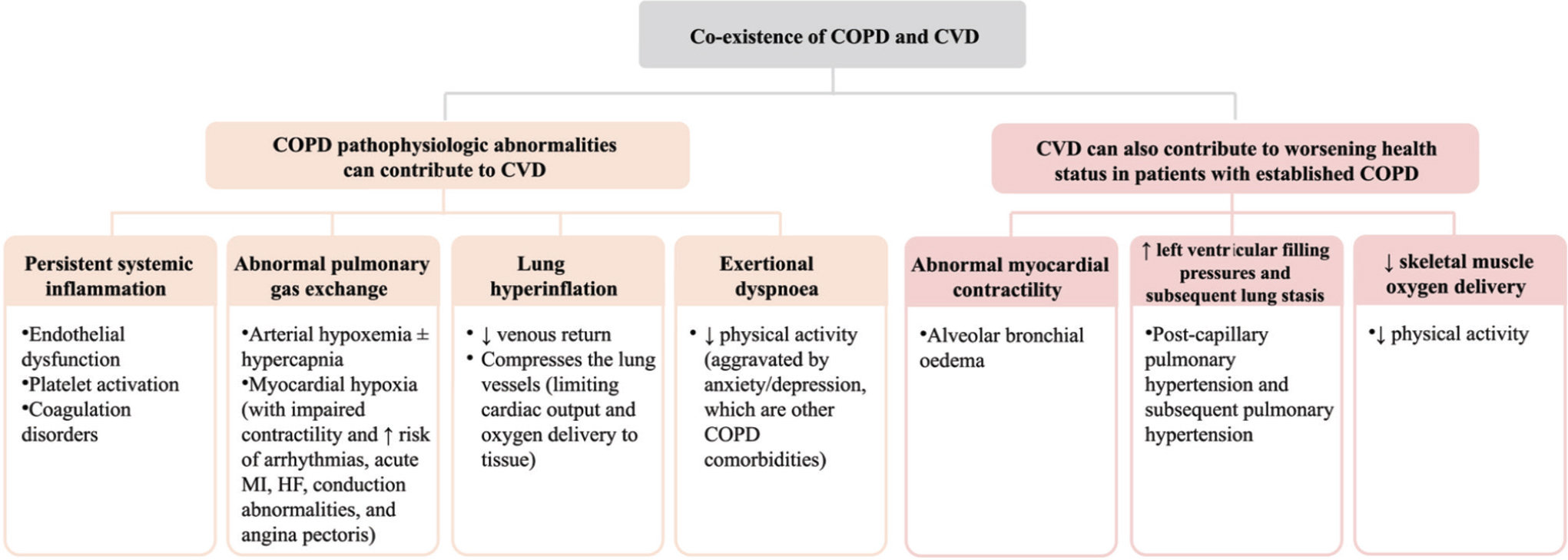
Figure 3.
The mechanism underlying the frequent coexistence of COPD and CVD (2, 7, 8). COPD, chronic obstructive pulmonary disease; CVD, cardiovascular disease; HF, heart failure; MI, myocardial infarction.
COPD remains largely underdiagnosed, with estimates suggesting that more than 70% of individuals with airflow limitation are unaware of their condition (33), pointing to the need to improve access to spirometry with early diagnosis and appropriate management (34). In Romania, COPD is diagnosed predominantly by pulmonologists because current scope-of-practice regulations restrict spirometry in family physicians’ offices. Considering the high rate of underdiagnosis and the challenges in accessing specialised care, extending the competencies of family physicians to perform spirometry in primary healthcare settings is a topic of interest to be further explored. Incorporation of spirometry results (such as FEV1 or airflow-obstruction indices) into CV risk stratification could improve the accuracy of standard CV risk scores (26), aligning pulmonary diagnostics with CV prevention and helping to reduce CP complications, as well as overall morbidity and mortality. Moreover, early diagnosis of COPD allows for timely modification of risk factors (such as smoking cessation, vaccination and pulmonary rehabilitation), optimisation of inhaled therapy, and systematic screening and management of CV comorbidities. Nevertheless, the updated 2026 GOLD recommendations include testing of natriuretic peptide at COPD diagnosis and annually thereafter (10), emphasising the efforts needed for timely identification of prevalent heart disease.
In patients with COPD with worsening respiratory symptoms and/or reduced lung function, ECOPD should be suspected. As per the current definition (9, 10), a change in symptom severity should require a change in the current treatment. Considering the high impact of an exacerbation on the CV risk and our aim to minimise the CP events, we recommend an initial treatment trial with a bronchodilator [short acting] and, where indicated, an antibiotic and/or systemic corticosteroid for 5 days. To avoid antimicrobial overuse and resistance, antibiotic therapy should be reserved for patients with increased sputum purulence, with or without increased sputum volume or worsening dyspnoea, according to the GOLD 2025 recommendations (9).
Regarding COPD hospitalisations, a standardised discharge protocol with a focus on CP risk can strengthen care transitions and reduce early post-discharge events. Key elements include (i) patient and caregiver education on COPD, identification of exacerbations and CP risk; (ii) personalised written action plans for early recognition and management of exacerbation symptoms; (iii) reinforcement of adherence to COPD maintenance treatment, including correct inhaler technique; (iv) clear post-discharge management plan that integrates pharmacological and non-pharmacological measures, with triple therapy (LABA + LAMA + inhaled corticosteroid) from discharge in patients with high blood eosinophil levels and (v) scheduled follow-up within 1–4 weeks with appropriate specialists (pulmonology, cardiology, family medicine), ensuring cross-level communication (discharge summary sent to family physicians and relevant specialists) (9, 10).
Conclusions
Considering the burden of COPD and the risks that COPD patients face daily, we strongly advocate for the adoption of a policy of zero tolerance for clinical inertia in COPD care in Romania, especially for reducing exacerbations and associated CV risk (9, 10, 23, 35). In conclusion, it is imperative to take decisive actions. Bridging the gap between GDMT recommendations and clinical practice remains a priority. Efforts to translate GDMT recommendations into real-world clinical settings need to be strengthened. We should start by identifying patients at risk in a timely manner and making immediate treatment adjustments. The implementation of GDMT in clinical practice, namely dual bronchodilation or triple therapy, and intensive treatment of CV risk factors according to the current clinical guidelines, should be closely followed up for optimal outcomes in patients with COPD.
The interdisciplinary care of patients with COPD will be based on the following guiding principles:
Modifiable risk factors for CP events, such as smoking cessation, vaccination, comorbidity screening and lifestyle modification, should be part of every visit.
Provide an early and accurate diagnosis. All patients with severe symptoms of COPD should be immediately referred to a pulmonologist and, in case of severe dyspnoea and abnormal electrocardiogram, the immediate referral should be to a cardiologist.
Expand access to spirometry in primary care, including training and certification for family physicians.
Implement clear, standardised protocols at the institutional level for exacerbation management, hospital discharge and inter-speciality communication to streamline referrals and management of patients with COPD and CP risk.
Optimise treatment by ensuring the timely initiation of dual bronchodilation or triple therapy, in line with the GOLD guidelines (9, 10), with close follow-up for adherence and outcomes.
Call for action – Zero Tolerance for Clinical Inertia. Act early, optimise therapy and coordinate care.
Disclosures
All authors declare honoraria for participation in the multidisciplinary task force meetings organised by AstraZeneca Romania. F-DM declares no conflict of interest. SD-R received financial support for Advisory Boards/consultancy from AstraZeneca, Boehringer Ingelheim, Chiesi, Novartis; participated as investigator in clinical studies funded by AstraZeneca, Chiesi, Novartis, Sanofi, and received speaker fee from Angelini, AstraZeneca, Boehringer Ingelheim, Chiesi, Eli Lilly, Novartis, Pfizer, Sandoz, Sanofi. OGF received financial support for participation in symposia and speaker fee from AstraZeneca. CI declares no conflict of interest. DL declares no conflict of interest. FM declares no conflict of interest. CN declares no conflict of interest. CP declares no conflict of interest. R-MR declares no conflict of interest. CLT received financial support for Advisory Boards/consultancy from AstraZeneca, Boehringer Ingelheim, Chiesi, Novartis, Sanofi; participated as investigator in clinical studies funded by Actelion, Arena, AstraZeneca, Bayer, Chiesi, Johnson & Johnson, Novartis, Sanofi and received speaker fee from Angelini, AOP, AstraZeneca, Boehringer Ingelheim, Brystol Myers Squibb, Chiesi, Johnson & Johnson, MSD, Novartis, Pfizer, Sandoz, Sanofi, Terapia, Zentiva. A-MV declares no conflict of interest.
Acknowledgements
Medical writing and editorial support were provided by Ioana Cristina Ilea (DVM, MSc, PhD) and Raluca Voicu (MD, MSc) of MedInteractiv (Bucharest, Romania).
Notes
[1] Conflicts of interest Conflict of interest
The authors declare no conflict of interest.
[2] Informed consent statement
No informed consent was necessary.
[3] Contributed by Author Contributions
All authors made significant contributions to the development of the manuscript submitted (review of medical literature and interpretation, participation to group discussion, paper writing and reviewing the manuscript).