
Table 1.
Classes of CFTR gene mutations (5).
| Type of mutation | Type of CFTR mutation | Percent of people with CF who have at least 1 mutation |
|---|---|---|
| Normal | CFTR protein is created and moves to the cell surface, allowing the transfer of chloride and water. | — |
| Class I | No functional CFTR protein is created | 22% |
| Class II | CFTR protein is created but misfolds, keeping it from moving to the cell surface. This is called a trafficking defect. | 88% |
| Class III | CFTR protein is created and moves to the cell surface but the channel gate does not open. This is called defective channel regulation. | 6% |
| Class IV | CFTR protein is created and moves to the cell surface but the channel function is faulty. This is called decreased channel conductance. | 6% |
| Class V | Normal CFTR protein is created and moves correctly to the cell surface but not enough amount of the protein. This is called reduced synthesis of CFTR. | 5% |
| Class VI | CFTR protein is created but it does not work properly at the cell membrane. This is called decreased CFTR stability. | 5% |
Table 2.
Interpretation of the Bhalla score (11).
| Bhalla score | Disease severity |
|---|---|
| 16–25 points | Mild bronchiectasis |
| 9–15 points | Moderate bronchiectasis |
| 0–8 points | Severe bronchiectasis |
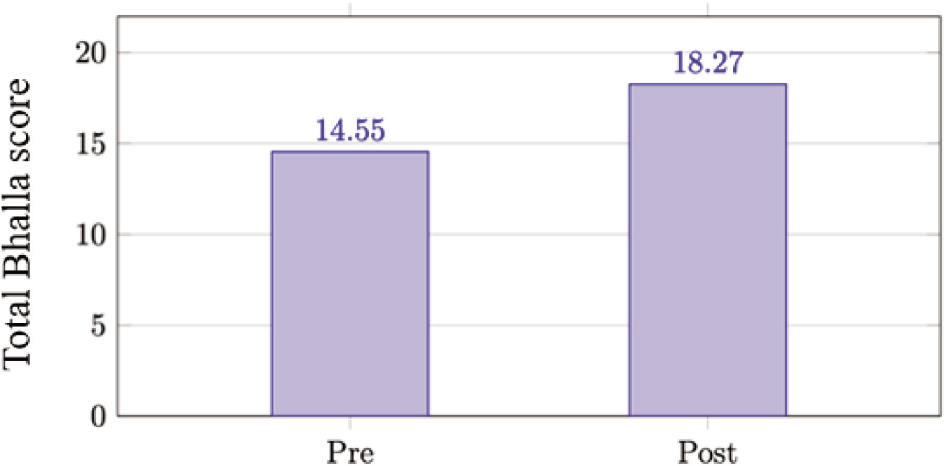
Figure 1.
Bhalla score values assessed before and after 1 year of therapy.
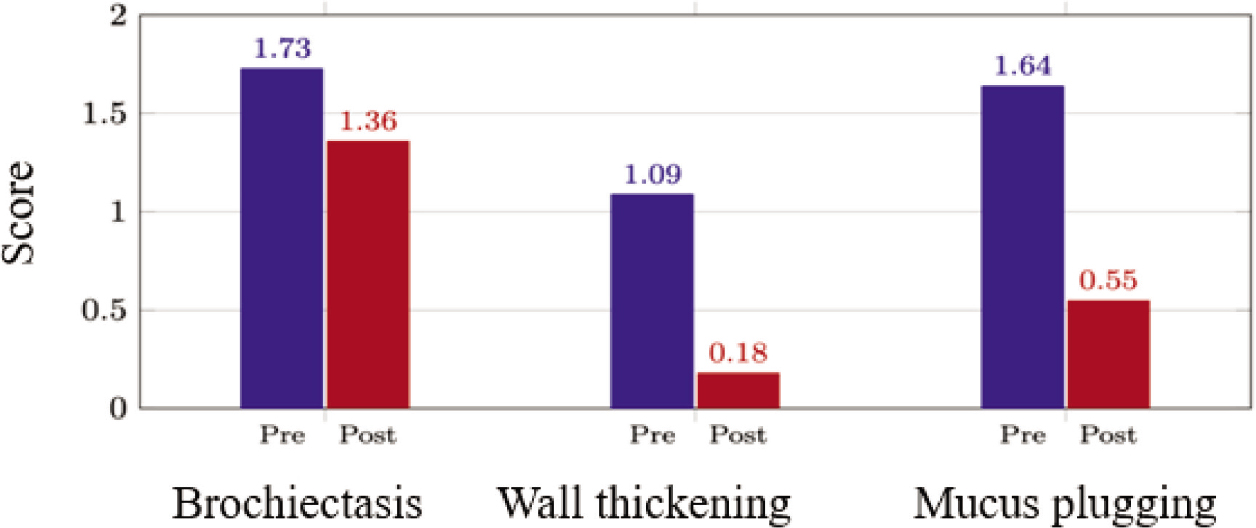
Figure 2.
Comparative values of the parameters included in the Bhalla score.
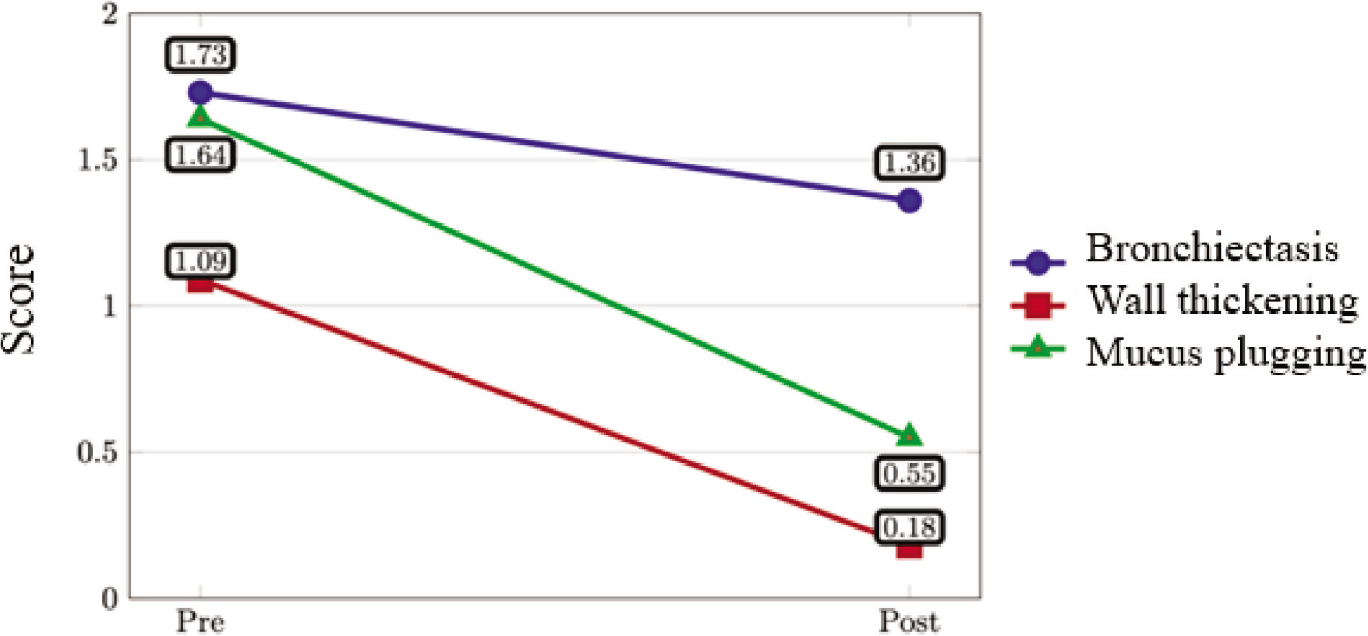
Figure 3.
Effectiveness of ETI treatment demonstrated by the Bhalla score parameters. ETI, elexacaftor–tezacaftor–ivacaftor.
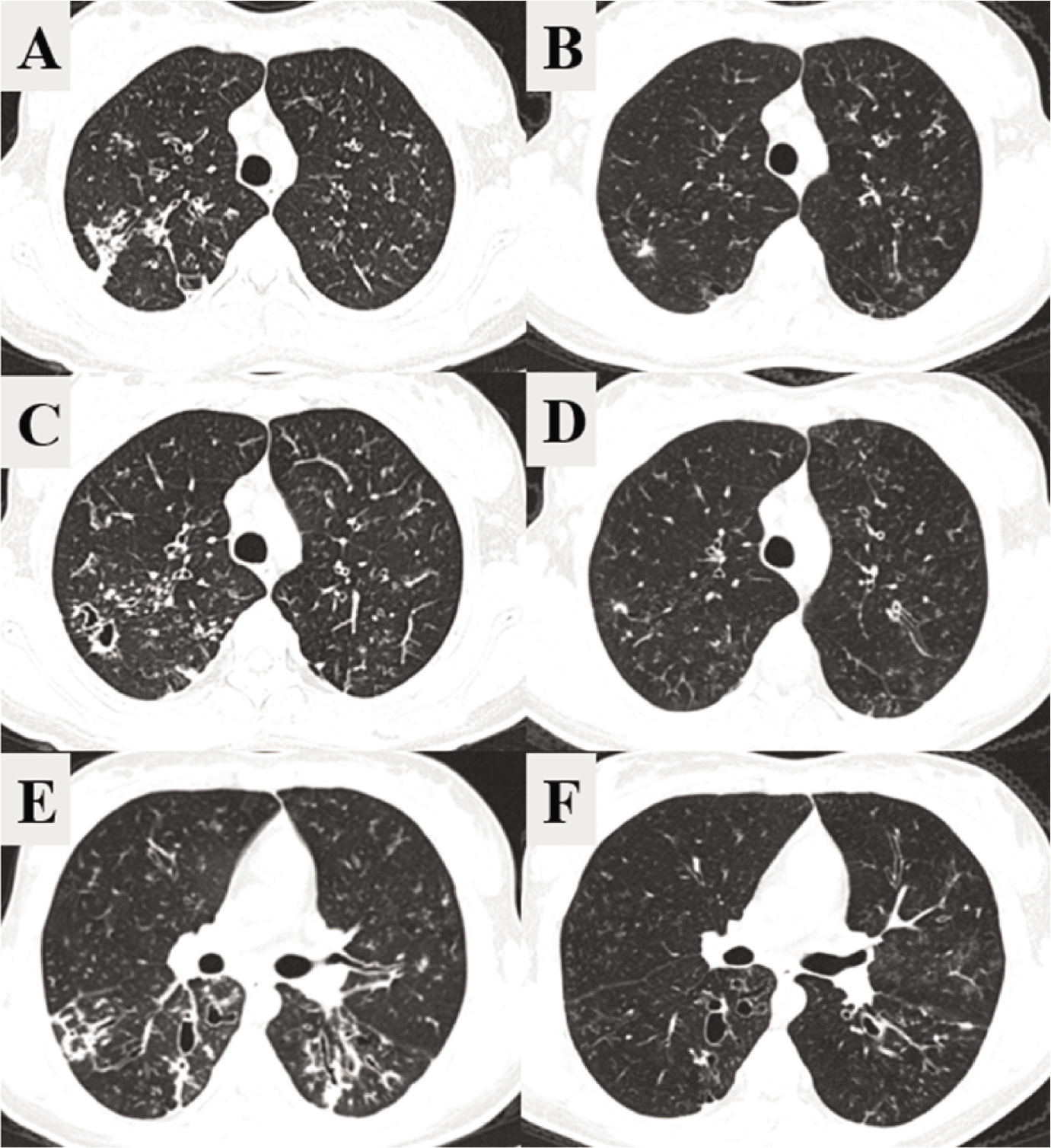
Figure 4.
Case 1 – Axial chest CT images of a 16-year-old female patient with severe cystic fibrosis lung disease before and after initiation of triple therapy. (A) Axial CT image prior to initiation of triple therapy showing cylindrical bronchiectasis, bronchial wall thickening, mucus plugging, tree-in-bud opacities, and areas of consolidation. (B) Corresponding axial CT image after 1 year of triple therapy demonstrating persistent bronchiectasis with reduced bronchial wall thickening and mucus plugging, and resolution of previously seen consolidations. (C) Pre-treatment image demon-strating cylindrical and varicose bronchiectasis, bronchial wall thickening, and a tree-in-bud pattern consistent with distal mucus plugging. (D) Corresponding post-treatment image demonstrating persistent bronchiectasis with a significant reduction in intraluminal mucus content, decreased bronchial wall thickening, and only focal residual tree-in-bud changes. (E) Pre-treatment image demonstrating cystic (saccular) bronchiectasis, peripheral consolidations, and tree-in-bud opacities. (F) Corresponding post-treatment image showing persistent bronchiectasis with improved bronchial patency, resolution of consolidations, more homogeneous lung aeration, and only minimal residual tree-in-bud opacities.
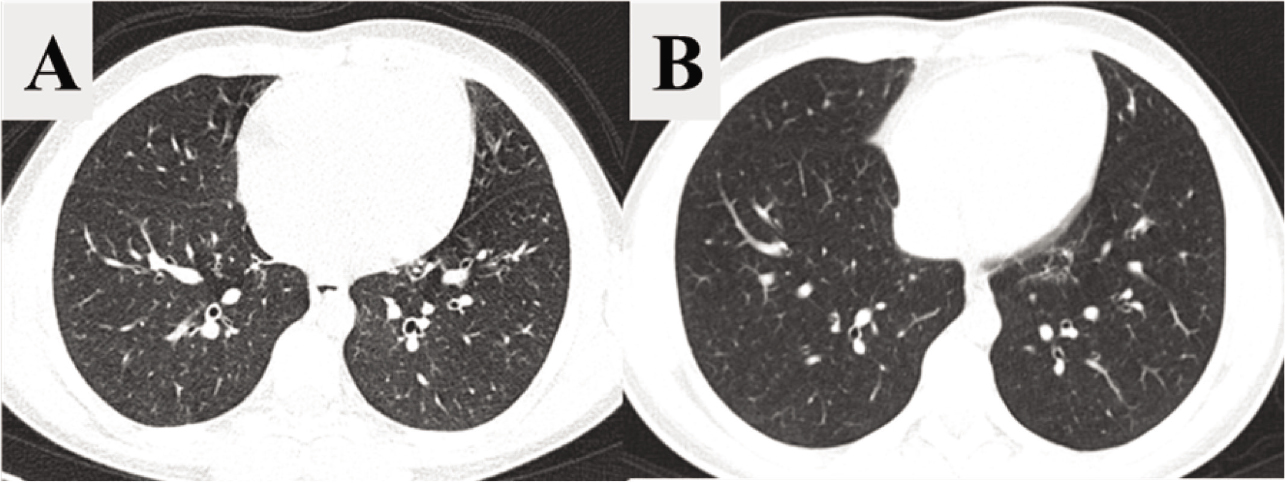
Figure 5.
Case 2 – CT image obtained before the initiation of triple therapy (A) in a 16-year-old female patient with moderate cystic fibrosis, showing a marked reduction in mucus plugging and improvement of bronchiectasis after 1 year of treatment (B). CT, computed tomography.
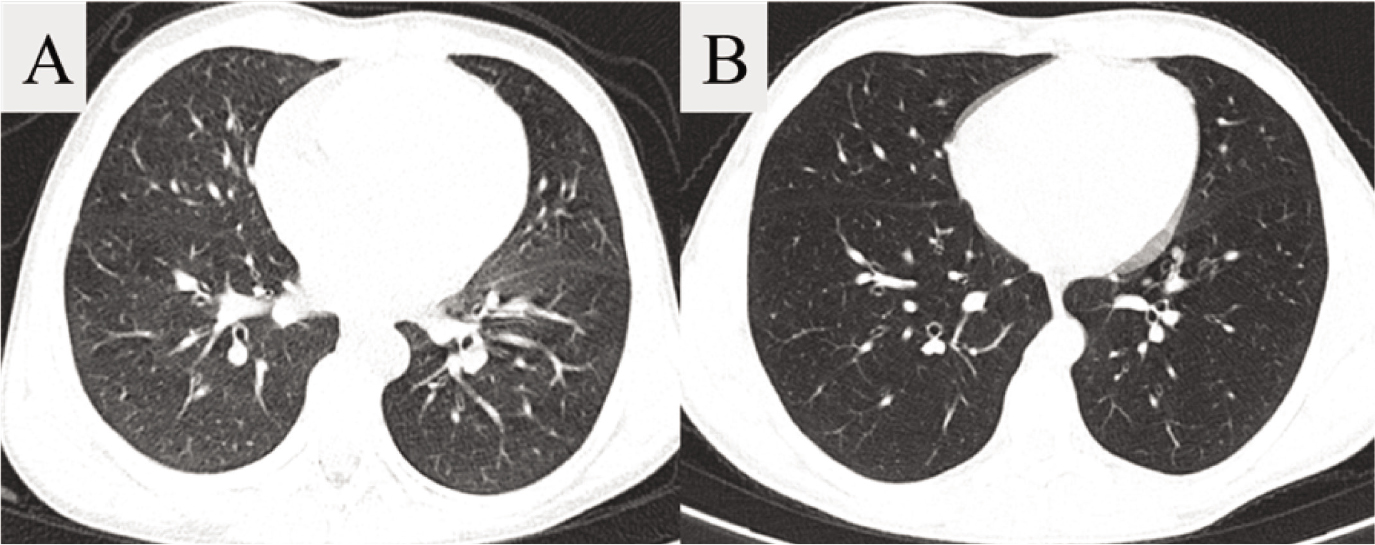
Figure 6.
Case 3 – A 16-year-old male patient with mild-to-moderate cystic fibrosis (A). Resolution of mucus plugging and improvement of bronchiectasis are observed after 1 year of ETI therapy (B). ETI, elexacaftor–tezacaftor–ivacaftor.
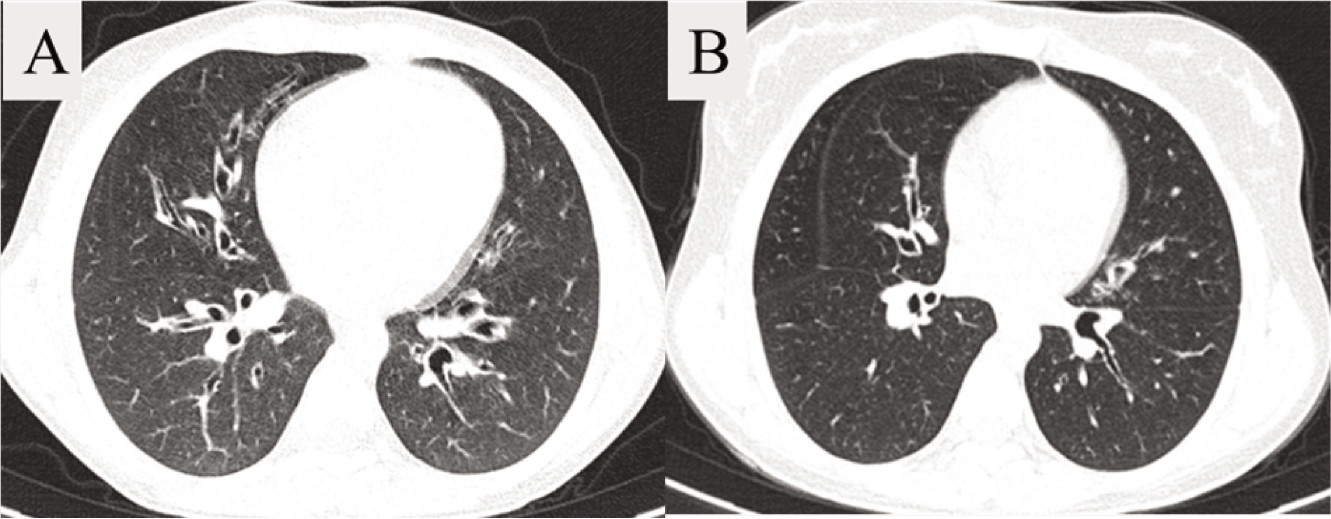
Figure 7.
Case 4 – A 15-year-old female patient with moderate cystic fibrosis presenting severe peribronchial thickening, bronchiectasis and mucus plugging (A). CT imaging performed 1 year after initiation of triple therapy (B) demonstrates a reduction in bronchial wall thickening and mucus plugging, along with improvement of bronchiectasis. CT, computed tomography.
Table 3.
Comparison of mean values of CT parameters assessed before and after therapeutic intervention.
| Score | Pre | Post | Difference | 95% CI | p |
|---|---|---|---|---|---|
| Bronchiectasis | 1.73 | 1.36 | –0.36 | (–0.6479, –0.0794) | 0.125 |
| Wall thickening | 1.09 | 0.18 | –0.91 | (–1.3039, –0.5143) | 0.008 |
| Mucus plugging | 1.64 | 0.55 | –1.09 | (–1.3948, –0.7877) | 0.002 |
| Total Bhalla score | 14.55 | 18.27 | 3.73 | (2.8511, 4.6035) | < 0.001 |
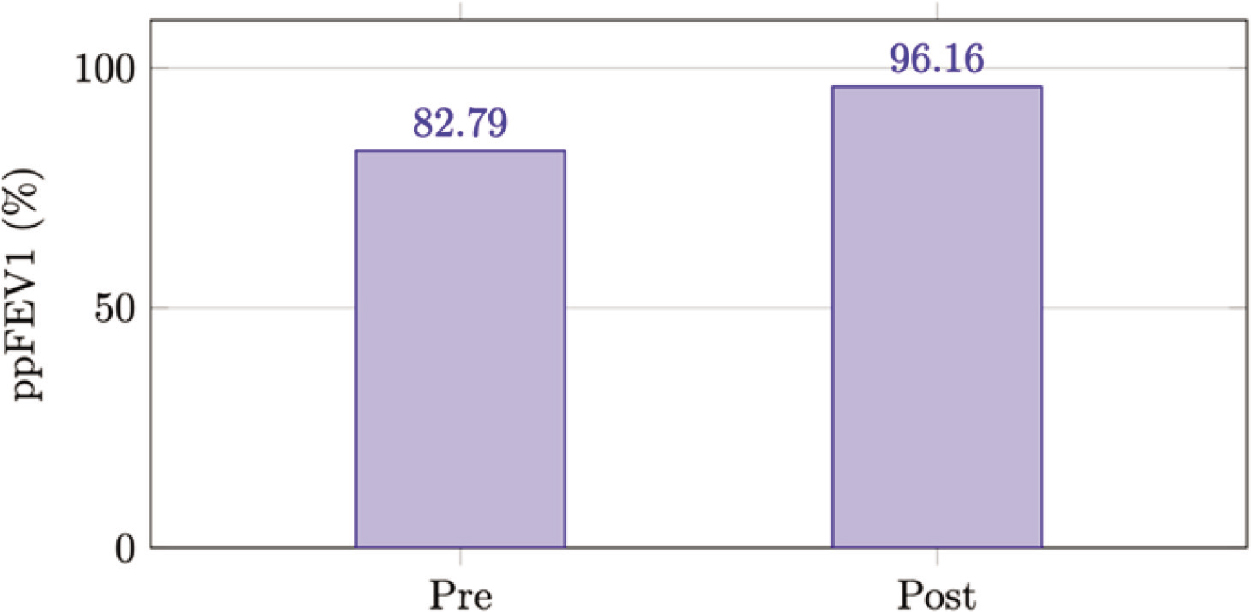
Figure 8.
Increase in mean ppFEV1 value by 13.38% after 1 year of ETI therapy. ETI, elexacaftor–tezacaftor–ivacaftor.
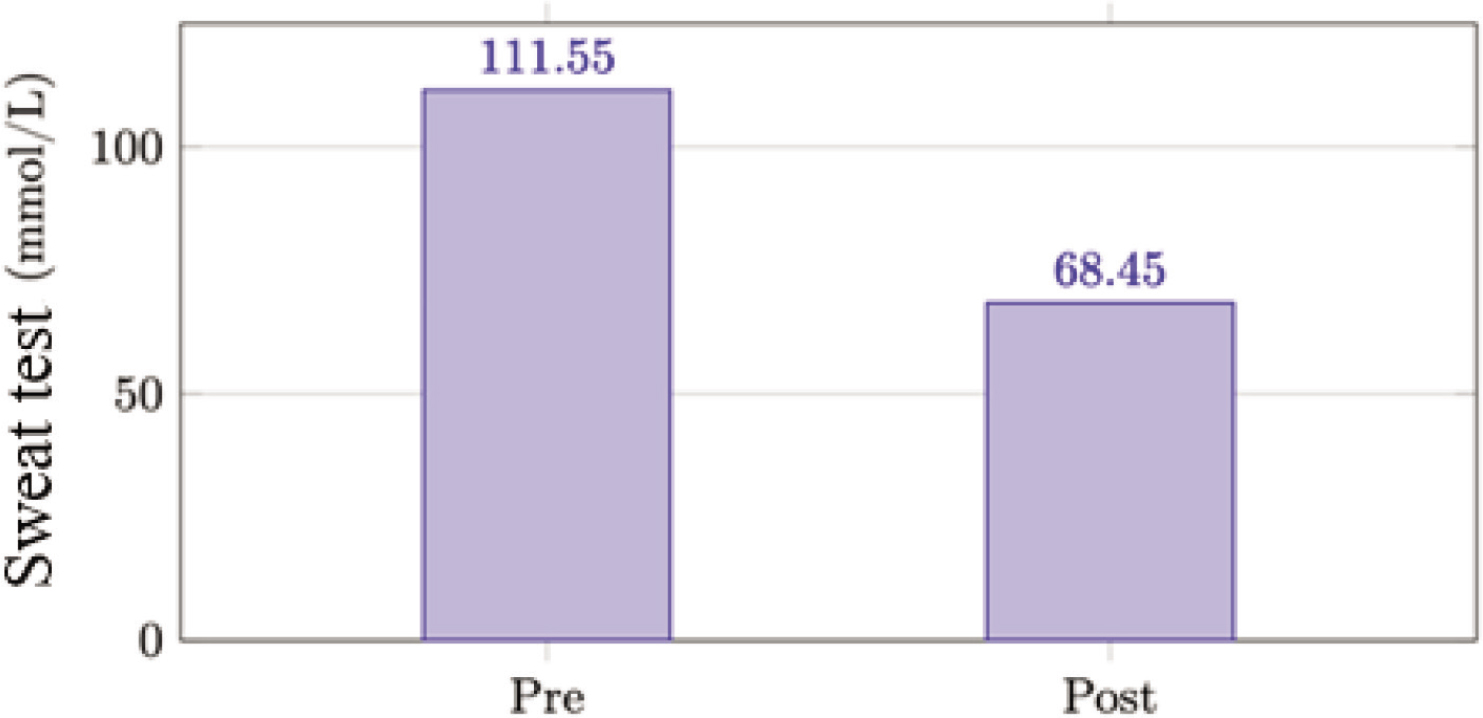
Figure 9.
Decrease in mean sweat chloride value by 43.1 mmol/L after 1 year of ETI therapy. ETI, elexacaftor–tezacaftor–ivacaftor.
Table 4.
Statistically significant changes in group mean values of ppFEV1, sweat chloride test, and Bhalla score.
| Parameter | Pre | Post | Difference | 95% CI | p |
|---|---|---|---|---|---|
| ppFEV1 (%) | 82.79 | 96.16 | 13.38 | (6.5213, 20.2351) | 0.002 |
| Sweat test (mmol/L) | 111.55 | 68.45 | –43.09 | (-49.9478, -36.234) | < 0.001 |
| Total Bhalla score | 14.55 | 18.27 | 3.73 | (2.8511, 4.6035) | < 0.001 |