
Introduction
Cystic fibrosis is an autosomal recessive inherited disease with a chronic course and potentially life-threatening progression, affecting >160,000 individuals worldwide. Of these, 105,352 (65%) have a confirmed diagnosis, and 19,516 (12%) are currently receiving triple therapy with cystic fibrosis transmembrane conductance regulator (CFTR) modulators (1, 2).
Cystic fibrosis is caused by mutations in the gene encoding the CFTR protein, an anion channel located on the surface of epithelial cells. Dysfunction of this protein leads to significant impairment of ion transport, resulting in the accumulation of viscous mucus in the lungs, pancreas and other secretory organs. The clinical consequences include progressive deterioration of pulmonary function, pancreatic exocrine insufficiency, hepatobiliary involvement and altered electrolyte composition of sweat.
The reference test for the diagnosis of cystic fibrosis is the measurement of sweat chloride concentration, a parameter also used as an objective indicator of overall CFTR function in clinical trials (2–4).
CFTR gene mutations are classified into six major classes. Class II mutations account for approximately two-thirds of all cystic fibrosis cases and are most commonly represented by the deletion of phenylalanine at position 508 of the CFTR protein (Phe508del). This mutation results in improper protein folding and retention within the endoplasmic reticulum. The retained protein undergoes premature degradation and fails to reach the cell surface, leading to a marked reduction in CFTR function [5]. The classification of CFTR mutations is summarized in Table 1. The availability of combination therapy with CFTR modulators, elexacaftor–tezacaftor–ivacaftor (ETI), has significantly improved the course of pulmonary disease and the quality of life of patients with cystic fibrosis.
Table 1.
Classes of CFTR gene mutations (5).
| Type of mutation | Type of CFTR mutation | Percent of people with CF who have at least 1 mutation |
|---|---|---|
| Normal | CFTR protein is created and moves to the cell surface, allowing the transfer of chloride and water. | — |
| Class I | No functional CFTR protein is created | 22% |
| Class II | CFTR protein is created but misfolds, keeping it from moving to the cell surface. This is called a trafficking defect. | 88% |
| Class III | CFTR protein is created and moves to the cell surface but the channel gate does not open. This is called defective channel regulation. | 6% |
| Class IV | CFTR protein is created and moves to the cell surface but the channel function is faulty. This is called decreased channel conductance. | 6% |
| Class V | Normal CFTR protein is created and moves correctly to the cell surface but not enough amount of the protein. This is called reduced synthesis of CFTR. | 5% |
| Class VI | CFTR protein is created but it does not work properly at the cell membrane. This is called decreased CFTR stability. | 5% |
The introduction of CFTR modulators has represented a major breakthrough in the treatment of cystic fibrosis, marking a shift from symptom-oriented therapy to a direct approach targeting the underlying molecular defect.
These targeted therapies restore the function of the defective CFTR protein through two main mechanisms: potentiators – ivacaftor (IVA), the first modulator approved for the treatment of patients with cystic fibrosis, which enhances CFTR channel function, and correctors – tezacaftor (TEZ), elexacaftor (ELX), lumacaftor (LUM), which improve protein processing and trafficking to the cell membrane (6, 7).
The combination of two correctors (ELX and TEZ) with the potentiator (IVA), known as triple therapy ETI, has demonstrated significant improvement in pulmonary function, CFTR protein activity and respiratory symptoms in both adults and children aged ≥2 years who carry either the homozygous F508del genotype (F/F) or the heterozygous F508del/minimal function genotype (F/MF). These findings have confirmed the effectiveness of triple ETI therapy in patients with cystic fibrosis who possess at least one F508del allele (8).
Objectives
This study aimed to evaluate bronchopulmonary structural changes using computed tomography (CT) after 1 year of ETI treatment, employing the Bhalla score, and to correlate these imaging findings with clinical response parameters.
Methods
This was a retrospective, observational study.
To achieve the study objectives, a cohort of 11 patients was evaluated, based on the following inclusion criteria: all patients aged 12–18 years who underwent pulmonary CT after 1 year of ETI therapy and who had a previous comparative chest CT performed within the preceding 1–2 years; a confirmed diagnosis of cystic fibrosis established by sweat test and genetic testing; and continuous use of standard conventional therapies throughout the study period, including physiotherapy, inhaled mucolytic and osmotic agents, inhaled antibiotics and anti-inflammatory treatment with azithromycin. Longitudinal follow-up included pulmonary function testing and sweat chloride measurements, allowing correlation of functional and biochemical parameters with the imaging scores obtained. In addition, biochemical safety monitoring during follow-up included liver and renal function tests, performed at 1 month, 3 months, 6 months and 9 months after initiation of ETI therapy. Pulmonary exacerbations were not systematically monitored during the treatment period, as none of the patients experienced exacerbations requiring intravenous antibiotic therapy, which represents a quantifiable and objective clinical endpoint. Moreover, assessing exacerbations managed at home is challenging and prone to bias due to the subjective nature and variability of patient or caregiver reporting.
Pulmonary imaging
Pulmonary imaging represents a fundamental non-invasive method for assessing lung involvement in patients with cystic fibrosis. Although disease progression is routinely monitored using pulmonary function tests, imaging investigations have proven to be more sensitive in detecting structural lung changes in the early stages (9).
Unlike pulmonary function tests, which provide a global assessment of lung function, imaging techniques allow detailed regional evaluation and differentiation between various types of lesions, thereby facilitating the recognition of disease-specific complications (9).
CT is superior to conventional chest radiography in detecting subtle and early lung abnormalities and is considered the reference standard in most centres. Magnetic resonance imaging (MRI) offers the advantage of functional assessment of ventilation and perfusion without radiation exposure; however, its use remains limited due to restricted availability and the expertise required for image interpretation.
CT enables precise evaluation of the airways and lung parenchyma, with contrast agent administration being reserved for specific indications, such as vascular studies or procedural planning in cases of pulmonary haemorrhage (9, 10).
The characteristic imaging features of cystic fibrosis include bronchiectasis, bronchial wall thickening, mucus plugging, consolidations and atelectasis. In early stages, only minor density discrepancies and areas of expiratory air trapping may be observed, while advanced disease is associated with emphysema, extensive bronchiectatic destruction, consolidations, atelectasis, cysts and dilation of the bronchial arteries (CT angiography). These lesions may progress to bronchopulmonary haemorrhage (massive haemoptysis), requiring specific therapeutic interventions (9).
CT images were evaluated using the Bhalla score, which assesses bronchiectasis, peribronchial thickening, mucus plugging, bullae, emphysema, consolidations and atelectasis, correlated with the number of involved pulmonary segments and the generation of affected bronchi. Scores range from 0 to 25, with lower values indicating more severe lung damage (11). The interpretation of score ranges is presented in Table 2. Through the present study, we also determined which Bhalla score parameters showed the greatest improvement.
Table 2.
Interpretation of the Bhalla score (11).
| Bhalla score | Disease severity |
|---|---|
| 16–25 points | Mild bronchiectasis |
| 9–15 points | Moderate bronchiectasis |
| 0–8 points | Severe bronchiectasis |
The following statistical methods were used: the paired Student’s t-test, the Wilcoxon signed-rank test and the Pearson correlation coefficient.
The obtained CT score was correlated with a decrease in sweat chloride values and an increase in forced expiratory volume in one second (ppFEV1) after 1 year of ETI treatment.
Sweat test
In 1953, researchers first observed abnormal chloride values in the sweat of patients with cystic fibrosis. This discovery subsequently led, in 1959, to the development of the sweat test as a standard diagnostic method (12).
The CFTR protein is located on the apical surface of epithelial cells in the airways, gastrointestinal tract, pancreas, genitourinary system and sweat glands. When CFTR function is defective, insufficient or absent, chloride ion transport through specific channels is impaired, which in turn alters sodium transport and produces secondary effects on water movement across cell membranes. Decreased chloride secretion and increased sodium reabsorption, together with the corresponding changes in water movement at the apical surface of epithelial cells, result in increased viscosity of secretions in the affected organs (12).
As a result of these mechanisms, sweat chloride concentrations are increased. Measurement of sweat chloride using the quantitative pilocarpine iontophoresis test (QPIT) is currently considered the gold standard for diagnosing cystic fibrosis in patients with clinical suspicion (12).
The sweat test is recommended to be performed in a controlled environment by trained personnel. The first step involves pilocarpine iontophoresis. Pilocarpine is a parasympathomimetic alkaloid that stimulates cholinergic receptors in the sweat glands, thereby inducing sweat production. Given the variability of the test and the risk of obtaining an insufficient sample volume, simultaneous collection of two sweat samples is recommended (13).
In 1983, the Macroduct system (Wescor, Logan, UT) was introduced for sweat collection. This method is easier to apply than conventional QPIT and requires only 15 μL of sweat. The system uses gel discs impregnated with pilocarpine, through which an iontophoretic current passes, stimulating sweat production. Sweat is subsequently collected via capillary tubing, which gathers the sweat produced following stimulation of the sweat glands (13). This is a conductivity-based test, with results expressed as sodium chloride concentration in mmol.
Reference values for sweat chloride testing are the same regardless of patient age. A sweat chloride concentration >60 mmol/L is considered diagnostic for cystic fibrosis. Sweat chloride concentrations between 30 mmol/L and 59 mmol/L are considered borderline and require confirmation through repeat testing or further diagnostic assessment (13).
Spirometry
Forced expiratory volume in one second expressed as a percentage of the predicted value (ppFEV1), determined by spirometry, and represents the primary indicator of pulmonary function in patients with cystic fibrosis and an essential parameter for monitoring the progression of lung disease.
Preservation of lung function and limitation of ppFEV1 decline throughout the patient’s lifetime constitute major goals of medical care. Understanding the natural trajectory of ppFEV1 in individuals with cystic fibrosis is crucial for the early initiation of interventions, prevention of progression of pulmonary damage, and guiding decisions regarding the optimal timing for lung transplantation or the introduction of novel therapies.
ppFEV1 is widely used not only in routine clinical decision-making but also as an outcome variable in clinical trials, and it is a well-established predictor of survival in cystic fibrosis. The landmark study by Kerem et al. in 1992 demonstrated that patients with ppFEV1 values below 30% had a 2-year mortality exceeding 50%; however, subsequent analyses have shown improved survival rates in more recent cohorts of patients with severe lung disease (14–16, 19).
ppFEV1 derived from spirometric measurements is also used as one of the diagnostic parameters for pulmonary exacerbations. Exacerbations have a significant impact on long-term survival, quality of life, and the decline of lung function. Approximately one-quarter of patients do not regain their baseline pulmonary function following antibiotic treatment, whether administered intravenously or orally. In recent years, some authors have proposed initiating antibiotic therapy in cases of an acute decline in ppFEV1 – defined as a reduction of ≥10% from the predicted percentage value – even in the absence of clinical signs and symptoms. Such an intervention likely increases the probability of recovery of lung function and provides long-term benefits (15).
In the present study, a dataset from the 11 patients with cystic fibrosis was analysed, including quarterly ppFEV1 measurements collected over a 1-year period during ETI treatment.
Results
The mean Bhalla score improved from 14.55 to 18.27 (P < 0.001), with the greatest improvement observed for mucus plugging (P = 0.002) and peribronchial thickening (P = 0.008). Although the bronchiectasis score also increased, this change did not reach statistical significance (Table 3 and Figures 1–3). Representative CT examples illustrating these structural changes are shown in Figures 4–7. Four patients shifted from “moderate bronchiectasis” to “mild bronchiectasis” according to the Bhalla scoring system.
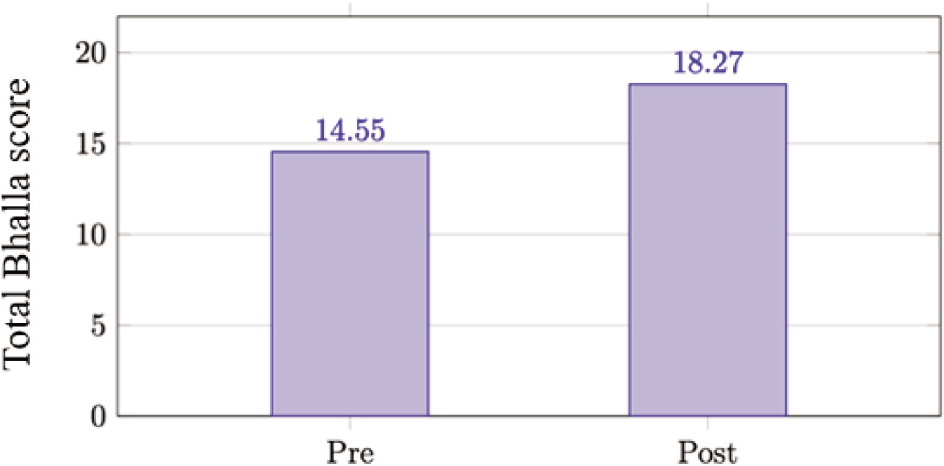
Figure 1.
Bhalla score values assessed before and after 1 year of therapy.
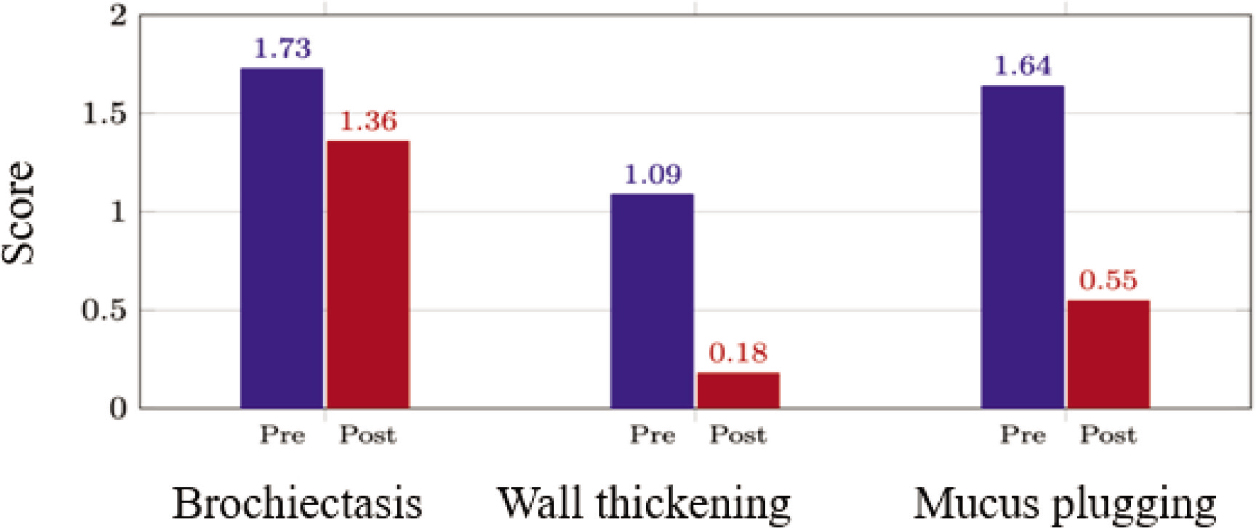
Figure 2.
Comparative values of the parameters included in the Bhalla score.
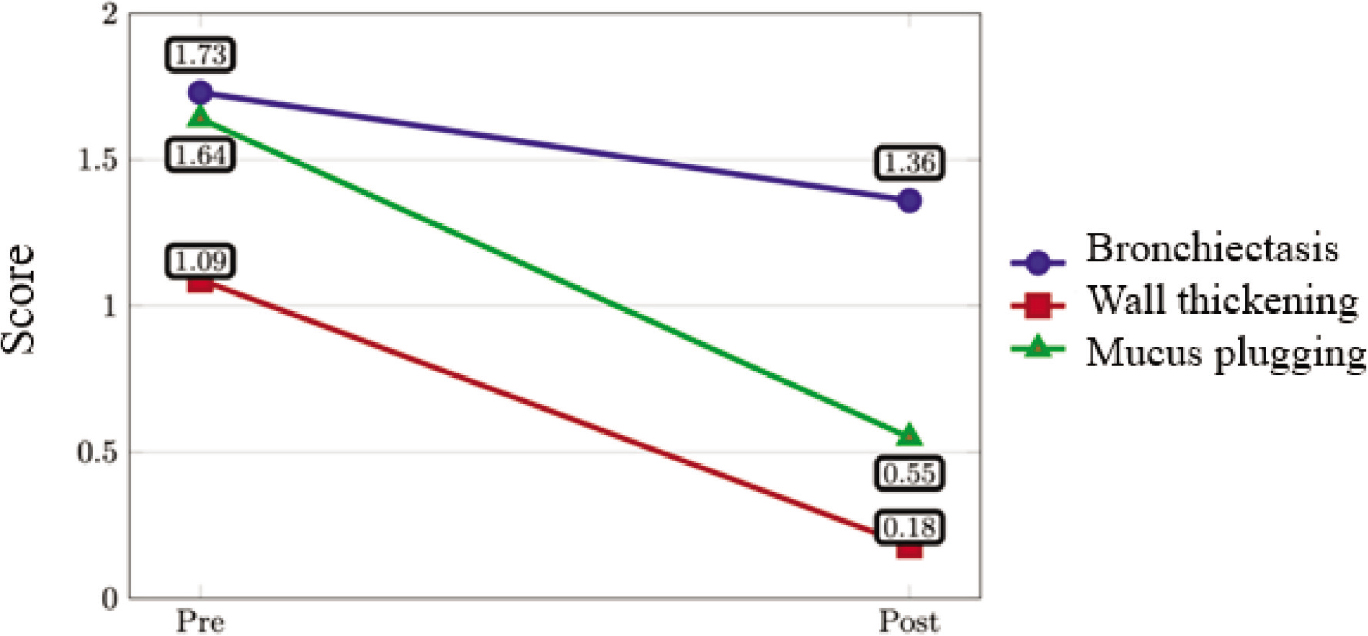
Figure 3.
Effectiveness of ETI treatment demonstrated by the Bhalla score parameters. ETI, elexacaftor–tezacaftor–ivacaftor.
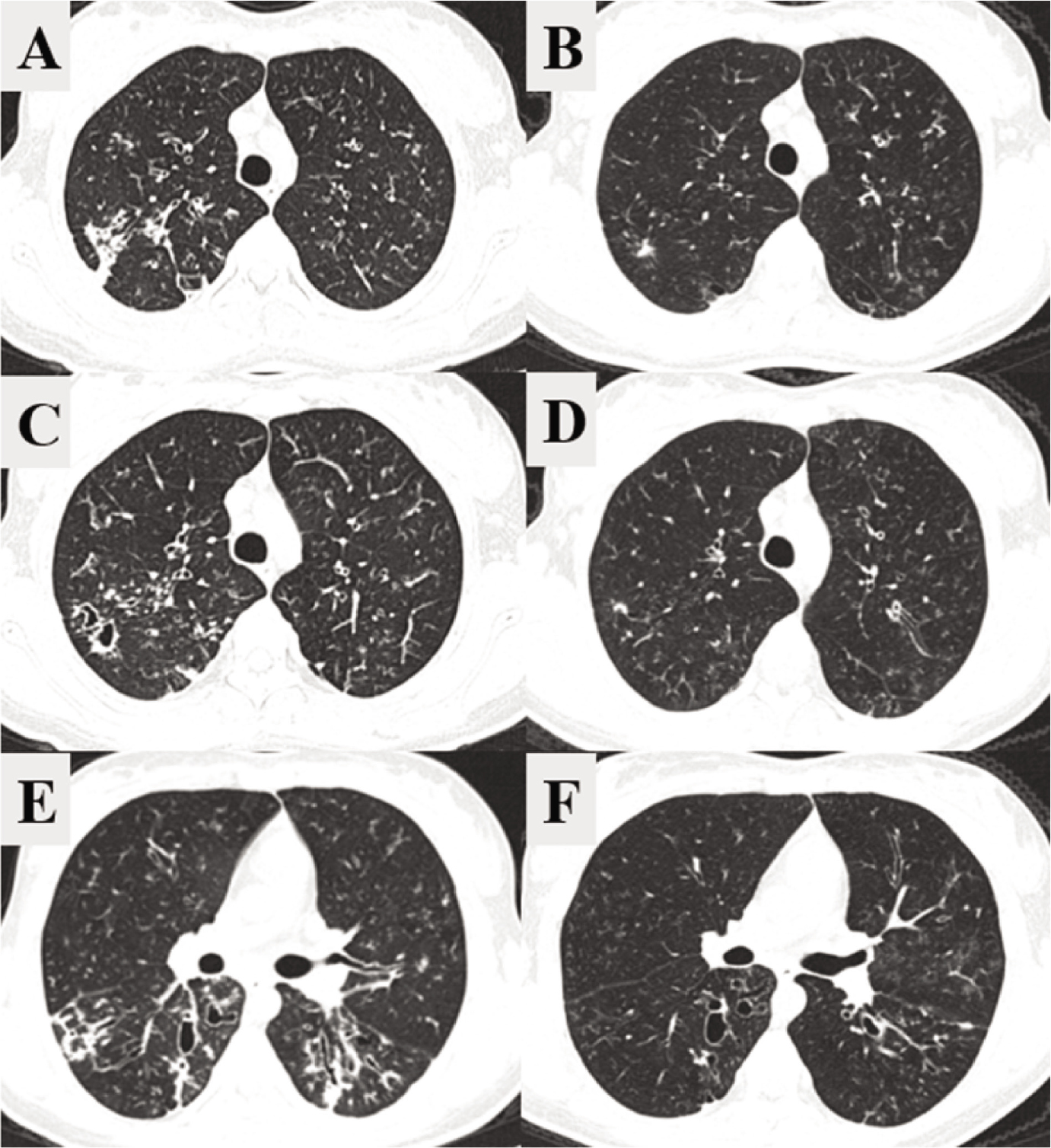
Figure 4.
Case 1 – Axial chest CT images of a 16-year-old female patient with severe cystic fibrosis lung disease before and after initiation of triple therapy. (A) Axial CT image prior to initiation of triple therapy showing cylindrical bronchiectasis, bronchial wall thickening, mucus plugging, tree-in-bud opacities, and areas of consolidation. (B) Corresponding axial CT image after 1 year of triple therapy demonstrating persistent bronchiectasis with reduced bronchial wall thickening and mucus plugging, and resolution of previously seen consolidations. (C) Pre-treatment image demon-strating cylindrical and varicose bronchiectasis, bronchial wall thickening, and a tree-in-bud pattern consistent with distal mucus plugging. (D) Corresponding post-treatment image demonstrating persistent bronchiectasis with a significant reduction in intraluminal mucus content, decreased bronchial wall thickening, and only focal residual tree-in-bud changes. (E) Pre-treatment image demonstrating cystic (saccular) bronchiectasis, peripheral consolidations, and tree-in-bud opacities. (F) Corresponding post-treatment image showing persistent bronchiectasis with improved bronchial patency, resolution of consolidations, more homogeneous lung aeration, and only minimal residual tree-in-bud opacities.
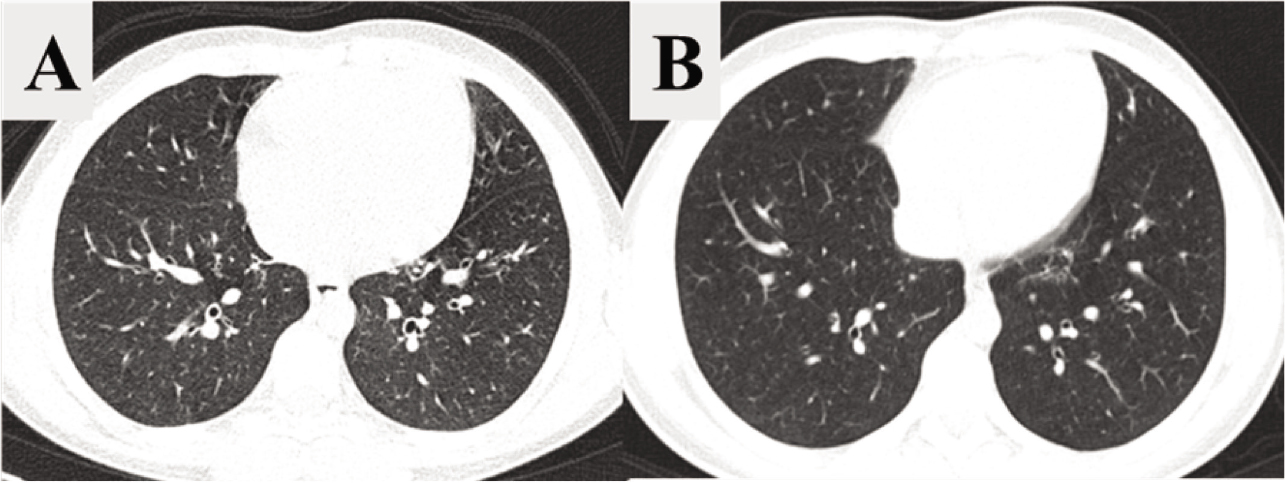
Figure 5.
Case 2 – CT image obtained before the initiation of triple therapy (A) in a 16-year-old female patient with moderate cystic fibrosis, showing a marked reduction in mucus plugging and improvement of bronchiectasis after 1 year of treatment (B). CT, computed tomography.
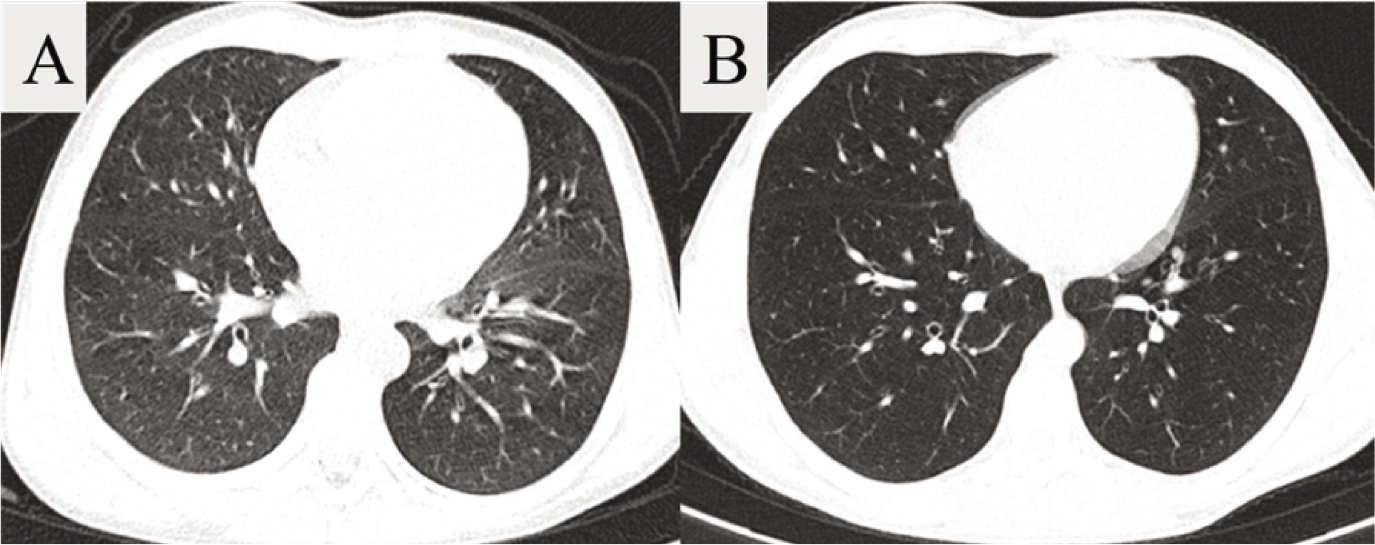
Figure 6.
Case 3 – A 16-year-old male patient with mild-to-moderate cystic fibrosis (A). Resolution of mucus plugging and improvement of bronchiectasis are observed after 1 year of ETI therapy (B). ETI, elexacaftor–tezacaftor–ivacaftor.
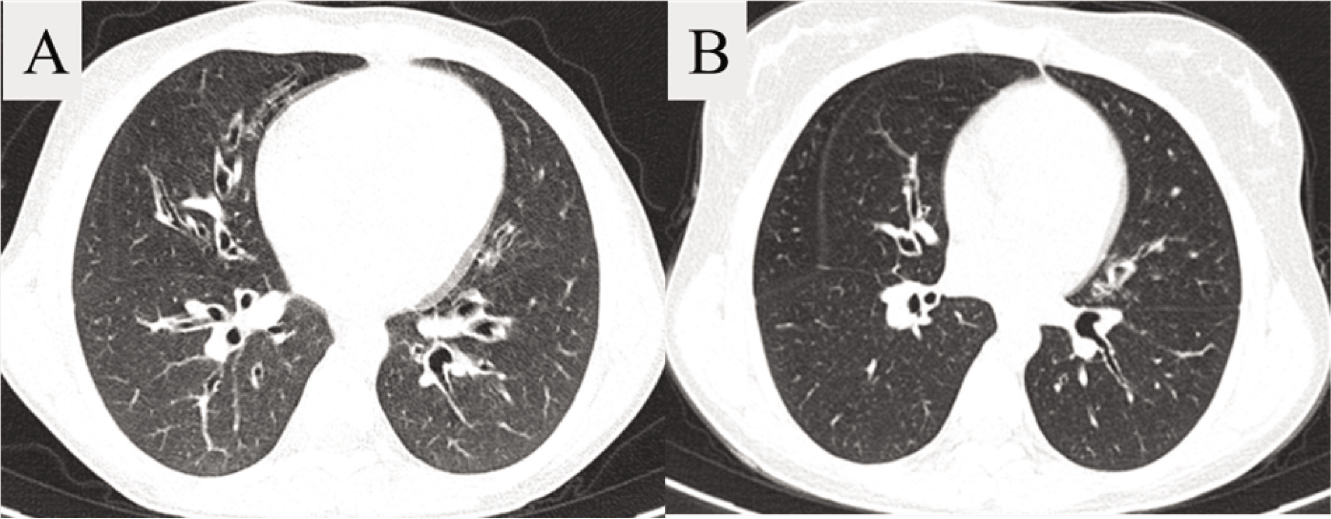
Figure 7.
Case 4 – A 15-year-old female patient with moderate cystic fibrosis presenting severe peribronchial thickening, bronchiectasis and mucus plugging (A). CT imaging performed 1 year after initiation of triple therapy (B) demonstrates a reduction in bronchial wall thickening and mucus plugging, along with improvement of bronchiectasis. CT, computed tomography.
Table 3.
Comparison of mean values of CT parameters assessed before and after therapeutic intervention.
| Score | Pre | Post | Difference | 95% CI | p |
|---|---|---|---|---|---|
| Bronchiectasis | 1.73 | 1.36 | –0.36 | (–0.6479, –0.0794) | 0.125 |
| Wall thickening | 1.09 | 0.18 | –0.91 | (–1.3039, –0.5143) | 0.008 |
| Mucus plugging | 1.64 | 0.55 | –1.09 | (–1.3948, –0.7877) | 0.002 |
| Total Bhalla score | 14.55 | 18.27 | 3.73 | (2.8511, 4.6035) | < 0.001 |
Structural changes correlated with modifications in clinical response parameters: ppFEV1 increased by 13.38% (P = 0.002), while sweat chloride levels decreased by 43.1 mmol NaCl/L (P = 0.04) (Table 4; Figures 8 and 9).
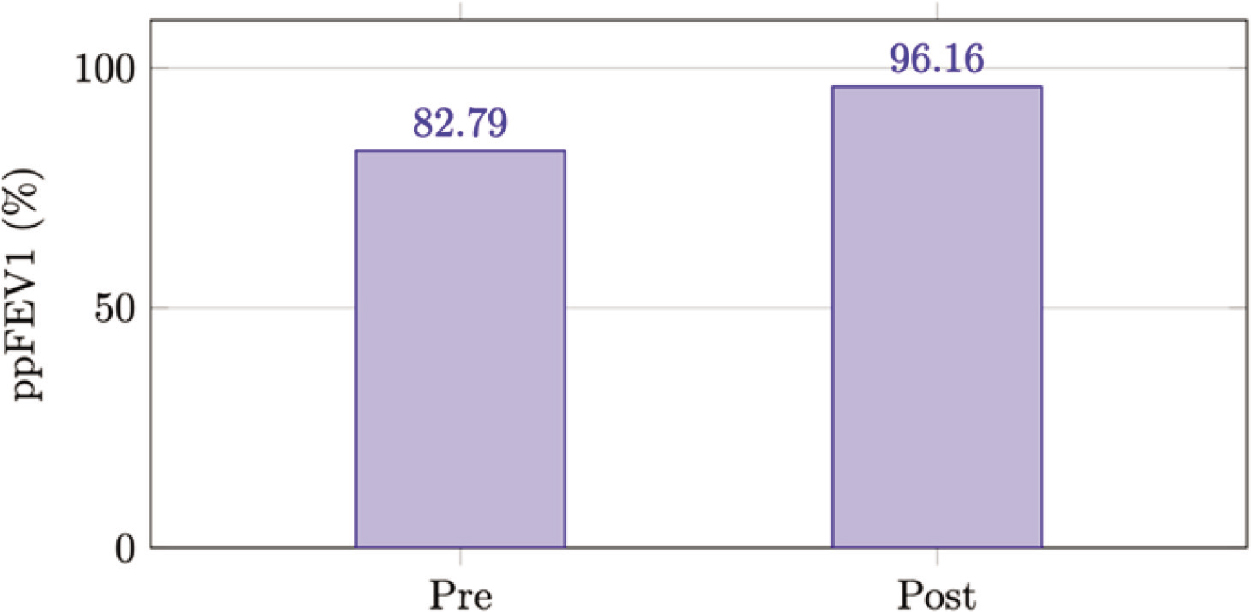
Figure 8.
Increase in mean ppFEV1 value by 13.38% after 1 year of ETI therapy. ETI, elexacaftor–tezacaftor–ivacaftor.
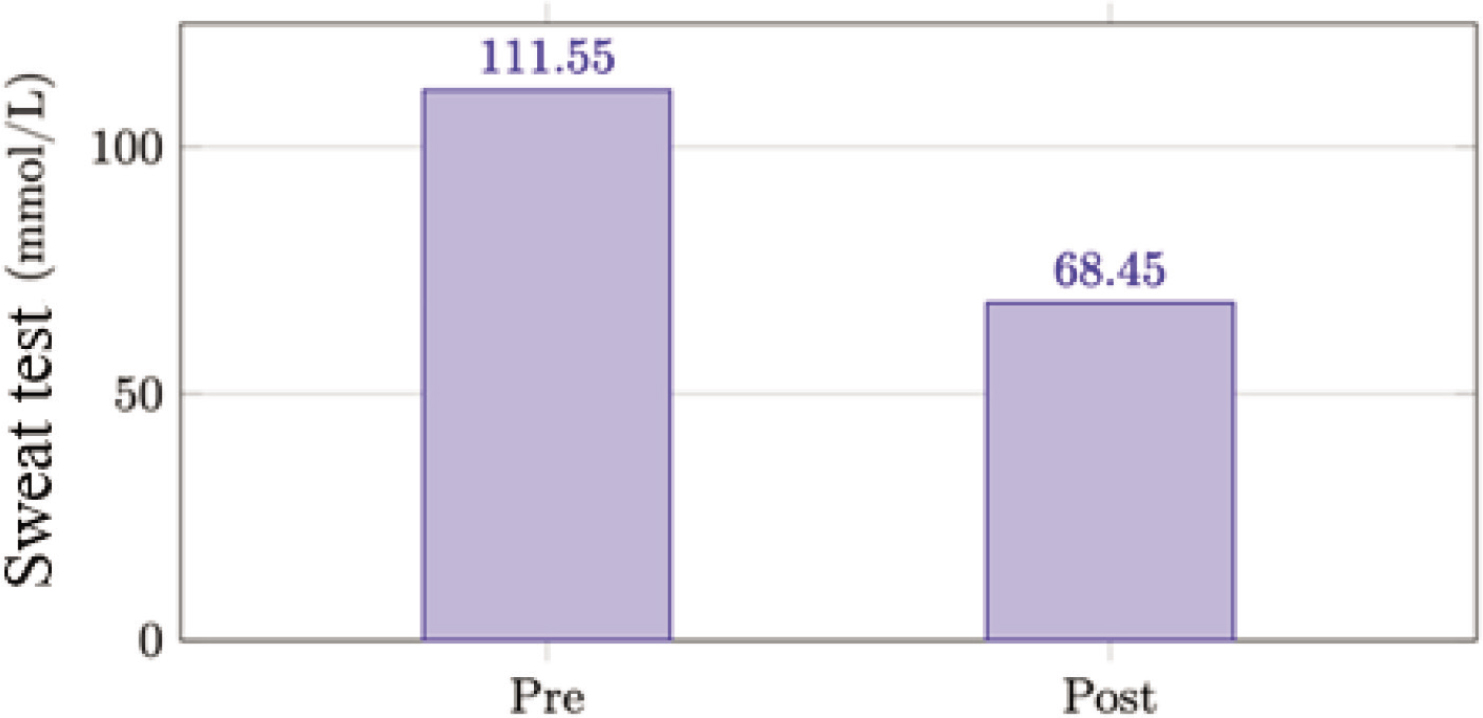
Figure 9.
Decrease in mean sweat chloride value by 43.1 mmol/L after 1 year of ETI therapy. ETI, elexacaftor–tezacaftor–ivacaftor.
Table 4.
Statistically significant changes in group mean values of ppFEV1, sweat chloride test, and Bhalla score.
| Parameter | Pre | Post | Difference | 95% CI | p |
|---|---|---|---|---|---|
| ppFEV1 (%) | 82.79 | 96.16 | 13.38 | (6.5213, 20.2351) | 0.002 |
| Sweat test (mmol/L) | 111.55 | 68.45 | –43.09 | (-49.9478, -36.234) | < 0.001 |
| Total Bhalla score | 14.55 | 18.27 | 3.73 | (2.8511, 4.6035) | < 0.001 |
No pathological abnormalities were detected in liver or renal function tests at any of the scheduled follow-up evaluations (1 month, 3 months, 6 months and 9 months), supporting a favorable biochemical safety profile of ETI therapy in the studied cohort.
Discussion
Although the present study followed a relatively small cohort of patients, it demonstrates the effectiveness of ETI therapy, both through the evaluation of bronchopulmonary structural changes and through functional clinical parameters, including ppFEV1 and sweat chloride levels.
The practical significance of the approximately 4-point increase in the Bhalla score lies in the overall improvement in the severity of structural lung disease. Specifically, the mean Bhalla score increased from 14.55, corresponding to moderate bronchiectasis, to 18.27 after 1 year of ETI therapy, resulting in reclassification into the mild bronchiectasis category. This finding supports the clinical efficacy of CFTR modulators in slowing the progression of structural lung damage and potentially reducing the rate of respiratory decline in paediatric patients with cystic fibrosis.
Our findings are consistent with those reported in the literature. ETI has been shown to improve ppFEV1, enhance quality of life in patients with cystic fibrosis, and reduce the annual rate of respiratory exacerbations by 63% compared with placebo. Furthermore, certain case studies have documented a decrease in the number of patients with cystic fibrosis on lung transplant waiting lists (17, 18).
Similar studies have also demonstrated improvement of bronchopulmonary structural abnormalities following triple therapy (ETI), assessed using scoring systems such as the Bhalla score, the Brody score or automated analytical scores such as perth–rotterdam annotated grid morphometric analysis for cystic fibrosis (PRAGMA-CF).
The results of the present study are in agreement with previously published data. In a retrospective study including 22 patients with cystic fibrosis who underwent two consecutive CT examinations before and after initiation of ETI therapy, the authors reported significant radiological improvement. Marked reductions were observed in the global Brody score as well as in sub-scores related to mucus plugging, peribronchial thickening and parenchymal abnormalities, whereas the reduction in the bronchiectasis score did not reach statistical significance. These findings support the hypothesis that ETI therapy leads to significant structural pulmonary improvements (9).
In the present study, improvement in the course of pulmonary disease was observed across all stages, from mild to severe forms. The amelioration of structural abnormalities correlated with changes in functional parameters.
It should be noted that these results were achieved while maintaining standard conventional therapies, including physiotherapy, inhaled mucolytic and osmotic agents, inhaled antibiotics and anti-inflammatory treatment with azithromycin. The Bhalla score represents a useful tool for comparing bronchopulmonary morphological data. However, it is likely that in the future this scoring system will be replaced by PRAGMA-CF or other artificial intelligence-based scoring systems.
Conclusions
The response to triple ETI therapy in patients under 18 years of age is significant, both morphologically – assessed through pulmonary CT – and functionally – evaluated by spirometry and sweat chloride testing.
CT changes correlated with clinical improvement.
The Bhalla score proved to be a useful objective method for monitoring pulmonary disease.
Notes
[5] Contributed by Author Contributions
Andreea-Valentina Stănică conceptualized and designed the study, performed data analysis, and drafted the manuscript. Dana-Maria Moşescu performed the statistical analysis. Simona Moşescu provided the clinical cohort and contributed to data interpretation and clinical supervision. Anda Mincu contributed to imaging analysis and assisted with Bhalla score assessment. Alexandru Ulmeanu contributed to study coordination and logistical support. All authors reviewed and approved the final version of the manuscript.
[6] Informed Consent Statement
Written informed consent was obtained from the patients’ legal guardians for participation in the study and for publication of clinical data and imaging material.
[7] Conflicts of interest Conflicts of Interest
The authors declare no conflict of interest.