
Introduction
Obliterative bronchiolitis is a rare and often progressive pulmonary disorder affecting the small airways. It is characterised by fibrotic and inflammatory changes of the subepithelial tissue, which gradually lead to airway narrowing and obstruction (1). The condition has diverse aetiologies, most frequently following lung transplantation (2), allogeneic hematopoietic stem cell transplantation, or exposure to inhaled toxic agents and may also occur as a pulmonary manifestation of rheumatoid arthritis (3). In a subset of cases, no identifiable cause is found, and the disease is considered idiopathic.
Clinically, patients present with progressive dyspnoea and, occasionally, a dry cough with an onset of several weeks or months. Pulmonary function tests reveal severe obstructive ventilatory impairment, while high-resolution chest computed tomography (HRCT) demonstrates a mosaic attenuation pattern and expiratory air-trapping (4).
Histopathologic examination shows concentric fibrotic and inflammatory changes involving the bronchiolar wall, with minimal or no involvement of the adjacent pulmonary parenchyma (5). Because surgical lung biopsies are rarely performed, diagnosis usually relies on integrating clinical, functional and imaging data.
Case series
We present three cases of idiopathic obliterative bronchiolitis with similar clinical features, including severe obstructive ventilatory defect and significant oxygen desaturation on the six-minute walk test (6MWT), but differing in diagnostic approach and clinical evolution. Key findings are summarised in Tables 1 and 2.
Table 1.
Main characteristics of the 3 patients
| Patient 1 | Patient 2 | Patient 3 | |
|---|---|---|---|
| Age/sex | 68 / F | 33 / M | 30 / M |
| Smoking | Former smoker 20 PY | No | No |
| Exposure | No | No | No |
| Associated disease | Hypertension, Dyslipidemia | Lichen planus | No |
| Clinical | Dyspnea Dry cough | Dyspnea intermittent productive cough. | Dyspnea |
| Spirometry/FEV 1 (l/%) | Severe obstruction/0,74 (40%) | Severe fixed obstruction/0,58 (14,1%) | Severe obstruction/1,8 (42%) |
| FEV1/FVC (%) | 45% | 32,89% | 58,13% |
| FVC (l/%) | 1,64 (74%) | 1,64 (33,5%) | 3,12 (61%) |
| TLC(l/%) | MD | 8,85 (128,3%) | 8,11 (114%) |
| RV(l/%) | MD | 7,12 (398,2%) | 4,98 (281%) |
| DLCO (%) | 65% | 32,4% | 77% |
| 6MWT | significant oxygen desaturation – final SpO2 90% | significant oxygen desaturation - final SpO2 88% after 2 minutes | significant oxygen desaturation - final SpO2 88% |
Table 2.
Summary of diagnostic investigations.
| Patient 1 | Patient 2 | Patient 3 | |
|---|---|---|---|
| HR–CT | Mosaic attenuation Air trapping | Mosaic attenuation Air trapping | Increased lucency, predominantly in the basal regions |
| BAL | Macrophages – 58,85% Lymphocytes – 29,3% Granulocytes – 11,6% Neutrophil – 11,1% Eosinophils – 0,5% Epithelial cells – 29% Tumor cells – No | No | No |
| Lung Biopsy | No | No | Yes |
Case 1
A 68-year-old woman, a former smoker with no occupational exposure, presented with a 1-year history of progressive dyspnoea and dry cough. Her medical history included hypertension and dyslipidaemia under treatment. Physical examination revealed bilateral basal crackles. She denied recent viral infection or exposure to respiratory irritants. The patient had no history of rheumatologic disease.
Pulmonary function tests showed a severe obstructive ventilatory defect, with marked oxygen desaturation during the 6MWT. Bronchoalveolar lavage (BAL) revealed increased neutrophils, with no tumoral cells. High-resolution chest computer tomography (CT) demonstrated a mosaic attenuation pattern, and inspiratory–expiratory imaging confirmed extensive air trapping (Figure 1).
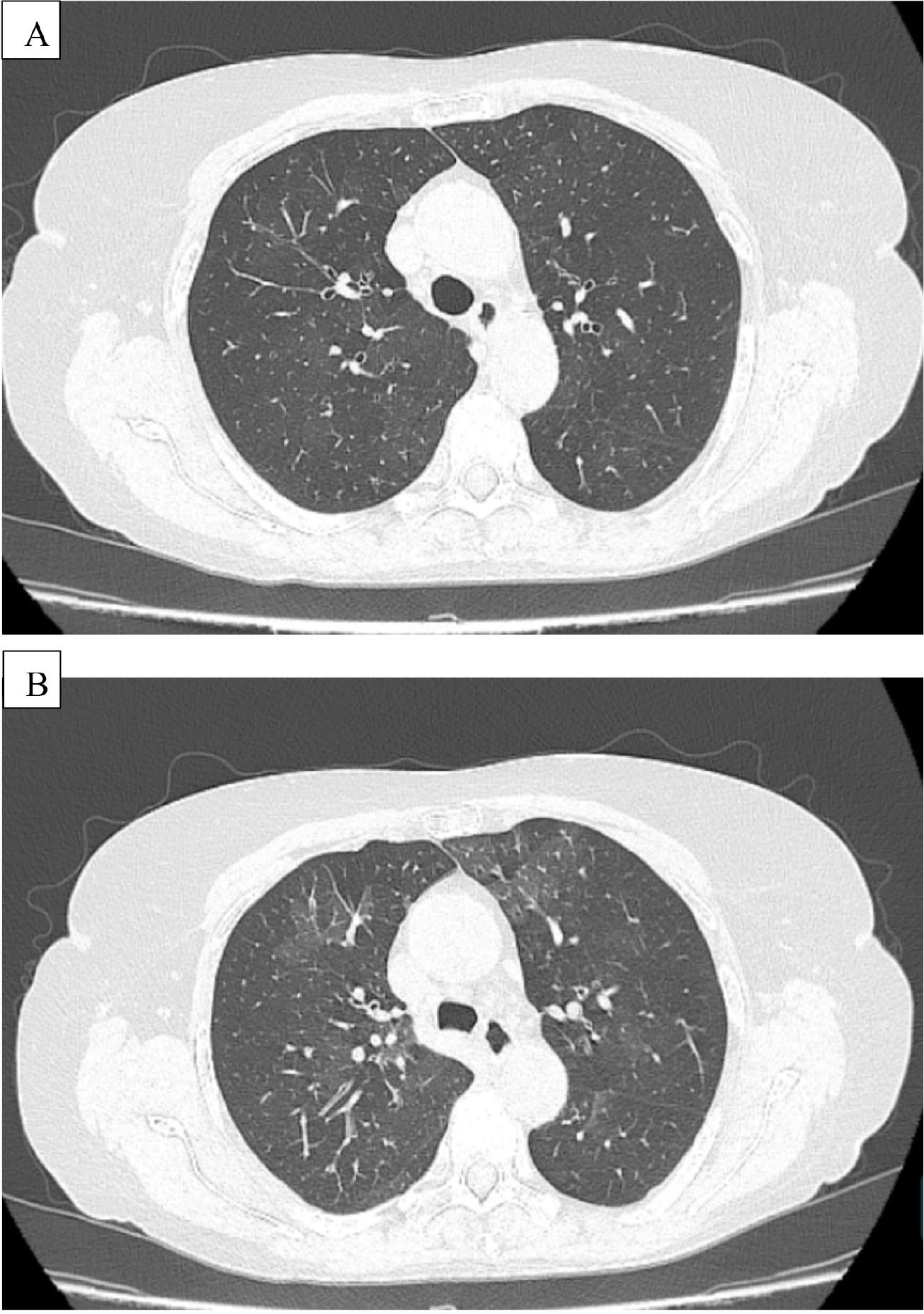
Figure 1.
HRCT - Bilateral diffused mosaic attenuation patterns representing air trapping and normal parenchyma more pronounced on expiration (B) than on inspiration (A).
A diagnosis of idiopathic obliterative bronchiolitis was established. The patient was started on systemic corticosteroids (methylprednisolone equivalent to 0.5 mg/kg/day prednisone, tapered over 3 months) combined with triple inhaled therapy (LABA, ICS, LAMA). After 1 month, she reported symptomatic improvement, with increased 6-min walk distance and no significant desaturation (Table 3). Oral and inhaled corticosteroid therapy were continued, with follow-up scheduled at 3 months.
Table 3.
Evolution of the symptoms, respiratory function and 6MWT after one month of treatment
| Patient 1- after 1 month | Patient 2 – after 2 months | Patient 3 – after one year | |
|---|---|---|---|
| Clinical | Improvement of exercitional dyspnea, Cough remission | Dyspnea intermittent productive cough. | Improvement of exercitional dyspnea |
| Spirometry/FEV1 (l) | Improved 0,85l | No improvement 0,55l | No improvement 1,51 |
| FEV1/FVC (%) | No improvement 42,9% | No improvement 29,94% | No improvement 50,38% |
| FVC (l) | Improved 1,97 | No improvement 1,64 | No improvement 2,99 |
| TLC(l) | MD | Improved 7,91 | No improvement 8 |
| RV(l) | MD | Improved 5,53l | No improvement 5 |
| DLCO (%) | Improved 71% | No improvement 30,2% | No improvement 75% |
| TM6M | Improved – no desaturation | Worse | Improved – important desaturation but with final SpO2>90% |
Case 2
A 33-year-old male, non-smoker with no occupational exposure, presented with progressive dyspnoea and fatigue over 6 months. His medical history included lichen planus, diagnosed by a biopsy of the lower lip. Physical examination was unremarkable, except for lichen planus lesions at the level of the lower lip. He denied recent viral infection or exposure to respiratory toxins.
Pulmonary function tests indicated a severe obstructive ventilatory defect, with no significant response to bronchodilator administration (ml, %). Additionally, he exhibits hyperinflation and decreased diffusing capacity. The 6MWT was stopped after 4 min and 150 m due to significant dyspnoea. High-resolution chest CT showed a mosaic attenuation pattern and air-trapping (Figure 2).
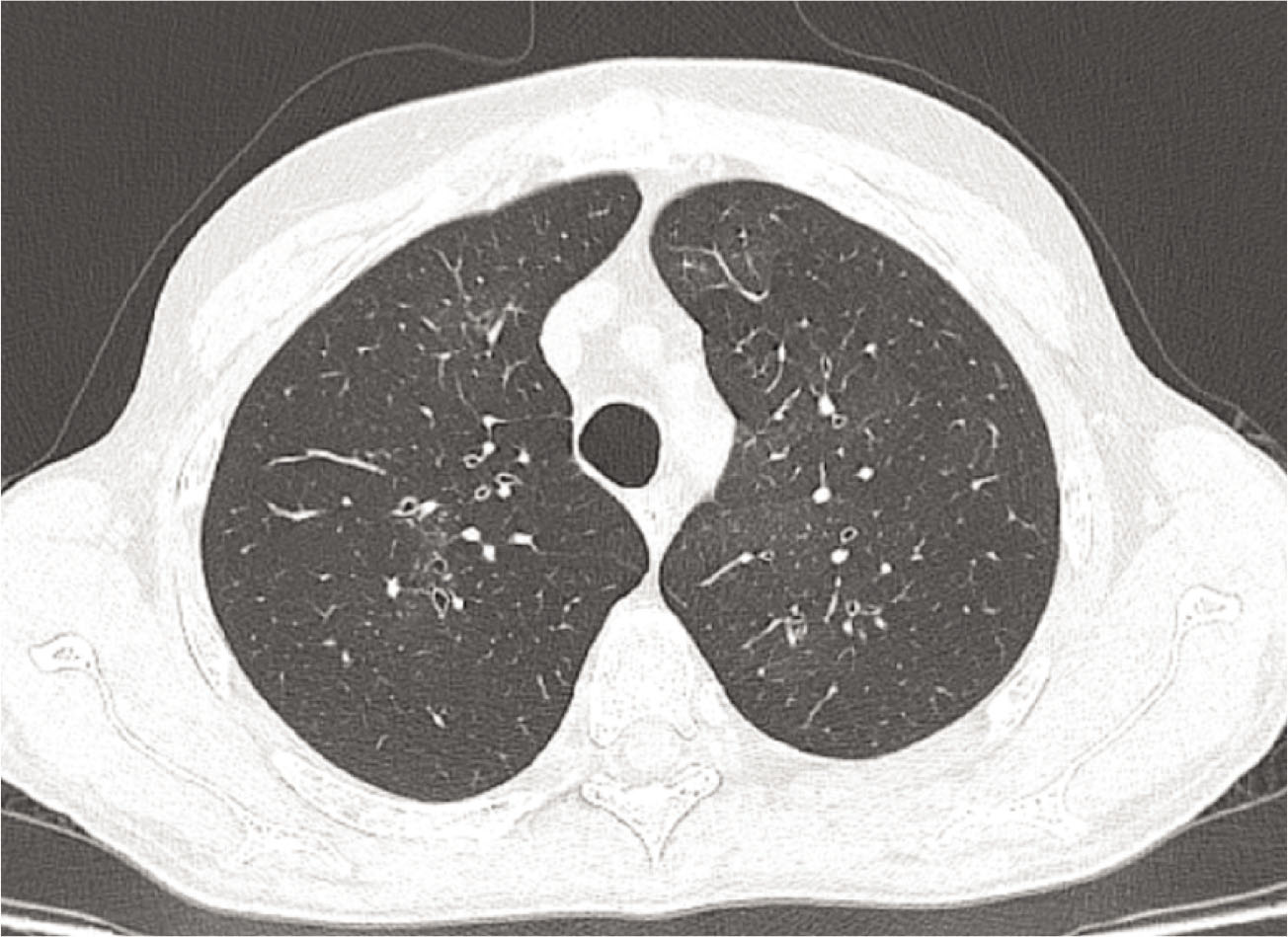
Figure 2.
HRCT - Bilateral diffused mosaic attenuation patterns representing air trapping and bronchiectasis.
Considering the imaging findings, the results of pulmonary function tests, and the fact that there is no clear information in the literature regarding a link between lichen planus and bronchiolitis, we considered this case to be bronchiolitis of unknown etiology. Treatment with systemic corticosteroids (methylprednisolone equivalent to 0.5 mg/kg/day prednisone, tapered over 3 months) plus inhaled LABA and ICS was initiated. At the 1-month follow-up, the patient reported worsening symptoms, with a 6-min walk distance reduced to 50 m, early interruption after 2 min, and marked oxygen desaturation to 88% (Table 3). Due to persistent cough, intermittent azithromycin (500 mg, 3 days/week) was added. Despite therapy, the patient’s condition progressively deteriorated, and he died before the 3-month follow-up.
Case 3
A 30-year-old male, non-smoker with no occupational exposure, presented with progressive dyspnoea over the previous 3 months. He had no significant past medical history and denied any recent respiratory infection or exposure to inhaled toxins. Physical examination was unremarkable. Pulmonary function tests revealed severe obstructive ventilatory dysfunction, hyperinflation, and the 6MWT showed significant oxygen desaturation to 88%. Chest CT demonstrated bilateral areas of increased lucency, predominantly in the basal regions (Figure 3A).
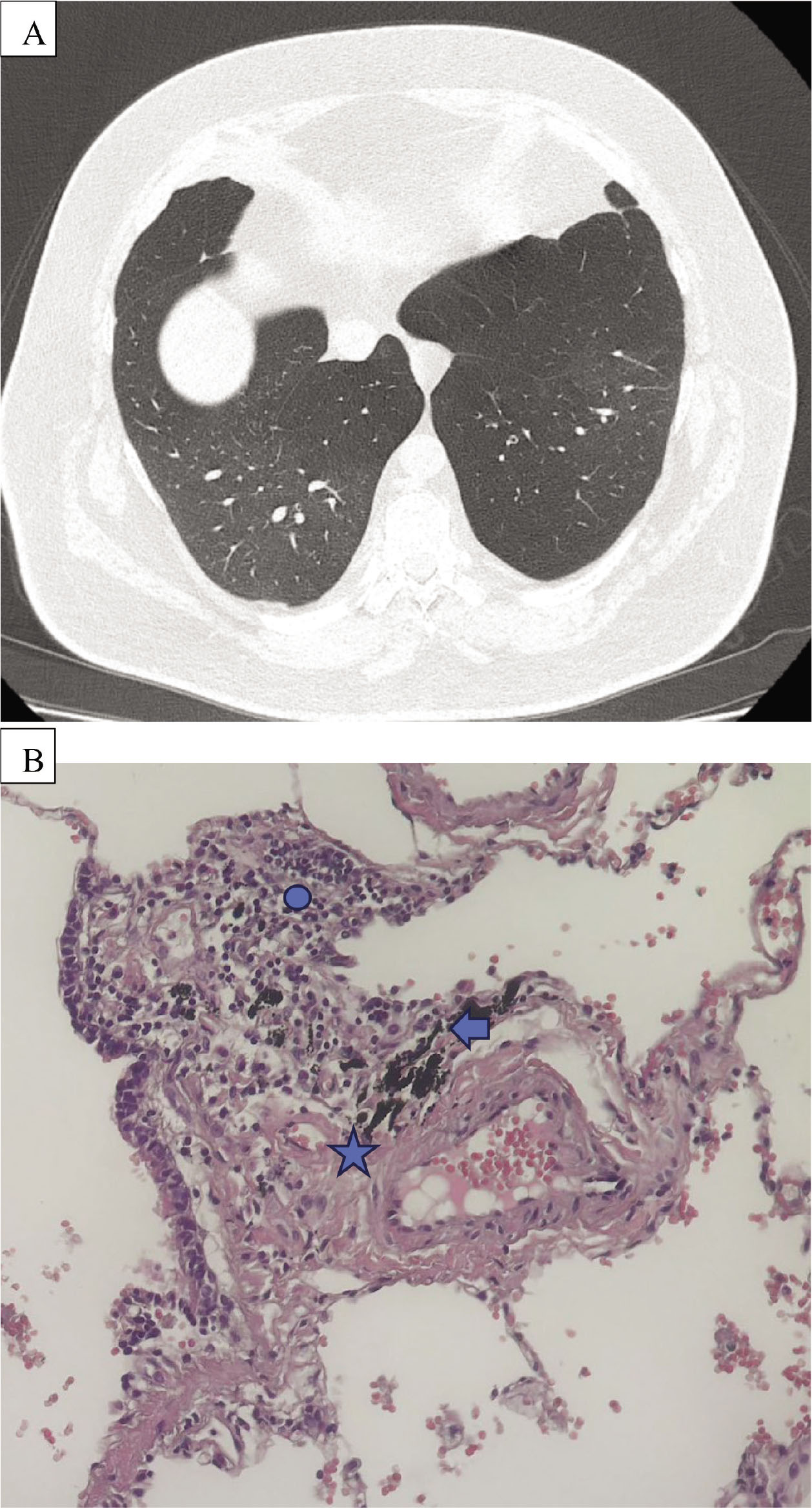
Figure 3A.
(A) High-resolution chest CT demonstrated bilateral areas of increased lucency, predominantly in the basal regions. (B) Lung-biopsy specimens of a bronchiole (haematoxylin-eosin staining) - bronchiolar wall is thickened by fibrosis ( ), lymphocytic inflammation (
 ) and anthracitic pigment deposits (
 ). CT, computer tomography.
Although the indication for biopsy was not strictly necessary, together with the patient and their family, a decision was made to perform a pulmonary biopsy to confirm the diagnosis. Thus, the histopathological examination confirmed the diagnosis of bronchiolitis. (Figure 3B). Treatment was initiated with systemic corticosteroids (methylprednisolone equivalent to 0.5 mg/kg/day prednisone for 3 months), followed by maintenance therapy with 8 mg methylprednisolone daily for 3 years, in combination with open triple inhaled therapy regiment (LABA, ICS, and LAMA). The patient showed a favourable long-term outcome, with no need for systemic corticosteroids for approximately 5 years, although mild exertional dyspnoea and dependence on inhaled therapy persisted (Table 3).
Discussion
The diagnosis and management of idiopathic bronchiolitis obliterans are particularly challenging, as the disease often presents with subtle and non-specific symptoms. The patients present with dyspnea and cough that usually develop in weeks or months. In this study, all the patients have severe dyspnoea, and two of them also reported cough. Pulmonary function tests revealed an obstructive ventilatory defect with low DLCO in all three patients, and important hyperinflation, where the body plethysmography was available. Spirometry with bronchodilator testing was available only in the case of the second patient; for the other two patients, at the time of presentation to the clinic, bronchodilator treatment had already been administered on the recommendation of the local physician. Additionally, all patients experienced significant desaturation during the 6-minute walk test.
Diagnosis relies on the integration of clinical presentation with paraclinical investigations, including spirometry, body plethysmography, DLCO measurement, the 6MWT and imaging studies. High-resolution computed tomography (HRCT) of the chest typically demonstrates a mosaic attenuation pattern due to areas of decreased lung density associated with small-calibre vessels, bronchiectasis, bronchial wall thickening or ground-glass opacities.
A lung biopsy is typically not necessary if the imaging findings, pulmonary function tests, and clinical symptoms are suggestive of bronchiolitis obliterans. The bronchoalveolar lavage is often used to exclude other causes of obliterative bronchiolitis, like infections, but also to exclude other causes of airflow obstruction (6). Typical BAL findings include increased neutrophil counts and elevated levels of neutrophil-associated mediators, such as interleukin-8. These mediators are significantly higher in lung transplant recipients with obliterative bronchiolitis syndrome (7).
The heterogeneous evolution observed in our patients underscores the unpredictable nature of the disease and the limitations of current therapies. Two patients experienced a favorable clinical course, whereas one showed progressive deterioration despite therapy.
It should be noted that the second patient, whose clinical course was unfavourable despite treatment, also had lichen planus. Associations between lichen planus, such as lesions and obliterative bronchiolitis, have been described in the literature; however, only a single case of a direct association between lichen planus and obliterative bronchiolitis has been reported (8). Similar to our patient, that case also had a poor outcome, with death occurring within the first 3 months after initiation of topical, systemic and inhaled corticosteroid therapy. The exact mechanisms linking the two conditions remain unclear; therefore, the aetiology of obliterative bronchiolitis in our patient was considered uncertain.
Corticosteroids remain the mainstay of treatment, yet responses are inconsistent. Also, the inhaled corticosteroids may help in the stabilisation of the obstructive syndrome (8). Although azithromycin therapy has been investigated in clinical trials involving patients with post–lung transplant obliterative bronchiolitis, demonstrating significant improvement in FEV1 (10, 11), we considered its use appropriate in our second patient as well. Given the symptomatic and functional decline despite corticosteroid therapy, azithromycin was introduced at an immunomodulatory dose of 500 mg 3 times/week. In our opinion, intermittent azithromycin administration may represent a therapeutic option, particularly in patients showing marked neutrophilia on bronchoalveolar lavage.
Conclusions
This rare and frequently underdiagnosed condition requires a multidisciplinary approach and close monitoring. Early identification and tailored therapeutic strategies may improve prognosis.
This case series highlights the heterogeneity of idiopathic obliterative bronchiolitis and underscores the need for individualized diagnostic and therapeutic approaches.
However, further studies are needed to establish evidence-based treatment protocols and optimise long-term outcomes.
Notes
[4] Contributed by Authors contributions
First author: Stefania-Florina Oprea.
Corresponding author: Ştefania-Florina Oprea.
Coordinating author: Claudia-Lucia Toma.
Others: lonela Belaconi, Ştefan Dumitrache-Rujinski, Diana Leonte, Alina-Valentina Dobrotă.
[5] Disclaimer
This study underwent final editing with the assistance of ChatGPT as a tool to improve the writing style and structure. However, the final version and all content of this paper are entirely human-made and represent the original authors’ ideas and comments.
[6] Institutional review board statement
The study was conducted in accordance with the Declaration of Helsinki’s guidelines.
[7] Informed consent statement
No informed consent was necessary
[8] Data availability statement
Data used to support the findings of this study are available from the corresponding author upon request.
[9] Conflicts of interest Conflicts of interest
The authors declare no conflict of interest.