
Introduction
Non-cystic fibrosis (Non-CF) bronchiectasis (also called bronchiectasis) is a chronic respiratory disease characterised by irreversible dilation of the airways, chronic inflammation, and impaired mucus clearance. Clinical features of bronchiectasis include a daily productive cough, dyspnoea, fatigue, and an increased susceptibility to respiratory tract infections (1).
The development of bronchiectasis is a ‘vicious cycle’ of airway infection, inflammation, impaired mucociliary clearance, and structural damage (2). Airway infection by potentially pathogenic microorganisms (PPM) is the primary cause of bronchiectasis progression. Pseudomonas aeruginosa is the most common PPM in clinically stable patients with bronchiectasis, followed by Haemophilus parainfluenzae and Haemophilus influenzae (3).
Pseudomonas aeruginosa was independently associated with an increased disease burden, including more frequent exacerbations, reduced health-related quality of life (QoL), and higher mortality (4).
Assessment of disease severity is essential for monitoring disease activity and predicting prognosis. The FACED score and the Bronchiectasis Severity Index (BSI) were developed to predict the frequency of exacerbation, quality of life, and mortality. The FACED score includes five variables (F: FEV1%, A: age, C: colonisation, E: radiological extent of disease, and D: dyspnoea) (5). BSI is measured by analysing nine variables: age, BMI, forced expiratory volume in 1 s [FEV1], hospitalisation within the past 2 years, number of exacerbations within the past year, severity of dyspnoea, chronic colonisation with Pseudomonas aeruginosa, colonisation with other microorganisms, and radiological spread of disease (6).
It is not easy to calculate this indicator every time, and moreover, some patients are not able to cough up the sputum required to calculate the BSI. To overcome these limitations, various attempts have been made to measure different blood biomarkers associated with the heterogeneous systemic inflammatory response in bronchiectasis patients, such as interleukin (IL)-17 and plasma fibrinogen, which are associated with disease severity and prognosis (7).
Fibrinogen is an acute-phase protein secreted in response to systemic inflammation and a major component of the coagulation cascade (8). Many clinical studies have analysed blood fibrinogen in patients with chronic obstructive pulmonary disease (COPD), a chronic inflammatory airway disease similar to bronchiectasis (9).
This study aimed to evaluate the serum level of fibrinogen as a biomarker in stable non-cystic fibrosis bronchiectasis and to assess its association with the severity of bronchiectasis and the frequency of exacerbations.
Patients and methods
Study design and population
This prospective cross-sectional study included 65 patients diagnosed with stable non-cystic bronchiectasis who visited the chest outpatient department of Sohag University Hospital from December 2023 to November 2024. The diagnosis of bronchiectasis was made by high-resolution computed tomography (HRCT). Subjects with an appropriate clinical history were included. The morphologic criteria of high-resolution computed tomography included one or more of the following: (a) Broncho arterial ratio >1 (a larger size of the bronchial internal diameter than the accompanying pulmonary artery) and (b) lack of tapering of the bronchi in the periphery of the lung (10).
Inclusion criteria
The study included patients with stable non-cystic fibrosis bronchiectasis, which was confirmed by the absence of exacerbation symptoms for at least 4 weeks, the absence of a need for additional antibiotic therapy, or the use of corticosteroids (11).
Exclusion criteria
Patients with lung diseases other than bronchiectasis, active pulmonary tuberculosis or concomitant active malignant disease, pregnancy, and those who did not undergo pulmonary function tests were excluded.
Data collection
All patients included in the study were subjected to the following: demographic characteristics such as age, gender, smoking status, and comorbid diseases; respiratory symptoms; clinical examination; radiological evaluation; and pulmonary function tests.
The FACED score consists of five variables: FEV1%, age, Pseudomonas aeruginosa colonisation, radiographic extent of disease, and the Medical Research Council (MRC) dyspnoea scale. The overall score is calculated by adding the scores for each variable and ranges from 0 to 7 points. Based on the total score, bronchiectasis is categorised into three groups: mild (0–2), moderate [3, 4], and severe [5–7] bronchiectasis (5).
The BSI score is composed of nine variables: age, body mass index, FEV1%, hospitalisations in the last 2 years, number of exacerbations in the last year, dyspnoea according to the MRC scale, colonisation by Pseudomonas aeruginosa, colonisation by other microorganisms, radiographic examination extent of the disease and/or presence of cystic bronchiectasis. The overall score ranges from 0 to 26 points. In BSI, scores of 0–4 points indicate mild, 5–8 indicate moderate, and 9 or above indicate severe bronchiectasis (6).
All patients were followed up at regular intervals of 3–4 months for 1 year, and the frequency of exacerbations during this period was recorded.
An exacerbation of bronchiectasis was defined as a worsening of the condition with worsening of local symptoms such as cough, increased sputum volume, or change in sputum viscosity, with or without worsening of other symptoms (12).
Chronic colonisation was defined as the isolation of bacteria in sputum on ≥2 occasions within 1 year, with an interval of ≥3 months (6).
Laboratory values, including complete blood count with differential cell count, platelets, serum albumin, erythrocyte sedimentation rate (ESR), arterial blood gas, and serum fibrinogen level, were measured at baseline for all included cases.
Measurement of serum fibrinogen
A - Samples collection and preparation
A total of 1.8 mL of peripheral venous blood was sampled and collected in a tube containing trisodium citrate solution, which was used for the estimation of fibrinogen level.
Samples were centrifuged at 4000 rpm for 30 min.
Fibrinogen was measured in the separated plasma.
Estimation of fibrinogen was done using Sysmex CS-1600 (Sysmex Europe GmbH, Bornbarch 1, 22848 Norderstedt, Germany) (Figure 1).
The normal level of serum fibrinogen is 180– 350 mg/dL (13).
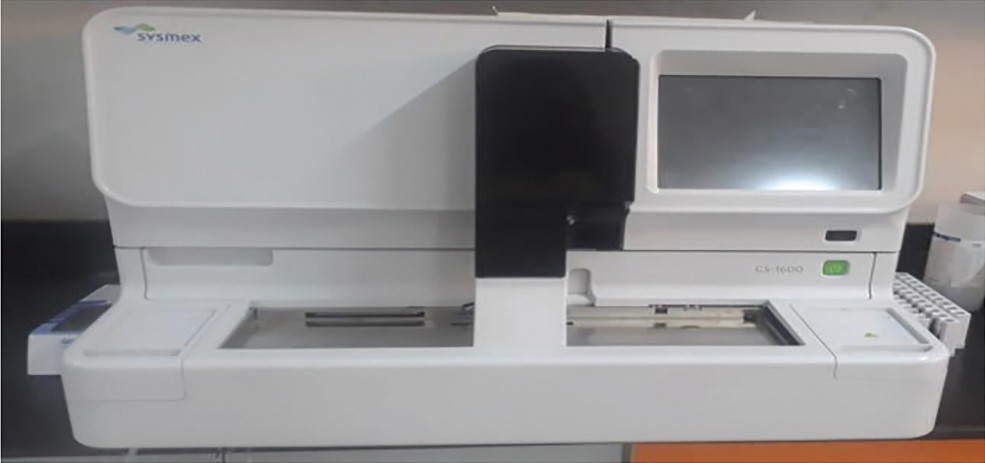
Figure 1.
CS-1600, automated hemostasis analyzer (Sysmex, Wakinohama, Japan).
B - Principle of estimation of fibrinogen (Dade®– Behring RxL Dimension Analyzer, Newark, DE. Fibrinogen Determination Reagents)
Fibrinogen is a plasma protein that is converted from a soluble protein to an insoluble polymer by the action of thrombin resulting in the formation of a fibrin clot. The thrombin clotting time of dilute plasma is inversely proportional to the fibrinogen concentration of the plasma (14, 15). Using this principle, Clauss (14) developed a simple quantitative assay for fibrinogen by measuring the clotting time of dilute plasma when excess thrombin is added. The clotting time obtained is then compared with that of a standardised fibrinogen preparation.
Statistical analysis
Data were analysed and presented using the IBM SPSS Statistics for Windows, Version 25.0 (Released 2017. IBM Corp., Armonk, New York) program for data entry and analysis. Data were presented as numbers and percentages or mean ± standard deviation. The correlation coefficients and significance of BSI and FACED scores with other laboratory findings were analysed using the Pearson correlation test. Multiple linear regression analysis was performed to identify laboratory findings that affect BSI and FACED scores. Only statistically significant variables in the univariate analysis were included in the multivariate analysis. Independent samples t-test and one-way analysis of variance (ANOVA) test were performed to compare fibrinogen level among cases and controls and among different BSI & FACED severity groups, respectively. Binary logistic regression analysis was performed to identify predictors of exacerbation among the studied patients. A receiver operating characteristic (ROC) analysis was performed to evaluate the potential of serum fibrinogen levels to predict the occurrence of high-frequency exacerbation. The optimal cut-off point was determined using the Youden index. Statistical significance was accepted at P <0.05.
Results
This study recruited 65 patients diagnosed with stable non-cystic fibrosis bronchiectasis. The mean age of the patients was 45.83 ± 16.23 years, and 28 patients (43.1%) were male. The mean body mass index was 22.11 ± 4.39 kg/m2, and 41 (63.1%) patients had comorbid diseases, with cardiovascular disease being the most common. Thirty-seven patients (56.9%) were non-smokers (Table 1).
Table 1.
Baseline demographic and clinical characteristics of the studied patients.
| Variable | Summary statistics (n = 65) n (%) |
|---|---|
| Age: Mean ± SD | 45.83 ± 16.23 |
| Gender: | |
| Female | 37 (56.9) |
| Male | 28 (43.1) |
| BMI: Mean kg/m2 ± SD | 22.11 ± 4.39 |
| Smoking: | |
| Non-smokers | 37 (56.9) |
| Current | 13 (20) |
| Ex-smoker | 15 (23.1) |
| Comorbidities: | |
| Yes | 41 (63.1) |
| No | 24 (36.9) |
| Comorbidities: | |
| Hypertension | 15 (23.1) |
| Diabetes Mellitus | 10 (15.4) |
| CVD | 32 (49.2) |
Laboratory findings and other clinical variables of the study patients used to calculate BSI and FACED scores are presented in Table 2. The mean BSI and FACED scores were 9.29 ± 4.46 and 3.6 ± 1.75, respectively. The mean predicted percent value of FEV1 was 55.69 ± 15.63%. The mean level of serum fibrinogen was 432.17 ± 63.3. Of the studied patients, 45 (69.2%) had respiratory failure and 39 (60%) showed a cystic radiological appearance of bronchiectasis (Table 2).
Table 2.
Clinical, laboratory, and radiological parameters of the studied patients.
| Variable | Summary statistics (n = 65) n (%) |
|---|---|
| CBC: mean ± SD | |
| WBCs 109/L | 11.66 ± 5.04 |
| Neutrophils | 8.88 ± 4.49 |
| Lymphocyte | 1.54 ± 0.69 |
| Eosinophils | 0.04 ± 0.07 |
| Platelet | 317.55 ± 103.87 |
| Haemoglobin | 12.34 ± 2.07 |
| ESR | 41.31 ± 20.62 |
| Albumin g/dL | 3.22 ± 0.49 |
| Fibrinogen mg/dL | 432.17 ± 63.3 |
| FEV1% | 55.69 ± 15.63 |
| Respiratory failure | |
| Yes | 20 (30.8) |
| No | 45 (69.2) |
| Number of affected lobes | |
| 0–2 | 35 (53.8) |
| ≥3 | 30 (46.2) |
| Radiologic appearance | |
| Cylindrical | 21 (32.3) |
| Cystic | 39 (60) |
| Varicose | 5 (7.7) |
| Pseudomonas colonisation | |
| No | 33 (50.8) |
| Yes | 32 (49.2) |
| Previous hospital admission | |
| No | 22 (33.8) |
| Yes | 43 (66.2) |
| Number of follow-up exacerbations | |
| 0–2 | 28 (43.1) |
| ≥3 | 37 (56.9) |
| MRC dyspnoea scale | |
| 0–2 | 18 (27.7) |
| ≥3 | 47 (72.3) |
| Number of previous exacerbations | |
| 0–2 | 26 (40) |
| ≥3 | 39 (60) |
| BSI score: mean ± SD | 9.29 ± 4.46 |
| Severity of bronchiectasis according to BSI score Mild | 14 (21.5) |
| Moderate | 13 (20) |
| Severe | 38 (58.5) |
| FACED score: mean ± SD | 3.6 ± 1.75 |
| Severity of bronchiectasis according to FACED score Mild | 21 (32.3) |
| Moderate | 11 (16.9) |
| Severe | 33 (50.8) |
According to the BSI score, patients with bronchiectasis were classified as severe (58.5%), moderate (20%), and mild patients (21.5%) (Table 2).
According to the FACED score, patients with bronchiectasis were classified as follows: 50.8% were severe, 17% were moderate, and 32.3% were mild (Table 2).
As regard the correlation between BSI score & FACED score and laboratory findings, we found that there was significant positive correlation between BSI & FACED scores and white blood cell count, ESR, and serum fibrinogen level (Table 3). Patients with bronchiectasis had a high plasma fibrinogen level, and the serum fibrinogen level was significantly increased with increasing severity of BSI & FACED scores (P-value = <0.001 for both) (Figures 2,3,4 and 5).
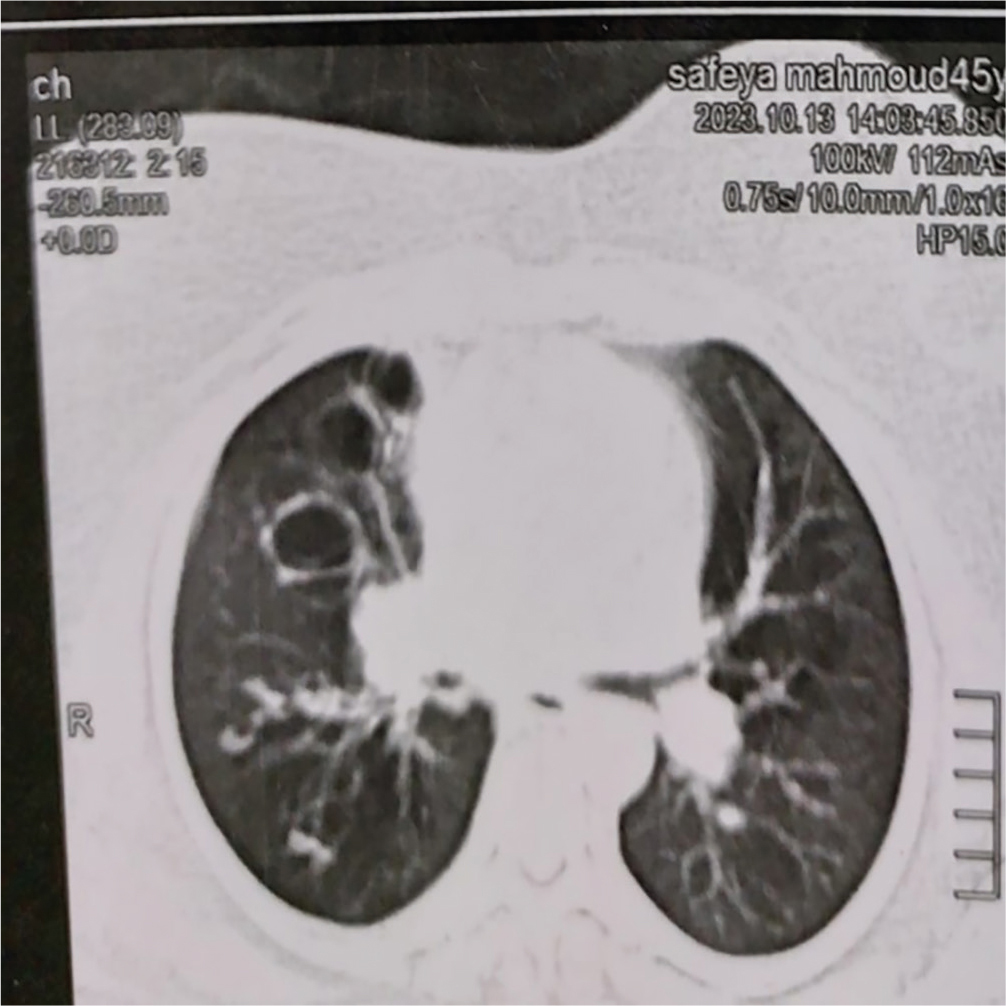
Figure 2.
Cystic bronchiectasis.
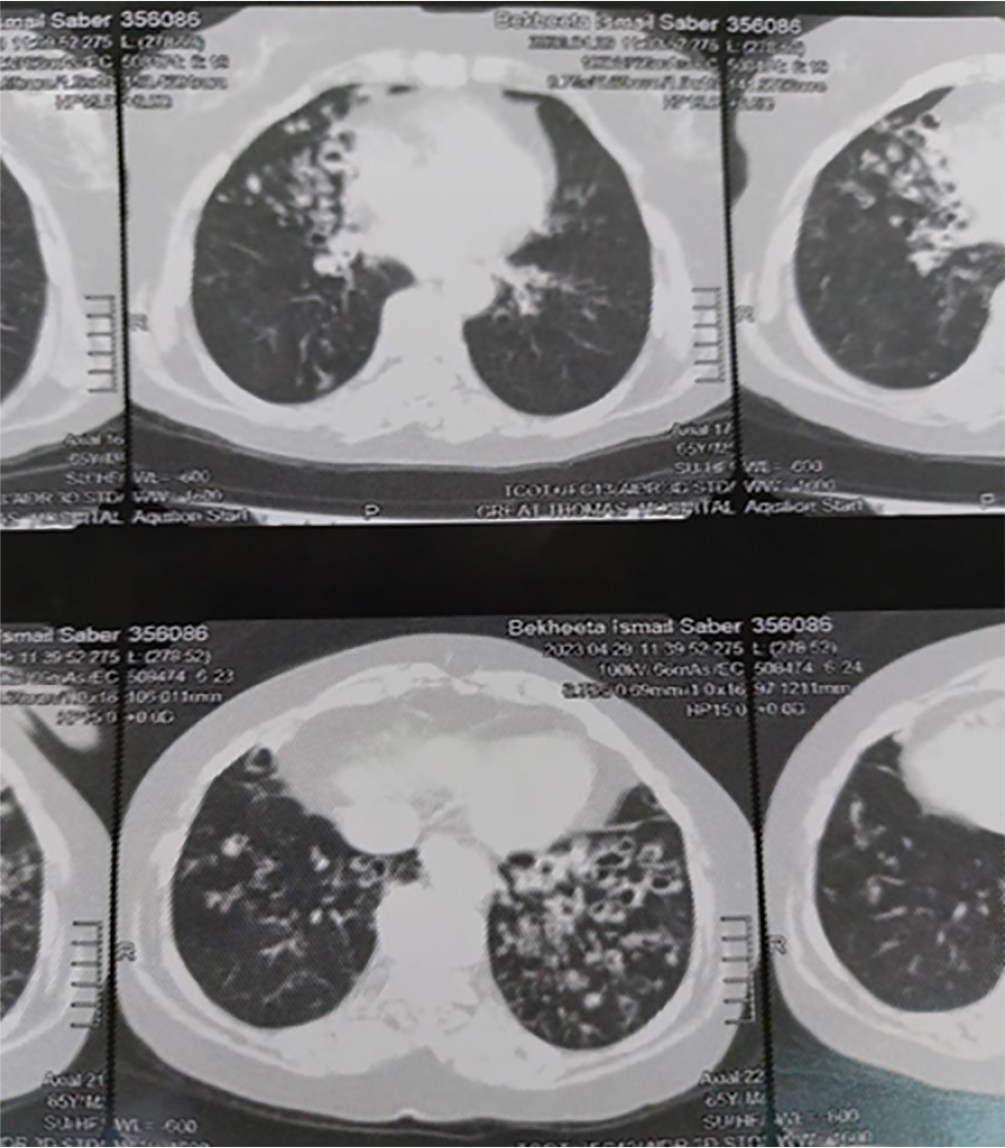
Figure 3.
Cylindrical bronchiectasis.
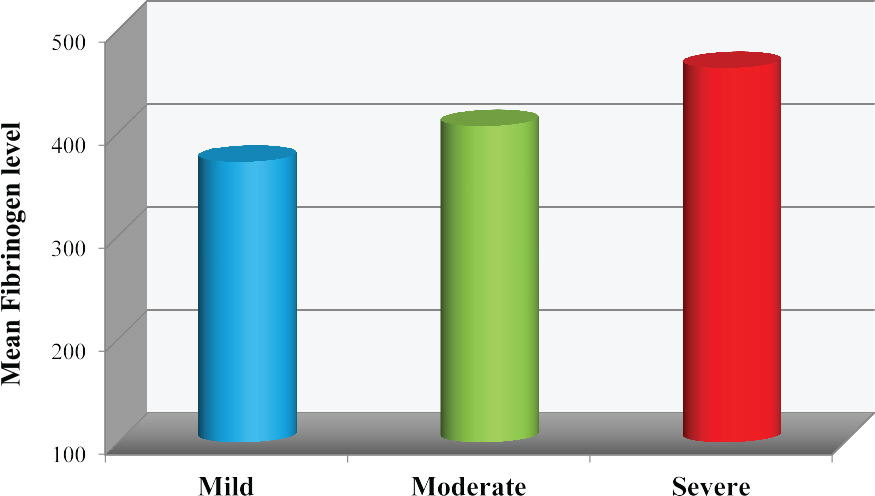
Figure 4.
Relation between serum fibrinogen level and BSI score severity. BSI, bronchiectasis severity index.
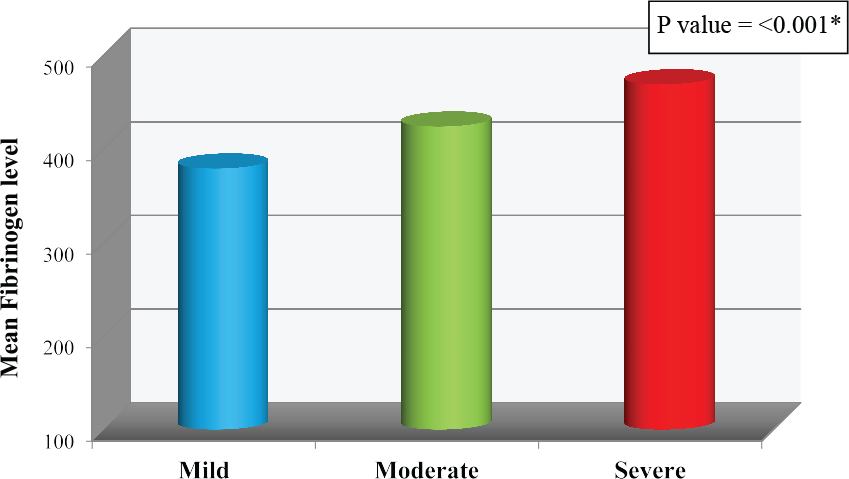
Figure 5.
Relation between serum fibrinogen level and FACED score severity.
Table 3.
Correlation between BSI, FACED scores, and laboratory findings
| Variable | BSI score | FACED score | ||
|---|---|---|---|---|
| Correlation coefficient | P-value | Correlation coefficient | P-value | |
| CBC: WBCs 109/L | r = 0.29 | 0.02* | r = 0.26 | 0.04* |
| Neutrophils | r = 0.26 | 0.04* | r = 0.24 | 0.051 |
| Lymphocyte | r = 0.23 | 0.06 | r = 0.09 | 0.48 |
| Eosinophils | r = 0.24 | 0.06 | r = 0.1 | 0.41 |
| Platelet | r = 0.16 | 0.21 | r = 0.24 | 0.06 |
| Haemoglobin | r = 0.2 | 0.11 | r = 0.11 | 0.37 |
| ESR | r = 0.34 | 0.01* | r = 0.32 | 0.01* |
| Albumin g/dL | r = –0.16 | 0.2 | r = –0.15 | 0.24 |
| Fibrinogen mg/dL | r = 0.64 | <0.001* | r = 0.61 | <0.001* |
The univariate linear regression analysis of factors associated with BSI and FACED scores revealed that the high serum fibrinogen level, current and ex-smokers, WBC count, and ESR were significant factors associated with increasing severity of both BSI and FACED scores (Table 4).
Table 4.
Univariate and multivariate linear regression analyses of factors associated with BSI and FACED scores
| Variable | BSI score | FACED score | ||||||
|---|---|---|---|---|---|---|---|---|
| Univariate analysis | Multivariable analysis | Univariate analysis | Multivariable analysis | |||||
| Unadjusted B (95% CI) | P-value | Adjusted B (95% CI) | P-value | Unadjusted B (95% CI) | P-value | Adjusted B (95% CI) | P-value | |
| Age (years) | 0.06 (–0.01:0.13) | 0.07 | 0.02 (–0.01:0.05) | 0.17 | ||||
| Smoking | ||||||||
| Non-smokers | 3.24 (0.5:5.97) | 0.02* | –0.35 (–2.78:2.08) | 0.77 | 1.75 (0.72:2.77) | 0.001* | 0.6 (–0.41:1.61) | 0.42 |
| Current | 3.15 (0.56:5.74) | 0.02* | 2.31 (0.33:4.29) | 0.02* | 1.32 (0.35:2.3) | 0.01* | 1.1 (0.29:1.92) | 0.01* |
| Ex-smoker | ||||||||
| Comorbidities | ||||||||
| Yes | –0.59 (–2.9:1.71) | 0.61 | –0.2 (–1.11:0.72) | 0.67 | ||||
| No | ||||||||
| CBC: WBCs 109/L | 0.26 (0.04:0.47) | 0.02* | 0.64 (0.01:1.27) | 0.048* | 0.09 (0.003:0.17) | 0.04* | 0.03 (–0.03:0.11) | 0.28 |
| Neutrophils | 0.25 (0.01:0.5) | 0.04* | –0.63 (–1.34:0.08) | 0.08 | 0.1 (0:0.19) | 0.051 | ||
| Lymphocyte | 1.51 (–0.07:3.09) | 0.06 | 0.23 (–0.42:0.87) | 0.48 | ||||
| Eosinophils | 16.27 (–0.44:32.98) | 0.06 | 2.84 (–3.97:9.64) | 0.41 | ||||
| Platelet | 0.01 (0:0.02) | 0.21 | 0 (0:0.01) | 0.06 | ||||
| Haemoglobin | 0.44 (–0.1:0.97) | 0.11 | 0.1 (–0.12:0.31) | 0.37 | ||||
| ESR | 0.07 (0.02:0.12) | 0.01* | 0.03 (–0.01:0.08) | 0.13 | 0.03 (0.01:0.05) | 0.01* | 0.01 (–0.01:0.03) | 0.39 |
| Albumin g/dL | -1.47 (–3.76:0.81) | 0.2 | –0.54 (–1.45:0.37) | 0.24 | ||||
| Fibrinogen mg/dL | 0.04 (0.03:0.06) | <0.001* | 0.04 (0.03:0.06) | <0.001* | 0.02 (0.01:0.02) | <0.001* | 0.01 (0:01.02) | <0.001* |
The multivariate linear regression analysis revealed that the high serum fibrinogen level, ex-smokers, and WBC count were the independent variables associated with BSI score (P < 0.001, P = 0.02, and P = 0.048, respectively), while the high serum fibrinogen level and ex-smokers were independently associated with FACED score (P < 0.001 and P = 0.01, respectively) (Table 4).
All studied participants were followed up regularly for 1 year, and we found that 37 (56.9%) cases experienced ≥3 future exacerbations. The univariate linear regression analysis revealed that current smokers, high level of serum fibrinogen, decreased FEV1%, cystic bronchiectasis; Pseudomonas colonisation, previous exacerbation & hospital admission and ≥3 MRC dyspnoea scale were significant factors that associated with the occurrence of future exacerbation among the studied patients (Table 5).
Table 5.
Univariate and multivariate logistic regression analyses of factors associated with follow-up exacerbation among the studied patients
| Variable | Univariate analysis | Multivariable analysis | ||
|---|---|---|---|---|
| OR (95% CI) | P-value | OR (95% CI) | P-value | |
| Age (years) | 1 (0.97:1.03) | 0.89 | ||
| BMI kg/m2 | 0.97 (0.86:1.08) | 0.57 | ||
| Smoking | ||||
| Non-smokers | 1 | 0.03* | 1 | 0.16 |
| Current | 6.47 (1.26:33.34) | 0.36 | 10.17 (0.4:258.41) | 0.84 |
| Ex-smoker | 1.77 (0.52:5.97) | 1.25 (0.14:11.09) | ||
| Comorbidities | ||||
| Yes | 0.91 (0.33:2.53) 1 | 0.86 | ||
| No | 1 | |||
| Fibrinogen mg/dL | 1.04 (1.02:1.06) | < 0.001* | 1.03 (1.001:1.06) | 0.046* |
| FEV1% | 0.94 (0.9:0.97) | 0.001* | 1.01 (0.94:1.1) | 0.75 |
| Respiratory failure | ||||
| Yes | 1 | 0.2 | ||
| No | 2.01 (0.69:5.85) | |||
| Number of affected lobes | ||||
| 0–2 | 1 | 0.15 | ||
| ≥3 | 2.12 (0.77:5.8) | |||
| Radiologic appearance | ||||
| Cylindrical | 1 | 0.02* | 1 | 0.43 |
| Cystic | 4 (1.3:12.33) | 0.09 | 0.38 (0.03:4.31) | 0.98 |
| Varicose | 8 (0.75:85.73) | 1.06 (0.02:57.05) | ||
| Pseudomonas colonisation | ||||
| No | 1 | 0.001* | 1 | 0.91 |
| Yes | 6.25 (2.09:18.74) | 1.13 (0.13:9.97) | ||
| Previous hospital admission | ||||
| No | 1 | < 0.001* | 1 | 0.11 |
| Yes | 14.85 (4.07:54.16) | 6.14 (0.66:56.8) | ||
| MRC dyspnoea scale | ||||
| 0–2 | 1 | 0.001* | 1 | 0.32 |
| ≥3 | 8.25 (2.31:29.52) | 3.85 (0.27:55.13) | ||
| Previous exacerbations: | ||||
| 0–2 | 1 | < 0.001* | 1 | 0.04* |
| ≥3 | 19.2 (5.38:68.56) | 6.75 (1.11:41.26) | ||
The multivariate linear regression analysis revealed that the high level of serum fibrinogen and frequency of previous exacerbations were significant factors associated with the occurrence of future exacerbations among the studied patients (P = 0.046 and P = 0.04, respectively) (Table 5).
Table 6 and Figure 6 show a ROC analysis of the serum fibrinogen level, which was evaluated to predict the occurrence of high-frequency exacerbations. The optimal cut-off point was 416.5 mg/dL (P < 0.001).
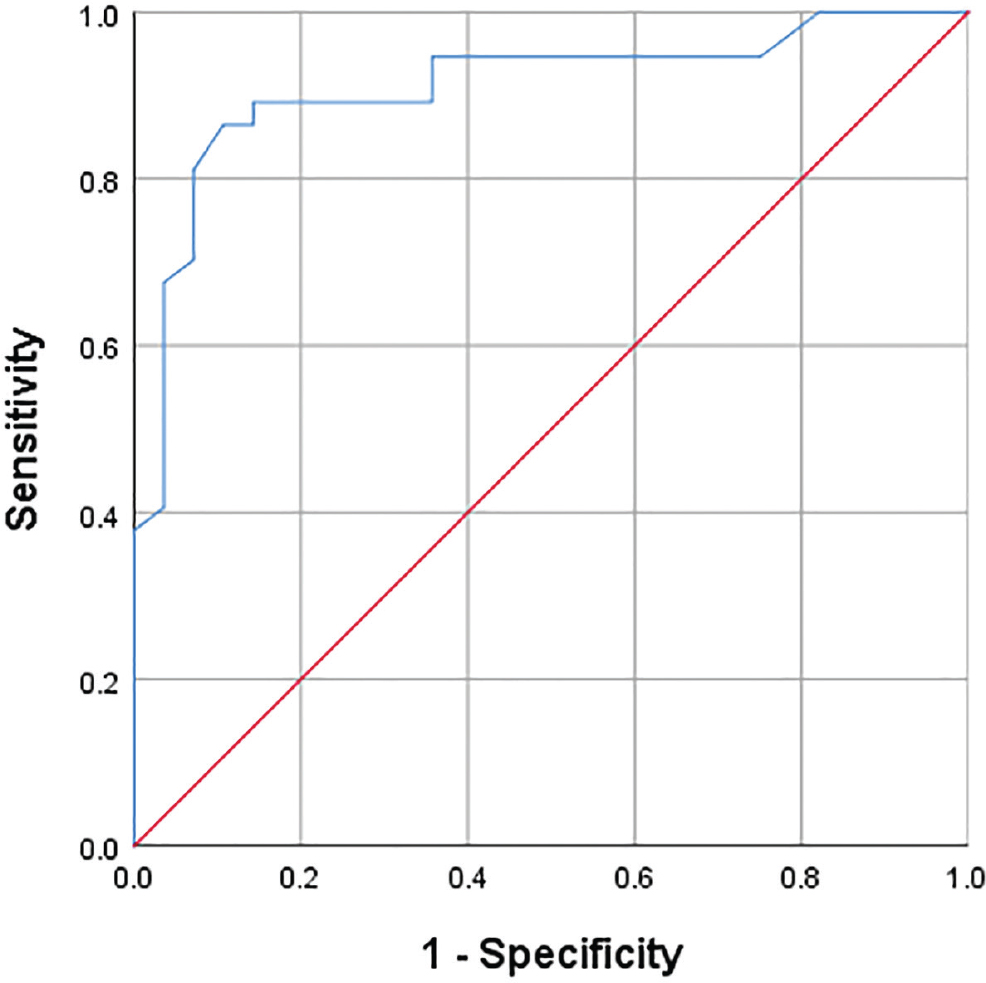
Figure 6.
ROC curve of serum fibrinogen level in predicting the occurrence of high-frequency exacerbations. ROC, receiver operating characteristic.
Table 6.
Cut-off point of serum fibrinogen level in predicting the occurrence of high-frequency exacerbations.
| Area under curve | P–value | 95% CI | Cut-off point | Sensitivity | Specificity |
|---|---|---|---|---|---|
| 0.91 | <0.001* | 0.84:99 | 416.5 | 87% | 89% |
Discussion
Bronchiectasis is characterised by chronic airway inflammation associated with persistent neutrophil predominance and increased pro-inflammatory cytokines such as IL-1, IL-6, and tumor necrosis factor-α (TNF-α), while anti-inflammatory cytokines such as IL-10 are decreased in patients with bronchiectasis, leading to tissue damage (16). Various studies have examined several inflammatory biomarkers such as C-reactive protein and neutrophils and their association with radiological severity and exacerbation of bronchiectasis (17). Fibrinogen is considered a key component of the coagulation cascade and an acute phase reactant. It has been suggested as a biomarker of the proinflammatory phenotype in COPD (18), which is associated with exacerbations and mortality in COPD patients (19). Considering that COPD and bronchiectasis are chronic airway diseases, fibrinogen may be a potential biomarker in bronchiectasis. Therefore, the aim of this study was to evaluate serum fibrinogen levels as a biomarker in stable non-cystic fibrosis bronchiectasis and to assess its association with bronchiectasis severity and exacerbation rate.
In this study, patients with stable non-cystic fibrosis bronchiectasis were evaluated for several markers of systemic inflammation such as ESR, WBC differential, platelets, and serum albumin levels. A significant positive correlation was found between high BSI & FACED scores and WBC count and ESR. This result was reported by Lee et al. (20) who evaluated the correlation between BSI score and FACED score with several markers and found that WBC count was independently associated with FACED score. However, another study analysing the correlation between FACED and BSI scores and systemic inflammatory markers in patients with stable bronchiectasis found that C-reactive protein (CRP) levels were significantly associated with FACED and BSI scores but not with WBC count (21). These results can be explained by bronchial inflammation, which is still present even in the stable clinical phase. Neutrophils migrate into the airways and increase their proteolytic activity (22).
In this study we evaluated the serum fibrinogen level and found that patients with bronchiectasis had high plasma fibrinogen level, and the high serum fibrinogen level was significantly increased with increasing severity of BSI & FACED scores this was in agreement with the result of Lee et al, study that reported the serum fibrinogen level was significantly associated with both BSI and FACED scores (22). In a study by Saleh et al. (7), blood levels of several proteins in bronchiectasis were evaluated, and fibrinogen was identified as the most promising protein associated with disease severity. The higher serum fibrinogen level was associated with worse lung function, Pseudomonas colonisation, and impaired health-status.
Contrary to previous studies, our results disagreed with the findings by Bizymi et al. (23), who found that there was no statistically significant correlation between serum fibrinogen level and BSI and FACED scores.
During the 1-year follow-up of all recruited patients, we revealed that 37 (56.9%) cases experienced ≥3 exacerbations, and the univariate linear regression analysis revealed that current smokers, high level of fibrinogen, decreased FEV1%, cystic bronchiectasis; pseudomonas colonisation, previous exacerbation & hospital admission and ≥3 MRC dyspnoea scale were significant factors that associated with the occurrence of future exacerbation among the studied patients.
These follow-up results coincided with Lee et al.’s (20) study, which found that high serum fibrinogen levels and chronic colonisation with the Pseudomonas organism were significantly associated with future exacerbations in patients with bronchiectasis.
Another important finding of this study was that the predicted optimal serum fibrinogen threshold at which a high exacerbation rate would occur was 416.5 mg/dL, reflecting the fact that elevated serum fibrinogen levels are associated with increased severity of bronchiectasis and increased frequency of exacerbations.
Limitations of this study included a small number of recruited patients with bronchiectasis and that it was conducted in a single-centre population. Further studies with a larger sample size are needed to determine the reliability of using fibrinogen as a biomarker of bronchiectasis severity and as a follow-up biomarker.
Conclusion
The higher level of serum fibrinogen in patients with stable non-cystic fibrosis bronchiectasis was associated with higher disease severity scores and can be used as a good predictor of exacerbation. This recommended that a high level of serum fibrinogen indicated the need for using anti-inflammatory and antibiotic medications.
Declarations
[11] Availability of data and materials
The datasets utilised or analysed in this study can be obtained from the corresponding author on reasonable requests.
[12] Ethics approval and consent to participate
This study was approved by the Medical Research and Ethics Committee of the Faculty of Medicine, Sohag University, under the IRB registration number: Soh-Med-23-06-10PD. It was conducted following the principles of the 1964 Declaration of Helsinki and its 2013 revision. Written informed consent was obtained from all participant patients.
[13] Consent for publication
Informed consent was obtained from the patient participating in our study.
[14] Conflicts of interest Competing interests
There are no conflicts of interest.