
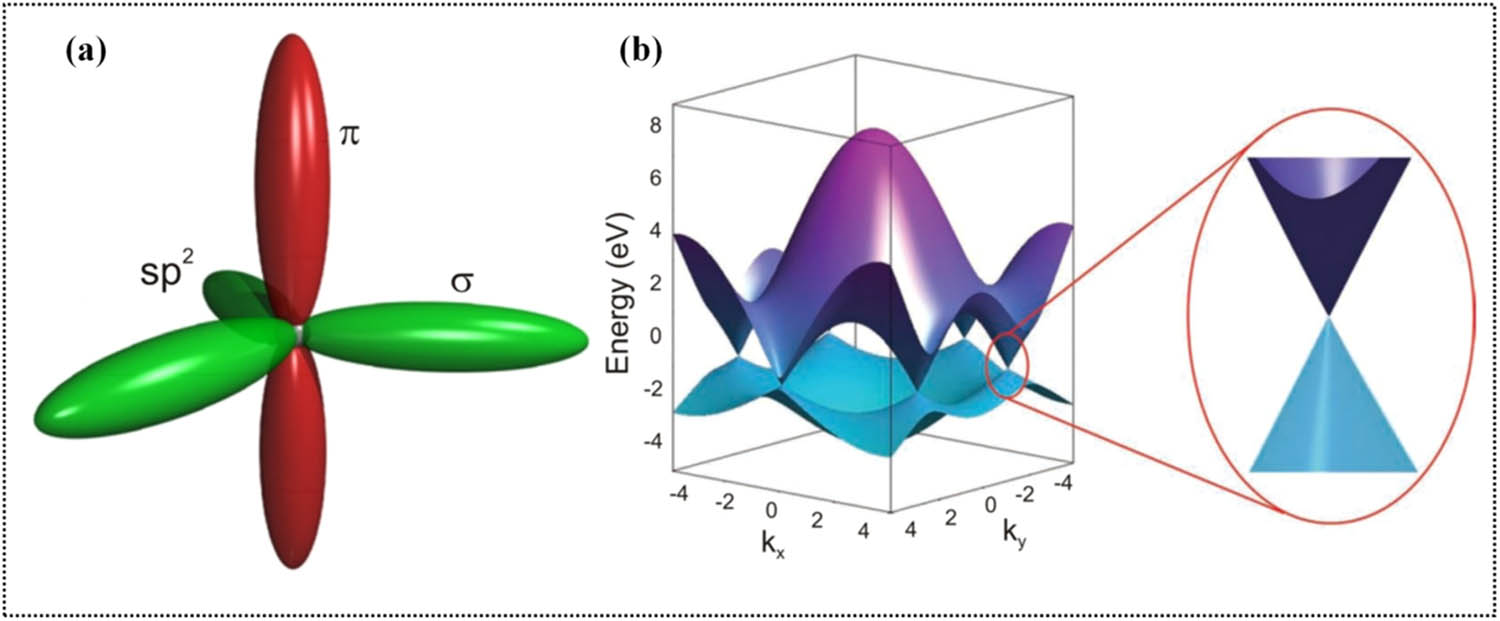
Figure 1
(a) Schematic of the - and -orbital electrons in a single carbon atom of graphene [41]; (b) band structure of graphene in a honeycomb lattice. The enlarged picture shows energy bands close to one of the Dirac points [41].
Source: data from Rogalski A et al.
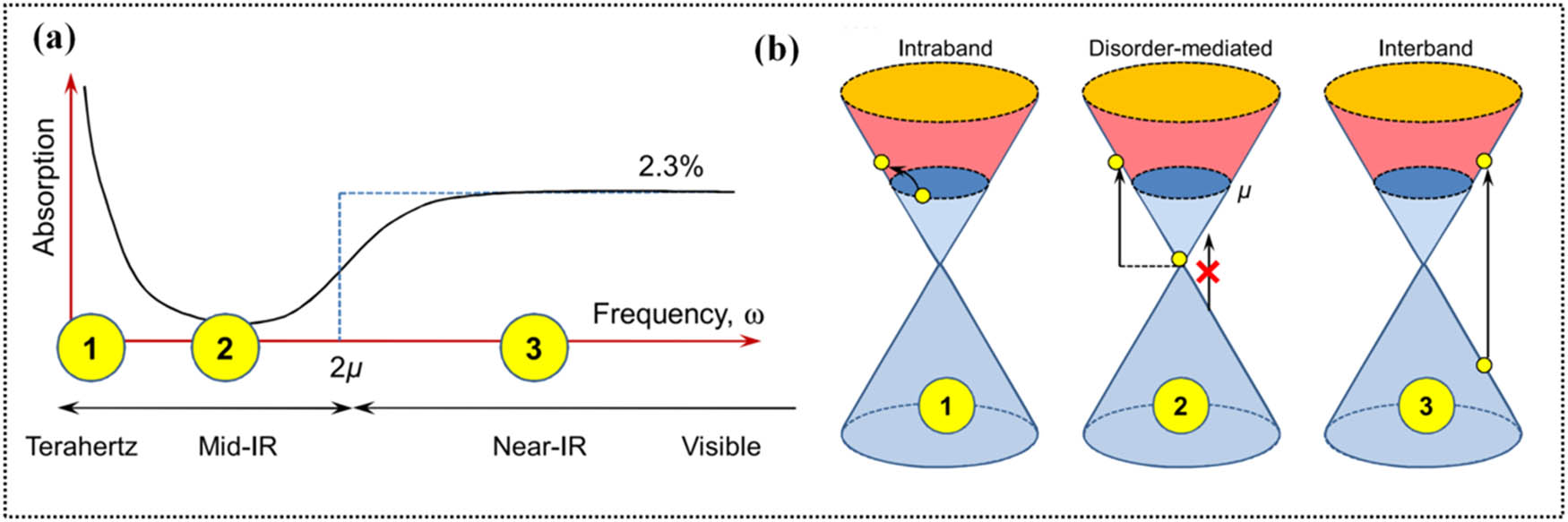
Figure 2
(a) Illustration of a typical absorption spectrum of doped graphene [29] and (b) Illustration of the various optical transition processes [29].
Source: data from Low T et al.
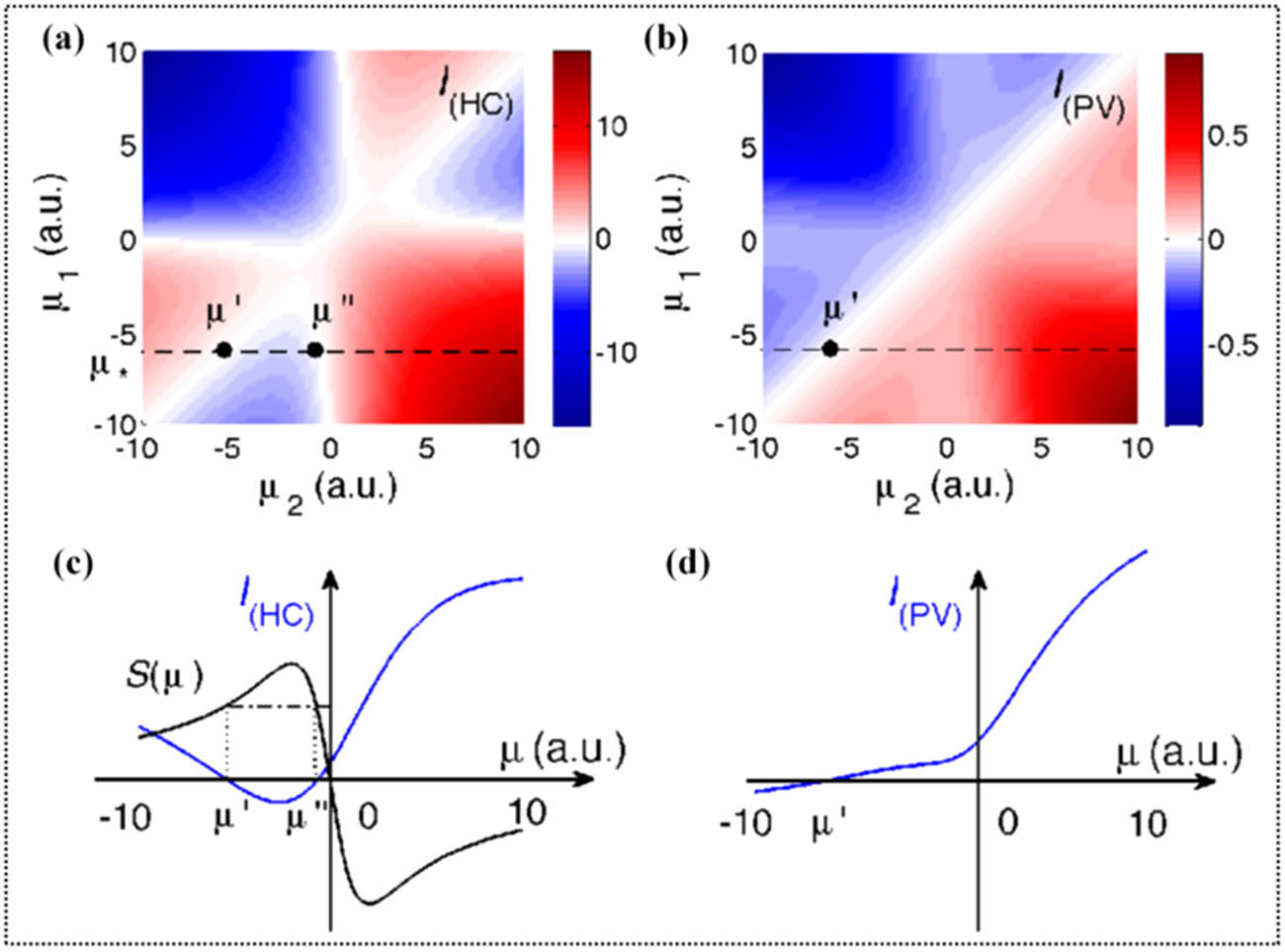
Figure 3
Photocurrent dependence on chemical potentials μ 1 and μ 2 in a dual-gated device [104]: (a) hot carrier-dominated regime (PTE mechanism) (b) PV-dominated regime, (c) current and Seebeck coefficient profiles at the black dashed line in (a), and (d) current profile at the black dashed line in (b).
Source: data from Song J C et al.
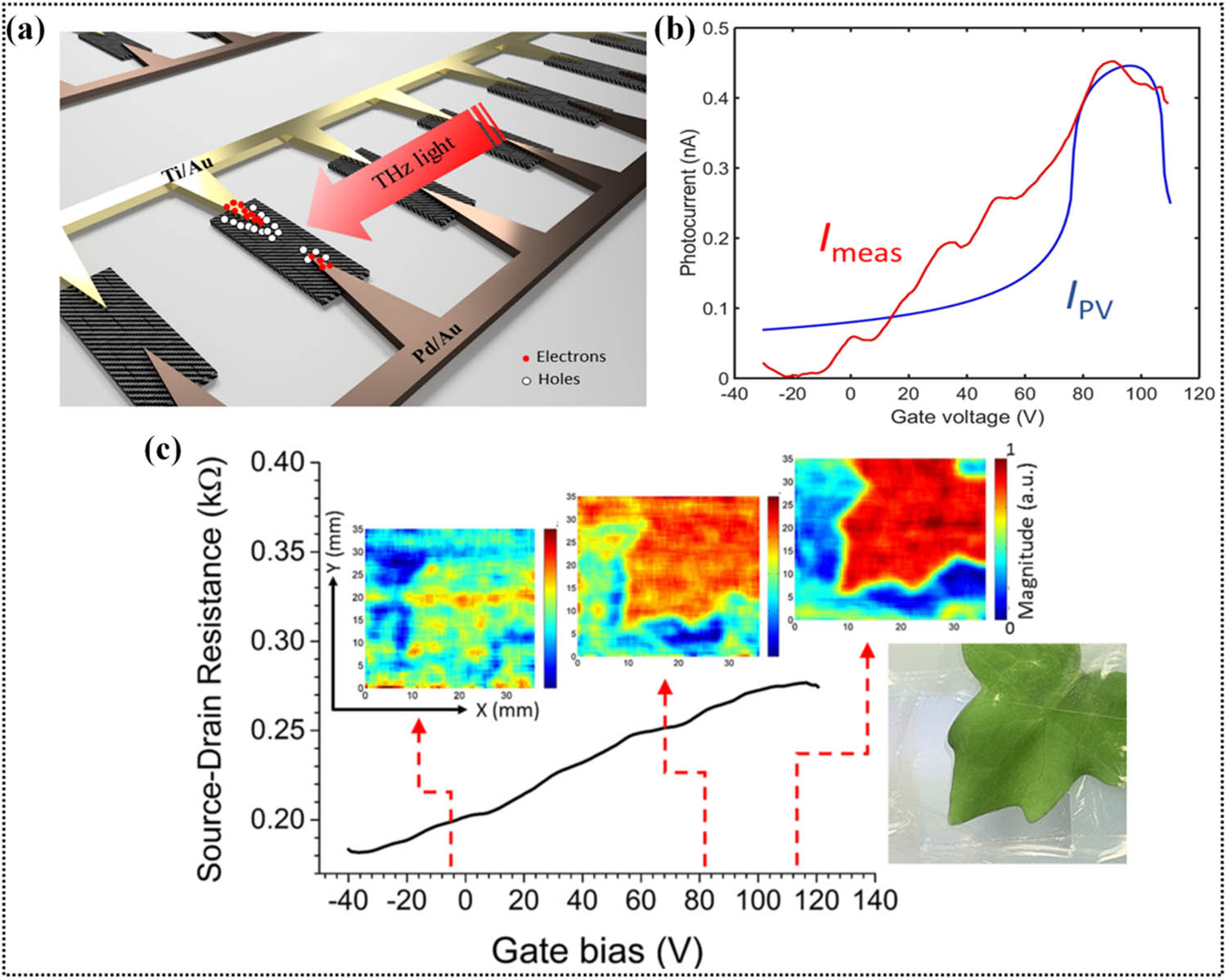
Figure 4
(a) Schematic of a graphene terahertz detector integrated with an interdigitated bowtie antenna, (b) calculated photovoltaic current, I PV, blue trace, and measured photocurrent, I meas, red trace; (c) correlation curves of source-drain resistance versus gate voltage and THz images of the leaf under different gate voltages [105].
Source: data from Degl'Innocenti R et al.
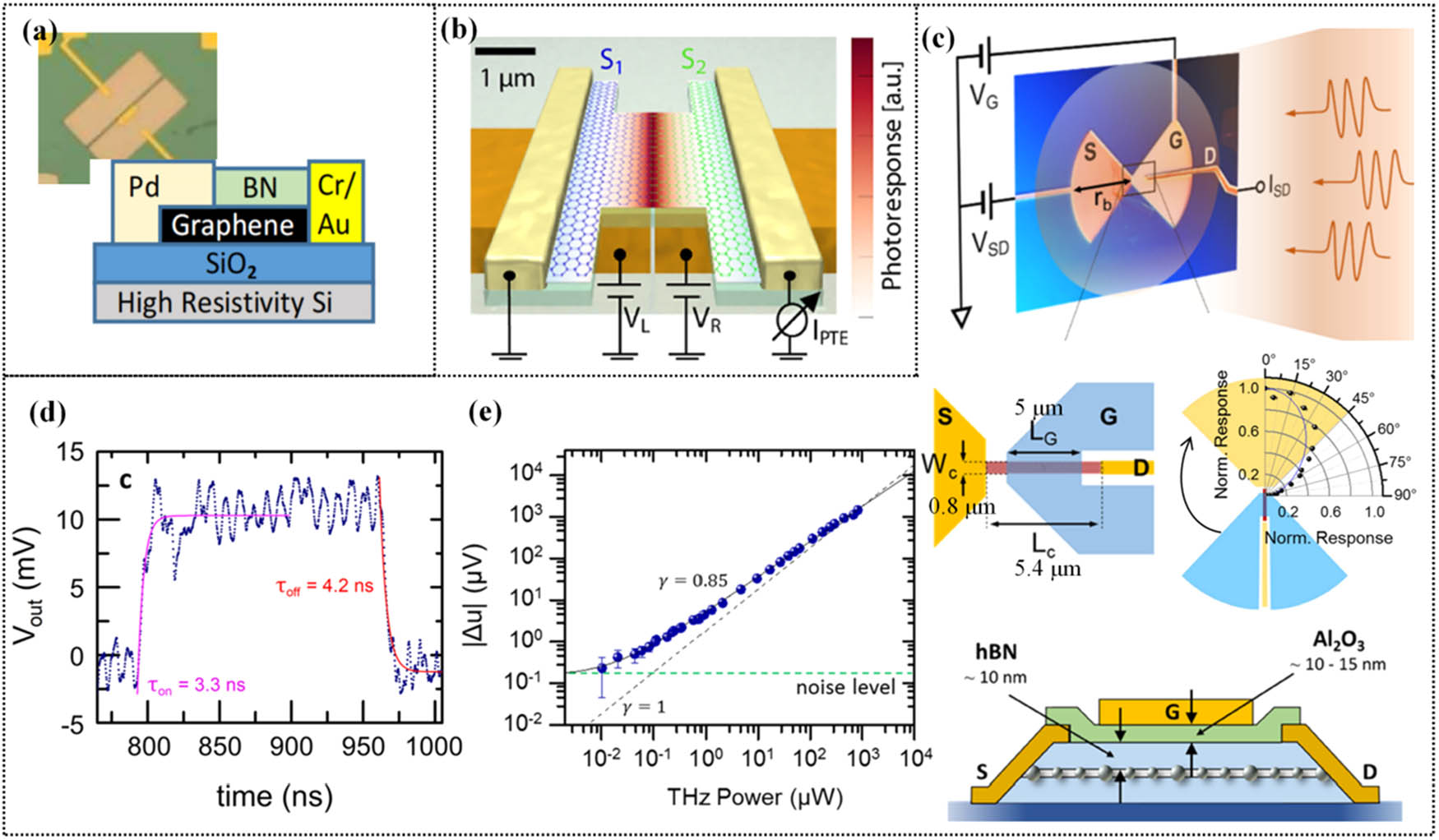
Figure 5
(a) Schematic diagram of the device structure, the inset at the top left shows a microscopic image of the metal antenna. [107] (b) Schematic diagram of the device, comprising a bottom antenna, a middle graphene/hBN structure with an H-shaped channel, and top source-drain electrodes [46]; (c) schematic diagrams of the device structure (top view + tangential view) and polar plot of the photoresponse, where 0° means the antenna axis is parallel to the light polarization direction [47]; (d) response time curve [47]; and (e) absolute value of the photovoltage as a function of incident power plotted in a log–log coordinate system (V g = 0.36 V) [47].
Source: data from Tong J et al., Castilla S et al., Viti L et al.
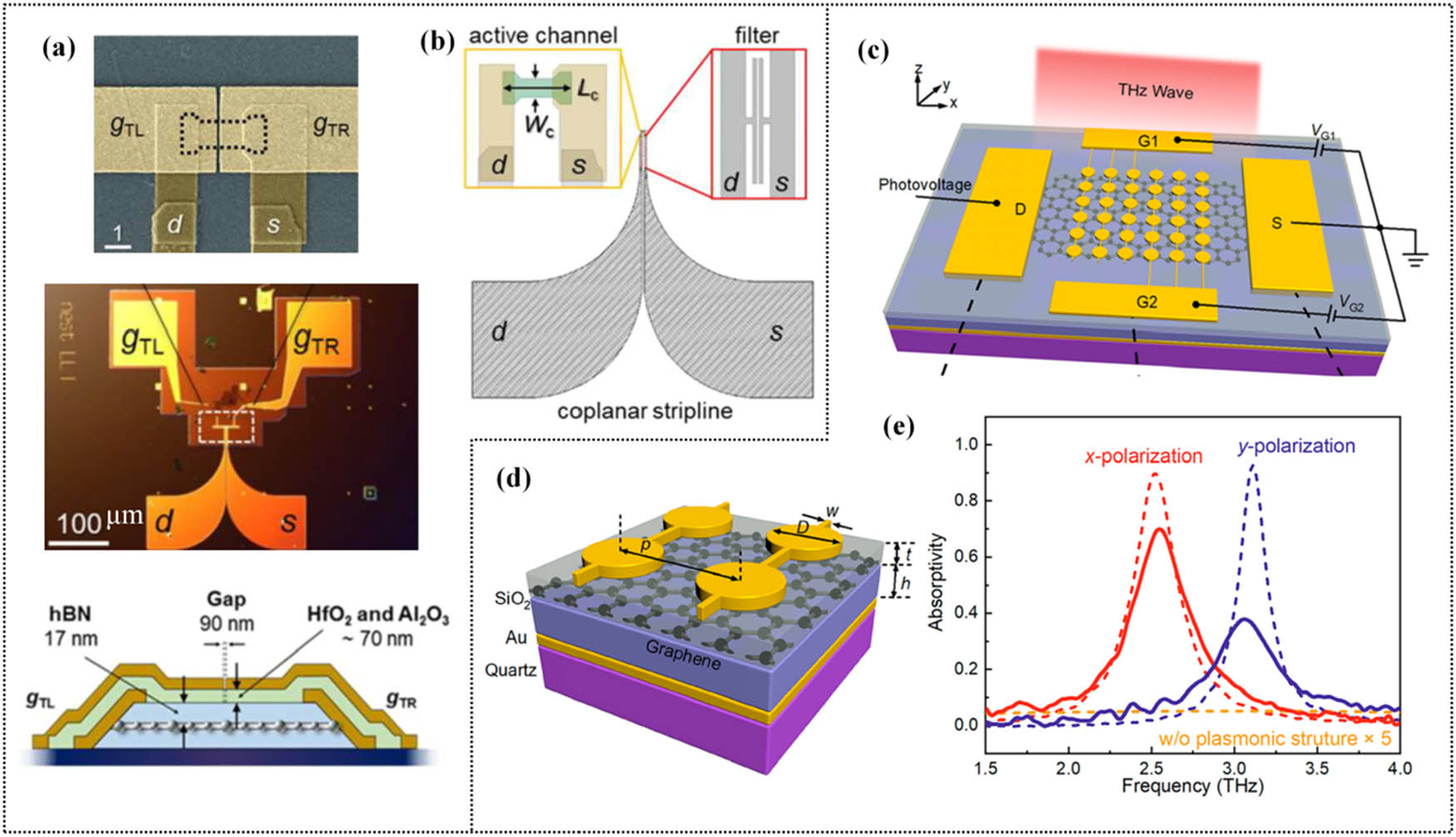
Figure 6
Schematic diagram of (a) the device structure (top view + cross-sectional view) [109]; (b) the CPS structure; the inset shows the graphene shape and filter structure, which reduces contact resistance compared with the rectangular graphene shape. [109] (c) Schematic diagrams of the device structure and wiring [48]; (d) cross-sectional view of the device [48]; (e) simulated (dashed lines) and measured (solid lines) terahertz absorption spectra of the microcavity under x-polarization (red), y-polarization (blue), and no MM (yellow) conditions. [48].
Source: data from Viti L et al., Chen M et al.
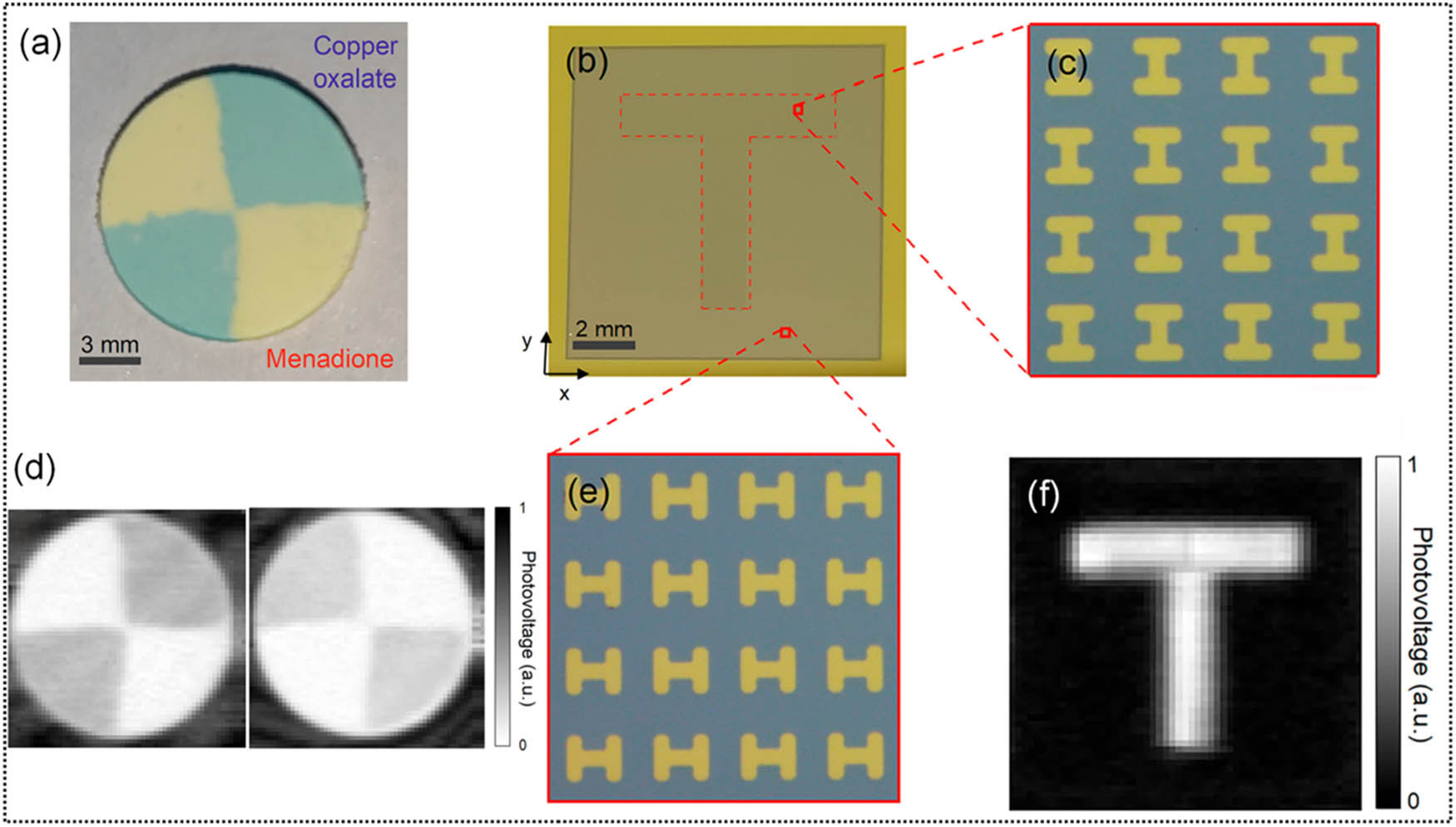
Figure 7
(a) Optical image of the pellet sample [48]; (b) optical image of a T-shaped metamaterial structure [48], (c) enlarged view of T-shaped internal structure [48], (d) diagram of the detection results of the device on the pellet sample [48], (e) enlarged view of T-shaped external structure [48], and (f) diagram of the device’s imaging of the T-shaped metamaterial structure [48].
Source: data from Chen M et al.
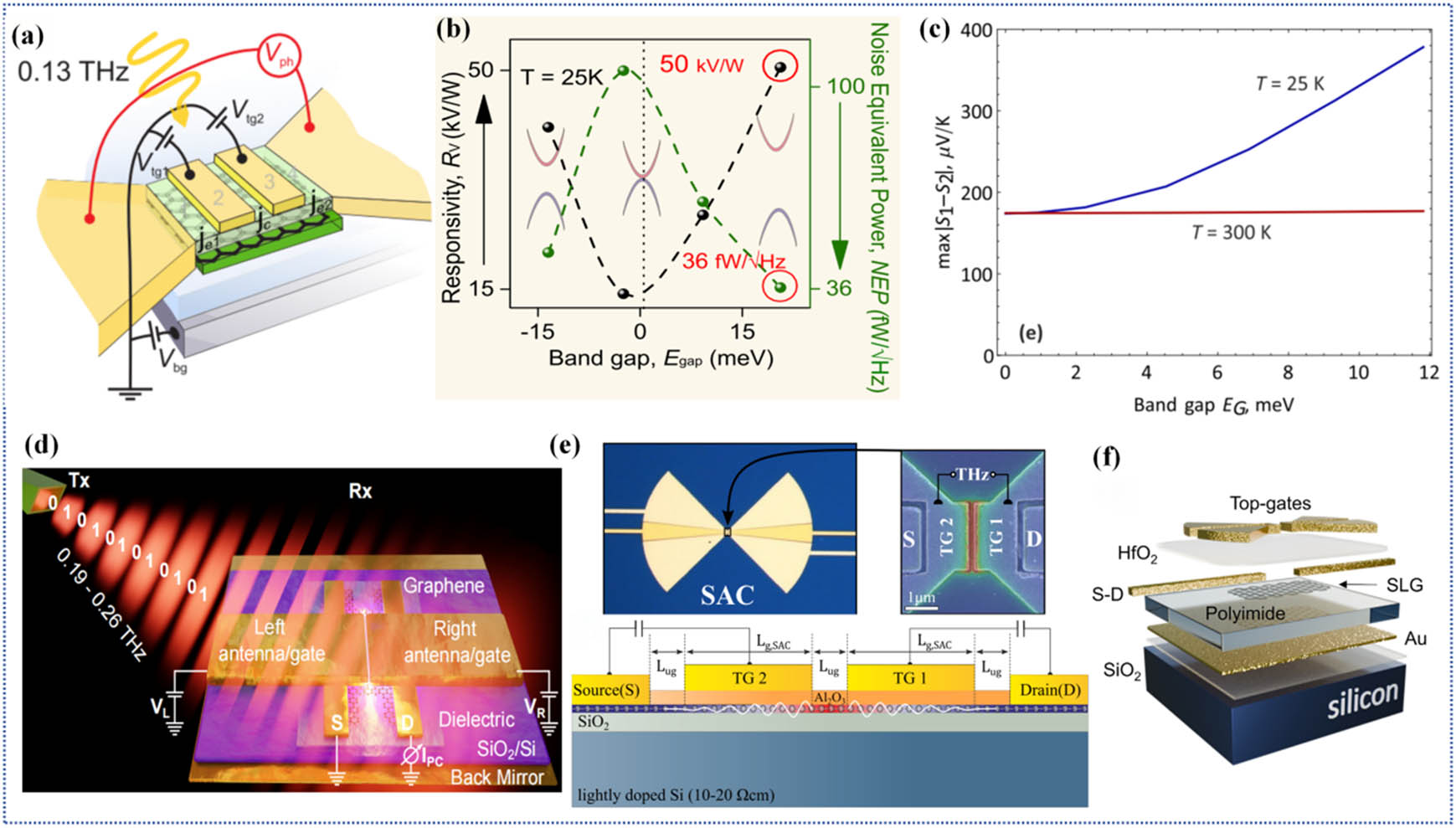
Figure 8
(a) Schematic diagrams of the device structure and wiring [111]; (b) curves of responsivity and NEP at different band gaps under 0.13 THz irradiation (25 K) [111]; (c) curves of the difference in Seebeck coefficient at different band gaps and temperatures (25 and 300 K) [111]; (d) schematic diagrams of the device structure and wiring [112]; (e) schematic diagram of the device structure (top view + tangential view) [113]; (f) schematic diagram of the device structure (a Salisbury screen composed of Au + Polyimide + SLG). [114].
Source: data from Titova E et al., Soundarapandian K P et al., Ludwig F et al., Viti L et al.
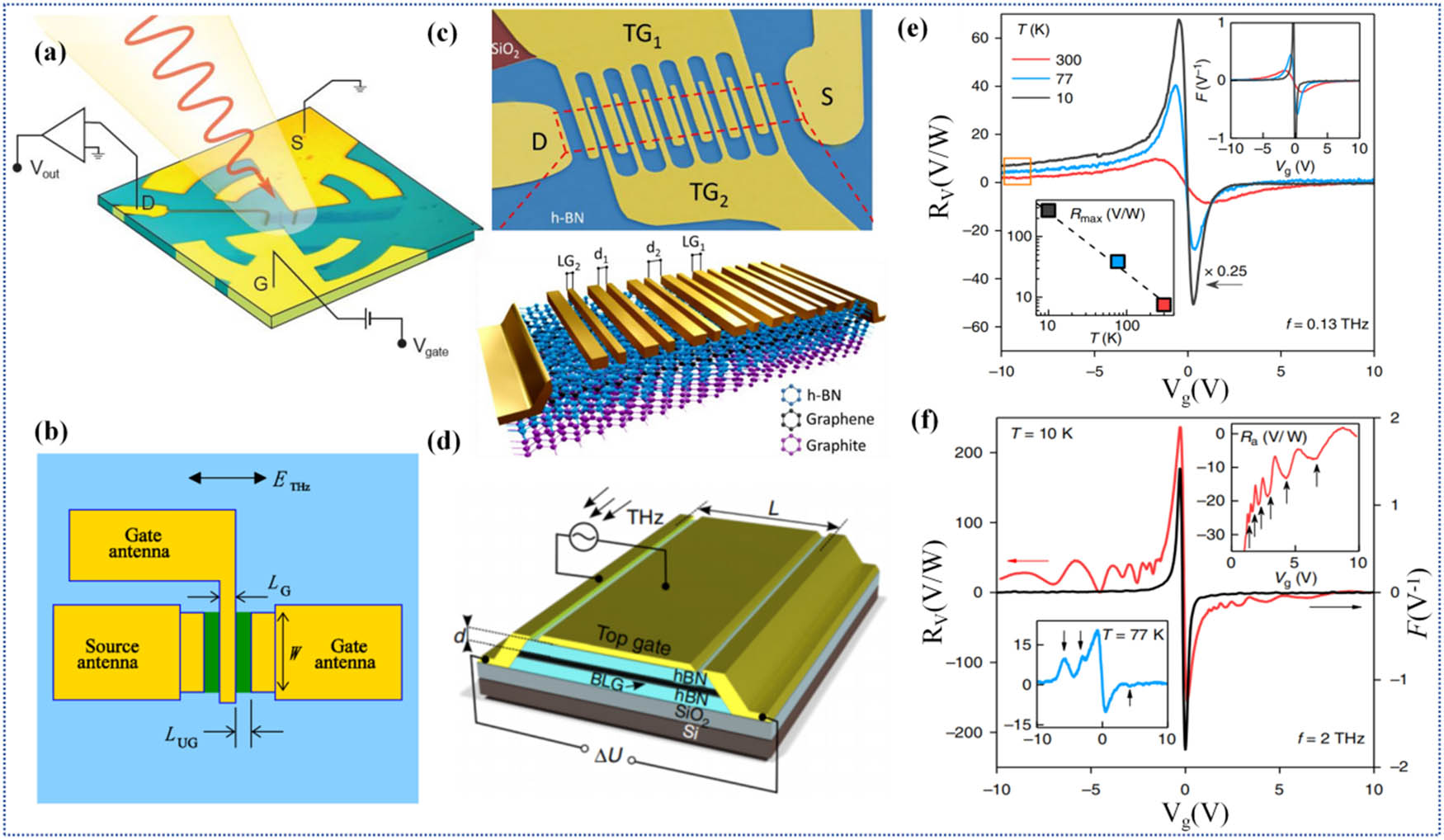
Figure 9
(a) Schematic diagrams of the device structure and wiring [35], (b) schematic diagram of the device structure (top view) [121], (c) schematic diagram of the device structure (top view + cross-sectional view) [120], (d) schematic cross-sectional view of the device, where L denotes the source-drain distance [102]. (e) Responsivity curves under different gate voltages and temperatures upon 0.13 THz irradiation. The upper inset shows the variation of the field-effect factor F with V g, and the lower inset depicts the variation of the maximum responsivity R max with temperature. [102] (f) Responsivity curves (red) and field-effect factor F curves (black) under different gate voltages upon 2 THz irradiation. The upper inset displays the magnified region of the photovoltage under electron doping, with the resonance peak indicated by black arrows, and the lower inset presents the resonant responsivity curve at liquid nitrogen temperature [102].
Source: data from Vicarelli L et al., Qin H et al., Delgado-Notario J A et al., Bandurin D A et al.
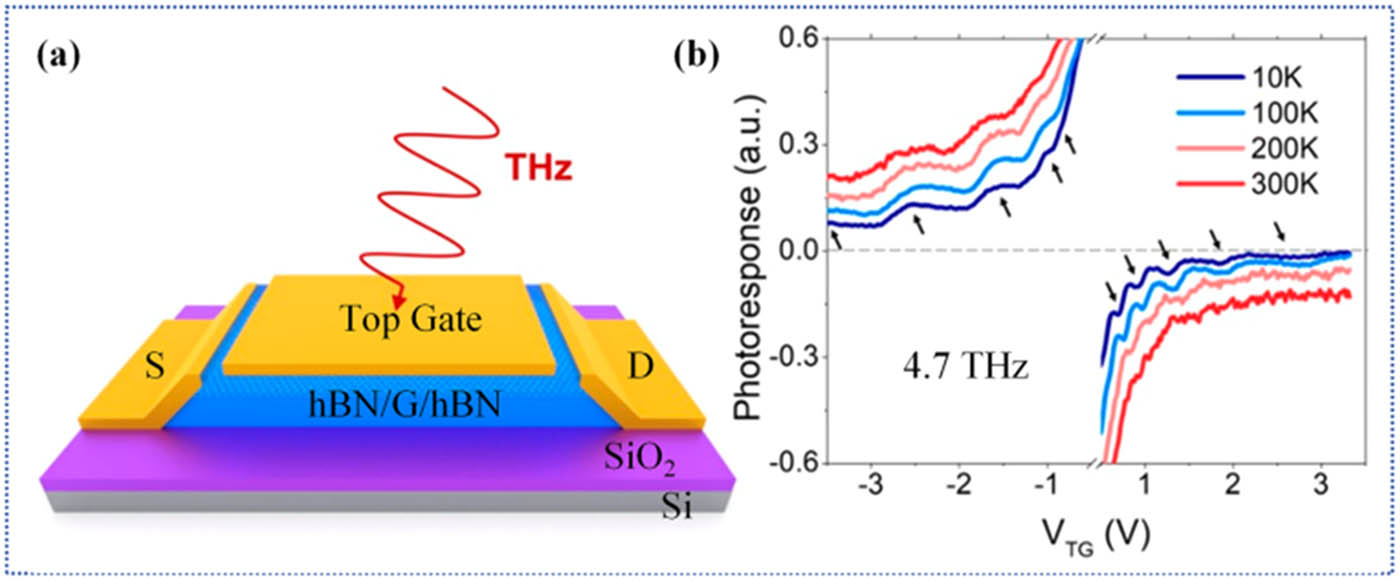
Figure 10
(a) Schematic diagram of the device structure [119], (b) photoresponse curves under different gate voltages and temperatures upon 4.7 THz irradiation, with black arrows indicating the resonance peaks [119].
Source: data from Caridad J M et al.
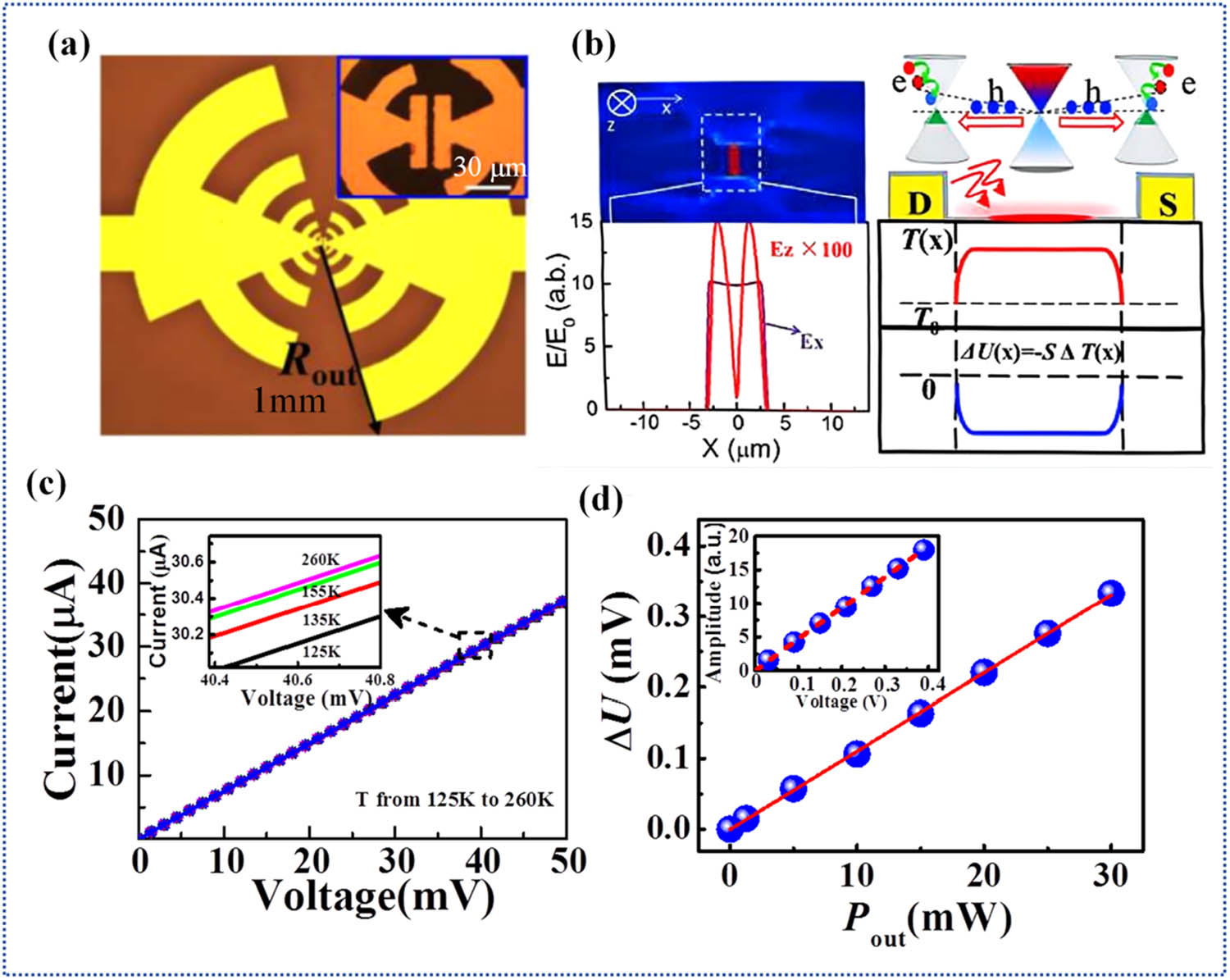
Figure 11
(a) Microscopic image of the detector integrated with a log-periodic antenna. The inset shows the photosensitive region (channel area: 300 μm2) located in the antenna gap [122]. (b) Left side, the antenna-coupled incident electric field E x /E z onto the active channel, with E x component being two orders of magnitude larger. Right-side, the resulting photoconductive process enabled by the well-like built-in potential ∆U(x), which follows the change of carrier temperature ∆T(x): ∆U(x) ∼ S∆T(x) ∝ σ|E x | 2 [122]. (c) I–V characteristics of the device at different temperatures [122]. (d) Relationship curves between photovoltage ∆U and output power P out upon 0.04 THz irradiation with a bias voltage U of 0.4 V. Inset shows the photovoltage ∆U as a function of the bias voltage, with the red line representing the fitting result [122].
Source: data from Liu C et al.
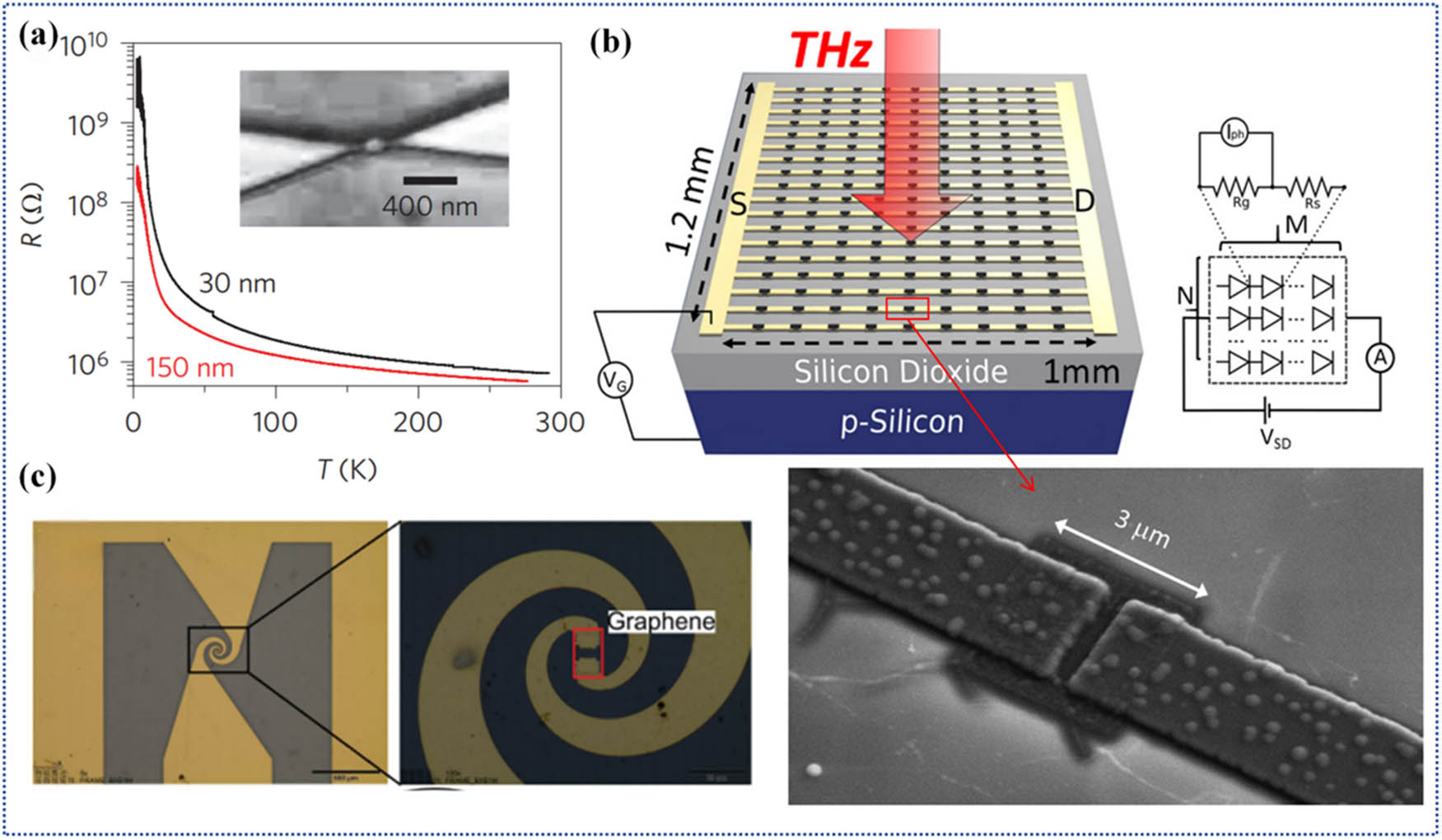
Figure 12
(a) Relationship between resistance and temperature for two quantum dots with different diameters at a DC voltage V DC = 5 mV. The inset shows the scanning electron microscopy (SEM) image of the quantum dots [123]. (b) Schematic diagrams of the basic device array and its electronic circuit, with the SEM image of the unit device shown below [124]. (c) Image of the graphene-based thermal noise-readout bolometer [125].
Source: data from EI Fatimy A et al., Degl’Innocenti R et al., Miao W et al.
Table 1
Performance parameters of the graphene terahertz photodetectors reported in this article
| Mechanism | Manufacturing method | Working frequency | Working temperature | NEP | Responsivity | Response time | Ref. |
|---|---|---|---|---|---|---|---|
| PV | CVD | 2 THz | RT | 150 nW/Hz1/2 | 34 μA/W | — | [105] |
| PTE | ME | 2.52 THz | RT | <1.1 nW/Hz1/2 | >10 V/W | 10.5–110 ps | [106] |
| ME | 2.1 THz | RT | 1.7 nW/Hz1/2 | 4.9 V/W | — | [107] | |
| ME | 1.8–4.2 THz | RT | 80 pW/Hz1/2 | 105 V/W | <30 ns | [46] | |
| ME | 3 THz | RT | <160 pW/Hz1/2 | 49 V/W | <3.3 ns | [47] | |
| ME | 3.4 THz | RT | 120 pW/Hz1/2 | 50 V/W | 890 ps | [109] | |
| CVD | 2.8 THz | RT | 1 nW/Hz1/2 | >3 V/W | 5 ns | [110] | |
| CVD | 2.52/3.11 THz | RT | 9.3 nW/Hz1/2 (2.52 THz) | 3.16/2.39 V/W | 25 μs | [48] | |
| ME | 0.13 THz | 25 K | 36 fW/Hz1/2 | 50 kV/W | — | [111] | |
| ME | 0.19–0.26 THz | RT | 58 pW/Hz1/2 | 30 V/W | <0.83 ns | [112] | |
| CVD | 0.4 THz | RT | 114 pW/Hz1/2 | 63 V/W | — | [113] | |
| CVD | 2.86 THz | RT | <300 pW/Hz1/2 | >40 V/W | <5 ns | [114] | |
| PWR | ME | 0.3 THz | RT | 30 nW/Hz1/2 | 150 mV/W | — | [35] |
| SiC EG | 0.33 THz | RT | 51 pW/Hz1/2 | 30 V/W | — | [121] | |
| ME | 0.3 THz | 4.5 K/RT | 0.81 pW/Hz1/2/0.67 nW/Hz1/2 | 0.216 A/W/1.9 mA/W | — | [120] | |
| ME | 2 THz | 10 K | 0.2 pW/Hz1/2 | 240 V/W | — | [102] | |
| ME | 0.3 THz | 10 K | — | 0.29 A/W | — | [119] | |
| PC | CVD | 0.02–0.15 THz | RT | 0.5 nW/Hz1/2 | 400 V/W | 2 μs | [122] |
| BM | SiC EG | 0.7–4 THz | 2.5 K | 0.2 fW/Hz1/2 | 5 1010V/W | <2.5 ns | [123] |
| CVD | 2/2.7 THz | RT | — | 2 mA/W | — | [124] | |
| SiC EG | 0.3–1.6 THz | 3 K | 5.6 pW/Hz1/2 | — | — | [125] | |
| SiC EG | 0.3–1.6 THz | 0.3 K | 15 fW/Hz1/2 | — | — | [135] | |
| SiC EG | 1.4 THz | 0.1–0.6 K | 0.25–0.5 fW/Hz1/2 | — | — | [136] |
Source: data from Degl’Innocenti R et al., Cai X et al., Tong J et al., Castilla S et al., Viti L et al., Viti L et al., Asgari M et al., Chen M et al., Titova E et al., Soundarapandian K P et al., Ludwig F et al., Viti L et al., Vicarelli L et al., Qin H et al., Delgado-Notario J A et al., Bandurin D A et al., Caridad J M et al., Liu C et al., EI Fatimy A et al., Degl’Innocenti R et al., Miao W et al., Miao W et al., Miao W et al.