
1. Introduction
1.1. Research Background
In recent years, with the growing awareness of health, changing perceptions of quality of life, and increasing public emphasis on physical fitness as well as physical and mental well-being, exercise and fitness have gradually become important activities and ways of life in modern daily living. In contrast to historical perspectives, where physical exercise was predominantly perceived as a recreational pastime, modern consumers are increasingly inclined to regard fitness as a mode of enduring self-regulation, personal investment, and a manifestation of lifestyle choices. This change has not merely resulted in a consistent augmentation of the fitness demographic, but has additionally broadened the demand for ancillary services, encompassing fitness centers, fitness studios, and personal training programs. The persistent escalation in public investment directed toward exercise programs, utilization of facilities, and sports education further signifies that fitness services have transcended their traditional association with mere physical training. Instead, they have evolved into a significant industrial sector that incorporates health promotion, physical activity, consumer behavior, and expressions of lifestyle (Sports Administration, Ministry of Education, 2021; Taiwan Trend Research, 2022).
With the rapid growth of the fitness industry, market competition has become increasingly intense. When selecting fitness services, consumers no longer rely solely on facilities, pricing, or geographic convenience as their primary considerations. Instead, they place greater emphasis on the service provider’s professional competence, communication style, personal characteristics, and overall reputation. Particularly in the context of personal training courses, instructors are not only providers of knowledge and professional skills, but also creators of the course experience, guides toward training goals, and important sources of members’ continued engagement and trust. Consequently, the focus of competition in fitness services has gradually shifted from facilities and course content to the instructors themselves and their interactions with members. Fitness instructors are, therefore, no longer merely service providers, but are increasingly becoming personal brands that embody market recognition, professional image, and differentiated value (Borman-Shoap et al., 2019; Gorbatov et al., 2021; Haig, 2018; Pu & Strobl, 2026).
The concept of a personal brand pertains to the comprehensive identity that an individual cultivates through professional expertise, work ethic, character attributes, and public perception, thereby creating a distinctive edge within a competitive landscape (Haig, 2018; Gorbatov et al., 2021). For fitness instructors, personal brand is reflected not only in professional competence and course guidance ability, but also in their principles of conduct, attitudes toward members, personality traits, and continuous self-improvement. In other words, within the context of fitness services, members purchase not only the courses themselves, but also their overall identification with the instructor’s professional image and personal style. When instructors are able to clearly communicate their distinctive characteristics and trustworthiness through branding, consumers’ recognition, trust, and intention to choose their services are more likely to be enhanced (Confente & Kucharska, 2021; Kunkel et al., 2022; Khairunnisa & Nugraha, 2025; Lin et al., 2021).
Accordingly, within the realm of fitness services, the personal brand of instructors transcends mere external representation, evolving into a critical foundation for the formation of members’ perceptions, assessments, and decision-making processes. In particular, due to the inherently interactive nature of personal training services, characterized by sustained engagement and relational dynamics, members are inclined to assess not only the substantive content of the course offerings when making a selection but also the professional persona, individual style, and perceived reliability exhibited by the instructor. Consequently, how fitness instructors’ personal brand further affects members’ self-congruity, brand attachment, and purchase intention merits in-depth examination.
However, consumers’ responses to fitness instructors’ personal brands extend beyond the perception and evaluation of external image and involve deeper psychological mechanisms. From the perspective of consumer identification, consumers value not only the functional benefits provided by a brand, but also use brands to construct and express their self-identity. They therefore tend to choose brands that reflect their values, lifestyles, or ideal self-image. Escalas and Bettman (2005) noted that consumers are inclined to select brands that reflect their values or ideal self-image in order to establish a psychological connection between the self and the brand. Nguyen et al. (2025) and Purnell et al. (2025) likewise found that greater congruence between a brand image and consumers’ self-concept enhances brand engagement and purchase intention. On this basis, self-congruity is regarded as an important psychological mechanism for explaining consumers’ brand preferences and behaviors. Self-congruity refers primarily to the perceived degree of fit between a brand image and a consumer’s self-concept. When the image, style, or symbolic meaning conveyed by a brand corresponds to an individual’s actual or ideal self, consumers are more likely to develop identification, preference, and positive attitudes toward the brand (Chen et al., 2021; Fastoso & González-Jiménez, 2020; Islam et al., 2019; Sirgy, 2018; Zogaj et al., 2024). For consumers who participate in fitness activities, instructors are viewed not only as professionals who provide training guidance, but also as symbolic figures representing an ideal physique, a healthy lifestyle, and personal growth. Therefore, when an instructor’s personal brand image reflects members’ perceptions of themselves or aligns with their ideal self-image, members are more likely to experience self-congruity, develop identification with and preference for the instructor, and form more favorable evaluations of the instructor’s services (Moons et al., 2020; Rabbanee et al., 2020). Moreover, ideal self-congruity has a stronger effect on perceived brand authenticity, suggesting that a brand image that more closely reflects an individual’s aspirational self is more likely to generate positive brand responses (Zogaj et al., 2024). Taken together, when fitness instructors communicate images and characteristics through their personal brands that are congruent with members’ self-concepts, members’ perceptions of self-congruity are likely to be strengthened. Therefore, this study proposes H1: Fitness instructors’ personal brand positively influences members’ self-congruity.
Brand attachment refers to the deep emotional bond established between consumers and a brand, reflecting the extent to which individuals incorporate the brand into their self-identity at both cognitive and affective levels (Hemsley-Brown, 2023; Japutra et al., 2019; Liu et al., 2020). From the perspective of relationship marketing, long-term and continuous interaction between firms and consumers constitutes an important foundation for building trust, commitment, and stable relationships. The Commitment-Trust Theory of Relationship Marketing proposed by Morgan and Hunt (1994) identifies trust and commitment as two core elements in maintaining long-term exchange relationships and emphasizes that continuous interaction and relationship maintenance contribute to the development of stable and enduring exchanges. Chen and Tsai (2026) likewise found that favorable service experiences can enhance customers’ experiential value and satisfaction, while further strengthening consumers’ emotional attachment and loyalty to a brand. In the context of fitness services, personal training courses are characterized by high levels of interaction, prolonged contact, and the continuous accumulation of trust. Through repeated participation in training courses, members may gradually associate their training experiences, physical changes, health benefits, and emotional memories with the brand image of a particular instructor. As such interactions accumulate over time, members’ perceptions of the instructor may evolve from initial professional recognition and brand identification into a more stable and profound emotional connection, thereby giving rise to brand attachment. Therefore, in addition to establishing a professional image and a foundation of trust, fitness instructors’ personal brand may also foster members’ emotional attachment to the instructor’s brand through continuous interaction and relationship management. Based on the above, this study proposes H2: Fitness instructors’ personal brand positively influences members’ brand attachment.
In consumer behavior research, purchase intention is regarded as an important indicator for predicting consumers’ future purchasing behavior (Bianchi et al., 2019; Dash et al., 2021; Zhuang et al., 2021). According to Self-Congruity Theory, when a brand image is more congruent with consumers’ self-concept, consumers are more likely to form positive attitudes toward the brand and exhibit stronger purchase intention (Sirgy, 1982, 2018). Related studies have also indicated that self-congruity enhances consumers’ purchase intention, suggesting that a higher degree of congruence between consumers’ self-concept and brand image is more likely to facilitate their purchase decisions (Cho et al., 2026; Vig & Tewary, 2026). In the context of fitness services, members’ willingness to continue participating in or repurchasing an instructor’s courses is influenced not only by the instructor’s professional competence, but also by whether the instructor’s personal brand is consistent with their self-concept. When members perceive a higher degree of congruence between the instructor’s personal brand and their own self-concept, they are more likely to develop stronger intentions to continue purchasing and recommending the courses. Therefore, this study proposes H3: Self-congruity positively influences purchase intention.
In addition, Haddad (2026) and Li et al. (2026) found that brand attachment can enhance consumers’ purchase intention and promote subsequent consumption behavior. Brand attachment refers to the emotional bond and psychological attachment established between consumers and a brand, reflecting the extent to which individuals incorporate the brand into their self-identity at both cognitive and affective levels (Hemsley-Brown, 2023; Japutra et al., 2019). When consumers develop a deeper emotional attachment to a brand, they are more likely to exhibit stronger intentions to continue purchasing and repurchasing it (Liu et al., 2020). In the context of fitness services, the trust, training experiences, and emotional connections accumulated through long-term interactions between members and instructors may gradually develop into attachment to the instructor’s personal brand. When members form a higher level of attachment to the instructor’s brand, they are more likely to exhibit stronger intentions to continue purchasing the instructor’s courses. Therefore, this study proposes H4: Brand attachment positively influences purchase intention.
In addition to reflecting consumers’ cognitive evaluations of a brand, self-congruity also influences the emotional connection between consumers and the brand. When a brand image is more congruent with consumers’ self-concept, consumers are more likely to establish psychological and emotional connections with the brand, thereby developing brand attachment. Related studies have indicated that self-congruity enhances consumers’ positive feelings toward a brand and facilitates the formation of brand attachment and brand loyalty (Sirgy, 2018; Chen et al., 2021; Nursyamsi & Rufaidah, 2025). In the context of fitness services, members typically evaluate whether an instructor’s personal brand is consistent with their values, lifestyle, or ideal self-image. When members perceive a higher degree of congruence between the instructor’s personal brand and their own self-concept, they are more likely to develop attachment to the instructor’s brand. Therefore, this study proposes H5: Self-congruity positively influences brand attachment.
Taken together, the literature suggests that self-congruity and brand attachment may jointly constitute an important mediating process through which fitness instructors’ personal brand influences purchase intention. For fitness members, the professional trust and image identification generated by an instructor’s personal brand may contribute to favorable evaluations. However, the factors that truly motivate members to continue purchasing, repurchase, or recommend the instructor’s courses often extend beyond merely forming a positive impression of the instructor. More importantly, they depend on whether members have developed emotional attachment to and trust in the instructor’s brand. Previous studies have indicated that brand attachment helps establish and maintain stable consumer–brand relationships and further enhances repurchase and continuance intentions (Hwang et al., 2019; Li & Fang, 2019; Liu et al., 2020; Kusumahadi & Rodhiah, 2025). However, brand attachment is typically formed through consumers’ cognitive and affective processes toward a brand, with self-congruity regarded as an important antecedent of its development. This mediating process is also consistent with the characteristics of fitness instructor services, because course purchase decisions are generally not one-time consumption choices, but repeated decisions built on prolonged contact, accumulated emotional experiences, and ongoing relationship maintenance. In addition, self-congruity and brand attachment may form a sequential mediating process. When members perceive that an instructor’s personal brand is congruent with their own self-concept, they are more likely to develop emotional attachment to the instructor’s brand, which in turn gives rise to brand attachment. Therefore, self-congruity is not only an important cognitive mechanism through which an instructor’s personal brand influences brand attachment, but may also further affect purchase intention through brand attachment. In other words, members’ purchase intention does not arise solely from the instructor’s external image, but from a psychological development process that progresses from brand perception and self-congruence to emotional connection. From this perspective, self-congruity and brand attachment should not be viewed merely as independent variables, but rather as jointly constituting the mediating process through which fitness instructors’ personal brand influences purchase intention (Haddad, 2026; Sirgy, 2018; Rabbanee et al., 2020; Li & Fang, 2019).
However, a review of the extant literature suggests that prior studies on brand-related constructs, self-congruity, brand attachment, and purchase intention have largely focused on general product brands, corporate brands, or service brands, with relatively limited attention given to fitness instructors as a form of personal brand that simultaneously embodies professional service, interpersonal interaction, and individual traits. In particular, within the fitness industry, the relationship between members and instructors is characterized by prolonged contact, repeated interaction, and the accumulation of trust, suggesting that the consumer decision-making process in this context may differ from that associated with general products or low-involvement service settings.
Furthermore, although existing studies have separately suggested that personal brand may influence consumer evaluations, self-congruity may affect brand attitudes, and brand attachment may further influence purchase intention, relatively few studies have simultaneously integrated fitness instructors’ personal brand, self-congruity, brand attachment, and purchase intention, and examined these relationships from the perspective of a sequential cognitive-to-affective process. Accordingly, this study argues that it is necessary to take fitness club members as the research target and further investigate how fitness instructors’ personal brand influences members’ purchase intention through self-congruity and brand attachment, thereby addressing the insufficiency of existing research in the context of fitness services.
In summary, the influence of fitness instructors’ personal brand on members may not operate through a direct and single pathway to purchase intention, but rather may be gradually developed through a series of cognitive and affective processes. First, when the professional competence, stylistic characteristics, and value image conveyed by an instructor’s personal brand are congruent with members’ actual self or ideal self, their sense of self-congruity is more likely to be enhanced. Second, when individuals recognize a congruence between the instructor’s brand and their self-identity, they exhibit a heightened propensity to cultivate emotional identification and affiliation, consequently resulting in the emergence of brand attachment. Finally, as brand attachment gradually accumulates, members’ intentions to continue purchasing, repurchase, or recommend a particular instructor may also increase accordingly. In other words, the effect of fitness instructors’ personal brand on purchase intention may not stem solely from external image per se, but rather from members’ cognitive congruence with and emotional connection to the instructor’s brand. Accordingly, self-congruity and brand attachment may be regarded as important psychological mechanisms through which fitness instructors’ personal brand influences purchase intention. This perspective not only helps address the insufficient attention given to personal brand research in the field of fitness services, but also further clarifies the theoretical process underlying the formation of members’ purchase intention (Figure 1).
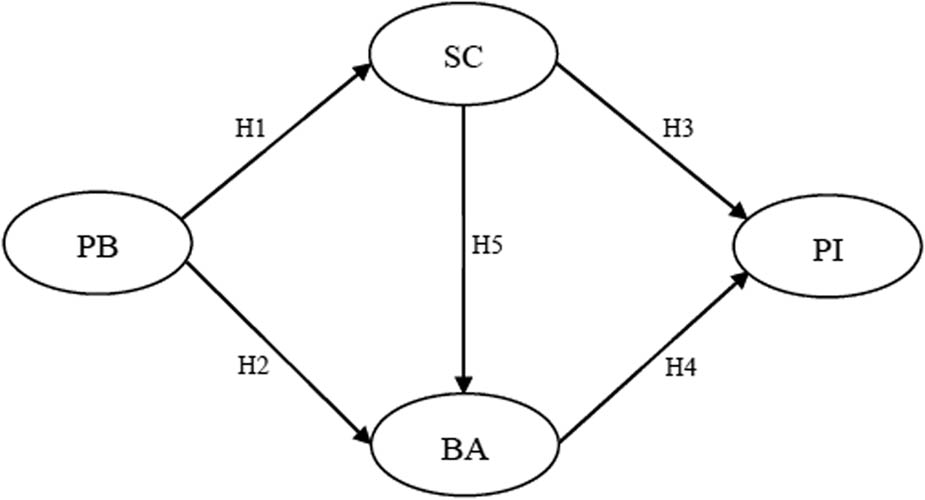
Figure 1
Research framework diagram. Note: PB = personal brand; SC = self-congruity; BA = brand attachment; PI = purchase intention.
Source: Authors’ contribution.
1.2. Research Objectives
Based on the aforementioned research background, theoretical context, and identified research gap, this study takes fitness club members in Taiwan as its target population to examine how fitness instructors’ personal brand influences members’ purchase intention through self-congruity and brand attachment, and to test the mediating roles of self-congruity and brand attachment in the process through which personal brand affects purchase intention. In doing so, this study seeks to extend the application of personal brand-related theories within the field of sport consumption from the perspective of fitness services, while also offering practical implications for personal training course management and customer relationship management.
(1). To investigate the relationships among fitness instructors’ personal brand, self-congruity, brand attachment, and purchase intention.
(2). To examine the roles of self-congruity and brand attachment in the relationship between fitness instructors’ personal brand and purchase intention.
2. Research Methods
2.1. Participants
This study targeted fitness club members in Taiwan. Participants were required to have experience in fitness activities and to be either current fitness club members or individuals who had previously received instruction from a fitness instructor. A total of 372 questionnaires were distributed, of which 336 valid responses were obtained, yielding an effective response rate of 90.32%.
2.2. Instruments
2.2.1. Personal Brand Scale for Fitness Instructors
This scale was developed with reference to the concept of personal brand proposed by McNally and Speak (2002) and the fitness instructor scale developed by Li et al. (2020), and was further refined and revised for the purposes of this study. After item analysis, items with non-significant critical ratios or item-total correlation coefficients below 0.30 were removed. The final scale comprised 30 items across six dimensions: professional competence, course guidance ability, principles of conduct, attitude toward members, personality traits, and self-improvement. Each item was measured using a five-point Likert scale. The results showed that the Cronbach’s α coefficients for the six dimensions ranged from 0.934 to 0.956, with an overall Cronbach’s α of 0.987, indicating a high level of internal consistency.
2.2.2. Self-Congruity Scale
This scale was developed with reference to the measurement approach of self-congruity proposed by Sirgy et al. (1997), as well as the measurement items used by Liu et al. (2020) and Tran et al. (2022). After item analysis, items with non-significant critical ratios or item-total correlation coefficients below 0.30 were removed. The final scale comprised eight items across two dimensions: actual self-congruity and ideal self-congruity. All items were measured using a five-point Likert scale. The results showed that the Cronbach’s α coefficients for the two dimensions were 0.854 and 0.924, respectively, with an overall Cronbach’s α of 0.937, indicating good internal consistency.
2.2.3. Brand Attachment Scale
This scale was developed with reference to the brand attachment measurement approach proposed by Park et al. (2010), as well as the measurement items used by Chieng et al. (2022). After item analysis, items with non-significant critical ratios or item-total correlation coefficients below 0.30 were removed. The final scale comprised six items across two dimensions: brand-self connection and brand prominence. Each item was measured using a five-point Likert scale. The results showed that the Cronbach’s α coefficients for the two dimensions were 0.849 and 0.891, respectively, with an overall Cronbach’s α of 0.912, indicating good internal consistency.
2.2.4. Purchase Intention Scale
This measurement scale was constructed based on the purchase intention metric proposed by Sirohi et al. (1998), alongside the assessment items pertaining to the purchase intention of fitness members as utilized by Lin et al. (2021). The scale is composed of four distinct items and was evaluated utilizing a five-point Likert scale. Following the collection of the formal questionnaires, an item analysis was performed, resulting in the exclusion of items that exhibited non-significant critical ratios or item-total correlation coefficients falling below 0.30. The findings indicated that the Cronbach’s α coefficient for the scale was 0.909, reflecting a high degree of internal consistency.
2.3. Procedure
Google Forms was used as the online survey tool, and snowball sampling was employed to recruit participants. The researchers first contacted eligible participants through fitness clubs and related fitness communities and then asked them to forward the questionnaire to other consumers who also had fitness experience, were current fitness club members, or had previously received instruction from a fitness instructor, thereby expanding the pool of eligible respondents. This sampling approach facilitated access to the target population with actual fitness participation and instructor interaction experience and improved the feasibility of data collection.
2.4. Data Analysis
The collected data were analyzed using structural equation modeling (SEM). First, descriptive statistics were conducted to summarize the demographic characteristics of the respondents. Next, the reliability and validity of the measurement model were assessed by examining factor loadings, Cronbach’s α, composite reliability (CR), average variance extracted (AVE), and discriminant validity. The structural model was then evaluated to test the proposed hypotheses. Finally, a random split-sample stability test was conducted to further examine the stability of the proposed model.
3. Results
3.1. Sample Characteristics
A total of 336 valid responses were collected in the present study. Among the respondents, 192 were male (57.1%), and 144 were female (42.9%). In terms of age distribution, the largest age group was 40–49 years, accounting for 38.1% of the sample. Regarding monthly income, the largest proportion of respondents reported a monthly income of NT$54,001 or above (40.2%). In terms of current fitness club membership, the largest group consisted of respondents from other fitness establishments (33.4%), followed by those from national sports centers (25.0%) and World Gym (22.3%). With respect to the duration of participation in fitness activities, respondents with one year or less of experience accounted for the largest proportion (36.6%). In addition, more than half of the respondents had received instruction from their current fitness instructor for less than 6 months (53.3%). Overall, the sample was characterized by a slightly higher proportion of male respondents, a substantial proportion of female respondents, and a predominance of respondents aged 40–49 years. Most respondents also reported relatively high monthly income and relatively short instructional relationships with their current fitness instructors.
3.2. Measurement Model Assessment
This study initially investigated the reliability and validity of the measurement model. Generally, it is expected that factor loadings should exceed 0.50, the average variance extracted (AVE) should be greater than 0.50, and both composite reliability (CR) and Cronbach’s α should exceed 0.70 to signify satisfactory convergent validity and internal consistency (Hair et al., 2019). Furthermore, discriminant validity was evaluated by analyzing the confidence intervals of the correlation coefficients among the constructs. If the 95% confidence interval excluded the value of 1, the constructs were regarded as exhibiting sufficient discriminant validity.
The assessment results of the measurement model for all constructs are summarized in Table 1. The constructs exhibited satisfactory convergent validity and internal consistency, as indicated by factor loadings, Cronbach’s α, CR, and AVE meeting the recommended thresholds. Discriminant validity was confirmed, as the 95% confidence intervals for correlations among constructs did not include 1. Thus, the measurement model demonstrated adequate convergent validity, discriminant validity, and internal consistency, facilitating subsequent structural model analysis and hypothesis testing.
Table 1
Summary of reliability and validity analysis for all constructs.
| Construct | Number of items | Range of factor loadings | Cronbach’s α | CR | AVE |
|---|---|---|---|---|---|
| PB | 30 | 0.750–0.924 | 0.987 | 0.957 | 0.600 |
| SC | 8 | 0.708–0.898 | 0.937 | 0.931 | 0.629 |
| BA | 6 | 0.780–0.891 | 0.912 | 0.915 | 0.642 |
| PI | 4 | 0.806–0.891 | 0.909 | 0.904 | 0.702 |
Note: PB, personal brand; SC, self-congruity; BA, brand attachment; PI, purchase intention.
Source: Authors’ contribution.
3.3. Structural Model Analysis and Hypothesis Testing
3.3.1. Structural Model Fit
This research utilized structural equation modeling (SEM) to analyze the interrelations among constructs. Due to non-compliance with multivariate normality, the bootstrap method was implemented for adjustment. After correction, all model fit indices met the acceptable criteria, confirming the adequacy of the structural model for subsequent path analysis and hypothesis testing (Table 2).
Table 2
Structural model fit indices.
| Index | Recommended criterion | Original value | Bootstrap-corrected value | Result |
|---|---|---|---|---|
| X² | The smaller, the better | 324.06 | 121.66 | Acceptable |
| df | — | 72 | 72 | — |
| X²/df (NC) | <3 | 4.50 | 1.69 | Satisfactory |
| RMSEA | <0.08 | 0.102 | 0.045 | Satisfactory |
| GFI | >0.90 | 0.89 | 0.99 | Satisfactory |
| AGFI | >0.80 | 0.84 | 0.96 | Satisfactory |
| NFI | >0.90 | 0.94 | 0.98 | Satisfactory |
| RFI | >0.90 | 0.92 | 0.97 | Satisfactory |
| IFI | >0.90 | 0.95 | 0.99 | Satisfactory |
| TLI | >0.90 | 0.93 | 0.99 | Satisfactory |
| CFI | >0.90 | 0.95 | 0.99 | Satisfactory |
Source: Authors’ contribution.
3.3.2. Structural Path Analysis
Findings revealed that fitness instructors’ personal brand positively influenced both self-congruity and brand attachment. Self-congruity significantly influenced brand attachment, which subsequently influenced purchase intention. However, the direct influence of self-congruity on purchase intention was not statistically significant. Overall, the primary structural paths proposed in this study received considerable empirical support (Figure 2).
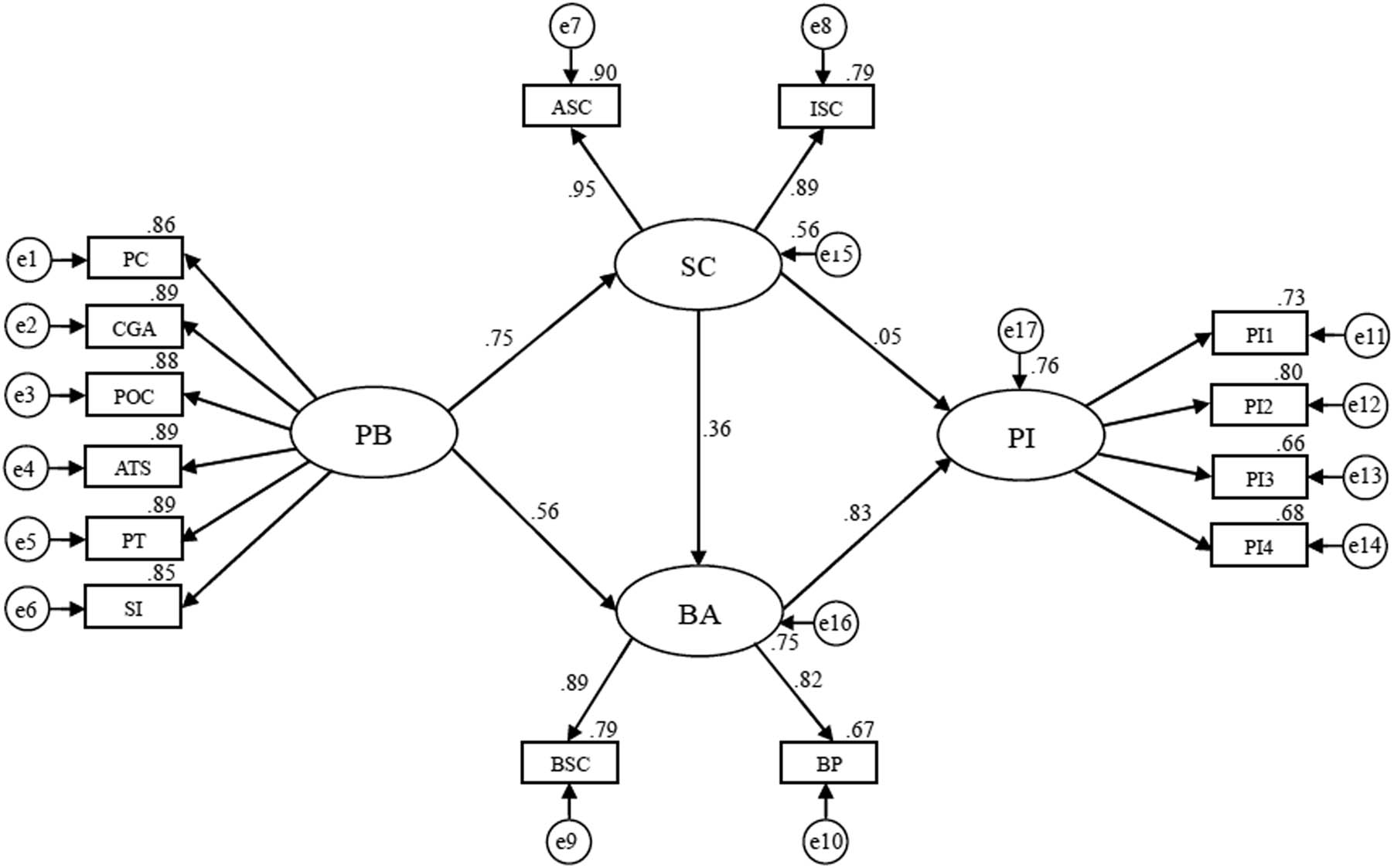
Figure 2
Structural path model. Note: PB, personal brand; SC, self-congruity; BA, brand attachment; PI, purchase intention.
Source: Authors’ contribution.
3.3.3. Hypothesis Testing Results
The analysis revealed that fitness instructors’ personal brand significantly and positively influenced both self-congruity and brand attachment. Furthermore, self-congruity significantly and positively influenced brand attachment, which in turn significantly and positively influenced purchase intention. Conversely, the direct effect of self-congruity on purchase intention was not statistically significant. In summary, H1, H2, H4, and H5 were supported, whereas H3 was not supported (Table 3).
Table 3
Results of hypothesis testing.
| Hypothesis | Path | Standardized coefficient (β) | t-Value | p-Value | Result |
|---|---|---|---|---|---|
| H1 | PB → SC | 0.75 | 16.64* | <0.001 | Supported |
| H2 | PB → BA | 0.56 | 9.47* | <0.001 | Supported |
| H3 | SC → PI | 0.05 | 0.66 | 0.512 | Not Supported |
| H4 | BA → PI | 0.83 | 8.73* | <0.001 | Supported |
| H5 | SC → BA | 0.36 | 5.72* | <0.001 | Supported |
Note: PB, personal brand; SC, self-congruity; BA, brand attachment; PI, purchase intention. *p < 0.05.
Source: Authors’ contribution.
3.3.4. Random Split-Sample Stability Test
To further assess the stability of the model estimation results, this study followed the recommendations of Hair et al. (2019) and Sarstedt et al., (2020) and conducted a random split-sample test and multigroup analysis. The 336 valid responses were randomly divided into two equally sized subsamples of 168 cases each, and the same research model was estimated separately for both subsamples. The major structural path coefficients and their differences were then compared across the two subsamples to evaluate the consistency of the findings under different random sample compositions. As shown in Table 4, the five major structural paths – fitness instructors’ personal brand to self-congruity, fitness instructors’ personal brand to brand attachment, self-congruity to purchase intention, brand attachment to purchase intention, and self-congruity to brand attachment – showed consistent directions across the two random subsamples. Moreover, none of the differences in path coefficients reached statistical significance (p > 0.05). These findings indicate that the major structural relationships did not vary substantially across the two randomly generated subsamples, suggesting that the model demonstrated a certain degree of estimation stability.
Table 4
Results of the split-sample robustness analysis.
| Path | Path coefficient difference (Δβ) | Two-Tailed p-value | Result |
|---|---|---|---|
| PB → SC | −0.008 | 0.923 | No significant difference |
| PB → BA | −0.001 | 0.554 | No significant difference |
| SC → PI | 0.057 | 0.660 | No significant difference |
| BA → PI | −0.055 | 0.654 | No significant difference |
| SC → BA | −0.001 | 0.594 | No significant difference |
Note: PB, personal brand; SC, self-congruity; BA, brand attachment; and PI, purchase intention.
Source: Authors’ contribution.
4. Discussion
4.1. Research Findings
4.1.1. Effects of Fitness Instructors’ Personal Brand on Self-Congruity and Brand Attachment
The findings of this study indicate that when fitness instructors clearly demonstrate their professional competence, members are more likely to perceive a stronger fit between the instructor’s brand image and their own self-concept. This finding supports Sirgy’s (2018) Self-Congruity Theory and is consistent with the perspectives of Islam et al. (2019), Chen et al. (2021), and Moons et al. (2020), who suggest that consumers form brand evaluations based on the degree of congruence between a brand image and their self-concept. Zogaj et al. (2024) likewise demonstrated that ideal self-congruity plays an important role in consumer brand evaluation; when a brand image more closely reflects consumers’ aspirational selves, it is more likely to generate positive brand responses. When a brand image is consistent with consumers’ self-perceptions, it is more likely to foster brand preference and positive attitudes. Nguyen et al. (2025) and Purnell et al. (2025) further indicated that congruence between brand image and consumer self-concept not only contributes to favorable brand evaluations, but also enhances brand engagement and subsequent consumption intentions. In the context of fitness services, instructors are not only professionals who provide training guidance, but may also be regarded by members as symbols of an ideal physique, a healthy lifestyle, and personal growth. Therefore, when an instructor’s brand image resonates with members’ expectations, their sense of self-congruity is more likely to be strengthened.
In addition, fitness instructors’ personal brand had a significant positive effect on brand attachment, indicating that members’ perceptions of the instructor’s brand do not remain merely at the level of external image evaluation, but may further develop into emotional attachment and connection. This finding is consistent with Japutra et al. (2019), Liu et al. (2020), and Hemsley-Brown (2023), who suggest that brand attachment is more likely to develop when a strong basis of identification is established between consumers and a brand. From the perspective of service experience, Chen and Tsai (2026) further indicated that positive service interactions and experiential value can strengthen consumers’ emotional attachment to a brand. In the context of fitness services, personal training courses are characterized by high levels of interaction and sustained relational involvement. Through repeated participation in training courses, members may gradually associate their training experiences and personal growth with the instructor’s brand, thereby developing emotional attachment to that brand. Such emotional connections, accumulated through ongoing interaction and positive experiences, are also consistent with the explanations of brand attachment development offered by Chen and Tsai (2026) and Li et al. (2026). Furthermore, fitness instructors’ personal brand not only directly influences brand attachment, but also strengthens it through self-congruity, indicating that the influence of personal brand on members encompasses both cognitive and affective dimensions. This finding is also consistent with Haddad (2026) and Nursyamsi and Rufaidah (2025), who suggest that congruence between self-concept and brand image can further promote consumers’ emotional attachment to a brand.
This finding is consistent with the perspective proposed by Rabbanee et al. (2020), namely that when consumers perceive a high degree of congruence between a brand and their self-concept, the brand is more likely to be regarded as an extension of the self, thereby strengthening brand attachment. Haddad (2026) and Nursyamsi and Rufaidah (2025) likewise indicated that congruence between self-concept and brand image contributes to stronger emotional attachment to a brand. In other words, the more an instructor’s personal brand enables members to feel that “this instructor reflects the person I ideally want to become” or “this instructor represents the image I aspire to,” the more likely cognitive congruence is to develop into emotional attachment. Such brand responses arising from ideal self-congruity are also consistent with Zogaj et al.’s (2024) findings regarding ideal self-congruity. These findings demonstrate that fitness instructors’ personal brand plays a critical role in the context of fitness services. Its function lies not only in enhancing market visibility and professional reputation, but more importantly in promoting members’ identification with the instructor’s brand through self-congruity, thereby fostering brand attachment. This result also suggests that fitness instructors should not focus solely on demonstrating professional skills when managing their personal brands. Greater attention should be given to how image construction, interaction styles, and value communication can promote cognitive congruence and stable emotional connections among members, thereby enhancing subsequent brand influence and customer relationship maintenance. This practical implication also echoes the perspective of Chen and Tsai (2026), who emphasized that continuous and positive service interactions can deepen the emotional connection between consumers and brands.
4.1.2. Discussion on the Non-Significant Direct Effect of Self-Congruity on Purchase Intention
The effect of self-congruity on purchase intention was not statistically significant, indicating that even when members perceive a certain degree of congruence between a fitness instructor’s brand image and their actual or ideal self, such cognitive congruence alone is insufficient to directly translate into purchase intention. This finding differs from those of Cho et al. (2026) and Vig and Tewary (2026), who reported a positive effect of self-congruity on purchase intention, suggesting that this relationship may vary across research contexts and according to the characteristics of consumer decision-making. In other words, although members’ identification with a fitness instructor’s personal brand may contribute to favorable evaluations, such identification does not necessarily translate immediately into purchase intention. Haddad (2026) and Nursyamsi and Rufaidah (2025) further indicated that self-congruity can influence consumer behavior through emotional attachment. Therefore, only when such identification continues to accumulate and is transformed into brand attachment is it more likely to result in a clearer intention to purchase or repurchase. This phenomenon is consistent with Sirgy’s (2018) self-congruity perspective, which suggests that although congruence between a brand and consumers’ self-concept is an important antecedent, whether consumers subsequently take action may still depend on other psychological processes. In the context of fitness services, members’ identification with an instructor’s image may not immediately translate into course purchase decisions. Rather, purchase intention is more likely to emerge gradually through brand attachment after prolonged interaction and the accumulation of emotional experiences. This interpretation is also consistent with Haddad’s (2026) emphasis on the role of emotional brand attachment. Overall, the findings indicate that, in the context of fitness services, members’ cognitive congruence with an instructor’s brand must still be transformed through affective processes such as brand attachment before a clear purchase intention can emerge.
4.1.3. Mediating Role of Brand Attachment
Brand attachment plays a key mediating role in this study, indicating that the effect of fitness instructors’ personal brand on purchase intention does not arise solely through a direct path. Rather, it must first be transformed through emotional connection and attachment before developing into behavioral intention. In other words, although members may form favorable evaluations of an instructor’s professional image and personal style, the key factor that truly motivates them to continue purchasing or recommend the instructor’s courses to others is whether they have developed emotional attachment to the instructor’s brand. Haddad (2026) and Li et al. (2026) likewise indicated that brand attachment is an important psychological mechanism through which favorable brand evaluations are transformed into purchase intention and subsequent consumption behavior. This finding is consistent with Liu et al. (2020), who argued that brand attachment strengthens the emotional connection between consumers and brands and subsequently influences their future behavior. It also echoes the findings of Li and Fang (2019), who reported that brand attachment significantly affects continuance intention. Kusumahadi and Rodhiah (2025) and Li et al. (2026) further demonstrated that emotional attachment contributes to stronger repurchase intention and subsequent consumption behavior. In the context of fitness services, personal training courses are characterized by high levels of interaction, continuous contact, and long-term relational involvement. During course participation, members are more likely to gradually associate their training experiences, physical changes, and sense of personal growth with the instructor’s brand, thereby developing a more stable emotional attachment that is ultimately reflected in purchase intention. This emotional connection, formed through ongoing service interactions and accumulated experiences, is also consistent with Chen and Tsai’s (2026) findings regarding the development of brand attachment. In addition, although self-congruity may serve as an important antecedent of brand attachment, its effect on purchase intention still operates through brand attachment. This suggests that, in the context of fitness services, consumers’ cognitive congruence and emotional attachment are not independent of one another, but instead constitute a continuous psychological process. This finding is also consistent with Rabbanee et al. (2020), who proposed that when consumers perceive congruence between a brand and their self-concept, they are more likely to develop brand attachment, which in turn becomes an important mechanism that facilitates subsequent purchasing behavior. Haddad (2026) and Nursyamsi and Rufaidah (2025) likewise support this psychological process in which cognitive congruence influences subsequent consumption behavior through emotional attachment. Overall, brand attachment is not only an important mediator of the relationship between fitness instructors’ personal brand and purchase intention, but also further highlights the importance of emotional connection in the context of fitness services. Compared with mere brand cognition or image congruence, whether members develop a stable and enduring emotional attachment to an instructor’s brand is the key factor influencing their subsequent purchase and recommendation behavior. This finding is also consistent with Haddad (2026) and Li et al. (2026), who emphasized the influence of brand attachment on purchase intention.
5. Research Implications and Limitations
5.1. Practical Implications
The findings of this study provide several practical implications for fitness clubs, fitness instructors, and related fitness organizations. First, because fitness instructors’ personal brand influences members’ self-congruity and brand attachment, establishing a clear and consistent personal brand is essential. Instructors should clearly define their professional positioning, teaching characteristics, and core values, and maintain a consistent and distinctive brand identity through course interactions, personal image, professional knowledge sharing, and records of training outcomes. Fitness clubs can support instructors by developing personal brand profiles that present their areas of expertise, certifications, teaching styles, suitable member types, and successful cases. Such information can be integrated into official websites, booking systems, and social media platforms to improve the matching efficiency between members and instructors. Fitness-related associations and training institutions may also incorporate personal brand management, professional communication, and digital content management into instructor training programs to enhance the overall professional image of fitness instructors.
Furthermore, because fitness instructors’ personal brand significantly influences members’ self-congruity, it is important to enhance the alignment between an instructor’s brand and members’ goals, values, and ideal self. During the initial consultation or early stages of the course, instructors may seek to understand members’ training goals, lifestyles, physical aspirations, and interaction preferences, and then adjust their communication and course arrangements accordingly. This approach can help members perceive the instructor’s image as consistent with their ideal self. Before members purchase personal training courses, fitness clubs may conduct a brief needs assessment to collect information regarding their goals, preferences, and service expectations, and then match them with instructors based on the instructors’ expertise and brand characteristics. Trial sessions, periodic feedback, and instructor replacement mechanisms may also be provided to reduce dissatisfaction caused by poor matching. Relevant fitness service providers may further establish more consistent systems for classifying instructors’ professional expertise and disclosing service information, enabling consumers to more easily identify the professional positioning and service characteristics of different instructors.
Finally, because brand attachment serves as a key mediator of purchase intention, establishing long-term emotional connections should be regarded as an important strategy for enhancing members’ repurchase and recommendation intentions. Instructors can strengthen members’ trust and emotional connection through continuous interaction, individualized care, training outcome tracking, and specific feedback, such as providing periodic training reviews and recommendations for the next stage. Fitness clubs may establish a concise customer relationship management mechanism to record members’ training goals, course progress, preferences, important feedback, and course renewal timing, with regular follow-up conducted by instructors or membership consultants. Organizations may also incorporate member satisfaction, course renewal rates, recommendation intention, and interaction quality into performance evaluations in order to balance short-term sales performance with long-term relationship maintenance. Fitness service providers may further establish member management guidelines that address both customer relationship management and personal data protection, while using training programs to strengthen instructors’ competencies in communication, emotional support, and customer relationship maintenance.
Overall, practical implementation may proceed in a gradual manner. First, organizations should prioritize the establishment of clear brand positioning and improve the fit between members and instructors. This stage requires relatively limited resources and can be implemented more easily in the short term. Second, cross-departmental collaboration and information system development can be used to strengthen internal information integration and service processes. Finally, customer relationship management should be gradually institutionalized as an important foundation for long-term organizational development and member relationship maintenance.
5.2. Research Limitations
This investigation concentrated on fitness club members within the context of Taiwan, and thus, the results may have been subject to the influences of regional nuances, sources of the sample, and specific attributes of fitness environments, which inherently impose constraints on the broader applicability of the findings. Moreover, this research utilized a cross-sectional questionnaire survey as the primary data collection method, predominantly reflecting respondents’ perceptions and emotions at a singular moment in time; as a result, it presents challenges in comprehensively addressing the long-term variations and causal dynamics among the examined constructs. Additionally, while the application of a quantitative questionnaire as the principal methodological approach was advantageous for assessing the overarching relationships among the constructs, it was comparatively less adept at capturing the intricate psychological processes through which members cultivate cognitive congruence, emotional attachment, and purchase intentions regarding fitness instructors’ brands. Consequently, the interpretation of the findings necessitates a cautious approach.
5.3. Recommendations for Future Research
Future research could broaden the scope of exploration to encompass distinct geographical locales, a variety of fitness environments (such as chain gyms, fitness studios, or independent trainers), and heterogeneous consumer demographics to augment the relevance and comparative significance of the results. Variables such as satisfaction, trust, perceived value, or customer loyalty may also be incorporated to provide a more comprehensive understanding of the psychological mechanisms and behavioral development of consumers within the realm of fitness services. Longitudinal research designs may also be adopted by collecting data at different stages, including when members begin receiving instruction from a fitness instructor, during course participation, and at the course renewal decision stage. Such a design would make it possible to examine how perceptions of personal brand, self-congruity, brand attachment, and purchase intention evolve over time as interactions continue. A mixed-methods approach combining questionnaire surveys with in-depth interviews may also be adopted. Quantitative analysis could be used to examine the relationships among the variables, followed by interviews to explore how members gradually develop emotional attachment from professional identification and subsequently make course renewal decisions. This approach would provide a more comprehensive understanding of the complex psychological processes involved.
Acknowledgments
The authors would like to thank the participants who took part in this study.
Funding information
This research received no external funding.
Author contributions
Chin-Wei Lin: conception and design of the study, analysis and interpretation of data; Chin-Cheng Yang: conception and design of the study, manuscript preparation; Yu-Hui Lee: acquisition of data, analysis and interpretation of data; I-Yu Tsai: analysis and interpretation of data; Yu-Sheng Lin: analysis and interpretation of data, manuscript preparation.
Conflict of interest statement
The authors declare no conflict of interest.
Ethics approval and informed consent
This questionnaire-based study was non-invasive, and participation was voluntary. Prior to completing the questionnaire, all participants were informed of the purpose of the study and electronically indicated their informed consent. The study was conducted in accordance with the ethical principles of the Declaration of Helsinki.
Data availability statement
The data supporting the findings of this study are available from the corresponding author upon reasonable request.