
1. Introduction
The fall of communism in Eastern Europe in the late twentieth century marked a profound transformation across various sectors, including sports. Under communist regimes, sports were heavily centralized and state-driven, with elite athletic performance serving as a demonstration of national strength and ideological superiority. Sports were often utilized as a tool for political propaganda and national pride, with a strong emphasis on high-performance athletics and success in international competitions such as the Olympic Games (Girginov, 2009; Riordan, 2002). However, the transition to market-oriented economies in the post-communist era introduced significant structural and financial challenges. This shift led to the decentralization of sports governance, the privatization of sports facilities, and the emergence of non-governmental organizations in sports management (Krawczyk, 1999; Perényi & Bodnár, 2015). These changes have had United Kingdom implications for national sports policies and elite athletic performance across Eastern Europe.
Elite sport refers to high-performance, organized, and competitive sports at the international level, typically involving state or institutional support for achieving excellence (De Bosscher, 2008). Elite sport outcomes in this study are operationalized as Olympic success, measured by the number of medals won, a performance metric widely used in international sport policy research (Zare & Géczi, 2024).
While research in the field of sports governance and funding has grown, primarily focusing on Western contexts such as the United Kingdom and Australia (Goranova & Byers, 2015; Gowthorp et al., 2017), the distinct trajectories of Central and Eastern European countries have been overlooked. Eastern European countries’ development and institutionalization reveal a distinct path shaped by the transition from totalitarian rule to market-oriented systems. Specifically, no comparative study has yet examined how post-communist reforms affect the interplay between governance, funding, and Olympic success in this region. This research addresses that gap and offers an innovative framework for understanding the evolution of sports systems in transitioning economies. The significance of this study lies in two aspects: theoretically, it expands institutional theory by demonstrating how historical governance legacies influence modern sports outcomes; and practically, it provides policymakers with evidence-based insights to optimize elite sports performance despite resource constraints. Our aim is to provide evidence of the diversity of sport development in Eastern Europe; therefore, we chose four countries, Hungary, Poland, Romania, and Slovakia, with major differences to be included in the research. Hungary and Poland developed relatively strong sporting and civic traditions before World War II, while Romania remained more agrarian and institutionally weaker. Slovakia did not exist as a separate country until 1993, being territory of the Austro–Hungarian Monarchy and later Czecho–Slovakia in the twentieth century. Under socialism, all four countries adopted state-controlled sport systems, yet differed in political intensity and autonomy: Hungary followed a more reform-oriented path after 1956, Poland preserved stronger civil society institutions, Romania developed one of the most centralized and authoritarian systems, and Slovakia’s sport structures were shaped by its subordinate position within Czechoslovakia. These differences influenced both elite sport organization and the development of sport across the region.
Guided by institutional theory, which emphasizes the role of governance structures and resource allocation in organizational outcomes (North, 1990; Scott, 2017), this research investigates how institutional inertia and policy adaptations influence sports systems. Institutional theory is particularly relevant in post-communist contexts, where formal structures often coexist with informal legacies and path dependencies from prior regimes. This study addresses the following questions:
How have post-communist sports policy reforms in Hungary, Poland, Romania, and Slovakia shaped national sport strategies?
How do governance structures and policy frameworks in these countries influence elite sports performance in the Olympic Games?
What is the impact of strategic budget allocations and funding efficiency on Olympic success?
What key factors enable sports policies to enhance Olympic performance in these transitioning economies?
By exploring these questions, this study reveals the interconnections between policy, funding, and performance, and advances our understanding of sports governance in post-communist contexts.
1.1. Literature Review
This literature review examines how the transformation of sport systems in post-communist countries has shaped elite sports and Olympic performance in Hungary, Poland, Romania, and Slovakia. The review synthesizes key findings from relevant studies and is structured around four key themes: (1) the impact of post-communist sports policy reforms on national elite sport strategies; (2) the role of governance structures and policy frameworks in shaping elite sport outcomes; (3) the translation of sport policies into performance and developmental results within distinct institutional contexts; and (4) country-specific trajectories of sport development in Central and Eastern Europe. Together, these strands of literature provide a foundation for understanding how institutional legacies, policy adaptation, and strategic investment interact to shape elite sport systems in transitioning economies.
1.1.1. Impact of Post-communist Sports Policy Reforms
The transition from state-centred to market-oriented sport systems in post-communist countries has been a defining theme in the study of sport policy transformation. Under communist regimes, sports were heavily centralized, with a strong emphasis on elite athletic performance as a demonstration of national strength and ideological superiority (Girginov, 2009; Riordan, 2002). However, the post-communist transition introduced significant structural and financial challenges, leading to the decentralization of sports governance and the emergence of new funding mechanisms (Krawczyk, 1999; Perényi & Bodnár, 2015).
Several scholars have addressed the consequences of this systematic transformation. Stamm and Lamprecht (2005) examined the transition from state-centred to market-oriented sports structures and their impact on athletic performance in post-communist countries. Similarly, Andreff (2021) characterized the post-communist sports industry as a hybrid system, caught between residual state control and emerging market dynamics. These transformations often led to instability, as institutions struggled to adapt to new socio-economic conditions.
Related studies have explored the broader implications of these reforms. Aquilina and Henry (2010) evaluated elite athletes’ engagement with university education in Europe, providing insight into policy initiatives designed to assist athletes in their academic pursuits. Jahn and Kuitto (2011) identified patterns of post-communist policy outcomes across economic, social, and environmental domains, providing a comprehensive assessment of policy performance in Central and Eastern Europe. Additionally, there has been a study of the impact of policy reforms on athletes’ post-sport career transitions. A recent study by Robnik and Kolar (2022) examined the factors that influence the quality of post-sport career transitions for Olympic athletes, emphasizing the importance of developmental factors.
This literature illustrates that while reforms aimed to modernize sport governance, they often lacked strategic coherence. The persistence of institutional inertia manifested in fragmented policies and underdeveloped support structures underscores the need for adaptable governance. These findings support the application of institutional theory in explaining how historical legacies shape reform trajectories and elite sport outcomes in transitioning economies.
1.1.2. Sports Strategies, Policies, and Olympic Medals
The relationship between sports strategies, policies, and Olympic medal outcomes has been the subject of extensive research, aiming to uncover the factors that contribute to success in elite sports competitions. Various studies have explored different aspects of this relationship, shedding light on the complex interplay between leadership, economic resources, cultural factors, and national pride in the context of Olympic success.
Din et al. (2015) highlighted the importance of strong prescriptive leadership and clear structures in Olympic medal-winning contexts, emphasizing the role of visionary leadership in achieving sporting success. Moreover, Choi et al. (2022) focused on the impact of cultural distance and economic resources on Olympic medal success, underlining the significance of a nation’s economic strength in influencing medal outcomes, while Lui and Suen (2008) further supported this notion by demonstrating the importance of economic resources and population size in winning Olympic medals, highlighting the econometric aspects of medal success.
Psychological factors also play a critical role. Szabo (2014) found a correlation between national research output in sport and exercise psychology and Olympic medal counts, emphasizing the role of psychological factors in athletic performance. Additionally, the societal perception of Olympic success and the importance of national pride were discussed by Haut et al. (2016), who argued that outstanding athletic performances alone may not significantly enhance national pride, suggesting that investing more money in elite sports systems may not necessarily lead to increased medal counts.
In the post-communist context, Andreff (2013) delved into the role of economic development as a major determinant of Olympic medal wins, predicting the performances of Russian and Chinese teams at the Sochi Games based on economic indicators. These findings highlight the multifaceted nature of sports strategies, policies, and Olympic medal outcomes, emphasizing the importance of leadership, economic resources, psychological factors, and national pride in shaping success in elite sports competitions.
1.1.3. Translation of Sports Policies to Various Outcomes in Post-communist Countries
Translating sport policies into tangible outcomes such as Olympic performance or mass participation requires an integrated approach to governance, funding, and infrastructure. In post-communist contexts, this translation has been shaped by legacy systems, institutional inertia, and uneven policy capacity. Scholars have increasingly examined how sport policy reforms intersect with broader societal transformations, offering insights into both the potential and limitations of institutional change.
Roland (2018) offered a novel interpretation by comparing the transformations in Central and Eastern Europe alongside China, shedding light on various transition processes. Meanwhile, McCright et al. (2015) discussed the “post-Communist effect” on environmental attitudes, indicating a wider influence of historical changes on societal views. While, Howard (2003) analysed the challenges in civic engagement in post-communist Europe, pointing to enduring societal engagement issues. Collectively, these studies contribute a multifaceted understanding of post-communist sports systems, underscoring how policy, funding, and infrastructure intertwine to shape the sports landscape in these regions. The insights provided by Howard (2003); McCright et al. (2015); Roland (2018) offer valuable perspectives for policymakers and stakeholders in the sports sector on the challenges and opportunities presented in the evolution of sports systems in post-communist nations.
Country-specific studies provide valuable insights into the unique challenges and opportunities in Central and Eastern Europe. In Hungary, Molnar and Dóczi (2020) examined the post-Soviet sporting changes, analysing how these transitions were influenced by broader transformational processes in politics and the economy.
In Poland, the translation of sport policy into performance outcomes has been shaped by strategic ambitions to align national sport development with broader European benchmarks. Kobierecki (2021) explored how Polish sport policy has served both domestic and international agendas, positioning sport as a tool for diplomacy and nation branding. These findings suggest that while Poland’s sport policy frameworks are ambitious, their translation into measurable elite or mass participation outcomes remains constrained by structural inefficiencies.
In Romania, Péter (2020) examined the evolution of sports in post-socialist from a sociological perspective. A statistical analysis of Romania’s sporting performance is conducted using data from several national sources. He examined the structure and factors influencing Romanian sports, covering both the socialist era and the present-day environment. It provides an overview of how historical contexts, key actors, and internal hierarchies have shaped the development of sports in Romania. Despite historical success in certain once culturally and economically significant sports, the chapter examined the effects of commercialization and commodification on contemporary Romanian sports.
In Slovakia, Kučera and Nemec (2022) examined the allocation of public funds from the state budget to the national sports associations, which actually are the umbrella organizations for individual types of sports. Kučera highlighted how they aim to achieve the objectives of public policies in the field of sports after the adoption of the new law on sport in 2016. Varmus et al. (2023), however, focused his research on the sustainable management of the public financial model for sports support in Slovakia, based on recently collected financial data, identifying several barriers to sustainability, and formulating recommendations for the improvement primarily in transparency and technological aspect.
Taken together, these country-specific studies reveal that translating sport policy into elite performance or broader participation in post-communist contexts requires more than legislative reform or increased funding. Effective implementation is mediated by institutional capacity, historical legacies, and governance quality. While Hungary and Slovakia have emphasized centralized planning and performance-based funding models, Poland and Romania have struggled with fragmented systems and inconsistent policy delivery. These cases underscore the relevance of institutional theory in understanding the uneven outcomes of post-communist sport reforms and the importance of aligning strategic ambitions with functional governance structures.
1.1.4. Sport Development in Hungary, Poland, Romania, and Slovakia
In recent years, researchers have paid growing attention to the evolution of sport systems in Hungary, Poland, Romania, and Slovakia, particularly in relation to public funding, policy execution, and institutional restructuring. Although these nations share similar post-communist backgrounds, their approaches to sport development have diverged considerably, shaped by differences in political commitment, strategic clarity, and administrative effectiveness.
In Hungary, sport policy was examined by Kozma et al. (2012) on a local level. Their research found that local governments were giving increased attention to sports, responding to the increase in the demand of the local population for leisure and entertainment opportunities. In 2010, sport became a strategic priority in Hungary, leading to significant political action, often referred to as a “state intervention” or the “rescue of sport.” New amendments to the 2004 sports law reshaped the structure and funding of sports, introducing the new financial support scheme (Corporate tax (Társasági Adó), further TAO). This scheme (including 6 Olympic sports), along with direct state funding for another 39 Olympic sports, injected unprecedented financial resources into Hungarian sports. As a result, new development strategies were created, and an extensive sport facility development plan was implemented (Perényi & Bodnár, 2015).
Poland’s national sport development strategy has evolved towards a more socially inclusive and systemically integrated model in recent years. Key priorities include promoting physical activity among all age groups, supporting sport as a vehicle for social integration, improving governance and funding mechanisms, and elevating the role of national sport associations (Ministry of Sport and Tourism, 2015). Although elite sport remains a focus, its role has shifted from achieving pure competitiveness to advancing broader goals such as health promotion, youth engagement, and international representation. The strategic documents adopted in 2007, 2015, and updated in 2019 reveal both continuity and gradual adaptation in policy. However, evaluation reports also highlighted discrepancies between planned and implemented actions, leading to the inclusion of health-based programmes like the National Health Programme and governance initiatives such as the Code of Good Governance for Sport Associations (Ministry of Sport and Tourism, 2019a; 2019b).
A major milestone in Poland’s sport policy was the co-hosting of UEFA EURO 2012, which became a catalyst for infrastructure development and broader modernization efforts. Although not originally included in strategic documents, the tournament spurred the construction of four major stadiums and was used to promote Poland internationally, especially through the government-backed “Polish effect” (Cope, 2015; Dembek & Włoch, 2014). Legacy projects like “My Pitch Orlik 2012” led to the construction of over 2,600 sports facilities aimed at youth access and mass participation (Ministry of Sport and Tourism, 2015). Complementary programmes under the “Respect” initiative targeted health education, disability inclusion, and anti-racism in football. While the elite sport system continued to receive structured support through Team100, SKAUT, and Club programmes, policy-makers also recognized the need for transparent funding, post-career support for Olympians, and enhanced governance standards (Godlewski, 2012). Despite occasional misalignments between policy and practice, Poland’s sport development approach remains relatively stable and adaptive, reflecting both internal transformation and evolving international ambitions.
In Romania, research on local sport public policies was driven by Buhaş et al. (2021), who highlighted the positive example of Oradea. In this city, consistent financial support, high quality sports infrastructure, transparent public–private partnerships, and the strong partnerships between various local public authorities were the key factors in developing sports performance. According to Popescu the development strategy of Romania aims to prevent and defend against the dangers and challenges newly arisen in the European society, the dangers of commercial pressure, the exploitation of young athletes, racism, doping, corruption, etc., as well as to promote the concept of active life and the importance of practicing physical activities, so public funding should also be adapted to these objectives. Cergă (2023) criticized the National Sport Strategy 2023, arguing that it lacks a substantive chapter outlining key performance indicators to measure the success of its proposed initiatives. At the same time, the study highlights that the decentralization of sport remains a prominent issue in Romania. On the other hand, it states that decentralization of sport remains a conspicuous topic in Romania. Nevertheless Mihaela-Cornelia (2019) explained the sustainable entrepreneurship in the Romanian sports industry, which appears especially related to sporting events, which are the base for implementing solutions and developing projects for the environment and society.
In Slovakia, the primary theoretical challenge in sport policy development lies in the transparency of funding allocation, particularly at regional and local levels, where consistent and clearly defined systems are lacking. Although the recognized sport share formula attempts to establish alignment and transparency, it remains only partially effective (Kučera & Nemec, 2022; Varmus et al., 2023; Zimková & Kučera, 2024). In contrast, the Ministry of Tourism and Sports emphasizes broader societal and health-related challenges in its Concept of Sport 2022–2026, including declining physical activity, an aging population, increasing sedentary lifestyles, and loss of social cohesion (Nemec & Kučera, 2022).
The Slovak Olympic and Sports Committee (SOŠV) addressed these systemic issues in the Declaration of Slovak Sports 2023, advocating for sport to be treated as a high-level, standalone governmental priority. The declaration also called for the establishment of a unified National Sports Development Programme, long-term investment in infrastructure, and increased transparency and systematic support for elite representation. Furthermore, the SOŠV promoted the integration of sport into the education system and the implementation of a youth sports certification programme (Varmus et al., 2023). Kučera and Nemec (2022) explained the Slovakian Sports Acts since 2015 aimed to defined the objectives of public policy in the field of sport in four areas: (1) support and development of youth sports, (2) ensuring the preparation and participation of athletes in major competitions, (3) protection of the integrity of sport, and (4) promoting a healthy lifestyle. The allocation of public resources in Slovakia would depend on four factors: the value of sport for the public, the efficiency of the use of public funds in sport, the achieved results in sport, and the dependence of sports organizations on public funds.
While these government actions brought undeniable benefits, such as increased funding and infrastructure development, concerns have been raised. These include unequal treatment of different team sports and an imbalance in funding between competitive and leisure sports. The Hungarian state heavily regulates and oversees the sports system through direct funding and indirect measures like tax benefits, leading to a quasi-programmatic nature of sports governance (Földesi, 1996).
International and comparative studies suggest that such extensive state involvement can weaken sports as a social institution. The lack of independence, self-governance, and self-maintenance prevents sports from functioning as a true civil sphere. Consequently, market-driven factors that could influence the conceptualization, management, and financing of sports are limited, as the state’s dominant role overshadows the potential for a free-market approach in the sports sector.
1.2. Theoretical Framework
1.2.1. Institutional Theory, Path Dependence and Policy Inertia
Institutional theory helps explain why different sectors of the state sport among them do not automatically adjust to new political and economic conditions. Historical institutionalism argues that once particular institutional arrangements are established, they create increasing returns, vested interests and shared expectations that make alternative courses of action progressively more difficult to pursue (North, 1990; Pierson, 2000). Early decisions about how organizations are structured and governed therefore shape the trajectory of later reforms. Institutional inertia is not only a matter of formal rules. Informal norms, administrative routines, and bureaucratic cultures also embed particular ways of “doing things” and can limit the scope for change even when official policies are altered (Streeck & Thelen, 2005; Mahoney & Thelen, 2009). In the sport sector of former socialist states, long-standing legacies such as centralized planning, state-run clubs, standardized coach-education systems and hierarchical decision-making structures have continued to influence how policies are interpreted and implemented long after regime change (Houlihan & Green, 2007).
1.2.2. Institutional Change in Post-communist States
The broader literature on post-communist transformation shows that institutional change in Central and Eastern Europe has been uneven and often hybrid rather than a straightforward convergence towards Western models. Stark and Bruszt (1998) describe how post-socialist states combined elements of the old and new system through processes of layering and partial recombination, rather than simply replacing socialist institutions wholesale. Grzymala-Busse (2002) and Ekiert and Hanson (2003) similarly emphasize how pre-existing organizational structures, elite networks and party interests conditioned the direction and depth of reforms.
Kornai (2006) characterizes the transformation of Central Eastern Europe as both remarkably rapid and incomplete, noting that the adoption of democratic and market institutions coexisted with serious constraints in administrative capacity and significant societal tensions. These dynamics affected policy domains with strong symbolic and nation-building functions, including culture, youth policy and sport. In many cases, governments retained major components of the institutional architecture inherited from state socialism, while selectively modernising other parts. The result has often been hybrid governance arrangements that combine enduring state control with newer managerial tools (Houlihan & Green, 2007).
1.2.3. Institutional Legacies and the Development of Sport Systems
Against this background, the development of sport systems in post-communist Europe can be understood as the outcome of three interrelated institutional dimensions.
First, the strength and persistence of institutional legacies remain central. Long-standing bureaucratic logics about the role of the state in elite sport, as well as established patterns of organizational hierarchy and resource allocation, continue to shape contemporary decision-making and the content of national sport strategies (North, 1990).
Second, the sequencing and stability of governance reforms matter. Where institutional reforms have been fragmented or repeatedly reversed, governments have found it difficult to maintain coherent long-term sport policies. By contrast, more stable administrative environments have provided firmer foundations for planning, monitoring, and adjusting elite sport strategies (Stark & Bruszt, 1998; Grzymala-Busse, 2002; Ekiert & Hanson, 2003).
Third, patterns of public funding allocation reflect both institutional priorities and political choices. Comparative work on elite sport policy suggests that sustained, targeted investment tends to be more strongly associated with international success than high but volatile spending (Houlihan & Green, 2007; De Bosscher et al., 2015). In systems where budget allocations fluctuate in response to short-term political pressures, athlete-development pathways and long-term planning are easily disrupted.
1.3. Methodology
This study adopts a mixed-methods research design to investigate the relationship between sport governance, public funding strategies, and elite sport performance in four post-communist countries: Hungary, Poland, Romania, and Slovakia. These countries were selected because they share a common socialist institutional legacy but have pursued notably different governance and funding reforms since 1990, offering a suitable basis for comparative analysis. In addition, all four provide publicly accessible strategy documents and budgetary data, ensuring analytical comparability. The methodology integrates qualitative document analysis, comparative policy analysis, quantitative analysis of public expenditure and performance data assessment, each of which is systematically aligned with specific research objectives and data sources. Given the variation in data availability across countries, the study follows an exploratory comparative approach, consistent with the descriptive nature of the available evidence.
1.3.1. Document Analysis
A comprehensive review of national sport strategies, legislative texts, and policy documents was undertaken to trace the evolution of governance structures and funding mechanisms across the four countries. The selection criteria for documents were based on their relevance to elite sport development, budgetary allocations, and governance reforms. The key data sources included: (1) national sport strategies such as 2007–2020 Hungarian National Sport Strategy, the Polish Sport Development Programme, the Romanian National Sport Strategy 2023, and the Slovakian Sport Strategy 2020; (2) annual budget reports and financial allocations, particularly targeting elite sports; (3) legislative texts and policy frameworks, focusing on post-communist governance reforms and funding schemes, such as Hungary’s TAO programme and Poland’s Olimpia 100 initiative.
1.3.2. Comparative Policy Analysis
A structured comparative framework was employed to systematically assess sport systems across three dimensions: (1) governance structures: examining the extent of centralization vs decentralization, the involvement of national sport councils, and the role of civil society organizations; (2) funding architecture: analysing budget sizes, allocation patterns for elite sports, and infrastructure projects, with a particular focus on the disproportionate funding observed in Hungary and Poland; (3) strategic priorities: identification of targeted areas, such as Olympic sports and youth development, highlighting Hungary’s emphasis on elite Olympic sports and Slovakia’s prioritization of traditional sports like ice hockey.
This comparative analysis was further contextualized by reviewing strategic documents to detect shifts in funding priorities and governance reforms over the study period (2012–2024). Although some national strategies also address sport participation, the present study focuses on elite sport outcomes because comparable participation data are unavailable for all countries, while elite performance metrics offer consistent and internationally standardized indicators.
1.3.2. Public Spending Analysis
Data on public spending in the sport sector were systematically collected from national budget reports and Eurostat datasets spanning 2012–2023. The financial data were categorized into the following areas: (1) elite sport funding: detailed allocation data for Olympic and high performance sports programmes, including Hungary’s National Competitive Sports Strategy and Poland’s Team100 initiative; (2) grassroots and youth development: funding designated for community and youth sports programmes, evident in Poland’s SKAUT programme and Romania’s municipal sports initiatives; (3) infrastructure investment: analysis of capital allocated to sports facilities, training centres, and major sports venues, with substantial investments observed in Hungary’s international event hosting strategy.
The spending data were standardized as percentages of gross domestic product (GDP) and per capita spending, enabling cross-country comparison. The Eurostat dataset on government expenditure on recreational and sporting services provided additional contextual data for comparative analysis. Given the institutional legacy of centralized state control in post-communist sport systems, broader national sport funding is analytically relevant to elite sport outcomes, as elite pathways and infrastructure budgets remain interconnected.
1.4. Performance Data Analysis
The assessment of international performance focused on Olympic, World Championships and European Championships medal counts in summer and winter Olympic sport disciplines from 2012 to 2024 for Hungary, Poland, Romania, and Slovakia. Furthermore, performance trends were analysed to examine deeper the correlation between funding intensity including percentage of GDP allocated to elite sport and elite sport outcomes.
2. Results and Discussion
2.1. Transition from Totalitarian Governance to Modern Sport Systems
The European model of sport, usually described as a club-based, pyramid structure where local amateur clubs form the base and link upward through regional and national federations to European and international bodies, has been broadly followed by Eastern European countries since the 1990s, but historical and economic factors created differences. Under socialism, sport was more state-funded and politically driven, clubs were often linked to institutions (army, police, factories) and after 1990, many systems experienced financial instability and privatization, furthermore infrastructure and youth development have often been underfunded compared to Western Europe. However, while Western European sport policy has emphasized mass participation and public health since the early institutionalization of sport, Eastern European systems historically prioritized Olympic performance and elite success, with lasting institutional effects still visible today.
Following World War II, Hungary, Poland, Romania, and Slovakia (formerly part of Czechoslovakia) fell under the Soviet sphere of influence. Under communist regimes, these countries experienced significant political and economic transformation, including the adoption of centralized, planned economies. This political shift profoundly affected sport governance: autonomous organizations were abolished, and the hierarchical, pyramid-like structures that previously defined sport systems were reorganized to align with state control.
In these regimes, elite sport was instrumentalized as a tool for ideological propaganda. International sporting success was not only a matter of national pride but also a demonstration of the superiority of the socialist-communist system. Accordingly, the countries examined in this study Hungary, Poland, Romania, and the predecessor of Slovakia, Czechoslovakia ranked consistently among the top 10–20 nations in the Summer Olympic Games from the 1950s onward, achieving strong results in other international competitions as well.
The fall of the Soviet Union and the subsequent democratization of Eastern Europe in 1989 marked a profound turning point. With the collapse of socialist economies, sport organizations previously subsidized by state authorities lost their institutional and financial support. Many clubs and federations regained autonomy but now had to operate within the unfamiliar framework of market-based governance. The withdrawal of centralized funding resulted in the bankruptcy of numerous clubs and a decline in organized physical activity and infrastructure quality.
As these post-communist nations transitioned toward democratic governance and market economies, they began to construct new legal and institutional frameworks for sport. By the early 2000s, each country had established autonomy-based governance systems supported by newly defined state funding mechanisms and long-term strategic documents outlining national sport policies.
According to Astle et al. (2019), sport development in post-authoritarian contexts requires robust governance systems, investment in infrastructure, and a sustained commitment to hosting international events. While these Eastern European countries retained their expectations for international sporting success, they faced declining Olympic performance and concerning trends in public physical activity, as documented in Eurobarometer surveys.
Governments responded by initiating reforms to restore international competitiveness and at the same time to promote healthier populations through improved sport policy. Over the past two decades, each country has operated sport governance through dedicated ministries (e.g., Ministry of Sport and Education in Poland; Ministry of Sport and Tourism in Romania and Poland; Ministry of Sport and Youth in Hungary). However, significant structural changes have occurred recently:
– Poland (since 2021) and Slovakia (since 2024) placed sport policy under the Ministry of Sport and Tourism. In Poland, specialized departments manage subfields such as sport for all, infrastructure, and competitive sport.
– Hungary (since 2022) relocated its Secretariat of Sport under the Ministry of Defence and introduced the state-owned non-profit agency, the National Sport Agency, the National Event Organization Agency, and another institution performing public tasks, the National Sport Development and Methodological Institute. These entities manage state-owned facilities, international event hosting, and the development of sport related programmes.
– Romania (since 2023) restructured its ministries, abolishing the Ministry of Youth and Sports and creating a National Agency for Sport under the Prime Minister’s coordination. This agency operates with 41 County Directorates for Sport and is led by a president ranked as a state secretary.
– Slovakia has similarly distributed sport and tourism responsibilities into designated secretariats like in Poland.
In addition to these state-run bodies, autonomous institutions play key roles. Each country has a National Olympic Committee operating under the Olympic Charter. Hungary’s civil sport governance includes six statutory umbrella organizations, such as the Hungarian Olympic Committee, the Hungarian Paralympic Committee, the National Competition Sport Association, the National Pupil Student and Leisure Sport Associations, the Hungarian Coaches Association, and the National Federation of Sport Clubs. Romania’s civil sport governance is primarily handled by the Romanian Olympic and Sport Committee, supported by the National Sport Science Institute. Slovakia’s system is heavily influenced by the Slovak TIPOS National Lottery, which funds sport infrastructure through the National Sport Centres. Poland, in turn, established the Physical Culture Development Fund and the Sports Activity Fund for Schools to administer sport funding independently from central ministries.
2.2. Comparative Analysis of Sport Strategies
Following the post-communist transition, Hungary, Poland, Romania, and Slovakia began to conceptualize sport not only as a cultural or ideological tool, but also as a strategic policy domain with socioeconomic relevance. From the early 2000s onward, all four countries developed national sport strategies aimed at improving infrastructure, supporting elite performance, increasing sport participation, and aligning their systems with European Union (EU) standards. These strategic plans were informed by domestic audits, cross-national comparisons, and European best practices.
Although all four national strategies formally emphasize the importance of broad-based sport participation, these policy commitments must be understood within the historical trajectory of the region. The societies of Hungary, Poland, Romania, and Slovakia were socialized during a period in which international sporting success functioned as a central source of national prestige, often overshadowing the value of recreational physical activity. As a result, even contemporary programmes promoting mass participation are frequently framed – implicitly or explicitly – as instruments that can ultimately enhance elite sport performance. Thus, the strategic prioritization of participation is not entirely decoupled from the long-standing expectation that expanding the grassroots base will contribute to improved international results.
Despite the shared objectives each country’s strategy reflects distinctive priorities and governance contexts.
Poland was the first to introduce a formal sport strategy, launching its initial “Development Strategy of Sport” in 2003, followed by a revised edition in 2007. The strategy prioritized creating an active and fit society, emphasizing decentralization of governance, infrastructural development, and greater involvement of local governments and sports organizations. Although the strategy was ambitious, real reform began in the 2010s, particularly with efforts to increase efficiency and transform financing. The most recent “Polish Sport Development Program” (2015) outlines five core pillars: competitive sport, youth sport, sport-for-all, sport for people with disabilities, and infrastructure.
Hungary adopted its “Sport XXI” National Sport Strategy in 2007 with the ambitious vision of transforming Hungary into both a “Sport Nation” (with strong Olympic performance) and a “Sporting Nation” (with broad participation). The strategy not only emphasized elite sport development but also outlined goals to strengthen community cohesion, national identity, and equal access. Hungary’s approach was strongly state led, establishing new public institutions and umbrella organizations, while relying on legal instruments and centralized funding to achieve objectives. Since 2020 there is no overall sport strategy in force, however the Sport Secretariat is committed to set medium- and long-term goals of Hungarian sport policy, especially in relation to the forthcoming Olympic Games. The sports funding system was reorganized in 2023 to favour those sport disciplines where Olympic successes were more likely to be reached in Paris, and just after the 2024 Summer Games, the LA10 programme was launched focusing on the forthcoming Olympic Games.
Romanian sport policy since 1990 has been marked by institutional instability and inconsistent decision-making. More than 25 ministers have held responsibility for sport during this period, resulting in limited continuity and frequent shifts in strategic orientation. Consequently, although several national sport strategies were adopted, most were never implemented by the succeeding ministers. The first post-communist National Sport and Youth Strategy, formally covering the period 2016–2032, was accompanied in the same year by a Strategy for Sport for People with Special Needs. Neither document advanced beyond the adoption phase.
In 2022, the Government of Romania through the General Secretariat of the Government – introduced the Institutional Strategic Plan for the Ministry of Sport (2022–2025), the first sport policy document to present coherent priorities alongside explicit procedures for planning, implementation, and evaluation. Yet within a year, instead of operationalizing this plan, the government issued a new framework: the National Strategy Plan for Sport in Romania 2023–2032. This strategy shifted the focus towards elite sport, particularly through the creation of regional centres of excellence, and introduced governance-related priorities such as revising the national sports law, decentralizing administrative structures, funding sport federations based on long-term plans, and prioritizing Olympic disciplines.
However, less than a month after the publication of the new strategy, the Romanian Government abolished the Ministry of Sports and replaced it with the National Agency for Sports, headed by a President with the rank of State Secretary and subordinated to the General Secretariat of the Government (Government of Romania, Decision No. 576/2023). The coming years will indicate whether this newly established agency possesses the administrative stability and political support necessary to implement the strategy effectively.
Slovakia was the last of the four countries to adopt a comprehensive sport strategy, publishing its National Sport Strategy in 2020. The document is notable for its balanced and inclusive scope, positioning sport as a sector whose socio-economic value should be recognized in proportion to its public benefits. Unlike the other countries examined, Slovakia – having a relatively short history of autonomous statehood and less embedded traditions of using elite sport as a vehicle of national prestige – places comparatively less emphasis on elite performance. Instead, its strategic orientation aligns more closely with Western European sport models, giving priority to broad participation, community-based sport development, and the integration of physical activity into education and public health. The strategy therefore reflects a governance approach in which participation, transparency, sustainability, and innovation are central pillars, and elite sport is situated within, rather than above, the wider sport ecosystem.
Despite varied timelines and emphases, all four strategies address similar structural issues and challenges: low sport participation, outdated infrastructure, fragmented governance, and underperformance in international competitions (Table 1). Their common overarching goal is to create an active and healthy society, which entails two dimensions: (1) providing the necessary conditions such as infrastructure, funding, and organizational frameworks; and (2) promoting lifelong engagement in physical activity. These strategic variations reflect differing levels of institutional inertia and policy adaptability, central themes of this study’s theoretical framework. Hungary’s strong reliance on centralized institutions and symbolic nationalism may signal enduring path dependency, while Slovakia’s modern, innovation-driven strategy suggests more adaptive policymaking. Romania’s fragmented reforms reflect institutional instability, and Poland occupies a middle ground, balancing decentralization with strategic investment.
Table 1
Comparative analysis of sport strategies in Hungary, Poland, Romania, and Slovakia.
| Country | Strategic goals | Focus areas | Implementation | Unique features | Challenges |
|---|---|---|---|---|---|
| Hungary | “Sport Nation and Sporting Nation,” national identity, equal opportunities | Elite sports, grassroots, community cohesion | Sport XXI Strategy (2007–2020), public bodies for sport | Strong elite sport focus, national identity emphasis | Balancing elite and grassroots sports, maintaining cohesion |
| Poland | Active society, efficient system, decentralized governance, infrastructure development | Competitive sport, youth sport, sport-for-all, disabled sport, infrastructure | Sport Development Programme (2015), focus on local government involvement | Early strategy adoption (2003), focus on decentralization | Low participation, weak infrastructure, ineffective organizations |
| Romania | Healthy nation, elite role models, governance reform | Elite sports, regional centres, coach training | National Sport Strategy (2023), sport law reforms | Regional excellence centres, decentralization | Delayed governance reform, political instability |
| Slovakia | Social-economic sport status, sustainable management, digitalization | Elite and grassroots, digitalization, education | National Sport Strategy (2020), strong legal framework | Balanced focus, digitalization, and innovation | Funding sustainability, digital implementation |
Source: National sport strategies.
2.3. Public Sport Financing and Governmental Sport Programmes
Public financing of sport across Hungary, Poland, Romania, and Slovakia reflects each country’s broader policy priorities, fiscal capacity, and institutional structures. While all four countries’ original challenges were similar – such as outdated infrastructure, unequal participation, and the legacy of centralized sport governance – their funding strategies and allocations diverge considerably. Using Eurostat data and national budget from 2012–2023, this section analyses both macro trends and the 2023 budget structures of each country, interpreting them through the lens of institutional theory.
2.3.1. General Expenditure Trends (2012–2023)
Eurostat data on general government expenditure for recreational and sporting services (as a percentage of GDP) reveal diverging trajectories (Chart 1).
Hungary witnessed a marked increase after 2015, with spending rising from 0.5% to over 1% of GDP by 2023. This surge was driven by political emphasis on national pride and global visibility, particularly through investments in elite sports and the hosting of international events.
Poland similarly exceeded the EU average by 2023, spending close to 1% of GDP. This was partly due to infrastructure investments related to the 2012 UEFA European Championship and subsequent elite sport development initiatives.
Romania and Slovakia, by contrast, have maintained relatively modest expenditure levels, with Romania aligning with the EU average (0.75%) and Slovakia trailing at approximately 0.5%.
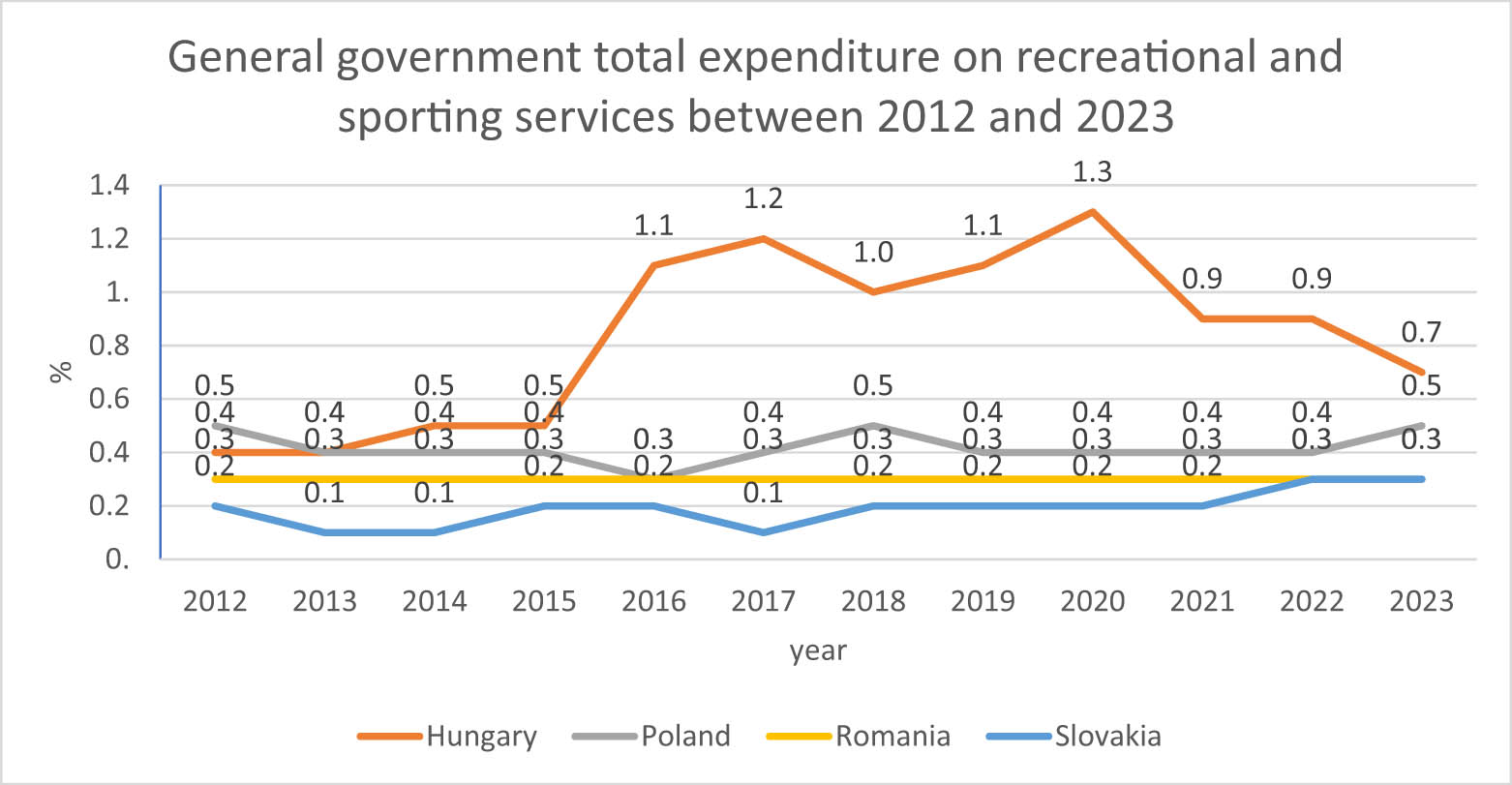
Chart 1
General government total expenditure on recreational and sporting services in relation with the national GDP.
Source: Eurostat: https://ec.europa.eu/eurostat/databrowser/view/gov_10a_exp/default/table? lang = en, own.
These disparities indicate differing levels of political commitment and fiscal prioritization. Hungary and Poland have pursued ambitious state-driven sport agendas, while Romania and Slovakia have taken more constrained approaches.
2.3.2. Country-level Budget Structures (2023)
The following analysis examines each country’s sport budget for 2023, focusing on allocation patterns, structural priorities, and institutional arrangements. As the sport-related expenditures are embedded in the budgets of different ministries across the four countries, the titles, internal structures, and classification systems of these budgets vary considerably, reflecting distinct national administrative logics and policy traditions. Consequently, the available financial data are not organized according to uniform categories, which limits the possibility of direct comparison at first glance.
For this reason, the study first presents a separate, country-specific analysis of the sport budgets of Hungary, Poland, Romania, and Slovakia, describing the institutional context and internal distribution of expenditures in each case. On the basis of these individual analyses, the data are then reorganized into a set of common analytical categories, making it possible to construct a comparative figure that highlights the most important dimensions of public sport spending across the four countries.
2.3.3. Hungary: Centralization and State-led Investment
Public sport financing in Hungary is strongly characterized by centralization and extensive state intervention, reflecting the government’s view of sport as a strategic tool for national identity, geopolitical visibility, and socioeconomic development. Since the early 2010s, sport – particularly ball games and Olympic disciplines – has become a political priority, receiving substantial direct and indirect public support. From 2010, the Hungarian government considered the sport as a national strategic sector (Fűrész & Takács, 2021). This system has contributed to an unprecedented expansion of sport infrastructure and elite-sport programmes; however, it also displays symptoms of inefficiency, high administrative dependence, and a lack of coherent funding models for leisure, grassroots, and spectator sports. Despite sustained investment in Hungarian football and Olympic sports, the performance outcomes have not consistently aligned with the scale of financial inputs, raising questions about the long-term sustainability and effectiveness of the current allocation model.
2.3.3.1. Structure of Public Sport Funding
In the national budget, public sport funding appears in six major categories, with an overwhelming share concentrated in budget lines managed centrally (Chart 2). Approximately 66% of all central sport funds are administered by the Ministry of National Defence, which has been responsible for sport through the Secretariat of Sport since 2022. The allocation of these resources is governed by legal provisions (49/2023. (XII. 28.) HM decree on the management and use of sport-related appropriations) and the ministry’s internal strategy.
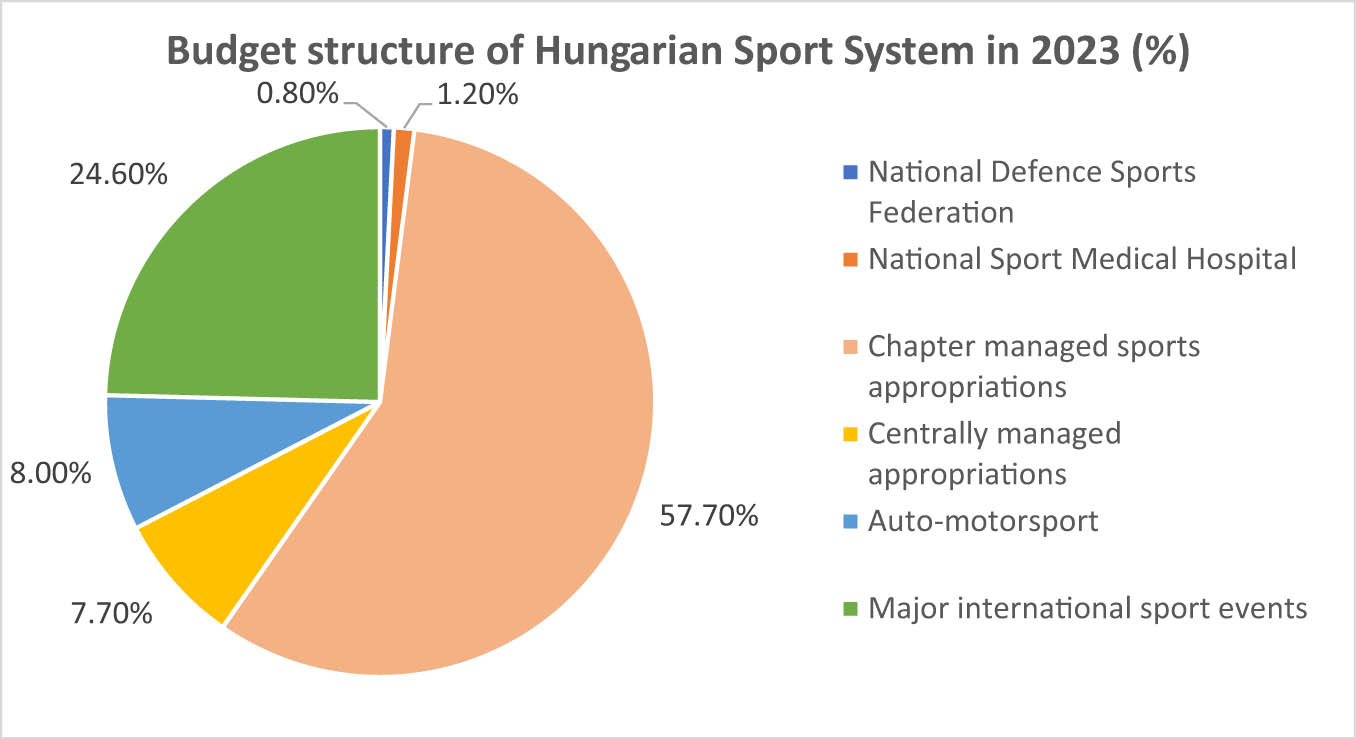
Chart 2
Budget structure of Hungarian sport, 2023.
Source: National Budget 2023.
Most funding is distributed through competitive tenders, requiring sport federations, sport clubs, and other organizations to submit long-term development plans to access public resources. These plans typically align with central strategic objectives, reinforcing a top-down model of governance.
In addition to general funding channels, the state budget includes dedicated appropriations for: the National Sport Medical Institute, motorsport development and event hosting (Hungary hosts Formula 1 in Mogyoród), the National Defence Sports Federation, and, depending on the international event cycle, significant subsidies for hosting global sporting events – a recurring priority in Hungarian sport policy.
2.3.3.2. Allocation Priorities Within the Chapter-managed Budget
A closer examination of the Chapter-Managed Sport Appropriations, operated by the Secretariat of Sport, reveals a strong concentration of resources on elite sport and elite-oriented youth development (Chart 3).
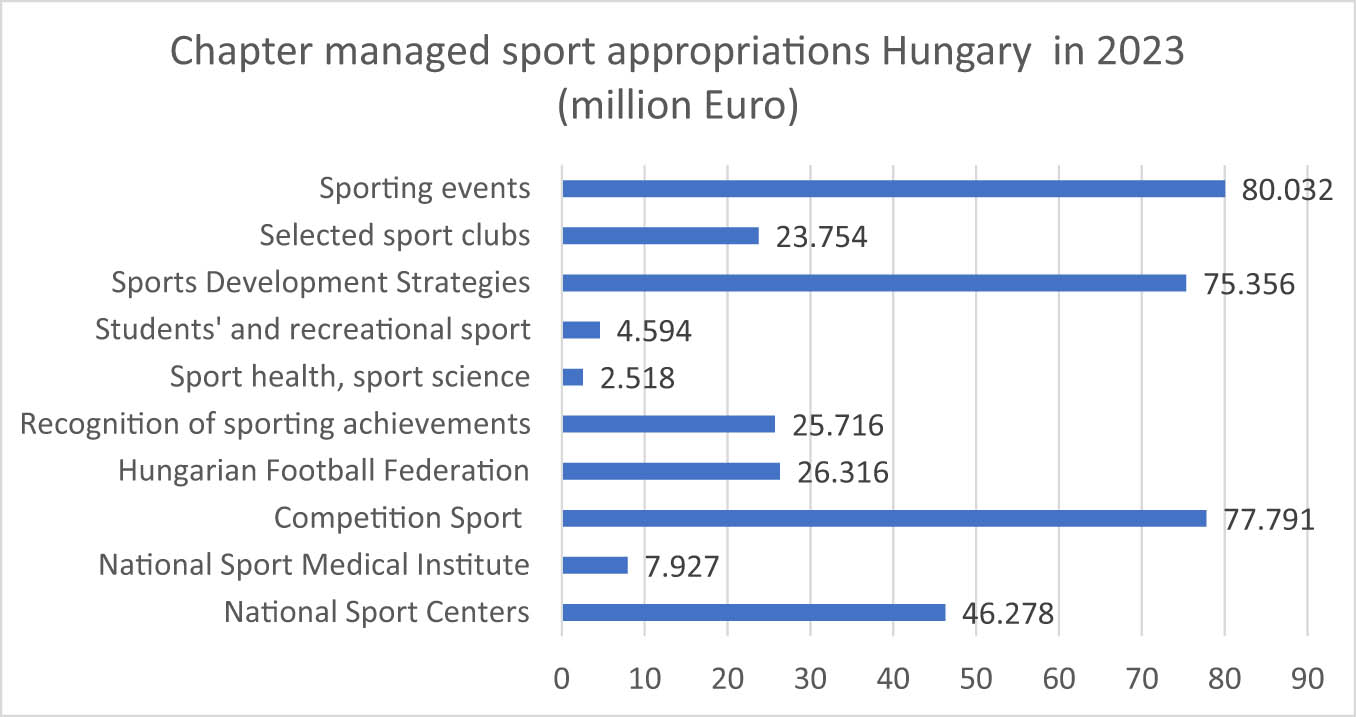
Chart 3
Budget structure of Hungarian sport (2023) – Chapter-managed sport appropriations.
Source: Állami költségvetés 2023. [National Budget 2023]. https://mkogy.jogtar.hu/jogszabaly? docid = A2300006.TV.
Key allocation areas include the organization of competitive sport activities by national sport federations (21.1%); support of the federations’ long-term development strategies, which must align with the goals of the 2022 10-year “Competitive Sports Strategy of the Olympic Sports” (20.4%); targeted support for 30 designated elite sport clubs, recognized for their central role in developing national-team athletes and running high-quality youth programmes; rewarding elite athletes and coaches for international achievements (7%); there is a separate allocation to the Hungarian Football Federation, and additional funding opportunities for hosting domestic and international sporting events.
In contrast, student sport and recreational sport receive only 1.2% of the chapter-managed budget. Although local governments typically provide more substantial support for grassroots sport, and EU funds are accessible for sport-for-all initiatives, the national-level resource structure reflects a continued dominance of elite-oriented objectives.
Several previous studies have reported findings similar to ours.
2.3.3.3. State Intervention and Strategic Focus
Sport is considered a sector of national strategy, with the state responsible for funding and managing public funds to promote sports activities and infrastructure (Tóth & Mátrai, 2023).
The government has heavily invested in football, aiming to develop the sport and strengthen national identity, with funding directed primarily to men’s professional football clubs (Havran & Jandó, 2024).
2.3.3.4. Challenges and Inefficiencies
Despite strong political support, Hungary’s commercialized team sports have underperformed, creating a gap between successful elite sports and popular team sports like football and basketball (Gulyás & Sterbenz, 2015).
The sport financing system is criticized for inefficiency, with excessive funding and non-performance-based remuneration leading to limited improvements (Havran & Jandó, 2024).
2.3.3.5. Innovative Funding Approaches
There is a proposal for a gambling-related, government-controlled sport-marketing programme to provide extra funds for Olympic sports federations (Vaczi & Berkes, 2010)
The need for transparency, accountability, and integrity in the use of public funds is emphasized, with a call for innovative technologies and a shift from extensive to intensive funding phases (Tóth & Mátrai, 2023).
While public sport financing in Hungary is substantial, its heavy reliance on state intervention and political affiliations in resource allocation has led to inefficiencies. Transitioning toward market-oriented strategies and performance-based funding could improve the effectiveness of sport financing and bring it more in line with successful international models (Karsai, 2004).
2.4. Poland: Strategic Diversification and Cohesion Funding
Public sport financing in Poland represents a mixed governance model combining strong central coordination, EU cohesion funding, and significant municipal involvement. Compared with Hungary’s highly centralized elite-sport system, Poland exhibits greater programme diversification and stronger EU-driven infrastructure policy, while maintaining a clear state commitment to Olympic performance. On the other hand, Polish sport financing is administratively fragmented as Ministries often publish both the legal budget line and a broader public “package” number; some programmes are multi-annual and funded from different budget sections or earmarked funds. In this study we used the ministry’s public framing for the 2023 “sport package” (≈PLN 3.5bn) to produce a simplified overview on sport spendings in Poland.
The Polish sport budget is dominated by direct central government expenditure, channelled primarily through the Ministry of Sport and Tourism and the Fund for Development of Physical Culture (Fundusz Rozwoju Kultury Fizycznej – FDKF). The 2023 budget structure shows a strategic emphasis on elite sport, infrastructural investment, and programme-based funding mechanisms (Chart 4).
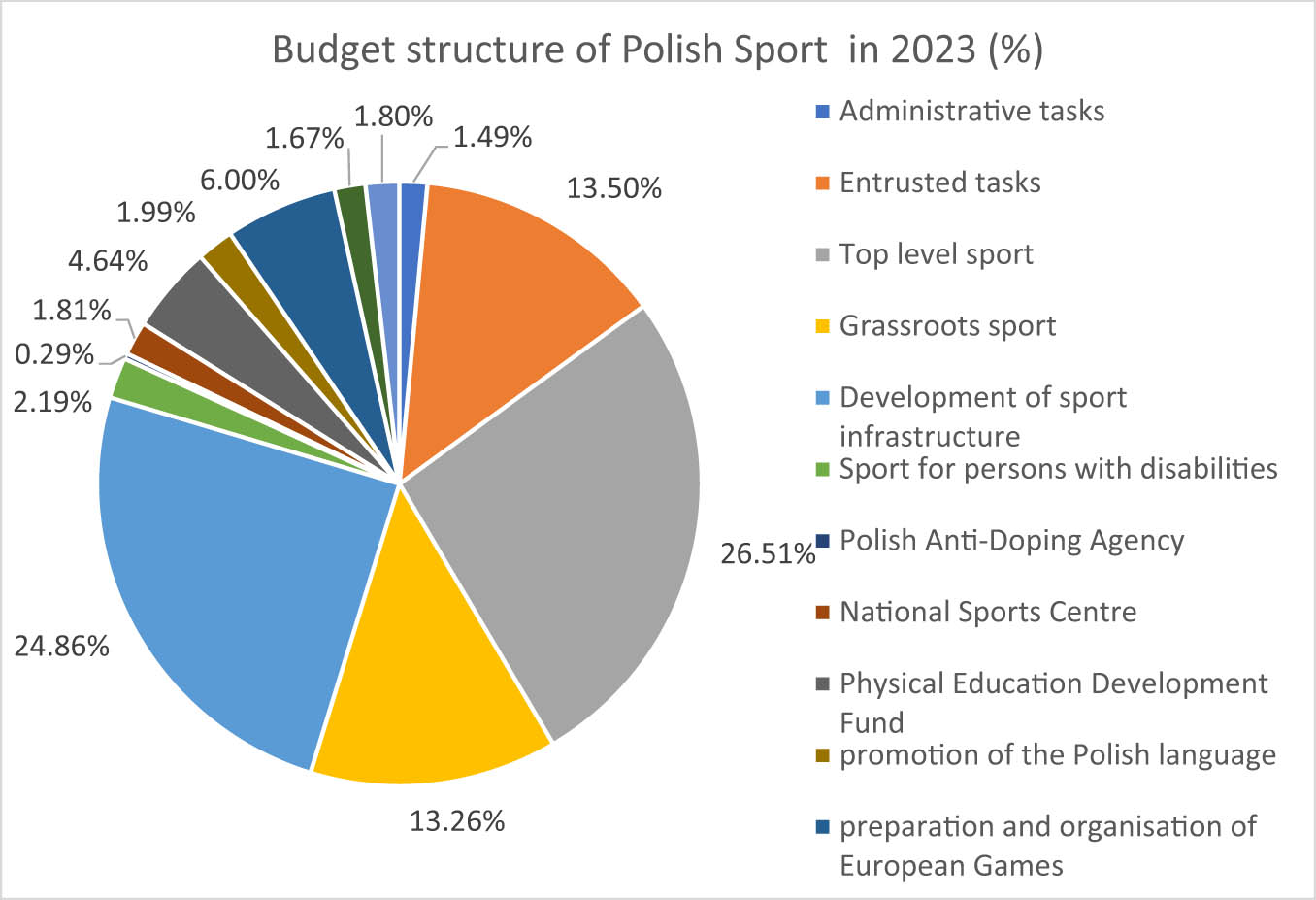
Chart 4
Budget structure of Polish sport (2023).
Source: https://www.gov.pl/web/ministry-of-sports-and-tourism.
Although Poland does not operate a single flagship elite development programme in the same way as Hungary’s TAO or centralized academies, high-performance sport is nevertheless heavily prioritized within the budget structure. Funding for Olympic preparation, national teams, and international competition participation receives the largest share of resources. However, unlike Hungary, Poland relies less on direct financing of clubs and more on programme-based athlete and infrastructure funding.
Poland finances elite sport through multiple instruments, covering a significant percentage of the whole sport budget. Programme Team100 (PFNteam100) was launched in 2017 to provide direct annual grants (stipends) to selected young Polish athletes, typically national-team members in Olympic or Paralympic sports. National federation grants, scholarships, and Olympic preparation programmes together receive a large budget share attributed to “elite sport,” reflecting aggregated national-team and federation subsidies, not a single programme.
In 2023, a multi-annual infrastructure programme, the Programme Olimpia (Programme budowy przyszkolnych hal sportowych na 100-lecie pierwszych występów reprezentacji Polski na Igrzyskach Olimpijskich), was established by a government resolution, to cover the construction of new lightweight school indoor halls or permanent coverings for multifunctional fields (eligible playing area sizes defined in the programme). Intended to improve access to indoor sports infrastructure for pupils and local communities.
There are Sport Development Fund (FDKF) financing infrastructure, youth sport, and institutional programmes, and about 7–10% of its expenditure is allocated to infrastructure modernization and maintenance. Poland also finances sport science through the Institute of Sport, similar to Hungary’s Sport Science Institute. Hosting international sporting events may account for 10–15% of annual variation depending on the calendar. The category labelled as “assignments” (around 22%) reflects flexible contractual spending on several topics, such as event organization, sport promotion programmes, scholarships, federation contracts, and international cooperation.
This structure illustrates a system driven less by permanent legal entitlements and more by annual political-economic prioritization, which distinguishes Poland from Hungary’s long-term institutional commitments to elite academies.
Polish public sport policy operates on a multi-tier athlete development model that combines grassroots participation, structured talent identification, and targeted elite athlete support. Financing for mass and youth sport is primarily channelled through the Fund for Development of Physical Culture (FDKF), which supports local-level participation through programmes such as KLUB, the School Sports Club Programme, and SKAUT. These initiatives directly fund small sports clubs, institutionalize school-based physical education programmes, and provide early talent identification for young children. Compared to Hungary and Romania, where youth development is more heavily centralized through national federations or state academies, Poland follows a more pronounced bottom-up approach that strengthens local sport ecosystems and diversifies recruitment pathways into elite sport.
Elite sport development is organized into two distinct age phases. The primary programme for young high-performance athletes is Team100, which targets under-23 competitors in individual Olympic disciplines. Support includes monthly stipends, medical services, training and recovery support, and access to sport psychologists. Unlike Hungary’s academy-based elite model that focuses on long-term institutional investment, the Polish system emphasizes individual athlete mobility and direct support, allowing athletes greater flexibility in choosing training environments and professional pathways.
Support for adult elite athletes is frequently provided through contracts with state-owned enterprises in strategic sectors such as energy, transport, and mining. This arrangement creates a semi-market model in which athletes serve as brand ambassadors for public enterprises, while companies gain symbolic nation-building value and media visibility. In practice, this represents a form of indirect state financing of elite sport that contrasts sharply with Hungary’s public foundation-based model and Romania’s federation-centred structure.
Coach incentives also form part of Poland’s elite performance strategy. The First Coach programme provides financial rewards to youth coaches whose former trainees later secure Olympic medals. This outcome-based financing mechanism is a rare example of performance-linked compensation in Central Europe and highlights Poland’s effort to retain coaching talent within the development pipeline.
Poland also demonstrates comparatively strong institutional integration of disabled athletes into mainstream sport financing channels. Programmes such as Team100 are accessible to Paralympic athletes, and infrastructure investments increasingly incorporate accessibility requirements, reflecting closer alignment with EU social inclusion objectives than observed in Romania or Slovakia.
2.4.1. Governmental Support for Sports Clubs
The Polish government has established specific programmes to support sports clubs, primarily through subsidies and grants. These programmes are designed to promote sports development at the local level, but challenges remain. For instance, sports clubs often face barriers in accessing state funds due to bureaucratic hurdles and insufficient support from the central government (Piątkowska & Gocłowska, 2016). Despite these challenges, public subsidies have been shown to positively impact the financial and organizational health of sports clubs. Clubs receiving subsidies tend to have higher revenues, more members, and better infrastructure compared to those without such support (Kościółek, 2019).
2.4.2. Role of Municipalities
Municipalities play a crucial role in implementing sports policies at the local level. They are responsible for developing strategic documents that outline priorities for sports development, including infrastructure investments and community engagement. These documents often align with broader EU cohesion policies, ensuring that local initiatives contribute to regional and national development goals (Kogut-Jaworska, 2019; Olkowska, 2023).
2.4.3. Economic Impacts of Public Sport Financing
The EU’s cohesion policy has been instrumental in financing sports infrastructure in Poland. Between 2007 and 2013, significant investments were made in sports and recreational facilities across various regions, including Kujawsko–Pomorskie and Silesia. These investments not only improved the quality of life for residents but also contributed to regional economic development. For example, in Kujawsko–Pomorskie, 227 projects related to sports infrastructure were co-financed by EU funds, demonstrating the transformative impact of such investments (Biegańska et al., 2015; Niesyto & Lovasova, 2015).
State-owned companies and local government units are major stakeholders in professional sports clubs in Poland. State-owned companies generally demonstrate better financial stability, while private enterprises achieve superior sports results (Wyszyński, 2023)
The financing of large-scale sports projects, such as the Euro 2012 stadiums, has sparked debates about the allocation of public funds. While these projects have driven infrastructural development, their long-term utilization and economic viability remain contentious. Public perception studies indicate that technological innovations at these facilities may justify their financing but concerns about “white elephants” persist (Zawadzki, 2022).
Public sport financing in Poland is shaped by a combination of national policies, EU cohesion funds, and local government initiatives. While these policies have driven infrastructure development and improved access to sports facilities, challenges such as bureaucratic inefficiencies and the sustainability of large-scale projects remain. Moving forward, Poland could benefit from diversifying its state aid strategies and adopting a more balanced approach to sports financing, drawing lessons from other EU member states.
2.5. Romania: Underinvestment and Institutional Volatility
Public sport financing in Romania remains highly dependent on state funding from central, county, and municipal budgets, but suffers from structural underinvestment and institutional instability. Compared to Hungary and Poland, Romania allocates significantly fewer public resources to sport, while also lacking a coherent long-term development strategy. The system is further constrained by outdated legislation and weak regulatory mechanisms, which collectively limit both financial efficiency and strategic planning capacity. As a result, Romanian sport operates under conditions of chronic resource scarcity rather than targeted policy coordination.
2.5.1. Structure and Scope of Public Funding
Romanian sports clubs and federations rely predominantly on public subsidies, which are widely regarded as insufficient to ensure stable organizational development (Merka & Cojocaru, 2024). Gherghina (2015) notes that existing legal provisions do not provide an adequate framework for financing capital investments, which results in fragmented infrastructure development and poor facility maintenance. In contrast to Hungary, where sport has become a politically prioritized sector, and Poland, where diversified funding instruments and EU cohesion funding significantly augment domestic resources, the Romanian system remains narrowly budget-driven and fiscally constrained.
The 2023 state budget for sport (Chart 5) reflects these structural weaknesses. The largest share of expenditure is devoted to administration and governance of sport institutions, indicating limited prioritization of operational and developmental programmes. Expenditure towards performance sport accounts for approximately 28.2%, while recreational sport and sport services receive only around 10% of central funding. The Romanian Olympic and Sports Committee is allocated a relatively high proportion (7.4%), yet investments into infrastructure and facility maintenance remain marginal. In practice, Romania maintains organizational structures comparable to higher spending countries but does so with a significantly smaller financial base.
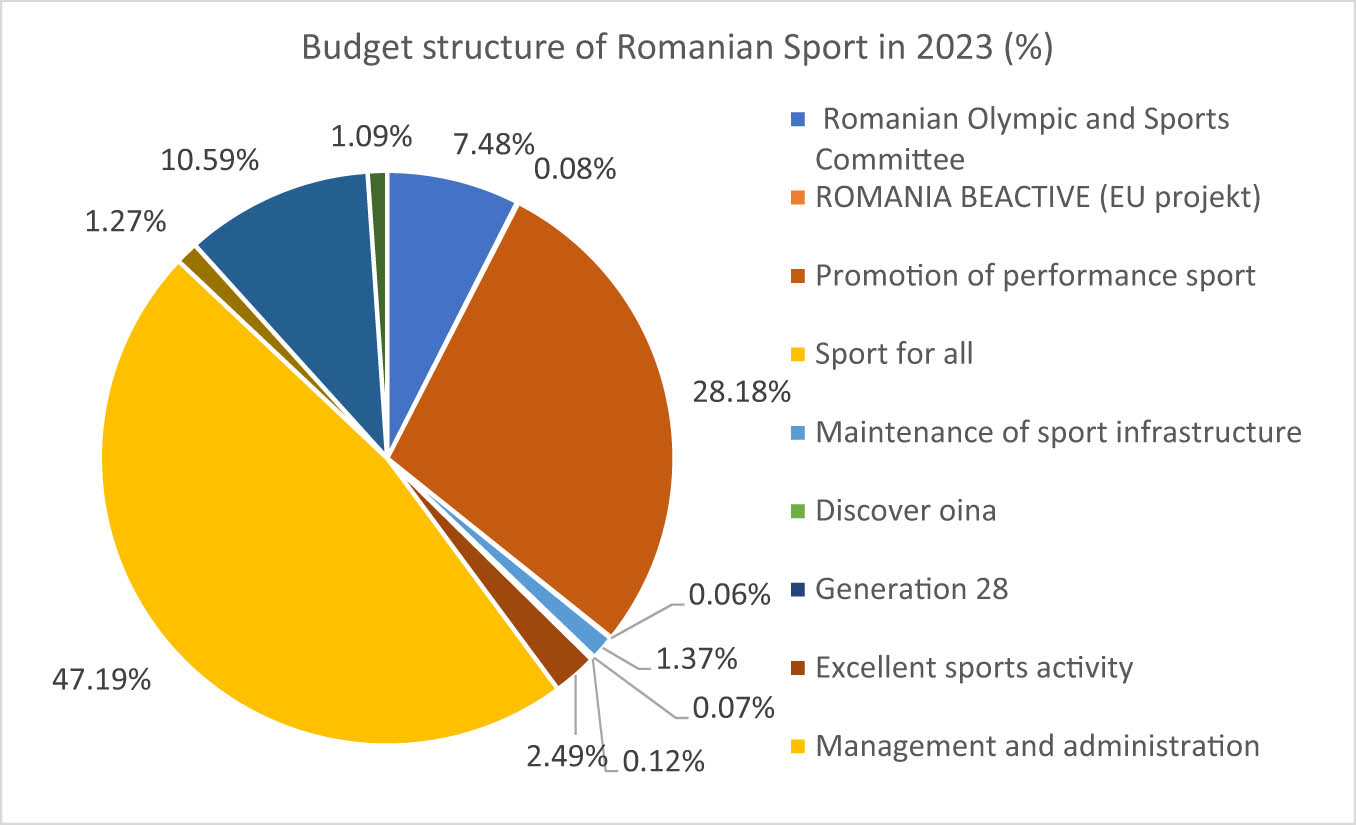
Chart 5
Budget structure of Romanian sport (2023).
Source: https://mfinante.gov.ro/static/10/Mfp/buget2022/proiectbuget2022/Anexa3/Ministerul_Sportului.pdf.
Several special programmes illustrate policy ambition despite limited fiscal scale. Generation 28 targets youth development and inclusion of people with disabilities, Discover Oina promotes the national sport heritage, and Romania BeActive forms part of EU-backed physical activity initiatives. However, compared to major infrastructure programmes in Poland or elite systems in Hungary, these initiatives remain modest in scale and limited in measurable impact.
2.5.2. Governance Instability and Policy Fragmentation
Romanian sport governance has undergone recurrent institutional reforms in recent years, resulting in fluctuating mandates, changing ministry structures, and short-lived strategic frameworks. This contrasts with Poland’s relatively stable sport administration and Hungary’s highly centralized governance model. The absence of long-term policy continuity in Romania weakens developmental planning and complicates the absorption of EU funding. Rather than pursuing a coordinated national sport strategy, Romania operates through disconnected project streams that limit cumulative policy effects.
In addition, sport financing functions as a zero-sum system, in which increased funding for one federation often occurs at the expense of others, creating competition rather than systemic growth (Arkalov, 2024). This further fragments the sector and inhibits cooperation among sport organizations. Unlike Poland’s competitive grant system, which is integrated into a broader investment strategy, Romanian resource allocation lacks transparent and performance-based funding frameworks.
2.5.3. Absence of Private-sector Engagement
Romania has not developed a structured partnership model with state-owned enterprises or private corporations, unlike Poland and Hungary where corporate sponsorship and hybrid financing mechanisms expand the public sport resource base. According to Merka and Cojocaru (2024), stronger private-sector involvement would be essential to reduce fiscal dependence on state budgets and stimulate institutional modernization. At present, the private sector’s role in Romanian sport financing remains marginal and largely informal.
2.6. Slovakia: Federation-driven and Fragmented Financing
Public sport financing in Slovakia is primarily mediated through national sport federations, resulting in a highly fragmented and partially opaque funding system. Chart 6 shows that approximately 59% of the national sport budget is channelled through federations, which allocate resources to clubs, athletes, and competitive programmes, while only modest portions are directed to elite achievement (2%) and infrastructure maintenance (4%). National sport projects including event hosting, facility development, and other strategic initiatives receive around 15% of the budget. Smaller allocations exist for school, university, and mass-participation sport, reflecting limited support for grassroots development (Varmus et al., 2023; Spáč, 2016).
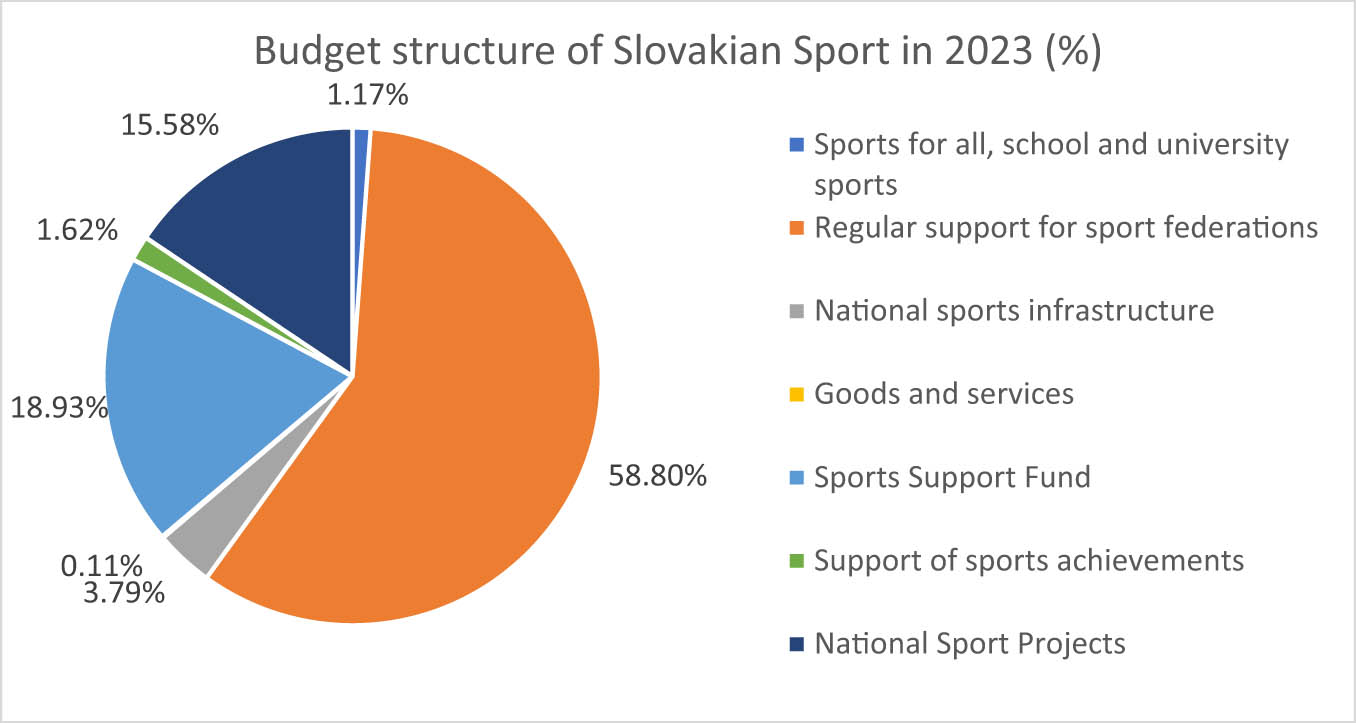
Chart 6
Budget structure of Slovakian sport (2023).
Source: https://www.minedu.sk/data/att/89d/28534.3a695a.pdf.
The Slovak model contrasts sharply with the centralized, ministry-driven approaches observed in Hungary and Poland. While those countries maintain strong public oversight and, in Poland’s case, EU-integrated funding channels, Slovakia relies heavily on federations as the administrative and financial intermediaries. This structure has produced efficiency and equity challenges: studies indicate that grant allocation often favours municipalities with political connections, undermining the neutrality and intended reach of public programmes (Spáč, 2016). The lack of a comprehensive, transparent database for tracking funding across administrative levels exacerbates inefficiencies and threatens sustainability (Varmus et al., 2023). Proposals for reform include the creation of a transparent digital monitoring system, potentially leveraging blockchain technologies to ensure accountability and improve resource allocation (Varmus et al., 2023).
The Slovak Sports Support Fund acts as a coordinating institution, providing methodological, advisory, and educational support while facilitating cooperation with international organizations. It is responsible for managing project applications, monitoring implementation, and promoting sport nationally. However, its effectiveness is limited by the broader fragmentation of the funding system and the low relative financial support for grassroots and mass-participation initiatives.
Despite these constraints, analysts identify opportunities for reform. Improving transparency in grant allocation, establishing performance-based funding criteria, and enhancing data monitoring could strengthen efficiency, fairness, and sustainability in Slovak sport financing (Kučera & Nemec, 2022; Zimková & Kučera, 2024). In comparative terms, Slovakia’s reliance on federations mirrors aspects of Romania’s federation-centred model but differs from Poland’s EU-cohesion-linked infrastructure strategy and Hungary’s highly centralized elite-focused system.
2.7. Comparison of the Sport Budget Structures
Since 2020, public sport financing has varied significantly across Hungary, Poland, Slovakia, and Romania, reflecting distinct strategic priorities and institutional approaches. Hungary and Poland have markedly increased investments in elite sport and infrastructure, particularly in preparation for international competitions, whereas Romania and Slovakia have allocated more modest funds, focusing selectively on competitive sport and traditional disciplines. Romania’s spending has been inconsistent, often concentrated on high-profile Olympic sports such as gymnastics, athletics, and football, while Slovakia prioritizes elite performance in winter sports and popular national disciplines like ice hockey (Zimková & Kučera, 2024; Merka & Cojocaru, 2024).
The structure of sport budgets further illustrates these divergent approaches (Chart 7). Competitive sport dominates funding priorities in all four countries, consistent with a long-standing emphasis on elite performance. In Slovakia, nearly 60% of central sport funds are allocated to support elite athletes, with additional spending on sport development and programmes (∼34%), reflecting the federation-driven model of resource allocation. Romania contrasts sharply: nearly 50% of the 2023 budget is devoted to management and administration, covering Olympic and non-Olympic federations, the Paralympic Committee, and affiliated clubs, leaving comparatively modest resources for infrastructure, grassroots programmes, or elite support. The high administrative proportion in Romania’s sport budget likely reflects a combination of institutional complexity, weak strategic prioritization, and historical path dependency. It contrasts with Poland and Hungary, where administrative costs are lower, and more resources are channelled directly to programmes, athletes, and infrastructure. It is a clear marker of under-reformed governance and highlights why Romania struggles to achieve systematic sport development. Hungary and Poland maintain explicit allocations for sport development, infrastructure, and athlete recognition, alongside competitive sport. Hosting international events is a major driver of spending in Hungary and Poland, underlining the strategic use of infrastructure investment to combine elite performance and international visibility.
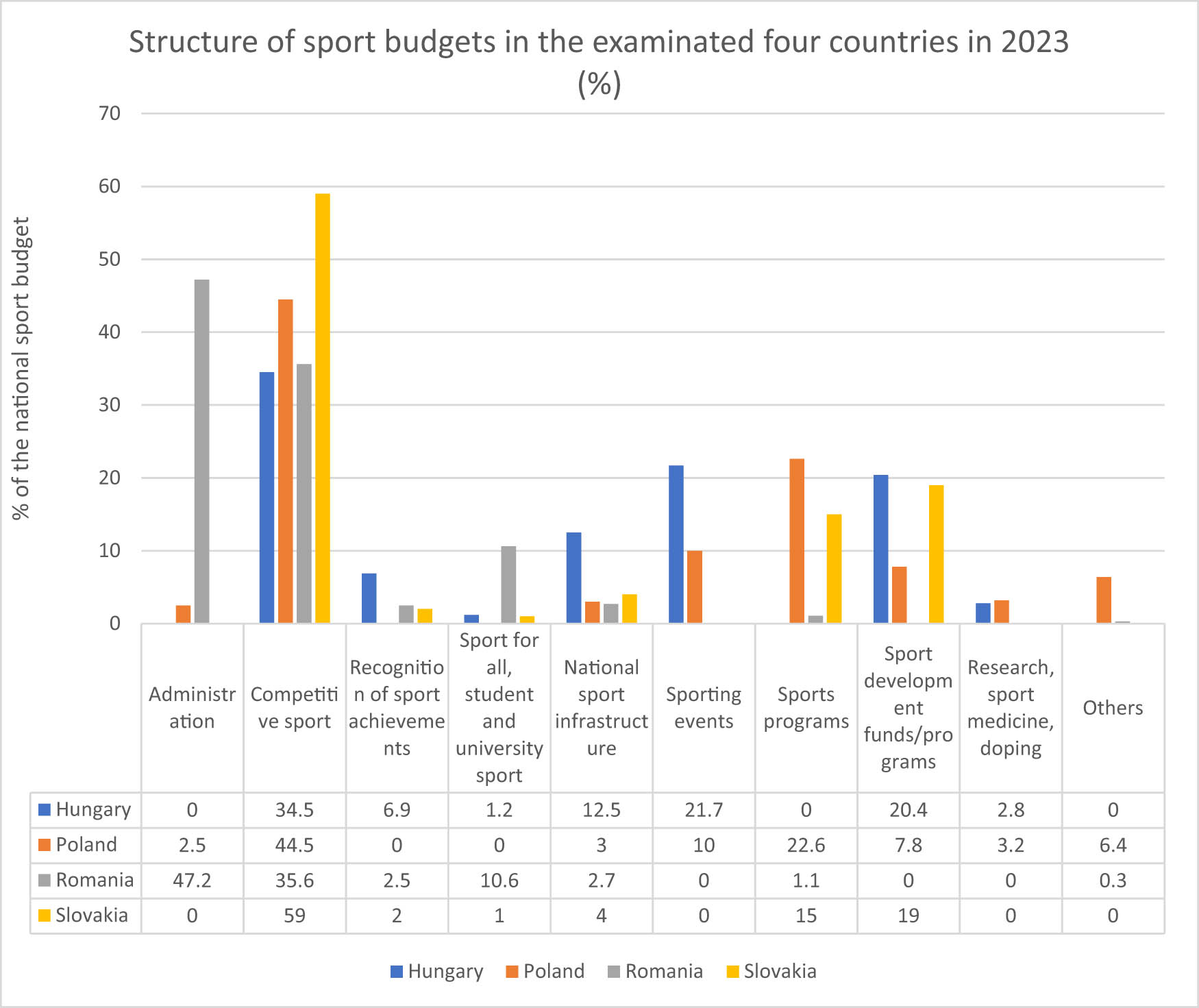
Chart 7
Budget structure of the countries examined in 2023.
Source: Sport budget of the four countries in 2023.
Comparative analysis highlights differing institutional logics. Hungary exemplifies a centralized, state-driven model with path-dependent investments prioritizing elite sport and high-profile events. Poland demonstrates a more balanced and flexible strategy, combining infrastructure, grassroots development, and elite athlete support, integrating EU cohesion funding where relevant. Slovakia and Romania reflect under-reformed systems with weaker institutional capacity, resulting in fragmented or inconsistent funding patterns that risk undermining long-term sustainability and development.
In sum, the budget composition reveals a hierarchy of political prioritization: Hungary invests heavily to signal national commitment and international competitiveness; Poland pursues balanced development; Slovakia and Romania operate under fiscal and institutional constraints, focusing narrowly on elite performance. These differences illustrate the interaction of historical path dependence, policy adaptability, and institutional capacity in shaping national sport financing strategies.
2.8. International Performance of Athletes
The comparative performance trajectories of Hungary, Poland, Romania, and Slovakia reveal clear and persistent hierarchies in elite sport outcomes over the past decade. Across Olympic Games, World Championships, and European Championships, Hungary and Poland consistently outperform Romania and Slovakia, confirming a stratified pattern of international competitiveness within the region. While Hungary demonstrates stable dominance, Poland maintains a strong and balanced competitive profile, and Romania and Slovakia display comparatively weaker and more fragmented performance patterns.
Olympic performance patterns reinforce the regional hierarchy observed across international sport. According to Chart 8, Hungary consistently occupies a leading position at the Summer Games, reflecting long-term excellence in technically demanding and tradition-rich disciplines. Poland displays the most balanced Olympic profile, combining stable summer results with comparatively strong winter performances, indicating a diversified and resilient elite sport system. Romania’s Olympic results show a persistent downward trajectory, particularly pronounced in the erosion of performance depth and discipline diversity. The absence of success in Winter Olympic disciplines further highlights structural weaknesses in talent identification and sport infrastructure. Slovakia presents a highly specialized Olympic profile, achieving limited success primarily in select Winter sports while remaining marginal in summer competition. Overall, Olympic outcomes reflect cumulative national sport strategies rather than short-term fluctuations, with institutional depth and strategic prioritization emerging as decisive factors.
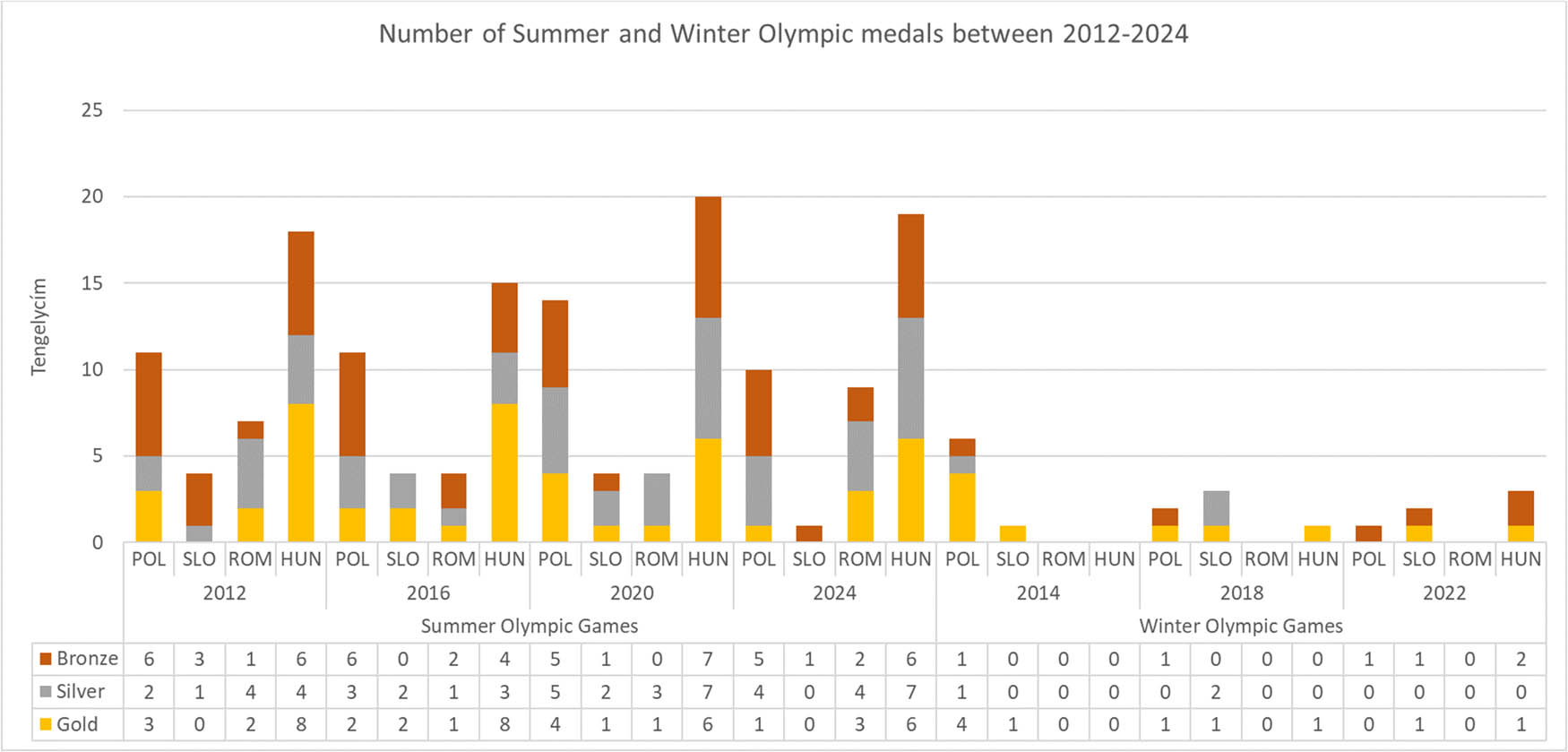
Chart 8
Number of Olympic medals won at the Summer and Winter Olympic Games (2012–2024), POL: Poland, SLO: Slovakia, ROM: Romania, Hun: Hungary.
Source: Data from the Official Website of the IOC.
Due to the disruption caused by the COVID-19 pandemic, international championship calendars became irregular and structurally distorted from 2020 onward. For this reason, the analysis of World and European Championship performance is limited to the period 2012–2020 (Chart 9), in order to preserve cross-national comparability and avoid bias introduced by cancelled events, altered qualification systems, and unequal participation conditions. Within this revised timeline, performance patterns largely mirror Olympic hierarchies and reveal broader system-level capacity rather than single-event outcomes. Hungary and Poland demonstrate consistent medal acquisition across a wide range of disciplines, indicating mature athlete development pipelines and stable performance structures. Romania’s international results are marked by unevenness and episodic success, suggesting reliance on isolated high-performing athletes rather than sustainable development systems. Slovakia remains competitively constrained, with limited continental and global presence, reflecting a narrow performance base and systemic capacity limits.
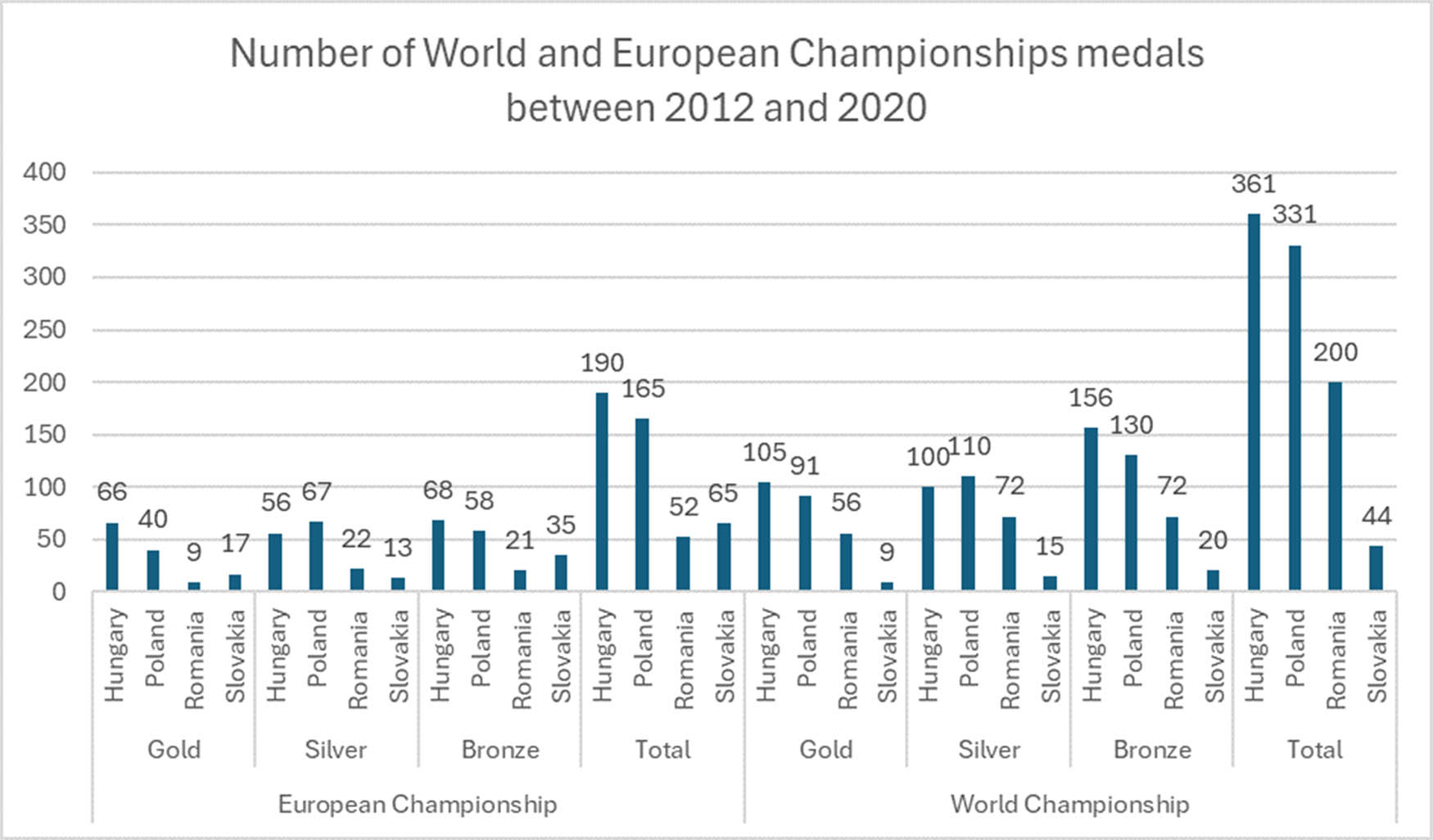
Chart 9
Number of World Championships and European Championships medals in Olympic disciplines (2012–2020).
Source: Data from the official websites of the International and European Sport Federations.
These outcomes closely align with national public financing strategies. Countries with sustained, targeted, and strategically coordinated investment, namely, Hungary and Poland exhibit superior competitive performance and greater medal consistency. By contrast, Romania and Slovakia, where sport funding is either inconsistent, administratively heavy, or narrowly distributed, show weaker international outcomes and greater volatility. This suggests a relationship similar to a regression-type effect: higher levels of strategic financial commitment and institutional coherence correspond strongly with elite sport success, whereas fragmented financing models correlate with inferior performance.
From an institutional theory perspective, elite sport success reflects not only financial input but also governance quality, organizational capacity, and strategic alignment. Hungary’s centralized, state-led model provides strong institutional coupling between political objectives, funding mechanisms, and sport federations, enabling predictable performance pathways and efficient talent development systems. Poland’s more adaptive institutional structure achieves comparable success through flexibility and integration of development, infrastructure, and elite performance objectives.
In contrast, Romania and Slovakia exhibit characteristics of under-institutionalization, including fragmented governance, weak coordination, and insufficient policy feedback mechanisms. Romania’s disproportionately high administrative expenditure suggests misallocation of resources and ineffective governance structures, resulting in limited conversion of investment into athletic performance. Slovakia’s narrow sport specialization reflects a system constrained by both fiscal capacity and institutional depth.
Path dependence further explains the observed divergence. Hungary’s continued investment in historically successful disciplines illustrates how entrenched institutional choices reinforce performance advantages over time. Early strategic decisions, particularly regarding infrastructure development and elite sport prioritization, have generated increasing returns, making deviation from this trajectory unlikely. Poland similarly benefits from cumulative institutional learning and policy adaptability. Conversely, Romania’s failure to modernize governance frameworks has locked the system into inefficient structures, reproducing underperformance through historical inertia rather than strategic renewal.
2.8.1. Policy Implications
The findings emphasize that elite sport performance depends less on absolute spending levels than on how financial resources are structured, governed, and strategically targeted. Three key policy lessons emerge:
Governance reform is as important as funding: Administrative-heavy structures undermine performance capacity. Resources must be shifted toward athlete support, coaching, and performance systems.
Strategic concentration outperforms diffuse investment: Countries should identify and develop discipline-specific excellence rather than attempt broad but under-resourced competition.
Institutional stability enables performance predictability: Long-term policy coherence and performance monitoring mechanisms are essential for sustained international competitiveness.
Overall, the comparative evidence demonstrates that elite sport success emerges from the interaction of financial capacity, institutional design, and historical trajectory. Without governance modernization and strategic coherence, increased funding alone is unlikely to yield significant performance gains.
2.8.2. Medals Per Capita Analysis
Assessing medals relative to population size provides insight into each country’s efficiency in converting resources into athletic success.
Table 2 shows the Olympic performance of Hungary, Poland, Romania, and Slovakia over the period 2012–2024 by considering both the total number of medals and medals per million inhabitants, using estimated population data for 2024. This per capita metric offers a more accurate perspective on national performance relative to demographic scale and sport system efficiency.
Table 2
Medals per capita regarding the time period 2012–2024.
| Country | Population (approx. 2024) | Total medals (2012–2024) | Medals per million people |
|---|---|---|---|
| Hungary | 9.5 million | 76 | 8 |
| Poland | 38.5 million | 55 | 1.43 |
| Romania | 19 million | 26 | 1.37 |
| Slovakia | 5.5 million | 15 | 2.72 |
Source: Data from Eurostat and the Official Website of the IOC.
Hungary demonstrates the highest efficiency with eight medals per million inhabitants, despite having a mid-sized population (9.5 million). This exceptional per capita performance reflects a highly developed elite sport system, long-standing Olympic traditions, and strategic investment in targeted disciplines such as canoeing, water sports and fencing. Hungary’s ability to consistently outperform much larger nations suggests a strong alignment between policy, funding, and athlete development.
Poland and Romania, while having significantly higher populations (38.5 and 19 million, respectively), show relatively low medal efficiency, 1.43 and 1.37 medals per million, respectively. These figures suggest that despite greater human and economic resources, both countries underperform relative to their demographic potential. Contributing factors may include fragmented sport development systems, limited talent retention, or insufficient investment in Olympic-level preparation.
Slovakia, although recording the lowest absolute medal count (15), ranks second in relative efficiency with 2.72 medals per million. This result is notable given Slovakia’s small population (5.5 million) and reflects a modest but focused success in select sports, particularly in Winter Olympic disciplines and niche events.
This per capita analysis highlights that larger populations do not necessarily translate into higher Olympic success, particularly when measured by efficiency. Instead, success is more closely tied to effective sport governance, talent identification, coaching infrastructure, and sustained public investment. Hungary’s case exemplifies how small nations can achieve global competitiveness through strategic focus, while Poland and Romania’s results suggest untapped potential constrained by structural inefficiencies.
Overall, the per capita analysis underscores that population size alone is not a determinant of Olympic success. Rather, effectiveness hinges on sport governance, systematic talent identification, coaching quality, and sustained, strategically allocated investment. Hungary exemplifies how smaller nations can achieve global competitiveness through efficiency and focus, whereas Poland and Romania illustrate the challenges of translating demographic and financial potential into elite sport outcomes. Slovakia’s results highlight the value of targeted strategies and prioritization in smaller countries.
Hungary allocates a substantial share to competitive sport (34.5%), sporting events (21.7%), and sport development funds/programmes (20.4%), this targeted allocation emphasizes elite sport development, explaining the high efficiency in medals per capita. While Competitive spending in Poland is high in absolute terms (44.5%), relatively low investment in training facilities, talent identification, and athlete development may limit long-term efficiency, resulting in lower per capita medal returns. Romania heavily emphasizes administration (47.2%), so this structural imbalance may hinder efficient translation of resources into international success, reflecting Romania’s low medal efficiency. Finally, Slovakia shows a unique profile, with major focus on competitive sport (59%) and development programmes (19%), this strategic focus helps small countries like Slovakia maximize outcomes in targeted disciplines despite limited overall budgets.
Overall research results suggest that,
(1) Investment efficiency matters more than absolute spending. Hungary and Slovakia achieve higher per capita medal returns due to strategic allocation toward elite sport, while Poland and Romania underperform despite larger populations.
(2) Budget structure strongly influences outcomes. Countries prioritizing competitive sport and athlete development see better Olympic results per capita. In contrast, high administrative spending or underdeveloped infrastructure can reduce efficiency.
(3) Targeted funding amplifies the impact of small budgets. Slovakia demonstrates that focused investment in select sports, even with a modest total budget, can yield disproportionately high results per capita.
(4) High per capita expenditure correlates with high medal efficiency. Hungary’s top investment levels and clear budget focus are mirrored by its leading medals-per-capita score, suggesting a positive relationship between consistent, well-allocated funding and international success.
2.8.3. Country Specific Performance and Institutional Analysis
2.8.3.1. Hungary
Hungary’s consistent Olympic achievements are rooted in its centralized sports governance and sustained investment in elite athlete development. The country’s focus on sports like fencing, swimming, and canoeing has yielded high returns. Institutional stability and long-term planning have fostered an environment where athletes can thrive. Decision-makers recognized that the maintenance of the same level of Olympic success will be increasingly challenging; however, they are explicitly committed to set similar Olympic goals with attached financial funding for Los Angeles 2028 and Brisbane 2032.
2.8.3.2. Poland
Poland’s balanced approach to sports investment has led to steady, albeit moderate, Olympic performances. While not as centralized as Hungary, Poland’s diversified support across various sports disciplines has prevented significant declines, maintaining a stable presence on the Olympic stage.
2.8.3.3. Romania
Romania has experienced a notable decline in Olympic success, attributed to institutional instability and reduced investment in sports infrastructure. The lack of coherent long-term strategies and governance challenges have hindered athlete development and performance.
2.8.3.4. Slovakia
Slovakia’s targeted investment in specific sports, such as canoeing and shooting, has resulted in modest Olympic achievements. While not broad-based, this focused strategy has allowed Slovakia to maintain a presence in its chosen disciplines, reflecting a selective but effective institutional approach.
2.9. Alignment with Institutional Theory
The observed performances align with institutional theory principles (Table 3).
Institutional Inertia: Hungary’s entrenched systems and traditions in sports governance have perpetuated its success, demonstrating how established institutions can sustain high performance.
Policy Adaptability: Poland’s ability to maintain consistent results through diversified investment showcases the benefits of adaptable policies within a semi-centralized framework.
Reform Gaps: Romania’s decline underscores the consequences of failing to adapt institutional structures to evolving demands, highlighting the risks of stagnation.
Selective Focus: Slovakia’s strategic concentration on specific sports illustrates how targeted institutional support can yield results, even with limited resources.
Table 3
Alignment of national sport systems with institutional theory in Central and Eastern Europe.
| Country | Institutional logic | Governance structure | Funding style | Olympic trend (2012–2024) | Theoretical interpretation |
|---|---|---|---|---|---|
| Hungary | Institutional inertia | Centralized, state-led | Strong state support | Consistently high | Legacy structures sustain performance |
| Poland | Policy adaptability | Semi-centralized | Mixed funding with EU and local government | Stable, improving | Adaptive institutions support resilience |
| Romania | Reform gaps | Volatile, fragmented | Underinvestment | Declining | Weak institutions undermine reform |
| Slovakia | Selective focus | Fragmented, federation-led | Focused support | Modest, niche success | Strategic targeting in lieu of breadth |
Source: Author’s contribution.
3. Conclusion
This study explored how institutional legacies, the direction and timing of governance reforms, and different approaches to public financing influence elite sport outcomes in four post-communist EU states: Hungary, Poland, Romania, and Slovakia. Drawing on document analysis, comparative policy review, and spending and performance data, the findings suggest that the development of elite sport in these countries has been shaped by distinct institutional pathways that originate from a shared socialist background. Although each country dismantled the centralized sport model that existed under state socialism, the evolution of their sport systems has been driven by contrasting political choices, strategic priorities, and administrative capacities.
The analysis highlights three institutional dimensions that structure these pathways. First, institutional legacies continue to exert a strong influence over how sport systems are governed and financed today. Elements of centralized decision-making and strong reliance on public funding remain most visible in Hungary, where these patterns have been reinforced by extensive state intervention. Second, the order and stability of reforms determine the extent to which long-term strategies can be implemented. In Poland, gradual and relatively consistent reforms have produced a hybrid model in which national sport associations play a more visible role alongside government support, whereas in Romania, frequent institutional changes have disrupted strategic continuity. Third, budgeting practices, and in particular, the predictability and concentration of funding, matter for talent pathways and international competitiveness. The findings indicate that steady investment in high-performance programmes is more closely linked to elite results than the overall size of public spending, as shown by Slovakia’s selective approach despite its comparatively limited resources.
These results contribute to institutional theory by showing that post-communist sport systems do not follow a linear trajectory towards a standard Western European governance model, nor do they simply reproduce socialist structures. Instead, they display hybrid arrangements in which elements inherited from the past coexist with selectively introduced contemporary governance practices. Situating these findings within the broader debate on the European Model of Sport, the analysis also draws attention to the limited representation of Eastern European countries in comparative sport policy research, despite the value they offer for understanding how European governance principles are interpreted and put into practice within different institutional contexts.
The conclusions are based on combined performance data from the Olympic Games between 2012 and 2024, while World Championships, and European Championships between 2012 and 2020, rather than relying on a single event as an indicator of international success. Incorporating results from World and European Championships alongside the Olympics provides a wider basis for assessing international competitiveness across priority sports. The findings point to a close relationship between international performance and structural features of sport systems: the continuity of strategic direction, the ability to coordinate organizations and programmes, and the integration of funding with long-term goals. Short-term initiatives or event-driven investments appear insufficient to compensate for fragmented governance or unstable funding cycles. Although the study does not apply SPLISS scoring, the results are broadly consistent with several of its key pillars, especially those relating to coordination, targeted funding, and the development of athlete pathways.
The study has limitations that suggest directions for further research. The comparative design was shaped by the availability and consistency of data, particularly regarding participation and grassroots sport, where comparable indicators were not available across all four countries. As a result, the analysis concentrates on elite sport and does not attempt to evaluate participation trends. Future research that uses process tracing or detailed national studies could offer deeper insight into how specific political dynamics and reform coalitions shape institutional change. Extending the comparison to additional post-communist countries would also provide a fuller picture of the diverse trajectories of sport development in Eastern Europe.
Taken together, the findings show that the transformation of sport systems after the end of state socialism is a path-dependent and politically embedded process, shaped by historical legacies, reform sequences, and funding priorities. Examining four contrasting cases broadens the scope of comparative sport policy research and highlights the importance of institutional context for understanding international sporting performance in post-communist Europe.
Acknowledgments
The authors would like to thank all individuals and institutions who contributed to the development of this study but did not meet the criteria for authorship.
Funding information
The authors gratefully acknowledge the financial support of the Hungarian University of Sports Science (HUSS), which covered the publication fee.
Authors’ contribution
Fateme Zare: conception and design of the study; Nikoletta Sipos-Onyestyák, Peter Szabo: acquisition of data; Nikoletta Sipos-Onyestyák, Fateme Zare, Peter Szabo: analysis and interpretation of data; Nikoletta Sipos-Onyestyák, Fateme Zare: manuscript preparation.
Conflict of interest statement
The authors declare that there are no competing interests. The research was conducted independently and was not influenced by any commercial associations or financial interests.