
1. Introduction
In recent decades, sustainable construction has gained relevance in developing countries, driven by the need to mitigate environmental impacts and optimise resource use (Durdyev et al. 2018; Agyekum et al. 2022; Atmoko et al. 2025). This approach integrates practices and technologies aimed at energy efficiency, emissions reduction, rational use of materials and minimisation of environmental impact throughout the life cycle of buildings (Darko and Chan 2018; Wang et al. 2018; Nguyen and Macchion 2023a). Furthermore, it generates economic and social benefits, strengthening its relevance in emerging contexts (Tran et al. 2020).
However, the transition to 0sustainable practices faces significant barriers in developing countries (Darko and Chan 2018; Marsh et al. 2020; Akcay 2023). These include high initial costs, limited access to financing and limited availability of economic incentives, which restrict the adoption of green technologies (Alohan and Oyetunji 2021; Assadiki et al. 2022; Almakayeel et al. 2023; Mohamed et al. 2023). Furthermore, weak regulatory frameworks, low oversight and insufficient technical knowledge among sector stakeholders exacerbate the problem (Wu et al. 2019; Khalil et al. 2021; Shaker et al. 2022). These challenges are intensified in regions with rapid urbanisation, pressure for economic growth and budget constraints (Zulu et al. 2022; Ghasemi et al. 2024).
Despite the growing number of studies and reviews analysing sustainable construction, significant gaps remain in the literature. In particular, many previous reviews focus on specific national contexts, prioritise developed countries, or address barriers in a descriptive and fragmented manner, without systematically integrating the interrelationships between economic, regulatory, technical and sociocultural factors. Furthermore, the available evidence exhibits uneven geographical coverage and limited integration of multidisciplinary approaches: most studies are concentrated in Asia and Africa, while Latin America, the Caribbean and certain regionsof the Middle East have a reduced scientific output (Assadiki et al. 2022; Genovese and Zoure 2023; Komurlu et al. 2024). This lack of coverage limits the generalisability of findings, reduces the possibility of designing comparative public policies and hinders the formulation of strategies adapted to local contexts (Mukattash and Hyarat 2022; Rita et al. 2023).
In response to this situation, several authors have highlighted the need for studies that rigorously systematise existing barriers, allowing for the identification of trends, key actors and opportunities for future research (Pham et al. 2024; Poorisat et al. 2024). In this context, this study contributes to the literature through a comprehensive and up-to-date systematic review, integrating research published between 2015 and June 2025 with a specific focus on developing countries. Unlike previous reviews, this work not only identifies the most recurrent barriers but also organises them within a structured analytical framework, built upon a transparent and replicable coding process. Furthermore, the analysis incorporates an integrative perspective that allows for examination of the interrelationships between the different categories of barriers, providing a deeper understanding of how they reinforce each other and influence decision-making at the project level.
Consequently, the following research question is posed: What are the main barriers and how do they hinder the implementation of sustainable construction in developing countries? Based on this, the objective of this article is to systematically identify and analyse the main barriers that hinder the implementation of sustainable construction in developing countries, through a systematic review of the literature published between 2015 and June 2025. In this way, the study offers a conceptual and empirical basis that strengthens the formulation of strategies, public policies and management decisions aimed at promoting the adoption of sustainable construction in emerging contexts.
Finally, the article is organised as follows: Section 2 describes the methodology employed, including the data-bases consulted, the search criteria applied and the PRISMA protocol; Section 3 presents the results, identifying the barriers encountered and classifying them into five categories; Section 4 analyses the findings, highlighting interrelationships, gaps and regional gaps; and Section 5 formulates the conclusions, addressing theoretical and practical implications, and proposing a future research agenda.
2. Methodology
The search strategy was designed to comprehensively and systematically identify the scientific literature related to barriers to the implementation of sustainable construction in developing countries. Within this framework, the review was conducted according to the PRISMA 2020 guidelines, with the aim of transparently describing the study’s objective, the methods used and the main findings, ensuring methodological rigour, traceability and reproducibility. To this end, the review was structured into four sequential phases: identification, screening, eligibility assessment and final inclusion of studies.
2.1. Identification
In the identification phase, the Scopus and Web of Science databases were consulted, selected for their recognised academic rigour and relevance in the fields of engineering, construction and sustainability. The literature search was conducted using an equation composed of keywords directly related to the study’s objective, combined with Boolean operators to refine the results. The search equation used was the following:
(Barrier OR challenge OR impediment OR obstacle) AND (‘emerging countries’ OR ‘developing countries’) AND (‘sustainable construction’ OR ‘sustainable building’ OR ‘green building’).
During this phase, search filters were applied related to: (a) the period 2015–June 2025, (b) document type (articles and/or reviews), (c) full text availability (open access) and (d) documents in English and Spanish, which are coded and detailed in Table 1. These filters allowed for delimitation of the initial universe of studies and ensured consistency with the scope of the review.
Tab. 1:
Inclusion and exclusion criteria for studies in the literature review.
| Type | Criterion | Code | Inclusion | Exclusion |
|---|---|---|---|---|
| Search filters | Year of publication | F-01 | Documents published between 2015 and June 2025. | Documents published before 2015 or after June 2025. |
| Document type | F-02 | Articles and/or reviews. | Conference proceedings, reviews, editorials, theses, book chapters. | |
| Access to the document | F-03 | Documents available in full text (open access). | Documents without access to the full text. | |
| Language | F-04 | Documents in English and Spanish. | Articles in other languages. | |
| Eligibility | General subject area | R-01 | Studies addressing barriers to the implementation of sustainable construction. | Studies not related to the topic of interest. |
| Specific thematic area | R-02 | Studies focused exclusively on developing countries. | Studies related to developed countries. | |
| Access to the document | R-03 | Studies related to the topic, but with access to the full text. | Studies related to the topic, but without access to the full text. |
2.2. Screening
In the screening phase, duplicate records were eliminated by cross-checking the articles identified in both data-bases, thus avoiding double counting of studies.
2.3. Eligibility assessment
The eligibility assessment phase was carried out by applying the inclusion and exclusion criteria previously defined and presented in Table 1. This phase was conducted in two stages: first, titles, abstracts and keywords were reviewed to exclude studies unrelated to the research objective; subsequently, the full text of the shortlisted articles was reviewed to confirm their thematic relevance, their focus on barriers to the implementation of sustainable construction, and their exclusive application to developing countries.
2.4. Final inclusion
Finally, in the inclusion phase, studies that met all the criteria established throughout the previous phases were selected.
The selection process is summarised in the PRISMA flowchart presented in Figure 1. In total, 178 articles were identified (65 from Scopus and 113 from Web of Science). After removing 43 duplicate records, 135 articles were evaluated. After reviewing titles, abstracts and keywords, 68 documents were excluded for not meeting the inclusion criteria. Subsequently, 67 full texts were reviewed, of which 16 were excluded for not focusing on barriers to sustainable construction in developing countries or for not having access to the full text. Consequently, 51 articles were included in the final analysis.
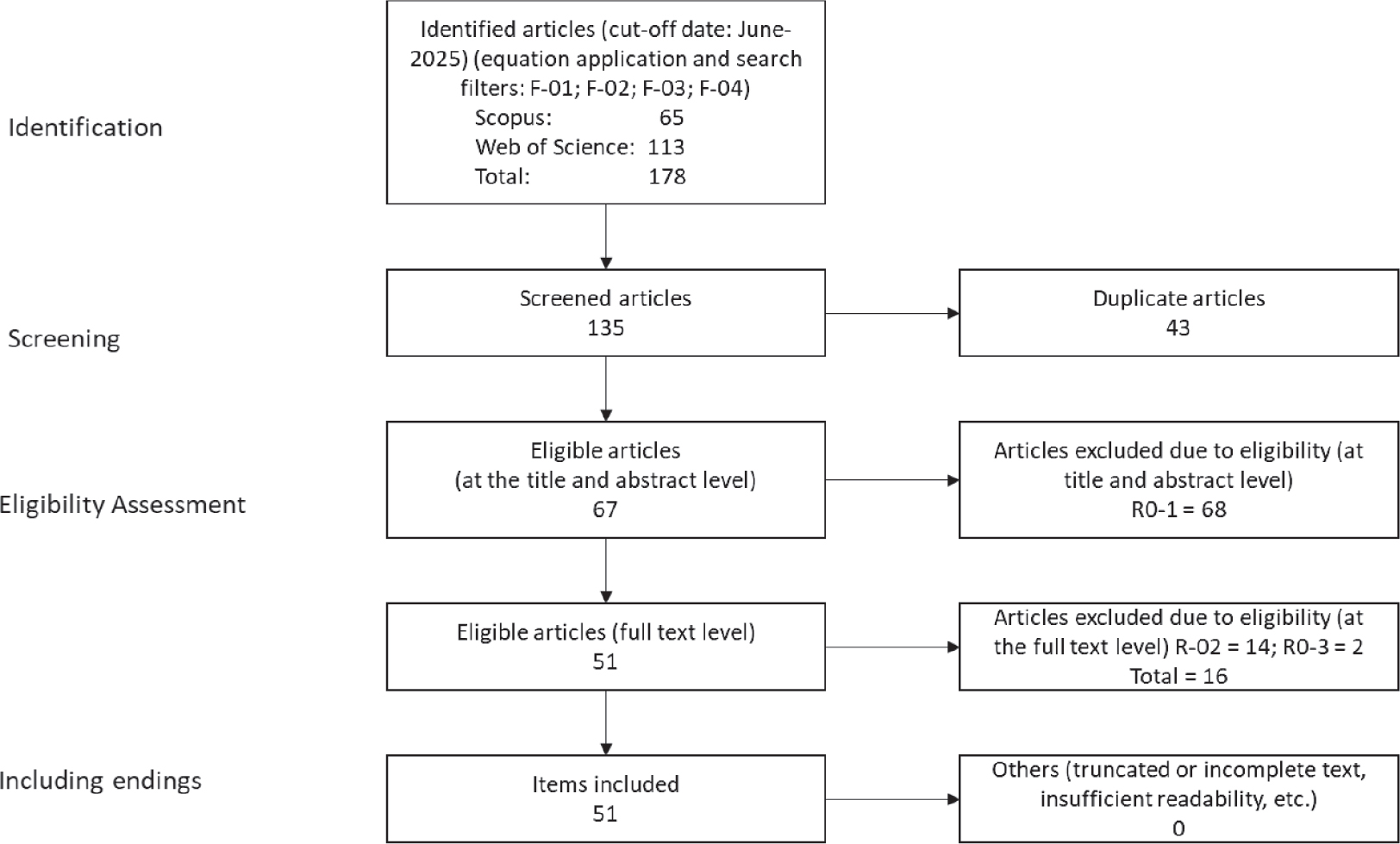
Fig. 1:
PRISMA diagram.
2.5. Coding process and construction of the barriers framework
Once the included studies were selected, a thematic qualitative coding process was conducted to identify and systematise the barriers reported in the literature. Initially, a comprehensive reading of the full texts was performed to extract explicit references to obstacles, limitations or difficulties associated with the implementation of sustainable construction. These references were coded using an open coding approach and subsequently grouped through a process of constant comparison, resulting in conceptually homogeneous subcategories. Finally, these subcategories were integrated into 5 general barrier categories and 11 related subcategories, defined according to their theoretical affinity and recurrence across the analysed studies (Table 2).
Tab. 2:
Definition of categories and subcategories of barriers to construction.
| Category | Definition | Subcategory (barrier type) | Definition |
|---|---|---|---|
| 1. Economic and financial barriers | Limitations associated with costs, financing mechanisms and economic conditions that restrict the adoption of sustainable construction practices in developing countries | High initial costs | Perception or reality of higher initial investments required for sustainable design, materials, technologies and certifications compared with conventional construction. |
| Limited access to financing | Difficulties in accessing credit, loans or suitable financial instruments for sustainable construction projects, especially in underdeveloped financial markets. | ||
| Lack of economic incentives | Absence or insufficiency of subsidies, tax benefits, tax incentives or other economic mechanisms that promote investment in sustainable construction. | ||
| 2. Knowledge and awareness barriers | Obstacles related to the level of information, training, experience and awareness of the actors involved regarding the benefits and requirements of sustainable construction | Public awareness | Low level of knowledge and awareness among users, clients and society in general regarding the environmental, economic and social benefits of sustainable construction. |
| Lack of experience | Insufficient technical training and practical experience of professionals, designers and builders in the implementation of sustainable solutions and technologies. | ||
| 3. Regulatory and political barriers | Limitations arising from regulatory frameworks, public policies and institutional mechanisms that do not favour or hinder the adoption of sustainable construction | Inadequate regulations | Outdated, ambiguous, or non-existent regulations that do not incorporate sustainability criteria or establish clear standards for their implementation. |
| Lack of government support | Limited institutional support through public policies, promotion programmes, financing or strategic guidelines aimed at sustainable construction. | ||
| 4. Industry-related barriers | Difficulties specific to the construction sector related to traditional practices, operational capabilities and market structure. | Resistance to change | Reluctance of companies, professionals and stakeholders in the sector to modify conventional construction practices and incorporate sustainable approaches. |
| Certified supply chain issues | Limited availability, access or reliability of materials, technologies and suppliers certified as sustainable. | ||
| Lack of compliance and supervision | Weak control, oversight and monitoring of compliance with regulations, standards and best practices associated with sustainable construction | ||
| 5. Cultural and social barriers | Sociocultural factors that influence the perception, acceptance and adoption of sustainable construction practices | Cultural norms | Deeply ingrained beliefs, habits and values that favour traditional construction methods and limit the acceptance of sustainable solutions. |
To enhance methodological rigour and minimise subjective interpretation bias, the coding process involved four researchers, who independently reviewed and coded the selected studies. Following the initial coding stage, the assigned codes and preliminary categorisations were compared across researchers to assess consistency in interpretation. Differences in coding or category assignment were discussed collectively in iterative review meetings until consensus was achieved. This agreement-checking procedure allowed refinement of category definitions and ensured coherence in the final classification of barriers.
Through this collaborative and iterative process, the analytical framework was constructed based on recurring patterns identified across multiple studies rather than individual interpretations, thereby strengthening the transparency, reliability and traceability of the coding process.
2.6. Evaluation of the quality and relevance of included studies
The methodological quality and relevance of the included studies were assessed through a structured appraisal process adapted to the objectives of this systematic review. Rather than relying solely on database indexation, each study was evaluated against a set of basic quality criteria commonly applied in integrative reviews. These criteria included: (a) clarity of research objectives, (b) explicit description of methodological approach, (c) transparency in data collection or analysis procedures and (d) relevance of findings to barriers affecting sustainable construction in developing countries.
Based on these criteria, the appraisal aimed to ensure that all included studies provided sufficient methodological transparency and empirical or conceptual contribution to support the synthesis process. Studies lacking a clearly described methodology or presenting insufficient thematic relevance were excluded during the eligibility phase, as detailed in Table 1. This approach allowed for a minimum level of methodological consistency among the selected studies while maintaining inclusiveness across diverse research designs (qualitative, quantitative and mixed methods).
However, it should be noted that no formal scoring system or weighted quality ranking was applied to differentiate between stronger and weaker studies. Given the exploratory and synthesis-oriented nature of this review, the objective was to identify recurring patterns and reported barriers across the literature rather than to estimate effect sizes or causal relationships. Consequently, the absence of a quantitative quality-rating scheme represents a methodological limitation that may influence the relative weight of individual studies within the synthesis.
To minimise researcher bias, predefined inclusion and exclusion criteria were consistently applied throughout all PRISMA 2020 phases. In addition, analytical categories and subcategories were constructed through constant comparison across multiple sources, reducing reliance on isolated findings. Collectively, these procedures enhance transparency and reproducibility while acknowledging the interpretative nature inherent to qualitative evidence synthesis.
3. Results
Fifty-one articles published between 2015 and June 2025 were analysed, revealing sustained growth in scientific production on barriers to sustainable construction in developing countries.
Figure 2 shows the evolution of article publications by year. The peak of publications was reached in 2022, with 13 publications. The lowest number of publications was seen in 2017. It can be seen that more than 70% of publications have been concentrated in the past 5 years. Regarding the evolution of publications in the Scopus database, it can be seen that 2022 had the highest number of publications, with nine publications, and in 2020 there were no publications. In the Web of Science database, it can be seen that 2024 had the highest number of publications, with five publications and in 2017 there were no publications.
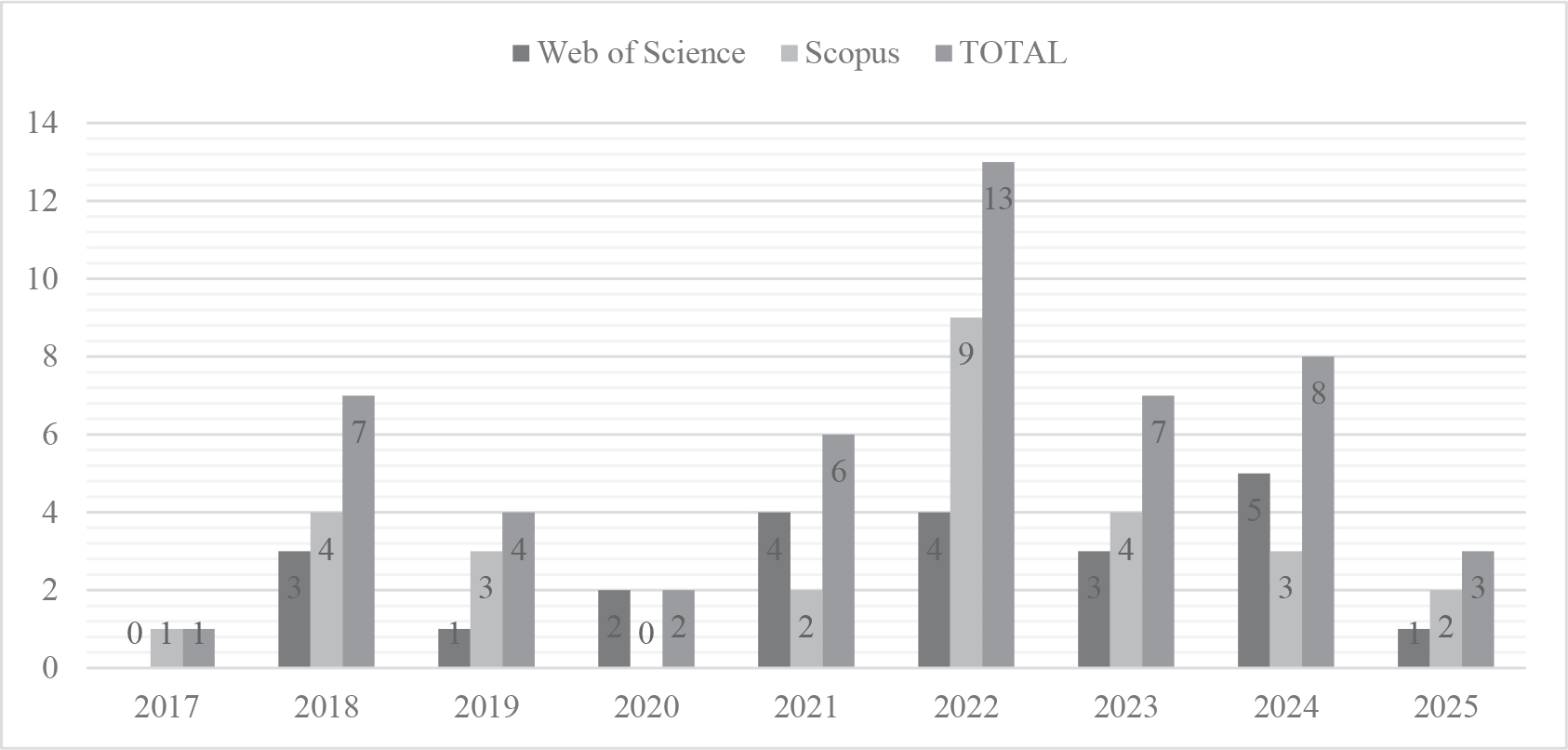
Fig. 2:
Evolution of article publication per year.
Table 3 presents the number of articles by continent and by country. It shows that more than 80% of the selected articles are produced by countries located in Africa and Asia. One article seeks to compare three countries located on two continents: the Americas and Asia. The origin of the remaining articles is unspecified. It is also evident that the continent with the largest number of publications is Asia, accounting for 49% of the total. However, the countries with the largest number of publications are Ghana (Africa) with six publications, Nigeria (Africa) with four publications and Vietnam (Asia) with four publications. This distribution reveals a significant gap in research focused on the Latin American context, which limits the development of adapted local strategies. From this table, with respect to the Scopus database, there are 14 publications in Asia, followed by 8 in Africa, 5 where the origin is not specified and 1 that compares two continents. In the case of Web of Science, there are 11 publications in Asia, followed by 9 in Africa and 3 where their origin is not specified.
Tab. 3:
Number of publications by continent and by country.
| Continent | Country | Total continent | (%) Continent | Total country | (%) Country | Scopus | Web of Science |
|---|---|---|---|---|---|---|---|
| Africa | Ghana | 17 | 33.3 | 6 | 11.76 | 4 | 2 |
| Libya | 1 | 1.96 | 1 | ||||
| Nigeria | 4 | 7.84 | 1 | 3 | |||
| South Africa | 2 | 3.92 | 1 | 1 | |||
| Tanzania | 1 | 1.96 | 1 | ||||
| Zambia | 1 | 1.96 | 1 | ||||
| Morocco | 1 | 1.96 | 1 | ||||
| Ghana and Egypt | 1 | 1.96 | 1 | ||||
| Asia | Cambodia | 25 | 49.0 | 1 | 1.96 | 1 | |
| Indonesia | 3 | 5.88 | 1 | 2 | |||
| Iran | 1 | 1.96 | 1 | ||||
| Iraq | 1 | 1.96 | 1 | ||||
| Jordan | 2 | 3.92 | 2 | ||||
| Malaysia | 1 | 1.96 | 1 | ||||
| Singapore | 1 | 1.96 | 1 | ||||
| Thailand | 2 | 3.92 | 2 | ||||
| Turkey | 2 | 3.92 | 2 | ||||
| Vietnam | 4 | 7.84 | 2 | 2 | |||
| Saudi Arabia | 2 | 3.92 | 2 | ||||
| China | 3 | 5.88 | 3 | ||||
| Iraq | 1 | 1.96 | 1 | ||||
| Kazakhstan | 1 | 1.96 | 1 | ||||
| America–Asia | US–India–Afghanistan | 1 | 2.0 | 1 | 1.96 | 1 | |
| N/E | N/E | 8 | 15.7 | 8 | 15.69 | 5 | 3 |
From the data in Figure 2 and Table 2, it can be seen that there are no longitudinal studies regarding the analysis of barriers to sustainable construction.
Table 4 shows that, of the total selected articles, more than 55% have a quantitative approach. Meanwhile, articles with qualitative and mixed approaches are found in similar percentages, and bibliographic and systematic reviews account for less than 6%. Regarding the distribution of approaches by database, in Scopus, 46% have a quantitative approach, followed by 25% with a qualitative approach, with bibliographic and systematic reviews being the most common in this database. In the Web of Science database, 69% have a quantitative approach, followed by 17% with a mixed approach. This database does not have any articles with a bibliographic and systematic review approach.
Tab. 4:
Distribution of the research focus in the selected articles.
| Approach | Total articles | Scopus | Web of Science | |||
|---|---|---|---|---|---|---|
| N° | % | N° | % | N° | % | |
| Qualitative | 10 | 19.61 | 7 | 25.00 | 3 | 13.04 |
| Quantitative | 29 | 56.86 | 13 | 46.43 | 16 | 69.57 |
| Mixed | 9 | 17.65 | 5 | 17.86 | 4 | 17.39 |
| Bibliographic review | 2 | 3.92 | 2 | 7.14 | 0 | 0.00 |
| Systematic review | 1 | 1.96 | 1 | 3.57 | 0 | 0.00 |
Table 5 shows the barriers to sustainable construction identified in the selected articles, which were grouped into five categories: (a) Economic and financial barriers, (b) Knowledge and awareness barriers, (c) Regulatory and policy barriers, (d) Industry-related barriers and (e) Cultural and social barriers. The main barriers identified were high initial costs and lack of government support, which were analysed in 34 articles (66.67%) and 32 articles (62.75%), respectively. By contrast, lack of compliance and supervision, and inadequate regulations were only analysed in two (3.92%) and four (7.84%) articles, respectively.
Tab. 5:
Barriers to sustainable construction identified in an aggregate manner in the selected articles.
| Category | Subcategory (barrier type) | Number of articles | (%) Articles analysed |
|---|---|---|---|
| 1. Economic and financial barriers | High initial costs | 34 | 66.67 |
| Limited access to financing | 6 | 11.76 | |
| Lack of economic incentives | 30 | 58.82 | |
| 2. Knowledge and awareness barriers | Public awareness | 26 | 50.98 |
| Lack of experience | 28 | 54.90 | |
| 3. Regulatory and political barriers | Inadequate regulations | 4 | 7.84 |
| Lack of government support | 32 | 62.75 | |
| 4. Industry-related barriers | Resistance to change | 15 | 29.41 |
| Certified supply chain issues | 23 | 45.10 | |
| Lack of compliance and supervision | 2 | 3.92 | |
| 5. Cultural and social barriers | Cultural norms | 18 | 35.29 |
Table 6 presents the interrelationships among the identified barriers, illustrating how different constraints reported in the literature may reinforce or condition one another within sustainable construction implementation processes. These interrelationships were derived through an interpretive qualitative synthesis based on recurring conceptual associations and influence relationships explicitly discussed across the reviewed studies.
Tab. 6:
Interrelationship between the identified barriers to sustainable construction.
| Category | Subcategory (barrier type) | Interrelated subcategory | Category |
|---|---|---|---|
| 1. Economic and financial barriers | High initial costs | Lack of experience | 2. Knowledge and awareness barriers |
| Certified supply chain issues | 4. Industry-related barriers | ||
| Limited access to financing | Resistance to change | 4. Industry-related barriers | |
| Lack of economic incentives | Lack of government support | 3. Regulatory and political barriers | |
| 2. Knowledge and awareness barriers | Public awareness | Inadequate regulations | 3. Regulatory and political barriers |
| Lack of experience | Lack of government support | 3. Regulatory and political barriers | |
| 3. Regulatory and political barriers | Inadequate regulations | Public awareness | 2. Knowledge and awareness barriers s |
| Lack of government support | Public awareness | 2. Knowledge and awareness barriers | |
| 4. Industry-related barriers | Resistance to change | Public awareness | 2. Knowledge and awareness barriers |
| Lack of experience | 2. Knowledge and awareness barriers | ||
| Inadequate regulations | 3. Regulatory and political barriers | ||
| Cultural norms | 5. Cultural and social barriers | ||
| Certified supply chain issues | Inadequate regulations | 3. Regulatory and political barriers | |
| Lack of compliance and supervision | Public awareness | 2. Knowledge and awareness barriers | |
| Lack of experience | 2. Knowledge and awareness barriers | ||
| 5. Cultural and social barriers | Cultural norms | High initial costs | 1. Economic and financial barriers |
| Public awareness | 2. Knowledge and awareness barriers | ||
| Inadequate regulations | 3. Regulatory and political barriers |
Rather than representing a quantitative mapping or frequency-based analysis, the relationships shown in Table 6 reflect patterns identified during the thematic comparison of studies in which authors described one barrier as contributing to, amplifying or conditioning the occurrence of another. The matrix therefore summarises conceptual linkages recurrently reported in the literature, integrating evidence from multiple sources into a systematised analytical representation.
Accordingly, the interrelationships should be interpreted as an analytical synthesis intended to support understanding of systemic interactions among barriers, rather than as empirically measured or statistically validated causal relationships. The purpose of this matrix is to provide an integrative visualisation of how barriers co-occur and mutually reinforce implementation challenges across developing-country contexts, consistent with the qualitative and synthesis-oriented nature of this review.
4. Discussion
The results of this study confirm that the implementation of sustainable construction in developing countries is constrained by a set of interrelated barriers operating across multiple levels, including economic, institutional, cognitive, industrial and sociocultural dimensions. The classification of these barriers into five categories: (a) economic and financial, (b) knowledge and awareness, (c) regulatory and political, (d) industry-related and (e) cultural and social, not only provides a structured organisation of the evidence but also enables a deeper interpretation of how these barriers mutually reinforce one another within construction systems characterised by high uncertainty, limited institutional capacity and persistent structural market constraints.
4.1. Category: Economic and financial barriers
The findings confirm that economic and financial barriers constitute a structural constraint to the adoption of sustainable construction in developing countries, operating primarily at the project decision-making level. The persistent perception of higher initial costs compared with conventional construction emerges as the most influential barrier (Durdyev et al. 2018; Assadiki et al. 2022; Dlamini and Yessoufou 2022; Kamranfar et al. 2022; Kineber et al. 2022; Zulu et al. 2022; Almakayeel et al. 2023; Jaradat et al. 2024). From a theoretical perspective, this reflects a short-term cost-minimisation logic, in which investment decisions are dominated by upfront capital expenditures rather than by long-term value creation.
The higher initial investment is largely explained by the elevated costs of certified materials, specialised technologies and green construction systems (Shen et al. 2018; Anzagira et al. 2019; Khan et al. 2019; Marsh et al. 2020; Assylbekov et al. 2021; Wang et al. 2021; Joyram et al. 2022; Alhammadi et al. 2024; Ghasemi et al. 2024; Gyadu-Asiedu et al. 2024; Komurlu et al. 2024; Olatunde et al. 2025). These costs are further amplified in contexts characterised by exchange rate volatility and dependence on imported materials (Agyekum et al. 2022; Akcay 2023), reinforcing uncertainty and risk perception at the project appraisal stage.
From a decision-theory standpoint, the lack of standardised cost structures and reliable benchmarks exacerbates this uncertainty. Nguyen and Macchion (2023b) highlight that sustainable construction projects often lack clearly defined cost frameworks, complicating budget formulation and increasing the likelihood of cost overruns—an issue particularly critical in capital-constrained environments (Aghimien et al. 2018). This situation discourages risk-averse investors and developers, especially when combined with limited technical expertise and market immaturity.
Additionally, the scarcity of specialised contractors and skilled labour creates quasi-monopolistic conditions that drive prices upward and reduce competitive pressure (Russ et al. 2018; Hazem and Breesam 2019; Sutantio et al. 2022). The need for specialised design services and compliance with certification requirements further increases transaction costs (Rita et al. 2023; Pham et al. 2024; Poorisat et al. 2024), reinforcing the perception that sustainable construction is financially prohibitive.
Although empirical evidence suggests that sustainable construction may require between 5% and 15% (Russ et al. 2018) or even 1%–25% (Khalil et al. 2021) higher initial investment, the literature consistently points to a misalignment between cost assessment practices and life-cycle value considerations. While life-cycle costing is theoretically recognised as a more appropriate evaluation approach (Hazem and Breesam 2019; Sutantio et al. 2022), its practical application remains limited due to the absence of robust empirical data, standardised methodologies and consensus on return-on-investment calculation (Nguyen and Macchion 2023a, 2023b). This gap reinforces uncertainty regarding payback periods and long-term benefits, thereby reducing investment willingness (Durdyev et al. 2018; Shen et al. 2018; Tran et al. 2020; Khalil et al. 2021; Kamranfar et al. 2022; Kineber et al. 2022; Mohamed et al. 2023; Komurlu et al. 2024; Pham et al. 2024).
At a systemic level, this perceived financial risk is compounded by macroeconomic instability, including inflation and exchange rate fluctuations, which further constrain access to financing (Agyekum et al. 2022; Assadiki et al. 2022). Financial institutions tend to treat sustainable construction projects as conventional high-risk investments, offering only standard loans with high interest rates and unfavourable conditions, given the lack of tailored green financing instruments (Wu et al. 2019; Marsh et al. 2020; Assadiki et al. 2022; Sutantio et al. 2022; Almakayeel et al. 2023; Nguyen and Macchion 2023b; Alhammadi et al. 2024; Olatunde et al. 2025).
Finally, the absence of consistent public policies and economic incentives (such as subsidies, tax exemptions or preferential credit lines) emerges as a critical missing link between sustainability goals and market adoption (Anzagira et al. 2019; Hazem and Breesam 2019; Khan et al. 2019; Wu et al. 2019; Tran et al. 2020; Assylbekov et al. 2021; Khalil et al. 2021; Wang et al. 2021; Al-Otaibi et al. 2022; Joyram et al. 2022; Kamranfar et al. 2022; Kineber et al. 2022; Sutantio et al. 2022; Zulu et al. 2022; Almakayeel et al. 2023; Ghasemi et al. 2024; Jaradat et al. 2024; Komurlu et al. 2024; Poorisat et al. 2024). From an institutional economics perspective, this policy vacuum prevents the internalisation of environmental benefits and perpetuates the cost gap between sustainable and conventional construction (Akcay 2023; Alhammadi et al. 2024).
Overall, these findings suggest that overcoming economic and financial barriers requires multilevel interventions: at the project level, through improved life-cycle costing tools and risk assessment frameworks; at the financial level, through dedicated green financing mechanisms; and at the policy level, through incentives that realign market signals and reduce perceived investment risk. Without such coordinated actions, economic and financial barriers will continue to dominate decision-making processes and hinder the large-scale adoption of sustainable construction in developing countries.
4.2. Category: Knowledge and awareness barrier
The results indicate that knowledge and awareness barriers constitute a cognitive and informational constraint that significantly shapes decision-making processes related to sustainable construction in developing countries. This barrier affects both supply-side actors (designers, contractors, developers) and demand-side stakeholders (clients, end users and communities), limiting the diffusion of sustainable practices across the construction value chain (Aghimien et al. 2018; Alohan et al. 2021; Al-Otaibi et al. 2022; Almakayeel et al. 2023).
From a theoretical perspective, the persistence of this barrier reflects an information asymmetry problem, where stakeholders lack adequate knowledge regarding the principles, benefits and technical requirements of sustainable construction. This asymmetry constrains informed decision-making, reduces demand for certified buildings and weakens incentives to pursue environmental certifications (Darko and Chan 2018; Anzagira et al. 2019; Akcay 2023). In contexts characterised by limited institutional support, the absence of reliable information channels further reinforces scepticism towards green solutions.
Insufficient promotion and ineffective dissemination mechanisms exacerbate this situation by reinforcing a low perceived value of sustainable construction (Shen et al. 2017; Aghimien et al. 2018; Al-Aidrous et al. 2023; Alhammadi et al. 2024). In practical terms, sustainability is often framed as an abstract or costly concept rather than as a source of operational efficiency, resilience and long-term economic value. As a result, sustainable solutions are frequently deprioritized during project planning and design stages.
Moreover, limited technical training and lack of practical experience with green technologies increase perceived operational and maintenance risks (Genovese and Zoure 2023; Pham et al. 2024; Atmoko et al. 2025). From a capability-based perspective, this skills gap constrains organisational learning and reduces confidence in the feasibility of sustainable construction, thereby reinforcing conservative, path-dependent practices within the industry.
The literature consistently highlights that this barrier is intensified by the insufficient integration of sustainability principles into academic curricula and professional development programmes (Hazem and Breesam 2019; Gyadu-Asiedu et al. 2024). Consequently, sustainability competencies remain fragmented and unevenly distributed across stakeholders. Empirical gaps persist regarding the systematic evaluation of awareness-raising initiatives and their long-term effectiveness, limiting evidence-based policy design. However, existing studies suggest that the most effective approaches combine continuous education, targeted public outreach and practical demonstration projects that clearly link sustainability outcomes to tangible, context-specific benefits such as cost savings, improved comfort and reduced environmental risk (Wang et al. 2018; Tran et al. 2020).
Overall, addressing knowledge and awareness barriers requires multilevel interventions that simultaneously enhance technical capacity, reduce information asymmetries and strengthen learning mechanisms across the construction ecosystem. Without coordinated efforts in education, professional training and public communication, cognitive barriers will continue to undermine investment decisions and slow the transition towards sustainable construction in developing countries.
4.3. Category: Regulatory and policy barriers
Regulatory and political barriers emerge as institutional constraints that shape the enabling environment for sustainable construction in developing countries. Inadequate regulations are primarily manifested through the absence of clear, mandatory and enforceable regulatory frameworks, generating uncertainty and weakening compliance incentives across the construction sector. From an institutional theory perspective, such regulatory gaps undermine rule legitimacy and reduce the effectiveness of sustainability-oriented governance mechanisms.
Empirical evidence illustrates this challenge across multiple contexts. In Thailand, the lack of clearly defined technical standards and weak regulatory enforcement creates ambiguity for stakeholders, discouraging the implementation of sustainable practices (Shen et al. 2018). Similarly, in China, regulatory fragmentation and institutional weakness constrain the adoption of green technologies, even when professionals possess adequate technical knowledge of their benefits (Wang et al. 2021). In Turkey, insufficient environmental regulations combined with ineffective enforcement mechanisms perpetuate conventional construction practices and slow the transition towards sustainability (Akcay 2023). Comparable patterns are observed in both developed and developing countries, where weak regulatory frameworks for construction and demolition waste management hinder the sustainability of construction processes (Al-Otaibi et al. 2022).
Beyond regulatory design, the lack of government support constitutes a critical political barrier that directly influences project-level decision-making. In Ghana, the absence of tax incentives, subsidies and structured technical training programmes has significantly limited the adoption of sustainable technologies, despite growing awareness of their potential benefits (Darko and Chan 2018; Darko et al. 2018; Ayarkwa et al. 2022). In Nigeria, limited institutional backing restricts the widespread use of sustainable materials, particularly in educational and public-sector projects, where budget constraints and risk aversion are more pronounced (Aghimien et al. 2018; Olatunde et al. 2025).
The lack of coherent public policies targeting energy efficiency and sustainability further reinforces professional resistance to change. Studies in different contexts show that, in the absence of clear policy signals and long-term government commitment, practitioners tend to prioritise conventional solutions perceived as less risky (Nguyen et al. 2021; Pekdogan 2024). In Vietnam, limited governmental involvement in green project risk management reduces professionals’ confidence and negatively affects investment viability, illustrating how political uncertainty translates into conservative project decisions (Nguyen et al. 2021).
Importantly, regulatory and political measures alone are insufficient if they are not supported by societal awareness and stakeholder engagement. Wu et al. (2019) emphasise that the introduction of sustainable building assessment standards and incentive-based policies will not achieve their intended impact as long as stakeholders lack awareness of their relevance and benefits. This highlights the interdependence between regulatory frameworks and cognitive barriers, suggesting that effective governance requires coordinated interventions that combine regulation, incentives and knowledge dissemination.
Overall, these findings indicate that overcoming regulatory and political barriers requires a multilevel governance approach, in which clear and enforceable regulations, consistent government support and complementary awareness-building strategies jointly reduce uncertainty, align market incentives and enable informed decision-making at the project level. Without such alignment, regulatory and political barriers will continue to constrain the large-scale adoption of sustainable construction in developing countries.
4.4. Industry-related barriers
Industry-related barriers reflect structural and behavioural constraints embedded within the construction sector that limit its capacity to adopt sustainable practices. One of the most persistent obstacles is resistance to change, which is closely associated with the conservative nature of the industry and its preference for familiar, low-risk construction methods. From a behavioural and organisational perspective, this resistance is driven by risk aversion, path dependency and the prioritisation of short-term project performance over long-term sustainability outcomes.
Empirical studies illustrate how these dynamics operate across different developing contexts. In Thailand, professionals tend to rely on conventional techniques due to familiarity and the perception of lower implementation risk, which discourages experimentation with sustainable solutions (Shen et al. 2018). Similarly, in Ghana, insufficient technical training and limited understanding of the environmental and economic benefits of green construction foster passive attitudes towards innovation and reinforce established practices (Darko et al. 2018). In Nigeria, resistance persists even within educational settings, where stakeholders remain reluctant to update construction approaches, thereby perpetuating outdated models and limiting the diffusion of sustainable knowledge (Aghimien et al. 2019). These findings suggest that resistance to change is not merely an individual preference but a systemic industry behaviour reinforced by institutional routines and professional norms.
Beyond behavioural resistance, deficiencies in the certified supply chain represent a critical structural barrier. The limited availability of certified sustainable materials and the absence of reliable suppliers significantly constrain the feasibility of green projects. In Nigeria, restricted access to certified materials discourages implementation and increases project uncertainty (Olatunde et al. 2025). Similar challenges are observed in Mauritius, where the limited supply of eco-blocks and the lack of recognised certification systems generate mistrust among both professionals and end users (Joyram et al. 2022). In Ghana, the absence of traceability and environmental certification mechanisms prevents verification of material sustainability, undermining confidence in residential projects (Kineber et al. 2022). These supply chain limitations are further exacerbated by weak logistical infrastructure and reliance on imported materials, which elevate costs and reduce the competitiveness of sustainable alternatives.
Evidence from Tanzania reinforces the systemic nature of this barrier, as stakeholders identify the scarcity of locally available sustainable materials as one of the most critical obstacles to green construction (Nkini et al. 2024). The lack of domestic supply not only increases costs but also diminishes motivation to adopt sustainable approaches, particularly in public infrastructure and social housing projects, where budgetary constraints and cost-efficiency considerations dominate decision-making. In this context, government intervention through targeted financial incentives has been identified as a key mechanism to stimulate demand and support wider adoption of green technologies (Akcay 2023).
Finally, weak enforcement and oversight significantly limit the effectiveness of existing sustainability regulations. In Vietnam, inadequate oversight and limited institutional capacity to verify compliance with technical standards undermine risk management in green projects, reducing stakeholder confidence (Nguyen et al. 2021). In Ghana, although sustainability-related regulations exist, their application is inconsistent and highly dependent on local actors’ discretion, leading to uneven implementation (Ayarkwa et al. 2022). Comparable issues are observed in Saudi Arabia, where insufficient oversight mechanisms prevent sustainability policies from being translated into concrete practices at the project level (Mohamed et al. 2023). This institutional weakness creates an environment of low accountability, allowing developers to bypass environmental commitments without facing significant consequences.
Overall, these findings indicate that industry-related barriers operate at both behavioural and structural levels, reinforcing resistance to innovation and constraining the practical feasibility of sustainable construction. Addressing these barriers requires coordinated strategies that combine capacity building, supply chain development, financial incentives and effective regulatory enforcement, thereby enabling industry actors to integrate sustainability into routine project decision-making rather than perceiving it as an external or high-risk requirement.
4.5. Cultural and social barriers
Sociocultural barriers play a decisive role in shaping the adoption of sustainable construction, particularly in developing contexts where poverty, housing deficits and immediate socioeconomic needs tend to outweigh long-term sustainability considerations (Marsh et al. 2020; Ghasemi et al. 2024). From a sociotechnical and behavioural perspective, sustainability is not perceived merely as a technical innovation but as a cultural shift that challenges entrenched norms, values and routines within the construction sector. Consequently, resistance to change rooted in traditional practices and cultural conventions reinforces a preference for conventional construction methods and generates distrust towards green technologies (Aghimien et al. 2018; Anzagira et al. 2019; Kamranfar et al. 2022; Al-Aidrous et al. 2023).
Empirical evidence suggests that sociocultural acceptance of sustainable construction is strongly mediated by institutional contexts. In countries with robust regulatory frameworks and active certification systems, social trust and acceptance of sustainable practices tend to increase, as formal rules signal legitimacy and reduce perceived uncertainty (Khalil et al. 2021; Pham et al. 2024). By contrast, in environments characterised by weak regulations and limited enforcement, traditional construction solutions prevail, reinforcing scepticism towards alternative materials and technologies (Wang et al. 2021; Akcay 2023). Misperceptions regarding cost overruns, doubts about the durability and performance of sustainable materials and the lack of visible local success cases further exacerbate cultural resistance, particularly among low- and middle-income households (Wang et al. 2021; Akcay 2023).
The literature also reveals important analytical gaps that constrain a comprehensive understanding of sociocultural barriers. These include the absence of longitudinal studies capable of capturing processes of cultural change over time, limited segmentation of target audiences and the marginal incorporation of sociocultural indicators in the prioritisation of barriers within empirical models (Kamranfar et al. 2022; Poorisat et al. 2024). As a result, sociocultural factors are often treated as secondary or static variables, despite their central role in shaping demand, acceptance and behavioural change. Evidence indicates that the most effective strategies for overcoming these barriers combine regulatory instruments and economic incentives with culturally embedded interventions, such as demonstration projects, visible leadership from industry and public actors, and communication strategies aligned with local values and social norms (Komurlu et al. 2024; Pham et al. 2024). This supports the view that sustainability adoption should be approached as a context-sensitive cultural transition, rather than as a purely technical or economic adjustment.
Geographically, the concentration of empirical evidence in Asia and Africa highlights significant gaps in other developing regions, including Central America, the Caribbean and several countries with lower Human Development Indexes in Africa and Asia (Darko and Chan 2018; Assylbekov et al. 2021; Assadiki et al. 2022; Kineber et al. 2022; Akcay 2023). This uneven coverage limits the formulation of tailored policies, as strategies derived from more extensively studied contexts are not always transferable to regions with different cultural, institutional and socioeconomic conditions (Al-Otaibi et al. 2022; Mukattash and Hyarat 2022; Ghasemi et al. 2024). Consequently, there is a clear need for comparative and cross-regional studies that integrate diverse realities and generate policy-relevant insights that are sensitive to local specificities (Tran et al. 2020; Komurlu et al. 2024; Poorisat et al. 2024).
The scarcity of longitudinal research constitutes one of the most critical gaps in the literature, as it limits the ability to assess how sociocultural barriers evolve and how effective policy interventions, awareness programmes and technological diffusion processes are over time (Wu et al. 2019; Sutantio et al. 2022; Poorisat et al. 2024). Without this temporal perspective, many policy recommendations rely on cross-sectional evidence that identifies existing barriers but fails to capture the dynamic interactions between cultural norms, institutional development and economic conditions that are essential for the consolidation of sustainable construction practices (Darko and Chan 2018; Tran et al. 2020; Al-Otaibi et al. 2022).
Finally, the findings confirm that sociocultural barriers do not operate in isolation but are deeply interconnected with economic, regulatory and knowledge-related constraints. For instance, limited funding delays awareness and training programmes; weak regulatory frameworks exacerbate cultural resistance by undermining trust in sustainable solutions; and low social awareness reduces public pressure for stronger sustainability-oriented policies (Darko and Chan 2018; Mohamed et al. 2023; Ghasemi et al. 2024; Poorisat et al. 2024). This interdependence underscores the multifactorial nature of the barriers and highlights the need for integrated, multilevel strategies that simultaneously address cultural norms, institutional capacity and economic incentives to enable the widespread adoption of sustainable construction in developing countries.
4.6. Limitations of the review
Despite the methodological rigour applied in this systematic review, several limitations should be acknowledged when interpreting the findings. First, the literature search was restricted to studies indexed in the Scopus and Web of Science databases. Although these databases were selected due to their recognised academic quality and structured indexing systems, this decision may have limited the comprehensiveness of the review by excluding relevant studies published in other international or regional databases. This limitation is particularly relevant in the context of developing countries, where locally oriented research is frequently disseminated through regional journals that are not always indexed in major citation databases.
Second, the review included only open-access publications written in English and Spanish. While this criterion facilitated full-text verification, transparency and reproducibility of the analysis, it may introduce language and accessibility bias. Important contributions published in other languages or under subscription-based access models may therefore not have been captured. This issue is especially significant given that several regions identified as underrepresented in the results—such as parts of Latin America, the Caribbean and low-human-development countries in Africa and Asia—often disseminate scientific knowledge through national or non-English publication channels.
Consequently, the geographical gaps identified in this review should be interpreted with caution, as they may partially reflect database coverage and language restrictions rather than the complete absence of research activity. Future systematic reviews are encouraged to expand database coverage, incorporate multilingual search strategies and consider alternative indexing sources to enhance representativeness and reduce potential publication bias. A broader inclusion strategy would contribute to a more comprehensive understanding of sustainable construction barriers across diverse developing-country contexts.
Additional methodological limitations should also be acknowledged regarding the quality appraisal process. Although a structured assessment based on methodological clarity and thematic relevance was applied, no formal scoring or weighting system was used to differentiate the relative strength of the included studies. Consequently, all studies contributed equally to the synthesis regardless of methodological robustness. This may influence the interpretation of recurring barriers, as findings derived from studies with different levels of empirical rigour were integrated within the same analytical framework. Future reviews could incorporate standardised quality-rating or risk-of-bias assessment tools to strengthen comparative weighting and evidence interpretation.
5. Conclusions
Barriers to the implementation of sustainable construction in developing countries fall into five categories: economic and financial, knowledge and awareness, regulatory and policy, industry-related and sociocultural. Economic and financial barriers were the most common, followed by regulatory and technical knowledge barriers.
The interaction between these categories confirms that the obstacles are systemic in nature: a lack of incentives and financing limits training and dissemination; weak regulations increase cultural resistance and mistrust in the industry; and low public awareness reduces demand for sustainable buildings.
This study reveals significant gaps, including the limited presence of research in underrepresented regions—such as Central America, the Caribbean and African and Asian countries with low Human Development Indexes—and the lack of longitudinal studies that measure the impact of policies and programmes over time.
5.1. Theoretical implications
This work provides a structured synthesis of the main barriers, facilitating comparative analysis and serving as a basis for future research on comprehensive sustainability models in construction.
The findings provide policymakers and industry practitioners with an evidence-based framework to support the implementation of sustainable construction in developing countries. The results highlight priority actions, including the design of targeted economic incentives, strengthening of regulatory frameworks and development of technical training and awareness programmes aimed at reducing implementation barriers across project and industry levels.
Finally, it is recommended to promote cross-country comparative studies that identify common patterns and transferable solutions, as well as longitudinal research that evaluates the evolution of barriers and the effectiveness of interventions. Overcoming these limitations is crucial to moving towards more sustainable, inclusive and transformative construction.