
1. Introduction
In the past decade, the construction industry has been significantly transformed by the Fourth Industrial Revolution (4IR), which has introduced a range of innovative technologies across both developed and developing countries (Osunsanmi et al. 2018; Alhamoudi and Osunsanmi 2024). 4IR encompasses advancements such as three-dimensional (3D) printing, which allows for creating solid structures through successive layers, revolutionising product design (Xu et al. 2018). Additionally, the 4IR concept has reshaped global economies and societies (Bloem et al. 2014), profoundly affecting various industries, including construction. This shift has moved the construction industry from traditional, manual processes to more innovative and automated approaches, enhancing project execution and efficiency.
The 4IR has introduced a multitude of innovative technologies that have the potential to dramatically improve the activities within the construction industry (Aghimien et al. 2024). According to Ebekozien et al. (2023), key technologies such as artificial intelligence (AI), drones, augmented and virtual reality, blockchain technology, big data, autonomous vehicles, the Internet of things (IoT), 3D printing, advanced materials and robotics are among the most influential technologies capable of revolutionising the construction sector. These technologies are believed to be capable of revolutionising construction and engineering projects by addressing many of the traditional challenges that have long plagued the built environment, such as inefficiencies, cost overruns and delays (Raptis et al. 2019; Osunsanmi et al. 2022). Moghayedi et al. (2020) further emphasised that the implementation of 4IR within the built environment seeks to automate technology integration with operations and communication, ultimately minimising human intervention on projects. This, in turn, enhances project timelines, product quality and overall efficiency. It can be deduced from the literature that, like any transformative system, 4IR also brings challenges.
Ross and Maynard (2021) highlighted several obstacles, including resistance to adoption, the high cost of implementation and the mismanagement of these cutting-edge technologies. Numerous studies (Osunsanmi et al. 2020; Ejohwomu et al. 2021; Nagy et al. 2021) have appraised the challenges hindering the adoption of 4IR technologies within the construction industry. Amongst the common challenges is that the construction industry has been notably slow in adopting 4IR technologies, such as AI, robotics, 3D printing and the IoT, despite their transformative potential (Osunsanmi et al. 2020). This lag can be attributed to several shortcomings, including a deeply entrenched reliance on traditional practices, fragmented industry structures and resistance to change among stakeholders (Nagy et al. 2021; Alhamoudi 2024). Maskuriy et al. (2019) note that, unlike sectors such as manufacturing and healthcare, which have seamlessly integrated 4IR innovations to enhance efficiency and productivity, the construction industry faces unique challenges such as project-based workflows, high upfront costs for technology adoption and a lack of standardised processes. Additionally, the industry often struggles with a skills gap, as the workforce is not adequately trained to utilise advanced technologies (Adepoju and Aigbavboa 2021). These shortcomings have resulted in missed opportunities to improve project delivery, reduce costs and enhance sustainability (Arana-Landín et al. 2023). Osunsanmi et al. (2018) affirmed that without addressing these barriers, the construction industry risks falling further behind in the global shift towards digitalisation and smart technologies.
Earlier on, Liphadzi et al. (2020) recommended that leadership style plays a critical role in encouraging the global shift towards digitalisation and adoption of smart technologies. This is because the application of 4IR for construction projects is dynamic and involves numerous specialised skills (Adepoju and Aigbavboa 2021; Osunsanmi et al. 2022). Thus, numerous studies have been conducted focused on the role performed by leadership within the construction industry. Amongst them is the study conducted by Ismail and Fathi (2018), Alade et al. (2021), Tetteh (2023) and Haleem et al. (2024) that evaluated the relationship between leadership and the adoption of the 4IR technologies. A common phenomenon amongst existing research is that the leadership structure and style within the construction industry pose a threat to the adoption of the 4IR technologies. Also, Haleem et al. (2024) and Ismail and Fathi (2018) discovered that the leadership style within the sector has also been criticised for being risk-averse and slow to embrace innovation, further hindering the adoption of 4IR technologies.
Unfortunately, a gap exists in research and practice in uncovering the leadership style that supports the adoption of 4IR technologies within the construction industry. Thus, this study is aimed at unravelling the leadership styles that support the adoption of 4IR technologies. The research endeavours to enhance the current knowledge base on leadership in the construction sector by evaluating these dynamics and offering perspectives on the successful implementation and maintenance of 4IR technologies. The study will also concentrate on creating a leadership structure that is specific to the uptake of 4IR technologies. This study will offer solutions to promote more seamless transitions to automated and technologically advanced systems, acting as a guide for leaders in engineering and construction. The study will provide answers to questions such as what is the suitable leadership framework that would enhance the adoption of 4IR technologies in the construction industry. It will also reveal the components or characteristics of each leadership style suitable for 4IR adoption.
2. Leadership
The concept of leadership has been discussed by many researchers in different disciplines, including the built environment. The study carried out by Emere et al. (2018) defined leadership as ‘the capacity to influence others through inspiration motivated by passion, generated by a vision, produced by a conviction, ignited by a purpose’. Nevertheless, the recent study related to leadership comprises little understanding and knowledge of effective leadership that has lost its context and application (Madikizela and Michell 2022). As a result, there is a poor understanding of leadership, which results in poor performance in different industries. The study by Skeepers and Mbohwa (2015) indicated that leadership should indicate the action in conjunction with conduct that will provide direction for the ultimate safety performance and strategy of the organisation. This indicates the importance of leadership not only at the organisational level but also at the industry level. For the industry to enhance its performance, strong and influential leadership is required, which will encourage the same approach in different organisations in the industry. Moreover, leadership traits and styles must be well understood to ensure that suitable candidates are selected for leadership positions in industry and organisations. Below is a discussion of the leadership traits and styles.
2.1. Leadership traits
Leadership traits are personal qualities in conjunction with the attributes that shape a certain individual into an effective and confident leader(s), as defined by Skeepers and Mbohwa (2015). These are critical factors that shape leaders into those who may either lead organisations to success or failure. Emere et al. (2019) indicated that leadership traits include but are not limited to commitment, problem-solving, integrity, passion and motivation, communication skills, flexibility, teachability, self-confidence, organised, visioning, empathy and courage. The highlighted attributes and personal qualities should be considered when organisations or industries appoint leaders to ensure that the appointed leaders lead the organisation to success with the proper implementation of plans and strategies. Nevertheless, Pretorius et al. (2018) indicated that the theory behind leadership is that it is believed that personnel are born with traits that qualify them to become a good leader.
2.2. Leadership styles
In the built environment, several leadership styles play critical roles in the success of projects. One key style is Transformational Leadership, which Oke (2013) defines as a process where leaders and followers interact to achieve greater goals. Liphadzi et al. (2015) emphasised that this style centres on motivation, enhancing moral standards and driving aspirational efforts. Transformational leadership focuses on the leader’s attributes, belief systems and personal qualities, allowing them to inspire followers to perform beyond expectations and reach set objectives. According to Opoku and Ahmed (2015), transformational leaders must lead by example to elevate the followers’ morality, effectiveness and cognitive behaviour. Four key aspects define transformational leadership: intellectual stimulation, idealised influence, individualised attention and inspirational motivation (Pretorius et al. 2018). These elements collectively contribute to successful transformational leadership within an organisation or industry.
Another leadership style commonly found is Transactional Leadership, which focuses on the exchanges between leaders and followers. According to Pretorius et al. (2018) and Liphadzi et al. (2015), this style is centred around agreements or exchanges which ensure that the organisation meets its present conditions. Leaders establish performance standards and observe the followers’ compliance with these expectations. Emere et al. (2018) noted that transactional leadership helps maintain organisational efficiency by enforcing moral standards and enabling corrective measures when performance declines. This approach emphasises stability and predictability, as leaders use the exchange system to guide the organisation towards its goals.
Charismatic Leadership is another impactful leadership style. Derived from the Greek word ‘gift of grace,’ charisma refers to an attractive or magnetic personality (Emere et al. 2018). Charismatic leaders are known for inspiring energy and commitment from their followers, even when productivity exceeds expectations. As Liphadzi et al. (2015) affirmed, charismatic leadership leverages personality and vision to boost the performance of subordinates and create an environment of trust. Charismatic leaders often emerge in times of uncertainty or crisis, using their influence to guide the organisation through challenges. Pretorius et al. (2018) highlighted that these leaders motivate their followers, increase their confidence and help foster an environment of high productivity.
Lastly, Authoritarian Leadership, or autocratic leadership, is characterised by leaders holding central power and making decisions without consulting their subordinates (Bwalya 2023). Emere et al. (2018) describe authoritarian leaders as self-confident individuals who expect subordinates to follow orders without question. While this style can be effective in specific high-pressure or high-stakes environments, it relies heavily on the leader’s ability to make decisions that align with organisational goals without input from others. This leadership style often reinforces work ethics and discipline within the organisation.
Other leadership styles, such as strategic leadership, democratic leadership and laissez-faire leadership, were not covered in this study, as the focus was on leadership styles most relevant to the research context.
2.3. Development of leadership over the years in the construction industry
Understanding leadership development over the years offers valuable insights, especially in the 4IR context. Early studies, such as Horner (1997), defined leadership by the qualities, behaviours and traits of leaders, proposing two significant theories. The first theory focused on the internal attributes leaders are born with, which enable them to lead effectively without formal training. The second theory suggests that leaders can enhance their effectiveness by emulating the behaviour of successful leaders. Marion and Uhl-Bien (2001) highlighted a period from the 1970s to the 1980s, known as the ‘doom and gloom’ of leadership research, where studies contributed little to understanding leadership’s role. They argued that leadership should prioritise communication and collaboration to shape a productive organisational future rather than solely focusing on monitoring the future. Similarly, Crevani et al. (2010) noted that traditional leadership research had been too narrowly focused on individual leaders’ traits and abilities while emphasising leadership’s role in guiding organisational processes to achieve goals.
In the construction industry, Opoku and Fortune (2011) stressed the critical role of leadership in driving successful, sustainable development. Leadership is essential in providing vision, guidance and strategic management, which helps enhance organisational performance and foster innovation. However, they pointed out that leadership remains poorly understood in many industries, including construction. Despite its importance, leadership’s potential for achieving sustainability has not been fully realised, with limited research on its relationship with sustainability in the construction sector. This gap underscores the need for a deeper exploration of leadership’s role in promoting sustainable practices within construction organisations.
This study explored articles published between 2014 and 2024 to capture contemporary leadership trends in the built environment, focusing on the challenges and opportunities in integrating innovative technologies. Buba and Tanko (2017) emphasised that leadership is crucial for the construction industry’s success, particularly in developing countries where the industry faces persistent issues such as time and cost overruns, poor work quality and safety concerns. According to the study, leadership impacts three critical areas: the mood and tone set by the leader, the emotional climate of the team and the group processes within the organisation. These factors are crucial to mitigating challenges and improving project outcomes in construction. Therefore, leadership is not just about technical proficiency but also emotional intelligence and interpersonal skills (Batool 2013). These leadership traits create a cohesive and motivated workforce capable of delivering quality results under challenging conditions.
Similarly, Morgan and Papadonikolaki (2021) highlighted the lack of digital leadership in construction, a gap that hinders the sector’s capacity to fully leverage the innovations of the 4IR. They argued that digital leadership is critical for organisational efficiency and the successful execution of construction projects, particularly in a world increasingly driven by technological advancements. The study introduced a novel paedagogical approach, the ‘teaching case method,’ to examine real-world digital leadership challenges construction managers face. Through the resolution of managerial conundrums associated with implementing digital tools and systems, this approach offered a significant understanding of the leadership qualities necessary to steer digital transitions in construction companies.
Further research accentuates the significance of digital leadership in the 4IR era. Daud et al. (2021) focused on the necessity of digital leadership in guiding organisations through the complex implementation of digital strategies. They asserted that transactional, transformational and blue ocean leadership styles are vital in the 4IR context. Transactional leaders focus on maintaining structure through rewards and penalties, while transformational leaders inspire innovation and foster organisational change by motivating and engaging their teams (Algahtany and Bardai 2019). Blue ocean leadership, on the other hand, emphasises creating new opportunities and markets by encouraging innovative thinking and exploring untapped areas for growth (Loh et al. 2020) (Loh and Mohd Yusof 2020). These leadership styles are essential for effectively managing the digital transition and ensuring that new technologies are successfully integrated into day-to-day operations.
Alade et al. (2021) further expanded on the critical role of leadership in 4IR adoption, particularly in construction. They argued that successful 4IR implementation requires leaders to communicate their vision effectively, align it with organisational goals and empower their teams to take ownership of the digital transformation process. However, despite the clear benefits of 4IR technologies, such as increased efficiency, cost savings and improved project outcomes, adoption rates remain relatively low in South Africa (Adekunle et al. 2022b). The study stressed that construction leaders must develop strategies to raise awareness and enhance the industry’s digital capabilities. More emphasis on leadership development, especially in digital literacy, is essential to overcoming resistance to change and fully realising the potential of 4IR innovations.
Lastly, Ikuabe et al. (2023) highlighted that successful leadership in the digital age requires a combination of specific attributes, including strong communication skills, adaptability and a deep understanding of technological advancements. Leaders must not only possess these qualities themselves but also cultivate them within their teams. Leadership in the built environment now involves guiding teams through the complexities of digital transformation while fostering an organisational culture that embraces innovation (Schiuma et al. 2022). In the increasingly digital landscape of construction, leaders must be equipped to facilitate the adoption of cutting-edge technologies to enhance project delivery, streamline operations and meet the industry’s evolving demands.
2.4. Leadership styles in facilitating the adoption of 4IR within the construction industry
Little research has been conducted to assess leadership’s views about the 4IR and the required skills needed for 4IR leadership in organisations and institutions (Mayer 2024). As such, it is difficult to ascertain the required skills for 4IR leadership in the built environment and other industries. The study conducted by Daud et al. (2021) discussed that 4IR leadership is also known as ‘digital leadership’, which displays an adequate understanding of digital knowledge, vision, agility, collaboration skills within the digital platforms, understanding of digital literacy and lastly, taking risks in the digital world. The 4IR leadership is crucial to ensure good performance of the company or organisation, and it allows digital leaders to drive the company to successful outcomes. Motadi (2024) affirms that the 4IR leadership was adapted to ensure the company’s survival in the era of 4IR.
As with leadership in the past decades, 4IR leadership has the characteristics or skills required of confident leaders. The study by Alade and Windapo (2021) indicated that 4IR leaders need to develop themselves for survival in the era of 4IR. This development should be in the context of 10 leadership intelligence features: ecosystem, physical, strategic, emotional, transdiscipli-nary, contextual, ethical, Socratic, entrepreneurial and inspired intelligence. Figure 1 shows the 4IR leadership features. Additionally, Alade and Windapo (2020) discussed that construction management should be familiar with the changes in leadership styles and adopt the traits that will help achieve 4IR effectiveness. Adopting 4IR leadership traits will enhance the company’s performance, as the leaders will ensure that the company aligns with the standards of 4IR in the built environment. Moreover, the adoption of 4IR leadership offers good relationships between the performance of the company and the leadership of the company (Motadi 2024). Consequently, the positive relationship between the 4IR leadership and the company’s performance indicates that with a higher understanding of 4IR leadership, the company’s performance will be higher.
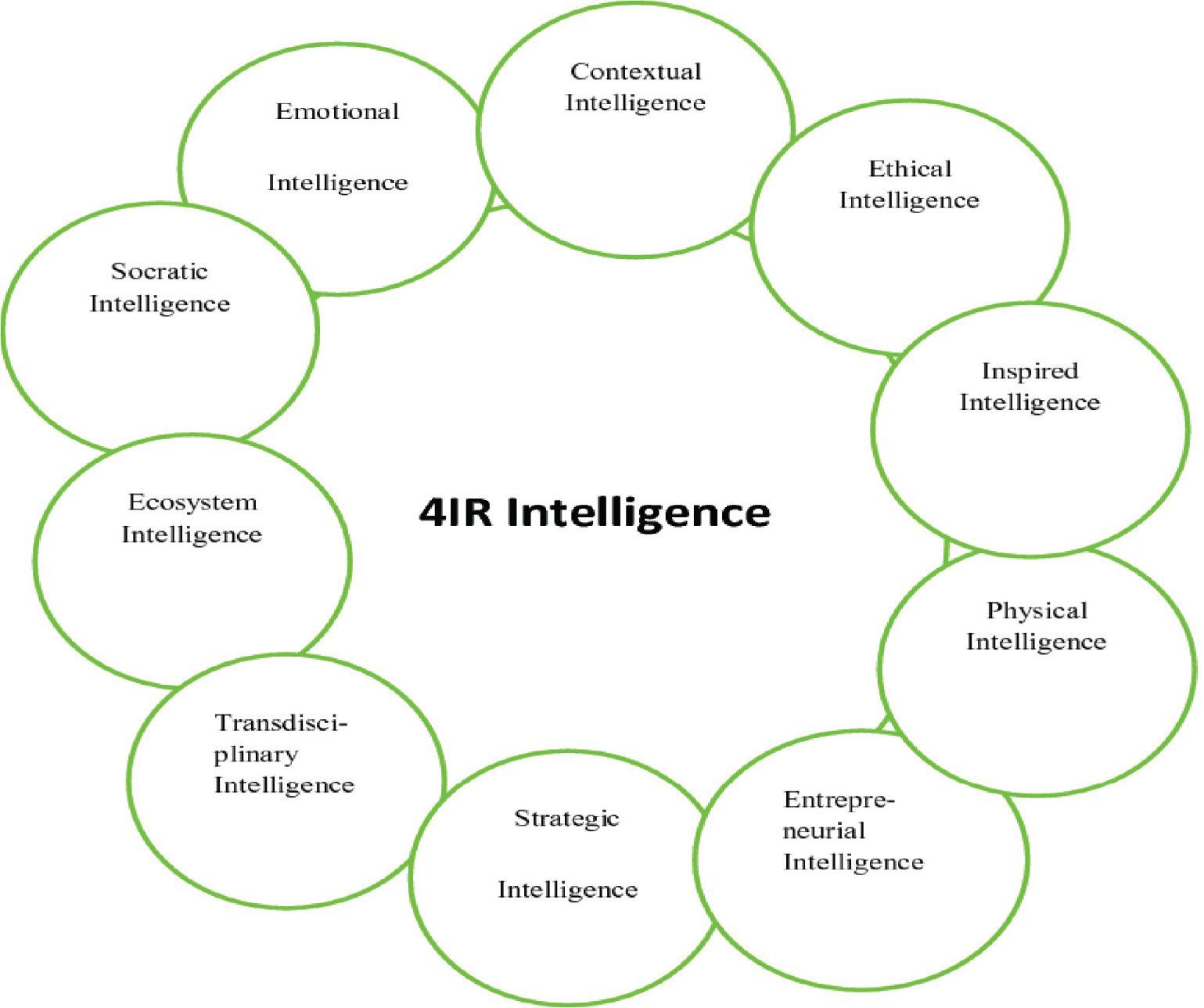
Fig. 1:
4IR Leadership intelligence features. Source: Alade and Windapo (2020). 4IR, Fourth Industrial Revolution.
3. Research methodology
This study seeks to contribute to the academic discourse on leadership styles amidst the 4IR within the built environment, specifically focusing on South Africa. The primary objective is to explore how diverse leadership philosophies influence the adoption and implementation of 4IR technologies such as building information modelling (BIM), AI and automation in building projects. South Africa presents a compelling context for this investigation due to its unique socio-economic landscape, rapid urbanisation, infrastructure development demands and a pressing need to address historical inequalities through technological innovation. Additionally, the country’s built environment sector is at a pivotal juncture, balancing traditional practices with the transformative potential of 4IR, yet facing challenges like skill shortages, funding constraints and resistance to change. By examining leadership’s role in navigating these dynamics, this study aims to provide insights that are not only locally relevant but also applicable to other emerging economies grappling with similar technological and contextual shifts, thereby enriching the global understanding of leadership in tech-driven industries.
To accomplish this goal, a quantitative research approach was used in the study, which made it possible to examine the leadership styles most pertinent to navigating 4IR adoption in a more structured and objective manner. Random sampling, a commonly used technique in research observed by Adekunle et al. (2022b), since it helps to eliminate bias and provides for a representative sample of the population without surveying the entire group, was part of the quantitative methodology selected for this study. The study targeted important decision-makers crucial to deploying 4IR-related technologies and leadership in construction projects by focusing on construction managers and project managers as the primary respondents. Random selection was chosen for its cost-effectiveness and efficiency in data collecting, because it guarantees that the sample is representative of the larger population while reducing the time needed for respondents to supply information (Otasowie et al. 2023).
Figure 2 presents the research methodology framework, and it reveals that the methodology adopted in this study can be broken down into three stages. The first stage entails sourcing literature related to leadership styles and the adoption of the 4IR technologies. Figure 2 reveals that the findings emanating from the literature were used to develop the questionnaire used in this study. This questionnaire was divided into two sections: the first part gathered demographic and professional background information about the respondents, such as their roles in the industry and professional registration. By contrast, the second part focused on leadership variables in the context of 4IR technologies. The study sought to ensure that the data acquired accurately reflected the leadership dynamics of a region extensively involved in building innovation by conducting the questionnaire administration in Gauteng Province, an area with a high concentration of construction activity (Meno 2020). A total of 210 questionnaires were distributed, with 153 valid responses, yielding a commendable 73% response rate, which provides a reliable basis for analysis. The collected data were analysed using the Statistical Package for Social Sciences version 29 (SPSS v29)(IBM Corporation (International Business Machines Corporation) Armonk, New York, United States), known for its robustness in handling large datasets and providing detailed statistical insights. Descriptive statistics such as frequency, mean item score and standard deviation were used to summarise the data and present the overall trends in leadership styles among the respondents.
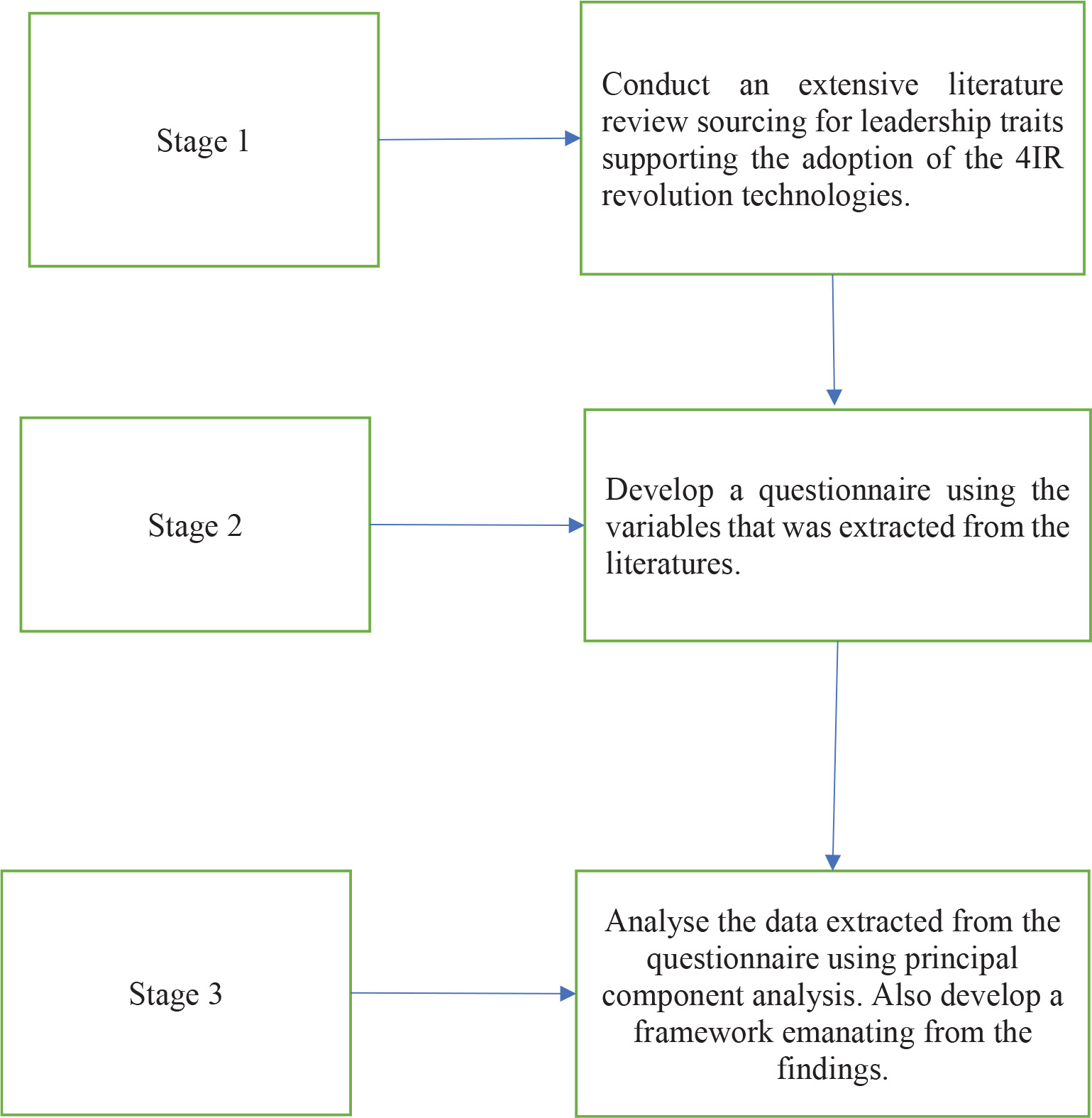
Fig. 2:
Research methodology framework. 4IR, Fourth Industrial Revolution.
Furthermore, the study employed principal component analysis (PCA), a multivariate technique that helps reduce the dataset’s complexity by identifying patterns and correlations between multiple variables. PCA is particularly useful when dealing with interrelated variables, as it simplifies data into principal components that explain the most variance within the dataset (Abdi and Williams 2010). This method allowed the study to identify the underlying leadership traits and behaviours most strongly associated with 4IR adoption in the built environment. PCA was chosen over other methods like exploratory factor analysis (EFA) and confirmatory factor analysis (CFA), because the study aimed to explore and simplify the relationships among leadership traits in the context of 4IR adoption, rather than to test or confirm a latent factor model. Also, EFA was not used because it is often adopted when researchers believe that latent constructs underlie observed variables, but do not have a predefined model. Whereas CFA is employed to test specific hypotheses about factor structures based on strong theoretical foundations (Osunsanmi et al. 2024). By contrast, PCA focuses on maximising the explained variance in the dataset by transforming correlated variables into a set of uncorrelated principal components. The PCA results were further validated using the Kaiser–Meyer–Olkin (KMO) measure of sampling adequacy and Bartlett’s test of sphericity, both of which assess the suitability of the data for PCA. Additionally, eigenvalues and the rotated component matrix were used to interpret the principal components, providing insights into how leadership styles align with 4IR adoption strategies. By presenting these analyses, the study offers a comprehensive understanding of the leadership factors that promote or hinder the integration of advanced technologies in construction projects, thus contributing to the broader understanding of leadership in the context of the 4IR.
4. Findings and discussion
4.1. Respondents’ background information
This section presents the results of the respondents’ background information. The results revealed that from the collected data, the majority of respondents had a professional background in project management, and the least of the respondents had a professional background in construction management. The results concerning the professional registration revealed that most (equivalent to 36.9%) of the respondents are not registered and were ranked first, followed by respondents registered as candidate construction project managers (with 16.3%); candidate construction managers were ranked third (with 15.3%), and professional construction project managers were ranked fourth (with 10.8%). Furthermore, professional construction managers were ranked fifth (with 9.9%), partial metric scale analysis (PMSA) project managers were ranked sixth (with 7.2%) and lastly, both senior project managers and PMSA professional project managers were ranked seventh (with 1.8% each). Concerning respondents’ education qualifications, the results revealed that post-matric diploma or certificate was ranked first (with 41.1%), followed by baccalaureate (with 38.3%), master’s degree was ranked third (with 15.9%), grade 12 (matric, Std 10) was ranked fourth (with 2.8%) and finally, doctorate was ranked fifth (with 1.9%). Table 1 displays the respondents’ background information results.
Tab. 1:
Background information results.
| Background information | Percentage (%) | Ranking (R) | |
|---|---|---|---|
| Professional background | Construction managers | 46 | 2nd |
| Project managers | 54 | 1st | |
| Profession registration | Professional construction project manager | 10.8 | 4th |
| PMSA professional project manager | 1.8 | 7th | |
| Professional construction manager | 9.9 | 5th | |
| Senior project manager | 1.8 | 7th | |
| PMSA project manager | 7.2 | 6th | |
| Candidate construction project manager | 16.3 | 2nd | |
| Candidate construction manager | 15.3 | 3rd | |
| Not registered | 36.9 | 1st | |
| Educational qualification | Grade 12 (Matric, Std 10) | 2.8 | 4th |
| Post-matric diploma or certificate | 41.1 | 1st | |
| Baccalaureate degree(s) | 38.3 | 2nd | |
| Master’s degree | 15.9 | 3rd | |
| Doctorate degrees | 1.9 | 5th |
4.2. Leadership style supporting the adoption of 4IR technologies
This study adopted PCA to investigate the critical role of leadership styles in facilitating the adoption of the 4IR within the built environment. As such, the collected data must be subject to the KMO and Bartlett’s test to ensure the accuracy and reliability. Consequently, the KMO was determined to be 0.779, which indicates that the collected data is adequate for sampling as it exceeds 0.700. Furthermore, Bartlett’s test revealed that the approximate Chi-Square is 1,098.557, while the degree of freedom (df) was 351. Lastly, the significance value was determined to be 0.000. Table 2 presents the results of the KMO and Bartlett’s test.
Tab. 2:
KMO and Bartlett’s test.
| KMO measure of sampling adequacy | 0.779 | |
| Bartlett’s test of sphericity | Approx. Chi-square | 1,098.557 |
| df | 351 | |
| Sig. | 0.000 |
The PCA has indicated that only 4 components have been extracted from the analysis, with an eigenvalue of more than 1. The first component had an eigenvalue of 5.288 with a total variance of 19.584, while the second component had an eigenvalue of 3.356 with a total variance of 12.431. Additionally, the analysis indicates that the third component had an eigenvalue of 2.496 with a total variance of 9.244, and the fourth component had an eigenvalue of 1.698 with a total variance of 6.261. Table 3 shows the components’ eigenvalues.
Tab. 3:
Components eigenvalues.
| Component | Total | Variance | Cumulative variance |
|---|---|---|---|
| 1 | 5.288 | 19.584 | 19.584 |
| 2 | 3.356 | 12.431 | 32.015 |
| 3 | 2.496 | 9.244 | 41.258 |
| 4 | 1.6981 | 6.261 | 47.520 |
From the extracted 4 components, the naming of the components was conducted through the relationship that exists within the variables and the loadings. As a result, the first component was named ‘Transformational Leadership’, the second component was named ‘Charismatic Leadership’, the third component was named ‘Transactional Leadership’ and lastly, the fourth component was named ‘Autocratic Leadership’. Table 4 shows the naming convention through the rotated component matrix. Below are the results and discussion of the components that were extracted.
Tab. 4:
Rotated component matrix
| Rotated component matrixa | ||||
|---|---|---|---|---|
| Leadership styles component | ||||
| 1 Transformational leadership | 2 Charismatic leadership | 3 Transactional leadership | 4 Autocratic leadership | |
| Keep the communication open at all times | 0.721 | |||
| Sometimes ask for ideas from subordinates | 0.697 | |||
| Monitor all projects that am in charge of to ensure the team meets its goal | 0.696 | |||
| Encourage creativity and new ideas | 0.645 | |||
| Leader gathers feedback from the subordinates before deciding | 0.583 | . | ||
| Help others with their self-development | 0.472 | |||
| Workforce should work on their understanding of the work given | 0.450 | |||
| Involve employees in project decision-making | 0.408 | |||
| A significant part of leadership involves teaching | 0.727 | |||
| Leadership preference is to think long-range: what it might be | 0.663 | |||
| Leaders must represent a higher morality | 0.630 | |||
| Manage others by setting standards that are agreed upon | 0.614 | |||
| Provide necessary resources to employees and let employees work | 0.561 | |||
| Facilitate events for the workforce | 0.535 | |||
| Emphasise discipline when subordinates do something wrong | 0.463 | |||
| The leader initiates methods and processes | 0.763 | |||
| Persuade others to do things as commanded | 0.730 | |||
| Allow flexibility to the employees | 0.728 | |||
| Allow employees to make decisions and have complete freedom | 0.575 | |||
| Prompt personnel through rewards and payments | 0.455 | |||
| Employees do their jobs when the project has been awarded | 0.444 | |||
| Spend considerable energy in arousing expectations among workers | 0.724 | |||
| Employees should obey instructions and commands | 0.666 | |||
| Extraction method: PCA. | ||||
| Rotation method: Varimax with Kaiser normalisation | ||||
4.2.1. Component 1: transformational leadership
This component consists of 8 variables and their respective loadings. These variables include ‘keep the communication open at all times’ (72.1%), ‘sometimes ask for ideas from subordinates’ (69.7%), ‘monitor all projects that am in charge of to ensure the team meets its goal’ (69.6%), ‘encourage creativity and new ideas’ (64.5%), ‘leader gathers feedback from subordinates before deciding’ (58.3%), ‘help other with their self-development’ (47.2%), ‘workforce should work on their understanding of the work given’ (45.0%) and ‘involve employees in project decision-making’ (40.8%). This type of leadership involves leaders interacting with the employees to achieve the goals and vision of the organisation.
Oke (2013) confirmed that transformational leadership refers to the leadership style that involves interaction between the leaders and employees to achieve greater heights in the organisation. This highlights the importance of transparent, open and consistent communication between leaders and their teams, which is essential for achieving organisational goals. Transformational leaders motivate their subordinates by engaging them in open dialogue, a key factor for driving performance and innovation. Additionally, Liphadzi et al. (2015) discussed that the interaction between the leaders and employees involves the employees’ motivation to enhance their morale and efforts towards the organisation. Transformational leadership is more than just achieving immediate results; it involves fostering long-term employee development, aligning with the study’s overall goals of assessing leadership in 4IR. Transformational leaders play an essential role in developing future leaders by helping employees realise their potential and empowering them to contribute meaningfully to the organisation.
4.2.2. Component 2: charismatic leadership
This component comprises 7 variables and their loadings, which include ‘a significant part of leadership involves teaching’ (72.7%), ‘leadership to think in a long-range: what it might be’ (66.3%), ‘leaders must represent a higher morality’ (63.0%), ‘manage others by setting standards that are agreed upon’ (61.4%), ‘provide necessary resources to employees and let employees work’ (56.1%), ‘facilitate events for the workforce’ (53.5%) and ‘emphasise discipline when subordinates do something wrong’ (46.3%). The variables in this cluster indicate that charismatic leaders can forecast the future by looking at the present performance of the organisation. While these leaders inspire and motivate, they also provide their teams with the tools and support needed to succeed. The findings align with the study by Opoku and Ahmed (2015), who discussed that charismatic leaders are known to be ‘visionary leaders’ and impose positive relationships between the leaders and employees to achieve a comprehensive strategic vision. Additionally, this type of leadership improves the employees’ commitment towards higher performance of the organisation. Charismatic leadership’s emphasis on relationship-building and fostering commitment from subordinates makes it especially effective in challenging times, such as those presented by the 4IR. As construction organisations face new digital and technological demands, charismatic leaders can galvanise their teams around a shared vision for innovation and progress.
4.2.3. Component 3: transactional leadership
This component contains 6 variables that are associated with transactional leadership. These variables include ‘the leader initiates methods and processes’ (76.3%), ‘persuade others to do things as commanded’ (73.0%), ‘Allow flexibility to the employees’ (72.8%), ‘allow employees to make decisions and have complete freedom’ (57.5%), ‘prompt personnel through rewards and payments’ (45.5%) and ‘Employees do their jobs when the project has been awarded’ (44.4%). This cluster comprises the variables that describe transactional leadership, which gives freedom to the employees to perform their duties. The variables in this cluster align with the description of transactional leadership asserted in the studies by Pretorius et al. (2018) and Liphadzi et al. (2015), who described transactional leadership as a type of leadership that focuses on information exchange between leaders and employees. Additionally, this type of leadership exchanges information to meet the required standards of the project or organisation. While transactional leaders provide guidance, they also offer some autonomy, enabling employees to make decisions within the confines of established processes. However, the freedom granted is often tied to performance metrics, as transactional leaders emphasise outcomes over personal development. Transactional leadership focuses on meeting the required project standards through an exchange-based relationship between leaders and followers. In the context of 4IR, transactional leadership may effectively maintain efficiency but struggle to foster the innovation and adaptability required for technological advancement.
4.2.4. Component 4: autocratic leadership
This component comprises 2 variables that belong to autocratic leadership. These variables include ‘spend considerable energy in arousing expectations among workers’ (72.4%) and ‘employees should obey instructions and commands’ (66.6%); this cluster consists of variables that require employees should follow the instructions that the leader provides. These results align with the study by Emere et al. (2018) that autocratic leaders often operate under the assumption that they know best and that employees should execute their orders. In environments requiring rapid innovation and adaptation, such as those impacted by 4IR technologies, autocratic leadership may hinder flexibility and employee engagement. While autocratic leadership can effectively maintain order and ensure that tasks are completed according to the leader’s vision, it can limit employee input and innovation, which are essential in the fast-changing 4IR landscape. Therefore, while this style may have a place in certain construction settings, it is likely less effective in driving the kind of creative and technological breakthroughs required for 4IR success.
Limited research in this area has hampered the speed of integration, which is why 4IR leadership has not been widely adopted inside construction organisations. Most construction organisations have not yet adopted 4IR leadership because the knowledge and tactics needed to implement it are still lacking. But as Alade and Windapo (2021) point out, implementing 4IR leadership in the construction industry is essential to improving project results and ensuring businesses stay competitive in a world that is becoming increasingly digital. Incorporating 4IR leadership intelligence traits, which speak of the skills and knowledge leaders require to manage technology advancements and foster organisational growth successfully, characterises this leadership style. Construction businesses will notice a significant increase in teamwork and communication by implementing 4IR-oriented leadership (Ejohwomu et al. 2021). Improved real-time data sharing, project monitoring and resource management are made possible by digital tools and technologies, including AI, the IoT and BIM. 4IR leadership intelligence-equipped leaders may use these tools to improve collaboration, expedite processes and reduce downtime, all of which will ultimately contribute to more successful project outcomes.
In addition, 4IR leadership gives construction executives the capacity to predict and mould their organisations’ futures, as observed by Bhattacharya and Momaya (2021). Leaders who possess a thorough awareness of emerging technologies and their potential uses can predict future trends, foresee changes in the industry, and assist their teams in implementing new techniques and tools that increase productivity and efficiency. This forward-thinking strategy is necessary to maintain competitiveness in a market that is changing quickly and depends more on creative ideas. Integrating 4IR leadership facilitates bridging conventional construction methods and contemporary technological developments (Sylvester 2024). It is possible for leaders who have experience with cutting-edge technologies to lead their organisations through this shift and guarantee that the full potential of 4IR tools is realised. Enhanced project accuracy, lower expenses, better sustainability and more overall efficiency are some of these advantages. In the end, 4IR leadership has the power to revolutionise the construction sector and move it towards a more inventive, cooperative and future-oriented paradigm.
5. Contribution of the study to research practice and the growth of the construction industry
This study makes significant contributions to research, practice and the growth of the construction industry by addressing the critical role of leadership styles in fostering the adoption of 4IR technologies. To research the study enriches the existing body of knowledge by providing a comprehensive analysis of how transformational, transactional, charismatic and autocratic leadership styles influence the integration of 4IR technologies in the built environment. By identifying distinct clusters of leadership styles and their associated variables, such as openness to communication, employee empowerment and adaptability, the study offers a nuanced understanding of the leadership dynamics required for successful technological adoption. This fills a critical gap in the literature, as previous studies have not systematically explored the interplay between leadership styles and 4IR technology adoption in the construction sector. Furthermore, the study introduces the concept of 4IR leadership intelligence, which includes attributes such as technological literacy, adaptability and the ability to drive innovation, providing a theoretical framework for future research on leadership in the context of rapid technological change.
In terms of practice, the study contributes by developing a four-dimensional framework of leadership styles shown in Figure 3. The major difference between this framework and others lies in its holistic view of construction leadership in the 4IR era. For instance, Rehan et al. (2024) developed a framework for leadership within the construction industry with a focus on communication. Guha et al. (2025) developed a framework for leadership qualities and Gledson et al. (2024) created a framework for digital leadership. The shortcoming of the existing framework is that it adopts a reductionist approach by focusing on a specific segment of the construction sector. The framework shown in Figure 3 can be applied to any section within the construction industry. Table 5 additionally presents a comparison between the adopted framework and prior research.
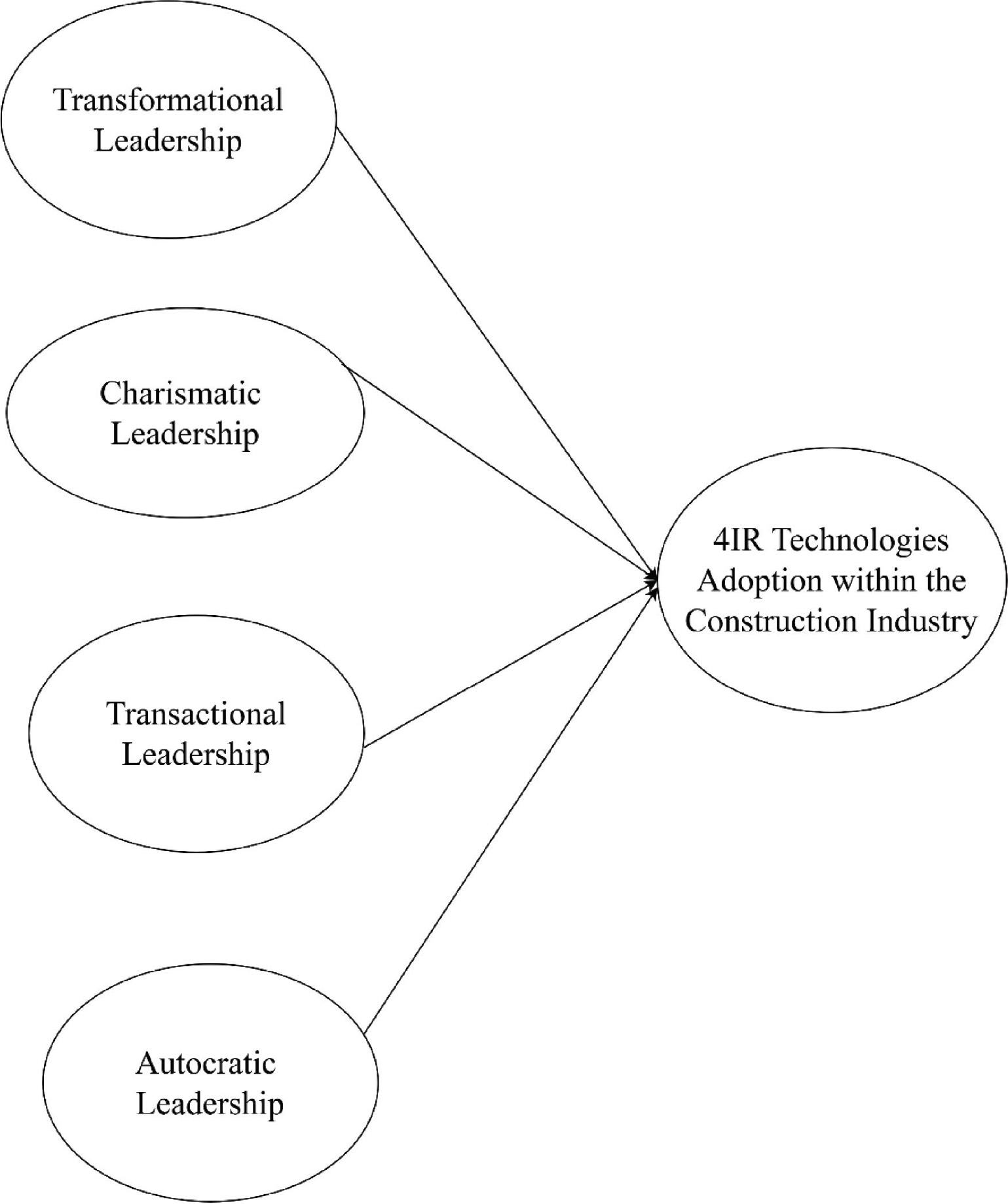
Fig. 3:
Leadership style framework supporting the adoption of 4IR technologies. 4IR, Fourth Industrial Revolution.
Tab. 5:
Leadership framework comparison table.
| Previous framework study | Focus area | Leadership dimensions | Scope | Technology integration | Limitations | Current framework novelty |
|---|---|---|---|---|---|---|
| Rehan et al. (2024) | Communication-centric leadership | Communication strategies and channels | Construction project teams | Limited focus on digital tools | Reductionist view; focuses only on communication aspects | Integrates multiple leadership styles beyond communication |
| Guha et al. (2025) | Leadership qualities | Individual leadership traits and competencies | Construction managers | Minimal emphasis on 4IR technologies | Focuses on personal qualities rather than contextual application | Context-specific framework for 4IR adoption across all construction sectors |
| Gledson et al. (2024) | Digital leadership | Digital competencies and skills | Digital transformation initiatives | Focuses on digital aspects only | Limited to digital leadership without broader leadership styles | Comprehensive multi-dimensional approach combining traditional and digital leadership |
| Current framework (Figure 3) | Holistic 4IR technology adoption | Four dimensions: transformational, charismatic, transactional, and autocratic leadership | All construction industry sectors | Specifically designed for 4IR technology adoption | None identified; comprehensive approach | • Integrates four distinct leadership styles • Holistic view applicable to entire construction industry • Specifically addresses 4IR technology adoption barriers • Balances inspirational and operational leadership needs • Sector-agnostic application |
Figure 3 reveals that transformational, transactional, charismatic and autocratic leadership can guide leaders in the construction industry to effectively adopt the technologies driven by the 4IR. This framework serves as a practical tool for stakeholders to assess and adapt their leadership approaches based on the specific demands of their projects and organisational contexts. For instance, transformational leadership can be leveraged to inspire innovation and employee engagement, while transactional leadership can ensure adherence to processes and accountability. Charismatic leadership can motivate teams during periods of uncertainty, while autocratic leadership can provide clear direction in high-stakes scenarios. By integrating these styles, organisations can create a balanced leadership strategy that fosters flexibility, collaboration and resilience in the face of technological disruption. Additionally, the study emphasises the importance of leadership training and continuous learning, offering actionable recommendations for organisations to equip their leaders with the skills needed to drive digital transformation.
For the growth of the construction industry, this study provides a roadmap for leveraging leadership as a catalyst for innovation and competitiveness in the 4IR era. By highlighting the strategic role of leadership in overcoming barriers to technology adoption, such as resistance to change and skills gaps, the study underscores the need for a leadership paradigm shift in the industry. The proposed framework and recommendations can help construction firms enhance their operational efficiency, reduce costs and improve project delivery through the effective use of 4IR technologies. Moreover, by fostering a culture of collaboration and empowerment, the study advocates for a workforce that is not only prepared to embrace technological advancements but also actively contributes to the organisation’s growth. Ultimately, this research positions leadership as a cornerstone of the construction industry’s evolution, ensuring its readiness to thrive in an increasingly digital and competitive global landscape.
6. Conclusion and recommendation
This study aimed to investigate the crucial impact of leadership styles in promoting the adoption of technologies related to the 4IR in the built environment. The literature review gave readers a basic understanding of leadership and defined it as necessary for successful organisations. It examined various leadership characteristics, including charismatic, transactional, transformational, authoritarian leadership, vision, communication and decision-making. Each style offers a special set of methods for leading groups and organisations through change, especially in technology integration. Furthermore, the review examined how different leadership philosophies impact the adoption of 4IR, reviewing characteristics of 4IR leadership intelligence like adaptability, technology literacy and the capacity to spur creativity. This in-depth analysis of leadership within the built environment sets the stage for understanding how different styles contribute to overcoming challenges associated with integrating cutting-edge technologies. This analysis identified clusters that corresponded to different leadership styles: transformational, transactional, charismatic and authoritarian. Each cluster was identified based on its specific variables, such as openness to communication and employee empowerment in transformational leadership or the focus on rules and directives in authoritarian leadership. The findings further indicated that these leadership styles have distinct roles in promoting the adoption of 4IR technologies. Understanding these dynamics is crucial for successful implementation in construction and other sectors within the built environment. As discussed, the 4IR leadership intelligence features provided a framework for leaders to effectively guide their teams through the complexities of 4IR, ensuring that innovation, digital transformation and organisational efficiency are prioritised. This connection between leadership styles and 4IR technology adoption highlights leaders’ need to adapt and refine their approach in the face of rapid technological change.
From the conclusions drawn, the study, therefore, proposes several recommendations. First, it suggests that organisations within the built environment must integrate various leadership styles to ensure a smooth and effective transition to 4IR technologies. The combination of transformational, transactional, charismatic and authoritarian leadership allows for flexibility and adaptability, helping organisations meet the diverse challenges posed by new technologies. Second, the study emphasises the importance of collaboration between leaders and employees. Engaging the workforce in the 4IR transformation process can lead to improved performance and more successful technology adoption, as employees feel empowered and motivated to contribute to the organisation’s goals. The study also recommends prioritising leadership training, ensuring leaders have the necessary skills to manage and lead their teams during this technological revolution. This includes fostering an environment of continuous learning and adaptation, which is crucial for staying competitive in an increasingly digital world. Finally, the study recommends validation of the framework developed in this study using structural equation modelling or a Delphi study. The study has significantly contributed to understanding how leadership styles affect the adoption of 4IR technologies within the built environment. The recommendations provided emphasise the strategic role that leaders play in ensuring that organisations are prepared for and capable of embracing the changes brought about by technological advancements. Effective leadership, therefore, is not just about directing people; it is about cultivating an environment where innovation thrives, collaboration is encouraged and the workforce is empowered to drive the organisation forward into the future of the 4IR.