
1. Introduction
Architectural concrete is a type of concrete widely used in both interior and exterior structural concrete elements, due to its durability and refined aesthetic appeal. Innovations in concrete technology have expanded the possibilities for architectural concrete, allowing for a diverse range of surface finishes, colours, and texture.
White concrete is a type of fair-faced concrete, produced using white cement and white-coloured aggregates. Its mineralogical composition differs from grey cement (GC), as outlined by Bogue’s calculations (Moresova and Škvara 2001). White cement contains higher proportions of dicalcium silicate and tricalcium aluminate, whereas GC has greater amounts of tricalcium silicate and tetracalcium aluminoferrite. These mineralogical differences result in white cement exhibiting a faster setting time compared to GC. The higher tricalcium aluminate content in white cement enhances its early strength, surpassing that of GC (Habib et al. 2022). Additionally, the increased silicate content in white cement contributes to greater compressive strength after 28 days, compared to GC (Hamad 1995; Topličić-Ćurčić et al. 2016).
All technological processes for GC concrete casting also apply to white concrete. However, due to the faster setting time of white cement, greater care must be taken during curing and finishing. Proper casting and curing of white concrete in aggressive environmental conditions are essential for achieving a durable structure with a high-quality surface finish, free from visible defects or damage (Flores-Ales et al. 2022).
White concrete presents numerous sustainability advantages compared to grey concrete. Its production requires less energy, leading to lower greenhouse gas emissions. With its higher solar reflectance compared to grey concrete, white concrete helps keep buildings cooler during summer, reducing energy consumption. Its enhanced reflective properties improve visibility indoors, minimising the need for additional lighting and further lowering of energy consumption. Additionally, white and coloured concrete offer superior aesthetic quality and richer colour depth, particularly when white cement is used (Topličić-Ćurčić et al. 2016; Shi et al. 2023). Thanks to these benefits, white concrete is increasingly used in the construction of monolithic and precast architectural concrete elements (Habib et al. 2022; Ma et al. 2022).
The existing research on white concrete primarily explores the selection of constituent materials for its composition, along with its mechanical and deformation properties, aesthetic qualities, and long-term durability.
To enhance the performance of white concrete, various mineral admixtures can be incorporated alongside its standard composition components. These admixtures must not compromise the concrete’s colour integrity, so commonly utilised materials include metakaolin, filler, white silica fume, quartz sand, rice husk ash, and titanium dioxide (Cassar et al. 2003; Ferraro and Nanni 2012; Zhang et al. 2017; Klak and Abdulla 2018; Ma et al. 2022; Xia et al. 2022; Mafalda Matos et al. 2023, 2024; Shi et al. 2023). Other mineral admixtures are rarely used, due to their tendency to alter the whiteness of the concrete.
Comparative research on different types of white cement has shown that the resulting mechanical and durability properties depend on the specific type of white cement used (Kircheim et al. 2015).
Research suggests that white cement enables the production of ultra-high-performance concrete, which is utilised in construction and the repair of existing concrete structures, enhancing their durability and minimising maintenance expenses (Ma et al. 2022; Xia et al. 2022; Tian et al. 2023; Mafalda Matos et al. 2024).
A review of existing research on white concrete suggests that only a few studies have investigated the impact of concrete composition on the chloride diffusion coefficient. This durability parameter is particularly critical for white concrete applications in maritime environments. Enhancing the durability of white concrete can be achieved by lowering the water-to-cement ratio or incorporating mineral admixtures into the cement matrix (Ozturk and Kaplan 2017). Studies have shown that the addition of 5% silica fume improves the chloride diffusion coefficient (Aalborg Portland 2003; Topličić-Ćurčić et al. 2016). Furthermore, a combination of superabsorbent polymers and white filler has been found to further reduce the chloride diffusion coefficient (Shi et al. 2023).
Due to its distinctive aesthetic appeal and lower cost compared to natural stone, white concrete has recently been used for constructing structures in maritime environments (Banichevic Begovich 2014; Covic 2014). When applied in such settings, white concrete must also be impermeable to chloride penetration from seawater. This prevents visible corrosion marks on its surface and enhances the durability of white concrete structures (Flores-Ales et al. 2022).
This paper presents research that examines the impact of composition components of white concrete on its properties in both its fresh and hardened states in maritime environments. Particular emphasis is placed on determining the chloride diffusion coefficient, a critical parameter impacting the durability of white concrete in maritime environments, which has not been extensively investigated to date. This study investigated a total of 15 concrete mixtures to evaluate the influence of white cement type, the type and dosage of metakaolin, and the incorporation of titanium dioxide on the properties of fresh concrete, as well as on the mechanical properties and durability of the hardened concrete.
The findings of this study have been implemented in the application of white concrete for construction in maritime environments. This paper presents the application of white concrete in the construction of a seaside hotel and beach infrastructure, based on the research findings previously established on the performance of white concrete in marine environments. Figure 1 shows Hotel Mandalina in Šibenik (Croatia) and the Lone Hotel beach in Rovinj (Croatia), which have been constructed using white concrete.
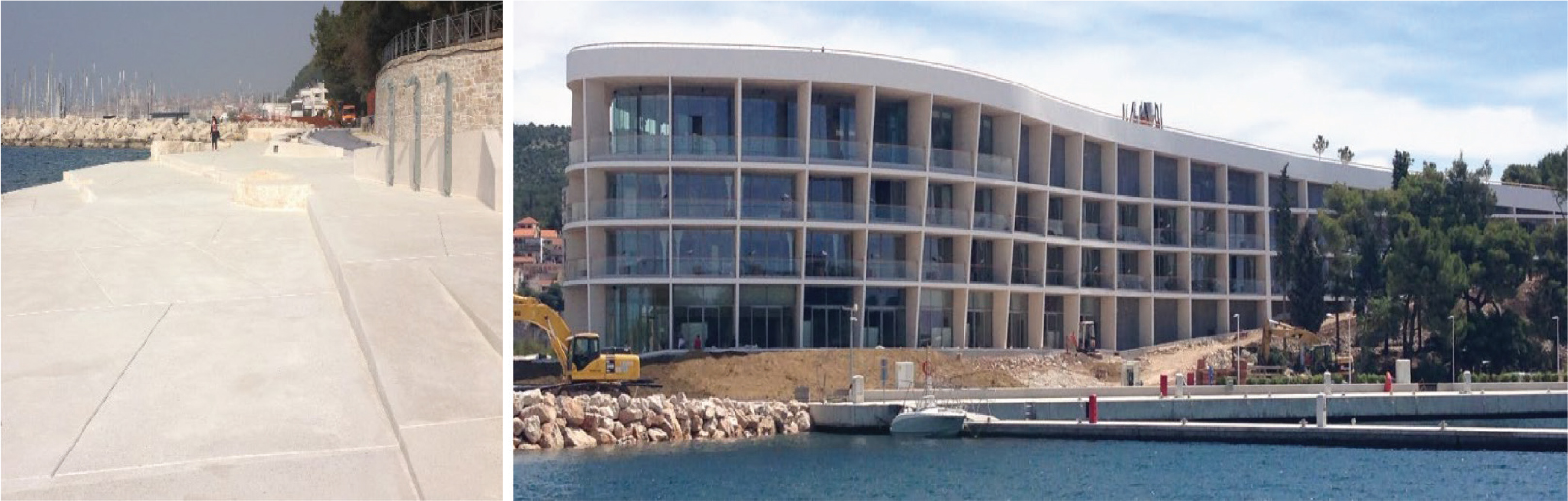
Fig. 1:
View of the lone hotel promenade and beach (left) and Mandalina hotel (right).
The research findings and successful practical applications of white concrete in maritime environments, as presented in this paper, demonstrate that this material can be effectively used for constructing different structures in aggressive maritime conditions.
2. Experimental research
2.1. Design of experiments and test methods
The objectives of the experimental research are as follows:
– To establish the influence of cement type on the properties of white concrete.
– To establish the influence of different types of metakaolin on the properties of white concrete.
– To establish the influence of titanium dioxide admixtures on the properties of white concrete.
– To determine the optimal dosage of metakaolin in white concrete.
Fresh concrete mixtures were tested to determine the following properties: density (HRN EN 12350-6), air content (HRN EN 12350-7), temperature (HRN U.M1.032) and slump consistency (HRN EN 12350-2).
In the hardened state, mechanical properties were evaluated, including compressive strength (HRN EN 12390-3), secant modulus of elasticity (HRN EN 12390-13), and tensile splitting strength (HRN EN 12390-6).Durability-related properties were also assessed, specifically the capillary water absorption coefficient (HRN U.M8.300) and the chloride diffusion coefficient (NT BUILD 492).
The aesthetic quality of white concrete was examined through visual assessment of surface whiteness. Figure 2 illustrates the durability testing of the hardened concrete.
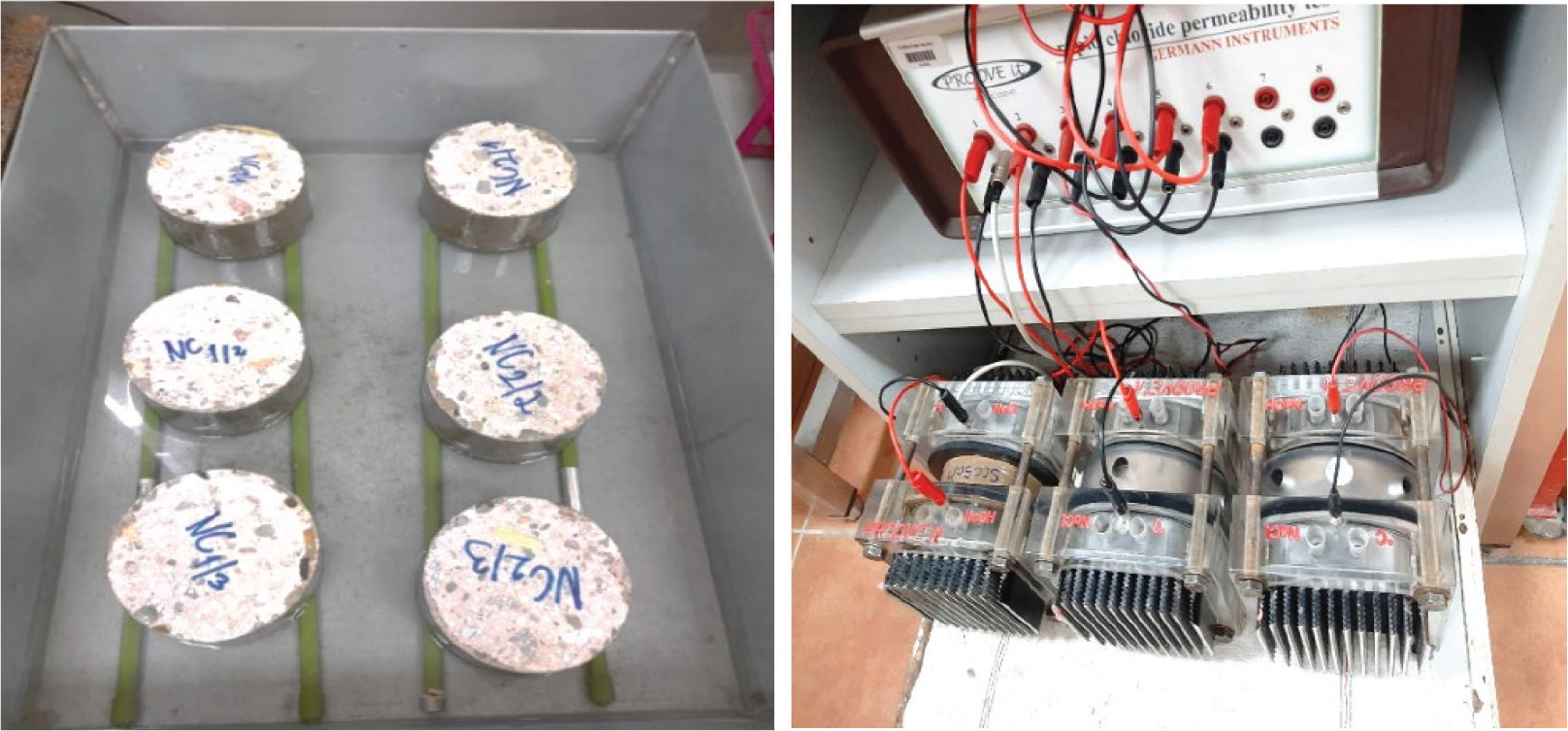
Fig. 2:
Overview of testing capillary water absorption coefficient (left) and chloride diffusion coefficient (right).
2.2. Composition of concrete mixtures
The experimental research involved a total of 15 concrete mixtures.
The design of concrete mixtures was carried out to meet the environmental exposure classes XC4, XS3 and XD3, the compressive strength class of C35/45, and a slump consistency of approximately 200 mm. These specifications were selected to ensure the suitability of white concrete for use in aggressive maritime environments, based on the evaluation of key mechanical and durability properties.
To enhance the chloride diffusion coefficient in the investigated concrete compositions, mineral admixtures such as metakaolin and titanium dioxide were used. These admixtures were selected because they do not alter the colour of white concrete and are available in the market. The concrete mixtures were designed to achieve white colouration either through the use of white cement or by using titanium dioxide as a whitening agent in mixtures containing GC.
Table 1 shows the compositions of concrete mixtures M 1 to M 8 used for selecting the type of cement, the type of metakaolin, and the influence of titanium dioxide on the properties of white concrete. All the concrete mixtures presented in this study had the same water-binder ratio (0.38) and the same binder content. A water-binder ratio lower than 0.40 was chosen to ensure compliance with durability requirements for concrete exposed to maritime environment conditions.
Tab. 1:
Composition of concrete mixtures M 1 do M 8.
| Components | Concrete mixture | |||||||
|---|---|---|---|---|---|---|---|---|
| M 1 | M 2 | M 3 | M 4 | M 5 | M 6 | M 7 | M 8 | |
| WC 1 | 360 | 360 | 360 | - | - | - | - | - |
| WC 2 | - | - | - | - | 360 | 360 | 360 | - |
| GC | - | - | - | 360 | - | - | - | 360 |
| MK 1 | - | 45 | - | 45 | - | 45 | - | - |
| MK 2 | - | - | 45 | - | - | 45 | 45 | |
| Titanium dioxide | - | - | - | 18 | - | 18 | ||
| Water | 137 | 137 | 137 | 137 | 137 | 137 | 137 | 137 |
| Superplasticiser | 5.4 | 5.4 | 5.4 | 5.4 | 5.4 | 5.4 | 5.4 | 5.4 |
| Aggregate 0–4 mm | 1,041 | 995 | 995 | 994 | 1,041 | 995 | 995 | 994 |
| Aggregate 4–8 mm | 258 | 247 | 247 | 247 | 258 | 247 | 247 | 247 |
| Aggregate 8–16 mm | 773 | 739 | 739 | 738 | 773 | 739 | 739 | 738 |
| Water-binder ratio | 0.38 | 0.38 | 0.38 | 0.38 | 0.38 | 0.38 | 0.38 | 0.38 |
Table 2 presents the compositions of the remaining seven concrete mixtures, M 9 through M 15. These mixtures were prepared with the objective of determining the optimal metakaolin dosage in white concrete across varying water-to-binder ratios.
Tab. 2:
Composition of concrete mixtures M 9 do M 15.
| Components | Concrete mixture | |||||||
|---|---|---|---|---|---|---|---|---|
| M 9 | M 10 | M 11 | M 12 | M 13 | M 14 | M 15 | ||
| WC 1 | 306 | 324 | 306 | 324 | 335 | 324 | 335 | |
| MK 1 | 54 | 36 | 54 | 36 | 25 | 36 | 25 | |
| Titanium dioxide | - | - | - | - | - | - | - | |
| Water | 151 | 151 | 140 | 140 | 140 | 130 | 130 | |
| Superplasticiser | 5.4 | 5.4 | 5.4 | 5.4 | 5.4 | 5.4 | 5.4 | |
| Aggregate 0–4 mm | 936 | 937 | 950 | 952 | 952 | 966 | 966 | |
| Aggregate 4–8 mm | 281 | 281 | 247 | 247 | 247 | 290 | 290 | |
| Aggregate 8–16 mm | 655 | 655 | 666 | 666 | 666 | 677 | 677 | |
| Water-binder ratio | 0.42 | 0.42 | 0.39 | 0.39 | 0.39 | 0.36 | 0.36 | |
The concrete mixtures were prepared using a laboratory forced-action mixer with a capacity of 100 L. Compaction was carried out on a vibrating table operating at a frequency of 150 Hz. Test specimens were demoulded 24 h after casting, and compressive strength was measured at this early age. The remaining specimens were cured in a humidity-controlled chamber maintained at a temperature of 20°C ± 2°C and a relative humidity of 95% ± 5%, until they reached an age of 28 days, at which point further mechanical and durability tests were conducted. Figure 3 displays the equipment utilised for the mixing and compacting the concrete mixtures.
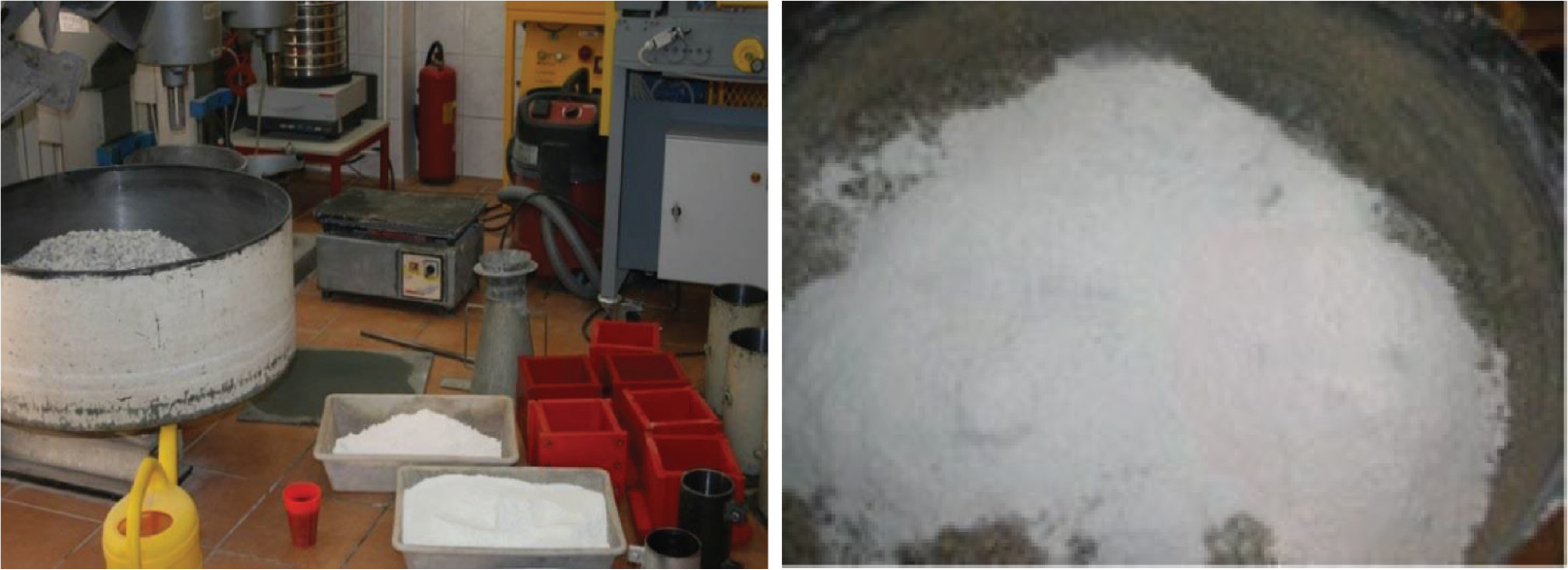
Fig. 3:
Laboratory mixer, concrete components, vibrating table (left), white cement and metakaolin (right).
The study utilised components readily available on the Croatian market. A total of three types of cement, two types of metakaolin mineral admixtures, titanium dioxide, a superplasticiser, three-fraction crushed aggregate and tap water were used.
Two types of white cement, both of strength class CEM I 52.5 R, were used. White cement designated as type 1 (WC 1) was manufactured in a cement plant in Turkey, while white cement designated as type 2 (WC 2) was sourced from a cement plant in Spain. A GC of type CEM I 52.5 N, manufactured in the cement plant Nexe in Croatia was also used. Table 3 shows the properties of the cements used.
Tab. 3:
Cement properties
| Svojstvo | Unit | WC 1 CEM I 52.5 R | WC 2 CEM I 52.5 R | GC CEM I 52.5 N |
|---|---|---|---|---|
| Density | kg/dm3 | 3.00 | 2.96 | 3.05 |
| Setting time | min | 110 | 130 | 150 |
| Le Chatilier volume stability | mm | 1.0 | 0.9 | 0.4 |
| Compressive strength after 2 days | MPa | 37 | 45 | 36 |
| Compressive strength after 28 days | MPa | 60 | 66 | 62 |
| SO3 content | % | 3.5 | 3.5 | 3.7 |
| Cl- content | % | 0.01 | 0.01 | 0.01 |
| Loss on ignition | % | 3.5 | 2 | 1.5 |
| Insoluble residue | % | 0.2 | 0.5 | 0.8 |
Metakaolin is a mineral admixture that affects the microstructural densification of the concrete and improves its durability properties. Metakaolin was specifically selected because it does not alter the colour of white concrete. Two types of metakaolin were employed: metakaolin type 1 (MK 1), which is creamy in colour and has a density of 2.6 kg/dm3, and metakaolin type 2 (MK 2), which is white in colour, with a density of 2.6 kg/dm3 and a specific surface area (Blaine) of 22,000 cm2/g. Figure 3 illustrates one of the white cements used alongside the metakaolin.
Titanium dioxide was used as a powdered concrete admixture to enhance the whiteness of concrete. It serves as a whitening agent and was characterised by a density of 4.23 kg/dm3, a TiO2 content of not less than 93%, a pH value of 5.5 in aqueous extract, and melting and boiling points of l,843°C and 2,972°C respectively.
A polycarboxylate-based superplasticiser was employed, brown in colour, with a density of 1.08 kg/dm3, and a pH range between 5 and 7.
The aggregate used for concrete production was a crushed, white coloured, three-fractional dolomite aggregate. The utilised fractions of 0/4, 4/8, and 8/16 mm had densities of 2.79, 2.82, and 2.82 kg/dm3, respectively, and water absorption values of 1.3%, 0.6%, and 1.3% by mass for the respective fractions. The grain shape for the 4/8 and 8/16 mm size fractions was classified as 6.2 and 5.1, respectively. Figure 4 shows the particle size distribution curves of the aggregate fractions used.
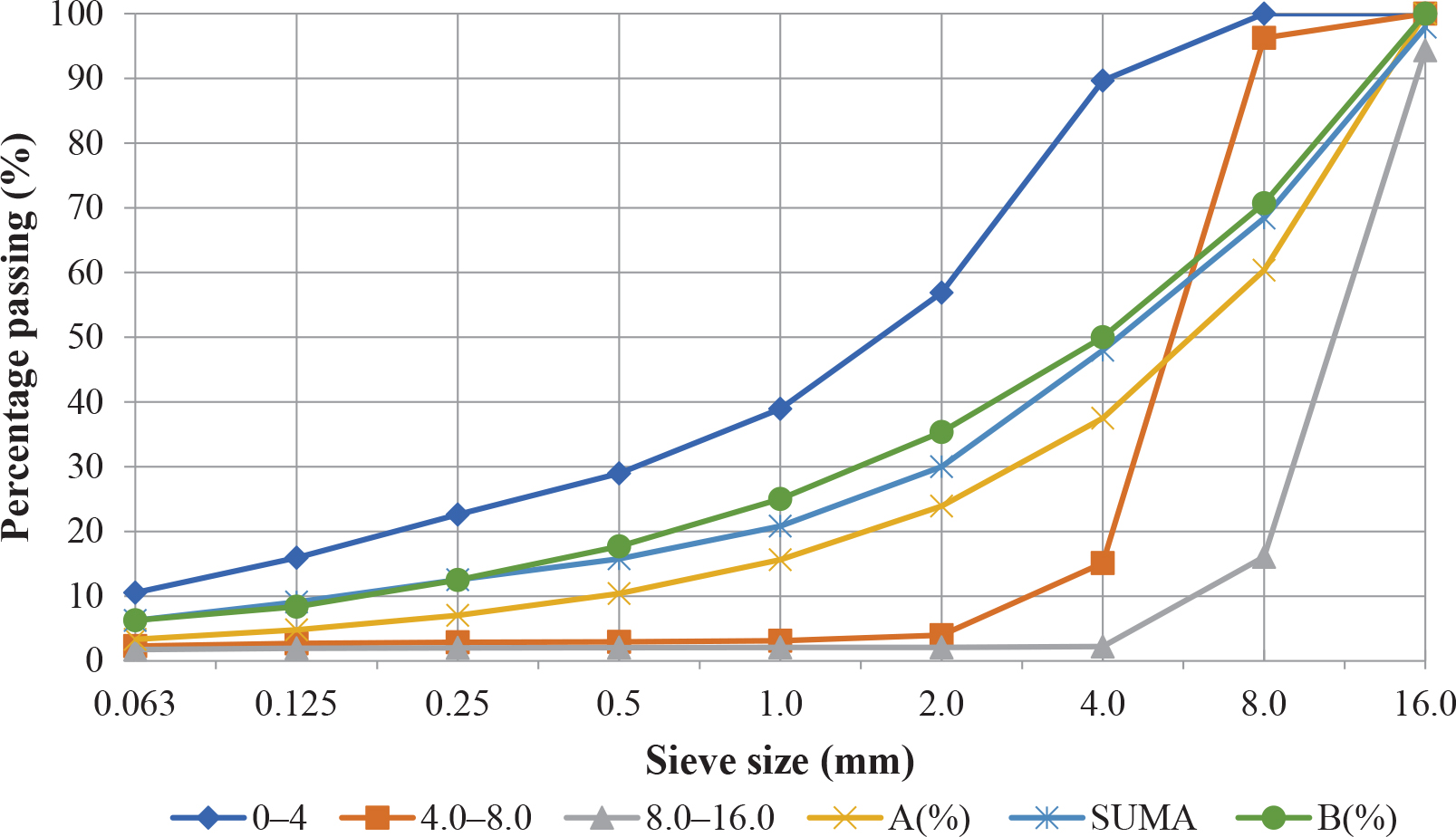
Fig. 4:
Particle size distribution of aggregate fractions.
3. Analysis and interpretation of results
3.1. Test results
Tables 4 and 5 present the results of tests conducted on the concrete mixtures in the fresh state. Tables 6 and 7 summarise the mechanical and durability performance of the concrete in the hardened state.
Tab. 4:
Properties of concrete mixtures M 1 to M 8 in the fresh state.
| Property | Unit | Concrete mixture | |||||||
|---|---|---|---|---|---|---|---|---|---|
| M 1 | M 2 | M 3 | M 4 | M 5 | M 6 | M 7 | M 8 | ||
| Slump consistency | mm | 210 | 210 | 190 | 180 | 210 | 210 | 210 | 200 |
| Density | kg/dm3 | 2.55 | 2.55 | 2.51 | 2.50 | 2.57 | 2.57 | 2.59 | 2.56 |
| Temperature | °C | 27.1 | 27.2 | 27.4 | 28.2 | 28.9 | 29.0 | 29.0 | 28.7 |
| Air content | % | 1.1 | 1.3 | 1.9 | 2.2 | 1.5 | 1.5 | 1.6 | 2.2 |
Tab. 5:
Properties of concrete mixtures M 9 to M 15 in the fresh state.
| Property | Unit | Concrete mixture | ||||||
|---|---|---|---|---|---|---|---|---|
| M 9 | M 10 | M 11 | M 12 | M 13 | M 14 | M 15 | ||
| Slump consistency | mm | 210 | 200 | 200 | 210 | 210 | 210 | 220 |
| Density | kg/dm3 | 2.54 | 2.52 | 2.55 | 2.50 | 2.51 | 2.51 | 2.56 |
| Temperature | °C | 26.2 | 25.2 | 24.5 | 24.3 | 25.4 | 25.1 | 24.8 |
| Air content | % | 1.2 | 1.3 | 1.8 | 1.2 | 1.3 | 1.3 | 1.1 |
Tab. 6:
Properties of concrete mixtures M 1 to M 8 in the hardened state.
| Property | Unit | Concrete mixture | |||||||
|---|---|---|---|---|---|---|---|---|---|
| M 1 | M 2 | M 3 | M 4 | M 5 | M 6 | M 7 | M 8 | ||
| Compressive strength after 1 day | MPa | 66.5 | 63.7 | 65.6 | 51.3 | 72.3 | 74.4 | 76.5 | 59.3 |
| Compressive strength after 28 days | MPa | 94.6 | 94.4 | 102.4 | 103.5 | 102.9 | 109.4 | 109.9 | 98.1 |
| Tensile splitting strength | MPa | 7.2 | 6.6 | 7.2 | 7.1 | 8.1 | 8.0 | 6.4 | 7.7 |
| Static modulus of elasticity | GPa | 50.7 | 49.2 | 48.4 | 49.5 | 49.2 | 50.0 | 49.4 | 55.9 |
| Capillary absorption coefficient | kg/m2h0·5 | 0.16 | 0.12 | 0.12 | 0.21 | 0.20 | 0.13 | 0.16 | 0.13 |
| Chloride diffusion coefficient | 10−12 m2/s | 7.2 | 3.8 | 4.5 | 2.8 | 6.8 | 2.4 | 2.7 | 2.8 |
Tab. 7:
Properties of concrete mixtures M 9 to M 15 in the hardened state
| Property | Unit | Concrete mixture | ||||||
|---|---|---|---|---|---|---|---|---|
| M 9 | M 10 | M 11 | M 12 | M 13 | M 14 | M 15 | ||
| Compressive strength after 1 day | MPa | 48.5 | 48 | 55.8 | 65,5 | 64.2 | 56.6 | 61.4 |
| Compressive strength after 28 days | MPa | 83.4 | 81.2 | 99.8 | 99.3 | 99.7 | 90.1 | 97.9 |
| Static modulus of elasticity | GPa | 42.9 | 42.2 | 44.7 | 47.4 | 46.7 | 43.9 | 44.7 |
| Capillary absorption coefficient | kg/m2h0.5 | 0.20 | 0.21 | 0.13 | 0.14 | 0.14 | 0.19 | 0.20 |
| Chloride diffusion coefficient | 10−12 m2/s | 6.5 | 8.2 | 4.3 | 6.3 | 6.0 | 7.2 | 7.7 |
3.2. Influence of cement type on the properties of white concrete
The selection of cement type for white concrete production was evaluated by comparing mixtures M 1, M 4, M 5, and M 8. The primary objective was to identify a cement that ensures a high-quality visual appearance of white concrete while also meeting performance criteria, with particular emphasis on the chloride diffusion coefficient. Mixtures M 1 and M5 were produced using two different types of white cement, while mixtures M 4 and M 8 incorporated GC combined with titanium dioxide and metakaolin.
A comparison of the measured fresh-state properties indicates that the mixtures exhibit similar values in terms of slump consistency, density, and temperature. However, the mixtures produced with white cement demonstrated lower air content in the fresh state.
A comparison of the mechanical properties in the hardened state indicates that the highest compressive strength after 28 days was achieved in mixture M 4, whereas the highest compressive strength after 1 day and the tensile splitting strength was achieved in mixture M 5, whereas the highest static modulus of elasticity mixture was achieved in mixture M 8. The best durability performance in the hardened state was achieved in mixture M 8.
Figure 5 illustrates the visual appearance of samples produced using white cement and GC with admixtures. Based on visual assessment of whiteness, it can be said that only the mixtures containing white cement meet the required criteria for aesthetic appearance. Although the analysis of the results obtained indicate that GC with admixtures demonstrates superior performance in the hardened state, the noticeable difference in visual appearance renders white cement more suitable for the production of white concrete.
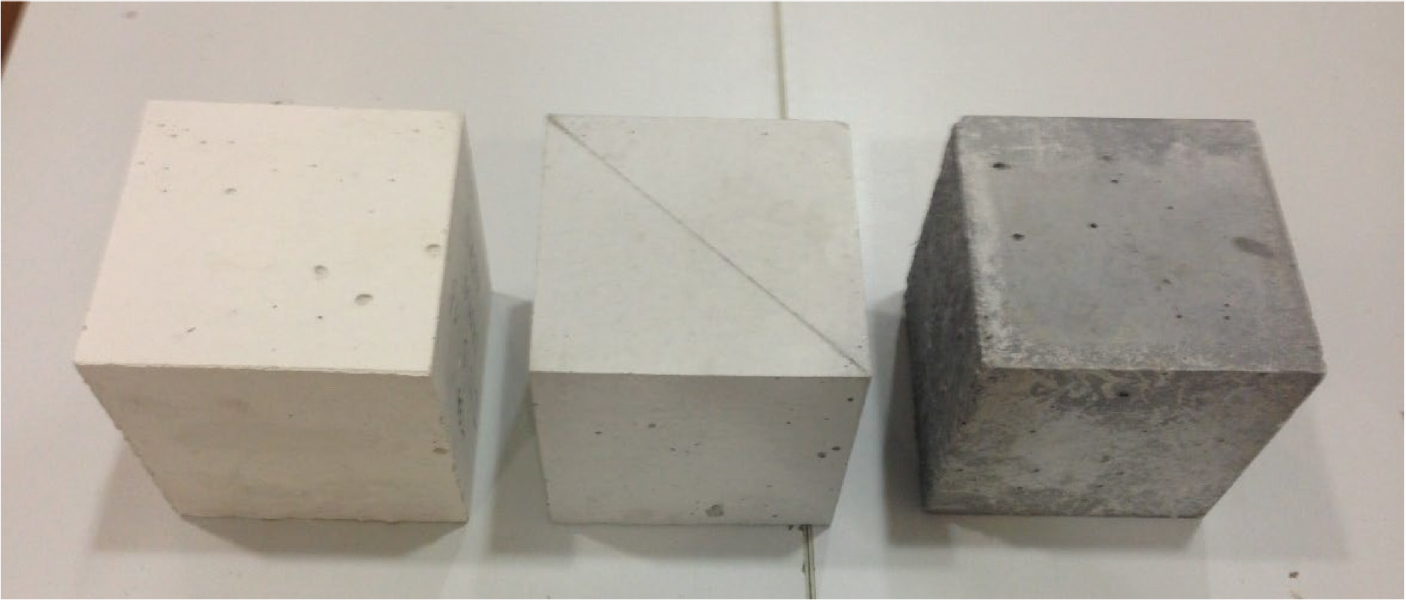
Fig. 5:
Comparison of whiteness of samples produced using white cement (left), GC with titanium dioxide and metakaolin (centre) and GC (right). GC, grey cement.
Therefore, the analysis of the influence of cement type on the properties of white concrete is based on the comparison between mixtures M 1 and M 5. Overall, mixture M 5, produced with WC 2, exhibited superior performance, achieving 9% higher compressive strength, 13% greater splitting tensile strength, and 6% lower chloride diffusion coefficient. Considering that the chloride diffusion coefficient is a critical parameter for durability in maritime environments, WC 2 is deemed more suitable for applications in maritime conditions.
The obtained results are consistent with previous research, which demonstrated that the mechanical and durability properties of white concrete are significantly influenced by the type of white cement used (Kircheim et al. 2015).
3.3. Influence of metakaolin type on the properties of white concrete
The influence of the addition of metakaolin on the properties of white concrete was evaluated by comparing mixtures M 1, M 2, M 3, M 5, M 6, and M 7. The mixtures M 1, M 2, and M 3 were prepared using WC 1, with variations in the type of metakaolin incorporated. Likewise, mixtures M 5, M 6, and M 7 were produced with WC 2, also differing in the type of metakaolin used. In all mixtures containing metakaolin, its content was maintained at 12.5% relative to the mass of white cement.
Comparison of the fresh-state test results among the evaluated mixtures indicates that they exhibit similar properties in the fresh state. However, mixtures containing WC 2 show higher density and increased air content when fresh. Furthermore, it was observed that the addition of metakaolin leads to an increase in the air content in the fresh state.
Analysis of the influence of metakaolin addition on the hardened-state properties across all six mixtures indicates that metakaolin enhances the 28 days compressive strength and improves the values of the chloride diffusion coefficient and capillary absorption coefficient. These findings are consistent with those reported in previous studies (Cassar et al. 2003).
An analysis of the influence of metakaolin type on the properties of white concrete indicates that both types of metakaolin contribute comparably to property enhancement. MK 1 demonstrates greater effectiveness in improving the chloride diffusion coefficient and secant modulus of elasticity, whereas MK 2 yields higher compressive strength at both 1 day and 28 days.
A comparison of all six mixtures reveals that the best chloride diffusion coefficient values are obtained with WC 2, corroborating the findings presented in the previous chapter.
3.4. Influence of titanium dioxide on the properties of white concrete
The influence of titanium dioxide addition on the properties of white concrete was evaluated by comparing mixtures M 2 and M 4 as well as M 7 and M 8. Mixtures M 4 and M 8 were prepared using GC with the addition of titanium dioxide and metakaolin, whereas mixtures M 2 and M 7 were produced with white cement and metakaolin without titanium dioxide.
Comparison of fresh-state test results reveals that the inclusion of titanium dioxide leads to a reduction in concrete density by 1%–2%, accompanied by an increase in entrapped air content by 37% and 69%. In the hardened state, titanium dioxide addition causes a decrease in early compressive strength at 1 day by 24% and 29%, while contributing to an increase in splitting tensile strength by 8% and 20%, an improvement in the secant modulus of elasticity by 1% and 13%, and a reduction in the chloride diffusion coefficient by 36%.
Based on these findings, it can be concluded that the addition of titanium dioxide to GC enhances certain fresh and hardened concrete properties. However, the resulting concrete does not achieve the same level of whiteness as that produced with white cement. When titanium dioxide is incorporated into white concrete, its primary function is to maintain the stability of the white colour over time (Cassar et al. 2003).
3.5. Determination of the optimal amount of metakaolin in white concrete
By comparing mixtures M 9 through M 15, the optimal metakaolin dosage for enhancing the properties of white concrete can be established. These mixtures vary in water-cement ratio (0.42, 0.39, 0.36) and in the proportion of metakaolin relative to cement mass (7%, 11%, 18%). All mixtures contain the same absolute amount of white cement and metakaolin (360 kg/m3). The objective of this phase of the experimental study is to identify the optimal metakaolin content corresponding to different water cement ratios typically encountered in practical white concrete applications.
The results of fresh-state testing indicate that increasing the metakaolin content leads to an increase in density at water-binder ratios of 0.42 and 0.39, while a decrease in density is observed at a water-binder ratio of 0.36. Additionally, higher metakaolin dosages correspond to an increase in air content for water-binder ratios of 0.36 and 0.39, whereas no significant change is noted at the water binder ratio of 0.42.
Figure 6 presents a diagram illustrating the relationship between the chloride diffusion coefficient and metakaolin content in the concrete mixture.
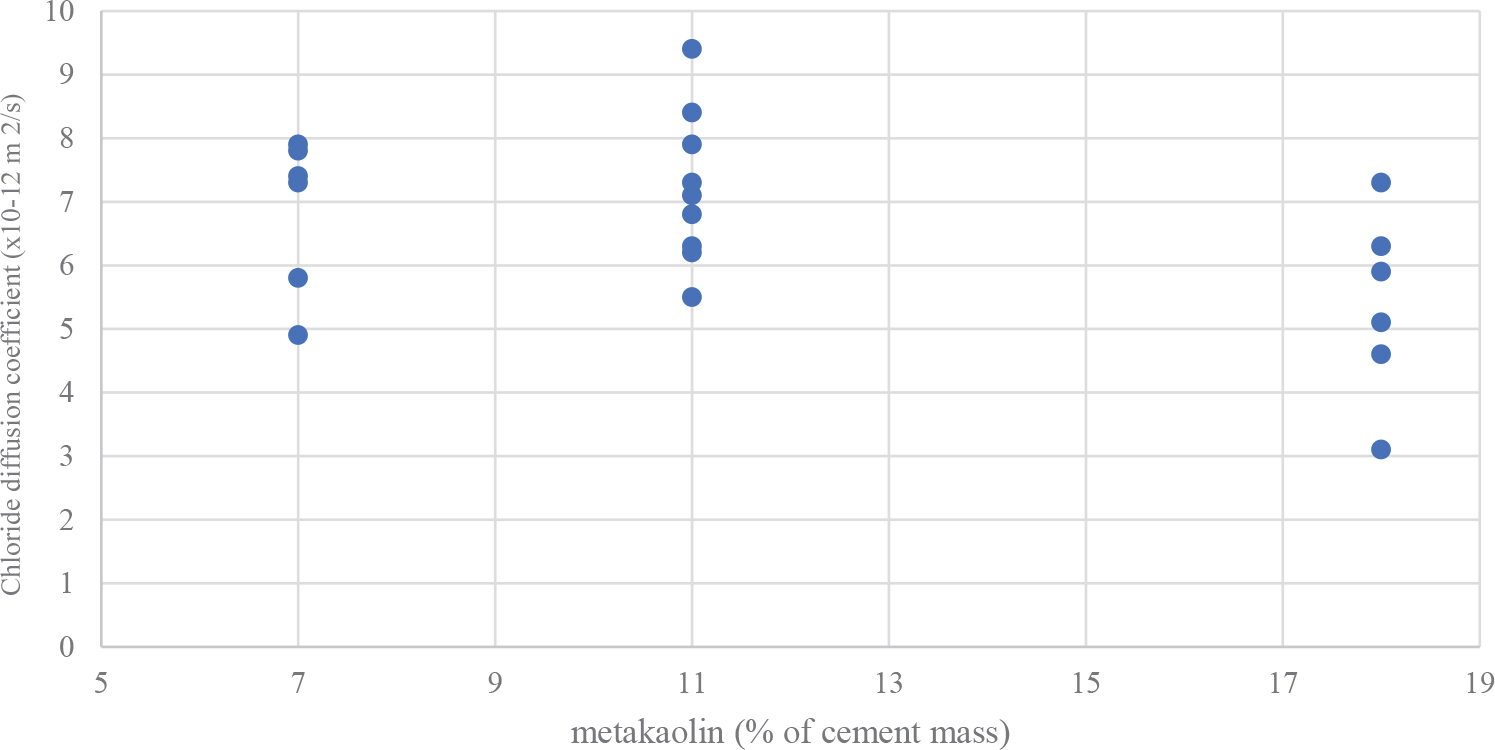
Fig. 6:
Influence of metakaolin content on the individual test values of the chloride diffusion coefficient.
Analysis of the hardened-state test results indicates that the optimal metakaolin content is 18% of the cement mass for a water-binder ratio of 0.42. Similarly, for a water-binder ratio of 0.39, the optimal metakaolin proportion remains 18%. At a water-binder ratio of 0.36, the optimal metakaolin content varies depending on the targeted property: 7% of the cement mass for mechanical performance and 11% for durability enhancement. These findings provide valuable guidance for designing trial mixtures of white concrete in practical applications.
The best overall performance in terms of durability and compressive strength was observed in mixture M 11, characterised by a water-binder ratio of 0.39 and a metakaolin content of 18% by cement mass. Conversely, mixture M 12, with a water-binder ratio of 0.39 and metakaolin content of 11% of cement mass, demonstrated the highest early compressive strength at 1 day and the greatest secant modulus of elasticity.
The analysis of the obtained results show that the optimal experimental results were not obtained at the lowest water-binder ratio, a finding that contrasts with previous research conclusions (Ozturk and Kaplan 2017).
4. Application of research findings for construction in maritime conditions
4.1. Introduction
The results obtained from the experimental research were applied in the construction of two structures located in a maritime environment. In both projects, white concrete was produced using white cement, metakaolin, locally available white-coloured crushed aggregate, tap water, and a superplasticiser. A condition assessment conducted after 10 years of service revealed no deterioration of the white concrete that would compromise structural integrity, functionality, or overall durability. These findings validate the suitability and effectiveness of white concrete for use in aggressive maritime environments. Examples of structures constructed with white concrete in such environments are presented below.
4.2. Hotel constructed using white concrete in a coastal environment
Hotel Mandalina serves as an example of a building structure built entirely with white concrete. Located in Šibenik, the hotel was designed for year-round tourism. In the design of this structure, the advantages of white concrete were taken into account with regard to its aesthetic appearance, sustainability, and integration into the existing surroundings. The hotel is situated on a small peninsula surrounded by the sea on three sides. The design requirements for white concrete referred to a compressive strength class of C30/37, a chloride diffusion coefficient (<5 × 10⁻¹² m2 for external structural elements, <8 × 10⁻¹² m2/s for internal structural elements), and the exterior appearance of the concrete. The exterior finish of the white concrete for all internal and external structural elements featured a wood imprint. Figure 7 shows the final appearance of white concrete elements and the hotel during the construction phase. This effect was achieved by lining the formwork with uneven wooden slats to imprint the desired texture onto the white concrete surface (Figure 8, left). To prevent water absorption from the fresh concrete into the wood and to avoid bonding between the concrete and formwork, an impregnating agent was applied to the wooden slats prior to casting (Figure 9, right).
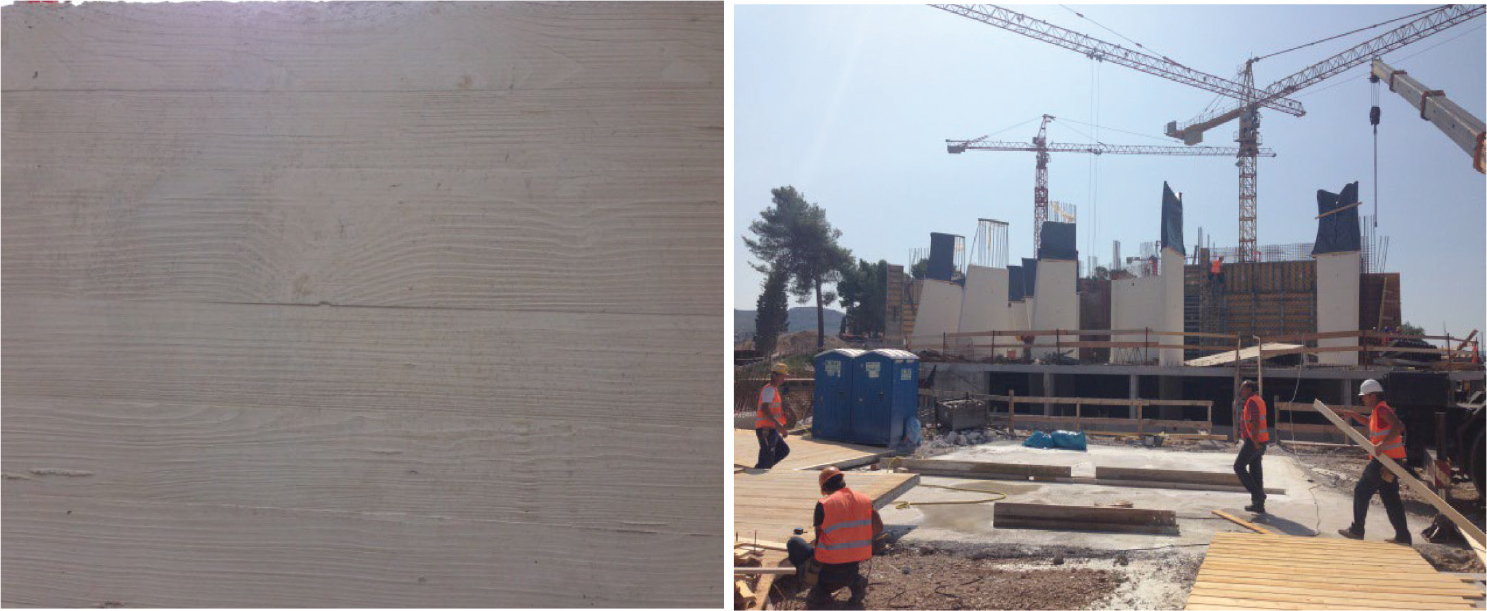
Fig. 7:
Final appearance of white concrete walls (left) and view of the hotel during the construction phase (right).
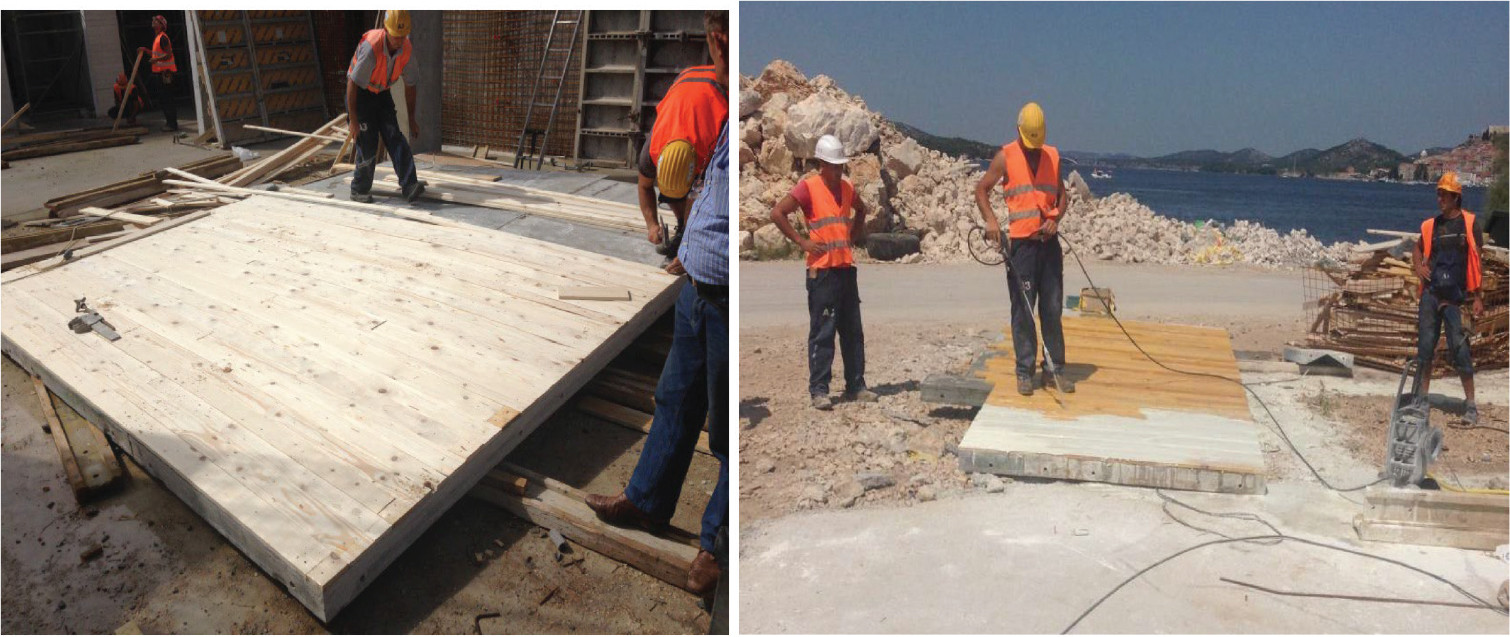
Fig. 8:
Preparation of formwork for concrete casting (left) and coating of formwork prior to concrete casting (right).
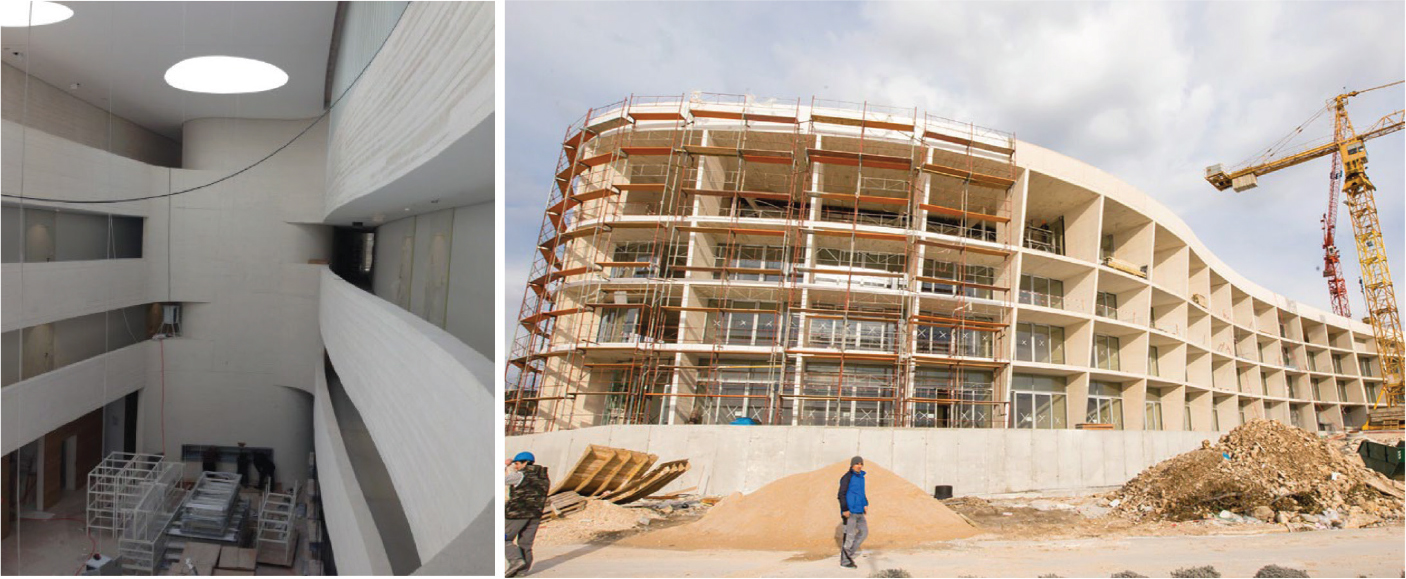
Fig. 9:
Visual appearance of the interior (left) and exterior (right) part of the hotel during construction works.
For the construction of the hotel, white concrete was used with a cement content of 340 kg/m3 and a water cement ratio of 0.44. In addition to the standard concrete constituents, MT 2 was incorporated at 8% by mass of cement. The inclusion of metakaolin contributed significantly to meeting the specified chloride diffusion coefficient requirements.
Given that white and grey concrete cannot be produced on the same day within the same batching facility without compromising the whiteness and uniformity of the white concrete, a dedicated on-site concrete batching plant was established exclusively for white concrete production.
Prior to the commencement of full-scale construction, several white concrete trial sections were produced. Based on visual inspection and surface quality assessments, the final concrete mix design and placement procedures were selected. For compaction, formwork-mounted vibrators were employed.
During the construction of the hotel, particular attention was paid to ensuring the high quality and uniform aesthetic appearance of the white concrete. To preserve the visual integrity of the surface, protective measures were implemented between successive concrete pours within the same structural element to prevent the formation of rust stains caused by the embedded reinforcement (Figure 7, right).
The final appearance of both interior and exterior elements made of white concrete, along with the achieved mechanical and durability properties, confirms the suitability of this material for the construction of high-rise buildings in coastal environments. Figure 9 presents the completed interior and exterior architectural elements of the hotel.
4.3. White concrete promenade and beach adjacent to the sea
A white concrete beach and promenade, approximately 350 m in length and 8 m in width, were constructed in the town of Rovinj. Situated in close proximity to a newly developed marina and hotel, the project forms part of a distinctive coastal tourism complex. White concrete was selected for this application due to its favourable mechanical and durability properties, aesthetic resemblance to natural stone, and significantly lower cost.
The design requirements for white concrete referred to a concrete compressive strength class of C35/45, a chloride diffusion coefficient below 6 × 10⁻¹² m2/s, and a high-quality architectural finish. The desired surface appearance was achieved through grinding and polishing the hardened concrete until the coarse aggregate particles became visually prominent. Figure 10 illustrates the completed white concrete walking surface.
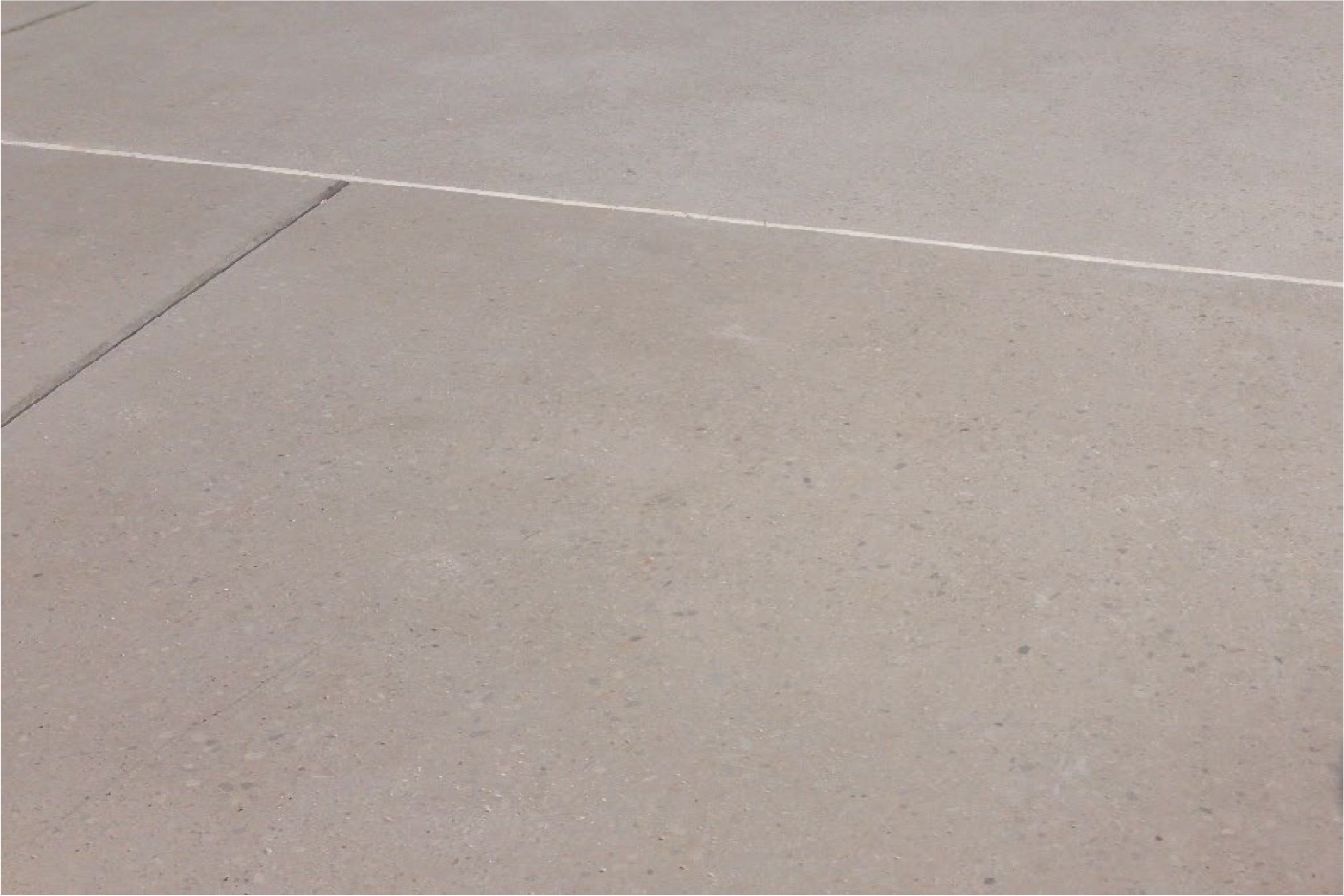
Fig. 10:
Final visual appearance of grinded white concrete surface.
The concrete mixture used for this project incorporated 370 kg/m3 of white cement. A water-cement ratio of 0.42 was employed and to further enhance durability, a MT 2 mineral admixture was used at 15% (55 kg/m3) of the cement mass. Additionally, fibrillated polypropylene fibres were incorporated at a dosage of 2 kg/m3.
Figure 11 illustrates the process of placing and compacting the white concrete (left), followed by the final grinding and polishing of the surface (right). Grinding and polishing of the white concrete were carried out when the concrete was 1 day old.
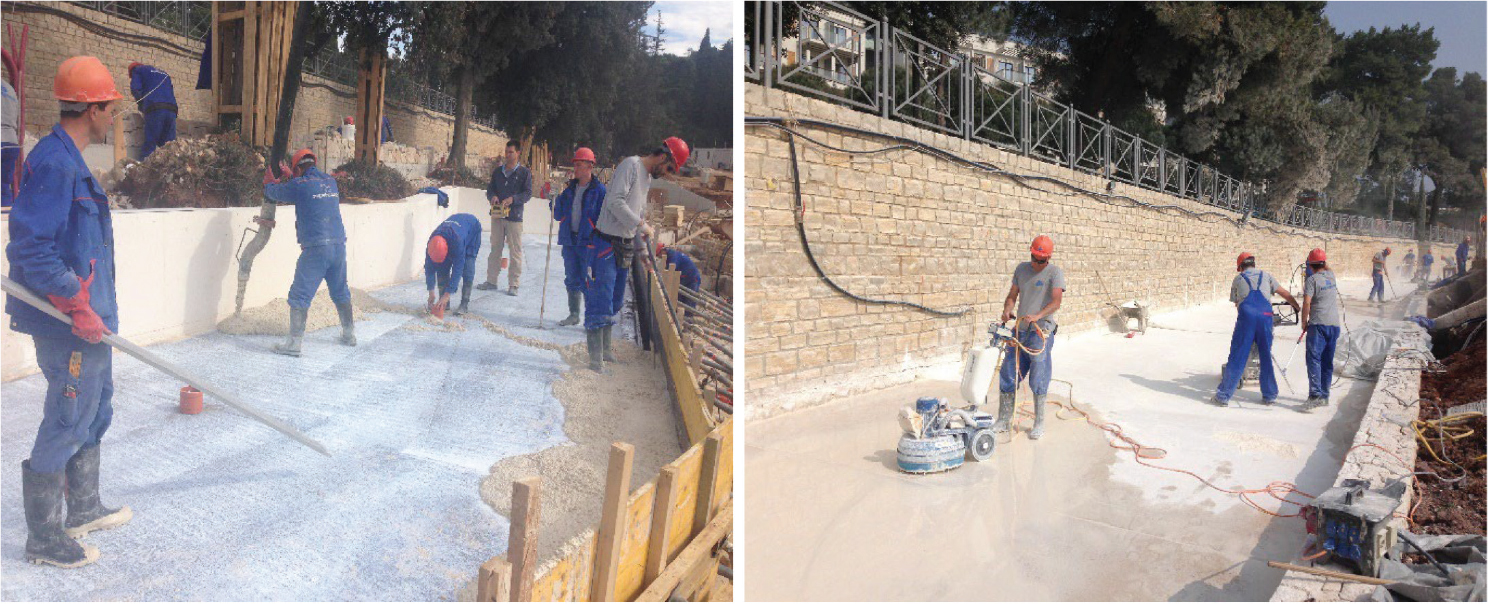
Fig. 11:
Placing of white concrete (left) and final grinding and polishing (right).
Figure 12 shows the final visual appearance of a section of the promenade and beach constructed with white concrete. This example demonstrates that the use of white concrete in coastal environments is feasible, provided that the concrete is designed to meet the required performance specifications and desired surface aesthetic quality.
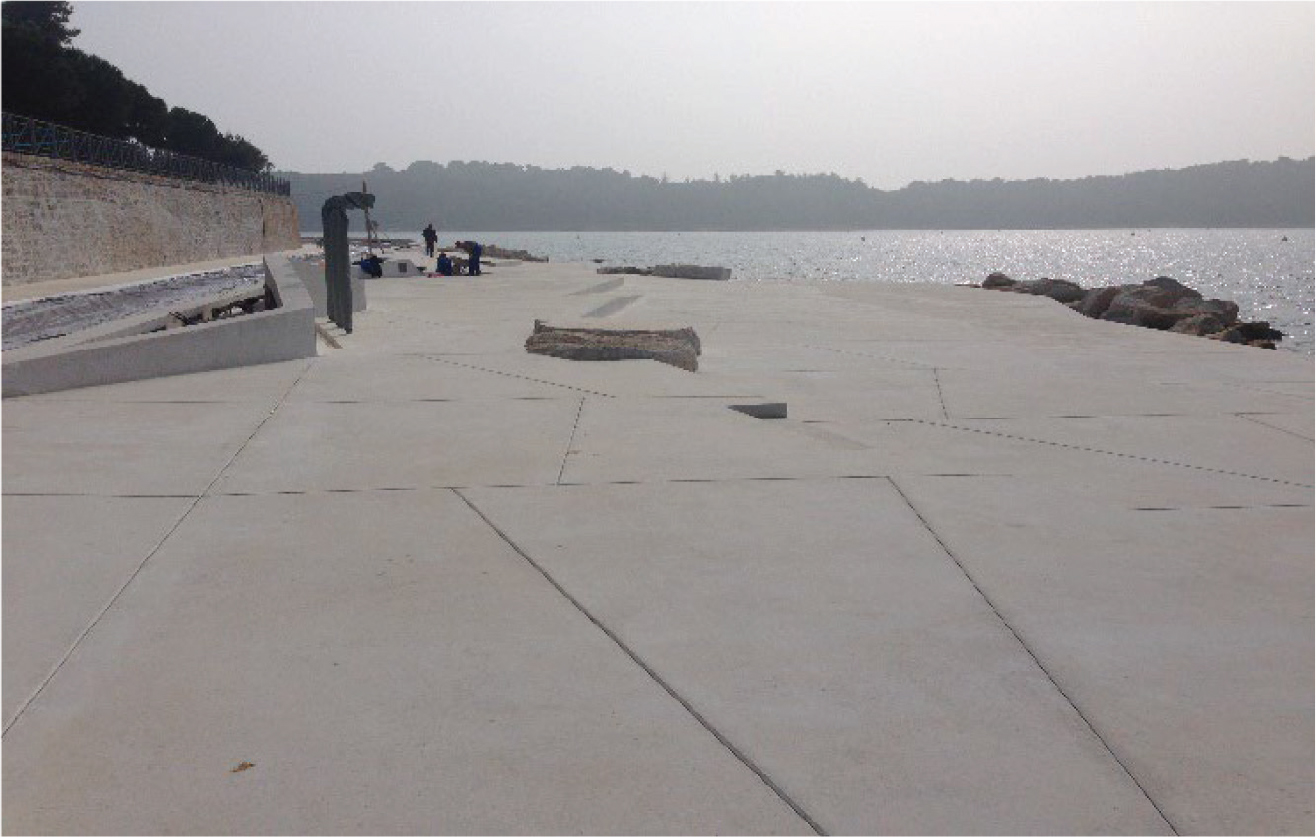
Fig. 12:
View of the promenade and beach, constructed using white concrete.
5. Conclusion
This paper presents experimental research on white concrete, with a focus on its application in maritime environments. Based on the results obtained from testing in both the fresh and hardened states, the following conclusions can be drawn:
Test results for concrete with a water-to-binder ratio of 0.38 and a cement content of 360 kg/m3 suggest that using GC combined with titanium dioxide and metakaolin leads to improved mechanical and durability properties in the hardened state compared to mixtures made with white cement. However, white cement provides superior visual apperanace compared to GC combined with titanium dioxide.
The mechanical and durability properties of white concrete in the hardened state are significantly influenced by the type of white cement used.
The addition of 12.5% metakaolin, relative to the cement mass, increases the entrapped air content in the fresh state. Furthermore, incorporating metakaolin at a water-cement ratio of 0.38 in white concrete enhances the compressive strength after 28 days and improves the chloride diffusion coefficient and the capillary absorption coefficient.
The addition of titanium dioxide in the amount of 5% of the mass of GC (at a water-cement ratio of 0.38) reduces the density of fresh concrete and increases the content of entrapped air. In the hardened state, titanium dioxide contributes to a reduction in compressive strength at 1 day, while enhancing splitting tensile strength and the static modulus of elasticity, as well as lowering the chloride diffusion coefficient.
The results of testing the properties of white concrete in the hardened state with the addition of metakaolin show that the optimal metakaolin content is 18% by cement mass for water-binder ratios 0.39 and 0.42. For a water-binder ratio of 0.36, the optimal metakaolin content is 7% by cement mass to achieve mechanical properties and 11% by cement mass to obtain durability properties.
The conducted experimental research has confirmed that the composition of white concrete significantly affects its mechanical properties and chloride diffusion coefficient. The findings and recommendations derived from the study provided the basis for the practical implementation of white concrete in the construction of a seaside hotel and a beach promenade in a maritime environment. The successful completion of these structures has validated the applicability, performance, and long-term sustainability of white concrete in aggressive marine conditions.