
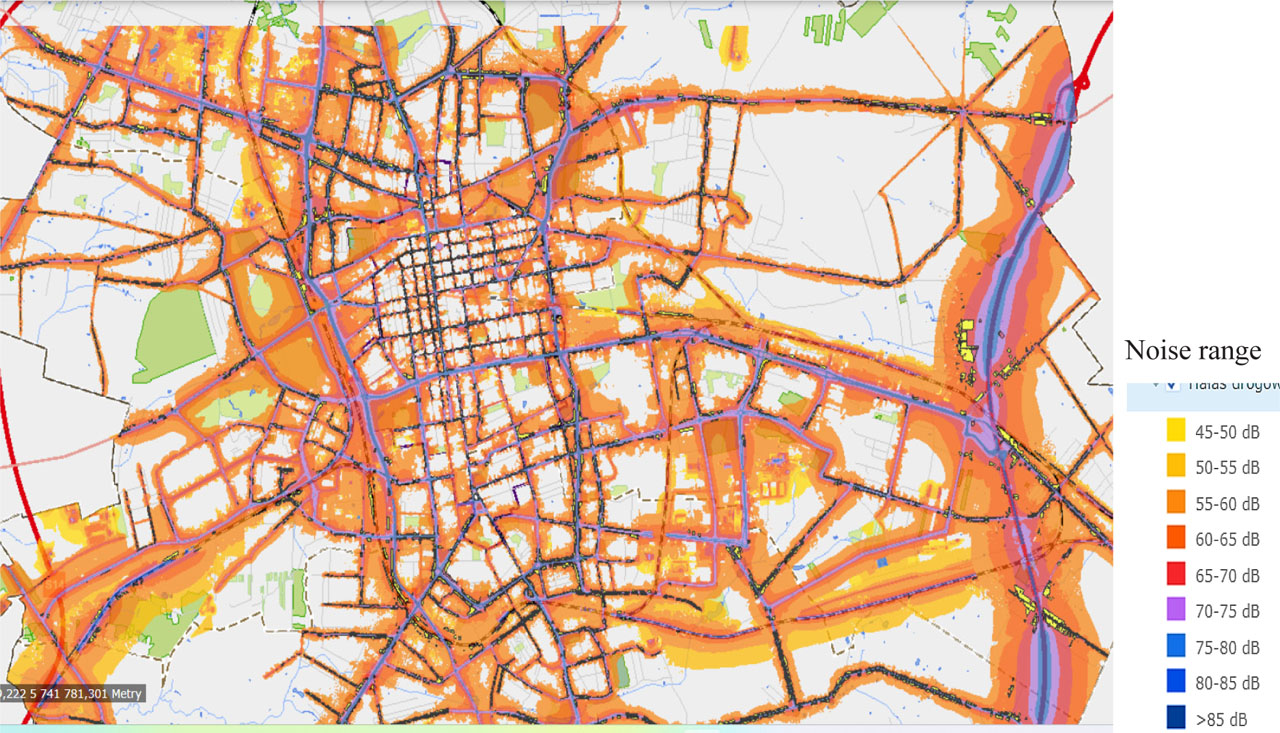
Figure 1.
Noise map of Lodz for the years 2017–2022
Source: WFOŚiGW, https://mapa.lodz.pl/akustyczna/ [date: 04.05.2025]
Table 1.
Identification of factors contributing to noise pollution in the city centre of Lodz – workshop participants' indications
| Factors Related to Noise Exposure | Respondents' Answers |
|---|---|
| Location of Noise Experiences | Dormitories; university campus; cafeteria; shopping malls; gyms; personal apartments; residential neighbourhoods; trams; workplaces, Piotrkowska Street; along the route to university; public transportation; nightclubs. |
| Time of Day | During the day, in crowded places; in the evening; in the afternoon after returning from work; in the morning; during working hours; always; throughout the day and night; while travelling. |
| Sources of Noise | Loud conversations and music; nightlife on Piotrkowska Street (loud music, cars, conversations, shouting and laughing); conversations with people and clients at work; tram rides (noise caused by trams and passengers); public transportation; old buses; construction works; and the university (loud students, crowds). |
| Effects of Noise Exposure | Sleep deprivation and sleep difficulties; fatigue; lack of energy; difficulty concentrating; sensory overload; headaches; nervousness; becoming more conflict-prone; decreased physical and mental resilience; irritability; tension; anger and frustration; watching TV as a way to mask the noise; reluctance to engage with others; general dissatisfaction with life; difficulties in studying. |
| Desired Immediate Changes | Moving to a new place; finding time to cook; awareness of potential overstimulation; better soundproofing of the apartment; noise-cancelling accessories; using a bicycle/taxi instead of the tram; meditation; protests against construction works; silent parties; a car-free city centre; enforcement of night-time quiet hours. |
Table 2.
Classification of solutions developed during the workshop according to the method proposed by Shinjini Guha [2023]
| Type of Solution (Number of Proposals) | Detailed Description and Examples of Solutions |
|---|---|
| Source-Based Solutions (n = 6) | A shopping mall modelled after Forum Gdansk (noted for being quieter than the Manufaktura shopping and leisure complex); banning car access to Piotrkowska Street during evening hours; designating quiet hours on the street; relocating louder events to enclosed indoor venues; banning cars from entering the city centre; and restrictions on alcohol sales during specific evening/nighttime hours. |
| Environmental Solutions (n = 12) | Quiet hours in stores and shopping centres; quiet zones on buses; soundproof windows; window sealing; barriers separating residential buildings from the street; soundproof chambers; silent bar/club; systems for masking noise from loud neighbours; quiet rooms; audio-based lectures; online events; green walls. |
| Individual Solutions (n = 16) | Apartments with treadmills located in a peaceful green area; noise-cancelling headphones; portable organizers that balance work and rest time; sound-absorbing foam panels; mobile wall soundproofing panels; blood-cortisol level meters; daily planner apps; compact, discreet earplugs; window sealing; camper vans for retreats; soundproof tents; apps to reduce client contact; supplements to reduce sensory noise perception; app for identifying the quietest travel routes; apps showing bus crowd levels. |
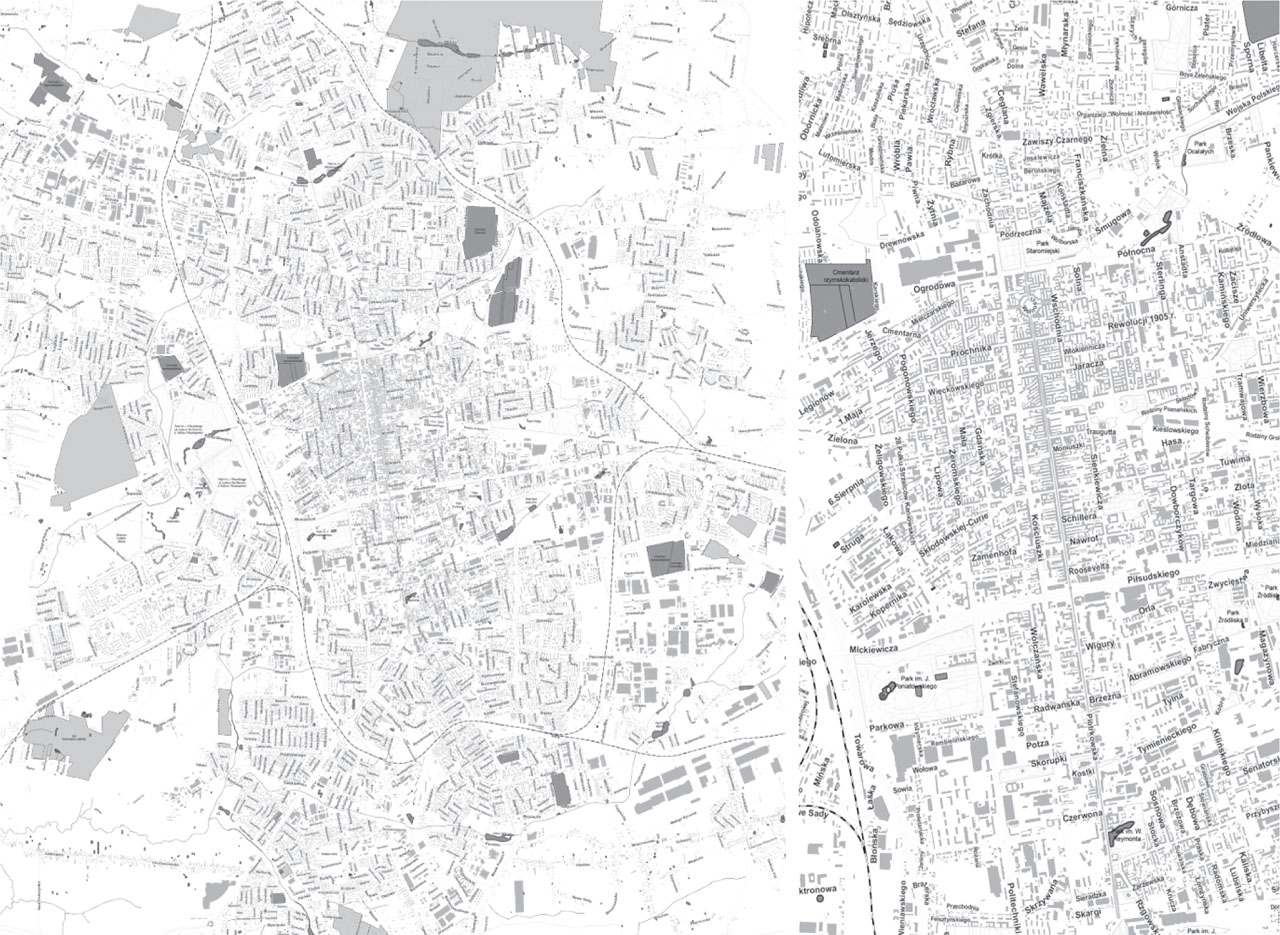
Figure 2.
Map of Lodz used for the analysis of noise intensity in the city centre
Source: ŁOG. https://nowy.log.lodz.pl/ [date: 07.01.2024]
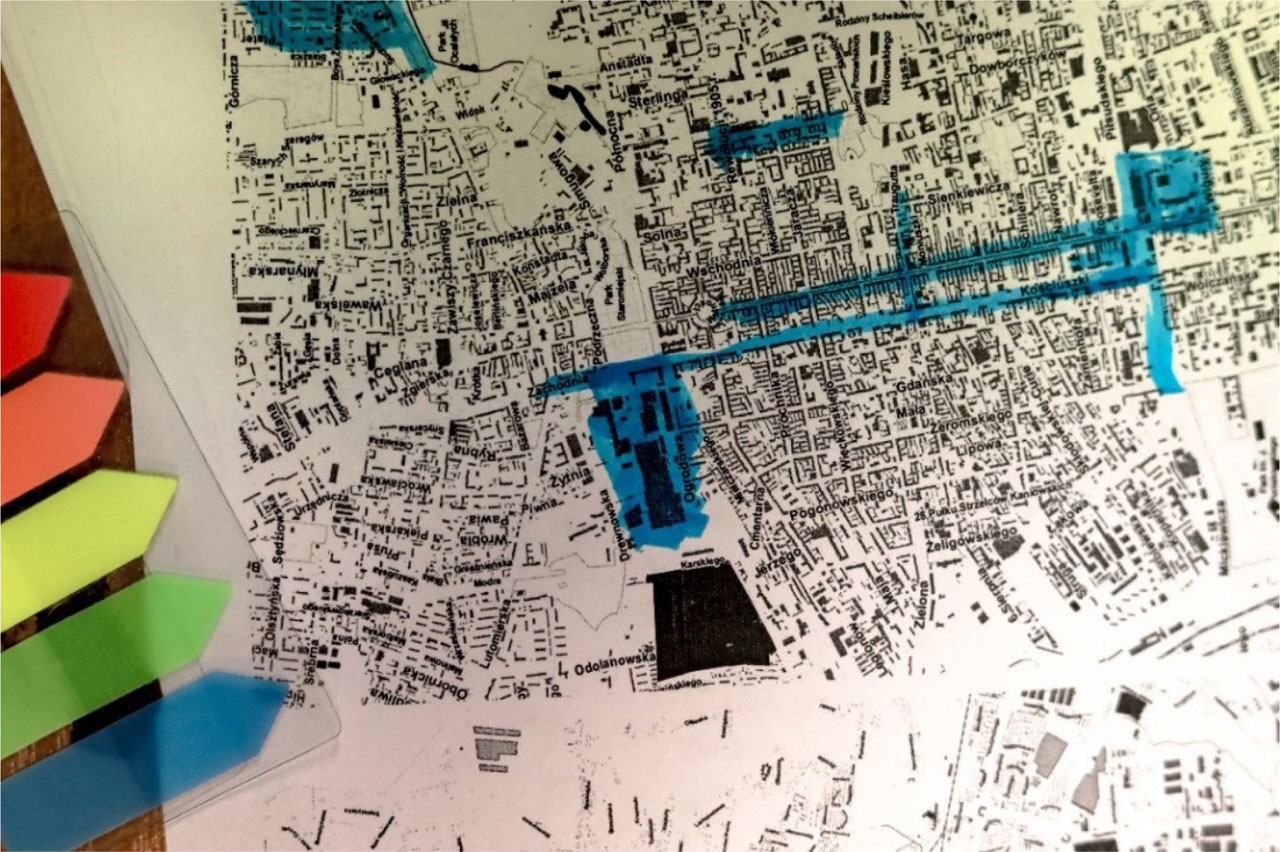
Photograph 1.
Example of a noise pollution map of Lodz indicating locations where noise pollution is most noticeable
Source: own elaboration
Table 3.
Locations in the city centre of Lodz most exposed to noise – distribution of responses obtained from survey participants
| Number of responses | LOCATIONS OF NOISE PERCEPTION |
|---|---|
| Lines (Streets) | |
| 12 | Piłsudski Street |
| 10 | Mickiewicz Street; Piotrkowska Street |
| 7 | Kościuszko Street; Zachodnia Street |
| 4 | John Paul II Avenue; Kiliński Street; Uniwersytecka Street |
| 2 | Dąbrowski Street; Legionów Street; Lutomierska Street; Sporna Street; Struga Street; Wojska Polskiego Street |
| 1 | Bandurski Street; Łąkowa Street; Narutowicz Street; Politechniki Avenue; POW Avenue (Polish Independence Avenue); Północna Street; Przybyszewski Street; 1905 Revolution Street; Scheibler Family Street; Rzgowska Street; Sienkiewicz Street |
| Number of responses | Points (Specific Locations) |
|---|---|
| 11 | Manufaktura (shopping and leisure complex) |
| 10 | Liberty Square (Plac Wolności) |
| 4 | Galeria Łódzka (shopping mall) |
| 3 | Unicorn Stable Transfer Hub (Przesiadkowo-Stajnia Jednorożców); Old Town Park (Park Staromiejski); Faculty of Economics and Sociology, University of Lodz; ŁKS Stadium; Solidarność Roundabout |
| 2 | Intersection of Piłsudski Street and Piotrkowska Street |
| 1 | Intersection of Mickiewicz Street and Włókniarzy Avenue; Intersection of Maratońska Street and Waltera-Janke Street; Intersection of Ogrodowa Street and Zachodnia Street; Port Lodz (shopping centre); Widzew Stadium; Lodz Fabryczna (railway station); Lodz Kaliska (railway station) |
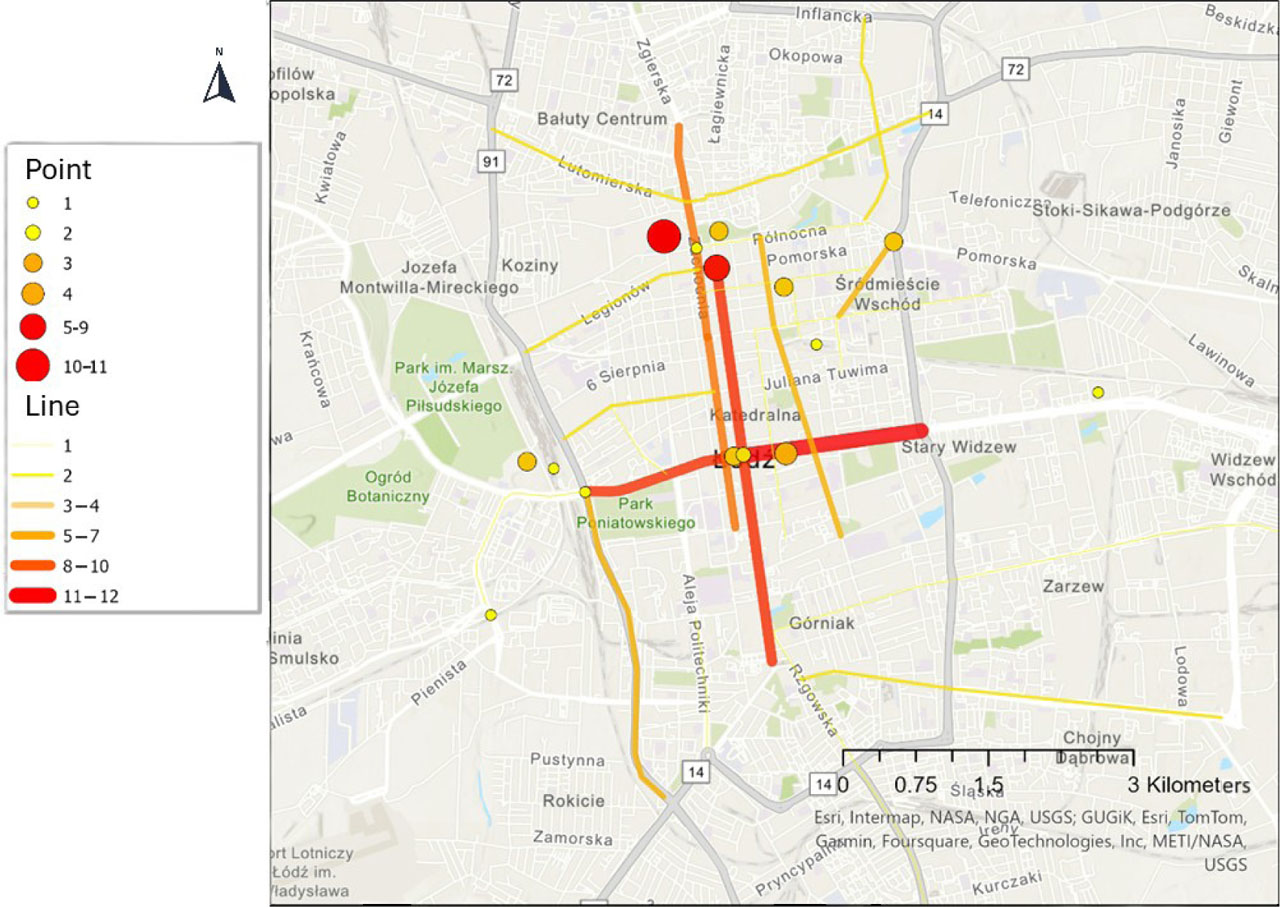
Figure 3.
Visualisation of noise exposure locations in the Lodz city centre – responses of survey participants
Source: own elaboration, based on Table 3