
1. INTRODUCTION
More than half of the global population lives in cities, and the share is expected to grow to around 70% by 2050 [Gruebner 2017]. That means that a majority of humans will experience challenges of an urban lifestyle. Nowadays, the concept of “urban stress” is increasingly being invoked in academic discussions. It is understood as a negative mental or physical state caused by living in a city [EEA 2022], and induced its stressors [Rzeńca, Wierucka 2022]. These include physical, chemical or emotional factors negatively affecting human health.
There are many stressors in the urban environment, such as poor air and soil quality; ionising radiation; electromagnetic fields; dwindling drinking water supplies; limited availability and quality of green spaces; an unstable labour market; and both light and noise pollution— including the so-called “acoustic smog.” Noise, according to its best-known definition, is “any unwanted, unpleasant, annoying or harmful mechanical vibration of an elastic medium acting through air on the organ of hearing and other senses and elements of the human body” [Malecki 1995]. These irritating and harmful sounds influence human hearing and other faculties [Helbin 2008]. Noise is generated by sound waves, which, when propagating through the air and reaching humans, cause the so-called auditory sensation, with sounds audible by humans ranging from 16 Hz to 20 kHz.
That does not mean, however, that only vibrations of these frequencies impact humans. Infrasound (below 16 Hz) and ultrasound (above 20 kHz) also exert negative health effects. Humans only begin to notice changes in sound levels at around 3 dB. Thus, many overlapping ambient sounds may quickly mesh into unpleasant noise in human perception [Leśnikowska-Matusiak 2014]. Noise pollution (acoustic pollution) is defined as harmful or annoying sound levels caused by human activity that can lead to negative health effects, such as sleep disturbances, cardiovascular disease, and stress or other cognitive impairments [WHO 2018].
According to the European Environment Agency, at least 20% of Europeans suffer from long-term exposure to noise that is harmful to their health. Noise pollution, along with air pollution, is among the main environmental phenomena affecting the health and well-being of the European population [EEA 2020]; the European Quality of Life Survey, conducted by the World Health Organization (WHO) in 2016–2017, indicated that up to 32% of people notice a problem with noise in their immediate environment [WHO 2022].
Harmful noise pollution has been defined by Polish law as sounds with frequencies between 16 Hz and 16 kHz [Environmental Protection Law Act, Article 3, Point 5]. In Poland, the population's exposure to noise is also monitored under the Directive of the European Parliament and of the Council of 25 June 2002 relating to the assessment and management of environmental noise, using the LDWN 24-hour noise indicator, which measures “irritating” noise during the day, evening and night time. The LN night-time noise indicator is helpful in determining the degree of sleep disturbance [Directive 2002/49/EC].
Major sources of noise affecting the urban acoustic climate are road, tram, air and rail transport; car parks, tram and bus depots; industrial, craft and service establishments; public facilities associated with noisy activity like stadiums, playgrounds, discos and music clubs; and special events, such as concerts, street performances and construction sites [WIOŚ 2003]. Neighbourhood noise, including renovation work or other activities in residential buildings, is also a category of noise [Kossakowski 2011].
Based on WHO guidelines, seven principal adverse health effects caused by acoustic pollution have been identified, including hearing impairments and interference with spoken communication; sleep, cardiovascular and mental-health disturbances; impaired task performance; and other undesirable social behaviours, including aggression [Hagler 1999], as well as irritability [Woźny, Dobosz, Pacana 2014]. Acoustic pollution can increase the risk of illness or accelerate the onset of symptoms of severe mental diseases such as depression or schizophrenia [Adli 2011]. Particularly vulnerable to the hazardous effects of noise are children; highly sensitive individuals; those suffering from mental disorders or chronic diseases; and the elderly [WHO 1999].
In large cities like Lodz, noise is also becoming an increasingly acute phenomenon, with a negative impact on residents' well-being as well as the urban environment. According to the results of the 2021 survey “Population Exposure to Noise in Cities With Over 100 Thousand Inhabitants,” conducted by the Statistics Poland (GUS), and based on strategic noise maps [UMWŁ 2023], the highest percentages of people exposed to 24-hour noise (taking into account the threshold for permissible sound levels) were found in Gliwice, Chorzow and Szczecin, as well as Cracow and Lodz [GUS 2024].
The main objective of this article is to assess the impact of urban noise in the inner centre of Lodz on inhabitants' quality of life, and identify solutions, to be developed at grassroots level, aimed at mitigating and preventing the effects of acoustic pollution. The following research questions were also posed:
1) Which locations in central Lodz are the main sources of urban noise causing discomfort and stress?
2) What types of urban noise sources are present in the city-centre area?
3) How does the noise present in the centre of Lodz affect its residents' quality of life?
4) What measures and solutions, developed at the grassroots 1 level, should be implemented to reduce the effects of noise and improve the comfort of city-centre residents?
In the empirical part, in addition to a search of academic literature and strategic documents of the city of Lodz, a workshop study was conducted to develop proposals for counteracting the negative effects of noise in the urban environment. The workshop was enriched with elements of the Design Thinking method and divided into segments enabling participants to better understand urban noise problems and systematise their knowledge of the subject, creating space for an in-depth discussion.
2. THE PROBLEM OF ACOUSTIC POLLUTION IN LODZ – A REVIEW OF REPORTS AND STUDIES
In Poland, entities managing roads, railway line or airport, and the presidents cities with a population of more than 100,000, prepare strategic noise maps and transmit them to the Chief Inspector of Environmental Protection and the competent voivodeship marshal every five years, pursuant to the Act of 27 April 2001 – the Environmental Protection Law (Journal of Laws 2021, item 1973); the Act of 30 August 2019 Amending the Environmental Protection Law Act (Journal of Laws 2019, item 2087); and the Regulation of the Minister of Climate and Environment of 1 July 2021 on the Detailed Scope of Data Included in Strategic Noise Maps, the Method of Their Presentation and the Form of Their Transmission (Journal of Laws 2021, item 1325) [GIOŚ 2025]. This is in the service of informing society about environmental noise risks; processing data for state environmental monitoring; and creating and updating programmes for protecting the environment against noise. In Lodz, the Environmental Prevention of Noise Pollution Programme for the City lists four main sources of noise posing a threat to residents — roads, railways, trams and industrial activity [RMŁ 2020] — with the Environmental Protection Programme for the City of Lodz for 2024–2027 With an Outlook Until 2031 also adding aircraft noise to the list [UMŁ 2023].
This study, which was carried out by the Statistics Poland [GUS 2024], estimated the number of people exposed to road, rail, industrial and aircraft noise exceeding permissible levels. Thirty-six cities participated in the fourth round of acoustic mapping in 2021. Lodz, closely following Cracow, was among the top six cities with the largest shares of their populations exposed to harmful noise. In Lodz, over 6.2% of the population fell into this category; in Gliwice, the city with the highest share, it was 10.2% of the population. The city of Lodz was also characterised by having a significant percentage of areas at 24-hour risk of noise exceeding permissible levels. It can, therefore, be concluded that Lodz is not one of the noisiest cities in Poland, but the proportion of its residents exposed that is to noise above 75 dB (2.4%) indicates a serious problem, particularly in the context of road noise.
According to measurements performed in the centre of Lodz by the Institute of Building Physics, the problem of excessive noise concerns the entire city centre area. Based on their conducted analyses, the authors of the study maintain that the problem of the urban stressor in the form of noise in city centres applies to other large cities too. There are also observable patterns of spatial noise propagation in high-density housing developments that can demonstrate certain specific characteristics of the noise in a given city; Lodz [Szefer et al. 2016] is shown in Figure 1.
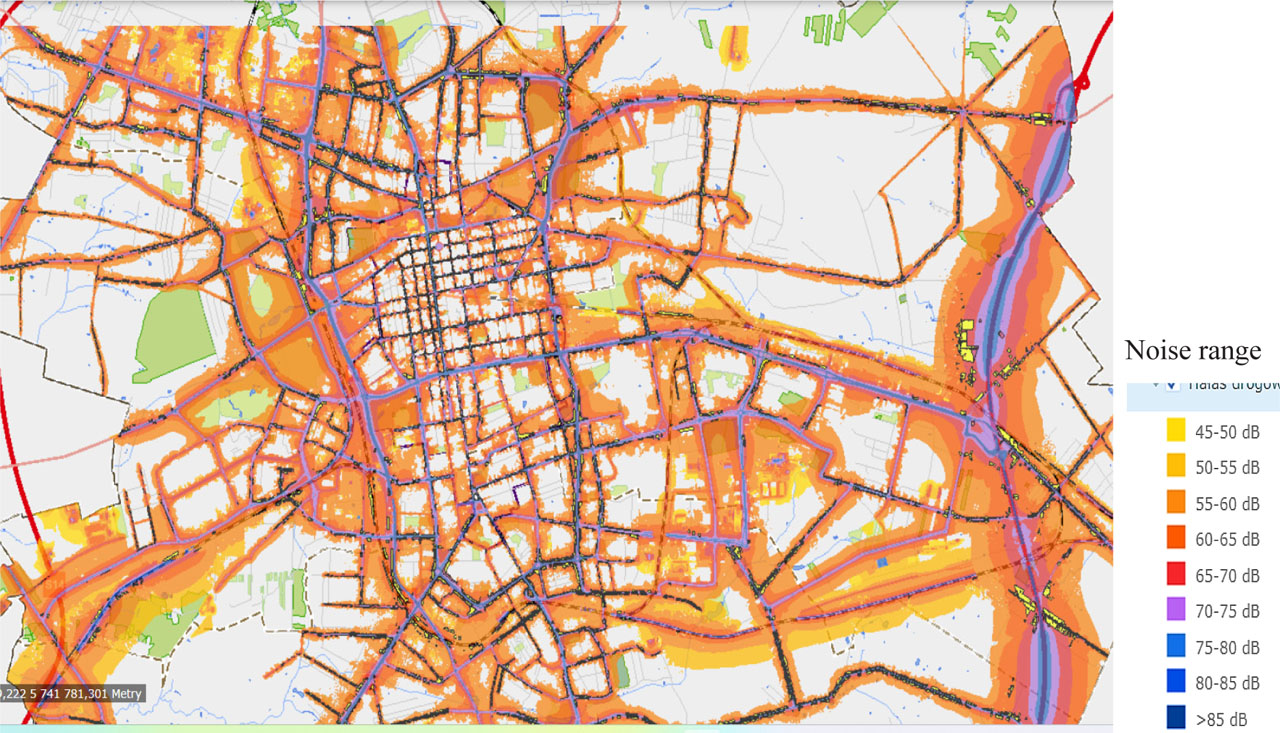
Figure 1.
Noise map of Lodz for the years 2017–2022
Source: WFOŚiGW, https://mapa.lodz.pl/akustyczna/ [date: 04.05.2025]
In 2018, the Supreme Audit Office (NIK) conducted an audit of noise levels in and around Lodz, focusing on the A1 motorway section running through Lodz. The aim of the audit was to investigate if, and how, the General Directorate for National Roads and Motorways (GDDKiA) in Lodz protects residents from traffic noise. The audit revealed that permissible noise levels were exceeded in several locations near the aforementioned motorway. Five out of the 14 studied locations exceeded permissible night-time noise levels. The largest exceedance, of 2.3 dB, was noted in Natolin. In Lodz, excessive levels were recorded on Feliksińska (1.8 dB), Giemzowska (1.2 dB) and Malownicza (0.7 dB) Streets. NIK concluded that steps taken by GDDKiA to reduce noise were insufficient and did not bring about the expected improvement in the acoustic situation of these areas. NIK recommended that GDDKiA undertake noise-reduction measures, such as constructing additional noise barriers and carrying out independent noise measurements at locations flagged by residents [NIK 2019].
The above literature search shows a significant research gap regarding noise pollution and the environmental acoustic conditions of Lodz. Nevertheless, there is enough information from the available analyses to indicate that permissible noise levels are being significantly exceeded; this poses a serious threat to public health.
3. RESEARCH METHODOLOGY
Research methods employed in this article include the desk research technique, consisting of an analysis of the strategic documents of the city of Lodz related to noise monitoring; the workshop method; and preparing acoustic maps for the city centre that would mark areas with particularly onerous noise levels. The workshop, entitled, “Noise in the Big City Environment,” was held at the Faculty of Economics and Sociology in January 2024. Its aim was to identify main sources of urban noise causing discomfort and stress in the centre of Lodz, determine how it affects residents' quality of life; and identifying grassroots initiatives and solutions reducing the effects of noise effects that should be implemented to improve the quality of life in the city centre. The workshop was conducted using the Design Thinking technique. 2 Design Thinking, and the division of the workshop into the stages listed below, allowed participants to understand noise pollution issues and systematise their knowledge of urban noise.
In the first part of the session — the WORKSHOP PHASE — participants engaged in a moderated discussion. This segment aimed to gather responses to fundamental questions related to the topic of the meeting. The workshop group consisted of 10 individuals who volunteered to participate via an online form disseminated through the social media channels of research clubs active at the University of Lodz (SKN SPATIUM) and the Academy of Fine Arts (KNPowidoki). The sole requirement for participation was to be a student at either the University of Lodz or the Academy of Fine Arts.
The activities in the WORKSHOP PHASE were divided into the following segments:
I.1. Brainstorming and discussion
This stage commenced with a moderated group discussion, during which participants were invited to reflect upon their daily experiences of urban noise. Key guiding questions included:
– What constitutes noise?
– In which locations is it most problematic?
– How does it impact quality of life and health?
This phase provided an opportunity for participants to identify primary sources of noise, and share their personal perceptions of discomfort and stress. The brainstorming, along with the presentation of diverse perspectives on the perception of urban noise, enabled participants to work more effectively and conscientiously during subsequent workshop tasks.
I.2. Group work with workshop personas
Participants were divided into three small groups and engaged in activities involving fictional-yet-realistic user personas – a method commonly used in product and service design. Personas are fictional characters based on real data that represent different types of users. They help to better understand consumer needs, preferences, and behaviours, thereby facilitating the design of solutions tailored to real-world expectations [Opas 2016]. In this case, the personas represented individuals aware of urban noise, sensitive to stimuli, and strongly connected with the city centre – i.e., people living, working, or studying in central Lodz. This exercise fostered participants' empathy toward diverse perspectives and enabled them to concretely visualize how noise impacts various parties in specific contexts.
I.3. Presentation of the developed solutions
Building on the needs and challenges of their personas, each group brainstormed and developed innovative ideas for noise mitigation. Participants were encouraged to think beyond conventional infrastructure solutions and consider behavioural, organizational, and technological interventions. Subsequently, based on the results documented in worksheets, the proposed solutions to counteract noise were presented.
I.4. Prototyping and presentation
Each group selected one solution to prototype. Using basic materials and visualisation tools, they created mock-ups or functional descriptions of their ideas, including portable soundproofing panels, attachable window blinds for noise reduction, and a “silent disco” concept for nightlife areas. The prototypes were then presented to the entire group for feedback and discussion.
The second activity – the PRACTICE & MAPPING PHASE – was conducted with a broader group of 20 participants, including individuals who had not taken part in the initial session; this group consisted of students of the Eco-City course at the University of Lodz and members of the SPATIUM Student Science Club. The condition for participation was living in, or regularly using, the city centre space. All participants were asked to mark locations on printed maps of the Lodz city centre – streets, intersections, and buildings – where they had experienced noise nuisances, or where, to their knowledge, sounds of particular intensity occurred. This mapping exercise provided spatial data on noise perception, complementing the qualitative insights gained during the workshop. The PRACTICE & MAPPING PHASE included the following stages:
II.1. Analysis of locations most exposed to noise pollution in the city centre.
II.2. Mapping of streets, intersections, and facilities identified by participants as areas of noise nuisance or heightened noise intensity.
II.3. Discussion.
4. RESULTS AND DISCUSSION
The different personae the groups worked with considered many different types and locations of noise to be problematic. The one most commonly mentioned in the discussions and worksheets was everyday noise caused by human activity and presence, including loud conversations and lifestyles. Surprisingly, the workshop participants, rather than indicate traffic noise, pointed to social activities as being the most bothersome (Table 1). The assertion about noise produced by social activities being the most annoying is corroborated by a small number of European studies, such as Popescu and Moholea [2010] or Xie et al. [2021]. In prior studies concerning Polish cities, however, the most frequently indicated source of undesirable noise was traffic [Leśnikowska-Matusiak, Wnuk 2014; Jaskowski et al. 2025], followed by sounds generated by people [Szopińska, Rącka 2017]. However, analyses confirming this conclusion in the context of Lodz are still lacking.
Table 1.
Identification of factors contributing to noise pollution in the city centre of Lodz – workshop participants' indications
| Factors Related to Noise Exposure | Respondents' Answers |
|---|---|
| Location of Noise Experiences | Dormitories; university campus; cafeteria; shopping malls; gyms; personal apartments; residential neighbourhoods; trams; workplaces, Piotrkowska Street; along the route to university; public transportation; nightclubs. |
| Time of Day | During the day, in crowded places; in the evening; in the afternoon after returning from work; in the morning; during working hours; always; throughout the day and night; while travelling. |
| Sources of Noise | Loud conversations and music; nightlife on Piotrkowska Street (loud music, cars, conversations, shouting and laughing); conversations with people and clients at work; tram rides (noise caused by trams and passengers); public transportation; old buses; construction works; and the university (loud students, crowds). |
| Effects of Noise Exposure | Sleep deprivation and sleep difficulties; fatigue; lack of energy; difficulty concentrating; sensory overload; headaches; nervousness; becoming more conflict-prone; decreased physical and mental resilience; irritability; tension; anger and frustration; watching TV as a way to mask the noise; reluctance to engage with others; general dissatisfaction with life; difficulties in studying. |
| Desired Immediate Changes | Moving to a new place; finding time to cook; awareness of potential overstimulation; better soundproofing of the apartment; noise-cancelling accessories; using a bicycle/taxi instead of the tram; meditation; protests against construction works; silent parties; a car-free city centre; enforcement of night-time quiet hours. |
All the groups noted that evening and night time were more problematic, with a greater perception of acoustic pollution (Table 1). Studies on noise nuisances and population exposure to noise in Polish cities agree with these results, i.e. that noise higher than permissible levels–is more bothersome at night, irrespective of its source, than if permissible noise levels are exceeded during the day [GUS 2024]. Studies conducted in numerous other European cities confirm the consensus of night-time noise being more harmful [Ottoz et al. 2023; Silva, Mendes 2012; Simion, Kovacs, Lorand 2024; Popescu, Moholea 2010], and highlight how intensive development in city centres has led to an increasing proportion of individuals being exposed to night-time noise above the World Health Organization (WHO)'s recommended limit of 45 dB(A) [Salomons, Berghauser Pont 2012; Flanagan et al. 2024]. The centre of Lodz fits well into the above trend of acoustic pollution.
The most common adverse effects of noise pollution identified by the respondents in this study were sleeplessness, annoyance, sleep disturbance, irritation and fatigue (Table 1). It is such consequences of noise pollution that the WHO [WHO 2021] and European Environment Agency [EEA 2020], among others, warn against, and which are also confirmed by results of numerous research studies, such as Stansfeld, Haines, Brown [2000], Adl [2011], Bortkiewicz and Czaja [2018], and Mucci et al. [2020].
What was surprising, however, was the respondents' atypical indications during the workshop. They reported a reluctance to integrate with other people, general dissatisfaction with life, decreased physical and mental resilience, and engagement in various activities to attempt to drown out noise, such as watching television. All workshop participants decided that the best and most desirable way for the workshop personae to solve the problem would be to move out of the city centre to a quieter area. During the discussion, it resounded clearly that it was the big-city environment that was the main source of noise-intensity problems. One participant went as far as to state that city centres were only suitable for work and, due to noise, were not conducive to leisure activities (Table 1).
As physiological adaptation to noise does not occur in humans [Bortkiewicz, Czaja 2018], it is not possible to self-regulate the extent to which that factor affects health. Additional tools are needed for that. In the next segment of the workshop, the participants attempted to identify existing solutions that can support eliminating acoustic pollution effects in the centre of Lodz, while also developing potentially new, unique and innovative ones.
Many categories of solutions and tools are described in the academic and technical literature. Examples of such measures include infrastructural and technological improvements, such as low-noise asphalt road surfaces, quiet tyres on public transport vehicles, availability of infrastructure for electric cars, promoting active transport (walking or cycling), or transforming streets into pedestrian-only zones [Szopińska 2019; Jabłońska 2022; Jaskowski et al. 2025]. Many cities and regions have also introduced urban planning solutions such as quiet rest zones, which mainly consist of green areas such as parks or nature reserves [Miterska, Kompala 2021; Staniszewski et al. 2025]. Organisational methods include the previously-indicated strategic city planning documents or educational policies [Galińska, Kopania 2017; Nowicka 2024]. Significant reductions in the numbers of people exposed to harmful noise levels have been achieved by cities using not just single tools, but combinations of different measures.
The study used Guha [2023]'s solution classification method:
Solutions at the source – to combat noise emissions from machinery and equipment generating acoustic pollution;
Environmental solutions – to eliminate or minimise the effects of unwanted sounds in the environment, applied by local authorities or noise combatting organisations and manufacturers designing quieter everyday products; and
Individual solutions – designed to help individuals cope with effects of noise when systemic solutions are not available to them.
Some individual solutions developed during the workshop are listed in Table 2. Such a classification indicates solutions to noise-related problems that might be useful to particular space users, but may also be a source of reflection and inspiration for city authorities.
Table 2.
Classification of solutions developed during the workshop according to the method proposed by Shinjini Guha [2023]
| Type of Solution (Number of Proposals) | Detailed Description and Examples of Solutions |
|---|---|
| Source-Based Solutions (n = 6) | A shopping mall modelled after Forum Gdansk (noted for being quieter than the Manufaktura shopping and leisure complex); banning car access to Piotrkowska Street during evening hours; designating quiet hours on the street; relocating louder events to enclosed indoor venues; banning cars from entering the city centre; and restrictions on alcohol sales during specific evening/nighttime hours. |
| Environmental Solutions (n = 12) | Quiet hours in stores and shopping centres; quiet zones on buses; soundproof windows; window sealing; barriers separating residential buildings from the street; soundproof chambers; silent bar/club; systems for masking noise from loud neighbours; quiet rooms; audio-based lectures; online events; green walls. |
| Individual Solutions (n = 16) | Apartments with treadmills located in a peaceful green area; noise-cancelling headphones; portable organizers that balance work and rest time; sound-absorbing foam panels; mobile wall soundproofing panels; blood-cortisol level meters; daily planner apps; compact, discreet earplugs; window sealing; camper vans for retreats; soundproof tents; apps to reduce client contact; supplements to reduce sensory noise perception; app for identifying the quietest travel routes; apps showing bus crowd levels. |
An analysis of the proposed solutions revealed that the personalised measures formed the largest group. Individual strategies suggested by participants included the use of noise-cancelling headphones, mobile soundproof panels, and digital applications for identifying quieter commuting routes or monitoring personal noise exposure. Participants also emphasized the importance of public education on urban noise and the promotion of personal coping strategies for overstimulation. That result was in line with our expectation that it would be the measures dependent on users' personal preferences that would be most frequently suggested. Top-down initiatives, undertaken by local authorities or technology producers, require more time to implement, and involve higher costs than independent attempts to reduce noise impact. However, as research shows, there also is a group of urban public-space users who are not bothered by acoustic pollution – they do not look for solutions and do not expect adjustments from authorities or manufacturers [Popescu, Moholea 2010; Szopińska, Rącka 2017; Othman et al. 2024].
Source-based measures included restricting vehicular traffic in selected areas during evening hours; relocating loud events to soundproof venues; introducing quiet hours on main streets; and limiting late-night alcohol sales to reduce social noise. Environmental measures, of which there were 12, included establishing quiet zones in public transport; enhancing soundproofing in residential and commercial buildings, installing green walls to absorb noise; and creating designated quiet rooms in public spaces.
In Poland, beyond Lodz, several cities have begun implementing comparable source-based and environmental noise reduction measures. For example, in 2023, Warsaw and Krakow both introduced restrictions on late-night alcohol sales and promoted quiet hours to limit disturbances [RMK 2023; RPO 2024]. Warsaw has also integrated some comparable environmental noise mitigation measures, including green noise barriers along busy thoroughfares, particularly in the revitalized Praga district. It has also invested in enhanced acoustic insulation for residential buildings to reduce indoor noise intrusion [Kossakowski 2013].
In Kraków, new residential and commercial developments have been designed with advanced soundproofing technologies and incorporate quiet zones in public parks and recreational spaces to minimize noise disturbances [Chojancki et al. 2018].
Gdansk has adopted an anti-noise resolution, enforcing a night-time quiet period and limiting alcohol sales between 22:00 and 6:00 [PAP 2025]. Similarly, Wroclaw has installed green walls on several central city buildings, which provide effective noise attenuation and enhance both the aesthetic and environmental quality of the urban landscape [Jabłońska 2022].
Lodz is still preparing a night-time alcohol sales ban in central districts to reduce noise and improve public order. All these initiatives reflect a growing recognition among Polish urban centres of the importance of targeted local policies, aligning with European best practices [e.g., Cosola et al. 2022; Bakker et al. 2023; Morawetz et al. 2024], to mitigate social noise.
The final element of the workshop on solutions to the noise problem was to create prototypes of the previously selected proposals. Each team developed one prototype, which was subsequently presented to the participants. The resulting concepts were:
– Silent disco – a multi-storey bar where guests are given headphones with music volume control;
– Attachable curtain/blind – a window-mounted element that suctions to window surfaces, creating a seal to reduce sound penetration;
– Muting panels – mobile, reusable, easy-to-assemble wall elements made of thin, lightweight material that is pleasant to the touch. They feature an aesthetically pleasing design and can be personalised.
After the workshop phase, the participants and additional respondents were asked to mark on previously prepared maps of Lodz (Figure 2) the places (lines, points), where, in their opinion, acoustic pollution was the most perceptible. An example of a completed map is shown in Photograph 1.
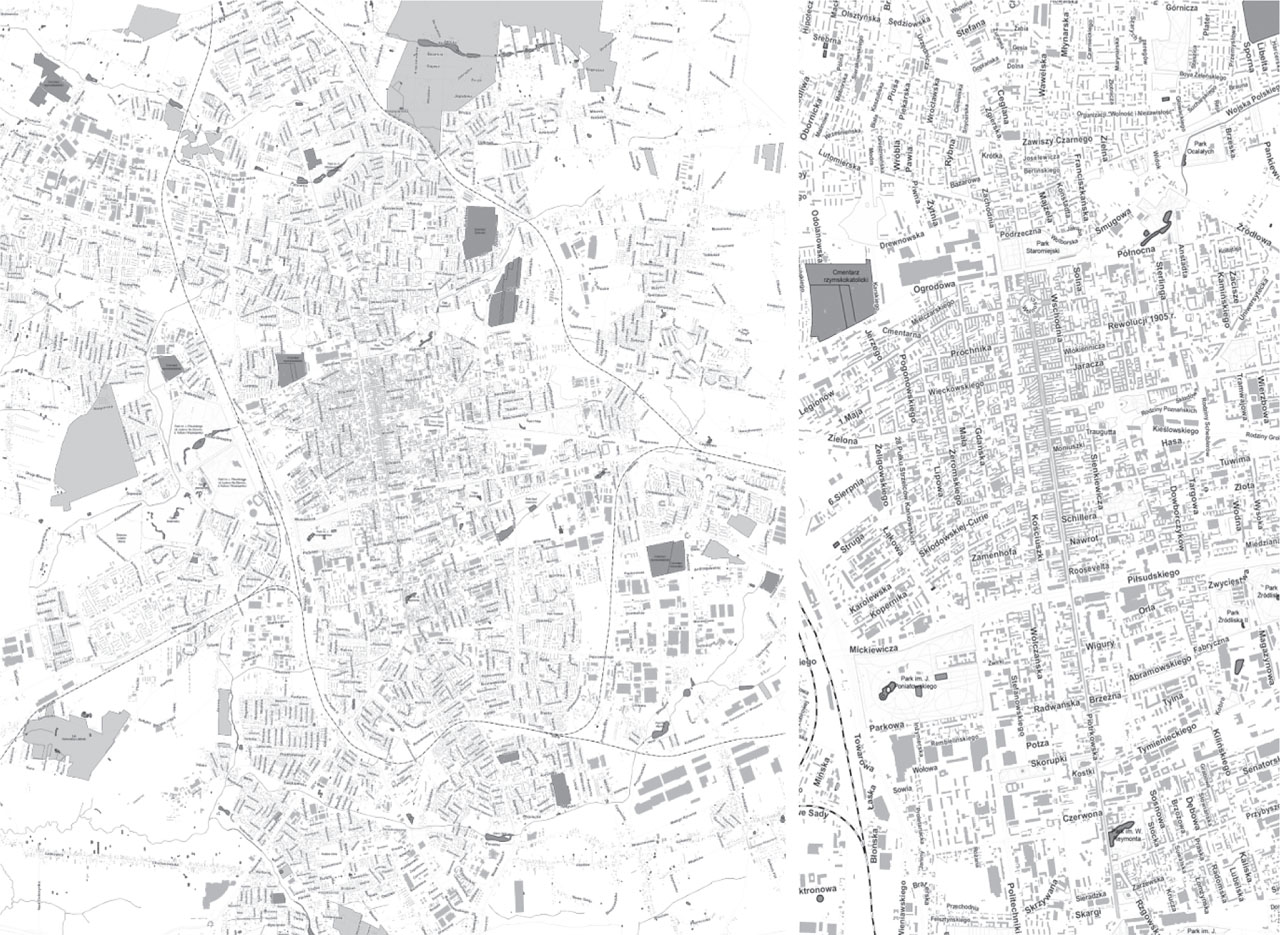
Figure 2.
Map of Lodz used for the analysis of noise intensity in the city centre
Source: ŁOG. https://nowy.log.lodz.pl/ [date: 07.01.2024]
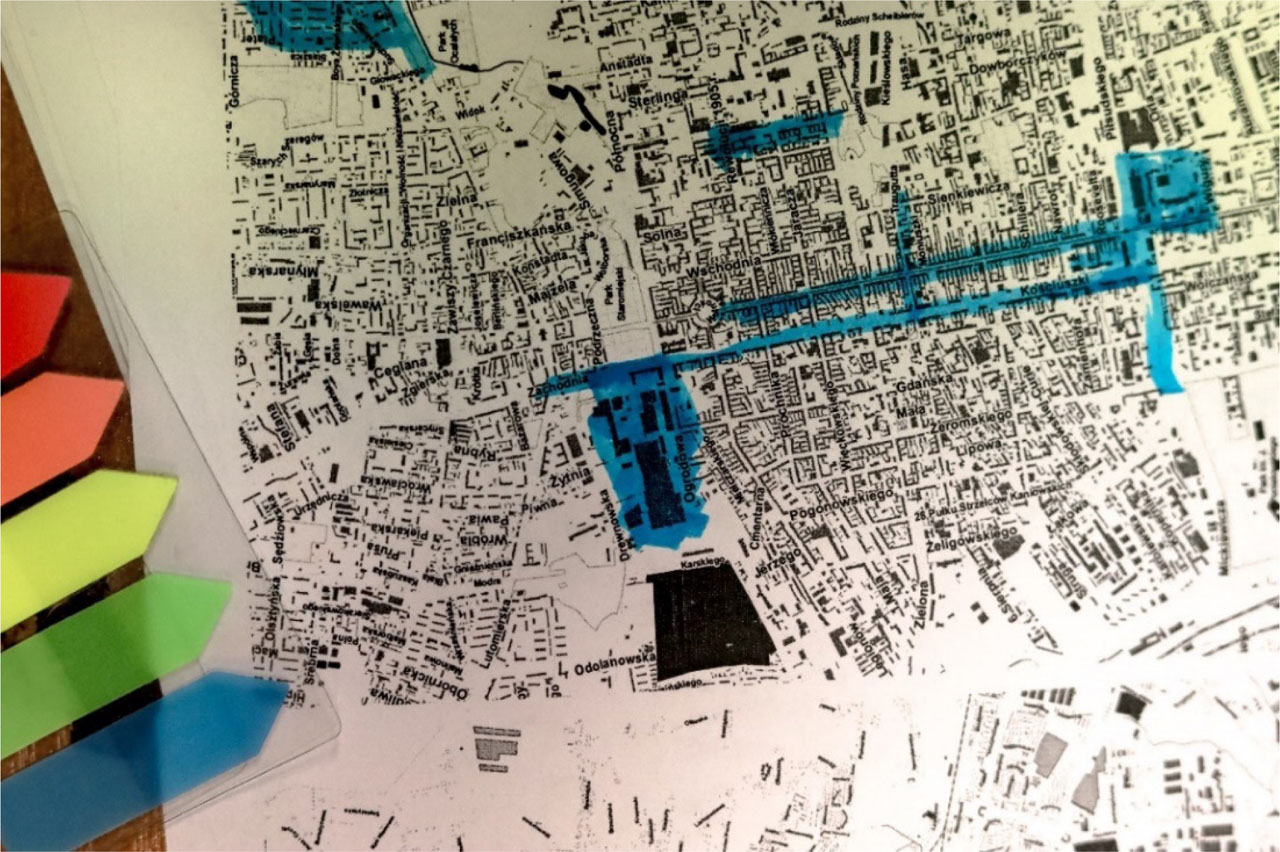
Photograph 1.
Example of a noise pollution map of Lodz indicating locations where noise pollution is most noticeable
Source: own elaboration
The 20 thus completed maps were subsequently analysed. The results have been summarised in Table 3. According to the respondents, the places in the centre of Lodz the most affected by noise were Piłsudski, Mickiewicz and Piotrkowska Streets, while Manufaktura and Liberty Square (Plac Wolności) were the most frequently indicated points. In order to better visualise the collected data, facilitate its perception, and enable reference to the official maps of acoustic pollution in Lodz, a map of areas where noise is experienced by space users, based on the results of the survey, was created (Figure 3). On this map, in accordance with the methodology presented in Table 3, specific locations are indicated by points, while streets are represented by lines. The markings on the map (i.e., the size of the points and the width of the lines) correspond to the frequency with which respondents identified these specific spaces.
Table 3.
Locations in the city centre of Lodz most exposed to noise – distribution of responses obtained from survey participants
| Number of responses | LOCATIONS OF NOISE PERCEPTION |
|---|---|
| Lines (Streets) | |
| 12 | Piłsudski Street |
| 10 | Mickiewicz Street; Piotrkowska Street |
| 7 | Kościuszko Street; Zachodnia Street |
| 4 | John Paul II Avenue; Kiliński Street; Uniwersytecka Street |
| 2 | Dąbrowski Street; Legionów Street; Lutomierska Street; Sporna Street; Struga Street; Wojska Polskiego Street |
| 1 | Bandurski Street; Łąkowa Street; Narutowicz Street; Politechniki Avenue; POW Avenue (Polish Independence Avenue); Północna Street; Przybyszewski Street; 1905 Revolution Street; Scheibler Family Street; Rzgowska Street; Sienkiewicz Street |
| Number of responses | Points (Specific Locations) |
|---|---|
| 11 | Manufaktura (shopping and leisure complex) |
| 10 | Liberty Square (Plac Wolności) |
| 4 | Galeria Łódzka (shopping mall) |
| 3 | Unicorn Stable Transfer Hub (Przesiadkowo-Stajnia Jednorożców); Old Town Park (Park Staromiejski); Faculty of Economics and Sociology, University of Lodz; ŁKS Stadium; Solidarność Roundabout |
| 2 | Intersection of Piłsudski Street and Piotrkowska Street |
| 1 | Intersection of Mickiewicz Street and Włókniarzy Avenue; Intersection of Maratońska Street and Waltera-Janke Street; Intersection of Ogrodowa Street and Zachodnia Street; Port Lodz (shopping centre); Widzew Stadium; Lodz Fabryczna (railway station); Lodz Kaliska (railway station) |
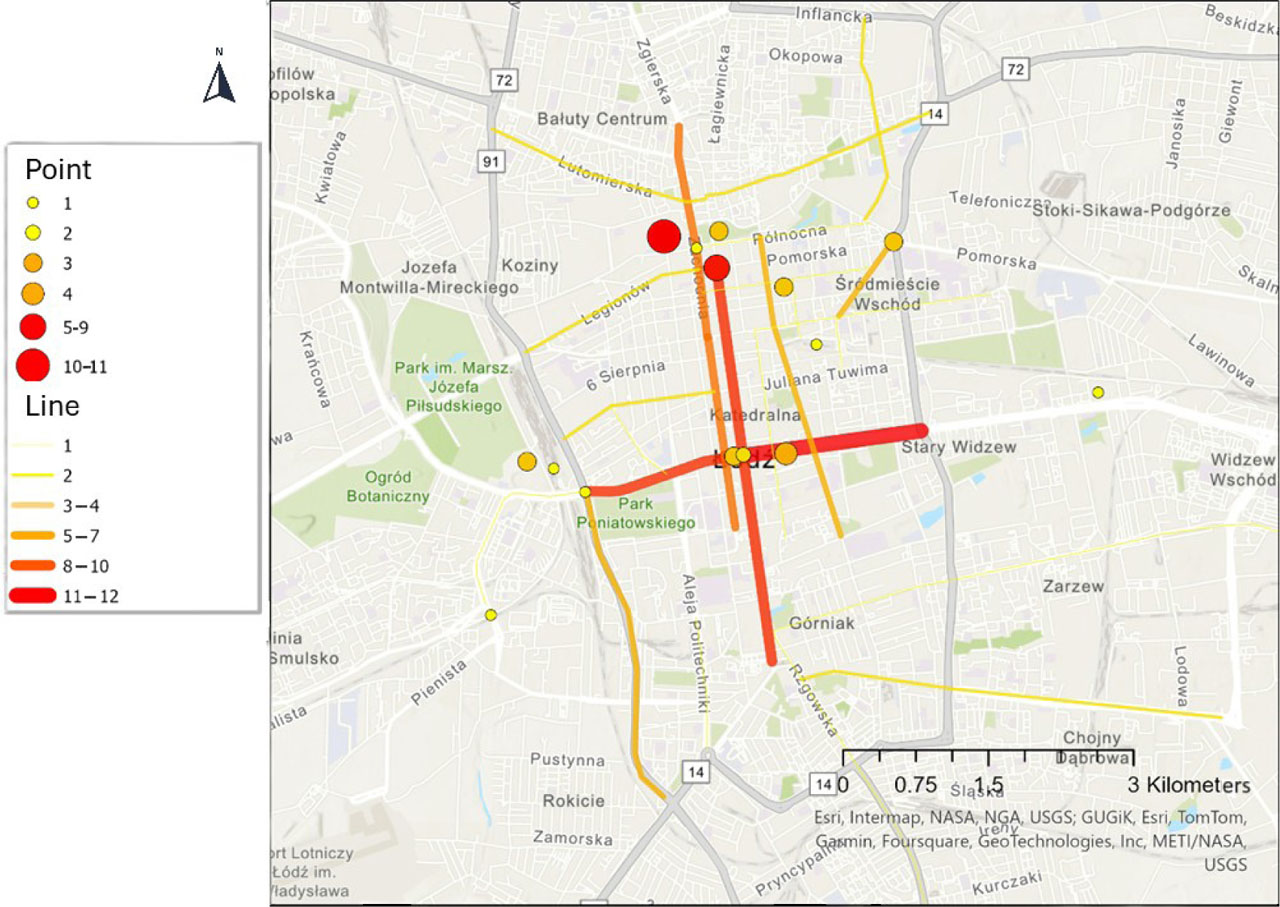
Figure 3.
Visualisation of noise exposure locations in the Lodz city centre – responses of survey participants
Source: own elaboration, based on Table 3
An analysis performed on the basis of the acoustic map and results of the workshop indicated that noise is not limited to the main city arteries. Even smaller streets can be a significant source of unwanted sounds, and they too should be considered in the spatial planning process and in noise-reduction measures [Szefer, Wątły, Jablonski 2016].
5. SUMMARY
The conducted study provided essential information on the perception and experiences of residents and users of space in the centre of Lodz. We employed Design Thinking workshops, which proved effective in capturing both subjective experiences and practical solutions. The conclusions of the noise analysis in Lodz show the complexity of the acoustic pollution problem in the city. Based on workshop results and noise mapping, the following key findings were identified:
1) noise pollution in the city centre is not limited to traffic sources but has a significant component of socially-driven noise, especially nightlife-related sounds;
2) noise is perceived as more disturbing during evening and night hours, causing measurable impacts on health and well-being;
3) residents preferred short-term strategies to avoid the problem (such as moving away from the centre), rather than expecting systemic change;
4) participants proposed a range of grassroots solutions, primarily individual and environmental, that reflect a strong need for personalised and immediate interventions; and
5) participatory methods such as workshops can generate context-sensitive, socially acceptable, and innovative proposals to address urban stressors.
During the workshop, it was concluded that solving noise-related issues requires a multifaceted approach, incorporating both technological innovations and changes in spatial planning. The identification of areas most exposed to noise should become a key element of urban planning and environmental management, while community responses to acoustic pollution are also an important element in the process of addressing the problem. Another important conclusion was the realisation that the impact of noise on humans extends beyond health, encompassing psychosocial aspects as well.
In turn, the bottom-up initiatives identified in this study (e.g., the use of noise-cancelling devices, portable soundproofing, and apps for quiet route planning or noise monitoring) demonstrate that residents are not only aware of the acoustic challenges in the urban centre, but also capable of generating practical and innovative mitigation strategies. Their involvement constitutes an important step toward building public awareness and fostering acceptance of measures aimed at improving the quality of the acoustic environment. Implementing such locally informed solutions, particularly when integrated alongside broader policy and infrastructural interventions, can also significantly enhance acoustic comfort and urban well-being. Importantly, measures aimed at reducing urban noise should be co-developed with local communities and subject to broad public consultation, as community participation is a key factor in designing effective and socially acceptable noise management strategies.
Based on the study's findings, we also observed a paradoxical phenomenon that is particularly evident in urban environments. On the one hand, factors that attract people to urbanised areas, such as access to city transport, services, healthcare or entertainment, have negative consequences for the health and psyche of inhabitants. On the other hand, residents of those areas are often unaware of the impact of factors that affect them on a daily basis. Cities offer many amenities unavailable to rural residents, but they are also a source of stress and noise from excess roads, industrial plants and entertainment centres.
It is therefore necessary to take steps to raise public awareness of the urban noise pollution problem and its impact on health and quality of life. Educating residents on how to reduce noise, and promoting noise-reducing behaviours, may help limit its negative effects. Grassroots solutions, developed by the academic community, non-governmental organisations and territorial self-governments in collaboration with experts, can significantly improve residents' quality of life. The implementation of effective urban noise management strategies is crucial to creating more friendly and sustainable urban living environments.
Due to the limitations inherent in the case-study approach, these recommendations should be further developed and expanded upon. Their primary constraint is the spatially limited scope of the research, which focused on a single district. Similar studies could be conducted in other urban contexts to examine a broader variety of spaces and their acoustic characteristics.
The second restraint of this study is the narrow and specifically-targeted group of participants. In future research, it would be advisable to diversify and expand the sample to include residents of Lodz or urban users representing a broader range of socioeconomic backgrounds.
Additionally, the inclusion of highly sensitive individuals appears to be an important consideration. For them, sounds can exert a particularly significant impact on well-being and mental health. Therefore, in addition to measures aimed at reducing noise in general, it is also necessary to create urban spaces more welcoming to people with special hearing needs. This can include designating quiet zones in city parks or limiting the intensity of sounds around schools and healthcare facilities. Including the voice of highly sensitive individuals in the public discourse on urban planning and urban noise management can benefit the whole community, improving the quality of life for all groups of people who use urban space.
In summary, addressing urban noise in Lodz requires a holistic approach that combines technical measures with social and behavioural strategies. Noise monitoring should be expanded to take into account socially generated sounds, such as nightlife and public events, alongside the more traditional traffic-related sources. Urban policies must go beyond infrastructure improvements to incorporate nightlife regulations and behavioural guidelines. Strengthening public engagement and institutional responsiveness is crucial, as many residents perceive avoidance strategies – such as moving homes – as their only viable response. Future initiatives – including the development of advanced noise mitigation technologies, the implementation of stricter regulatory frameworks for transport and industry, and the expansion of urban green infrastructure to serve as a natural acoustic buffer – should prioritize the formulation of effective noise control strategies.
Equally important is raising public awareness about the importance of preserving acoustic environmental quality in large cities such as Lodz. Addressing urban noise pollution requires an integrated approach that combines educational programs with targeted investments in sustainable infrastructure and innovative technological solutions. Furthermore, fostering collaboration between local communities, scientific institutions, and public authorities is essential to achieving measurable results, ultimately leading to urban spaces that are healthier, more balanced, and more acoustically resilient.