
Introduction
Neutron sources are of significant value in a multitude of scientific, industrial, and security applications, as evidenced by numerous studies [1,2,3,4]. A highly efficient neutron source is a nuclear reactor, which is capable of producing neutron fluxes of the order of 1015 n/(cm2·s). However, their use is severely limited due to the stationary nature of the source and restrictions on access to nuclear sites. A second potential approach is the utilisation of isotopes, typically in (α, n) reactions. Alpha-neutron sources have the potential to generate approximately 106–108 n/s. The most common combinations of applied materials are plutonium–beryllium (PuBe), americium–beryllium (AmBe), or americium–lithium (AmLi) [5]. The neutron energy can reach up to a few MeV.
An alternative isotope option is spontaneous fission (SF), with the most common source being the Cf-252 [6]. A typical Cf neutron source emits 107–109 n/s, with a continuous spectrum of up to a few MeV and an average energy of 2.16 MeV.
Nevertheless, the utilisation of isotopes presents several challenges, including the absence of a “switch-off” option, the necessity for regular replacement and disposal, and limited efficiency (i.e., the neutron flux). “Electronic” sources include the popular D-D and D-T types of neutron fusion generators [7], which emit monoenergetic beams of 2.45 MeV and 14.1 MeV, respectively. However, these sources do not emit a directed beam, which results in a low flux per unit area.
Additionally, particle accelerators can be employed as a source of neutrons. The source particles are then accelerated and directed towards a suitable target. Examples of such facilities include the Spallation Neutron Source (SNS) facility [8] and the European Spallation Source (ESS) [9], which utilise proton beams as spallation sources. Further information about accelerator-driven neutron sources can be found for example in Ref. [10].
On a smaller scale, relatively inexpensive and simple linear electron accelerators can also be used for a variety of applications. When operated with an electron beam of sufficient intensity, these accelerators are capable of producing a larger neutron flux than that achievable with common D-D and D-T generators, with a different spectrum, which can be advantageous for several applications. It is frequently the case that a neutron source does not require complete mobility; the fact that it can be relocated is sufficient.
Electron linacs typically deliver beams with energies <20 MeV, with power reaching even several hundred kW. It has been demonstrated that electron beams are capable of generating bremsstrahlung photons, which may subsequently induce neutron emission in materials that possess low neutron separation energy. Consequently, a photoneutron beam can be generated through photonuclear reactions [11,12,13]. Furthermore, the energy spectrum of bremsstrahlung photons is continuous, with low energies dominating [14,15,16].
In the context of neutron production, the most commonly utilised conversion targets are beryllium and deuterium. The neutron separation energy for 9Be is 1.67 MeV, while for 2H it is 2.23 MeV. Unfortunately, the efficiency of converting electrons to photons in the bremsstrahlung process is notably low for both deuterium and beryllium, which have low atomic numbers. Therefore, to achieve a high flux of bremsstrahlung photons and maximise the number of neutrons, a converter can be constructed using a high-Z material like tungsten, along with a low neutron separation energy material.
For further information on the production of neutrons using electron linacs with low-Z conversion targets, please refer to the following sources: [17,18,19,20,21,22]. This study, however, focuses on neutron production with high-Z materials and electrons ranging up to 50 MeV. It should be noted that the photonuclear cross-section for high-Z materials is at least two orders of magnitude higher than for low-Z materials [23].
Monte-Carlo simulations
Theoretical modelling of photoneutron production was conducted using the Monte-Carlo code FLUKA in version 2011.2x [24, 25].
In the simulations described in this article, a simple conversion target comprising a single high-Z (tungsten) converting material was used. The objective of the calculations was to ascertain the quantity of electrons, photons, and neutrons produced, as well as to examine the energy spectra of secondary particles. All simulations were conducted for monoenergetic electron beams with energies of 10, 15, 20, 25, 30, 35, 40, 45, and 50 MeV, assuming they were parallel beams with a spatial dispersion having an full width at half maximum (FWHM) of 2 mm. The calculations were performed for various numbers of primary beam electrons by the investigated energy. For 10 MeV the events generated by 4.0·109 e− were analysed; for 15 MeV and 20 MeV, by 1.5·108 e−; for 25 MeV and 30 MeV, by 4.0·107 e−; for 35 MeV and 40 MeV, by 2.5·107 e−; and for 45 MeV and 50 MeV, by 2.0·107 e−, respectively. All these calculations were repeated for each thickness of the tungsten conversion target and normalised to the nominal beam current of 120 μA.
The geometry of the system used for the calculations is illustrated in Fig. 1. It was assumed that the electron beam irradiates the base of a tungsten cylinder with a diameter of 20 cm. To ascertain the optimal thickness of the tungsten conversion target, the neutron flux generated was studied across three directional intervals: in the direction consistent with the primary electron beam forward (FW) direction, in the opposite direction backward (BW) direction, and in the perpendicular direction side direction (SD). Thicknesses of the tungsten conversion target thicknesses ranging from 0.5 cm to 20 cm were examined.
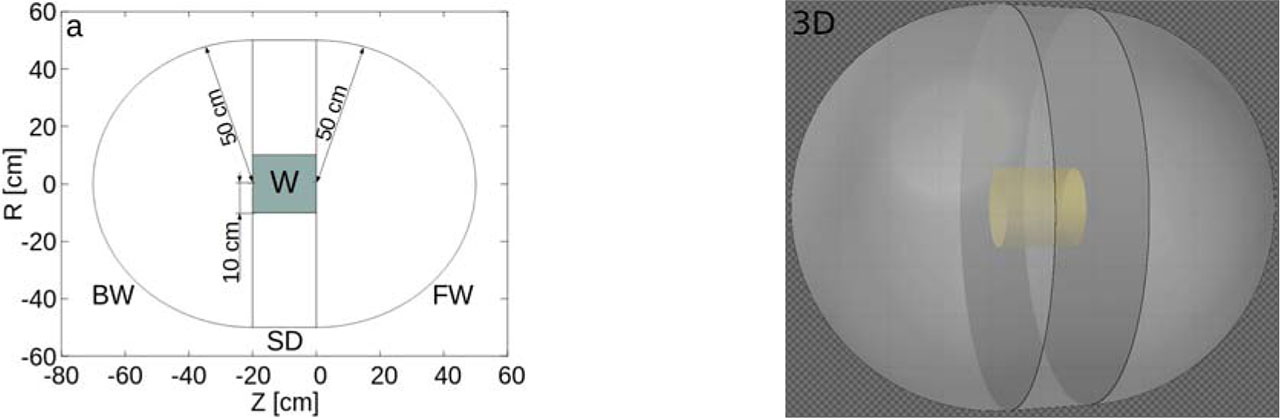
Fig. 1.
The cross-section (a) and 3D view of the system geometry (3D) used for simulation with the FLUKA Monte-Carlo code. It comprises a tungsten cylinder (W) with a diameter of 20 cm and a thickness of 20 cm, along with three particle flux detectors, BW, FW and SD. These detectors register all selected particles passing through the boundary between defined regions. BW, backward; FW, forward; SD, side direction.
It was assumed that the particle fluxes would be registered in three detectors, on the surface of two spheres with a radius of 50 cm (BW and FW detectors), centred on both bases of the conversion target cylinder, and on the outer surface of a cylinder with a radius of 50 cm (SD detector) with an axis aligned with the axis of the conversion target cylinder. For each simulation, the spatial distributions and energy spectra of the generated particles were registered.
In the calculations, the DEFAULTS card was set to PRECISION, and none of the thresholds were modified. It was assumed that photonuclear interactions are activated for all energies using the PHOTONUC card. The sensitivity to photonuclear reactions was significantly increased by setting the lambda parameter to 0.00005 using the LAM-BIAS card.
Results and discussion
The spatial distributions and energy spectra of electrons, photons, and neutrons generated following the irradiation of a single-layer tungsten conversion target with an electron beam of intensity 7.5·1014 e/s were obtained as a result of the calculations. The investigation encompassed electron energies ranging from 10 MeV to 50 MeV, with an increment of 5 MeV. The obtained spatial distribution values of electron, photon, and neutron flux for two randomly selected conversion target thicknesses are illustrated in Figs. 2–4. The neutron flux values as a function of the conversion target thickness for all investigated electron beam energies are presented in Figs. 5–8, and the angular distribution of photon and neutron fluxes emitted directly from the accelerator is presented in Fig. 9.
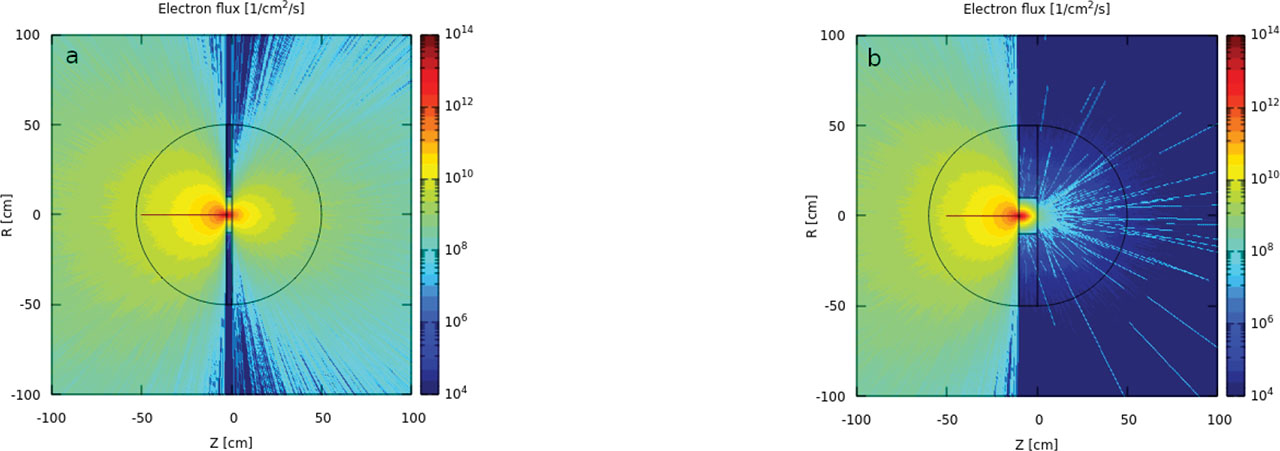
Fig. 2.
The electron flux registered in the system for 30 MeV electron energy for a converter thickness of 3 cm (a) and 10 cm (b), the section in the plane parallel to the axis of the electron beam.
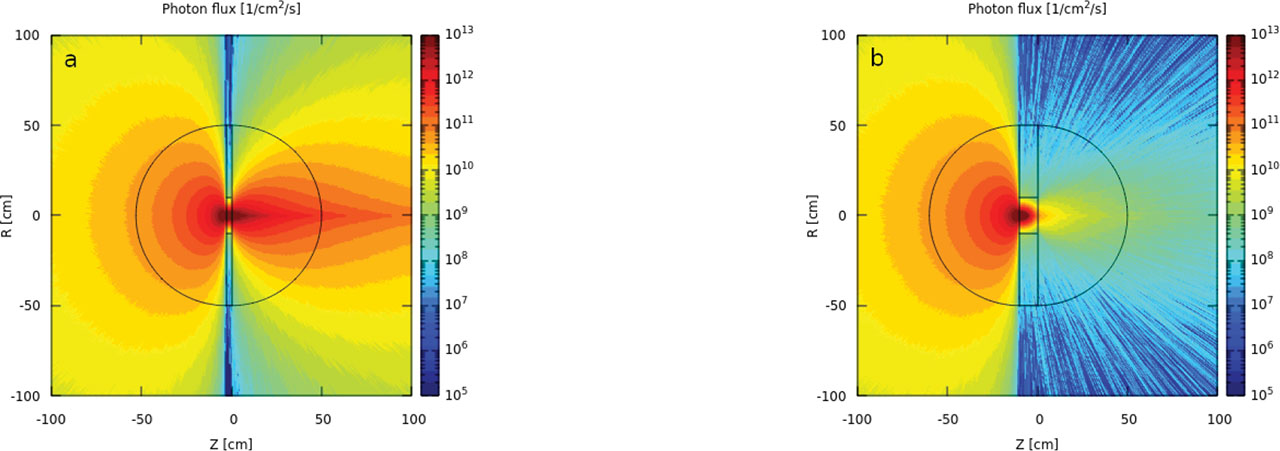
Fig. 3.
The photon flux registered in the system for 30 MeV electron energy for a converter thickness of 3 cm (a) and 10 cm (b), the section in the plane parallel to the axis of the electron beam.
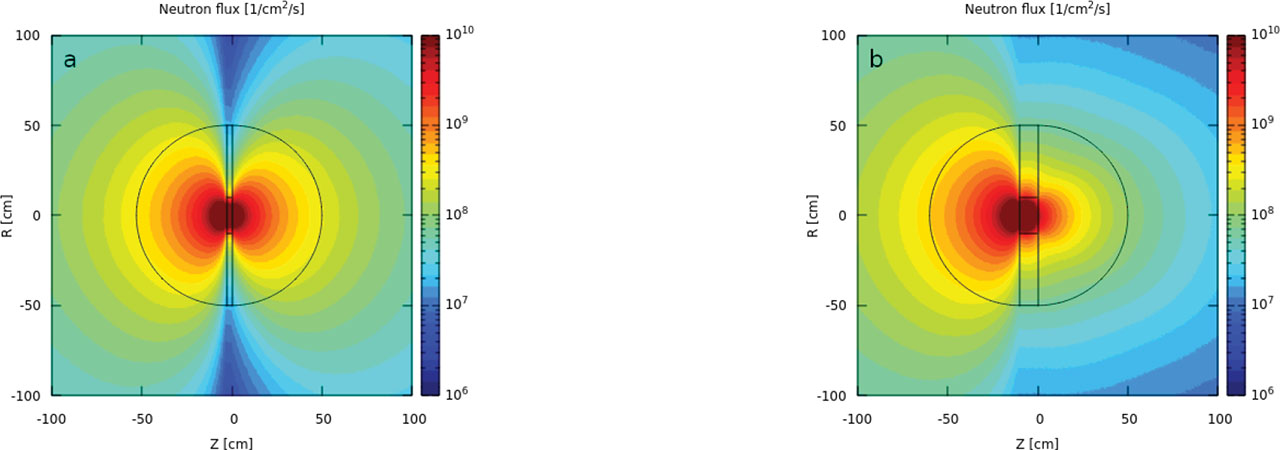
Fig. 4.
The neutron flux registered in the system for 30 MeV electron energy for a converter thickness of 3 cm (a) and 10 cm (b), the section in the plane parallel to the axis of the electron beam.
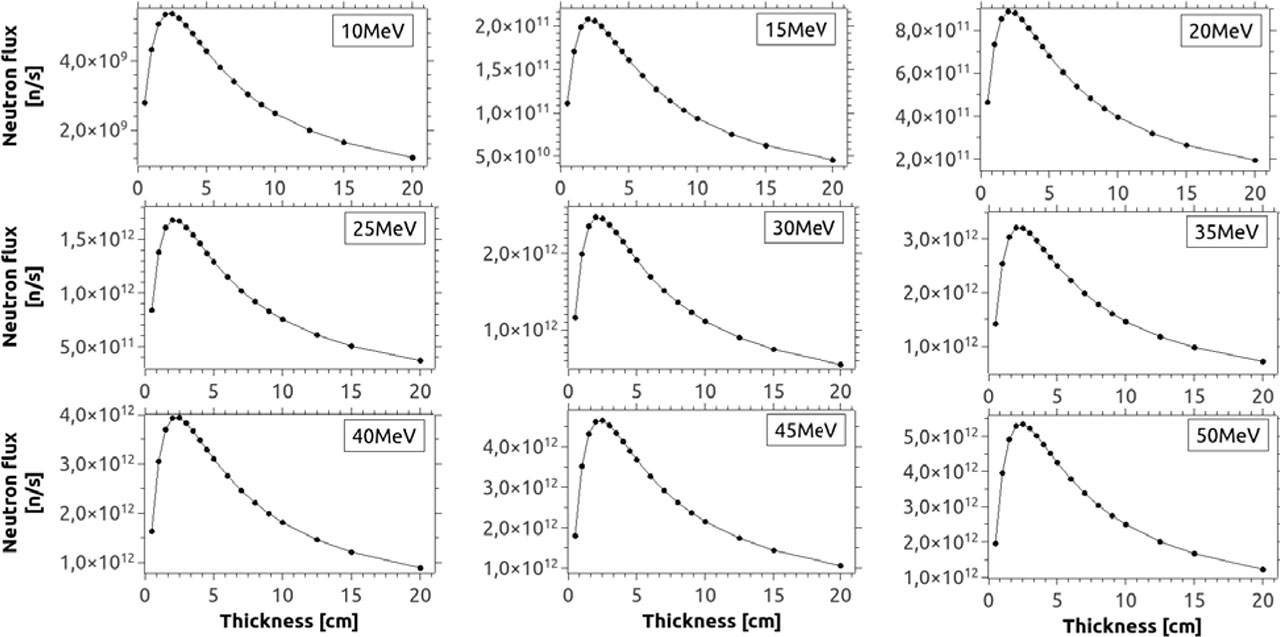
Fig. 5.
The neutron flux generated by tungsten irradiated with a monoenergetic electron beam of 7.5·1014 e/s and registered in the detector positioned in towards the direction of the electron beam (FW). The optimal thickness of the conversion target to achieve the maximum neutron flux in the direction aligned with the primary beam was found to be approximately 2.0–2.5 cm.
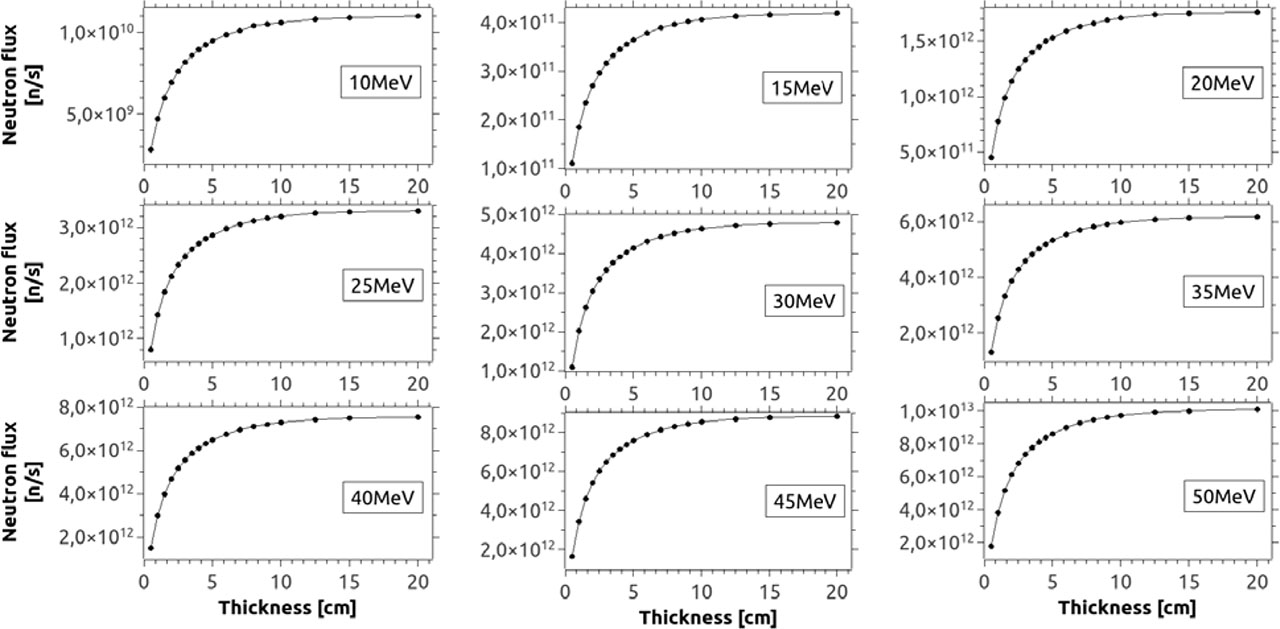
Fig. 6.
The neutron flux registered in the detector positioned from the side that is exposed by the electron primary beam (BW). The optimal thickness of the conversion target for achieving the maximum BW neutron flux was found to be approximately 10 cm.
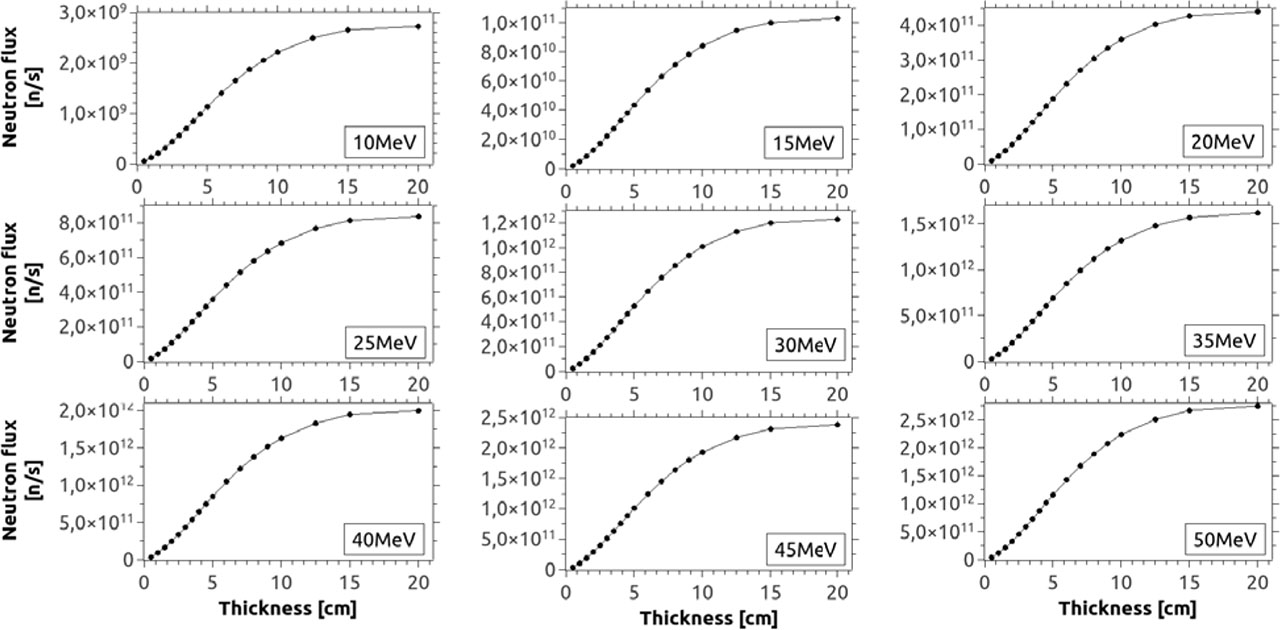
Fig. 7.
The neutron flux registered in the detector positioned at an angle of 90° to the direction of the electron primary beam (SD).
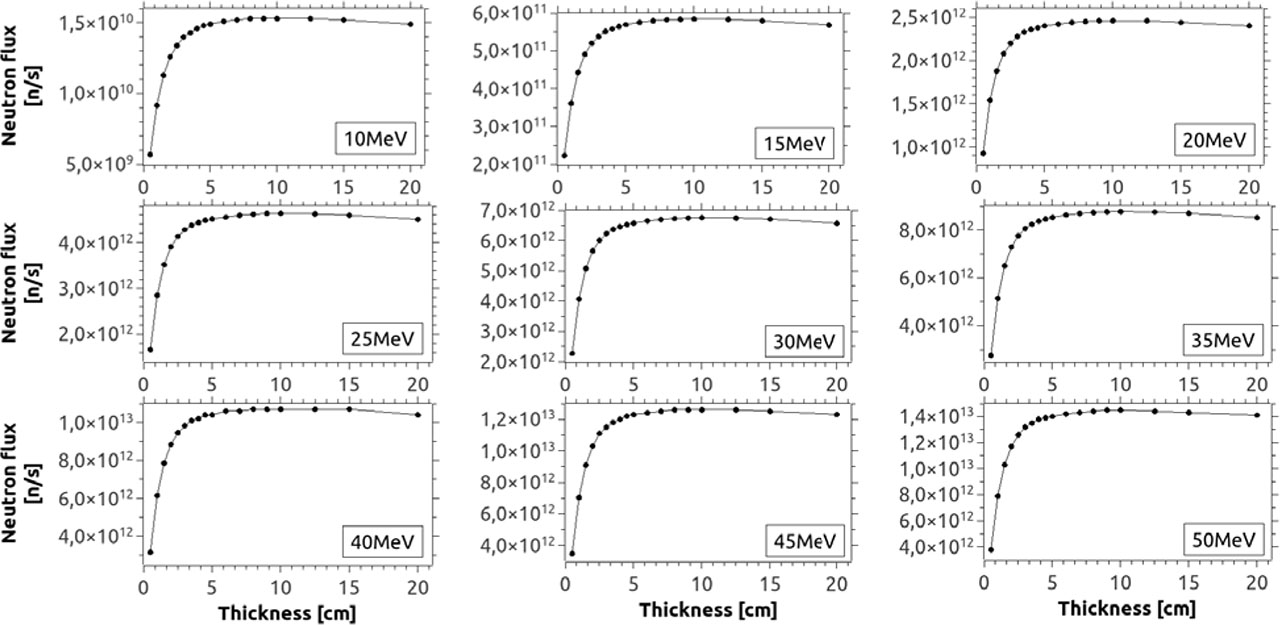
Fig. 8.
The total neutron flux is defined as the sum of the neutron fluxes registered in all defined detectors (FW + SD + BW). The optimal thickness of the conversion target to achieve maximum total emitted neutron flux is approximately 10 cm.
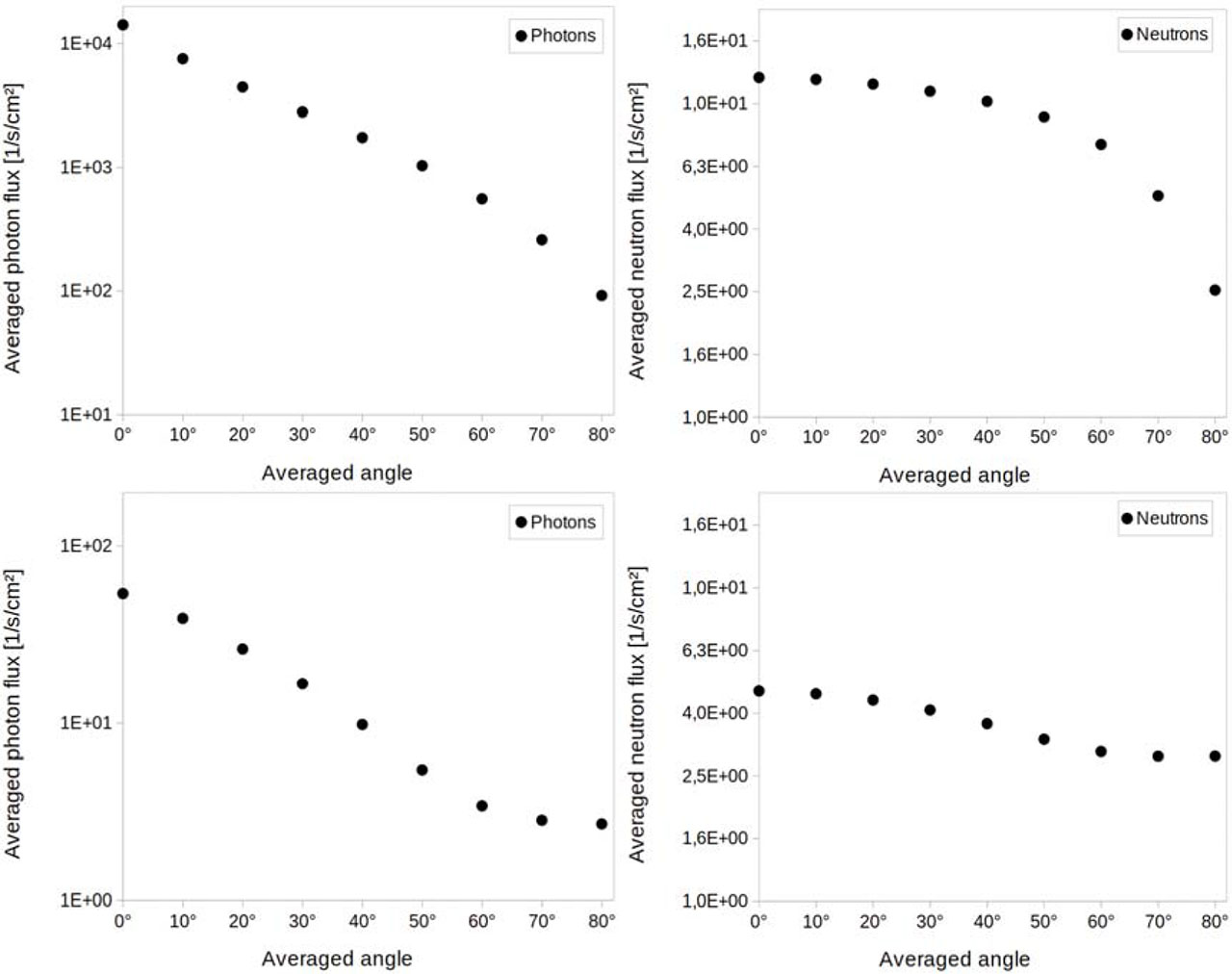
Fig. 9.
The angular distributions of photon and neutron fluxes emitted from a tungsten conversion target presented for two example thicknesses: 3 cm (top row) and 10 cm (bottom row) for a randomly selected 30 MeV electron energy. The fluxes are averaged over angles of 5° in relation to the orientation of the primary beam, 5–15°, and so forth up to 85°. The magnitudes of the statistical errors are invisible with the scale used.
The optimal converter thickness for the generation of the maximum neutron yield in the direction of the primary electron beam (FW) is approximately 2.0–2.5 cm of tungsten. In this configuration, a tungsten layer of greater thickness acts as a shield, attenuating the neutron flux generated earlier in the shallower part of the conversion target.
In the case of a neutron flux generated BW, a positive correlation has been observed between the thickness of the converter and the neutron flux. However, a saturation effect is observed, for thicknesses exceeding approximately 10 cm. Even with a significant increase in conversion thickness, the rise in neutron flux is minimal. When considering all neutrons generated from the conversion target in all directions, a thickness of approximately 10 cm would yield the maximum total neutron production. These findings are consistent across all electron beam energies studied.
A comparable positive correlation between neutron flux value and conversion target thickness was identified for neutron flux emitted sideways (SD). However, due to the detector definition, which requires an increase in detector surface area with increasing conversion target thickness, the computed neutron flux values indicate that thicker conversion targets result in higher flux, with a diminished saturation effect in comparison to that observed for the BW detector. It should be noted that the neutron flux value registered in the SD detector is an order of magnitude smaller than in the BW detector.
The energy spectra of photons and neutrons generated on a tungsten converter irradiated by an electron beam are presented in Fig. 10. It can be observed that the average energy of neutrons generated in the FW direction of the primary electron beam is lower than the average energy of neutrons generated in the BW direction. Conversely, the situation is exactly the opposite for photons.
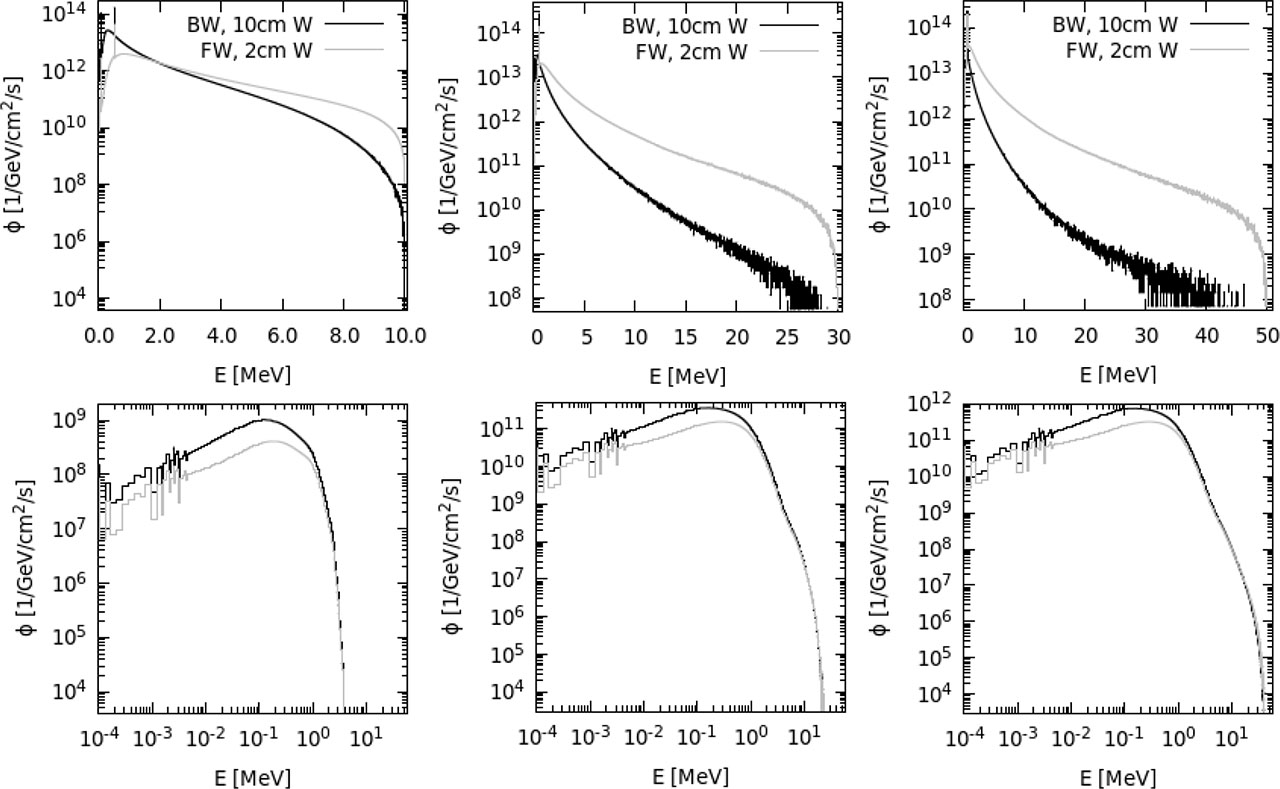
Fig. 10.
The energy spectra of photons (top row) and neutrons (bottom row) presented for randomly selected primary electron beam energies of 10 MeV, 30 MeV, and 50 MeV observed at a distance of 50 cm from the centre of the surface of the tungsten converter in FW and BW detectors.
Conclusions
This paper presents a study of the neutron fluxes generated in tungsten targets of varying thicknesses using a linear electron accelerator. The results of the Monte-Carlo simulations indicate that the highest total neutron flux can be generated on a single high-Z tungsten converter with a thickness of approximately 10 cm.
The total flux of generated neutrons emitted at full solid angle was found to be 1.53·1010 n/s, 5.84·1011 n/s, 2.46·1012 n/s, 4.64·1012 n/s, 6.76·1012 n/s, 8.77·1012 n/s, 1.07·1013 n/s, 1.26·1013 n/s, 1.45·1013 n/s at electron energies of 10, 15, 20, 25, 30, 35, 40, 45, and 50 MeV, respectively, for a 120 μA electron beam. The magnitudes of the relative statistical uncertainties obtained from Monte-Carlo calculations do not exceed 0.006%. The flux may be further directed by the use of high-Z material reflectors.
It is important to note that the resulting neutron beam will contain a significant quantity of photons, which could potentially present a challenge for certain applications. This effect can be minimised by selecting an appropriate beam output direction, with a bias towards the BW angle.