Have a personal or library account? Click to login
Hall probe calibration in high-precision magnetic field mapping system of superconducting cyclotron Cover

Hall probe calibration in high-precision magnetic field mapping system of superconducting cyclotron

Open Access
|Nov 2024

Figures & Tables

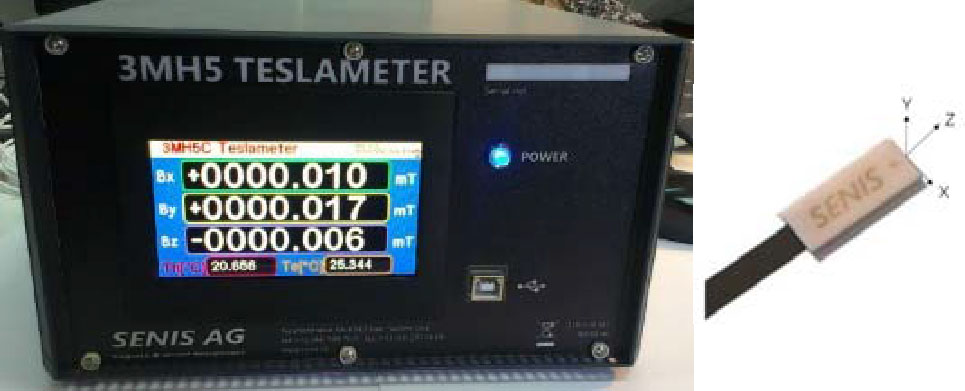
Fig. 1.

SENIS Low-Noise Teslameter 3MH5 and Hall probe C.
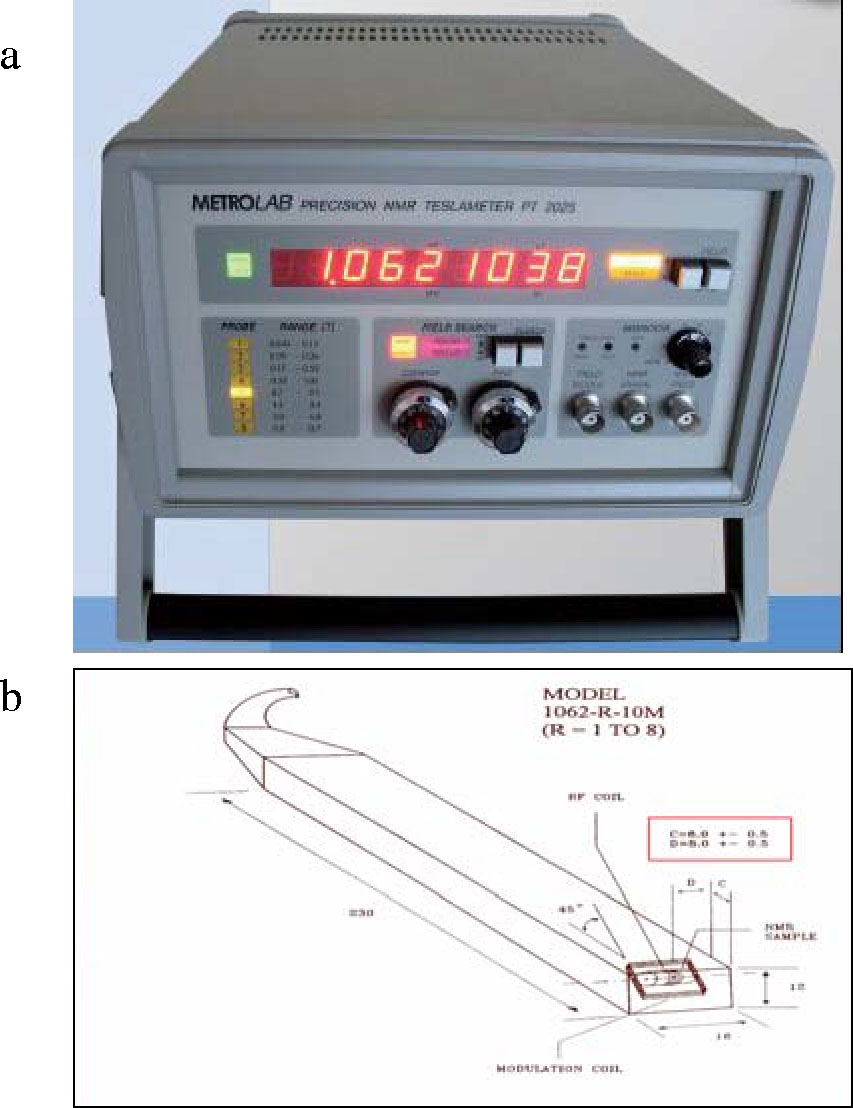

Fig. 2.

Metrolab PT2025 NMR Teslameter (a) and probe model 1062 (b).
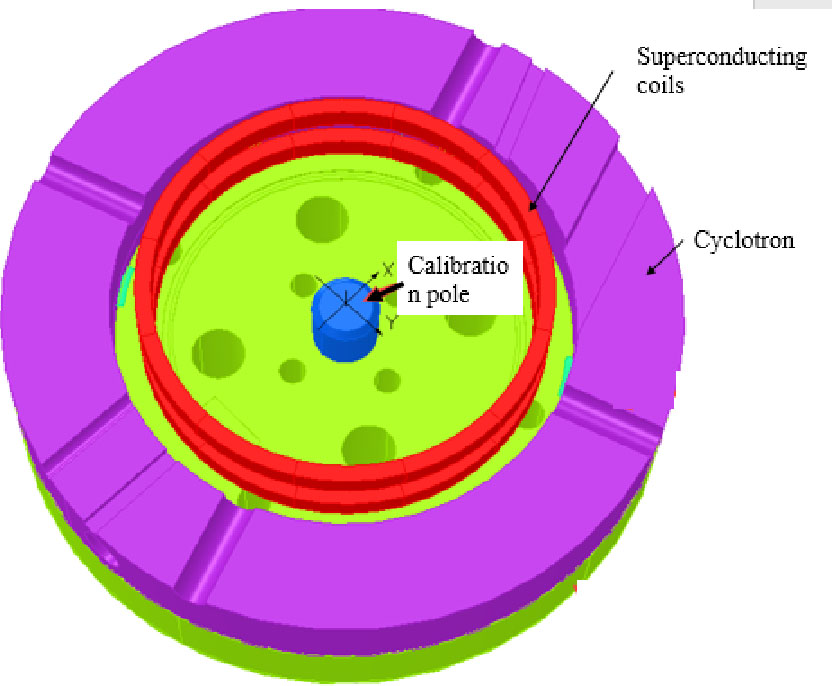

Fig. 3.

Simulation model of the magnetic calibration pole.
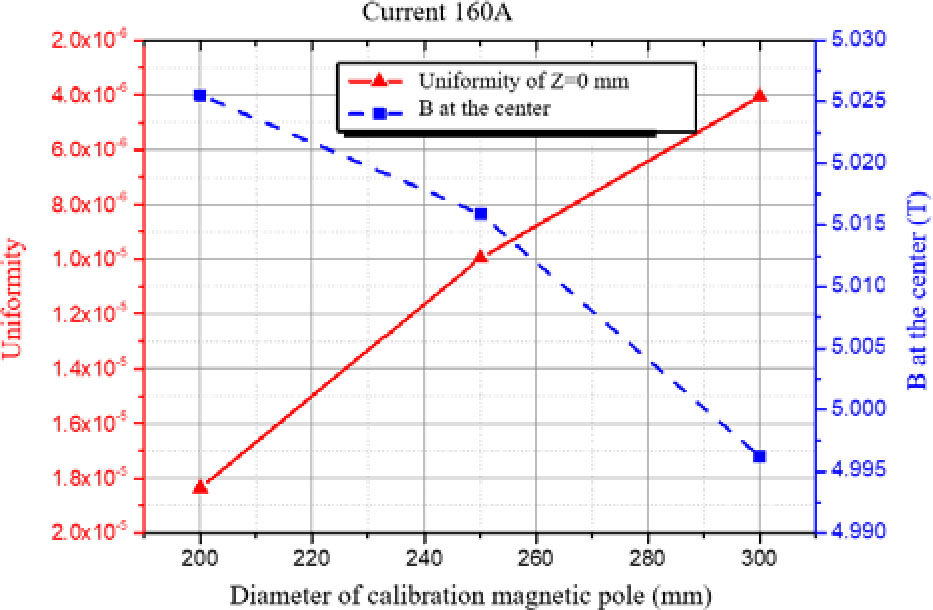

Fig. 4.

Calibration pole design analysis.
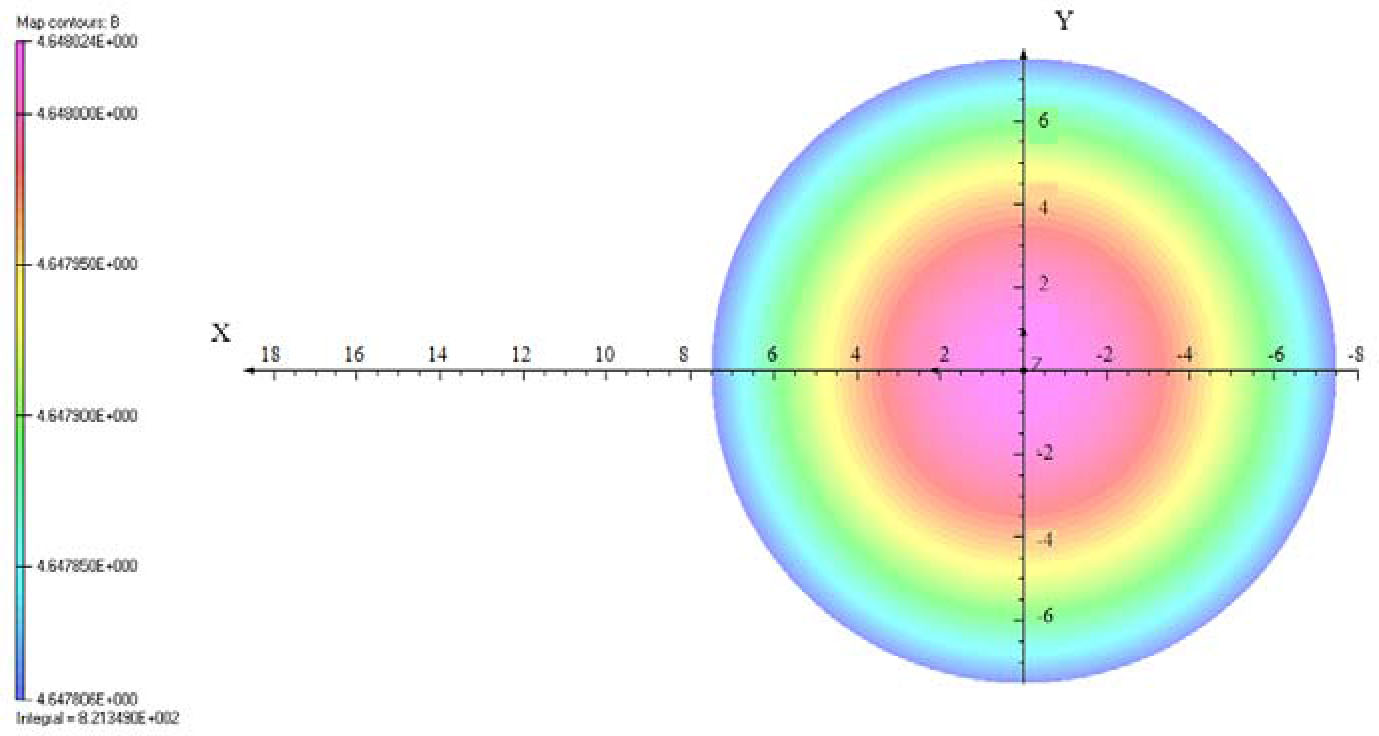

Fig. 5.

Schematic diagram of magnetic field distribution of calibration poles.
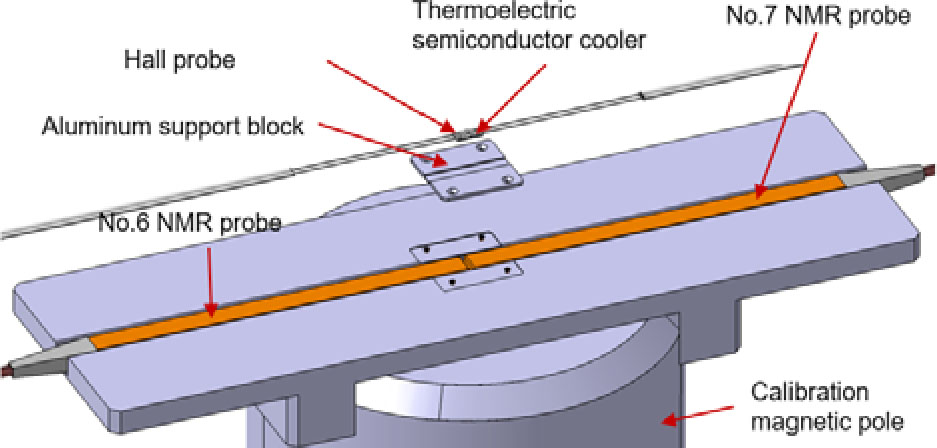

Fig. 6.

Decomposition diagram of calibration tooling model.
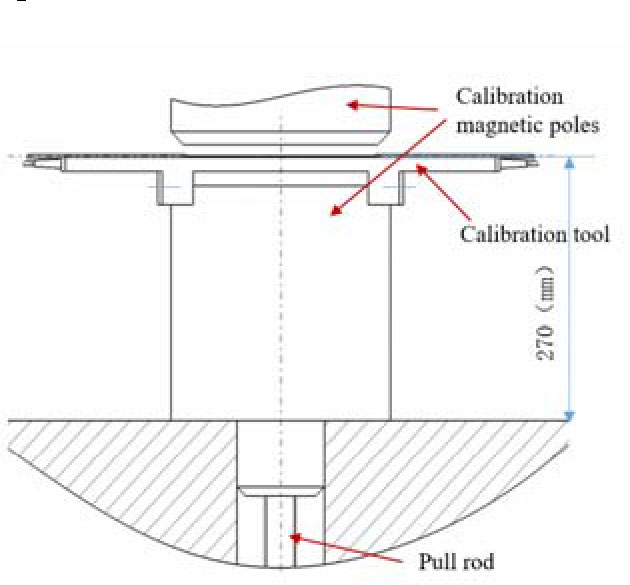

Fig. 7.

Installation diagram of calibration tool in cyclotron.
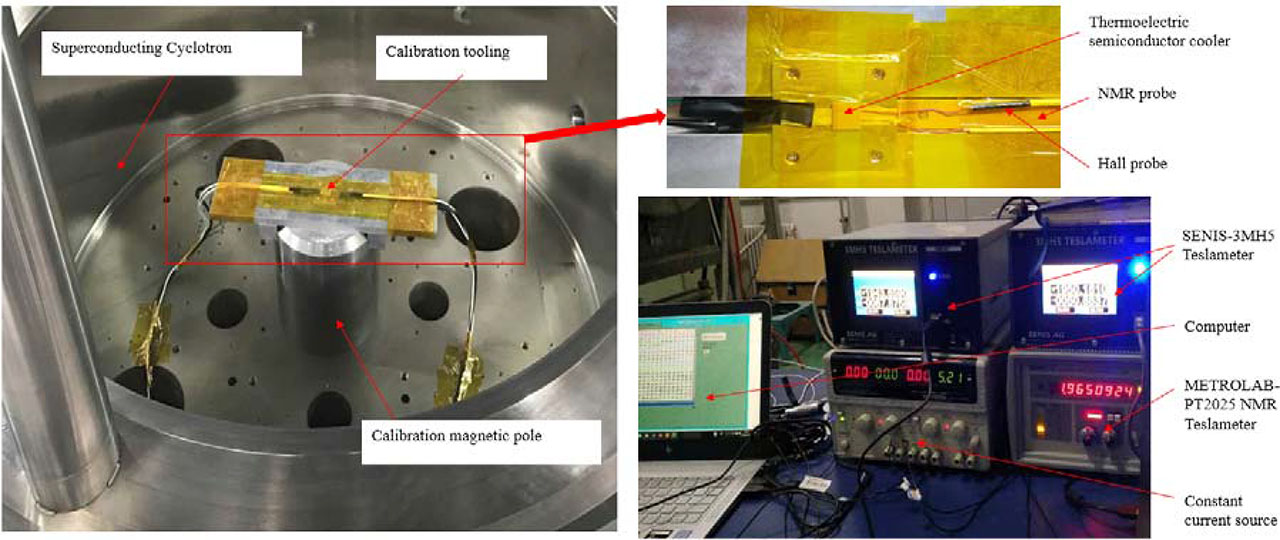

Fig. 8.

Experimental platform and calibration system.
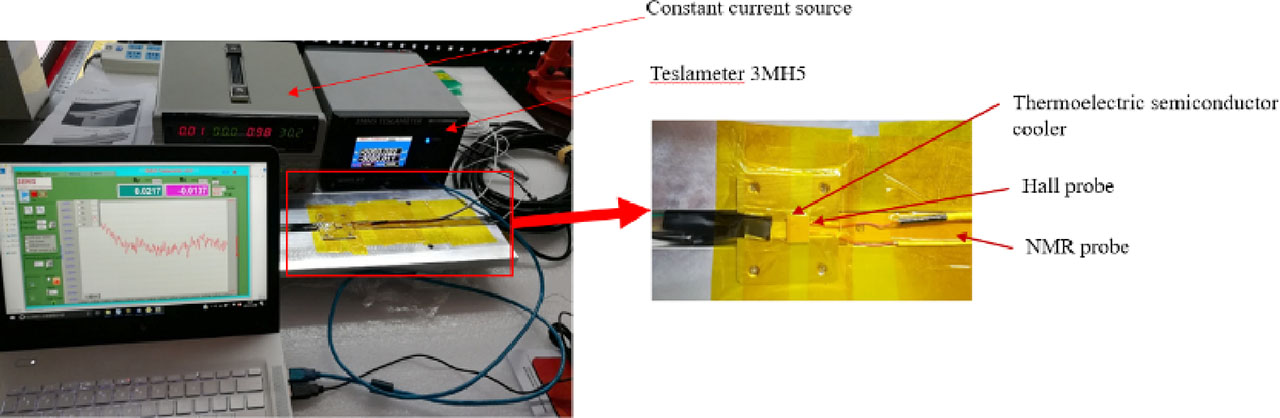

Fig. 9.

Temperature test bench.
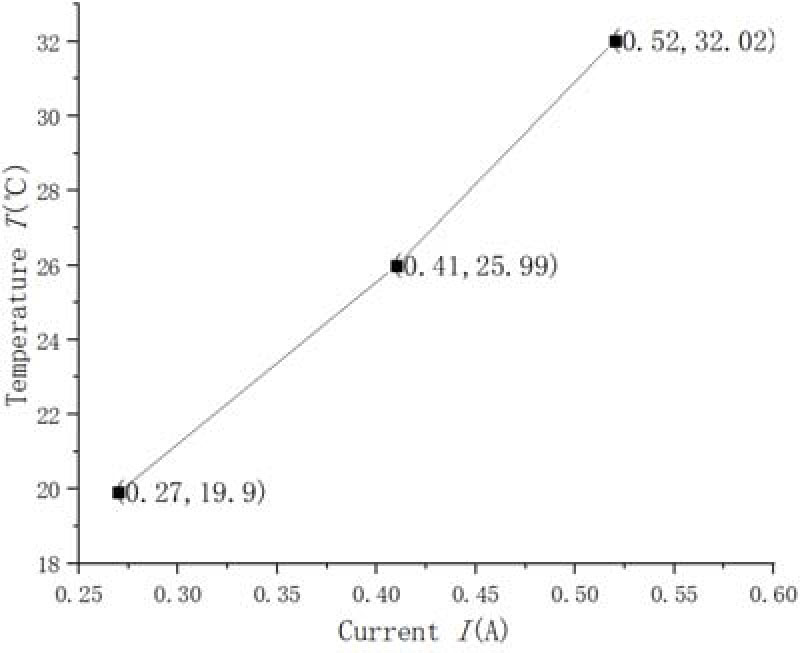

Fig. 10.

Relationship between the energizing current and the probe temperature.
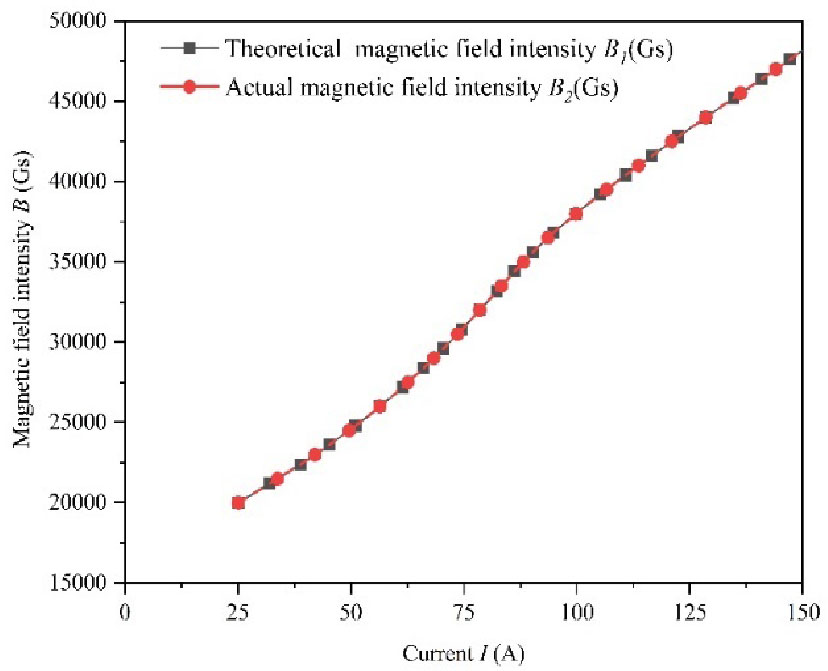

Fig. 11.

Relationship between the excitation current I and the required calibration magnetic induction intensity B.
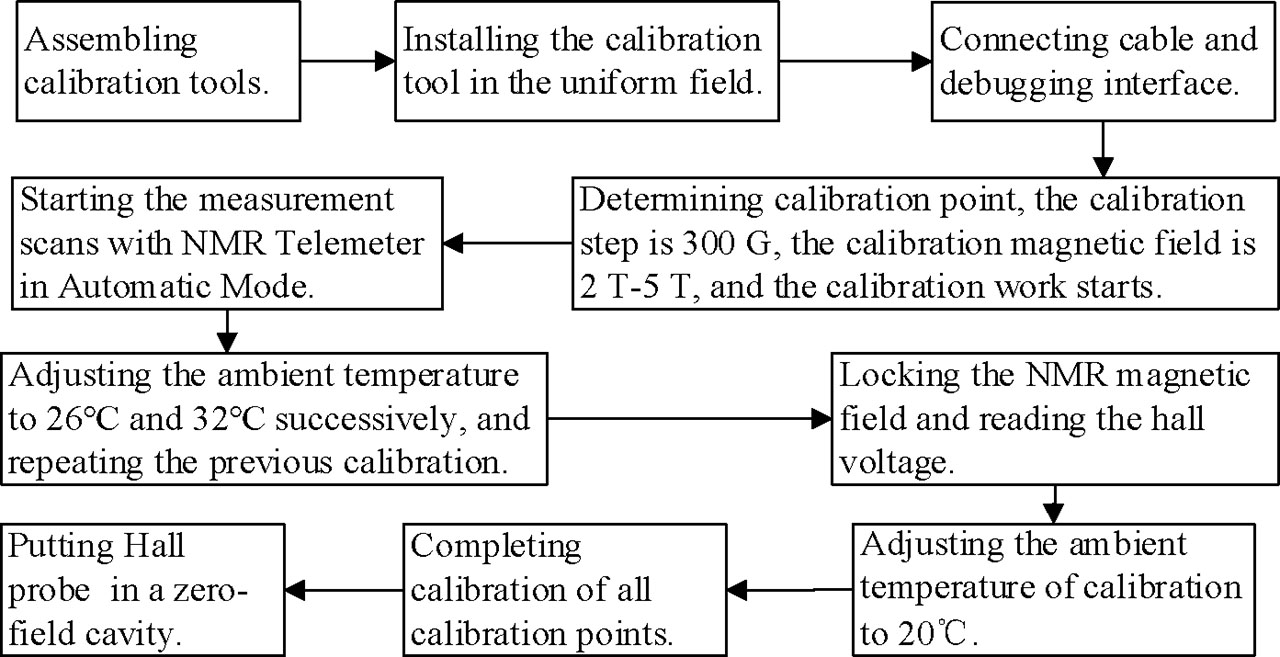

Fig. 12.

Flow chart of Hall probe calibration process.
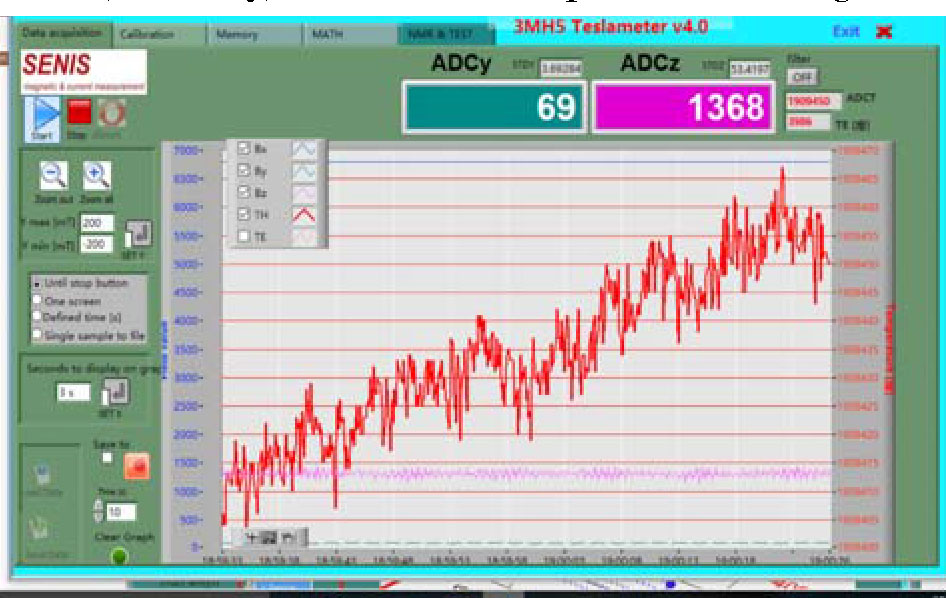

Fig. 13.

Drawing curves of magnetic induction intensity and temperature values.
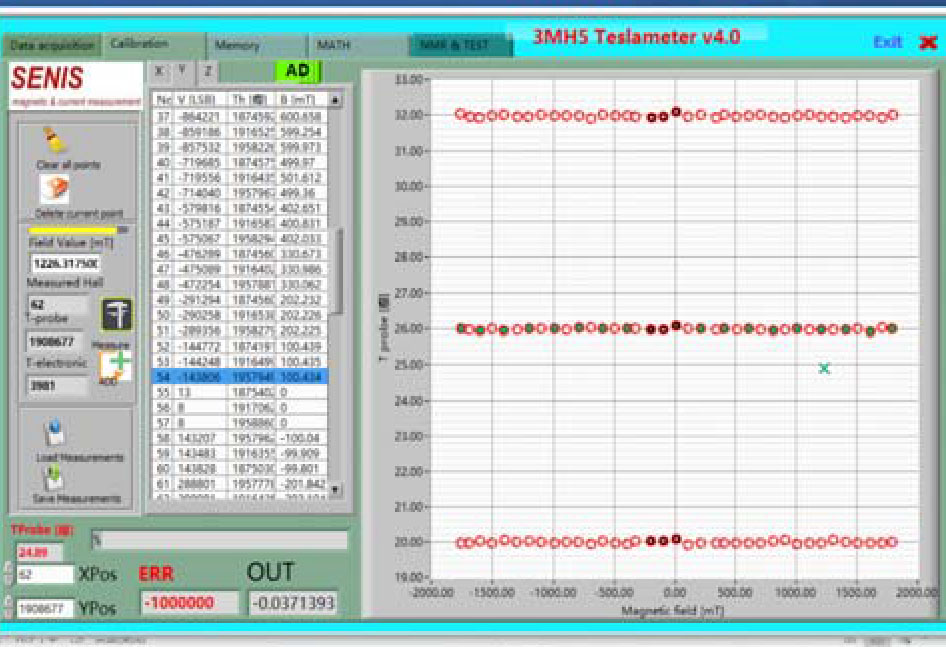

Fig. 14.

Calibration point value reading and calibration table creation.
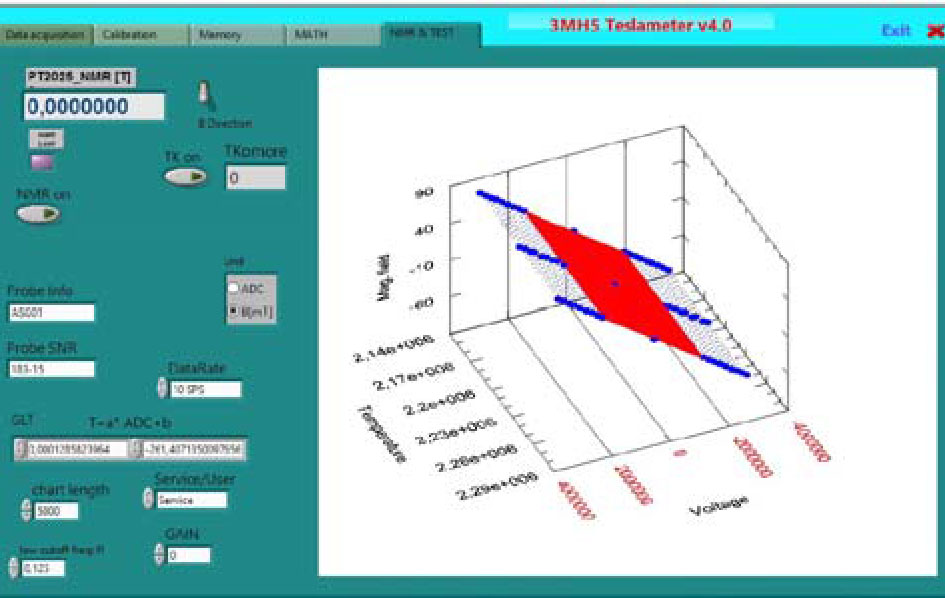

Fig. 15.

Calibration data fitting in program.
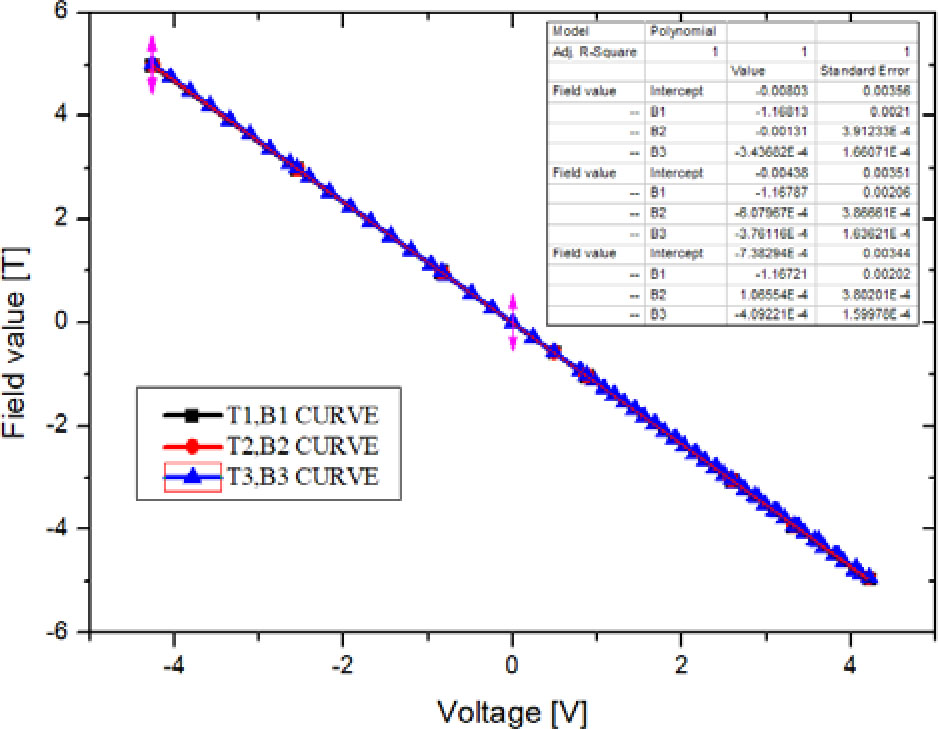

Fig. 16.

Fitting curves of polynomial Bpol1.

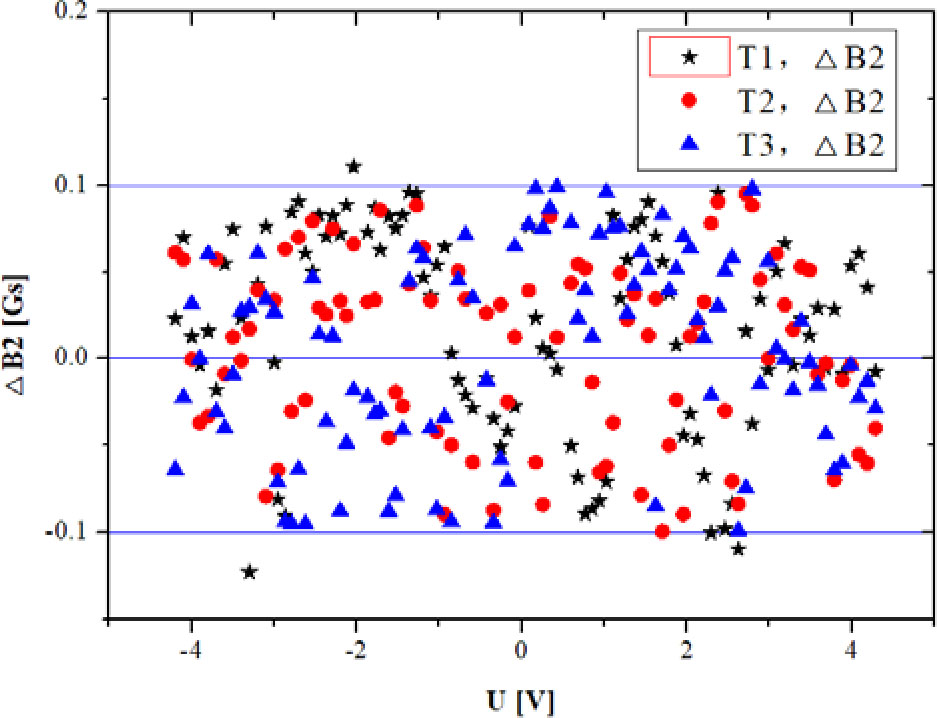
Fig. 17.

Scatter diagram of ΔB2.

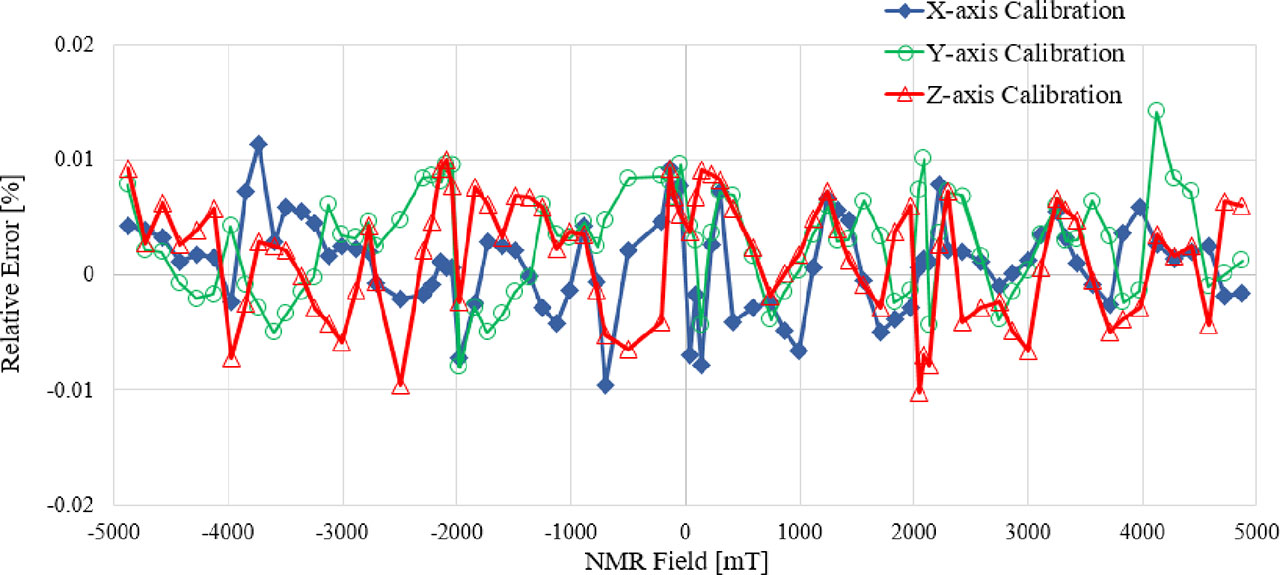
Fig. 18.

Calibration relative error curves.

Fitting results of polynomial Bpol1

Temperature, TPolynomial fitting Bpol1 formula
T1 = 20°CBpol1 = −0.0080 − 1.1681*U − 0.0013*U2 − 3.4368e-4*U3
T2 = 26°CBpol1 = −0.0044 − 1.1681*U − 6.080e-4*U2 − 3.7612e-4*U3
T3 = 32°CBpol1 = −7.3829e-4 − 1.1672*U + 1.066e-4*U2 − 4.0922e-4*U3

Accuracy requirements of calibration

RequirementsNumerical value
Calibration range (T)2–5
Calibration step (Gs)300
Accuracy<(0.001% × reading + 0.005% × range)
Resolution (Gs)0.2–0.4
DOI: https://doi.org/10.2478/nuka-2024-0026 | Journal eISSN: 1508-5791 | Journal ISSN: 0029-5922
Language: English
Page range: 185 - 193
Submitted on: Aug 18, 2023
|
Accepted on: Jan 22, 2024
|
Published on: Nov 20, 2024
In partnership with: Paradigm Publishing Services
Publication frequency: 4 issues per year

© 2024 Manman Xu, Chuqing Cao, Yili Fu, Yonghong Wu, Xiangdong Wang, Yongsheng Su, Lin Xi, Yongming Liu, published by Institute of Nuclear Chemistry and Technology
This work is licensed under the Creative Commons Attribution-NonCommercial-NoDerivatives 4.0 License.