
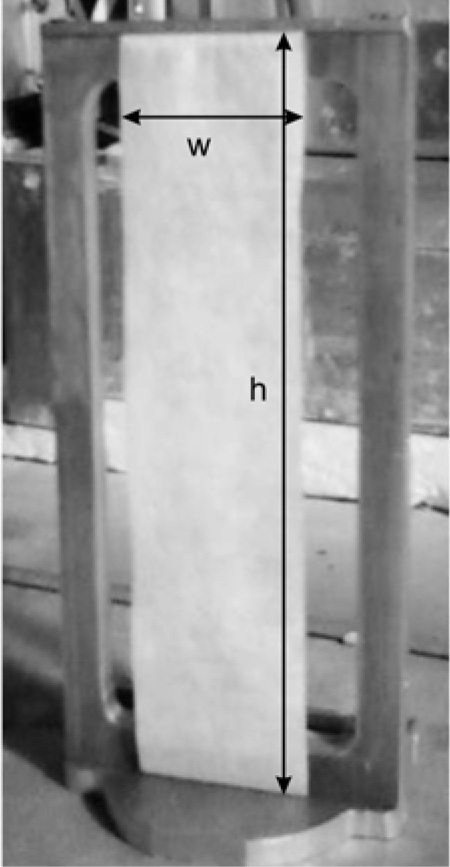
Fig. 1
A picture of the fabric sample spanned on the aluminium frame. The w and h denote the sample width and length, respectively.
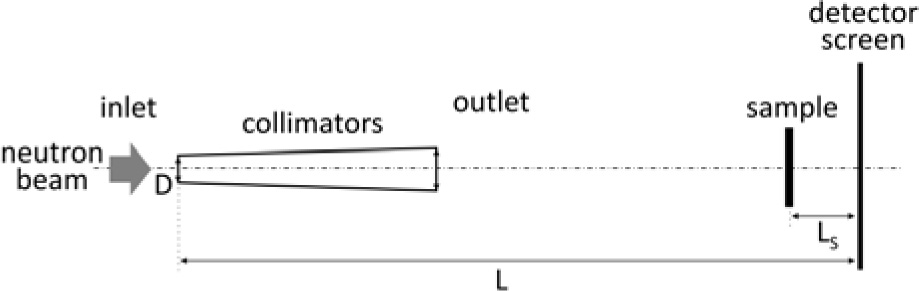
Fig. 2
The spatial arrangement of the sample position in the NGRS radiography facility.
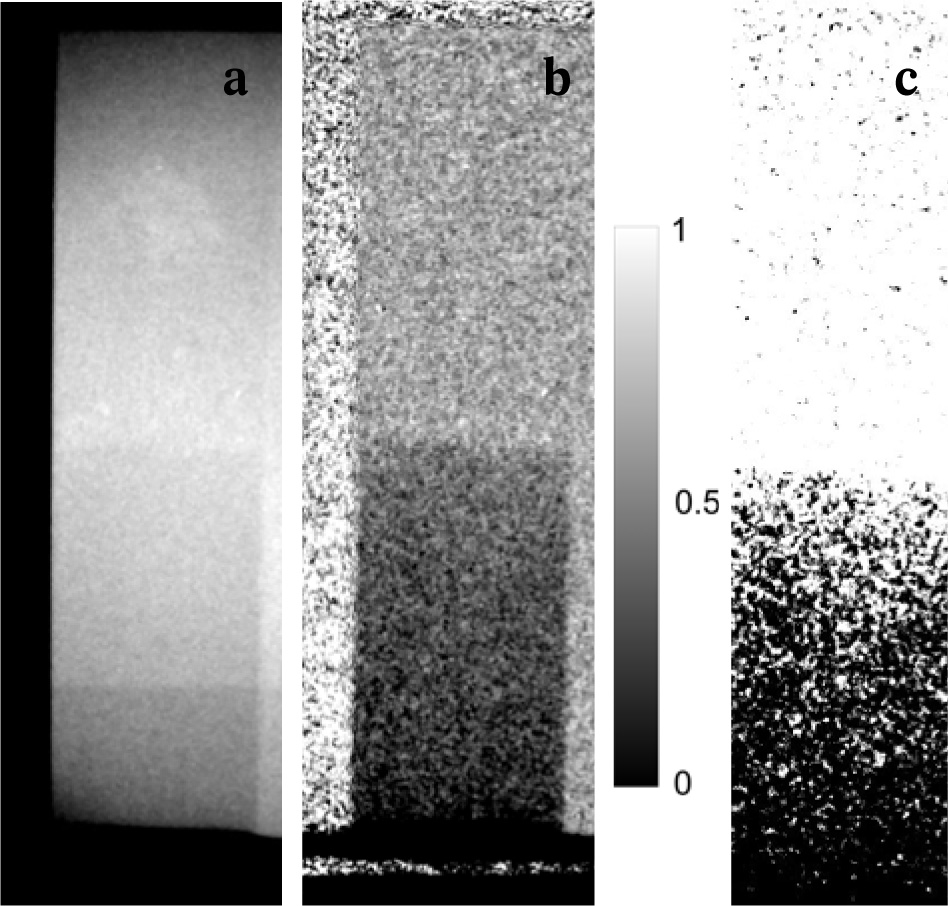
Fig. 3
The neutron images of wetting of synthetic fabric sample (a) before processing, (b) after subtraction of the black current and division by the dry sample image (with linear greyscale), (c) after reduction of the greyscale, histogram stretching and binarization.
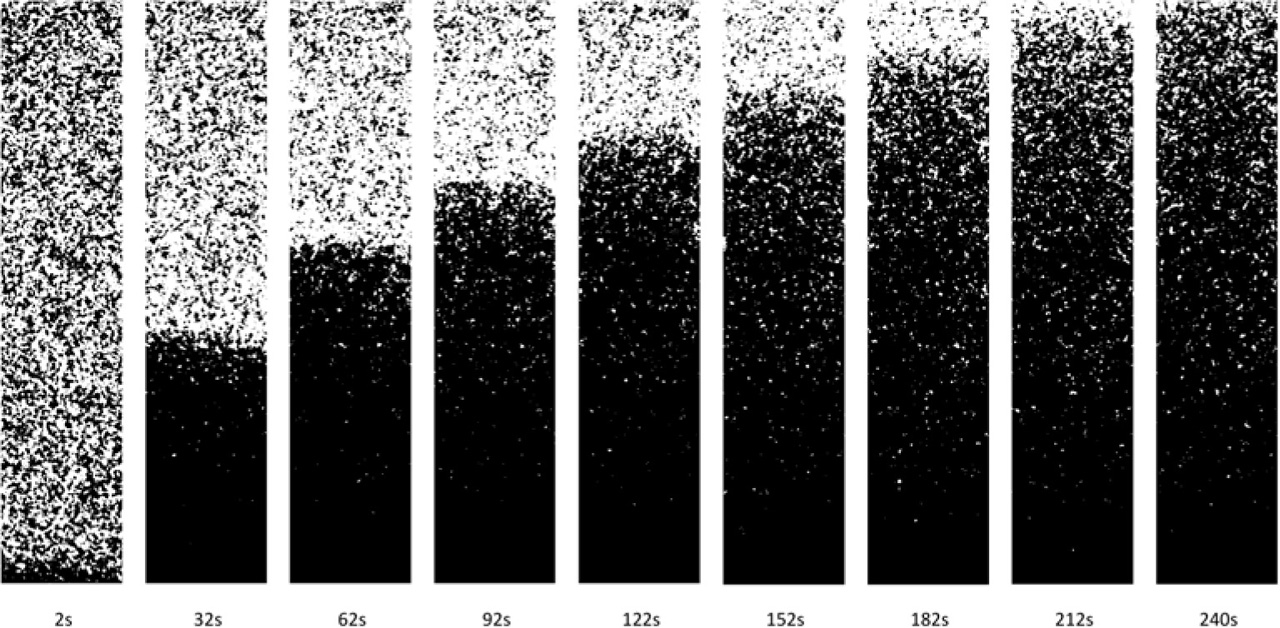
Fig. 4
Binarized (to reveal the waterfront for the naked eye) neutron radiography images sequence delineating the water wetting of a synthetic fabric. The black and white areas correspond to the water-saturated and dry regions, respectively. The values at the bottom indicate the time elapsed since the moment of contact of the sample lower end with water.
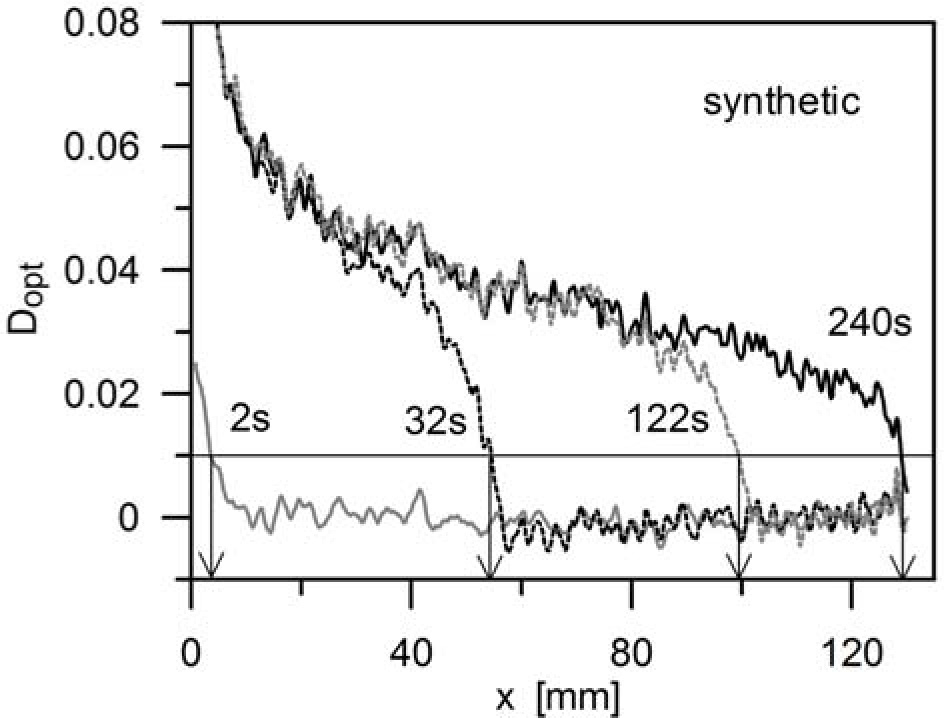
Fig. 5
The dependence of the optical density (negative logarithm of the average brightness) on the distance from the water-immersed, lower end of the sample of synthetic fabric. The solid horizontal line represents the assumed threshold value of 0.01 that determines the wetting front position.
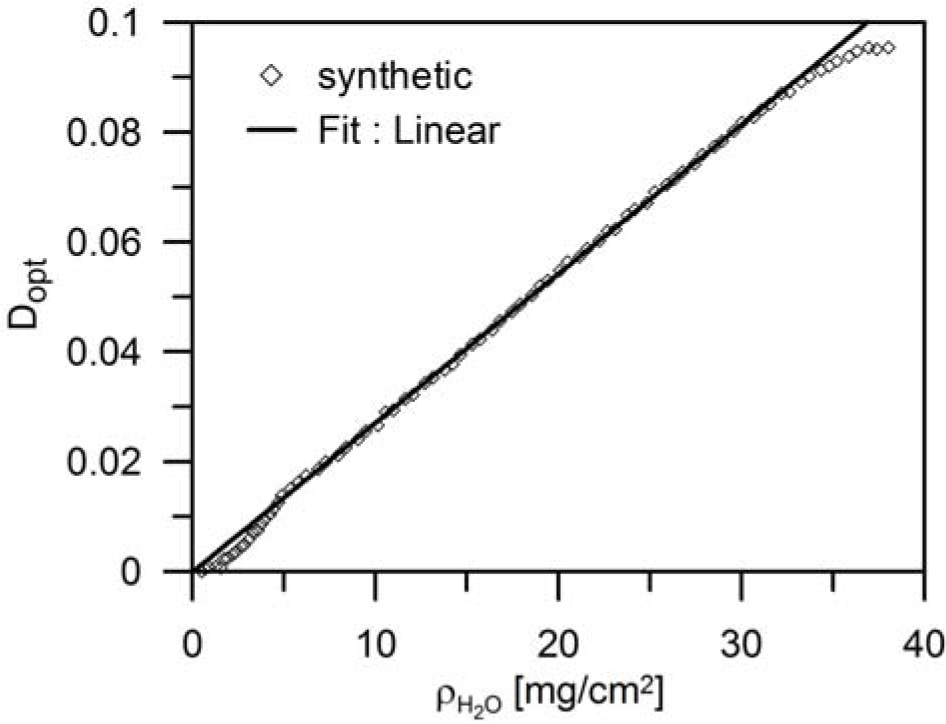
Fig. 6
The dependence of the average optical density of the sample image on the average surface mass density of the water for drying of the synthetic fabric.
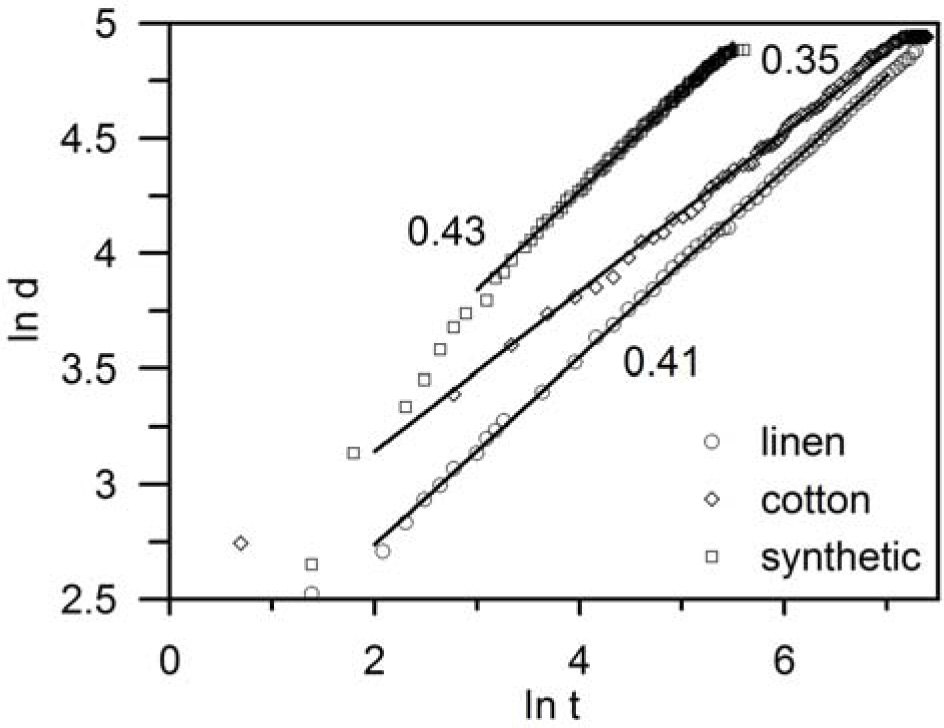
Fig. 7
The logarithmic plot of the wetting front distance from the water immersed end of the cotton, linen and synthetic fabrics on time. The numbers are the fitted values of α exponents as explained in the text.
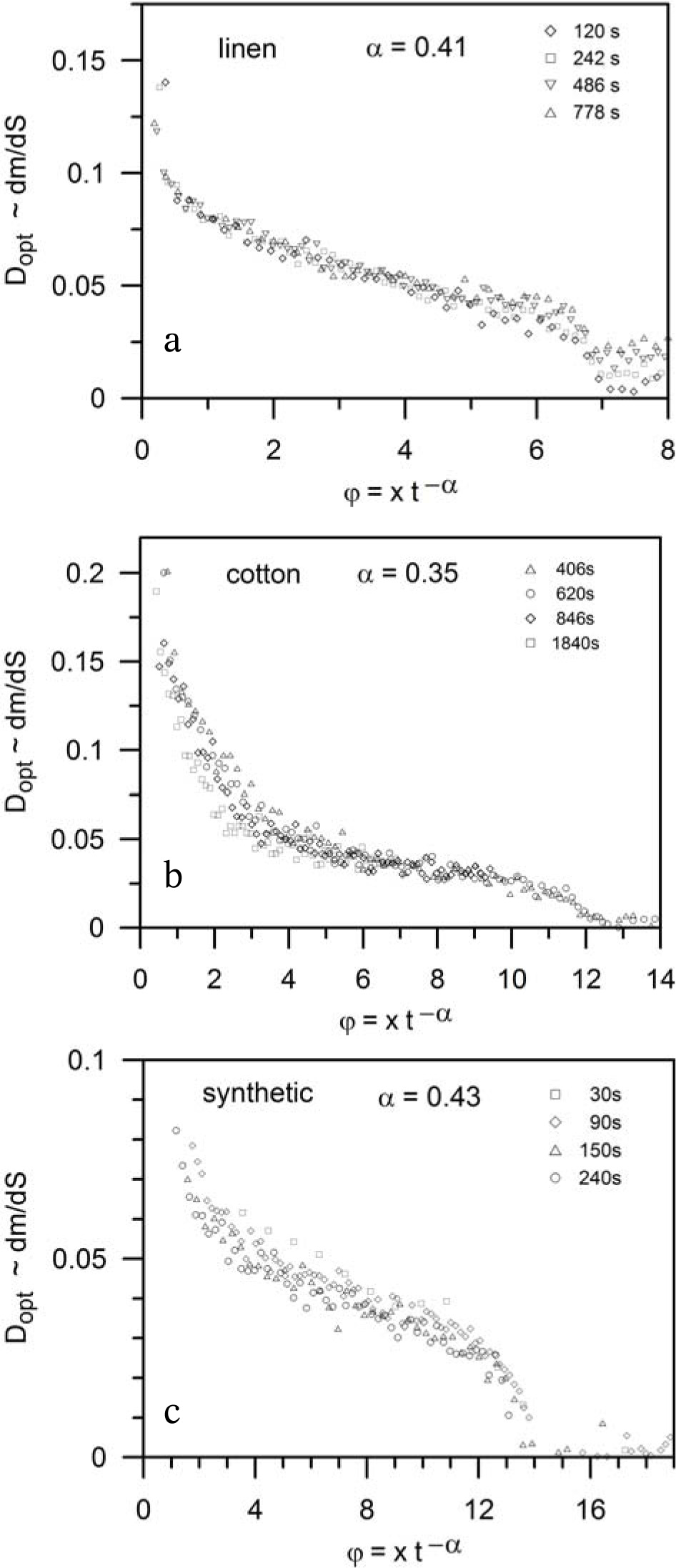
Fig. 8
The dependence of the average optical density and the generalized variable ϕ = xt−α for wetting of linen (a), cotton (b) and synthetic (c) fibre textile.