

Introduction
“Young Finn, you have already awakened, so arise!”
(ACF-170824)
Staring into the camera, a masked young man dressed in black stands in front of a wall covered with posters urging viewers to “get active” by joining a local Active Club. In recent years, combat sports have become a crucial recruitment tool for right-wing extremist (RWE) groups, serving as a low-threshold activity for entering the milieu (Miller-Idriss, 2020: 93–110; Nissen et al., 2021; Ritzmann, 2023). Following international trends (e.g., GPAHE, 2025; Makuch, 2025), the three primary RWE combat sports groups in Finland – Veren Laki (VL), Active Club Finland (ACF), and Club 8 (C8) – have spread rapidly (Yle, 2023) and are actively recruiting new members across multiple cities and municipalities via open Telegram groups. The groups target young audiences with a mix of subcultural aesthetics and ideological messaging, promoting themselves as nationalistic initiatives focused on improving physical fitness and discipline.
Despite their increasing popularity and visibility, research on RWE combat sports groups remains limited. Previous studies have examined the broader symbolism and mixed martial arts aesthetics of RWE youth subcultures and discussed how combat sports culture and its surrounding organisational and commercial ecosystem function as sites of ideological expression, identity formation, and recruitment platforms through socialisation and scene-building. (e.g., Miller-Idriss, 2020: 93–110; Nissen et al., 2021). However, less is known about the specific mechanisms through which these dynamics are strategically mobilised within the recent strategic shift, White Nationalism 3.0, in which combat sports and related activities are used to facilitate recruitment into the broader RWE milieu and to enable mobilisation from online engagement to offline participation.
I aim to fill that gap with this study by analysing communication on Finnish RWE combat sports groups’ Telegram channels as rituals that, through shared attention and emotion (Collins, 2001, 2004; Törnberg & Törnberg, 2024), foster a sense of community and collective identity. Building on Anton and Peter Törnberg’s (2024) novel approach in extremism research, which focuses on the social aspects of subcultural content circulation and rhetoric as rituals that unite members of an extremist online community, this research broadens that perspective by including examinations of the mechanisms of ritualisation applied to pull people from RWE discursive online spaces to offline activism. I do so by analysing how the RWE milieu, through their White Nationalism 3.0 strategy, ritualises activities by connecting symbolic elements (e.g., subcultural aesthetics, visual imagery, and white supremacist symbolism) to embodied (e.g., combat sports) and performative (e.g., street activism, demonstrations) practices to larger belief systems of RWE and ethnonationalism.
The data comprises 245 posts, including text, audio and video, and images, often in combination, collected from the public Telegram channels of ACF, VL, and C8 between February 2020 and December 2024, along with one podcast episode featuring ACF, hosted by the Finnish openly fascist and racist minor political party Sinimusta Liike [Blue-and-Black Movement]. The methodological framework employs critical discourse analysis (Wodak, 2015) alongside a theoretical lens of ritual theory to examine RQ1) what types of symbolic, embodied, and performative rituals RWE combat sports groups engage in, as reflected in their online communication, and RQ2) how these rituals contribute to fostering a sense of belonging and shaping collective identity among members. Furthermore, the wider scope of the study is RQ3) to understand how the milieu strategically aims to recruit young people through White Nationalism 3.0 by presenting RWE ideology as more acceptable and appealing.
Contextualising the Finnish RWE combat sports groups and White Nationalism 3.0
The contemporary RWE combat sports movement is an emerging area of academic inquiry, warranting some reports that shed light on the strategies, activities, and ideology of the Active Club Network (Accelerationism Research Consortium, 2024; CTEC, 2023; Ritzmann, 2023) as well as studies examining how gear and clothing brands, such as Denis Kapustin’s White Rex, have effectively integrated RWE ideology into combat sports (and vice versa), fostering transnational networks and normalising extremist views through athleticism, event promotion, and subcultural aesthetics (Nissen et al., 2021). However, the link between contemporary RWE recruitment and sports is not a new one. The connections have been discussed especially in the context of football hooliganism (Brunssen et al., 2021; Pankowski & Witkowski, 2023; Glathe & Varga, 2018) but also observed in mixed martial arts (Miller-Idriss, 2020; Nissen et al., 2021) and other fight-club–style groups (Park, 2022). Notably, the roots of the Active Club Network, now the most prominent RWE combat sports movement known for its distinct look and transnational strategy, can be traced back to the fight-club–style white supremacist group Rise Above Movement, established by Robert Rundo and Benjamin Daley in Southern California in 2017 (see, e.g., United States Attorney’s Office, 2024). The movement became especially known for its violent involvement in the Unite the Right rally in Charlottesville, Virginia, that same year. Rundo introduced the idea of Active Clubs in late 2020, and in early 2021, he and Russian neo-Nazi Denis Kapustin began co-hosting an Active Club Podcast (see Anti-Defamation League, 2023). They encouraged followers to establish local Active Club chapters built around the so-called White Nationalism 3.0 strategy, which refers to localised recruitment into decentralised organisations while refraining from public discussion to protect the movement and its members from interference by police, media, and researchers (Anti-Defamation League, 2023; Ritzmann, 2023; will2rise, 2023).
The Finnish RWE milieu adopted a slightly more palatable term, Nationalism 3.0, in early 2022 to describe this paradigm shift in recruitment strategies. According to Rundo (O’Connor et al., 2023; will2rise, 2023) and Partisaani, an online platform continuing the visual and thematic legacy of the now-banned Finnish branch of the Nordic Resistance Movement (Kotonen, 2021), the third wave is presented as an evolution from Nationalism 1.0, associated with 1990s skinhead movements and National Socialist Black Metal (NSBM) and Rock Against Communism (RAC) scenes, and Nationalism 2.0, which involved far-right parties and organisations using political influence and argumentation to recruit and spread their ideology as well as accelerationist violence and Siege culture, with their focus on persuading outsiders. Proponents of Nationalism 3.0 seek to eliminate hierarchy and ideological puritanism within the milieu, merge activism with lifestyle by emphasising aesthetics, fitness, art, and culture, build radical nationalist entrepreneurship, and prevent bans and resistance through a decentralised, non-personified structure and the avoidance of political debate (Partisaani, 2022, 2024a). The broader aim is to cultivate exemplary radical national activism, rebrand white supremacist ideology and identity for young audiences, and offer pathways to different types of activism that, instead of crumbling due to internal ideological disputes, would lead a broader cultural and metapolitical change, thus “making nationalism cool again” (Partisaani, 2022).
For practitioners, researchers, and policymakers, the strategical shift of White Nationalism 3.0 signifies a further decentralisation (see, e.g., Ravndal, 2023) of the RWE milieu and increased appeal to younger audiences. By framing extremism as a lifestyle through a mix of fitness, aesthetics, and everyday activism, it allows socially visible yet often legally permissible ideological expression, further blurring the line between mainstream culture and extremist ideology (see also Miller-Idriss, 2017, 2020). This dynamic complicates monitoring and intervention, while accessible entry points simultaneously broaden the movement’s reach.
The Finnish Security and Intelligence Service does not provide estimates of participant numbers involved in the activities of ACF, C8, and VL, and does not label the milieu a terrorist threat, but notes that their recruitment efforts may facilitate individual RWE radicalisation (Suojelupoliisi, 2024). VL, whose members have documented, long-term connections to the RWE scene and the Nordic Resistance Movement (Heiskanen, 2020; Varisverkosto, 2022), began its public activity on Telegram in early 2020, followed by ACF in July 2022 and C8 in late September 2023. While the general promotion of sports activities as well as regional combat sports chapters 1 form the bulk of the regular communication on the groups’ Telegram channels, they also promote street activism, education, and art. Furthermore, they foster close relations to the White Power music milieu, having regularly co-organised joint events in Otsola, a recently burned cultural centre of Finnish RWE milieu (Jäärni & Kirsi, 2024; Jääskeläinen & Aspeslagh, 2024; Nieminen & Nieminen, 2024), and they collaborate closely with their European peers, reposting each other’s online content and attending each other’s events. In 2023, VL members participated in the European Fight Night in Budapest (see Colborne & Nieminen, 2023), organised by their peers Legio Hungaria, Kampf der Nibelungen, and Pride France (VL-100423). The same year, they joined a Black Bloc alongside Active Clubs from Dietsland (i.e., “Greater Netherlands”; see, e.g., Kunkeler, 2022), France, Denmark, Estonia, and Poland in celebration of the Polish Independence Day (ACF-121123). Finnish and Estonian Active Clubs have recently deepened their collaboration through music and combat sports events in both countries. In 2024, the Estonian club also participated in White Boy Summer Fest – an annual event held at varying locations across Finland 2 (Colborne & Nieminen, 2023; GPAHE, 2024; Nieminen & Kerkelä, 2024).
Ritual theory
Building on the novel paradigm in extremism research introduced by Törnberg and Törnberg in their book Intimate Communities of Hate: Why Social Media Fuels Far-Right Extremism (2024), in this study, I apply a Durkheimian lens to examine the communication and practices of ACF, VL, and C8 as rituals that facilitate recruitment, sustain social cohesion, and construct collective identity. Drawing on Collins’ (2001, 2004) work on the role of emotions in social movements, Törnberg and Törnberg’s (2024) approach challenges the Habermasian notion of deliberative democracy, which assumes that politics is essentially a contest of rational arguments (Törnberg & Törnberg, 2024: 17–22). While acknowledging the role of rationality and argumentation, they emphasised that equal attention should be given to emotional, tribal, and ritualistic dimensions of politics. They therefore advocated shifting the analytical focus from the content of extremist rhetoric and argumentation toward the social processes and ritualised practices that evoke emotions (Collins, 2001, 2004; Törnberg & Törnberg 2024) and construct, communicate, reinforce, and reshape shared beliefs (Durkheim, 1912/1995), identities, and cultural meanings.
Durkheim’s (1912/1995) pioneering work on religious totemism laid the foundation for understanding how collectively performed rituals foster emotional bonds within communities. Central to this mechanism is the role of symbols, which function not only as signifiers of shared beliefs, but also as representations of the socially constructed essence of the community itself (Durkheim, 1912/1995: 207–208), creating distinctions between in-group and out-group (Berger, 2018; Durkheim, 1912/1995: 238–241; Lévi-Strauss, 1963, 1964) as well as establishing a framework for shared moral boundaries (Durkheim, 1912/1995: 34–44). In contemporary RWE spaces, both online and offline, shared narratives, such as anti-government or conspiratorial tropes, conveyed through ideological references in memes and group jargon, become a tool for identity construction. They create a shared discursive space and signal group belonging while establishing barriers to outsiders. Furthermore, symbols generate and channel powerful, collectively felt emotions (Geertz, 1973; Turner, 1969: 42–43), fostering collective effervescence (Durkheim, 1912/1995: 385–387, 390–391; on emotional energy in interaction rituals, see also Collins, 2001, 2004; Törnberg & Törnberg, 2024: 29–31). This shared emotional charge sustains social cohesion and provides individual participants with emotional energy (Collins, 2001, 2004) that reinforces the sense of in-group belonging and motivates continued engagement in group activities.
As this study examines how the White Nationalism 3.0 strategy seeks to move online followers from casual interest in RWE discursive space to committed offline activism, Turner’s (1969) expansion of ritual theory by the concept of liminality provides an important lens for understanding the transformative potential of rituals. Liminality refers to a symbolic, transitional state where individuals leave behind previous social structures and enter a new cultural environment, marked by the adoption of new rules, behaviours, symbols, and language, allowing the emergence of communitas – an emotional bond based on solidarity and togetherness, facilitating the construction of a collective identity (Turner, 1969: 94–97, 106–107; see also Bell 2009, 39–40). Within this process, in addition to communicating and reproducing ideological meanings through RWE symbolism, combat sports training functions as a concrete pathway from being a follower to an activist. Embodied social practices (Bourdieu, 1977; on bodily co-presence, see Collins, 2001, 2004: 33–50, 53–64) thus become more than physical fitness; they instil specific ideological values such as strength, masculinity, and discipline, simultaneously reinforcing group identity and acting as vehicles of expressing, communicating, and living out complex, often implicit, cultural meanings in ways that are emotionally engaging (Geertz, 1973; Törnberg & Törnberg, 2024).
In addition to operating on symbolic and embodied levels, rituals are performative. Bell’s (1992, 2009) work on ritualisation advocates understanding rituals as embedded in everyday life, shaping and organising social relations and identities, and focusing on their tangible impact rather than on their implied meanings. Instead of reflecting reality, these rituals actively structure both the internal experience of participants (shaping emotions, cohesion, and sense of belonging) and project an external image to outsiders. This internal–external dynamic is evident in the seemingly mundane expressions – such as hypermasculine aesthetics (Miller-Idriss, 2017; Woolley & Luger, 2023) and heroic portrayals of masculinity (Jones et al., 2024; Meiering et al., 2020; Pearson, 2023: 109–120, 140–146) – as well as in reoccurring special events, such as large demonstrations that become performances reinforcing group identity while signalling presence, power, and ideology to outsiders.
Building on these theoretical insights, I examine how rituals are employed to rebrand the Finnish RWE milieu and appeal to new audiences through its self-proclaimed strategy, White Nationalism 3.0. In this study, rituals are treated as active, participatory processes explored through three interconnected dimensions: 1) symbolic, 2) embodied, and 3) performative. Instead of simply elaborating what the rituals are, the focus is therefore on the tangible impacts of rituals (Bell, 1992, 2009): how they generate emotional energy, motivate participation, and facilitate the transition from passive online interest to offline activism. Concepts such as the emotional and symbolic dimensions of ritual, liminality, performativity, and internal–external ritual strategies provide the analytical lens for understanding how the RWE milieu seeks to generate emotional push-and-pull factors, sustain cohesion, construct collective identity, and make recruitment appealing and meaningful to individuals.
Data
The corpus consists of 245 text-based messages, photos, videos, and audio files (songs) published on the Telegram channels of ACF, VL, and C8 between February 2020 and December 2024 (see Table 1). To complement the Telegram data, one podcast episode featuring ACF was included (Sinimusta Liike, 2025), offering additional contextual material on the group’s ideological framing. While combat sports has occasionally appeared as part of broader RWE activities in Finland (e.g., Ukonvasama collective and the Nordic Resistance Movement), at the time of writing, the three movements, at least of those with a public presence, are the only ones specifically dedicated to this purpose, and they essentially form the Finnish RWE combat sports scene. In this study, the corpus is treated as a single analytical unit due to the groups’ extensive collaboration, as they cross-post content and attend each other’s events. However, where relevant, differences in each group’s role within the RWE milieu, and in their emphasis on specific practices, are highlighted in the analysis.
Telegram serves as the groups’ primary recruitment platform. Although individual users occasionally repost content on other social media platforms, such as Instagram and TikTok, the groups’ own public online activity is currently limited to Telegram channels, with interaction limited to emoji reactions. Posts primarily advertise past and upcoming activities and encourage potential recruits to contact the groups via an end-to-end encrypted e-mail service or a Telegram bot. They also include substantial ideological messaging. In this study, the Telegram data is treated as a window into offline ritual practices communicated through online spaces for recruitment purposes. While ritual theory typically focuses on internal practices, these posts are performative displays of symbolic and embodied rituals used to construct group identity and signal belonging, offering insight into how ritualised practices are communicated externally. Even without access to internal discussion, the public content offers a clear view of the groups’ recruitment methods, serving the wider scope of this study.
Table 1
Breakdown of posts and post types in selected Telegram channels
| Channel | Total Posts | Text-only | Pictures only | Videos only | Audio only | Mixed content |
|---|---|---|---|---|---|---|
| ACF | 125 | 8 | 7 | 4 | 7 | 99 |
| VL | 85 | 10 | 13 | 1 | 0 | 61 |
| C8 | 35 | 1 | 1 | 0 | 1 | 32 |
The temporal scope of the data collection spans from establishing these channels between 2020 and 2023, continuing through December 2024, during which all channels remained active and regularly posted new content (see Table 2).
Methods
This study adopts a qualitative, theoretically informed close reading approach, combining ritual theory with critical discourse analysis. Ritual theory (Bell, 1992, 2009; Collins, 2001, 2004; Durkheim, 1912/1995; Goffman, 1967; Törnberg & Törnberg, 2024; Turner, 1969) serves as the primary theoretical lens for interpretation, examining how ritualised behaviours (e.g., strategic, repetitive use of symbols and phrases in online communication, and coordinated offline actions such as protests and gatherings) generate emotional energy, reinforce group cohesion, and sustain ideological commitment.
Critical discourse analysis guides the detailed analysis of language and meaning within the posts, exploring how language constructs ideological frameworks and group identity, particularly through binary oppositions (e.g., whiteness/non-whiteness, activity/passivity) and topoi of history, responsibility, and saviour (Wodak, 2015). Furthermore, the role of symbols, slogans, and metaphors in generating and communicating collective beliefs and justifying actions is examined as a key element in constructing RWE ideological identity. This framework facilitates a multidimensional exploration of the data and enables analysing the links between micro-level practices (e.g., specific posts or images) and macro-level belief systems (e.g., RWE and white supremacy).
In practice, I have solely conducted the analysis, with ATLAS.ti used for organisation and coding of the data. The analysis began with a thorough reading of all posts, followed by an iterative process involving multiple readings to refine and validate coding, and concluded with a coding into three interconnected themes: 1) the role of symbolism in communication, 2) embodied ritual practices, and 3) performative collective rituals extending beyond combat training.
All illustrative materials referred to in the analysis section are coded in the format ACF/VL/C8-date-month-year, with full references provided in the Appendix. I have translated into English any quotes that appeared in Finnish, though the analysis itself was conducted in the original language to preserve linguistic nuances.
Analysis
Symbolic and cultural production
The analysis shows that in their recruitment material, the Finnish RWE combat sports groups use narratives of societal decline and conflict between the perceived enemy and the in-group to evoke negative emotions, establishing the initial rationale for recruitment and justifying action (RQ3). These emotions are further fuelled through topoi of threat, history, and responsibility (Wodak, 2015). The channels also deploy a rich repertoire of symbolic and cultural rituals (RQ1), including historical references, RWE subcultural symbols, and memes, slogans, clothing, logos, and coded hand gestures which are highly recognisable within the milieu. These practices function as ritualised markers of in-group membership by creating a shared semiotic and discursive space where members can recognise and interpret coded references, signalling insider knowledge and belonging (RQ2) (Bell, 1992; Collins, 2001, 2004; Törnberg & Törnberg, 2024). These references remain relatively superficial, suggesting that the target audience is already familiar with the core elements of RWE discourses, further implying that the messaging relies on emotional triggers and ritualised cues rather than argument-based persuasion.
Although all three groups share a core ideology centred on white supremacism and a perception of multiculturalism as a threat, the emphasis of their ideological messaging differs. Alongside the aim of “rebranding the nationalist movement” (ACF-220823; ACF-140124; VL-210220), ACF frames its recruitment of young men as a project of rebranding masculinity (e.g., ACF-220823; ACF-140923), whereas C8 considers itself as an updated skinhead movement (e.g., C8-101023). VL’s and C8’s ideological messaging, including portrayals of the enemy, is more limited compared to ACF’s, and focuses mainly on immigrants and people of colour. ACF further employs strong anti-government rhetoric, framing elites, anti-fascists, and globalists, alongside immigrants, as the out-group, as implied in the following passage:
They bring enemies into our society, enemies who beat our children, enemies who make [our children] kiss their feet, enemies who piss on [our children] and post this humiliation on social media. What are you going to do about it?
(ACF-040923)
Recruitment is thus justified through a topos of threat (Wodak, 2015: 53, 56–57, 82–84). Echoing the conspiracist White Genocide and Great Replacement theories, while the immediate enemy the groups are preparing to encounter are conceptualised as non-white immigrants, their strategic enemy is the elite, perceived as orchestrating cultural and ethnic deterioration.
As illustrated by the excerpt above (ACF-040923), enemy references are implicit, presuming that the target audience is already familiar with the central grievances and narratives within RWE ideology. Thus, rather than seeking ideological persuasion, the aim of the posts is to function, in Törnberg and Törnberg’s (2024: 28–34) terms, as linguistic capital: as ideological dog whistles and markers of group membership that set barriers to outsiders, and mechanisms for setting the collective (negative) mood (Collins, 2001, 2004: 48–49, 105–111; Törnberg & Törnberg, 2024: 98–116) among insiders, while pushing for the mobilisation of those considered eligible in-group – keyboard warriors in a liminal space (on liminality, see Turner, 1969: 94–95, 106–107) who agree with core ideological tenets, but have yet to take action.
Collective memories are used to further justify contemporary RWE recruitment, and they are paired with calls to reclaim honour through activism. The use of negative attributes is often linked with a topos of responsibility (Wodak, 2015: 82–84), equating the perceived threat posed by multiculturalism and neoliberalism with historical struggles for Finnish language, culture, and sovereignty under foreign powers. Here, a topos of history (Wodak, 2015: 40, 53, 143) is constructed around a narrative of cultural and linguistic survival to affirm the sense of responsibility:
As a tribe, we have always been caught between two opposing forces who have treated us as nothing more than cheap pawns to boost their reputation and secure material gain. In 2023, nothing has changed – we are living under the same circumstances, only under different labels. […] Throughout history, we have always fought for our right to exist, to use our own language and to decide for ourselves.
(ACF-270323)
Furthermore, by posing at Civil War victory memorials (ACF-280124; ACF-210324), graves of volunteers who fought for Nazi Germany in World War II (ACF-060524), and of those fallen in the Finnish wars (e.g., ACF-190524), members position themselves not only within a historical lineage of struggle over independence and portray their role as protectors of the nation, but they also equate their motives with National Socialist and anti-leftist motivations.
All three groups circulate widely recognised RWE, white-supremacist, and neo-Nazi symbolism. While publicly describing their activities as nationalist activism, their visual imagery and symbolic repertoire are heavily centred around historical Nazi symbolism, as well as contemporary white-supremacist and neo-Nazi emblems. These appear in textual content as direct quotes from, for example, Mein Kampf (ACF-260524; ACF-240424; see also Figure 7) and, more frequently, as anecdotal dog whistles for the eligible in-group in clothing, street tags, stickers, and videos. For example, ACF repeatedly signs posts with “XIV ⚑☠”, where XIV denotes the subculturally central, white-supremacist number 14 associated with The Order co-founder David Lane’s 14 words, 3 and the accompanying skull and crossbones pirate flag likely represents the Totenkopf symbol, historically associated with the SS Totenkopfverbände and widely embraced by neo-Nazi movements. In photos and videos, members frequently displayed Nazi salutes (e.g., C8-071023; ACF-040923; ACF-040224), the Aryan Circle gesture (ACF-170824) (e,g., Anti-Defamation League, 2025), and the “OK” sign (e.g., ACF-040224; C8-280123; see Figure 11) adopted by the far-right milieu for a coded reference to White Power (e.g., Gordon, 2023).
To illustrate the richness of overlapping subcultural references, a single frame of the now deleted, very first C8 recruitment video (C8-071023; see Figure 1) portrays a young man with an Aryan fist tattoo and face covered by a balaclava, raising his hand in a Nazi salute while wearing a black tank top with “Waffen SS” and “Panzer Division” texts alongside a Totenkopf print. A White Power song plays in the background at the exact moment, audibly saying “Sieg Heil”.
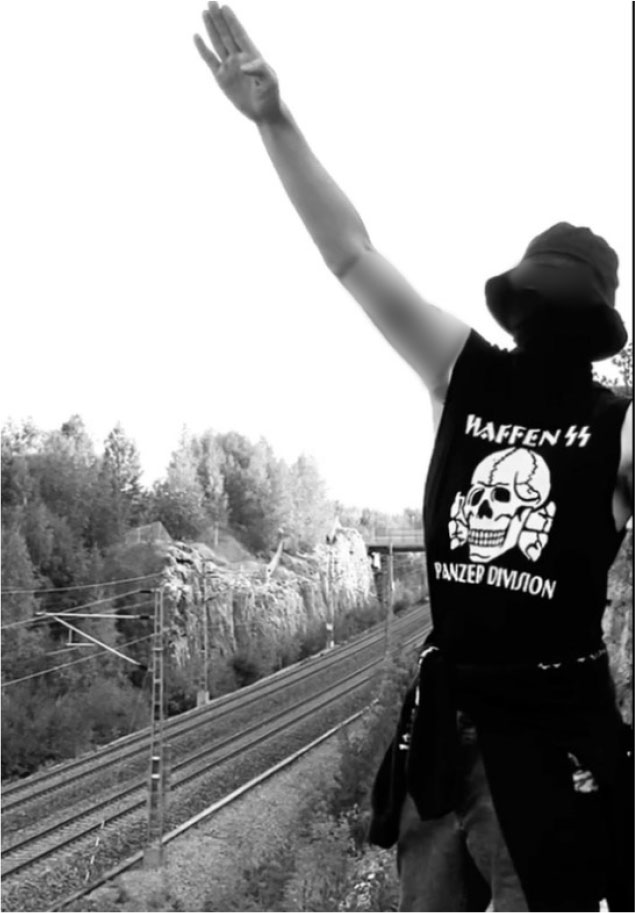
Figure 1
Screenshot from C8’s recruitment video
Comments: Per sonal features that might compromise an individual’s identity are blurred for the purposes of this research. (C8-071023)
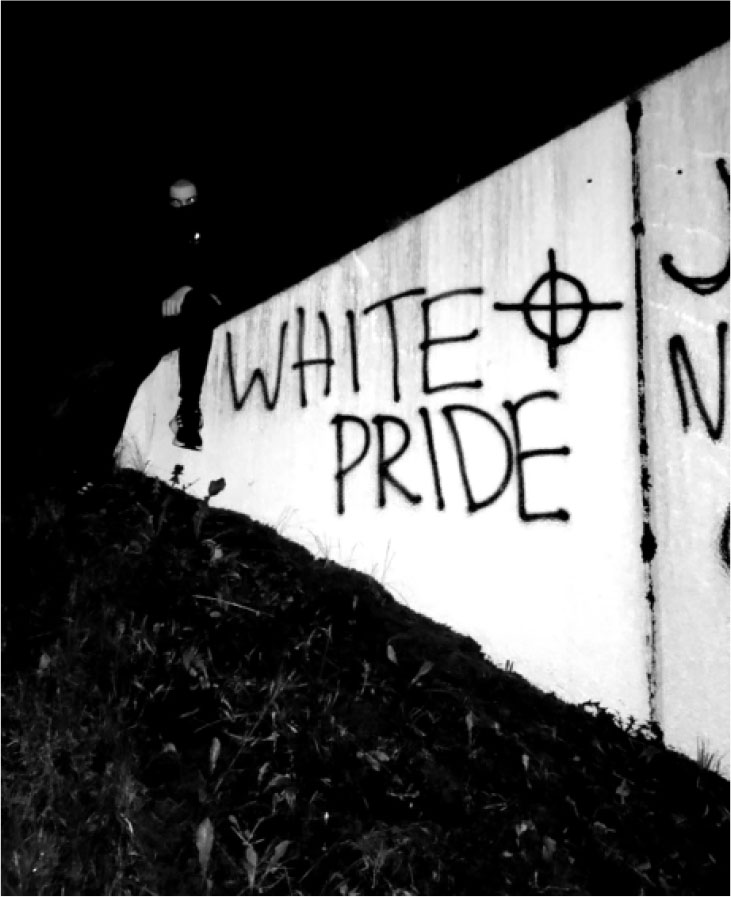
Figure 2
Screenshot from C8’s recruitment video
Comments: (C8-071023)
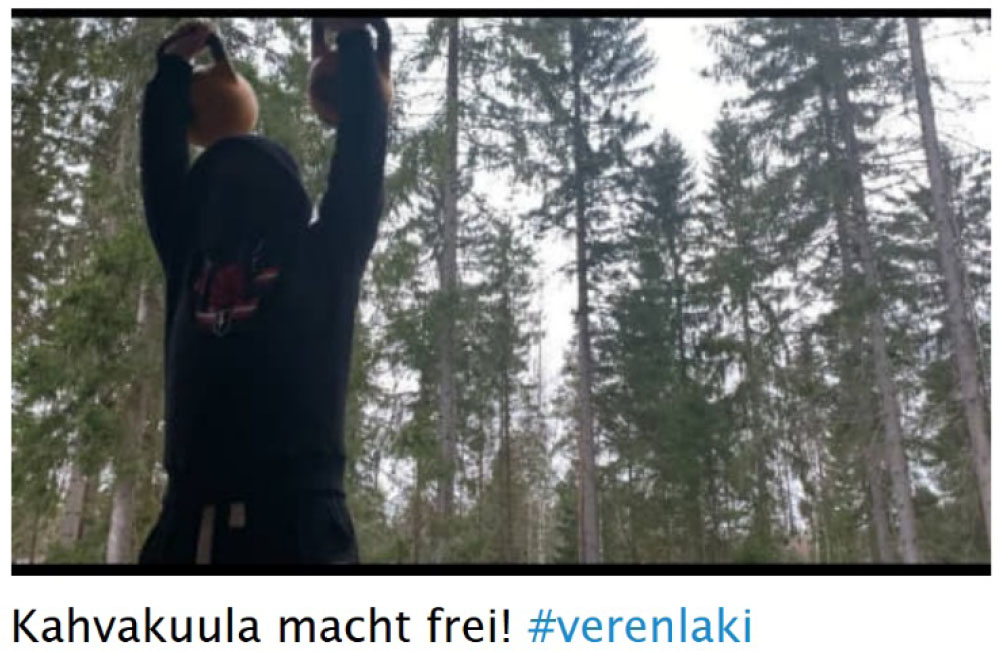
Figure 3
VL member exercising
Comments: (VL-060521)
The same video includes additional white supremacist imagery, such as the Celtic Cross 4 and White Pride graffiti (C8-071023; see Figure 2) (the Celtic Cross also appears in the background of each Active Club logo, see, e.g., Figure 7), boxing and flag-burning footage, accompanied by the imperative to “get active”. Symbolic references sometimes carry a satirical tone; for example, Figure 3 portrays a man in a black VL hoodie lifting kettlebells under the caption “Kettlebell macht frei! [Kettlebells makes (you) free!]”.
The official logos of the groups similarly contain explicit (neo)Nazi references. C8 uses a modified Wolfsangel, a symbol historically associated with the SS Panzer Division Das Reich and more recently with the Azov Brigade (see Figure 4). Its Blackletter font type mirrors that favoured by neo-Nazi organisations and is used to evoke a sense of historical continuity with the Nazi regime. The Stormfront online forum as well as Combat 18 (C18), a notorious skinhead and neo-Nazi organisation that originated in the UK and later spread internationally (e.g., Goodrick-Clarke, 2003: 44–51), have both adopted the font in similar ways. Furthermore, number 8 is often used as a symbol for the word “hate” and as a subcultural reference to Adolf Hitler – as in C18. VL’s logo sports the colours of Nazi Germany and features a blood-red bear, Finland’s national animal, alongside a single white SS bolt enclosed within a shield (see Figure 5). The accompanying slogan, translating to “Pain and Honour”, resembles the infamous Blut und Ehre [Blood and Honour] slogan. Originally derived from the Hitler Youth slogan, the phrase has since been widely adopted by white-supremacist and neo-Nazi organisations, as well as racist skinhead groups across Europe and the US. Furthermore, a worldwide White Power music promotion network with well-known connections to C18 carries the name Blood & Honour, its Finnish chapter organising White Power music gigs in various locations in Finland (Lähde, 2023; Partisaani, 2024b).
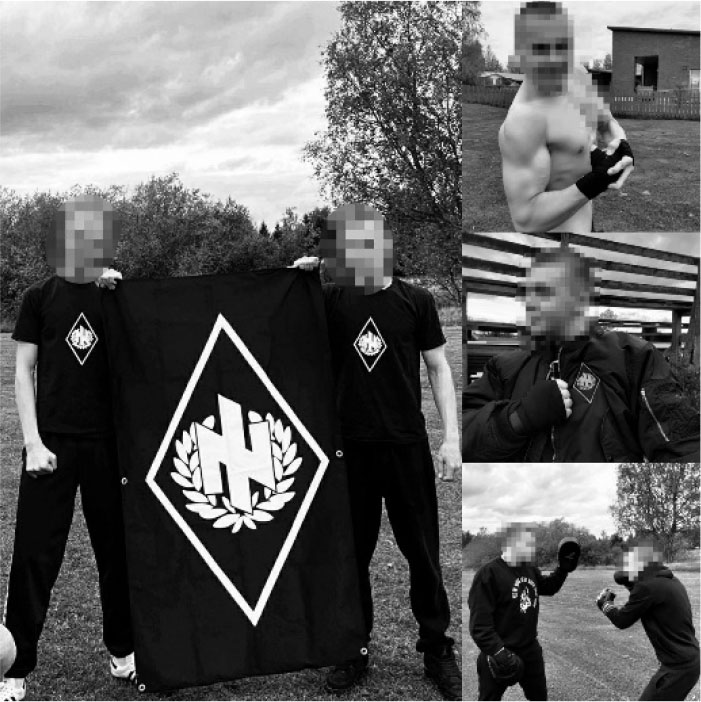
Figure 4
C8 logo
Comments: (C8-220924)
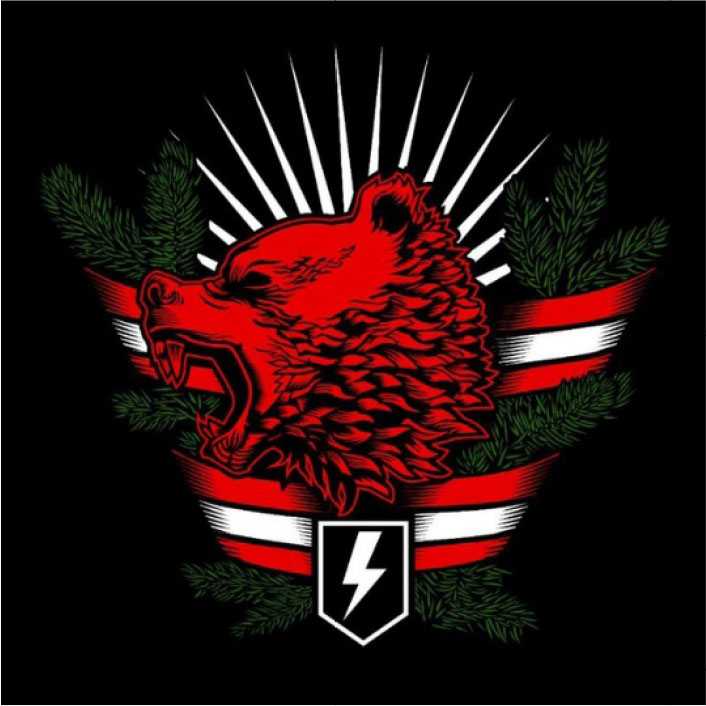
Figure 5
VL logo
Comments: (VL-Channel-info)
Across these examples, subcultural references function as shorthand for shared beliefs (Durkheim, 1912/1995: 207–208), signalling how white supremacy, masculinity, ethnonationalism, and willingness to sacrifice oneself for a greater cause come together in RWE combat sports membership. With these references, communication bypasses ideological debates and argumentation in favour of a loosely defined in-group/out-group identity frame (Durkheim, 1912/1995: 238–241; Lévi-Strauss, 1963, 1964). Furthermore, assuming that the eligible in-group comprises those who already support RWE ideology and do not require argumentative persuasion, the final effort for recruitment involves transforming passive, negative feelings into positive, collectively felt emotions (Törnberg & Törnberg, 2024: 98–102, 113–116; Collins, 2001, 2004) that foster social bonding and in-group solidarity.
The role of embodied practices in the recruitment process
Physical training and combat sports form the most central ritualised practice within the groups, exemplifying embodied ritual (RQ1) that allows the ascent from liminality (online spaces) to offline activism. As elaborated above, while the initial push towards recruitment is constructed around the concept of a perceived threat and negative emotions, combat sports are portrayed as a transformative practice enabling both personal growth and societal recognition (RQ2, RQ3). Training is not only about fitness; it is framed as an honourable, necessary act that rejects neoliberal decadence and protects the community, that is, Finns seen as an ethnonational entity. The emotional push created in the first phase of recruitment is complemented by an emotional pull derived from promises of brotherhood, community, and significance (RQ2, RQ3).
Participation in embodied rituals marks a transition from passive online lurkers and supporters to active members of communities (Turner, 1969: 96–97; see also Bell, 2009, 39–40) (RQ2). The audience is considered eligible in-group, yet simultaneously vilified as sluggish, dishonourable, and incompetent, as exemplified in these posts:
It is easier to find men ready to die than those willing to endure pain in silence.
(VL-210220; VL-010320)
Stop making excuses and ask yourself: for how long are you planning to be a coward? Until death? Get active now!
(ACF-060923)
This move from liminality involves two steps: 1) initiation via contacting a local chapter, and 2) physical engagement through combat sports. This creates a low-threshold entry point while establishing expectations for higher commitment beyond mere online engagement. Through regular training, members achieve the sense of communitas and solidarity (Bell, 1992; Turner, 1969), aligning their bodies and minds with ideological goals.
Physical training is framed as embodiment of ideological values; it is presented both as a site of personal transformation and individual duty, but also as a tool for political mobilisation. Preparation for an anticipated fight over security (ACF-250923), ethnically homogenous (white) streets (ACF-291123), as well as over the Finnish culture or “bloodline” (ACF-111223) is presented as a collective necessity requiring strength, discipline, preparedness, and sacrifice, as the following post declares:
The holy reincarnation of our blood encompasses the hopes, dreams, and combined efforts of all those who came before us. Countless heroes have fallen, leaving behind glorious stories, Mother Nature was tamed so that we, the children of our people, can breathe today.
You are the next in the chain of generations, it is time to answer the call for an age-old struggle for life!
(ACF-280224)
This rhetoric mirrors the “red pill versus blue pill” trope popular among RWE online communities with a slight deviation: It is not awareness of the reality that separates the in-group from outsiders – as the aim is not to convince anyone about the perceived reality but to set the emotional push to get involved in the movement – it is the willingness to “answer the call for an age-old struggle for life” (ACF-280224) and act on it. In this framing, honourable in-group status is only achieved through embodied commitment to training and activism.
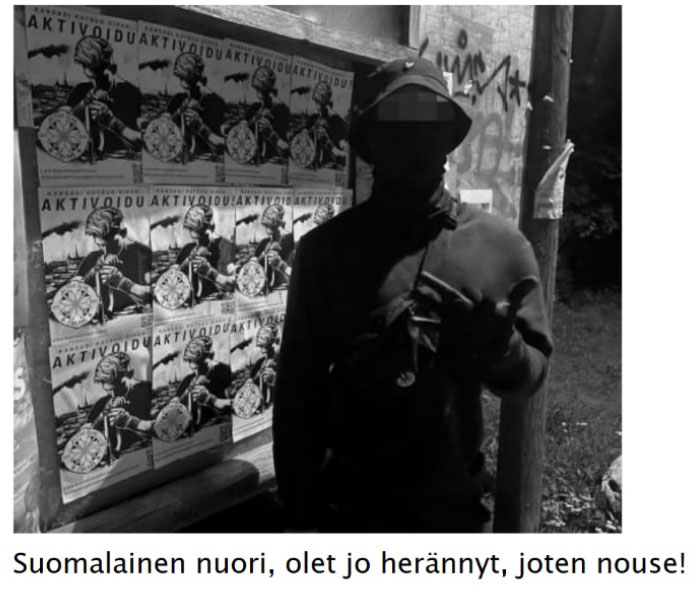
Figure 6
Screenshot from ACF’s recruitment video
Comments: ACF’s photo shows a figure dressed in black with a covered face making a white-supremacist hand sign. The accompanying caption reads: “Young Finn, you have already awakened, so arise!” (ACF-170824)
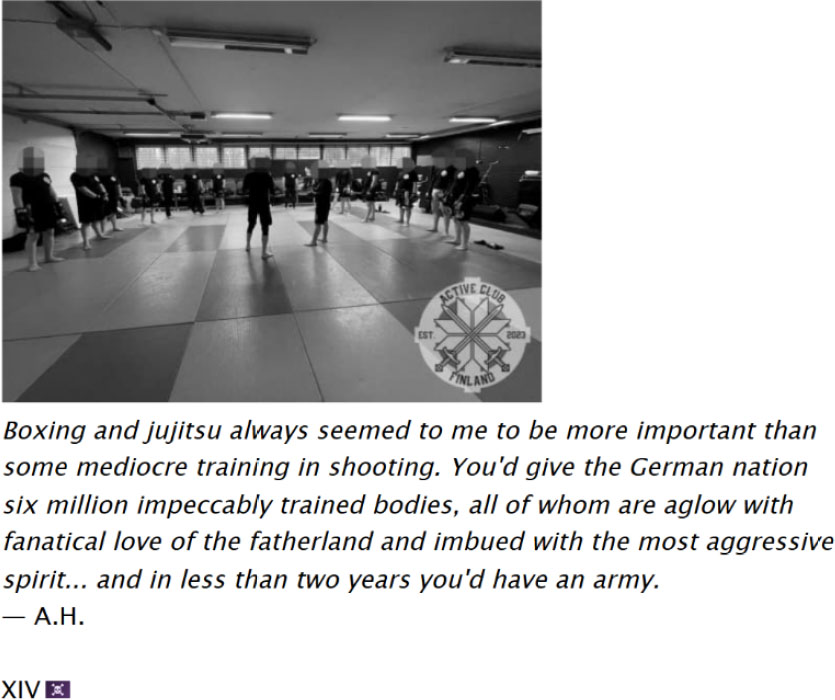
Figure 7
Indoor MMA training session depicted in ACF’s post
Comments: Adolf Hitler’s quote elaborating on the connection between body, mind, and National Socialism. (ACF-200424)
As Figure 6 suggests, the “true warrior” is one who acts and is prepared to fight for the cause, not who merely agrees with grievances. Furthermore, ACF’s constant imperative call to “get active! XIV ⚑☠” (see Figure 7) leaves no room for passivity. XIV ties the call to David Lane’s 14 words, embedding the demand for action within the broader ethnonationalist worldview where RWE ideological grievances are presented as a matter of survival and an existential struggle. The posters in Figure 6 reinforce this urgency. They portray a young man wrapping his hands in preparation for a fight, his face set in a troubled, determined look. The accompanying text in the poster reads: “Your Nation is calling you…. GET ACTIVE” (ACF-170824). Within this framing, hesitation equals victimhood. As ACF’s representatives argued in Sinimusta Podcast (Sinimusta Liike, 2025), those who fail to prepare risk becoming casualties on hostile streets. Thus, the fear of victimisation plays a central role in the imperative. By acquiring combat skills, one can avoid humiliation while simultaneously restoring their honour, transforming fear and passivity into a heroic quest that employs a topos of saviour (Wodak, 2015: 53, 143).
Moving beyond passivity is further motivated by promises of brotherhood, solidarity, and personal and collective significance. Joining the movement is portrayed as a departure from emasculating modernity, with RWE combat sports groups offering a space to perform hegemonic masculinity (on the role of hypermasculine protest subcultures in RWE mobilisation, see Pearson, 2023: 109–146). Masculinity is juxtaposed against passivity, softness, victimisation, and, implicitly, femininity. In contrast, videos of shirtless pull-ups, boxing, and muscular bodies convey a physically capable, intimidating masculinity, symbolising threat to the out-group. Combat training is also portrayed as developing mental and spiritual discipline, which are essential qualities in proving ideological commitment. As expressed in a recruitment post quoting a notorious and subculturally central text, routine and discipline act as primary vehicles of transformation:
The spiritual growth of the individual can only be achieved through daily work and effort to improve the human character by means of real-life action, rather than abstract theory.
(ACF-110324)
Embodied rituals thereby serve both ideological and strategic functions under White Nationalism 3.0. Physical training is elevated from a personal fitness goal and pursuit of a masculine body to a sacred duty aligning body and mind with RWE ideals, echoing historical fascist notions of the creation of a “New Man” (Griffin, 2007; Mosse, 1998: 155–181; Ponzio, 2015: 96, 99–117). Furthermore, the promise of brotherhood, collective purpose, and adventure includes a pledge of experiences missing in modern life:
In the abundance and softness of the modern world, many young men crave adrenaline, excitement, and activities that go against the rotten and slagged atmosphere of the mainstream. Street activism offers this and much more.
(ACF-220823)
Concerns over the perceived decline of male bodies, which is closely tied to anxieties regarding national decline, and the pursuit of a body representing ideals of hegemonic masculinity through sports and combat training, have been recurring themes throughout history (consider sports as an extension of the corpus politicum, e.g., Ponzio, 2015; Tumblety, 2012: 133–166). The mind–body connection is central to this discourse: physical health and ability are seen as intrinsically linked to resilience, moral integrity, and visions of an ideal society. Historically, in the RWE milieu, the aestheticisation of politics and the politicisation of the male body have been widespread (Mosse, 1998; Ponzio, 2015; Tumblety, 2012: 133–166). ACF’s references to Hitler’s thoughts on the significance of combat training and sport to the National Socialist movement serve as an example of the ideological continuum between the ideals (see Figure 7; ACF-260524; see also Rossol, 2010).
Although RWE combat sports groups partly mirror the rise of hypermasculine right-wing influencer lifestyle content online (e.g., Tebaldi & Burnett, 2025), which emphasises health, nutrition, and physical ability, often connected to ideology-fitting interpretations of evolution psychology and other themes popular among the manosphere, their health discourse is primarily linked to athletic performance and combat readiness as the duty of a nationalist:
Physical health and the ability to defend and attack are important qualities of every Finn. You are not only responsible for your own safety, but also for the safety of others when needed.
(ACF-250923)
This idea is often paired with a concern over the aesthetics and reputation of the movement:
An average Joe on the street sees a group of healthy, athletic young men with a common goal who take care of themselves and each other.
(ACF-220823)
Thus, embodied practices, such as bodily discipline, strength, and muscularity become a way of performing group identity and reinforcing masculine ideals viewed as prerequisites for political transformation and social order. Hypermasculine aesthetics (Woolley & Luger, 2023), idealised male violence (Bowman, 2020; Mattsson & Johansson, 2021), as well as portrayals of heroic masculinity (Jones et al., 2024; Meiering et al., 2020; Pearson, 2023: 109–146) contribute to the construction of extremist identities built on binary oppositions (e.g., victim/actor, femininity/masculinity) (Jones et al., 2024; Miller-Idriss, 2017: 162–180; Pearson, 2023: 113–120, 140–146). Combat sports thereby become an alternative path to discipline and strength, symbolising resistance against the perceived decadence of modernity.
Performative ritual gatherings
The three groups engage in a range of performative ritualised practices that simultaneously strengthen internal cohesion and project their presence and values externally. Exemplifying Bell’s (1992: 104–107) internal–external ritual strategies, these practices illustrate how ritualisation not only mirrors social tensions (e.g., the constructed binary oppositions justifying recruitment), but also structures participants’ internal experience (shaping emotions, cohesion, and sense of belonging) and projects external image to outsiders (signalling order, legitimacy, and ideology). Street activism and Black Bloc–style demonstrations function as mundane ideological combat, building emotional cohesion internally, while simultaneously projecting group norms and collective discipline externally. Internal rituals, such as events organised in collaboration with the White Power music scene, further consolidate bonds and facilitate networking within the RWE milieu (RQ1, RQ2, RQ3).
Recurrent street activism operates as a dual-purpose ritual. Internally, it builds trust and cohesion among members through shared participation in grey-area public activities:
[Street activism] can even be meaningful and fun when done with a group of friends, and it creates a sense of community and strengthens the bonds between the group. There will be times when you need to trust your brother-in-ideology, and these situations will strengthen those bonds and the team spirit.
(ACF-220823)
Externally, by asserting territorial presence in urban areas through stickers, graffiti, and provocative slogans (e.g., anti-LGBTQ, White Lives Matter, and A.C.A.B stickers; ACF-121123; ACF-150724), participants promote their group and challenge ideological opponents. The act, however, is not only about message content, but also about visibility itself. It is a form of advertisement portrayed through physical presence:
[…] merely the fact that when a normie, on his walk at the park, sees a dozen of Finnish athletic guys working out and sparring, that in itself is a fucking strong political statement […] showing up on the street, showing that we are here, this is our city […] that matters.
As exemplified by an ACF member in the quote above, equally important is the performance of presence, the act of being witnessed by others, which is meant to symbolise the ideological awakening of the Finnish youth.
Shared visual identity reinforces this performance. Black clothing featuring ACF, VL, and C8 logos, alongside subcultural apparel, such as Thor Steinar and Askari clothing, affirms one’s place as a member of the group and, more broadly, signals affiliation with an international metapolitical movement (on clothing, mixed martial arts brands, and RWE, see e.g., Miller-Idriss, 2020: 62–63, 78–82, 93–101; Nissen et al., 2021). Thus, exercising outdoors or affixing stickers to branded clothing transforms routine acts into ritualised, ideological performances (Bell, 2009: 72–76; 159–164; Goffman, 1967; Turner, 1975: 23–35), with cultural, emotional, and symbolic significance (on the social function of rituals, see also Bell, 2009: 23–52, 69–88), while simultaneously establishing public presence and making the groups more recognisable and accessible to potential recruits.
More visible forms of activities include the Independence Day demonstrations: the RWE Black Bloc Suomi Herää [Finland Awakens] and the partly RWE 612 march (Pelli, 2024) held later the same day in Helsinki. All three groups widely promoted them through posters and even videos featuring banners and torches (e.g., Figure 8), as well as shared post-event video compilations and pictures.
Independence Day rituals, too, operate on two levels. First, externally, the day is a key battleground for ideological contestation between the RWE/radical nationalist milieus and their opponents. The Black Bloc tactic itself functions as a contested ritual, mirroring strategies historically used by anarchist and left-wing extremist groups (e.g., Dupuis-Déri, 2010). The uniform black clothing and masks serve a dual purpose: concealing identities while projecting an intimidating, unified presence. Recently, the Finnish RWE Black Bloc demonstrations have emphasised a disciplined and restrained approach, projecting an image of order and control while framing counterdemonstrators as aggressors (e.g., Partisaani, 2024c). By distancing itself from overt violence and accelerationism (Partisaani, 2024a), the milieu seeks legitimacy and broader acceptance, thereby aiming to expand the recruitment potential under the White Nationalism 3.0 strategy.
Second, due to its symbolism and cultural significance, Independence Day is a key event that provides the RWE milieu an opportunity to link the associated historical struggles with the movement’s current motivations, serving both internal and external ritualistic and performative purposes. By asserting control over the streets on this day, RWE groups attempt not only to reshape national narratives around ethnonationalist ideals (see Figures 8 and 9; see also the discussion of the topos of threat above), but also to challenge the long-standing association between Independence Day protests and leftist activism. Marching together for a common ideological goal generates collective effervescence (Collins, 2004; Durkheim, 1912/1995: 385–387; Törnberg & Törnberg, 2024: 29–30), building emotional energy that channels into symbolic action. For participants, the ritual reinforces the sense of shared identity and solidarity, while for potential recruits, it projects strength, discipline, and communal purpose.
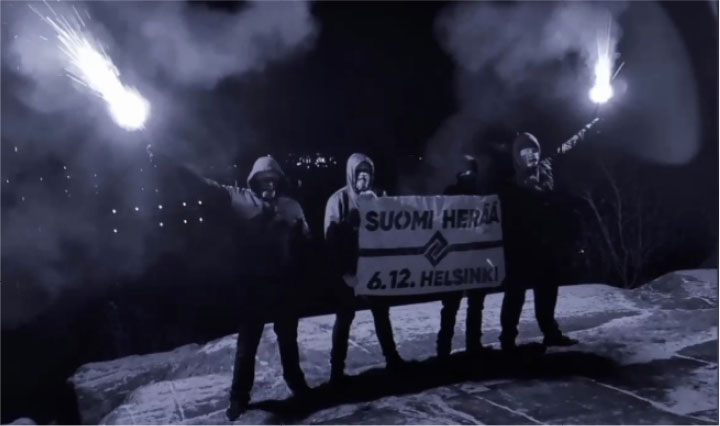
Figure 8
A screenshot from a ACF’s advertisement video for the Suomi Herää Independence Day Black Bloc
Comments: The 36-second black-and-white video features a text: “There are intruders on our borders again, we do not want them here! Do you? If not… Join us on 6.12. in Helsinki”. (ACF-251123)
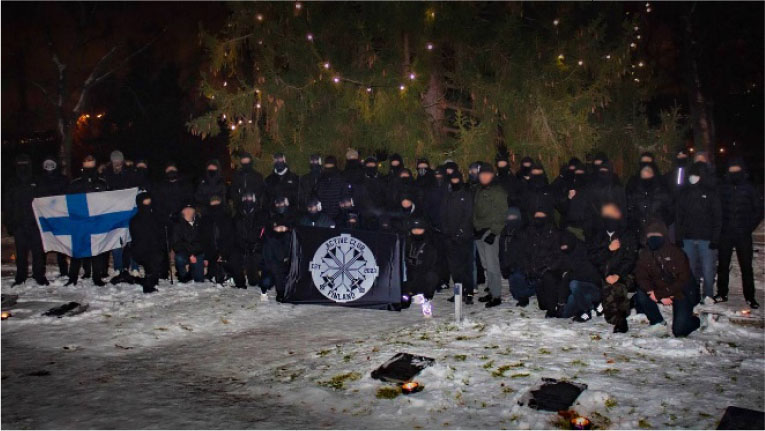
Figure 9
Finnish RWE combat sports milieu at Hietaniemi Heroes’ Cemetery in Helsinki on Independence Day
Comments: Although only ACF’s banner is visible, the image also includes several members wearing balaclavas with the C8 logo. (ACF-081224)
Street activism and Independence Day marches target both external audiences (as ideological, performative display) and insiders (as rituals of heightened collective emotion). In contrast, fight nights and events like the annual White Boy Summer Fest, combining combat sports and White Power music, function primarily as a ritual space for internal networking and immersion in collective emotions within the milieu. In the data, these events, too, are widely advertised with posters and often followed by a longer video compilation.
Previous research on the White Power music scene has noted its integrative role in uniting different RWE groups, serving as a gateway for recruitment and connections with other (sometimes more radical) factions (Corte & Edwards, 2008; Kotonen, 2020; Langebach & Raabe, 2012). This is reflected in the data: All three examined groups foster close ties to the White Power scene, advertising and attending their gigs, and co-organising joint events. VL acts as the main organiser, with the other two groups advertising, reposting content, and participating (see Figure 10), underscoring VL’s central position in the milieu, as well as its connecting role between different actors in the scene. Music thus becomes a vehicle for propaganda and activism, facilitating recruitment, integration, and migration between different groups (Corte & Edwards, 2008; Kotonen, 2020: 418; Sallamaa, 2018: 59, 63–66).
White Power songs are also key elements of the recruitment videos, where their hateful, racist, and violent lyrics often serve as an integral part of channelling the collectively felt emotions (Geertz, 1973; Turner, 1969: 42–43), fostering collective effervescence (Durkheim, 1995: 385–387, 390–391; see also Collins, 2001, 2004; Törnberg & Törnberg, 2024: 29–31) and functioning as a tool for ideological messaging. All audio files in the data contain similar themes and messages from anti-immigration, racism, and anti-elitism (e.g., ACF-121223; ACF-201023), some voiced more directly than others. Some include explicit calls for violence, such as, for example, the NSBM/RAC song posted by ACF: “[...] and all the sick bastards, we will for sure catch, we won’t ask empty questions but put them cold [sic; literal translation which refers to killing]” (ACF-201023). However, as exemplified by Figure 11, the dominant theme in these lyrics is a more general call to action that channels emotion into mobilisation, illustrating the internal ritual function (Bell, 1992).
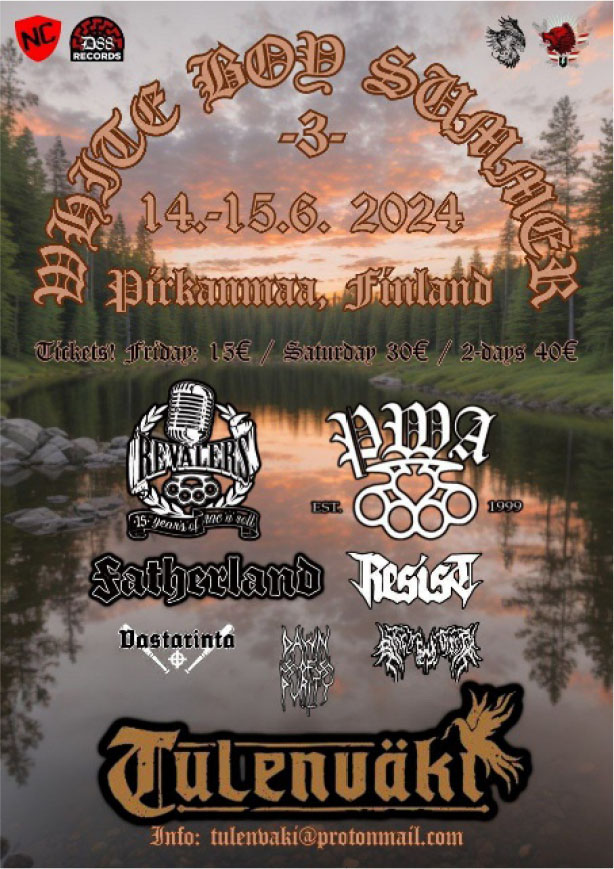
Figure 10
White Boy Summer Fest poster
Comments: The poster shows VL’s logo in the upper right corner among the organisers. C8 and ACF logos are not featured in these or other posters. (VL-060624)
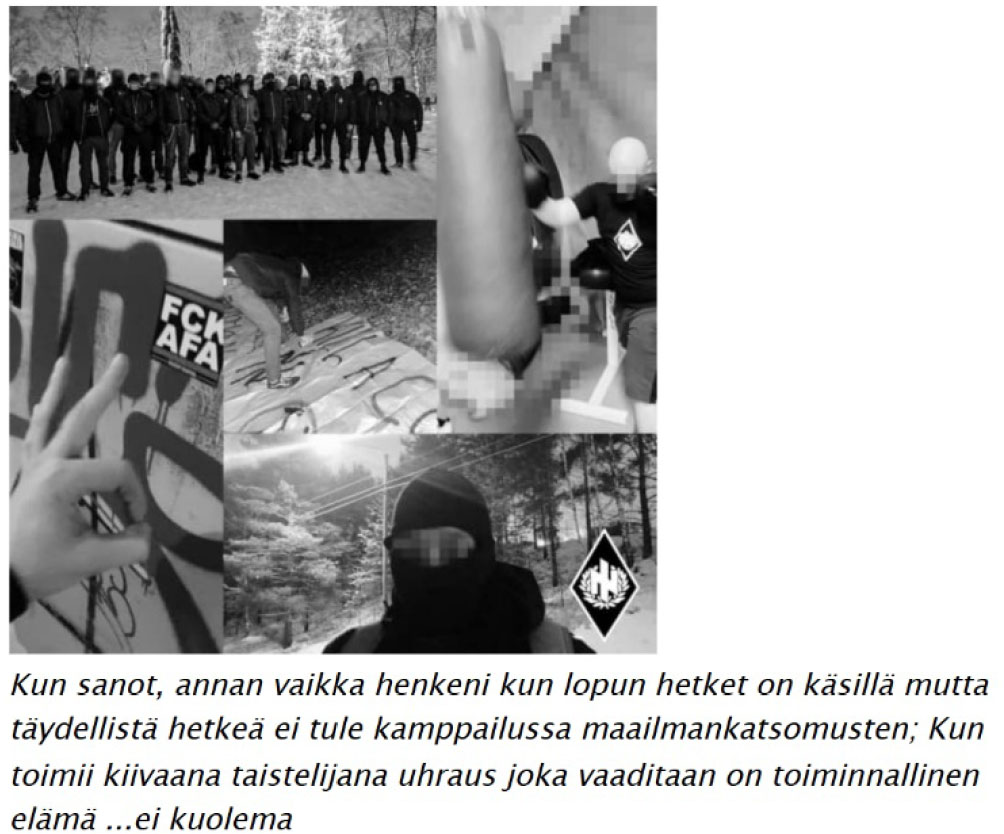
Figure 11
C8’s post with an excerpt from a RAC song
Comments: The lyrics featured in the post are translated by the author as follows:“When you call, I will even give my life when the end is near. But there will be no perfect moment in the battle of ideologies; when you act as a fierce fighter, the necessary sacrifice is an active life … not death”. (C8-271123)
Across these practices, all three groups deploy parallel internal and external strategies (Bell, 1992: 100–104; Bell, 2009) to reinforce collective identity and advance recruitment. Public-facing activities, such as street activism and Independence Day demonstrations project discipline, legitimacy, and ideological presence to outsiders while generating emotional cohesion and trust internally. Internal-focused rituals, such as fight nights and the White Boy Summer Fest, cultivate effervescence, strengthen bonds, and facilitate networking within the milieu. Together, these ritualised practices translate ideological narratives and perceived threats into structured, emotionally compelling experiences, consolidating the subcultural scene while strategically attracting potential recruits and sustaining motivation.
Conclusion
Through critical discourse analysis and a ritual theory lens, this study examined how ritualised communication on Telegram and offline practices shape collective identity, foster belonging, and facilitate recruitment among Finnish RWE combat sports groups. The broader aim was to analyse how the RWE milieu strategically employs ritualistic practices within the White Nationalism 3.0 framework to advance cultural and metapolitical change among youth. Although practising combat sports is not an entirely new phenomenon in the Finnish RWE milieu (e.g., Ukonvasama in the 2010s; Kotonen, 2019), their deliberate use as the primary recruitment tool is a novel development.
The analysis highlights three key findings that illustrate how recruitment is fuelled by a dynamic interplay of negative and positive emotions, as well as facilitated by symbolic, embodied, and performative rituals (e.g., Törnberg & Törnberg, 2024). First, the ideological messaging and symbolism of ACF, VL, and C8 align with white supremacist, cultural traditionalist, and ethnonationalist master narratives. These elements are used to evoke negative emotions, facilitating the first step towards recruitment among the eligible in-group. While vague descriptions of the out-group and enemies appear in the data, ideological belonging is more often indicated through anecdotal RWE and (neo)Nazi references functioning as totemic markers of in-group identity, at the same time establishing boundaries (Durkheim, 1912/1995: 34–44, 238–241; Lévi-Strauss, 1963, 1964) to those considered as the out-group, that is, non-whites, liberals, and political elites. Second, embodied ritual activities (Bourdieu, 1977; Collins, 2001, 2004: 33–50, 53–64) serve both personal and social functions, reinforcing a subcultural narrative that frames the male body as a site of ideological struggle (as in historical fascist movements, see Griffin, 2007; Ponzio, 2015). In line with previous research on hegemonic and heroic masculinity in RWE ideologies (Bowman, 2020; Kimmel, 2007; Mattsson & Johansson, 2021; Meiering et al., 2020; Miller-Idriss, 2017, 2020; Pearson, 2023; Tebaldi & Burnett, 2025), these embodied practices position recruits and their pursuit of metapolitical change in explicit opposition to the modern society the groups describe as lazy, decadent, and emasculating. Combat training, militarised aesthetics, and branded subcultural markers (logos, merchandise) (see also Miller-Idriss, 2017; Nissen et al., 2021) become practical means of building solidarity, homosocial bonding, and collective identity. Recruitment is further fuelled by promises of brotherhood, honour, and personal and societal significance, which evoke positive emotions and motivate participation. Third, performative rituals including street activism, Independence Day Black Blocs, and fight nights, illustrate Bell’s (1992, 2009) internal–external ritual strategies. They play a central role in constructing collective identity and sustaining longevity among the milieu by providing spaces for shared performative and emotional bonding (Durkheim, 1912/1995: 385–387, 390–391; see also Collins, 2001, 2004; Törnberg & Törnberg, 2024: 29–31) and by facilitating networking between the combat sports groups and the White Power music scene.
Conceptually, these social processes are best understood through a liminality framework (Turner, 1969: 94–95, 106–107), where the recruitment trajectory presented in this study is a transition out of liminality. Online spaces function as liminal, discursive spaces where potential recruits linger; they are interested and ideologically sympathetic to the RWE narratives, but not yet active participants offline. Importantly, these groups do not engage in direct persuasion or personalised outreach but instead cast a wide net by referring to familiar RWE narratives, symbolic markers, and emotional triggers, assuming that their audience is already ideologically engaged. The Telegram channels operate less as a space of conversion and more as threshold spaces. Embodied rituals then move individuals out of that in-between state, while performative gatherings (street activism, demonstrations, and fight nights/music events) generate emotional effervescence that fosters long-term involvement and strengthens networks across the wider RWE milieu.
Importantly, the findings also challenge the common “hiding in plain sight” reading (e.g., Jipson, 2025; Ritzmann, 2023; Woodward, 2023). Rather than concealing their extremist views or presenting a clandestine façade of a friendly sports group, Finnish RWE combat sports groups are openly ideological. They openly display (neo)Nazi and white supremacist symbolism and purposefully align their aesthetics with their metapolitical goals. Their visibility is strategic, seeking to normalise RWE presence and facilitate recruitment while remaining within legal boundaries. Their active production of ideological material supports the understanding of extremism as an active process of meaning-making shaped by participants within social contexts, rather than a passive victimisation by RWE narratives (see Törnberg & Törnberg, 2024: 28–35, 112–114, 119–126).
Naturally, the individual motives for joining combat groups may vary. VL’s active participation in co-organising events connects different actors in the milieu, and their members have documented, long-term connections to the RWE scene (Heiskanen, 2020; Varisverkosto, 2022), including the Nordic Resistance Movement, indicating that they are exceptionally well-integrated within the milieu. ACF and C8, in contrast, appear to be running a broader campaign to attract an audience previously unconnected to the scene but receptive with its ideology. This may appeal especially to younger individuals primarily seeking a sense of belonging, meaning, or homosocial bonding and only secondarily involvement in the extremist milieu. Finally, within the fastest-growing ACF, strict age limits (±20 years old; Sinimusta Liike, 2025) suggest that combat sports groups serve as entry points into deeper involvement within the broader RWE milieu, with participants expected to stay engaged and potentially transition to other organisations over time, White Power music scene serving as a platform for internal migration within the milieu.
This study demonstrates how Finnish RWE combat sports groups employ ritualised communication and embodied practices as recruitment tools, shaping collective identity and operationalising White Nationalism 3.0 strategy. The findings offer policymakers and youth practitioners timely insights into social and emotional processes and mechanisms that draw individuals from RWE discursive online spaces into offline activism. As this analysis is limited to public recruitment materials, future research would benefit from direct engagement with participants to explore their personal motivations and expectations for joining these groups, offering deeper insight into individual-level dynamics of recruitment. Overall, the study reveals how the RWE combat sports groups combine online and offline rituals, embodied and performative practices, and cultural branding to normalise extremist presence, illustrating both the mechanisms of recruitment and the broader implications of White Nationalism 3.0 as a strategic and metapolitical shift within the RWE milieu.
Acknowledgements
I am grateful to the three anonymous reviewers and the editorial team for their constructive feedback. I also wish to thank Tommi Kotonen, Kia Lindroos, Elizabeth Pearson, as well as my PhD colleagues, for their valuable feedback on earlier drafts of this article. This research was funded by personal PhD grants from the Finnish Cultural Foundation [00240719] and Kone Foundation.
Appendices
Appendix
Codes Used for Telegram Post Citations
Active Club Finland (ACF)
ACF-270323. Active Club Finland. Telegram post. 27 March 2023.
ACF-220823. Active Club Finland. Telegram post. 22 August 2023.
ACF-040923. Active Club Finland. Telegram post. 4 September 2023.
ACF-060923. Active Club Finland. Telegram post. 6 September 2023.
ACF-140923. Active Club Finland. Telegram post. 14 September 2023.
ACF-250923. Active Club Finland. Telegram post. 25 September 2023.
ACF-201023. Active Club Finland. Telegram post. 20 October 2023.
ACF-121123. Active Club Finland. Telegram post. 12 November 2023
ACF-251123. Active Club Finland. Screenshot from a Telegram video. 25 November 2023.
ACF-291123. Active Club Finland. Telegram post. 29 November 2023.
ACF-111223. Active Club Finland. Telegram post. 11 December 2023.
ACF-121223. Active Club Finland. Telegram post. 12 December 2023.
ACF-140124. Active Club Finland. Telegram post. 14 January 2024.
ACF-280124. Active Club Finland. Telegram post. 28 January 2024.
ACF-040224. Active Club Finland. Telegram post. 4 February 2024.
ACF-280224. Active Club Finland. Telegram post. 28 February 2024.
ACF-110324. Active Club Finland. Telegram post. 11 March 2024.
ACF-210324. Active Club Finland. Telegram post. 21 March 2024.
ACF-200424. Active Club Finland. Telegram post. 20 April 2024.
ACF-240424. Active Club Finland. Telegram post. 24 April 2024.
ACF-060524. Active Club Finland. Telegram post. 6 May 2024.
ACF-190524. Active Club Finland. Telegram post. 19 May 2024.
ACF-260524. Active Club Finland. Telegram post. 26 May 2024.
ACF-150724. Active Club Finland. Telegram post. 15 July 2024.
ACF-170824. Active Club Finland. Telegram post. 17 August 2024.
ACF-081224. Active Club Finland. Telegram post. 8 December 2024.
Club 8 (C8)
C8-280123. Club 8 Telegram post. 28 January 2023.
C8-071023. Club 8. Screenshot from a Telegram video. 7 October 2023.
C8-101023. Club 8. Telegram post. 10 October 2023.
C8-271123. Club 8. Telegram post. 27 November 2023.
C8-220924. Club 8. Telegram post. 22 September 2024.
Veren Laki (VL)
VL-210220. Veren Laki. Telegram post. 21 February 2020.
VL-010320. Veren Laki. Telegram post. 1 March 2020.
VL-060521. Veren Laki. Telegram post. 6 May 2021.
VL-100423. Veren Laki. Telegram post. 10 April 2023.
VL-060624. Veren Laki. Telegram post. 6 June 2024.
VL-Channel-info. Veren Laki Channel information image. Retrieved 5 January 2026.