

Introduction
When the Swedish public service broadcasting corporation celebrated its fiftieth anniversary in 1974, the Swedish postal service presented a series of stamps to commemorate the jubilee. One of them showed a television camera in the parliament, with the lens pointed towards the speaker’s podium (see Figure 1). The broadcasting company had fought long and hard for permission to access the chambers and record the proceedings; the legitimacy of the broadcasting corporation was linked, on the stamp at least, to their coverage of parliamentary politics.
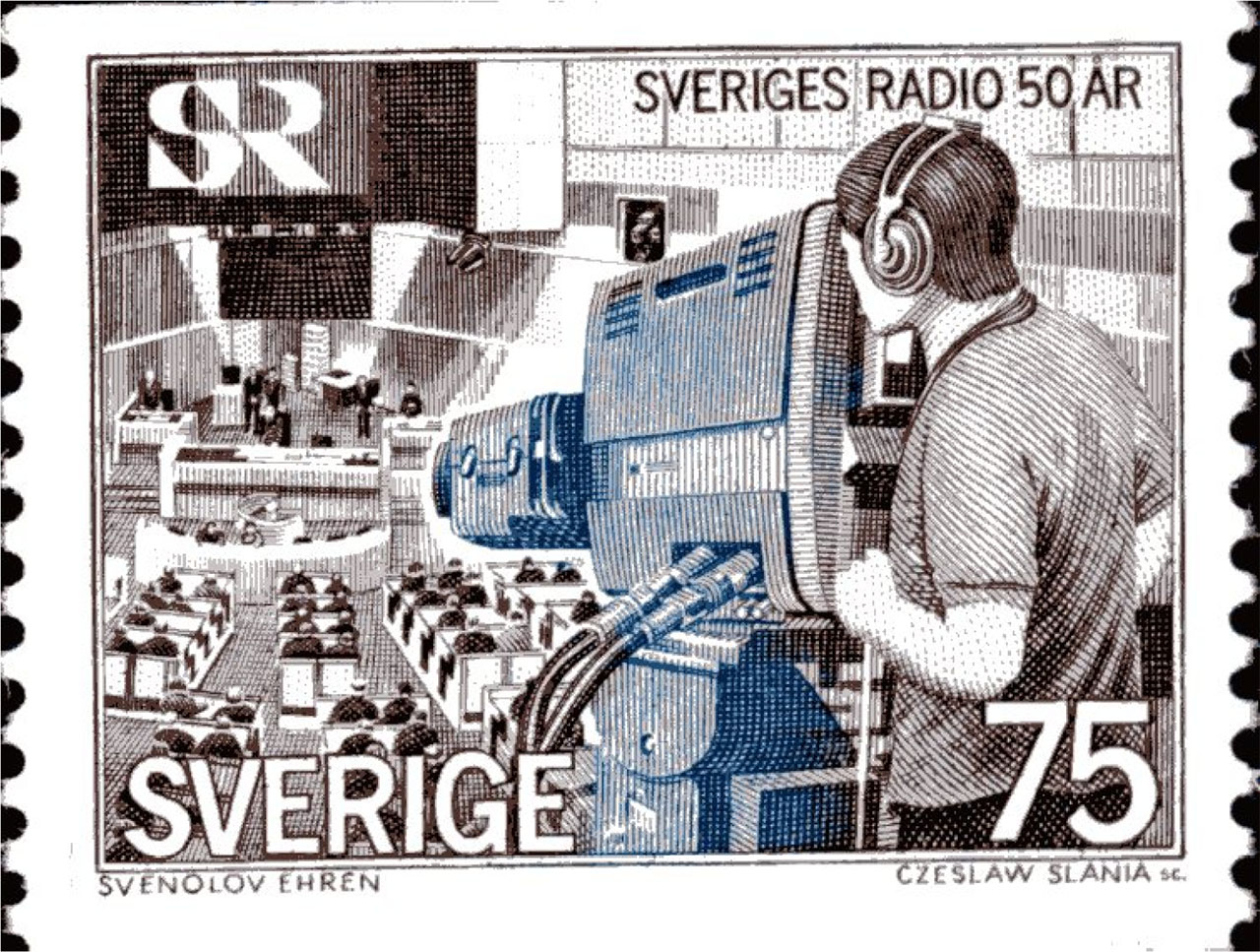
FIGURE 1
A stamp issued to celebrate the 50th birthday of public service broadcasting in Sweden, 1974
Comments: It is hard to see who is standing and speaking at the Riksdag [Swedish parliament] rostrum; rather, the postage stamp (issued in 1974) is focused on the television camera. Indeed, the medium seems to have been the message.
Source: published with permission from PostNord Frimärken.
In the 1970s, however, the parliament could no longer take the news media coverage for granted. In 1968, an internal reviewer closely followed what was reported from the parliament on radio and television. His calculation of the total airtime showed that it had gradually dropped during the 1960s. The broadcasting corporation used to have special television programmes dedicated solely to parliamentary proceedings, but by 1968, the parliament was mostly covered in ordinary news programmes. The reviewer concluded that the coverage “is heavily dependent on the other kinds of news that the parliamentary news has to compete with” (Asplund, 1968). A quantitative analysis of parliamentary news in the press, presented by the historian and media scholar Stig Hadenius in 1972, confirmed this observation (Swedish Government Official Reports, 1972).
Later, an investigation presented in 1987 came to similar conclusions: “It is challenging for the parliament to claim its position as the centre of the political debate in the modern media society” (Swedish Government Official Reports, 1987: 79). New methods were needed to attract the attention of the news media. When the speaker of the Riksdag [Swedish parliament] introduced a new debate format in 1989 – shorter speeches to create livelier discussions – he explained that “if we want to give the parliament a stronger position in the public debate, we have to try something new” (Parliament of Sweden, 1989: 3). This speaks to a change in the power dynamic between the parliament and news media, in favour of the latter. While the parliament at first hesitated to let television cameras into the chamber, it soon struggled to keep the media’s attention. This also raises a principal question of how and to what degree representational democratic procedures are influenced by the practices of news media, which are not only driven by democratic ideals. This dynamic relationship takes centre stage in this article.
In news media, conflicts have usually triumphed over nuances and dramatic events over slow-moving processes. When the parliament introduced new rules to enable livelier debates, it could be seen as an attempt to adapt to a media logic and stage the debates as more media-friendly events. Our aim in this article is to investigate traces of such a media logic in the Swedish parliamentary speeches from 1920 to 2019. Since media logic is said to be constituted by “a form of communication that has a particular logic of its own” (Altheide & Snow, 1979: 9), we investigate the form of the speeches rather than their content.
Our study is centred on two analytical dimensions, formulated as research questions: How has the length of speeches varied over time? And how has the use of repeated political slogans changed during this period? These questions are explored through computational methods, based on a dataset of parliamentary records [Riksdagsprotokoll] containing annotated speeches.
While the analysis is focused on speech lengths and the frequencies of repeated phrases, we also address broader issues targeting how politics are packaged and communicated to the public. The Swedish media system was once understood as “an archetype of a democrat corporatist model” (Nord & Grusell, 2020: 120). Yet, deregulation, digitalisation, and the dominance of global media platforms have meant that “political communication conditions have been drifting in a direction that makes Sweden look more like other countries” (Nord & Grusell, 2020: 129). In this article, we present the Swedish case as an example of how parliamentary politics reacted to a changing media system where media attention could no longer be taken for granted. We hope that this study can thus contribute to an ongoing discussion about the power relationship between parliament and news media institutions beyond Sweden and the Nordic region.
Mediatisation and media logic
Mediatisation usually refers to a historical process where the development of various media, especially during the twentieth century, is said to have become integrated in everyday life, as well as the way various actors and institutions act, organise, and are understood in public (Hjarvard, 2013; Mazzoleni, 2008). Examples of such a process can be found in areas as diverse as politics, diplomacy, religion, sports, tourism, and war. As Knut Lundby (2009: 1) explained: “Processes of mediatization affect almost all areas of social and cultural life in late modernity”.
Nick Couldry and Andreas Hepp (2013) have identified two different but overlapping approaches within previous research, both focusing on mediatisation but with different emphases and understandings of the process. One tradition comprehends mediatisation as a long historical “process of the communicative construction of social and cultural reality” (Couldry & Hepp, 2013: 196). In this context, “media” is not synonymous with the institutional (mass) media of the twentieth century. The other approach draws on the idea of “media logics” and is primarily focused on the way that the logics of institutional (mass) media are imposed upon and adopted by other actors and institutions in society. A comprehensive history of the significance of media in parliament would have to consider a wide range of media beyond institutional mass media – from the architectural layouts of the chambers to the cultural techniques of stenography. In this article, however, we chose to focus on media in the narrow sense, following the institutional approach to mediatisation.
Jesper Strömbäck (2008: 233–234) has defined politics governed by a media logic as a situation where “the requirements of the media take centre stage and shape the means by which political communication is played out by political actors, is covered by the media, and is understood by the people”. Media logic refers to a form of communication and includes specific media formats with established ways of organising material, what to focus on, and how to present it. David Altheide and Robert Snow (1979: 10) presented the notion of media logic as a grammar, a framework, or a perspective that is used to present and interpret reality. Television news, for example, is said to select what is highly visual and to emphasise drama, conflict, and violence. The format also implies that stories should be presented as short as possible (Altheide & Snow, 1979). When such a media logic frames institutional phenomena, it also changes the way institutions operate: “The issue is not merely the extent of media contributions to the decision-making process, but the way this process has been transformed through an underlying media logic” (Altheide & Snow, 1979: 103).
The history of Swedish journalism in the twentieth century shows how the relations between news media and politics have changed over time. Despite a strong party press, a separation of genres and roles has been identified already in the 1910s and 1920s, with political editors writing leading articles along party lines and news journalists reporting in a more neutral way. A dominant text category was the verbatim report of parliamentary speeches, with little added by the journalist. Still, even if most reports were passive and neutral, the selection of politicians to report on was more biassed, favouring actors affiliated with the party of the paper (Ekecrantz & Olsson, 1994; Olsson, 2006). Contrary to the party press, public service radio had to balance opposing sides, but the ideal of mirroring the actors rather than questioning them became a dominant feature also in radio (Djerf-Pierre & Weibull, 2013). Both radio and the press let politicians speak in their own words, although party papers were more selective.
Around the 1960s, Swedish journalism became gradually more active and independent in its approach to political actors – in print, radio, and television: Journalists asked tougher questions, investigated, and confronted those in power in service of the audience and citizens. Conflicts and drama were emphasised in the reports (Djerf-Pierre & Weibull, 2013; Weibull et al., 2018). News journalism since the 1980s has continued to develop along these lines. Apart from reporting, journalists also took on the roles of commentators and experts. As the political parties lost their power over the press, journalistic norms and a structural bias triumphed over the ideological bias (Djerf-Pierre & Weibull, 2013; Ekecrantz & Olsson, 1994). The competition for audience and revenue increased with the introduction of commercial broadcasting around 1990 and international tech companies operating in the digital arena in the 2000s. In this hybrid media system, traditional news media is no longer the only option for politicians who want to reach the citizenry. From an international perspective, however, Swedish newspapers and public service broadcasting still play important roles for the audience and various political actors (Nord & Grusell, 2020).
The historical development sketched above roughly corresponds to the different phases of mediatisation identified by Strömbäck (2008): The news media was gradually transformed from a channel for political communication into an independent actor following its own logic. Other actors have had to adapt to this logic to get the news media’s attention. To examine the last phase, however, stipulating that political actors have internalised the journalistic standards of newsworthiness, it is not enough to just examine political actors as they appear in news media. To study if and how political actors not only adapt to the media logic but also adopt it, we examine how the actors behave within one of their own political institutions – the parliament.
Building upon Altheide and Snow’s work, Frank Esser (2013) made a distinction between three aspects of political logic where a media logic can alter the process: policy, politics, and polity. While policy aspects refer to the production side of politics – the process of developing programmes and strategies “back stage” – politics refers to the self-presentational side of politics, prevalent in campaigning but also more generally when politicians appear “front stage”. Polity, in turn, includes the system of institutional rules regulating the political process and what politicians are allowed to do. Media may be understood as a “social force” (Altheide & Snow, 1979: 9), but it should also be emphasised that the mediatisation of politics is based on a self-initiated process: “By way of ‘self-mediatization’, politics engages in a process of self-initiated stage management and media-friendly packaging” (Esser, 2013: 162). In other words, changing parliamentary procedures because of a perceived need to adapt to the logic of news media can be understood as part of a mediatisation process.
The three aspects of the political logic – policy, politics, and polity – may blend into each other in specific cases. In the context of parliamentary proceedings, representing the political process’s “front stage”, we have identified elements of politics and polity that can be analysed as indicators of a mediatised parliament. How long MPs (members of parliament) are allowed to speak is regulated by the parliament itself and can be considered a polity issue. A parliament governed by a political logic alone could decide that MPs can use as much time as they want to. Yet, if the representatives want the attention of the news media, putting time restrictions on speeches might be one solution. To analyse aspects related to the self-presentational side of politics, we have focused on the frequency of repeated political slogans in the speeches. Here, one could assume that politics governed by a media logic will encourage MPs to use short and repeated statements, intended to be picked up by the news media.
Previous research on parliamentary speeches and media logics
Much of previous research on the relation between parliament and the media focuses on the representation of MPs in the news. For example, Yildirim and colleagues (2023) have shown how a growing number of parliamentary speeches correlate positively with news exposure in the UK and Norway. van Santen and colleagues (2015) demonstrated how so-called oral parliamentary questions generate different amounts of press coverage in the Netherlands, France, and Germany depending on content and frame. One aspect often examined by scholars is the decline of newspaper coverage of parliamentary proceedings over the twentieth century (e.g., Riddell, 1998), which has also been the case in Sweden (Harvard, 2011; Johansson, 1995). Other studies have centred on the historical development of parliamentary journalism, and how parliamentarians, for instance, have had to counter new journalistic techniques like the interview format (e.g., Broersma, 2009). Less attention, however, has been directed toward the link between news media and the form of parliamentarian speeches. One exception is Kepplinger (2002), who studied the German Bundestag between 1951 and 1995, and showed that “information-generating activities” in the parliament – such as public hearings and so-called hour debates – increased simultaneously as news media reports about these activities and that the two developments have been reinforcing each other.
Speech length is a key issue in this article. Political scientist Peter Riddell (1998: 11) connected MPs’ awareness of news media coverage to a decrease in speech length in certain chamber debates in the British parliament. Regarding the US, Harry Grundy has argued that television had “affected not only the member’s participation in debates but had, to some extent, altered the standard of procedure”, pointing to the popular one-minute speeches as “a made-for-television event” that many MPs had incorporated in their daily press routine (Grundy, 2000: 34–35). However, compared to other studies, this correlation seems less obvious. For example, results from Mixon and colleagues (2001, 2003) indicate that both the length of House sessions and the filibuster count have increased since the introduction of television cameras in the US Congress. Moreover, from a longer historical perspective, the correlation between news media coverage and shorter speeches becomes even more complex. Historian Peter Jupp (2006) has described how the growing number of newspapers that reported from parliament between 1780 and 1830 led to an increase in MP speech length, from about 10 minutes to 40 minutes. These historical developments took place before the introduction of modern journalism. Nevertheless, they indicate that press coverage has influenced the form of parliamentary speeches in various ways.
Some linguistic studies have also examined the form of parliamentary speeches and their change over time. Ann Cederberg (1993) and Jan Svensson (1993) found an overall lack of figurative language in the Swedish parliamentary speeches, and a less complex syntax over time. The frequencies of slogans were not examined systematically, but Svensson (1993) noted that slogan-like phrases seemed to be more common in the 1980s. Furthermore, Cornelia Ilie has examined the contemporary rhetoric of Swedish parliamentary speeches, focusing on politeness, insults, and different forms of address, also in comparison with the British parliament. Among other things, her results show that the British parliament is more polarised than its Swedish counterpart (Ilie, 2004, 2005). While some of the results presented by Cederberg, Ilie, and Svensson are valuable, they analysed parliamentary speeches as if they are written sources, when they are in fact oral statements transcribed into written and edited texts (Mohammadi Norén & Jarlbrink, 2024). To avoid such a written-language bias, we have not analysed variables most sensitive to changes when the spoken language is turned into written texts: formulaic expressions, sentences, syntax, punctuation, and so on.
Several studies have analysed the characteristics of political slogans and sound bites. Since the target audiences for parliamentary speeches are often outside the chamber, the speeches reach the audience in mediated forms, often through news reporting, edited debate highlights, or short snippets on social media. Parliamentarians know this well, and will “likely take account of known media biases before deciding what to say” (Laver, 2021: 25–26). Most research on political debates and slogans has focused on campaign coverage and interviews rather than speeches in parliament. This research, however, provides valuable background on how political speech is quoted and incorporated into journalism. When news media cover election campaigns, statements by the candidates are usually represented by short sound bites. Studies of American election campaigns have shown that the sound bites become shorter over time, from 40 seconds in the 1960s to an average of 7–9 seconds in the 1980s, 1990s, and 2000s (Bas & Grabe, 2015; Hallin, 1992). Sound bites in a European context seem to be longer, but they show a similar decline over time (Donsbach & Jandura, 2003; Esser, 2008). Swedish studies have not distinguished between political and other actors being interviewed or cited, but similar trends are indicated (Asp, 1995; Jönsson & Strömbäck, 2007).
Research on social media logic (van Dijck & Poell, 2013) and network media logic (Klinger & Svensson, 2015) has mostly focused on aspects other than media formats, such as connectivity and the power of algorithms. Still, certain features of the news media seem to be characteristic of social media as well, such as the limited length of texts and videos. Politicians in the 2000s are less dependent on journalists as gatekeepers, but they still need to adapt to the formats of the dominant media. Johnson (2012) has suggested the term “Twitter Bites” as a social media equivalent to the sound bites in news media. When space is limited, posts must be “short, laconic, and simplistic, if not outright blunt” (Nahon, 2016: 41). Engesser and colleagues (2017) found that politicians communicating on social media express themselves in a fragmented form.
The speech segments that are turned into sound bites are said to be characterised by political sentiments distilled into snappy phrases. To attract journalists and editors, messages are phrased “in a simple, striking, and bite-sized way” (Bas & Grabe, 2015: para. 10). Others have described them as one-liners (Hallin, 1992: 20) or brief and catchy statements (Donsbach & Jandura, 2003: 52). Many phrases picked up by news media are also characterised by repetition: They are repeated in political speeches and interviews, but also in advertisements and in various news media (Foley, 2012). Our study contributes to the research on sound bites by examining political slogan-like phrases over time and within the parliament itself.
Dataset and methods
In 2018, the project of digitising the bulk of Swedish parliamentary documents, dating back to the sixteenth century, was completed by the Riksdag Library and is now publicly available on the Riksdag website and the National Library website. While the digitisation process generated PDF files (processed with software for optical character recognition), no proper annotation, metadata, or linked data structure was provided. Instead, such work has been conducted within the research project Welfare State Analytics (westac.se) and the research infrastructure project Swedish Riksdag 1867–2022: An Ecosystem of Linked Open Data (swerik-project.github.io).
The curated parliamentary records contain segmented speeches annotated with speaker-IDs (including name, gender, and party). Currently, for the period 1920–2019, the estimated accuracy for connecting a speech to the correct MP is generally above 95 per cent. The annotation quality together with a desire to work with full and thus comparable decades were influential in choosing this period of study. Our analysis in this article is based on version 0.10.0 of the speech corpus with all its annotated MP utterances from this period – in total some 805,000 annotated speeches, comprising a corpus of 383 million tokens (Yrjänäinen et al., 2024). A token, typically a word, is a number of characters separated by space (the official 1.0 version was released in May 2024; for more information, see SWERIK Project, 2024). We examine the previously described chosen analytical dimensions using two specific approaches: Speech length is measured based on word count and the repeated political slogans are explored through so-called n-grams. The methods are discussed in more detail in each analytical section.
The length of the speeches
Attracting news media to report about the debates in the parliamentary chamber has been a challenge for the Swedish parliament for many decades. One problem has been decreased news coverage of the parliament in the local press. In 1972, for example, the Riksdag administration appointed a committee to investigate how to “stimulate the interest on the part of the mass media and to expand news coverage through them about the parliament” (Parliament of Sweden, 1973: 7). The reactions in the press were mostly positive to this initiative and the suggestions put forward by the committee, such as establishing an information centre in the parliament that would support newspapers with documents and orientations about ongoing issues (e.g., Hallandsposten, 1973; Vestmanlands Läns Tidning, 1973). However, there was also criticism toward one crucial issue that the committee had left out: a call to the parliamentarians to use their speech time more efficiently as a way to make it easier for the press navigating the debates (Östgöta-Correspondenten, 1973). Hence, these comments indicate a stint of friction between a news media logic and a parliamentary logic related to the length and the number of speeches.
In our analysis, speech length is calculated based on the average number of words in all annotated speeches per year. The result is shown in Figure 2 (blue trendline). Roughly, the length has been reduced by 50 per cent, from about 800 to 400 words per speech. The graph indicates two main periods of decrease: one from the late 1940s to the 1960s, and a second from the mid 1970s to the lowest average in the early 1990s, followed by a rather stable length.
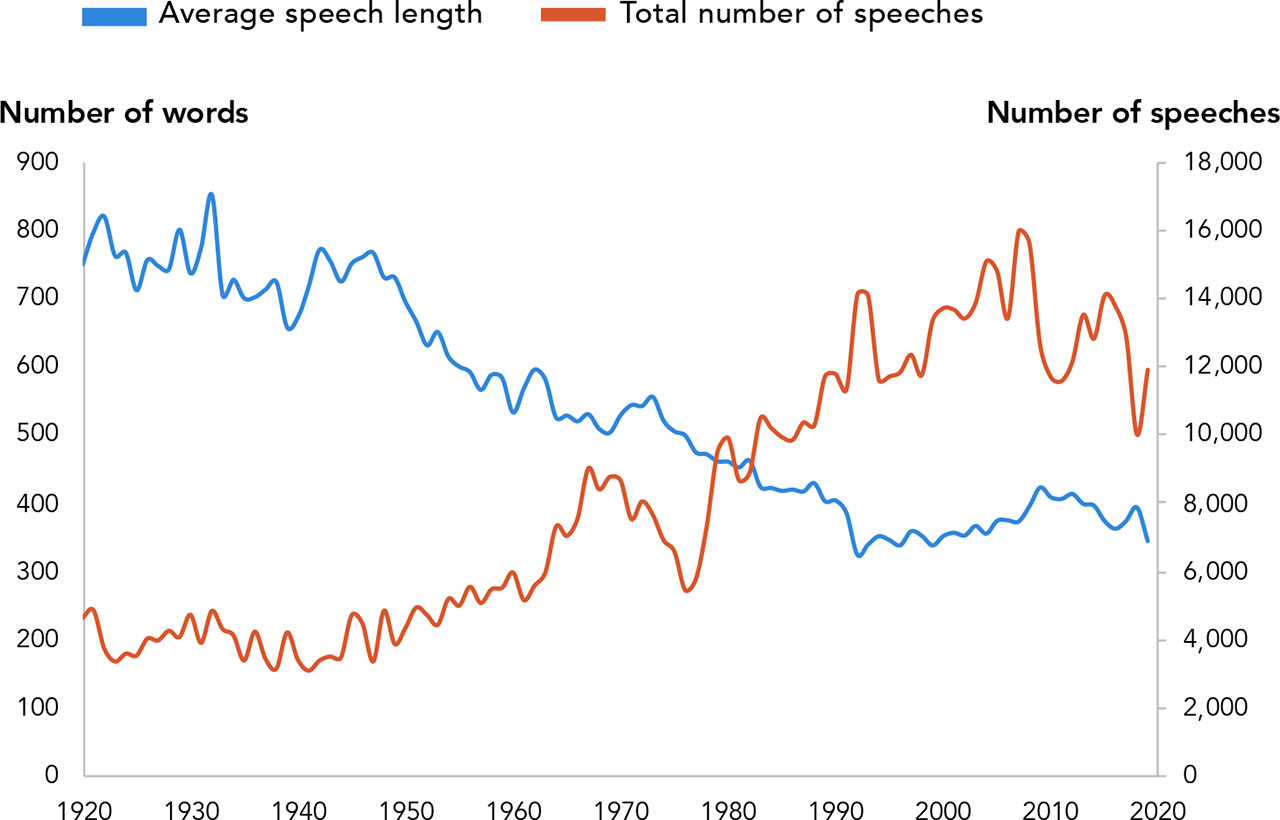
FIGURE 2
Average speech length and total number of speeches
Comments: N = 805,365. The blue trendline shows the average length of all annotated speeches in our dataset (based on the total word count for every speech divided by the total number of speeches for each year), and the red trendline displays the total number of annotated speeches in the Swedish parliament.
While the speech length decreases, the number of speeches increases. Figure 2 also displays this trend (red trendline), which shows the total number of annotated speeches held in the Swedish parliament every year. From about 4,000 speeches per year in the 1920s, the number quadrupled to 16,000 in the 2000s and then decreased somewhat by the end of the 2010s. Roughly, two periods of increase are discerned: one from the 1950s to the late 1960s, and a second from the mid 1970s to the 2010s. The overall increase in the second half of the period can be related to the plenary sessions, which grew by 50 per cent when the unicameral Riksdag was introduced (Parliament of Sweden, 1980).
To further examine the development of speech counts, speeches were divided into four groups of different lengths: 20–200 words, 201–500 words, 501–1,000 words, and 1,001+ words (beginning the first interval with 20 words excludes short procedural phrases, e.g., MPs only stating that they agree with the previous speaker). Figure 3 shows the total frequency for each length category, and Figure 4 displays the normalised rate. Both reveal a rather even distribution until 1950. In total numbers, the two shorter categories (black and red lines) follow the general trend shown in Figure 3, although there are some fluctuations. The peak in the 1990s shows that almost 50 per cent of all speeches were shorter than 200 words. In the 2000s, slightly longer speeches became more frequent. The longer speeches show a more stable frequency over time, and speeches with 501 to 1,001+ words even increased in the 2000s. Regarding the normalised frequencies, the shorter speeches increased too, but not as steeply. The two longer ones (green and blue), however, show a clear drop.
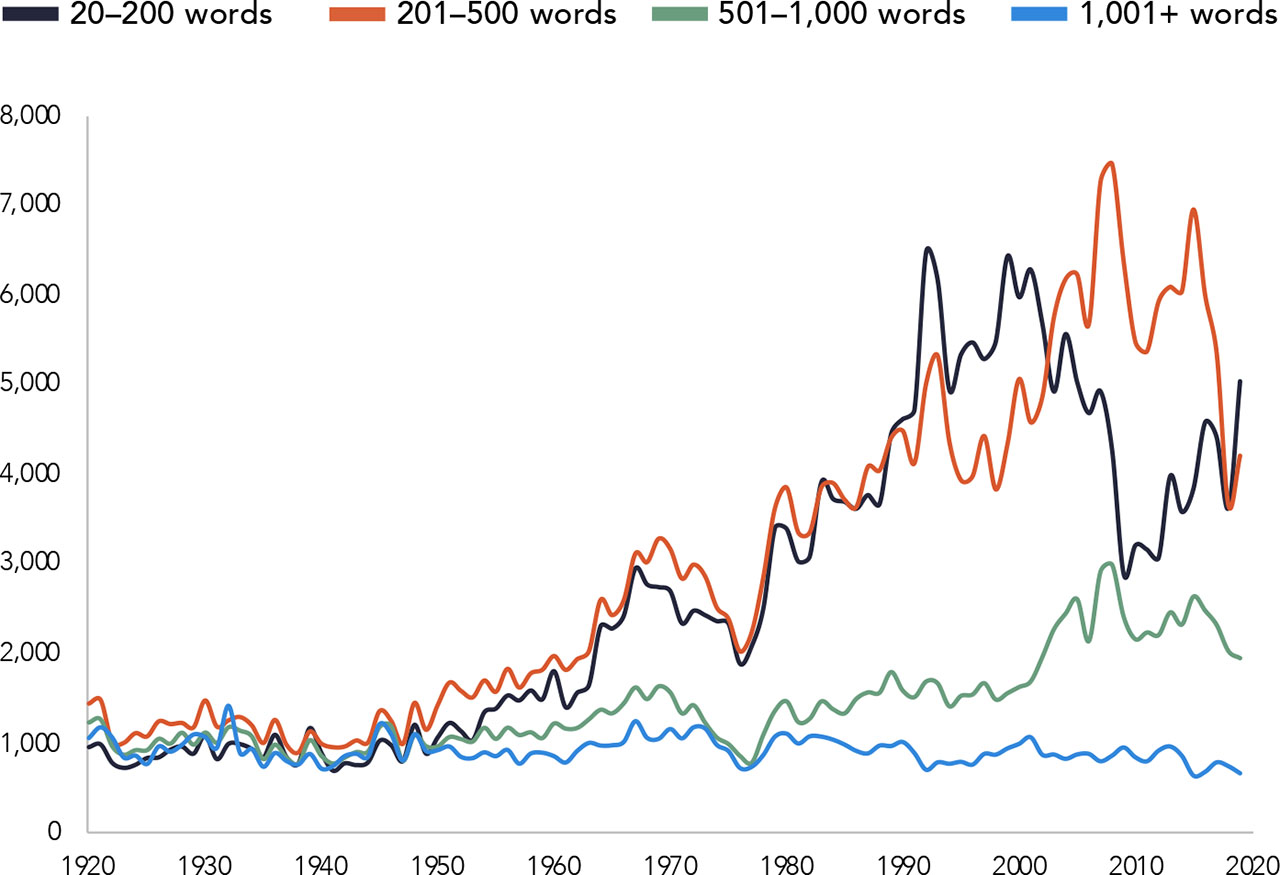
FIGURE 3
Total number of speeches for different categories of speech length
Comments: N = 793,893.
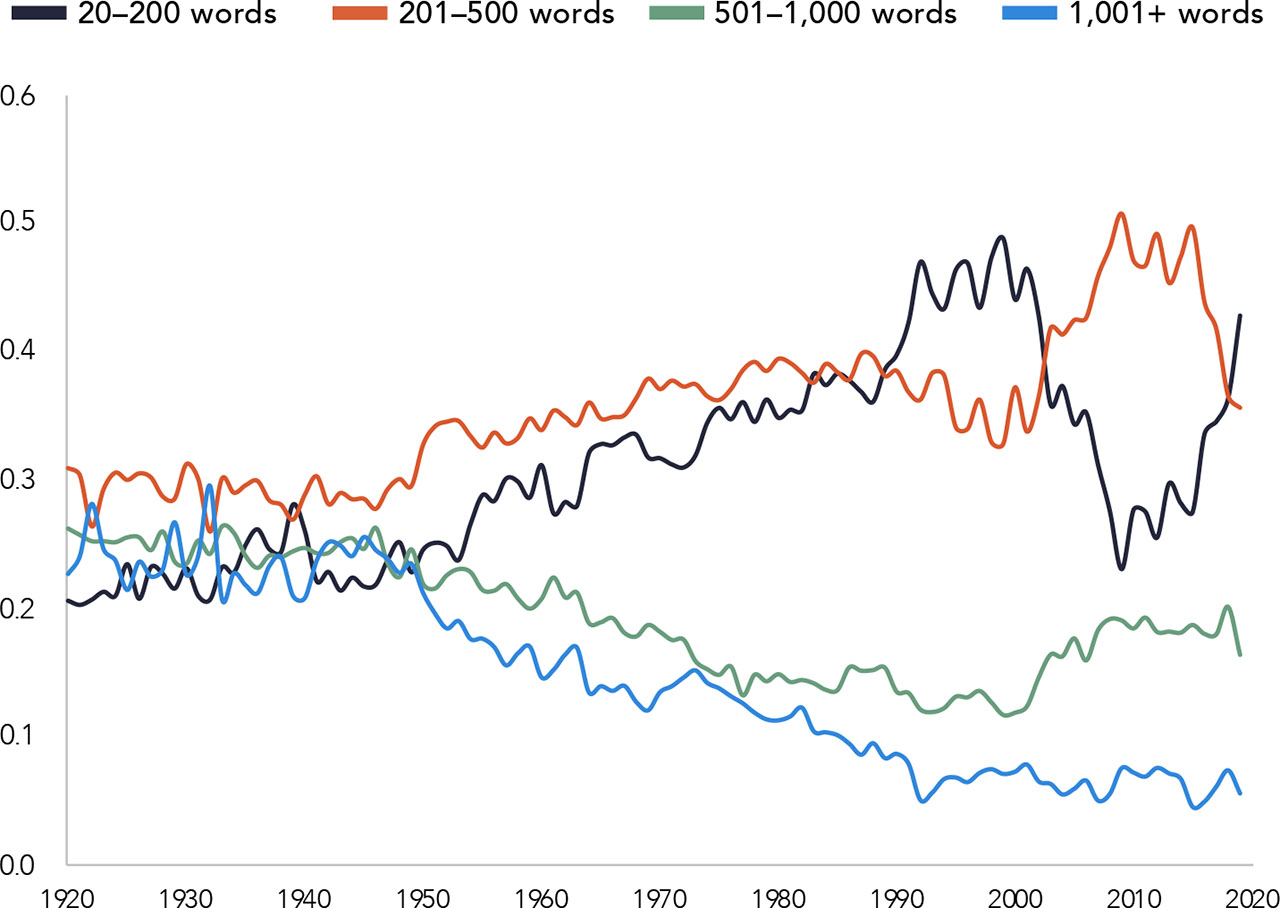
FIGURE 4
Normalised number of speeches for different categories of speech length
Comments: N = 793,893. The normalisation is based on the number of speeches in each category per year divided by the total number of speeches in the same year.
No doubt, MP speeches got shorter – but why? Up until the 1980s, initiatives to set a time limit for speakers were motivated primarily by an internal political logic rather than adjustment to an external media logic. Moreover, during the bicameral period (1867–1970), every official attempt to limit MPs’ speaking time was voted down (Stjernquist, 1996). Hence, as long as one had an announced speech, and the speaker handed over the floor, one could, in theory, perform a speech similar to a filibuster. In the 1930s, the introduction of the short reply [kort genmäle] gave MPs not announced beforehand the right to respond if they were addressed by a previous speaker (e.g., Parliament of Sweden, 1934). These replies had a time limit of only a few minutes, but the new rule should still be regarded as an expansion of the freedom of speech, motivated by fairness. This could partly explain both the decrease in speech length and the increase in the number of speeches from the 1940s to the 1970s.
In the 1970s, a change in attitudes started to happen. When the constitution of 1974 was implemented, the new Riksdag Act introduced speaker rules with explicitly stated limitations on speech length (Government of Sweden, 1974). The committee preparing the new constitution wrote extensively about different alternatives for the debate rules. The main challenge, however, was not to attract the attention of news media, but to accomplish efficient and fair rules in a parliament with one large chamber instead of two smaller ones (Swedish Government Official Reports, 1967). The problems associated with the declining media coverage were later addressed by the previously mentioned committee appointed by the Riksdag. As mentioned, however, changes to the debate formats were not discussed. Instead, the investigation suggested other ways to serve the news media better: a parliamentary information bureau, telex technology serving local papers without journalists stationed in Stockholm, courses for journalists about legislative procedures, and so on (Parliament of Sweden, 1973). Hence, the parliament of the 1970s did not adapt internal debate rules to a news media logic, but rather introduced new means to make news media cover a parliament governed by a political logic. However, these efforts did not succeed.
The 1980s marked yet another change in how the parliament viewed its work in relation to the outside world. Now, leading representatives of the parliament seemed to have accepted that the parliamentary procedures themselves had to change to make the chamber discussions more newsworthy and appealing to journalists. Hence, attempts at new forms of debates and speeches were initiated, scrutinised, and discussed. These efforts, partly stemming from the Democracy Commission (Swedish Government Official Reports, 1986), were initiated and tried out by the different speakers at that time. They included, among other things, shorter replies in interpellation debates, encouraging MPs to give spontaneous expressions of approval (e.g., applause), more up-to-date policy debates, experiments with two lecterns facing each other, and live questions from MPs in the chamber to the prime minister and ministers, who were given one minute each to answer the questions (e.g., Blanck, 1990; Parliament of Sweden, 1987, 1988; Grenfors, 1991). The experiments were meant to make the chamber discussions livelier, and when these attempts were discussed, it was also with explicit references to news media. For example, it was commented whether certain activities were “appreciated by the media” (e.g., Grenfors, 1992: 34), and if a schedule of a certain debate “reduces the chances of them getting into the mass media” (Parliament of Sweden, 1986: 26). These attempts and activities are similar to the public hearings and hour debates that proliferated in the German parliament during the 1980s (Kepplinger, 2002).
New initiatives in the same direction were taken in the 1990s and early 2000s. The speaker elected in 1994 stated that she wanted to reform the debates and “tried different methods” to make them “more lively and interesting” (Dahl, 2016: 256). The speaker elected in 2002 continued the reforms and initiated a rebuilding of the chamber to create more “engaging debates”. One of the features of the refurbished chamber opened in 2006 was seats arranged to make the parliament look more crowded by avoiding too many empty seats being shown on television (TT, 2005). This strategy is similar to a debate setup in a television studio, which encourages quick replies and more intense discussions in front of a studio audience.
Esser (2013) has argued that if actors believe that news media has the power to influence, a (self-)mediatisation process is already taking place. Such a process seems to be one explanation behind the shorter speeches, as well as how parliamentary procedures and the layout of the chamber were changed. These changes also correspond to ongoing developments within the media system, where the party press had lost its power and commercial incentives became stronger (e.g., Nord & Grusell, 2020). The new debate formats and the discussions about them show how political actors within the parliament sought to adapt to a changing media system and that they had, to some degree, internalised the journalistic standards of newsworthiness. Based on such standards, short and to-the-point speeches were privileged. This leads us to the second part of the analysis.
The sloganisation of parliamentary politics
In the 1980s, Social Democratic MPs repeated time and again that their goal was to ensure “everyone’s right to a good living environment”. A decade later, speakers representing the Moderate Party declared on numerous occasions that “everyone should be able to support themselves on their own salary”. In the early 2000s, speakers from the Centre Party stated repeatedly that “it must become easier, more fun, and more profitable to be an entrepreneur”. As speeches were getting shorter, they were also stacked with short, repeated phrases.
During the first half of the twentieth century, newspapers often dedicated one or more pages to a single debate in parliament. Some speeches were quoted in extenso (Harvard, 2011). In the twentieth century, the coverage became less regular and extensive. Legislative debates had to compete with other kinds of news to be reported. Together with shorter speeches, phrases that capture political ideas in a few simple words can be considered a response to a changing media environment.
To identify significant phrases in the Swedish parliamentary speeches, we selected short seven-word segments repeated at least ten times in the dataset. The actual phrases might be longer than seven words; this seven-word window is only a practical way of finding them. Five and ten words were tried as well, but the narrow window captured too many overlapping fragments and too much noise, while the wider one missed many of the significant phrases. To filter out formulaic phrases focused on the legislative procedure or formalities (e.g., “Mister/Madam Speaker, I move the adoption of the committee proposal”), we used a list of manually selected stop-words frequently used in the speeches (mister, madam, speaker, move, committee, proposal, etc.). The remaining seven-word segments were then ranked using count-IDF, a version of TF-IDF (Term Frequency–Inverse Document Frequency) based on raw counts instead of normalised frequencies. TF-IDF is based on the idea that keywords are those that are specific to a limited number of documents, while less significant words are those found in many documents (Baeza-Yates & Ribeiro-Neto, 2011: 73). In this case, a “document” refers to all speeches from a specific party and a specific decade, while “term” refers to individual seven-word segments. In general, parties with few MPs generate shorter documents, while those with many MPs generate longer ones.
The difference between count-IDF and TF-IDF is that the ranking is not biassed towards phrases in short documents compared with equally frequent phrases in long documents. Count-IDF makes parties different in size more comparable. When the speech segments are ranked, segments specific to a document (one party, one decade) get a higher score and generic phrases occurring in several documents (i.e., used by several parties decade after decade) a lower score. A threshold was set to a count-IDF value of 20, to identify a top list of frequent and significant phrases for each party and decade. These top-lists were manually checked to filter out false positives. For example, we did not include quotes from legal texts and proposals, nor generic phrases such as “I think it is important that…”.
The frequencies (based on the total number of phrases used by a specific party during one decade) presented in Figure 5 are normalised (showing slogan-like phrases per speech), to account for the fact that the number of speeches increased over time. No phrases were found before 1960.
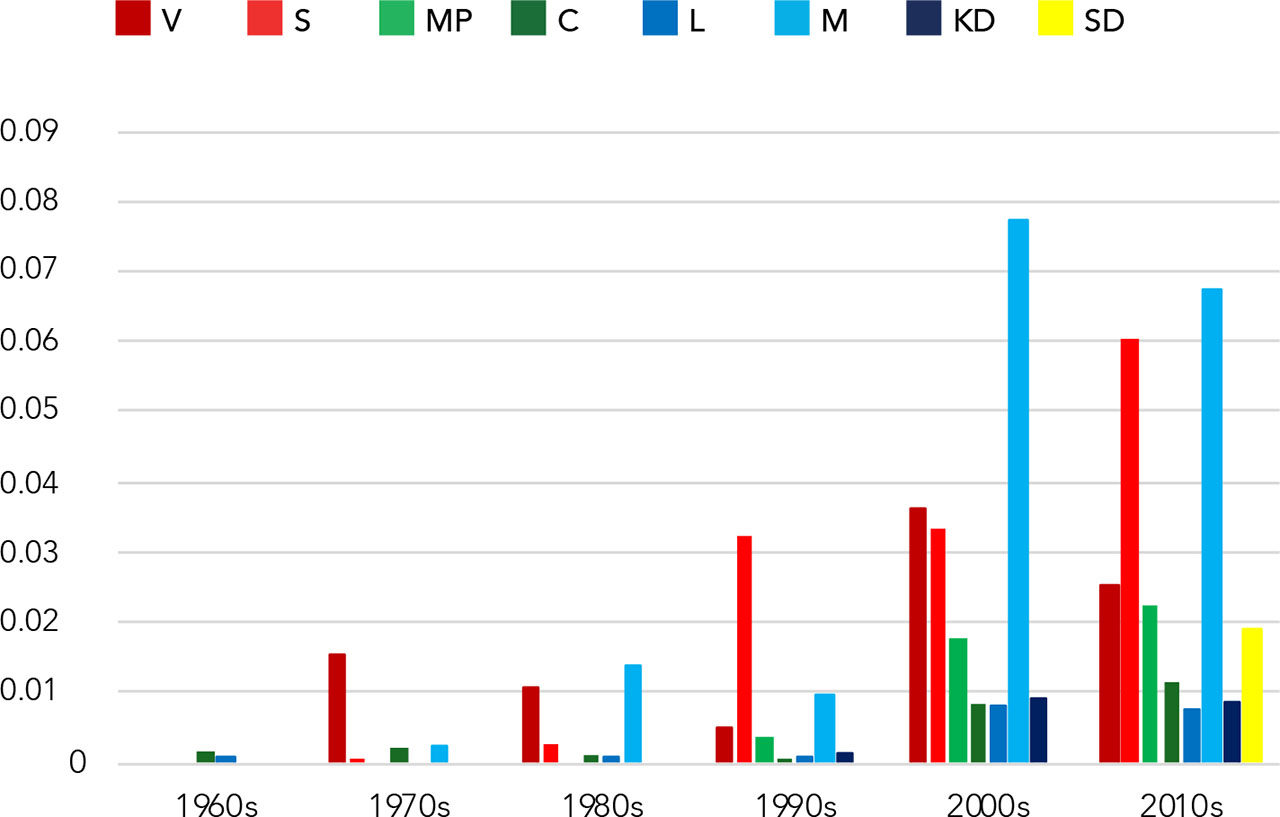
FIGURE 5
Normalised frequency of political slogans per decade, 1960–2019
Comments: N =11,820. The normalisation is based on the total number of slogan-like phrases divided by all speeches for a party during a decade. V = Left Party; S = Social Democratic Party; MP = Green Party; C = Centre Party; L = Liberals; M = Moderate Party; KD = Christian Democrats; SD = Sweden Democrats.
The distribution of phrases over time shows that they have become more frequent, particularly after the 1990s. MPs in the 2000s used repeated phrases more often than MPs in earlier decades. Examples of the raw counts may supplement the normalised frequencies: For the Social Democratic Party, we identified 2 unique phrases in the 1970s, repeated 21 times, and 79 unique phrases in the 2010s, repeated 2,146 times. For the Centre Party, with fewer elected MPs, we identified 1 unique phrase in the 1970s, repeated 25 times, and 12 unique phrases in the 2010s, repeated 116 times.
Sententia is the rhetorical device traditionally associated with a condensed form, used to express a general truth or a moral law (Kennerly, 2019). An example of this is when Social Democrats in the 2000s repeated that “when the family is fragile, society needs to be strong”. Other examples include “alcohol and traffic do not go together” (Liberals, 1990s), “it should be easy to do the right thing” (Moderate Party, 2010s), and “it must pay to work” (multiple parties, 1990s–2010s). We even find a sententia in Latin: “Ut desint vires tamen est laudanda voluntas” [The power/ability may be lacking, but the will should be praised all the same] (Centre Party, 2000s). Yet, most of the repeated phases are less stylish. One of the most frequent forms is demands or promises expressed in numbers: “100,000 new childcare places and 50,000 new places at youth recreation centres” (Social Democratic Party, 1970s); “20,000 new police officers until 2010” (Moderate Party, 2000s); “a goal about 100 per cent renewable energy” (Green Party, 2010s). Esser (2008: 415) found that sound bites were focused on ideology or issues (“substance”) as well as attack, defence, or campaigning. Campaigning cannot be distinguished as a separate category in the parliamentary speeches (although “permanent campaigning” might have turned most speeches into campaign speeches), but the other categories are well represented. Most phrases concern ideology and issues, often connected to attack and defence. A subcategory of the phrases focused on issues are those that define problems rather than suggest solutions. A phrase repeated by a Social Democrat in the 2000s and the 2010s described the dark side of the labour market in an image of exploited immigrants “working 12 hours a day for 30 [sometimes it was 10] crowns an hour and living in a basement”. Less striking is the phrase repeated by MPs to the right in the 2000s: “on an average day, one and a half million people are not going to work”.
Generally, MPs have always repeated themselves. However, from the 1920s to the 1950s, they repeated procedural phrases or legal texts. The first political phrase identified on our count-IDF lists originates from the Centre Party in the 1960s: “a network of viable urban areas across the country”. This phrase, repeated 16 times in that decade, was part of a vision for a decentralised Sweden, with possibilities to live and work outside of the large cities. When Liberal MPs in the same decade repeated that foreign aid was “the most important element of politics in the 1960s”, they reused a statement by a Social Democratic minister. This was a rhetorical strategy to hold the government accountable and remind them of what they had promised: Aid to developing countries “must indeed become the most important element of politics in the 1960s, not just phrases in official statements” (Government of Sweden, 1963: 14).
Also, the Left Party comes across as an early adopter of slogans in the parliament. In the 1970s, it was the party with the most phrases (9 unique, repeated 110 times): “every child has the right to good childcare”; “housing should be a social right”; thousands of apartments are empty, “because people can’t afford to rent them”; to form social conditions that guarantee “work, housing, education, culture, and social security”; and so on. It remains to be explained why the Left Party is such an outlier in the debate records. One possible explanation is that MPs representing this party used rhetorical techniques similar to those used in street protests. The phrases in parliament were not as catchy as the chants heard on the streets, but they were compressed and presented demands and visions in a similar way.
In the 1980s and 1990s, almost every party formulated phrases to express their positions. The Green Party in the 1980s and the short-lived party New Democracy in the 1990s were the exceptions. Most phrases presented visions and political ideas. MPs talked about “creating opportunities for new, real jobs” (Moderate Party, 1990s), “sustainable, preferably renewable and domestic energy sources” (Centre Party, 1980s), and “cut[ting] the unemployment in half before the year 2000” (Social Democratic Party, 1990s).
We have not done any systematic analysis of the circulation of the slogans beyond the parliament. We have seen, however, that at least some of them are part of coordinated media strategies, where the same phrase is repeated in parliament, debate articles, interviews, and more recently, social media. When phrases are quoted by journalists, it’s not always clear which sources they have used. The first repeated phrase that shows up in the data can be used as an example: The vision formulated by the Centre Party, to establish “a network of viable urban areas across the country”, peaked in the parliament during the autumn session of 1964, but it was quoted in the papers already after the party congress in June the same year. The phrase appeared in newspaper reports on speeches in and outside the parliament, in editorials, and letters to the editors; a total of 35 articles from 1964 can be found in the (incomplete) database of Swedish digitised newspapers hosted by the National Library. The Centre Party’s proposition on rural policy did not win the votes in parliament, but the phrase they used to express their ideas came across in the newspaper coverage. In fact, it was used so frequently that one Social Democratic paper gave a New Year’s resolution promising not to use it at all during 1965 (Stockholms-Tidningen, 1964). A more recent example is the slogan first used by the leader of the Centre Party (who was also the minister of industry at the time) in the parliament in 2006: “It must become easier, more fun, and more profitable to be an entrepreneur”. The phrase generated 92 hits in editorial sources in the database Retriever, from 2006 to 2013. When a business paper cited it in 2007, it had already become “the main mantra of the government” (Nylander, 2007).
The dramatic increase of slogan-like phrases in the 2000s coincided with the hiring of new staff members in the parliament, at party headquarters, and the Government Offices (Garsten et al., 2015). The 1990s and early 2000s saw a dramatic increase in the number of press officers, political secretaries, speech writers, and similar staff members. This development has itself been explained by an ongoing mediatisation and more intense media coverage of leading politicians (Garsten et al., 2015: 28). Another media historical factor at play might be the spread and use of personal computers and electronic networks within the parliament and Government Offices (Thornquist, 1994). Word processors and e-mail made it easy to share, copy, and reuse phrases in written speeches, reports, and talking points (Strate, 2007).
Concluding remarks
Several studies have shown that politicians adapt to a media logic during election campaigns and when they appear in interviews. In our analysis, we have examined whether we can find traces of such a media logic also when politicians speak as elected representatives in the parliament.
When the Swedish news media started to pay less attention to parliamentary news, the parliament tried to adapt its work and routines to attract news media more. In the 1970s, attempts were made to make it easier for journalists to follow parliamentary work without changing the debate formats. From the 1980s and onward, when these attempts failed, efforts were made to package debates in more media-friendly formats. In this article, we have examined how these attempts have affected the forms of parliamentary speeches over 100 years, from 1920 to 2019, with a special focus on speech length and repeated slogans. To summarise, the average speech length dropped from 700–800 words in the 1920s to about 400 words in the 2010s. As speeches became shorter, more speeches were given: The number grew from about 4,000 per year in the 1920s (in two chambers) to 14,000 in the 2010s (in one chamber). Shorter speeches multiplied while longer ones became less common. Regarding political slogans, the repeated seven-word phrases have become much more frequent over time. Based on our count-IDF threshold, not a single repeated political phrase was identified between 1920 and 1959. Later, especially in the last two decades, slogans have become much more common. This result indicates that MPs have started to speak in new ways, using short statements hammered in speech after speech.
While it is difficult to draw any definitive conclusions about an external media logic forcing internal institutional procedures to change, we can at least identify a process of self-mediatisation since the 1980s. Also, the changing attitudes since this decade toward adapting the debate formats to a news media logic seem to mirror a dramatic increase in repeated phrases. The phrases reflect key characteristics of the political sound bites usually highlighted in news media: summarising a vision, a goal, or criticism in a few words, phrased in a simple and slogan-like way. This, in turn, coincides with the massive recruitment of press officers, political secretaries, and speech writers at party headquarters and the Government Offices.
How should one understand the attempts to adapt the parliamentary debates to a news media logic? It is a well-established truth that most decisions are taken in parliamentary committees behind closed doors and that the public debate in the chamber has a limited impact on the outcome of votes: “The key audience for legislative speeches is outside the debating chamber” (Laver, 2021: 25). The debates are – or were – arenas where positions are scrutinised and defended in public. Media reports on what is said in these debates have also been considered important for informing the citizens about legislation and upholding a functioning and effective democracy. If news media stop reporting, the public chamber debates lose some of these functions. One interpretation close at hand is that representatives of the parliament and the elected MPs adapt to a news media logic to uphold the legitimacy of the parliament. It might have lost its position as “the centre of the political debate in the modern media society” (Swedish Government Official Reports, 1987: 79), but attempts are made to remain relevant. Still, the efforts to attract news media are not only driven by the parliament as a democratic institution but, and perhaps even more, by the MPs and their political parties. The elected MPs need to mark their positions on different issues to prove their relevance to the respective electorate – not only by casting their vote but also by what they say and how they phrase it.
Repeated political slogans were much more frequent in the 2000s compared with previous decades. Catchy slogans make parliamentary politics more accessible, but there is also a risk with political messages tailored to fit with the logics of news media and social media. There is a risk that complex issues are reduced to oversimplified and fragmented messages. A relevant question for future research would be to examine whether and how the political slogans uttered in the parliament have been picked up and reported in the news and how they circulate in social media. To what extent has this way of phrasing messages been successful? How have the slogans been framed in news reports? When every parliamentarian has access to channels that can bypass the news media, MPs are less dependent on journalistic gatekeepers. Yet, the format of social media can push the messaging in a similar direction, in favour of the short and snappy.
Acknowledgements
This work was supported by The Swedish Research Council under Grant [2018-0606]. Excerpts from documents in Swedish have been translated into English by the authors