
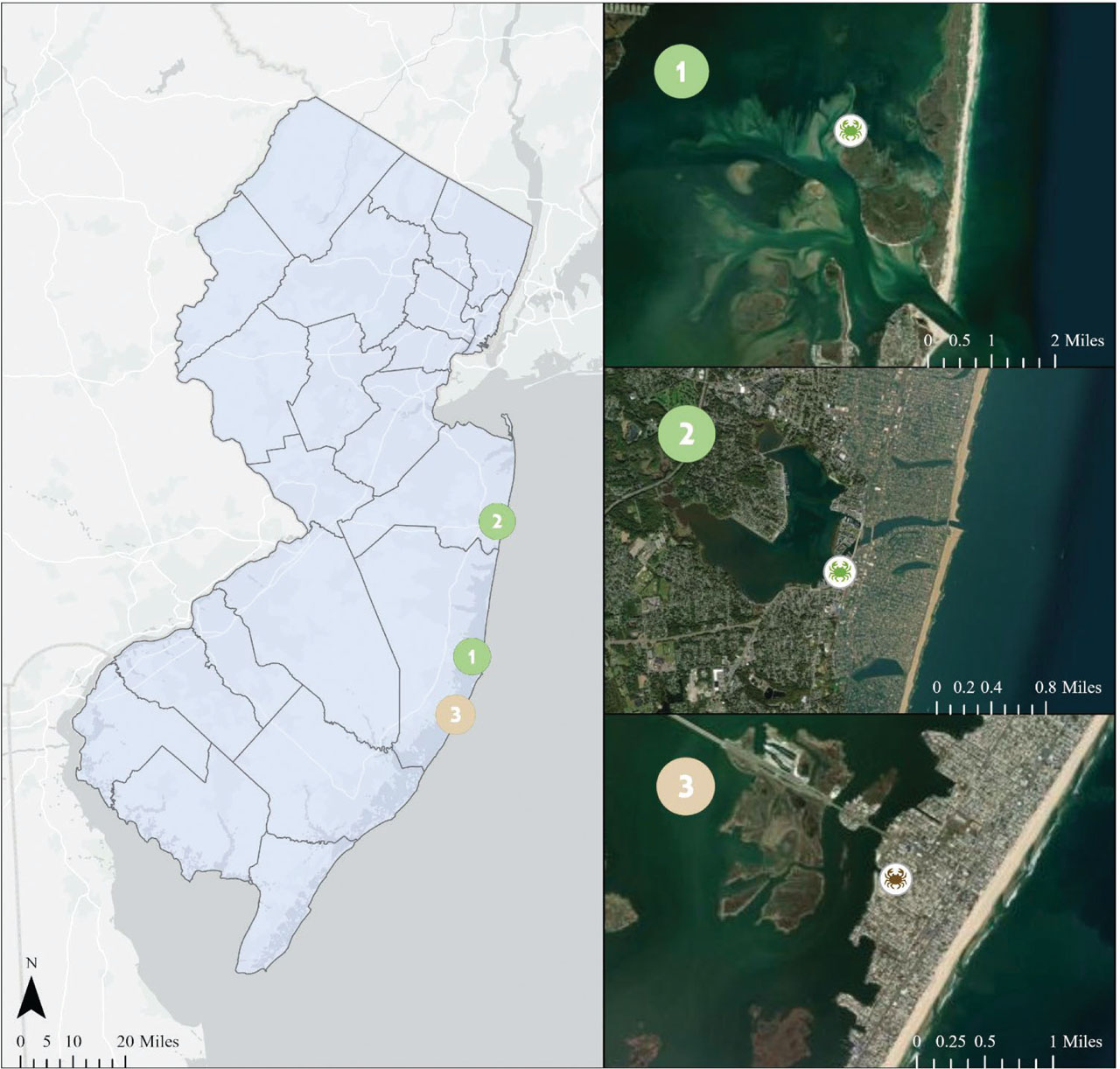
Figure 1.
Green crab (GC) and horseshoe crab (HC) shell areas of collection. Green indicates GC collection sites and brown represents HC sites (ArcGIS Pro).
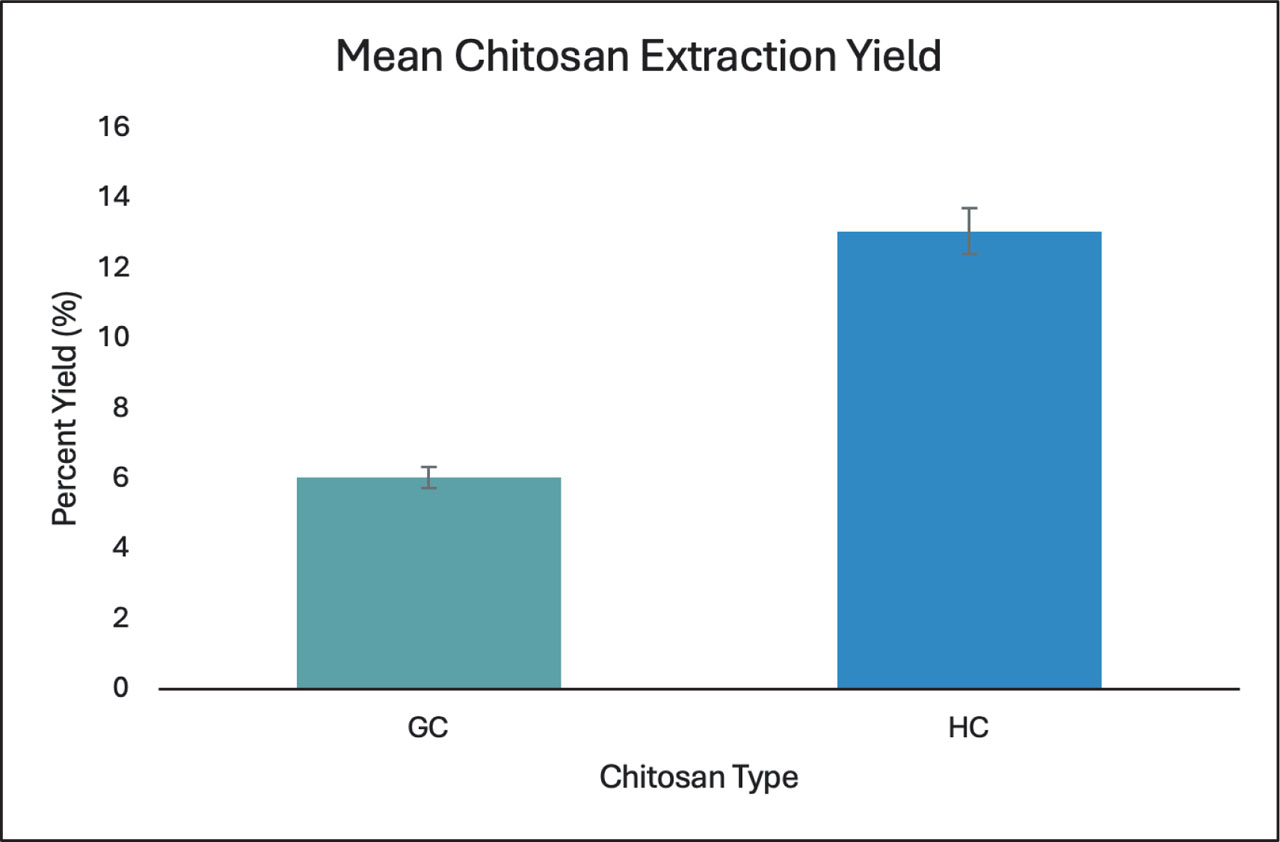
Figure 2.
Mean chitosan extraction yield from GCs and HCs (± 5%). GC shells had a mean yield of 6.04% chitosan, while HC shells had a mean yield of 13.1% chitosan (n = 80).
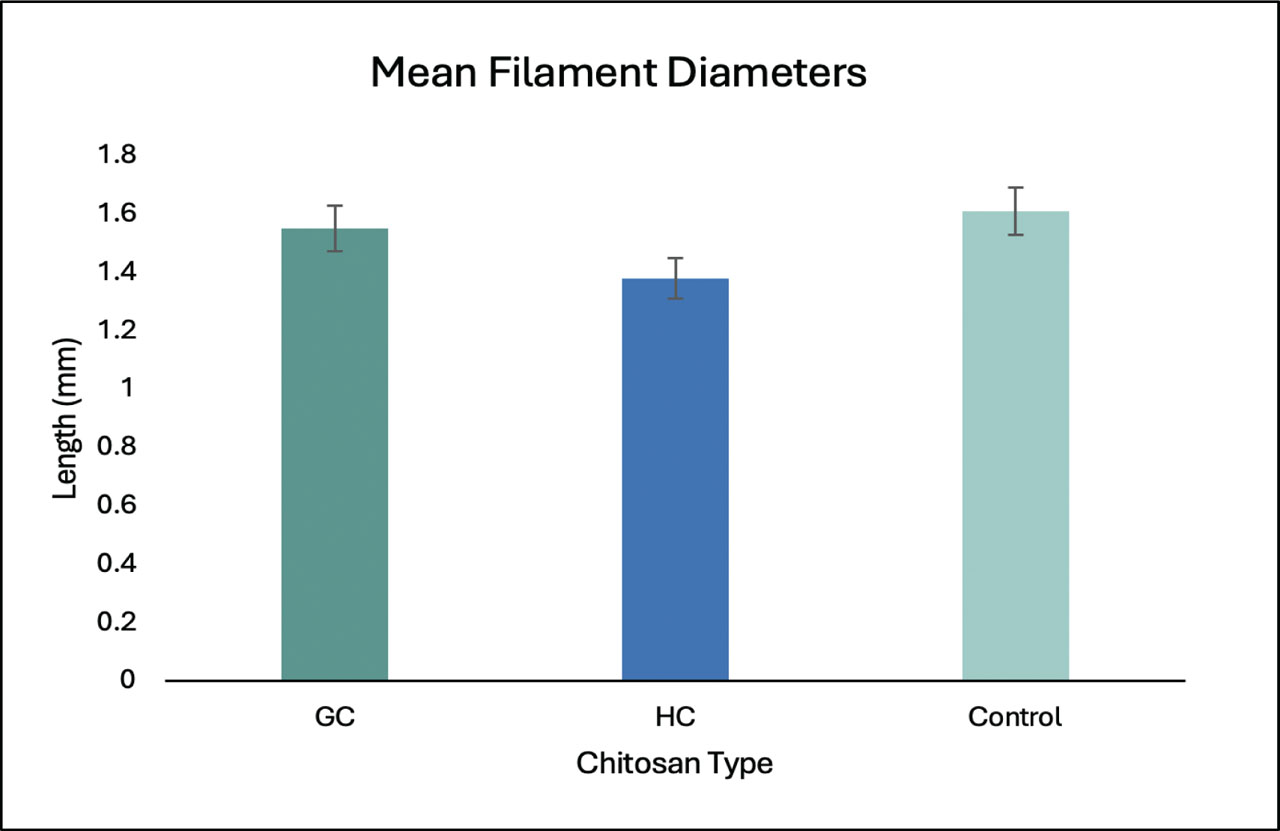
Figure 3.
HC sutures were found to have the lowest mean filament diameter of 1.38 mm, in comparison to FGC (1.61 mm) and GC (1.55 mm) (+5%, n = 50).
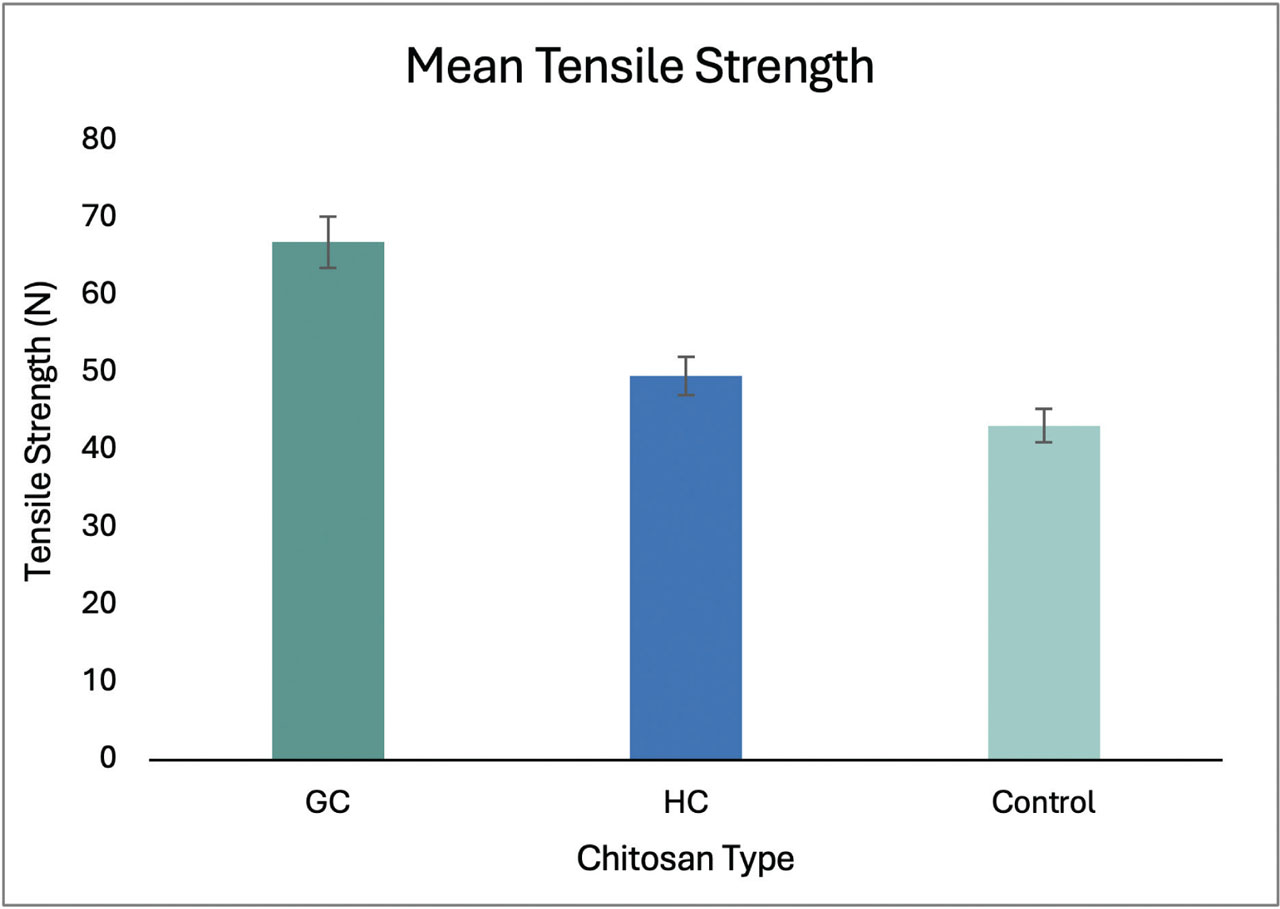
Figure 4.
GC sutures had the highest mean tensile strength of 66.9 N, while FGC sutures had the lowest mean tensile strength of 43.2 N. HC sutures had 49.7 N (±5%, n = 50, p < 0.05).
Table 1.
Estimated production cost of 20 meters of GC sutures based on buying bulk materials and this study’s laboratory methodology (Table made by Researcher, 2025 using Microsoft Excel).
| Cost for ~20 meters of GC suture | |||
|---|---|---|---|
| 1 M HCl | $85.00 | Glycerin | $15.00 |
| 1 M NaOH | $25.50 | 99.5% Ethanol | $6.00 |
| 12 M NaOH | $11.64 | 0.1M Sulfuric Acid | $5.00 |
| 10% Acetic Acid | $15.57 | Total: | $190 / 20 meters |
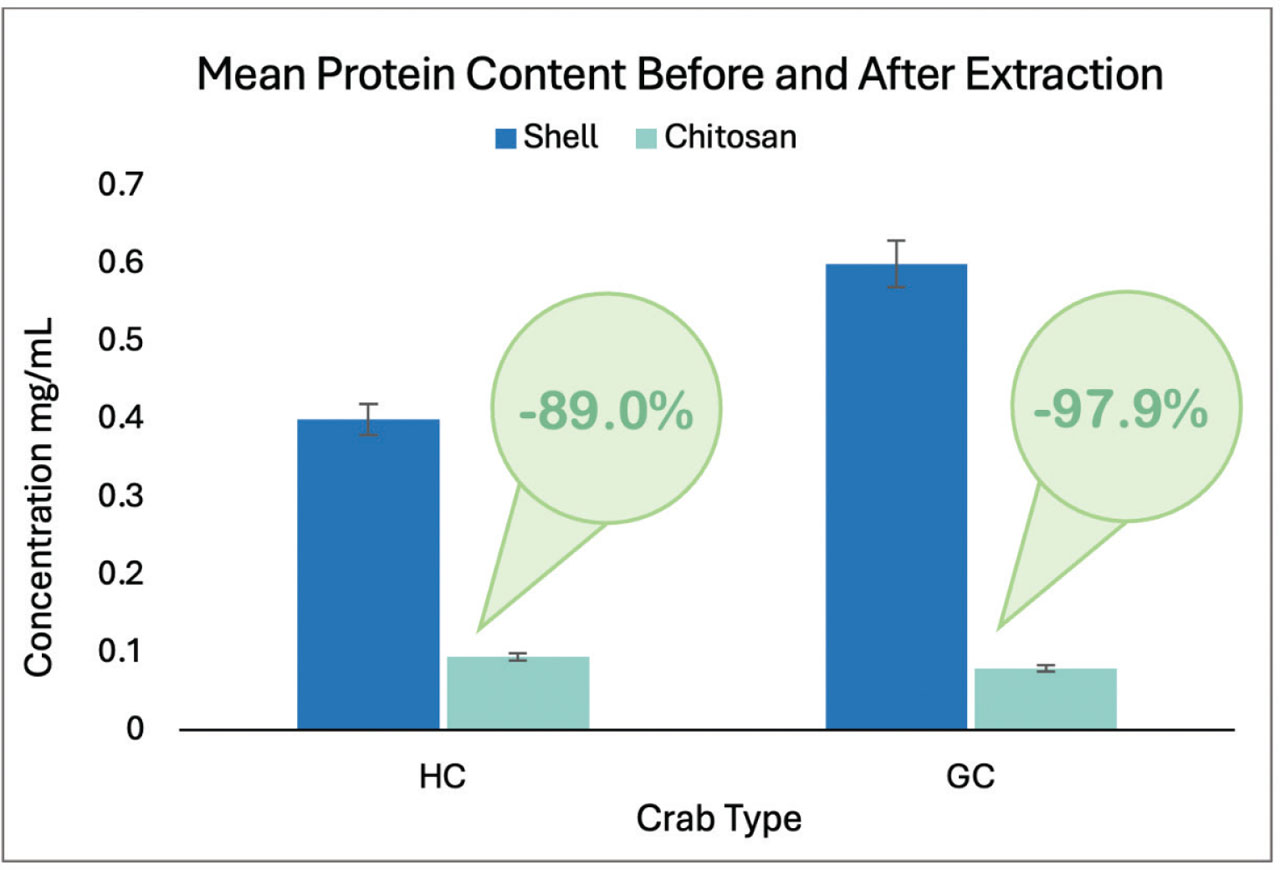
Figure 5.
The mean protein content before and after chitosan extraction was found to decrease for HC by 89% (859 ppm protein to 94.7 ppm), and by 97.9% for GC (3734 ppm protein to 79.9 ppm protein) (+5%, n = 40).
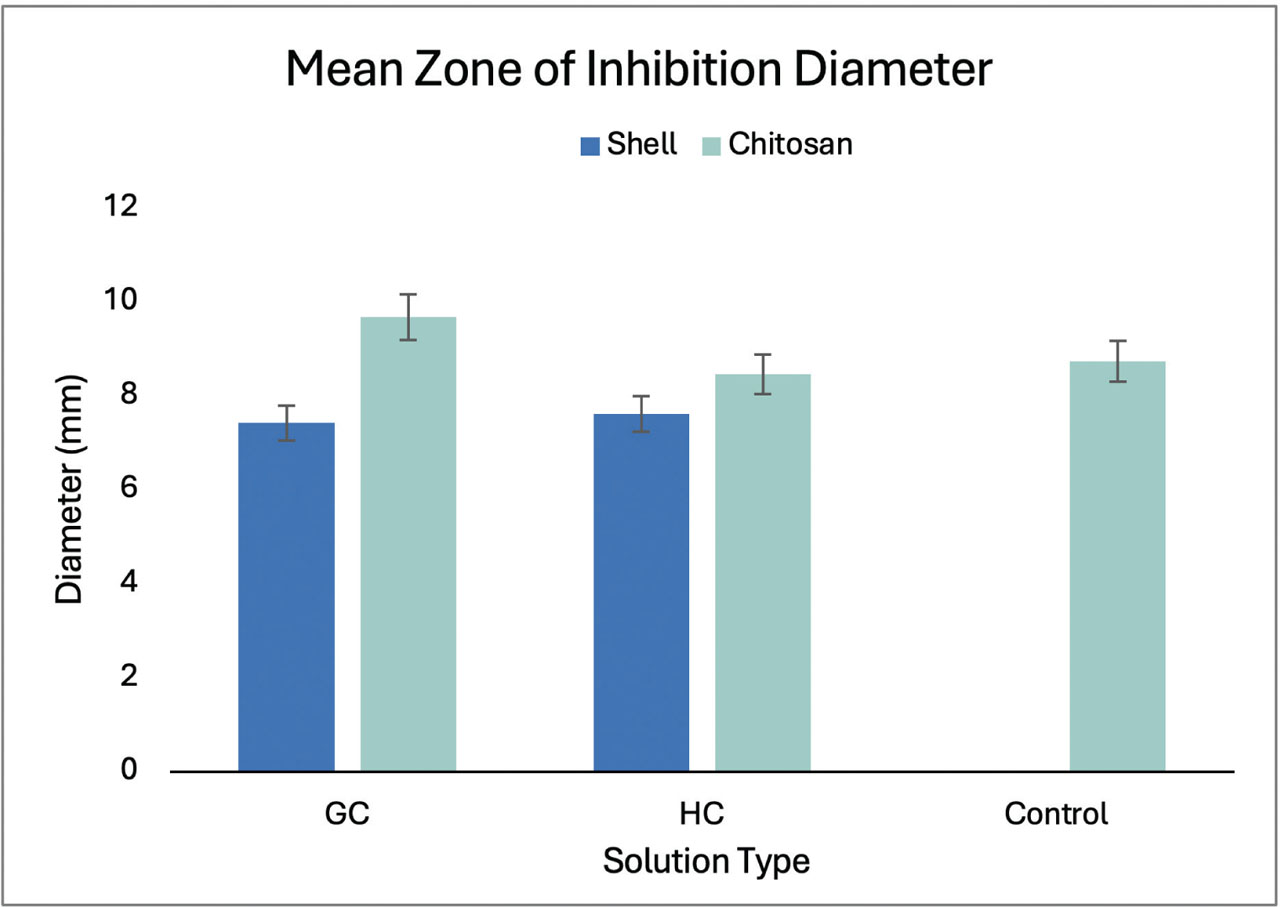
Figure 6.
GC chitosan was found to have the highest mean zone of inhibition of 9.67 mm, while GC shells had the lowest with a mean zone of inhibition of 7.40 mm (±5%, n = 32).
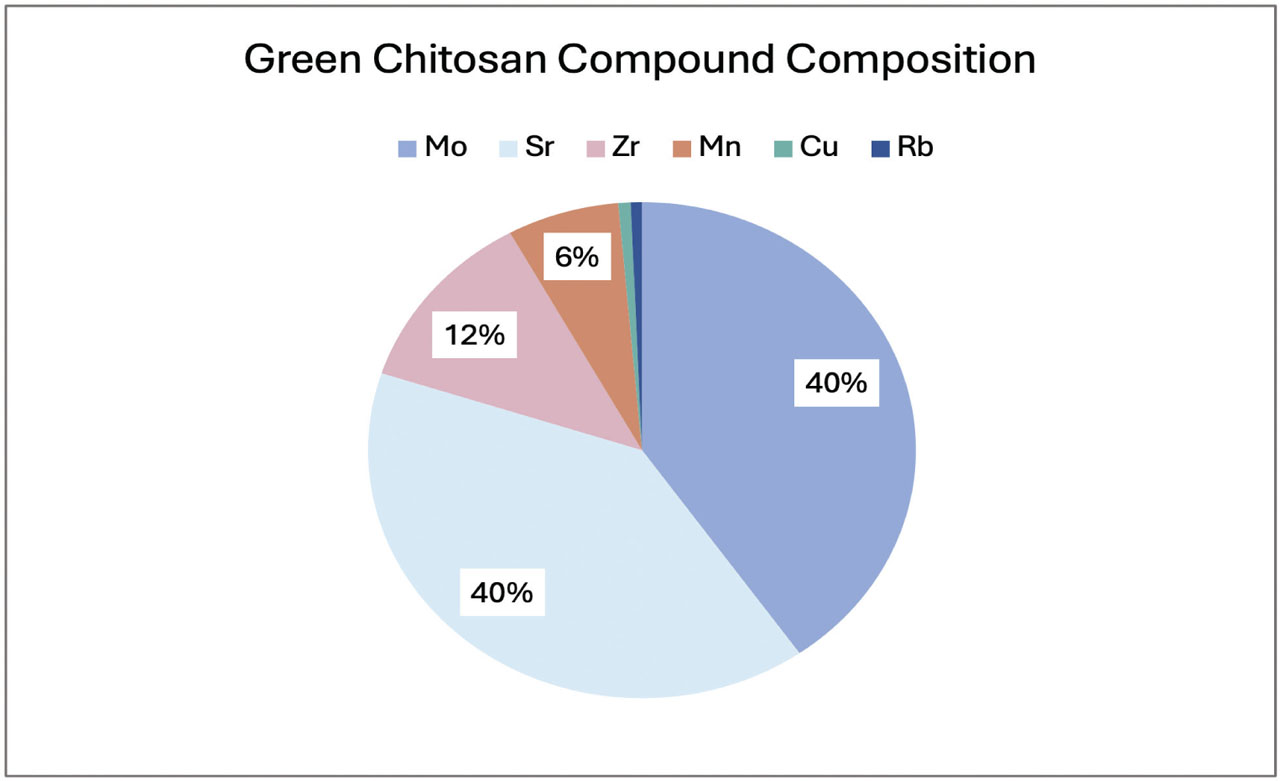
Figure 7.
Elemental composition of GC chitosan. GC chitosan was primarily composed of both Molybdenum (Mo) and Strontium (Sr), and was made of six elements, the least out of materials indicating more purity (n = 12).