
Introduction
Horseshoe crabs are a species of concern on the East Coast of the United States. Their blood is valuable to the pharmaceutical industry due to its importance in testing medicine, which has depleted their population over time. The horseshoe crab is not only important to the medical industry for its pharmaceutical aspect, but also as an important material for biomedical products (Anderson et al., 2013). The main material making up horseshoe crab shells is chitin. Chitin is an abundant natural polymer and is often found in the exoskeletons and shells of other marine invertebrates including crabs, shrimp, and lobsters (Elieh-Ali-Komi & Hamblin, 2016). Chitosan is the deacetylated derivative of chitin, which is more readily dissolvable and usable. It is a linear polysaccharide made of randomly linked D-glucosamine and N-acetyl-D glucosamine composed of deacetylated and acetylated units (Yadav et al., 2024). Chitosan is a valuable material in the biomedical field, with beneficial properties as an antimicrobial and antioxidant due to its chemical properties.
In certain forms, chitosan has the potential to be durable, which is especially important when used in medical materials such as drug delivery systems, nanoparticles and tissue engineering (Shariatinia 2019; Nasai et al. 2024). Chitosan based sutures have been developed in the past due to strong tensile strength capability, and horseshoe crab chitosan has been the main source for such materials (Pati et al., 2020). Biosutures are important as compared to synthetic sutures due to their compatibility with the human body. Biosutures, including chitosan sutures, are typically bioabsorbable, allowing for a less invasive healing process. As compared to other synthetic sutures, such as Polypropylene and Vicryl, biosutures do not influence the uptake of microplastics in the human body (Yag-Howard, 2014).
Horseshoe crab (HC) harvesting restrictions and limitations have been increasing to prevent both overharvesting and over bleeding for medical purposes (Raviraj et al., 2024).
In the future, HCs may not be obtainable for more than regulated controlled bleeding by pharmaceutical companies (Gisler & Michael, 2011). When this happens, HC chitosan sutures will no longer be a viable method.
European green crabs (Carcinus maenas) are an invasive species throughout the world (Figure 1). Green crabs (GCs), unlike HCs, have no large-scale utilization. They are not collected by the food industry due to their small size, and are used as commercial fish bait for only a short time per year (Mach & Chan, 2014). Due to their unregulated populations, as well as their ability to survive well in harsh environments, GC populations have increased (Nielsen et al., 2025). Similar to HCs, GCs contain chitosan in their exoskeletons. GCs may be a viable, alternative resource for the production of chitosan based suture material due to their excess population and similar shell compositions. This study aims to develop novel, alternative sutures utilizing GC extracted chitosan that can be used in the biomedical field.
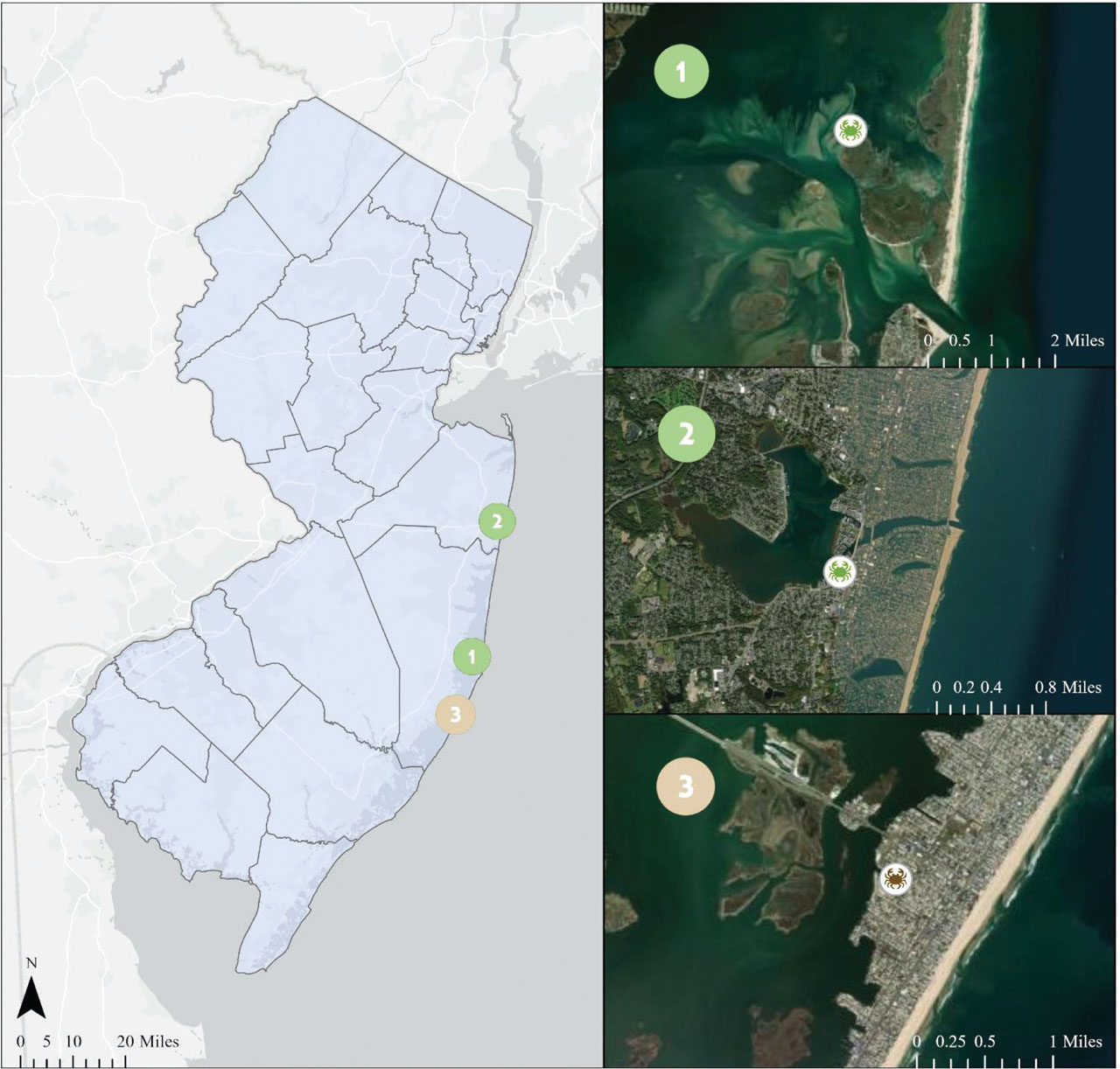
Figure 1.
Green crab (GC) and horseshoe crab (HC) shell areas of collection. Green indicates GC collection sites and brown represents HC sites (ArcGIS Pro).
Materials and Methods
Sites and Locations
Horseshoe crab (Limulidae) and European green crab (Carcinus maenas) shells were collected from coastal sites in New Jersey, including Sedge Island, oyster farms, and local bay beaches in Barnegat Bay, New Jersey. Additional GC shells were obtained from Fisherman’s Den Marina in Belmar, New Jersey. Eight HC shells were collected, and 38 GCs and GC shells were collected for this study. Shells were collected from August 1, 2024 to March 1, 2025 (Figure 1). Horseshoe crab shells were stored at room temperature, while green crab shells were stored at 3.5 °C before processing. All samples were rinsed with tap water to remove tissue and debris. Shells were incubated at 80 °C for 24 hours, initially ground using a mortar and pestle, and ground into fine particles using a standard coffee grinder. A total of 80 shell samples were prepared.
Chitosan Extraction and Analysis
Chitosan was extracted through demineralization, deproteinization, and deacetylation. A basic chitosan extraction method was referenced and adjusted to determine a proper ratio (Al Shaqsi et al., 2020; Pellis et al., 2022). A 1:15 weight-to-volume (w/v) ratio was determined to be optimal for both shell types. For demineralization, horseshoe crab shells were treated with 1.0 M hydrochloric acid (HCl) at the proper ratio. Solutions were stirred continuously at 300 rotations per minute (rpm) for 60 minutes at room temperature, vacuum filtered, and dried at room temperature for 20 hours (Kazami et al., 2015). Demineralized shells were deproteinized with 1.0 M sodium hydroxide (NaOH) at a 1:15 w/v ratio and stirred at 300 rpm at 90 °C for 60 minutes, producing chitin. The resulting material was vacuum filtered, dried for 20 hours, and bleached using 99.5% ethanol with continuous stirring for 10 minutes. Samples were vacuum filtered again and dried at 80 °C for two hours. Deacetylation was performed by treating chitin with 12.0 M NaOH at a 1:15 w/v ratio and stirring at 300 rpm at 80 °C for 90 minutes to produce chitosan. Extracted chitosan was vacuum filtered, dried at room temperature for 20 hours, washed with ethanol, and dried at 70 °C for three hours.
Elemental composition of shells and extracted chitosan was analyzed using a Bruker S1 TITAN handheld X-ray fluorescence (XRF) spectrometer. Food-grade chitosan was analyzed as a control. Protein content was determined using a Bradford protein assay. Shell and chitosan samples were dissolved in 0.1 M acetic acid and analyzed with a Thermo Spectronic Genesys 2 Spectrophotometer at 595 nanometers (nm) using a bovine serum albumin calibration curve to calculate protein concentrations before and after extraction. Antimicrobial activity was assessed using the Coliscan© diffusion disc method with Escherichia coli. Samples were incubated at 35 °C for 24 hours, and zones of inhibition were measured using a digital microscope.
Suture Development and Testing
Suture material was fabricated using a simplified wet spinning method. Chitosan was dissolved in 10% acetic acid at a 1:67 mg/mL ratio at 100 °C with continuous stirring, with glycerin added as a plasticizer. The solution was extruded through 0.3 mm spinnerets into coagulation baths consisting of sodium hydroxide, ethanol, or sulfuric acid solutions (Mohammadkhani et al., 2021; Zhao et al., 2024). A 1:1 sodium hydroxide–ethanol coagulation bath was determined to be most effective and used consistently. Fibers were drawn from the coagulation bath, rinsed in water, dehydrated in ethanol, and air-dried under tension for 20 hours.
Dried sutures were cut into 20 mm segments and tested for tensile strength using a handheld Newton force meter. Suture diameters were measured using a handheld caliper. Tensile performance of green crab, horseshoe crab, and food-grade chitosan sutures was compared to commercially available synthetic sutures. A cost analysis was conducted to estimate bulk production costs based on material usage and laboratory methodology. Statistical analysis was conducted utilizing Two-Way ANOVA and Student’s t-test at a 95% confidence interval to determine statistical significance of findings.
Results
Sutures were developed from horseshoe crab (HC) and European green crab (GC) shells using extracted chitosan. Green crabs yielded a mean chitosan extraction of 6.04%, while horseshoe crabs yielded a higher mean yield of 13.1% (Figure 2, n = 80). Food grade chitosan (FGC) yield was not determined as FGC was obtained after extraction occurred. Sample yield was calculated using percentages to determine yields regardless of shell size. Despite lower extraction yield, GC sutures were observed to be longer, less brittle, and more flexible than both HC and food-grade chitosan (FGC) sutures. 50 suture fragments were used to measure mean diameter. Mean suture diameter differed among materials, with HC sutures having the lowest mean diameter of 1.38 mm, followed by GC sutures at 1.55 mm and FGC sutures at 1.61 mm (Figure 3, n = 50). A Newton force meter was used to determine the tensile strength of the chitosan sutures.
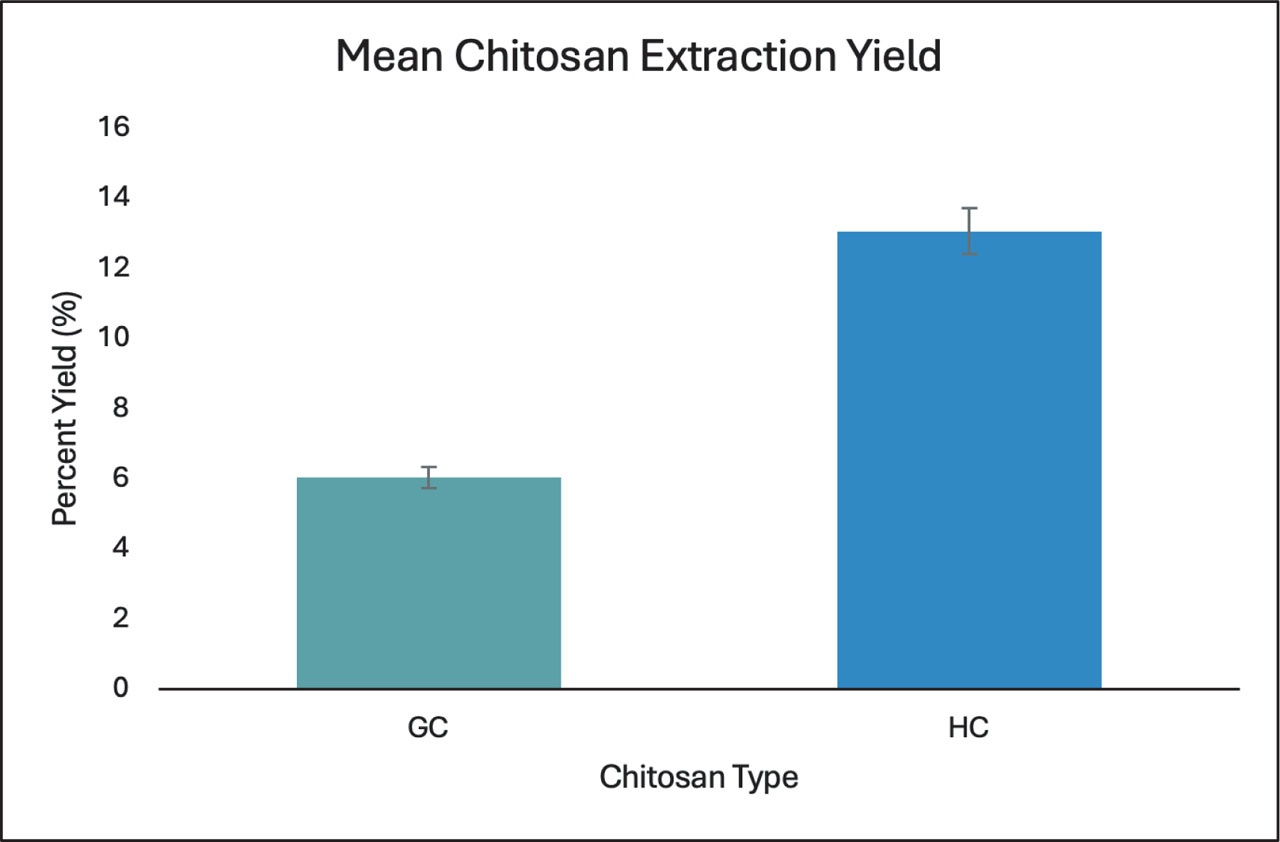
Figure 2.
Mean chitosan extraction yield from GCs and HCs (± 5%). GC shells had a mean yield of 6.04% chitosan, while HC shells had a mean yield of 13.1% chitosan (n = 80).
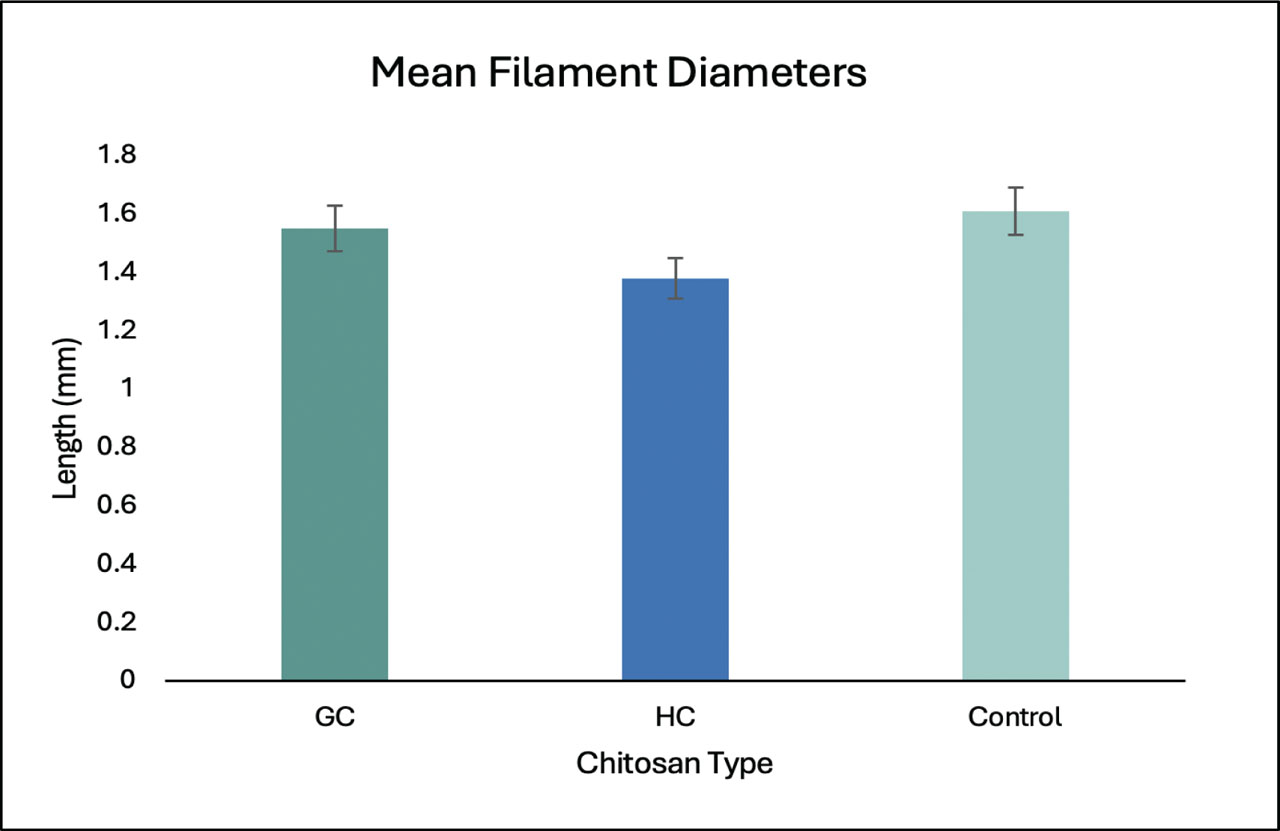
Figure 3.
HC sutures were found to have the lowest mean filament diameter of 1.38 mm, in comparison to FGC (1.61 mm) and GC (1.55 mm) (+5%, n = 50).
Tensile testing showed that GC sutures had the highest mean tensile strength at 66.9 N, followed by HC sutures at 49.7 N and FGC sutures at 43.2 N (Figure 4, n = 50). GC sutures were significantly stronger than FGC sutures (p < 0.05), while exhibiting tensile performance more similar to HC sutures.
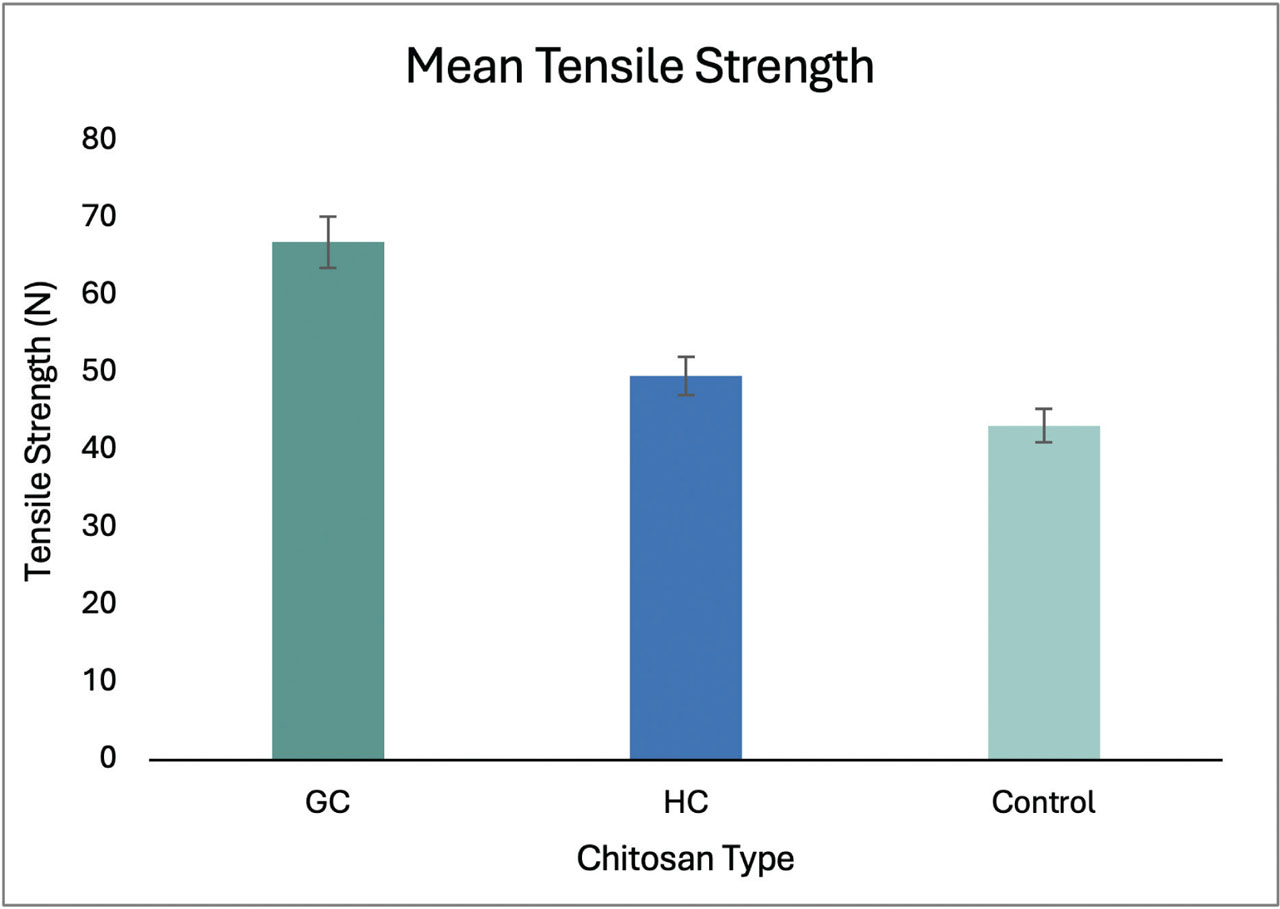
Figure 4.
GC sutures had the highest mean tensile strength of 66.9 N, while FGC sutures had the lowest mean tensile strength of 43.2 N. HC sutures had 49.7 N (±5%, n = 50, p < 0.05).
The disc diffusion method was utilized with E. coli to quantify antimicrobial activity of both chitosan types, both shell types, and FGC as a control. Antimicrobial testing showed that GC chitosan produced the largest mean zone of inhibition of 9.67 mm, while GC shell material produced the smallest (Figure 6, n = 32). XRF analysis indicated higher elemental purity in GC chitosan as compared to both shell types and both HC and FG chitosan. GC chitosan contained only six elements, including molybdenum, strontium, and copper (Figure 7, n = 12). A cost analysis indicated that approximately 20 meters of GC suture material could be produced for an estimated total cost of $190 when bulk materials and the laboratory methodology used in this study were applied (Table 1). This is a substantially lower cost per meter compared to commercially available synthetic sutures (Wang et al., 2018).
Table 1.
Estimated production cost of 20 meters of GC sutures based on buying bulk materials and this study’s laboratory methodology (Table made by Researcher, 2025 using Microsoft Excel).
| Cost for ~20 meters of GC suture | |||
|---|---|---|---|
| 1 M HCl | $85.00 | Glycerin | $15.00 |
| 1 M NaOH | $25.50 | 99.5% Ethanol | $6.00 |
| 12 M NaOH | $11.64 | 0.1M Sulfuric Acid | $5.00 |
| 10% Acetic Acid | $15.57 | Total: | $190 / 20 meters |
Discussion
Green crab chitosan sutures demonstrated superior mechanical performance compared to horseshoe crab and food-grade chitosan sutures, despite lower chitosan extraction yields (Figure 2). Lower GC chitosan yield can be explained by the higher protein content in GC shells (Naczk et al., 2004). Chitosan yield in this project can be compared to a mean shrimp chitosan yield of 15.4% (Hossain & Iqbal, 2014). GC sutures were consistently less brittle and more flexible, resulting in the highest mean tensile strength among tested materials (Figure 4). Brittleness observed in HC and FGC sutures is consistent with previous studies indicating that acetic acid dissolution can introduce microscopic defects in chitosan fibers, reducing flexibility and tensile strength (Yudin et al., 2014).
Differences in tensile strength and flexibility may be attributed to structural differences in chitin organization between species. Horseshoe crab shells contain tightly folded chitin structures that produce rigid and brittle materials, while green crab shells contain less folded chitin arrangements that promote flexibility (Kassim et al., 2018; Salavati, 2023). These structural differences likely contributed to the increased elasticity and tensile strength observed in GC sutures, consistent with the diameter and tensile patterns found. The tensile strength of GC sutures was also more similar to commercially available synthetic sutures, such as polypropylene, than FGC or HC based sutures (Khiste et al., 2013). Future research should explore the development and testing of GC chitosan sutures that are more similar in structure to synthetic sutures.
The reduction in protein content following chitosan extraction is important for biomedical applications, as shellfish allergens are primarily protein-based, including the reaction to the protein tropomyosin. GC chitosan showed a greater reduction in protein content than HC chitosan (Figure 5). This increased protein removal suggests that GC chitosan could pose less of a risk in terms of allergies in patients for medical usage (Yag-Howard, 2014).
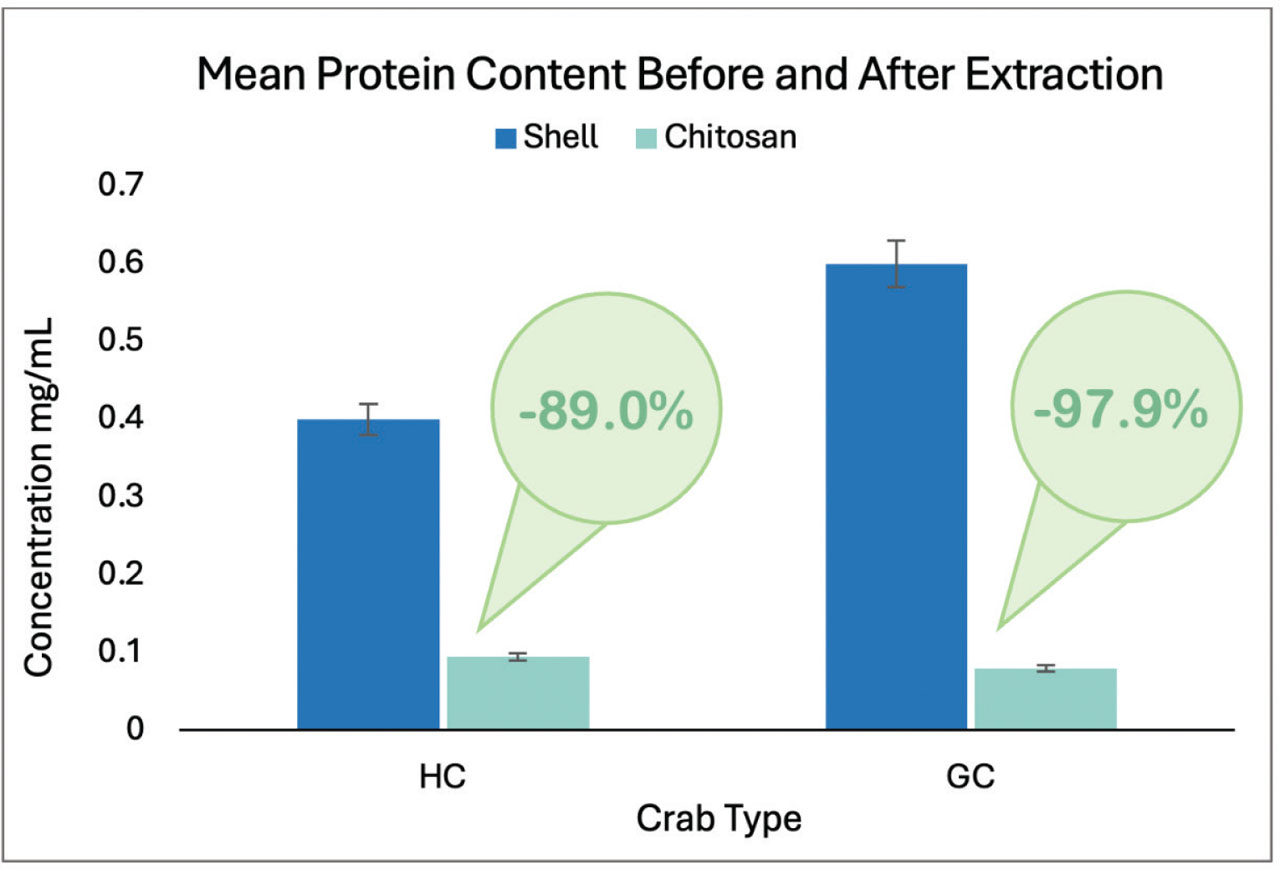
Figure 5.
The mean protein content before and after chitosan extraction was found to decrease for HC by 89% (859 ppm protein to 94.7 ppm), and by 97.9% for GC (3734 ppm protein to 79.9 ppm protein) (+5%, n = 40).
GC chitosan also exhibited enhanced antimicrobial activity compared to shell material and other chitosan sources (Figure 6). Chitosan’s antimicrobial activity has been attributed to its polycationic structure, which disrupts bacterial cell membranes and interferes with cellular metabolism (Nasaj et al., 2024). The increased antimicrobial performance of GC chitosan may also be influenced by its elemental composition, which contained fewer elements overall and was primarily composed of molybdenum and strontium (Figure 7). Molybdenum has been associated with antimicrobial effects and may further contribute to the increased zones of inhibition observed (Farooq et al., 2023). GC also had low concentrations of heavy metals such as manganese and copper, which would be important and safer for use as a source for the future development of chitosan nanoparticles.
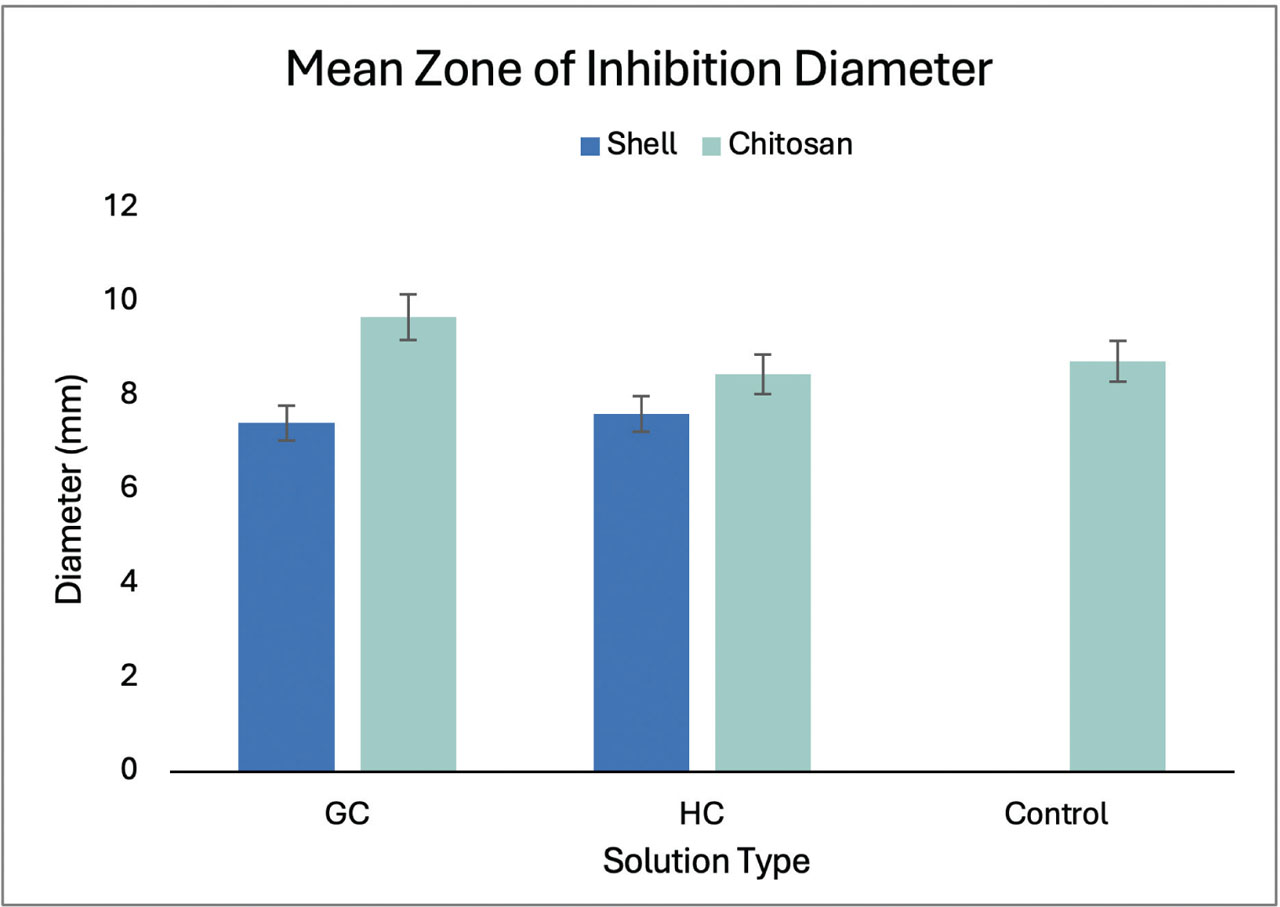
Figure 6.
GC chitosan was found to have the highest mean zone of inhibition of 9.67 mm, while GC shells had the lowest with a mean zone of inhibition of 7.40 mm (±5%, n = 32).
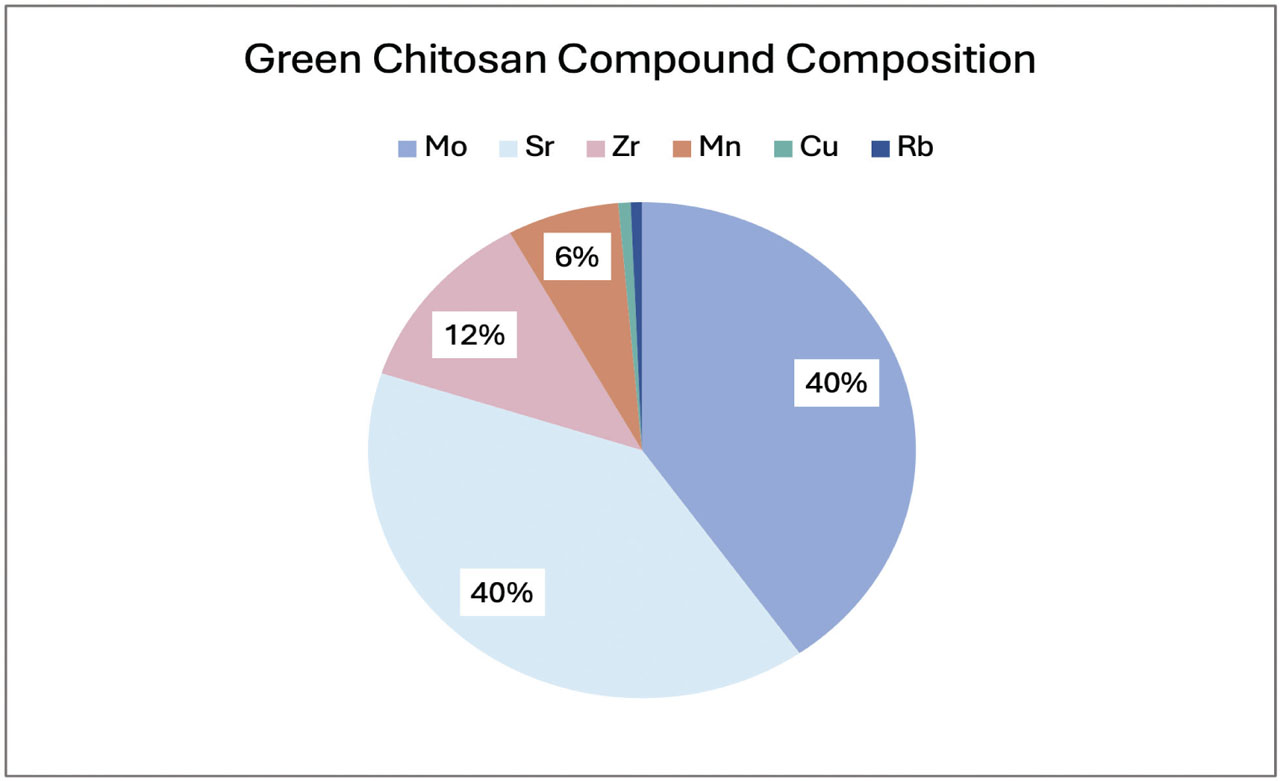
Figure 7.
Elemental composition of GC chitosan. GC chitosan was primarily composed of both Molybdenum (Mo) and Strontium (Sr), and was made of six elements, the least out of materials indicating more purity (n = 12).
From a production and environmental point of view, green crabs could be a viable and sustainable alternative source of chitosan. HC harvesting restrictions have increased due to conservation concerns, and reliance on horseshoe crab shell waste may not be a sustainable long term solution (Gisler & Michael, 2011). European green crabs are an invasive species with limited commercial utilization and high population density (Nielsen et al., 2025). Utilizing GC shells for suture production could help mitigate invasive populations while providing a cost-effective source of biomedical materials (Table 1). When combined with the mechanical strength, antimicrobial activity, and reduced protein content demonstrated in this study, GC chitosan sutures represent an alternative to existing chitosan-based and synthetic sutures.
Conclusion
A potential use for the invasive species Carcinus maenas has been developed. This can decrease the overactive population of GCs. GC sutures were determined to be stronger and more durable than HC, and had similar properties to food grade chitosan sutures. GC sutures were more similar to commercial synthetic sutures. GC chitosan displayed antimicrobial properties and a 97.9% decrease in protein, which was higher than both HC and FGC in appropriate tests. A cost-effective manufacturing process is possible and economically friendly, especially when supplies are bought in bulk.
Future studies will explore methods for creating GC sutures that are similar in structure to synthetic sutures by increasing tensile strength with electrospinning, twisted multifilaments, and a coating of GC chitosan. Each suture type will be observed over the course of a month to determine the absorption rate of the chitosan sutures as caused by the enzyme lysozyme. The tensile strength will be tested on a regular basis during this process to analyze the rate of decrease of tensile strength. This will be done on synthetic human skin with an appropriate amount of lysozyme present accurately to mimic the environment. A use for protein content in GC shells will be determined, so both the chitosan and protein will be properly utilized. This may be used as a supplement for the food industry. The protein could be produced through a new extraction process which avoids basic deproteinization.
Acknowledgements
We wish to thank the Marine Academy of Technology and Environmental Science (MATES) for the supplies and opportunity provided to complete this project. We am grateful to Sarah Quigley for providing necessary information for methodology development. We are grateful to MATES research mentors and advisors for guidance.