
Introduction
The Northern Diamondback Terrapin (Malaclemys terrapin terrapin) (Schoepff, 1793) is an estuarine turtle species with high nesting site fidelity (Roosenburg, 1996; Feinberg & Burke, 2003). Female terrapins navigate from their brackish water habitats, through the intertidal zone and onto dry land, in order to dig their nests (Burger & Montevecchi, 1975). Following oviposition the female returns to open water leaving her nest unguarded, with no protection of the eggs, nor parental care of the hatchlings (Burger, 1977). Predation of nests is historically high and contributes to the decline of terrapins and other turtle species worldwide (Feinberg & Burke 2003; Butler et al., 2006; Geller & Parker, 2022).
Finding cost-effective ways to safely minimize predation in high-density nesting areas and increase nest hatching success is a key conservation initiative. Primary mammalian predators include raccoon (Procyon lotor), mink (Neovison vison), red fox (Vulpes vulva), opossum (Didelphis virginiana) and coyote (Canis latrans) (Burger, 1977; Butler et al., 2004; Naeger et al., 2021; Geller & Parker, 2022; Mercer et al., 2023; Budd et al., 2024). Many different measures have been used to exclude or remove predators from nesting sites. For example, monitoring and subsequent control or removal of predators has been found to be an effective method for curtailing sea turtle nest predation, but only if continued for subsequent nesting seasons (Engeman et al., 2003; Engeman et al., 2005; Engeman et al., 2006; Munscher et al., 2012). Although predator exclusion or removal may reduce nest predation, the method can also indirectly cause unexpected results, such as population changes to existing species in the area or introductions of new predators (Barton & Roth, 2008). Similar environmental responses, which affect migration and species movement, may also occur when conservation barriers and exclusionary fencing are encountered (Smith et al., 2020; Mercer et al., 2023; Streeting et al., 2023).
Nest predation can also be managed by understanding a predator's attraction and avoidance behaviors. Previous studies have documented that the raccoon is one of the most significant predators of sea turtle and terrapin nests, with considerable research on the cues they use for detecting nests (Feinberg & Burke, 2003, Ner & Burke, 2008; Munscher et al., 2012; Geller & Parker, 2022). A follow-up study to Burke et al. (2005), found that raccoons in the Jamaica Bay, New York, area did not use visual markers or rely on olfactory signals (human and ocean scents) to locate terrapin nests, but instead used tactile cues associated with soil disturbance (Edmunds et al., 2018). Other studies demonstrated that surface changes to natural and artificial nests, such as broom sweeping, did not lower nest predation rates (Geller, 2015, Geller & Parker, 2022), whereas vocalizations broadcast to threaten nest predators were found to be effective predator deterrents (Naeger et al., 2021).
Nest cages or coverings, when used solely or in combination with other predator deterrent methods, often provide effective nest protection (Roosenburg & Kelley, 1996; Kurz et al., 2012; Riley & Litzgus, 2013; Buzuleciu et al., 2015; Engeman et al., 2016; Streeting et al., 2023). Although these exclusion devices may not entirely eliminate predation, they yield higher rates of hatchling emergence success (Engeman et al., 2016; Riley & Litzgus, 2013). As with all predator deterrent methods, any environmental impacts, such as temperature or substrate composition changes to the incubation cavity, must be considered in the design and use of cages and covers (Lynn & Ullrich, 1950; Engeman et al., 2016; Riley & Litzgus, 2013, Burke & Eugene, 2024). Predator excluder cages that are made of wire mesh or plastic, are frequently used to protect incubating eggs and as reported by Burke & Eugene, (2024), they do not alter the nest's temperature or moisture and resultant impacts on hatching success, morphology or gender ratios.
For this study, our goal was to identify a natural, non-harmful and cost-effective method for managing high rates of terrapin predation by numerous species. We considered deterrent alternatives that are biochemically produced as secondary plant metabolites, such as pungent odors or bitter tastes (Hansen et al., 2016; Clapperton, 2018). Specifically, we focused on pine derivatives, as pine-based products and essential oils have been identified as possible wildlife repellents. Notably, for some wildlife, such as deer mice (Peromyscus maniculatus), voles (Microtus sp.), pocket gophers (Geomys bursarius), and snow hares (Lepus americanus), the scent of pine or pine oil acted as a deterrent by producing sensory irritation or interference with digestion when consumed (Bell & Rarestad,1987; Harborne, 1991; Eppel et al., 1995; Wager-Page et al., 1997). Additionally, pine needles and pine cones are used as a repellent by avian species in the construction of their nests, to protect them from insects and parasites (Dykstra et al., 2009; Pires et al., 2012).
Within coastal communities and along the uplands adjacent to estuarine wetland habitats of southeastern NJ, pine trees, pine branches and pine cones are abundant. To date, no studies have been conducted using natural and local pine as a conservation measure for deterring predators from terrapin nests. Our study was designed to test the effectiveness of pine to protect terrapin nests without negatively impacting the nest environment or hatching success.
Materials and Methods
Study Site
This pine protection study was part of an ongoing Northern Diamondback Terrapin (Malaclemys terrapin terrapin) conservation project conducted in southern New Jersey, USA, at a location near Barnegat Bay, NJ, with direct access to an adjacent intertidal salt marsh. Most terrapin nests are laid in yards or driveways that are covered in a layer of landscaping gravel atop substrates consisting of soil, clay and/or sand. Historically, high predation occurs throughout the nesting and hatching season.
Nest Protection and Data Collection
For both years of the study, we randomly selected terrapin nests that contained viable eggs and also decoy nests (nests that were dug and covered by terrapins but did not contain eggs). In 2023, nests did not have pine, but instead were protected with large stones/pavers, or seaweed with stones. In 2024, nests were protected with and without pine. Some nests were also further protected from predators by covering with cages; others were left open and unprotected with no cages. Cages were cylindrical in shape (203 mm high, plus 45 mm prongs and with 45 mm x 20 mm gage openings; by 203 mm wide and with 12.7 mm x 12.7 mm gage openings) and made with metal wire. For both caged and uncaged treatment groups, we added different combinations of large stones/pavers, pine cones, pine branches or pine debris. Control nests were those nests without pine (“unprotected nests”). We identified the predator deterrent series combinations as:
Cage or No Cage: with no pine protection
Cage with only large stone/paver;
Cage or No Cage: with stone + pine cones + pine branches;
Cage or No Cage: with stone + pine cones + pine debris;
Cage or No Cage: with stone + pine branches;
Cage or No Cage: with only pine cones;
Cage or No Cage: with pine cones + pine branches;
Cage or No Cage: with only pine branches;
Cage or No Cage: with only pine debris and;
Cage: with seaweed + stone.
Large and heavy stone/pavers were recycled from patio installations and placed on the top of the cages. We collected fresh seaweed from the ocean's tide line, which consisted of algal species (Fucus spp.) and vascular plant material. Although enough fresh seaweed was collected for our trial study in 2023, it was not readily available or a reliable source for continued testing in 2024.
We collected freshly cut pine branches, freshly opened pine cones, and pine debris (composed of loose fresh pine needles and pine cone buds) from native scrub pines (Pinus spp.), which included Pinus virginiana, Pinus rigida, and Japanese Black Pine (Pinus thunbergii), that grew locally on the sites. For cages with pine cones, we inserted the cones into the lower cage rungs (Figure 1A). We weaved fresh pine branches into the gage openings around the bottom rungs of the cage and with the needles touching at or near the ground (Figure 1A). Pine debris or seaweed was placed around the perimeter of the nest. All of the cages were placed around the nest cavity and pushed into the ground until the cage prongs were embedded into the soil. We then secured the cage by pounding the top with a mallet. For nests that did not have cages, the pine protection was placed in a circle around the nest cavity (Figure 1B). Nest information was recorded and posted at each nest location.
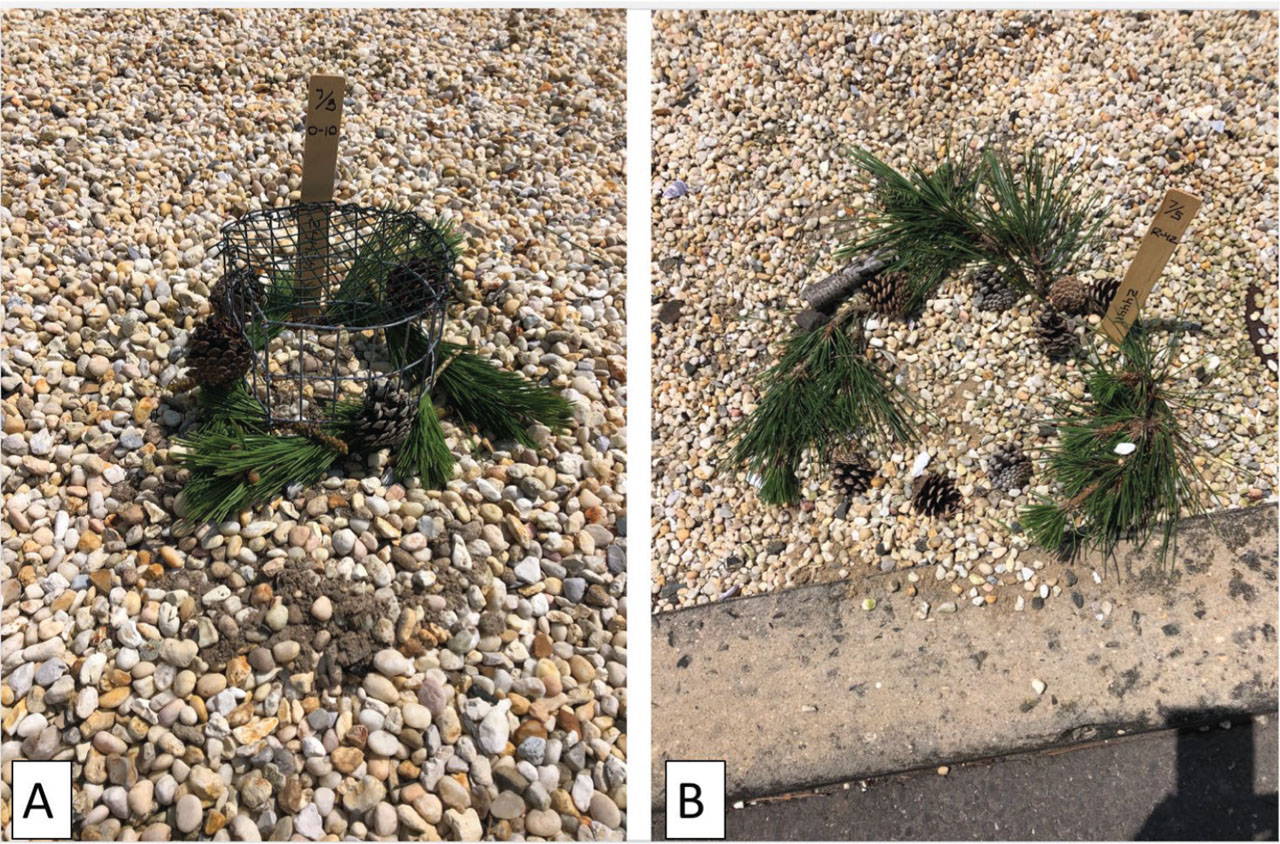
Figure 1.
(A – B). Nest protected with pine branches and pine cones: with cage (A) and without cage (B).
We allowed all nests to incubate naturally and checked daily for predator and/or hatchling activity from 30 May–15 September in 2023, and 30 May–12 October in 2024. If an uncaged nest without pine was opened or predated but it still contained viable eggs, then one of the predator deterrent combinations was added. In 2024, when predated nests were found, we also noted if there had been an overnight or early morning rain. Predated nests were identified when a nest cavity was opened and/or there were eggshells located outside of the nest. We collected, counted, removed and recorded all predated eggs and eggshells from the nest site.
When hatchling activity was observed, the nest cavity was checked for eggshells and/or live hatchlings. The number of predated eggs, predator attempts, live hatchlings, emerged eggshells and dates were recorded for each nest. Retrieved hatchlings were measured (± 0.01 mm), weighed (± 0.01 g), and examined for scute anomalies to the carapace or plastron. At the end of the study period, any nests that were beyond a 90-day incubation period were checked for hatchlings and/or still viable eggs. We removed all nest cages after the monitoring time frame was completed and any remaining eggs were left to complete incubation and overwinter in the nest cavity.
Nest Environment pH
We collected pH values at nests to determine if the presence of pine altered the soil acidity of the nest cavity environment for incubating hatchlings. The pH was recorded at depths of 12.7 mm, 76.5 mm and 138 mm by using an IRTOV Digital 4-in-1 pH meter, with units scaled between 0–14. These depths were chosen based on nest cavity depths reported by Budd et al. (2024). In the first year of this study, pH readings were taken in soil without pine and next to the nest after oviposition was completed, so that the integrity of the nest would not be disturbed. In the second year of this project, pH was measured at the same depths in the soil comprising the walls of the empty nest cavity, where pine had been added. We also recorded the dates of weed control applications in the nesting areas.
Statistical Analysis
We conducted ANOVA and Tukey Post-Hoc tests for pH readings, comparing pine versus non pine treatments with a 95% confidence level. An alpha of 0.05 or less was used to determine significance for all tests.
Results
Pine Nest Protection vs Predation
A total of 204 nests in this two-year study were randomly assigned one of the predator deterrent combinations. We did not find predation at any nests that were protected with pine (n = 86 nests) or seaweed (n = 4 nests), whether caged or uncaged (Table 1). Full nest predation occurred at 92 nests that did not have any pine protection. If an unprotected nest was predated or had an attempted predation but still had viable eggs in the nest cavity, then we protected the nest with one of the pine deterrent combinations. None of the 21 decoy nests was predated, regardless of whether they were protected with pine (n = 8 nests), seaweed (n = 1 nest), or had no protection (n = 12 nests). We did not find any evidence of ingestion or attempted consumption of any pine cones, pine branches, or pine needles by potential nest predators.
Table 1
Pine, No Pine, and Seaweed nest outcomes.
| Nest Outcome | Pine | No Pine | Seaweed | Total |
| Full Predation | 0 | 92 | 0 | 92 |
| Decoy | 8 | 12 | 1 | 21 |
| Emergence | 65 | 7 | 2 | 74 |
| Still Incubating | 13 | 0 | 0 | 13 |
| Non-viable | 0 | 3 | 1 | 4 |
| Total Nests | 86 | 114 | 4 | 204 |
Of the 92 fully predated nests, a total of 87 nests (95%) did not contain any pine or seaweed protection (uncaged = 81 nests; caged = 6 nests); and 5 caged nests (5%) were weighed down by stones/pavers. We observed that predators like raccoon and mink, either directly dug out the nest cavity; pushed the cage over and then opened up the nest cavity; dug beneath the nest from the outside of the cage; or knocked the cage and paver over and then depredated the nests (Figure 2A–D). Throughout the study, we also observed that a predator's attempt and/or their digging was aborted when a nest's pine protection was reached or detected (Figure 3A–B), which resulted in no loss or exposure of eggs.
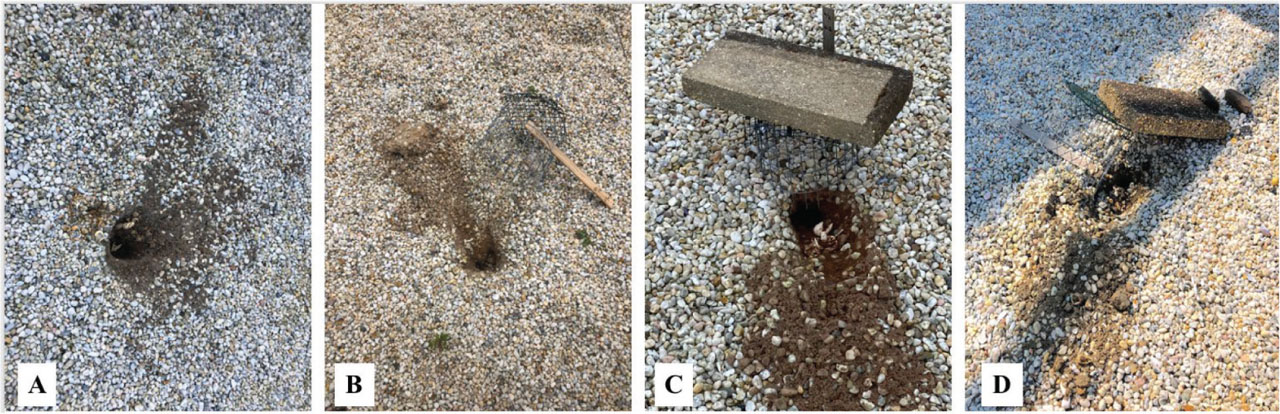
Figure 2.
(A – D). Predation of nests without pine or seaweed protection: (A) predated nest without cage; (B) predated nest with cage knocked over; (C) predated caged nest with paver; (D) predated nest with paver pushed off of the cage.
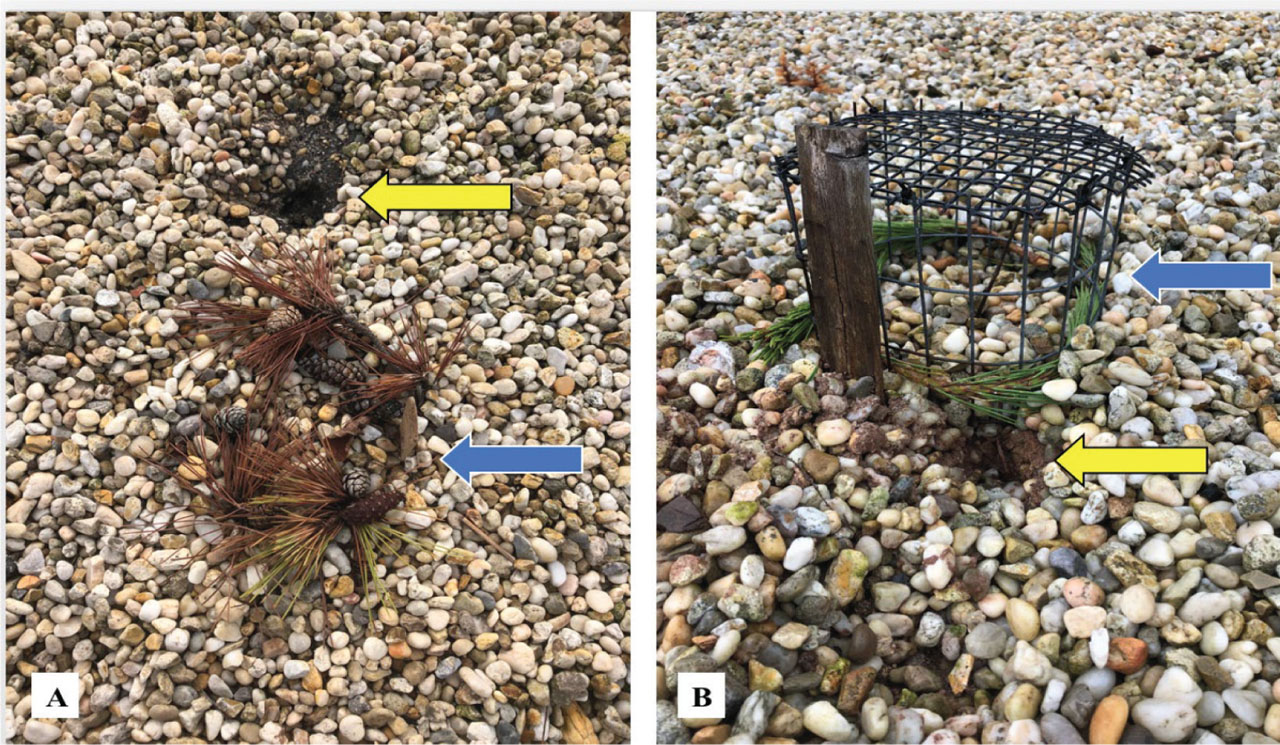
Figure 3.
(A – B). Predation attempts (yellow arrows) near/at pine protected uncaged (A) and caged (B) nests (blue arrows). No eggs were lost with these attempts.
In 2024, we recorded 30 days of rain (May 30–September 30). We found that a high percentage of predation occurred after it had rained the previous day or night (65 of 90 nests; 72%). No predation occurred, however, after a rain event for any pine protected nests, or even when nearby unprotected nests were being predated (Figure 4A–B). We noted that predation occurred after peak nesting activity and also late into incubation (n = 90 nests, Range: 0 – 47 days). We identified predators by live observation, tracks, scat and digging style near the nesting sites. Raccoon (Procyon lotor) and mink (Neovison vison) were the primary nest predators, although opossum (Didelphis virginiana), red fox (Vulpes vulva), coyote (Canis latrans), and crow (Corvus brachyrhynchos) were also observed in the area.
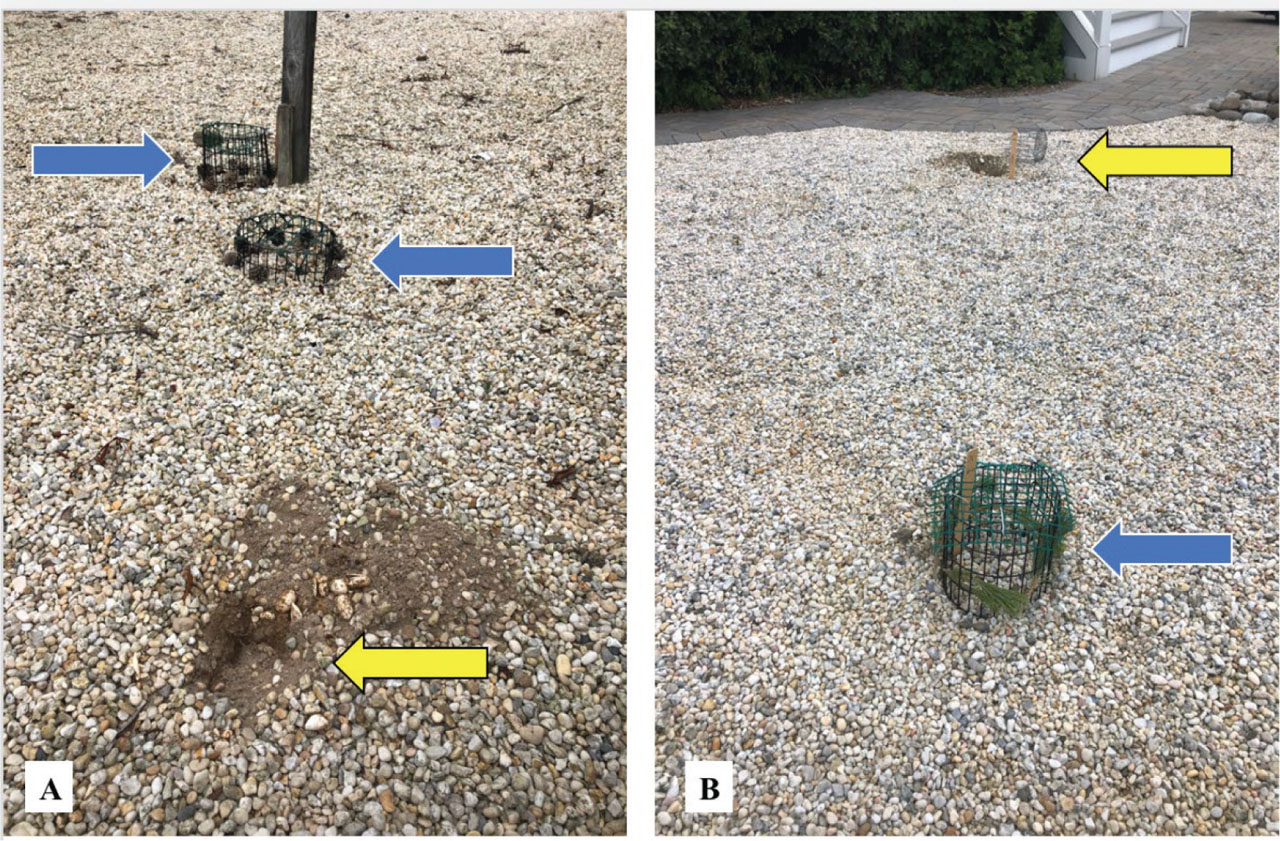
Figure 4.
(A – B). Predation of unprotected (no pine) uncaged (A) and caged (B) nests (yellow arrows), but no predation of nearby pine protected caged nests (blue arrows).
Nest Outcomes for Pine Protected Eggs and Hatchlings
We collected information on nest outcomes and hatchling morphometric data so that we could analyze if there were any adverse effects from pine protection on egg development or hatchling emergence. Of the 74 nests for which successful hatchling emergence was recorded, 65 nests were protected with pine (88%), two nests had seaweed (3%) and seven nests had no pine or seaweed (9%) (Table 1).
In 2024, we accounted for 1134 eggs that were laid within the study area. A total of 582 eggs (51%) were predated, which were not protected by pine. Of the remaining 552 (49%) potentially viable eggs that were protected with pine, 483 emerged eggshells (88%) were counted, 14 eggs (3%) were still incubating and only 55 eggs (9%) were found to be non-viable eggs (unfertilized, undeveloped or had little to no yolk or albumen). We retrieved 402 live hatchlings from 58 pine protected nests and determined a mean nest incubation as 74.34 ± (SD) 10.03 days, which was calculated from the date that the nest was laid to the first hatchling emergence. We collected morphometric data for hatchlings that were retrieved from 51 of the 58 pine protected nests and found the mean and standard deviation of the nests for hatchling carapace length (28.05 ± (SD) 1.60 mm); carapace width (23.71 ± (SD) 1.57 mm); carapace height (15.39 ± (SD) 0.69 mm); plastron length (23.47 ± (SD) 1.49 mm); and mass (6.55 ± (SD) 0.77 g). We also examined 368 hatchlings for shell scute anomalies and found that 47 hatchlings (13%) were identified with shell anomalies and 321 (87%) were without anomalies.
At the conclusion of the study periods, we did not disturb 13 still unhatched nests that had been laid late in the nesting season and had not reached 90 days of incubation. Nests that were laid earlier in the nesting season and beyond a 90-day incubation period were checked for hatchlings and/or viable eggs. We found a total of 4 nests with all non-viable eggs in the nest cavity (2 nests without any protection; 1 nest with only stone/paver; and 1 nest protected with stone and seaweed) (Table 1).
Nest Environment pH
We collected pH readings in 2023 from soil without pine, and in 2024 from nest soil with pine, to determine if the presence of pine altered the soil acidity of the nest environment. We found that the mean pH readings were slightly alkaline (pH > 7.0) for each year, and at all measured depths (Table 2). We also noted that our pH readings were more alkaline in the deeper depths of 76.5 mm and 138.0 mm than at the 12.7 mm surface level depth. Results of our ANOVA with Tukey statistical testing determined consistent pH with no significant differences (P > 0.05) between the years at the 76.5 mm or the 138 mm depths, which are the mean top and bottom depths that eggs are found within the nest cavity (Budd et al., 2024). We found statistical significance, however, between the years at the 12.7 mm depth (P < 0.0001) and also when compared to the deeper depths of 76.5 mm and 138 mm (P < 0.0001).
Table 2
pH readings recorded during 2023 and 2024 at nesting depths of 12.7 mm, 76.5 mm and 138.0 mm. In 2023, pH readings were taken in soil, next to a nest that did not contain pine. In 2024, pH was measured for pine nests, after emergence and within the walls of the nest cavity.
| 12.7 mm | 76.5 mm | 138.0 mm | ||||
| Year | Count | Mean pH ± SD | Count | Mean pH ± SD | Count | Mean pH ± SD |
| 2023 No Pine | 157 | 7.31 ± 0.26 | 111 | 7.56 ± 0.27 | 137 | 7.63 ± 0.18 |
| 2024 Pine | 56 | 7.09 ± 0.15 | 54 | 7.53 ± 0.46 | 52 | 7.62 ± 0.62 |
We noted that herbicide and pesticide spraying was conducted by a commercial vendor six times throughout the nesting and hatching season. Within the nesting sites, we observed that fertilizers were used at private gardens and landscaping.
Discussion
Effectiveness of Pine Nest Protection
The addition of pine to protect terrapin nests was found to be a highly effective predator deterrent within our study area. No predation of nests occurred when any combination of pine branches, pine cones or pine debris surrounded a nest. Decoy nests, which were dug and covered by terrapins, were also not predated. These findings differ from the high predation rates recorded at artificial nests by Edmunds et al. (2018), especially at the hand-dug nests that were filled with terrapin-scented sand and then covered in a similar technique to nesting terrapins. The Edmunds et al. (2018) study found that soil disturbance and the release of geosmin provided tactile and olfactory cues for predators to identify nest locations at their Jamaica Bay, New York site. At our southern New Jersey nesting site, however, these cues apparently are not used by our predators to locate decoy nests.
Although the use of seaweed was not the primary focus of this study, our few seaweed protected nests were not predated. These results align with Edmunds et al. (2018) findings that ocean scents did not increase predation by raccoons. Fresh seaweed could be considered, therefore, as a potential predator deterrent option, although it does not completely deter predation by raccoons (Edmunds et al., 2018). Further, when used as a soil conditioner, marine algal species such as Sargassum and Gracilaria, have been shown to reduce the soil's pH (Izzati et al., 2019). Any future seaweed deterrent studies would need to investigate if the macroalgal species impact the soil during decomposition and create an adverse change in the soil's pH and/or the nest's environment.
We observed that the many predators in our nesting area, which primarily included raccoon and mink, were able to identify viable nests, but their attempts to reach the nest cavities were aborted when pine was detected (Figure 2 & 3). Sensory and chemosensory irritants can be effective repellents among mammalian and avian species (Wager-Pagé & Mason, 1996). Similarly, pine oil and coniferous plants have been found to be effective anti-feeders due to secondary metabolites that may create an aversion response (Harborne, 1991; Epple et al., 1995; Epple et al., 1996). Since pine emits a strong odor, the avoidance behavior that we observed may be a negative chemotactic response to offensive olfactory cues (Epple et al., 1995; Epple et al., 1996; Geller & Parker, 2022). The sharpness of pine needles and the points of the pine cone may also create a negative sensory association. Alternatively, the aversion could be caused by a previous post-ingestive exposure or response, which may be a function of the animal's abilities for plant digestion and absorption processing (Bell & Rarestad 1987). Additional investigation would help to determine the biochemical and metabolic mechanisms that elicit the avoidance of pine among our primary predators.
Effects of Pine Protection on Egg Development and Hatchling Morphology
Secondary environmental impacts must always be considered for the conservation and protection of species, which includes potential adverse effects to their development and morphology. Our data suggest that the presence of pine protection at a nest did not adversely affect incubation or nest productivity. Our incubation time frame aligns with Burger's (1977) findings of 61 –104 days for terrapin egg development at a nearby southern New Jersey site. In the wild, hatching success rates can vary based on the level of predation at the nesting site. Burger's (1977) high hatching success (84%) during one year of research decreased significantly to 25% in the second year because of higher predation within the nesting area. Our study also experienced high predation of eggs at unprotected nests, especially following a rain event, which was contrary to findings by Czaja et al. (2018) that reported a decrease of predation of nests laid immediately before it rained. Despite the high predation of unprotected nests after rain, we experienced no predation and a high emergence rate (88%) of the remainder of eggs that were protected with pine.
Our hatchling data also suggests that the presence of pine during incubation did not adversely affect shell formation or hatchling development. Changes to normal carapace formation may be attributable to persistent temperatures > 30°C (Herlands et al., 2004) and moisture deficiencies (Lynn & Ullrich, 1950). The morphometric data that we collected for hatchlings that were retrieved from our pine protected nests, aligns with data ranges that were reported for hatchlings originating from wild nests within southern New Jersey (Herlands et al., 2004; Wnek, 2010). Further, our percentage of hatchlings with shell anomalies (13%) was found to be less than those recorded in past studies in New Jersey (Herlands et al., 2004). These findings, coupled with our recorded rainfall events and surface temperatures, suggest that a suitable pine nest environment was maintained for successful egg development (Wnek, 2010). To confirm the benign nature of pine, future investigations should consider moisture and temperature readings within the nest cavities for pine protected nests during the entire incubation period.
Nest Environment pH
The soil pH is consistently alkaline (> 7.0) within the terrapin nest cavity depths of 76.5 mm and 138 mm (Budd et al., 2024), and was found to be not statistically significant between years with and without pine. There is a pH change occurring, however, on the surface level at 12.7 mm, which was found to be significant between the years and also when compared to the deeper nest cavity depths. Cumming and Kelly, (2007), examined the changes in soil properties from the invasion of Pinus virginiana and found that pH becomes progressively acidic (6.2 to 4.2) with the greater presence of pine or pine litter. However, as found by Greenly and Rakow, (1995), a soil's pH did not change, even when mulched with 25 cm of chipped pine. The use of pine in our study was minimal with little to no pine litter and our pH readings were far more alkaline than the acidic pH of pine needles at our site, for both years and at all depths (Pokorny, 1983). We believe, therefore, that the pH difference on the soil surface at our nest site is not due to the presence of pine protection. We suggest instead that the pH changes at the surface depth of 12.7 mm are due to other factors, such as chemicals that are retained in the soil from runoff, leaching or landscaping and weed control products that were applied at least six times at the residential properties during the 2023–24 nesting season and documented previously by Budd et al., 2024 (Deer and Beard, 2001; Jackson et al., 2009; Wallace, 1994). The soil pH will also become more acidic due to acid rainfall (pH = 4.6 – 5.6), which is caused by pollution and the release of nitrogen and sulfur oxides and burning of fossil fuels worldwide (Krug & Fink, 1983; Singh & Agrawal, 2008). Therefore, we can account for the slight pH changes and statistical difference at the nest's surface level based on the amount of rain; the type and timing of fertilizer, pesticide or herbicide applications; and when our pH soil readings were recorded.
Conclusions
As terrapin nesting habitats become increasingly compromised from global warming, sea level rise and anthropogenic effects, nesting options will continue to diminish and the preservation of this species will be critical (Wnek, 2010; Woodland et al., 2017; Ganter & Christman, 2023). Protecting terrapin nests from predators will contribute significantly to the conservation of this species. Our research found that surrounding terrapin nests with pine branches, pine cones or pine debris will protect them from a variety of predators, without adversely affecting the nest's environment, productivity, incubation, or egg and hatchling development. We suggest that nests for other at-risk species can also benefit from pine protection so that greater population conservation efforts can be achieved in the future.
Acknowledgements
We wish to thank Project Terrapin, LLC, Terrapin Nesting Project, A. Andersen, and the homeowners of our nesting site for their support with this research project. We are very grateful to our anonymous reviewers for their time and comments. All terrapin adults, eggs and hatchling collections were conducted in compliance with New Jersey Department of Environmental Protection Fish and Wildlife Scientific Collecting Permits 2023122, 2023059, 2024087 and 2024094.