
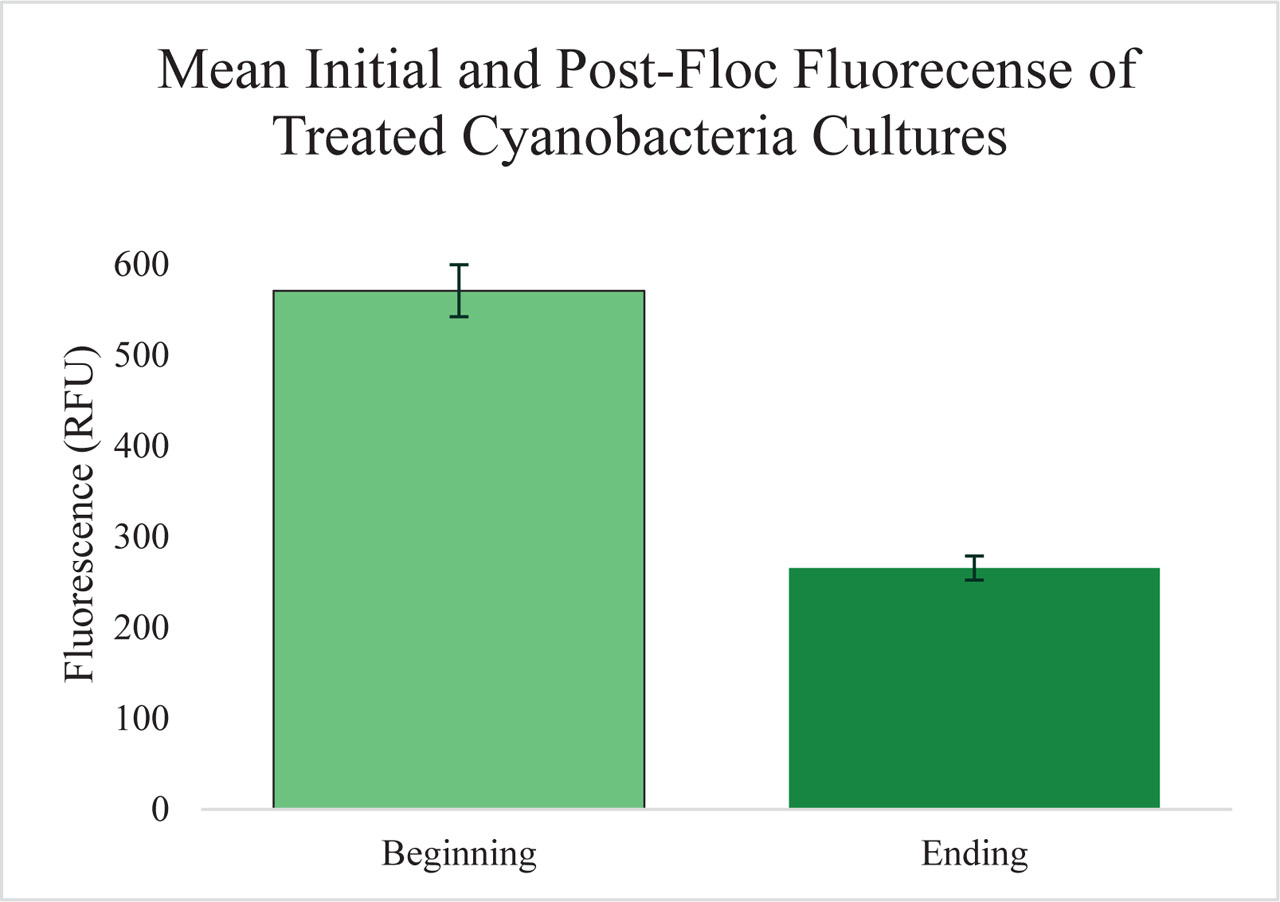
Figure 1.
The fluorescence of the cyanobacteria cultures taken before and after the addition of nanoparticles, resulting in a significant reduction in fluorescence (± 0.05, n = 15, p = 0.0003). There was a mean reduction percentage of 52.2% among each trial. Graphic created with Excel, 2025.
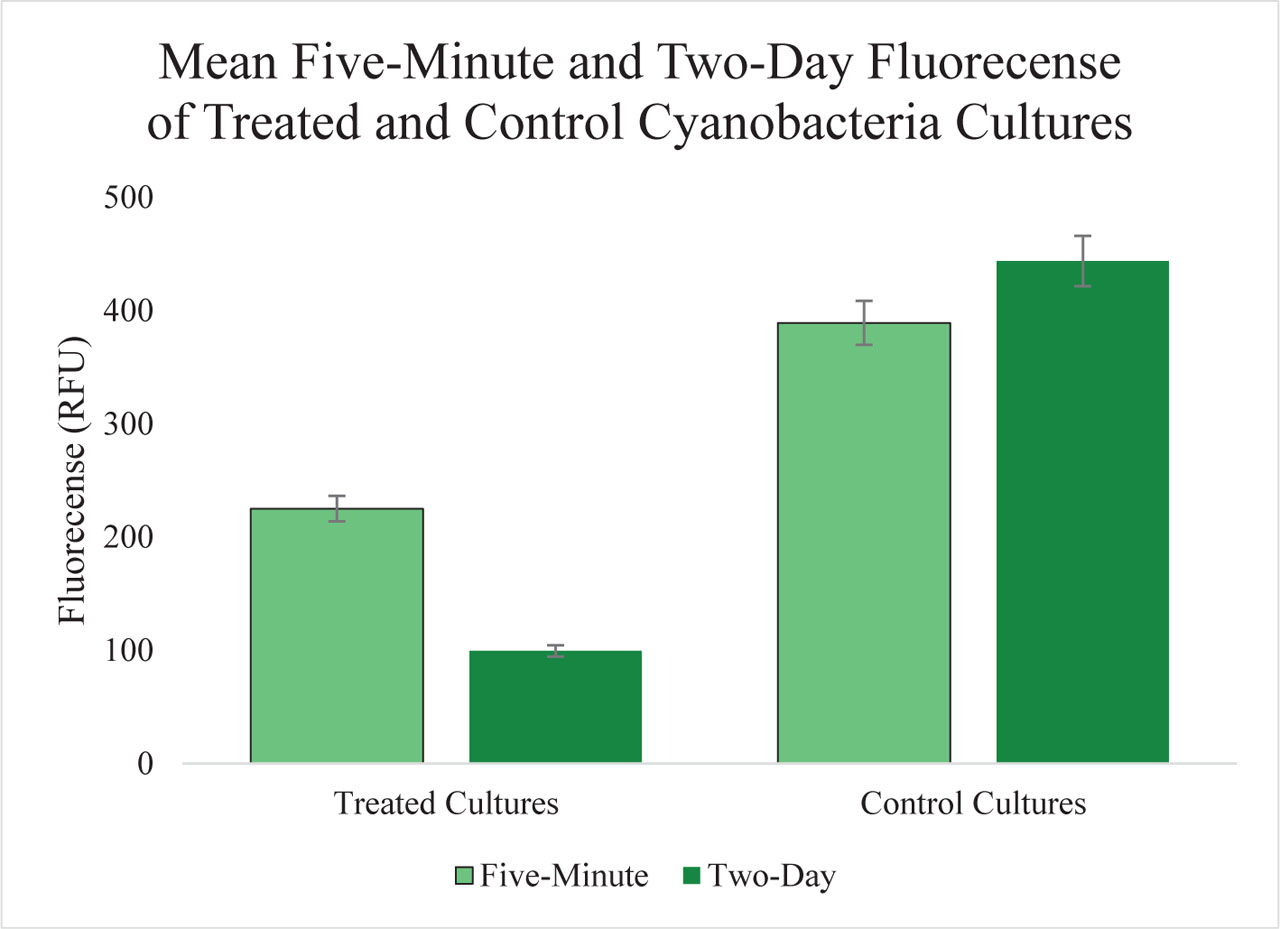
Figure 2.
Fluorescence of the cyanobacteria cultures taken before and after two days of growth, resulting in significant reduction in fluorescence in the treated cultures (± 0.05, n = 14, p < 0.0001). There was no significant change in the control cultures (± 0.05, n = 4, p > 0.05). Graphic created with Excel, 2025.
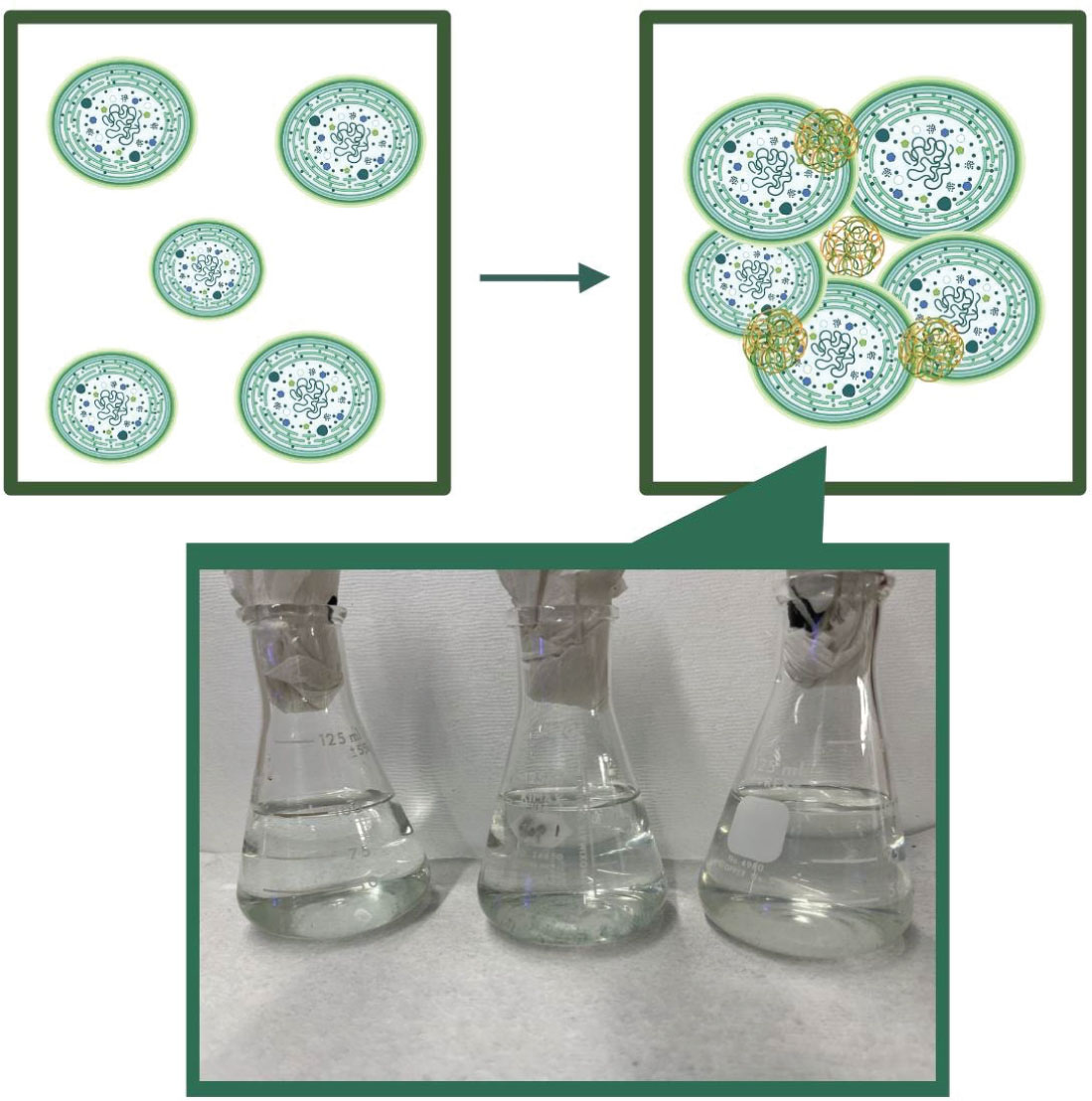
Figure 3.
A proposed mechanism for the flocculation within cyanobacteria cultures. The chitosan nanoparticles neutralize the surface charge of the cyanobacteria cell walls, causing the cells to clump together and sink to the bottom. Photograph taken by researcher, 2025. Diagram created using BioRender by researcher, 2025.
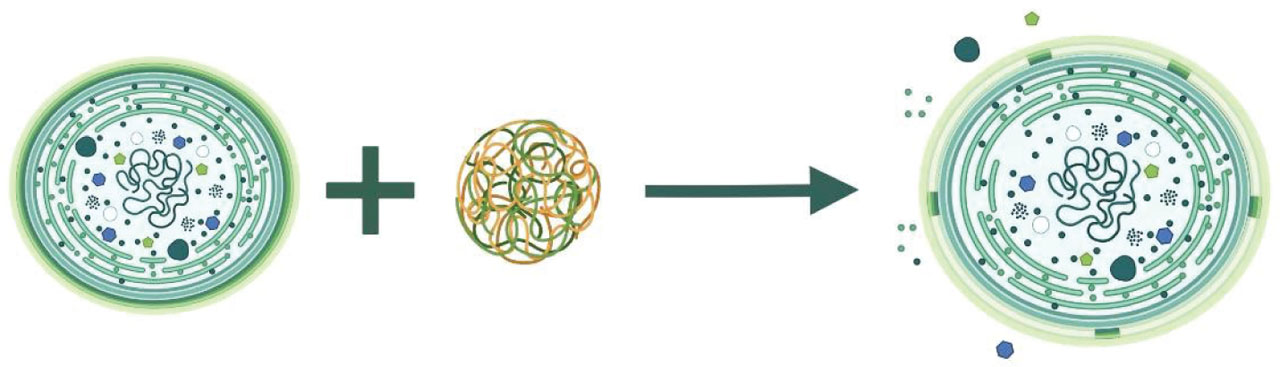
Figure 4.
A proposed mechanism for the growth inhibition experienced by cyanobacteria cultures. The chitosan nanoparticles have the ability to disrupt the cell wall of the cyanobacteria, causing the cells to leak intracellular components. This leads to reduced overall growth within the cultures. Diagram created using BioRender by researcher, 2025.