
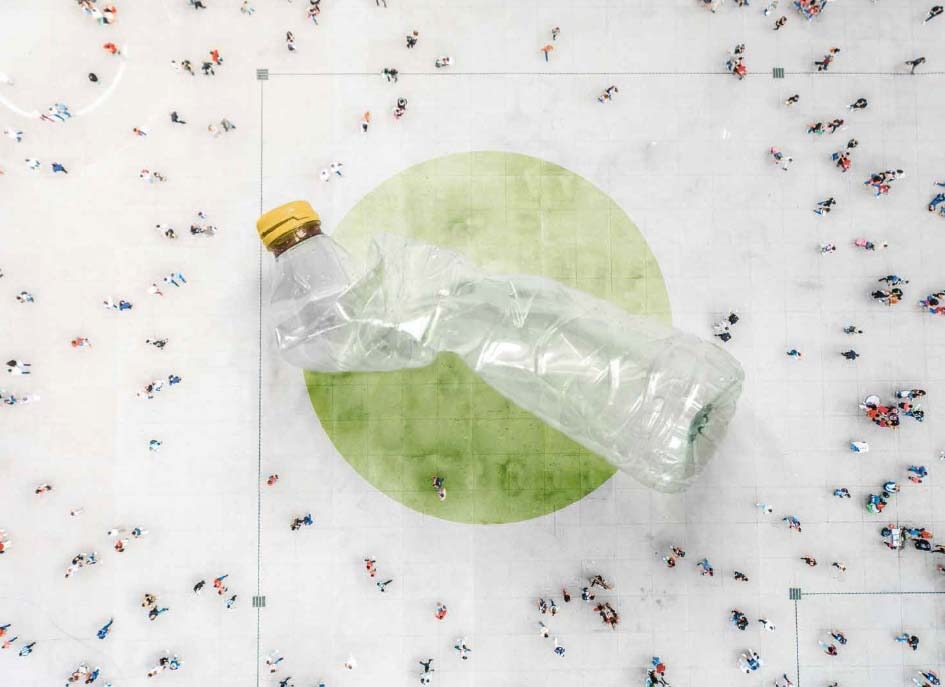
get tyimages, Orbon Alija
Sustainability is everywhere in brand narratives, but not in results. The reality is stark: Only 6.9% of the 106 billion tonnes of materials used annually by the global economy come from recycled sources, according to the Circularity Gap Report 2025. Consumers say they care about sustainability, yet their actions, as well as company programs, often chase low-impact wins that don't move emissions or loyalty in a measurable way.
Most customers are “carbon illiterate.” They can't tell the difference between what feels green and what has an impact. Brands reinforce that confusion by celebrating easy gestures, such as swapping to a paper straw, while underinvesting in high-impact behavior shifts, such as lower-carbon choices, take-back programs, or repairs.
Companies need moves that change behavior in meaningful ways. Circular actions, such as repairing products to extend their life, returning them for reuse, and recycling materials back into new goods, keep products and materials in use rather than sending them to landfills. These actions not only reduce waste but also reduce emissions by keeping existing items in circulation longer, since manufacturing new products generates far more emissions than most consumers realize. Circular strategies can therefore cut emissions, unlock new value from existing products, and strengthen loyalty. The tasks for companies are simple in principle but more difficult in practice. How can they make the highest-impact choices the easiest ones for customers to take, or inspire them to recycle or use their products longer?
„There is a clear gap between what consumers think reduces emissions and what experts know actually works.“
Moving from low-impact gestures to high-impact change
Consumers aren't short on care; they're short on clarity. There is a clear gap between what consumers think reduces emissions and what experts know actually works. Consumers may grasp that flying is bad but miss how overproportionately impactful it is relative to leaving their lights on (e.g., the emissions of a transatlantic flight are equal to leaving an LED lightbulb on for over 50 years!). Just shifting responsibility to consumers often has little effect. Still, concrete measures do help consumers see what really matters, plus design the path so the right action becomes the easiest one. For instance, offering concentrated refill tablets has a greater impact than having consumers purchase detergent in a new bottle and then encouraging them to recycle it. To promote high-impact consumer action, companies should use the following strategies.
Make the real impact impossible to miss
People consistently overestimate the impact of accessible, easy behaviors like recycling while underestimating transformative actions like reducing air travel or shifting to plant-based diets. They focus more on direct emissions caused by their immediate action while missing indirect emissions – the systemic impact in the background. For example, consumers would likely know that a plant-based diet is lower-carbon than a meat-based diet, but they might not realize that heating greenhouses for out-of-season produce could offset those benefits. Without cues about relative impact, low-effort choices crowd out high-impact ones. To reduce this effect, companies should use side-by-side impact cues at decision points: “This product has 10x fewer emissions than the traditional product.” They should use visuals, comparisons, and plain language. “Switching to X saves the emissions of Y transatlantic flights per year.” It also helps to translate indirect emissions into concrete stories: “Most of this product's footprint happens before it hits your cart – here's what we changed upstream.”
Remove friction and make the most sustainable option the easiest to select
People are motivated to believe that painless changes are more powerful. If they require disruptive action, they infer its effect is marginal and prefer what fits their lifestyle. Therefore, the default option should be the high-impact choice: Preselect lower-carbon shipping, offer one-tap repair scheduling, include take-back mailers in the box, and make reusable cups and containers the default.
„The default option should be the high-impact choice.“
Shift responsibility from “me” to “we”
Further, joint action is more fun than action alone. “What can I do?” crowds out “What are we changing together?” The “I”-Framing isolates consumers and hides the bigger levers a brand controls. A more effective narrative shifts from individual behavior change to systemic reform. Change the script to “Here's what we've changed – and how you can help us finish the job” and make consumers allies in a system you're actively redesigning. Invite them to complete the loop where you are the architect, and they are partners, not the sole solution.
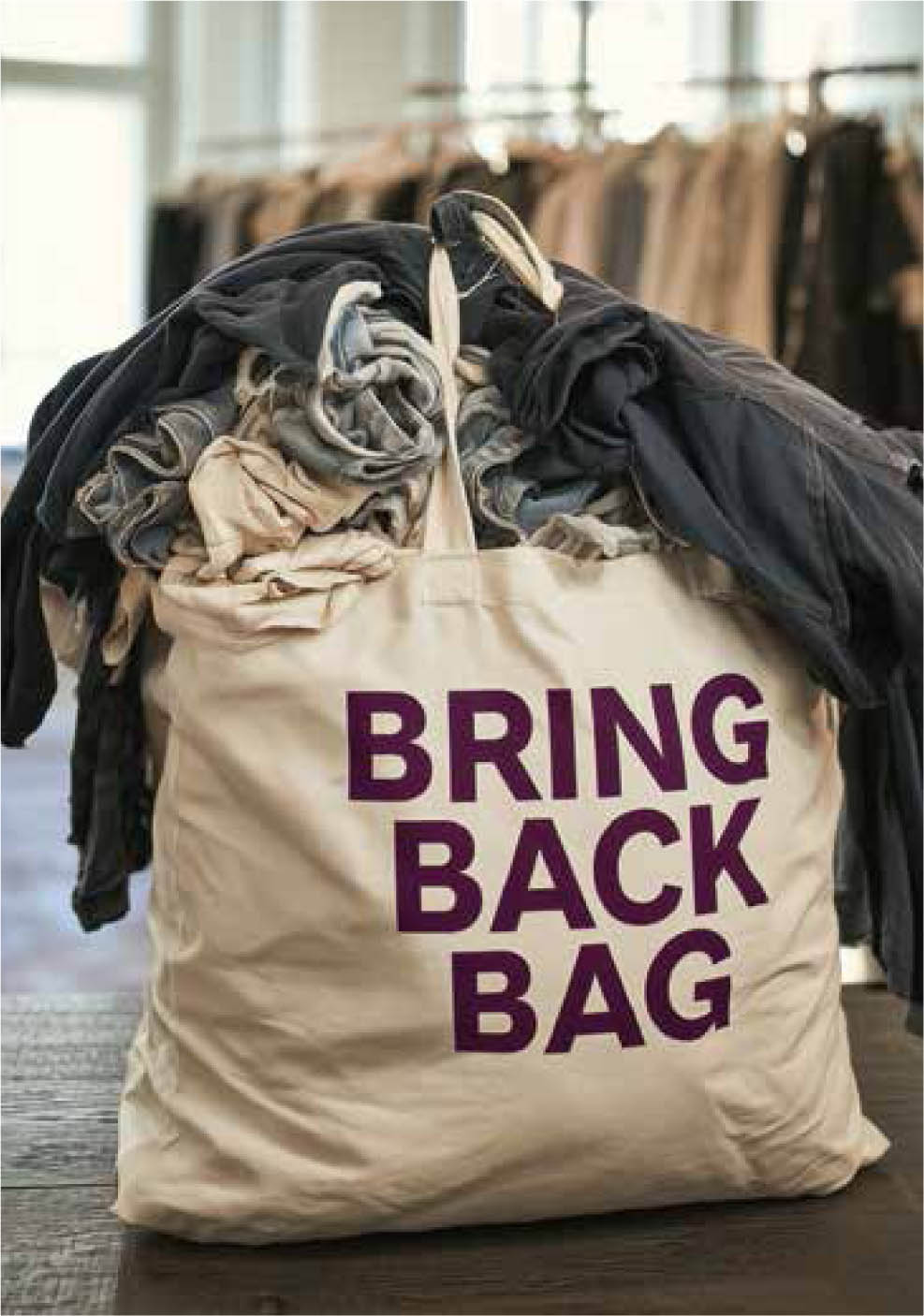
Visualization, AI-generated, Prompt GCO Medienagentur
Give products new life in the circular economy
An additional way to promote sustainability in meaningful ways is to encourage circularity, or keeping products, materials and resources in use for as long as possible. After initial use, consumers tend to think that products are at the end of their life. Brand initiatives and simple tactics can encourage consumers to give products a new or extended life. By signaling the value of broken or used products, acknowledging participation in take-back programs and showing consumers what can emerge from recycled products, consumers are more likely to participate in circularity through repair, reuse and recycling. Based on our research findings, the following strategies can be recommended.
Offer in-house or certified repair services
In a “throwaway culture,” a broken product is often perceived as having zero value. This mindset is a major barrier to the circular economy. While third-party repair shops exist, they often fail to shift consumers' perception of the product's underlying value. When a brand offers its own repair services, it sends a powerful message: “This item is still valuable.” This signals “unused utility” – the idea that the product still has life left in it. Third-party repair doesn't send the same value signal because consumers question whether the repair is worth it. Integrate in-house repair into your business model and encourage your customers to use the service. If in-house brand repair is too costly, create a brand-certified repair network. This keeps the customer in your ecosystem and reinforces the value of your goods. The brand's endorsement of repair communicates that the product retains significant value even when broken. The brand repair signal is particularly effective for non-expert consumers who may not know if a product is fixable.
Communicate with take-back program participants
Many companies have launched take-back programs for clothing, electronics or packaging. These often feel like a “black hole” – the consumer drops off an item and never hears anything again. This approach is transactional and misses an opportunity for emotional engagement. Simple acknowledgment – confirming that an item was received – transforms a transaction into a partnership. It validates the consumer's effort and reinforces that they are working together with the company toward a shared goal of sustainability. Timely acknowledgment like “Received. Thanks for helping close the loop.” increases emotional attachment and feelings of partnership. This, in turn, boosts perceptions of a company's sustainability and repeat participation, a key success factor of take-back programs. The circular system cannot be sustained by one-time customer action. Recognition drives repetition. To make acknowledgment most effective, be specific rather than showing generic gratitude. “Thanks for being a customer” does less than “We received your item.” However, this only works in an authentic and credible con-text. If your brand has a poor reputation for sustainability, acknowledgment won't give you a boost.
„ Simple acknowledgment, like conforming that an item was received, transforms a transaction into a partnership. “
Make transformation more salient
When consumers can visualize what their recyclable materials become, their intentions to recycle increase significantly. Seeing that “this becomes that” inspires consumers to recycle more – and better. This “transformation salience” triggers an emotional response rather than obligation. Rather than asking consumers to “Recycle here”, concentrate on what the product will become: “These bottles turn into hats.” Signage that showcases the “afterlife” increases correct recycling and reduces contamination. You could also use your packaging to illustrate the circular journey. A simple graphic showing the transformation process can increase recycling rates more effectively than a standard “chasing arrows” recycling symbol. Keep it concrete and immediate. In one of our studies, the recycling rate (the proportion of waste recycled) was 23.8% in the control condition but increased significantly to 49.2% in the transformation salience condition. (see Figure 1).
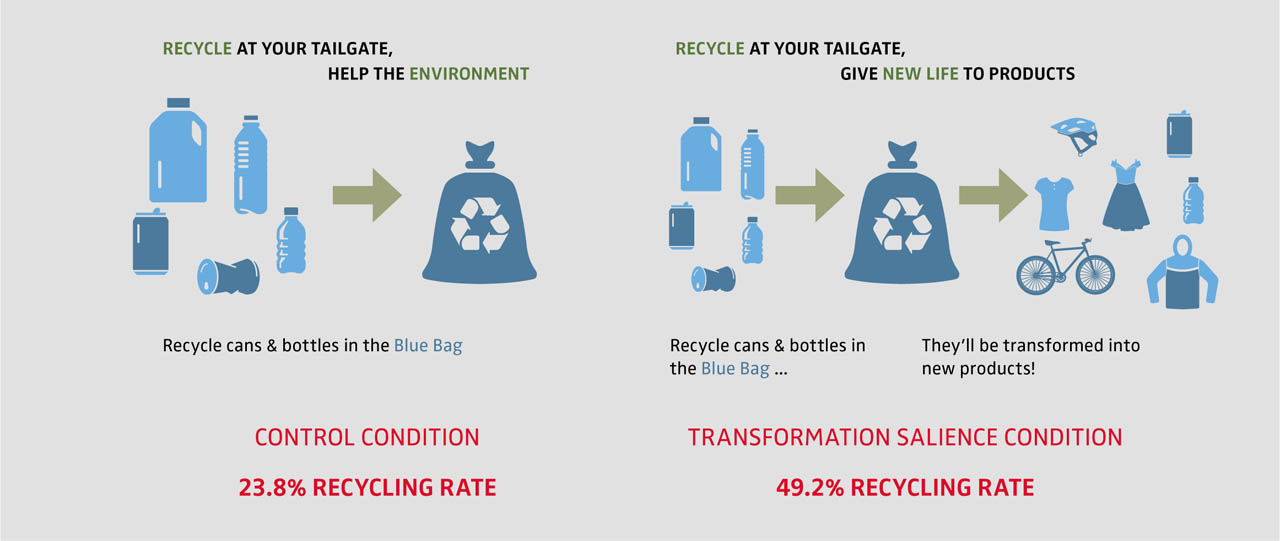
FIGURE 1
Encouraging recycling by showing what will be made from recycled material
Lead the system, invite the customer
The transition to a sustainable, circular economy cannot be outsourced to consumers' good intentions alone. Managers must act as architects of the choice environment: Educate customers on real impact, not platitudes. Signal durability with brand-led repair. Acknowledge their role so the partnership sticks. Inspire them with transformation, not guilt. Stop asking consumers to do more and start designing systems that make the right behaviors the most rewarding. Figure 2 summarizes key recommendations.
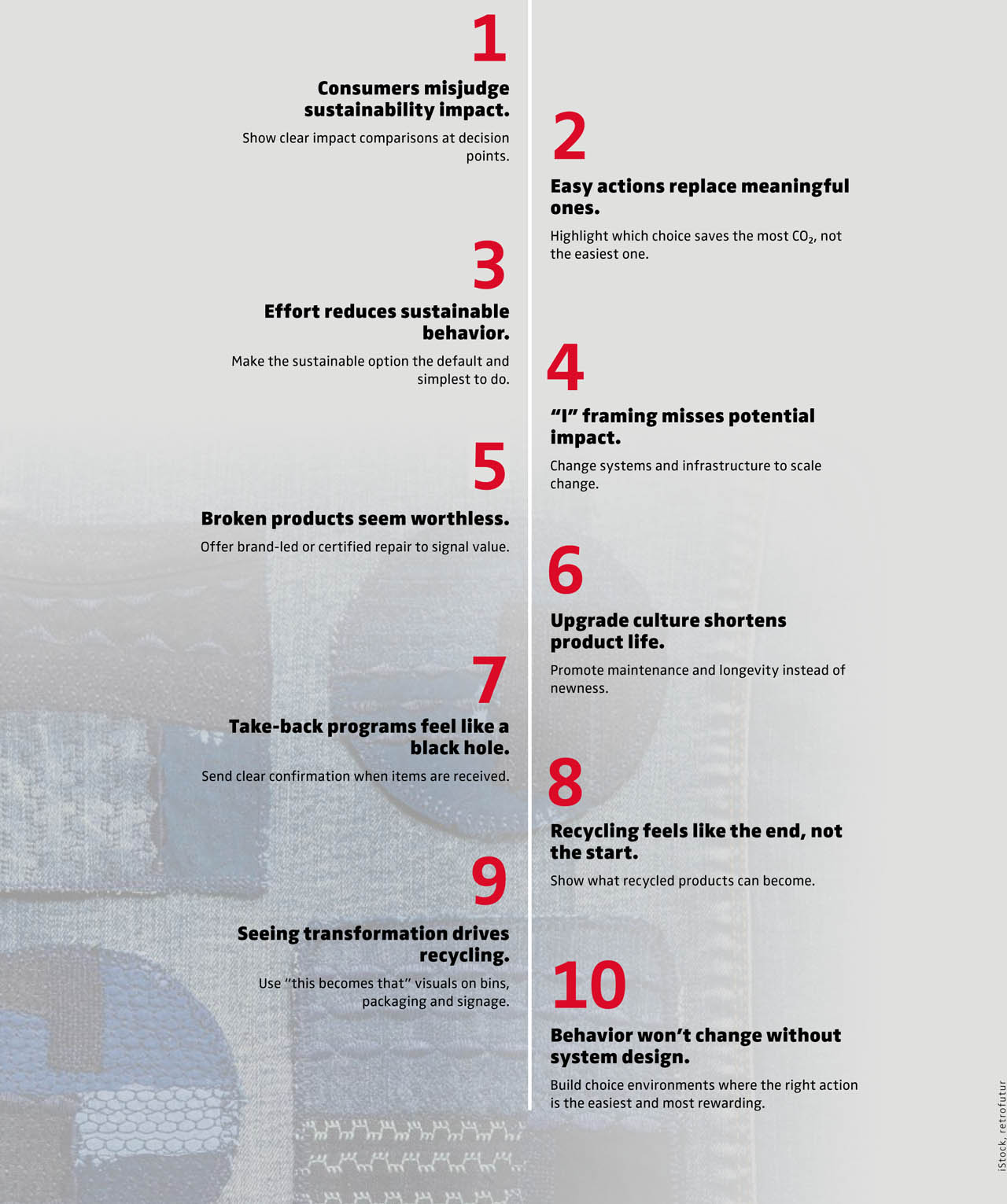
FIGURE 2
Key insights into how consumers tend to act and recommendations
The result? A business model more resilient to climate risk and more deeply connected to customers seeking leaders, not vendors. Mutually profitable relationships don't end, and circular business models, executed with behavioral insights, create ongoing engagement, recurring revenue and genuine environmental impact. That's how you turn sustainability from a cost center into a competitive advantage.
„Stop asking consumers to do more and start designing systems that make the right behaviors the most rewarding.“